Artist:KINLEY Hometown: Charlottetown, PEI Song: “Run With You”
From the Artist: “The inspiration for my new track, ‘Run With You,’ came from reflecting on one of my musical heroes who I’d opened for during my time as a member of Hey Rosetta! Before one gig in Toronto I passed her in a stairwell. It was just the two of us. I complimented her sequined skirt. She smiled the most beautiful smile. Some people had said in the past that she had an attitude but I think that maybe she was misunderstood. In that moment in the stairwell I only saw goodness. She gave off the vibe of, ‘Who cares what anyone thinks anyway?’ This song is an homage to her, expressing my appreciation for all the music she has written.” — Kinley Dowling
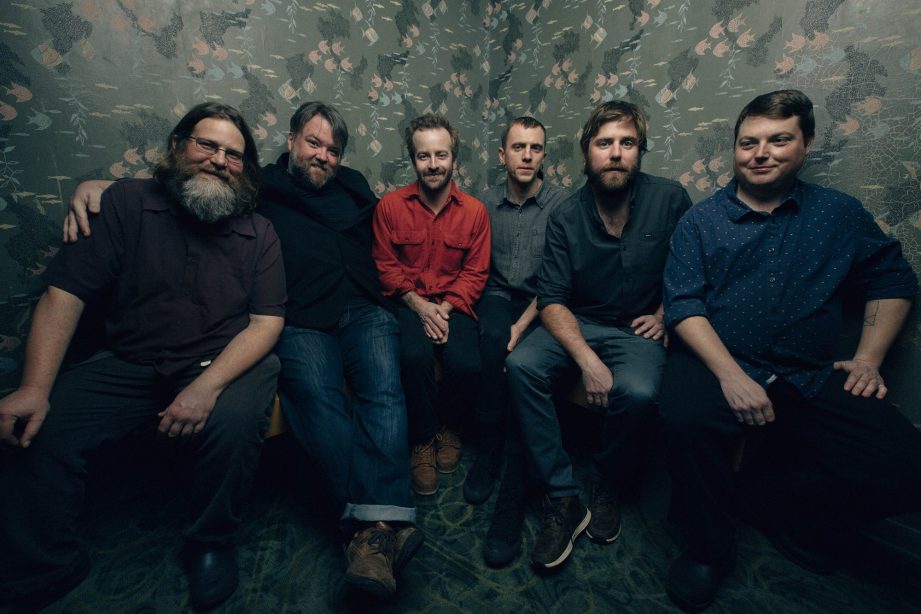
Over the years, Trampled by Turtles have occasionally added Iris DeMent’s stark folk song, “Our Town,” to their set list, with lead singer Dave Simonett delivering the Midwestern loneliness and wistfulness that the tune calls for. Now the Minnesota-based band has finally recorded “Our Town” for an upcoming EP, Sigourney Fever, which drops on December 6.
The track list also includes covers of Neil Young’s “Pocahontas,” Faces’ “Ooh La La,” Warren Zevon’s “Keep Me in Your Heart,” and Radiohead’s “Fake Plastic Trees.” The band will be touring in January and February.
“We are getting back into the readiness of making a full record,” Simonett tells American Songwriter. “Right now, I’m starting to write, but it’s kind of a limbo time. This is sort of like an appetizer for us.”
DeMent once told NPR that she wrote the song after driving through a boarded-up Midwestern town when she was 25 years old, and that the song came to her in its complete form. She wisely recognized that musical experience as her calling to be a songwriter. More than three decades later, it’s good to know that the sun still hasn’t set on “Our Town.”
Being a “first” — a trailblazer, a pioneer, a renegade, an innovator — is an impossibly heavy mantle to take up. That being said, it’s not surprising that, when it is accurately applied, the term is almost never opted into or self-ascribed. It’s a fascination. A sort of voyeuristic moniker given by the media, by fans, by historians, by anyone who notices, or attempts to commodify, the importance of fresh offerings from new voices. In musical spaces, “firsts” tend to get more and more granular as they become more and more rare, necessitating countless modifiers and descriptors to lend accuracy to the idea that being on the edge, being an outlier in this way, is a selling point. Or, that it’s a merit in and of itself.
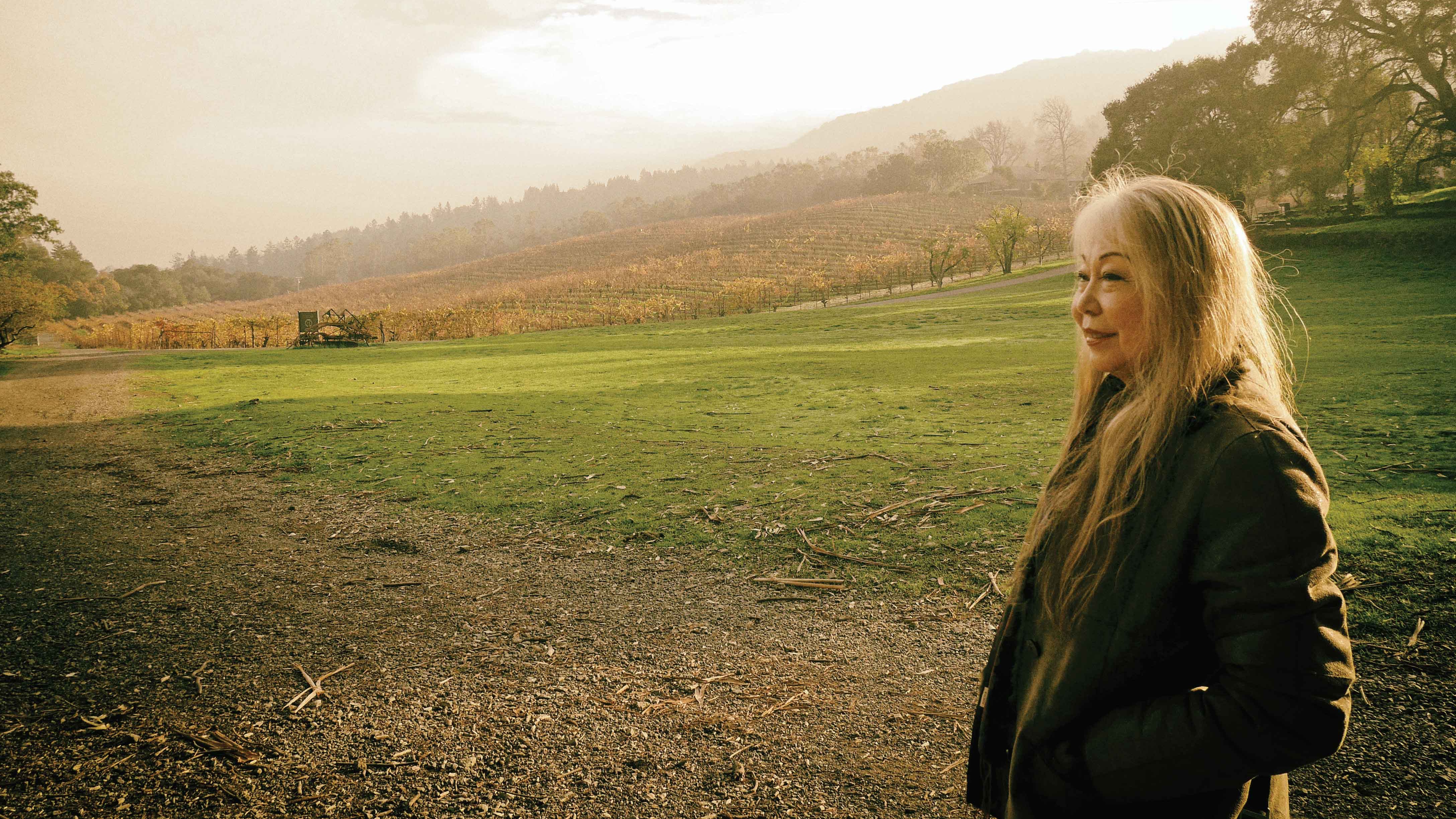
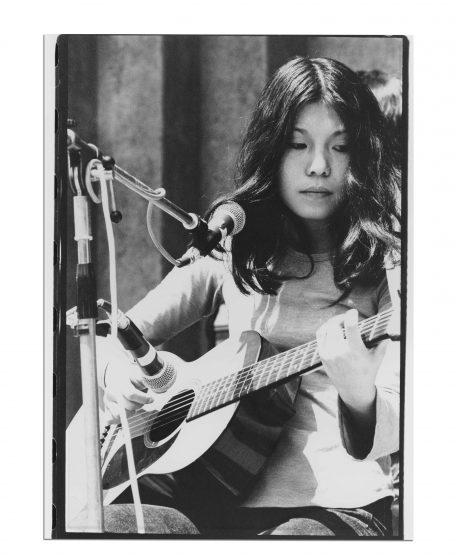
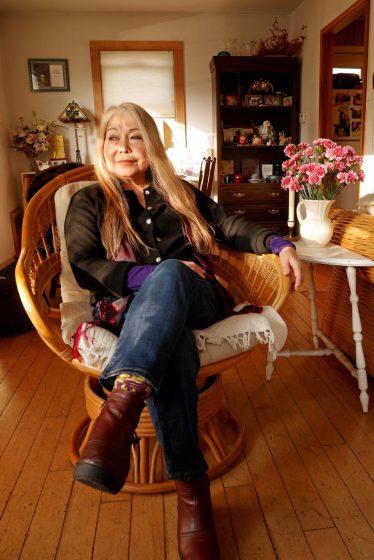
Guitarist, singer/songwriter, and performer Sachiko Kanenobu‘s claim to firstdom is no ball-and-chain, however. It is truly inconsequential to her — despite its legitimacy. And as for intricate modifiers? Just one. Kanenobu is considered Japan’s first female singer/songwriter. In an age when writers and artists alike are attempting to retire “female” as a pertinent adjective in music journalism, the designation does give pause. Though, 46 years after her debut album, Misora, was released in Japan, it’s important to remember that being a woman permitted to take up space — in these cultures that champion masculinity above all else, and in artistic spaces historically reserved for men — is still significant. And the circumstances that prohibited other women from going before Kanenobu were not that long ago. And not unique to Japan.
Misora is a stunning work. Singular in its musical aesthetic, its production values, its amalgamation of European pop stylings and folk revival influences, and most of all in the fact that despite being sung entirely in Japanese, the songs are shockingly accessible, evocative, and relatable. Reissued by Light in The Attic Records in July of this year, the album has followed Kanenobu through her decades living in the states, her forays into other genres and musical phenotypes with other bands and artists, and her absolute tirelessness as a songwriter and adept guitarist — even if she may not consider herself “a picker.” New generations of fans continually trip over and into this gorgeous record, and now, hopefully, countless others will have their eyes opened to this true masterpiece — and to a musician who deserves her place in the pantheon of folk singer/songwriter and guitarist greats.
Being designated as a “first” anything is kind of an enormous responsibility to bear. Do you see your role as one of Japan’s first women singer/songwriters in that way? How has it felt to blaze that trail? Or did it not feel like that at all?
Kanenobu: No, I don’t feel responsible, but it is exciting when I hear myself being referred to as the first Japanese woman singer/songwriter. I’m very grateful for the recognition. In the late 1960s there were no women who wrote their own songs and played guitar in Japan. I was the first one to do it on URC (Japan’s first independent record label). Thinking back, it felt good to be in that position. At that time, I was really young so I always wanted to be different from other musicians. I didn’t mind being the only woman doing what I was doing.
Part of why conversations about “firsts” can be stumbling blocks is because, often, these “firsts” are just examples of the first visible examples of X, Y, or Z. I wonder, are there artists, women or otherwise, that influenced you? That showed you there was a path forward for your music and your art?
I grew up in a family (with three sisters and two brothers) that loved music and sang, which obviously had a big influence on me.
My oldest sister (18 year age difference between us) was a big star in Takarazuka, a famous woman’s theatre in Osaka, Japan where she performed in musicals such as The Sound of Music and The King and I. My mother would take me to all her performances. My second sister probably had the biggest influence on me as she played Western records (such as Bing Crosby, Dinah Shore, Doris Day, Nat King Cole, and others) in our house, loved classical music (Beethoven, Mozart, etc.), and also introduced me to some music coming out of France at the time. My third sister would also go onto to become a singer/songwriter. She wrote Enka Japanese country music and can play the piano even though she’s blind.
So, yes, my family was my biggest influence on my musical path.
At least stateside (but almost certainly pervasively, across the globe) general attitudes toward women in music often result in women being considered songwriters or singers before instrumentalists, but your guitar playing is clearly foundational to what you do — and so distinct. How did you develop your playing style, you are totally self-taught, yes?
Yes, self-taught. One of my brothers learned how to play classical guitar and I would watch him play. Eventually, he got tired of playing so I asked him if I could borrow his guitar to try and teach myself to play. This was the beginning of my lifelong friendship with the guitar.
Later, during my high school years, my friend and I would sneak into the folk club on the campus of Kansai University. At that time American folk music was really popular among college students. Luckily, I met some great guitar players during that time who showed me how to fingerpick and play some simple chords.
Eventually I would meet film score composer Ichizo Seo, who introduced me to Donovan and The Pentangle, and I would try to copy their simpler songs, but it wasn’t easy so I would simplify the scale and created my own style. Even now I can’t tell you which chords I’m playing. I have to ask someone, “What chord am I playing?” I love Pentangle’s guitarists Bart Jansch and John Renbourn, who created a unique style with their duet guitar playing. Their playing still inspires me.
Do you find that people automatically consider you more of a singer or songwriter, rather than a picker? Or has your experience been different?
No one labeled me a guitar player back then and even I considered myself a singer/songwriter who used the guitar to create the tone first and the words would follow. It wasn’t until recently did I get the recognition as a guitarist and singer/songwriter.
This new recognition started when Misora first got reissued in Australia in 2006 by Guy Blackman of Chapter Records. Around that release the album started getting radio play in the Western world. Brian Tuner, former music director and DJ at New Jersey’s WFMU, was a big supporter. My first long-form radio interview for the Misora reissue was in 2007 with WFMU’s DJ Joe McGasko. At that time, it had been over ten years since I had performed any tracks off Misora but Joe took me seriously as an artist and encouraged me to start performing again. He had me on his show “Surface Noise” to perform four songs off Misora and two new songs. After that performance I started getting recognized as a guitarist and singer/songwriter, but before then I wasn’t confident enough to even consider myself “a picker.”
That WFMU performance was an amazing experience because it had been so long, that even I was really surprised that I had remembered all the guitar chords and lyrics off Misora. I remember thinking it was a miracle I pulled it off.
All of the tracks on Misora are sung in Japanese, but the music is still so accessible and immediate and touching, even with the language barrier. How do you accomplish that? Do you think that’s a product of the integrity of the music, or intention you put into writing and performing it, or something else?
Thank you for that. I put a lot of my love and soul into Misora but I thought it was going to be my first and last album, because in the middle of recording it I made the decision to marry Paul Williams [music writer and founder of Crawdaddy Magazine] and leave Japan. Three songs from the album were written after I met Paul and when I’m in love songs pour out of me.
When I first heard The Beatles and Bob Dylan I didn’t understand the words but I totally connected with how they were expressing emotions. This feeling of connection and bringing people together was a goal of mind when making Misora.
Plus, the album was heavily influenced by the Japanese band Happy End and the melodies you hear were influenced by the Western music I grew up on… so seeing the music be reintroduced to Western youth is really nice for me.
In the time since blazing this trail, how has the scene for folk singer/songwriters — especially women — in Japan grown? What has excited you about the progress that’s been made?
I can’t really say, but I know that after I left Japan, I learned of so many singer/songwriters that became very famous in Japan such as Akiko Yano, Minako Yoshida, etc. and they were not afraid to express themselves. Friends have told me if I didn’t leave Japan after recording Misora it might have impacted the singer/songwriter scene there but I don’t know if that’s true.
Are there artists here, in the U.S. that you are listening to right now? Any that get your creative juices flowing?
I listen to all kinds of music: folk, rock, country, world, classical, jazz, blues, space, and classic movie soundtracks.
Right now, I enjoy listening to Steve Gunn. I love his originality and guitar playing. Steve and I have become very good friends and his playing inspires me to play my guitar more. I love the creative sounds that he makes with his guitar. He has a lot of passion and love of playing; I can both see and hear it. He is a very calm solo performer that plays so naturally I can’t tell when the tuning ends and the song begins. He is one of my favorite musicians right now. He invited me to open for his Bay Area tour earlier this year. He and his band, plus James McNew from Yo La Tengo, backed me up as we performed at SummerStage in Central Park, and Union Pool in New York. I hope someday to perform again with Steve and make a record.
I also still love listening to Joe McGasko’s show “Surface Noise” because he brings interesting new and old artists on, which is how I was introduced to Steve Gunn.
I would love to collaborate again with Mr. Hosono Haroumi, who co-produced Misora.
What do you think are the biggest differences you’ve felt between the scene here, in the U.S., and that in Japan?
Biggest differences are language and culture. There is more freedom of speech here in United States. People express themselves more openly and say things more directly. It can be seen in American music as well. I have become more Californian than Japanese over the years, because I have lived in America much longer than in Japan.
Western culture and music influence each other, it is interesting how everything comes together. Music comes around full circle in Japan and America, Eastern and Western worlds vibrate. We influence each other. That is what is happening now and it’s a wonderful thing.
To wrap up, here’s the obligatory, “What’s next?” question: What’s next? This reissue of Misora, decades later, is such a testament to your longevity and your impact — how are you planning to take that further into the future? Are you?
First, I’d like to say thank you to the label, Light in The Attic Records, who put out a beautiful reissue of Misora this year on vinyl and CD.
I’ve been performing Misora over the last two years and I just performed the whole album in Tokyo for the first time in 46 years since I left Japan. For that Tokyo performance I remixed some of the songs, adding and rearranging some parts. Someday, I would like to make a new version of Misora, applying some of the ideas Mr. Hosono and I couldn’t use in the original 1972 recording.
I’m still writing new songs, but putting out a new version of Misora would be so wonderful. I’m 71 years old now and I’m in the last chapter of my life so as long as I stay well I would love to continue performing for others. To my family, my dear old and new friends, and to Misora fans in the East and West, I love you all and I’m so thankful for your support and love.
Color photos: Yosuke Kitazawa Black & white photo: Takashi Yamamoto
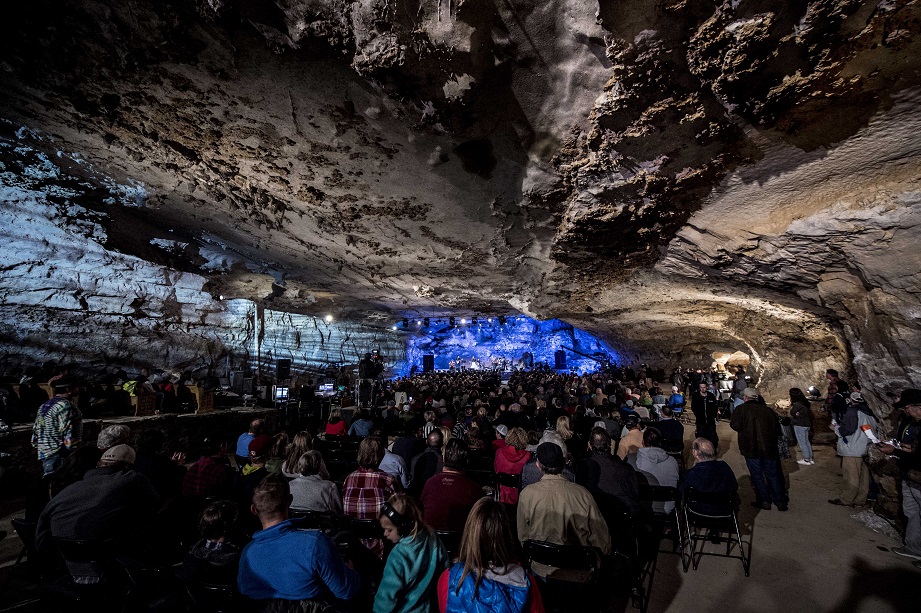
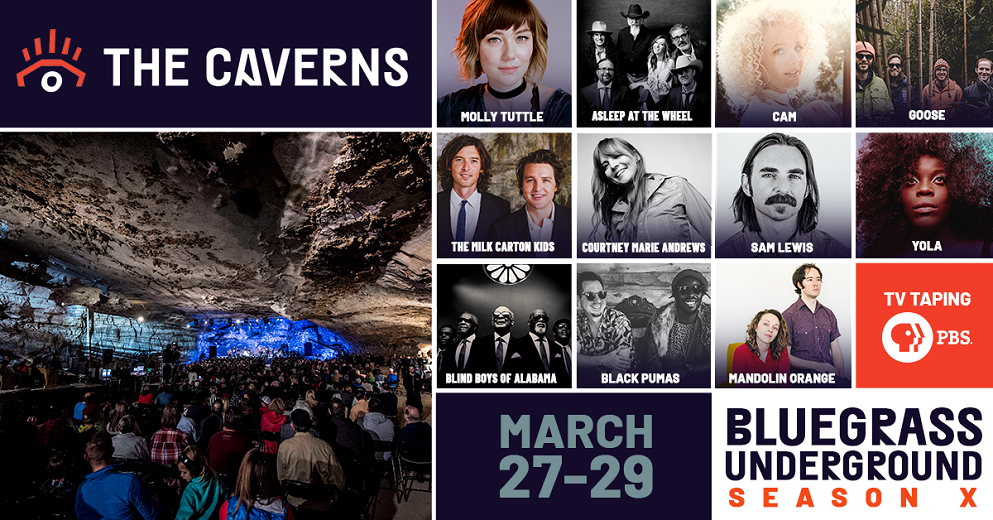
The Bluegrass Situation is pleased to announce the artists for Bluegrass Underground’s milestone Season X on PBS. From March 27 through March 29, the Bluegrass Underground TV taping from The Caverns in Pelham, Tennessee will treat music fans to performances by the finest in roots music and Americana.
This special 10th anniversary taping features cutting-edge singer-songwriters Cam, Yola, Courtney Marie Andrews, and Sam Lewis, and harmonious duos Mandolin Orange and three-time Grammy-nominated Milk Carton Kids, as well as legends like Asleep at the Wheel and Blind Boys of Alabama, and rising stars like bluegrass phenom Molly Tuttle, groove-driven jam band Goose, and psychedelic soul group Black Pumas, plus a surprise act to be announced in the coming weeks.
Jam-packed into one epic weekend of underground concerts, the performances will be captured for the 10th anniversary of the multiple Emmy Award-winning Bluegrass Underground series on PBS. To be in attendance at the 3-day live taping event is a music lover’s ultimate experience. The milestone Season X will premiere in the fall of 2020 on PBS stations nationwide.
“It’s amazing that Bluegrass Underground is the second-longest music series on American Public Television,” says Todd Mayo, Bluegrass Underground creator and co-producer. “And we look forward to the next 10 years of partnering with PBS in presenting the quality and diversity of roots music from one of the most iconic music destinations in the world, The Caverns in Grundy County, Tennessee.”
Three-Day & Single-Day Tickets go on sale on Friday, November 22 at 11 am CT at TheCaverns.com
Here’s the lineup for Bluegrass Underground Season X PBS TV Taping in The Caverns:
March 27:
● Molly Tuttle: An artist on the leading edge of bluegrass music, steeped in tradition while driving the genre forward in today’s musical landscape.
● Goose: This New England band’s mix of rock, funk, tropical grooves and extended jams will turn The Caverns into a subterranean dance party.
● Cam: From a GRAMMY nomination to headlining the Ryman Auditorium, this multi-platinum country singer-songwriter is a force to be reckoned with.
● Asleep at the Wheel: Ray Benson has now been leading a Western Swing band longer than Bob Wills, and he brings his iconic group to The Caverns for their 50th Anniversary Tour. Historic.
March 28:
● Sam Lewis: Best-known for touring and collaborating with Chris Stapleton (who helped inaugurate Bluegrass Underground in 2008), this singer-songwriter is one of the defining talents of modern Americana.
● Courtney Marie Andrews: Powerful vocals, passionate songs from one of today’s finest singer-songwriters.
● The Milk Carton Kids: One of Americana’s best live acts, the duo of singer/guitarists Kenneth Pattengale and Joey Ryan combine close harmonies, wonderful original songs and humor.
● TBA:Bluegrass Underground will be announcing the day’s fourth artist in coming weeks. Who doesn’t love a surprise?
March 29:
● Blind Boys of Alabama: A rousing Sunday in The Caverns with the five-time GRAMMY Award-winning gospel group that helped create the genre.
● Black Pumas: Austin, Texas is known for its dynamic live music scene. Black Pumas are the city’s leading soul/funk band. Enough said.
● Yola: Demolishing genre with her evocative voice and debut record Walk Through Fire, Yola establishes herself as the Queen of Country Soul from the very first note.
● Mandolin Orange: Intimate and emotional, the music of multi-instrumental duo Emily Frantz and songwriter Andrew Marlin draws you into their world with a sound that floats like a butterfly, but speaks to the heart.
While the national festival season remains in hibernation, Bluegrass Underground and The Caverns will welcome spring to the rolling hills of Tennessee with its unique, world-renowned combination of top artists, award-winning sound and lighting production, and breathtaking natural beauty, creating an underground festival experience like none other. Bluegrass Underground events feature a clean and comfortable, fan-friendly environment, complete with high-quality concessions and beverage offerings, including craft beers.
Tickets & travel packages and Stay-and-Cave hotel packages make for a perfect and easy getaway weekend. Packages include the best seats to all tapings, lodging accommodations for two, transportation to and from the venue, food, and commemorative merchandise. There is no better way to experience the Bluegrass Underground tapings than a Stay-and-Cave package. Packages and tickets will go on sale on Friday, November 22nd at 11am central at TheCaverns.com
Bluegrass Underground is underwritten on PBS by Tennessee Tourism and by Grundy County, Tennessee. The 12-episode series is presented to PBS nationally in partnership with WCTE in Cookeville, Tennessee, which serves the Upper Cumberland and Middle Tennessee.
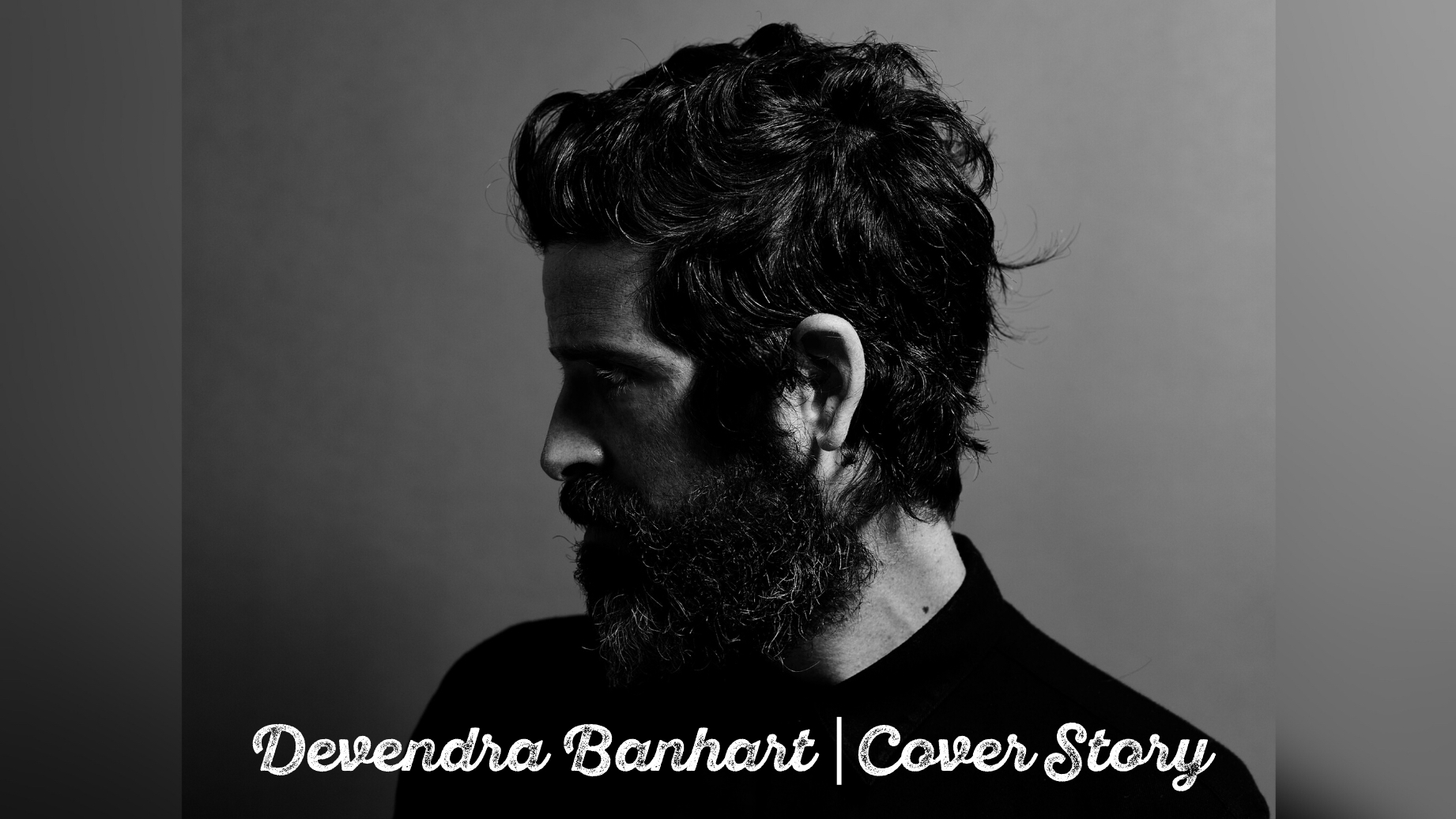
On Ma, the new album by folk-globalist Devendra Banhart, there are appearances by singer-songwriter Cate Le Bon and 1970s English folk-rock cult heroine Vashti Bunyan. Lyrics reference his love for Brazilian stars Chico Barque and Caetano Veloso as well as Japanese electro-art-pop pioneer Haruomi Hosono. And no less than Carole King is a presence in a co-write nod via lyrics drawn from “So Far Away.”
But when it comes to guest stars on the album, there’s one that’s hard to top: the Pacific Ocean.
Yup. That noted body of water is credited, fittingly, for “ocean sounds” on the song “October 12.” It’s a song of grief after the death of a friend, and Banhart, who spent much of his youth in Venezuela, his mother’s native country, sings it in Spanish.
“Actually, on every track there is the ocean,” he says, freshly landed at home in Los Angeles after flying across that very ocean from Singapore. “You don’t really hear it, but it is throughout the whole record. What inspired us to do that in the beginning, we recorded in a Buddhist temple in Kyoto with no walls. It is open to a garden. We wanted to create that feel on the album.”
Working with his longtime producer Noah Georgeson and several of his regular musical cohorts, Banhart was invited to record in that temple for just one hour, after a brief Asian tour. The experience was something they wanted to extend through the whole of the album, which they later accomplished by recording in a studio in a house along the Northern California coastline.
“You could hear the Pacific,” he says. “We had the windows open. That’s the big support system for the songs.”
It’s a nurturing presence, even in its most subtle ambience, it being the primal source of life. And as such, it represents the life-giving concept at the heart of the album: motherhood.
“Maternity is the theme,” he says.
There’s more than that here, of course. There is grief in songs such as “Memorial,” about his father, with temple bells mixed in the music, and “The Lost Coast,” about death and loss. The magic of serendipity permeates the album, as does the state of being open to what the world offers. None of the songs are explicitly about motherhood, per se. The notion, in many poetic manifestations, ties it together.
“There’s the relationship one has with a country,” he says, distressed about devastating political and economic strife of the nation in which he was nurtured. “Venezuela has been a constant issue on this record. Moments before now I was talking with my family and reading about what is going on there. It’s a truly apocalyptic situation. My way of writing about it is so related to my mother. At this point I can’t separate my own mother from Venezuela.”
His mother is not currently living there and the last time he visited was two years ago, but he has aunts and uncles and cousins who are there, seeing their country and its people suffer greatly. For him, it’s hard to separate that situation, with which he has such a deep personal relationship, from suffering elsewhere, whether from his own roots or in places where he has spent considerable time (Nepal and Tibet, among them) or that he has merely seen on the news.
“There is the insane suffering of the Venezuelan people, the political madness of the situation in the U.S., Duterte in the Philippines, China and Tibet suffering so much, and the people in Hong Kong.” Banhart seeks solace in the connections he’s made through music, “There’s music and art as the parent-and-child relationship. I turn to music to be consoled, to be less alone, to feel loved and nurtured.”
In that regard, few are more significant to him than Vashti Bunyan. The English singer came from the same folk-rock scene that gave us Fairport Convention, Nick Drake, and the Incredible String Band. Her 1970 album, Just Another Diamond Day, languished in obscurity until the late 1990s when it was “discovered” by musicians in a nascent movement that came to be called freak-folk, a young Banhart among its numbers. That brought about the album’s reissue, and various new recording projects, some involving Banhart. Now in her mid-70s, Bunyan sings with him here on the album’s closing “Will I See You Tonight?”
“Within that maternal theme, I don’t think anyone in my life encapsulates the archetype of the wisdom of artists as much as Vashti does, in terms of that nurturing quality of music,” he admits.
Banhart also seeks to make, or embrace, connections in music itself, some coming quite by surprise. This album is threaded with inspirations from and references to music from many lands and cultures, often connecting in ways wondrous, delightful, and serendipitous. Rarely is any of that planned — at least consciously.
“Sometimes the lyrics come first,” he says. “The music is a platform for the lyrics. As you start, as the song starts to take shape, there’s some collaborative element with other musicians, but also with the song itself, in that way. I don’t mean to be oblique, but it’s this strange way that it takes you in these certain directions. It’s out of your hands.
Sometimes it’s easy, he says, as in the song “Carolina,” which cites an earlier song that has influenced him.
“It’s a song for a song, a song written for the song ‘Carolina’ by Chico Barque,” he says. “It’s an homage to Brazilian music and South American music. There’s a samba feel to it, and me really singing about wanting to hear that song and saying I should probably learn Portuguese someday. In those lyrics it was easy to see the shape of that music.”
Others have more convoluted paths, but in them reveal the global pathways he has so openly relished in his music and in his life.
“In some songs I was quite surprised what was coming out.”
“Kantori Ongaku” offered several such surprises. In the chorus, sung in Japanese, he uses words from a song by Hosono, one of the founders of Japan’s landmark trio Yellow Magic Orchestra. At one point in the cited lyrics, Hosono sings, in English, the words “country music.” That planted some ideas for Banhart as he wrote his song although he wished to sidestep literalism.
“I wanted to do a Buck Owens thing here but that wouldn’t work out,” he says. “J.J. Cale was a great hero of mine so I took J.J. Cale as inspiration, not literally, but that kind of platform emerged for the song. Those things aren’t really done consciously. There are people who are inspirations I’ve been listening to for so long that it enters into the music, naturally.”
In some ways, Ma is a culmination of Banhart’s past work in a career from the two shambling albums he released in 2002 through 2016’s ambling Ape in Pink Marble that’s seen him go from neo-hippie troubadour to bossa nova evangelist, from playful folkiness to, well, playful electro-pop. He’s been a part of collaborations with kindred spirits from Beck to Brazilian tropicalia great Gilberto Gil, with whom he shared the Hollywood Bowl stage one highly memorable evening, to the Strokes’ Fabrizio Moretti to Antony and the Johnsons.
Yet the range and depth of Ma extends beyond even that, particularly in its emotions, the sense of loss in some songs not just complementing the joy in others, but expanding upon it in ways that truly honor the maternal wonder of the world.
How to make that work? How to bring all that together so naturally?
Well, now we get to the other concept of Ma. Yes, the title is a word generally associated with mothers. Banhart’s use of it comes from something else.
“The word ma is actually born from a different meaning,” he says. “It’s a philosophical term for space in Japanese. Starting the record in Kyoto, that’s where I learned the word. I’ve always failed but have strived to get a type of space in the music. How do you create spaciousness in music? Ma is a term of how essential it is to an object, and in music the space between the notes is essential. I really got into that word, and it also happened to be the perfect word for the theme of the album.”
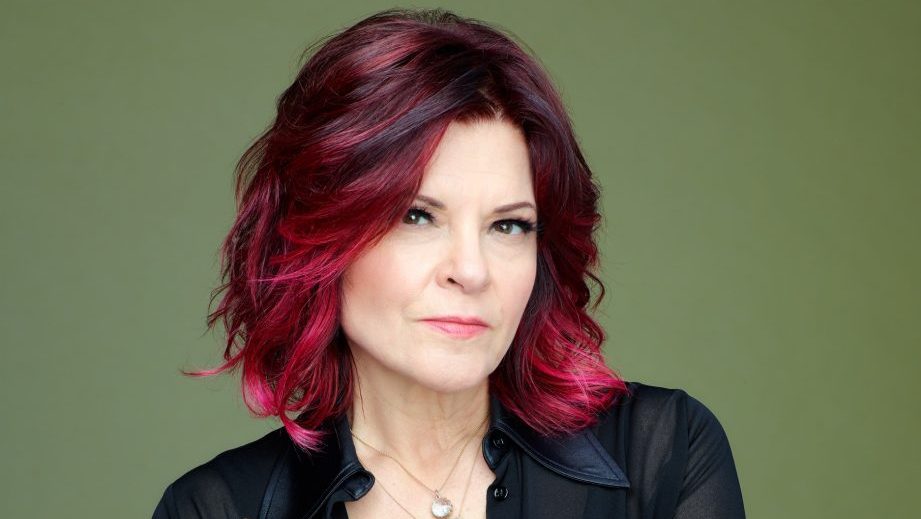
Artist:Rosanne Cash Hometown: New York City Song: “Time” (Tom Waits tribute) Album:Come On Up To The House: Women Sing Waits Release Date: November 22, 2019 Label: Dualtone Records
In Their Words: “What an honor to sing a song like ‘Time.’ Many years ago, I recorded it just for myself, just for the pleasure of singing those words. Maybe I seeded the notion in the deepest part of the creative ether, the place from where these songs travel through Tom. For whatever reason and from whatever source, I’m just thrilled to be a part of this album. There is no other songwriter in the world, past or future, like Tom Waits.” — Rosanne Cash
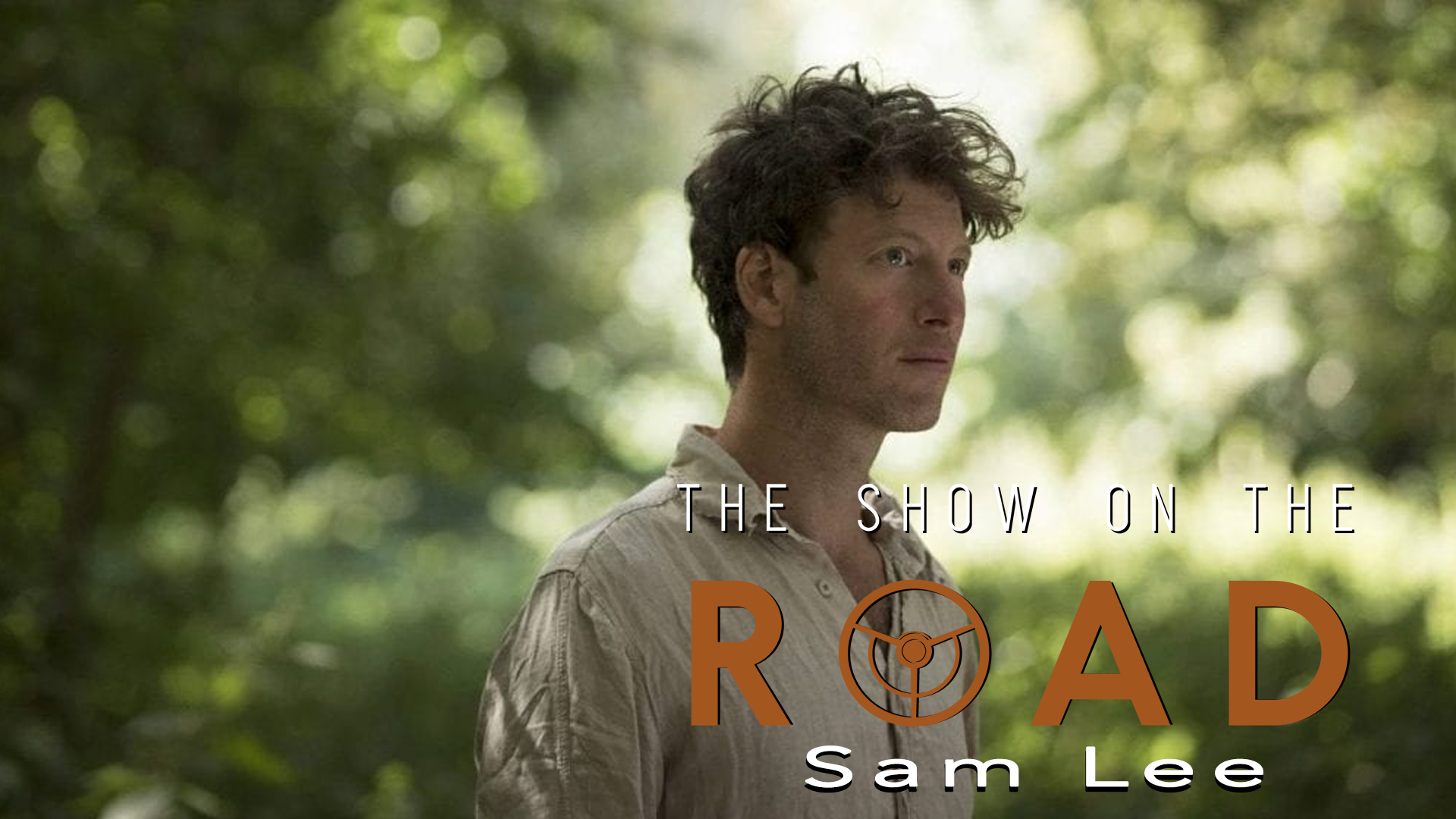
This week on the show, Z. Lupetin speaks with renowned British song collector, sonic interpreter, roots music promoter, and deeply intuitive folk singer Sam Lee.
Lee came to music almost by accident after a former life as a wilderness survivalist and nature advocate. Since, he has become one of the leading voices in Great Britain, saving the treasured endemic music cultures that rapidly disappear each year. His gorgeously delicate and meticulously researched debut, Ground Of Its Own, shot him from hopeful academic to nationally recognized folk star — partly by being nominated for the prestigious Mercury Prize. Lee has relentlessly worked to save and rejuvenate the ancient melodies and songcraft of Irish and Scottish traveller tradition, Romany rhythms and stories, and connect those traditional melodies to a youthful pop culture that is yearning to know where it came from and where it is going next.
His Nest Collective, an “acoustic folk club,” gathers artists, authors, dancers and theatrical renegades and puts on shows and events across London – making Sam a rare double threat – as both an artist and a promoter of other artists.
His newest release, Old Wow, drops January 31, 2020.
Song sorcerer and musical mage Darrell Scott is celebrating autumn with a refreshed rendition of his ever-popular song, “It’s A Great Day To Be Alive.” In a nod to his acoustic roots, Scott recorded a bluegrass version of the hit, which has been covered by many artists in country, Americana, and bluegrass. In October, he released the official music video — depicting fall festivities like hay rides, a corn maze, and other images of the season — which, as he tells it, was actually inspired by a surprising collaboration.
“I found that a local Nashville corn maze (Honeysuckle Hill Farms) wanted to put my image and song ‘It’s a Great Day to be Alive’ into its corn maze design this fall,” he explains. “And since I had never made a video for the song, and since the song’s message is as needed as ever, we decided to make a video with great help from family and friends. I love the result.”
Feel the warmth of autumn through this music video; watch right here on BGS.
Singer/songwriter Joan Shelley’s voice has a warmth and purity that can still the choppiest minds. Her fifth album, Like the River Loves the Sea, is a calm offering in noisy times. She says she didn’t set out to make an album with any kind of theme or message, but she found herself writing songs that often reflected her love of her native Kentucky.
For many years, Shelley chased the idea of leaving Kentucky, maybe relocating to someplace in Europe or a big city on one of the coasts. She grew up on a small farm outside of Louisville, a swarm of animals, siblings, and step-siblings to play with, a creek and woods to play in.
On her song, “The Fading,” Shelley borrows a phrase often attributed to Mark Twain about Kentucky’s sluggish pace of life: “And, oh, Kentucky stays on my mind/ It’s sweet to be five years behind/ That’s where I’ll be when the seas rise/ Holding my dear friends and drinking wine.” And yet when the time came to record this album, Shelley travelled far from Kentucky to Iceland, with frequent collaborators, guitarist, Nathan Salsburg, and producer and guitarist, Jim Elkington.
BGS: How did you end up in Iceland?
Shelley: I have a friend who’s a complete fan of Iceland. It just started to simmer in my imagination. This could be poetically in between Europe and the U.S., this ancient musical tie on the newest earth that’s in the ocean. I was, like, I want to go essentially to a different planet and make a record and see how that air feels and how that environment works.
When you go someplace like that to record, are you bringing all your instruments with you? Or are you letting the place influence the music?
We each brought a guitar. I was like: I’ll use their banjo; I’ll use their drums; we’ll use their tambourines, everything. In Iceland, there was no banjo. We couldn’t find a banjo. So someone had a resonator guitar and I had to retune that to a banjo tuning that I was using for the song, “Coming Down for You.” You know, funny limits that you encounter like that, even though it’s frustrating at the time and you’re kind of panicked, then you feel for the next step. I love that.
So were you running around Iceland looking for a banjo?
We asked musicians who had been there and musicians know musicians. It’s a pretty creative community. There are a lot of artists and songwriters. And a lot of synthesizers and not a lot of banjos. When you talk about a Kentucky-to-Iceland record, like, you’re in this black hole where you cannot find a banjo.
You became interested in music later in your childhood, but you’ve always had a strong connection to the outdoors that’s apparent in a lot of your songs.
Music came later but when I think about my time in nature as a kid, I would always wander off on my own. I remember distinctly sitting under trees and singing to the day, kind of being a little kid and making up melodies.
Were you singing with an instrument?
No, just singing. Like, bird education. Melodies only. No one had instruments. My mom used to and that’s how I found the guitar. It was in the attic.
Tell me about that.
I was a freshman in high school and I wandered up to the attic which had all the good stuff in it and I kind of dusted off my mom’s guitar that she had up there. And there was a chord chart up on the wall too. She was one of those people who would say, “I just want to get better at this someday.” But it was always someday. So I taught myself from the chord chart on the wall.
Do you have a certain go-to guitar when you’re in the process of writing songs?
I have a Collings guitar which is a pretty fancy bluegrass guitar. It’s good for fingerpicking. I got it from my cousin who passed away. She died really young of cancer. At first I wasn’t taking it anywhere because I didn’t want it to break but then it hit me — no, she’d want to go everywhere! It’s good to be reminded of how lucky I am to have gotten this far and seen what I’ve seen. It’s amazing.
Do you remember when you first heard mountain music or when you first felt like it spoke to you?
I would say the first song that ripped my stomach out and onto the ground below me was a Dillard Chandler song, a ballad. All his unaccompanied ballads on that Dark Holler record are just gorgeous.
Nathan Salsburg, your collaborator, is also curator of the Alan Lomax archives. Did he help lead you down that well of old-time music?
He exposed me to Dillard Chandler. I wanted to hear the female singers. I was hungry because I know they just don’t get represented in the recordings of the great musicians. When you look at old-time music, and bluegrass too, it’s male-dominated. So I was like, give me everything you got. And he collected some for me to listen to, like Aunt Molly Jackson, Little Jean Ritchie.
What do you hope people take away from this record?
Once I was done editing the songs that would go on the record, I almost called it Haven, because it’s the first song on the record. We need that calm, that haven, whether it’s in terms of relationships or the environment or political noise. I have to remember how to be quiet and lead my thoughts back to being quiet.
Even when I’m talking about love in the songs, there’s a deeper level we can agree on. Let’s get back to the deeper level. At this point in my life, and at this point in our country, this was the record that I was like: I’m going to stop telling myself I’m going to move somewhere. I’m going to be here. I’m making that choice to bring what I love about the rest of the world to Kentucky.
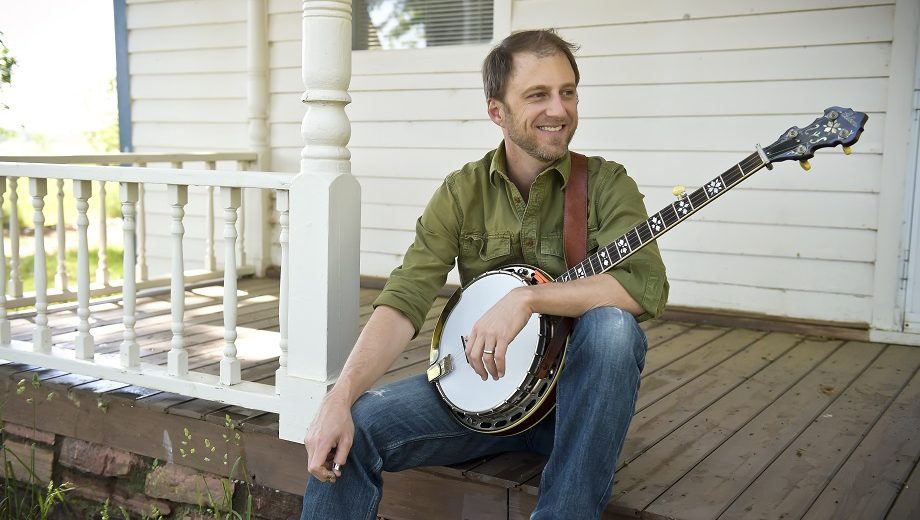
Artist:Chandler Holt Hometown: Longmont, Colorado Song: “Cover More Ground” Album:Cover More Ground Release Date: November 9, 2019 Label: Robust Records
In Their Words: “This tune just fell into my lap one day. I was messing around with the melody on the guitar and the chorus lyric just popped out of thin air. It took me a while to get the recurring melody to fit for the banjo but once it did the song really started to take shape. Singing while playing banjo and making it cohesive is always a challenge. There’s a reason you don’t see it a whole lot. I love going down that rabbit hole and I’m always surprised where I end up.” — Chandler Holt
Photo credit: Lewis Geyer
This website uses cookies to improve your experience. We'll assume you're ok with this, but you can opt-out if you wish.AcceptRejectRead More
Privacy & Cookies Policy
Privacy Overview
This website uses cookies to improve your experience while you navigate through the website. Out of these, the cookies that are categorized as necessary are stored on your browser as they are essential for the working of basic functionalities of the website. We also use third-party cookies that help us analyze and understand how you use this website. These cookies will be stored in your browser only with your consent. You also have the option to opt-out of these cookies. But opting out of some of these cookies may affect your browsing experience.
Necessary cookies are absolutely essential for the website to function properly. This category only includes cookies that ensures basic functionalities and security features of the website. These cookies do not store any personal information.
Any cookies that may not be particularly necessary for the website to function and is used specifically to collect user personal data via analytics, ads, other embedded contents are termed as non-necessary cookies. It is mandatory to procure user consent prior to running these cookies on your website.