As our second year of Good Country comes to a close, we’re reflecting on another 12 months’ worth of the best in country music. Whether Americana, bluegrass, or string band, blues, outlaw, or Western swing – or any of the many styles of country we know and love – there’s been plenty of excellent picks from my ear buds directly to your inboxes and playlists.
We sampled post-modern Mississippian country from KIRBY, got funky and soulful with Memphis family band and GRAMMY nominees Southern Avenue. We celebrated Suzy Bogguss’ invitation to join the Grand Ole Opry and traveled to the remote center of the Pacific Ocean for Maoli’s particular twang.
Fiery twin fiddle by Jason Carter & Michael Cleveland had our jaws on the floor, while we were surprised – but not really – at how well Brooks & Dunn went together with the Earls of Leicester. Huge stars like Billy Strings, Warren Zeiders, Sabrina Carpenter, and Carín León were enjoyed alongside everyday working musicians like Jordan Tice, The Creekers, Nick Shoulders, Sunny War, and more.
That depth and breadth – of artists and styles, of notoriety, or approach – is exactly what we’re going for with Good Country.
Good Country isn’t any one thing. It’s a feeling. It’s a place. We’ll be chasing more Good Country feelings and places in 2026, and we’re so grateful to have you along for the ride. Look back at all of Ed’s Picks for 2025 with our master playlist.
Want more Good Country? Sign up to receive our monthly email newsletter – and much more music! – direct to your inbox.
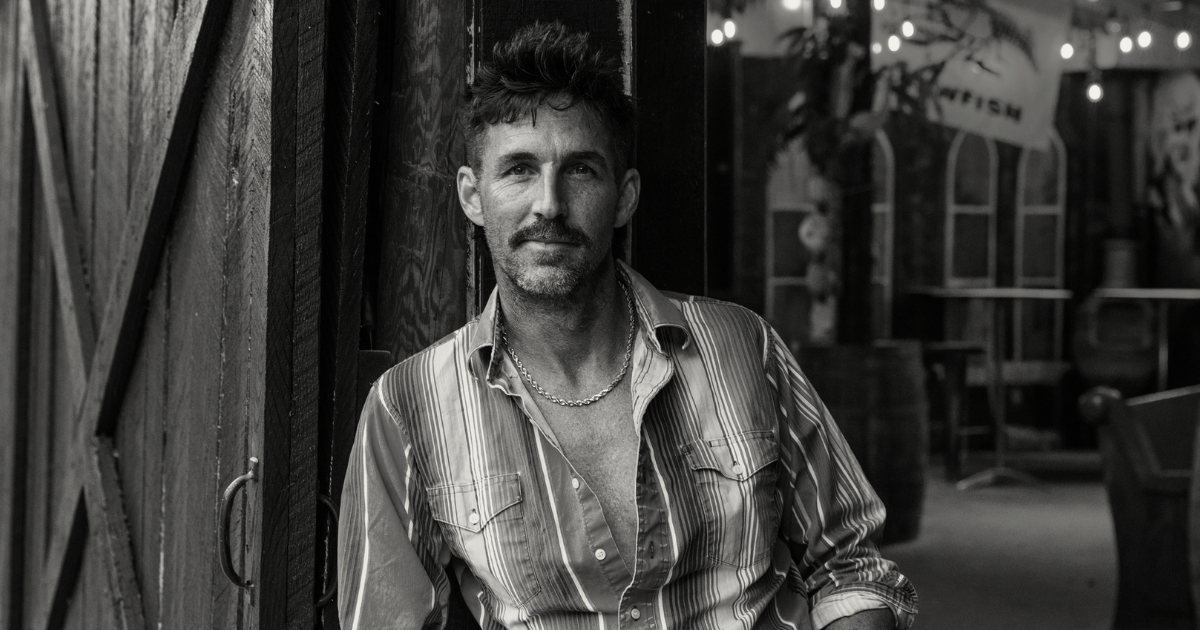
Depending on who you ask, Jake Owen might be responsible for the very first bro country song. His 2011 hit “Barefoot Blue Jean Night” wasn’t the first party-ready ode to Southern summers and ice-cold beer, but its slick mix of country signifiers and stadium-rock production – courtesy of Joey Moi, best known for producing Nickelback and later Morgan Wallen – proved highly influential, arguably paving the way for crossover smashes like Florida Georgia Line’s “Cruise” and Blake Shelton’s “Boys ‘Round Here.”
“Never gonna grow up, never gonna slow down,” Owen sang on his signature hit, neatly summing up the youth-obsessed ethos of the bro country era. Now 44 and newly independent after 20 years on RCA Nashville and later Big Loud, he’s singing a different tune.
“I’ve made a lot of records that had a fantasy, ‘Remember when we were young?’ kind of feel to them,” Owen told Good Country. “What feels good about this new record is that I can listen to it and feel like I’m listening to my life right now. It’s very real.”
Dreams to Dream, Owen’s eighth studio album and his first with Shooter Jennings producing, is a sharp left turn for an artist known for hits like “Beachin,’” “I Was Jack (You Were Diane),” and “American Country Love Song.” Earlier this year, Owen decamped to LA amid the wildfires, leaving the comfort of Nashville behind in search of creative truth and a more organic sound. The result is one of the year’s best and most surprising country albums, which trades bro-ish bravado for world-weary introspection and a classic-country sensibility.
The title track is a rollicking, country-rock statement of purpose that name-checks Hank Williams, Jr. and establishes the stakes: “I’ve been down, but I ain’t no quitter/ ‘Bout to get up on my feet/ ‘Cause I still got dreams to dream,” Owen sings in the rousing chorus. On the Troy Jones-penned “Wouldn’t Be Gone,” he muses about leaving stardom behind to work in a hardware store. (“I already know a thing or two about hardwood floors,” goes the song’s best line.) Other standouts include “Chill of December,” a Haggardian expression of winter loneliness, and “The One I Did It To,” a doleful admission of romantic wrongdoing.
In a Q&A, Owen spoke to Good Country about teaming up with Jennings, defining authenticity on his own terms, and why he doesn’t shy away from his bro country past.
This album is a departure from the sound that you’re best known for. What made now the right time to do an album like this?
Jake Owen: My life has always been about timing and believing that I’m supposed to be where I am. The album’s called Dreams to Dream and it came about because I was in this interesting place in my life where I’ve had a record deal for 20 years and, all of a sudden, I’m doing something on my own. Which felt kind of like freedom, but also felt very scary.
For a long time I was focused on the more commercialized songs that would work on radio, since I was on a major label, and I felt like this is the time to make the kind of record that I’ve always really loved. I’ve always tried to follow my heart and what my intuitions have told me. They haven’t always been right, but I definitely follow them.
What was it like working with Shooter Jennings?
He really exceeded my expectations. I expected to go out there and make a record, but I didn’t know I would leave there with an awesome new friend and somebody that really believed in me as a person with dreams and a purpose and things they wanted to say. He was so encouraging to me. I felt safe with him, which is a weird way to put it, I guess. But you need people to pat you on the back and tell you that you’re doing the right thing.
It also was at a time when – I’m not ashamed to say it – there were not a lot of people ringing my phone in Nashville to tell me they were proud of 20 years of what I’d done in my career and 11 number one songs. Kind of weird, right? But the one guy that was calling me and applauding me and telling me that I could do way better, bigger things in my life than what I’d already done was Shooter Jennings. Out of all people, right? That says so much about how much he loves music and believes in people. I think you’d probably hear that same answer from anybody else that he’s worked with.
The second song on the album, “Them Old Love Songs,” is a Waylon Jennings cover. Why did covering Waylon make sense for this record?
Well, there was no part of me going out there that thought I would do any covers. But Shooter and I just talked about life and music out there, and he was saying that his dad always would cut cover songs for fun when he came off the road. Shooter would encourage me, each night or whenever we were done with the session, to do some covers and just have some fun. With that one in particular, I was nervous to ask Shooter, because it felt a little cliché. I wondered how many people work with him and have wanted to do that or if he’s offended by that.
But I always loved that song and the album that it’s on, Are You Ready for the Country. It’s pretty wild, because that album starts off really rocking, and then it goes into that. To me, if you listen to that song, the lyrics say, “I wish I had a true fine woman/ Let her rock me all night long/ And maybe we could get it together/ Like people do in them old love songs.” I’ve been singing that my whole life and it’s still the way I dream of love. And then, going back to the first verse, it says, “Nobody cares where I’m going, all they know is I’m coming back.” I don’t think anybody cared that I was going to make a record with Shooter. Nobody really even knew.
Also, one of the reasons Shooter and I decided to make this album was our love for the Hank Williams Jr. record, The New South, that his dad actually produced. Hank moved to Alabama to make that album, I think it was in 1977, and said he needed to get out of Music City because he wanted to go make his kind of music with his friends. And I felt the same way. Like, here I am going to LA to make a record with Shooter, and he’s encouraging me like Waylon encouraged Hank. So recording that Waylon song, with Shooter producing it, it just felt right.
You recently celebrated the 20-year anniversary of moving to Nashville and signing your first record deal with RCA. You made a post referring to “the highest of highs and lowest of lows” in your career. Could you tell me about some of those highs and lows?
Yeah, well, first off, thanks for even acknowledging that, which I think is important to the reasoning behind this whole record in general. I would start off by telling you that the highest high for me was just moving to Nashville and knowing that something was ahead of me. When I left college, I left my twin brother and a lot of my friends and my entire family at home in Florida. I still look back on that guy, and I’m like, “What the fuck was I thinking?” But I guess I just had to chase it. And then getting to Nashville and immersing yourself with people that are so much better than you are, I just didn’t have that where I was in college in Tallahassee. I kind of felt alone. Getting a record deal was also a big part of that, feeling like I had accomplished part of what I came here to do. And then I spent the next seven years having to figure out how to keep the guys in the band paid and the buses rolling on the road and how to get my first number one song. Everybody thinks that’s the easy part once you sign the record deal, but it really wasn’t. It was a rude awakening.
And I went through a divorce. I got married, I had a kid. It’s like the classic country song shit, man. I think that was a big low for me, having to leave my family to go on the road. I had been very successful from my dreams that I chased, but the one thing that I probably desired the most, outside of music, was a family life. The one thing that I’ve never been good at and I haven’t figured out is that real solid relationship in life, building love and trust, and that bothers me a lot. It bothers me that I can be good at a lot of other things, and that is the most important thing to me, and I haven’t been so great at it.
You were a major player in the bro country era, which is now having this sort of nostalgic reappraisal. I’m thinking of the HARDY and Ernest song “Bro Country,” which is an ode to that time in country music. When you think about that era, what goes through your mind?
It’s funny, because I don’t know that anybody has said this before, but I’ll tell you right now: I started that shit. Everybody wants to shy away from bro country or whatever, but I invented that shit. And yeah, I am proud, in a way. I remember being at a time in my career where I had a record deal for seven or eight years and I had a couple songs that had done all right, but I was feeling like I was gonna lose my record deal if I didn’t try to do some different shit. And I didn’t have a producer at the time. I’d left Tony Brown, who was great. And he’s like, “Hey, man, you should meet this guy, Joey Moi. I think he’d be great for you.”
Joey obviously came from Nickelback and all that. At the time, no different than when I left Tallahassee for Nashville, everybody was like, “Dude, what the fuck are you doing?” So here’s a guy now from Nickelback who’s gonna try out making country music on me, which was probably a crazy thing, too. It wasn’t that I was trying to sell out. If anything, I look back and I’m like, “Dude, I had the balls to just do something different at the time.”
“Barefoot Blue Jean Night” was our first release and it had all of these claps and stomps and loop shit. It ended up being the most-played song of the decade [according to Country Aircheck]. I have the plaque on my wall. It was a major, major changing point in my life and career, because it worked. Not only did I keep making those songs for the next few years, but it influenced a shit-ton of people.
I think a lot of people might want to avoid that association. It’s kind of like the way that ‘80s rock and roll gets shit on sometimes, but there are still people in their cars cranking it to 11, right? If you look back at my early career, the songs I was writing were very country, because that’s what I always loved. I went on tour with Brooks & Dunn and Alan Jackson. So when all of a sudden, years later, all of the people that were my heroes were like, “I hate this kid,” it kind of hurt my feelings. But I always knew in my heart that I would get back to what brought me to the table.
Among the detractors you alluded to, people who are into more traditional-sounding country music, there’s this idea that pop-country or bro country is inauthentic. What do you think is “authentic” country music?
Authenticity is the ability for artists to take any type of music and just make it their own. Johnny Cash never shot a man in Reno. But it was a huge song for him. George Jones didn’t write “He Stopped Loving Her Today,” but he owns that song. Stardust is the biggest album Willie Nelson ever released and he didn’t write a single song on it. And he’s one of the greatest songwriters of all time. Authenticity isn’t about where somebody’s from or how they grew up. If you own what you’re doing, and you deliver it in a way that’s believable, I think that’s authentic.
I’m thinking now of this back-and-forth you had with Jason Isbell a couple years ago about artists writing their own songs.
Yeah, dude. That guy. I love Jason Isbell, that’s what’s crazy. Some of the artists that I love the most just spout off at the mouth. The other day I said something about Zach Bryan. I love that guy’s music too, right? He’s amazing, and he’s also uber successful – selling 120,000 tickets or whatever, which I could never even fathom. And Jason is out winning GRAMMYs on top of being an incredible guitar player, so much more talented than I could ever dream of being. But I don’t understand why guys like that will take the time on shit on someone else’s music.
That’s never made sense to me and it’s always made me want to just ask that question directly to them. Which is what I did to Jason. I was just like, “Dude, I’m not going to get into an argument with you over Twitter, so give me your number. I’m going to just call you and have a conversation about why you feel this way.” He and I had a great conversation. And he was very cool to acknowledge and entertain my questioning behind why he would just spout at the mouth about stuff like that. We both ended it at the time – and this was years ago, when I was drinking, or maybe he was – he’s like, “Dude, we should catch a beer sometime.”
So, to go back to the authenticity thing, there’s so many people that are so great at a lot of things. One of my absolute favorite artists right now is Charley Crockett and he does that, too. I wonder, sometimes, I’m like, “Why are you guys all trying to prove to one another that you’re more authentic than the next guy?” Sorry, you can tell I’m getting tense talking about it. But I’m confused by it, because those guys make some of my favorite music and it bothers me that they feel the need to try to blow somebody else’s candle out in order to make their already blazing one shining brighter.
I wonder if part of you wanted to prove to that type of person that you could make one of these really rooted, quote-unquote “authentic,” hardcore country records.
I think it was about proving to myself what my intuitions are and what my beliefs have always been about what’s right for me. I also really needed somebody to tell me that what I was doing was the right decision, and Shooter never wavered. He was constantly telling me, “Dude, this is it. You’re going to open up a Pandora’s box for your career in ways that I don’t think you’ve seen before.” I will say that it’s definitely opened my eyes to a lot of things and a lot of people reached out to me that have never reached out to me before.
One of my favorite songwriters, artists, people I’m a huge fan of is Brandy Clark. I think she’s incredible and just a brilliant songwriter. And she happened to be in LA when I was there and stopped by to see Shooter. She called me after and I just started crying. Because she was like, “Jake, I’m so happy for you. Like, I hear you in this.” It was just so fulfilling to hear that from her. She didn’t have to do that, but I was so moved by it.
I’m grateful for people that don’t think about music from a standpoint of judgment, but look at it as a possibility of something greater.
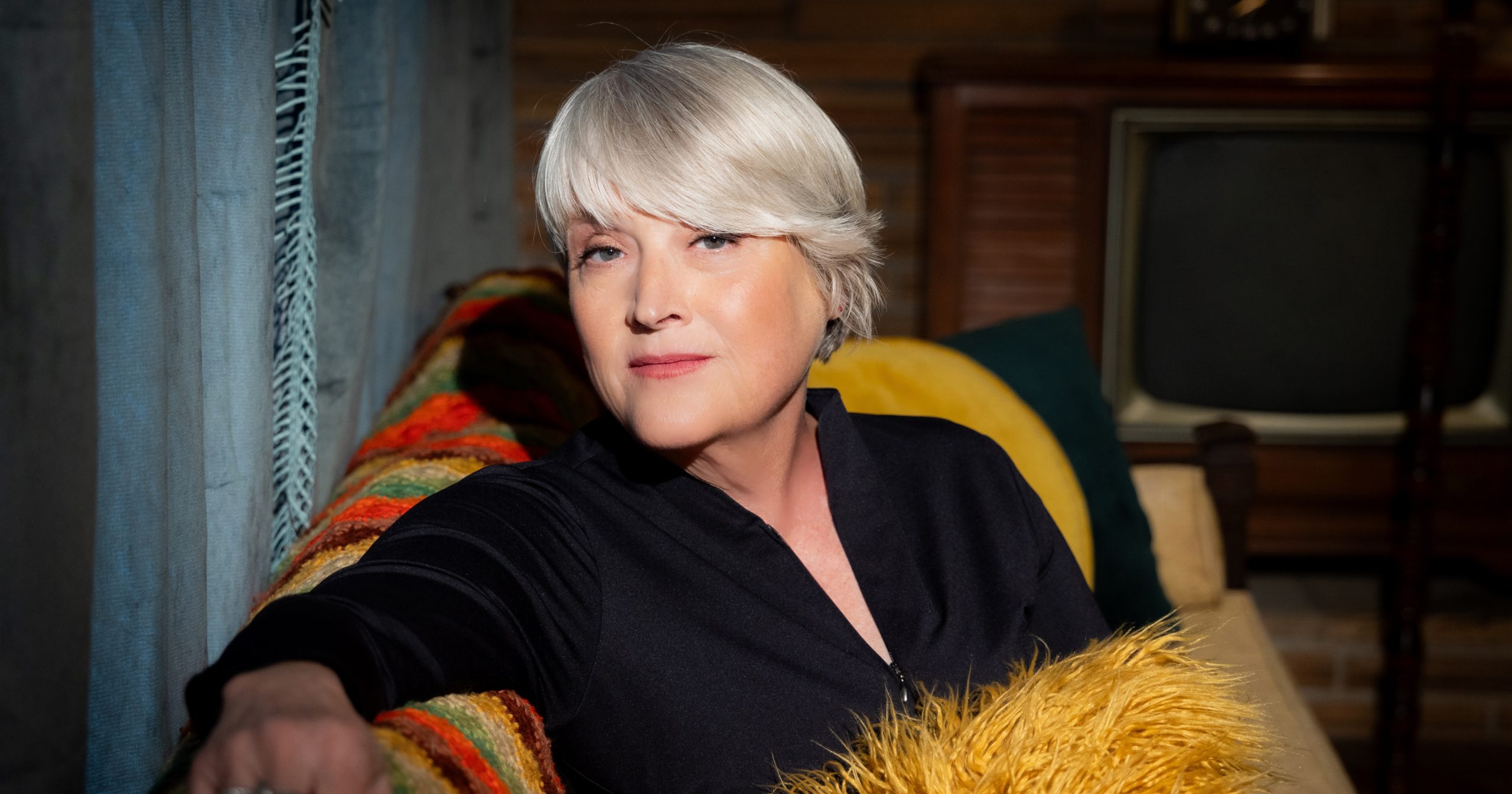
With a voice that shimmers like sunlight on a rippling lake and songs that step deftly through ever-shifting emotional terrain, Kim Richey is the queen of understated finesse. On her latest album, Every New Beginning, she carefully tempers the ache of loss with moments of humor and even optimism. Produced by Doug Lancio (Patty Griffin, John Hiatt) and containing collaborations with Don Henry, Mando Saenz, Jay Knowles, Aaron Lee Tasjan, and Brian Wright, among others, it provides yet another elegantly nuanced reminder of why other singer-songwriters revere her talents.
Dozens of country and Americana artists have invited her to sing on their albums and/or recorded her songs or ones they co-wrote, including Rodney Crowell, Vince Gill, Martina McBride, Patty Loveless, Will Kimbrough, Chuck Prophet, the Chicks, and Brooks & Dunn. Radney Foster had a No. 2 hit with their co-write, “Nobody Wins;” Richey earned a Grammy nomination for co-writing Trisha Yearwood’s No. 1 song, “Believe Me Baby (I Lied).”
In October, she’ll open the final show of Jason Isbell’s annual Ryman Auditorium residency; last year, she helped celebrate the 10th anniversary of his career-making Southeastern album by reprising her vocal contributions. During Brandi Carlile’s solo-set debut at the 2019 30A Songwriters Festival, she spotted Richey and declared, “Kim Richey has been my hero since I was 16!” Citing the Ohio-born East Nashville resident as a major influence, Carlile beckoned Richey onstage to sing “A Place Called Home.” Turns out that wasn’t the first time — and, as Richey notes in this interview, conducted during her recent U.K. tour, it wouldn’t be the last.
Listening to these songs, one could assume this is a breakup album. But you’ve mentioned that songs like “Take the Cake” aren’t necessarily about a specific person. Are there breakups reflected within these songs?
Kim Richey: People always assume they’re breakup songs. [The “Feel This Way” line], “It hurts like it’s always gonna feel this way” — my mom passed away in November. It can be the loss of a friend, the loss of a family member, or it’s just a lot of looking back. COVID really had an effect on me that way, and maybe a lot of people as well, where I had old friends getting in touch out of the blue, and people taking stock, and that’s stuck with me.
You could hear “Feel This Way” as a song about grief or even generalized depression, which certainly doesn’t have to be precipitated by an event.
Or [the song] “A Way Around,” it’s like, “Oh, man, things are not going my way.” It can be general. That’s a great thing about songs; people can have their own interpretation of them and it can connect with them and help them. Maybe it’s something that they’re going through, which was not necessarily my intention when I wrote it, if that makes any sense. If I’m going through a hard time, it’s just nice to hear a song and think, “They know exactly how I feel.” You don’t feel alone.
I think that’s one of the major functions of songs — giving us something to connect to, even if it’s just to pull the tears out. Sometimes that’s all you have when you’re feeling like that. But let’s talk about something that must have been a really happy time: Brandi’s Girls Just Wanna Weekend in Mexico. Was that the first time you got invited, or the first time it worked out to go?
I actually did get invited a couple of years ago, but I’d already promised my parents I was going somewhere with them. But this was getting organized while my mom was in the hospital and everything, so I went down [in January] not really having any idea what to expect. When I got there, they asked if I could come to the rehearsal for Ladies of the ’80s, so I go to the rehearsal, and there’s Annie Lennox. And that was just the start of me crying the entire weekend.
Then I got to meet Wendy & Lisa, and Wendy was so sweet. And when the four of us — Brandy Clark, Brandi Carlile, Mary Chapin [Carpenter] and myself — were onstage playing songs, the crowd was so overwhelmingly amazing that Chapin and I just sat up there and cried in-between songs. It was absolutely one of the most intense and beautiful musical experiences, really, ever, for me. It’s hard to explain the vibe of it. The feel of the festival is so inclusive, and so kind and fun. I’ve never been to anything like that before.
Brandi’s always been really great to me. Like that year of the Pilgrimage Festival, that’s right outside of Nashville, got rained out [2018], her people called City Winery and said “Hey, can we come there and play?” and they packed it out. I had just gotten home from a tour and she texted and said, “Hey, you want to come and play with me tonight?” and I’m thinking, “Absolutely not. I don’t know who you are. I’m in a bathrobe, and I’m gonna watch TV and do absolutely nothing.” I texted back and said, “Who is this?” And it was Brandi and it’s like, “OK, I’ll be right over!”
I love seeing your Instagram traveling pictures. It seems like you seek out interesting places wherever you go. Is that something you’ve always done?
I always want to explore the places where I go, whether it’s a big famous place or some town nobody’s ever heard of. I don’t want to sit in a hotel. I like to find the local great food or coffee or something. One of my most favorite parts about doing music and playing shows is the touring and getting to go and see all these different places. It doesn’t have to be some really exotic place, because one of the things I love about touring in the states is you get to see some of these smaller towns and out-of-the-way places that you would never go to on purpose, because you don’t even know they’re there. I’ve found some fantastic restaurants and sites and hiking places; there’s all kinds of fantastic places in the states. Like, I love Michigan, the Great Lakes; that’s beautiful.
That brings me to the song about your home state, “Goodbye Ohio,” which you describe as “a leaving song.” Do you still have ties there?
Well my mom’s gone, but my stepdad still lives in Ohio and I’ve got my cousins and auntie. I still have a lot of people in Ohio. I go back up there pretty regularly.
So it’s not bittersweet to go home.
Oh, no, no, no. I got all the time in the world for Ohio. I like the people there. It’s very Midwest, and I like that. It’s interesting, too, because the different parts of Ohio are really different, like Southeastern Ohio has more in common probably with West Virginia. And then when you get further up toward Cleveland and Akron, that’s more Northeast-y vibes. It’s great; it’s got a lot going on.
What are some other destinations you would recommend?
I love Glasgow, that’s always been one of my most favorite places. Mostly these days, I’m not in a [tour] bus, I’m in a car or a van. You actually can see all these places you’re driving through, and then you have the ability to go, “Hey, what’s that weird shop there? Let’s pull in and see what that is.” When you’re on a bus, you’re just [taking] the quickest and easiest way to get from one point to the other. So I’ve really enjoyed that part of traveling in a car.
I’ll tell you someplace I just went that was absolutely amazing. My friend Dean Tidey was playing guitar with me and we had a couple days off on the West Coast, so we went to Sequoia National Park and stayed for a couple days in this Airbnb that was right on this beautiful mountain stream. And since it was still early springtime, there weren’t a lot of people there. There was still snow on the ground. I love doing stuff like that. The more I travel, the more I want to see. And the more I travel, the more I know there’s just so much stuff out there to experience and see.
Gosh, I’ve been all over the place. I love London; I lived here for five years. I love Belfast. I got to go to Croatia last year on a boat trip with the Accidentals, and that was amazing.
I love that band! Tell me how you wound up on a boat trip with them.
Well, they asked me to come along. It was a fan trip, and we played and slept on the boat and went to these different harbors. We docked in a different place every night – it was just a cool trip. There were bike rides; there was a lot of swimmin’. We went to Dubrovnik and toured different cities; we were all over the place. And I had no idea. I didn’t think of that as being a Mediterranean country. The food is fantastic. The people were super, super nice. I really loved being there.
You have such a great body of work, and younger artists who appreciate that, and appreciate you, they’re hooking into you and having you play. It seems so important for that kind of give-and-take to happen, in both directions.
It’s great for me, because I get excited about stuff. I love writing with Aaron Lee. He used to live just across the alley from me, so that’s how I got to know him. He’s definitely one of my favorites and one of the most talented musicians and songwriters. He’s great with lyrics and music, the whole deal, and a brilliant player. So it’s fun for me, too, to find somebody new that I really love writing with. It’s one of my favorite things, to write with other people.
Is there anything else you want to talk about?
Well, I would like to like thank the guys who played on the record, especially Doug Lancio, who did so much great work. He played most every string thing aside from when Aaron Lee played on a couple songs. And we had [bassist/mandolinist] Lex Price, who I’ve been wanting to work with for a long time. And Dan Mitchell and Neilson Hubbard; I’ve been playing with those guys for years. And the Accidentals came and put strings on a couple songs. So I just really want to give a shout out to the musicians, and my songwriting friends.
One song, “The World Is Flat” is an old one that I wrote with Peter Vetesse. He lives in Bristol, [England], and we played and he came and we got to play the song that we wrote together. I just never recorded it because it was so sad. I have a lot of sad songs, but there’s always a little kernel of something [positive]; “The World Is Flat” was like, you’ve just kind of given up. But the demo that he made was so beautiful, I just thought if I never make another record, I want people to hear that song.
You just said, “If I never make another record” – obviously, we hope that’s not true. Do you feel like you’re at a point now where you think in those terms?
A little bit. I do enjoy playing, but [touring is] tough physically. But I love to travel and I have super-close friends over here, in New York, in Washington state. Playing and touring allows me to go and spend time with those people. I do love playing for people and writing songs and making records, so we’ll see. I don’t know how much longer I’ll do it. This could be my last record, but you don’t want to say it is, because you never know.
Photo Credit: Stacie Huckeba
This website uses cookies to improve your experience. We'll assume you're ok with this, but you can opt-out if you wish.AcceptRejectRead More
Privacy & Cookies Policy
Privacy Overview
This website uses cookies to improve your experience while you navigate through the website. Out of these, the cookies that are categorized as necessary are stored on your browser as they are essential for the working of basic functionalities of the website. We also use third-party cookies that help us analyze and understand how you use this website. These cookies will be stored in your browser only with your consent. You also have the option to opt-out of these cookies. But opting out of some of these cookies may affect your browsing experience.
Necessary cookies are absolutely essential for the website to function properly. This category only includes cookies that ensures basic functionalities and security features of the website. These cookies do not store any personal information.
Any cookies that may not be particularly necessary for the website to function and is used specifically to collect user personal data via analytics, ads, other embedded contents are termed as non-necessary cookies. It is mandatory to procure user consent prior to running these cookies on your website.