Confidence Is the Hallmark of Magnolia Boulevard’s Album Debut

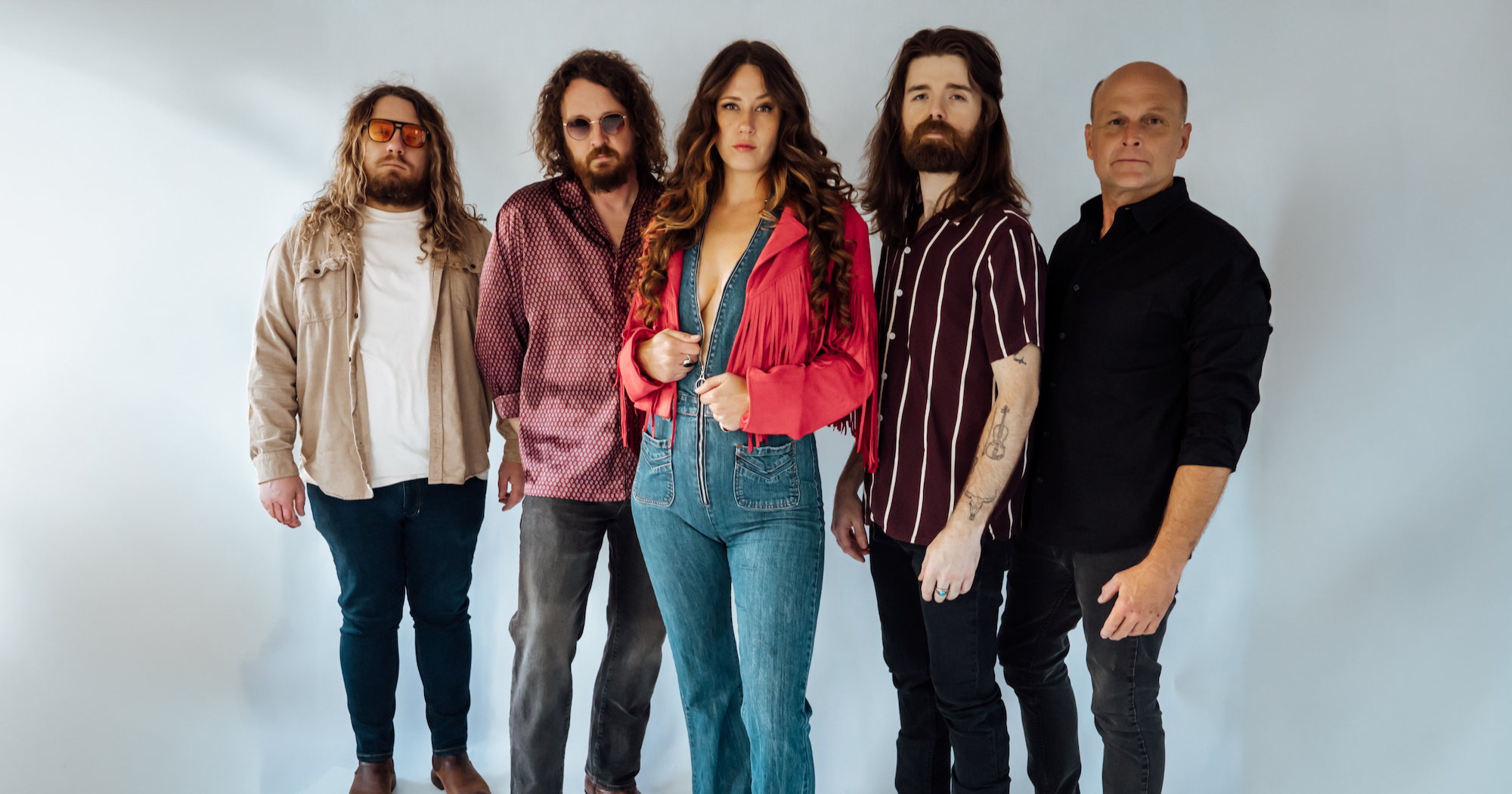
While Kentucky is the birthplace of the father of bluegrass and as a hotbed for country artists, it also has much more to offer. Proof lies with Magnolia Boulevard, who’ve been turning heads with their mix of Appalachian soul and southern rock since their formation in 2017.

Led by powerhouse vocalist Maggie Noëlle – whose voice has drawn comparisons to everyone from Susan Tedeschi and Bonnie Raitt to Grace Potter and Amy Winehouse – the Lexington-based group has experienced highs like winning the band competition at Virginia’s FloydFest, hitting the road with Blues Traveler, and earning the personal endorsement of Paul Reed Smith and PRS Guitars – not to mention Noëlle becoming a mother. However, they’ve also experienced the lowest of lows, from having some of their biggest shows to date cancelled during the COVID pandemic to the unexpected death in 2021 of their drummer and founding member, Todd Copeland, that have done everything but derail them.

But instead of crumbling under the pressure, the band – now comprised of Ryan Allen (keys), Roddy Puckett (bass), Austin Lewis (lead guitar), Brandon Johnson (drums), and Noëlle – have fought through those trials and tribulations to deliver their long-awaited debut album. The self-titled effort looks at strength and perseverance in its many forms, from leaving relationships that are no longer serving you (“On My Own”) to learning to overcome and adapt regardless of the circumstances (“Strong-Willed Women”) and forgiving Noëlle’s father for never being around (“Nomad”).

According to Noëlle, the album marks a noticeable shift in her songwriting that reflects a much more personal tone and side of herself that she’s refrained from showing fully on stage, going all the way back to her days before the band when she sang in the bluegrass outfit Moonshine District.

“It’s taken a long time, but I’m finally realizing that songwriting for me is very much therapy,” she says. “Writing things down and getting it out and releasing it is just so gratifying and feels so empowering after being scared to do so for so long.”

During a candid conversation at an indoor market on Lexington’s north side, Noëlle spoke about everything from the long road to the band’s first album. We chat about how the sudden loss of Todd Copeland rocked the band’s world, the confluence of Appalachian and Southern music that informs the band’s sound, and more.

Why was now, eight years into the band, the right time to release your debut record?

Maggie Noëlle: I’ve wanted to put out a full-length record for years and years now. A lot of why we hadn’t yet was due to the age of streaming and constantly fighting the algorithm to get our name in front of people. Because of that, we’ve focused a lot on single releases as a way to gain more traction and win the algorithm over. But we also have a good, hard-working group of guys that are 100% for the music as a collective. Playing with them just comes so naturally, which has made everything from playing to writing together a lot easier. It’s about damn time! [Laughs]

Indeed it is! Regarding the song “It’s About Damn Time,” is it a reference to that long road to bringing the album to life, or something else entirely?

Ryan and I actually started “It’s About Damn Time” when we were driving to New Orleans to play an acoustic duo set at JazzFest. The idea was to portray the feeling of waiting around for things to change but ultimately realizing it’s you who has the control to change what you want in life. Even though it wasn’t originally meant for us as a band, it’s definitely shed some light on the progression of the group. It’s about damn time we finally have a full-length album!

You’ve had a lot of turnover in the band since 2017, from members coming and going to Todd Copeland’s death in 2021. What’s it been like continuing to make music as all of that has happened around you?

First and foremost, this band was Todd Copeland’s baby. He had an idea and knew he wanted to essentially give me a platform for my voice that I’d never had before with electric music. We kind of peaked during COVID after winning FloydFest’s On The Rise band competition in 2018 and going on tour with Blues Traveler in November 2019. But soon after, the world shut down, leading to the summer being letdown after letdown as we watched all the huge festivals we had lined up get canceled.

When 2021 rolled around, we were all excited to get back into the world until Todd’s unexpected passing, which shook all of us up in a way that we didn’t even understand. Obviously we were mourning our brother and friend, but it definitely shifted a lot of our energy. We’ve dealt with some more heavy punches since then, but we’ve also overcome a lot as well. Having someone in the group now like Roddy, who was close with Todd and played with him in the band Green Genes during the ‘90s, has made everything feel very full circle.

This album will also mark the band’s first vinyl release. What are you most excited about with that?

It’s something that fans have been asking us for for a while, so we’re thrilled to finally be giving it to them. We started taking some with us to sell at shows earlier this month and have already gone through a bunch of what we ordered. At the same time, though, it bugs me that so many songs from it are already released as singles. With records, I love listening to them front to back because oftentimes the track sequencing tells a story. But with how we approached releasing this it feels like it’s stealing some of the magic even though the full album still features three tracks – “Nomad,” “Anything,” and a cover of Robinella’s “Man Over” – that won’t be unveiled prior to it coming out.

Tell me about the Robinella cover?

When I was really little my aunt and uncle took me to Bristol Rhythm & Roots and I saw her perform. I was only 11 or 12 and fell madly in love with her and have been listening to the band ever since. She has a song called “Man Over” that I’ve long covered in my solo sets that Ryan really likes, so we decided to bring it to the band and put our own spin on it.

How did you decide which songs to put out as singles and which ones you wanted to save for the full album release?

Aside from the cover, “Nomad” and “Anything” are definitely two of my favorites that we recorded for the album. The latter is one that Ryan actually co-wrote with Madelyn Baier, who I didn’t meet until after the fact. When I did I told her how much I loved the song and she told me she thought it was meant for me to sing it. When Ryan first sent it to me I remember replaying it over and over. Before long, it turned into a mantra of sorts to help me acknowledge the special people and moments in my life and not turning a blind eye on things just because shit gets hard.

“Nomad” is also a very special song. Something I’ve always struggled with in my songwriting is opening up about my personal life, mental health, and emotions. That tune is a bit of a forgiveness song for my dad, who’s never really been a presence in my life. Rather than be bitter about it, I wanted to write a song that forgives him for that absence and reflects on how good a person I’ve turned out to be despite that.

“Strong-Willed Women” is another song that appears to take on a similar tone of highlighting strength to overcome adversity. Mind telling me about it?

I initially wrote that song when I was 17 or 18 about a health scare the women in my family were dealing with. It’s a song I never really expected to throw at this band, but Ryan always liked it and even helped me rewrite the bridge portion of it. It’s one we’ve been playing since the start that I don’t think I’ll ever get tired of. Lyrically it’s very close to what you described – about a person going through something really hard and overcoming it. Strength and resiliency are both really big parts of not just this track, but of the whole album.

You just mentioned how old “Strong-Willed Women” is compared to the other songs on the record. How do you feel you’ve evolved as a songwriter since penning that song in comparison to the newer tracks it joins here?

The difference is night and day and confidence is a big reason why. Ryan has always been in my corner encouraging me and trying to light a fire under my ass. He tells me that I have good songs inside me, I just need to practice and learn to use the tool correctly. I think a lot of what held me back in the past was being afraid to let all my dirty laundry out – not that I have much to begin with anyway. It’s taken a long time, but I’m finally realizing that songwriting for me is very much therapy. Writing things down and getting it out and releasing it is just so gratifying and feels so empowering after being scared to do so for so long.

With that in mind, what does it mean to you to be celebrating the album’s release back home with your biggest fans and earliest supporters at The Burl during your second annual Soul Stuffing Friendsgiving?

Being able to finally have a full length record out is such a personal achievement for me, and to share that with the community and people that have stood with us for eight years now is the icing on the cake. There’s some people – like you – who’ve been coming to all of our local shows and then some since the very beginning that have been begging us for this moment. There’s nothing more gratifying to have this moment with them back where this journey began. We’re also just very blessed – not only in Lexington, but Kentucky in general – to have so many talented musicians and other folks that we call friends who’ve been championing us for a long time too. It all feels like we’re one big family, which will make this celebration just after Thanksgiving all the more special.

What has the process of bringing this record to life taught you about yourself?

Like I said earlier, it’s taught me to have more confidence in myself – both on and off the stage. It’s taught me that I’m capable of letting people in more than what I have in the past and that I still have so much to learn. I’m always going to be my own worst critic, but when you have so much great feedback from great musicians and engineers like Duane Lundy it’s made it easier for me to accept their praise and keep my own thoughts and criticisms to myself.


Photos courtesy of the artist.
BGS Class of 2022: Musical Moments from Joni Mitchell, Molly Tuttle, and More

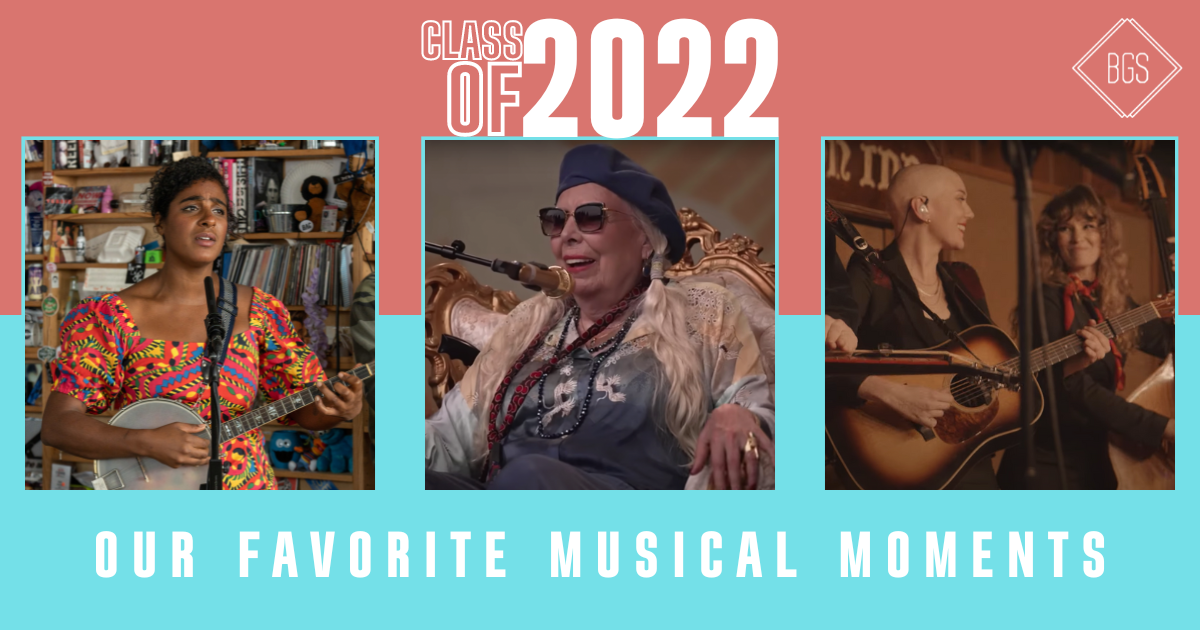
Whether you’ve been following the Bluegrass Situation for 10 years or 10 days, you’ve likely noticed that we cover more than bluegrass. That’s especially evident in our BGS Class of 2022, a retrospective written by our contributors that includes numerous familiar faces, a couple of superstars, and even a few surprises. (And you can probably tell that we’re fans of live music.) Here are our favorite moments of 2022, listed alphabetically and enthusiastically.

Banjos, Banjos, and More Banjos

For banjo lovers, 2022 offered an array of styles and inspirations. Jake Blount explored Afrofuturism on The New Faith, while Caamp’s Evan Westfall channeled his Ralph Stanley influences into the Americana-leaning album Lavender Days. Pharis & Jason Romero embraced a folk sound in “Cannot Change It All,” Tray Wellington indulged his interest in jazz on Black Banjo, and Leyla McCalla related her Haitian heritage in songs like “Fort Dimanche.” Could banjos be the great unifier? — Craig Shelburne


Big Thief, “Spud Infinity”

With its bounding cartoon mouth harp and Adrienne Lenker’s hound dog howl, this standout on Big Thief’s double album, is a goof on Americana tropes, a funny embrace of the kookier sides of early Dylan or maybe Country Joe & the Fish. The song’s odd climax is the bemused realization that you can’t kiss your own elbows: “They’re on their own!” Lenker declares. How the band manages to pivot from such silliness to a genuinely moving existential query is a cosmic bit of choreography. — Stephen Deusner


Black Artists in Country Music

Forty years ago I wrote a review of Big Al Downing’s LP on the Team label for the Bridgeport Post-Telegram (today the Connecticut Post). I got two letters — one from (I presume) a white man saying, “N-words don’t sing country music. Why did they print your crap?” The other came from a Black guy saying, “You’re a great writer. Write about OUR MUSIC.” I know he’d be thrilled at the presence of so many Blacks in country today, and at videos like Jimmie Allen’s poignant ‘Down Home.’ It’s about life, love, country things and every bit as much about Black life as any ghetto saga or rap chronicle. Seeing it always makes me happy and seeing him and other Black stars excel in country reaffirms it is AMERICAN music, period. — Ron Wynn


Kate Bush’s Second Run and Sam Bush’s Radio John

If this year gave us one thing to be especially grateful for, it was the return of Kate Bush, whose 1986 earworm “Running Up That Hill” was inescapable following its prominent inclusion in Season 4 of Stranger Things. Suddenly Kate was almost everywhere (though to some of us she never really went anywhere but I digress…). Even my 16-year-old niece suddenly knew about “Cloudbusting” and “Wuthering Heights,” to my great joy. But Kate wasn’t the only Bush to make an impact in 2022. A more familiar face to BGS fans, the Sam variety of Bush released a beautifully personal tribute, titled Radio John, for his friend and musical icon John Hartford. While the Bushes’ music couldn’t be more diametrically opposed, the “Bushaissance” was a welcome reminder that some of our most legendary artists continue to be as prolific and relevant as ever. — Amy Reitnouer Jacobs


Mike Campbell & The Dirty Knobs at Brooklyn Bowl Nashville

This March 15 show began as a statement of where Mike Campbell is going and ended with a celebration of where he’s been. It was a cathartic night of mourning Tom Petty’s death and celebrating that his brand of literate rock lives on through Campbell’s music vision. It was exhilaratingly joyful. Bonus: Margo Price bashing away on drums behind husband and opening act, melodic songwriter Jeremy Ivey. — Jim Patterson


Cimafunk at Austin City Limits

When Cimafunk taped his Austin City Limits debut in May, it was like watching the spirits of James Brown and Prince explode into an Afro-Cuban soul-funk supernova. The moves, the grooves, the seductive way rhythms rippled through his body … the language barrier simply melted away, replaced by pure, infectious energy. From gorgeous balladry to syncopated deliciousness, Cimafunk & the Tribe, his eight-piece, jazz-influenced band, left me crushing hard — and dancing out the door. — Lynne Margolis


JazzFest Returns

The first second line parade… the first blaring brass band … the first Cajun waltz… the first bite of a cochon de lait po’ boy… New Orleans’ JazzFest was back after three looooong years! The “headliners”? Who cares? The stuff you can’t get anywhere else was what we missed. DahkaBrakha from war-torn Ukraine, their traditional towering hats against a backdrop of the words “Won’t Bow Down,” the defiant credo of New Orleans’ Black Masking Indians? Yeah you right. — Steve Hochman


Kentucky Rising Raises $3 Million

After flash flooding decimated Eastern Kentucky in early August, Chris Stapleton organized a relief concert at Lexington’s Rupp Arena on Oct. 11 that included Kentucky all-stars Tyler Childers and Dwight Yoakam. The show’s highlight came during a star-studded finale that saw Eastern Kentucky musical paragons Ricky Skaggs and Patty Loveless join others for a rendition of John Prine’s “Paradise.” The surprise moment was a powerful reminder of how, even in the darkest of times, music has the power to lift spirits. — Matt Wickstrom


Joni Mitchell at Newport Folk Festival

After a 2015 aneurysm left Joni Mitchell having to relearn how to walk and sing, her performing days seemed over. But she had a comeback for the ages at this past July’s Newport Folk Festival, with help from Brandi Carlile and friends. Mitchell’s first full set in 23 years was an unequivocal triumph, especially the penultimate “Both Sides Now” – which had everyone there openly weeping. The moment of redemptive healing we didn’t know we needed. — David Menconi


Plains, I Walked With You a Ways

Waxahatchee’s Katie Crutchfield and Jess Williamson teamed up to form Plains this year, and Williamson may have written the perfect millennial country song for the project (though, as country music tends to do, it’ll resonate with any generation.) “Abilene” reluctantly talks of dreams that once were — now abandoned, for one reason or another. With white picket fences being harder than ever to reach these days, “Abilene” might leave my fellow millennials crying into their avocado toast, but immediately swept back up by this wholly incredible and refreshing album. — Shelby Williamson


Caitlin Rose, CAZIMI

Before November, Caitlin Rose hadn’t released an album since 2013 — and still managed to be a “top-played” artist for me every year. CAZIMI perfectly encapsulates why: Her hummable melodies, expertly balanced instrumental twang, and smart lyrical candor make every song feel like a confessional with your wittiest friend. From the forward-looking harmonies of “Getting It Right” to the vulnerable, clear-voiced “Blameless,” CAZIMI is yet another Rose stunner I’ll be spinning for decades to come. — Dacey Orr Sivewright


Sam Shackleton on Gems on VHS

A top musical moment for me this year was watching Scottish musician and folklorist Sam Shackleton on GemsOnVHS’ YouTube channel, performing the classic song “House Carpenter” from Arthur’s Seat which overlooks his hometown of Edinburgh. I love how Shackleton’s spirited busker style puts him at ease anywhere, solo or in a crowded pub jam. His richly accented singing voice and his unpretentious banjo style shine through in this video. — Lindsey Terrell


Sister Sadie, “Diane”

So, how’s this for a storyline? The singer finds out not only that her boyfriend is a two-timing creep, but also that he’s married to her friend Diane. And in this female take on the cheating story, knowing she has betrayed a friend is what hurts most. After a sweet acapella intro, a banjo backup tells you to strap in — the bluegrass is about to take off. Great story, great vocals, great drive. – Claire Levine


Chris Stapleton & Patty Loveless at the CMA Awards

For my musical moment of 2022, I didn’t have to go too far back. At this year’s CMA Awards, Chris Stapleton and Patty Loveless joined forces on a Darrell Scott classic, a gut-wrenching song about the hardship of living in the coal country of Eastern Kentucky. I performed this song a few times in my day and it still makes me shiver when I hear the hook: “You’ll Never Leave Harlan Alive.” — Jonny Therrien

https://www.youtube.com/watch?v=pZ2ZgQ1AP2c


Town Mountain, “Lines in the Levee”

With its first album on New West Records, Lines in the Levee, Town Mountain has broken into a new, exciting level. Based in Asheville, North Carolina, this Americana/bluegrass act is a high-octane, live-wire presence on stage. And, with this latest record, the group dug deep into its lyrical wellspring, commenting on the state of affairs in America — a melodic voice of reason amid uncertain times. In truth, after 17 years together, the band is only getting more raucous and riled up. “Lines in the Levee” has already become a staple in the concert realm. — Garret K. Woodward


Molly Tuttle & Golden Highway, “Crooked Tree”

Molly Tuttle’s “Crooked Tree” is a testament to finding strength in otherness. It’s a track that leans into traditional aesthetics while oozing Tuttle’s personality, worldview, and musical ethos — which remind of second-generation bluegrass trail blazers like Laurie Lewis and Lynn Morris. The confidence, vigor, and panache Tuttle has built with Golden Highway and on Crooked Tree are striking and widely resonant; in November, she received two Grammy nominations: Best New Artist and Best Bluegrass Album. — Justin Hiltner


Watkins Family Hour, Vol. II

I cheered about everything that went into Watkins Family Hour’s Vol. II. Not to downplay the 20-year milestone of Sean and Sara Watkins’ collaborative project but their third LP being devoted to just that, collaboration, felt like a burst of sunshine against lockdown’s darkness. Each song sounds so full of human individuality — of life. Rather than listening to a recording, I feel like I’ve walked into Largo for Watkins Family Hour’s next live show. — Kira Grunenberg


Photo Credit: NPR (Leyla McCalla); Newport Folk Festival (Joni Mitchell); Nonesuch Records (Molly Tuttle)

The Show On The Road – Blind Boys of Alabama

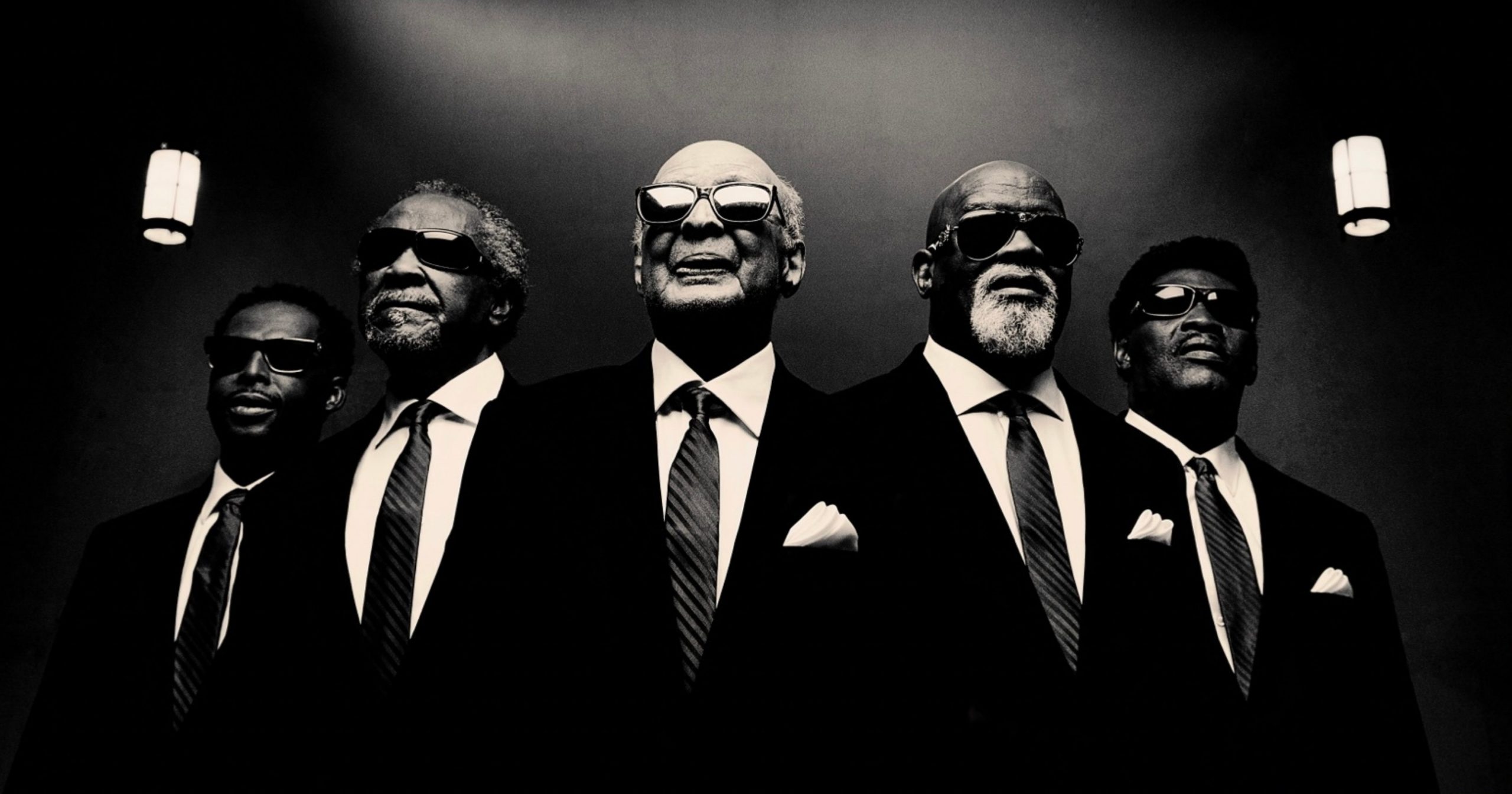
This week on The Show On The Road, in honor of Black History Month, we bring you a conversation with members of foundational gospel group, The Blind Boys Of Alabama, including longtime singer Ricky McKinnie and beloved senior member Jimmy Carter, who has been with the group for four decades.

LISTEN: APPLE PODCASTSSPOTIFYSTITCHER

Formed in the late 1930s with talent discovered at the Alabama Institute For The Negro Blind, the Blind Boys of Alabama have superseded limitations to bring their own high-spirited version of jubilee gospel throughout the world. Their music was often the backdrop to the Civil Rights Movement as Martin Luther King Jr. toured the south, and Jimmy and Ricky are both amazed and grateful that their message is still ringing true throughout the latest iteration Black Lives Matter movement that grew during the tumultuous last year.

While the members of the band have changed through time, the group has stayed steadfast to preserving a kinetic, church-based music that doesn’t seek to evangelize, but can bring people of all faiths together. Indeed, watching Jimmy and the other bespectacled members walk with hands on each other’s shoulders into the youthful crowds of adoring festival-goers, from Bonnaroo to Jazzfest, is really something to behold.

The Blind Boys’ body of work continues to grow. In the last few decades they’ve gamely collaborated with a wide range of secular artists from Peter Gabriel to Ben Harper to Bonnie Raitt, they made an album produced by Justin Vernon, AKA Bon Iver (2013’s stellar I’ll Find A Way), and they shrewdly reworked the ominous Tom Waits classic, “Way Down In The Hole,” which became the theme for HBO’s The Wire.

Their newest full length album, Almost Home, is a particularly moving treatise on morality and mortality. It features songs written by Marc Cohn, Valerie June, The North Mississippi All Stars and many others and was the last record that longtime member and bandleader Clarence Fountain was a part of before he passed away. He was a member of the Blind Boys of Alabama for nearly sixty years.

As Jimmy playfully mentions throughout our conversation, the Blind Boys of Alabama never let being blind stand in the way of doing what they do best: putting on a show. They’re entertainers at heart and it’s no small feat that they’ve brought a nearly lost form of swinging, soulful (and expertly arranged) gospel from the small southern towns where they grew up, all the way to the White House, where they’ve held court for three different presidents. And they’ve won five Grammy Awards along the way.

Stick around to the end of the episode hear their rich cover of Bob Dylan’s “I Shall Be Released.”


Photo credit: Jim Herrington

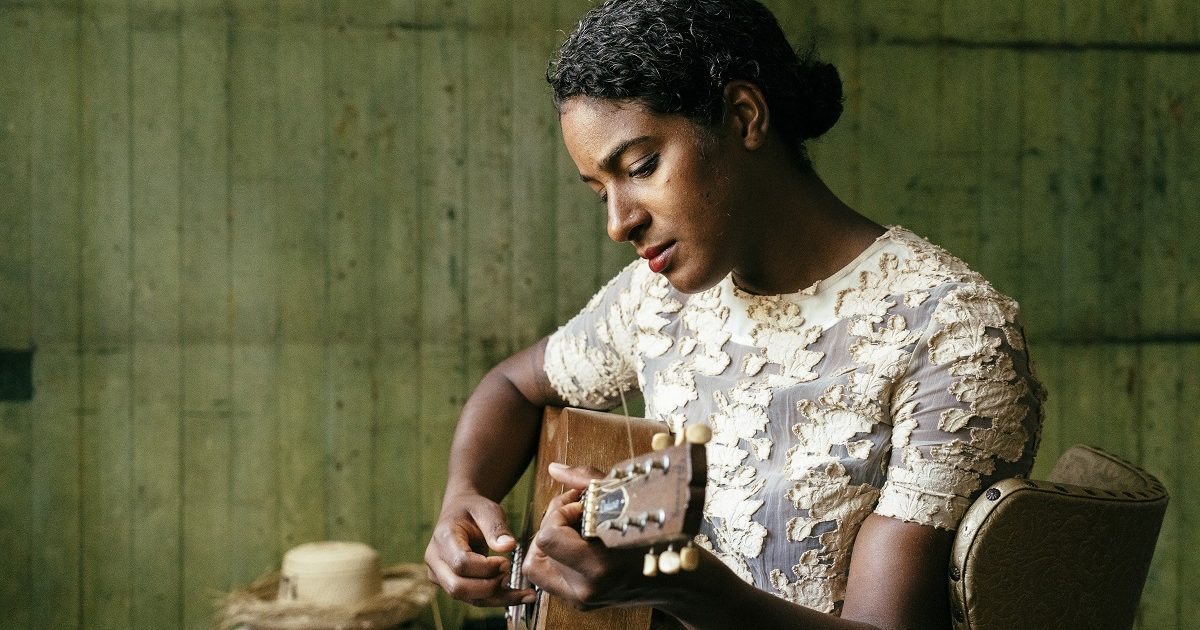
BGS 5+5: Leyla McCalla

Artist: Leyla McCalla
Hometown: New Orleans, Louisiana
Latest album: Vari-Colored Songs: a Tribute to Langston Hughes (reissue)

What’s your favorite memory from being on stage?

My favorite memory from being on stage was at the New Orleans Jazz and Heritage Festival in 2019. To be clear, New Orleans shows are always my favorite shows. People LOVE music in New Orleans and the connection you feel with the audience is transcendent. I have played Jazzfest almost every year since 2012, but 2019 was the first year that I got to play the Fais Do-Do stage. I invited Topsy Chapman and her daughters Yolanda and Jolynda to sing with me, which was a total trip, because I had never had background singers on stage with me. I also invited my friend Corey Ledet, the accordion dragon, to play on a couple of songs and the addition of accordion to the sound of my band is something that I continue to long for. We all left that stage flying high.

What other art forms — literature, film, dance, painting, etc. — inform your music?

I am deeply inspired by what I read. Something about reading words on a page and the mindfulness that it takes to absorb that information inspires me to write music. Perhaps it’s the quietness of that activity that helps me to hear music. While I really enjoy biographies, I also love poetry and the rare novel.

What was the first moment that you knew you wanted to be a musician?

I studied classical music very seriously from the age of 12 to 15 and was determined to make a career out of my cello playing. But the moment that planted the seed for the musician that I am today happened when I was 18 years old. I met my teacher and mentor Rufus Cappadocia, a phenomenal cellist who plays a self-designed five-string cello, at a party in Brooklyn. He was playing with a band called the Vodou Drums of Haiti. This experience absolutely blew my mind. Seeing the cello in that context instantly changed the direction of my musical pursuits and gave me a sense of possibility of what cello playing could be outside of the classical context.

What’s the toughest time you ever had writing a song?

The toughest time that I ever had writing a song happened with the song “I Knew I Could Fly.” I had been playing the guitar riff for the song for years, always struggling to figure out what the words, if any, should be to the song. Every path I went down felt insincere and I laid the song to rest several times before bringing it to the Native Daughters session in Breauxbridge, Louisiana. Alli Russell helped me to talk out my idea, which led to a breakthrough and we ended up co-writing the lyrics to the song and recording it the next day. I’ve always been surprised and pleased that of all of the songs on the Songs of Our Native Daughters album, that song ended up with the most plays.

If you had to write a mission statement for your career, what would it be?

I believe in the power of music as a healing force. I use the process of making music to understand the world that we live in and to direct my own healing. I share that process to connect with people and to aid in our collective healing. I am committed to understanding the role that history plays in creating our reality and how music can help us to process our emotions and increase our empathy for each other.


Photo credit: Rush Jagoe