Hangin’ & Sangin’: I’m With Her

From the Bluegrass Situation and WMOT Roots Radio, it’s Hangin’ & Sangin’ with your host, BGS editor Kelly McCartney. Every week Hangin’ & Sangin’ offers up casual conversation and acoustic performances by some of your favorite roots artists. From bluegrass to folk, country, blues, and Americana, we stand at the intersection of modern roots music and old time traditions bringing you roots culture — redefined.

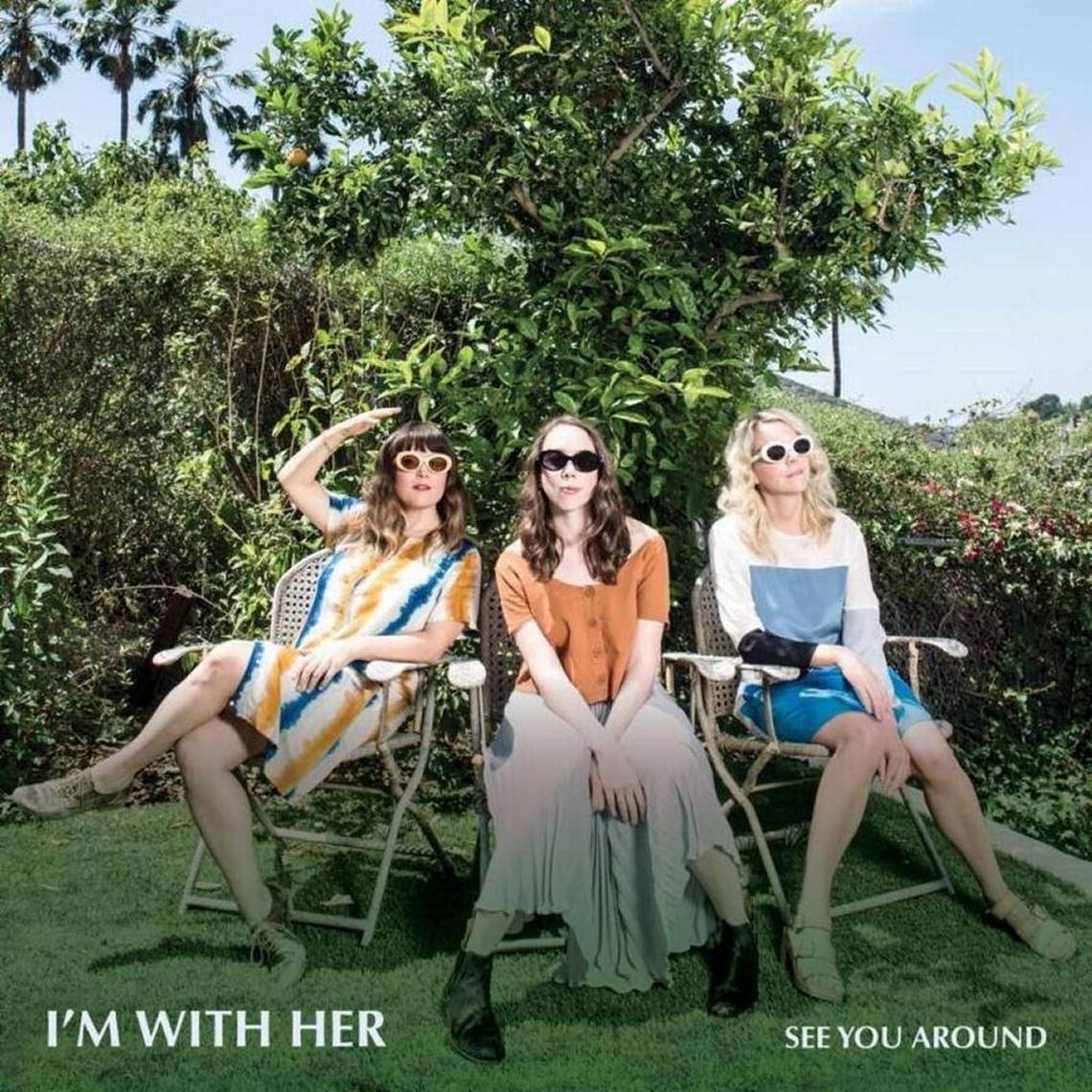
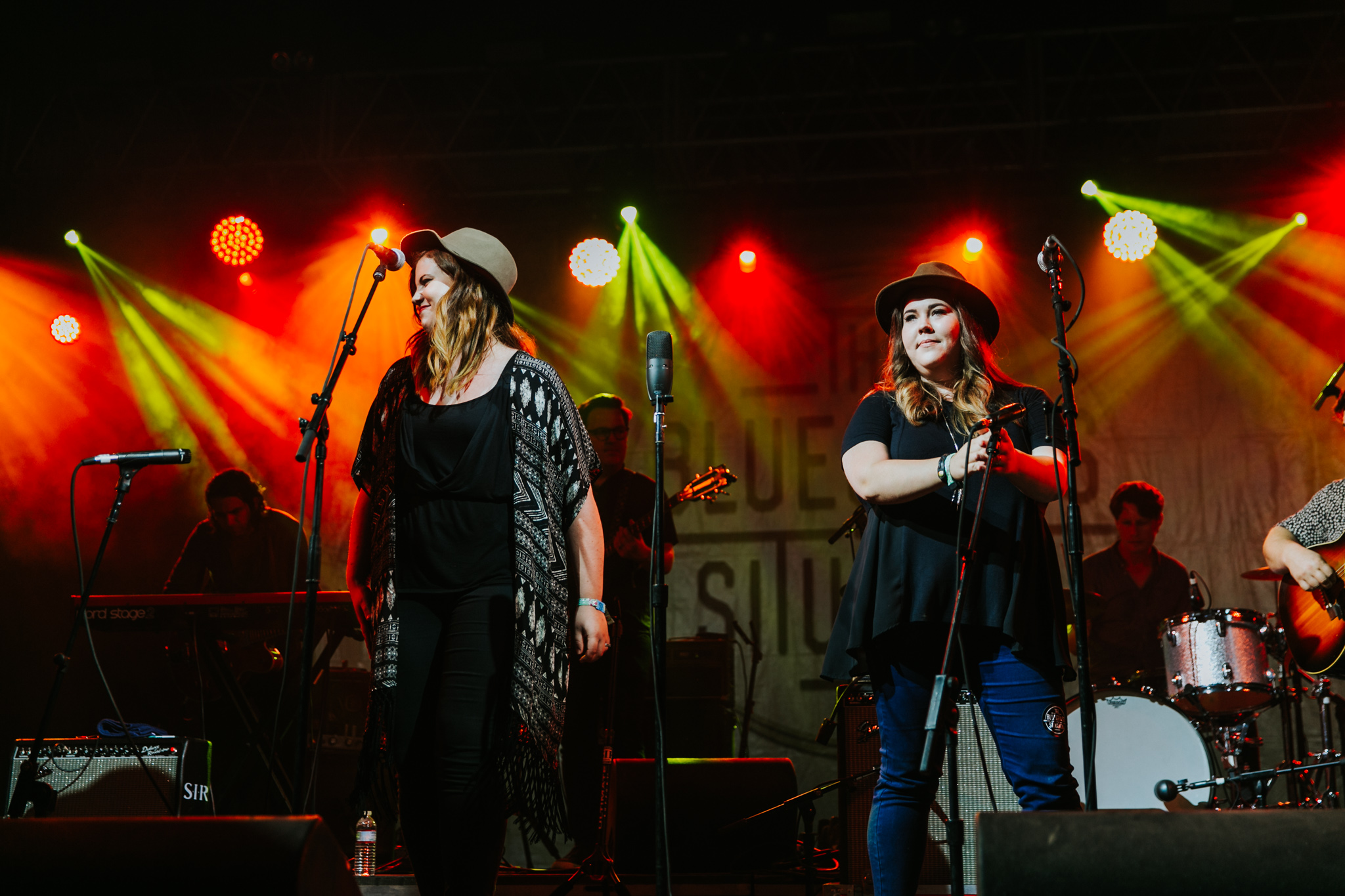
With me today in the Writers’ Rooms at the Hutton … I’m With Her — Sara Watkins, Aoife O’Donovan, and Sarah Jarosz. So great to have you guys here. New record, See You Around, just out a few weeks ago. How fun is this? How much fun are you guys having?

Aoife O’Donovan: We’re having so much fun! It’s a beautiful day here in Nashville, and it’s great to be playing music.

I saw your show last night at the Station Inn. There’s something absolutely magical about the three of you. And, during the show, I kept trying to think, who else would’ve worked within this sort of a thing? And I kept coming up empty. I couldn’t think of someone who had both the instrumental prowess, and the vocal ability, and just the shine that you three have together. What is it? What’s the X factor?

Sara Watkins: I really like that there are three of us, too. Three is a nice number for a band. I feel like it makes the writing and arranging process a little more efficient. It’s easier to go toward each other and find a common goal with the three of us. Where, with a four- or five-piece, that can sometimes make things a little bit … it just changes it. It’s really nice having a tight three-piece.

It was almost accidental how the three of you came together. Was the magic there from the very first time you sang together?

Sarah Jarosz: Yeah, I would say so. It definitely felt a little bit like a spark. We did a workshop, sort a singer/songwriter workshop at the Telluride Bluegrass Festival with some other great musicians, as well — Tift Merritt, Nicki Bluhm. They’re so great, we love them. Because of everyone’s crazy schedules at the festival, it just so happened that the three of us were able to get together before to have a little something prepared for the workshop.

I remember sitting backstage in a tent behind the main stage at Telluride, we worked up a couple songs. I remember one of them was Aoife’s song “Magpie,” which is not the easiest song in the world, and I just remember thinking how seamlessly we all fell into it. That was kind of the first moment where I remember thinking, “this is really cool.” And then, later on that night, putting together a little 20-30 minute set was also pretty seamless. And I think, something that we’ve talked about before is that, we have a shared love of similar music, kind of a shared well that we’re pulling songs from, and so it was kind of easy to put a little set together.

I’m so fascinated by the vocal interplay and how you choose who takes lead, and who comes in on this part, and then who sneaks in under here, etc. What’s the process of working all of that out? Just a bunch of trial and error or following your hearts?

SW: It can happen, sometimes, where it’s just an idea, “Oh, maybe you should sing this part!” But a lot of times, the harmony arrangements and the instrumental arrangements happen during the process of writing. We’ll definitely tweak things after the song’s written, but it’s pretty much in there in the composition, a lot of it. And sometimes it’s just as simple as, one voice is drawn to this part, and then we switch. I don’t know. It’s never something we argue about.

It’s magic!

SW: And we like that we can switch around a lot and try to mix different textures — like if Jarosz is on top versus either of us, if we can mix it up and change the blend at different times, try to make it effective.

AO: And using a lot of duo and unison singing and not always having to rely on a three-part harmony blend separates song from song and arrangement from arrangement to really play around with the different combinations we have available to us.

It makes the live show, in particular, that much more captivating. It’s this constant flow, but it was just so seamless, as well. Like, “Oh, we’re switching here. We’re doing this.” It was just choreographed so beautifully.

SW: We’re dancers, too! [Laughs]

Two things really struck me last night, watching you guys play. One was the people in the crowd. There were Milk Carton Kids there, Béla and Abby were there, Ron Pope was there, Caitlin Canty got name-checked from the stage because she knows about being stuck on hills in Vermont. [Laughs] The level of admiration and adoration from your peers is really off the charts. That’s cool, right? That must feel really good.

SW: Yeah, I don’t know how much of it is adoration …

Oh, people love you guys.

SW: We all really enjoy the fact that we have a ton of friends who we love. We love their musicianship, and we’re really good friends. And we’re in this scene together, and we’ve known these people for so long. It’s really special that Béla and Abby were there, because I remember being at Telluride Bluegrass Festival trying to sneak backstage when the Flecktones were playing, when I was 12 years old, and I was just desperately trying to sneak past the guards or, I don’t know, make them think I was cute and let me in or something. Did not work. Go figure. So that’s a scene that I think about a lot when I see Béla, because we’ve all looked up to him — and his scene and his generation — our entire lives, and it’s pretty cool to get to be in a place where he is supportive of us. That whole thing — the way that each generation welcomes the next in this culture — I think is really, really special. It’s a very warm place, where we are now.

And the other thing — nice segue Watkins — the second thing that really struck me was the joy that was so obvious between the three of you. Watching Aoife’s face while she was watching either of you solo, it was everything! [Laughs] It was such a beautiful part of it, and I think that’s the X factor — the joy. It’s wonderful to see musicians loving what they’re doing like it’s day one.

SW: A huge part of what I love about being a musician is the community of players. That’s an enormous piece of what I love about this life as a musician. The fact that I get to work closely with great musicians who are really good friends of mine and then coming together at festivals and catching up. When you’re a kid growing up, you’re sharing tunes that you’ve learned and new things that you’ve learned, working up songs from your favorite people’s records. And, over the years, sharing that life and sharing that rhythm, and now being at a place where the family of musicians has grown and grown. It’s a really fun thing.

Watch all the episodes on YouTube, or download and subscribe to the Hangin’ & Sangin’ podcast and other BGS programs every week via iTunes, SpotifyPodbean, or your favorite podcast platform.

I’m With Her, ‘Waitsfield’

If only there were someone giving out nickels for every time the term “supergroup” is used. We’d all be rich. It’s not an altogether uncommon designation, as perhaps it ought to be, especially in bluegrass and its nearest offshoot genres, where virtuosity and technical prowess aren’t luxuries, but commodities. Nearly every outfit could ostensibly be labeled a “supergroup.” Even more so after each member’s bio and qualifications have been flamboyantly posited. But here, in this Tunesday, you can trust that “supergroup” won’t be bandied about.

I’m With Her (aka Sarah Jarosz + Aoife O’Donovan + Sara Watkins) — is a supergroup. The artistry, ease, precision, and personality of their just-released debut album, See You Around, corroborates this claim through each and every track, but the legitimacy of the moniker is cemented with the record’s lone instrumental, “Waitsfield.” These three women are all inimitable songwriters and vocalists, so they certainly didn’t need to include a tune … but they did … for the benefit of all of us. “Waitsfield” is rollicking and playful, a whimsical mandolin/fiddle dialogue that lopes and waltzes and dashes about. It doesn’t need to be a shred-fest to illustrate, undeniably, that not a single I’m With Her-er has relinquished any of her bluegrass chops — even while they each delve into sonic territories far from their respective starting points. The charm of the song isn’t shadowed by its frenetic energy; it’s enhanced — especially at the end, when they each breathe a sigh of relief, chuckle, and exclaim, “We made it!” We knew they would. They’re a supergroup.

Baylen’s Brit Pick: Worry Dolls

Artist: Worry Dolls
Hometown Liverpool, England. Well, that’s where they met at university, anyway. Now they call London homebase.
Latest Album: Go Get Gone

Sounds Like: Sara Watkins twice or Punch Brothers minus three

Why You Should Listen: If the last couple of years is anything to go by, you’ll want to dig in now so you can be smug when all your friends start discovering them. They’ve gone from virtual unknowns gigging their socks off across Europe to being nominated for UK Song of the Year at the Americana UK Awards 2018 and holding their own performing on that stage with Robert Plant, Mumford & Sons, Angaleena Presley, and Seth Lakeman. Actually, they did more than hold their own, they announced with a bang that they have arrived.

They’ve collaborated with the likes of Sam Outlaw and Ian Hunter, and even released a limited edition white vinyl for Record Store Day and, if that ain’t cool, then I don’t know what is. Their songs can be as sweet as pie or as cold as ice, but either way, these two multi-instrumentalists manage to say it in the unique way that only old friends can. The Worry Dolls are going places and that doesn’t worry me one bit.


As a radio and TV host, Baylen Leonard has presented country and Americana shows, specials, and commentary for BBC Radio 2, Chris Country Radio, BBC Radio London, BBC Radio 2 Country, BBC Radio 4, BBC Scotland, Monocle 24, and British Airways, as well as promoting artists through his work with the Americana Music Association UK, the Nashville Meets London Festival, and the Long Road (the UK’s newest outdoor country, Americana, and roots festival). Follow him on Twitter: @HeyBaylen

The Producers: Gabe Witcher

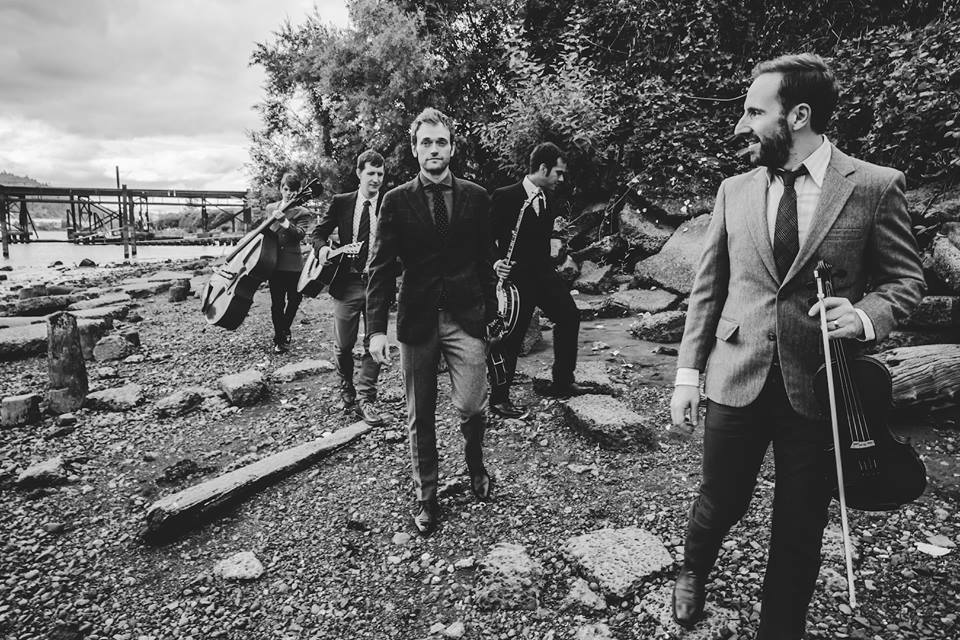
Gabe Witcher has a superstition about shutterbugs in recording sessions. “I’m a strong believer that all photos that come out of the studio must be in black and white. Color photography is too real. It loses mystery to me. Black and white has enough fantasy in it, where you can use your imagination to create the world that existed at the time the recording was captured.”

It is, he admits, a “weird little thing that I think about,” but he’s not wrong. Most iconic music photos — whether it’s Paul Simon smashing his bass onstage or Johnny Cash furiously flipping the bird — need no other hues beyond black and white. Anything else is a distraction: too flagrant, too revealing, too matter-of-fact. Witcher would rather let the creative process retain some sense of fantasy and wonder.

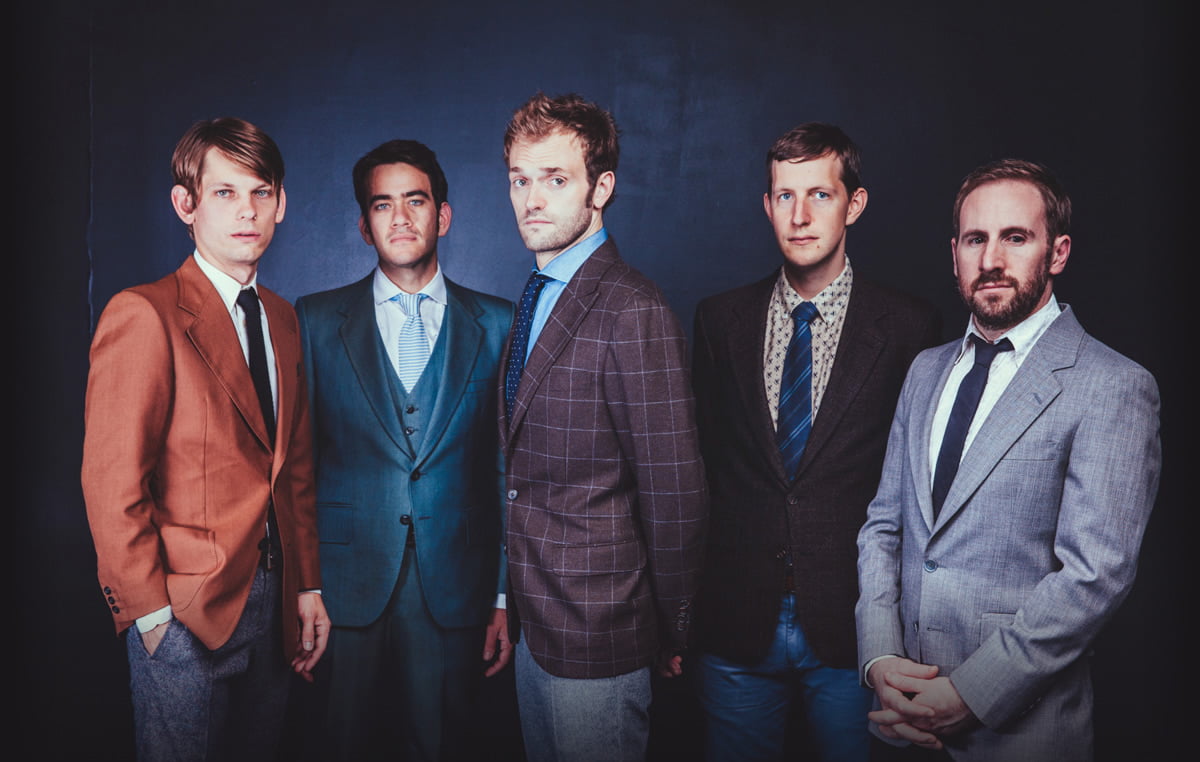
Thirty years into his career, he has yet to tire of the mystery. Something like a child prodigy on the fiddle, he paid his dues in the Southern California bluegrass scene, appearing on Star Search in the 1980s before joining Herb Pederson’s band, the Laurel Canyon Ramblers, as a teenager. Witcher has recorded with Béla Fleck, Dave Rawlings, Eric Clapton, and many others, but he’s best known as a founding member of the renowned prog-grass group Punch Brothers. Comprised of superlative musicians, they’ve recorded four albums of adventurous acoustic music with such producers as T Bone Burnett, Jacquire King, and Jon Brion.

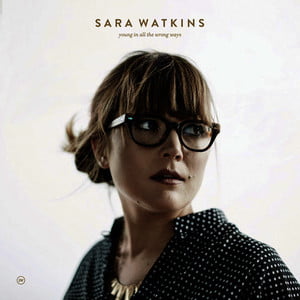
Throughout his career, Witcher has gravitated toward the other side of the glass, gradually accepting more production responsibilities within Punch Brothers and without. He helmed Sara Watkins’ breakout third album, Young in All the Wrong Ways, in 2016, and this year he produced two new records by his Punch Brethren: Universal Favorite finds banjoist Noam Pikelny going truly solo, just his voice and banjo in a variety of styles and settings, and Witcher ensures it sounds both intimate and expansive. For Mount Royal, the second collaborative album by guitarists Chris “Critter” Eldridge” and Julian Lage, the producer emphasizes their masterful technique as well as their subtle and insightful arrangements. They’re representational albums, he says, but full of verve and skill and even a little mystery.

How did you gravitate toward this particular role?

I had a band with my dad when I was young called the Witcher Brothers, and we made a record when I was 11. That was my first foray into the studio, and I remember having so much fun. Back then, it was all tape. I remember the feel of the machines, getting the microphone set up and coming into the control room for the first time and hearing the sounds of the instruments coming back at me through the speakers. It was a thrill. At that moment, I was hooked on recording. I got a four-track machine, and I spent a lot of time at my cousin’s dad’s house — I guess my mother’s cousin. His name is Don Was, and he’s a huge record producer. He had a bunch of recording gear, and I was always in the studio, setting up equipment and recording for fun. It was something I loved to do in my spare time. When I was about 14, I was asked by someone I didn’t know to play on their record, and that started my career as a session musician in Los Angeles. I got asked to play on other things and, little by little, I managed to build up a reputation. So I’ve always felt at home in the studio.

Were there any particular albums where you started to notice the production?

One of my earliest musical memories was listening to Abbey Road on my parents’ turntable. I couldn’t have been older than two or three, and especially as I got a little older, I remember listening to that record and realizing that there were only four guys in the band, but the sound they were making was much bigger than that. This guy plays the drums, these two guys play guitar, and this guy plays bass. How are they able to get all this other stuff going on? That really opened the door to figuring out what the technology was and what overdubbing was: “How does that work?” I started to think about how they were building tracks and, from then on, a world of possibilities opened up.

When Punch Brothers started making records, I was already an old hand at it and could instinctively take on the role of producer with those guys. Everybody finds his own role within the band, and that became mine. For the last record, Phosphorescent Blues, we had the amazing T Bone Burnett to produce, and I had already been working with him as a co-producer on a bunch of projects — and as an arranger. When you work with T Bone, it means you’re going to hear him say something like, “I’d love for you to write a string arrangement or a horn arrangement for this song.” So you’d do that and, “Okay great, now go record it.” He’s giving you the keys to the kingdom. Sometimes he would show up for sessions and sometimes he wouldn’t, and to have him place that level of trust in me gave me the confidence to think of myself as a producer.

How did that affect the sessions with Punch Brothers?

He was there for all the tracking and he got all the performances out of us, but when it came time for all the editing and mixing, I knew what the band wanted and I knew what I wanted, so he let me take the reins. I was there with the engineer, Mike Piersante, and we finished tracking all the guys. When everybody else had left, I was sitting there with a bunch of hard drives with hours and hours of music — and it’s up to me to edit and oversee the mixing. It was a natural extension of all the things that I’d already been doing.

The band has worked with a different producer on each album. How were those experiences different?

Each producer brings a different aesthetic and a different worldview to the proceedings. Early on, we were very idealistic and dead set on making only representational documents. With The Blind Leading the Blind, we knew it was an ambitious piece, but we wanted to make sure we could actually perform it live. We were very stubborn about capturing it all live, so Nonesuch recommended we get a classical producer. Because that’s what we were doing: We were making a classical piece, so we needed to record it in a classical way with a classical producer [Steven Epstein]. Looking back 10 years later, was that the best way to present that music? I don’t know. If we had to do it over again, we would probably play most of it live and overdub harmony vocals, but you learn.

Jon Brion had a different method on Antifogmatic. He set us up in a semi-circle because he wanted to capture the energy and interaction of what we do. We played all of the music live, but he was able to get a better vocal sound by overdubbing the vocals. I understand that, but it’s very hard when you have five people imagining trying to play based on what they imagine the vocals are going to sound like. We had to learn on the fly how to do that. We had to learn to listen in a different way, and I think it was successful in its own way.

Jacquire King was a lot of fun. He was down for a lot of experimentation on Who’s Feeling Young Now? By that point, we wanted to utilize the studio as another sonic tool instead of just something take a snapshot. We wanted to use the element of fantasy that the studio provides. We dipped our toes in a little bit with that record. We experimented with sounds and overdubs — anything to introduce new things, but always dependent on the song and what it needs. Jacquire really helped us figure out what works for our instruments, and he had us thinking about ways to capture sound that I had never really thought about before.

And the thing with T Bone is, he’s wide open. He wants to do whatever is going to make the best end product. We had different set-ups for different songs. It was a fun process because he’s a master and keeping the bigger picture in mind. The Punch Brothers have a tendency to overdo things and try to squeeze so much perfection out of everything that we squeeze the life out of it. So it was a real education to see how he worked.

What did you take away from those experiences that you’ve applied to your own sessions as a producer?

The most important thing you can have in a producer is trust. You trust that they’re going to understand your vision and you trust that they’re going to help you achieve your goal. It’s such a deep relationship with the rest of the band, and we understand each other so well, that it made sense that I would be the one sitting on the other side of the speakers telling them if they’ve gotten what they want. And I know what they’re capable of doing, so I’m in a unique position to push them. Someone else might be like, “Hey, that was great.” But I would be like, “Hey, that was great but I know you can do better.”

That seems like it would be crucial, especially on these records where there’s nothing to hide behind. It’s just one banjo or two guitars.

Those are very, very representational records without many studio tricks. You approach that kind of project as though you’re making a document. There’s not a lot of fantasy involved. Your job as producer is to put them in a position where they’re comfortable and playing their best, then you have to make sure you capture the sound they’re making as fully as you can. That all sounds very simple, but you become something more like a psychologist at that point. You’re talking a line between keeping people happy and creative, but also trying to find positive ways to shape what they’re doing, to get the best possible results. It helps that the Punch Brothers guys have been working together for so long that we know how to speak to each other in a way that avoids any bad clashes or setting each other off and making them freeze up.

For instance, Noam is extremely thorough — more thorough than I think he needs to be. There’s an interesting dynamic where we’ll work on a song for a couple of hours, and I’ll be very happy with what we got. I’m confident in what we got, so why not come in and take a break before we start working on the next song. But he’ll say, “Let me just do one more. One more time.” Three hours later, he’ll finally feel okay about it even though we have three times as much material as we actually need. He’s familiar with me, but he might not feel as comfortable with someone else to sit there for hours on end. He obviously does feel comfortable: It’s just Gabe. He can’t get mad at me.

As a producer, you have a couple of jobs. One: You’re a proxy for the artist. You’re basically in a position to say, “If I was an audience member, would this be reaching me? Is this going to impact me emotionally?” Two: You have to make sure there is some underlying theme that ties it all together and makes it work as a whole. All the best records tell a story of some kind. It’s all just storytelling. Even though one song is about one thing and the next song is about something else, you can still construct some kind of narrative out of them, even though it may not be a linear story. That’s a big part of the producer’s job: to make sure everything fits together in a satisfying way.

Is telling a story easier or harder with instrumental versus vocal tracks?

They’re challenging in different ways. To create a narrative on an instrumental record, you have to make sure there’s enough variety to feel like you’ve gone somewhere. When you’re making a record, you’re making a 40- or 50-minute piece of music. It might be divided up into 10 or 12 or 15 segments, but you’re making a piece of music that’s roughly the same length as most symphonic music, so you have to approach it that way. You have to piece it together in a way that gives the material shape and keeps it interesting. For a record with singing on it, you have the added difficulty of that extra layer of words. You have to have the musical narrative and then you have to have the lyrical narrative. There’s some wiggle room in there, but you also have to keep in mind the artist and what they’re trying to say. On the Critter and Julian record, they brought in a bunch of vocal songs that were all great, but I just didn’t believe Critter when he sang them. I had to figure out why, which was tricky, but it came down to what I knew about him — where he comes from and what kind of music he has made in the past. The material had to fit within the story of him as a performer, as an artist, and not just within the context of an album.

How does that work with someone like Sara Watkins? What I love about Young in All the Wrong Ways is how it plays against what we know of her as an artist and takes her story in a new direction.

Absolutely. What makes it work with her is that she acknowledges that it’s something different from her. People change and evolve and grow, and this is where she is right at this particular moment. I really felt the honesty of what she was singing to me in those songs. It all made sense. There was a weird incident in the studio with her. All of the songs that ended up on that record were her original songs, but early in the process, she had brought in a song that Benmont Tench had written. It was a new song of his and we had permission to record it. I thought it was good, so we put it on the list. We were about three-quarters of the way through tracking her record when we got to that song. It was just her singing and Benmont playing. The song is dark, about a relationship that’s past its prime and she’s struggling to break from it. She started singing, and the mood in the studio shifted. It had been very happy and positive and constructive, but it turned really dark really quickly. It had been easy-going up to that point, and I watched everybody get very frustrated.

The next day, Jay Bellerose, who plays drums on the record, was talking to me and asked me what happened. The only thing we could come up with was that the song just wasn’t her voice. Nobody believed it, when it was coming out of her mouth. It was a case of the wrong song for the artist, and it’s the only song that didn’t make the record. Don’t get me wrong: It’s a great song, when Benmont sings it. It’s his experience. It wasn’t Sarah’s experience. There was just something about the vibe of the song that wasn’t right for her.

It’s extremely hard to explain that kind of thing, and everybody feels it in a different way. The studio is such a vulnerable space, especially for the person who’s being recorded. It’s such an intimate setting that interpersonal dynamics become the thing that makes or breaks a record. You’re going for an indescribable feeling — something way beyond playing in time or singing in tune, all the technical aspects that make a good performance. When you achieve that next layer, it’s hard to describe. There’s an energy that comes from getting the right people in a room together. Sara’s record was successful because we got the right people playing the right music, which becomes a positive feedback loop. Good things start happening, which inspire more good things, which inspire more good things, and then you have this wonderful document of that time and those people. This kind of thing never happens, especially when you hire a band, but for Sara’s record, people were hanging out in the studio after the tracking was done. We would play for hours and hours, then we would do overdubs in the evening and people would just hang out. We’d open a bottle of wine and people would just hang out in the studio. It was beautiful.

I feel like people sometimes fixate on gear — finding the right pedal or using a certain kind of microphone. That seems much less important to these sessions.

That’s exactly right. People can get caught up in the technological aspect of the studio — at great detriment to the music. At least in regard to the music that I’m interested in making, we have way too much ability to manipulate sound. I hear so much recorded music that has no vibe, no human quality to it. It sounds like the people weren’t even in the same room and maybe not even in the same country when they recorded it. It’s all been pieced together very carefully, but it’s missing an essential element: There’s no interaction. Some people can do beautiful things that way. For what Radiohead does, it’s great. They’re able to use those tools in a musical way. But the music that I want to make has to feel, in some way, like it’s being passed from person to person. It’s interesting because, when you nail it, it’s the kind of thing that sinks into the background. It becomes so effortless that you don’t think about it. It’s the same with movies: You know a director has done his job right when you can’t tell that they’re even there. The goal is to get lost in the storytelling.


Photo credit: Brantley Gutierrez
MIXTAPE: Songs to Crawl Inside

Aren’t half-somber, half-hopeful songs the most comforting? Through gloomy Winters when you’re chilled to the bone, snuggled under your favorite fleece with a piping hot cup of herbal tea, perhaps you find yourself newly single, binge-watching reality television and taking a spoon directly to that pint of Ben & Jerry’s … or when you’re staring down four years of an unqualified, immature, egomaniac, C-list celebrity/Twitter personality occupying the White House — crawl inside any or all of these songs.

Brandi Carlile — “That Wasn’t Me”

I’d be lying if I said I hadn’t ever put this song on repeat and sobbed the lyrics over and over. Whether accidentally or purposefully, we’ve all had experiences when our true selves haven’t shown through. Maybe our intentions have been mischaracterized through no fault of our own or maybe we hide behind intricate facades. “Do I make myself a blessing to everyone I meet? When you fall, I will get you on your feet. Do I spend time with my family? Did it show when I was weak? When that’s what you see, that will be me.”

Darrell Scott — “Someday”

“Someday” is a really difficult word to handle, but it’s a beautiful thing when it’s hopeful rather than daunting. Someday the world will change for the better; someday it will all fall into place; someday we’ll finally be the people we want to be; someday we’ll look back and understand. As usual, Darrell Scott sings with goosebump-inducing conviction, “I will love someday. I’ll break these feet and these eyes and this heart of clay … someday.”

Lee Ann Womack — “Little Past Little Rock”

This song is a mandatory addition to every road trip playlist I make, but it’s not just a comfort for travelers and everyone eastbound on I-30. This is a song of liberation, of staring fear in the eye and finally standing up for oneself. If LAW is at peace with not knowing what the future holds, then we can be, too. Let that baritone guitar tug your heartstrings.

Alison Krauss & Union Station — “Find My Way Back to My Heart”

“I used to laugh at all those songs about the rambling life, the nights so long and lonely. But I ain’t laughing now …” And with just the first line you find yourself curled up within this song like a warm, impossibly soft snuggie. We would all crawl inside Alison’s comforting, plaintive voice on its own if we could, right? Then the slight, lilting asymmetry of the lyrics and the haunting, iconic So Long So Wrong aesthetic draw us in even further.

Ashley Monroe — “Like a Rose”

It takes a zen mindset to acknowledge your past with its good, bad, and ugly, and appreciate how it’s brought you to where you are today — especially if where you are today isn’t quite where you want to be yet. But if you can understand that you can still be your best self in any of those contexts, well, you really have come out like a rose. Lemme just crawl inside that beautiful moral-to-the-story.

Jason Isbell — “Flagship”

With a setting that would rival the best indie movie — a crumbling hotel, a harlequin cast of characters — Isbell aspires to a love that will last longer than structures, that won’t fade or grow stale, and will stand out as a banner for all to achieve. At first seemingly naïve or out of touch, the realism of the unmanicured surroundings make us feel like this kind of connection is not only attainable, but right around the corner. And that idea is just so gosh darn reassuring.

Erin Rae and the Meanwhiles — “Minolta”

Here’s another voice you’d crawl inside, if you could. Erin Rae shines a more positive light on our culture of constant social media and photo sharing, but with a vintage twist. Imagine a friendship so dear that you wish you could follow that special person around just to see the world through their eyes. “Good things are on their way for you, and if I’m not beside you for the ride, take a picture I can stop and look at sometimes.” Friendships like this help us all get out of bed in the morning.

Hot Rize — “You Were On My Mind This Morning”

If you’re thinking about someone and reminiscing, this song is for you. If you’re scared a certain someone isn’t thinking about you, this song is for you. If you wish Tim O’Brien were thinking about you this morning, well … us, too. The seminal, progressive bluegrass sounds of Hot Rize are excellent, as always, but my personal favorite recording of this song has to be our Sitch Session of Tim serenading the mountains.

Chris Stapleton — “Fire Away”

Let’s talk to each other more. Let’s listen to each other more. Let’s let it all out more. Let’s warm up with Stapleton’s smoky voice and cuddle up in his beard. Wait … wut?

Dolly Parton, Linda Ronstadt, Emmylou Harris — “Feels Like Home”

This song had to make this list. But perhaps the more important thing here is the version. Of all the recordings of this modern classic, could there be a single one more comforting and soothing than Linda, Dolly, and Emmy? Hint: The answer is no. (Give “High Sierra” a spin, while you’re at it. It gets an honorable-crawl-inside-mention.)

Sara Watkins — “Take Up Your Spade”

Okay. It’s time to get to work, put one foot in front of the other, and push slowly but surely toward our goals. Oh, and don’t forget to give thanks along the way. We all have a lot to be thankful for.


Photo credit: Martin Cathrae via Foter.com / CC BY-SA.

Get Off Your Ass: December’s Halls Need Deckin’

Gary Clark, Jr. // The Theatre At Ace Hotel // December 1

Corb Lund // Resident  // December 7

The Wild Reeds // Echoplex // December 8

Lee Ann Womack // The Canyon // December 9

The Steel Wheels // Genghis Cohen // December 10

Tribute to Linda Ronstadt // The Theatre At Ace Hotel // December 11

Michael Kiwanuka // The Fonda // December 12

Sara Watkins // The Troubadour // December 14

Brothers Osborne // The Belasco Theater // December 15

The Dustbowl Revival // The Hi Hat // December 15

Cody Jinks // 3rd & Lindsley // December 2-3

Ruby Amanfu & Friends // 3rd & Lindsley // December 4

Billy Strings // The 5 Spot // December 7

Birds of Chicago & Michaela Anne // The Basement // December 7

Mary Gauthier // Bluebird Café // December 8

Shawn Colvin // City Winery // December 14

Brent Cobb // The Basement East // December 15

Luke Bell // Exit/In // December 15

Gillian Welch // Ryman Auditorium // December 27

Robert Earl Keen // Ryman Auditorium // December 28

Jason Isbell, John Prine, & Kacey Musgraves // Grand Ole Opry House // December 31

Old Crow Medicine Show & Dom Flemons // Ryman Auditorium // December 31

Andra Day // PlayStation Theater  // December 1

Donovan // Symphony Space // December 2

Chris Thile // Town Hall // December 3

Steve Earle // City Winery // December 5

Kacey Musgraves // Town Hall // December 8

Cris Jacobs // Brooklyn Bowl // December 9

Steep Canyon Rangers // Town Hall // December 10

The Stray Birds // Rockwood Music Hall // December 15

Albatross // Rockwood Music Hall // December 16

Anais Mitchell // Rubin Museum of Art  // December 23

Tony Trischka // Joe's Pub // December 24

Nathan Bowles // Terminal 5 // December 28

Sara Watkins, ‘Say So’

Sara Watkins — at 35 years young — is basically an elder stateswoman in the Americana world, playing fiddle and singing in Nickel Creek since 1989, when she was doing it for tradition, not trend. In all that time, she's only released three solo records: a self-titled effort in 2009, Sun Midnight Sun in 2012, and now, Young in All the Wrong Ways, released this past Friday. When you can count your musical career in decades, and mostly as part of a band or the family business — i.e. the Watkins Family Hour, which went from live revue to recording last year — it's hard for people to figure out exactly who you are, if it's not packaged easily.

Which is perhaps why so much of the chatter surrounding Young in All the Wrong Ways has been about how, after all this time, we're finally getting to know the "real" Sara Watkins — that she's finally "reintroducing" herself to the world. And while it's true that the LP is a thrillingly prescient look at her life, driven by a spirit of experimentation and musical play barely reliant on her signature fiddle, it's also true that, if songs like "You and Me" from Sun Midnight Sun didn't make it clear what Watkins is capable of — or how clear her voice is (in both tone and identity) — then maybe you weren’t listening hard enough. Just because she was more joyous there didn't make the music any less real … fiddle or no fiddle.

Young in All the Wrong Ways is a breakup album of sorts — with her label, with a romance, with "herself," as she's said — so it's darker and more introspective than anything she's done before. But it's the same Watkins, just evolved. Take "Say So," one of the album's most moving tracks: There's none of that aggressive fiddling, but her crystalline vocals are deeply intact, wandering and quivering around pop-rock construction in only the way someone raised on bluegrass can do. It's no reintroduction, just the work of a woman who knows what comes from her lungs, and her mind, is just as powerful as a bow and a set of strings.

RECAP: The BGS at Bonnaroo 2016

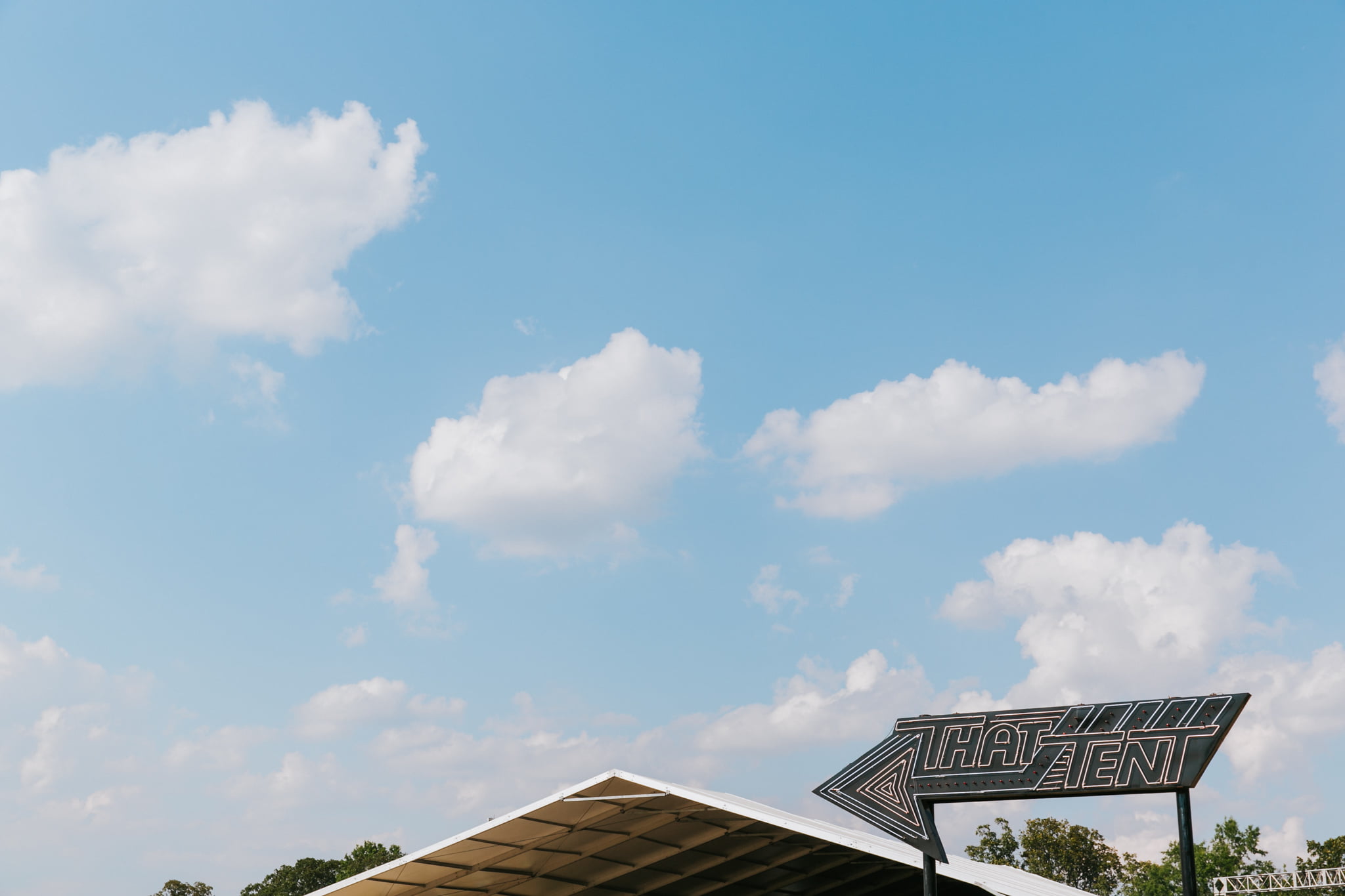
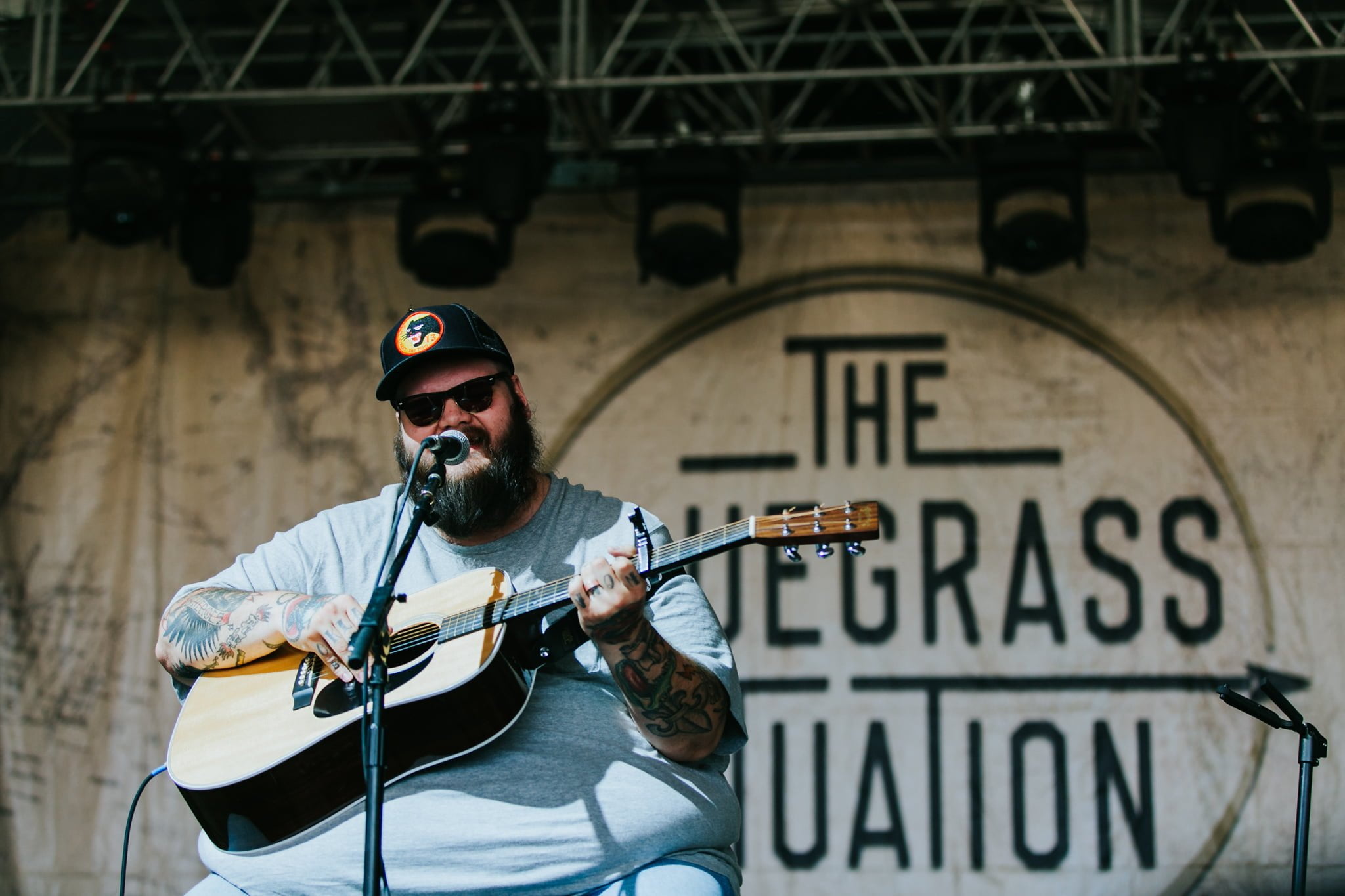
Anyone turning to music for solace likely found a welcoming home in That Tent, where John Moreland was getting the BGS Stage started with his gut-wrenching Oklahoma Americana. “Well the older I get, truth gets harder to find. And famous false prophets get by off of robbing good men blind,” he sang on “Blacklist,” one of the earlier songs in the set. “Maybe I don’t have it in me, maybe it doesn’t have me in it. And if I don’t fly, that’s fine, just let me find the place where I fit.”

His songs don’t need frills — for something as minimal as a guy and a guitar, a set from Moreland rings through the air with a certain level of force. That’s partially thanks to his lyrics, which are conversational enough to feel like a chat between old friends and insightful enough to bounce around in your head for a while until they take on new meaning.

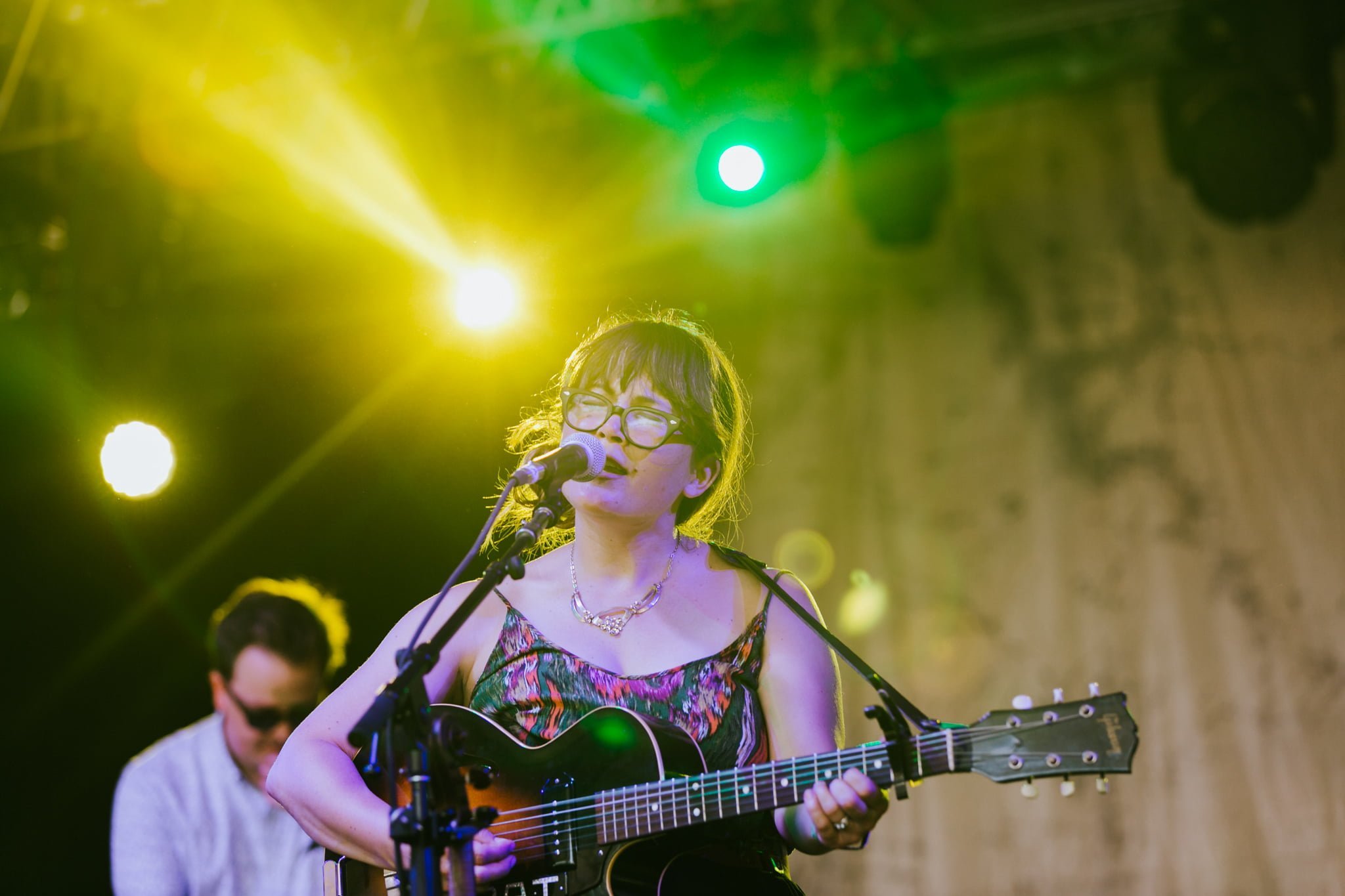
Following Moreland in That Tent was Sara Watkins with a set that would mark the first of many rousing performances of hers on the BGS stage. “This is the maiden voyage for a lot of these songs,” she said at one point. But her setlist was populated with recognizable numbers like “Say So” and “Long Hot Summer Days,” the weather-appropriate latter of which was turned into a group effort when she asked the crowd to sing along. The Secret Sisters sat in for a few, too, making for a high point on the stage before the clock even hit three.
The Wood Brothers were a worthy follow-up to Watkins’ harmonies, and plucky instrumentals on early songs like “Atlas” and “Mary Anna” drew several curious passersby. “Luckiest Man,” arguably the group’s best-known number, drew a heartwarming swell in volume as the crowd sang along — a promising sign of what was to come throughout the day.
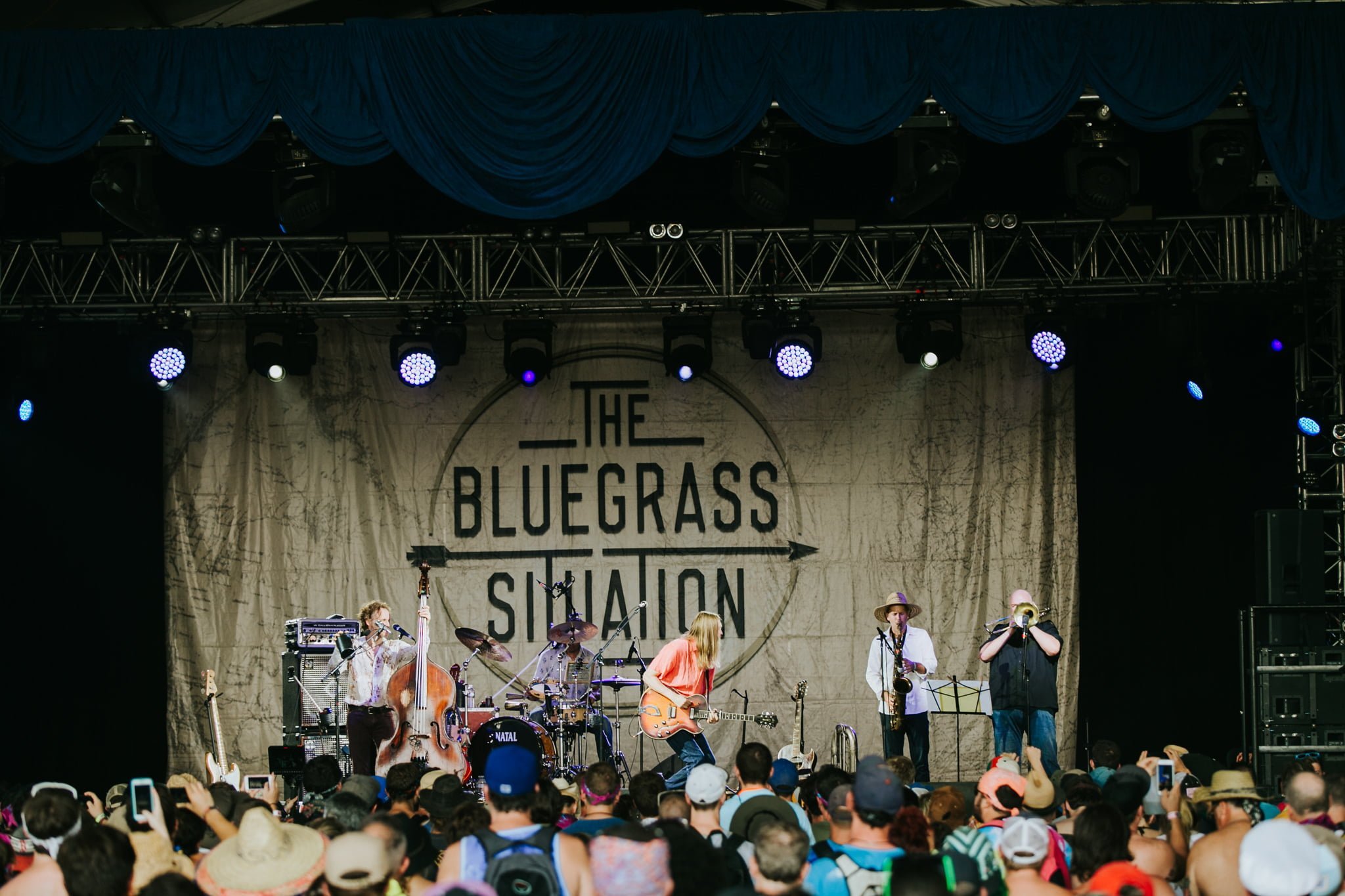
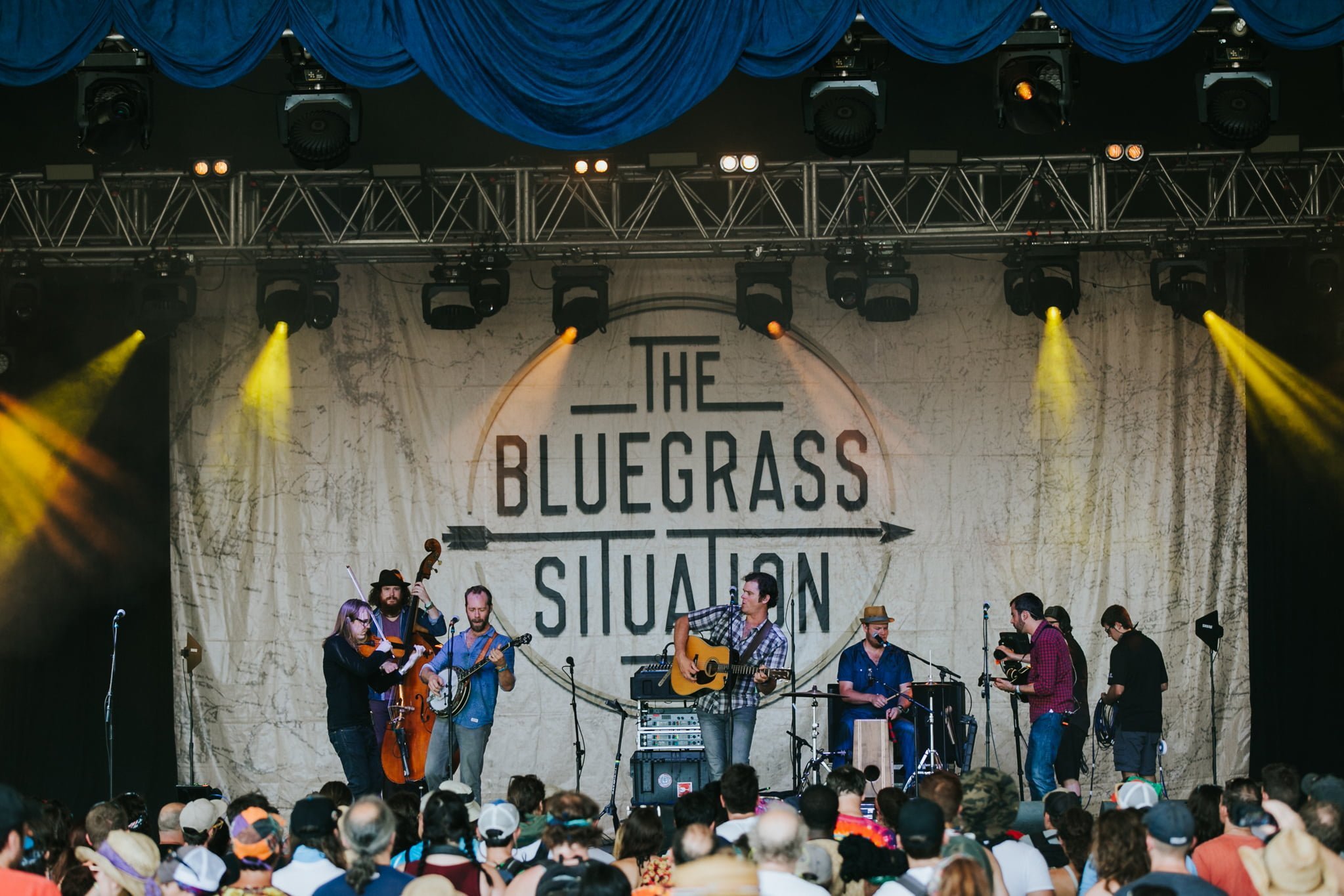
“We haven’t had the luxury of being here all weekend,” said Steep Canyon Rangers mid-way through their set, following the Wood Brothers as the afternoon went by. Their song, “Tell the Ones I Love,” was a shot of energy on an otherwise hot, heavy day, with rich vocals and a beat that picked up as they went along. This is a band that at their best when they’re picking at instrumentals, and the sheer speed of their fingers on the longer jams had onlookers twirling and swaying.

The momentum kept up for newgrass innovators Sam Bush Band, and while the transient crowd was starting to get rowdy (“We hear your request, but we’re going to keep playing,” they responded to one heckle with a laugh), the mood was as warm as the weather — which, by the way, was really dang warm.
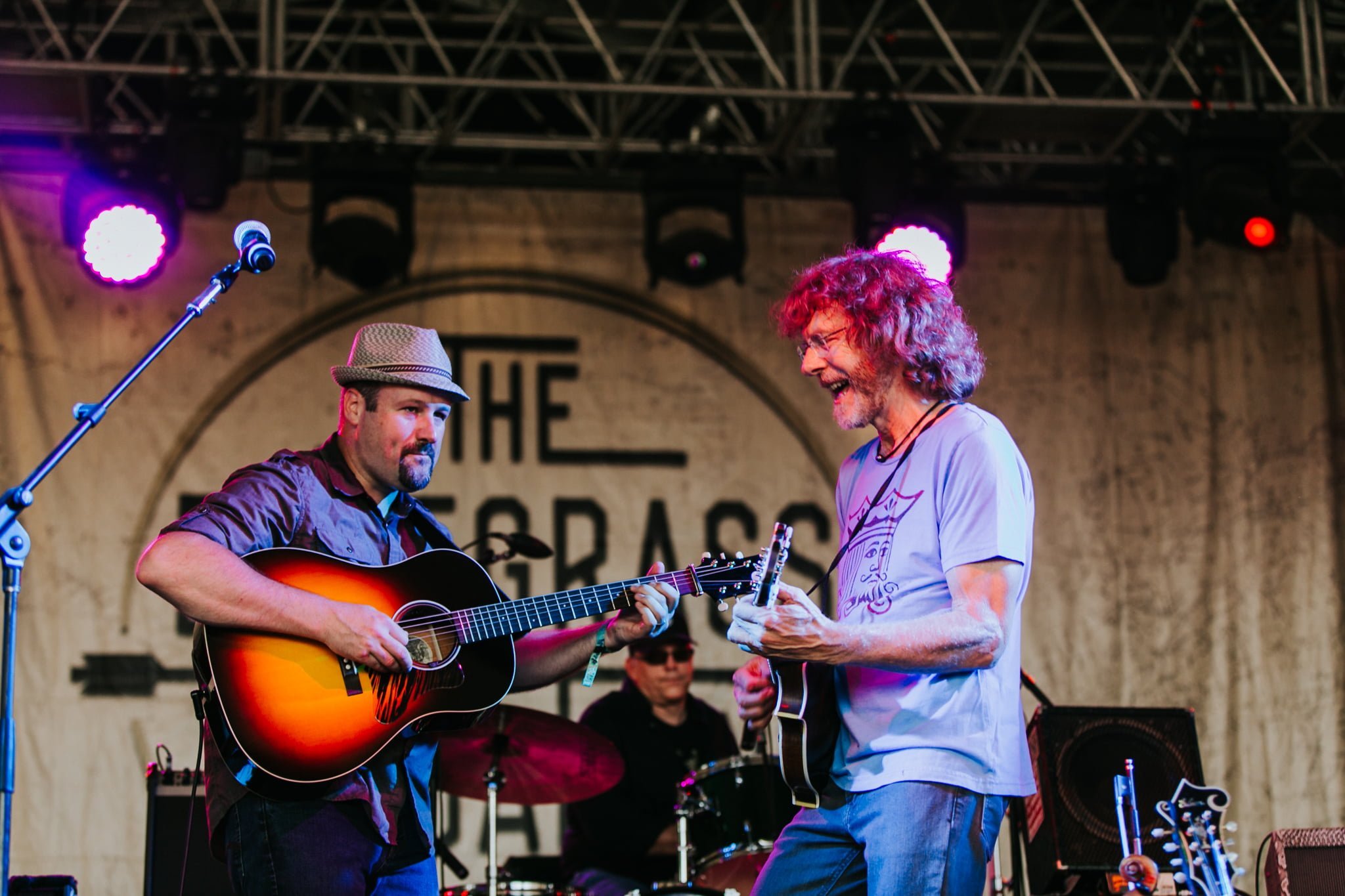
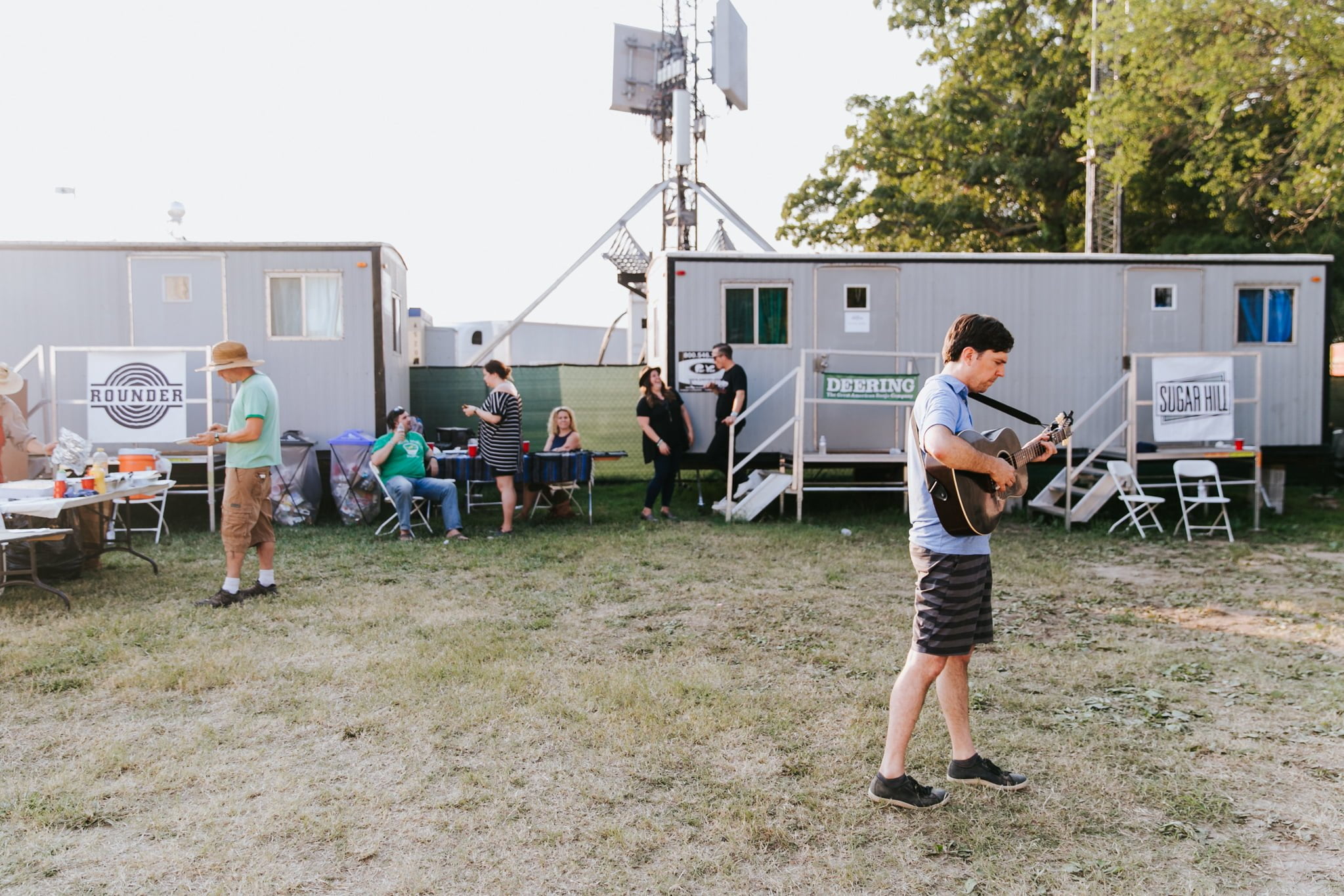
As the day’s big Superjam grew nearer, the crowd forming outside That Tent grew from modest to massive, stretching back to the vendors and filled with onlookers waiting for a glimpse of Ed Helms and his all-star on-stage compadres. He started off the collaborative headlining set with a hand-clapping rendition of bluegrass classic “I’ve Endured,” sharing the mic with Sean and Sara Watkins. The three of them were soon joined by Scott Vestal and Sam Bush as Sara led into “Here I Go Down that Long Road Again.”
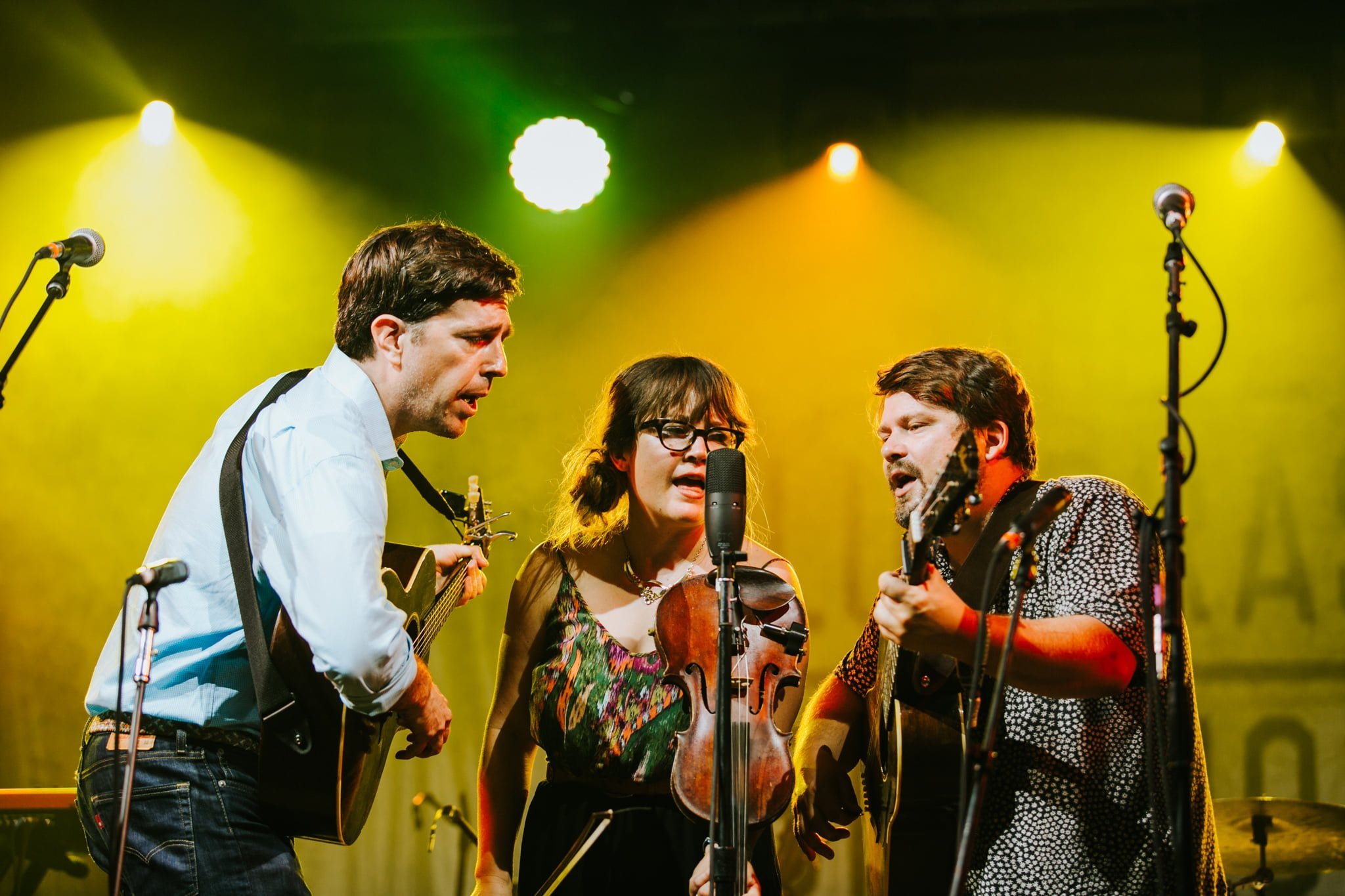
“We’re going to do an old Bill Monroe song,” said Bush. “Do you all know who Bill Monroe is? The father of bluegrass music?”
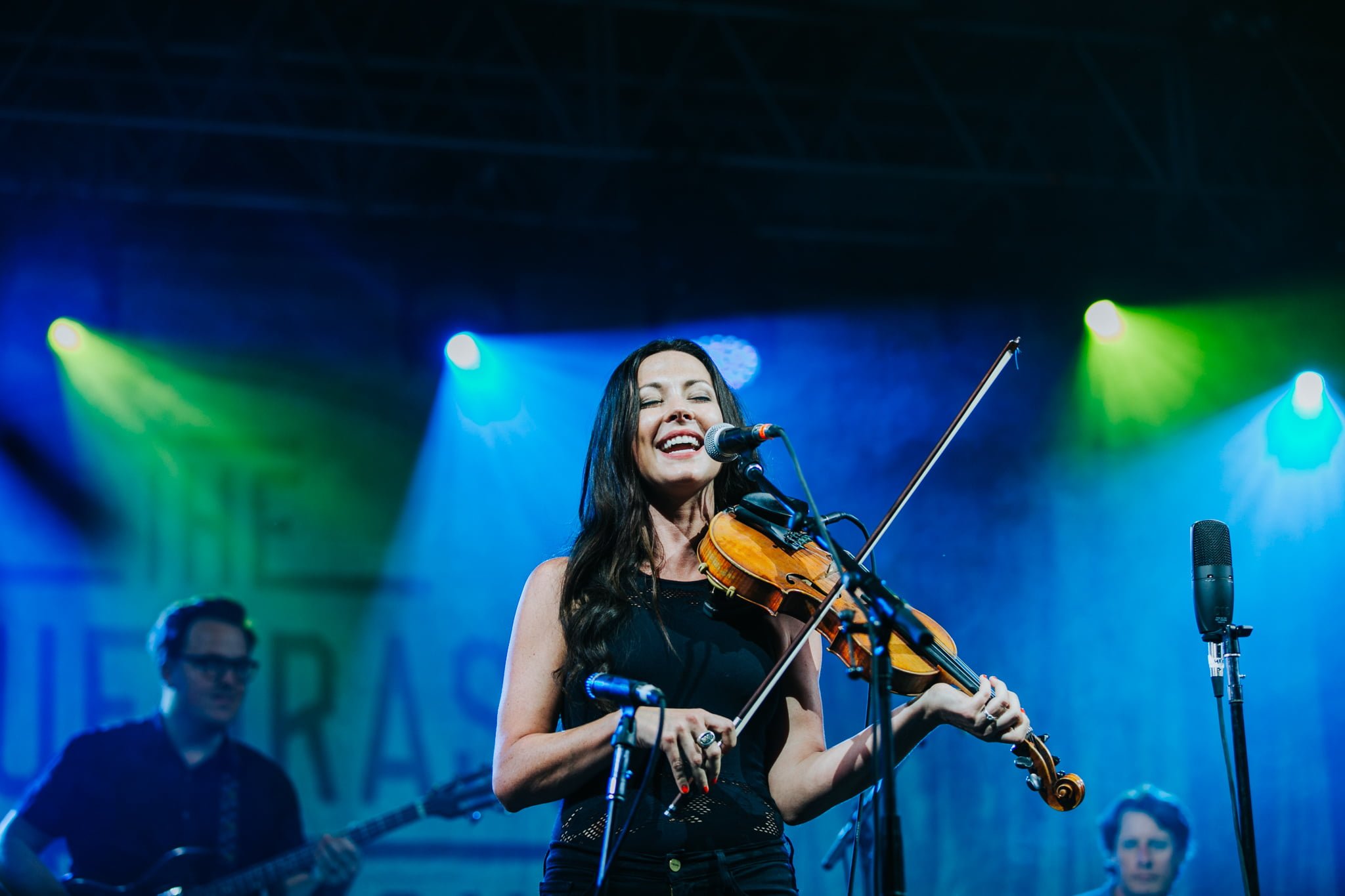
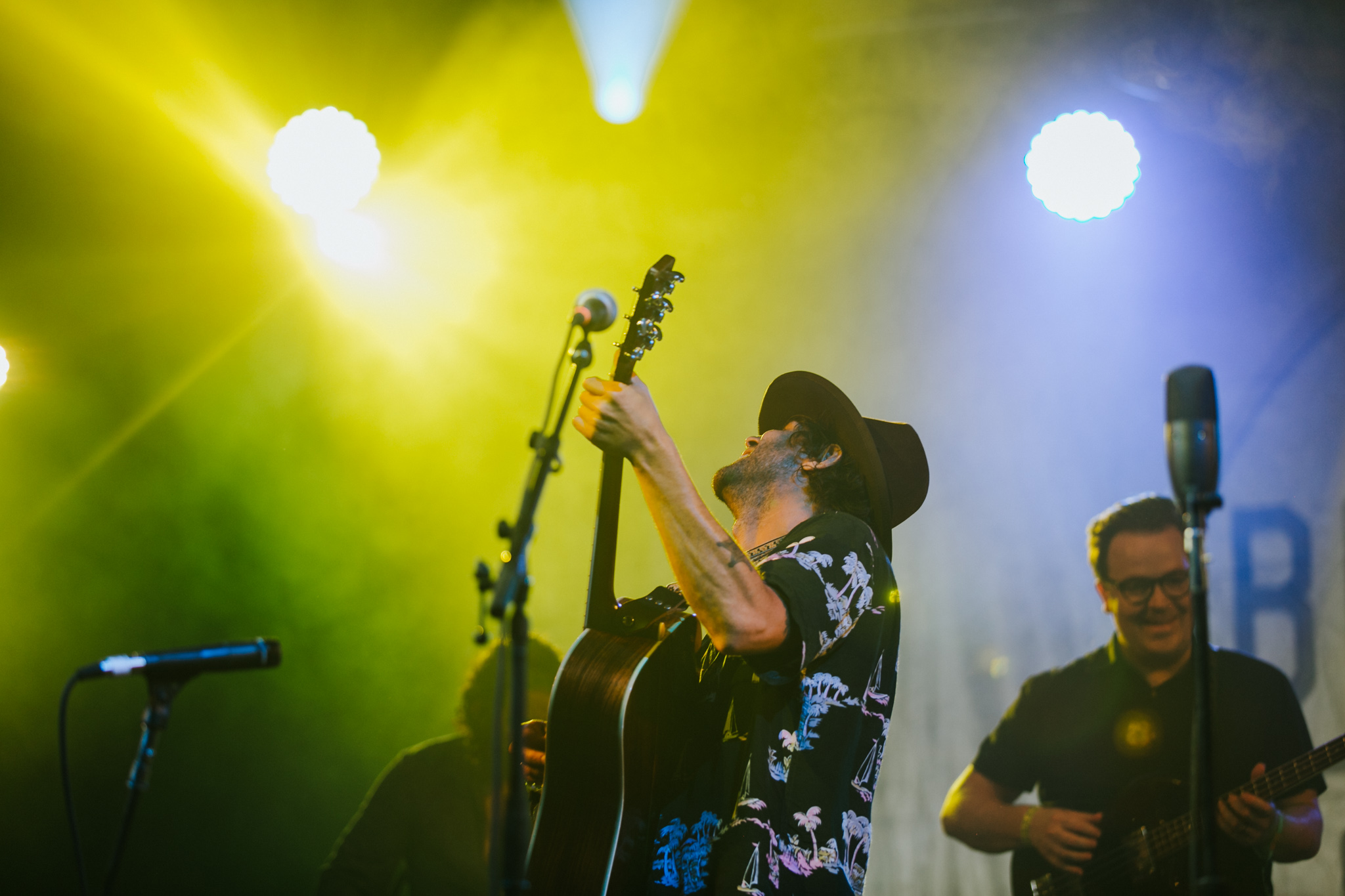
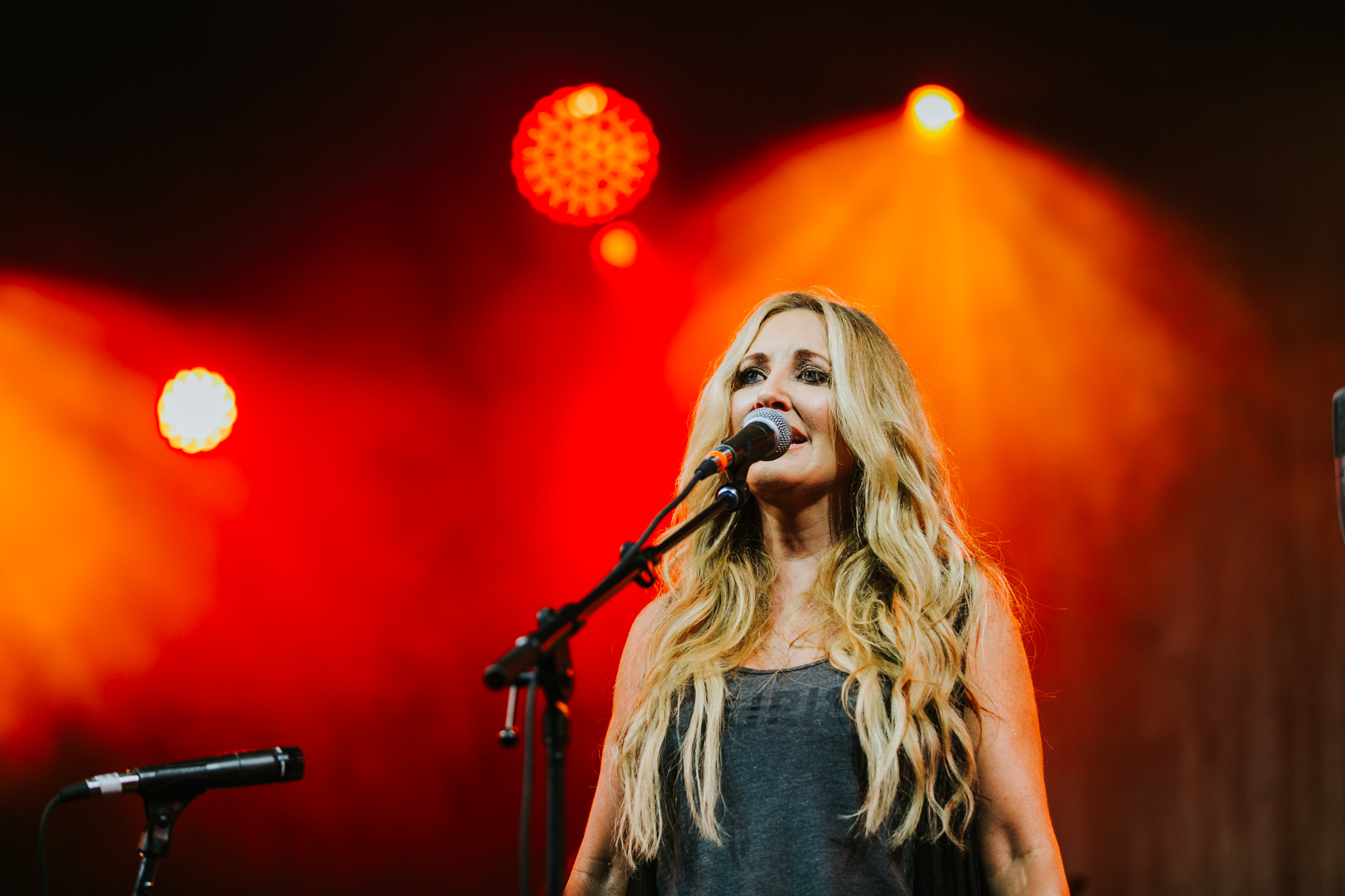
It’s safe to say the crowd’s answer was affirmative on that one, and Bush took the lead on “Blue Moon of Kentucky.” The song was followed by an appearance from Amanda Shires, whose performance of Roger Miller’s “Dang Me” kept a fun, upbeat vibe on the lyrics and allowed Shires' and Sara’s dueling fiddles to take the spotlight. Shires stuck around after the song ended for a duet of “In Spite of Ourselves” with Helms that was prefaced a healthy amount of gushing over the song’s writer, John Prine, from both parties. A tough act to follow, Helms brought Bush back out, along Steep Canyon Rangers’ Nicky Sanders, for “Lovesick Blues.”

Last-minute guest Langhorne Slim was up next, performing “Lawyers, Guns & Money” with the Watkins Family Hour band, who went on to perform “From a Buick Six” with Bush. From there, the vocals really reached out and grabbed you — Lee Ann Womack’s pristine voice made “Lord I Hope This Day Is Good” sound like just the gospel we needed on a long, hard day like Sunday, and to follow it up with two songs from the Secret Sisters — “Big River” and “All About You” — felt downright indulgent.

Womack returned for two more songs with the Watkins Family Hour, “Little Lies” and “Let ‘Em In,” before Steep Canyon Rangers came out to steal the stage for Merle Haggard’s classic “I Think I’ll Just Stay Here and Drink.” Once Helms returned to the stage for the last few songs, he called Amy Reitnouer (our fearless leader here at BGS and the mastermind behind the festivities) for a moving performance on Neil Young’s “Long May You Run” with the whole gang back out on stage.
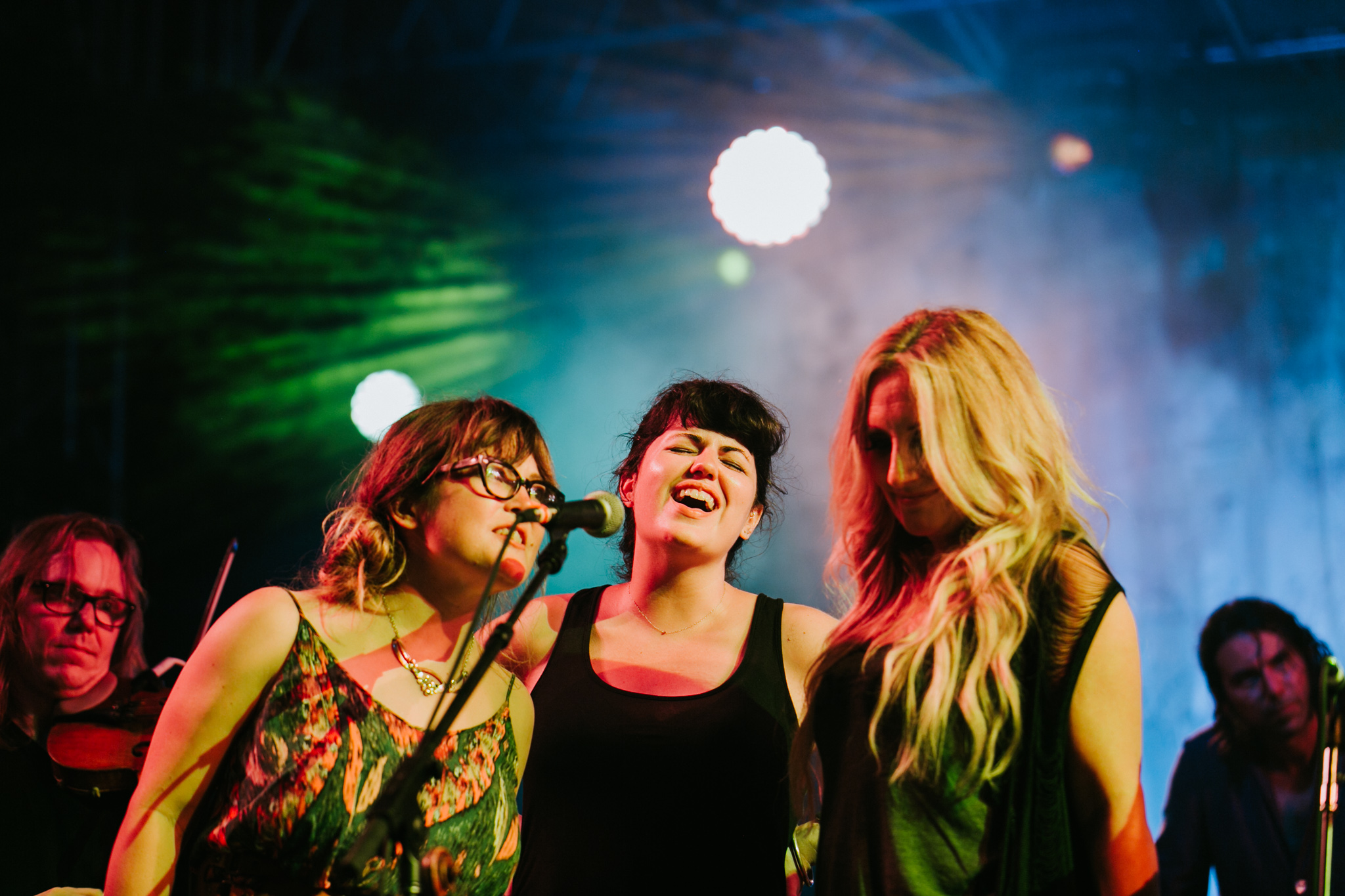
The jam was more than just a dang good time; It was a reminder of the peacefulness and overwhelming sense of unity that festivals — and music, in general — have to offer. Long live the BGS Superjam. (How many days until next year?)
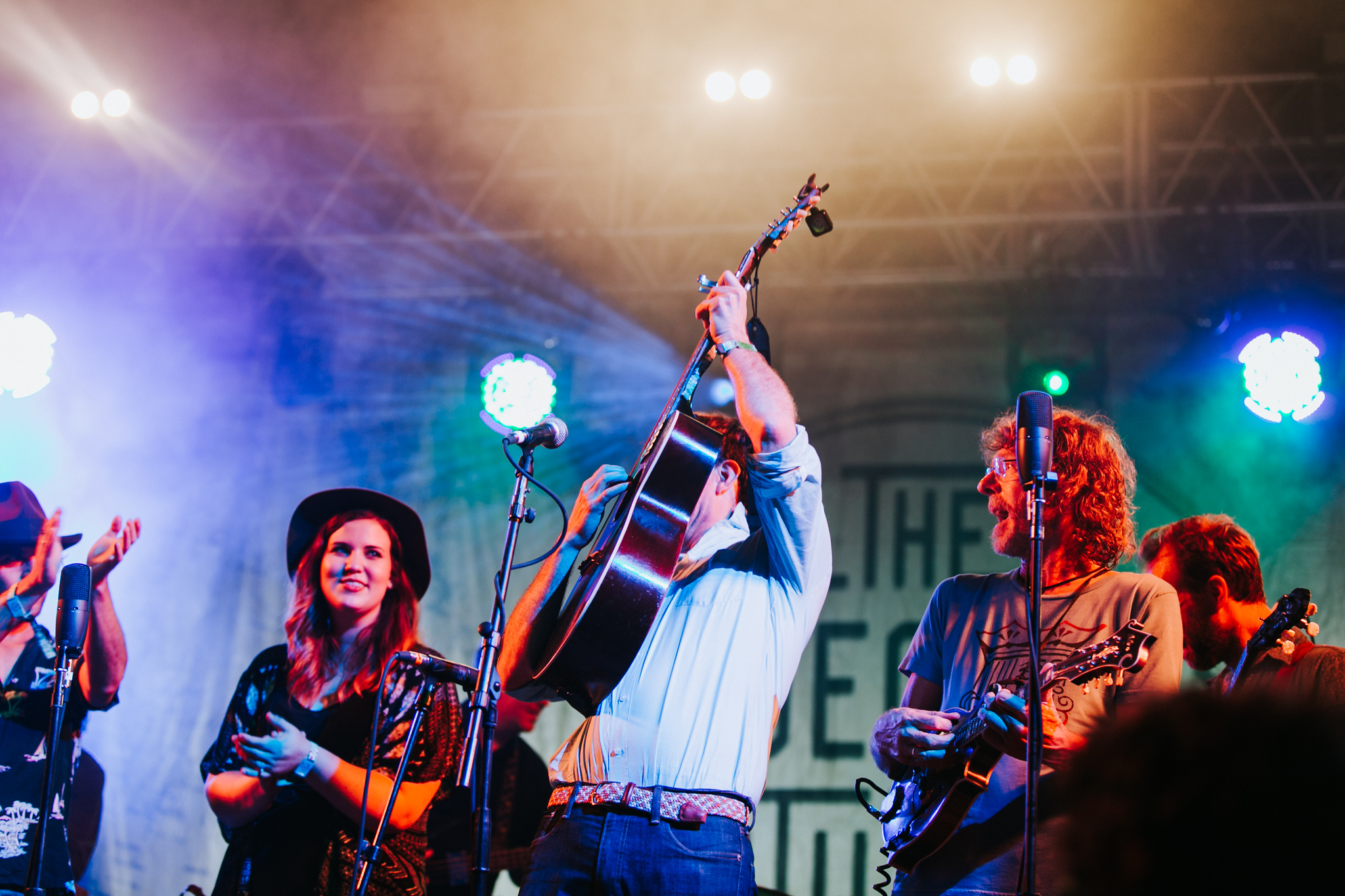
Photos by Elli Papayanopoulos for the BGS

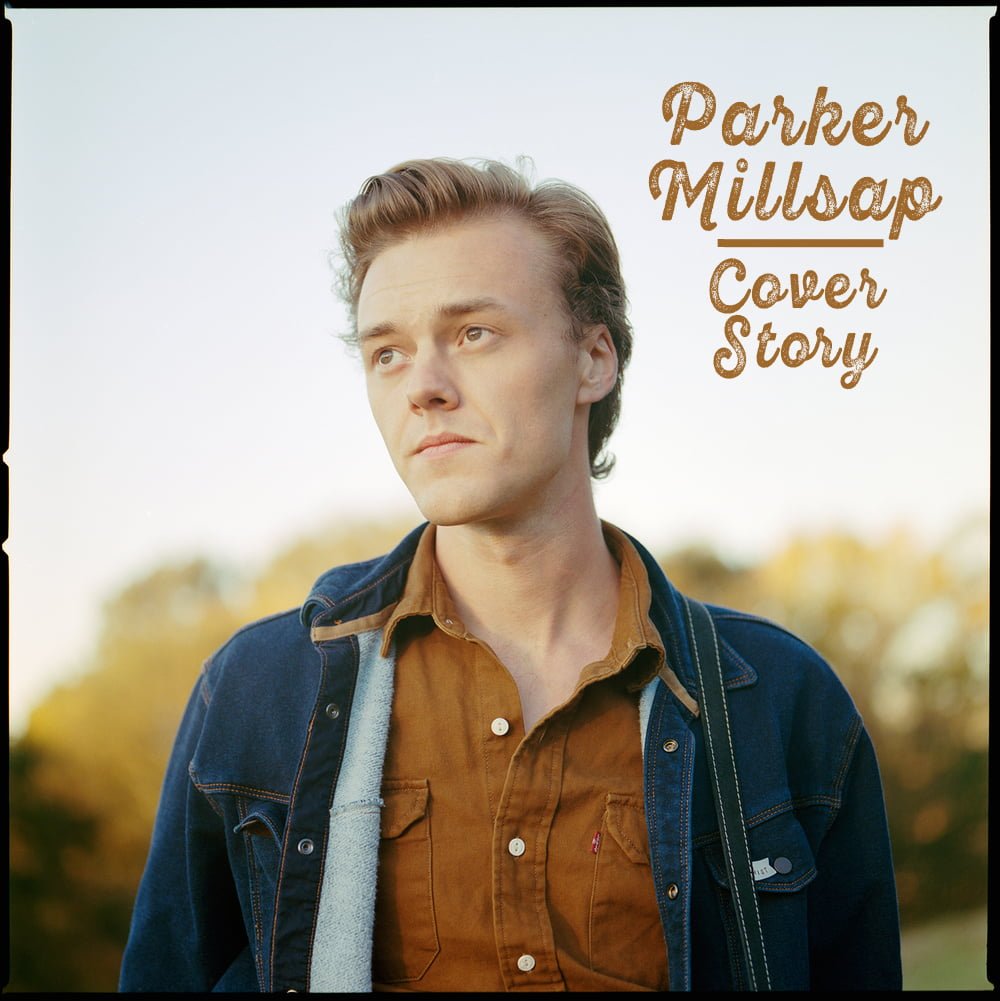
An Apocalyptic Mood: A Conversation with Parker Millsap

When Americana fans met Parker Millsap, he was barely out of high school. He may have been wailing about truckers and God with a fiddle and a formidable backbeat, but the Pentecostal-raised Millsap’s raspy, Isbell-esque vocals on breakout single “Truckstop Gospel” delivered the familiar tropes with a particular wit. That wit, his rich voice, and the performances it yielded were enough to garner a nod for Millsap at the Americana Music Awards in 2014, and his remarkable strength as a poet and writer — coupled with his relatively young career — made his sophomore LP all the more hotly anticipated.

The album itself, entitled The Very Last Day and slated for release on March 25, continues Millsap’s evolution as a storyteller. Tracks like “Heaven Sent,” which narrates a young gay man bargaining with a religious father, or “Hands Up,” a ballad about a convenience store robbery, bring Millsap’s gift for character development to the forefront. One need only glance at the liner notes to know that his words are put to fine use, from the involvement of producer Gary Paczosa — known for his work with Alison Krauss and John Prine — to vocal contributions from contemporaries like Sarah Jarosz. 

So tell me about you growing up – when did you start getting into music?

Well, I grew up singing at church — you know, starting at age four or something like that — and when I was about nine, I started playing guitar. When I was about 13 or 14, I started playing in bands, just around my hometown. Right about then is when I started getting into songwriting because I wanted to have original material to play with the various bands I was in. Also, during high school, I had an English teacher who really got me into words, got me into writing, like a creative writing class. That all happened at about the same time.

I like that. Are you still much of a reader?

Absolutely. Kurt Vonnegut, Tom Robbins, Jon Steinbeck: Those are three of my favorites. They’re all kind of different writers, but they’re all creative in a funny way. Steinbeck’s really subtle, which I like — in a funny and a not-funny way. I think Kurt Vonnegut’s funny in a morbid and kind of existential way. Tom Robbins is kind of crazy.

What about writing this record, specifically?

I wrote these songs over a period of about two years. We were touring a whole lot, leading up to making the record. They just kind of accumulated. I went through a bunch of different phases while writing this record, from Arcade Fire to Roy Orbison to Motown — kind of all over the place, as far as what I was listening to. At the same time, I was watching The Walking Dead and reading a bunch of post-apocalyptic books: Stand by Stephen King, Cormac McCarthy’s The Road. I was kind of in an apocalyptic mood for a minute.

That’s interesting. You definitely have a storytelling angle to your songs.

I grew up listening to a lot of singer/songwriters who did that — who used storytelling as a way to write songs — so it wasn’t very foreign to me. At the same time, I like to read. I love fiction, so I was familiar with the concept that the author isn’t the character in the story. It makes for more options [Laughs] … at least when it comes to songwriting.

Your instrumentation changed up a bit on this album.

Yeah.

Tell me about what that brings to the record for you.

I’ve played electric guitar for about as long as I’ve played acoustic guitar. I just, when I got into songwriting, I started playing acoustic guitar more because that was what all the singer/songwriters that I listened to did. So it didn’t feel unnatural at all. It came down to serving the songs — I had these songs, and we just dressed them up how they needed to be dressed up.

Y’all lived at the studio, right — not just figuratively?

Yeah, for like two weeks. The whole time we were recording, we lived upstairs — above the recording studio. So we just got to go hang out and be a band and record for a week. Gary is kind of an audio wizard on top of being a great producer because he’s very relaxed — he’s not trying to force anything. It makes a big difference.

What makes a song stand out to you?

If it seems sincere … if it’s got mojo … that’s what I listen for.

I really like the new Alabama Shakes record. It’s kind of … I don’t know … it’s a creative record. It doesn’t sound like they’re trying to do anything other than what they do, and I really like that — I appreciate that. It sounds authentic. It’s got mojo.

[Laughs] That, it does. So you said you started out in church, and you see religious references in your songs. Is that intentional? Do you feel like that informs your work?

It just offers a perspective, really. It’s just a perspective I grew up in. It’s easy, when I’m writing a story or a song, to go there. Those references come naturally to me, I think, is all it is.

I didn’t realize growing up that not that many people were raised the way that I was. It was a pretty normal life. I didn’t live in a super strictly religious household — we watched TV, we listened to secular music. I wasn’t that isolated or anything. I did get to see really spirited live music three times a week, people really playing. In church, nobody’s really performing for anybody else — you’re just doing it. There’s a certain thing about that you can only get in that situation.

What about coming from Oklahoma and that music scene?

The music scene in Oklahoma is kind of small, but it’s a pretty dedicated group of people that go see shows and go play shows. Mike [Rose, his bassist] and I, how we kind of turned that into making money, is that we played this place every Tuesday for two years. Before that, we went to this thing called the Tuesday Night Music Club on Tuesday nights. It’s just Cushing, Oklahoma, so it’s just a songwriting circle in this lady’s house, but John Fulbright would show up or other Oklahoma songwriters, and we’d just play music in the living room on Tuesdays. So that’s how I got hooked up with the Oklahoma scene — I got to meet a lot of older songwriters who had been doing it for a while.

But you recently moved to Nashville, right?

Nashville is different. I grew up in a town of less than 10,000 people. [Laughs] And then I moved from there to a town with about 10,000 people, and from there to Nashville. Nashville’s a little faster. I like it. I live in Inglewood. There’s a lot more to do. There’s also a lot more traffic — I’m used to "across town" meaning "about five minutes." [Laughs]

That’s the truth. You have some people who sang with you on the record — Sarah Jarosz, Sara Watkins, Aoife O’Donovan — that’s some pretty lovely company. How did those collaborations happen?

We got in touch with the girls because Gary said, "Hey, this could be some great harmony." I said, "Hell yeah." And he said, "I know some girls." So he got them all over and it worked. It was super-easy — they were all super-easy to work with. Great voices. It’s always fun to bring other people in to work on a song, because you get someone from the outside and they come at it from a different angle. It’s something different that’s usually better than going at it alone.

One of the songs that struck me on the record was “Hands Up.”

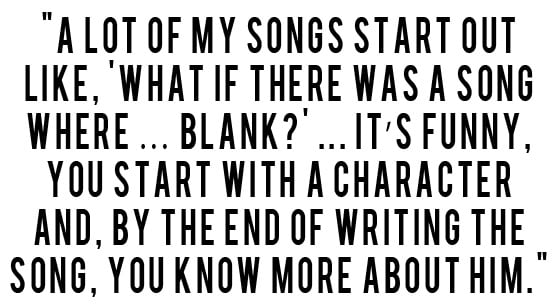
That one just started out with the idea of … well, a lot of my songs start out like, "What if there was a song where … blank?" So that one was like, "What if there was a song where there was a guy robbing a convenience store?" From there, it just happened. I just sat down and started working on it. It’s funny, you start with a character and, by the end of writing the song, you know more about him.

On a related note, I’ve seen you talk about nursery rhymes and Bible stories and the varying perspectives in them — the fact that the story you’re taught isn’t necessarily the whole story. Do you ever include that same duality in your songs on purpose?

I just find it interesting to write from the first person. So that’s … I guess actors do it, when the tape’s on: You get to be somebody else for a second. Just like, "What’s it like? What’s that like? What’s it like to be this person or that person?" It keeps it interesting for me.


Photo credit: Laura E. Partain

LISTEN: Willy Tea Taylor, ‘Bull Riders & Songwriters’

Artist: Willy Tea Taylor
Hometown: Oakdale, CA
Song: "Bull Riders & Songwriters"
Album: Knuckleball Prime
Release Date: October 23
Label: Blackwing Music

In Their Words: "I come from a small town of bull riders and songwriters, and we all travel the same roads to the same towns. This song is about doing what you love and accepting all the consequences … good and bad." — Willy Tea Taylor

Instructions: Follow your heart, no matter where it leads.


Photo credit: Andrew Quist