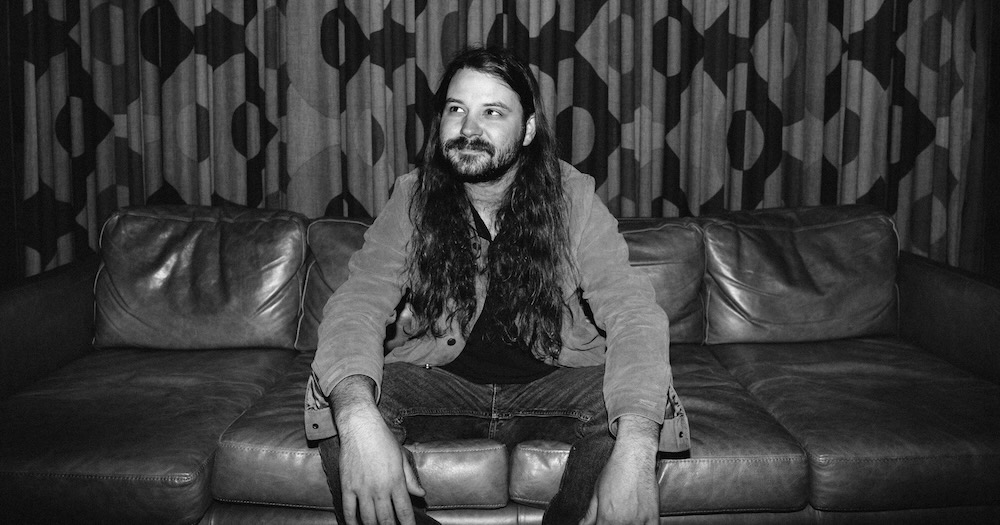
If the rest of Grammy-nominated Brent Cobb’s first self-produced album is like its debut single, “Southern Star,” it’ll be sweet as molasses. To celebrate the upcoming release of the record by the same name, Cobb released the music video for “Southern Star” last week.
The track features Cobb’s honeyed vocals, a vintage tone on the keys, straightforward acoustic strumming, and a light percussion touch. Cobb sings of being a drifter, of feeling lost at sea, but of always having a place to return to — a bright point to move toward no matter what. The video shows Cobb cooking up Southern greens and features shots of the artists who brought the music to life.
“You know how when you’re growing up, you’re told that if you ever get lost out there, look for the northern star to help find direction back home? Well, I’m from Georgia,” Cobb said in a statement. “So, I always look for the southern star. This album, the songs, the sounds… it’s all a product of where I’m from both musically and environmentally.”
Southern Star will be Cobb’s fifth studio album and follows releases like his 2022 debut gospel record, And Now Let’s Turn To Page…. Rolling Stone called him “an enlightened figure, blessed with the gift of finding purpose and meaning in the smallest of details,” and we concur.
The new record is a love letter to Southern roots and the state of Georgia, and drops September 22 via Ol’ Buddy Records/Thirty Tigers.
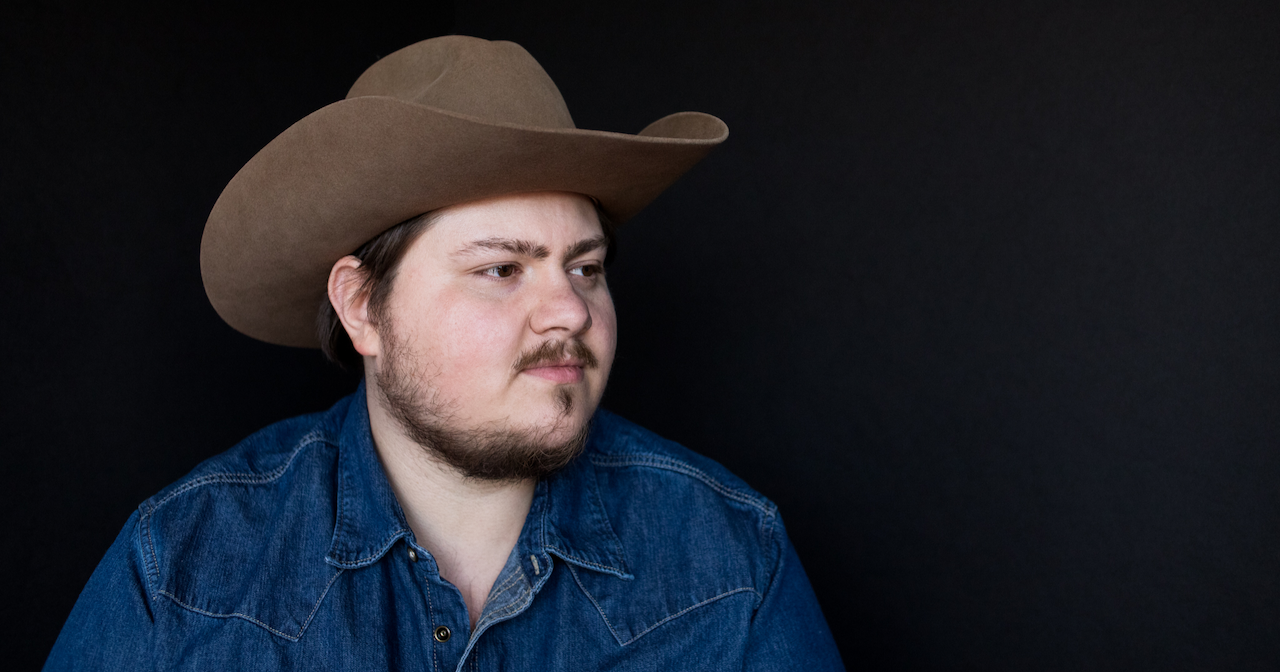
The self-titled country album by East Texan singer-songwriter Vincent Neil Emerson (Choctaw-Apache) oozes of the iconic “Wild West” with honky-tonk sensibilities and bluegrass touches that combine so many favorite textures and styles of country and Americana’s primordial ooze. His personality and identity are forward in every aspect of the project, from the lyrics to the production to the genre fluidity of each individual track – all of which marvelously combine into a cohesive whole.
In Emerson’s exclusive Shout & Shine live session (watch below), he performs two tracks from the album, “High on Gettin’ By” and “The Ballad of the Choctaw-Apache,” a song that dutifully tells the story of his grandmother’s community which was impacted by the creation of a man-made lake, the Toledo Bend Reservoir. The flooding of Toledo Bend had a disproportionate impact on impoverished, rural, and marginalized communities – including many Indigenous people – on the Texas-Louisiana border.
On first listen, “The Ballad of the Choctaw-Apache” feels like many classic country songs telling of injustice and standing in opposition to empire and “the man,” but Emerson’s personal connection to the tale is the entrancing spotlight under which this song shines. As you enjoy Emerson’s performance, take in our interview, when we connected via phone to discuss the album, Emerson’s creative process, and the overarching fact that, as he puts it, “Indigenous music is folk music. Indigenous stories are part of American folklore.”
BGS: I loved listening to the album and something that’s striking to me is that it feels so country, but also combines a lot of different genre aesthetics from different subsets of country in a unique way. I hear bluegrass in it, I hear string band music in it as well as western swing and classic country. How do you approach production and deciding which songs sound like what? There are a lot of different flavors here, but they still sound cohesive as well.
Emerson: With this one I got really lucky having Rodney Crowell producing the album. I think a lot of his ideas were what I was hearing in my head anyways. It matched up very well. As far as instrumentation, song by song we sat down and said, “Here’s what I think the song needs.” We were trying to fit the instrumentation around the song and around the story of the song. As opposed to doing it the other way around. If it sounded bluegrassy, that’s because it probably needed it, I guess!
To me it sounds like that golden age of country before it was divided into sub-genres and all country was just country.
I appreciate that!
What was it like working with Rodney? What was the balancing act like as far as his fingerprints being on the music and yours?
Nothing was forced, it was kind of like, “We got this song and this is what we’re going to do.” And, “Yeah, that sounds good!” [Chuckles] I wouldn’t say he was very hands-off, he knew exactly what he was doing. I didn’t really question any move that he made. It was kind of surreal getting to work with him.
A bystander, or a casual listener, when they hear “Ballad of the Choctaw-Apache” might just hear a country & western song, but I know for you it’s not just a classic, archetypical country song tale, it’s much more personal. It tells the iconic story of this country and this continent of the theft of land, culture, and ways of being from natives. I wonder if you could tell us a bit more about that song and how it’s more than just you writing a “rootsy” song.
I started writing that song after I sat down and talked with my grandmother about her upbringing, what she went through, and how the whole Toledo Bend Reservoir [creation in Texas and Louisiana and the displacement of natives and entire communities] affected her family. As I’ve been learning more about my tribe I felt that it was necessary to write something about that. I haven’t heard any songs written about it – in fact, not a lot of people talk about it. I thought it was needed.
Sometimes music like yours can get pigeonholed as “time capsule music” or throwback music. Something I love about this collection of songs is that, even though it’s classic and timeless, it doesn’t feel dusty or antiquated or divorced from the present. Can you talk a bit about that? Your music is down to earth, too, but it doesn’t feel like you’re trying to make music that’s retro.
There are a lot of bands out there that sort of play dress-up. There’s nothing wrong with that! I respect that and I’ve done it, too, but they’re trying really hard to be a certain era. I love all that music from the old school — I love Bob Wills — it’s just a personal choice. I don’t feel the need to “dress up” or try really hard to make the music sound like it was from back then. I’m so heavily influenced by the people around me and what’s going on around me constantly.
One guy who really had a good mix of that, too, was Justin Townes Earle. He had the old-time thing going on, then he could bust out “Rogers Park,” a piano ballad, and move in and out of [many different styles]. A personal style of songwriting should be a melting pot, it should be all eras – past and present.
Music is so subjective, I’m a firm believer in the idea that however you hear it is what it is. Whether that’s a positive thing or a negative thing to someone, I think it’s their right. I can’t tell anybody they’re wrong for forming their own opinion about my music – or anybody’s music.
It sounds like the process of letting a song have a life of its own is a big part of the process for you and that you understand an audience is always going to project onto or perceive meaning maybe where you didn’t yourself.
I don’t like to bounce my stuff off of people that much, because I’m going to write what I’m going to write. I don’t want to let people influence me too much in that way. But it is a really good feeling whenever you write something and you get a positive reaction or positive feedback. I think I’m more focused on the songwriting. As long as I’m being one hundred percent honest with myself in the song then I feel like it’s a tool for me to express myself completely. I feel that’s good enough.
A point that I always try to make about country, Americana – especially “country & western” specifically – Texas swing, and western swing traditions is that none of these genres would exist without the contributions of Indigenous folks. Especially when you think about Indigenous folks living in the occupied “Wild West” before any other folks did. And there were Black and brown folks who were cowboys before white folks ever were. I feel like that’s always missed, forest-for-the-trees style, by the roots music establishment these days. Country wouldn’t exist without Indigenous folks. Do you have thoughts on that? Have you thought about how your music draws on that legacy?
That’s something I’m still trying to understand myself and really learn about. I think you definitely have a great point there. If you think about it, the settlers came over and they didn’t know how to work the land, they didn’t know how to hunt over here. Natives taught them all that and the settlers took that information and they thrived with it. Our society would not exist in the U.S. if it weren’t for the people who were here before. And it applies to the music as well, yeah.
The album feels so western. Like rhinestones and cactuses and false-fronted buildings. It feels so “authentic,” but it’s not just about the nationalism of settling the Wild West and it’s not about these white supremacist myths about cowboys and western culture. Could you talk a bit about that aesthetic? How Texas and the West and something like cowboy poetry and storytelling come through your songwriting?
I never really set out to try to write about these things, it’s just the things I’ve been surrounded by. I worked on a ranch for a little while. “High on the Mountain,” that song came to me while I was literally on the top of a mountain – well, it was more of a hill – while I was in Palo Duro Canyon. Growing up in Texas, seeing all that stuff, it kinda [left an impression]. A lot of it, as far as stylistically, comes from listening to people like Bob Wills and Townes Van Zandt and Blaze Foley. Anyone that I’ve been influenced by, their influence creeps into it. It’s definitely not just a brand, it’s more my life. [Laughs] I never really thought about it, actually!
I grew up between a horse ranch and a cow pasture in East Texas. I grew up in the middle of nowhere. When you get into cities like Dallas, Fort Worth, Houston, Austin, San Antonio, these bigger cities, there’s a lot more to the area I’m from than just little podunk country towns. I learned that when I was 19. I moved over here [to the Fort Worth area] and was like, “Holy shit!” There was a lot going on. There’s a lot of rich, cultural, musical history. I’d like to dive more into that on the next record. I want to try to put some Tejano music in the blender. Maybe some polka and western swing. See what happens! If you go down around the Hill Country there’s a lot of German music, German immigrants, there are entire communities that still speak German over there.
Maybe this is a good way to wrap up our conversation: Who’s inspiring you right now? Who are you listening to?
As far as Indigenous artists go, I think folks really need to listen to Leo Rondeau. He is one of the baddest motherfuckers out there doing it right now. Really, really great music. In the realm of music I play, there’s not a whole lot of Indigenous people doing it. Of course, I think there are a lot of people with Indigenous heritage, but as far as being able to immediately trace your roots back like my grandmother who is Choctaw-Apache from Ebarb, Louisiana, there’s not a lot of that. It’s kind of a shame. And I’m not the end-all be-all on the subject! I’m not the most up to date on things. I’m sure there are a lot more, I’d love to learn more and hear more. It’s a good thing to bring up and a good question to ask, because it’s something people should be thinking about.
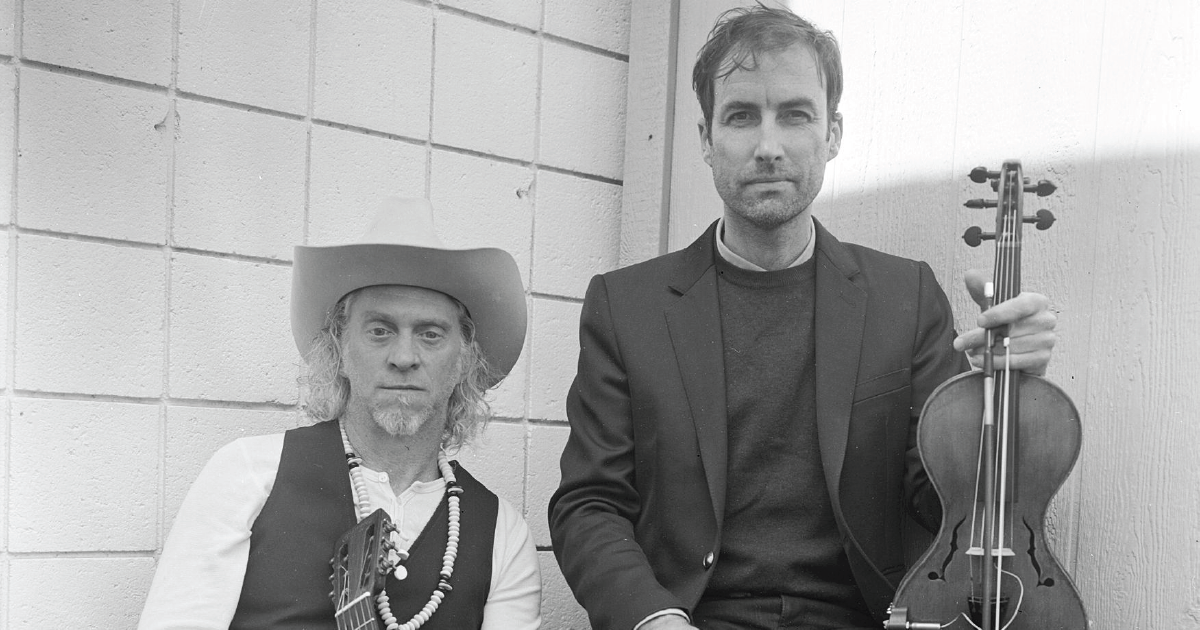
Artists:Jimbo Mathus & Andrew Bird (former collaborators in Squirrel Nut Zippers) Song: “Sweet Oblivion” Album:These 13 Release Date: March 5, 2021 Label: Thirty Tigers
In Their Words: “Up until meeting Jimbo, all my musical heroes were dead. Jimbo was anything but and just oozed musicality of a kind I thought was extinct. Had I not met Jimbo, who knows, but I think my music would have gone on a much more cerebral, complex trajectory. He is an enigma, a walking contradiction: wild yet refined, worldly yet colloquial. He represents his own branch of the American musical tree. It’s been my dream for years now to make this record with Jimbo. Just guitar, fiddle and our very different voices. I wanted to make sure you can really hear him as if for the first time.” — Andrew Bird
“Musically speaking, Andrew challenged me early on. As I had the deep south rural musical upbringing but had yearned to know more of the Chicago and New York scenes of those early days of American popular music. Bird had schooled himself on that, absorbing the European strains of American music and theater, as well as the Chicago-based indigenous albeit transplanted African American musical heritage. It was a true mutual benefit society and we both pursued those goals to a final conclusion. At some point after Andrew had been on the road as Bowl of Fire, he began mutating his music and creating an entirely new form. In other words, he started to become the artist he needed to be at that time and so did I.” — Jimbo Mathus
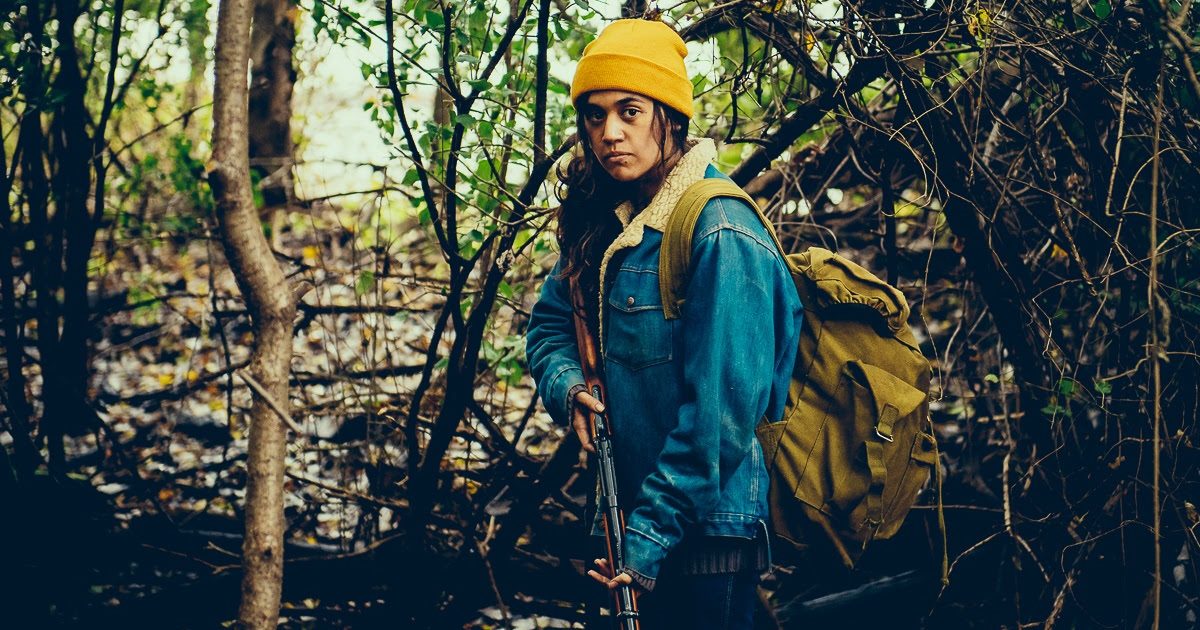
Written and directed by Haroula Rose and based upon a best-selling novel by Bonnie Jo Campbell, the award-winning indie film Once Upon a River tells the story of Margo Crane, a Native American teenager who sets out to find her mother as her own life takes one dramatic turn after another. Margo is portrayed by Kenadi DelaCerna, in her screen debut.
Shot to evoke rural Michigan in the 1970s, the mood of Once Upon a River is frequently elevated by original music from Rodney Crowell, JD Souther, Will Oldham, Bridget St. John, Fran Farley, Peter Bradley Adams, and Haroula Rose, as well as an atmospheric score by Zac Rae. Hear the soundtrack below, and enjoy an exclusive interview with Haroula Rose.
BGS: This story is set in 1977. How did that influence the music you chose for the movie?
Rose: Having it set in the 1970s made me excited about being able to use my favorite era in both music and cinema as inspiration. It was one of the reasons I loved the source material for this very unique kind of road movie, because I knew at once that I could use some psych folk, soul, country and ambient sounds to get into this tale and characters. My film partner at Thirty Tigers (David Macias) was literally the first person onboard for this project, while composer (Zac Rae) and music supervisor (Mike Turner) were also among the first people creatively involved once I had the shooting script. As a musician first, I am always thinking about it as a central element even as I am writing, and the music is deeply embedded into the process from the beginning. I used certain themes Zac had created to play for the actors while we were on set and they were very moved by hearing them.
There are moments of quiet in this movie, too. It reminds me of the adage that a good musician knows when to play a solo, as well as when not to. Can you tell me about your process for placing the music into the film without distracting from the storyline?
I love that analogy! I feel that silence can be as potent as noise, and the pauses in the film all have a voice and are communicating something as well. Margo is not the most traditionally vocal character but is so expressive, thus the music had to parallel that… such that we are still able to feel her subjective experience through the pregnant moments of quiet as much as the action scenes. Ultimately it was about continually paring the story down, sculpting it to its very essence, and the music supported that goal since we were always allowing it to evolve and not give too much away too soon. There was this balance we had to strike with regard to supporting the story and not giving away the emotions before their time. I’m really happy to hear you say it worked!
The placement for Will Oldham’s “Always Bound” works especially well in this film. Can you describe why you felt that scene and that particular recording synched up so well?
Will was the first person to write an original song for the film upon reading the script, and it was this magical piece. In fact “Always Bound” was what I used for our very first scene we shot of the film, which was Margo by the fire when she is eating canned food and camping. I brought these bluetooth speakers out to the woods and played it as we filmed, so we all dropped into this same emotional zone. It was a special moment, having Will as a creative force of support right then at the start. So I already knew which space it would inhabit in the film right when I heard it.
As you were writing dialogue, were there any characters whose perspective, or “voice,” that you particularly enjoyed?
Writing Smoke and Fishbone’s dialogue and banter was super fun, because like so many other parts of this story that inspire me, it is a unique relationship. I loved it in the book too. In terms of perspective/voice, writing Luanne because she is someone who is very complicated and all too easy to depict in a one-dimensional way, was a cool process. I really liked trying to find a way into her that is more complex and nuanced, more empathetic in seeing and understanding her pain, as she struggles to communicate and to exist in the world.
There’s a Rodney Crowell song here, too, and it’s filled with imagery. How did that song, “The Damage,” make its way into the film? And what do you remember about hearing that song for the first time?
Well, Rodney was one of the people considered for acting in the role of Smoke! David Macias reached out and then Rodney and I had a conversation about it. It was surreal because I have long been a Rodney fan. Hearing him play years ago at the Old Town School of Folk literally changed the stream of my life. When he found out he couldn’t do the role, Rodney kindly offered up the idea of a song. I was tremendously honored and then upon hearing it, with its visceral imagery and his manner in singing it, I got very emotional.
He got to the heart of two lonely but loving souls we don’t often see, and their connection. And then recording it — I sang harmonies with him — was so special in many ways. It was similar with JD Souther who wrote a song that Smoke (John Ashton) sings in one of his final scenes. It feels like a dream how this all came together, very fulfilling in terms of making music and making films. I co-wrote a song with Peter Bradley Adams and Zac Rae for the soundtrack as well, that plays in the final scene; that song always gets me emotional too.
To me, cultural identity seems to be a significant theme in this film — in a sense of racial identity, but also privilege. Was that element of diversity part of what attracted you to adapting this film?
Definitely. Bonnie’s novel alludes to Margo’s bloodline, and I thought it would be a great opportunity to showcase talent that would also add a dimension of depth to what the story is saying about “otherness” in her character as well as others, like her father (Tatanka Means) and Will (Ajuawak Kapashesit), who she meets along the way. It’s also part of her journey in coming to know herself and who she will be, that she knows where she came from. Will is the first person who asks her about her own potential, and hence why she makes the choice she does towards the end (no spoilers). In terms of privilege, I think it’s also depicted in terms of the Murrays and how they have interacted with and abused the land and the community, but I hope it’s conveyed that Margo is also someone with skills and talents that she learned from her father, which are a great gift. She has the depth and the comfort in being in the wild, knowing how to survive.
This film will be finding its way to even more viewers in the months ahead. Watching it now, more than a year after you completed it, what are some of the emotions you feel?
I still feel very inspired and emotional, especially at the ending. I also feel beyond proud of every single person involved and their hard work. It’s hard making an independent film and it’s my job to bring out the best in everyone. I hope the world out there sees that as they experience the film, the story, the music. A year after it premiered, 40 festivals and 19 awards later and many years after first reading the book, well it has been a wild and ambitious ride all to support a story that I truly believe we could see more of — seeing one another with compassion, empathy… Margo’s nonjudgmental and generous philosophy of live and let live… even or especially for those who cause you pain. It helps you find your own way.
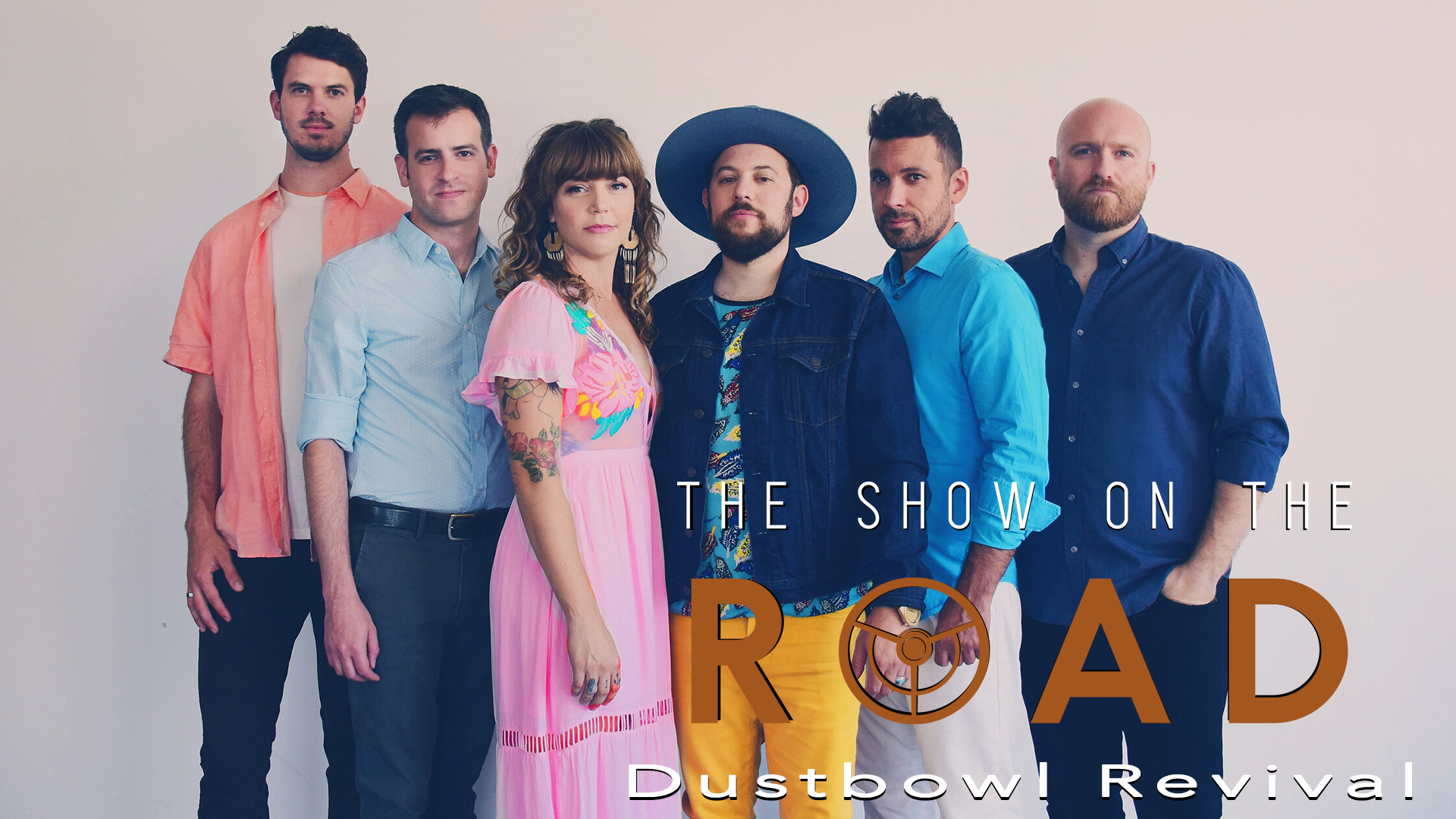
This week on the show, a very special finale to our winter season, featuring a group of world-traveling, folk-funk adventurers that have been catapulting American roots music into the 21st century with their exuberant melding of string and brass band traditions and their white knuckle, award-winning live shows. It’s Dustbowl Revival.
To say today’s episode is personal would be an understatement. Your host Z. Lupetin founded Dustbowl Revival in Venice Beach, CA over ten years ago with a lucky Craigslist ad that started it all. What began as a clandestine jam group with as many as ten instruments going full blast at an after-hours advertising office soon moved to speakeasies and small venues around LA, with the band eventually recording their beloved live album With A Lampshade On at the famed Troubadour in LA and the Great American Music Hall in San Francisco.
In 2013 Liz Beebe joined the group as they began touring full time, becoming a powerhouse eight-piece band that wowed festivals and stages in over a dozen countries, playing over a hundred and fifty shows a year. They’ve released a total of seven full-length records along the way, including their soul-dipped, self-titled work from 2017, which was produced by Grammy-winner Ted Hutt, co-founder of Flogging Molly.
This week celebrates the release of their most daring work to date, Is It You, Is It Me, produced by Sam Kassirer (Lake Street Dive, Josh Ritter) and engineered by Brian Joseph (Bon Iver, Sufjan Stevens). Z. was able to gather the whole band around the mic while on the road in New Hampshire. Make sure you stick around to the end of the episode as the band shares their intimate acoustic single “Let It Go.”
Defining the special relationship is pretty hard right now. Donald Trump and Theresa May were pictured holding hands on their very first meeting. Two days later, 10,000 Britons protested against Mr. Trump outside the prime minister’s Downing Street residence. The most appropriate Facebook status update would be: “It’s complicated.” It’s 130 years since Oscar Wilde wrote, “We really have everything in common with America nowadays except, of course, language.” For many Brits, still reeling from our unexpected lurch into Brexit, Trump’s shock election is proof that the two countries still walk a similar path. But to others, our cousins across the pond have never felt more distant and alien.
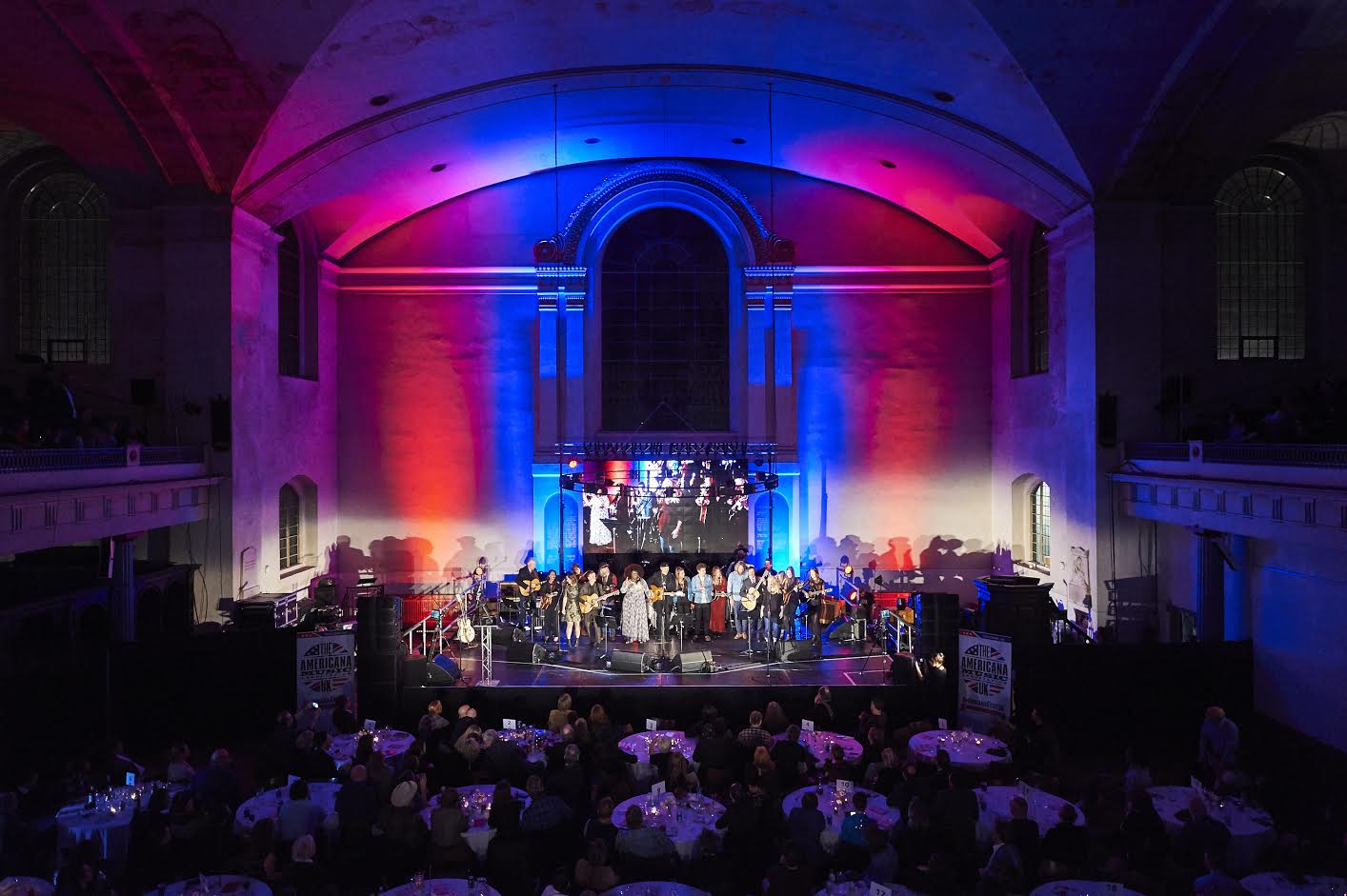
It was in this context that the UK’s Americana scene celebrated itself last week. A fledgling organization, the Americana Music Association UK was hosting its second-ever awards, as well as a two-day conference that offered a chance to consider not only the future of the music here in Britain, but also its present.
Americana has strong roots (excuse the pun) on this side of the Atlantic. Since Mumford & Sons’ mid-2000s breakout, bands like Fleet Foxes, Foy Vance, the Lumineers, and the Shires have found a ready audience, particularly during festival season. Country music has had its own revival — but it can seem remote to the British sensibility and way of life (and its costumes, frankly, outlandish). There’s something in the understated wistfulness of Americana that resonates with our national character: It’s why so many British households own Simon and Garfunkel albums, and why Bob Dylan has long been treated as one of our own.
The contemporary Americana scene is, however, still finding its identity in the UK — as demonstrated by the festival-cum-conference that preceded the AMA UK’s 2017 awards. The two-day affair took place in Hackney, London’s hipster haven where venues such as a vintage clothing store added to the retro appeal of the music; audiences were neatly split into 30-somethings who had raided their dad’s vinyls and the dads, themselves, many wearing jackets they’d had since the ’70s.
Lewis & Leigh
The acts, showcased simultaneously in three neighbouring venues, were more varied. Performances ranged from the folk-inspired Honey Ants to the bluegrass-pop blend of Cornish band Flats & Sharps, from the wild intensity of Henry Senior, Jr.’s pedal steel instrumentals to the delicate voice duos of Ben Smith & Jimmy Brewer. Robert Vincent, winner of last year’s Emerging Artist award, punctuated his charismatic country rock with an unexpected Merseyside accent. Across the road, Glen Phillips (of Toad the Wet Sprocket fame) suppressed his alt-rock instincts in a solo acoustic set that brought the night to a quiet, almost melancholic close.
Growing a more diverse audience will be key for Americana’s development in the UK, industry insiders were admitting. A panel, convened to discuss the genre’s future in the UK and Europe, noted that until recently the very label caused resistance among musicians and promoters, alike. “What has changed recently is that the whole scene has stopped being defensive,” said Sara Silver, head of UK operations at Thirty Tigers, the Nashville-based company that promotes and distributes artists from Lucinda Williams and Patty Griffin to Jason Isbell and the Avett Brothers. “At the beginning, it felt it had to justify itself, but last year’s awards event made me really proud.”
The instigation of an official Americana chart top 40 — some time before the U.S. began their own — is another example of the genre’s newfound confidence, even if 2017’s best-selling album went to a man who has been making music so long that the other nominees could well have been conceived to one of his records. And if Van Morrison’s appearance to accept his award for Keep Me Singing sprinkled stardust (“You’ve made a happy man very old,” he quipped), a performance by Mary Chapin Carpenter, Americana’s grand dame, gave everyone present a masterclass in expressive storytelling.
There was something gloriously authentic about staging the awards at St. John at Hackney — a dilapidated church where the marks in the ceiling aren’t artfully distressed, just genuine leaks — and a similar lack of pretension throughout the ceremony, including the bare-stage performances by nominees like Danni Nicholls, Yola Carter, and Sam Outlaw (who won International Album of the Year for Angeleno).
Perhaps fittingly, the biggest winners of the night were Lewis & Leigh, whose transatlantic partnership (Alva Leigh is from Mississippi, Al Lewis from Wales) claimed Best UK Album and Song. The gentle duo were celebrating the three-year anniversary of writing their very first number together, and their rendition of their award-winning “The 4:19” was the evening’s musical highlight, one whose romantic yearning would give Nashville’s Gunnar and Scarlett a serious run for their money.
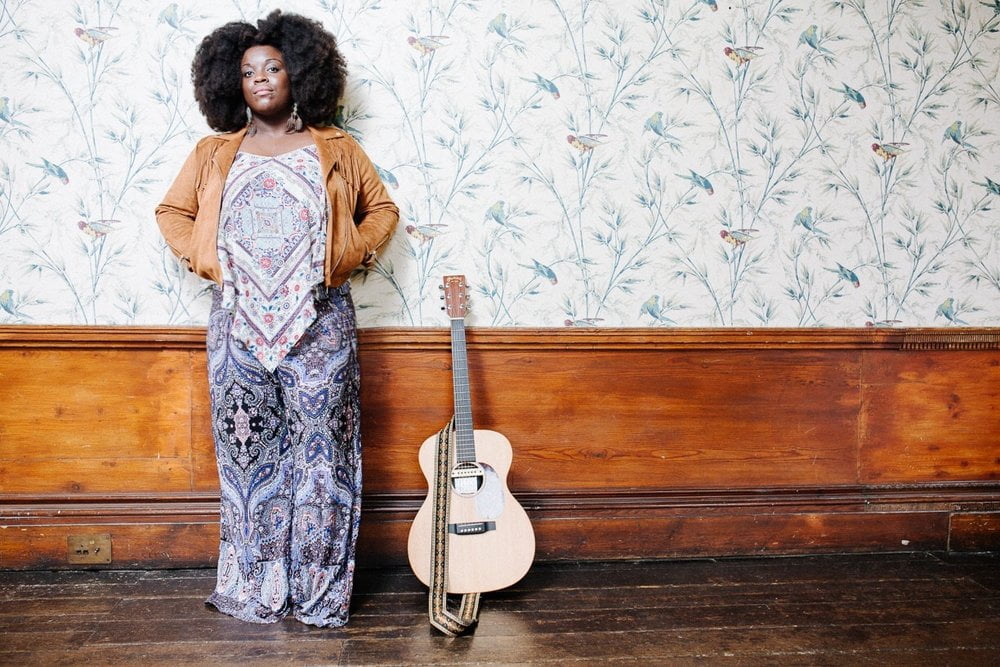
Yola Carter
The event is, at its heart, a chance for what is still very much a family-style musical community to recognize and foster their younger kin — literally so, in the case of Wildwood Kin, the sibling trio from Devon who DJ (and awards host) Bob Harris named his emerging artists of 2017.
Carter, named UK Artist of the Year, pointed out that only 12 months ago she was singing a minor showcase at this same event — “Now, I’m here receiving an award,” she said, acknowledging the “encouragement and community” provided both by her fellow AMA members and by Arts Council-funded organisations like British Underground.
At the end of the night, Richard Thompson was honoured with a Lifetime Achievement Award, in the year that his band Fairport Convention celebrates its 50th anniversary. It was presented by his friend Harry Shearer, who called him a “craftsman, artist, and visionary” and praised his “absolutely idiosyncratic career.”
“This isn’t a subculture,” said Thompson, when he took to the stage. “It’s a parallel culture. And …” — cue huge applause — “it’s getting better.”
On Sunday, July 3, an integral part of the Nashville music community passed away after a hit-and-run bicycle accident near his home. Bob Goldstone was Vice President of Sales and co-founder of Thirty Tigers, the driving force behind many of our favorite artists — from Jason Isbell to Patty Griffin to the Avett Brothers. Bob's passion and compassion made indelible marks on all who knew him, especially his fellow Tigers, some of whom remember him here.
Bob was much more than a colleague to many of us. He was a friend. If you were having a bad day, Bob’s office was where you’d want to be. He taught me a lot about life that I will never forget. Just a few weeks back, I was having a bad day and found myself in his office, venting. Bob's response was, “Is it really that bad or are you just being hard on yourself?” It was the latter. He had a knack for getting people out of their heads so they could see things clearly. I think we’ll all be asking ourselves "What Bob would do?" when we wind up in a jam for many, many years to come. — Matt Bury
* * *
Bob Goldstone was undoubtedly one of the most genuine, loving, insightful, and generous people I've ever had the privilege of knowing. Whether you knew him for years or just happened to interact with him for a few minutes in passing, he always made the time to deeply invest in his relationships and establish solid, meaningful bonds with every single person who crossed his path.
Bob was unbelievably passionate about life and unique in just about every way. He had a deep, spiritual connection to both art and nature. He was constantly "meditating on the cosmic impulses of the universe," and encouraging us to do the same.
Bob made each person who met him feel special and valued. He was always there to support you, in every way, and he taught me that the coolest person you can be is always simply yourself.
Simply put, there was no one quite like Bob Goldstone. I loved him like a brother and will continue to hear his voice guiding me for the rest of my life. — Thomas Flood
* * *
As I sit here trying to think of something that's supposed to sum up the life of an immeasurable man in a few lines, I keep coming back to Bob's capacity to love. Whether helping to change a tail light, recommending new music, or just having a drink and a laugh, Bob made everyone's day a little bit brighter.
Bob was the light I looked forward to seeing every day. He had a way of defusing any situation and making everyone in the room feel a little more comfortable, happy to be there, and happy to be around Bob. That's the kind of man he was; the kind of man who embodied joy and warmth, who made sure everyone felt loved, heard, and appreciated. Bob made us feel like family, and words cannot express how deeply he will be missed.
No words will describe the impact this man had on my life or the lessons I've learned from his example, but ultimately Bob was my buddy. He will be missed more than he could possibly know.
I love you, Bob. Stay groovy. — Robert Knotts
* * *
Bob always said that we were partners and a team. I would sit in his office, several hours each day, and we talked about everything. Shipping problems … we'd solve it together. Vinyl might not get done on time … we'd figure it out together. Best Neil Young album … debatable.
When I would complain about incompetence, he'd laugh and say, "Man, you got attitude. I'm gonna put this record on for you to chill out." Chillin' me out and acting as the best mentor I could ever ask for was only a small fraction of what he did for me. He was my friend. I'll always cherish the drinks we got together, the dinners we shared, the pot we smoked, and oh the stories … so many stories. He always had one and it came with a smile and an infectious laugh. He was so genuine, it was disarming. He said part of being a team was that we had to stay in step with each other — one doesn't work without the other.
Recently, he could tell I was upset about something and he called me into his office and said, "You don't have to talk about it, but I'm sensitive and I can't sit here and look out at you, so what's up?" I cried and gave him a hug after and he said, "I love you, home slice. You know that." He was always just what I needed, and to think he was the one that called me up once every couple of weeks to tell me he was thankful for me …
I loved him dearly. He was the coolest, nicest, most loving person I will ever know. — Morgan Perry
* * *
It's so hard to believe that we lost Bob Goldstone. He was a friend, co-worker, and mentor. He and I are music fans first. We could talk about records forever. A few days ago, I gave him a marbled vinyl copy of Dave Mason's Alone Together with cutout gatefold that I found at Earl Scruggs' estate sale. I'm listening to it in his office now. He made sure we made art the priority, when we worked together on album releases. I'm thinking that a Bob Goldstone Music Appreciation Society might be in order. I'm praying for his family constantly. — Logan Rogers
* * *
Bob was a beautiful, fun-loving, and abundantly caring man. When I started at Thirty Tigers, he was so pumped that I was joining him as his right-hand man. He was calm, cool, and always on my side. He told me not to be so eager and to slow down when I needed to. He told me he knew I had great intentions, that I was smart, and I would do great things. I don’t even know if he told me those last two things directly, but that’s how he made me feel. He believed in me (and believed in everyone, really). We liked to sit and listen to test pressings together — he considered that responsibility a privilege. He lit up like a Christmas tree when my son JW would come to visit, and JW loved to say hi to Bob in his office. He always told me to smile when he walked by my desk; he was so good at that himself.
God, thanks for the life of my friend, BG. He made mine better, and I'll miss him dearly. — Zach Bevill
* * *
Walking up the steps of old 1604 8th Avenue South on my first day of work at Thirty Tigers over three years ago, the very first thing I saw was an office window. In that window was a gigantic poster of the cover of Miles Davis’ album Kind of Blue. That was Bob Goldstone’s office. I thought to myself “good sign.”
You have to understand something: Thirty Tigers is an incredibly fast-paced, lean, powerful machine. The staff there puts in the type of hours you’d equate to a doctor in residency. We spent most of our days and the majority of our nights together. That was my life for the last three years. We were TIGHT. Some of that crew has been working together for over a decade. It’s more than a job over there; it’s a ship on a holy fucking mission — and Bob was firmly positioned at the front of the helm. He was the greatest champion of up-and-coming artists that are now household names: The Avett Brothers, Jason Isbell, Sturgill Simpson, St. Paul and the Broken Bones … just a few of the bands that went from obscurity to stardom under his loyal watch.
Many of my former colleagues have mentioned this, but Bob set me straight on many occasions. When I bought my new (to me) car, I complained about something and said that I was surely getting screwed over by the dealership. He quickly and sternly told me to STOP. Call the dealer. Figure it out. They will do you right. You see, the root of all that reaction was because I didn’t have trust in my heart … but Bob did. His heart was filled with goodness and light and great vibes, and with all that, comes clarity and self-awareness. He knew what was up, and he wasn’t going to let you get away with a bad attitude. The people who call you out on your shit do that because they give a damn. Those are the people who love you, who want you to be your best self. Sometimes it was hard to hear, but I always walked away thinking he cared enough to say something.
There isn’t one person in that organization that asked me “How are you doing?” more … and with earnest. I think, many times, he did so because he sensed the answer was maybe not good, and he’d close his office door and listen to me. The constant advice was, “It’s all going to work out.” He had faith in the organization and the process … and he just plain had encompassing faith. And faith is infectious. It helped me get through many tough decisions and choices.
I left Thirty Tigers for a new career opportunity at the end of last year. It was the right choice and a wonderful opportunity for me, but the hardest transition was walking into a new office with new people. It’s like the first day of kindergarten in a new town. I dearly missed my old co-workers. The person I kept running into after I left the company the most was Bob, always boisterous and joyus. The last time I saw Bob was at City Winery about a month ago. Big hug … talk of my new job … how happy I looked. “I am so happy for you.” And he meant it.
Back to the beginning … that first day of work. I will forever think of Bob when I hear “So What” from Kind of Blue. That iconic poster in his window. And how many times did I hear that song radiate from his office? It seemed like his song, and the sirens call for me to come and sit in his chair and say hello, or confess, or vent. I know when I hear it now, I will forever think of him — the person who cared enough to set me straight, to ask me how I was doing, and to be of such generous heart to always put the happiness of others at the top of his list.
BMLB (Be More Like Bob)
— Katy Kirby
This website uses cookies to improve your experience. We'll assume you're ok with this, but you can opt-out if you wish.AcceptRejectRead More
Privacy & Cookies Policy
Privacy Overview
This website uses cookies to improve your experience while you navigate through the website. Out of these, the cookies that are categorized as necessary are stored on your browser as they are essential for the working of basic functionalities of the website. We also use third-party cookies that help us analyze and understand how you use this website. These cookies will be stored in your browser only with your consent. You also have the option to opt-out of these cookies. But opting out of some of these cookies may affect your browsing experience.
Necessary cookies are absolutely essential for the website to function properly. This category only includes cookies that ensures basic functionalities and security features of the website. These cookies do not store any personal information.
Any cookies that may not be particularly necessary for the website to function and is used specifically to collect user personal data via analytics, ads, other embedded contents are termed as non-necessary cookies. It is mandatory to procure user consent prior to running these cookies on your website.