Kristin Scott Benson and Wayne Benson Finally Find the Time for a Duo Project

Working in two separate bluegrass bands, Kristin Scott Benson and Wayne Benson normally stay busy on the road with about a hundred shows a year. However, when the COVID-19 pandemic hit, the pause on all live performances “created an opportunity as far as time for the two of us,” Wayne said.

Kristin, who has been named the IBMA’s Banjo Player of the Year five times, plays with the Grascals, while Wayne is the longtime mandolinist for Russell Moore & IIIrd Tyme Out and runs a YouTube educational channel called Wayne’s World of Mandolin. The couple, who have been married for more than two decades, have rarely shared the same stage, nor have they done much recording together. Their packed schedules, plus raising their son, didn’t leave a lot of time and headspace to think about collaborating and even talking much about music.

“So all of a sudden, we’re at home and we just started talking about different songs and who we thought would be a good voice for that song,” Wayne continued. “And the next thing you know, there was enough discussion that there was a record there.”

A melding of the artists’ styles and taste, that record is the couple’s first full-length creative project together and their debut as Benson. Kristin said the project pushed each of them artistically, in the best kind of way, and gave them the chance to record songs and try things they might have not gotten to otherwise.

“We’re dyed-in-the-wool, traditional bluegrass players at our heart, that’s our deepest roots,” Kristin said. “But his instrumentals can lean very forward and be a little bit more on the progressive side than the ones I typically write — I’m more of a traditional-style banjo player. So if you look at this record, it’s a balance between who he is and who I am.”

BGS: How did the collaboration, which began while in pandemic isolation, take shape?

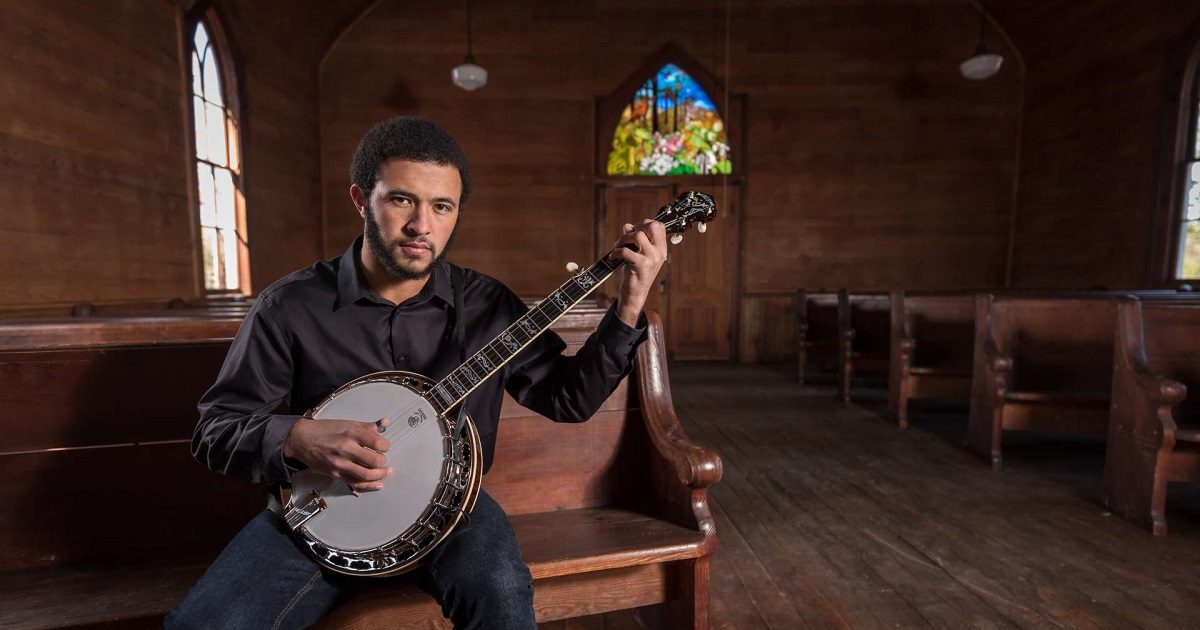
WB: It would just happen in moments when the subject would come up and we would talk about it. We never really scheduled time that we were going to put into it, never had to. If we were trying to make it and there had never been COVID, it would have been more of a process. But it just fell into place. A lot of it did, [including] the album cover, that “pick your poison” thing that’s on the window right behind where I’m sitting. And when we looked at those pictures that day, it was like, that’s got to be the name of the record because it is about musical diversity.

It has this song “Red Mountain Wine,” which is like a straight-ahead, you know, three chords and a cloud of dust kind of song. And then there’s the far more contemporary-sounding things. And then some of the instrumentals that I wrote are right outside the edge of the bluegrass umbrella. We talked about how we felt like all of that could come together because we live in a world now where most people are never going to purchase a physical copy of the record. People stream what they want to hear. So I think you can get by with this kind of an approach more so now than ever before.

Was that desire for a diverse array of music there from the beginning or did that evolve as things went on?

WB: I think it was inevitable because we have different tastes in music and different things that we feel comfortable with, and finding something that works that we felt like it was in our wheelhouse.

KSB: I’ve done banjo records; some were all instrumental and some also had vocals, like the last record I did was called Stringworks and it was half and half. Then Wayne has a mandolin CD of all original instrumentals. And if you look stylistically at those records, this album is a little bit in between, and part of the difference is just creatively.

WB: We each stretched in different directions, more so than if I would have been doing just a solo project for myself. I would have recorded all instrumentals. And Kristin has this real gift for finding material and then pairing it with a singer that would be comfortable with the particular song.

The first single released from the album was “Conway,” an instrumental written by Wayne years ago. Tell me about the story behind that song and why that was the tune to lead with in announcing this new creative endeavor.

WB: I was really surprised [the record label Mountain Home] wanted it to be an instrumental. But I think it was a good thing to warm people up to the project. And it’s really weird because I wrote that tune probably 15, maybe even more, years ago. Conway, South Carolina, is the town that that tune is named after, like in the tradition of Bill Monroe, when you have “Louisville Breakdown” or “Pike County Breakdown,” all these tunes that are basically just a location that they happen to be in, or that it reminded them of, or whatever. It was, to me, a little bit scary for that to be the first thing because it was something from so long ago. The energy of writing that or pouring anything into it, I had totally forgotten about, where normally when you’re recording something you have these recent memories of caring about it that much. And all of a sudden, this song is going to be the flagship.

KSB: It’s a groovy track though. Wayne said that I had a knack for finding vocal songs that worked well with bluegrass. Well, I think Wayne has a knack for creating simple, hummable melodies, and then arranging those, employing them in a way that you can stretch out and play different things. One of the things that I like about musicianship is when you can grow a simple idea and do a lot of different things with it. And if you take “Conway,” for instance, it was a pretty happenin’ little demo that he did. The nugget is approachable and accessible to anybody’s ears… It’s the simple melody, but a lot of groove and is super fun to play, that stuff when it’s all about the feel. I had a ball [playing it]. And as for the first song released, I hope it makes people feel good. And it’s been interesting to get to pull some of these tunes that Wayne wrote long ago and get to play them.

WB: That was written not too long after [our son] Hogan was born. That tune is the spirit of that season; having a baby that’s that small and everything that that brings out emotionally. And tunes should represent those seasons of your life.

The second single from the album was a cover of Matthew West’s “Oh Me of Little Faith,” featuring your church friend Heath Williams on vocals. Why did you want to include this song and how does it speak to each of you?

KSB: This was my favorite song.

WB: It’s my favorite track, too.

KSB: I lost a first cousin, and he was not much older than me. At the funeral, they played a Matthew West song. I’m tuned into some contemporary Christian music, but Matthew West was new to me. I loved the song they played, so I started listening to his music. And as soon as I heard this song, I knew that I had to record it somewhere. It has a wonderful tempo and feel to play the banjo on. The message in the song also really spoke to me because I had always thought of the section of the Bible where the desperate father goes to Jesus and says, “Lord, I believe, but help my unbelief.” I always thought, well, I need a lot more than that. It’s a song about doubt and grace. And if I had the gift of writing lyrical content, I would have written a song like that because it was a sentiment that I had related to for years. When I heard it, it just spoke to me in a powerful way.

What’s another track you’re excited about on the album and want to give some love to?

KSB: I really like the track “Look at Me Now.” We’re both huge New Grass Revival fans. And later in their career, like right before they broke up, they had a lot of mainstream-feeling country songs still with the brilliance of Sam Bush, Béla Fleck, Pat Flynn, John Cowan and others. The songs were just remarkably good and commercially accessible. To me, “Look at Me Now” is a bit patterned after that, whether we meant for it to be or not. But it’s a ’90s country song that I heard when I was a young teenager, and even then I identified the chord progression as clever; it has some interesting chord changes and I thought it was a neat song. So I just filed it away. That’s what inevitably happens for musicians; you are constantly listening to music with an ear toward what might work for you. That song just stayed with me always. We took a page out of the New Grass book when we play the chorus and it’s the full 4/4 feel.

What are you each listening to at the moment?

WB: I’ve actually been into bluegrass lately, which typically I’m not. I’m a mandolin geek, for sure. I like everything under the mandolin umbrella. But I go through phases of what I listen to and a lot of times it’s classic rock n’ roll music. But last night, I was listening to some early Doyle Lawson & Quicksilver.

KSB: He’s listening to more bluegrass now than I remember ever.

WB: Part of that, I think, is because, again, the pandemic changed so many things… We would listen to bluegrass on the bus and I think it’s that void of not listening to bluegrass with the guys in the band. Because it just makes you feel good to hear it. When I listen to Bill Monroe or Flatt & Scruggs from the 1950s, it just relaxes me to hear it.

KSB: For me the ultimate wake-up call if I’m getting sleepy and trying to stay awake is Doyle Lawson & Quicksilver because that’s the music that made me want to play bluegrass, and there’s nothing that inspires you more than the music that made you want to play in the beginning.


Photo Credit: Sandlin Gaither

WATCH: Jim Hurst, “Weary Old Highway” (Feat. Darin & Brooke Aldridge)

Artist: Jim Hurst
Hometown: Toledo, Ohio
Song: “Weary Old Highway” (feat. Darin & Brooke Aldridge)
Album: From the Ground Up
Release Date: July 1, 2022
Label: Pinecastle Records

In Their Words: “Road musicians are driven by desire, the pulling of what lies ahead, and searching for opportunities to grow, learn, and perfect — as much as possible — their craft, their art. But not perfection really, because to play the perfect performance, set, song, solo, last note… is extraordinary and uncommon. And maybe that’s the way it should be, because not unlike so many explorers, most if not all artisans/musicians/songwriters are always looking for the unknown ‘next.’ Once found, we want, need really to go for something. Something else, something further than what we have found.

“I am thrilled to have the opportunity to be a road musician, songwriter, troubadour of sorts… and kinda doing it my way. And sometimes I find a song written by another of the same ilk that I am so fond of I request to cover it on a recording project and/or perform it live. Such is the case with Keith Little’s ‘Weary Old Highway,’ a road musician’s journal of sorts. I first heard this song on Keith’s Distant Land to Roam CD, and immediately fell in love with the song. Years later, I asked him if I could get his permission to record my version of it, and he graciously said yes. So I did, on my newest project: From the Ground Up on Pinecastle Records. I had wonderful musician friends to help me: Kristin Scott Benson (banjo), Wayne Benson (mandolin), Shawn Lane (fiddle), Ethan Burkhart (bass), Darin Aldridge (tenor vocal), and Brooke Aldridge (high baritone vocal). Oh, and Keith gave my version his approval… which matters to me. I hope you approve as well!” — Jim Hurst


Photo Credit: Pinecastle Records

LISTEN: Benson, “Conway”

Artist: Benson (Kristin Scott Benson and Wayne Benson)
Hometown: Boiling Springs, South Carolina
Song: “Conway”
Release Date: February 18, 2022
Label: Mountain Home Music Company

In Their Words: Kristin: After 20 plus years of marriage, we’re finally getting around to recording some music together.

Wayne: Yep. I’ve played on Kristin’s solo projects and we’ve both played as session players on a lot of the same projects for other artists, but this is the first collaboration between us.

Kristin: One thing I love about doing this is that we get to record some of Wayne’s instrumentals. On my banjo records, I only recorded tunes I wrote that featured banjo, but I always hear what he’s writing and wish they were mine. (laughs)

Wayne: This is exciting for me because none of my original instrumental music has been recorded in a long while. I had the Instrumental Anthology album that was all-original and was largely compiled from the Bluegrass ’90s series. We added a few to make an entire record. I’ve recorded a few originals with Russell (of Russell Moore & IIIrd Tyme Out), but I’ve had a lot of songs just sitting there.

Kristin: And “Conway” is one of those! I like the groove on this one and I think that’s why the folks at Mountain Home liked it. It’s got a simple melody that anybody can hum, but then on the B part, it really grooves with electric bass.

Wayne: That’s mainly why I demoed it. I’m a closet electric bass player and it was a chance for me to have fun doing that. Paul Watson really did a great job and Tony Creasman added some nice, tasteful percussion.

Crossroads Label Group · Conway – Benson

Photo Credit: Sandlin Gaither

LISTEN: Tray Wellington, “Pond Mountain Breakaway”

Artist: Tray Wellington
Hometown: Originally from Ashe County, North Carolina and now calls Johnson City, Tennessee home
Song: “Pond Mountain Breakaway”
Release Date: May 28, 2021
Label: Mountain Home Music Company

In Their Words: “I actually wrote the main riff to this song while playing electric guitar — but then, while playing banjo the same day, I tried it out with more of a bluegrass feel, and thought, ‘Wow, it would be cool to write a fast, upbeat instrumental around it.’ When recording, I got to the session late because my car broke down on the way, and while I was trying to think of a name for the tune during the actual recording session, Wayne Benson, who plays mandolin on the track, asked me, ‘Where did you break down?’ I replied, ‘A place called Pond Mountain,’ and he said, ‘Call it “Pond Mountain Breakdown.” I thought that was a great idea, but as I was thinking about it later, I realized that I don’t get a full breakdown vibe from this tune — and when I thought that a little variation in bluegrass titles wouldn’t be a bad thing, I decided to make a slight change to ‘Pond Mountain Breakaway.’” — Tray Wellington


Photo credit: Rob Laughter

The BGS Radio Hour – Episode 204

Welcome to the BGS Radio Hour! Since 2017, the weekly show has been a recap of all the great music, new and old, featured on BGS. This week, we bring you old bluegrass newly recorded by the Infamous Stringdusters, music from our Artist of the Month, Peggy Seeger, and so much more! Remember to check back every Monday for a new episode of the BGS Radio Hour.

The Brother Brothers – “Circles”

Celebrating their upcoming Calla Lily (available April 16), Adam and David Moss of the Brother Brothers joined us on a recent 5+5. We talked John Hartford, writing music for dance, and the inspirations and songwriting techniques behind these two brothers and their new album.

Johnny Chops – “Trouble With the Truth”

Austin-based Johnny Chops brings us a song this week from his upcoming Yours, Mine and the Truth EP. This song pretty much fell out of the sky and onto Chops’ paper in his writing room one morning. The video continues to tell the story of the song, building a dark and bleak vibe through dramatic and abandoned filming locations.

Sinner Friends – “Unforgivable You”

Sinner Friends don’t just sound like vintage bluegrass: they record like it too, down to just a few microphones, no editing, everything done right then and there. Recorded and released by Bigtone Records, the result is on par with those early bluegrass recordings that defined the genre. This week, they bring us a song from their newly released Sinner Friends Miss You (The Quarantine EP). 

Keb’ Mo’ – Yamaha x BGS Artist Session

For 2021’s Folk Alliance International and SXSW conferencesBGS teamed up with Yamaha to film performances from some of the artists we’re most excited about. Our first segment is from none other than Keb’ Mo’, playing a Yamaha FGX5 – modeled after the vintage FG180, Keb’s first guitar which he unfortunately lost in the Nashville flood of 2010. Aren’t we all just waiting on the medicine man these days? Keb’ performs two songs for us, “Every Morning” and “The Action.”

The Gina Furtado Project – “Kansas City Railroad Blues”

Gina Furtado brings us the “magic fire” of the banjo on this new single, finding the sound that first made her fall in love with the instrument. It’s the latest single in an exciting and excellent batch from Furtado and Mountain Home Music Company, produced by banjo phenom Kristin Scott Benson, and accompanied by Drew Matulich, Wayne Benson, and siblings Malia and Lu Furtado.

Ervin Stellar – “Nothing to Prove”

From Grand Rapids, Michigan, Ervin Stellars joined us on a 5+5 last week – that is, 5 questions, 5 songs. We talked everything from Wes Anderson and the Coen Brothers to waves and mountains. And let’s not forget his new album, Nothing to Prove.

Mimi Naja – “All You Know of Me”

Known for her work with Fruition, Mimi Naja recently dropped Nothing Has Changed, her first solo release since 2014. We caught up with Naja to talk about songwriting, inspirations, and a dream meal pairing of Thai with Khruangbin.

Peggy Seeger – “The Invisible Woman”

Peggy Seeger is our Artist of the Month for April here at BGS! Her just-released First Farewell is a goodbye to recording and the road, but she is not leaving that lineage behind. Coming from a musical family including the likes of Pete and Mike Seeger, the traditional continues, as Seeger enlists her sons Neill and Callum MacColl on the new album. Stay tuned all month long where we’ll be featuring Peggy Seeger!

The Alex Leach Band – “The Turntable”

Alex Leach has been adored by the Eastern Tennessee bluegrass community since he first started appearing at the WDVX radio station in Knoxville as a small child. Through the years, he’s played with Ralph Stanley, hosts a weekly show on WDVX, and now has his newest endeavor, The Alex Leach Band, who just released their latest album (produced by Jim Lauderdale), I’m the Happiest When I’m Moving. 

Acoustic Syndicate – “Sunny”

Acoustic Syndicate has been making music in Western North Carolina’s jamband scene for over two decades, but their latest studio endeavor is the first in seven years. “Sunny” is a promising first release with Organic Records, the band joined by Brian Felix on piano and Lyndsay Pruett on violin.

Elizabeth King – “Living in the Last Days”

Memphis-based Elizabeth King brings us this deeply thought number this week from her latest album of the same title. “Living in the Last Days” is about the trouble that so casually surrounds our current days, and King sings about it with a lot of conviction. The song should inspire us all to look a little more closely at what surrounds us, and what we can do to make this world a better place for all.

Bobby Osborne – “White Line Fever”

“White Line Fever” was a hit for Merle Haggard in the 60s, but had never been cut as a bluegrass song. That is, until Alison Brown and Bobby Osborne got a hold of it. One thing leading to another, and Jeff Tweedy wrote a second verse about Bobby (being the voice of Rocky Top) and his 60 years on the road as a musician. Mixing all of this with some A-list bluegrass musicians like Sierra Hull and Stuart Duncan, well… this is the result! As Brown says, “it was hard to believe the song hadn’t been a bluegrass standard all along.”

Cha Wa – “My People”

Joseph Boudreaux Jr, vocalist for Cha Wa, teaches us about ‘ancestral recall’ with this song, a phenomenon where people consciously or subconsciously draw on the experiences and lives of their ancestors to perpetuate a certain lifestyle or culture. “‘My People’ reminds us that no matter who you are — rich or poor, big or small — we’re all in this together as humans,” Boudreaux told BGS. “Cause one day we gon’ all be in the same boat.”


Photos: (L to R) Keb’ Mo’; Gina Furtado by Sandlin Gaither; Peggy Seeger by Vicki Sharp

LISTEN: The Gina Furtado Project, “Kansas City Railroad Blues”

Artist: The Gina Furtado Project
Hometown: Winchester, Virginia
Song: “Kansas City Railroad Blues”
Release Date: April 9, 2021
Label: Mountain Home Music Company

In Their Words: “How in the world I made it all these years as a banjo player and not heard of ‘Kansas City Railroad Blues,’ I have no idea. Nonetheless, I heard this tune for the very first time last year and it quickly became my new favorite. This tune has the magic fire that drew me to the banjo as a kid and hasn’t let me put it down since. I chose it knowing it would be a great way to show off the hot pickers in the band. It provides a perfect template for Drew and Malia to exhibit their pristine swing style chops. This is also the first single of ours that includes our newest band member, Lu Furtado. And boy, does she make a grand entrance with her stellar bass playing! Lastly, Wayne Benson and Kristin Scott Benson, joining us on mandolin and from the producer’s chair, respectively, made this a super special recording. I hope you enjoy listening to it as much as we enjoyed recording it!” — Gina Furtado


Photo credit: Sandlin Gaither

‘Bluegrass at the Crossroads’ Series Displays a Big-Tent View of Bluegrass

Over the last several years, it’s been fun watching the rapid creative growth happening at sister labels Mountain Home Music Company and Organic Records. Their rosters are musically diverse — a reflection of the music-rich mountains of Western North Carolina where the label group is based — thanks to the effort they’ve put into signing adventurous bands that redraw musical boundaries on stage every night, along with artists that are able to sound like themselves while keeping tradition’s torches shining. The prevailing attitude in the building, among staff and artists alike, is decidedly forward-looking; the music these groups and artists create is mutually influential, and the territory between them fertile ground for collaboration.

Mountain Home’s new series of releases, Bluegrass at the Crossroads, takes advantage of this by putting these artists together in unique and intriguing combinations to record mostly new music. The label’s team gets that this homegrown stylistic breadth is a great asset, and they aren’t shy in their commitment to the highly cooperative, big-tent view of bluegrass that’s proudly on display in the series.

Bluegrass styles cover a remarkable amount of ground — from Red, White, and Bluegrass to Red Rocks, if you will — while still remaining totally recognizable as the genuine article. As a result, there’s enough range within the genre that a gap exists to be filled by an ongoing project of this kind. And, since touring has been largely benched for the time being, this is the moment to gather these threads together, invite great players into the studio for new creative partnerships, and press “record.”

Music in general has become so cross-pollinated that you never know what you’ll find on another musician’s playlist or turntable, and as more musicians and producers jump their creative tracks to explore different genres, bringing their tastes and vocabularies along with them, they’re invariably influenced by the new sounds and ideas they encounter, and they exert their own influence in return.

Bluegrass is good at absorbing new ideas while holding on to its identity — the sometimes regrettable, sometimes successful, move of giving the bluegrass treatment to rock and pop hits is a perfect example – and so, as the music grows, bluegrass musicians of all kinds freely pull new ideas from all directions, incorporate them into their own expressions of the style, and wind up with something that is still absolutely bluegrass.

It’s easy to pick out classical music, jazz, indie rock, folk, metal, even electronic music, in the sounds of some of today’s bands. Other bands choose reach into the past to create new interpretations of Celtic music, old-time, classic country, and Tin Pan Alley. Turn your ear to a record from any performer on Bluegrass at the Crossroads and you’ll hear these influences effortlessly knit into the songs and arrangements.

It’s not surprising, then, that Bluegrass at the Crossroads is good, but it is striking how much fun it is to listen to. One-off bands like these can be like wrapped presents: lots of promise on the outside, but what’s inside might or might not meet expectations. Happily, there’s nothing to be disappointed about on these tracks; they’re full of life, maybe given a boost by a collective sense of cabin fever.

It also likely helps that most of the material is new. A few tunes from the standard repertoire appear, but few of the songs have been heard before. This keeps a lot of baggage out of a performer’s approach to a tune — each one is a blank slate, with no so-called “definitive” version to consult, and that extra space leaves room for a kind of subtle magic to happen.

Bluegrass may have a restless heart, but it also tends to hew close to tradition where it can be found (if you don’t believe me, listen to five different bands kick off “Steam Powered Aereo Plane,” you’ll see what I mean), and songs with unwritten histories don’t have conventions that must be attended to. So players are more free to search for new ideas, calling on their wide-ranging taste and experience, to create statements that seem more personal, the best of which sound as if they had always been there — just like the best songs.

These sorts of moments are everywhere in this series, and even though the players are all going for it, they’re also paying close attention to each other. The level of ensemble play is high, there are moments that have the intensity of a live performance, and a feeling that everyone involved was making themselves fully present for the project. That sense of life can be hard to come by in studio recordings, and the energy that’s captured is a refreshing reminder of what playing music is really about. It comes at a time when I know a lot of us could use something like this, and I’m excited for more!

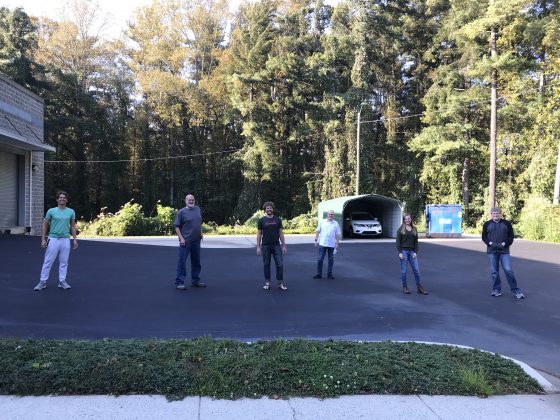
A socially-distanced Bluegrass at the Crossroads session. (L to R: Joe Cicero, Sammy Shelor, Travis Book, Jon Weisberger, Carley Arrowood, Wayne Benson)


SPONSORED CONTENT: Occasionally, BGS brings you content curated by featured partners and sponsors.
Photo and graphics courtesy Crossroads Label Group