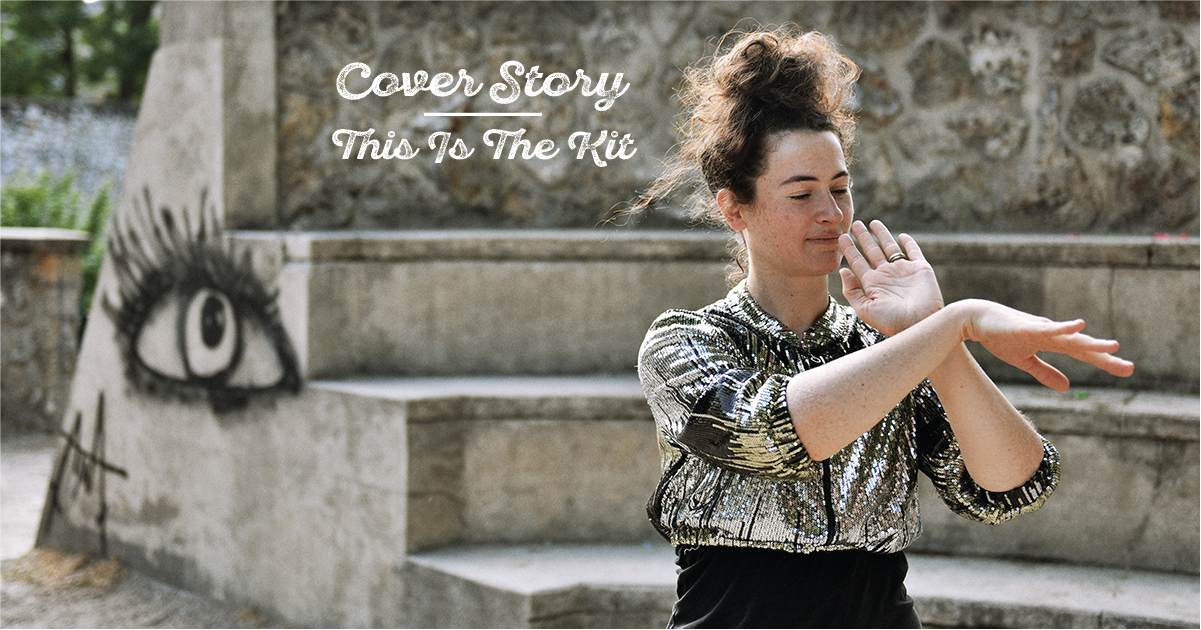
With Hard Banjo Rhythms and Striking Lyrics, This Is the Kit Offers ‘Off Off On’

Kate Stables, principal of alternative roots outfit This Is the Kit, didn’t intend to write a pandemic album to follow her acclaimed 2017 debut, Moonshine Freeze. In fact, she wrote the entirety of Off Off On well before the term “COVID-19” entered our collective consciousness.

In the way that great art often can, though, the songs Stables wrote for Off Off On anticipated the needs of our current moment. Across 12 tracks, Stables sings of growth-inspiring personal reflection, the “two steps forward, one step back” nature of processing trauma, and continuing to move forward in the face of grief, all explored with deeply felt empathy and sharp insight.

Stables and her band recorded the bulk Off Off On prior to the COVID-19 lockdown alongside producer Josh Kaufman (Bonny Light Horseman, the Hold Steady) at Real World Studios in the U.K. Sonically, the album builds atop the lush, banjo-driven alternative folk of Moonshine Freeze, with complex, often subtle arrangements that offer thoughtful soundscapes for Stables’ striking lyrics.

BGS caught up with Stables via Skype to discuss finding sources of inspiration, writing about difficult personal moments, and living as a musician during the COVID-19 lockdown.

BGS: To start us off, everyone has had their own specific difficulties resulting from the pandemic, but musicians, especially, have been dealt a tough blow. How has that affected you and how have you adjusted to being home more, and not being able to tour this record?

Stables: At first, it was kind of novel and a bit of a relief, almost. For the first summer in living memory, I didn’t have loads of festivals to do. So it was a summer I spent with my family doing family stuff instead. So that was nice, at first. Now that the time for actual touring would have been starting soon but it isn’t starting soon, it feels a bit weird. It’s the longest amount of time I’ve ever gone without playing gigs and without touring. So it feels really weird and I miss doing gigs so much. And I really miss my band. They’re in the U.K. and I’m in France. I’ve never gone this long without seeing them.

With regard to the album, you wrote and completed the majority of it before the pandemic started. What were the origins of the album and how has its meaning evolved for you since you first began plotting it?

I don’t usually have a pre-album vision. It’s normally just me writing songs as and when they come and seeing what kind of shape it all takes along the way. One of the earliest songs that was written for this album was “Started Again.” “Started Again” is almost a bit of a bridge song from the last album to this album, because I feel like it could have gone on either, in terms of what I was thinking about. It feels like it’s connected to my past life, in a way, because I feel like everyone has a new type of life now. The world has passed through this strange portal and we’re all a bit different and have to adapt to things. It’s not an obviously key song on this album… but it’s also a bit linked to my thinking about perseverance and getting through the difficulties and coming out the other side again and again. It’s funny because that’s also what the world seems to be dealing with at the moment. Those are themes that accidentally came out while writing the album, without knowing that COVID-19 was coming.

I read the track-by-track notes that you wrote for the album, and one line that stuck out to me was, “Listening through to these recordings, I hear new COVID-19 references every day.” Could you elaborate on that? I heard some myself when I was listening, but am curious as to which resonated with you.

Partly there’s the “we’ve all got to get through this” that I was dealing with in the album, which now seems like I’m talking about COVID. There are lines like, “Try not to cough.” That is too ridiculous and coincidental. There’s a song about a hospital and the breathing apparatus in the hospital; that felt spooky, now that so many people are in hospitals than ever before. Things that were written with one story in mind and now this new situation has given them another story.

I’ve talked to a few other artists who have had similar experiences. It’s interesting, because obviously no one could have predicted where we are now, but it does make you wonder if you were intuiting that we were collectively going down this road.

Yeah, are we all tuned into something that we don’t know about? It does feel weird. I think also with writing, and you may get this in your work, you do end up with funny coincidences and predicting the future accidentally sometimes. It’s just the way it goes when you’re working with words and language and storytelling, whether it’s journalism or fiction or songwriting. These weird cosmic moments do happen.

One of my favorite tracks, both sonically and lyrically, is “This Is What You Did.” How did you write that one?

Writing it was fun because it was an example of me playing with rhythm, which is my favorite thing to do. I tried to find a banjo-picking pattern that was quite hard, something I almost couldn’t do, and worked until I got it. I tried to find a pattern where I wasn’t using the same fingers every time, something as random as possible. The beats were regular but the strings I was picking were somewhat randomly generated. Then I tried to find vocal rhythms that were difficult for me to sing at the same time. I guess it was like brain gymnastics. I like it when you can’t tell where a pattern starts and finishes. … That repetitive, cyclical nature of the music lent itself to this mind-loop approach with the lyrics.

Reading through your notes about “No Such Thing,” you reference both Jack Kornfield and Jane Austen as inspirations. How do you find inspiration? Do you always have your antenna up?

Language is the material I work in and I really enjoy exploring other people’s work with language. When I hear a phrase that makes me laugh or that sounds pleasing to say out loud, I’m always noting down little quotes of things that make a spark in my brain, even if it’s something out of Bob’s Burgers or something… So I guess I do always have a bit of a radar up for rhymes, assonance alliteration; things like that make my ears prick up.

When you reach the point in your writing process when you’re ready to fully arrange a song, what does your collaboration with your band look like? They’re such fantastic players and it sounds like you’re all quite close.

Sometimes I have a bit of an idea of the vibe or the kind of pace that I was envisaging for a song, but it’s also nice to not say anything until they’ve tried something out. Quite often they’ll find something that’s better than what I had in mind. I’ve ended up with three of my favorite musicians playing in my band, which feels like a privilege and a real kind of fluke. So it’s nice to let them do their own thing as much as possible. I’d be interested to know, though, if they think that’s what I do. Maybe they think I’m really controlling. [Laughs] What I hope I do is let them have space to do their stuff.

Prior to lockdown, you got to spend a lot of time on the road with the National. How does playing as part of someone else’s project inform your work as a solo artist?

In a few ways, but it’s hard to put your finger on one. Traveling is nutritious for me in terms of writing and wellbeing and being inspired. The act of traveling, even just looking out the window while you’re going along the road, is inspiring. But also the fact that you’re going to different places and meeting new people and having these new experiences… Also just seeing how other people work. I found it fascinating to be part of this symbiotic ecosystem that’s going around on tour. Everyone plays an important part and looks out for each other and it’s really fascinating to see how other people tour.

It’s a bit tricky to look too far ahead right now, but, in addition to getting your album out, what are you looking forward to in the coming months?

Because the gigs aren’t there to be looked forward to, I think I’m looking forward to seeing what I can get done instead. There are a lot of musical projects that I’d love to get stuck into, and I hope that I just will. This time, we’re all learning how to be ready for anything and not to assume that something is going to happen, so, ideally, I’ll just be making music instead of touring. I really hope I’ll be able to make music with people, even if it’s long-distance.


Photo credit: Philippe Lebruman

BGS 5+5: Lera Lynn

Artist: Lera Lynn
Hometown: Nashville, Tennessee
Latest album: On My Own

What other art forms — literature, film, dance, painting, etc — inform your music?

I think everything we consume ends up informing our art. It’s difficult for me to pinpoint any one art form that influences me, but I did use the act of painting with intention while making my new record, On My Own. Because I was working completely alone on the record, I desperately needed some method for gaining perspective, so I kept my easel set up in the room where I was recording and would bounce back and forth between the two mediums. Where I would reach a roadblock with one, I would move to the other.

What was the first moment that you knew you wanted to be a musician?

Music was always a big part of life for me growing up. If there wasn’t a record or the radio blasting, someone was playing guitar or keyboards and singing. I, however, had always planned on becoming an astronaut until one fateful day as a 10-year-old, when I learned that my eyesight was too poor for me to ever be accepted into the space program. I happened to be watching Star Search minutes after that disappointing realization and distinctly remember thinking, “Oh well, I’ll just do that.” It wasn’t until a couple of years later, playing violin in the school orchestra that I understood, for the first time, the hypnotic power of playing music with and for others and I was hooked.

What’s the toughest time you ever had writing a song?

I once spent 10 months working on a song, because someone I shared the song with suggested that the chorus wasn’t strong enough. I must’ve written six or eight different choruses and ultimately decided that the original chorus was the one. The song is called “Fade Into the Black.”

What rituals do you have, either in the studio or before a show?

My rituals are pretty different for live shows vs. studio work. I have to be pretty straight before getting on stage. I sing the old jazz standard “Lover Man” for its vocal range as a warmup and just before going on stage I get pumped up by yelling like I’m at a drag race. In the studio, a good buzz goes a long way for getting inside the song and tracking vocals.

If you had to write a mission statement for your career, what would it be?

Let art guide the process and decisions, not the prospect of money or success. Maintain autonomy by nurturing meaningful engagement with fans; let them be the guide and support system. And finally, trust your gut!!


Photo credit: Alysse Gafkjen

WATCH: Black Violin, “Impossible Is Possible”

Artist: Black Violin
Hometown: Fort Lauderdale, Florida
Song: “Impossible Is Possible”
Album: Take the Stairs

In Their Words: “This video captures the innocence and raw potential that lives inside of our youth. If molded with love and understanding, that young soul can foster hope and achieve the impossible. The little black boy is everyone of us. Running towards an uncertain future, inspired by those who love him most. He ultimately wins the race that no one thought was possible.” — Kev Marcus and Wil Baptiste, Black Violin


Photo credit: Mark Clennon

LISTEN: Cf Watkins, “White Nights”

Artist: Cf Watkins
Hometown: Westfield, North Carolina (Currently in Nashville, Tennessee)
Song: “White Nights”
Album: Babygirl
Release Date: October 16, 2020
Label: Whatever’s Clever Records

In Their Words: “‘White Nights’ is based off of one of my favorite Dostoevsky short stories. On this album, I was trying to explore shifting the way I write music and, in a sense, share myself. I felt a lot of my music was coming from a place of my own longing, unrequited love, and heartbreak. Though I think all of those topics are worthy of our time and attention, I felt, as a woman especially, it was important for me to explore and show my strength as well. I started by simply shifting the focus from myself, and writing songs about something outside of myself. This was one of the first songs to come from that effort. I am singing from the male perspective, who has unrequitedly fallen in love with the female character. There was something very powerful for me to recontextualize romantic longing — to sing the male voice, and to have it honoring the power and magic of a woman.” — Cf Watkins


Photo credit: Griffin Hart Davis

LISTEN: Woodlock, “Normal”

Artist: Woodlock
Hometown: Melbourne, Australia
Song: “Normal”
Album: Collateral EP
Release Date: October 9, 2020
Label: Nettwerk Records

In Their Words: “I wrote ‘Normal’ a few years ago in Adelaide after a friend came to a show, and we were chatting about relationships. I wasn’t married at the time, but I was thinking about taking the next step. My friend opened my eyes on how marriage, after all the glamour, needs serious work, and how he still loved his partner, but it expressed itself differently over the years. I loved the idea of describing a deep love for someone without saying the word ‘love.'” — Eze Walters, Woodlock


Photo credit: Kane Hibbered

WATCH: The Sweeplings, “Deep & Wild”

Artist: The Sweeplings (Cami Bradley and Whitney Dean)
Hometown: Spokane, Washington (Cami) and Huntsville, Alabama (Whitney)
Song: “Deep & Wild”
Album: Losing Ground, Vol. 2
Release Date: September 18, 2020
Label: Nettwerk

In Their Words: “‘Deep & Wild’ is a lighthearted song about entering into the unknown with a willing attitude and a free spirit. We sat down to write this song with a painted picture of each scene in our minds. It shaped itself as we wrote, seamlessly creating a tune about the longing to explore the unknown with someone you love with no other purpose other than to find what’s most freeing. This song in particular fits itself into our EP series, Losing Ground, Vol 1 & 2, as a happy spot of contrast to the cinematic drama of the most of the collection.

“It took us a long time to get to these EPs. We worked tirelessly relationally and musically to make it happen. Stopping and starting, pushing and pulling. Because of that, we lost some ground in our process, but it ultimately brought us to something more magical. These two EPs truly have the grit of our story behind each song. The songs range in sentiment and tone, but all share the same heart. We wanted to create something special with as minimal sonic distractions as possible. We just let the performances and songs speak for themselves, simple and even bare at times. In that, we found our true identity as artists and songwriters.” — Cami Bradley and Whitney Dean, The Sweeplings


Photo credit: Glass Jar Photography

BGS 5+5: Elizabeth Cook

Artist: Elizabeth Cook
Hometown: Wildwood, Florida
Latest album: Aftermath
Personal nicknames: Shug

What’s your favorite memory from being on stage?

Forgetting that I’m on stage and then coming to and being like, “Oh my god, I’m on stage!” That, and one night in Phoenix, this group of young girls stood at the front of the stage and sang along to every one of my songs.

What was the first moment that you knew you wanted to be a musician?

I didn’t really know that I wanted to be. I was a kid singer — so, I came to it from a funny angle. I fought it for years and tried to do other things, but never found a really gratifying way to fit into the world. I got asked to open for Todd Snider once in Wilmington, North Carolina, at this outdoor amphitheater. He threw a one-man acoustic folk show party riot throwdown. I’d never seen anything like it and really haven’t since. But I thought if this is on the table — I will try it.

What other art forms — literature, film, dance, painting, etc — inform your music?

All of it. I’m always collecting details that ping me in some way… and it can be something that I see, read, taste, touch or hear.

What’s the toughest time you ever had writing a song?

I wrote a song about my mama’s funeral. And of course it’s not something you want to write about, because it’s not something you want to even happen in the first place. But it did. And I was really dreading this event, and the responsibility I felt in the throes of my grieving. I was resenting the whole process. But then, it turned out to be a really beautiful day and it was helpful and healing. And I owed it to the world, almost a right to the wrong for my attitude towards it in the beginning. The song is called “Mama’s Funeral” and it’s on Welder.

What rituals do you have, either in the studio or before a show?

I have a “hard hat” bag! I can get really fussy and anxious right before I go on and dig neurotically for things I think I need. So I made this little bag… it has all the comforts from Advil to throat sprays and drops, a neck and hand massager, extra guitar picks, my lucky rock and some dice.


Photo credit: Electropogram

LISTEN: Jordan Lehning, “The Quarry Song”

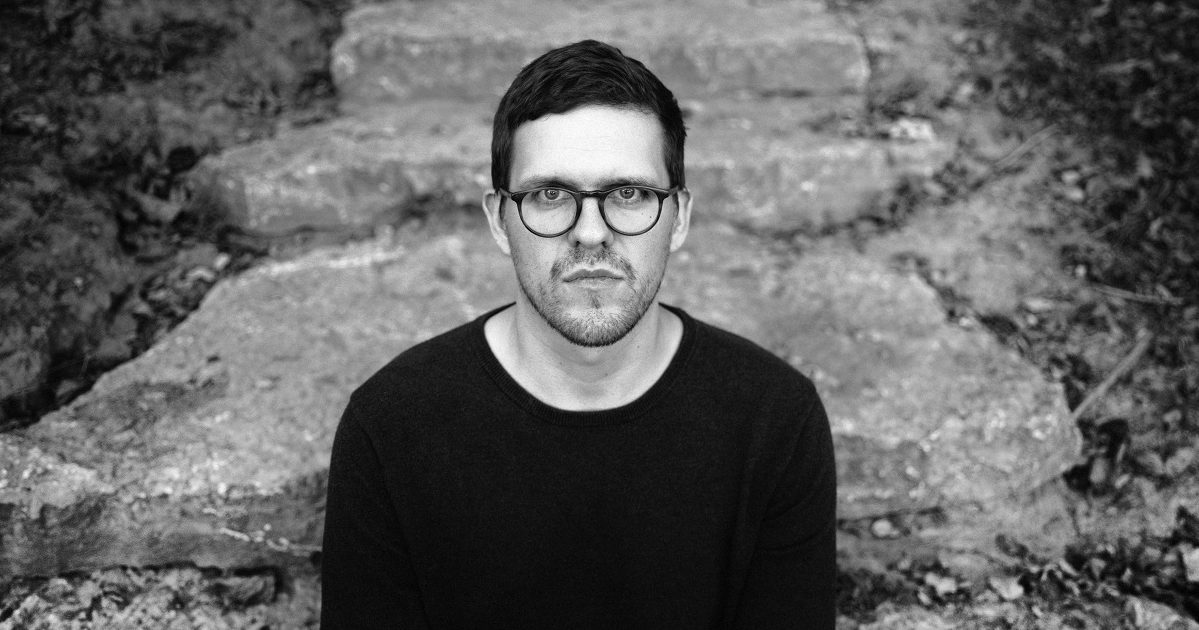
Artist: Jordan Lehning
Hometown: Nashville, Tennessee
Song: “The Quarry Song”
Album: Little Idols
Release Date: August 7, 2020

In Their Words: “Once I realized ‘The Quarry Song’ would [not] act [as just] a standalone song about a breakup, but as a chapter to a bigger story, I was able to zoom out and understand more about the potential for the rest of the record. Treating the record as a film with scenes and arcs was incredibly informative to the pacing and sequence of the final product. In particular, there are interludes between the songs. ‘The Quarry Song’ is preceded by ‘Hey Boy,’ where the two main characters are lying in their own beds at their respective homes pining over one another telepathically. But after that song, during the interlude, we can hear her emotions shift. A longer interlude than exists in the rest of the record occurs. She pushes and pulls her emotions apart, and after some time has passed she reluctantly agrees to meet our hero one last time in ‘The Quarry Song.’” — Jordan Lehning


Photo credit: Laura E. Partain

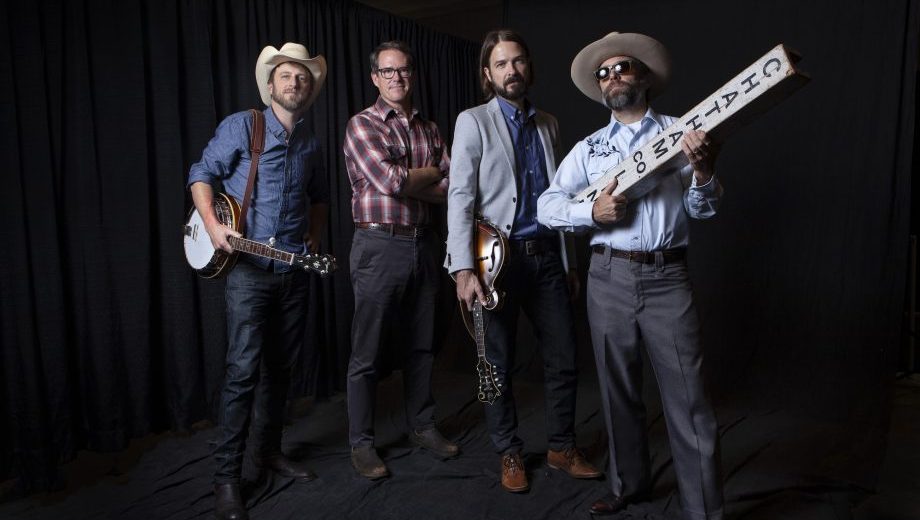
The String – Chatham County Line

With an old-school look and feel, Raleigh, North Carolina’s Chatham County Line started at the dawn of the new millennium in a surge of passion for bluegrass music. Now at 20 years old, they’ve made only one very recent personnel change and refreshed their concept as a post-modern string band with drums.


LISTEN: APPLE PODCASTS

Their new album, Strange Fascination, displays far-reaching vision and a warm, cohesive sound, riding on the unique songwriting voice of Dave Wilson. Wilson and co-founding multi-instrumentalist John Teer join host Craig Havighurst for a retrospective conversation, featuring music from their past and present.

LISTEN: The Texas Gentlemen, “Skyway Streetcar”

Artist: The Texas Gentlemen
Hometown: Dallas, Texas
Song: “Skyway Streetcar”
Album: Floor It!!!
Release Date: July 17, 2020
Label: New West Records

In Their Words: “‘Skyway Streetcar’ is the first song Dan Creamer and I ever wrote together. It is still one of my favorites to play. It’s really the best example of our writing and lyrical trade-off style and vibe. Lyrically, we kinda looked at it as a way to live life to the fullest and get around doin’ so. Basically, a spacecraft of sorts you can use to get the best out of life.

“We had all just moved into a big house south of Dallas on Mona Lane. Later referred to often as ‘Mona.’ We were in the middle of cultivating Beatles songs and various other favorite covers to fill in for Daniel’s brother, who had to bail on a weekly residency at the Sundown at Granada. In the midst of this, we unknowingly started a band that was bound to be more than just a cover band. The musical chemistry that was building between Dan and I flowed into our own song ideas. With ‘Skyway Streetcar,’ I had the music all recorded in demo form, but one night we were laughing about what a casanova one of our pals and bandmates was at the time. That’s what inspired the line, ‘I’ve got a friend, goes from town to town, knocking ‘em up setting ‘em down, he used to really get around.’ The lyrics just grew from there.

“We had a studio in Mona and that is where the song was originally recorded just directly after writing it. For the next several years we continued to play it live. We had used that song as a jumping-off point to feel out any given studio. So this song technically was recorded about five times as we recorded in different studios before we ever took it to Echo Lab and did the final version with Matt Pence.” — Nik Lee of The Texas Gentlemen


Photo credit: Barbara FG