Hangin’ & Sangin’: Jerry Douglas

From the Bluegrass Situation and WMOT Roots Radio, it’s Hangin’ & Sangin’ with your host, BGS editor Kelly McCartney. Every week Hangin’ & Sangin’ offers up casual conversation and acoustic performances by some of your favorite roots artists. From bluegrass to folk, country, blues, and Americana, we stand at the intersection of modern roots music and old time traditions bringing you roots culture — redefined.

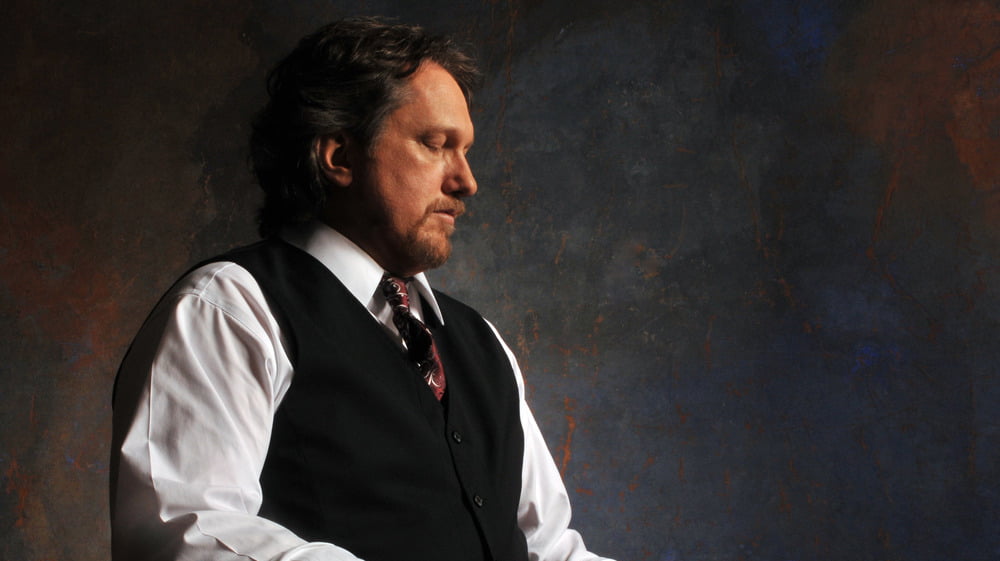
With me today in the Writers’ Rooms at the Hutton … Jerry Douglas. Welcome!

Hello. How are you?

I’m good. How are you?

I’m good. I’m having a wonderful week.

Yeah, you’re getting puppies!

I’m getting puppies today! I’m getting puppies today. My granddaughter’s at the house — another puppy, then I’m gonna go see my new grandson on Sunday — more puppies. It’s puppy week!

That’s good livin’!

It is good livin’. I love it.

Okay. Let’s talk about this dobro thing that you’ve got going on.

I’m sorry. [Laughs]

As you should be. [Laughs] What was it about the dobro that first lured you in, so many moons ago?

I don’t know if it was the dobro by itself or the guy who was playing it. Josh Graves played the dobro with Flatt & Scruggs, and he was the one that made me want to become a musician. It wasn’t just the way he played it, because I was hearing Bashful Brother Oswald, at the same time, playing with Roy Acuff and that was good, but Josh Graves stepped up to the microphone and he blew the doors off the place! He could keep up with Earl Scruggs, and he played bluesy, too. He played the blues. I think that was the difference for me, because I was growing up close to Cleveland, Ohio, so I was hearing a lot of rock ‘n’ roll at the same time, and it all worked for me — made the instrument work for me.

My dad had a bluegrass band, but there wasn’t a dobro player within a million miles of me. [Laughs] I told somebody the other day that I stood a better chance of getting hit by a car than to find a dobro. It was not something you saw and they didn’t know what it was. You’d go to a music store and say, “Do you have any dobros?” and they’d look at you like …

But you found each other.

We did.

You’re like Béla Fleck with the banjo, to me. Musically, you guys both do things with these instruments that isn’t normally expected. Who’s leading that exploration — is it you or the instrument? Are you following where it’s taking you?

I’m trying to take the instrument to new places. It’s a great bluegrass vehicle, which has been proven over and over again, with Josh Graves and Mike Auldridge and Rob Ickes. There are several people who really can play one of these things. But I keep exploring and trying to find other ways to use it — in classical music, jazz, rock ‘n’ roll. I created a pickup that works with it that keeps it sounding like a dobro, but you can play to a 24,000-seat place without feeding back. You can compete with a telecaster.

Nice. Do you ever get tired of it and think, “I’m gonna switch to the French horn” or something? Does the mastery ever stop? Is it every complete? Or is there always something new to learn and explore?

There’s always something new. I keep my ears open, and I sort of adapt other things to the guitar. The guitar’s a conduit of whatever’s in [my head], what’s rolling around in there all by itself. It’s a cobwebby place. [Laughs] But I think that I’m kind of trying to lead it from one place to another, but I do get tired of hearing it. I got so tired of it that I started carrying around refrigerator-sized racks of things to make it sound not like a dobro. And then I got tired of that, and I just wanted to hear a dobro again! So it’s a necessary evil.

But I love the sound of the guitar. These newer guitars don’t sound like the dobros did that were on the records that I learned to play from. So I keep a lot of those old guitars around, too. The guy that builds my guitars has actually just come out with a line of guitars that sound like the old guitars. Because, when I play with the Earls of Leicester, I play only old guitars, but he’s got this new guitar I played on the new record with the Earls and no one noticed.

Old sound, new technology. Probably sturdier.

Better construction, yeah. The older dobros, the Dopyera brothers got really lucky. [Laughs] The cone, a lot of things about the guitar haven’t changed since 1927. But the construction has, and how they’re big, beefy, low-ended things that have all these voices that the old dobros didn’t have. But the haunting element, for me, that drew me in in the first place, that’s missing from the big, beefy, hybrid guitars.

…

You mentioned the Earls of Leicester. I mentioned the Transatlantic Sessions and other collaborations, but your latest record is a Jerry Douglas Band joint called What If. Where do you see that album fitting into the wider landscape of your work?

That was really pushing my audience, I think. I quit a long time ago trying to make records for my audience.

I would think you would’ve had to.

I make them for me. I figure, if they really like me, they’ll go wherever I go.

Or wait until the next thing comes.

Or just wait until it comes back around to what you like! [Laughs] I love that record because it’s so big and full. It’s the full band effort with two horns and electric guitar, and everything is on this record. Except keyboards. But John Medeski is gonna play with me at MerleFest! So who knows where we go from there. But I just like the full sound and being able to, more or less, play the band, at this point. It’s dobro driven, and I write everything on the dobro, but everybody gets a little piece of the action.

…

[Tell me a memory of or something you gleaned from] Earl Scruggs.

Earl Scruggs was probably the first thing I remember hearing — ever. Then, when I got old enough, even at five years old, I knew that was good. I knew that was a good sound. It was obvious, just the way my dad would react to it and everybody, before I ever saw him. And then, when I saw him, he was on a pedestal to me, as was Josh Graves and the whole band. That was like seeing the Beatles for me, at six or seven years old, to see Flatt & Scruggs live in Youngstown, Ohio, at Stambaugh Auditorium. I even know what date it was and everything. It was like seeing the Beatles.

And then, I grow up and I move to Nashville and Earl Scruggs becomes my friend. That’s just nuts. But then, to get on the bus with him and be playing in his band, just to wind him up and let him start telling stories … because he was a very quiet man, a very quiet, reserved man. But when he got started telling stories, he couldn’t stop. It was so good! Everything was so good. Every minute, every second that I spent with him, I cherished. I’m blessed to have hung out with and been in the presence of some of these people. And Earl Scruggs is way up there on the top of the heap. There are not many people you can look at and say, “That guy is definitely a legend.” He’s like a George Washington, Abraham Lincoln kind of guy. [Laughs] I haven’t met many of those, a couple others maybe, but he was the first one — the first sound I ever heard and what influenced me in the journey that I’ve had, and what made me take the path that I took.

Well, thanks, Earl.

Thanks, Earl. Gee-whiz.

Watch all the episodes on YouTube, or download and subscribe to the Hangin’ & Sangin’ podcast and other BGS programs every week via iTunes, Spotify, Podbean, or your favorite podcast platform.
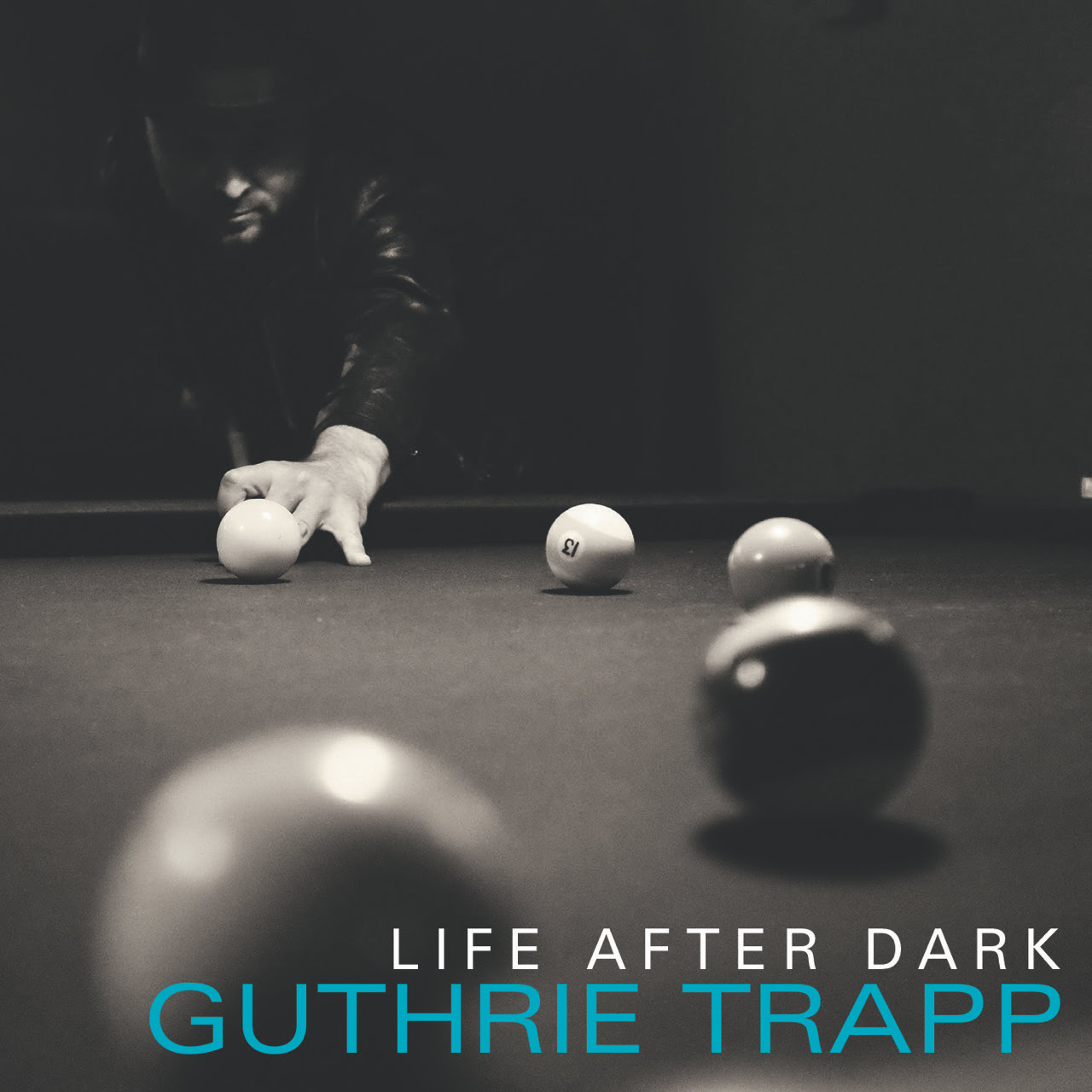
Guthrie Trapp, ‘Crossing the Bridge’

If you live in Nashville, if you’ve ever been to Music City, and you have not yet had the pleasure of having your face peeled off by the fiery chicken pickin’ of Guthrie Trapp, you have not truly lived. Trapp’s telecaster — whether at bluegrass club the Station Inn, a lower Broadway honky tonk, a ritzy theater, or the Ryman Auditorium — gives any/all listeners a visceral reminder of how electric country guitar playing ought to sound: immediate, raw, and wild. While his picking carries the Nashville-signature heavy dose of machismo, it’s never without finesse and above all, taste.

On his second solo album, Life After Dark, there’s plenty of this style of playing, but it’s certainly not the only motif on the menu. Ripping tele is juxtaposed with more vibey, trance-adjacent compositions, whining blues, and refreshing, acoustic, bluegrass-inflected tunes. On “Crossing the Bridge,” which features bluegrass virtuosos and powerhouses Stuart Duncan and Sam Bush, Trapp brings his telecaster attack to the flattop with bluegrass locomotion; a veteran Nashville audience member will recognize this as a more rare iteration of his creativity and talents. Hearing flat-picking that references bluegrass six-string deities like Tony Rice and Clarence White without straying into unoriginality or mimicry reminds that Trapp has a truly original voice on his instrument, no matter the genre or musical phenotype. What’s more, the artistry of the tune and the players is what shines through first and foremost, shredding sans ego … but not without self-confidence.

LISTEN: The Vintage Martins, ‘The Unclouded Day’

Artist: The Vintage Martins
Hometown: Southern California
Song: ” The Unclouded Day”
Album: Traveled
Release Date: May 11, 2018
Label: Eastwood Records

In Their Words: “‘The Unclouded Day’ was written in 1879 by Josiah Alwood and is a hymnal favorite in many churches. It is a song about Heaven, and it has been recorded and admired by many through the years, including Willie Nelson and Bob Dylan. Mr. Alwood wrote beautifully of his inspiration of seeing a midnight rainbow against a dark cloud. After a good night’s sleep, he penned this classic sacred tune.

Eric and I have been doing this song for many years. It has that high bluegrass harmony. Eric’s sons, Austin and Christian Ward, played their hearts out on this one, as Ron Block shows everyone his respect for straightforward Scruggs-style banjo.” — Bud Bierhaus


Photo credit: Rolly Ladd

Special Consensus, ‘Squirrel Hunters’

There’s a phenomenon that certain bluegrass instrumentals experience when, for however brief or extended a time, you hear them almost everywhere played by almost everyone. Tunes like the key-of-B barnburner “Rebecca,” or John Reischman’s “Salt Spring,” or David Grier’s legendary reharmonization of “Angeline the Baker” come to mind. Whether during a lap of your favorite festival’s campground jams or wandering the halls of the IBMA World of Bluegrass host hotel, while each of these numbers enjoyed their respective heydays, you could hear them emanating from almost every single circle of pickers. The old-time tune “Squirrel Hunters” hasn’t just been relegated to one single moment; it’s a pickin’ marvel unto itself. Old-time, mash, straight-ahead bluegrass, jamgrass — they all claim “Squirrel Hunters.”

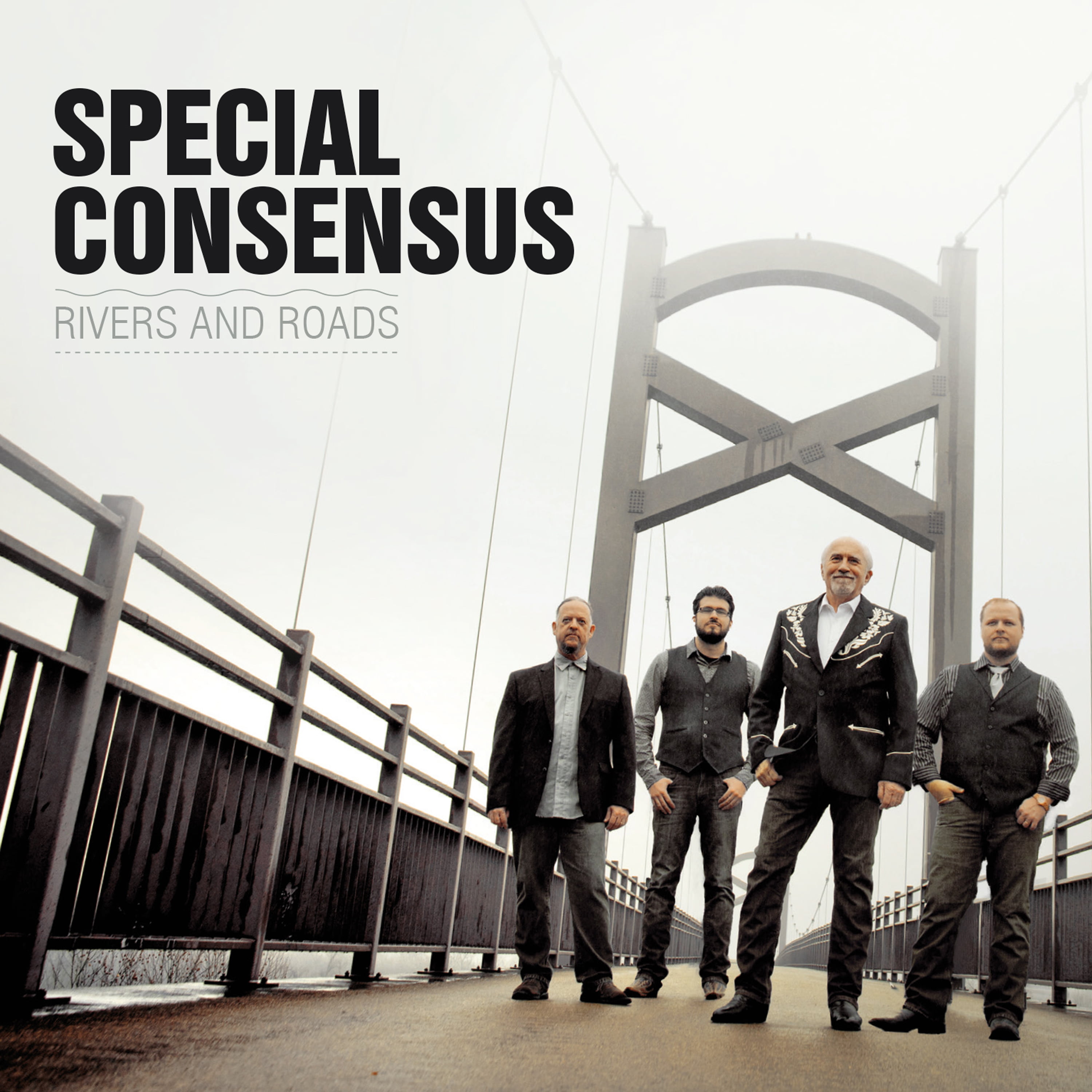
In this host of renditions, one by Chicago-based bluegrass outfit Special Consensus stands out. Not only because John Hartford’s buzzy baritone introduces the track (as if to remind us that “Squirrel Hunters’” moment has been decades and decades long), but because the entire ensemble artfully reimagines a tune that could much more easily be found stale and tired. Rachel Baiman and Christian Sedelmeyer, the fiddley duo 10 String Symphony, kick off the song alongside Hartford’s fiddle, making a technological cameo. The band jumps into a bushy-tailed clip with another guest — the album’s producer, Alison Brown — on a low-tuned banjo (continuing the nods to Hartford), playing call and response, her postmodern five-string against Greg Cahill’s traditional-while-psychedelic approach. A round of breaks, a melodic bass solo, and an epic rearrangement of the chord changes later, you’ll barely realize you’ve listened to a four-minute-long tune without even a hint of a yawn. And that, right there, is why this “Squirrel Hunters” moment goes on and on.

That Ain’t Bluegrass: Becky Buller Band

Artist: Becky Buller Band
Song: “Hazy Shade of Winter” (originally by Simon & Garfunkel)

Where did you first hear this song?

When I was in high school, a friend of mine introduced me to the music of Simon & Garfunkel. It really got me through kind of a dark period in high school. No one at my school played bluegrass music. My hometown would not really know about bluegrass, if it hadn’t been for my family. [Laughs] I’m from St. James, Minnesota. It was around ninth or 10th grade, I was feeling like an outcast and uncool. I made peace with all of that about a year later, when I became okay with the fact that I was different. During that dark period, I really fell in love with Simon & Garfunkel’s music. I got all of their records and learned their songs. It was a great school of songwriting. I love those records.

So this year, I’m trying to incorporate more songs that introduce a different feel and flavor into the show. We’re trying to keep it interesting. We’ll do “Hazy Shade of Winter,” then we’ll roll into “Carroll County Blues” or something. I like to keep a variety of feels and styles in the set to keep people engaged. We were doing a show at the Station Inn back in February and I thought, “Well, it’s wintertime, let’s do ‘Hazy Shade of Winter.’” It’s relatively new to us. The last couple of year’s we were doing Paul Simon’s “Keep the Customer Satisfied.” We’ll throw in a James Taylor tune or two. We all love a variety of music.

It’s kind of a tradition for bluegrass artists to take songs from outside the genre and interpret them through a bluegrass lens. It’s been happening since the first generation. Why do you think that is?

Since the beginning! Because they were influenced by their time, and they were kind of pop music at the time, in a way. Bluegrass was under the umbrella of country music until the ‘50s. I can think of Jim & Jesse doing “Johnny Be Good,” the Country Gentlemen, Reno & Smiley, J.D. Crowe and the New South did Simon & Garfunkel tunes. I’m a little hazy on the history.

To me, it’s all about sharing songs that I love, that I’ve loved for a very long time. It also might draw in some audience members who aren’t necessarily bluegrass fans. We often have people who come up and say, “I don’t like bluegrass, but I like what you do, so I’m gonna listen to it more.” I love that. I love being an ambassador for the music.

What about “Hazy Shade of Winter,” do you think, makes it particularly suited for a bluegrass band?

[Laughs] We’re pretty much just doing what they did — feel and everything — just on bluegrass instruments. I love it because it’s a kind of a rock ‘n’ roll feel. I think the way I have it in the set, rolling into “Carroll County” — I’m still experimenting with it and how to fit it in — but we come out of a song that I wrote, that’s very bluegrass, then into this rock feel. I just wanted to do it exactly as they did it, because I wanted that feel in the set. Then we do “Carroll County,” then we take it down into this three-quarter time sort of thing. That’s something that I have to give credit where credit is due: I got that from Valerie [Smith]. She’s very good at that, pacing a set, putting in things that mix and match feels, keeping things rolling, and keeping things interesting.

What’s your favorite thing about performing this song?

It’s fun to get to duet with Nate [Lee]. It’s a duet all the way through. Nate has just recently started singing more with us, because Daniel Hardin was singing the higher part, but he left the group at the end of last season. Nate has really stepped up. He’s doing a great job. This is fun, because this is one that we specifically worked up together, so he’s not just taking up [Daniel’s] part. This is his thing — he’s making it his own.

And again, just that rock ‘n’ roll rhythm! It’s very in-your-face. I love it. It grabs the audience’s attention. I love that I have a band that’s up for doing some off-the-wall stuff. They’re so good; they can just do it. It’s not a hardship for them at all. They sound awesome. I’m thrilled to get to pick with them.

Now, you know that ain’t bluegrass, right?

[Laughs] No, but it’s good music! I tell folks that we love all music from all branches of the bluegrass family tree. That’s what we try to do in the set — we mix it up. Mainly what we’re doing, aside from the whacky covers, is original stuff. We’ve been influenced by all of this wonderful music that’s come before and we’re definitely students of the music. I’d challenge anybody to tell Professor Dan [Boner] he’s not bluegrass! [Laughs] We try to be very nice, when we say that! People just want to be heard and that has value. I appreciate that they take the time to come up and talk to us.

Again, there’s that long and glorious tradition of covering current music, current pop tunes, in bluegrass. I guess this is current as of like, late ‘60s … but still. It’s so fun to see the audience light up. Yes, it’s also fun when they connect with the new [original material] we’re presenting, but I think doing the older tunes, things that they’re familiar with, helps them connect with that newer stuff we’re trying to share with them, too.

Old & In the Way, ‘Old & In the Way Breakdown’

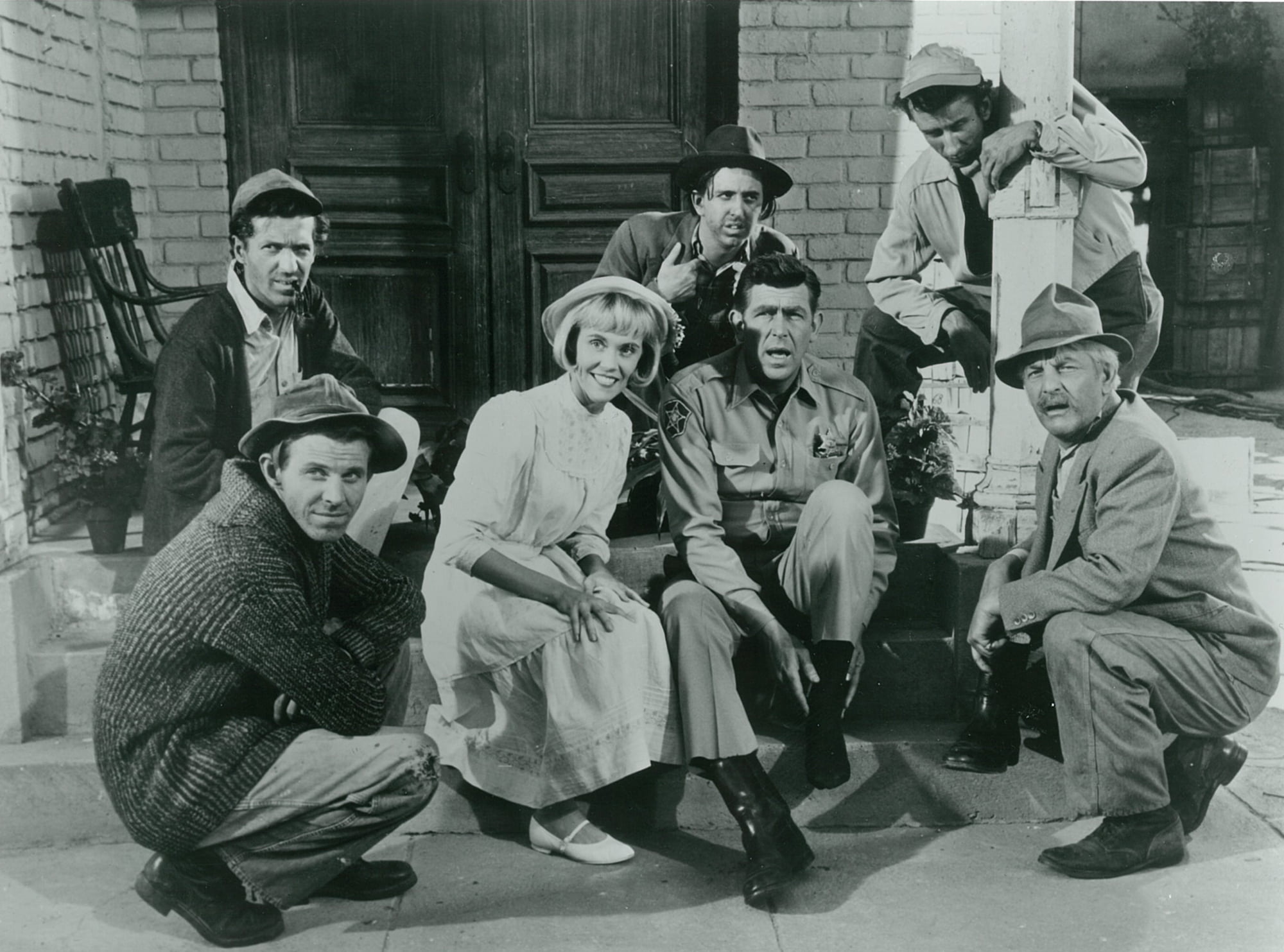
As a genre, bluegrass has always had outward-facing ambassadors — bands and musicians with platforms that enabled them to reach a wider audience than the usually insular ‘grass niche. The Dillards, as “the Darlings,” brought bluegrass to thousands of TV viewers on The Andy Griffith Show; the Nitty Gritty Dirt Band birthed an entire generation of fans with their iconic Will the Circle Be Unbroken album, showcasing the genre’s founders and heroes; Alison Krauss, with her wildly successful crossover-and-back career — she has won more Grammy Awards than any other woman ever — showed the masses that bluegrass can be aesthetic, understated, and artful without sacrificing its raw, rustic energy. It just takes a tiny taste, a glimpse behind the curtain, to hook outside listeners with that high lonesome sound.

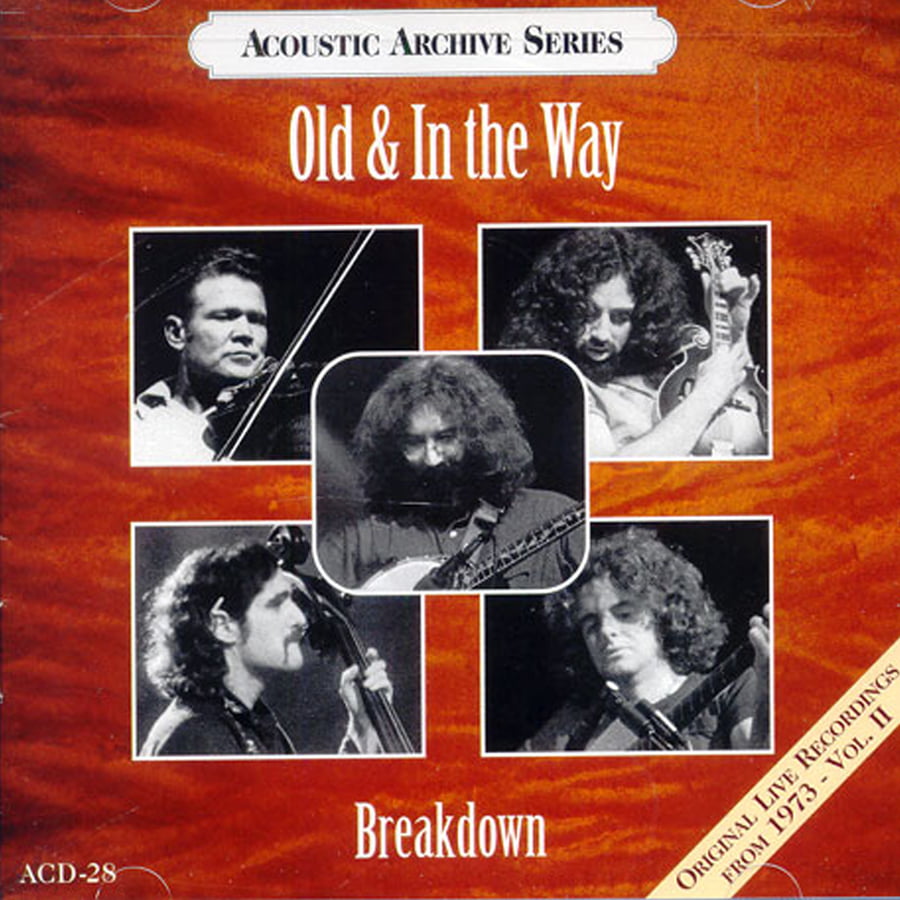
In 1973, Jerry Garcia, David Grisman, Vassar Clements, Peter Rowan, and John Kahn coalesced as Old & In the Way, becoming one of the most influential bluegrass ambassador bands in the history of the music. Their eponymous debut record is widely regarded as the best-selling bluegrass album of all time — before the soundtrack for the infamous O Brother, Where Art Thou? surpassed it. Though Old & In the Way only lasted a year, their legacy lives on, extended and expanded through several live recordings. Released in 1997, Breakdown was recorded live at the Boarding House in San Francisco, California, by Owsley “Bear” Stanley in October 1973. The “Old & In the Way Breakdown” showcases that Garcia was not only a fan of old-time and bluegrass, but he had the chops, too, tearing it up on the five-wire. Budding bluegrass fans take note: We call this tune “Patty on the Turnpike,” too.

Join BGS as we celebrate Jerry Garcia’s songbook, from the Grateful Dead to Old & In the Way and beyond at the Theatre at the Ace Hotel in Los Angeles on March 30. With bluegrassers Sam Bush, Molly Tuttle, Billy Strings, Sean Watkins, and many more. Get your tickets for Jubilee: A Celebration of Jerry Garcia now.

WATCH: The Warren G. Hardings, ‘Cuckoo’

Artist: The Warren G. Hardings
Hometown: Seattle, WA
Song: “Cuckoo”
Album: TBD
Release Date: March 19, 2018

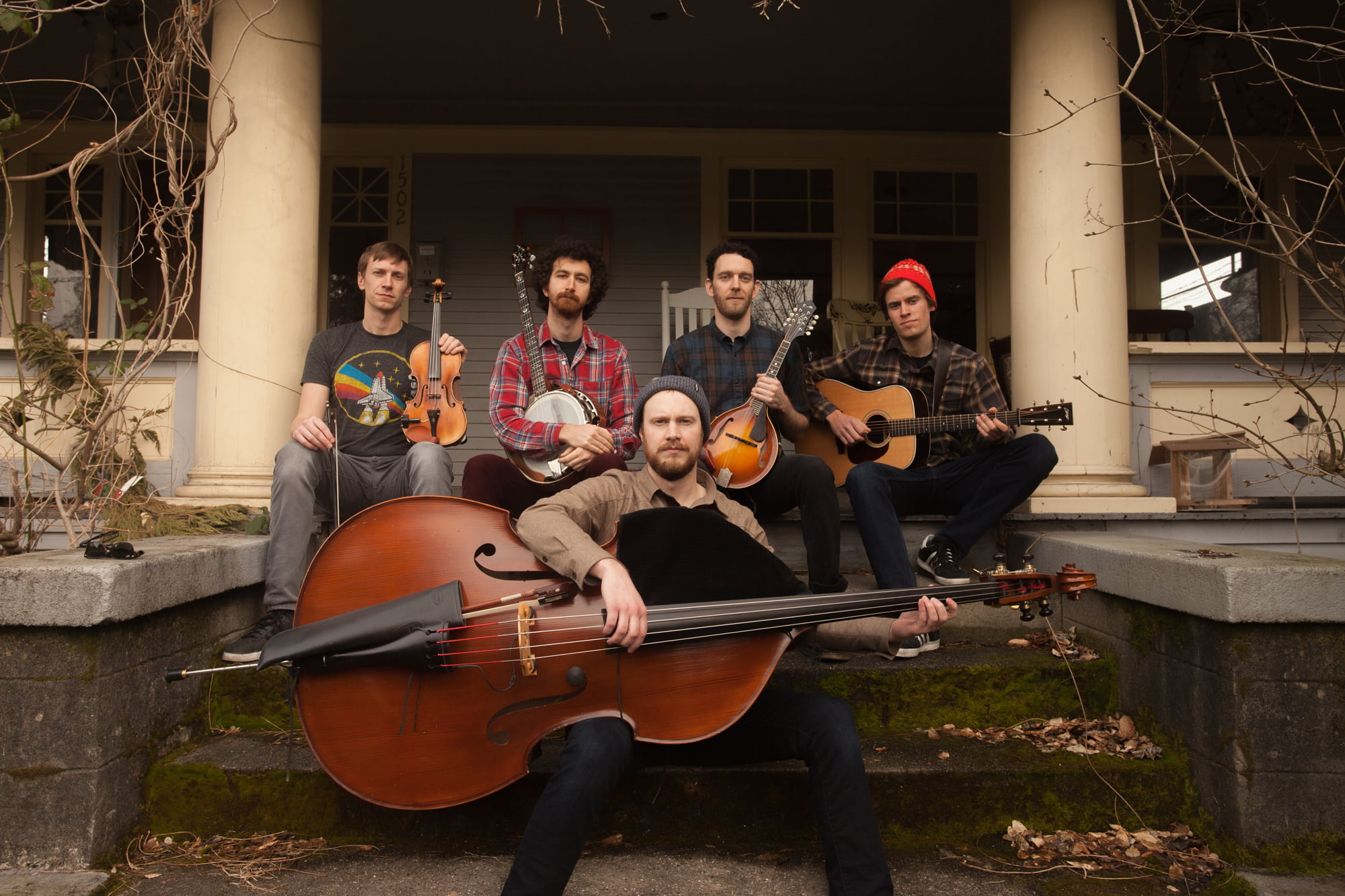
In Their Words: “This is one hot instrumental. We might even call it the bluegrass ripper of the summer. Expect to hear this in bluegrass jams across the great states come June.” — Gabriel Marowitz

Crowd-Fun-Ding: March

One of the universal commonalities between people is that it is hard to ask for help. If money is involved, the task is all the greater. That’s why crowdfunding an album is such a brave and beautiful thing for artists to do. And it’s why we’ve decided to lend our support each month to roots music campaigns that could use a boost.

Danni Nicholls

Danni kicked off celebrations at AmericanaFest UK 2018 and, as a BGS favorite, she kicked off showcases in our Folk Alliance International suite, so how about helping her kick off her new project? There’s a reason she was nominated for UK Artist of the Year. Could be her breath-taking voice. Might be her heart-melting songs. Hard to say, really. Pony up to find out.

Oliver the Crow

Not at all sure who Oliver is, but this project by Kaitlyn Raitz and Ben Plotnick is a musical amalgam of folk, chamber, old-time, gypsy jazz, and something else entirely. And it’s just plain cool. On top of that, they pull it off with nothing* but cello, fiddle, and voice. WHAT?!

(*Rumor has it, whiskey played a sizable part, as well.)

Circus No. 9

As their album title, Modernus, implies, Circus No. 9 is an innovative bluegrass band tinkering with and innovating classic new acoustic methods and tropes, without falling into the self-infatuation that too often bogs down cerebral string bands. Banjo players and five-string fans should also take note: Banjoist Matthew Davis, a National Banjo Champion, is one of the most exciting young pickers out there today, artfully expanding on Noam and Béla-esque playing styles.


Our Darlings, the Darlings

Bluegrass isn’t as common on primetime television these days, but a while back, you could find it on plenty of shows: sitcoms, variety shows, talk shows … just about anywhere and everywhere. One of the best-loved bluegrass cameo-makers and recurring characters of this time period were the Darlings, of The Andy Griffith show. They did some great made-for-TV pickin’, as evidenced in these eight clips.

“Salty Dog”

When we are first introduced to the Darlings, we discover a carousing, lovable, somewhat delinquent family whose musical skills get them into and out of trouble. Sheriff Taylor, himself, can’t help from joining in on one or two. Like this one “with romantic in it,” as Charlene puts it.


“There Is a Time”

Arguably the most popular song the Darlings ever rendered on the show, “There Is a Time” is strangely poetic and dark for such a silly family, but hell, no one cares about continuity or character development when a song this good is involved. Yes, please shoehorn it in there. (Although, “Wet Shoes in the Sunset” sounds like it would’ve been a good choice, too.)


“Dooley”

The Dillards, the real-life band that makes up two-thirds of the Darlings, recorded “Dooley” on their debut release, Back Porch Bluegrass. The background ooos, the banjo capo-ed up real high, and that bouncy tempo altogether perfectly typify bluegrass in the ‘60s. So. Good.


“Doug’s Tune”

Andy suggests, “How about ‘Dirty Me, Dirty Me, I’m Disgusted with Myself?” To which the father, Briscoe Darling responds, “Aw, that one makes me cry.” And no matter how often they use this terrible gag it is still funny every single time. It’s striking that Andy isn’t deterred by this funky instrumental (named after Doug Dillard), because it would almost surely bust a jam today.


“Ebo Walker”

Can you blame Ebo Walker, though? All anyone should wanna do is sit on the porch and pick all day. That’s what the Darlings do! (Be careful with that hooch, Barney …)


“Shady Grove”

How could someone stand up Charlene Darling?! Tsk tsk tsk, Sheriff. But we all got a fine rendering of “Shady Grove” by Charlene, in the meantime, so let’s just count our blessings.


“Boil Them Cabbage Down”

Charlene has found a new love, and there are clearly no hard feelings between her and Andy, as they swap verses on this one.


“Leaning on the Everlasting Arms”

To round out our little treasure trove of the Darlings’ darling moments, how about a little gospel? And look how nicely all those Darlings clean up.

LISTEN: Peter Rowan, ‘Carter Stanley’s Eyes’

Artist: Peter Rowan
Hometown: Boston / Northern California
Song: “Carter Stanley’s Eyes”
Album: Carter Stanley’s Eyes
Release Date: April 20, 2018
Label: Rebel Records

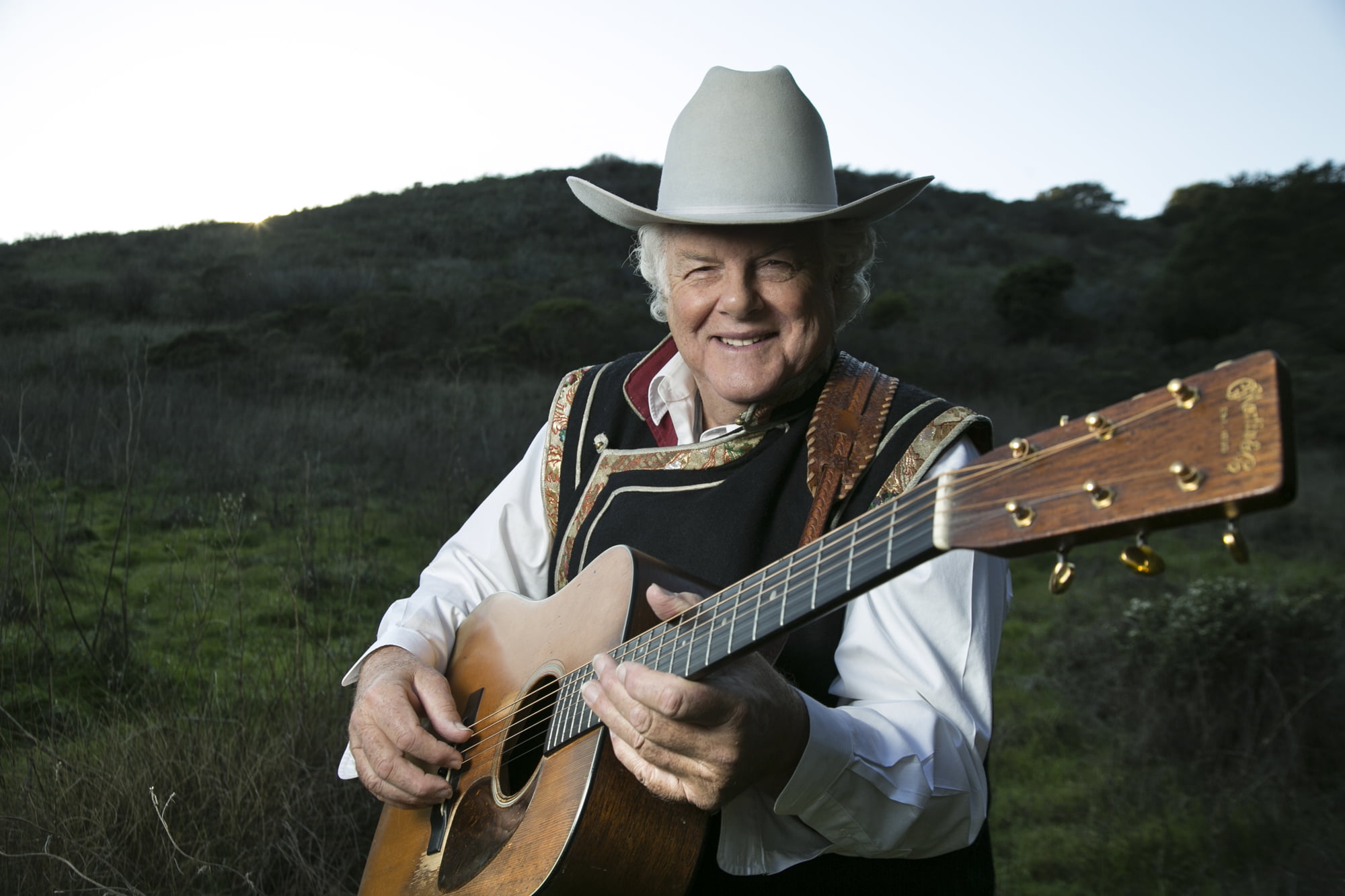
In Their Words: “We were playing over on the Tennessee-Virginia border, and Bill Monroe asked me to drive him up to the Clinch Mountains to have a meeting with Carter Stanley. I think, now, that Carter had received bad news about his health, and Bill wanted to lend his support. We drove up there, and I knew nothing as far as Carter’s health, but he didn’t look well. It was emotional, and I made it a song, after all.” –Peter Rowan