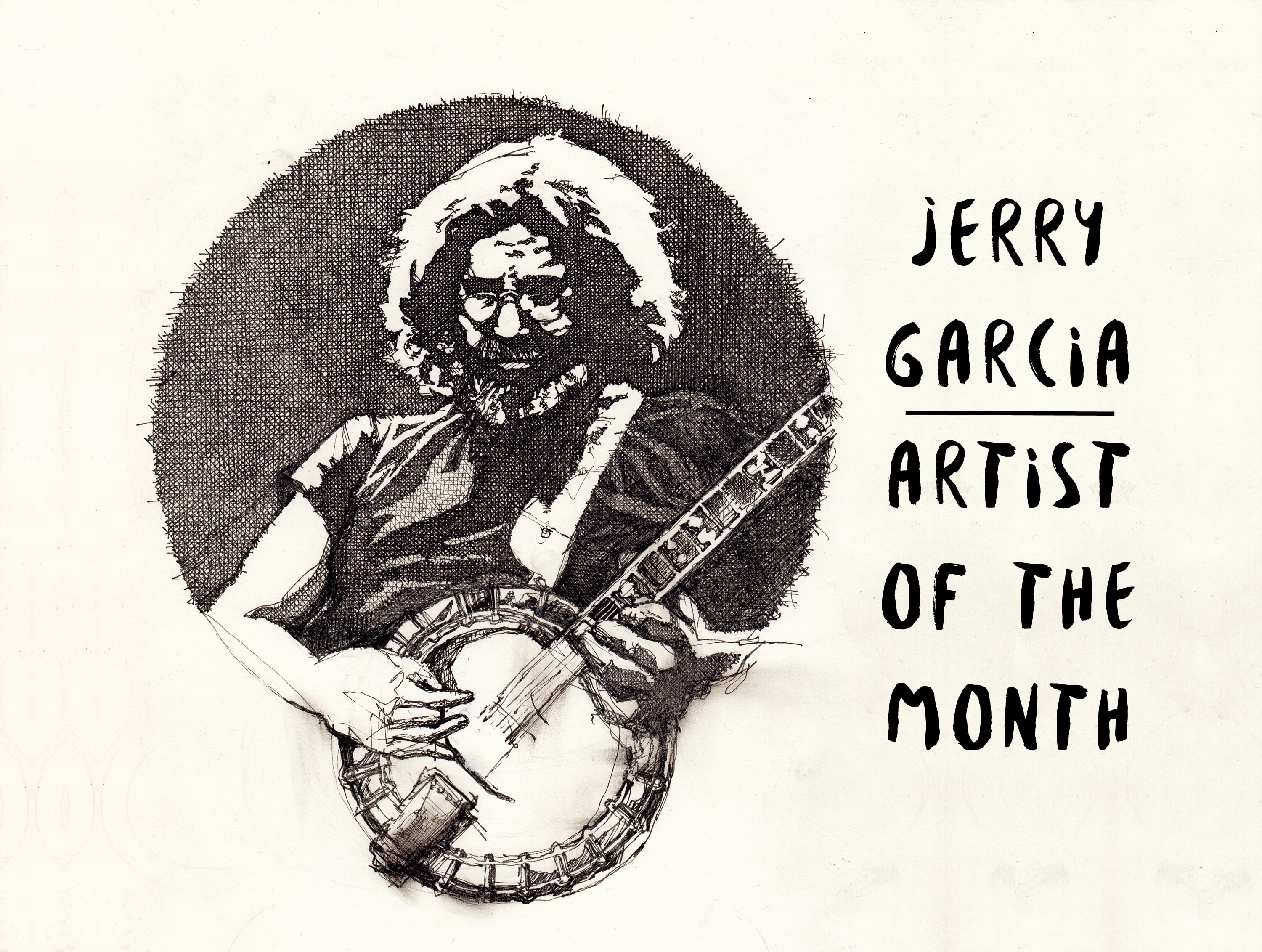
Jerry Garcia: Expanding the Musical Consciousness

Before becoming the psychedelic guitar-playing icon of the Grateful Dead, Jerry Garcia was already living a life completely dedicated to music. Heavily immersed in the folk idioms that coalesced with the beat poet scene in San Francisco — and in the peninsula towns of Menlo Park and Palo Alto — in the beginning of the 1960s, Garcia’s concentration, determination, and passion for musical collaboration planted the seeds for a force that would not only influence the world in song, but that would let loose a seamless tie to multiple genres through multiple generations. What’s now viewed as Americana, Garcia was creating with the Dead right from the outset. His impact looms far and wide, perhaps even greater as the years since his passing roll on. From the bluegrass world of the McCourys to esteemed guitarists like Mike Campbell of Tom Petty and the Heartbreakers, David Hidalgo of Los Lobos, and David Rawlings, to jam bands like Leftover Salmon, and the current generation of musicians like the National, Jenny Lewis, and Ryan Adams, Garcia’s ethos is being deeply felt and utilized.

Garcia had a mind hungry for knowledge and interested in art, comics, and horror films, even as music ran through his family. After initially getting an accordion for his 15th birthday and successfully trading that in for a guitar, the quest for constant improvement was born as he devoured the styles of Chuck Berry, Jimmy Reed, Buddy Holly, and Bo Diddley. As the ‘60s approached and the initial rock boom faded, Garcia and his friend (and soon to be Grateful Dead lyricist) Robert Hunter found themselves in the middle of a very fertile Bay Area folk scene. Being steeped in Harry Smith’s Anthology of American Folk Music led to a fascination with the Carter Family and then Flatt & Scruggs.

It was at this time, in 1962, that Garcia began his complete immersion into the banjo and the bluegrass style of Earl Scruggs. He formed the Hart Valley Drifters with Hunter and David Nelson (later of New Riders of the Purple Sage and the Jerry Garcia Acoustic Band), and the scene grew to encompass the likes of Eric Thompson, Jody Stecher, Sandy Rothman, Rodney Albin, Janis Joplin, Jorma Kaukonen, David Crosby, Paul Kantner, and Herb Pedersen. The Hart Valley Drifters performed at the Monterey Folk Festival in 1963 in the amateur division and won Best Group, and Garcia took the Best Banjo Player award, which strikes with irony as, throughout his career, Garcia would never consider music to be a competition of any kind. He was more into turning people on.

While absorbing as much music as possible and focusing on his craft with diligence, Garcia came into cahoots with people like Ron “Pigpen” McKernan and John “Marmaduke” Dawson through a string of continuous collaborations and a rotating cast of characters at joints like the Boar’s Head, Keppler’s Bookstore, and the Tangent. McKernan was the blues aficionado with the biker looks and heart of gold who would lead Garcia into the electric blues band the Warlocks, which then became the Grateful Dead, while Dawson would be the one who had the canon of songs for Garcia to base his pedal steel guitar learning around to form the New Riders of the Purple Sage.

But it was on a cross country road trip with Rothman in 1964 that Garcia met David Grisman, the young mandolin player to whom Thompson had tipped him off. It was at Sunset Park in West Grove, Pennsylvania, where acts like Bill Monroe and the Osborne Brothers were featured, where Garcia and Grisman first did some pickin’ together, and a friendship was born that would lead to musical ventures that would have more than a lasting impact.

Both Garcia and Grisman were imparted with some crucial advice from Monroe, which was to start your own style of music. Garcia, no doubt, led the Dead (as much as he refused to admit to any leadership role) to their unique musical domain, while Grisman created his own “Dawg” style of music that was the precursor of “New Grass” in the ‘70s. According to Grisman, “Jerry was always the true renaissance music man.”

While each had gone on to create their own paths, it was 1973 when they started hanging out together at Stinson Beach, picking and having fun, when Peter Rowan (a former Bill Monroe Bluegrass Boy member) joined in along with legendary fiddler Vassar Clements, and, needing a bass player, John Kahn was brought in. Old & In the Way was born. In typical Garcia nature, the musical fun led to some local gigs which, thankfully, were recorded by Owsley “Bear” Stanley. With the guitar and the Dead being Garcia’s main drive, getting back to the banjo and picking with his pals in Old & In the Way was not only stress free, but fun and a piece of his musical puzzle that really exemplified how the muse consumed him. It wouldn’t be out of the norm, at the time, to find him in the span of a week or two playing gigs with the Dead, Old & In the Way, and one of his other musical soulmates, Merl Saunders.

The release of Old & In the Way, taken from Bear’s recordings at the Boarding House in San Francisco in October of 1973, hit the world in 1975 on the Dead’s Round Records label. It was through the Dead Heads fan club mailing of a 7-inch, 33 rpm sampler that many fans got their first dose of Old & In the Way. Many of that generation — and a few that followed — were exposed to bluegrass thanks to that release. The album continued to turn on the masses and was widely respected as one of the best-selling bluegrass albums of all time.

While fame was never of interest to Garcia, the expansion of musical consciousness was, perhaps, the most beneficial and unintended consequence of his popularity. Just like the Dead were doing with their music — turning kids onto Merle Haggard, Buck Owens, and Johnny Cash songs — here, Garcia and Old & In the Way were turning rock and rollers onto bluegrass and the songs of Peter Rowan, the Stanley Brothers, and Jim and Jesse McReynolds. The aspect of turning people on to music was certainly not limited to bluegrass, where Garcia was concerned. The Jerry Garcia Band was his outlet for a good 20+ years, wherein he’d groove to just about any and everything. Motown, Louis Armstrong, Los Lobos, Allen Toussaint, Irving Berlin, Bob Dylan, Bob Marley, Van Morrison … the stream of tremendous musical taste was just about endless. And, of course, adding his own flair, passionate vocals, and one-of-a-kind guitar to it all made for hundreds of satisfying shows and numerous albums.

Jerry Garcia made music that was loaded with adventure. Improvisation was his nature, always seeking out what was around the bend, never wanting to play the same thing the same way twice. That adventure is what drew so many to him and his music. That adventure lives on, not only eternally in his music, but also through the lives, songs, and good deeds of those he inspires.


Illustration by Zachary Johnson
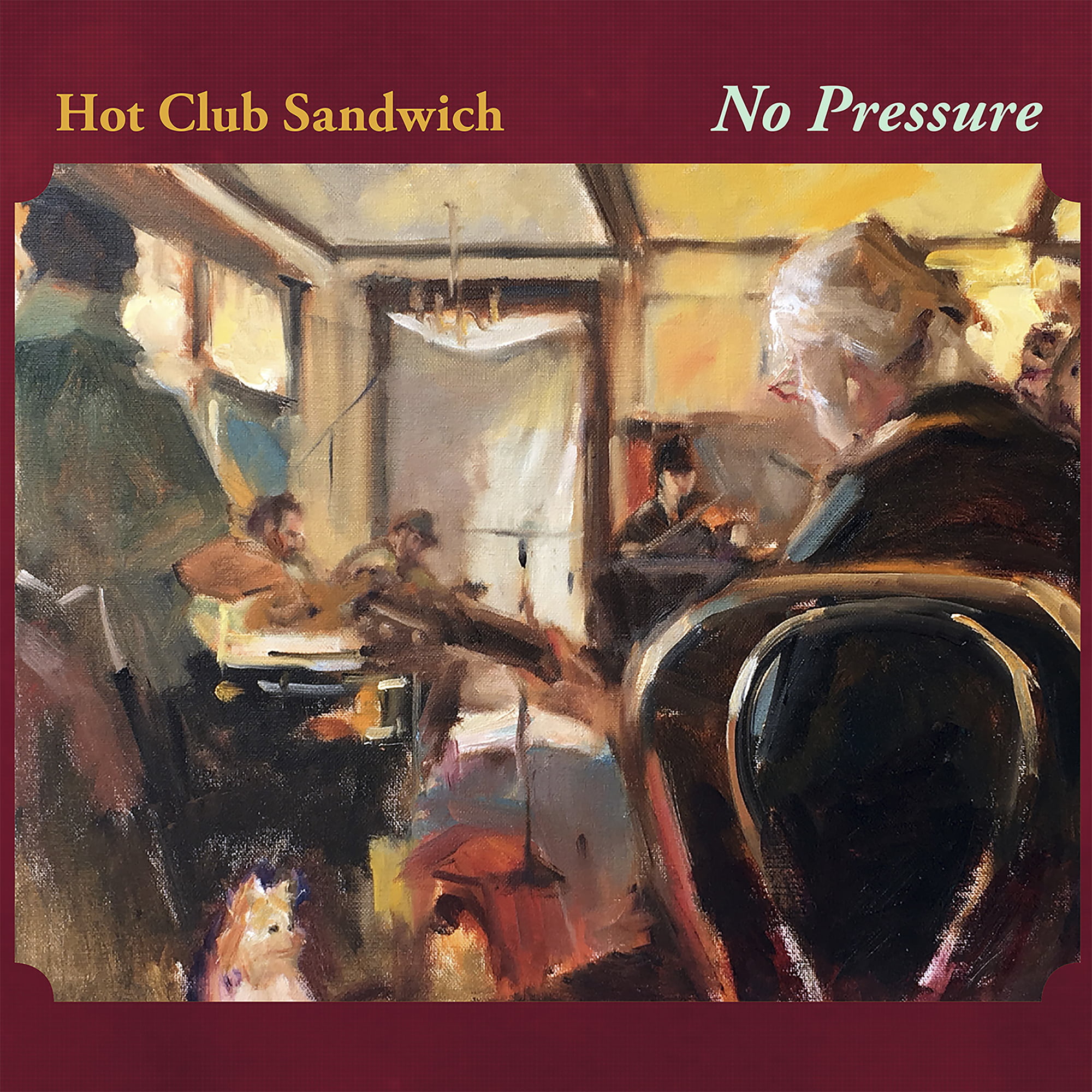
Hot Club Sandwich, ‘Swang Thang’

Swing is the most bluegrass-y subspecies of jazz. The chunk of the guitar chopping and comping away, the improvisational fiddle, and the walking bass solos almost guaranteed to elicit applause are more than reminiscent of ‘grass. It’s not uncommon to hear standards played in the style of Django Reinhardt and Stephane Grappelli wafting from more progressive bluegrass jams. Quintessential numbers like “Swing 42” and “Minor Swing” morph seamlessly into new acoustic favorites like “16/16” and “E.M.D,” both written by David “Dawg” Grisman. Dawg, arguably more than anyone else, is responsible for bringing swing and gypsy jazz to the bluegrass masses — but he isn’t just a jazzy missionary to more folky, old-time realms; he has made a home for himself in the heart of the swing scene, as well. He’s as comfortable straddling the fence as he is jumping down and spending some quality time on either side.

On the opening track of Hot Club Sandwich’s just-released album, No Pressure, the duo of mandolins make this bluegrass comparison most palpable. But don’t be mistaken: This band, this album, and this track are all swing. Hot Club’s mandolinist Matt Sircely and Dawg himself, the writer of “Swang Thang” and the album’s producer/advice guru, twin the tune’s bouncy, whimsical, jovial head and swap licks with each other during the solo sections. Listeners may feel a sudden urge to run away to the countryside in France, or to sip wine or snooty coffee at a street side café, or watch an indie movie or Fiat/Vespa car chase after a dose of this swang. It’s a pleasure to hear Dawg do what he does best with this Washington-based string outfit that’s been carrying the swing banner for going on two decades.

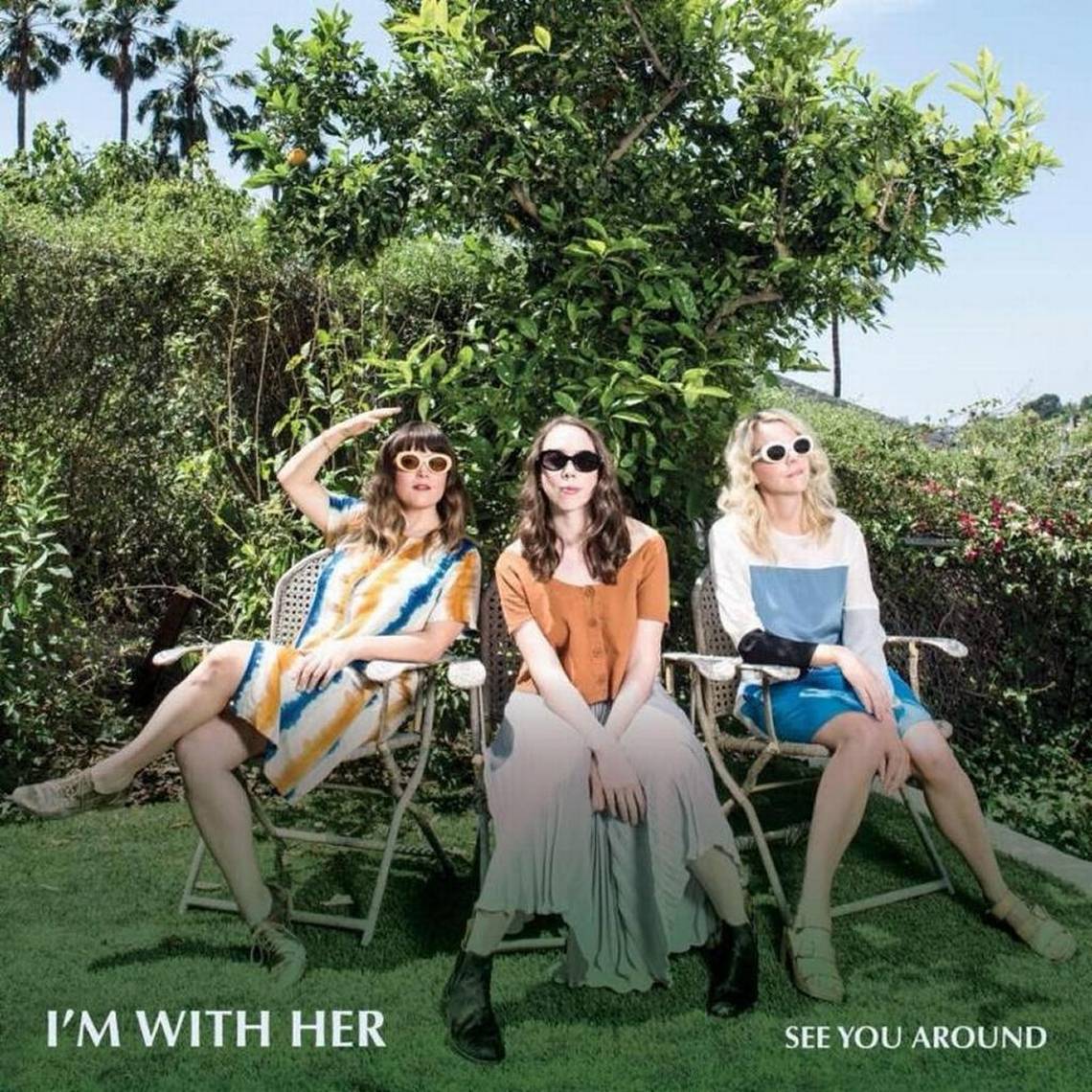
I’m With Her, ‘Waitsfield’

If only there were someone giving out nickels for every time the term “supergroup” is used. We’d all be rich. It’s not an altogether uncommon designation, as perhaps it ought to be, especially in bluegrass and its nearest offshoot genres, where virtuosity and technical prowess aren’t luxuries, but commodities. Nearly every outfit could ostensibly be labeled a “supergroup.” Even more so after each member’s bio and qualifications have been flamboyantly posited. But here, in this Tunesday, you can trust that “supergroup” won’t be bandied about.

I’m With Her (aka Sarah Jarosz + Aoife O’Donovan + Sara Watkins) — is a supergroup. The artistry, ease, precision, and personality of their just-released debut album, See You Around, corroborates this claim through each and every track, but the legitimacy of the moniker is cemented with the record’s lone instrumental, “Waitsfield.” These three women are all inimitable songwriters and vocalists, so they certainly didn’t need to include a tune … but they did … for the benefit of all of us. “Waitsfield” is rollicking and playful, a whimsical mandolin/fiddle dialogue that lopes and waltzes and dashes about. It doesn’t need to be a shred-fest to illustrate, undeniably, that not a single I’m With Her-er has relinquished any of her bluegrass chops — even while they each delve into sonic territories far from their respective starting points. The charm of the song isn’t shadowed by its frenetic energy; it’s enhanced — especially at the end, when they each breathe a sigh of relief, chuckle, and exclaim, “We made it!” We knew they would. They’re a supergroup.

Give Me the Wintertime: 10 Bluegrass Songs for the Cold

If we really have no choice but to endure winter (other than high-tailin’ it toward the equator), we might as well give in, cozy up, and spin some wintry bluegrass songs. Cold rain, cold snow, cold wind, cold hearts … some folks like the summertime when they can walk about, but wintertime … well, it’s a season that happens, too.

Tony Rice — “Girl From the North Country”

The north country = where the wind blows cold on the borderline. It feels like Tony sings about winter and its themes quite a lot. It just fits.

Emmylou Harris — “Roses in the Snow”

Not to throw around the term “iconic,” but this one is iconic. We’re familiar with the idea that love is like the seasons, but this time, love is like a greenhouse. It can grow roses in the snow! It’s a refreshing twist on a concept that usually ends up with the flower of love frozen over and wilted in the cold.

Larry Sparks — “Snow Covered Mound”

The only conscionable reason to highlight any recording of this song besides Ralph Stanley’s is … Larry Sparks. His voice captures winter and its grief perfectly. It will send a shiver up your spine.

The Osborne Brothers — “Listening to the Rain”

Some places aren’t lucky enough to enjoy the austere beauty of snow in the winter months, getting rain, and gray, and mud, and gloom instead. Of course, cold rain with a heapin’ helpin’ of lost love sounds about right.

Ronnie Bowman — “Cold Virginia Night”

IBMA’s 1995 Song of the Year leans into the cold heart metaphor. It is beautiful. And catchy. And still reverberating off the walls and in the halls of every former IBMA convention host hotel.

Jim Mills — “Sledd Ridin’”

If you gloss over the strange spelling of “sledd,” you’ll find this rollicking banjo tune feels like a day spent on the snowy neighborhood hill. Time for hot cocoa.

Reno & Smiley — “Love Oh Love Oh Please Come Home”

In a dynamic twist, the woman has left the man alone, at home, with their baby, while the snow has covered up the ground.

Del McCoury — “Rain And Snow”

It’s a murder ballad. It’s a lover’s lament. It’s sung in an astronomically high register. And it’s pretty sexist. It’s bluegrass to a T. It also happens to be a goddamn classic. Del McCoury does it right.

J.D. Crowe & the New South — “Ten Degrees and Getting Colder”

Somehow the saddest part of this song isn’t that he’s traded off his Martin. This song is a masterpiece and distillate of the troubles of a working musician: The coldest months are always the hardest months.

Bill Monroe — “Footprints in the Snow”

Once again, we are reminded that the father of bluegrass not only originated the genre, he’s responsible for a good many of its themes, too. In this case, winter isn’t an analog for heartbreak; it’s a silver lining, guiding the song’s speaker to his love via her footprints. You can’t trace footprints in the summer!


Photo by The Knowles Gallery on Foter.com / CC BY

Hangin’ & Sangin’: Chance McCoy

From the Bluegrass Situation and WMOT Roots Radio, it’s Hangin’ & Sangin’ with your host, BGS editor Kelly McCartney. Every week Hangin’ & Sangin’ offers up casual conversation and acoustic performances by some of your favorite roots artists. From bluegrass to folk, country, blues, and Americana, we stand at the intersection of modern roots music and old time traditions bringing you roots culture — redefined.

With me today at Hillbilly Central, Chance McCoy! So Chance McCoy, part of Old Crow Medicine Show, and more!

And more! So much more.

So let’s do a little Chance McCoy 101, background thing because you don’t have a website for people to go and find out about you so I think we need to teach the people.

Yes, I’m the 21st century George Harrison of Old Crow.

Alright, let’s go with that.

The Quiet Crow. [Laughs]

Yeah, okay, I’ll believe that. [Laughs] So you grew up in West Virginia, playing in punk and rock bands, yeah, a little bit?

Yeah, a little bit.

In your youth.

A little bit. The first band that I was in was called the Speakeasy Boys, and that was more just an excuse to get drunk and run a speakeasy than it was to be a band. But I did learn some music in there.

Right. And they were sort of old-time without knowing they were old-time? Kind of like the punk version of old-time?

Yeah, we didn’t know what old-time music was, actually. We didn’t know what bluegrass was, and we had heard the term “old-time.” And we were playing some old-time music. We had a washtub bass player. We were playing “Soldier’s Joy” and things like that. But it took me, like, a year of being in that band for somebody to finally tell me what old-time music was. [Laughs] We kept asking around, “What is old-time music?” and nobody could tell me!

So yeah, it was amazing! We basically ran a bar out of a basement of a friend’s house and, every Sunday, a friend of ours would go down to the Potomac River and fish out a bunch of catfish and we’d fry them on a barrel, and about 200-300 kids from the local college would show up and we’d play music. It was a ball.

That’s awesome!

So that was my experience learning folk music and bluegrass and old-time, and then I started performing in folk clubs and I was like, “Why is everybody sitting down and listening? This isn’t what you do, here’s a beer! Go ahead and dance, just start dancing!”

What do you think it was about that kind of music, or maybe it was how you guys were doing it, or maybe it was the beer and catfish, but what was the appeal to those college kids?

Um, I think the appeal was that we created a scene. Our bumper sticker read, “We’re not a band. We’re a party.” [Laughs] That was the appeal!

Your life motto ever since!

Yeah, I think that works for a lot of acts. Sometimes it’s not about the music; it’s about the event — creating a party. So that was very much what the draw was in that band.

And then once you got into the more “proper” old-time and folk scene, it was a whole other vibe.

It was a whole other vibe, yeah. It was great because, growing up in West Virginia, I’d actually never heard folk music, because it was pretty rare. I mean, it still is. I didn’t know where to look. I didn’t have any connections to it. So, when I finally discovered folk music in West Virginia, I was in my early 20s, and I realized that there was incredible depth, this well of music that went so much deeper than just the surface level “Soldier’s Joy” and all that kind of stuff — “Pig in a Pen.” And that’s where I really started to fall in love with old-time music, especially. And I was lucky enough to study and apprentice with master musicians form West Virginia, so that’s where it started to change for me. And then I took all that and went out and tried to perform it and that’s when I realized … [Laughs]

That’s when you ran into all the folks who were … the “that ain’t bluegrass” folks.

Like, “Well, actually …” [Laughs]

…

So you were just living out in a cabin and teaching fiddle at Augusta Heritage Center when you got the “Hey, come try out for our little string band, Old Crow Medicine Show” call.

Yeah, I got a cold call! Yeah the little string band that you know, we have the song “Wagon Wheel.” Nobody’s heard it.

Nope! What was it like stepping into that band with them having been a band for so long, even though they took a few years off, sort of regrouping?

It was really hard because I had to figure out how to join this band, like you said, that had already been a huge band that had been really successful, and I had to figure out how to enter the band and not make it seem like I was trying to replace Willie Watson or what he did. And that was always something that was really a sensitive issue where we all wanted to integrate me into the band in a new way where it didn’t feel like, “Oh, Old Crow’s back, but now this guy’s replaced this other guy.”

So there was this intentional shift in the band, and I tried to take sort of a back seat role and a more supportive role in that band, and not try to, you know, try to get myself out there and play a leading role in the band. And, in doing that, I was able to really support them to go in directions that they hadn’t gone before, and I was integral to the creative process and helping write the songs and record the records and doing all that, but I was sort of the behind-the-scenes guy, where I was just kind of trying to make Old Crow great again, and lift them off.

Because, when I met them and they went on that tour that I joined them on, when they reunited, they had kind of come out of a broken place with having lost Willie, and then being like, “Is anyone gonna like the band anymore? Are we gonna be able to do it? Is it gonna be any good?” So it was a real fragile situation that I came into, so I really tried to come in and just support them as musicians and help them realize their vision for what the band was gonna be moving forward.

And clearly that worked, or it was just a coincidence that you joined the band to play on Remedy and oh, it wins a Grammy, the first Grammy for a record.

[Laughs] I like to say I have the Midas touch. Any project I join wins a Grammy.

If anybody needs a fiddle player/banjo player/guitarist/carpenter …

I can build it. I can play it.

And you can win a Grammy.

[Laughs] Yeah, it was an amazing rise to success, especially coming from where I had been before I got the call. I had kind of sunk into poverty in Appalachia and it was rough times, for sure. I was just scraping by, barely, when Ketch [Secor] called me. So that was a good call to get.

…

You recently did some solo shows here in Nashville. So is that still a lingering ambition in your mind, are there projects coming?

It is! Yes, there is a project coming. I’m gonna be going into the studio in a couple weeks here, after I finish building it. [Laughs] And laying down my next record, which is gonna be called The Electric Crow. It’s kind of the next creative project where I wanna use all the different elements, all the different kinds of music that I play, and kind of bring that through my own creative focus and hone in something completely new. So, yes, that is on the way!

Watch all the episodes on YouTube, or download and subscribe to the Hangin’ & Sangin’ podcast and other BGS programs every week via iTunes, Spotify, Podbean, or your favorite podcast platform.

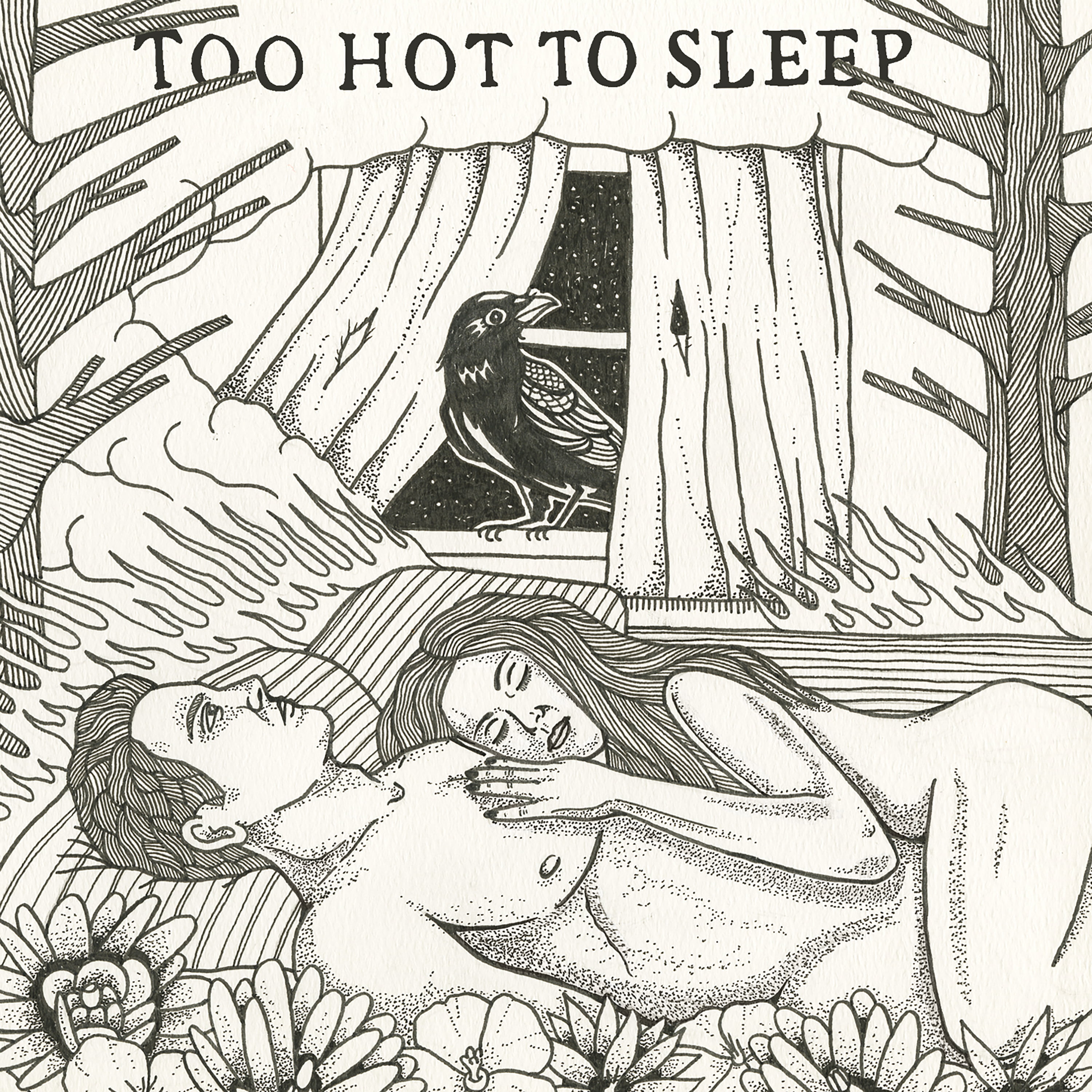
Sam Reider, ‘Valley of the Giants’

Accordionist, pianist, and composer Sam Reider was inspired by wandering through the surreal landscape of Valle de los Gigantes in Baja California, Mexico. The park is named for the gargantuan cardón cactus, a species that resembles saguaros of the U.S., but grows larger and taller and can live longer than 300 years. It might seem that the Sonoran desert — dotted by enormous, otherworldly plants — would evoke meditative, minimal, dreamy sounds — a musical reflection of desolation and austere beauty — but “Valley of the Giants,” off Reider’s debut album, Too Hot to Sleep, is anything but.

It’s rollicking and frenetic, lilting and energetic — more like the Wild West, replete with stampedes and tumbleweeds, than a silent, spiritual desert. The album’s roster of savvy pickers (Dominick Leslie on mandolin; Alex Hargreaves on fiddle; Roy Williams and Grant Gordy on guitars; David Speranza on bass; and Eddie Barbash on saxophone) pull from their overarching bluegrass expertise to drive the tune forward at a pace just shy of breakneck, galloping-horse-chase soundtrack speeds. Dashes of folk influences from around the world are sprinkled into its string band aesthetic like melodic Easter eggs. Reider’s accordion is the unyielding anchor, giving a dose of soulful, raw timelessness, but with a modern crispness and confidence. Somehow, it simultaneously conjures arid Baja and transatlantic scenes in an Irish pub or the countryside in France. It’s like a mini-vacation, wrapped up tidily within an instrumental.

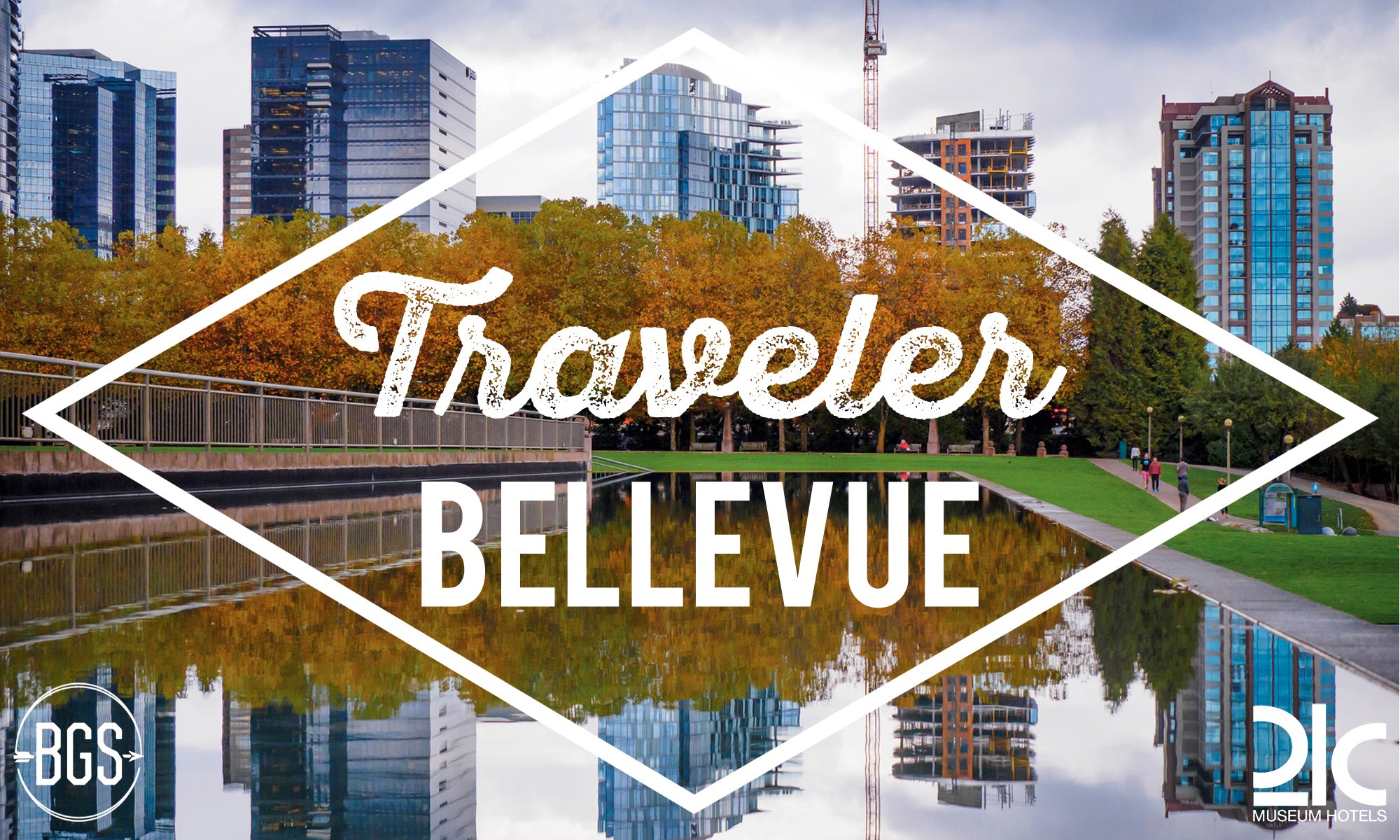
Traveler: Your Guide to Bellevue, WA

Bellevue, Washington, is a quick commute outside of Seattle and a gateway to the beauty of the Puget Sound region. With a compact and walkable downtown, Bellevue is a culture-filled day trip for when you have an extra day in the Seattle area or want to soak up a rich bluegrass fest. The 25-year-old Wintergrass Music Festival is a compelling reason to plan a trip to Bellevue every February, boasting OG bluegrassers like Del McCoury, the Seldom Scene, and Peter Rowan.

Getting There

Just nine miles south of Seattle, Bellevue offers a quick getaway from big city life. Take a half-hour bus ride or drive from Seattle to reach Bellevue. The Seattle-Tacoma airport is a 16-mile drive from Bellevue, making Bellevue and Seattle a convenient two-for-one trip. Once in Bellevue, you won’t need a car much because the city is quite walkable, unless you want to venture to nearby attractions.

Where to Stay

Wintergrass festival-goers will want to stay at the Hyatt Regency Bellevue, since it’s centrally located downtown and close to the music. Silver Cloud Inn Bellevue is also walking distance to the festival and a more budget-friendly basecamp, offering discounts to Wintergrass attendees. For a more boutique hotel experience, the Europe-inspired AC Hotel’s design marries modern with classic, serving a hearty European-style breakfast each morning.

What to Do

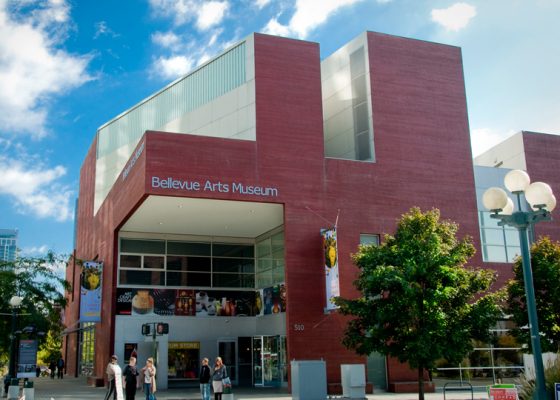
Bellevue Arts Museum. Photo credit: Scott Harder.

The Bellevue Arts Museum is nationally renowned for their art, craft, and design. The museum started from an art fair in the 1940s and has become a staple in the city. During Wintergrass 2018, the museum welcomes a Pakistan-born artist named Humaira Abid, well-known for her symbolically rich wood sculptures and mini paintings.

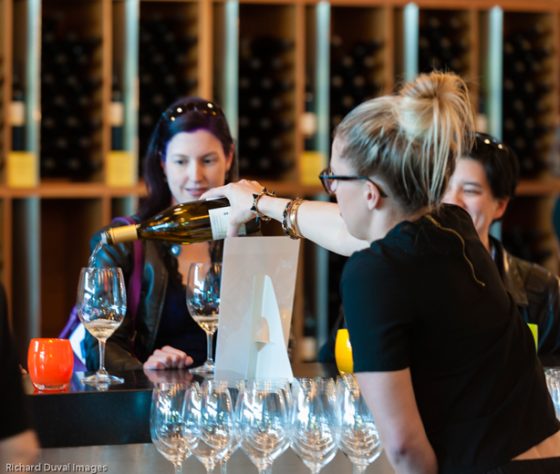
Woodinville Wine Country. Photo credit: Novelty Hill Januik Winer.

Woodinville Wine Country’s climate is ripe for grapes, boasting more than 115 wineries and tasting rooms. It’s a quick drive from Bellevue into the scenic valley of Woodinville, and it’s not just for wine lovers: Their microbreweries, distilleries, cideries, and robust farm-to-table scene are all impressive.


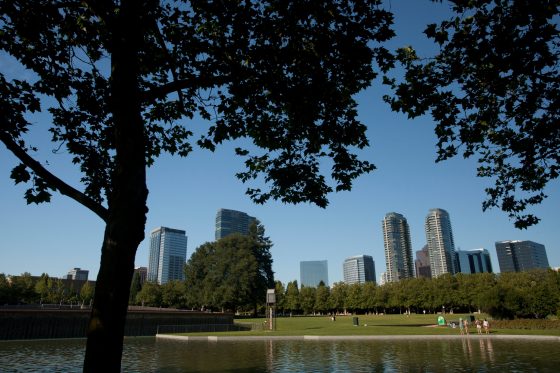
Bellevue Skyline. Photo credit: Visit Bellevue Washington by Merrill Images.

Bellevue Downtown Park is a 21-acre green space in the heart of downtown along with Inspiration Playground. Pit stops at Third Culture Coffee, a globally influenced coffee and tea shop, are encouraged. Try their Mexican or Vietnamese Coffee.

The 36-acre Bellevue Botanical Garden is stunning, featuring a rhododendron glen, Japanese Yao garden, and a stone garden, plus admission is free.

We recommend the punny Puget Sounds record shop and Silver Platters for your vinyl fix. Bake’s Place is Bellevue’s answer to “dinner and a show,” and the Showbox hosts gigs by indie rockers to singer/songwriters to country artists and more.

Eats and Drinks

The Lakehouse Bellevue

Bellevue is quickly becoming a foodie hotspot, drawing award-winning talent to the scene, like James Beard Award winner Chef Jason Wilson’s the Lakehouse. Japonessa fuses Japanese and Latin American flavors and is known for their extensive happy hour and traditional sushi. Locals love Lot No. 3 where the cocktail and spirits program has been recognized as one of the strongest in the Puget Sound. For breakfast goods, head to Belle Pastry on Main Street for exceptional French croissants.

Wintergrass Tips

Wintergrass originated in Tacoma and has made its home Bellevue for nearly 10 years. Home to many IBMA- and Grammy Award-winning artists, the festival takes place in the Hyatt Hotel every February and offers 70+ performances throughout the weekend. Always have your instrument on you for the various, spontaneous jam session which break out at any given moment. Don’t overlook the educational component at this fest, because who knows when you’ll be able to learn to clog at a music festival.

Ballrooms and bars in the Hyatt are turned into venues, making seating at popular shows competitive. Don’t feel pressured to buy food and drinks at bars while watching shows, which has been a point of contention in the past. The festival is laid out nicely indoors — so you barely have to leave — and the surrounding restaurants are easily walkable.


Lede: Lede Photo courtesy of Visit Bellevue Washington, by Merrill Images

11 Bluegrass Songs about Bluegrass

Every genre of music out there has its self-referential moments, certainly, but bluegrass accomplishes these meta masterpieces with a specificity, nostalgia, and flair that is unparalleled. It just wouldn’t be bluegrass without bluegrass songs about bluegrass. (Now if that ain’t a hook for a song …)

Junior Sisk & Ramblers Choice — “A Far Cry From Lester & Earl”

To start us off, this bluegrass chart smash hit is the perfect example of the bluegrass-songs-about-bluegrass phenomenon. But it isn’t just about the music; it also gets into the nitty gritty of how the music has changed since … well, Lester and Earl. Essentially, it’s the bluegrass “big tent” debate in song form!

Tom T. Hall — “Bill Monroe for Breakfast”

Country Music Hall of Famer Tom T. Hall gives us a textbook example of the pure reminiscing and sentimentalism that makes these songs just so dang easy to love. Bill Monroe: an important part of a balanced breakfast.

Steep Canyon Rangers — “Bluegrass Blues”

Do you think the Steep Canyon Rangers still got those blues? Probably not. The road-dogging required of bluegrass bands will get just about anybody down, so we understand where this one is coming from. It’s just one of the many causes of the “bluegrass blues.”

Jerry Salley — “The Night Flatt & Scruggs Played Carnegie Hall”

Not to be outdone by bluegrass songs that are simply about the genre itself, or its founders, or an iconic song, Jerry Salley goes a step further and writes a song about a specific album that was recorded at a specific concert. Does it start with applause, like the record? Yes. Is each banjo break a reference to a different song from said show/album? Yes. Do the pickers each take turns referencing licks played by the Foggy Mountain Boys? Yes. It’s a 3:34 distillate of what ended up being an almost 70-minute double album in its final form. Bluegrass sparknotes!

The Gibson Brothers — “They Called It Music”

This may technically be a song about the music(s) that preceded bluegrass, but when you know a little about the Gibson Brothers’ approach to creating and performing, you know that this is a pure-and-simple reference to their worldview. Other people may call what they do bluegrass, but to them, it’s just music.

Larry Cordle and Lonesome Standard Time — “Black Diamond Strings”

There’s a joke that pickers and guitarists have been making for as long as we can remember about how Black Diamond Strings were so great, they used to come pre-rusted! After a dose of Larry Cordle’s longing for the simpler times and simpler strings, it makes you miss those pre-rusted wires bad enough that you wish you hadn’t laughed. Wonder if they still make ‘em …

Donna Ulisse — “It Could Have Been the Mandolin”

Donna Ulisse conjures Bill Monroe’s mandolin wafting over the radio in a classic Cadillac on lover’s lane — it could’ve just been love, but it could have been the mandolin. Let’s be honest: We already knew that good ol’ traditional Monroe style is pretty much an aphrodisiac.

Rhonda Vincent — “Bluegrass Saturday Night”

Rhonda poses an important question herein: How is anyone supposed to resist bluegrass and its intoxicating call? Oh, and heaven apparently has a bluegrass band. Our heaven definitely does. Hope yours does, too.

Irene Kelley — “My Flower”

Thanks to Irene Kelley for straightening out one of the most perplexingly crooked traditional songs ever written … and in a beautiful, catchy, heartfelt homage. Doing meta bluegrass right.

The Osborne Brothers — “Fastest Bluegrass Alive”

Now, the Osborne Brothers definitely did accomplish some of the fastest bluegrass known to man (with musical integrity entirely retained … an important caveat). Interestingly though, this is not a particularly fast song. But those speedy bluegrass playin’ outlaws mentioned need to be fast to outrun the tempo sheriff and his posse! Run ‘em right outta town!

Bill Monroe — “Uncle Pen”

If you assumed that this style of song came long after the first generation of bluegrass, oh no, you are mistaken. Bill Monroe — the pioneer, master, father, and creator of the form — had more than one bluegrass inception song; “Heavy Traffic Ahead,” considered the first bluegrass song ever, is arguably a song about … bluegrass. So this tradition is well-entrenched in the genre for good reason. If Bill was singing about what he was doing on stage while he was doing it on stage and playing songs about tunes that quoted those tunes from the beginning, who are we to change course? Bluegrass bluegrass forever!


Photo by Joerg Neuner on Foter.com / CC BY-ND

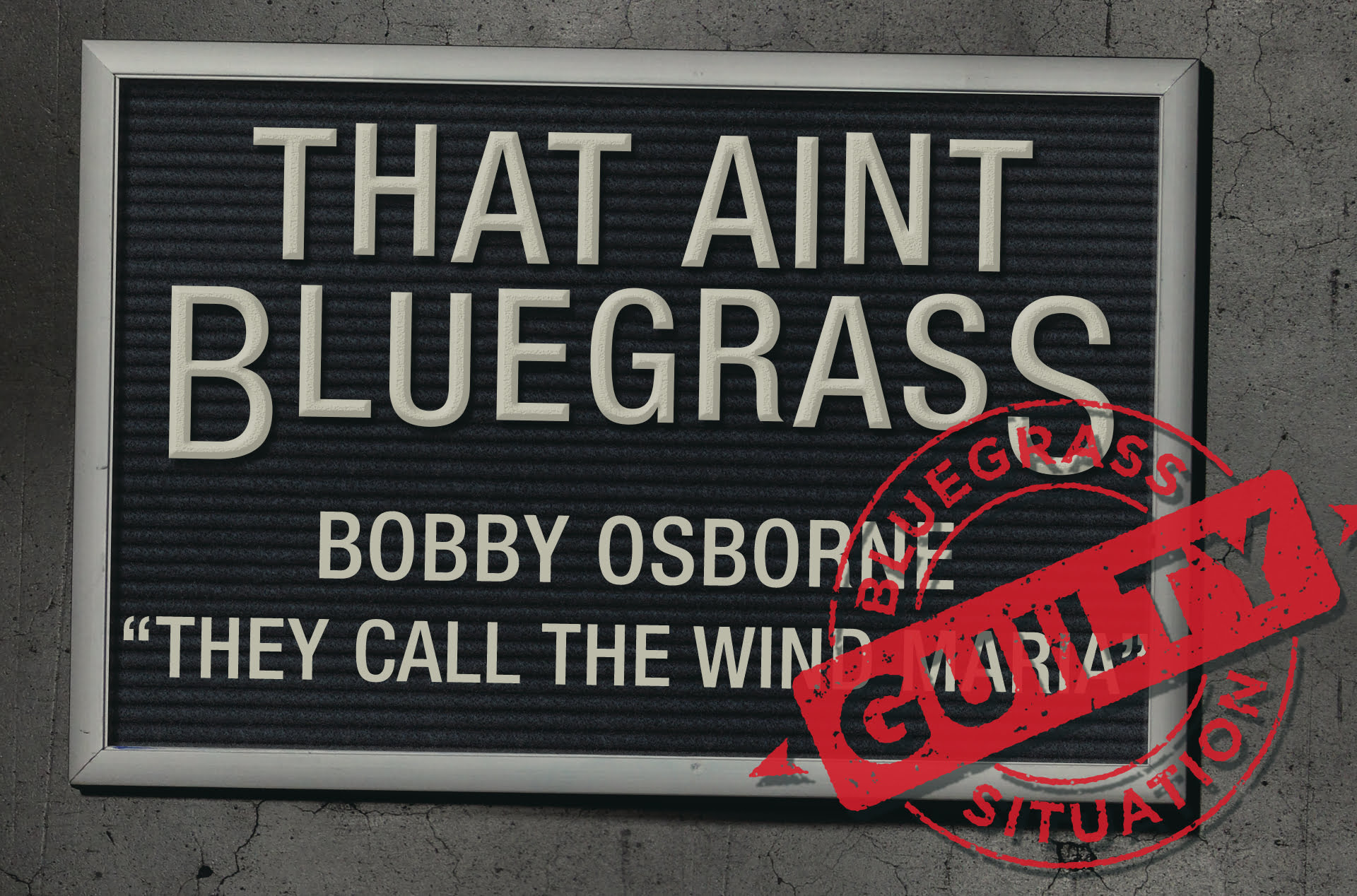
That Ain’t Bluegrass: Bobby Osborne

Artist: Bobby Osborne
Song: “They Called the Wind Maria” (originally from the 1951 Broadway musical, Paint Your Wagon)
Album: Original

Where did you first hear this song?

The first ones I ever heard do it were the Browns — Jim Ed and Maxine Brown. I kind of liked it then, but my brother and me didn’t want to cover it right then. It’s been a long time ago since I heard it. This project that Alison [Brown] came up with, with me and Compass Records, I thought about that song. My son and me were trying to get some songs together so we put it down on the list. The chord progression on it and the song itself, I’ve always really liked it. Of course, the Browns did a great job with the recording they had on it. I never did hear anybody else, maybe I didn’t listen, but I didn’t hear anybody else do it.

When I put it down on the list, Alison wrote me back, she said, “That was one that I wanted you to do!” [Laughs] So that turned out real good. Then I had to learn the thing, then. The melody and the harmony and all that on it. To me, it was just right down my alley.

What about the song made you think it would be such a great fit for bluegrass?

Well, it’s different from what most people would do, I think, in the story of it. A lot of people nowadays are doing arrangements like that, something similar to the way the melody and the harmony goes with that song. A lot of people are doing stuff that they didn’t do back when the Browns did it. If you went into a key that wasn’t just G, C, and D, you lost a lot of people, way back then. Nowadays, why, it’s not unusual at all.

My brother and me did some things — I don’t know if we were the first or not — but a lot of people in country music were doing that [sort of a thing]. But, as far as bluegrass goes, most of the time it was just plain Monroe-type music, Flatt & Scruggs, and the Stanley Brothers. A lot of folks didn’t go to those keys — what I always called it, the off-keys — with the melody of a song. My brother and I, we got tied in with that harmony we’d come up with and the endings that we had, everything just fit right into the melody of “Maria.” I was really familiar with that type of thing.

Fans might think, “He’s changed that around. I don’t like that kind of music.” But the song was written like that, so you can’t deny that. It fit us so good. Alison said it was always one of her favorite songs, too. Her being the producer, she asked me to do that, and it just tickled me to death. The more we worked with it, the better it got. It turned out to be a great recording.

You and your brother have always covered non-bluegrass songs throughout your career, and it’s kind of a tradition in bluegrass to take songs from outside the genre and repurpose them for bluegrass. Why do you think this is a tradition and why have you always made a point of recording these types of songs throughout your career?

You remember the song, “Once More”?

Yeah, of course!

We were doing just plain bluegrass, you know, Monroe-type and Flatt & Scruggs. Just G, C, D, bluegrass — three chords to it. Well, we were up in West Virginia, and a man up there by the name of Dusty Owens had a band and he had written that song, “Once More.” He had recorded it on a little label up there. He gave me one of the copies of it and, when I listened to it, I felt that would be a great thing for us to do with the harmony that we had. When we first recorded it for MGM Records, they were strictly [having us record] three-chord bluegrass.

I got the words to “Once More.” We had a couple hundred miles to drive home from Wheeling, and Red Allen was with us at the time — it was just three of us. We got to singing it just like we would normally do any other song, but there was just something missing with it. Of course, we were just doing regular harmony singing then. We had never featured a high lead on a thing in the world. My voice being the type that it was, it was made for high lead. We were just sitting in the car driving along. We didn’t have any instruments or nothing. We were just trying to learn the song. All of a sudden, I don’t know, I started singing the lead in a way-up-higher register. Red Allen was a tenor singer when he came to work with us, so he just started singing the tenor, but then it was the low part. My brother was good on the parts and chimed right in with the middle part and, boy, when we got to singing it like that, we knew right there we had run into some kind of harmony that we had never heard before. We had 200 miles to go and we sang that song all the way home so that we wouldn’t forget what we had learned. That’s how we came across that type of harmony.

When we went to Nashville to record again, we were dead set on putting that on a record, because that was brand new and it was different from Monroe, Flatt & Scruggs, and all that. It was so different from anybody. Wesley Rose was the A&R guy for MGM at that time, so we approached him with that type of harmony, and he looked at us and said, “You can’t do that. That’s some other kind of music and harmony besides bluegrass.” We had a talk and talk and talk. He said, “You put something like that out after what you’ve already done, you’re liable to lose your recording contract.” We were so set on it we said, “We’ll just take a chance on it, if you don’t care.”

When we recorded it, we had been using everything regular bluegrass people used — fiddle, mandolin, guitar, banjo, and bass. We figured the snare drum was perfect with bluegrass. We went back to [Wesley] and said we wanted to add dobro and drop the fiddle. Well, he had a fit over that, too. We hesitated to mention that there was one thing we’d like to do with the rhythm on it, the snare drum, but just the brushes. The guy says, “You’re getting completely away from bluegrass!” Well, no. It’s just going to match our singing. We finally talked our way into him letting us do “Once More” just like the recording is now. He was not happy with that at all.

Well, we all know how that turned out!

[Laughs] Back then, I think it was on the top 40 country, I believe. It made number 15 or 16 on the charts. We never heard another word out of Wesley. [Laughs] That right there led us into going deeper and deeper into that kind of harmony. It became our trademark.

What’s your favorite thing about performing “They Called the Wind Maria”?

I kind of like the hesitation between each line, you know? I like that because we were kind of used to that kind of thing and changing from one key to another. That’s one of the main things that really took the song off with me. The hesitation between each set of two lines. Then the tune of it, the melody to the song. When we put the three parts to it, it really dressed it up and made it even different from what the Browns did.

Now you know that ain’t bluegrass, right?

Well, after what me and my brother have done, there’s not much we can say to argue with what anyone thought! [Laughs] People still ask us about it.

When we switched from MGM to Decca Records, Owen Bradley was the producer over there. He knew about us and he latched onto [what we were doing] in a hurry. He said, “Do what you want to do. You know more about what you want to do than I do.” We got a taste of country to go along with the bluegrass, and he went right along with us. It really worked out pretty good. When we were allowed to just do what we wanted to with the harmony, the instrumentation, and the lyrics to the songs, when we got into that, it became a standard thing for the Osborne Brothers. A lot of other people jumped on that type of harmony in a hurry. It became a standard thing about every one of them wanted to do.

I love that on your latest record, Original, you’re carrying on that tradition of doing songs that some people might not expect to be on a bluegrass record.

Oh yeah, that was a thing we knew [from the begining] with one playing the banjo and one playing the mandolin and singing [in the Osborne Brothers]. There’s no way we’d ever get away from the sound of bluegrass instruments. What we had in mind was to play those instruments and make them fit with what we were doing. We were putting bluegrass and country music right together, and people just loved it. Our harmony singing fit bluegrass and country music, both. In one sense of the phrase, we had it made right there.

Crowd-Fun-Ding: January

One of the universal commonalities between people is that it is hard to ask for help. If money is involved, the task is all the greater. That’s why crowdfunding an album is such a brave and beautiful thing for artists to do. And it’s why we’ve decided to lend our support each month to roots music campaigns that could use a boost.

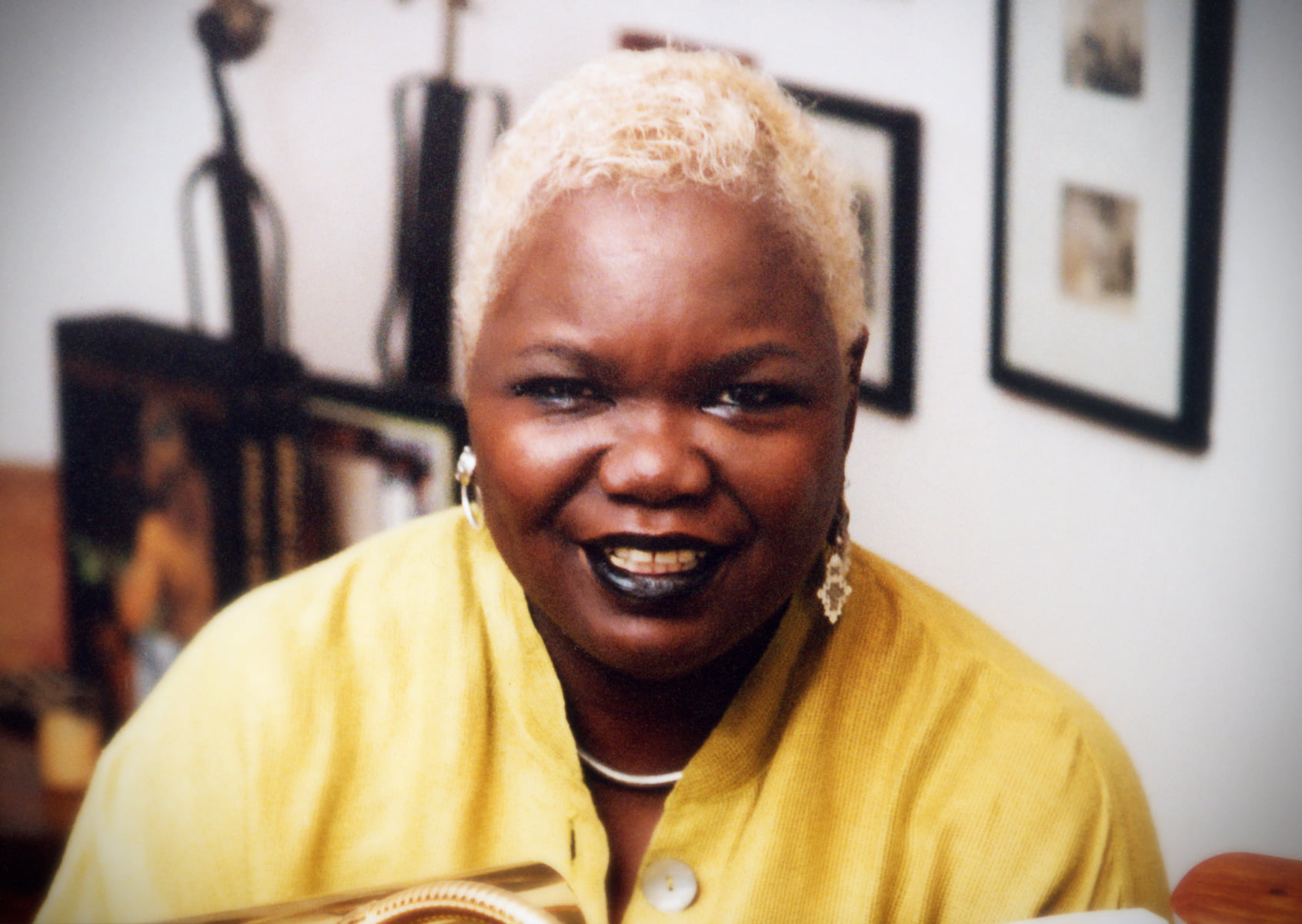
Dr. Ysaÿe Barnwell

We’re big fans of Sweet Honey in the Rock and all of their off-shoots. So, as a former member, Ysaÿe inherits that support for whatever she wants to do. In this case, what she wants to do is bring a variety of artists together to create ethnographic recordings of the “The Star-Spangled Banner” to go along with her own reclaimed version of it. That’s not just revelatory and necessary; it’s also COOL.

Hush Kids

We’re big fans of both Jill Andrews and Peter Groenwald, and we were lucky enough to see one of their first — if not the first — gig they played together. As charming as they are individually, the combination is utterly enchanting. Get in on the ground floor with this one!

Jamie Lin Wilson

A former member of the Sidehill Gougers and the Trishas, Texas singer/songwriter Jamie Lin Wilson has been up to various creations over the past few years, but is back in business with her second solo record. It will, no doubt, feature some stellar players working through some solid tunes.

David Robert King

Singer/songwriter David Robert King is diving into the darkness on his new album, Idaho. If you appreciate the likes of Leonard Cohen and Tom Waits, you might well enjoy what he’s up to. But, act fast! His campaign only has about a week left!

Justin Hiltner & Jon Weisberger

Our own Justin Hiltner has quite the bluegrass situation on his hands as he raises funds to make a record with our good friend Jon Weisberger. These two gents have an awful lot of talent between them … plus a whole bevy of bonafide bluegrass besties all lined up, including Molly Tuttle, Casey Campbell, Tristan Scroggins, Kimber Ludiker, and Amanda Fields. No chance it’s not gonna be great!