Playing to Her Own Beat: A Conversation with Valerie June

It’s impossible to unhear the sound that issues forth once Valerie June opens her mouth to sing. It’s a voice at once ancient — arisen from some sepia-toned past — and startling modern. From its color to its timbre to its texture, there exists something powerfully original about her primary instrument. But if June were just another singer with a distinct set of pipes, this wouldn’t be an article worth reading, and she wouldn’t be an artist worth covering. It’s how she employs her voice, and the fun she has blending and blurring genres that showcases her pioneering talent.

The multi-instrumentalist and Tennessee native returns this month with her sophomore major label release, The Order of Time. Arriving four years after her debut, Pushin’ Against a Stone, saw her perform at the White House, make countless television appearances, and become a festival staple, the album indeed took some time. June didn’t let her success dictate her writing schedule and rush her back into the studio. Instead, she read poetry, danced, cooked, and languished, allowing the music to unfold on its own schedule rather than hemming and hawing about hers. Thanks to that patience, she’s pushed her own boundaries even further.

The Order of Time spans blues, bluegrass, soul, folk, rock, and more, gathering pieces from each to build a kaleidoscope, of sorts, that showcases the long undercurrent of history running through each. Banjo appears in greater measure throughout the album, calling to its African heritage on “Man Done Wrong” and showing off its rhythmic pacing on “Got Soul,” while “Shake Down” borrows a few branches from June’s family tree. She gathered her brothers and father — who passed away in November — in Tennessee to record the raucous and gritty jam. And then there’s the viscerally thrilling “If And,” which layers an array of heavy tones, including bass saxophone, bass clarinet, and harmonium, to create an almost unholy riff. Have fun not getting chills.

So much of this album deals with time and abiding by its rhythms. How do you cultivate patience?

I don’t have any at all.

That’s fair.

It’s pure torture, honestly. I just want it to happen. It’s like getting a new plant: You’ve been to the nursery, you bought this gardenia, but it’s not flowering yet. You put it in the perfect sun and give it the perfect water and all of that, but it’s still not flowering weeks later, and you’re just like, “Oh my God, I really want the gardenia to flower, because it’s the best smell in the world and I love it. That’s why I bought it — for the flower — not for this green plant.” A lot of patience has to happen, but you don’t have it. You’re forced into it. And then, one day, it does flower and you’re really excited about it. That’s what it’s like.

I love that analogy. Building off it, how much of patience is, perhaps, about distraction?

It has to happen that way.

So what do you distract yourself with?

So many things. Life happens, people call and want me to do something, or it’ll be time to eat. [Laughs] I dance a lot. I have routines for distracting myself, and dancing is a big part of it. You have to have systems set up, you know, to keep you from dwelling in frustration. So whatever your things are that you love to do, you have to do those things. It’s almost like you have to be like, “I’m frustrated! Stop everything. Okay, now it’s time to dance. Nothing matters but dancing right now.”

It’s the physicality of it. It seems that when creatives get too caught up in their mental state, it helps to do something physical to calm that animal side of their brain down.

So true and, once every part of the body is moving, your mind is the last thing. You don’t even think about that part. It does take a minute, though, once the dancing starts. First, you’re still thinking, so your body — you’re moving it — you’re thinking, you’re thinking, and then, by the time you work the neck and the legs and the head and get the whole body going, you’re like, “Whoa!’ You’re gone man!” And it just takes one little moment of being gone to shift some ol’ thing.
So are we ever going to get a Valerie June workout video?

I don’t know. That would be really ’80s and fun. I’d have to get some leg warmers, for sure.

And neon.

I love legwarmers. That seems like a good excuse.

What do you dance to?

So many things. I like dancing to Davie Bowie, and Spoon is a really fun band to dance to — it’s so upbeat and insane. And Fever Ray and Fela Kuti, Cass McCombs … so many things. Sometimes I dance to blues music. It just depends on what I need to shake out.

I can see how these all dancing moments influence your music.

It’s all there.

Turning to the album, “Man Done Wrong” brought to mind the personal lamentations you’d hear in Ma Rainey’s and Bessie Smith’s blues. Can you take me through writing that particular song?

It started on the banjo. I was just playing that riff, again and again, for a few days, and then I heard the chanting, and when I first started to hear the chanting, I thought, “Well, this is very tribal to me.” It’s a different way for the banjo to be, for me. In my own mind, I had certain parameters that the banjo was allowed to go — for it to lean toward old time or bluegrass — and the fact that it was getting outside of its lane and it was doing something that seemed African or tribal to me was like, “What the fuck is this?” [Laughs] When I started to receive that, I was like, “Wow, I can’t fight that.” I can’t fight what comes to me in a song; I have to accept it all because, once I start to fight it, I close the door and I shut off these voices. I have to make them all feel welcome in order to receive the entire song, so I just went with it and got into it, and started to hear the actual singing, and I was like, “Well, okay.”

All these ideas I had about the banjo and the way it was supposed to be played and the way it was supposed to be fit into this box, they had to go out the window. It was like, “I guess it is an African instrument.” I learned a lot trying to play that song, about the banjo being as innocent an instrument as any other instrument and it having a voice that can fit with any style of music. It wants to be free; it doesn’t want to fit within any parameter. It just wants to be an instrument and play around in the playground of music and sound. It opened my mind and it opened my thoughts about what it should do in the world, and how I should feel about it when I see somebody get up in front of me with one. Just because you see a trumpet, do you think, “They’re going to play jazz. They’re going to be Miles Davis”? No. When you see a trumpet, it could be marching band, it could be jazz, it could be anything. A banjo is the same.

It has this strong association with bluegrass, but there is that tradition of Black banjo players who were never recorded and so, in many ways, that history has been erased.

It’s true. It’s such a historical instrument. It keeps getting deeper and deeper, as much as you try to see where it’s going. It’s been a vibrant instrument in the past and going into the future.

Do you think these voices in any way are trying to communicate that lost history with you?

They are communicating so many things. I can’t even get my head wrapped around it because, as soon as I get one thing that they were saying, then it starts to change, like a good poem. You read this poem and when you’re younger — and I read Robert Frost’s “Two Roads” when I was younger — it meant one thing, but as I get older, it means something different. The songs are like that. They change like they are living; they live with you and they change the meaning.
What other poets are you currently quite taken with?

I like Wendell Berry a lot. I could read that all day long, and T.S. Eliot and e.e. cummings, but Wendell Berry is really huge. I don’t even know how to describe what he does to me, but by the time I get to the end of one of his poems, I can be in complete tears and gratitude for all of life, for the earth, for everything. And the short stories are the same way.

He’s one of my favorites, too. I’m always so grateful for Wendell or, really, any poet who articulates the experience of living, especially when you haven’t found the words yourself yet.

That’s the shocking part. The ability to articulate it is like, “Wow!” I felt it, but I just couldn’t put it into words. You did it! You did it! [Laughs]

But you’re tasked with that same hurdle as a songwriter.

I don’t really feel like I have any kind of control over these things. I mean, I wish I could. I wish I wrote that way, where I could have a theme in my head and write something that fits the purpose, but the times I try, it doesn’t hit me as much as when I hear the voice and I just follow it. But I do try sometimes. I’d like to learn to write that way. I feel somebody like Toni Morrison or Zora Neale Hurston, they would have these thoughts going on in their minds about the world, about being a Black woman growing up, or things like that that they wanted to put into their writing, and they were able to articulate them through their craft. But, for me, I can’t do that. I don’t write that way.

There are so many different ways to approach it. Every writer has a different way.

I love writing with other writers because, when I do that, then I steal some of their style. I’m like, “Oh, that’s how you tapped into that.” They’re my teachers.

What a great way to learn. Well, lastly, I was curious about the song “Shake Down” and recording it with your family.

My brothers’ and my dad’s vocals were tracked in Tennessee. It was great because my dad’s not really a singer, but he was in the room and I was like, “You gotta sing.” And now he’s gone and so all I have is him singing that part. I have pictures, but I don’t have his voice anymore and I never will again. That really matters to have somebody’s voice after they’re gone. That really is something, so I really feel fortunate for that song.


Photo credit: Danny Clinch

A Peaceful Place: An Interview with Dave Simonett

Some people seek counseling to work through the pain of a divorce, lying prone on a couch while a therapist helps guide them through the evolving course of their own emotions. Others drown themselves in booze, pills, or even the black hole of denial — or sometimes a combination of all three. Trampled by Turtles’ Dave Simonett, however, did something that he didn’t expect in the wake of a breakup: He wrote about it. Though Simonett has always reached deep into his personal experiences to enliven his songwriting, he’d never quite set out to make a concept record — one that charted the dissolution of his 10-year marriage and let the past go up in flames. But Furnace, his second solo LP under the name Dead Man Winter, is a sonic catharsis; a catalog of 10 slow-chugging, heart-tugging folk songs that explore the most gaping wounds left when a romance suddenly fades away.

To write Furnace, the Minneapolis-residing artist decamped to a small cabin in Finland, Minnesota, a remote and tiny town about two hours from the Canadian border. There, songs like “This House Is on Fire” and “Am I Breaking Down” spilled out, devastatingly raw despite the fact that they sometimes rock as hard as they hurt. For those who turned to Trampled by Turtles for their progressive breed of aggressive bluegrass, Furnace is a lush, emotive surprise that trades fast-picking strings for introspective acoustic strums and chugs of organ, all centered in Simonett’s stories that approach his shifting world with a keen sensitivity, but plenty of humility, too. “I’m full of charm, I’m full of whiskey,” he sings on “Red Wing Blue Wing.” “I’m full of shit most of the time.”

The release of this album has effectively put Trampled by Turtles on hiatus. What made you feel comfortable putting things on break?

There are a few different parts to it, but mainly it was creative. We were in a good spot, as a band, and things were going well. But I had wanted to put out a Dead Man Winter or solo project thing for a while, and making the album wasn’t the problem. Fitting it into the Trampled downtime was too much, so it was mainly to clear up space for me. That wasn’t a hard decision, but it also messes up other people’s lives. These are my dear friends, pretty much family members, who count on [the band] as their income. That was the hardest part for me — I’m going to put these guys out of work for almost a year. But it will be good for us; we’ve been touring so hard for almost 15 years, so it’s nice to get a little breathing space.

Is your frame of mind different when you approach songs for your solo work versus with Trampled?

I don’t think I can separate the two. It’s just kind of what was natural at the time and so much of that was caused by my divorce. I don’t write for one project or the other: I just write songs, and any song either band has recorded could have easily switched to the other. It’s just whatever outlet feels right.

Did the material you created for Furnace instantly feel like it lent itself to a solo project?

I think mainly it was how I wanted to make the songs in the studio. My life was in an extremely confusing place, and I was in the spot where I needed to change everything about my life, artistically as well as just needing new shit. It was very chaotic and fast paced. And I think it worked out perfectly.

Was there a moment when you knew that songwriting was going to be a force to help you work through your divorce?

It’s my only place to go. Being in the wilderness is helpful, but as far as actually letting this stuff out of my body, songwriting is, for better or worse, what I have to use. It’s a process I enjoy, and for me it works all right. And I knew that well enough to try and avoid it.

What do you mean by that?

Well, I didn’t want to do a breakup record, per se. But I couldn’t fake it. [Divorce] is not a unique experience, but I hadn’t done it before. It’s a huge transitional experience with a lot of pain and chaos, and it’s the only thing I could focus on, even if I tried to be something else. I kind of just gave in, and said, “Maybe this isn’t healthy for me. I’m a songwriter. I should write songs about what I know.” Once I let that go, it came out pretty easily.

So did you have reservations about being so personal?

I’m kind of a private person generally, but I have come to terms with the fact that it’s probably good for me, as an artist, to just get out of my comfort zone a little bit. It’s not groundbreaking, but for me, it’s a really new direction. It’s almost a gift.

A divorce is undoubtedly a difficult thing to go through. Do you find you write better or find more inspiration when things are in tumult?

I don’t, actually, and that might be a bit of a romantic myth. I think of the Townes Van Zandts of the world — people almost treasure that guy’s pain. For me, when I’m in a bad place, I don’t do anything well. I have to find some kind of peace before I can be creative. I don’t consider the writing on this record to be great. I’m happy with the record. I like the songs. But I didn’t put a lot of thought into the lyrics. Because it’s almost a direct translation, a pressure release valve. It just came out. I thought, “I’m just going to record this picture of my emotional state instead of thinking about it as a creative piece.”

Was it always clear to you that this album would deal in one united concept?

Yeah, it was. But I was kind of mad at myself — like, “You’re making a damn theme record?” I knew it going in, which is a rare thing for me. A lot of times, I’ll go back, and there will be themes running through a record, but I don’t notice it at the time. This is the first time it was a conscious thing from the front.

And you wrote most of the record in a secluded cabin in the woods, one of music’s most beloved tropes. It worked pretty famously for Bon Iver. So what is it about a cabin that is so conducive to songwriting?

It works! It probably depends on the writer, and I know some people where it’s not their vibe, but it is mine. Growing up, [the outdoors] was always my church — just being alone and being away from people, but in a natural setting that is beautiful and quiet and secluded. When I’m in that kind of environment, I feel really good. I got to that physical place and I was in a much better mental place, because it was so peaceful. It allowed me to focus just on the speed of daily life. Because believe it or not, even Minneapolis can feel too fast.


Photo credit: David McClister

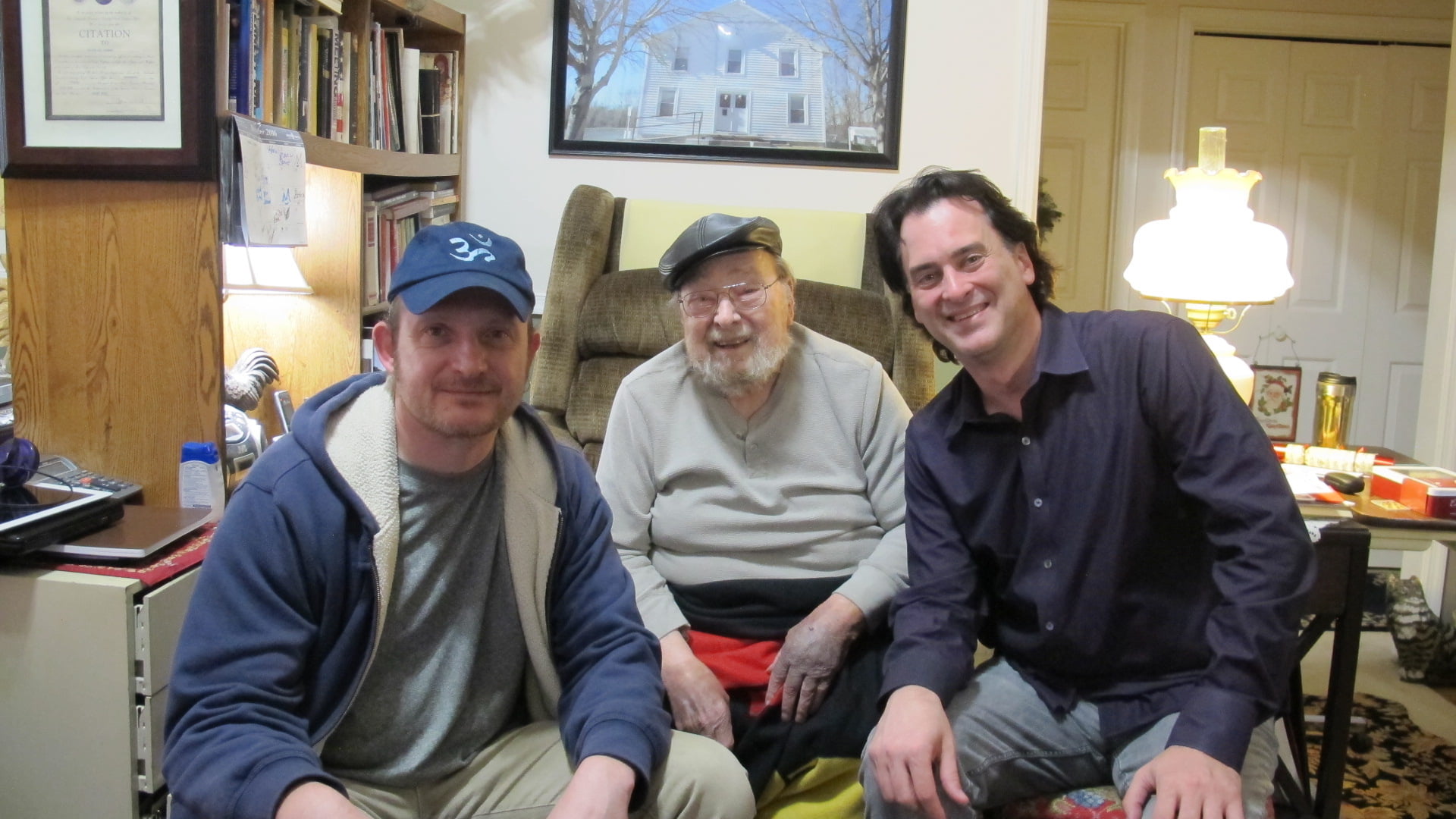
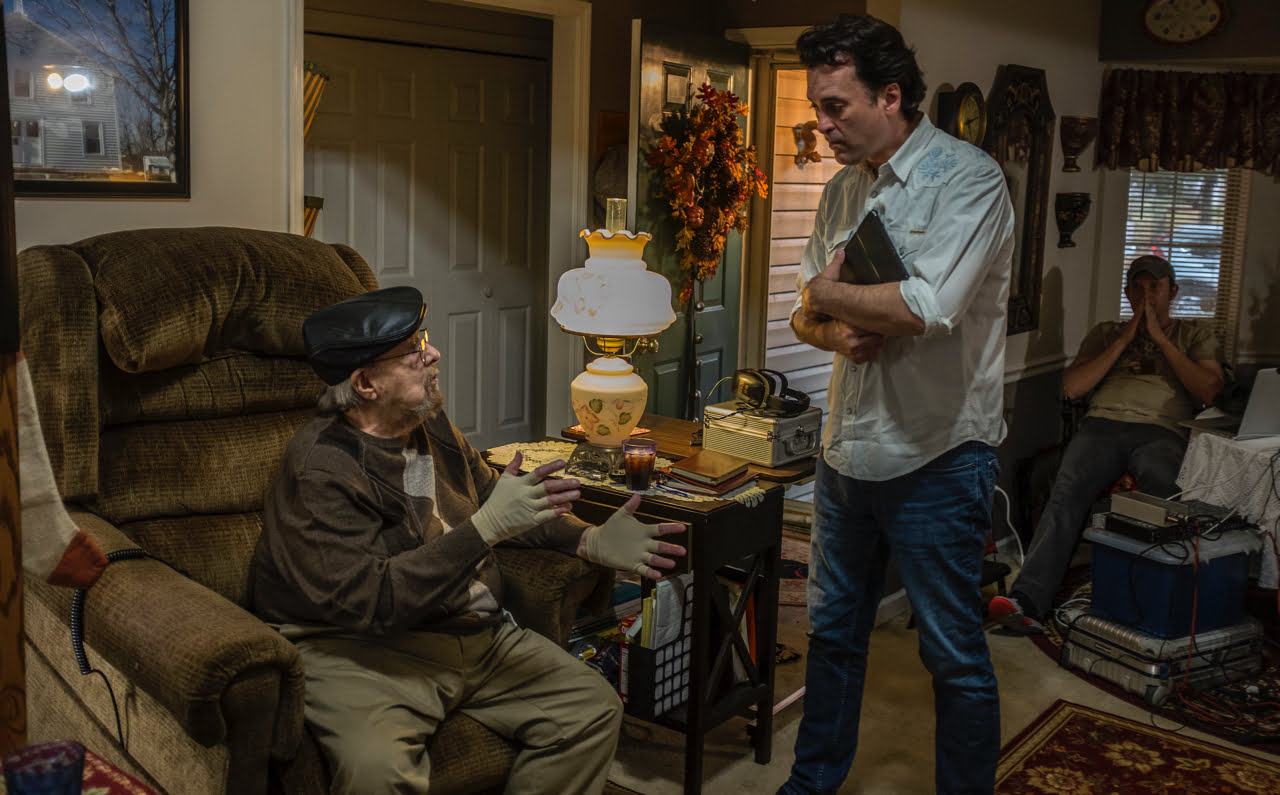
A Slice of Life: A Conversation with Mac Wiseman

Members of Bill Monroe’s Blue Grass Boys — and there were more than 150 of them during his half-century career — often started their own bands in the style of their mentor. This was a huge part of Monroe’s influence: He was both bandleader and charismatic evangelist, training future bandleaders to preach bluegrass in a Monroe-style band of their own. His star students (Jimmy Martin, Lester Flatt, Earl Scruggs, Carter Stanley, Del McCoury, Peter Rowan) started their own influential bluegrass bands — not carbon copies, of course, but homages to the Founding Father’s vision. It was an apprenticeship model.

But one early Blue Grass Boy, Mac Wiseman, left the band to do something unusual: He played solo. He still sang songs from the canon of bluegrass and early country, but he presented them with just his guitar and voice. For dyed-in-the-wool grassers, it was kind of weird. The inside joke went something like, “Did you hear the sad news? Mac Wiseman broke up.”

There was another thing that made him different — and this is just my impression, but I think our interview backs it up. Among the early Monroe disciples, he projected a pretty non-bluegrass relationship to his Southern-ness. Wiseman grew up during the Depression in Virginia coal country, having as much of an authentic claim to rural roots as any of the bombastic blue-collar belters like Jimmy Martin, but he de-emphasized the drawl. Wiseman started his career as a radio broadcaster and always sounded like one. He didn’t want to develop a groovy, bluesy, Monroe-style band or shake the rafters with a piercing tenor. Instead, he found a home in the ’60s folk revival crowd. He told stories. He enunciated. He crooned.

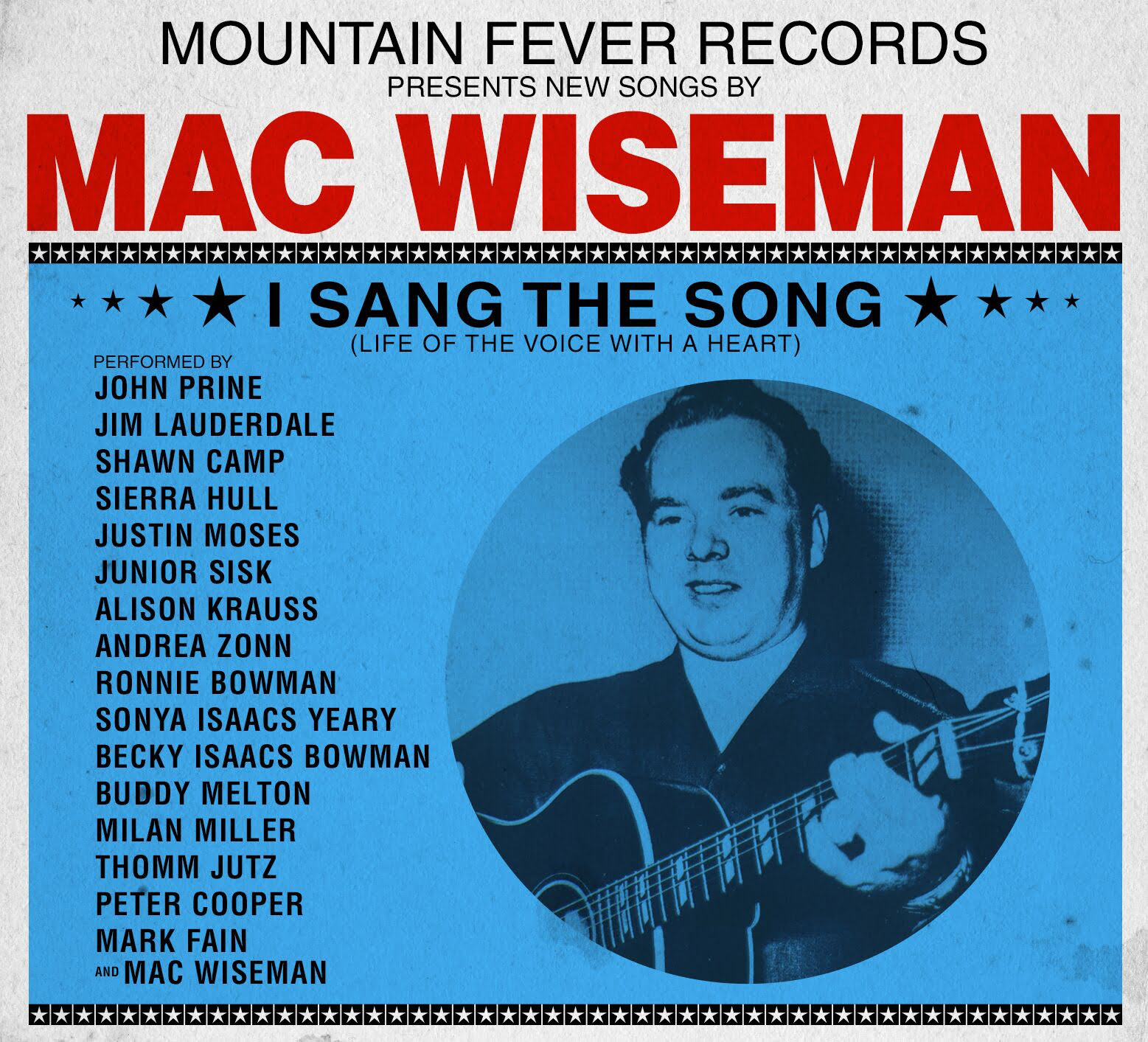
And now, at 91, he has a new album. I Sang the Song (Life of the Voice with a Heart) features 10 songs that tell the story of Wiseman’s long, busy life. Featured guests like John Prine, Shawn Camp, Sierra Hull, and Alison Krauss help pay tribute to his distinctive voice and one-of-a-kind career. Amazingly, Mac Wiseman can still hit the high notes.

I called Mac at his house in Nashville and first got his answering machine. He picked up, interrupting my message, and said, “Sorry I almost missed you! I had the vacuum going!” We talked about his childhood during the Depression, how he learned guitar while recovering from polio, his introduction to John Prine (it involves a threat — and Earl Scruggs), and his deep disappointment with the direction of country music. At 91, he’s gracious, funny, and sharp as a tack — and, maybe most impressively, he still does his own vacuuming.

First of all, I think it’s amazing that you’re 91 years old and still singing. It’s amazing, too, to think of how much social and cultural change you must’ve seen in your lifetime.

Oh, it certainly is. And I’ve been blessed with a decent memory. When I think of all the different phases I’ve gone through, it’s hard to cope with it sometimes.

I know you were born in mining country in Crimera, Virginia, in 1925. I’m sure life in Virginia back then was pretty different.

The first four or five years I was alive, it was peaches and cream. Then the Depression hit and it was the opposite. It was onions and water! I have vivid memories of when I was four, five, six years old. I remember how carefree things were. When the new highways were being constructed all over the place, my dad was making nine dollars a day. He had a Ford Model T car with solid rubber tires on it in 1928. Then, the next year, he couldn’t even afford to buy the tags for it.

I heard that you started learning the guitar while you were recovering from polio, is that right?

Actually, it was while I was recovering from a few corrective surgeries. I had polio when I was six months old, but they wouldn’t do any surgeries until I was approximately the growth I was going to be. So, at about 13 years of age, I went to Charlottesville to the hospital — twice. They operated on my legs, and it made all the difference in the world. That’s when I started learning the guitar, just laying around with a cast on up to my butt!

I guess you couldn’t do much but sit and sing.

That’s exactly right. I had been very active, of course, working the farm for our livelihood, but when I was laid up that summer and fall through the seventh grade, my mother had to take me to pick up the school bus in a little buggy. Then I went on and became valedictorian. How do you like them apples? [Laughs]

That’s impressive! I heard another impressive quote about you. Bill Monroe called you “the best lead singer I ever had.” That’s pretty high praise from a guy who was a tough bandleader.

Well, he did say that, and that was very complimentary. Oh, working for him was very interesting. We toured a lot. He was from Kentucky, of course, and we played all the big theaters around there. We traveled and watched all the movie rolls. Bill and I watched them so much we could recite them riding along in the car! He was a very interesting man to work for. He knew exactly what he wanted to do, and he told you. But I enjoyed working for him and we never had a cross word.

You’ve made over 60 albums, recorded some 800 songs …

Yep, sure have. A lot!

… and most of that was before the Google era, when you could look up all 50 versions of a song with one click. How did you learn new songs, and how did you decide which ones to record?

In my growing up days, we mostly listened to live radio. In the ’20s and ’30s, radio was just coming into its own, you know, and it was mostly live — there were no disc jockeys. My mother was quite interested in music. She would play the organ and read shape notes and things like that. She encouraged me, hoping I would learn something that would get me out of the fields. That’s where I learned a lot of those old songs. She would sit out by the radio — we had the first battery radio in our community — in the wintertime, when it was too cold to work outside, she sat there and quilted and crocheted. She had a composition book laying on top of the radio, and when a live group would come on and sing a song, she’d get a verse or two of it. A few days later, they’d sing it again and she’d get some more. I’ve got 13 composition books in her handwriting where she wrote those songs down for me.

That’s really a treasure.

It is indeed. That’s where I got my background of the old songs. I can remember some of those songs from when I was four or five years old. “Granny’s Old Arm Chair” and “Barbara Allen,” things like that.

That’s interesting. Those old ballads like “Barbara Allen,” they’re story songs. And that’s sort of what the songs on this new record do. They tell your story.

That’s right. It’s my life story in song … 10 songs.

That’s one thing I really like about your singing, that sets you apart from some bluegrass and country singers — it may be a small thing, but it strikes me as important to you — that you sing words really clearly. It’s always easy to hear your lyrics.

Lyrics are very important to me. That’s been an important identity for me, as well. I went to college majoring in radio and did a lot of air work — news, pop records shows, working the control room — and that’s where a lot of my diction comes from.

Well, it shows in your songs. You know how to tell a story.

Well, I try to do that. You know, I actually lived those stories. They don’t change with generations. Even with a new batch of people, the old songs remain the same, and the themes remain the same. Disasters and love and train wrecks, things like that. They’re a slice of life, so to speak.

I’m only 26. My generation grew up with the Internet, many of us living in suburbs, getting our food from an air conditioned grocery store. Do you think all these songs about trains and cabin homes and farming can still resonate emotionally with people?

Well, like I said, they’re a slice of life. Maybe there aren’t many train wrecks that you know about anymore, but it’s also an historical look, these songs. I’ve played a lot of the colleges, the listening rooms, just me and a guitar. They’ve wanted to hear these old songs that paint a picture of a life these kids have never been exposed to. That’s the reason for the longevity of them, I think.

One amazing thing to me is that you’ve played through so many eras of history and eras of music. You were right there through the beginning of bluegrass in the ’40s, but you also played the Newport Folk Festival in the ’60s — what was the Newport folk scene like?

I never knew Bob Dylan, but I did a number of festivals with Joan Baez. After these festivals in the evenings, that was fun, we’d gather up in hotel rooms and sing old songs.

So you’ve been making music for a long time, and it seems like learning from every different generation — bluegrass in the ’40s, folk in the ’60s, pop along the way. Do you feel like you had to reinvent yourself for different eras?

No, I just kept on doing my thing, you know. I could’ve been a bigger star for a short period of time by following the trends, but I decided to just be myself and hoped people liked that. Fortunately, I’ve had a pretty good haul all these years. But I never tried to copy anybody else in the business or change my style to seek what they wanted.

You got to work with a lot of great musicians on this new record.

That’s right. Alison Krauss came by my house and we recorded “’Tis Sweet to Be Remembered” for the new CD. And I sang it the same key as I sang it in 1951 when I recorded it first for Dot Records! Even the new songs we wrote for this record, those are true stories in those songs: standing and warming my feet where the cows had been laying … wheat crop going bad because it rained on it … Every one of those are actual stories about my life. So, yeah, sorry to repeat myself, but it’s a slice of life.

John Prine is featured on this record, and you made a record with him in 2007. How did you get to know each other?

Well, I’d always been aware of his work. Then, one time, a guy who owned a studio came to Earl Scruggs’ birthday party — he’s a real boisterous fellow and he told me, “John says, if you don’t come see him Thursday, he’s going to kick your butt!” I admired him and all, so I went down to his office. What he had in mind was pitching me songs for me to do on my own. We got to talking and found out we knew a lot of the same things, so that’s how that record came about. That was one of the great experiences of my life, singing with John and swapping verses, you know. John still comes to my house to see me quite frequently.

You’ve been around for so much of country music history. I’m curious if you listen to any new music and what you think about it.

Today’s music? Well, I’m very disappointed in it, because so many of the younger artists don’t know the background. That’s the reason I go to colleges: They sit on the floor all hush-hush and listen to the old stories. Sometimes I have to do the same old song two or three times in a concert. So it’s an educational thing to the younger people. For so many industry people today, it’s all a mechanical thing. The record companies have publishing companies, so they can sign up an artist and put him in a room for four or five hours a day to write. Pretty often, one song out of the whole album is the one that hits, but the rest of them are junk. I still listen to it just to see what changes, but I don’t enjoy it like I did. There’s a few acts that I enjoy, but a lot of the younger ones, I don’t know who the hell they are!

So you feel like a lot of the younger artists don’t have an understanding of the history of country music?

No, they really don’t. They don’t have the knowledge of it. Actually, the record companies don’t have a knowledge of it. They’re business people out of New York and Chicago and L.A., and they come to Nashville to make business out of it. A lot of them have no idea of the history. I’ll give you a quick example: I was on the board of directors for the CMA where we nominated people for the Hall of Fame. And there was a young man on there from New York representing Decca Records here. We were at a board meeting, and folks like Owen Bradley were there, people of that vintage. [Note: Owen Bradley was an influential producer who helped modernize the Nashville sound in the ’50s and ’60s.] Owen nominated Brenda Lee. This young man stood up and quite innocently said, “Who is she and what did she do?” I wrote a letter of resignation right then and there. He was an honest fellow, and it was okay that he didn’t know, but what was he doing on that board?

Didn’t that make you want to stay on the board and change it and teach them a little more about the history?

No, you know, I was one of the founders. I worked at every facet of it. I’m the only living member of the original board of directors. I’ve been in it professionally since ’44, you know. Radio, bands, and recording. I was A&R director of the country department for Dot Records out of Hollywood for six years. Done a lot of things.

Well, you’re still singing at 91 — and you still sound like you. I’m sure a lot of people are wondering what’s your secret to staying productive into your 90s and still being able to sing so well.

I don’t know, but it is a blessing. I think it’s sticking to your guns and the good Lord’s blessing — that’s it.

Mr. Wiseman, I really appreciate you taking the time to speak with me this afternoon.

Well, it was my pleasure. I’m so pleased you’re writing about this music. But at the same time, you know, it keeps me alive.

LISTEN: Ned Luberecki, ‘Higher Ground’

Artist: Ned Luberecki
Hometown: Nashville, TN
Song: “Higher Ground”
Album: Take Five
Release Date: March 31, 2017

In Their Words: “‘Higher Ground’ was one of the first tunes I had picked out for the album. It was co-written by my wife Kelley and Dale Ann Bradley. Kelley is from West Virginia, and Dale Ann is from Eastern Kentucky so, naturally, they wrote a song from the point of view of a mountain girl who’s moved away and misses her mountain home. How much more bluegrass can you get?

This one was recorded with Chris Jones and the Night Drivers and features Chris Jones on guitar, Jon Weisberger on bass, Mark Stoffel on mandolin, and former Night Driver (now Infamous Stringduster) Jeremy Garrett on fiddle. Dale Ann sings it like only a true east Kentucky gal can! In the first line, there’s a reference to an ‘east Kentucky’ mountain. When Kelley sings it, she replaces that with ‘West Virginia.’ Either lyric seems to work just fine. Becky Buller sings the harmony part on the chorus which means there are two IBMA Female Vocalists of the Year on this track. I suppose if Becky wants to sing it, she can sing about her ‘Minnesota’ mountain. That should work.” — Ned Luberecki


Photo/ press shot credit: Shelly Swanger

Hillbilly Soul: An Interview with Darren Nicholson of Balsam Range

For some reason, North Carolina has long been the cradle of the Americana vanguard. In 1945, Earl Scruggs’ banjo sound created a rip-roaring hot rod of a genre called “bluegrass” (with Bill Monroe’s help, of course). In the ’60s, Doc Watson popularized a new guitar style while giving the folk revival a welcome dose of Southern authenticity. The “newgrass” boom of the 1970s owed a lot to a North Carolinian named Tony Rice, who became his era’s most important acoustic guitarist and, in turn, influenced a younger generation of fans, including Béla Fleck and Alison Krauss. Now fast forward to the 2010s and consider a Carolina string band called Balsam Range from a small mountain community in Haywood County, North Carolina.

If you approach Balsam Range with a discerning ear for key bluegrass ingredients, you won’t be disappointed. Great vocal harmony? Check. Killer instrumentalists? Check. Southern themes of home and hearth, with an accent to match? Check and check. But they also have something — a very important something — that an academic understanding of the genre tends to miss: They’re groovy. Balsam Range reminds us that bluegrass can be dancing music, hip-swinging music, backbeat music, as rhythmically hypnotic as all the plugged-in genres that formed in its wake. “It’s hillbilly soul!” says mandolin player Darren Nicholson. “It’s hillbilly funk and it’s hillbilly rock ‘n’ roll.” Not what you’d expect from the hills and hollers of Haywood County.

But Haywood County is just a stone’s throw from Asheville, after all, and maybe it’s not as culturally distant from that bohemian mecca as you’d think. Like so many hipster bourbon joints, whether in Asheville or Brooklyn, Balsam Range is playing with intriguing questions: How does Southern heritage fit into the present day? What can we learn from Appalachian traditions, and how can we carry them forward? Unlike these predictable bacon- and mason jar-themed bars, however, their approach to these questions shows some real originality, not to mention a deep knowledge of Southern music and a reverence for the richness of Appalachian culture as a whole — something they call Mountain Voodoo.

So y’all just put out Mountain Voodoo. I’ve been listening in the car. It’s a great record.

Yeah, it’s hot off the press. We’re really proud of it. I really feel like it’s the best thing we’ve ever done.

It’s clear right off the bat that you have your own style, your own sound. But I thought it was interesting that the description of Mountain Voodoo on your website mentions specific songs as if they’re different genres. It says there’s a “Tony Rice-style vocal song,” a gospel song, a honky-tonk tune, and others. How do you stay conscious of all those different styles and genres, but also just make something that sounds like Balsam Range?

Well, when you’re fan, when you truly love music, it’s like ice cream: You don’t like just one flavor of ice cream. So we can do a honky-tonk country song, we can do straight-ahead bluegrass, we can do a gospel tune, but the reality is that it’s always the five of us. You’ve got to get comfortable enough in your own skin to realize that, no matter what song you approach, it’s still us five.

I think that’s true. The whole thing sounds like one cohesive band.

Well, I hope so. We like traditional bluegrass and progressive bluegrass. We love the Americana stuff. We love playing to different crowds. We love playing to not just hippie crowds, but to any young crowd that has an open mind to music. And we try to express ourselves through different styles of music, but the reality is it’s going to sound like us. You could get George Jones to sing a Merle Haggard song, and it’ll be a Merle song, but he still sounds like George Jones! So, once you get comfortable doing your own thing — that’s the awesome part — it’s always going to sound like us.

So that’s what Balsam Range is doing, right? Focusing on having your own thing, not trying to be pigeonholed?

You’ll hear elements of all of our influences, of course. You’ll hear elements of Tony Rice or traditional stuff, but it’s about making the best music you can and being yourself. Bluegrass is like a curriculum. When you grow up playing bluegrass, it’s like learning your ABCs. You learn all that stuff, so it’s a part of you and it comes out sometimes, but that’s not what dictates who you are. You can show your roots, but you also have to do something that’s uniquely your own. Learning how … that’s a maturity thing. Once you realize how to blend that together, it can be a lot of fun.

That must be one of the hardest things to do in any style of music. You can learn the licks, you can learn other people’s songs, but how do you learn to sound like yourself?

I think that’s a problem with a lot of young musicians. Same as the problem with mainstream radio. They go with whatever is trending. You know, Frank Sinatra or Elvis Presley or the Beatles didn’t just go along with whatever was trending. They stayed true to what they did. George Jones, Bill Monroe, Flatt and Scruggs … they did their own thing. If you believe in it, then you keep hammering it out. It may take 20 years, it may take 50 years, but you have to stick with your thing.

It seems like some people treat bluegrass as a collection of licks that are supposed to be memorized and played in a certain way.

Well, the early generation really got it. Some of the newer bluegrass guys don’t — they’re trying to copy Tony Rice or J.D. Crowe. The first generation — Bill Monroe, Flatt and Scruggs, Jim and Jesse, the Osborne Brothers, the Stanley Brothers — they all wanted to sound different. Then, if you’re doing your own thing, you’re not in competition with anybody else, even within your own genre. That’s what we’re trying to do in the modern day. We find songs that we like, a sound that is identifiable as us. And people like that.

People who really know bluegrass are aware of the history, about Monroe, Flatt and Scruggs, and the Stanley Brothers, like you’re saying. But when you’re playing mandolin, are you thinking, “This is a bit of what Bill would do?” Are you conscious of drawing from the history while you’re doing it?

There are elements of that, but, you know, I try to play what fits the song. If it’s a traditional-sounding song, I may put a Monroe twist on it. If it’s a modern, edgy kind of song, I may let the rock ‘n’ roll side of me come out. If you try to back up the singer and play to the song, you can never go wrong. If you get stuck in “I only play this style” or “I only play traditional bluegrass” or “I only play progressive bluegrass,” then you’re really limiting yourself. You’ve got to have an open mind.

So there shouldn’t be any problem combining Bill Monroe with rock ‘n’ roll energy?

He’s in the Rock and Roll Hall of Fame! People forget this. He was an innovator. He was playing rock ‘n’ roll 20 years before Elvis. He influenced Chuck Berry. So he was part of the mountain music thing, the old timey fiddle music, but there was also a Black blues guitar player he grew up listening to named Arnold Shultz. That’s what makes bluegrass great. That’s what makes it uniquely American. Nothing was off limits to him.

People who are die-hard traditional Bill Monroe fans, they want to manipulate him into representing what their beliefs are. The reality is that he was open-minded. He’s the only guy in the Country Music Hall of Fame, the Rock and Roll Hall of Fame, and the Bluegrass Hall of Fame. That was the cool thing about the old generation: Whether it was Frank Sinatra or the Beatles or Bill Monroe, they all realized they had to do their own thing. Now, when there’s a hit, they try to make 10 others that sound just like that hit. They conform to whatever is trending. Those guys didn’t give a damn about trending. They wanted to be unique.

You mentioned all the influences that combined to form bluegrass music in the early days. Taken all together, how would you sum up what bluegrass is? What is it that you love about it?

It’s soul music. It’s hillbilly soul music! It’s hillbilly funk and it’s hillbilly rock ‘n’ roll. The things that I love about a great funk band or a great rock band or a great country singer are the energy and the heart, when somebody really makes you feel something. When a great bluegrass band hits the stage and melts your face off and makes you say “WOW,” it isn’t just a bunch of guys busking with a washboard — it’s the real damn deal. It high-octane music with some real substance behind it. And when there’s substance there, that overtakes everything else. Great bluegrass gets down to the raw power of music.

I’ve heard other musicians say that, when they watch a killer funk band, they’re watching the bassist. Or when they see a tight rock band, even when there’s a great vocalist, they’re watching the drummer. When you’re listening to a great bluegrass band, what are you listening for?

It depends on the band. There are some bands I like because they’re not polished. It’s that raw thing that I love. There’s other bands I appreciate because it’s so clean, so polished. Our band tries to bridge the gap. The way I see it, whatever the band, if someone is truly good, you feel something when you hear the music.

My son is a huge Beatles fan. I mean obsessed. And that’s awesome. I love the Beatles. So, this Summer, we went on vacation and stopped off in Cleveland and took him to the Rock and Roll Hall of Fame. Bill Monroe is in there and Hank Williams is in there, as well as a lot of Black blues musicians. You can see the roots of where it all comes from. Monroe is in there all over the place. If you listen to his early stuff — there’s a song called “Bluegrass Stomp” — you can hear it, man! It’s like Chuck Berry 20 years before Chuck Berry. It’s clearly rock ‘n’ roll. So I was thinking, you know, you can’t move forward unless you can look backward at the early guys.

You think something’s different now? You think we’ve lost some of that early spirit or energy or whatever it was?

Yeah, it’s seems too commercial now, too focused on repetition. If Miley Cyrus has a hit, they want the next 10 singers to have a hit that sounds just like her hit. They don’t realize that competition is what makes it great.

I love that we’re covering ground from Bill Monroe to the Beatles to Miley Cyrus.

There you go! You know, American music from the ’30s to the ’70s, I just don’t think we’re ever going to see a period of creativity like that again. The machine of selling stuff has now gotten away from that.


How old were you when you got into bluegrass?

I’ve got pictures of me on stage at 18 months old. I’ve been around it all my life. My dad played old-timey music, country music. The people who grew up in Western North Carolina, Eastern Kentucky, Tennessee, we’re very fortunate to be a part of that Appalachian music tradition. Mountain Voodoo — that’s not just the title of our record; it’s what happens when you’re exposed to it. There’s a magic in this music that gets passed down from generation to generation. That’s what we hope to carry on. I can’t remember not being into music and I can’t imagine doing anything else.

I started learning guitar, including a lot of old folk tunes, Doc Watson tunes, when I was about 10. I have other friends who discovered bluegrass when they were 25. And then there’s your story — on stage at 18 months. Is there something different between growing up on it and learning about it later? What do you think it gives you when you’re really reared on it from a baby’s age?

Well, we all end up getting to the same watering hole. But how you appreciate it or respect it, that’s a different thing. It becomes a part of your blood. It’s not just something you do when you get off work on Friday — “Oh, I think I’ll go see a show at the Orange Peel.” Those folks enjoy it, but we wake up every day thinking about it, getting the instrument out of the case, and working at getting better, rather than something you do for fun on the weekends. It’s in the fiber of our being, a part of us. For some folks, it’s an outlet, and they enjoy it on that level, but it’s a question of what level you take it to. It’s like throwing a baseball in the yard versus working hard enough to be Greg Maddux. We all love and appreciate it. The question is, “Is music a part of your life or is it your life?”

Do you have a particular memory of being moved by music as a child and realizing you wanted to pursue it?

I remember getting a Louvin Brothers record — Charlie and Ira Louvin, early country music — and I would sit in my room when I was 10 years old and listen to these records. They were singing about dying, about working in the cotton fields, losing loved ones — nothing that I’d experienced — but I would just sit there and cry. I was just emotionally overtaken. They were singing so good, they were playing so good, and they were being genuine about what they were singing. That’s why I can’t get fired up about what’s trending in L.A. or Nashville. It feels forced.

Y’all are from the mountains of North Carolina, and it seems like that’s a big part of who you are. I’d love for this interview to help explain to people who don’t know tons about bluegrass how to place Balsam Range within the genre. Does being from North Carolina, or from the mountains, affect the way you play bluegrass, the way you relate to the music?

Sure, what we play is Carolina music. Also it’s mountain music. Bill Monroe, of course, was from Kentucky, but it didn’t sound like bluegrass until Earl Scruggs came into the picture. He was from Shelby, North Carolina. And there is a magic that happens here in the mountains. That’s the voodoo. It grows here, you know? So when we make music, we’re paying homage to the people who came before us. There’s a sense of nostalgia, sure. But, from our perspective, we’re just keeping in mind all those who influenced us and just trying to keep the bar high.

Banjo Man John Bullard Marries Southern and Baroque Influences on Latest Album

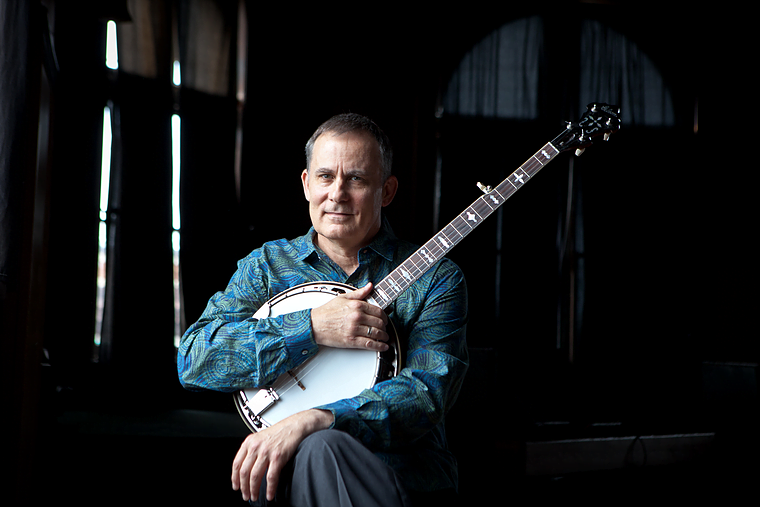
The banjo isn’t typically the first image that comes to mind when one considers classical music. For Virginia banjo player and teacher John Bullard, however, the banjo is just as suited to Mozart as it is to mountain music. Last Fall, Bullard released Classical Banjo: The Perfect Southern Art, his third full-length album of banjo interpretations of classical music. The album is an impressively rendered collection of 25 tracks, parts of which Bullard has worked decades to master. 

“[The project] came out of me having a discussion with Jayme Stone, who was the producer and is also a banjo player and has some great albums out,” Bullard says. “He asked, ‘When was the last album you did?’ And it was a long time ago. He ended up being interested in being the producer, so it ended up that we did it together.”

Stone — known for, among many other things, his 2015 Lomax Project — worked on the album with Bullard from its inception, lending a hand with recording, of course, but also with what Bullard considers to be one of the most difficult parts of his musical endeavors: exploring ways to play complex classical pieces on an instrument viewed by many to have limited capabilities. Stone and Bullard found novel approaches to counter such issues, like experimenting with various conversations of backing instruments to make certain arrangements easier to play.

“You’re trying to make the banjo do some things it doesn’t normally do, like sustain a note for a long time,” he explains. “In bluegrass, you pluck a note and it’s a 16th-note and there are a zillion more following it, and it doesn’t matter what happened with that one note so much. But in the classical stuff, sometimes you have a half-note or a whole note, and you have to figure out what you have to do to make this note last and sound okay. It’s really different.”

The pair recruited a number of skilled musicians as well as an eight-person choir to bring Bullard’s vision to life, part of which was for each of the album’s pieces to remain as loyal to their original counterparts as possible. The album also features a solo performance from Bullard, one that was truly decades in the making.

“The fugue, which is the only solo banjo piece on there, which is from Bach’s ‘Sonata No. 1’ for solo violin, is one of my favorite pieces that I’ve ever heard in my whole life,” he says.”I’ve always loved it. I’ve been working on that for, gosh, around 20 years. I initially transcribed it and figured out what key I thought I could play it in — it was written in G-minor and I do it in C-minor on the banjo. I’d done that and, two or three different times, had gotten to where I could play through it very slowly, but it was really hard and I would just say, ‘I think this is too hard,’ and I would put it down and forget about it for a year or so. Then I would pick it back up. I did that a few times. Then it was weird: When Jayme and I decided to work on this project, I picked it back up and finally I could play it. It just, all of the sudden, seemed to come to me. Maybe it needed to percolate for a few years.”

That Bullard was able to pull off playing such intricate pieces on an instrument that has long been excluded from traditional orchestras may seem like a massive stretch to some, but he doesn’t believe that the banjo is that far removed from the sounds of Baroque and Romantic music. “When I first started doing this, what really struck me is that the harpsichord and the lute, to me, sound a lot like the banjo,” he explains. “They’re in a different context, but they’re plucked instruments. So it seemed like a natural thing for me.” 

He also believes classical music has just as large a place in Southern culture as the banjo does — an idea reflected in the album’s matter-of-fact title with hopes of both deterring cultural gatekeepers and inviting new listeners into the fold. “It’s the perfect art form for Virginia gentlemen,” he says. “You’re playing this genteel music, but you’re playing it on the banjo. The banjo puts a different perspective on the standard repertoire of the classical world and lets people get a different perspective on the music. I think and I hope that it will bring some folks into the music that maybe wouldn’t take the time to listen to classical music, and they might decide they like it.”


Photo courtesy of the artist

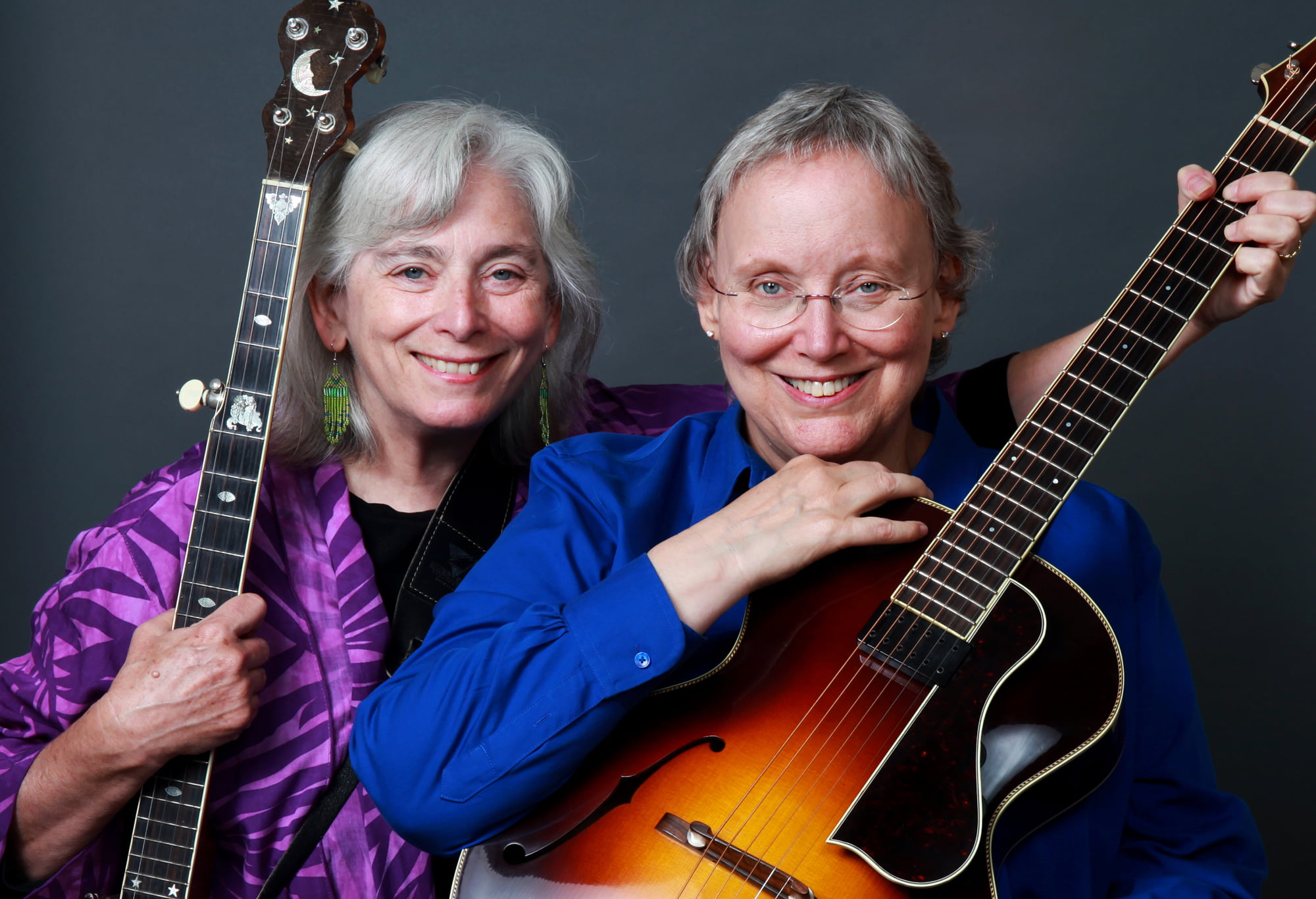
The Producers: Cathy Fink and Marcy Marxer

Cathy Fink and Marcy Marxer have devised a clever game to play when they’re traveling — something to keep their ears sharp, when they’re away from their home studio outside Washington, D.C. “We’ll go into a room,” says Marxer. “Big room or small, it doesn’t matter. We’ll clap our hands and see if we can figure out what reverb setting we would need to copy that sound. It’s geeky all the way.”

The pair have visited a lot of rooms together over the years. For nearly four decades, they’ve been playing and recording and touring together: Fink is one of the best banjo players alive, and Marxer plays nearly everything else. They’ve released 45 albums covering a range of styles and set-ups, mostly folk and old-time, bluegrass and children’s tunes. Their latest, Get Up and Do Right, is their first collection of duets for two voices and two acoustic instruments, featuring a handful of originals and covers of songs penned by Alice Gerrard, Pete Seeger, and Bob Dylan.

Gently political and certainly timely, the album digs into folk’s enormous capacity for dissenting voices combining in beautiful harmony. For Fink and Marxer, making music is a way to get up and do right: an inherently radical act. Their DIY process extends into the studio, where they work as their own producers and, occasionally, their own engineers and mixers. Marxer is the more technical-minded of the two (see below for her favorite piece of equipment), while Fink is the conceptualist — the one who keeps the big picture in perspective. Together and separately, they have produced roughly 150 records, including Sam Gleaves’ 2015 breakout Ain’t We Brothers and Tom Paxton’s new album, Boat in the Water.

What unites this disparate catalog is a warmth of sound and an idea of music as a communal undertaking, a labor and a joy to be shared. “We both do many things and wear many hats,” says Marxer. “Sometimes we produce together and sometimes separately.” Adds Fink: “Even when we have separate projects, we have an open door with each other for what we call continuous consulting. It’s pretty hard for one of us to get involved in something where the other person doesn’t have some influence to make it better.”

How did you move into the role of producer?

Cathy Fink: We’ve both been playing music professionally since the early 1970s and, in the early days, I had the opportunity to work with some really great producers. Two who were very influential on me were David Essig and Ken Whiteley, both from Canada. Ken has produced probably 2,500 albums over the last 40 years. In both cases, I was a musician who was confident in what I wanted to accomplish, but didn’t feel like I had the knowledge to take my dream and get it on tape. By working with lots of producers I really trusted and whose music I enjoyed, I was able to pay attention to how they accomplished things. After a few projects like that, it was time for a transition, so I did an album where I co-produced. Marcy was involved, along with a lot of other people, and I bounced ideas off them. As we continued working together, we really relied on each other to the point where most of these things became co-productions.

Marcy Marxer: I started out very differently. When I was a kid, my dad used to go to the junkyard and collect wires and speakers and thermostats and things like that. He’d come home and give them to me to take apart and look at. When I was in the eighth grade, I built my first tube amp. That really developed the techno-geek side of my brain. Eventually, I got a job with Macmillan/McGraw-Hill producing 120 songs for an educational project. Since then, Cathy and I have been able to join forces, and it just mushroomed. We push each other to get better. We have a bit of a competitive streak, but it works in our favor.

It sounds like together you cover nearly every aspect of the recording process.

CF: You don’t need to be an engineer to be a good producer, but we found it so helpful to get those skills in order to better speak with the engineers we were working with. It really rounded out our abilities, and I’m in a better position to know what I’m looking for, how I might get it, and whether or not we’re getting it. In turn, we try to pass that along to other people. Our Grammys actually say Artist, Engineer, and Producer.

MM: It’s crucial to know every step, but it’s not crucial to do every step. It’s good to have a bigger team, people you trust, people who are fast at certain things, people who are the house painters of their field or the Rembrandts of their field. If we didn’t play and engineer and produce and mix, I don’t think we could efficiently speak with the other team members.

CF: We do lots of projects that we don’t engineer on. The reason we started engineering really had to do with a combination of convenience and health issues a long time ago. We wanted to do these things at home and at our own convenience. When you’re traveling as much as we do, we would sometimes book a date in the studio, and then the day would come and, oh man, we’re just too tired to do that today. So we learned to do our own tracks and our own overdubs at home. It gives us a whole new way of producing our own projects. Time is a big factor, so if we have two weeks to make an album, we’re not going to sit in the studio with all of the crayons and start creating the painting. We’re going to visualize the painting before we go in, and then we’re going to take the right steps to make it happen. When we do it all at home, we have the opportunity to take out all the crayons and try out different colors. We might do a take with different banjos or different harmonies and decide which one works better for a particular track.

Is that how you made Get Up and Do Right?

CF: Most of it was recorded in our home studio. There were two tracks recorded live at AirShow, and there are two tracks recorded at Jim Robeson’s studio. We wanted to do those tracks live, but didn’t want to have to deal with the mechanics of being engineers at the same time. Everything else was done at home, sometimes live, sometimes overdubbed, but always with the feeling of, “This is what it sounds like when we play together.”

MM: The great thing about the studio at home is that all of my instruments are here. When I’m working on other people’s projects, I might be doing some overdubs or filling some holes, and I’ll just fill up the car with instruments and see what I can do to finish it up. If I didn’t bring an instrument with me, then I can’t use it. So it’s much easier having everything in one place.

CF: We don’t have to think ahead to which five guitars we might need. If we’re at home, we can go, “What this song really needs is the electric baritone guitar,” and we can run and get it. But if we’re at someone else’s studio, too bad. We recently produced Tom Paxton’s newest album, and we worked with our engineer Jim Robeson at his studio. Tom did all of his tracks there, and a lot of other people came in, but when it came time to do our own tracks, we decided to do them at home. Another example is the project we did called cELLAbration!, which was a tribute to Ella Jenkins that includes an amazing array of artists, including Sweet Honey in the Rock, Red Grammer, and Riders in the Sky. I’d say about 60 percent of that album was done in a variety of commercial studios and about 40 percent was done at home. It’s a really fun way of filling out the whole puzzle.

Something that strikes me about your new album and Paxton’s new album is how rich and complex the instruments sound.

MM: We mic all the instruments in stereo. We almost never single-mic an acoustic instrument because we want it to sound like we’re listening with both of our ears. Both of those albums are so sparse, and you really want to hear all the detail. If something was going to sound really big, we might be inclined to leave it off. We want you to feel like you’re sitting in a living room with us — a really nice-sounding living room.

CF: We don’t have a giant collection of gear, though. What we’ve found is that we’re very good at using a handful of things, so we stick with a couple of mics that sound fabulous. We know how to deal with them, and sometimes we’ll cart them around, if we go to another studio. What you’re most familiar with is usually what you’re going to sound best with. I just have to give a huge amount of credit to Greg Lukens and Jim Robeson for the incredible tutelage they gave us. There aren’t a lot of female engineers who are well known, and we’ve certainly worked in a lot of studios where it was assumed that we couldn’t possibly know what we were talking about. But Greg and Jim really empowered us to do all of this stuff for ourselves.

MM: Every once in a while, I’ll be working with an engineer that I might not be very familiar with, somebody that I might not have a lot of faith or trust in or just might not know very well. If there’s a man in the room, then all the production questions will be addressed to him instead of me. It seems impossible in this day and age, but it does happen. I’ve stopped working with people like that, people I don’t absolutely trust. I’m not the kind of person who will put my foot down and demand something. Cathy is a little bit better at that, but I just try to avoid those people.

You seem to be at the center of a very large musical community, which reflects in the music itself — not just who’s on the record, but how those people interact.

CF: It is a very large, very close musical community in the D.C. area. One of the advantages of working in a place like this is that, when people think of where the hotbeds of music are in the United States, they may pinpoint New York or Los Angeles or Nashville. But in D.C., there isn’t such a competitive atmosphere. When I moved to town, I was welcomed into the world of session players and there wasn’t really a hierarchy. Musicians are very supportive of each other, and the engineering world, in particular, is not competitive at all. If one person has a problem, everybody’s going to help them out.

The other thing is, we have a pretty active touring schedule both nationally and internationally, so we’ve had a good time making that community even bigger. Twenty-two years ago, we played at the Auckland Folk Festival in New Zealand, where we met a couple of musicians that we’ve remained friends with all these years. One of them is Chris Newman, and the other one is a traditional harp player named Máire Ní Chathasaigh. We’ve played on their records through the magic of the Internet. And we just got back from a UK tour, where we did 10 days with Tom Paxton and then a week in the Orkney Islands in Scotland. Talk about off the beaten track. Our friends Hazel and Jennifer Wrigley have spent 10 or 15 years touring nonstop around the world as a fiddle and guitar duo playing traditional Scottish music. They’re just spectacular. They settled back in their home of Orkney to open up this place called Wrigley and the Reel, which is a music shop, café, venue, and educational facility. We’ve played on their records and, when they come to the States, they stay with us. So the community just gets larger and larger.

MM: We also find that when we meet other producers and engineers, they’re thrilled to discuss equipment and show you their gear. It can get pretty geeky. And if you’re wondering, my favorite preamps are simple and easily accessible. They’re APIs, and we use a full preamp rack mount that would sell online for $2,500 or something like that. They’re absolutely clear, beautiful, pristine sounds.

CF: We do get buried in the geekiness, but we try not to forget that what we’re really doing here is using the medium as a way to share the music that we love. When we produced Get Up and Do Right, we wanted to use all that gear to highlight the music — the feeling of the music and the message of the music. There is always something to discover and that’s what makes it fun.

MM: I’ll tell you two of my favorite recordings. One is Cowboy Calypso by Russ Barenberg. The vinyl sounds absolutely gorgeous. The other, which was done digitally, is John Fogerty’s Blue Moon Swamp. And anything Gary Paczosa produces always sounds beautiful.

There is something very direct about the music on this album, something very refreshing about its optimism during hard times.

CF: We have to stay optimistic. On our tour of the UK, we played to about 4,500 people, and the song “Get Up and Do Right” was a rabble-rouser every single night. It’s a song we loved, when we heard it two years ago and, when we recorded it, no one thought Donald Trump was going to win the election. We just knew that it was a great daily meditation, but we didn’t realize that it could be this ultimate rallying cry. I just finished a down-and-dirty video for the song that’s based on pictures that people sent us from marches all over the world. We went to a march in Kirkwall, in the Orkneys, a very tiny place, and the first night we’re there, there’s a vigil in front of the local church. We were very welcomed. When we got there, Marcy announces, “We’re Americans and we’re with you!” That got a big cheer, and we made a bunch of friends. It feels like our job every day is to get up and do right. Do the best we can to make the Earth a good place to live. Negativity breeds negativity. Action breeds positivity. Rather than get bogged down in the negative stuff, we’re just going to continue to get up and do right.

MM: Cathy and I are old enough to have lived through the civil rights movement, so we’ve done this before and we’ve come out better than we were for it. My parents went to marches, and it was really the music that kept us moving forward. It was the music that brought everyone together and kept us going. This was back when you used to have to dress up in your Sunday clothes and your Sunday shoes for a march. For a little kid, that’s not easy. But music gave us support and energy. Something happens when everybody is singing at the same time. They all take a breath at the same time, and that’s power. It’s real power.

Can you tell me how that sense of social responsibility informs your children’s music, especially the Children of Selma album from 1988?

CF: Children of Selma is a project that I still deeply love. I was brought to that project by Jane Sapp who was, at the time, working with the Highlander Center. That’s the place where Rosa Parks went for a workshop two weeks before she wouldn’t go to the back of the bus. Jane had met a woman named Rose Sanders who had worked with a group of kids after school in Selma. Rose is a civil rights attorney, but her purpose was to give the kids something useful to do after school. She turned out to be quite a prolific and incredible songwriter. I went down there and we went to an old YMCA or community center, where there was an out-of-tune piano, and Rose gathered the kids around to sing a bunch of these songs. I was blown away by the spirit of these songs and by the magic that happened when she engaged the kids who were singing about their real lives. One of the songs that comes back to me every election is “Vote for Me Until I Can.” That project was a big challenge: I had to go to a location where I didn’t know anyone and I didn’t know how to take a group of kids, who had never recorded before, into a studio. But the important part was taking their message to a bigger audience. Even though, commercially, it’s one of the least successful things I’ve done, in my heart, it’s one of the most important projects I’ve ever worked on.


Photo credit: Michael Stewart

Broadband Download: A Ramble through Folk Alliance

Of the three big roots music conferences — World of Bluegrass, AmericanaFest, and Folk Alliance International — Folk Alliance demands the most mental musical bandwidth. More than 1,000 musicians were on hand in Kansas City, Missouri, between February 15 and 19, organizing themselves into more than 3,000 individual showcases, designated either “official” (jury-selected for the hotel meeting and ball rooms) or “private” (hosted by labels or other groups in the rooms and suites of the fifth through the seventh floor between 11 pm and about four in the morning).

Folk Alliance may have the biggest stylistic tent in the field, as well. It’s an explosion of variety-spanning established folk forms from around the world and some pretty heady fusion. The organization has wrestled in years past over musical orthodoxy and come out the other side as perhaps the most diverse and inclusive of the roots music frameworks, even if that comes with some trade-offs in careful curation. Still, there was more great music than one person could possibly hear, so I approached it with curiosity and excitement, as well as an inevitable sense of inadequacy to the task.

I checked one important Folk Alliance artist off my list before leaving for Folk Alliance by catching Austin fiddler/singer Phoebe Hunt and the Gatherers at Nashville’s Basement early in the week. She is back with a refreshed take on the bluegrass/gypsy jazz that distinguished her first band, the Belleville Outfit. Travels in India and study with an Indian violin master have injected a microtonal raga sensibility into her songs, which are arranged with great subtlety for a six-piece band.

Turning to Kansas City, I arrived too late for the Wednesday night awards show, where Bruce Cockburn accepted a People’s Voice Award from Kris Kristofferson and where Michael Kiwanuka, Sarah Jarosz, and Parker Millsap received (in absentia) “of the year” prizes for song, album, and artist, respectively. But Thursday evening, I plunged into FAI’s swift river of music.

Chicago’s wise and funny Susan Werner offered new songs inspired by a trip to Cuba. Nearby, Australian all-female quartet All Our Exes Live In Texas showed resourceful stagecraft, keeping the audience entertained during a PA outage. When the sound returned, they cooed with quirky chord changes and an urbane mix of accordion, mandolin, uke, and acoustic guitar. And Kayln Fay, a Cherokee country rocker from Tulsa, Oklahoma, led a band formed around understated drumming and washy steel guitar. Fay, an endearing singer, offered a lot to think about and closed her set with a brand new “protest song” that was actually more like a plea for better listening and more understanding.

From the Midwest to Coal Country I went, for a set by rising Appalachian star Sam Gleaves. So tall he almost bumped the ceiling in the Brookside Room, he had a boyish look, longish hair, and a sweet disposition. Performing with the support of duo Cathy Fink and Marcy Marxer, he bravely and bluntly sang about being a gay hillbilly from rural Kentucky. Folk hero Tom Paxton was in the audience and could be heard gushing post-performance.

Upstairs in the private showcase halls (the most poster-festooned place I’ve ever been), Music City’s Wild Ponies previewed new music from an upcoming album cut entirely in a rustic Tennessee farmhouse. Married couple Doug and Telisha Williams play guitar and bass, respectively. He’s got country power and she’s got a sort of brassy refinement. Their song “The Tower” about a mighty tree’s long lifespan just floored me. I wrapped the night with beautiful Spanish-language songs of lament and protest by Brooklyn’s Ani Cordero in the Bloodshot Records room.

Somebody took great care with the audio systems for the official showcases, from small to large. And, on Friday night in the main ballroom, Peter Bradley Adams and his tasteful three-piece band sounded like God’s hi-fi. It helps that the artist has a dreamy silk-and-sand voice and a penchant for Celtic folk-rock vibes blended wtih a modern pop feel. He was joined for a song or two by Caitlin Canty who followed his set with a moody folk-pop performance of her own. Her energetic and melodic debut album impressed me in 2015 and, based on this live impression, she ought to be a thing with anyone who ever loved Sheryl Crow or Alison Krauss.

Way up the elevator in the 20th floor club with fabulous views of downtown Kansas City, British rock ‘n’ roll cat Robyn Hitchcock showed off some of the solo acoustic sound he’s been cultivating during his recent years living in Nashville. He’s a finger-picking balladeer who’s been challenging the status quo for a long time, evidenced by his 1989 song “Queen Elvis” with its lyric “coming out’s the hardest part.” He told the crowd after singing that one, “I never dreamed we’d be dealing with the same old homophobic shit, 30 years later.”

At Folk Alliance, one can almost, at any time, seek out and plunge into old-time sounds, and my urge toward same led me to Molsky’s Mountain Drifters, led by fiddling icon and educator Bruce Molsky. He adapted FAI keynote speaker Billy Bragg’s “Between the Wars” to an old-time dirge and excelled on the old mining song “Black Hills.” Rounding out the clockwork trio was brilliant clawhammer banjo picker Allison de Groot and flattop guitar player Stash Wyslouch, about whom there will be more to say later.

That segued right into one of the most refreshing sets I saw all week. Laura Cortese and the Dance Cards of Cambridge, Massachusetts, head-faked me into thinking they would be a swingy retro quartet, when in fact they’re out there on the searching edge of chamber folk and minimalist pulse grass. From the risk of opening with an emotional four-way harmony ballad to the serene beauty of “California Is Calling” (the title track to an upcoming album that’s been featured on the Bluegrass Situation), their close and complex harmonies and imaginative arrangements signified the best of folk right now.

It came as no surprise that John Fullbright was astounding in the big ballroom. “Where my Okies at?” he asked from the stage as part of his very funny banter. His songs peel the skin right off of the truth, which means sometimes revealing sweet fruit underneath and sometimes a painful scraping. “Social Skills” was blistering and self-effacing. “All the Time in the World” is a rambling, witty meditation with a hard country-blues backing. Fullbright’s remarkable harmonica solos would have been difficult for someone who wasn’t playing guitar at the same time, yet he was.

Upstairs, my favorite stumbles of the night led me to a sophisticated jazz/grass fusion set by Nashville’s Frazier Band, featuring a hip rhythm section with electric bass and keys. Leader John Frazier plays the fire out of the mandolin and sings with echoes of John Cowan, the voice of the New Grass Revival. And then I made my way with purpose to see the Lonesome Ace Stringband from Toronto. I became a fan of fiddler/singer John Showman when he led the defunct New Country Rehab. Now he’s focused on this exciting old-time band — one that surges and pulses with that perfect push-pull feeling. They covered “Hills of Mexico” and a surreal Mississippi John Hurt song, but also offered Showman’s original “Pretty Boy Floyd,” an alterative take on Woody Guthrie’s magisterial ballad.

On Saturday night, Showman took his fiddle downstairs and joined Nashville’s Matt Haeck on stage for a set of vibrant songs that included the uncomfortably true line “All the world’s watching America; America’s watching TV.” Later, Haeck lent a Marty Robbins vibe to a duo with the wonderful Tim Easton. Staying on in this room proved smart because William Prince brought his insightful and deeply traditional country songwriting from Winnepeg. He’s absolutely magnetic, with a burnished pewter voice that could stand up to Keith Whitley’s on the radio. Prince is baby-faced and almost uncannily kind and gentle, but his songs — while romantic — are not wimpy. “Little Things” was an insightful song about marriage. “Breathless” was similarly heart-piercing.

Nashville’s incredibly tiny old-time and bluegrass duo Giri and Uma Peters fired up a set featuring fiddles, banjo, and mandolin. The Indian-American siblings, who were inspired to pick up traditional music by the Goat Rodeo Sessions, have garnered a lot of attention for their youth (12 and 9 years old, respectively) and their cross-cultural journey. They’ll have to develop some more rhythmic suppleness and their voices will mature, but there’s a lot to celebrate and enjoy in their music today. File for the future.

He’s no secret in or out of Music City, but Anthony da Costa is an artist who is more than ready to be signed and take the world by storm. Playing textural electric guitar with a tidy bass and drum backing, he dazzled. His voice can float or penetrate. His songs can brush like a feather or hammer with power. He offered “Neighbors,” a favorite of mine. There are not many triple threats like this guy.

I should have found my way to the Colorado Room earlier in the week because that sky-high state has done as much to diversify and advance roots music as anywhere. And sure enough, there were the Railsplitters to validate my theory. I expected old-time, but heard and felt something like Crooked Still meeting Strength in Numbers. The coursing, melodic style banjo of Dusty Rider and the clean singing of Lauren Stovall framed the music, but the super lush harmonies (up to four parts) lifted it higher.

Even with all these bands, the staple of Folk Alliance is still the songwriting troubadour and I caught several excellent such artists in a row. Levi Parham from Tulsa brought his gravel voice and country blues finger-picking to the Oklahoma Room. Nashville’s Mary Bragg hit a tender spot and brought up Becky Warren, a co-writer, for some joyful fun. And Hope Dunbar from little Utica, Nebraska, caught me off guard with some incredible language and truth telling, including the mystical “We Want.” It’s these kinds of surprises in the after-midnight hours, when the endorphins of music ecstasy meet the endorphins of fatigue, that make Folk Alliance special.

Two newgrass offerings rounded out my final night, the first a shocking revelation.

Remember Stash Wyslouch who played old-timey guitar with Bruce Molsky? The Deadly Gentleman alum invited me to see his own Stash! Band and, holy hell, it was a whole brain experience. It’s Frank Zappa meets the Red Hot Chili Peppers at the Berklee College of Music. Stash and fiddler Duncan Wickel deadpanned their way through lightning fast, dissonant melodic figures like some Return to Forever fever dream. Yet there was also a flood of emotion from the leader as he vamped, pounded, jammed, and, somehow, rapped (in Portuguese?) too fast to be believed.

Stunned by this outer-reaches folk music, I sought the familiar for a nightcap in the form of Bay Area band turned Nashville-based Front Country. In the Alaska Room, with a stuffed bear looking on, Melody Walker led the crafty quintet in songs that will be coming out on an album later this year. Want to release this prize-winning band’s foray into what they’re calling roots pop? They’d love to talk to you.

In recent years, Folk Alliance has earned more affectionate buzz among musicians than any other conference. The official showcases sounded great and gave the artists room to stretch out. The private shows, as roulette-like as they can be for the wandering fan, offer the abundance and energetic intimacy that bluegrassers fondly remember from the Louisville days of IBMA. While a few rooms set up PA systems, most of them are as unmediated and acoustic as folk music was 100 years ago. Players play and sing. Listeners listen. There is a kind of unforced but focused attention that ennobles the music and those who make it. The “alliance” in Folk Alliance speaks to a collaborative business development mindset, but it gets just as well at the union between artist and audience. We are one.


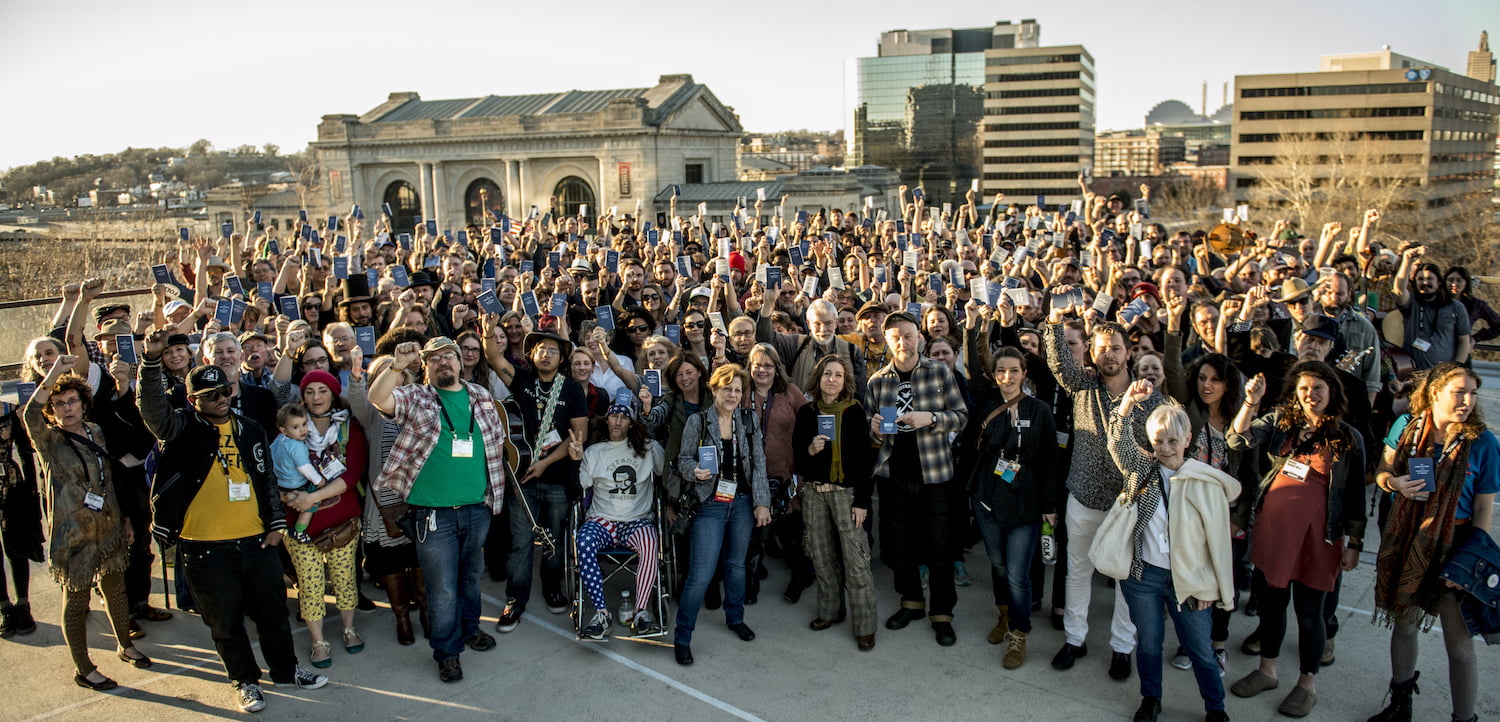
Lede image: On Saturday evening at Folk Alliance, several hundred conferees stood on the roof of the Westin Hotel at sunset where they held up pocket copies of the US Constitution provided by the American Civil Liberties Union and sang “We Shall Overcome.” Photo credit: Jayne Toohey

I Am a Poor Wayfaring Stranger: 20 Versions of an American Classic

While the traditional “Wayfaring Stranger” has been at the foundation of North American music for at least two centuries, its origin is far from exact.

Some historians have traced its genesis to the 1780s, others, the early 1800s. Depending on who you’re talking to the song may be a reworked Black spiritual, a lifted native hymn, or even a creation of nomadic Portuguese settlers from the southern Appalachian region.

The song, which features its singing protagonist contemplating better times with their family in the afterlife, first gained popularity at Appalachian revivalist sermons before slowly spreading westward with the pioneers. Though “Wayfaring Stranger” has remained a gospel constant ever since, what has probably done more to solidify its place in the American musical tapestry is its constant rediscovery and renewal in the near-secular and popular musical worlds.

In the 1940s, renowned actor and singer Burl Ives made “Wayfaring Stranger” one of his signature songs. By the hippie era late-1960s it was Joan Baez who introduced the free love set to the song. Next, Emmylou Harris turned it into a minor hit in 1980 and then The Man In Black himself, Johnny Cash, reclaimed it in 2000 during that magical late-career renaissance he had. In the song’s latest resurgence, British pop star Ed Sheeran has turned a near a cappella-and-vocal loops version of “Wayfaring Stranger” into a much-copied YouTube phenomenon.

With its evocative lyrics and magnetic melody it’s hard to do “Wayfaring Stranger” wrong. After all, Sunday school teachers and folk festival third-stagers have been churning out entirely competent versions of the song for decades. That said, the best versions of “Wayfaring Stranger” can be so much more. When a musician captures that gravitas and world weary challenge just right it’s like a lightning bolt right to the soul.

We’ve collected 20 soul-stirring performances of “Wayfaring Stranger” below.

16 Horsepower
16 Horsepower/Wovenhand singer David Eugene Edwards has made “Wayfaring Stranger” one of his signature songs, with a version of the track appearing on the 16 Horsepower album Secret South as well as the 2003 Jim White documentary-adventure Searching For The Wrong-Eyed Jesus.

Neko Case
The fire-haired singer recorded a particularly stirring version of “Wayfaring Stranger” for her 2004 album The Tigers Have Spoken.

Bill Monroe
Bluegrass pioneer Bill Monroe performed this version of “Wayfaring Stranger” on the early-1990s TNN program American Music Shop.

Dusty Springfield
British pop star Dusty Springfield’s elegant, melancholy take on the song anchored an episode of her 1966 television show.

Johnny Cash
This song, which appears on Cash’s 2000 album American III: Solitary Man, perfectly captures the mortality that infused much of the Man In Black’s latter period recordings.

Emmylou Harris
Seen here performing the song on Pop Goes The Country in 1980, Harris recorded the song for her album Roses in the Snow. Her version would hit #1 on the Billboard Hot Country Singles chart and #1 on the RPM Country Tracks chart in Canada.

Jack White
White Stripes/Raconteurs band member and Loretta Lynn appreciator Jack White recorded a version of “Wayfaring Stranger” for the Cold Mountain soundtrack. White also had a role in the 2003 film which featured Jude Law, Nicole Kidman and Renée Zellweger.

Tift Merritt
Here’s former Grammy Award nominee Tift Merritt performing “Wayfaring Stranger” in a library in Ringwood, New Jersey. Just because.

Ed Sheeran
The British pop singer’s version of the song uses loops of his own voice as musical accompaniment. The YouTube video of his unique performance has over 12 million views so far and numerous imitators.

Joan Baez
Baez recorded “Wayfaring Stranger” for 1969’s David’s Album, a record of mostly traditionals. It was created by Baez for her then-husband David Harris who was about to be sent to jail for resisting the draft.

The Pine Hill Haints
As this 2007 live version by The Pine Hill Haints attests, adding some rock ‘n’ roll to “Wayfaring Stranger” can yield impressive results. See also defunct gospel-punk band The Schomberg Fair’s version.

The Broken Circle Breakdown Bluegrass Band
Taken from the must-see-for-any-bluegrass-fan Belgian film The Broken Circle Breakdown, this version perfectly bolsters the movie’s tragic narrative.

Sam Bush, Bobby Hicks, Allison Brown
This all-star trio of bluegrass-newgrass players got together to perform a rather epic eight-minute instrumental version of “Wayfaring Stranger” at Harvard University’s Barton Hall in 2010.

Throwing Muses’ Kristin Hersh
Kristin Hersh, from first wave alternative rockers Throwing Muses, performs a rather haunting version of the song.

Tim Buckley
This version by late troubadour Tim Buckley was recorded in 1968 but only came to light in 1999 with the release of his Works In Progress compilation.

Eva Cassidy
Knowing the tragic story of American singer Eva Cassidy’s short life adds a sad edge to this mellifluous rendition from the Eva By Heart album which was released after her death in 1996.

Glen Campbell
The Glen Campbell Goodtime Hour‘s titular country star used his early-1970s variety program to showcase this brisk version of “Wayfaring Stranger.”

Alison Krauss & Union Station
Bluegrass fiddler and Robert Plant collaborator Alison Krauss performed a standard-bearing version of “Wayfaring Stranger” along with Union Station at the Philadelphia Folk Festival in 1987.

Tennessee Ernie Ford
Complete with dark mood lighting, this 1961 performance on The Ford Show perfectly showcased Tennessee Ernie Ford’s booming bass-baritone.

Natalie Merchant
Former 10,000 Maniacs’ vocalist Natalie Merchant unfurled a hypnotic version of “Wayfaring Stranger” on her 2003 traditionals album The House Carpenter’s Daughter.


What versions did we miss? Tell us your favorites in the comments below.

12 Boss Bluegrass Covers of Your Favorite Pop Songs (Part Two)

Some say the true measure of a song’s merit is whether it sounds good with just vocals and acoustic guitar. But that’s poppycock; the real way to test a tune’s mettle is to break out the banjos and mandolins and see whether it stands up to the bluegrass treatment. In the list that follows a variety of old-timey pickers, pluckers, and strummers tackle modern-day pop, rock, and rap favorites, using bluegrass like one of those Instagram filters that make digital photos look like dusty old Polaroids. In doing so, they remind us that good music is good music, and that certain songs transcend time and place and instrumentation. The history of pop music is just one big crazy train, and when Nicki Minaj passes Bill Monroe en route to the party in Ozzy’s car, she gives him a funny little wink that he totally gets. Enoy the best bluegrass songs now.

Watch 12 Boss Bluegrass Covers:

Banjo Billybo, “Someone Like You”

One takeaway from Adele’s “Someone Like You”: Love makes you act like a goddamn fool. In the 2011 smash, the heartbroken British songstress sings of stopping by an ex’s house in hopes of rekindling the romance, even though the bloke’s happily married. Now, this Banjo Billybo character doesn’t much care for the song, as he explains at the beginning of this YouTube clip, but that doesn’t stop him from hee-hawing his way through a chuckle-worthy version. If Billybo’s rendition lacks love, there’s plenty of goddamn foolishness. This is one of the best bluegrass songs.

The Gravel Spreaders, “Crazy Train”

These Bay Area dudes are all about metal covers, and their take on Ozzy Osbourne’s signature song is silly yet also kind of sincere. Dig how Doc Buck Knife lovingly adapts that classic Randy Rhodes guitar intro for mandolin, and how doghouse bassist Bud Hole delivers the lyrics in a plainspoken everyman style that underscores Ozzy’s message of peace, love, and understanding. Now all the Spreaders need are some polka-dot flying-V banjos.

Rob Scallon, “Raining Blood”

Bluegrass and thrash metal share a fundamental need for speed, so banjoist Rob Scallon’s rendition of this Slayer gem isn’t such a stretch. It is a hoot, though — especially when his buddy in the straw hat shows up with a pair of spoons and adds some crazy clatter to the satanic jamboree. Forget the Charlie Daniels Band; when the devil goes down to Georgia, he goes partying with guys like Rob.

Robin Adele Anderson, “Anaconda”

Mad props to Ms. Anderson and her band for transforming a salacious 2014 hit (Nicki Minaj’s “Anaconda”) based on a sample from a similarly saucy 1992 hip-hop jam (Sir Mix-a-Lot’s “Baby Got Back”) into a classy bluegrass/ragtime number suitable for grandmas and small children and everyone in between. “Oh my gosh,” sings Anderson at 2:10, taking things to the hokey-jokey extreme, “Look at that banjo!”

The Blueshine Brothers, “All About That Bass”

Technically speaking, these guys are all about that treble, as their version of Meghan Trainor’s 2014 pop triumph is decidedly lacking in low end. That’s probably part of the joke — not that three burly bluegrass dudes singing a quasi-feminist ode to full female posteriors really need extra comedic ammunition.

Lowhills, “Careless Whisper”

Even without that silky saxophone so integral to the original, the Lowhills do right by George Michael’s chart-topping 1984 hit about doing a lover wrong. This is Americana of the jazziest, swankiest variety — think Sade transplanted south of the Mason-Dixon. Were these Charleston cats to try “Wake Me Up Before You Go-Go,” they’d probably make that seem suave, too.

Love Canon, “Touch of Grey”

As a self-described “super ‘80s bluegrass hits machine,” Love Canon probably doesn’t face much competition in its hometown of Charlottesville — or anywhere else on the planet for that matter. But even if there were other outfits copping the band’s gimmick, it’s doubtful they’d do this, the Grateful Dead’s one and only Top 10 pop hit, with a slicker, defter touch. This is bluegrass meets yacht rock — just look at the banjoist’s captain’s hat.

Red, White & Bluegrass, “Friday”

Can genuine musicianship and quality singing redeem a song that’s beloved by millions of YouTube viewers purely because it’s terrible? The fellas in Red, White, and Bluegrass attempt to answer that question with their cover of Rebecca Black’s 2011 viral sensation “Friday.” As an ironic YouTube parody of an ironic YouTube hit, the trio’s version raises enough questions about musical authenticity and Internet culture to fuel about a dozen think-pieces. As something to giggle along with on Friday at 4:30PM when the boss is down the hall and you don’t feel like doing a lick more work, it’s about a dozen times more valuable.

O Bardo e o Banjo, “Ace of Spades”

If Yanni, John Tesh, and Celine Dion were to perform Motorhead’s “Ace of Spades” in a public library while being shushed by old ladies reading Agatha Christie novels, it would still rule. Such is the power of the hard-rocking, harder-living British trio’s 1980 speed-metal anthem. In the hands of Brazil’s most badass bluegrass outfit, “Spades” is a rollicking hellbilly freakout that’s half Lemmy, half Opry, all the way fantastic.

Paul Harris and the Cleverlys, “Gangnam Style”

There could’ve been more dancing, as the banjo player does a decent job of copping Psy’s moves from the original “Gangnam Style” video near the end, but even so, this self-styled “GrassHipPop” combo from Stone County, Arkansas, deserves lots of credit. To work out the arrangement, Harris and the boys probably had to watch Psy’s 2012 viral video at least three or four times in a row — with the sound on. It’s a lot of work for a joke with limited shelf life.

Mustered Courage, “September”

The fact that September in Melbourne means spring, not autumn, hasn’t affected this Aussie band’s understanding of Earth, Wind & Fire’s “September,” a wedding-reception staple regardless of the season. The boys move briskly and joyously through the tune, and by the look of the disco lights swirling all around them, they’re rocking a party where their efforts — though perhaps not their headbands and polyester shirts — are much appreciated.

Cornmeal, “Dear Prudence”

Fun fact: John Lennon’s first instrument was a banjo, not a guitar. That means that had things turned out differently for the Beatles, the original “Dear Prudence” might have sounded something like Cornmeal’s take. Then, George or Paul would’ve needed fiddle skills like the dude in this clip, who’d be a natural for a DMB cover band.