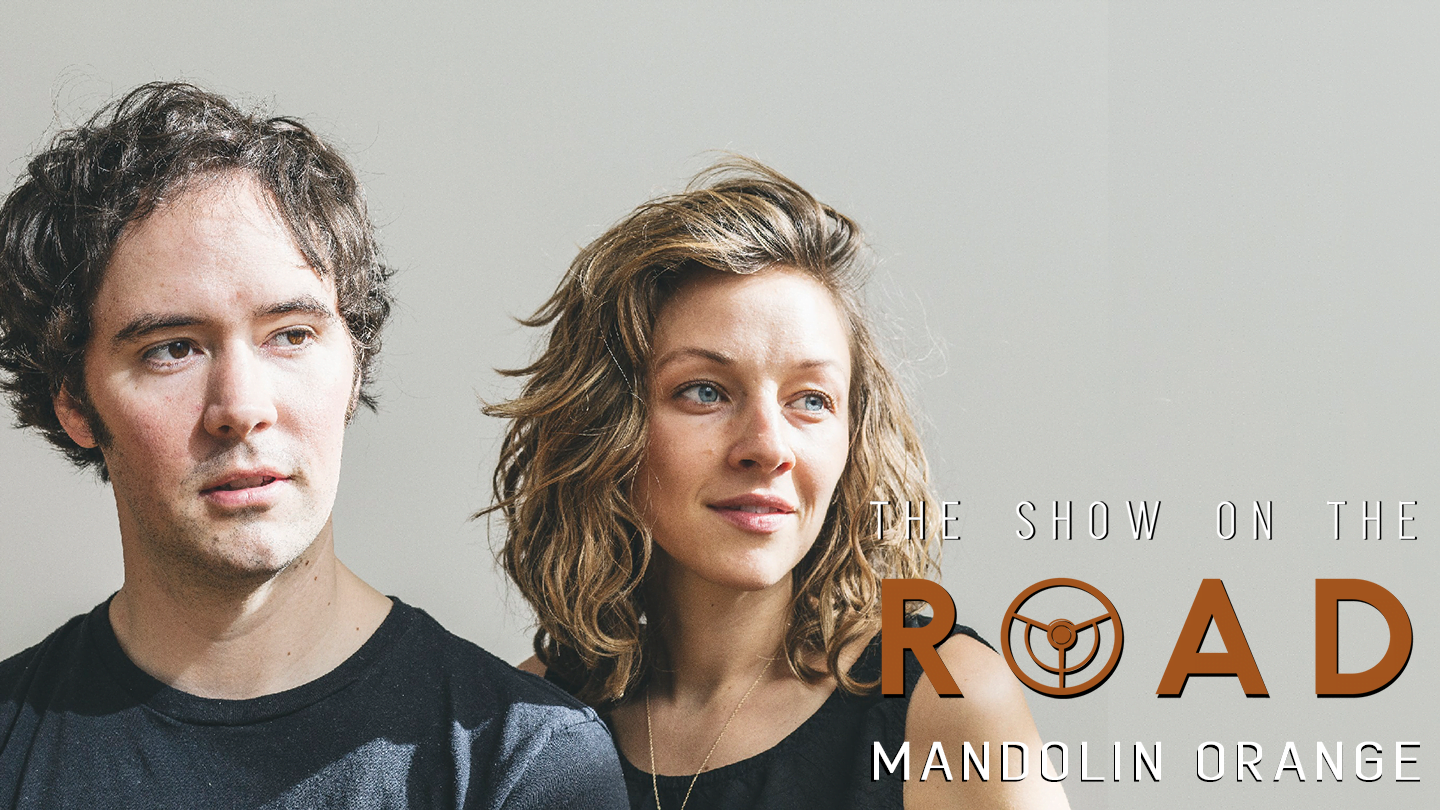
The Show On The Road – Mandolin Orange

For nearly ten years, Mandolin Orange, the North Carolina folk duo comprising of Andrew Marlin and Emily Frantz, have made their quietly powerful, deeply-entwined harmonies sing out from stages around the world, Red Rocks to Newport Folk Fest.

LISTEN: APPLE PODCASTS • STITCHER • MP3

Host Z. Lupetin talks with Emily and Andrew about how discussing Andrew’s southern family history and politics can be like fighting wildfires around the dinner table — and how Emily’s morning running routine has made her more in tune with each new city she arrives in on tour. Make sure you stick around to end of the show where Andrew and Emily play an exclusive performance of “That Wrecking Ball”.

Song – “That Wrecking Ball”

LISTEN: Jeff Cramer, “Big Man’s World”

Artist: Jeff Cramer
Hometown: Denver, Colorado
Song: “Big Man’s World”
Album: Northern 45
Release Date: January 25, 2019

In Their Words: “This song’s a bit of a deep cut for me. About a decade ago, just after graduating from college, I was working full-time at a ceramics factory in downtown Worcester, Massachusetts, and part-time at a wine bar. I had a tendency to do about as much wine drinking as serving in the role, which didn’t work out so well for the owner. One day, after having some sort of blow up in a relationship and likely over-serving myself as the bartender–immediately leading to a mutual agreement with the owner this wasn’t the right fit–I found myself alone in my room in Main South Worcester and wrote this song. Coming out of college with a super-practical philosophy degree, working two jobs, and overdrawing my bank account every week, it was easy to feel like a boy in a big man’s world. But even today, with a job, and at least a good long while without an overdraw, it’s just as easy to feel the same way–especially since the self-appointed ‘big man’ started running the show in DC.” — Jeff Cramer


Photo credit: Bridgette Aikens

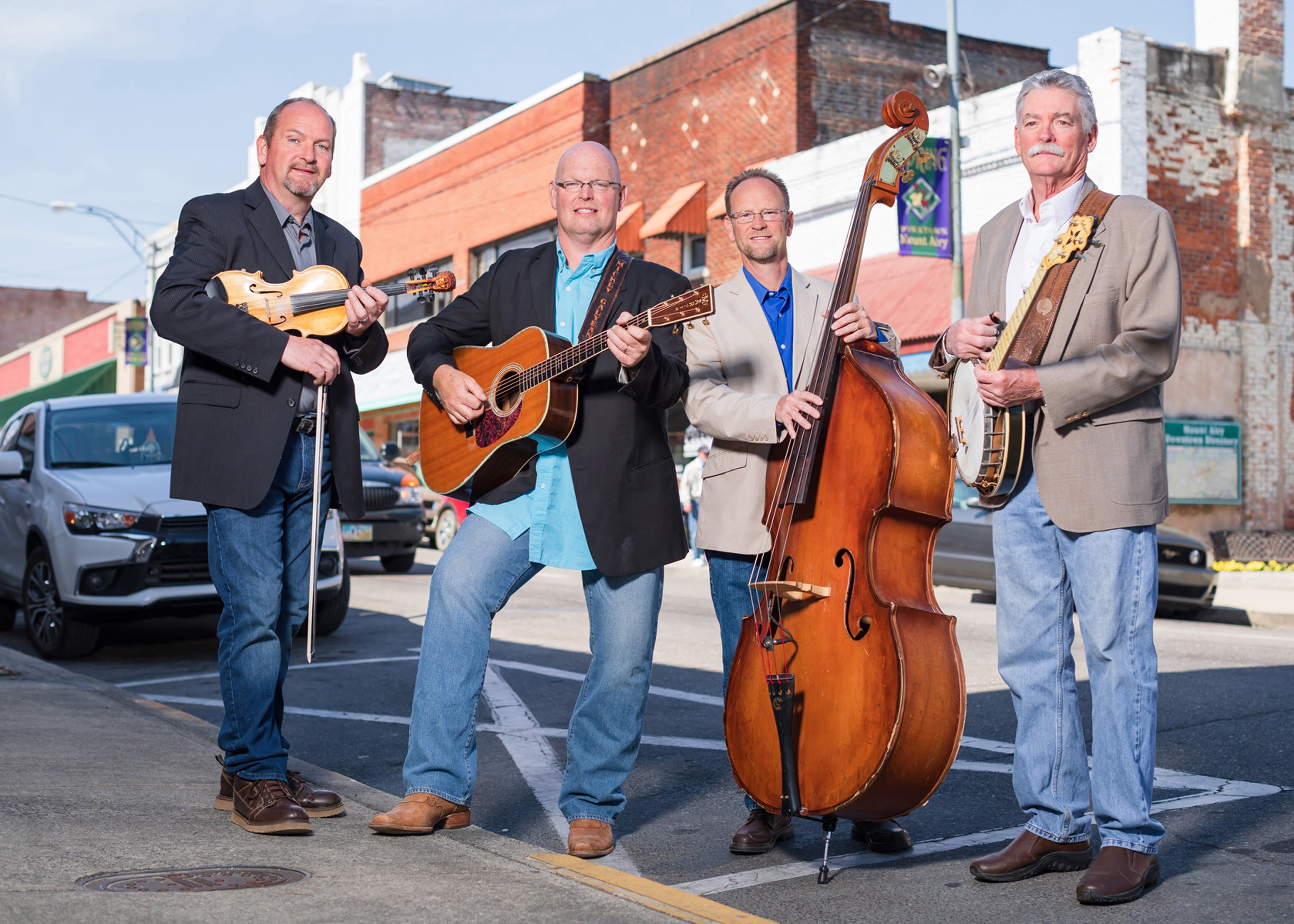
LISTEN: Mickey Galyean & Cullen’s Bridge, “Now I’m Losing You”

Artist name: Mickey Galyean & Cullen’s Bridge
Hometown: Lowgap, North Carolina
Song: “Now I’m Losing You”
Album: Songs from the Blue Ridge
Release Date: November 16, 2018
Label: Rebel Records

In Their Words: “I started writing this song one night while sitting in a snowstorm in my truck. I was thinking about missing my beautiful wife. Then it took on a fictional turn of a ‘lonely wife leaving’ type song. My father, the late Cullen Galyean, used to tell me stories of writing his songs this way. I was listening to a lot of Junior Sisk at the time and kinda kept his groove in the song. Or at least tried to. Junior is a great friend and one of my heroes.” — Mickey Galyean


Photo credit: Richard Boyd

WATCH: Bob Bradshaw, “Every Little Thing”

Artist: Bob Bradshaw
Hometown: Boston, Massachusetts
Song: “Every Little Thing”

In Their Words: “‘Every Little Thing’ is a song about the small things that go wrong in a relationship, that can seem like the end of the world at the time. It’s a plea for keeping things in perspective. In the video, things haven’t worked out so well for the singer and, as he haunts the apartment where a relationship has ended, the next couple are being shown around by a realtor. Will they too come undone by ‘every little thing’?” — Bob Bradshaw


Photo credit: Liz Linder

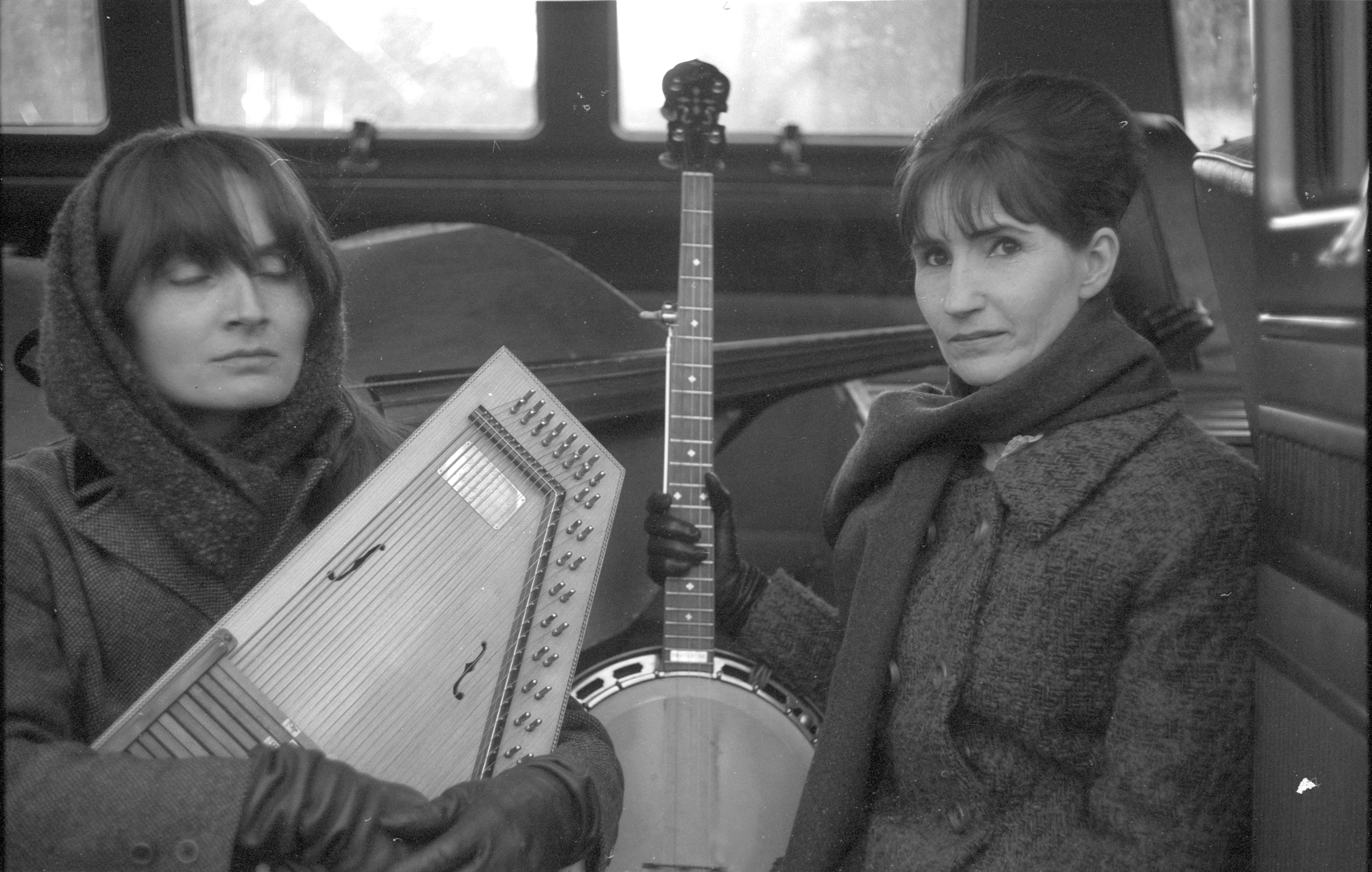
Alice Gerrard: Unearthed Tapes and Unintentional Activists

A cursory scan of the track listing for the new Free Dirt Records release, Hazel Dickens & Alice Gerrard Sing Me Back Home: The DC Tapes, 1965-1969, doesn’t reveal any sort of agenda or political bent, though that might be expected. The duo has long been celebrated for their unabashed approach to not only being women in a male-dominated genre in a male-dominated world, but also for writing and recording protest songs and feminist old time anthems, performing at political and activist events, and touring the South with integrated show bills. Hazel and Alice were so impeccably equipped to lift up these working class and feminist issues, because, at their core, they were always simply expressing their own lives, their own truths, and their own stories. No overt, obvious rallying cry of a song would be necessary. (Though they do have many, many of those sorts of songs in their catalogs.)

The undeniable legacy of protest and activism and lifting up the forgotten among us, continued and propagated by Alice Gerrard still today, is a striking reminder of the limitless value of allowing personal voices, true self-expression, and individual advocacy to shine clearly and crisply through art — especially roots and vernacular musics — without editing, or shame, or fear.

We began our conversation travelling back to the ’60s, examining this set of songs, how they came to be, and how the organic activism of Hazel & Alice blossomed of its own accord through their music all along, whether they knew it or not. 

I wonder, what goes through your mind when you listen to this album? What is it like to go back and revisit those points in history when you were working up those songs, figuring out your voices, and what you wanted to accomplish musically — and how you wanted to position yourselves, musically?

You know, I had totally forgotten that I even had those tapes, I just came across them. I was giving a bunch of stuff, a bunch of tapes and stuff like that, to the folks at UNC (University of North Carolina), so in the back of my closet was this box, I pull it out, and there were these reel-to-reel tapes. Some of them said, “A&H Practice.” So, I listened, and the first thing I thought was, “Well oh my god, some of this is really nice!” Then I realized that it was a lot of stuff that we had never recorded.

 We had just agreed to go on this tour that Anne Romaine had put together, this Southern tour. She was from Gastonia, North Carolina, living in Atlanta at the time. She was very into the civil rights movement and was friends with Bernice Reagon, who was also in Atlanta. Bernice was an African American woman who was the founder of Sweet Honey in the Rock. Anne wanted to start this tour, the idea being that if a tour of traditional music went around the South, it would be kind of a new thing. And it could be political in the sense that it could be traditional musicians, it could be integrated, black and white, and it could go around and speak to the struggles of working people. At that time, a lot of these musicians, like Dock Boggs and Lily May Ledford, they were being “discovered” and taken up north — to New York, and Newport Folk Festival, Philly Folk Festival, stuff like that. They were definitely sort of underappreciated in their home regions in the South. The idea was to just stay in the South, with this tour. It was always going to be a few white and a few black musicians.

She had asked Hazel and me to be on it, but she couldn’t afford [for us] to have a band, so we were trying to figure out stuff that we could do, just the two of us. I think that’s why we were kind of messing around with me doing some breaks, and Hazel playing guitar, which she didn’t usually do. What it sort of brought back — she had moved from Baltimore to Washington and I was living in Washington. My husband had been killed in this automobile accident, so I was living in this house with my four kids and she moved in for a while, before she got an apartment. It was those years [that we made the tapes], in D.C., when I was living there. We were just practicing stuff, like, “Let’s try this, see if maybe I can play an autoharp break” or, “See if I can play the banjo.” I’d work up these little guitar breaks for some things, and it just brought all that back to me when I listened to it. Some of that stuff seems pretty good! Although, it was definitely field recording quality. [Laughs] The kids would come in, doors would slam, stuff like that.

People think of the Hazel & Alice canon of material as having that through line of activism, Southern activism, and protest. Going down the list of songs on this record, one wouldn’t necessarily feel that any one of them would jump out at you as fitting those categories. But yet, you were working up all of these songs for a tour of the South, as an act of protest and activism. This is something so important to your and Hazel’s legacy — at the time, and maybe looking back now, how did that fit into how you were making music and why you were making music? How intentionally were you making that your mission statement?

I think when we started out, it was not intentional. We were kinda clueless. I’ll take the risk of speaking for Hazel. [Chuckles] I for sure was pretty clueless and I think, to some extent, she was too. We were surprised when we’d go do a concert somewhere and there’d be a whole lot of women in the audience. You know, “What’s going on?!” I remember being at some motel, we were around the swimming pool and I had my daughter with me, and the promoter of the event there came up saying, “I just came from the women’s liberation movement! It was really great!” And I said, “What’s women’s liberation?” [Laughs] Really! I think we were kind of surprised when there was attention coming to us and we would see lots and lots of women at the concerts we’d do. The first time we did this one festival in Canada we did a workshop and I sang the “Custom Made Woman Blues” for the first time and got a standing ovation and they made me do it again!

We were a little bit clueless. I think these things were happening because we had our own feelings about things and we started to express that. I don’t think we were aware of the effect that it was having. The other thing that happened when we started going on these tours, because they were so political in nature, we were tuned into what was going on. We’d do a tour of the Mountain South, then a tour of the Deep South, and sometimes we were playing in communities for various events like an anti-strip mining thing or this biscuit place in Big Stone Gap, Virginia, that was started by some nuns, so we were sort of tuned in. For me, for sure — I read Night Comes to the Cumberlands — it was a huge learning experience. I had never been in those types of situations before.

Hazel, of course, grew up with it. So I think what happened with her, being on those tours, it gave her permission to speak. It encouraged her giving voice to feelings that she already had. That’s why she really started writing a lot of songs. For me, it just introduced me to and raised my consciousness about a lot of things. Those tours got us started.

There’s a beauty in that it started so organically for you, because I think the most effective and visceral and immediate way to translate these messages of politics or activism through music is when the message is as natural and intrinsic in a human being as possible. Clearly you and Hazel were just being yourselves, expressing yourselves, through your music — that in itself was political and people responded to it. I think that’s the best way to effect change: to be ourselves, true and pure, unadulterated.

That was the whole point of those tours. It wasn’t to stand up and preach to people, but if Roscoe Holcomb gets up there and sings a song — by the way, those were the people going on these tours. Roscoe Holcomb, Dock Boggs, Bessie Jones, people who had lived these lives and had been affected by whatever had been going on, politically. Strip mining ruined Roscoe’s well, you know, so he could just stand up there and live his life. It was amazing. It was a great thing. Someone should write a book on that tour and organization!

Do you ever think back and wish that you could’ve just had the musical careers and experiences of your male contemporaries without all of the rest tacked on? Without the constant clarification and added phrases like: “Important women in bluegrass.” Do you ever wish you could do it all again and do it just for the music?

Well, you are what you are. I think you have to accept that. I don’t think I’d be who I am without that. So it doesn’t really bother me. What bothers me is when people call me “spry.” Like, “She’s 84, she’s really spry.” [Laughs]

[Laughs] So the ageism is more bothersome than anything else.

You know what, in a lot of ways, it really is.

Hazel, I know that she had many, many, really bad experiences before she and I teamed up. It was the usual kind of sexist crap. She’d put up with it most of the time, but she was very aware of it. But when we started singing together, I had become a part of this whole scene around Washington D.C. — and she became a part of it, too — which was a mix of young, sort of college-educated or at least high school-educated, middle-class folks. A bunch of young people who weren’t like [sexist]. I felt when we started that we were surrounded by a very supportive community. I never felt like they didn’t want us to do anything because we were women. They were really encouraging. I didn’t experience those things. I felt like we were lucky to have guys around us that were supportive.

I do remember, before Hazel and I started singing together, I would go with my husband– boyfriend? Whatever he was at that moment. We’d go to Baltimore to listen to Hazel and whomever she was playing with, she had a band, and we’d go listen to them practice. I did feel at those times sort of compelled to join the other women in the kitchen. [Laughs] Even though I really wanted to be in the other room!

When did you start feeling that change? When you met up with those folks in D.C.?

Yeah… more so. There weren’t a lot of women in what we were doing. I think part of what was going on was these guys, who’d moved up from the South, living in these hardscrabble places in the city, there was a lot of hard work involved, there was a lot of drinking, women had a perfect right to feel shit upon a lot of the time. Their husbands ran around on them, they’d get drunk. So it felt sometimes that we were treading a fine line in trying to be part of the music in that situation and context, and yet, not make the women dislike you because of it. It was a weird little thing going on there. But that didn’t happen in the D.C. scene.

Let’s talk about the present for second — what do we do in the face of the “shut up and sing” mentality that’s so rampant right now? This idea that if somebody on stage has political views that are different than somebody in the audience, that’s a problem. Roots music has always been built upon speaking truth and speaking to the most basic, concrete, ground-level needs of humanity. How do we translate the value of that in a modern context?

That seems to be the environment these times. I feel like I don’t care — I do pay attention to where I am. At the time, I do care about the context of where I am, usually, but I feel like you need to say what you have to say. It’s easier when it’s in a friendly environment, like Shout & Shine [the showcase]. That was a no-brainer. Everybody there was right behind me, one hundred percent. But if I went to… oh, I dunno…

Fill-in-the-blank.

Yeah.

That’s something we want to be cognizant of anyways, because reaching people that are further away from our frame of reference and our point of view requires us to be aware of context and to allow nuance into the situation.

Exactly.

Now there’s this local band, the New Deal String Band, college kids from around here back in the ’70s and ’80s. They were one of the first Southern hippie bands before the other hippie Southern band — I’m blanking on the name. [Laughs] They would go to the Galax Fiddlers’ Convention back in the day. They had long hair, but they were really good players and Leroy [Savage] was a really great singer. It was a little bit of a toxic environment. People didn’t like long-haired hippies and were likely to start a fight with you as not. Leroy used to say, “We’d get in there, with our long hair, but if we could get our instruments out and start playing before a fight broke out, we’d be okay.” [Laughs] Because of their music! It really does transcend a lot of barriers. You can start with the music and then maybe you can make some inroads.

…Getting to know people — it doesn’t hurt to make friends first and then play the music or take a position or whatever. I think sometimes that goes a longer way toward more permanent changes than busting in–

And raising hell.

Yeah. [Laughs] They have something to say, too. I might not agree with everything, but… [sighs] I don’t know, you know… it’s complicated!!


Photo credit: Betsy Siggins
WATCH: Jonah Tolchin, “The Grateful Song (Thanksgiving)”

Artist: Jonah Tolchin
Hometown: Princeton, New Jersey
Song: “The Grateful Song (Thanksgiving)”
Label: Yep Roc Records

In Their Words: “I’ve found that there is a lack of opportunity to express gratitude in our culture. It’s my impression from observation that people may sometimes think that expressing gratitude outwardly is cliché or too ‘New Age-y.’ We live in an age of cynicism, and for understandable reasons. However, without the capacity to be truly grateful for the simple blessings of our life such as clean water, food to eat, friends, family, a roof over our head, love, the beauty of nature, etc., it is my belief that these things (and life in general) can be easily taken for granted.

“It’s a practice to maintain an energy of gratitude. The intention of the ‘sing-along’ style chorus of this song was for people at shows to be given that opportunity to generate the spirit of gratitude within themselves and as a collective. It may sound funny, but I’m grateful for the opportunity to be grateful. This song is a tool for myself to tap into that every time I sing it.” — Jonah Tolchin

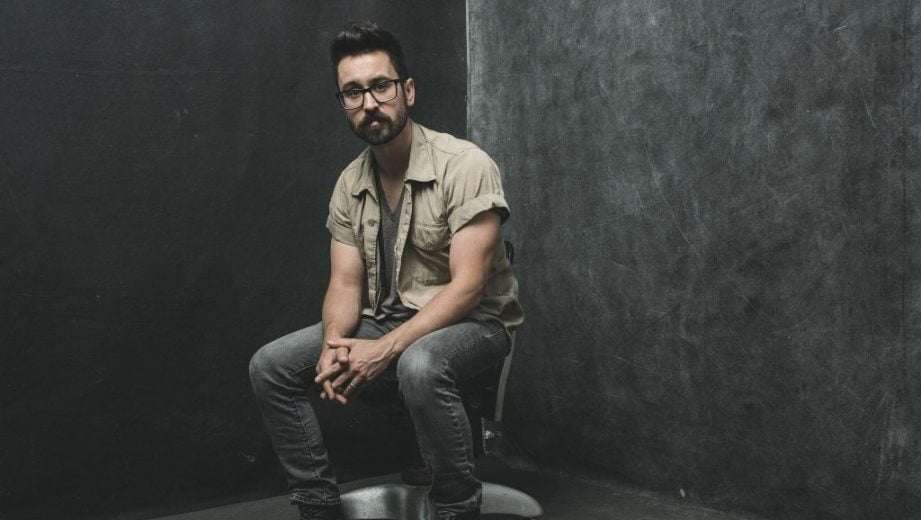
WATCH: Sean McConnell, “Here We Go”

Artist: Sean McConnell
Hometown: Nashville, Tennessee
Song: “Here We Go” (stream the studio version)
Album: Secondhand Smoke
Release Date: February 8, 2019
Label: Big Picnic Records

In Their Words: “I am very taken with, and have spent my life listening for, that voice that speaks to you in the silence. The one that calls you on adventures, that steers you towards your truth, and that reminds you, or at least reminds me, that this universe is so much more than what we can experience with our five senses. I am a firm believer in signs and following them. This is a song about that kind of listening and watching. It was a real thrill to write it with my friend, the supremely talented Ian Fitchuk.

“This live video was made at Pentavarit studios where the ‘Secondhand Smoke’ record was mixed by my friend and sonic wizard Bobby Holland, who also recorded and mixed this live version. Performing alongside me is the amazing Ben Alleman who will be joining me on tour. I love this slowed-down and vibed-out take of this song. I hope you enjoy.”— Sean McConnell


Photo credit: Joshua Black Wilkins

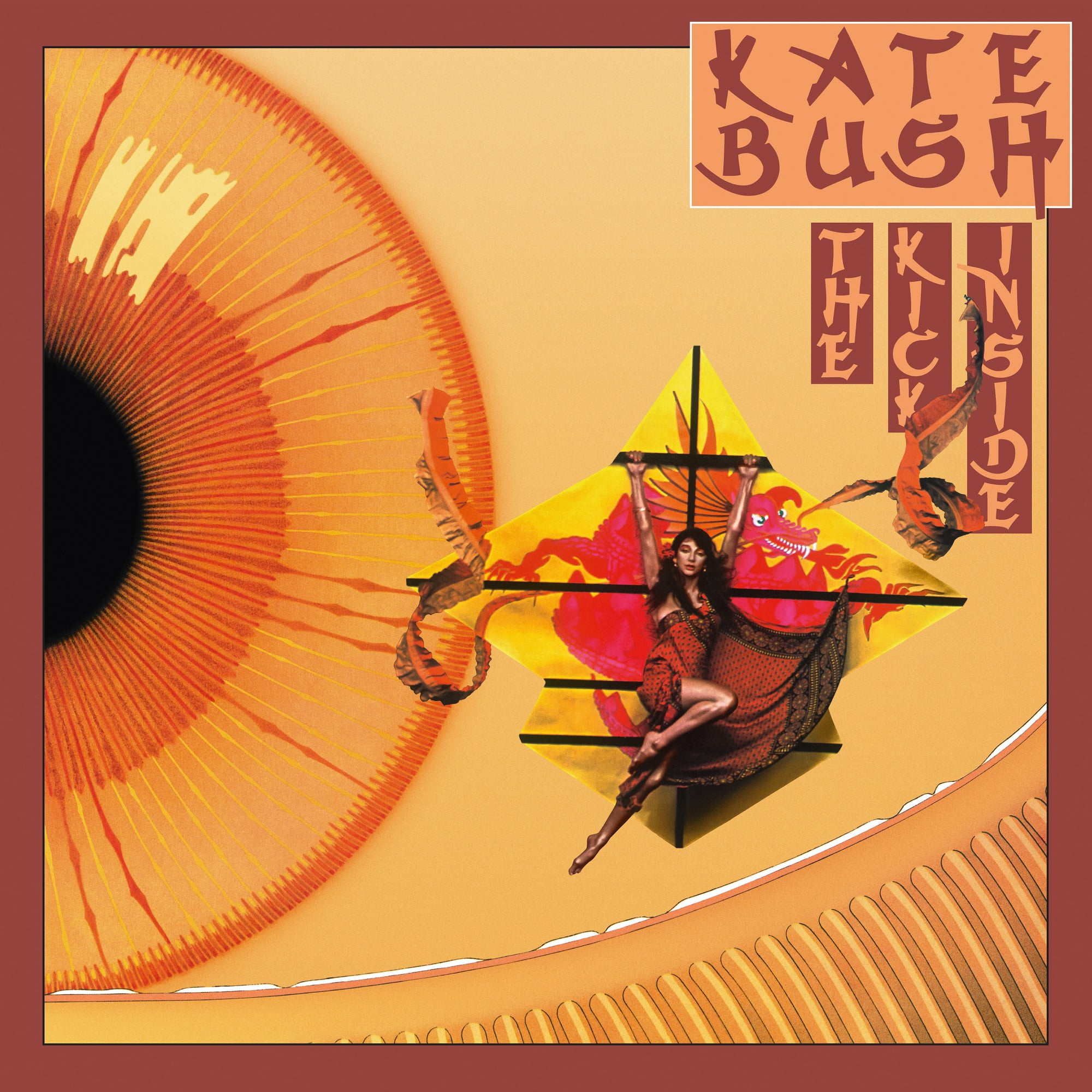
Canon Fodder: Kate Bush, ‘The Kick Inside’

Poor Lizzie Wan meets a dark end every time someone sings her song. In the ancient Scottish tune that takes her name as its title, the young lady finds herself pregnant out of wedlock and confronts the father, who happens to be her own brother Geordy. His solution to their dire predicament is to withdraw his sword, decapitate her, and dismember her body. Afterward, he tries to convince their mother that the blood is from his beloved greyhound, but the truth proves inconcealable. At song’s end he is planning to flee: “Oh, I will dress myself in a new suit of blue,” goes one version of the lyrics, “and sail into some far country.” With its heir absent, the family will flounder in disrepute.

Even the grisliest murder ballads, such as “Knoxville Girl” and “Banks of the Ohio,” carry similar subtext: Imagining the murdered woman is pregnant with the killer’s child provides some motivation for what often sounds like a senseless killing. In “Lizzie Wan,” however, the pregnancy is complicated by the father’s relationship to the mother. Incest ballads are not uncommon, but they represent a taboo even more forbidden than violence. So it’s all the more remarkable that Kate Bush had the audacity to rewrite “Lizzie Wan” on her 1978 debut, The Kick Inside. The title track imagines a very different ending for the story, one that grants its distressed protagonist more sympathy and more agency in her fate. Rather than confront her brother, she leaves home and escapes to who knows where, saving not only her own life but also that of her unborn child. Rather than a victim, Lizzie becomes something closer to a hero.

There is nothing in Bush’s version, either musically or lyrically, that explicitly points to its source material. Coming at the end of an album that is very elaborate in its pop arrangements, the song strips away everything but the most basic elements: voice, piano, and minor orchestral flourishes. “The Kick Inside” sounds hushed relative to the elaborate songs that precede it, but still intensely idiosyncratic, emphasizing her graceful vocal swoops and pirouettes. Her performance, as eccentric and potentially off-putting as it may be, reinforces the empathy of her lyrics, which take the form of Lizzie’s parting letter to her lover/brother: “This kicking here inside makes me leave you behind,” Bush sings. “No more under the quilt to keep you warm. Your sister I was born.”

Bush was only a teenager when she undertook such a highly ambitious project to rewrite a centuries-old ballad. Her version betrays a potent strain of adolescent romanticism (“You must lose me like an arrow shot into the killer storm”), yet she displays a sensitivity that seems beyond her years. “The Kick Inside” usefully complicates the narrative by neither condoning nor condemning its protagonist for her predicament. It feels like an act of supreme mercy that Bush allows Lizzie to survive her own song after centuries of being murdered. We can sing along without participating in the violence against her.

In its inspiration “The Kick Inside” is a very different kind of folk song, but it does not sound like folk music. Forty years after its release, it sounds like nothing we associate with roots music. Rather, it’s anchored in the rock and pop of the late 1970s, incorporating some of the jazziness of Van Morrison, the sophisticated melodicism of the Beatles, and some of the artsy conceptuality of Pink Floyd, but all toward very different ends. She belongs to the generation that popularized punk, yet she is only punk insofar as she vociferously rejects certain commercial aspects of pop music. It’s not that she’s not a folkie; it’s that she’s not anything other than Kate Bush, a genre consisting of only one artist.

Growing up in Bexleyheath, Kent, in the southeast of England, Bush began writing songs when she was 11 years old, the most prodigious talent in an intensely musical family. Her mother specialized in traditional Irish dance, and her brothers were active in the Kent folk scene; in fact, brother Paddy plays mandolin on The Kick Inside. Her family produced a tape of 50 demos of her original songs and shopped it around to record labels, with very little luck. Eventually the tapes—which have since been widely bootlegged—found their way to David Gilmour, guitarist for Pink Floyd, who helped secured a contract with EMI. The label placed the teenager on retainer until they felt she was old enough to release an album and handle her success.

Perhaps they underestimated her. Bush emerges as a headstrong and even visionary artist almost from the start, with very rigid ideas of how she wants to present herself and her music. EMI originally wanted to release “James and the Cold Gun,” a rock-inflected tune that suggests a more aggro Carole King, as the first single previewing The Kick Inside. Bush not only objected but managed to convince them to release “Wuthering Heights” instead. It was a risk: The song is based on Emily Brontë’s 1847 novel, sung from the point of view of a ghost haunting the moors and pining for a living lover. It was hardly a formula for chart success, especially when Bush postponed the single by a month when she was unhappy with the artwork EMI provided. When it was finally released in January 1978, Bush was vindicated. By February “Wuthering Heights” was the number one song in England, and she made history by becoming the first woman to top the UK charts with a self-penned song.

Released in March 1978, The Kick Inside reveals a young artist positioning herself strategically between the ancient and the modern, between folklore and pop music. Sounding very much of its moment, it is nevertheless an album populated by ghosts and spirits. Not goth but certainly gothic, it is an album of hauntings. Some are literal: That’s Catherine Earnshaw’s spirit tapping at the window in “Wuthering Heights.” Other are figurative: The spellbinding music she describes in “The Saxophone Song” seems to have supernatural origins and powers, and the mysterious lover in “The Man with the Child in His Eyes” only appears “when I turn off the light.” Remarkably these ghosts are not diminished by the modern sound of The Kick Inside. Rather, they thrive in that friction between the old and the new.

LISTEN: Charles Wesley Godwin, “Coal Country”

Artist: Charles Wesley Godwin
Hometown: Morgantown, West Virginia
Song: “Coal Country”
Album: Seneca
Release Date: February 15, 2019

In Their Words: “This song is about the coal industry in West Virginia in the past and present. It’s my best attempt to articulate, through music, the mixed bag of good and bad that it’s brought to us. On one hand, it has given economic mobility to countless families, including my own, in the 20th and 21st centuries and it has contributed greatly to the economic strength of the United States these many years. On the other hand, it has also taken the lives of thousands of miners, scarred the land, and has a somewhat dark history of companies taking advantage of workers and violating their rights. This song was completely influenced by my father. He’d been crawling in coal for years when he was my age, so I just wanted to make something beautiful out of that sacrifice. This was the only way I knew how.” — Charles Wesley Godwin


Photo credit: Samantha Godwin

The Show On The Road – Robbie Fulks

This week Zach talks to Chicago-based troubadour Robbie Fulks. They talk about how he’s made his own brand of sharp-tongued country music for over three decades, and how he considers Hank Williams the Shakespeare of American Music. They also discuss how he’s become more fearless and less embarrassed to confront heartbreak and the darkness always lurking in America as he’s grown older.

LISTEN: APPLE PODCASTS • STITCHER • MP3

Song: Alabama At Night