A Conversation with Filmmaker Beth Harrington on Her Carter Family Documentary

For those who appreciate a good movie about music, the name Beth Harrington stands at the top of many lists of excellent filmmakers. The Boston native’s 2003 documentary, Welcome to the Club: The Women of Rockabilly, was nominated for a Grammy Award and applauded at numerous film festivals around the world. The last dozen or more years have been dedicated to completing her latest film, The Winding Stream: The Carters, the Cashes, and the Course of Country Music. Now living in Vancouver, WA, the one-time member of Jonathan Richman and the Modern Lovers talks about how her passion project is progressing.

So, how long has been since we've had coffee? Two years?

I bet it's been more than that. I don't think I had any hope of finishing the film the last time I talked to you.

Really?

Well, I didn't think there was any real clear-cut path to the end. There was so much money to raise. I had enough money to make a film, but if I finished it and didn't have the music licensed and the archival footage licensed and the photos licensed, I couldn't show it to anyone.

It's been a long and arduos road, it sounds.

Yeah, it has.

The soundtrack has an interesting mix of music, both old and new. Were the new songs commissioned for the film?

Some of them were. While we were making the film, there was an album being recorded that was a tribute album to the Carter family. So we filmed some of that. And we were allowed to use the stuff we filmed. So when we made the soundtrack album, that stuff got released again.

Which ones specifically?

The John Prine one (“Bear Creek Blues”).

… which is one of the ones I like.

Absolutely, I love that one. The George Jones one (“Worried Man Blues”), the Sheryl Crow song — which is in the film but not on the CD. Rosanne [Cash] did the title track.

So, the challenge you were facing from the music licensing standpoint had to do with the original Carter Family material?

Yeah. [The CD] just scratches the surface of what we used in the film. We had lots and lots of Carter Family songs — 30 or more tracks that were mostly original recordings, or radio recordings, from when the Carters were on Border Radio. That stuff largely belonged to Sony, so Sony had to be paid.

Gotcha. They weren't up to negotiating, were they? [Laughs]

We're glad that they let us license the music … let's put it that way. [Laughs]

That's terribly cynical of me. We'll just make sure that, in the interview, that comment is clearly attributed to me and not to you. [Laughs] There’s one tune on the CD with an introduction of the family and then there’s a little snippet … they only sang a few bars.

That’s their theme song, that’s why. “Keep on the Sunny Side” was their theme song, so they sang it on every show. And then they went into another song.

You know what I found striking? I’ve heard the Carter Family’s song countless times, as we all have. Maybe not these exact recordings, but we’ve all heard them to some degree. What was most striking to me is how youthful they sound in these songs.

I never thought about it that way! It’s funny, because I always think of Sara as having this very gothic sound. Even as a young woman, she was very authoritative sounding. It was really a strong voice. To me, that’s an older person’s authority. But even then, she was probably only in her 30s. I think they were kind of youthful. And Maybelle was younger than them, so she was energetic and inventive, and she found all these new things to play. That’s fresh and youthful sounding, I think.

It becomes even more interesting when you have what sounds fresh and youthful in its delivery but sounds old from a stylistic and technological standpoint. What inspired you to do this film?

I had made another music documentary called Welcome to the Club: The Women of Rockabilly and, in making that film, I had met a whole bunch of women who were contemporaries of Elvis Presley.

Like Wanda [Jackson].

Wanda, Janice Martin, the Collins Kids, Brenda Lee, a bunch of others who didn’t make the cut but are mentioned in the film. A lot of them talked about what they grew up with and, of course, a lot of them grew up with the Carter Family. The ones who were in the film toured with Johnny Cash and Maybelle and the sisters. There were very strong connections there. Plus, Rosanne Cash narrated that film, so the whole time I was working on it, I was connecting these dots in my head. I knew who the Carters were. I knew Johnny Cash, of course. I was growing up when the Nitty Gritty Dirt Band album came out with Maybelle and Doc Watson and all those people on it.

I don’t know that there are many people who fully grasp what the relationships were between all these names. Everyone knows the name June Carter Cash — if you know Johnny Cash you know that name — but I don’t think people fully appreciate who she is and where comes from and what that’s connected to … unless you’re deeply into roots music, like BGS readers are. But a lot of people don’t know. I thought it might be useful to connect those dots for people and tell that story because it’s a big saga and a really interesting family. They influenced people, not just in country music, but in folk music and country-rock or whatever you want to call it in the '70s. And they still continue to influence people in Americana today.

I thought it would be cool to do that. I never imagined it would take as long as it took, but I certainly thought it would be interesting to people. The cool thing is, one of the best compliments I get for the film is when people say, "I don’t even like this kind of music and I like your film."

Nice.

So I think, "Cool, my work here is done." Because I just want people to know there’s this underpinning in American music. It’s a thread of the bigger fabric of American music that I think people should know. As was said in the film, "People should know who they are like they know who the first president of the United States was." Maybe a slight overstatement, but I think there’s something to that.

Well, it’s a statement from someone who’s in the front row, the front pew. There’s no need to preach to him. He’s basically standing up and turning around to the rest of the church and saying, "Listen, they’re up here." So I totally get that. How long has it taken up to this point?

Twelve years.

Twelve years!

Well, we’re into the distribution part now, so I’ll have been working on this for probably about 14 years by the time I finish. I never expected it would take this much of my life. 

That’s a lot of patience.

It’s a lot of something. I don’t know. [Laughs] Stubbornness, maybe. I don’t know if it’s patience. It’s definitely stubbornness.

So tell me briefly: Where am I going so see it and how’s it being distributed?

It’s being distributed all over the country right now. If people go to Argot Pictures, there’s a huge list of places it’s showing. It opened in L.A. last week. It’s going to be playing in New York in December for a week. It will be in Boston, at some point. It’s booked in over 40 places right now.

Is there hope for distribution via a streaming service of some kind?

Yes, we have a deal for that, but we have to wait until the theatrical release runs its course.

So, while you’ve been doing this for the past 14 years, what’s been in the back of your head to do next?

Honestly, this was so trying that I thought some days this might be the last film I do. The landscape of documentary filmmaking is so difficult right now … especially if you’re doing a music documentary.

Because of licensing.

Half of my budget was licensing. I could have made two films for the price of this one film. And, whereas I’m happy to pay musicians, I’m less interested in all the other business parts of it. I’m one little person who lives in Vancouver, WA, making a film. I’m not Steven Spielberg.

I think that when people hear that you’re making a documentary with Johnny Cash in it, somehow they think that you’re rolling in the dough. That’s just not the reality. So, I haven’t made plans to do anything yet. I have thoughts.

Oh, do tell! We’re not going to hold you to it. But if it’s in print on the Internet …

I know! This is the problem. You’re going to dog me no matter what I do. [Laughs] I think there are other music docs I’d like to do. I think there are some great stories out there. There are certainly stories from my own life that have to do with bands that I was in.

Like Jonathan Richman …

I would have to explore it with Jonathan, and he may or may not be interested. But I think it’s a really great story about the pre-punk era, with some great people in it — including people who launched some of the new-wave and punk stuff. Jerry Harrison from the Talking Heads, David Robinson from the Cars … these are people who were in the original Modern Lovers. That was a very influential band even though it’s not very well-known. I think there are a lot of cool stories there.

It’s really about the story, right?

It’s gotta be about the story. I’ve seen lots of music documentaries where I think, "Well, that’s great footage … but is there a story?" So, I think about that. There are some other things I’d love to do. I might do something narrative with music in it because I need, like, a mental palate cleanser after doing documentaries. Being a journalist — as you know — being accurate and being faithful to the facts, which I strive to be, is very difficult when you’re trying to make something that’s entertaining. That’s why most biopics that you see have no relationship at all to reality! [Laughs]

Exactly! [Laughs] Right, because reality is boring, and we need a story!

Of course!

He didn’t have a mistress, but we put one in just to make it more interesting!

I think that some of that stuff seems really liberating. Like, you could just make something fictitious and fun.

Semi-fictitious? Or completely fictitious?

Well, completely fictitious. If I was going to do it, I would make it completely fictitious. But then you’re right back into the rights issues and the image and likeness of the person. I just think it would be fun to do a music film with musicians that reflected the life of a musicians but wasn’t steeped in the particulars of one musician. I’ve certainly got a lot of content, from doing all the research I did for this film. It goes back to the 1920s and all the way up to the present. I’ve had a lot of time to think about that trajectory and the many influences that this one family had. I think there’s some spin-off of that that might be interesting as a fictional piece.

In the back of my mind, I’m thinking Spinal Tap Goes Americana! [Laughs]

[Laughs] Totally, totally. Spinal Tap and The Godfather — still my two favorite films of all time.
Get Off Your Ass: December’s Halls Need Deckin’

Gary Clark, Jr. // The Theatre At Ace Hotel // December 1

Corb Lund // Resident  // December 7

The Wild Reeds // Echoplex // December 8

Lee Ann Womack // The Canyon // December 9

The Steel Wheels // Genghis Cohen // December 10

Tribute to Linda Ronstadt // The Theatre At Ace Hotel // December 11

Michael Kiwanuka // The Fonda // December 12

Sara Watkins // The Troubadour // December 14

Brothers Osborne // The Belasco Theater // December 15

The Dustbowl Revival // The Hi Hat // December 15

Cody Jinks // 3rd & Lindsley // December 2-3

Ruby Amanfu & Friends // 3rd & Lindsley // December 4

Billy Strings // The 5 Spot // December 7

Birds of Chicago & Michaela Anne // The Basement // December 7

Mary Gauthier // Bluebird Café // December 8

Shawn Colvin // City Winery // December 14

Brent Cobb // The Basement East // December 15

Luke Bell // Exit/In // December 15

Gillian Welch // Ryman Auditorium // December 27

Robert Earl Keen // Ryman Auditorium // December 28

Jason Isbell, John Prine, & Kacey Musgraves // Grand Ole Opry House // December 31

Old Crow Medicine Show & Dom Flemons // Ryman Auditorium // December 31

Andra Day // PlayStation Theater  // December 1

Donovan // Symphony Space // December 2

Chris Thile // Town Hall // December 3

Steve Earle // City Winery // December 5

Kacey Musgraves // Town Hall // December 8

Cris Jacobs // Brooklyn Bowl // December 9

Steep Canyon Rangers // Town Hall // December 10

The Stray Birds // Rockwood Music Hall // December 15

Albatross // Rockwood Music Hall // December 16

Anais Mitchell // Rubin Museum of Art  // December 23

Tony Trischka // Joe's Pub // December 24

Nathan Bowles // Terminal 5 // December 28

Jonny Fritz, ‘Are You Thirsty’

Somewhere along the way, when everyone in folk and country songwriting started to get just a little too serious, there was one unexpected casualty: detail. Just ask Taylor Goldsmith of Dawes: Mention a "chicken wing" in your song, as he did in "A Little Bit of Everything," and Reddit riots break out. Even though some of our greatest writers thrived — and still thrive — on very specific narrative imagery (well, hello, Bob Dylan and John Prine), it's far from an accepted thing — especially when it's used in any subversive or slightly satirical context. Any time we hear that sort of combination, we immediately classify it not as smart wordplay that captures the shadier side of human existence, but as comedy. Who knew that a chicken wing could be so divisive?

Such is the case, often, with Jonny Fritz, who happens to have featured Goldsmith and his brother Griffin on his Jim James-produced LP, Sweet Creep. Fritz has always been an extremely detailed writer, singing about trash cans, panty liners, and, now, alcoholics and seedy hotels; and sometimes that can make people a little uncomfortable. It's a lot easier to laugh than to actually appeal to the visceral nature of his work. "Are You Thirsty," the song that opens Sweet Creep, is deliciously specific: "Are you packing on the pounds now that you quit?" Fritz asks over a chugging countrypolitan doo-wop. It's about an alcoholic who left the bottle behind, and Fritz never buries his ideas in too many metaphors or grand, sweeping statements — he's simply turning life to lyric. And, really, life is almost always a combination of funny, imperfect, weird, and sad … a meaningful one, anyway. Same goes for music. Fritz knows this well, and delivers, whether or not your instinct is to laugh or cry.

John Prine with Holly Williams, ‘I’m Tellin’ You’

Keeping the circle unbroken in country music is a very serious thing — legacy, family, and tradition are not to be taken lightly, with certain last names (Williams, Jennings, Cash, to name a few) holding the most shimmering of golden thrones. There's that legacy, and then there are the interlopers: like a singer/songwriter from Illinois named John Prine who, without any actual geographical or genetic pre-programming, manages to carry in his body some of thickest, most brilliant blood in the business, grabbing a laugh in the same sentence as a tear. Few can blend wit and wisdom like Prine can, often because he takes that storied circle and warps it into loops and figure eights, without ever losing its original foundation.

Despite his unparalleled skills as a songwriter, one of Prine's most beloved LP's is 1999's In Spite of Ourselves, a collection of classic country duets that contained only one original: the title track, sung with Iris DeMent, which boasts lines about big balls and underwear-sniffin' while still managing to paint a sincere picture of love enduring, for better or worse. It's a purely Prine move that, on an album of reverence, he still warped tradition to suit his splendors and squeezed sweetness out of a panty-puffer.

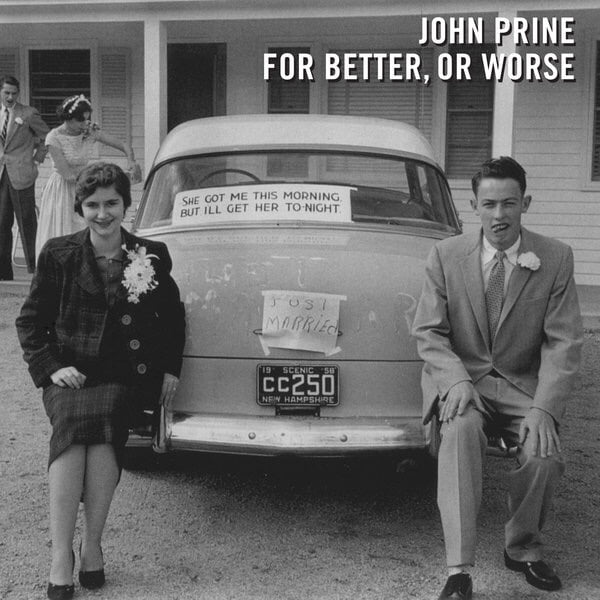
Thus it's why his version of "I'm Tellin' You," off For Better, Or Worse — his casual companion to In Spite of Ourselves — is one of the truest examples of how Prine, even when not driven by his own pen, twists and tangles the past in his own tender humor. One of the album's more unassuming little ditties, the duet with Holly Williams bends tradition (Williams, of course, is the granddaughter of Hank and her grandmother, Audrey Williams, used to perform the tune) with the Prine eye, turning it from a solo affair into a push-pull conversation. "You better straighten out, I'm tellin' you," they sing to each other while a mischievous fiddle dances along. Prine saw the charm in those aged words but knew that all love is a two-way street — not just preserving the circle, but turning it into a sphere.

Daddy-O: A Father’s Day Playlist

This Father's Day (June 19), you could do what you always do and buy your pops the same pair of new socks that he doesn't need. Or, you could give dear old dad the gift of music. To get you started, we've pulled together some of our favorite songs about dads, written from both the perspective of fathers and from those of the kids who loved them. If you're feeling generous, pick up an album or two featuring songs from the list. If not, at least send dad a link to the Spotify playlist. Either way, his sock drawer will thank you.

"Daddy Doesn't Pray Anymore" — Chris Stapleton

This tearjerker from Chris Stapleton is served up with a little twist, made all the more heartwrenching by his stellar vocals and somber delivery.

"Daddy Sang Bass" — Johnny Cash

This 1968 tune, written for Cash by Carl Perkins, is a testament to the bonds of both family and music — both of which, in this case, are anchored by dad and his bass.

"Undercover Dad" — Jonny Corndawg (now Jonny Fritz)

A snooping dad must grapple with what he finds in his teenage daughter's diary in this sweet, light-hearted tune from Jonny Corndawg's 2011 Down on the Bikini Line.

"Paradise" — John Prine

A father teaches his son about the perils of mountaintop removal in this classic John Prine tune from his 1971 self-titled debut album. 

"My Father's Father" — the Civil Wars

Ghosts of the past and his "father's father's" blood on the tracks bring a prodigal son home in this song from the now-defunct duo's 2011 debut album, Barton Hollow.

"A Father's First Spring" — the Avett Brothers

One of the most profound statements on an album (The Carpenter) that grapples with bassist Bob Crawford's daughter's battle with brain cancer, "A Father's First Spring" tugs at heartstrings with lines like "I do not live unless I live in your light."

"Coal Miner's Daughter" — Loretta Lynn

"Daddy worked all night in the Van Lear coal mines," and his proud daughter wrote one of the greatest country songs of all time to thank him for that hard work.

"Welcome to Earth (Pollywog)" — Sturgill Simpson

Sturgill Simpson's new album, A Sailor's Guide to Earth, is something of a guidebook for living for his young son, and opening track "Welcome to Earth (Pollywog)" introduces us to "the greatest love [he's] ever known."


Photo credit: CarbonNYC [in SF!] via Foter.com / CC BY.

Get Off Your Ass: May Is Upon Us

The Cactus Blossoms // Echo // May 1

Luke Bell // Echoplex // May 1

Jackson Browne // Thousand Oaks Civic Arts Plaza // May 3

Chris Pureka // The Satellite // May 12

John Prine with Jason Isbell and Amanda Shires // Greek Theatre // May 13

Richard Thompson // Teragram Ballroom // May 14

Andrew Bird // The Theatre at Ace Hotel // May 14-15

Joseph Arthur // Troubadour // May 16

Damien Jurado // Troubadour // May 18

Tim O'Brien // McCabe's Guitar Shop // May 22

Petunia & the Vipers // El Cid // May 26

Brett Dennen // El Rey Theatre // May 27

Punch Brothers // Schermerhorn Symphony Center // May 2

Bonnie Raitt // Ryman Auditorium // May 3-4

Charles Bradley // Exit/In // May 4

The Avett Brothers // Bridgestone Arena // May 6

Lucinda Williams // Ryman Auditorium // May 8

Hayes Carll // The Basement East // May 11

Fruition // Exit/In // May 12

Old Crow Medicine Show // Country Music Hall of Fame // May 12-13

Dale Watson // Nashville Palace // May 13

Dylan Fest featuring Jason Isbell, Emmylou Harris, Kacey Musgraves, Holly Williams, Nikki Lane, Rayland Baxter, Ruby Amanfu, Amanda Shires, Cory Chisel, Robert Ellis, and more  // Ryman Auditorium // May 23-24

Billy Joe Shaver // City Winery // May 28

Will Hoge // City Winery // May 29

Carrie Rodriguez // National Sawdust, Brooklyn // May 1

Mary Chapin Carpenter // 92nd Street Y // May 1

Delta Rae // Bowery Ballroom // May 2

Elephant Revival and Ben Sollee // Bowery Ballroom // May 4

M. Ward // Webster Hall // May 4

James Taylor // Carnegie Hall // May 5

Joan Osborne // City Winery // May 8

Loudon Wainwright III and Iris Dement // Tarrytown Music Hall // May 13

Graham Nash // Town Hall // May 14

Parsonsfield // Mercury Lounge // May 20

Lindsay Lou & the Flat Bellys and Ana Egge // Rockwood Music Hall, Stage 2 // May 24

Roosevelt Dime & the Bruce Harris Orchestra // National Sawdust // May 29

Counsel of Elders: Peter Case on Doing the Work

Peter Case’s musical path covers a lot of terrain. He was born in upstate New York and hitchhiked to the West Coast in his teens. He busked on the streets of San Francisco and founded seminal Los Angeles punk band the Nerves in the mid-'70s. Though their small catalog holds up remarkably well, Case is perhaps best known from the influential rock 'n’ roll band the Plimsouls. They were a top draw in California and featured in the cult film Valley Girl. In 1986, Case released his first solo record, which marked a return to roots-based music, and he’s been mining this rich vein ever since.

Case has worked with luminaries like T Bone Burnett, Van Dyke Parks, and Sir George Martin. He’s a favorite of Bruce Springsteen's and John Prine's. There is a grit and honesty to Case’s music that is paired with an unparalleled sense of melody. Basically, his music is equal parts Sleepy John Estes and the Beatles. In 2015, Case released HWY 62 — another fantastic collection that features Ben Harper on lead guitar and DJ Bonebrake from X on the drums.

You were instrumental in the early L.A. punk scene, have worked with major labels and smaller boutique labels like Vanguard, and managed to release excellent albums year after year without slowing down. So I can’t think of an artist more appropriate than yourself to offer up some life lessons to the younger generation.

I asked my seven-year-old daughter what she’d learned at school that day. “Dad, we don’t learn things at school!” was her reply.

I’ve rarely learned any lessons in my life, but the lessons I remember most are the ones I’ve learned hundreds of times: "Don’t rush. Everything comes to the one who waits. Be patient. Don’t judge others until you’ve judged yourself. The love you take is equal to the love you make. A stitch in time saves nine."

One of the most important lessons for a songwriter is, “You never know when you’re doing the work.” That’s how I put it to myself, so let’s see if I can explain it.

The song you labor over for months may get a lot better and still not make the album. But one of its lines could get pulled out and used in a song you worked on for five minutes, and that tune could turn out to be among the best you’ll ever do.

Who knows? Not me — never, when I set out, do I know where the road will end. So the work itself is always some kind of an adventure.

That’s the good news: “You never know when you’re doing the work.” All you can do is be ready to throw yourself in. And it doesn’t necessarily matter if the song is a hit, or grist later, or a Frankenstein monster. Songs are magic birds and they’ll land in your tree if they feel like it. You can’t force ‘em. You suit up and show up. You can write phrases on scraps of paper, do lyrical portraits of friends and strangers, write off the top of your head, imitate your favorites, or invent a new way of walking. But you never know when you’ll be doing the work.

Is there a story behind these lessons? Can you expand on how you learned this?

There are a lot of problems with the idea of me passing along “lessons learned” to other musicians. One is, the lessons I’ve had to learn involve knowledge that many other people may take for granted.

Here are a few:

1) Don’t be in a hurry to marry someone who is always mad at you. (This is self-evident for most.)
2) Check your driver's license before traveling far from home and assuming you can rent a car. The license may expire on your birthday. I was stranded in Colorado with two weeks of gigs I almost missed. Ended up hitching a ride with Robbie Fulks.
3) Know who’s in the room before you start talking. (This, too, is self-evident for most.)
4) File and pay your income tax. I learned this one the very hard way in the mid-'80s. I thought it was all taken care of by somebody else.
5) Always pay attention.

RECAP: Telluride Bluegrass Festival

For as long as I’ve been involved in the bluegrass world, people have been telling me of the transformative powers of Telluride Bluegrass Festival.

Every time festivals would get discussed, one of the first questions inevitably was ‘well have you been to Telluride?’ to which I would mumble some lame excuse about not having the time or money or anything else that would come to mind.

But this year, with the launch of the new site (and a complete lack of excuses), I booked my ticket and headed east.

I arrived in the valley early Thursday evening, the peaks of the Rockies surrounding me, after a gorgeous two and a half hour drive from Durango.  After settling in to the house, my group and I walked over to catch the last of John Prine on stage.  The sun was setting, casting an amazing, warm light on everything around us, and I knew I was already in love with this place.

We all headed over to my first Nightgrass show at the auditorium of the local high school, where one of my current favorites, Joy Kills Sorrow, took to the stage prior to Laura Marling (who, despite being a phenomenal singer and songwriter, was a bit too mellow for a set that started at 12am).

Friday, I awoke to the sounds of Edgar Meyer and Mike Marshall on the main stage (the entire festival is conveniently simulcast on local radio station KOTO) and spent the morning wandering the main street in town, eventually settling at Elks Park stage to see Bryan Sutton, Sam Bush, Jerry Douglas, and Luke Bulla perform a tribute to the late Doc Watson. The woman introducing the set summed it up best: ‘We’re proposing a toast to our good fortune: to being human, healthy, and happy, right here.’  Right here.  For these few days.  Everyone together, collectively sharing in such amazing music.  Telluride’s mysterious and magical spell was beginning to weave itself around me.

After watching Doc’s tribute, we headed to the main stage to catch Del McCoury.  If you haven’t seen Del live, YOU NEED TO DO IT.  The man is a legend, and a showman to the greatest degree.  Just… ugh, seriously promise me you’ll see him.  It’s unlike anything else.

John Fogerty wrapped up the night.  Do you realize how many Fogerty songs you know??  Probably not, because the man played for over two hours and we all knew EVERY WORD.  Apparently it’s just something that’s built in to the American subconscious: they lyrics of John Fogerty.

Despite a laaaaate evening the night before (the jams around town tend to last til the wee hours), I was up on Saturday for an early morning gondola ride up the mountain, but not before catching the last few songs in Bela Fleck and Edgar Meyer‘s workshop ‘How to Play Badly Without Anyone Noticing’ (with special appearance by Chris Thile), which is one hell of a way to kick off any day.

Spent the majority of my day at Elks Park stage, with new favorites Della Mae showing off their impressive and catchy musical prowess (seriously, go listen to these ferociously talented ladies right now…), followed by a Woody Guthrie tribute show featuring Tim O’Brien (Hot Rize), Emma Beaton (Joy Kills Sorrow), Peter Rowan (Peter Rowan Band), Kristin Andreassen (Uncle Earl) and Vince Herman (Leftover Salmon).  The Guthrie show was really something…. as the voice of the audience swelled during a rousing rendition of ‘I Ain’t Got No Home,’ it was pretty clear just how relevant Woody’s lyrics remain.

Later that night we all headed over to see Bruce Hornsby (where Bela Fleck and Chris Thile made guest appearances!), and the 1987 version of me was secretly [not-so-secretly] thrilled with the swell of the opening chords to ‘Mandolin Rain’ (admit it you totally love that song too…).

Sunday was a day to end all days.  From Peter Rowan to Brett Dennan to the Punch Brothers (in one of their best performances I have ever seen, only to be surpassed later that evening when they played Nightgrass), to Glen Hansard (of The Swell Season), and eventually the Telluride House Band with Bela, Sam, Stuart, Edgar, Bryan and Luke, it was a pretty remarkable meeting of the minds on one stage.

Sunday night wrapped with a post-show Nightgrass performance with the Punch Brothers (they played til almost 2am), followed by a late night on the porch, waiting for the sun to rise, incredibly resistant to the inevitable return to reality we all faced the next day.

People aren’t kidding when they say that Telluride is transformative.  It was unlike any festival event I’d attended prior (so clean!  so nice!  so organized!) and left me feeling more inspired than I’d been in a long time.  You’ll just have to check it out for yourself next year [no excuses].