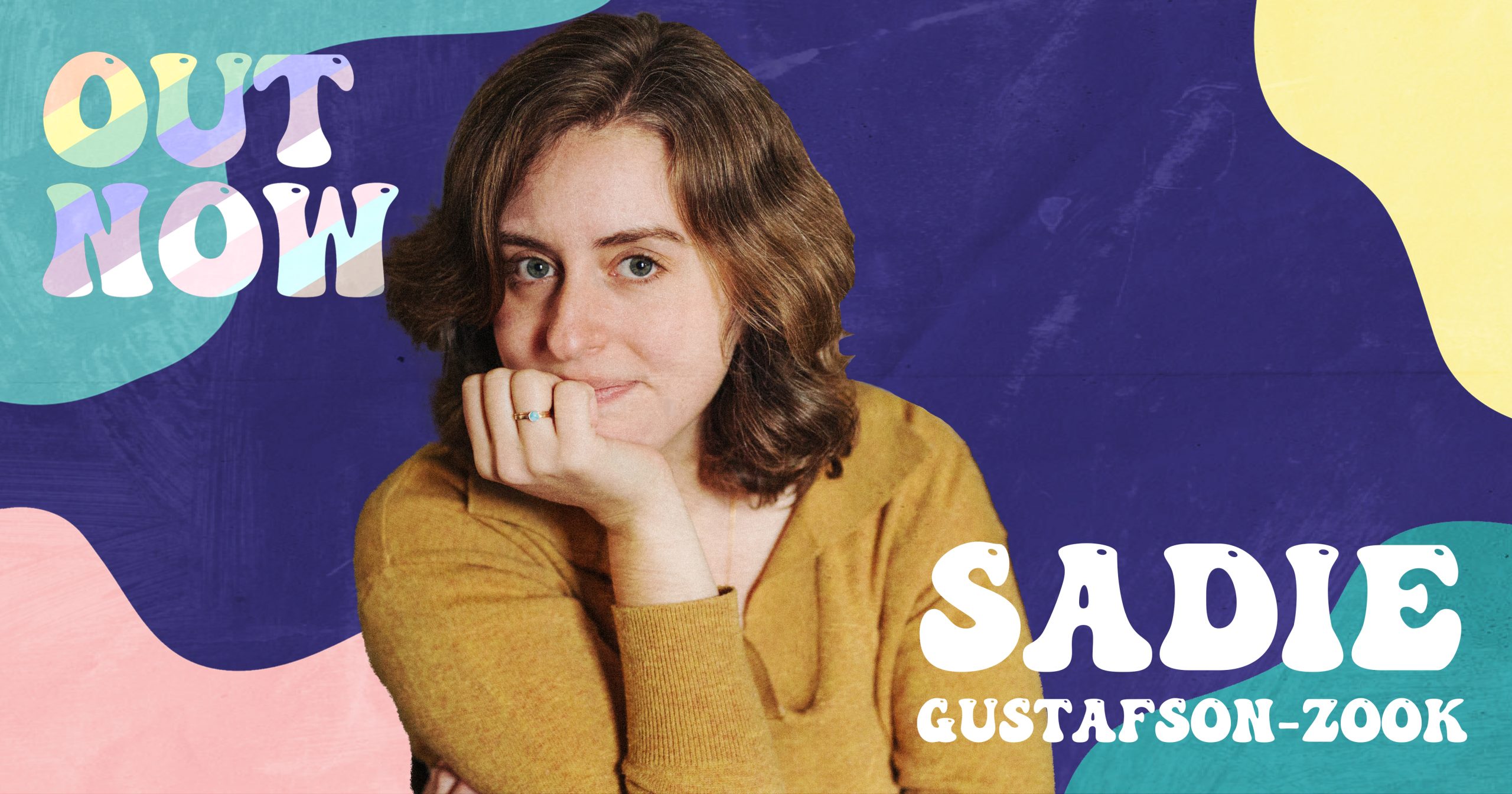
Out Now: Sadie Gustafson-Zook

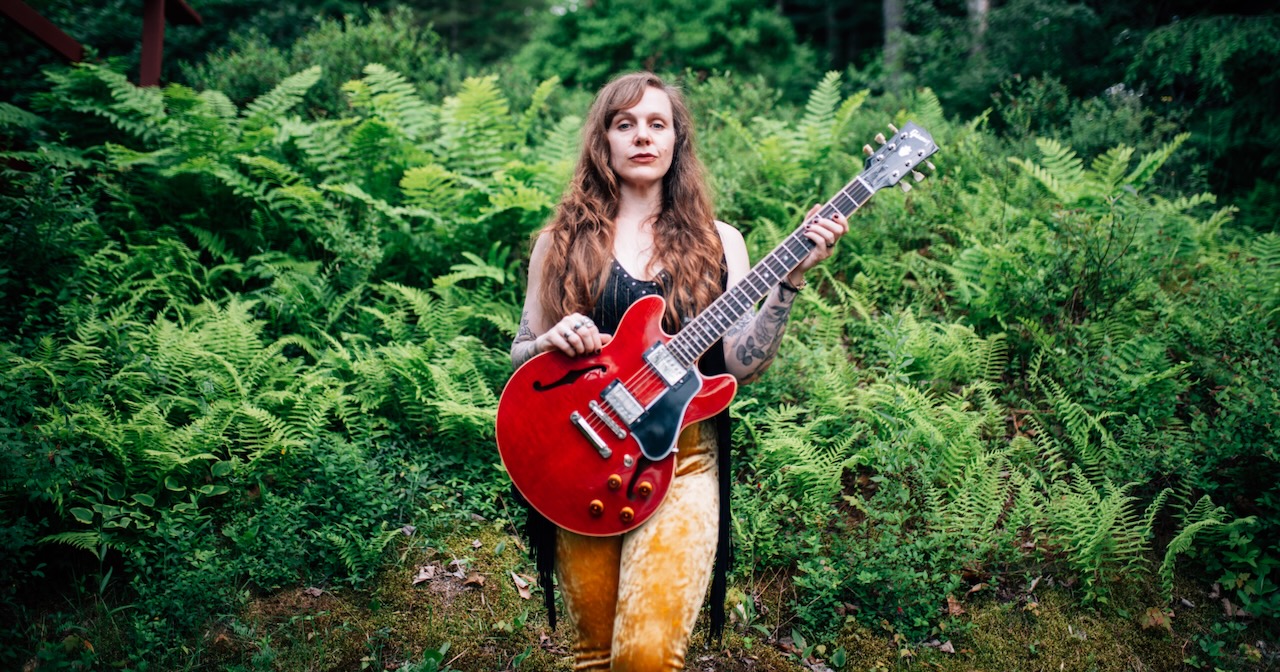
Sadie Gustafson-Zook is a detailed songwriter, pulling together collages of images and ideas and stitching them into melodies and lyrics. I met Sadie in 2019 at Club Passim, a renowned folk venue in Cambridge, Massachusetts known for promoting generations of great folk music. I was studying in Boston at the time, surrounded by incredible developing artists. Sadie was one of them, alongside Liv Greene, Jobi Riccio (featured before on Out Now), and Olivia Barton, another queer artist who came through the Club Passim folk scene and is now gaining traction.

We are excited to share our interview with Sadie the same week she releases the incredible new album, Where I Wanna Be (available May 10). Their thoughtful writing, pure voice, and creative guitar lines are sure to impress. Many of the songs on the album have a lullaby-like feel enhanced by Sadie’s soft voice and soothing melodies.

This month, Sadie is touring the Midwest with Brittany Ann Tranbaugh, who we also featured on Out Now earlier this year. They are powerful songwriters and performers alone, but seeing both artists in one show is a treat that you don’t want to miss! If you’re in the area, be sure to catch their tour through Wisconsin, Minnesota, Michigan, and Indiana.

What’s your ideal vision for your future?

Sadie Gustafson-Zook: Ideally, I would be able to keep doing what I’m doing, but slightly more of it. I think my music offers something special and I would like for more people to hear it. At the same time, I really do like living at least part of the time as a normal person who is in their house and has a cat and is a part of their local community’s life – so maintaining a sense of balance is definitely something I’m passionate about.

Right now, my ideal vision would be to play 100+ fun gigs per year (I’m not really interested in gigging for the sake of the grind – I mostly want to have a good time and hang out with people I love); continue teaching privately and at music camps (I’ve been really lucky to be able to do this at Kerrville’s Song School, Kentucky Music Week, and this summer I’ll be at Ossipee Valley’s String Camp); spend a lot of time in nature and with my family; and keep absorbing so I have things to write about.

Why do you create music? What’s more satisfying to you, the process or the outcome?

I create music because I think it’s fun to sing and play instruments and I like writing about my own life in a way that other people can relate to. Personally, I like being able to organize my thoughts into a nugget that is shaped like a song and that helps me sort out my emotions. And then socially, I love having the opportunity to share those songs and feel a broader sense of connection with people around me – and people who I don’t know! So, I think the process and the outcome are both things I really enjoy.

Do you create music primarily for yourself or for others?

In college, I was a voice major and I spent four years singing operatic arias. I didn’t initially think this was what I was going to spend my college years doing, but once I started singing in such a big and full-body way, I had a really fun time experimenting with the extremes of what sounds my body was capable of producing. But when I performed these songs written by classical composers I didn’t feel very connected to the essence of the music. I sang it for myself, because it was fun (and probably also because I wanted people to pay attention to me), but I wasn’t assuming that my performance would touch something deep in someone else.

Since then, I have shifted towards writing and performing original music. I enjoy writing songs that are fun to sing and I write based on what I’m going through and what I need to talk about. Ironically, this feels like a more communal act than performing music that someone else wrote. I have the greatest chance of connecting with an audience over a shared experience if I’m speaking directly from my own experience, and ultimately my biggest goal is connection.

You shared about maintaining a sense of balance between being in the music industry and living in a home, with your pet, surrounded by community. Many artists and music-industry professionals have a challenging time with this. How have you built a sense of balance between these things? Do you have any words of advice for others working through the same challenges?

I’m very privileged to have an affordable living situation right now thanks to moving back to my hometown in the Midwest and having my parents as landlords. This freedom has made it possible for me to pay my bills exclusively with music-related work, which helps keep morale high in the music department. So I just want to preface everything else I say with the acknowledgement that it’s a lot easier to feel balanced when I’m not constantly worrying about money. While my situation is a privilege, I also know that not everyone would want to leave their music city hub and move in across the street from their parents in Indiana! Ha!

In terms of time balance, I’ve been testing out the way it feels to have music plans that take me away from home for one(ish) week each month, with some longer exceptions in the summer. That has been a nice way to not get too antsy at home, while also giving myself time to do more administrative work and be present in my town between tours. My first year of living in Goshen, I was pretty lonely and spent most of my time online, which honestly was horrible. I was really craving more in-person connections, so this year I’ve been digging into local activities as well as being really intentional about seeing my songwriter friends’ shows when they’re in a nearby city. Even when I don’t feel like leaving my house or driving a few hours away to see someone, I’m almost always happy that I did.

Your music is so descriptive, thoughtful, and well-crafted. What was the process like for you to write these 10 songs on the new album?

Thank you! The majority of these songs were written when I was living in Nashville in the spring of 2022 and then also when I was traveling around, sleeping in my car that summer. I had just had a breakup in Seattle and had to figure out where I wanted to live and between those two major changes I had a lot of processing to do! I also was spending a lot more time alone than I was used to and I felt like I had a lot of pent up creativity that came out really fast. Then there are also a few songs that I wrote once I was starting to feel a bit more settled in my hometown, as memories from my past kind of overlaid on top of my newer understanding of myself. Those came out more like steady drips throughout the end of 2022 and into 2023.

What inspired you to write Where I Wanna Be? What does the album mean to you and what do you hope others will take away from this collection of songs?

Although the album is called Where I Wanna Be, thematically the songs are more about who I wanna be and what I need to change in order to be that person. When someone asks, “How are you?” it’s easier to talk about geographical location (“I’ve been traveling a lot!”) as a substitute for emotional location (“I’ve been feeling really ungrounded”), especially when everything is in flux.

Each song, in its own way, speaks to who I want to be; I want to be someone who is free and expansive, who knows what makes me happy, whose identity reflects who I know myself to be, who is a part of a team/community, who doesn’t give my power away, who is consistently and historically queer, who trusts myself, who speaks up for myself and takes accountability, who feels at home in my geographical location, and someone who maintains a sense of curiosity in the midst of uncertainty. And that’s basically the whole album.

I think that’s why the album feels so intimate. Though I wrote this collection of songs for my own processing, I know that a lot of people go through this process for themselves, so I’m happy to lend my own experience to folks who might find it helpful.

The title track of the album, “Where I Wanna Be,” includes the lyric, “Every year I drive around, scope out the towns, thinking is this where I wanna be found.” I am curious if you feel a sense of the “grass is greener” in another town? I feel like this is a huge theme, especially among young adults, the idea that we may feel more fulfilled in another place.

Even if I daydream about moving, I find that I feel pretty aware of what I’m missing out on (in a positive and a negative way), and that helps with not over idealizing certain places. I know about the realities of living in Boston, or Brooklyn, or Nashville, or the PNW, and so all things considered, I’ve chosen to live where I am and visit those other places.

Sometimes I still daydream about living somewhere else, but mostly what I find myself imagining are the different communities I could be a part of. I’ve gotten little windows into different communities through meeting people at festivals and conferences, which are mysterious liminal spaces where people who live in different places gather together. They don’t represent an actual location where I could live permanently. And I think it’s helpful for me to remember that when I start feeling like I should move. Likely I’m imagining somewhere that doesn’t currently exist. Not that we couldn’t start an artist commune, though.

Who are your favorite LGBTQ+ artists and bands?

God, more like who isn’t LGBTQ+! [Laughs]

Spencer LaJoye, Flamy Grant, Jean Rohe, Liv Greene, Jobi Riccio, Singer & the Songwriter, Cloudbelly, Lindsay Foote, Olivia Barton, Joy Clark, Allison de Groot & Tatiana Hargraves, Olive Klug, Jane O’Neill, Brittany Ann Tranbaugh, Elisabeth Pixley-Fink, Adrienne Lenker, Taylor Ashton, Eliza Edens, Rachael Kilgour, Emily King, Judee Sill, and tons of obviously bisexual woman performers who aren’t publicly out.

For anyone reading this who might not be out of the closet, were there any specific people, musicians, or resources that helped you find yourself as a queer individual?

Although I’m bisexual, reading the Lesbian Masterdoc was very helpful as a way to sort through my past, draw connections between memories and feelings, and generally deconstruct the idea that being straight was the only option for me (compulsory heterosexuality). I also really loved reading Katie Heaney’s book, Would You Rather, and The Fixed Stars by Molly Wizenberg. (In addition to following every cute queer person I found on Instagram.)

What does it mean to you to be an LGBTQ+ musician?

I often feel like performers are treated kind of like inspirational court jesters, where we’re being the weird, thoughtful, creative ones, and the normal people come to shows to live vicariously through us. Honestly, it’s pretty similar to how queer people break boxes and live expansively just by being ourselves (except that queer stories are often suppressed and not amplified). So, if I have the opportunity to have a platform and the power to influence my audience, I want to take that responsibility seriously and show up as my fullest self so they can see that it’s possible for them as well. I love being a queer musician and knowing that by just being myself, I might be helping audience members learn more about themselves as well.

What’s the best advice you’ve ever gotten?

In 2016, I was attending the Rocky Mountain Song School and was a part of a partnered songwriting class where each participant told their partner a story from their life and then the partner would use that story as a songwriting prompt. My songwriting partner told me about his career trajectory and how someone advised him to get an entry-level job at the local venue that he wanted to play. So he got a job as a busboy at this venue and then progressively worked his way up, eventually becoming tight with the booker until he was selling out shows with his name on the marquee.

Although he wasn’t giving advice per se, I kept this story in mind when I moved to Boston after college and I got a job working at the box office of Club Passim. Regardless of career prospects, I think it’s a really good idea, for community building purposes, to become a regular wherever you want people to know you. For me, in working at Passim, I was hanging out there all the time and it was inevitable that I met a ton of super cool people who are doing really great things and now I feel pretty well-connected.

What are your release and touring plans for the next year?

This year is a big one for me! I’m (obviously) releasing this new album, Where I Wanna Be, and I actually have another recorded project scheduled for the fall! Tour-wise, I have been upping my booking game and will be touring around the Midwest in May with Brittany Ann Tranbaugh (we’ll likely be around Wisconsin and Minnesota when this article is published), the West coast in October with Jean Rohe, and the Northeast in November, and a lot of other spots in between! I’ll be teaching at a few songwriting and music camps as well, which I love to do. So I think it’ll be a great year!


Photo Credit: Morgan Hoogland
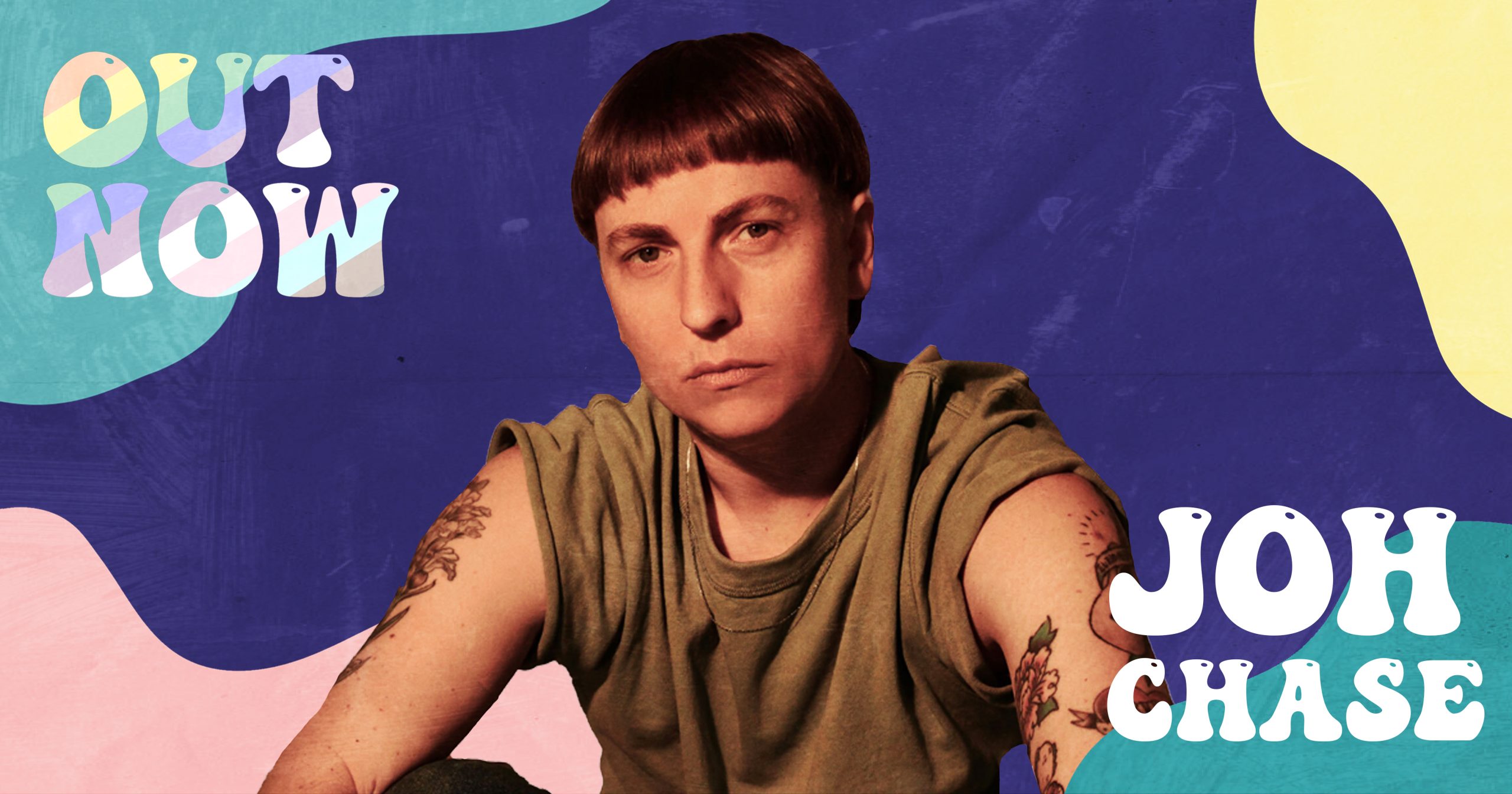
Out Now: Joh Chase

This week, we’re excited to feature Joh Chase in Out Now. Joh is an artist from Seattle, Washington now rooted in Los Angeles, California. They’ve spent the past two decades developing their craft as a songwriter and performer and they’ve opened for artists like Noah Gunderson and David Bazan. Joh’s music steps outside the lines of any single genre and blends influences of blues, folk, pop, and indie rock.

Joh Chase’s brand new album, SOLO, was released today. It features diverse sounds, intimate lyrics, and an exploration of love, loss, self-discovery, and independence. Our conversation touches on why they create music, their greatest fear, and their process of self-funding tours and crowdfunding albums.

Why do you create music? What’s more satisfying to you, the process or the outcome?

I create music because I am lucky to have claimed music as something that I do. I just do music as much as humanly possible, because it makes me feel alive and helps me know who I am and how much I love the world and life and others. Both the outcome and the process are satisfying. The payoffs for showing up always feel rewarding, but the long game reward of gaining muscle memory around showing up when it feels like the last thing you wanna do, is its own kind of reward.

Do you create music primarily for yourself or for others?

I’m very “Oliver Sacks” about music. I unabashedly create music for selfish reasons – coping, pleasure, and connection. And then I love playing music for people or hearing the music of others because everyone has a “secret public song space” in their bodies and minds and they want to be there as much as possible.

Your songs cover a wide range of genres with traces of blues, pop, folk, and indie rock influences. How do you navigate genre diversity while maintaining a cohesive sound throughout the album?

I think the genre diversity and how that comes across in the different sounds is a reflection of the kinds of music I used to make and the sounds that have stuck with me throughout the years. Using the baritone saxophone, finding a way to express some soul music as well as some Americana licks amongst folky tunes indie folk/rock sounds are endemic to my musical expression. Over the years people have said, “Oh your voice would sound good singing… country, bluegrass, blues, soul…” and in this record I found a way to fit the genres to my voice, a bit. The surprising Flaming Lips-sounding party that is “Daniel” or the more jammy “Smoother” with its less Western sounding scale, are consequences of me feeling 100% happy with creating and releasing music that genre melds, as opposed to making sure I stay in some sort of shape, genre-wise.

The lead single, “Avalanche,” is both explosive and personal. What is the inspiration and significance of this track?

I honestly cannot remember the exactitude of where or when I wrote “Avalanche.” It was in the same set of songs as “Gone” when I first wrote it, but I can’t remember that session as well as I can remember the writing of “Gone.” The song centers itself around the powerful polarity of belonging and loss. Love is not just the “hot fire sex flame” of pop bangers, but also the unexpected mountain shelf of love that you didn’t know you had until it was gone.

This album, SOLO, reflects your do-it-yourself perspective as an artist. Could you share the challenges and rewards of self-funding tours and crowdfunding projects?

One of my favorite books that I was reading around the time that I decided to do the crowd funding that led to this record is the book Real Artists Don’t Starve. The book inspired me to go back to school while I was making this record. The record business is tough and very uncontrollable, but I will never stop making music. So it’s not a question of “do I want to keep making music”, but rather how and at which costs? I think some artists or bands are in a place where they feel comfortable sharing the financials of their music business with fans and some do not for many valid reasons. I feel comfortable sharing with my fans, I need $x to do this, will you help me make it happen. It’s much more acceptable now to have folks follow your Patreon or Substack or subscriptions than it was, so I feel grateful that there are things like Kickstarter and Patreon etc.

What would a “perfect day” look like for you?

Eating a Berliner from Black Forest Bakery in Los Feliz with my coffee, going home to the studio and making music or playing out with my band.

What’s your ideal vision for your future?

I’m sitting behind some tape machine or TEAC-2A, coming up with my next record and building more beautiful songs. I’m walking my dog and going to queer line dancing and the LA women’s soccer games with my city and then touring and meeting wonderful people and getting to play music for them. Definitely going back to Europe for more shows – I’d really love to do that.

What is your greatest fear?

My dog dying when I’m on tour.

What’s the best advice you’ve ever gotten?

Get pet insurance.

What is your current state of mind?

I’m so deeply excited about playing these new songs for people this year and for people to hear this record. I couldn’t sleep last night after doing my taxes, ’cause I was so buzzed from the band rehearsal.

Who are your favorite LGBTQ+ artists and bands?

Brittany Ann Tranbaugh. Brennan Wedl. Bitch. Melissa Ferrick. Perfume Genius. Hand Habits. Sasami. Rhett Madson. Rachel Mazer. Ryan Cassatta. Brittany Howard. Sinead O’Connor. Jonnie Reinhart. Hurray for the Riff Raff.

For anyone reading this who might not be out of the closet, were there any specific people, musicians, or resources that helped you find yourself as a queer individual?

Willie Nelson’s “He Was A Friend of Mine” – I think struggling to come out of the closet or living in it or the aftermath of coming out revolves around loss of community and friendships. Nelson’s version of this song helps me still deal with some of the sadness around that loss. I was lucky enough to get sober and it was through the 12 step community that I met lovely, strong, vulnerable queers in LA who showed me the beauty and joy of what it’s like to be out and to be sturdy in your own way. I’m also spoiled with LA’s LGBT center – it’s an incredible organization with so many resources and events. Find the queers you want to be when you grow up. And then be the queer you want to be when you grow up.

What does it mean to you to be an LGBTQ+ musician?

I think it means that my music gets to be a safe LGBTQ+ place. That my shows and my music centers the queer experience.

What are your release and touring plans for the next year?

After touring this summer to promote the record on the West Coast, I’ll head east later in the year and jump into some Folk Alliance conferences. No release plans on the radar yet after SOLO.

How do you find a balance between the business and artistic aspects involved in your career as a musician?

I honestly don’t totally know. It’s intuitive and chaotic and intentional and has been part of my personality or my way of life for so long, now, that I don’t know if I can pinpoint one precise center of gravity. I have to protect my creative time, nurture my playfulness in life, let myself ditch friends or ditch overworking or ditch over-cleaning to let those creative moments remind me of who I am. I am lucky to have a manager, a team at Kill Rock Stars and friends who support me and my music. Inside of community, the glaring nature of the music industry is dulled out quite a bit.


Photo Credit: Shervin Lainez

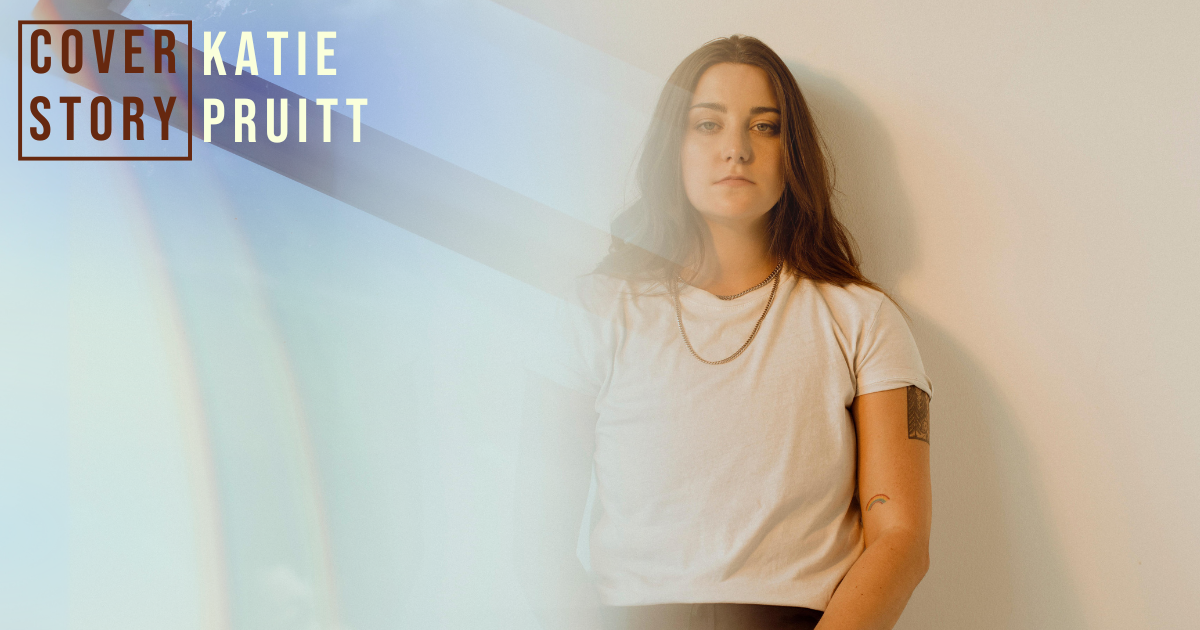
Katie Pruitt on ‘Mantras’ and Letting Go of Control

Knowing how 2020 and the years that followed would unfold, the dynamism of Katie Pruitt‘s debut record is even more awe-inspiring. Expectations introduced the Nashville-via-Georgia singer-songwriter alongside her deepest aches and most intimate struggles as an openly queer individual raised as part of a devout Roman Catholic family in the conservative South. It would go on to earn a GRAMMY-nomination and ample praise for her lyricism, empowered performances, arranging, and instinct for production. In short, it’s undeniable that Pruitt set quite the high bar of expectations for herself and the music she would choose to share next.

Four years later, Pruitt has unveiled Mantras. While flashes of brilliance from a familiar autobiographical lens inform and inspire the 11 track recording, these aren’t simply more straightforward, memoir-style anecdotes. The truths and experiences Pruitt shares on Mantras feel more revealing than Expectations, as this time, Pruitt’s lens looks decidedly more inward at what she has lived through, reflected on, and learned from since writing her last album.

Not only is Mantras‘ thought process largely internal in nature, but each song leads to paths, stories, and developments that have yet to be fully resolved – if ever they will. The album showcases a great deal of inspiring perseverance in the self-contained conclusions of songs like “Self-Sabotage” and “Worst Case Scenario” and more generally, it unveils a journey of self-healing from start to finish.

However, while Mantras ultimately provides reassurance, peace, and closure, the takeaway isn’t meant to be one of permanent resolution or rigid perspective around anything Pruitt has seemingly conquered in each song. Like the recapitulating nature of a mantra, she is mindful of being continuously attentive and compassionate towards her inner struggles, rather than seeing them as singular moments of adversity.

Speaking with her by phone, BGS shared an insightful conversation with Pruitt about how her focus on inner-healing shaped the sound of Mantras, how her perspective around disagreement and connection has changed, how she cultivates inner strength, and much more.

How was it navigating the presence of expectations for Mantras, considering your intent to move away from a focus on external validation?

Katie Pruitt: On the first album, I was dodging different expectations, you know? I was dodging expectations of my parents or of how people in my hometown saw me and who I am now. I sort of accidentally set high expectations for this next record. I felt like I was competing against myself in a lot of ways and I really had to find moments to just surrender, come back to center, and just focus on the fun feeling in the present moment and talk about that, instead talking about things that I think people want me to say. I needed to focus on what I needed to say, which is maybe different than what other people expected or wanted to hear on this album.

Knowing this album is an expression of personal growth and a journey of sorts for you, what does it feel like to just now be talking about these songs after holding onto them for so long?

Coincidentally, I feel like everything on Mantras is lining up with my life as it’s coming out.

With me talking about my parents selling my childhood home [in “Naive Again”], yeah, my parents are selling my childhood home as we speak. And when I finished a lot of the songs about my partner slowly checking out and leaving, maybe a week after I turned in the record, we broke up. So I’m still experiencing a lot of these things in my life. It’s kind of a first for me, because when Expectations came out, I had kind of already patched things up with my parents and there were things in my personal life were kind of resolved. But then I was having to dive back into those issues every day on stage or whenever I sang those songs. This is different, honestly. It kind of feels good to be able to deal with what’s going on in my life with the songs in real time.

You’ve talked about building “the tracks from the ground up as opposed to cutting everything live, which gave so much more room to let the songs evolve and become what they needed to be.” What does that mean for you and what did those moments of full realization for the music feel like for you, and producers Collin Pastore and Jake Finch?

Jake and Collin’s workflow is very quick. And that was a challenge for me, but I felt like we challenged each other in the right ways. They move very fast and I was like, “Wait a second. Let’s take a look at this. Let’s sit with it for a second and make sure we like it.”

I think having the option [to record parts individually] instead of having all this pressure to be in the studio with a full band and having everyone play the right parts at the right time, was nice for us – to just build one part at a time and ask ourselves, “Is this correct? Does this fit?” And if it doesn’t, we’d say, “We can always mute it.” … There’s not necessarily a wrong answer. We’re just trying to evoke a feeling and if we feel it then other people will too.

What brought you together with Christian Wiman’s work, ultimately inspiring you to writing the album title track?

I was listening to this poetry podcast, [Poetry Unbound], I was really into that during the pandemic and that was obviously a tough time for a lot of people, [creating] a lot of points of contention, especially around beliefs and belief systems. I just felt like, my parents believe different things than me and my friends started to believe different things than me. So that poem, [“All My Friends,”] just really resonated as this “A-ha!” moment.

At the very end of the poem [Wiman] says something like, “My beautiful, credible friends.” In the first part of the poem, you almost feel like he isn’t mocking them, but like, he’s kind of poking fun at how many rabbit holes there are to go down, as far as spirituality goes or, finding yourself goes. Then at the end, he’s like, “And all of them are credible, all of them are valid.” And that really struck a chord for me and I just think that’s a really powerful statement.

Given the open and accepting mindset you impart through “All My Friends” and its juxtaposition with the piercing, personal insights you share in “White Lies, White Jesus, and You,” where would you say religion, particularly Christianity and Catholicism, exists for you now, compared to when you were writing Expectations?

I really try to make clear to my parents or to some of my friends who are still Christian, that [the song] is talking about people who take the Bible and abuse it for their own benefit – whether that be political or just to justify shitty behavior on their end, like saying, “Oh, well, it says that gay people aren’t allowed in heaven. So I’m allowed to say this.”

That’s the part of [Christianity] that really turns me off to it in general. And that’s a shame, because the dude in the Bible, Jesus, the version that I have kind of come to discover as I’ve gotten older, is a pretty progressive dude. And I don’t mean that in the political sense. I mean, in the sense of he’s accepting of everyone no matter what their background is. Like, Jesus himself never says anything about gay people. He’s friends with kind of some sketchy characters if you were going to look at it through a lens of today. So that’s the Jesus that I wish I were taught more about when I was growing up. I think “White Lies, White Jesus and You” was a way for me to process the [version of] Jesus that I have experienced as a closeted gay kid and how the ways that version hurt me and put that in the past and put that behind me.

In what way would you say your journey of self-healing helped you to stop seeing religion as having the power to dictate your worth?

I let go of religion dictating my self-worth a while ago. But then I let other things [take its place]. I used to seek external validation from the church or from my parents or from older mentors in my life. I let that go as I became a young adult and then I started giving other things power to do that. Like success and relationships. I let those things dictate my worth. But then I started delving into the power that intrinsic happiness has.

We really fully don’t have control over what happens in our life. We have some control, but very little. And if your worth can come from within, then those moving parts of life have less control over you or less effect on you … once I learned that, I was able to focus more heavily on, “Let’s have this voice in my head be kind and then I can go from there.” Just me practicing being kind to myself first kind of put this armor up around me and it helps me navigate the world.

What’s changed about your songwriting process since you’ve taken on more personal strength and inner compassion?

For a long time, when my inner voice was more critical and cutthroat and editorial, I couldn’t really write. I wasn’t able to get the thoughts just out of my head and onto the paper, which is the first step you know? Then you have something to work from when you’re able to just say what you feel. But I was just so scared to write a bad song that I wouldn’t write anything. And I think that’s the worst mistake you can make. There’s no harm in writing a bad song.

I think that it’s just about setting the bar, taking a chill pill and [remembering], “Oh yeah, songwriting is fun, songwriting should be fun.” It should be a way for me to get an outlet, a way for me to get this out of my head and look at it. So removing the critical voice is huge. And that was connected to therapy and to me slowly learning how to be kind to myself and slowly learning how to just enjoy writing songs again.

Where, with whom, or in what, do you find your hope and strength to persevere when life feels overwhelming or your inner reserves are running low?

The past or other people’s experiences really help me. I read a lot of Patti Smith and sometimes I’ll just open to a random page and it’ll be the piece of advice that I needed. So definitely words and art and poetry. Another thing would be when I’m feeling, “Okay, all hope is lost,” I have this urge to just run to nature and I just go to the mountains or go sit by a river for a long amount of time and think and meditate and try to put my problems and my fears and everything into perspective. I think, “Well, I’m on this planet right now and I’m sitting by a river. How cool is that?” Just kind of zooming out and not zooming in so closely – that helps me. And like, just good friends and just laughing and having buddies that you know you have a drink with or dinner with and just fuckin’ laughing about the crazy things that have gone wrong. Like, laughter is huge. I know it’s like, “Oh, laughter is medicine,” but it literally is.


Photo Credit: Alysse Gafkjen

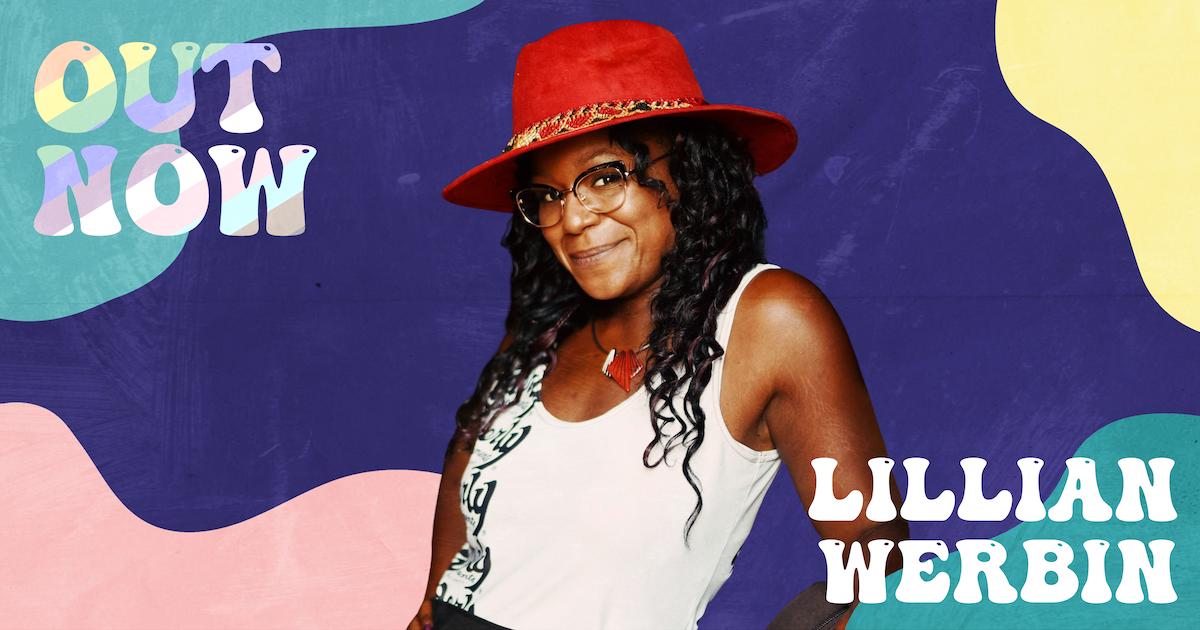
Out Now: Lillian Werbin

If you’ve met Lillian Werbin before, you know that they possess a radiant energy and a deep love for community while working tirelessly to create a more inclusive music industry. Lillian is a behind-the-scenes star of the queer music industry. They are the Chair of the Board for Bluegrass Pride, they volunteer to support LGBTQ+ events, and they sit on the boards of International Bluegrass Music Association’s Foundation and the Rhapsody Project. In addition to all of this, they are the co-owner of Elderly Instruments and co-direct Midwest Banjo Camp, Midwest Ukulele Camp, and The Banjo Gathering

Lillan and I spoke together on a panel presented by Bluegrass Pride in 2023 at Folk Alliance International. The panel examined on a systemic level how the music industry can adopt more socially sustainable models of business, especially for folks who have been historically marginalized. Lillian works hard to promote inclusivity. They are a pillar of the queer music industry, a gem of a human being, and someone who isn’t often found on stage, but holds up the community from behind the curtain.

What is your greatest fear?

My greatest fear is having my intentions misunderstood. Being responsible for others and making decisions on their behalf can be nerve-wracking, and I like my reasoning to be clear.

What is your current state of mind?

Anticipatory! I feel I should state that my mother died earlier this year, so my “current state of mind” fluctuates regularly. In a year, there is so much to celebrate and mourn that I find myself generally in a state of anticipation of the next moment.

What would a “perfect day” look like for you?

My current ability to balance work/life can come down to the hour, as my personal and professional lives blend 7 days a week. A “perfect day” is when I’m able to accomplish what is needed professionally without sacrificing my personal relationships. Ideally, I’m awake before the sun, there are only a few tasks/meetings to accomplish, there’s at least 5 bouts of big laughter, and some time spent outside in the fresh air.

Why do you work in the music industry?

I can’t imagine being anywhere else. I find those who work in the music industry are a more serious type of authentic and genuine. Working from behind the scenes, I’m lucky enough to meet new people regularly. From the big smoke shows to hometown heroes, I find music lovers prefer to be unapologetically themselves. Which is interesting and entertaining most of the time!

When working on a project, what’s more satisfying to you, the process or the outcome?

The planning process is most satisfying and I enjoy the outcome more if I’ve helped execute. The process of taking a few ideas and elements, and building them into a project, can be magical for me.

You are the Chair of the Board for Bluegrass Pride. What drew you to getting involved with BGP? What do you like most about it? Are there any new projects that you’re excited about?

Yes, I’ve been Chair of Bluegrass Pride for a little over a year. I had been a board member and found I had more interest than my regular term. I enjoy developing programs and maintaining welcoming events for LGBT+ musicians. I’m most excited about our Rainbow Book initiative, which seeks to create a network of vetted venues to play and homes to stay. We launched the application process in early fall of 2023.

What has it been like for you to hold a behind-the-scenes role supporting queer music?

Being behind-the-scenes supporting LGBT and queer music allows me to revel in my own queer joy, which often takes a backseat to how I’m often perceived. When I’m able to fulfill these supportive roles, I feel more connected to the community.

In 2022, you won the IBMA Momentum Award for Industry Involvement. You are someone who is extremely involved. Could you share with us some of the great work you’re doing that led to this recognition?

My job by day is CEO and Co-Owner of Elderly Instruments, where I manage the overall business. It’s Elderly’s consistency that allows me to assist in other events and businesses in the U.S. I co-direct Midwest Banjo Camp, Midwest Ukulele Camp, and The Banjo Gathering. Aside from Bluegrass Pride, I sit on the boards of the International Bluegrass Music Association’s Foundation – where I am a committee member of The Arnold Shultz Fund – and the Rhapsody Project.


Photo courtesy of Lillian Werbin.

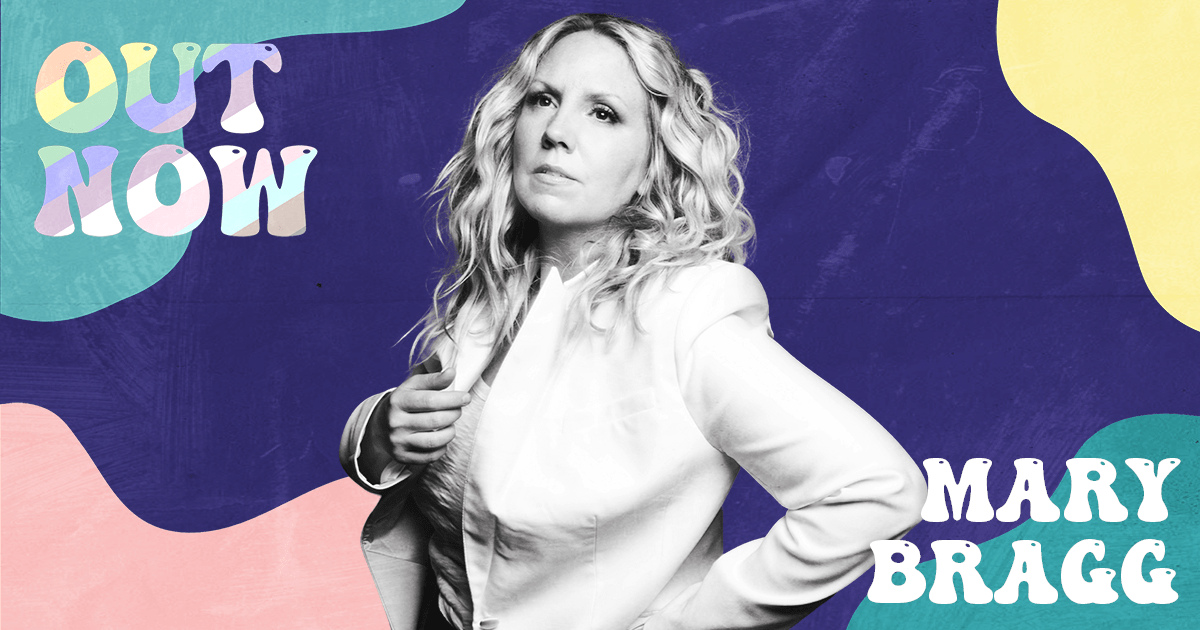
Out Now: Mary Bragg

Mary Bragg crafts music with beauty and pain, vulnerability and authenticity, and raw emotions. Mary played Queerfest 2022 at The Basement East in Nashville. Tonight, January 23, 2024, she will be back on stage at The Basement to celebrate her new single, “Only So Much You Can Do.”

In addition to being a phenomenal songwriter and vocalist, Mary is also a producer. In 2022, she earned a Master of Arts in Songwriting and Production from Berklee NYC, elevating her skills to the next level. Her self-titled album centers around self-discovery with tender lyrics that touch on love, loss, and self-esteem. Mary writes compelling music filled with nostalgia and honesty. We’re delighted to feature this incredible artist, Mary Bragg.

What would you say is your current state of mind?

Mary Bragg: Wow, what a way to start the conversation; I love it. My current state of mind is as follows: Grateful – for my life, my love, my work. Steady – managing a wonderfully robust docket of creative work while continuing to establish balance in my everyday life and internal dialogue. Excited – always, about a song. Several actually, new ones, ever percolating.

When I co-write, songs typically arrive at a near-complete form pretty quickly, but when I write alone, I’m much more patient with the process. I move through the world keeping my antennae up, looking for a way back into a lyric I’m working on that gets me in the gut. I’m obsessed with it.

What would a “perfect day” look like for you?

Being a touring musician is a funny thing, because touring life is very, very different than home life. I’ll frame the “perfect day” for you on the road beginning at 2 or 3 p.m., when we load in and have a perfect soundcheck with a killer engineer. Doors at 6. Show at 7. (Did I mention I love early shows?). Merch table mayhem at 9. Cocktail at 10. In bed by 11:30, sleep until 8. Drive, fly, etc. to the next town, repeat.

At home, I’m an early bird. Up by 6:30 or 7, coffee, eggs, journal, write, attempting to avoid technology for a few hours. 11 a.m. workout. Afternoon – back to work – emails galore, phone calls, Zooms, everything. I wear a lot of hats (artist, writer, producer, occasional teacher), so there’s a lot of juggling to do. By 7 p.m. I force myself to stop working; my darling fiancé, by this point has probably created a ridiculously beautiful meal for us. I used to think I was a good cook until I met her. She blows me away every time she prepares a meal for us. It’s the best. And I’m a great dishwasher. Watch a little TV after dinner (okay sometimes during), and hit the sack by 10 p.m., otherwise I turn into a pumpkin on the couch.

Why do you create music? And what’s more satisfying to you, the process or the outcome?

The process is exhilarating – as a writer, the actual singing and playing in a small room, making music and hearing it travel through a space is one of my favorite things. No audience, just the song in a room. Hearing your thoughts as you’re framing them in melodic form is a bit of a head trip that has its own immediate reward. In the studio, there’s a whole other bag of satisfying tricks to uncover and of course performing live has its own rewards as well, mostly connecting with other people who feel what you feel. And, on the road I’m able to focus more on the enjoyment of singing; pushing my voice to try new things on the fly is incredibly fun. Up until that moment of live-show-exhilaration, I’m so focused on the writing and producing, but by the time I take it to the stage, I can really let go and dig back in to the music itself.

Could you tell us about your single that came out today? 

Ah, my new single! “Only So Much You Can Do” is about chasing joy in the company of another person. I’ve been thinking a lot lately about that New York Times article about the secret to happiness – and how relationships are the key to it. We are pack people; we need each other; we need other human beings around us in order to be our best, happiest selves. Friends plus community plus honesty equals joy. I wrote this song with my dear friend, Bill Demain, during the pandemic over Zoom; we craved connection again, waited eagerly for it to return. Now that we’re out from under it, the song is a nice reminder to spend time – actual face time – with your people; it sure does a lot of good.

Who are your favorite LGBTQ+ artists and bands?

Rufus Wainwright, The Indigo Girls, Brandi Carlile, Aaron Lee Tasjan, Jobi Riccio, Liv Greene.

What does it mean to you to be an LGBTQ+ musician?

Well, I’m a person who is a songwriter and artist who is also bisexual living in a world that, at the moment, likes to extend a great to deal of judgment, disdain, disapproval, and harm to people in the LGBTQ+ family. Most of the time I feel as happy as the next person, then I’m reminded of the threats to our community, to my own family, and I remember how important it is to speak my experience, write through my own pain, and sing about the things that break my heart.

I think every human being deserves to tell their story, express their feelings, and be heard. If I can do that – tell my own story of coming out, leaning in to love while experiencing deep, simultaneous loss, then reclaiming joy and autonomy – maybe some additional jolt of kindness, empathy, and love will be injected into the world.

In 2021, you moved from Nashville to New York City to pursue a Master of Arts in Songwriting and Production at Berklee NYC. How did this educational pursuit impact your creative process and the way you approach your work today?

It’s funny – getting a masters degree might suggest you’re taking your work very seriously, going deeper on process and theoretical approaches to your craft. While I did very much feel that way during the program, by the end of it I felt a newfound sense of taking myself less seriously. I wanted to reconnect with a sense of lightness, play, curiosity, remembering that songs are a gift, that humans have so much in common, and we all just need to be acknowledging those commonalities more frequently and willfully. The more I can get to the heart of those feelings, and sharing them, the better.

Also, at the end of my thesis defense, one of my professors said to me, “Remember who you are.” It was such a nice thing to hear, because I do know who I am, what I stand for, and what I want to do with my life. All I have to do when I get distracted, spin out, or lose track of my focus is remember who I am.

Your latest album addresses the universal themes of self-love, acceptance, discovery, loss, beauty, and pain. How did you personally grapple with these concepts during your own transformative journey, especially in the context of your relationships and coming out to your family?

Woof, the grappling was tough, but my gut was clear: I knew who I loved, what that meant for my place in a world that is obsessed with classifications, and how hard it would be for some people that I love deeply to accept.

I was raised in a huge, very conservative Christian family in South Georgia and coming out to them was the hardest thing I’ve ever been through. I love them so much, they love me so much, but many of them feel quite strongly that I’m, you name it, “living in sin,” “going to hell,” “choosing a ‘lifestyle’ that is wrong.” What I know in my bones is that none of that is true. The love I have for my partner and soon-to-be wife is as real and deep as any hetero relationship I’ve ever had or witnessed. Standing firm in that belief while also trying to hold on to relationships in my family that I don’t want to lose is pretty tough, but I’m grateful that my gut speaks very loudly and I have no interest in tamping it down.


Photo Credit: Anna Haas

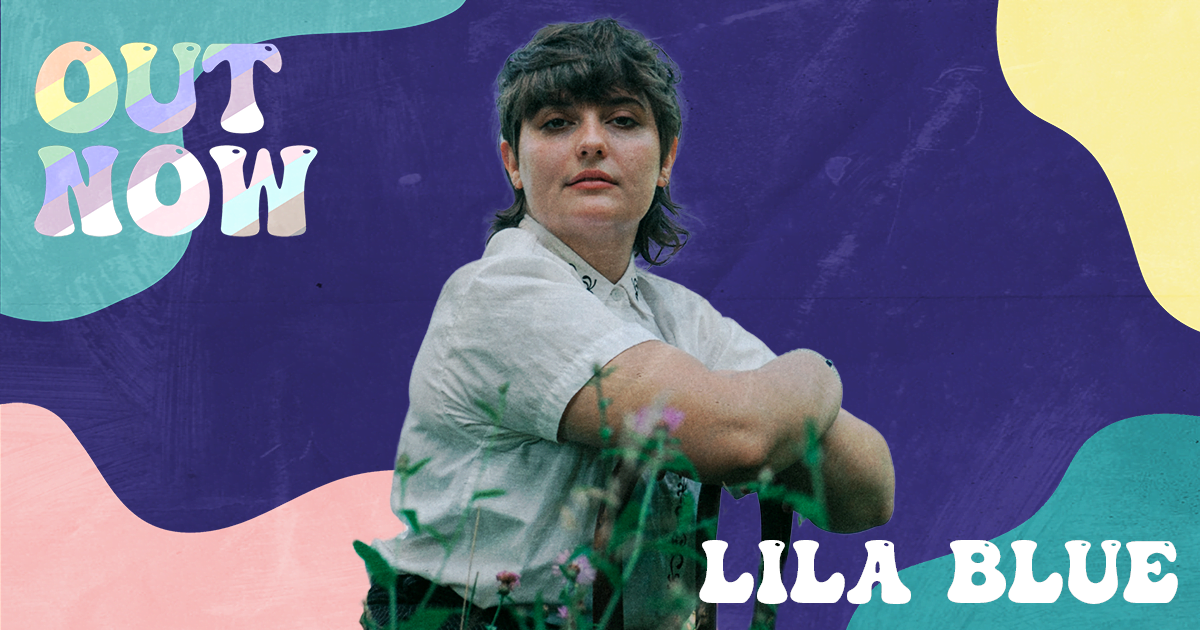
Out Now: Lila Blue

(Editor’s Note: Don’t miss the exclusive premiere of Lila Blue’s new video, “Stranger,” as part of this edition of Out Now. Watch below.)

Lila Blue writes songs with angst, tender love, detailed guitar lines, descriptive lyrics, and witchy energy. Their lyrics pull you into scenes and stories. They sing with great variation, Lila’s vocals are sometimes harsh, like aggressive growling and howling, while at other times they’re a soft and soothing sound. Their craftsmanship is top-tier; their story lines are intricate and engaging. Lila has been working with several of their collaborators since they were a child, developing strong and meaningful relationships. That kind of connection, understanding, and growth creates the perfect grounds for a cohesive sound.

I’m honored to feature this phenomenal artist. I think you’ll find their sound to be engaging, creative, and distinctive. I hope you enjoy Lila’s music as much as I do.

Do you create music primarily for yourself or for others?

Lila Blue: My creative process has become so tied to performing for others that I’m actually not sure anymore. I think before anything else, I make music because I love what storytelling can do. My first love was the written word, and as a sensitive and frequently-overwhelmed individual, it’s been there for me at every turn. I know that I would still write songs even if I never got to play them for anyone again, but I love watching what stories can do to those they touch and how deliciously unreliable they can be to make and ingest.

What is your greatest fear?

I kid you not, my greatest fear is steep inclines that have unsteady ground. If you ever want to catapult me into a state of pure horror (which as I write this down I realize I’m giving any future foe the ability to undo me…), put me on a hill with loose gravel, a sandy bluff, or even a shaky pair of stairs and my nervous system is toast. I fell down a bluff when I was a kid and it’s been ingrained in me since to avoid shifty ground.

What is your current state of mind?

It’s the final day of 2023 as I’m writing this, so I’m feeling more quiet and reflective than usual. There’s been so much pain this year, personally and globally, and I think I’m trying to hold reverence for the grief that comes with that, while also uplifting joy and mindful action whenever I can.

What’s the best advice you’ve ever gotten?

I had a poetry teacher in college, Marie Howe. In our first class, she made it very clear that if we didn’t know an answer and pretended to, we would be missing the entire point of being a student and a person. I have pretended to know many things that I don’t for fear of missing out or being deemed less smart because of it. Having someone give me the permission to let that go – and illuminate how much I was actually missing out on in doing so – is something I’ve reflected on time and time again.

For anyone reading this who might not be out of the closet, were there any specific people, musicians, or resources that helped you find yourself as a queer individual?

I grew up on the Indigo Girls and Brandi Carlile and those folks held out a light for me in their songs to feel seen, to have the thought, “Oh, I can do this as a calling and be vocal about who I am and who I love.” I got to share that with Brandi this year, which absolutely knocked my socks off in the most full-circle way.

I also had a middle school music teacher, Rachel Garlin, who was a proud lesbian folk musician and a huge support in my life at that time. Being in the presence of her living her life happily, full of queer love and music, woke something up in me around how I dreamt about my own future [and that it] was a possible reality. Reading Zami by Audre Lorde in high school was also a big turning point for me and what’s been beautiful about coming out and continuing to grow is that I realized the questioning doesn’t have to end at the point when the closet door opens – we all deserve to have a lifetime of discoveries! I felt that when I found Adrianne Lenker’s work or when I recently read The Argonauts by Maggie Nelson.

What does it mean to you to be an LGBTQ+ musician?

I had a hard time answering this, as there’s so many paths to choose with a question so wonderfully vast. I don’t know how it would feel to not have who I am and who I love intertwined with the art I make, they feel inextricable to me and because of that, I have a hard time pinpointing what it exactly means to me that they intersect. What I do know is that uplifting queer and trans stories that make myself and my community feel desired, honored, seen and held is what I feel called to do with my life, and each time I get to do so and share it with the world, it feels holy to me.

What are your release and touring plans for the next year?

We’ll be releasing two videos for “Stranger” [watch above] and “I Met the Devil,” and a music video for “High on a Hill,” as well as dropping the new merch and vinyl available on my Bandcamp page. I’m planning to tour with my friend and dear collaborator NOGA in the spring, am continuing development on an original musical in February, and in the meantime will be consistently playing shows in NYC starting in mid-January!

Can you tell us a bit about the new video for “Stranger?” We’re so excited to be premiering it within this interview. 

I wrote “Stranger” in the green room 15 minutes before going on as an opener for Kevin Bacon’s band in Lincoln, Nebraska, on Father’s Day in 2018 – which sounds like a fever dream when I write it out. Being in the midwest with the Bacon Brothers led to me ingesting a lot of country and folk music on the road and left me with a deep craving to write a tried and true country-folk tune. I wrote it a cappella, and then found the instrumentation a week or so later.

When I wrote it, I thought I was singing it to an “other,” a figment of someone I hoped could love me and see me. Now looking back, it feels like a letter from my closeted 18 year-old self to who I am now: Still ashamed of so much of themselves, trying to write to the stranger they craved to become. It makes me endlessly happy to sing this song to them every chance I get from the proudly queer, and deeply loved self I am now.

The video we got to film in Nashville felt like such a beautiful close to the chapter of bringing “Stranger” to the world. With the small and scrappy team at MOXE, and the amazing Elizabeth Olmstead, I feel we got to showcase what that song is about for me; the music and the words, and the creative lineage that got me there. Myself and long-time collaborators Saskia Lane and Phillip Roebuck got to play through “Stranger” on the beautiful land that MOXE is built on. I got to gaze at the studio in the distance as we sang through a song that means the world to me; I couldn’t have asked for more.

Like you mentioned, you’ve been working with some of your team members and bandmates for over a decade. Could you share that process of growing alongside folks you’ve been working with for years?

I was on a flight the other month with Saskia Lane and Phillip Roebuck (who were the first people I learned how to write songs from) and while the two of them were snoozing, I looked over and had a deep, reflective moment on how lucky I am to be able to collaborate with those who are part of my direct creative lineage. The folks who I made Sweet Pea with literally taught me how to play music, taught me how to be a musician’s musician, and I wouldn’t be the artist and human I am today without them. These songs wouldn’t have bloomed the way they did without Saskia Lane, Phillip Roebuck, Ashley Frith, Gabriel Ebert and Damon Daunno, and Kat Cook’s presence in my life.

You have a distinctive witchy-folk sound. How did you develop your sound and style?

Music has always been a ritualistic and spiritual space for me. As a kid, I was surrounded by folks and relatives who practiced witchcraft and around then I started writing songs in my sleep. Looking back, I wonder if that’s when I was least vigilant to certain turmoils I was going through, but I like to “yes and” when it comes to the rational and the mystic!

From the jump, what’s come out of me is tied to the lineage of folk music and those that taught it to me at the Lake Lucille Project, an artistic commune I’ve been a member of since I was eight years old. Learning to meld my practices of ritual and channeling, with the muscles I’ve built over the years in studying writing and music, has let me feel like I’m not powerless to what comes through me; I think if anything from here things will only get witchier.

Your music plays with intense variation in tempo and dynamics. Some of your songs whisper while others growl. This contrast creates engaging collections of songs. What is it like for you to write with so much diversity in sound?

Thank you for noticing that. I’ve always been really drawn to artists whose bodies of work are full of contradictions. A few months ago, someone asked me what I like most about music. It took me a moment to articulate it properly, but as someone who’s faced a fair share of trauma in my life, with that has come a distortion and “fossilizing” of time. I felt really trapped by my memories and through that felt trapped by time itself. But with music, I found that I could suspend time in the way my trauma did, but not from a foundation of harm. A good song can do that for someone – at least it does that for me. I figured out that for me to keep that suspension going, I needed to make music that felt surprising and dynamic to my ear.

You recently released your fourth album, Sweet Pea. Is there anything you’d like to share with our audience about the new album?

I’ve been so lucky to experiment with every record I’ve done and explore the current themes I felt drawn to at that time. When my producer Jordan Brooke Hamlin and I began to meet and discuss what this record would be about, I realized that I wanted to make a project where if someone asked me who I was when no one was looking at me, I could hand them a piece of music and show them. This is that record for me. If you listen to it, it will tell you all you need to know about me, and it wouldn’t have become that without the amazing crew at MOXE and my bandmates, some of whom have been my collaborators the past 12 years.


Photo Credit: Frank Theodore

“Stranger” Video Credits: Recorded at MOXE in Nashville, TN.
Produced by Lila Blue & MOXE.

Elizabeth Olmstead – Direction, cinematography, & editing
Lila Blue – Acoustic guitar & vocals
Phillip Roebuck – Resonator guitar & percussion
Saskia Lane – Upright bass

Special thanks to Jordan Brooke Hamlin, Lake Wilkinson, Kat Cook, & the MOXE crew.

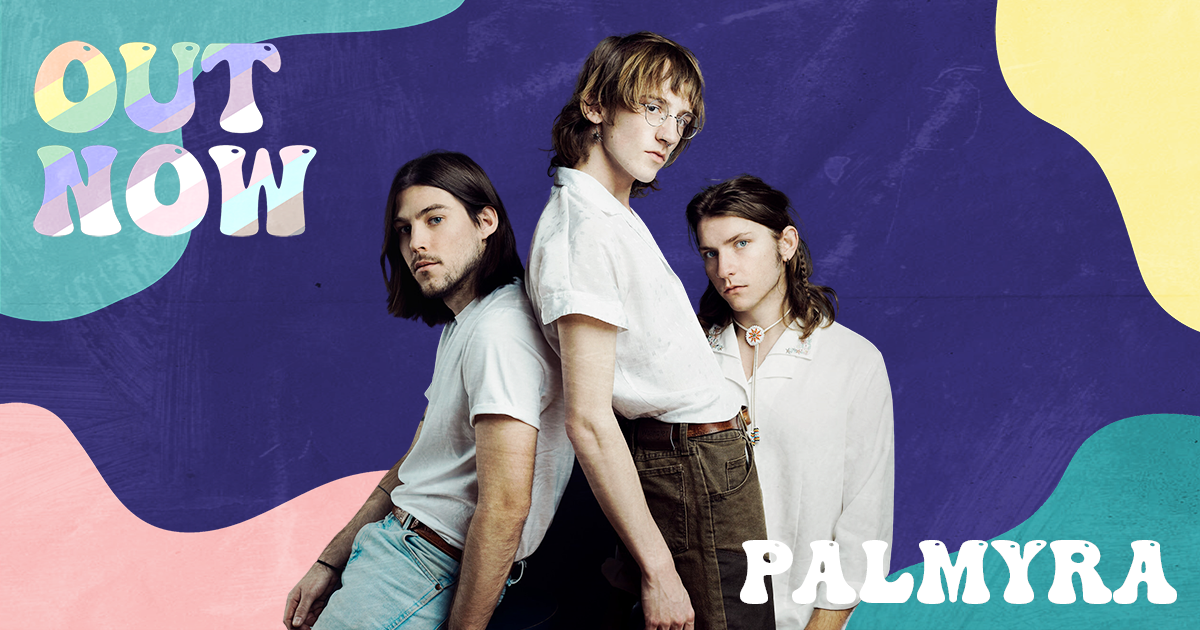
Out Now: Palmyra

Palmyra is one of those bands you discover and can’t help but continue to come back to. They are not easily forgotten. They write lyrics that are poetic while being relatable – a duality that is not easy to accomplish. 

The musicality of these three highly skilled instrumentalists – Teddy, Manoa, and Sasha – is strong and their energy is quirky, fun, and engaging. Lately, they’ve been touring all over the East Coast, recording, working with artists like Liv Greene and Jobi Riccio, who was previously featured on our column. If you can’t tell yet, the queer music industry is incredibly small and interconnected! 

Palmyra uses their innovative songwriting and performance skills to transform traditional folk instruments and three-part harmonies into something you’ve never heard before. We hope you enjoy our Out Now interview featuring Palmyra.

(Editor’s Notes: Interview answers supplied by Sasha Them)

Who are your favorite LGBTQ+ artists and bands?

Among my absolute favorite things about our touring over the last few years are the moments that we get to share stages with other queer artists. Liv Greene is a personal favorite mine; all of their songs exist in their own world of brilliance and masterful craft. Brittany Ann Tranbaugh has songs that absolutely wreck me. Another artist that’s constantly on repeat in the van for us is Brennan Wedl! Their song “Bag of Bones” is one of the most incredible songs I have ever heard and turns me into a pulp every single time I revisit it.

For anyone reading this who might not be out of the closet, were there any specific people, musicians, or resources that helped you find yourself as a queer individual?

Yes! I am an out-and-proud queer person now, but it took quite a while to settle into the person I am today. There are so many artists that helped move the needle for me; particularly the abundance of queer and trans folks I connected with online during the lockdown. Backxwash is top of the list for me; she’s a killin’ rapper and producer based out of Canada and her music helped me to understand that as artists we can channel complicated emotions and inner turmoil to create something empowering and badass and beautiful.

What are your release and touring plans for the next year?

Touring has been our full time job for two-and-a-half years now, and we plan on continuing to hit the road in full force in 2024. Our hope is to branch out to some new regions and cities, and I am sure we’ll be visiting all of our favorite places along the East Coast, from Maine to Georgia. Now that I say that, I’m realizing that, as a band, we kind of follow the Appalachian Trail in our tour routing…

We’ve got two more singles coming out this year, and are planning on putting out a few projects in 2024. I am so excited to share the music we’ve been working on.

This year, you’ve been sharing stages with bands like Watchhouse, playing festivals, and touring all over the East Coast of the U.S. What has that been like for you?

This year has definitely been our wildest one yet. Some of the experiences we’ve had, like opening for Watchhouse, have been so surreal to me. It feels like the work we’ve been putting in for so long has started to pay off in very real ways. Getting to play Newport Folk Festival is one of the highest honors any of us have ever had and it is beyond cool to get to connect with folks all over just by doing the thing we all love most – playing and writing songs.

What does your songwriting process look like? You have incredibly strong lyrics that are both relatable and poetic. Do you map out the structure and content of the song first? Do you think about song structure and tools like prosody, lyrical placement, and rhyme types? Do you spend a lot of time editing?

The songwriting process looks pretty different for all three of us, but each song typically starts with one writer and then is brought to the group to arrange and flesh out. There’s a very special (and sometimes uncomfortable) moment that has to happen when one of us brings a song to the group; you have to be able to release ownership of the thing you’ve created so that it can become a collective version that everybody has had their hands on.

For me, I usually start with one line that comes to me when I’m away from any instruments – typically when I’m out driving or walking! I am very particular about what words feel good coming out of my mouth and what feels the most authentic to my own personhood. Prosody and internal rhyme schemes are almost always on my mind, especially when I’m reworking a tune. I love getting into the nitty gritty parts of a song, and I love the moment I am able to zoom out when a song is finished and take care to make sure everything fits together.


Photo Credit: Joey Wharton

Out Now is a partnership of Queerfest and BGS authored by Queerfest founder and director Sara Gougeon.

WATCH: Sarah King, “Hey Hey What Can I Do” (Led Zeppelin Cover)

Artist: Sarah King
Hometown: currently Ripton, Vermont; formerly Columbus, Georgia
Song: “Hey Hey What Can I Do” (Led Zeppelin cover)
Release Date: September 1, 2023 (single)
Label: Ringleader Records

In Their Words: “Recording ‘Hey Hey What Can I Do’ was a bold, last-minute decision in the studio to celebrate and share some self-love: It was the first song I learned to play by ear on guitar, and I kept the original pronouns as a nod to some of the wonderful women I’ve dated in the past. I am now married to a man, but owning my queerness through music felt like the right choice.

“When it came time to craft a video, I knew Loni (of Whiskey Ginger Goods, who also designs my logo and merch) was the perfect director. She’s excellent at capturing women feeling themselves, and those beautiful in-between, emotional moments that can really tell a story. During my summer tour in Montana, we set aside some time to film both the bar and bedroom scenes. Combined, the video leads us through the seductive, and at times silly, story of a woman in love with another woman who won’t be true. As the heartbreak unfolds, the video gets more unhinged, until I just flop on the bed, tired of trying. I loved recording the song and video, and I hope everyone who watches has a blast listening, too!” – Sarah King

Track Credits:
Sarah King – vocals, guitars
David Baron – piano, organ
Johnny Stanton – bass
Jeff Lipstein – drums

Produced, recorded, and mixed by David Baron at Sun Mountain Studios, Boiceville, New York
Renee Hikari – assistant engineer
David Baron – mastering engineer


Photo Credit: Arielle Thomas
Video Credit: Filmed & directed by Whiskey Ginger Goods, Bozeman, Montana

Edited & produced by Sarah King

Queer Artists Take Over AmericanaFest 2023

Abundance. If there is one word that comes to mind to describe the presence of LGBTQ+ artists and queer community support at AmericanaFest 2023, that word would be “abundance.”

My first time attending AmericanaFest was in 2021, when one of the only queer events was an inspiring Rainbow Happy Hour showcase presented by Country Queer at Vinyl Tap. We have come incredibly far in the two years since. It feels surreal to witness an abundance of queer artists, showcases and supporters at an Americana music festival and conference. But that magical feeling is rooted in the manifestation and hard work that queer artists and promoters have poured into finding and building our places in Americana music while uplifting LGBTQ+ voices.

This year, we saw many queer events and artists at the Americana Proud showcase, the Americana Honors & Awards, The Equal Access Showcase (presented by CMT, mTheory and Nashville Music Equality), the Queer Cowpoke Roundup, the Good Ol’ Queer Country Jamboree by yours truly, Queerfest and BGS, and many more.

Americana Proud at Nashville City Winery – Tuesday, September 19

On the first night of AmericanaFest, nearly 20 queer-identifying artists graced the stage at Nashville City Winery for two Americana Proud showcases lasting more than three hours. Organized by Autumn Nicholas, a queer artist themselves, it was incredible to take in Americana Proud knowing this was the first of many LGBTQ+ showcases and events to come at this year’s AmericanaFest.

Vidalia Anne Gentry, the dazzling drag queen who hosted the event, opened the show lip-syncing to Dolly Parton’s rendition of “Rocky Top.” Crys Matthews and Heather Mae sang validating, original lyrics, including, “Our love doesn’t have to look like everybody else’s.” Denitia and Julia Cannon warmed the audience with Denitia’s “All the Sweet Tea” and Cannon’s sweet harmonies.

Madeline Finn and Liv Greene wooed the crowd and Jaimee Harris touched our hearts with a song written about the Pulse Nightclub shooting – a mass shooting targeting an LGBTQ+ club in Florida that took place in June of 2016, claiming the lives of 49 individuals. The song, “Orange Avenue,” is written from the perspective of a victim who lost his life in the shooting.

The concert continued with many more outstanding up-and-coming artists, including Ally Free, Jett Holden, Kentucky Gentleman, Lila Blue, Jobi Riccio, Palmyra, ISMAY, Jessye DeSilva, Abby Posner and Madeleine Kelson with her iconic queer anthem “The Way I Do,” which declares, “God has never loved a woman the way I do.”

As a whole, the Americana Proud showcase artists presented touching lyrics, intricate guitar lines, memorable stories and warm, loving energy. It was the perfect way to kick off AmericanaFest 2023!

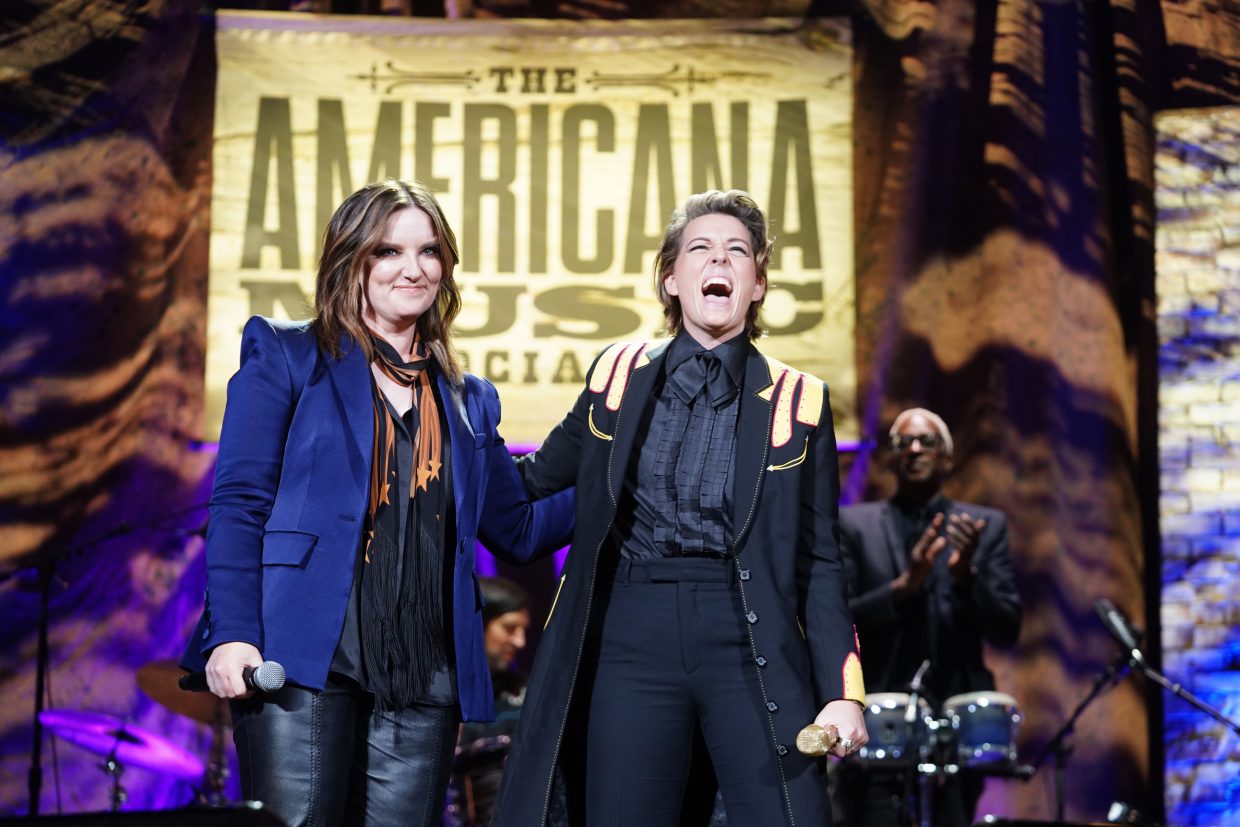
Brandy Clark and Brandi Carlile by Erika Goldring/Getty Images for Americana Music Association

The 22nd Annual Americana Honors & Awards – Wednesday, September 20

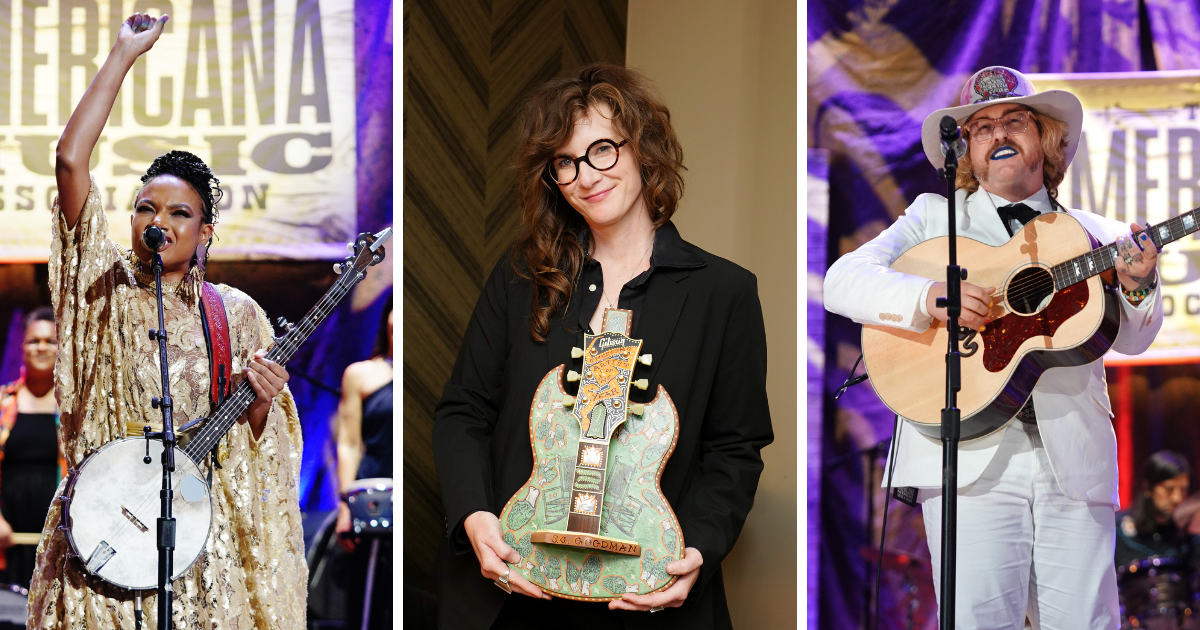
The Americana Honors & Awards show took place on the second night of AmericanaFest at the Ryman Auditorium. (See a full list of winners and honorees here.) There was anything but a lack of LGBTQ+ artists, with performances from Sunny War, Adeem the Artist, S.G. Goodman, Allison Russell, Brandi Carlile, Brandy Clark and Angel Olsen. Jobi Riccio also made an appearance singing harmonies with Emerging Act of the Year nominee William Prince and guitarist Joy Clark performed with Allison Russell’s band, the so-called “Rainbow Coalition.”

When S.G. Goodman took the stage, it felt like time stopped – a fitting feeling, as she performed her song “Space and Time” off of her 2020 album, Old Time Feeling. (The track was also recently cut by Tyler Childers on his latest release, Rustin’ in the Rain.) Goodman stood powerful in a black suit and red cowboy boots, her voice shaking through the Ryman, her lyrics honest, vulnerable and touching.

Goodman subsequently took home the award for Emerging Act of the Year. As she accepted the honor, the audience felt her authenticity, humor and gratitude. “I find myself pretty fortunate to have a lot of folks working beside me as if I’m making a million dollars when I’m not,” she said. “And aside from the million dollars part, I’m pretty fortunate in that, you know.”

Allison Russell earned the The Spirit of Americana / Free Speech in Music Award – and she really did earn it. Russell was instrumental in organizing the Love Rising benefit concert at Bridgestone Arena that took place on March 20, 2023. The show was stacked with many of the music industry’s top LGBTQ+ artists and allies, including Jason Isbell, Maren Morris, Sheryl Crow, Hayley Williams, Hozier, Brittany Howard, Jake Wesley Rogers, Julien Baker, Joy Oladokun, Fancy Hagood, Izzy Heltai, The Highwomen, Yola and more. Proceeds from the event were donated to the Tennessee Equality Project, Inclusion Tennessee, OUTMemphis and The Tennessee Pride Chamber.

Russell was presented her award, fittingly, by the “Tennessee Three,” State Representatives Justin Jones, Gloria Johnson and Justin Pearson, who were infamously expelled from the Tennessee General Assembly earlier this year.

Pearson announced to the Ryman, “Last session, Tennessee Republicans ran through a bill criminalizing certain kinds of healthcare for trans people under the age of 18, other bills criminalizing drag performance when minors are present, but didn’t pass a bill to ban assault weapons.”

“We’re either all equal, or none of us are equal,” Jones followed-up. “Or as we say in Tennessee, ‘Y’all means all.’”

(L-R) Gloria Johnson, Justin Jones and Justin J. Pearson, the “Tennessee Three” by Erika Goldring/Getty Images for Americana Music Association

We in the queer community are coming out of a long period of time when artists were kicked off of labels for coming out, when being in the closet was considered necessary to grow a career as an artist in the music industry (especially in country music spaces), entering a new era when many celebrate, uplift and openly work to build an inclusive industry filled with diverse backgrounds and identities.

As Russell gave her acceptance speech she declared, “We are not divided, we are united.” As a nominee for both Song of the Year and Artist of the Year, she returned to the stage throughout the evening. She was glowing, wearing a sparkly golden gown, rocking out on banjo backed by a band of women, queer folks and artists of color.

Equal Access: Presented By CMT, mtheory and Nashville Music Equality – Thursday, September 21

The Equal Access showcase took place on Thursday at Delgado Guitars and was developed by mtheory, which has a mission to empower artists and managers who come from underrepresented backgrounds within country music. They highlighted Gina Venier and Denitia, who proudly identify as members of the LGBTQ+ community, and Nat Myers and Bella White, as well.

Gina Venier played her iconic song titled “Nora Jane,” sharing her fears about coming out to her family. The song features lyrics like, “What’s my dad gonna do when I bring you home?” and, “I’m afraid everyone I love won’t love me the same. When I tell ’em your name, Nora Jane.” The song does an incredible job at showing the feelings, thought process and fears around coming out.

Good Ol’ Queer Country Jamboree by Queerfest + BGS – Saturday, September 23

Finally, our very own special event, a collaboration between Queerfest, BGS and Soho House Nashville featured Cidny Bullens, Chris Housman, Jett Holden, Amanda Fields & Megan McCormick and Adeem the Artist. To cap off the week of AmericanaFest events and programs, we gathered in the whimsical, exclusive garden at Soho House in Nashville’s Wedgewood Houston neighborhood on a perfect sunny and mild afternoon.

Cidny Bullens opened the show as our special, surprise guest, speaking on his experience as a transgender artist with a decades-long career pre- and post-transition. Chris Housman shared his reality of changing the pronouns in his songs at certain shows where acceptance and inclusivity aren’t a given, emphasizing how important it is to have spaces where artists feel comfortable being openly themselves. He played his viral single “Blueneck” with the well-loved lyric, “I guess I’m a red state blueneck.”

The next artist, Jett Holden, was introduced by Holly G, founder of the Black Opry, a collective building a supportive community for Black artists, fans and industry professionals in roots music. Holden touched on the experience of coming out and while he wasn’t disowned, he noticed queer conversations being shoved aside, and he felt unsure about where he stood with his family. Megan McCormick & Amanda Fields shared an incredible country- and bluegrass-infused set with upright bass supporting their graceful voices and melodic guitar lines intertwining in harmony.

Adeem the Artist was the culmination of our Jamboree, playing many queer-centered songs including “I Never Came Out,” from their 2021 breakout album, Cast Iron Pansexual. They spoke on their experiences encountering hate and queerphobia and transphobia at the festival earlier in the week and the difference between performative acceptance and truly doing the work. As Adeem closed out the event, they shared, “This was a nice vibe after a kinda shitty week,” underlining the importance of creating inclusive, LGBTQ-centered spaces. Soho House was filled with loving, supportive energy and was a perfect way to wrap up the last official day of AmericanaFest 2023.

Additional LGBTQ+ Showcasing Artists

In addition to queer-centered events and showcases, there were many LGBTQ+ artists who showcased, performed, or appeared at special events throughout AmericanaFest 2023, including but not limited to the following:

Aaron Lee Tasjan
Allison Russell
Ally Free
Abby Posner
Adeem the Artist
Amanda Fields
Amythyst Kiah
Austin Lucas
Autumn Nicholas
Brandi Carlile
Brandy Clark
Chris Housman
Cidny Bullens
Crys Matthews
Della Mae
Esther rose
Ever More Nest
Gina Venier
Heather Mae
Ira Wolf
ISMAY
Jaimee Harris
Jett Holden
Jessye DeSilva
Jobi Riccio
Joy Clark
Julie Nolen
Julian Talamantez Brolaski
Lila Blue
Liv Greene
Mary Gauthier
Megan McCormick
Melody Walker
Mercy Bell
Mya Byrne
Paisley Fields
Palmyra
Secret Emchy Society
Shawna Virago
Skout
Sunny War
Wiley Gaby

We’d like to acknowledge that these are merely the artists we encountered who overtly and publicly identify with the LGBTQ+ community and are currently open about their identities. There are surely many more, as yet not visible to us, who were also involved this year that we hope to highlight in the future.

We would also love to acknowledge the Queer Cowpoke Roundup event that took place at The Groove, a queer-owned records store in East Nashville, on Saturday afternoon featuring a lineup of Austin Lucas, Julian Talamantez Brolaski, Julie Nolen, Melody Walker, Mercy Bell, Secret Emchy Society, Shawna Virago and Wiley Gaby. Although there were often unintentional overlaps in queer events on the AmericanaFest schedule, it emphasizes just how abundant LGBTQ+ artists, events, organizations and promoters were at AmericanaFest 2023.

As a whole, it’s exciting to see this volume of phenomenal, openly LGBTQ+ artists showcasing, holding inclusive events and being nominated for and taking home awards. Experiencing the cultivated queer spaces at AmericanaFest was lovely – yes, there were several reports of queerphobia, transphobia, misogyny and hate being directed at and overheard by LGBTQ+ artists throughout the week, too. We’ve come so far, but we’ve still got a long way to go. Even so, we are holding gratitude for the critical mass of queer music and community at AmericanaFest 2023, and we look forward to continuing to develop a more inclusive music industry together.


All Photos: Erika Goldring/Getty Images for Americana Music Association
Lead Image:
Allison Russell; S.G. Goodman; Adeem the Artist; all by Erika Goldring

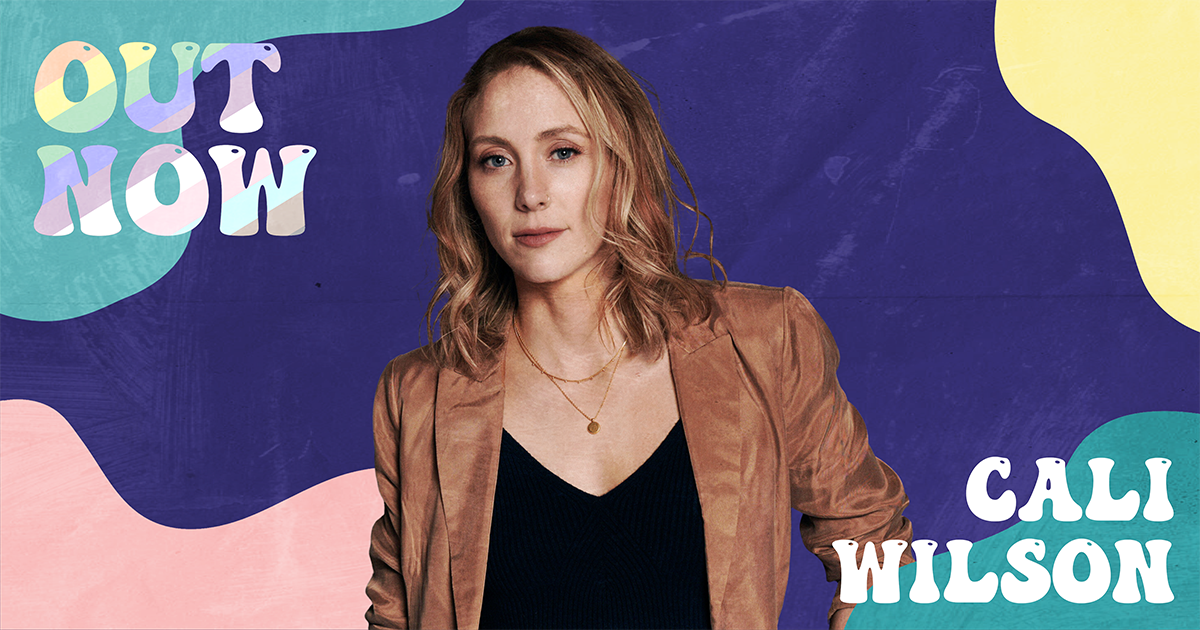
Out Now: Cali Wilson

Cali Wilson is the kind of artist who starts playing and the rest of the world melts away, leaving you with her phenomenal voice, warm guitar, and captivating lyrics. The first time I heard Cali play, she was doing her soundcheck for our monthly Queerfest showcase at Vinyl Tap in Nashville. Of course, I had listened to her music before, but I was stunned by how strongly her voice felt live, her vibrato resembling Brandi Carlile’s.

Following Cali’s appearance at Vinyl Tap, I was proud to book her for Queerfest 2022 and Nashville Scene‘s BEST FEST.

Cali’s latest release, “Old Fashioned,” was co-written with Chris Housman, another queer artist in Nashville known for his single “Blueneck.” It’s exciting to see LGBTQ+ artists collaborating and growing together. 

Our Out Now conversation touches on the process of creating music, the challenges around promoting it, and finding a balance between social media and mental health.

Why do you create music? What’s more satisfying to you, the process or the outcome?

CW: I think creating music, for me, is one of my forms of communication. It’s a way I can look inward and reflect on my emotions. Often we are so caught in our own experience, it’s hard for us to be objective. Music has a way of letting me see more points of view. It helps me get outside of myself to find the story in the situations of life. 

I think the process is always amazing and inspiring. It’s art that can keep evolving. To have a song or a record you can physically hear and feel is truly incredible, of course. But I’ll always love the act of writing and feeling it in the moment – a moment that you’ll never have again with that idea. Either by yourself or with co-writers, it’s the challenge of finding the best words to express that. I love that challenge. I love getting better at that process and soaking in how other writers flow, too. It’s the best thing about songwriting. 

Do you create music primarily for yourself or for others?

I think that’s a really difficult question to answer. I find it’s mostly for me as I’m creating it, but then when I play it out, I hear how others connect with it. Then it becomes something else entirely. The best way I can describe it is, it feels like it’s for me, because it is at first. It’s what I feel. It’s my idea. But then it grows to be bigger than that feeling when people connect with it. That’s why music is so universal and beautiful. People can see something in a song that is totally different than what I wrote it for. 

What’s the best advice you’ve ever gotten?

No one is going to promote you if you won’t promote yourself. And you can always be better. I don’t care if you’re the biggest hit writer, you can always learn something from someone in a room or on stage. Don’t get too big for your britches! 

What are your release and touring plans for the next year? 

I am planning some more single releases and maybe even an EP in the near future. Touring will be mostly around Nashville, but I’m heading to other states as well. Looking forward to creating more and broadening my fan base. 

What would a “perfect day” look like for you?

I wake up, take my dog for a walk, and have my morning coffee or matcha. Then I head to co-writes on the row. Grabbing lunch, spending time with my wife and friends after a day like that is my slice of heaven. 

Where did the idea for “Old Fashioned” come from? And how have you found the process of this release from writing to recording and promoting? 

“Old Fashioned” was the first song Chris Housman and I wrote together. We had the title first and then wrote it as a love song. I’m super proud of it. The process was pretty simple. The production and how I wanted the record to sound was the hard part. Promotion is always going to be a challenge. You don’t want to overstimulate your audience, but you also want them to listen when it’s released. It’s tricky. 

Independent artists like myself have nobody else to help with promo, social media, etc. It’s a lot of work, but it’s worth it. 

Over the past year you’ve seen substantial growth on social media. What has that been like for you? Do you enjoy the process of creating content and promoting your work? Do you ever find it tiring or exhausting? How do you balance social media and mental health? 

To be honest, I think social media was so much lighter on my soul when it wasn’t exactly “part of the job” in music. I have a hard time with it, but it’s getting better. I get overwhelmed and it’s hard for me not to compare myself to the peers that are doing better on socials. I get anxious cause I’m not posting enough and then I just get so anxious I don’t post at all. It’s such a hard balance and can really take a toll on you mentally. I try to balance it out with creating posts ahead of time when I can and just floating them up there on a schedule. That has helped a lot with the overthinking. 

I’ve also found it’s okay to be silly and not take yourself too seriously. People want variety in your content regardless of what the “professionals” say. I always try to remember that as well. 


Photo courtesy of Cali Wilson