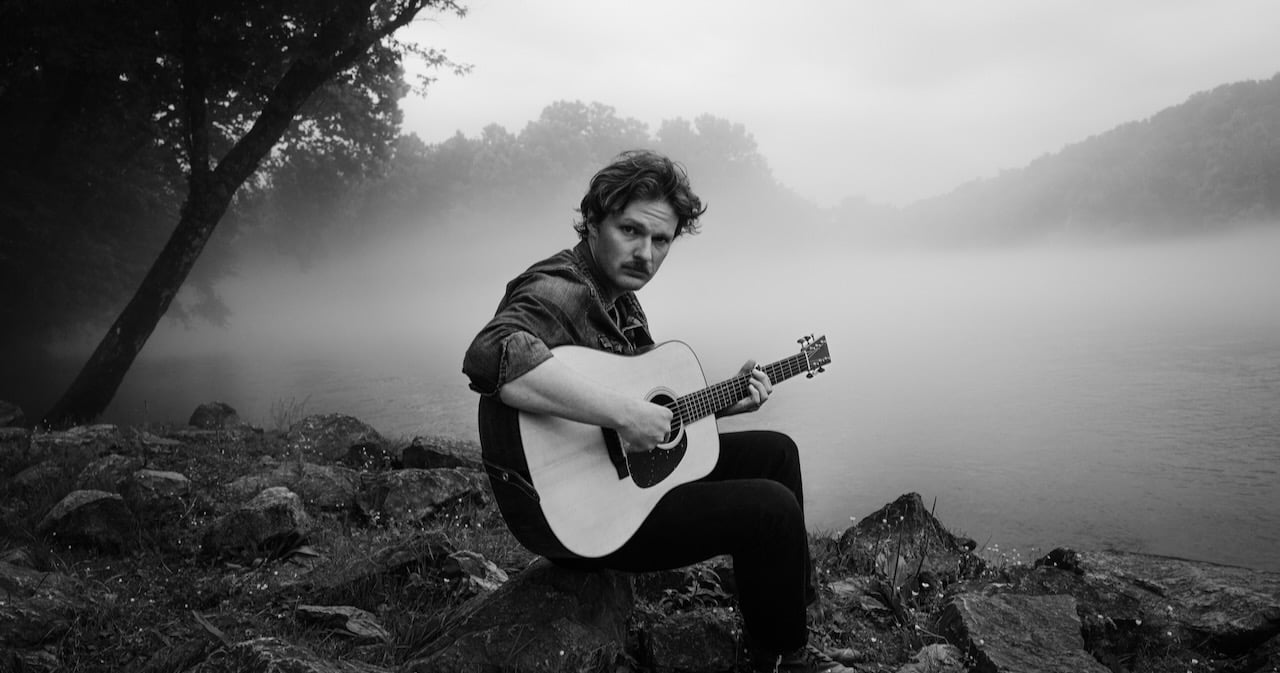
Unplugging Made Josiah and the Bonnevilles’ As Is Possible

By now, Josiah Leming is a master of reinvention. In the early 2000s, he signed a major label deal, then went indie for a while. Some of his albums leaned on his rock influences; others were more folk-oriented. He’s released a healthy number of covers projects, but can write songs as well as anybody who’s been in the business for 20 years. Leming also recorded under his own name before rebranding himself as Josiah and the Bonnevilles. And he’s about to be all over the map, literally, when he launches his Redline North American Tour in May with openers Max Alan and Brenna MacMillan.

Josiah and the Bonnevilles’ base should only grow with As Is, out May 8 on Rounder Records. Returning with a more electric approach, Leming co-produced the album with Konrad Snyder.

“It was important to me that the album sound different, but not so different that people don’t recognize it,” Leming tells BGS. “That was actually a pretty tough thing to do, because it’s easy to change things and really turn them on their head, but to have it still feel like it came from the music that came before it was something I thought a lot about.”

A proud native of Morristown, Tennessee, and now living in Nashville, Leming caught up with BGS to talk about how he picked up the banjo, the positive results of listening to Ralph Stanley, and how Jack Reacher helped him define his relationship with his fans.

I noticed the first line of the first song on the new album is, “I’ve been staying out and off the internet,” and after listening to the album a couple times, I realized that’s an important line for this whole record. Was there sort of a recentering, or a desire to disconnect, maybe, as you went into this album?

Josiah Leming: It was a huge part of it. And I still struggle with it a little bit, because the reason I got to where I am now is because I embraced the internet, I embraced social media, and I shared my life with people, day in and day out. I was 33 years old, fighting and scrapping to have a place, making music as a living. But I found as we got toward the end of 2024, the things that I was doing to sustain the level that I was at were coming directly at the cost of the essential thing that goes into the music.

Like, things had never been better. My shows were as big as they’d ever been. Everything was cooking on all cylinders, but I didn’t have any new songs that I was very excited to share. I needed to completely cut myself off from that world of the promotion cycle and the daily posting. … I have always written so autobiographically, and it would have been very easy for me to write an album about the struggles of the road or an album that would make a lot of sense to me. But I started thinking about 13-year-old Josiah in Morristown, Tennessee, and that guy doesn’t care what it’s like to be in Tulsa on a Thursday night, and maybe you’re a little lonely. Like, I gotta cut deeper to the core of this thing that’s not just about me.

That took me 30 or 40 songs to write out all of that stuff, to get to where I could look a little deeper for the meaning and the songs that somebody would understand if they weren’t a touring musician. That was the ultimate goal for me with the record, to make something where people don’t think about me when they listen to it. They can maybe just put it on in the garage. When I put on Ralph Stanley or AC/DC in the garage, I don’t think about Angus Young or Malcolm Young or Brian Johnson. I think, “Damn, this is an awesome day. This is a soundtrack to my life.” And I hope I have done that somewhere on this album.

How much of an influence did your Appalachian roots have on this album?

It’s really interesting. So the bio for the album was written by an author named Silas House. We had a chat and he actually asked me a similar question. He was like, “It feels Appalachian, even though it isn’t that obvious.” I think that’s because of the language I use that I grew up with. I think a lot about when I write, “Would my dad understand it?” My dad’s a simple, working-class man. So if things get too complicated, lyrically, then I want to change that to make it simpler.

That’s a lot of it, and I really went into the deep phase with Ralph and a lot of older stuff. That really changed my perspective on how I see myself in this industry. It’s very easy to start to get into this race to the top, and you’re looking at analytics, and you want more monthly listeners and all this stuff. Listening to bluegrass, and Ralph Stanley especially, all that kind of disappears, and it just becomes about the raw emotion of it. Which is what I fell in love with in the first place, when it felt like I had to do music.

How did Brenna MacMillan get involved with the project?

I was tracking a demo to a different song, a song I love but that’s very strange. And I was like, “I really want a banjo player.” Back in the day, I used to use Craigslist to find background singers because I love finding new people. So I put up an Instagram story and somebody sent me Brenna’s account. I watched one video and I thought, “This is just like lightning in your veins.” She’s so awesome. The energy in the banjo and the voice. And we had connected but it didn’t work out that particular moment.

So when it came time where I wanted banjo on the record, I hit Brenna up again because we’d exchanged numbers. She came in, and she’s just amazing. She doesn’t know how good she is. She’s been tour managing the band East Nash Grass, which I love. I’ve been listening to them a ton right now. I was like, “We need you in the band.” So now she’s in the band, she’s touring with us, and she’s going to open up the shows. I’m so excited for people to hear her.

When did you first pick up the banjo?

My grandpa gave me a banjo. He loved George Jones. He was a hard-drinkin’, George Jones-lovin’, bluegrass-lovin’ guy. He had a banjo and a Dobro he gave me, and I fiddled around with that. And then, all of us guitar players, when we find the six-string banjo, we’re so pumped because we don’t have to learn all these new chord shapes. So, it’s been a couple of years that I’ve been adding in the six-string banjo on things when I play, and I still play that on “Redline.” I am using the finger picks now, rather than my nails. So I feel like I’m starting to cross the bridge… if I can learn some shapes on the real banjo, maybe I can do some damage one day.

In “Redline,” it seems like you’re writing for the people you grew up with. People in your life who have hope, but it’s just hard. Who do you have in mind when you write a song like “Redline”?

It makes me emotional, honestly. I think about my dad all the time. It’s like I have all this… it’s not anger, but there’s very strong feelings. While I’m doing very well in my career, it’s better than it’s ever been, most people that I know are not winning in this modern world. Where everything is through the phone, and it’s the only way to access social circles. It’s the only way sometimes to order a damn McDonald’s sandwich. And there’s just this barrier, there’s this divide.

I see it with my dad, and my grandparents, just being left behind. And also working people. We shot the video for “Hell Without the Flames” down in Colombia, because that’s where all these jobs have gone, and now they pay these people even less than they paid before. So there’s just something that I can’t get out of my brain. I think about it all the time. That’s an important song to me. We love playing it. The band loves playing it. So I appreciate you asking that, it means a lot.

You’re welcome, and this may be a good segue to ask about “You’ll Never Leave Harlan Alive.” I found your version when I was going through your Country Covers EPs. It tells a similar story, about how grandma and grandpa had to keep working to live. Why did that song pull you in?

I probably heard that song first on Justified and I think that would have been the Darrell Scott version, the original. And I had always loved it. I mean, that’s just one of the best songs ever made. Talking with Silas about it, or anybody from the region, it’s so complicated because there’s so much pride. I like to think that there’s so much pride in working for so little, but these people are exploited over and over again. We don’t have aspirations of gold palaces or island complexes, so we’ve just been consistently taken advantage of, because we have this value system that’s a lot different. It makes you sad, sometimes it makes you angry, and sometimes it also makes you proud, and it’s really complicated feelings around all of it.

But it also seems like it’s important for you to share the music that you like. You’re writing songs that you want your audience to relate to. You’re covering songs to maybe introduce the music you like to your fans. You’re bringing musicians you like out on tour with you. Your fans can tell what you’re into through the company you keep. Is that part of your creative vision, to share with your audience who you’re listening to and what you like?

I think so, yeah. I was thinking recently, I always had service jobs growing up. I would serve tables or I would bartend. As I get older, I just see myself as having a responsibility. I think I had the responsibility to get off the internet for a year to write the best album that I could, rather than perpetuating my brand with songs that sounded similar. I feel like I have a responsibility to have the upbeat songs in the set list. If people are flying into town or driving 10 hours, it’s my responsibility to give them an experience.

There’s a great quote that I love from the Jack Reacher books. I love anything like James Bond, Reacher, or Tom Clancy. I love that stuff. But the author of Jack Reacher has a great quote about a handshake. And to make a handshake work, there’s got to be the hand on the other side that shakes back. I think about that in everything I do these days, since I read that. I wouldn’t get a lot of benefit out of just making music that I love and putting it out in the world if there’s not that hand on the other side. So I am at the point in my life where I think about those people that I’m looking at when I play live, and there’s a responsibility to me to weave what I’m excited about into what I hope will connect with them.


Want to see Josiah and the Bonnevilles live at the Fonda Theatre in Los Angeles on May 21, 2026? Enter to win tickets here!

Photo Credit: Sam Desantis

Tyler Childers: The Backstory (In Songs)

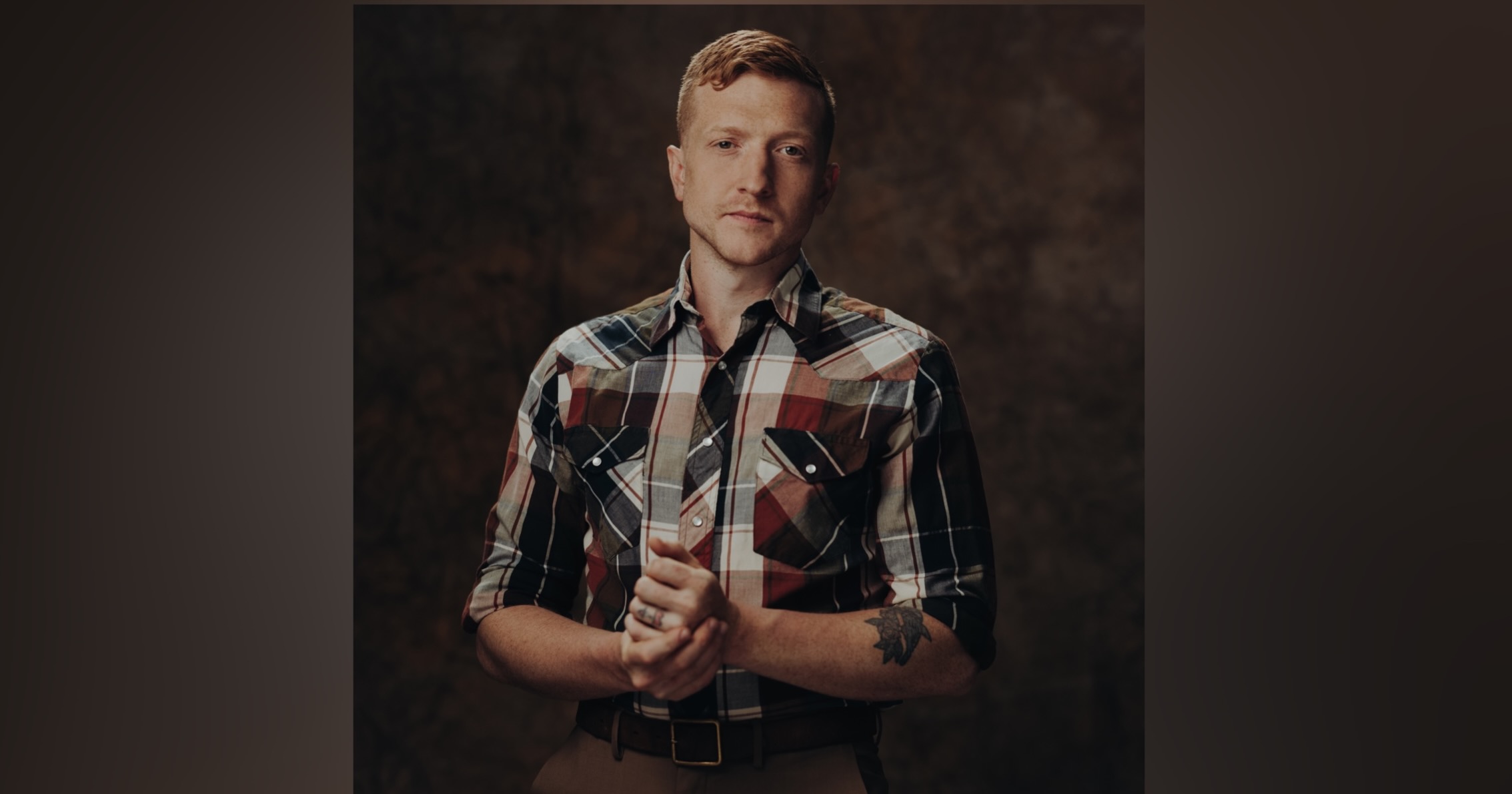
Tyler Childers has taken an unlikely path to the top via live performance, not radio singles. He’s become an improbable arena-level star by ignoring typical Nashville bromides – equal parts Patterson Hood’s working-class Southern blues, Chris Stapleton’s bluegrass bonafides, and Woody Guthrie’s progressive populism. After all, you’re not gonna call your touring band The Food Stamps unless you lean left, at least a little.

Like Billy Strings, Childers has become enough of a sensation for his appeal to extend beyond the Americana-adjacent world, too. Last year, he even turned up onstage for a live cameo with pop star Olivia Rodrigo in his Kentucky stomping grounds to do his song “All Your’n.” It went over like a house on fire.

Since country radio is finally, belatedly catching on with “Nose On The Grindstone,” lead single to Childers’ fine new Rick Rubin-produced LP Snipe Hunter, let’s take a look back to where he came from.

How’d this happen, anyway? Like this.

“Hard Times,” Bottles and Bibles (2011)

Going back to the beginning, “Hard Times” was the song that opened Childers’ full-length debut Bottles and Bibles. It’s an actual hillbilly elegy that definitely sets a tone, with finely detailed lyrics that unfold like a short story. Simultaneously stoic and emotional, Childers’ quavering vocal about a holdup gone wrong makes him sound like a protagonist who somehow regrets both everything and nothing at all: “And if the Lord wants to take me, I’m here for the taking/ ‘Cause Hell’s probably better than tryin’ to get by.”

“Long Violent History,” Long Violent History (2020)

Bluegrass roots and of-the-moment progressive activism makes for an unusual combination, but here we are. “Long Violent History” is the title track to a bluegrass album and it’s the only original and non-instrumental track on the record. Evoking “Faded Love” at the outset and “My Old Kentucky Home” on the outro, it’s a rural Southern score for the Black Lives Matter protests that swept America in 2020.

“It’s the worst that it’s been since the last time it happened,” Childers sighs at the outset, resigned to the inevitability of violence happening again. For good measure, Childers made a supplemental spoken-word video (below) explaining the necessity of BLM: “If we didn’t need to be reminded, there would be justice for Breonna Taylor, a Kentuckian like me, and countless others.”

“Jersey Giant” – Elle King (2022)

If Childers ever records his own version of “Jersey Giant,” he’ll have to hustle to top Elle King’s cover. As with the similarly themed “Me and Bobby McGee” (written by Kris Kristofferson, but owned for the ages by Janis Joplin), King just completely inhabits the song’s bittersweet, longing anguish. “I left town when we were over… Just didn’t feel the same” – the way she pauses a beat between lines is just chef’s-kiss perfection. There are numerous cover versions of “Jersey Giant” out there, but this is the one that’s going to linger.

“Luke 2:8-10,” Rustin’ In The Rain (2023)

Remember the big pivot-point moment of truth in the classic holiday cartoon A Charlie Brown Christmas – the “Lights, please” speech that his friend Linus makes? Childers must have grown up with that, too. Linus spoke these Bible verses, Luke 2:8-10, which Childers transposes to the key of honky-tonk in this song with his drawl in full effect. You can almost imagine the “Peanuts” dancers doing a two-step to it.

“Purgatory,” Can I Take My Hounds to Heaven? (2022)

Childers’ ambitiously wide-ranging 2022 album Can I Take My Hounds to Heaven? featured eight gospel songs, each done in three different versions dubbed Hallelujah, Jubilee, and Joyful Noise. The latter category tricked each tune up with samples and remixes, which might be the closest Childers has ever come to hip-hop electronica (at least so far!). In this guise, the title track from his 2017 project Purgatory cuts the sort of groove you’d expect to hear in New Orleans.

“The Heart You’ve Been Tending,” Harlan Road – NewTown (2016)

What does it mean that so many of the best covers of Childers’ songs are by women? Who’s to say, but here’s another great one, from the Kentucky band NewTown’s Harlan Road album. “The Heart You’ve Been Tending” is in waltz time, with fiddler/singer Kati Penn’s vocal shining bright as a lighthouse cutting through a foggy mountain breakdown.

“In Your Love,” Rustin’ in the Rain (2023)

Another multimedia project of sorts, this song from Childers’ Rustin’ in the Rain started out as a relatively conventional devotional love song. Then he enlisted collaborators including his fellow Kentuckian, author Silas House, to make a video that casts “In Your Love” as a sort of country music version of Brokeback Mountain set in coal-mining country. As beautiful as it is heartbreaking.

“Matthew,” Country Squire (2019)

Childers has always been wildly eclectic and this song from his Country Squire LP is a prime example. “Matthew” is yet another working-class waltz, with enough bluegrass savvy to drop bluegrass legend Clarence White’s name in the lyrics – plus an actual sitar as oddball sound-effect mood-setter at the beginning of the song. Somehow it makes perfect sense.

“Bottles and Bibles (Live),” Live on Red Barn Radio I & II (2018)

With or without a band, Childers has always been a riveting performer. This live version of the title track to his 2011 studio debut closed out 2018’s Live on Red Barn Radio I & II and it’s just voice and guitar. All the better to focus on the tale of a preacher as wayfaring stranger pondering the difficulties of keeping to the straight and narrow: “But they ain’t had to walk with the weight that you’ve hauled/ They don’t know you at all, but they think that they do.”

“Coal,” Bottles and Bibles (2011)

What might Bruce Springsteen have been like if he’d grown up in a Kentucky coal-mining family? You can imagine him turning out like the narrator of this song, which sounds way too timeless to have originated in this century. It’s pure working-class desperation: “We coulda made something of ourselves out there, if we’d listened to the folks/ That coal is gonna bury you.”

“Oneida,” Snipe Hunter (2025)

To be a Childers fan is to accept that he does have some idiosyncratic boundaries. There are songs from his live shows he’s never recorded, like the previously mentioned “Jersey Giant”; or popular recorded songs he has sworn off playing live, including the now-widely-seen-as-problematic “Feathered Indians.” For the better part of a decade, one of his unrecorded orphans was “Oneida,” a longtime fan favorite that’s like a Harold and Maude for the country set. Lo and behold, a recorded version finally surfaced as one of the best songs on Snipe Hunter. Dreams do come true.


Find more of our Artist of the Month coverage of Tyler Childers – including our Essentials Playlist – here.

Photo Credit: Sam Waxman

Artist of the Month:
Tyler Childers

Next to fellow Kentuckians Sturgill Simpson and Chris Stapleton, you’ll be hard pressed to find a singer more influential on the Commonwealth – or on all of Appalachian music – than Tyler Childers.

The Lawrence County-born artist first began cutting his teeth on dark corner stages inside diners across Eastern Kentucky and in grainy YouTube videos prior to laying the foundation for the cult-like following that’s been enamored with him since with 2011’s Bottles & Bibles and 2016’s Live On Red Barn Radio I & II. The following year he burst onto the national scene with his Simpson-produced studio debut, Purgatory.

From a voice as gritty and raw as the black gold he sings about on songs like “Nose On The Grindstone” and “Coal” to lyrics that shatter stereotypes and perceptions cast down on his home region by those outside of it, it’s easy to see why Childers’ music has become a soundtrack for not just part but all of Appalachia.

Whether it be the combination of humility and holler-bred antics within Purgatory, the intimate honky-tonk vignettes of Country Squire, the fiddle tunes of Long Violent History, the gospel-fueled experimentation of Can I Take My Hounds To Heaven? or the spiritual embodiment of Elvis on Rustin’ In The Rain, Childers has found success by shaking expectations at every turn, keeping old fans on their toes and bringing new ones in along the way.

When violence perpetrated by police was front and center during the aftermath of George Floyd’s death in 2020, Childers opted to cap off that fiddle album with its only vocal track, the protest anthem “Long Violent History.” During a heated societal moment, he approached the tune from an angle of empathy rather than pretentiousness as he tried contextualizing everything going on with past events like the Battle of Blair Mountain. Then in 2023 he had his first hit on country radio with “In Your Love,” an epic love tale that he recast as a gay one with the help of then Kentucky Poet Laureate Silas House in 2023.

While some fans have been turned off by his “political” statements, his viewpoints ultimately led to more people going down the rabbit hole of Childers’ catalog than ever before. This growth has culminated in sold-out shows at fabled venues like New York City’s Madison Square Garden, Lexington’s Kroger Field, London’s O2 Arena and the Los Angeles’ Hollywood Bowl. It also resulted in recording a track for last year’s TWISTERS soundtrack, collaborating with Olivia Rodrigo for a cover of “All Your’n” during a GUTS tour stop in Kentucky, and performing during The White House’s Fourth of July celebrations in 2024. Close to 10 years removed from his breakthrough moment, the singer is as popular and influential as ever.

That influence is sure to grow with the release of his latest studio album, Snipe Hunter. Recorded with and produced by Rick Rubin in Hawaii in early 2024, the 13-song compilation charts the red-headed stranger’s creative and spiritual coming of age with stories of the band’s success. The project is sprinkled with a bit of anti-capitalistic sentiment (“Eatin’ Big Time”), a yearning to escape on a trek to India (“Tirtha Yatra”), his fear of Koalas (“Down Under”) and hunting for whitetail deer (“Dirty Ought Trill”).

Much like its predecessors, Snipe Hunter captures Childers signature sound while also sounding like nothing he’s released before it, a fact no doubt aided by Rubin’s knack for crafting material that sticks to the cultural zeitgeist like superglue. Songs like “Nose On The Grindstone” and “Oneida” – a story about falling for an older woman – have been in Childers’ performance rotation, on YouTube playlists for years, and traded as coveted bootlegs, but the versions captured for Snipe Hunter, with their additions of organ, synths, and other studio toys, has each feeling reborn and completely new again.

Collectively, the album feels rooted in country funk bands of old like Goose Creek Symphony just as much as it incorporates more modern influences like Charlie Brown Superstar (whose remixes for Can I Take My Hounds To Heaven? are sublime) and Eric Church, serving up the perfect combination of past, present and future sounds in the process while sticking to the deeply personal Appalachian flavoring that has long highlighted his grand storytelling.

To celebrate the release of Snipe Hunter, we’ve named Childers our Good Country and BGS Artist Of The Month for August. Throughout the month, we’ll celebrate Childers by going back into our archives for all-things-Tyler, plus we put together a retrospective look at his catalog of songs and recordings here, have shared a thoughtful examination of whether or not Snipe Hunter was created as a musical “prank,” and of course, don’t miss our Essential Tyler Childers Playlist, below.


Photo Credit: Sam Waxman

BGS 5+5: Zach Russell

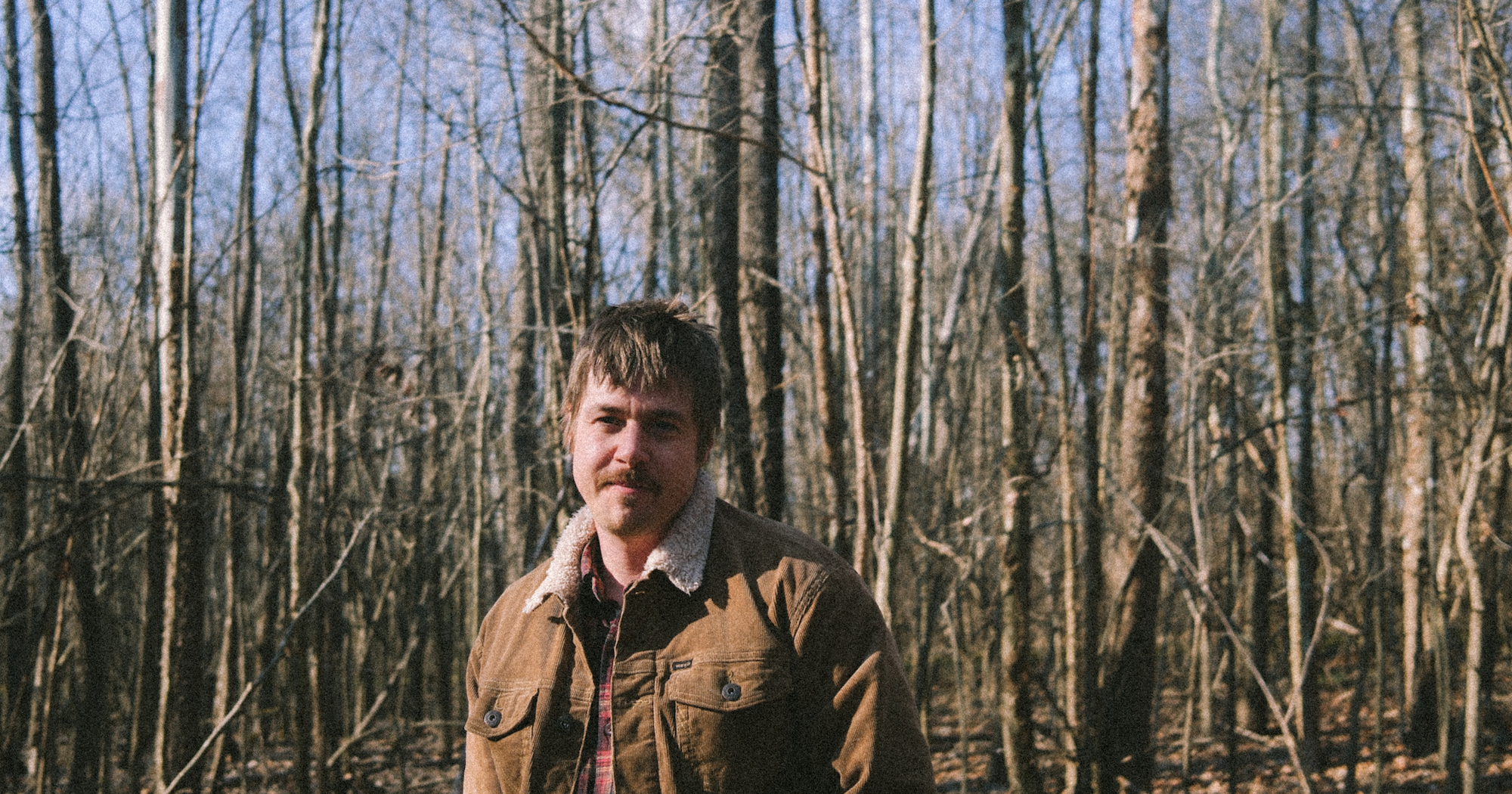
Artist: Zach Russell
Hometown: Caryville, Tennessee
Latest Album: Where The Flowers Meet The Dew (out December 1)

Which artist has influenced you the most – and how?

I’ve always looked up to Willie Nelson. In my opinion, he is the top tier as far as “artists” go. He wrote many great songs, but wasn’t against recording others’ great songs. His work is of substance and quality, but catchy and with mass appeal. He ebbed and flowed with the styles of the times, but it never felt inauthentic. He had success in the pop realm, then went back to Texas and started the outlaw movement. He has released 100 studio albums. He is still touring at 90 years old. He has a massive marijuana company.

As he said at the very beginning of his Yesterday’s Wine album, “The voice of Imperfect Man must now be made manifest and I have been selected as the most likely candidate.” I mean, come on. That’s as cool as it gets.

What other art forms – literature, film, dance, painting, etc. – inform your music?

I am a big fan of literature, especially Appalachian authors like Lee Smith, Amy Greene, Silas House, and Wendell Berry, but my favorite being John Steinbeck, a California native. I believe reading good literature keeps my mind’s eye in good shape and subconsciously strengthens my sense for imagery.

A song can be seen like a book. Though, in a song you don’t get hundreds of pages to make your point. You get three and a half minutes, some 32ish lines, to get across a story or feeling. You can’t waste a single word. Each line needs to fracture out in a hundred different directions once it enters the listeners mind. I don’t think I ever would have gotten that had it not been for good literature.

How often do you hide behind a character in a song or use “you” when it’s actually “me”?

Nothing against characters in songs, but I wouldn’t create one to hide behind. If I wanted to hide something I wouldn’t write a song about it. Art is largely about bravery.

If I cried and that is an important part of the story, I’ll say that I cried. Sometimes things aren’t meant to be taken literally, though. Sometimes they are meant to be seen mythically, meaning whether it’s true or not is not what is important. But no, never to hide.

What has been the best advice you’ve received in your career so far?

Be kind and be a good hang. Being fun to be around and a nice person will get you gigs over more talented players. I didn’t understand that at first, but now that I hire musicians I get it. You spend a lot more time sharing space with people than you do playing together.

Which elements of nature do you spend the most time with and how do those impact your work?

I spend a good amount of time thinking about my local world: All the local trees and wildlife, the Clinch River and the waterways that feed it, when things bloom, what eats what, and the general way things tend to go. I think if you pay enough attention to the natural world you could accidentally learn all kinds of secret stuff. I believe I have. I’m not really sure what, but things are different now. And I don’t believe it’s any coincidence that it was only after I moved back home to the mountains of East Tennessee that people started paying attention to what I was doing. Maybe it makes it easier to know where things wanna go, or what comes next.


Photo Credit: Emma Delevante

Tyler Childers Stunning “In Your Love” Music Video Was Written by Silas House

Traditional country phenom and Kentuckian Tyler Childers has announced his upcoming album, Rustin’ In The Rain (available September 8, 2023), with a brand new single and music video, “In Your Love.” Written and creative directed by New York Times bestselling author Silas House, the video tells a gay love story between two working class, Appalachian men – played by queer A-list actors and celebrities Colton Haynes and James Scully. The visuals for “In Your Love” tell one of country music’s most prominent and visible LGBTQ+ narratives to date, entering an industry landscape that has become more and more (openly) queer over the past decade.

“In Your Love” reminds of songs and albums released not just by left-leaning, more mainstream artists like Childers and Parker Millsap, but also by queer artists themselves, telling working-class stories and histories just like that constructed and depicted by House and director Bryan Schlam. In 2015, gay banjo player, singer-songwriter, and fellow Kentucky-resident Sam Gleaves released a landmark album, Ain’t We Brothers, which dripped with the exact same lived experiences and soot-tinged patina that inform Childers’ new video. In the past couple of years, releases by LGBTQ+ identified music makers like Amanda Fields, Willi Carlisle, Adeem the Artist, Amythyst Kiah, Jaimee Harris, and more trod similar ground. It’s notable still that an artist – however outlaw- or fringe-identified – as mainstream as Tyler Childers and with as broad a fanbase as his would choose to not only highlight queer, working-class storytelling, but to do so in a way that normalizes and re-centers these ways of being in Kentucky, the South, and Appalachia.

Rustin’ In The Rain will be released via RCA Records on Childers’ own imprint, Hickman Holler Records, on September 8. Via press release, Childers describes the inspiration that birthed Rustin’: “This is a collection of songs I playfully pieced together as if I was pitching a group of songs to Elvis. Some covers, one co-write, and some I even wrote in my best (terrible) Elvis impersonation, as I worked around the farm and kicked around the house. I hope you enjoy listening to this album as much as I enjoyed creating it. Thank you. Thank you very much.”

Clearly, the legacy of “The King” is merely one way drama, mystique, nuance, entertainment, and Southern-ness coalesce within this new project from one of the most exciting voices and perspectives in country.


Photo Credit: Sam Waxman