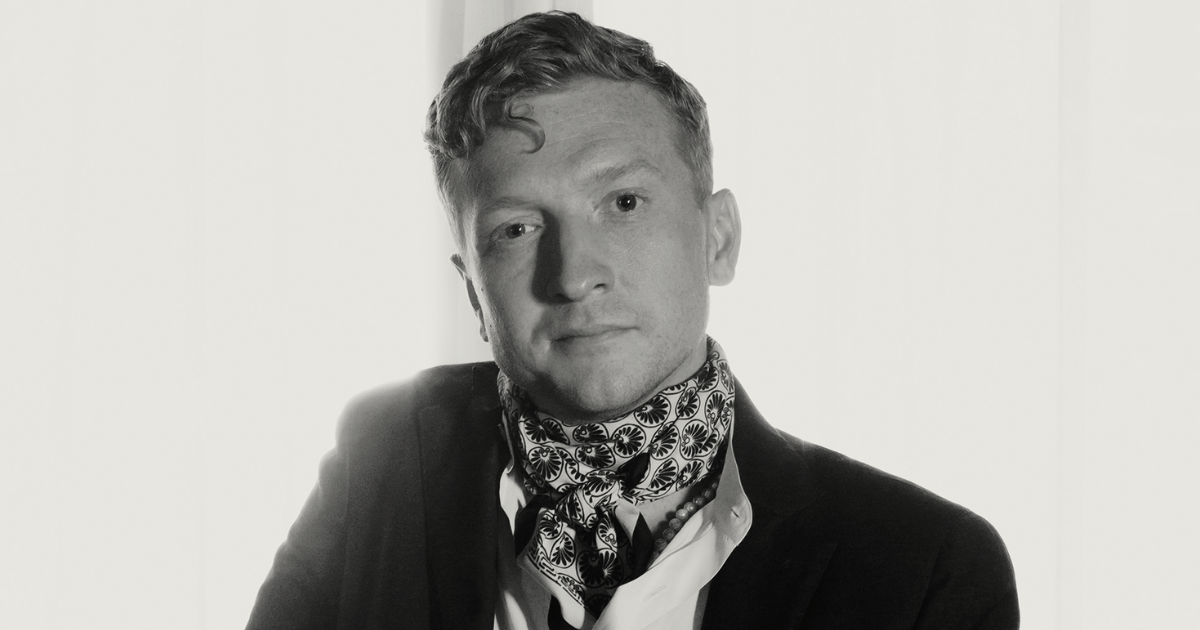
Texas has long been known for its singer-songwriters and country acts, but there’s plenty of music within the Lone Star State that navigates outside those boundaries as well. A few recent examples include Spoon, Gary Clark Jr., Khruangbin, White Denim, and Shakey Graves, the latter of which has become a cult hero of sorts in the folk and roots music space.
Born Alejandro Rose-Garcia, Graves’ career in music didn’t begin to take hold until the mid-2000s following acting roles with the Spy Kids franchise and television series Friday Night Lights, but once it did momentum hasn’t slowed since. Each step along the way the singer has reinvented himself. From the solo one-man band setup on his independent 2011 debut, Roll the Bones, to 2014’s And The War Came – which featured the indelible Esmé Patterson on songs like “Dearly Departed” and “Big Time Nashville Star” and eventually culminated in Graves winning Emerging Artist Of The Year at the 2015 Americana Honors & Awards – to the trippy, extended jams of 2023’s Deadstock anthology.
That constant transformation leaves listeners in perpetual awe. Among those caught in the cycle of captivation has been BGS executive director and co-founder Amy Reitnouer Jacobs, who first encountered Graves at Pickathon in Happy Valley, Oregon.
“I remember hearing him start his set and watching the crowd grow,” recalls Reitnouer Jacobs of that maiden experience. “There’s certain festival sets where you can feel a palpable energy and buzz, and this was one of them. It was just him, a guitar, a harmonica, and a suitcase holding a kick drum. It was a truly magical moment where you knew the person you’re watching is really gonna hit.”
In the 18 months that followed, Reitnouer Jacobs began booking Graves on several BGS-related gigs and sponsored stages at places like Bonnaroo, the Newport Folk Festival, and the LA Bluegrass Situation Festival. Around the same time, Graves was starting to pop off with his first big hit, the aforementioned “Dearly Departed,” which to this day remains his second-most streamed song ever with over 133 million listens on Spotify at the time of this story’s publication.
According to Reitnouer Jacobs, being around to witness Graves then was like a once-in-a-lifetime opportunity that is still in the process of playing out: “There’s a few key moments in anyone’s career where, if they’re lucky, they get to witness and be adjacent to somebody’s incredible talent,” she explains. “Getting to know Alejandro feels exactly like that.”
“He is always beholden to himself first and foremost,” she continues. “He’s not an artist that will crank out material just for the sake of doing so. When he comes up with something it’s going to be really considerate and developed. He’s also not afraid to try new things. I’ve seen him with a full band and solo, acoustic and plugged in. It really speaks to his multifaceted nature and how no one artist exists within a vacuum. Sometimes roots music can get a bit caught up in that, but Alejandro does a good job of having these different sides of him coexist and come through in his music.”
Speaking of trying new things, Graves does just that on his latest record, Fondness, Etc. Out May 15, the album of home recordings takes on an ambient and lo-fi approach that most closely compares to his simplified 2017 project, Shakey Graves And The Horse He Rode In On. Accompanying the minimalist methodology on these songs are the sound of bird calls and wind gusts on “On My Own” and various tropical noises on “I Once Was An Ocean” that give the compilation a very lived-in feel, something that’s not often the case for an artist who’s constantly reimagining his own work.
Per Reitnouer Jacobs, she thinks a lot of that intimacy and experimentation goes back to Graves’ roots in Austin, a Texas town known for embracing its weird side. “There’s a lot of really cool stuff happening in that part of Texas, so it doesn’t surprise me that something like ambient music is sneaking into what he does,” she observes. “My favorite artist, personally, is Kate Bush, with my top lyric of hers being ‘let the weirdness in’ on her song ‘Leave It Open.’ I go back to that a lot, because I think artists fearless enough to let the weirdness in are the ones who actually move their genres forward, which is exactly what Alejandro is doing.”
(Editor’s Note: This article originally published on Good Country in December 2024. At that time, Good Country content was available exclusively on Substack.
Townes was included as part of our end-of-year coverage in 2024, examining how many country artists across the continent have blurred genre lines to connect with new audiences and plumb greater depths of self-expression. Jewly Hight spoke to Townes about her recently becoming an independent artist at that time and together they examined where she stood and where she was headed.
Now, on April 10, 2026, Townes will release the first full-length album of her independent era, The Acrobat. To celebrate, we’re naming her our Good Country and BGS Artist of the Month. And we’re re-sharing this piece from the archives to kick off the month. Below, enjoy an excellent interview on our website for the first time and check out our Essential Tenille Townes playlist. Dive into our brand new feature interview with Townes on The Acrobat and a special bonus article of Townes in her own words.)
“Genres are a funny little concept, aren’t they?” Linda Martell poses rhetorically during the spoken intro to “Spaghettii,” roughly halfway through Beyoncé’s western epic Cowboy Carter.
“In theory,” Martell goes on with sly poise, “they have a simple definition that’s easy to understand. But in practice, well, some may feel confined.” Martell knows what she’s talked about. She endured all manner of efforts to hem in her musical sensibilities and diminish her agency back when she was country music’s most visible Black, female talent.
And now, because she lent her voice to a track where Bey and Shaboozey go hard with down-home boasts over a lurching beat, she’s up for a GRAMMY for Best Melodic Rap Performance. Other tracks from Cowboy Carter are in pop, country and even Americana contention, a staggering range of styles for one project to cover.
That’s the kind of boundary-blurring year it’s been, with Shaboozey translating country gestures and imagery to broody, contemporary hip-hop cadences with tremendous savvy and both Jelly Roll and Post Malone furthering their paths from rap origins to ever more fully embracing – and being embraced by – the country music industry.
Things haven’t been any tidier on the rootsy side of the spectrum. After being treated like a pop prodigal during her Star-Crossed era, Kacey Musgraves’ shimmering, urban folk revival-echoing ruminations on Deeper Well have been received as a country homecoming of sorts. Noah Kahan has helped bring on a resurgence of cozily folk-forward, singer-songwriter sensibilities in pop music.
A major country record label snatched up the Red Clay Strays, the type of crowd-pleasing, Southern blues-rockers that have long been celebrated in the Americana scene, where many other pivotal voices – first Allison Russell last year, then Sarah Jarosz, Amythyst Kiah, Adeem the Artist, Kaia Kater and others – experimented with lusher or more polished arrangements and production aesthetics in their latest work.
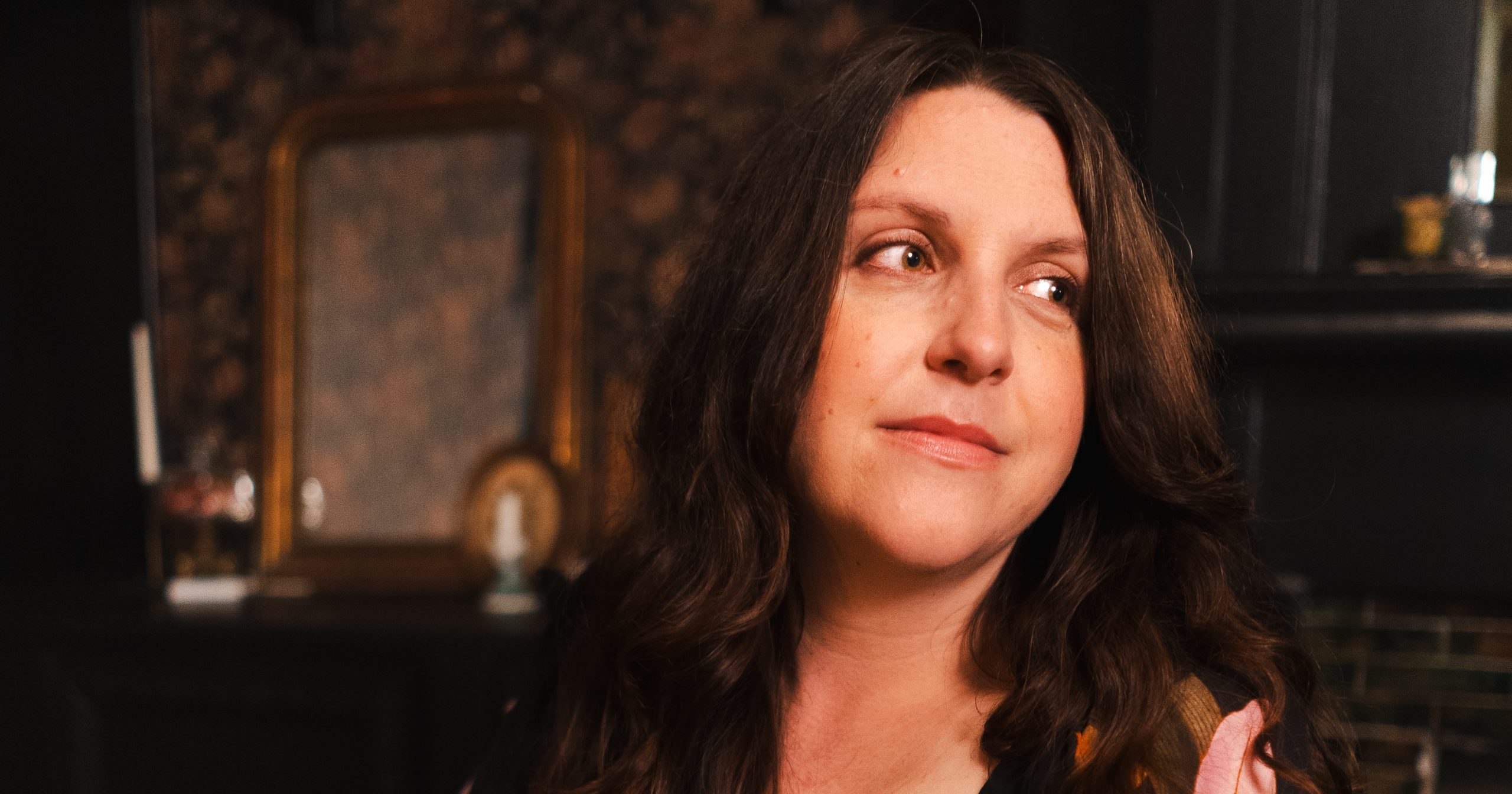
Tenille Townes offers us a particularly compelling example of an artist charting her course against the background of that extreme slippage between genre lineage, stylistic markers, and industry affiliation. She tried the major label country route in 2018, greeted as a promising new voice at a moment when the broad appeal of Kacey Musgraves’ Golden Hour ruminations made the industry a little more receptive to artists with a personalized, writerly bent, and she’s emerged independent on the other side. In her mind, being unfettered in a time of great genre fluidity is cause for optimism.
Townes began her tenure on Columbia Nashville with spare acoustic recordings, and concluded it this year in similar fashion. She was, and remains, an ardently openhearted singer-songwriter, bent on tapping deep veins of empathy whether she’s in observational or confessional mode. When I first interviewed her, it made all the sense in the world to hear her say she felt a kinship to singer-songwriters like Patty Griffin and Lori McKenna. It also struck me that Townes’ singing – curling syllables and stretching out lines with feeling, a style sometimes called “cursive” singing – was far from the hearty enunciation for which country music has been known.
In between then and now, Townes dropped an album that bore a super-producer’s digitally sharpened touch, won a pair of ACM awards to go with the pile of honors she’s received from the Canadian Country Music Association – which began to recognize her promise when she was a teen with dreams of pursuing music beyond Grande Prairie, Alberta – and she toured with big country names like Miranda Lambert and Dierks Bentley. Townes also faced enough professional hurdles, and observed enough changes in the landscape around her, to reconsider where her songs might belong. And I very much wanted to hear about that.
You’re presently on tour in Canada, aren’t you?
Tenille Townes: I’m having the best time on this run. It feels like a community at these shows. We’ve done a few tours through Canada at this point, but this was our first time going as far east as we did. I feel like live music in general is a little bit more scarce over there. They don’t get as many people making the trek. And so [I could feel] the appreciation.
They sold out the shows so fast and they’re singing all the words. And very quietly listening intently and leaning in a really vulnerable way. And then also having a blast and being loud, which is so cool to me, for it to feel like a living room and a rock club at the same time. That’s been such a big part of my vision.
I don’t know how far out you planned this tour, but I wonder if it’s become an important chance for you to return to your home turf, regroup and get reinvigorated.
Yeah, it honestly feels really essential in my creative journey. I could not be more grateful for the way the timing has aligned this year for this moment on the road. It feels like the ingredient that I’ve been craving. In January, I’m going to be so ready to dive in with my whole heart and make [the music] I’m going to share next. I don’t think that the recipe could have ever been complete without this tour in this moment. It feels so timely, because so much of this past year has felt terrifying.
And just standing on my own two feet as an artist again, pretty much entirely, I feel so excited and grateful to be making this leap into the arms of these people showing up at the shows who are so excited about this new chapter. And it’s such a wave of encouragement to go, “Oh yeah, I think I’m on the right path, doing the right thing.”
How is it different from when you’ve toured the U.S., in terms of headlining versus being an opener, the size of venues and how you’re engaging with the audience?
There’s been a lot of theaters for us on this run, which have a bigger capacity than some of the clubs that we’ve played in these towns before. It’s our first time playing a handful of these [places], but this is our third headlining tour in Canada.
What I noticed that’s different is when it’s our shows and our community, it just feels like people show up with open arms and they’re requesting songs that I haven’t played in so long. They know the deep cuts. They’re showing up excited for a night of feeling whatever they need to feel. And I think that emotional permission feels different at our shows than it does at a show where we’re a guest [in the opening slot] going to make some new friends. And it’s been really cool hearing from people that were like, “I saw you on the Dierks [Bentley] tour and this is our third Tenille show.”
One thing I always say at the top of the shows is I want our time together around my songs to be a place where everyone who walks in the door feels safe to show up and be whoever they are and to feel embraced and welcomed for that. And I thank everyone for buying a ticket and for showing up as that community. And I really feel like they’re embodying what that means.
Years back, I took note of the fact that Corb Lund had what was considered fairly mainstream country success in Canada, but he played Americana events when he came to Nashville. I’m curious whether you’ve seen folk, Americana and country are treated as separate genre categories in the Canadian market, like they are in the U.S. How do you tend to get categorized in Canada?
At least from my experience, it feels different to me. Because in Canada, I have been really grateful to have felt super embraced by the country community, by the CCMAs, by country radio, by the community of people listening to country music. And we have fit in that bubble there. And I don’t know that we fit the same way in the States.
I relate to what you’re saying about Corb Lund. I think maybe the lane is just not as narrow in Canada. And I think that they’re just more in it for live music of any capacity. I think most fans [who come see me] would be like, “Oh, I’m at a country show.” Which is funny because when we play shows here, that doesn’t necessarily feel the same. I do feel like the Canadian country music community definitely jumped on board with what I’m creating. And the music [I release in both markets] is very much the same, so it’s so strange.
I will say that the people coming to our shows, our headline club shows that we’ve done in the U.S., they feel very similar, like-minded people to me.
You’re a little more than a decade into your Nashville tenure at this point. Why is it important to you to stay?
Even though this town has a lot of jagged edges or hard things about it, I really do still feel inspired here. I feel like there’s a tapestry of artists who have come to this town with their dream and worked at sharing their art and building a group of friends and people around them who support that. I have a front row seat, you know, going to an Emmylou Harris fundraiser at City Winery and watching all of these people that she’s embraced in her life that she’s written with or jammed with that’s really a legacy.
I love this community, and I do feel inspired musically, having access to so many songwriters and musicians and producers. There is a heartbeat to this town that I want to continue to be present in and be a part of for sure.
I can picture the show that you were just describing. The atmosphere was very similar at the tribute to Mary Gauthier during Americanafest, a multi-generational gathering of Nashville’s singer-songwriter community.
When we first talked all those years ago, you described being an astute student in Nashville, paying particular attention to singer-songwriters like Lori McKenna and Patty Griffin. At the time, you considered them touchstones because of how they used the language of the heart in their storytelling.
In terms of their career arcs, their material’s been recorded by big names in country, but as respected as they are among songwriting connoisseurs in that world, they’ve had contemporary folk careers as performers. They’ve often released their music on independent labels. Were you also taking note of what their professional paths have looked like? Or are you now?
I honestly don’t know that I was conscious of it back then. It was just the music that I loved. I don’t think I even had an understanding of the choices made on an artist’s path to stay true to that route.
I’ve learned a lot in the last handful of years: “Oh, that makes sense why a certain path, like Patty Griffin’s, unfolds in a certain way.” I never thought of it as a ceiling or an alternate route. It just was where the music had taken her. That’s been inspiring to me.
I never want to look at any options of teams to work with or whatever with any closed-doors feelings. I would love to play the music that I make in stadiums. That’d be great if that still unfolds that way. But I also just really want to tell my stories and my truth, and whoever is going to come as the audience, that’s amazing to me. The idea of seeing it as a wider horizon than maybe a stereotypical path, that doesn’t seem scary to me. I think that’s because I’ve looked up to people like Patty or Lori, people who have always stayed true to what they’re doing and figured out the path there regardless. But I don’t know if I’ve ever actually intentionally thought about it that way.
Your intention has been clearer than ever this year. It wasn’t lost on me that the final two songs you released earlier this year, before you parted ways with your label – “As You Are” and “The Thing That Brought Me Here” – each were expressions of commitment to staying the course. What did you want to communicate?
I love that you noticed these themes. At the end of that journey, “As You Are” felt like such a great theme to end that season on. There was lots of resistance [from the label] in several years of working on music and getting to a point of actually getting to put it out. But that song always had a green light from them, which I really appreciated.
I wrote that song thinking it was about showing up and being a support system for someone. I had friends in mind that I was thinking of. It was just like, “I will be that safe place.” And then listening back to the demo after the [session] on the drive home, I was like, “No, I wrote this ‘cause this is what I want to hear when I’m struggling to let somebody in.” That’s been something that I’ve felt even in my professional journey for sure, just wanting to feel seen.
It really seems like you’re the one communicating on your own TikTok. In recent months, a lot of your posts have been about celebrating your professionally “single” era. When you shared the news that you were no longer in your major label deal, you framed it as a breakup that you were happy about. What felt right about striking that tone?
It felt honest. It was a lot building up to that decision, and it was not easy, and it was terrifying. All of those emotions were a part of it. I just felt like, “I can’t continue to share the music I want to make if I’m not letting people in on my process of that vulnerability, even when it’s hard.” Making those videos felt scary, for sure. But that just feels like the kind of artist that I want to be, to walk the walk.
Also part of my intention was, “This is something that creatively feels really empowering to me, to take back the ownership of my music.” And for any young girls out there, I want them to know, “That’s a possible feeling for you, to stand up for yourself at any moment in any kind of career, or on any path of your life.” It’s brave to take that step. And I guess I just want that invitation to be there for anyone following along.
And I want to bring together the community of people. Like, it is an “independent artist,” but I think it should be called a “community village artist,” because you can’t get your stuff out there without people believing in what you’re doing and coming with you. I wanted it to be very clear that we’re in this together. We’ve always been in it together, but it feels very defined to me now. And I wanted to make sure everyone knew that.
And now we have the benefit of accumulated perspective, so I want to reflect back. At the beginning of your label journey, what was in the atmosphere at the time in Nashville or the country music scene in the U.S. that contributed to a sense of possibility for you?
At the beginning, it was excitement. And [I] look back and think, “How crazy cool that I got to be a part of a major label deal that let me put out a debut single about homelessness, and then follow it up with a song called ‘Jersey on a Wall’ about losing someone in a car accident?” I’m so glad they gave me a chance to put out songs that were different and that sonically didn’t sound like a sure bet. I will always appreciate that. And it set me up with so many people who heard this record and the songs because of the way that they helped lift it up.
So I have nothing but love for that season. It might not have hit the thing over all of the world’s fences by any measure of what you measure as success. But to me, it’s a win to think that I got to share that art and that people found it and that they get to keep finding it because of that.
Years back, you told me that in one of your initial meetings, when you played some songs in a boardroom, the head of the label compared you with Jeff Buckley, which was a funny thing. In hindsight, I think that kind of speaks to the fact that you were bringing a sensibility as a singer-songwriter that might’ve been a little bit outside of their frame of reference.
And maybe the Jeff Buckley comparison – as much of a stretch as it was – was a gesture of someone who lacked the frame of reference or language for what they were hearing. Because the way you elongate your vocal phrases and hold onto lines is more akin to the “cursive” singing style that’s been a thing in indie music, folk, pop and R&B than in country, with its crisp enunciation. What kinds of conversations did you have about what you were doing, how they heard it and how they thought it fit into that world?
It is really fun to reflect on that. I definitely think from that initial meeting, they were going, “This is something that doesn’t necessarily fit in what that normal trajectory would be.”
I think that has been the compass that’s directed it a little bit left of where things would traditionally fit coming out of the system that they’re used to. I think they knew that all along. And at moments, that definitely made things a little bit bumpier or harder, because it wasn’t something that naturally made all the sense in the world, I don’t think. And I’m totally great with that.
I revisited the body of work that you released on the label, and I didn’t hear you bending your songwriting approach, singing style or artistic identity to any kind of mold that was really popular in country music at the time. What did it take to maintain that?
There was never an intention of, “Okay, that’s mainstream, so I’m closing the door to that.” I’ve always felt very openhearted in the writing room. It’s just what was coming out of what I was making that I loved the most. The Lemonade Stand came out in 2020. Then I wrote the songs for Masquerades all on Zoom in my house by myself. It was a time when I didn’t feel as much outside influence of commerciality. I was just honestly writing to express something and feel better.
We certainly, production-wise, had moments of trying to be strategic about what kind of things might — I don’t know — reach more people or something, or sonically be something that could be more mainstream. So there wasn’t a lack of strategy in that. I just had to follow the songs, I think.
On TikTok, you’ve shared clips of songs that you’ve had in the can for years that you said the label didn’t want to release. How did the disagreements over your artistic direction begin to emerge? And what was at stake for you when they did?
I think the biggest rub maybe was being able to plan far enough down an artistic vision, because it was just like, “We’ll see how this one does.” And the targets just kept moving. Mentioning putting out an EP or a record was scary. They were like, “No, we can’t. We gotta just take it one step at a time.” So I think that became the hardest thing, and where a lot of songs fell through the cracks, because we didn’t hit certain measures to be able to go to the next. We still found ways to push through and get music out. It just didn’t happen in a guaranteed, planned-out manner, necessarily.
What brought you to the place where you were ready to part ways?
I could feel it building for a while, for sure. And when it came to the point of putting out “As You Are,” there was a group of songs that were ready, and we were just getting resistance on putting out more than one or two out again. And honestly, they came to us and [said], “I don’t think we can put out the rest of these.” And it was like, “Okay, I think it’s time to go.” It wasn’t like I’d arrived at this place of courage. Circumstances were like, “Okay, I think the arrows are really pointing that this is the moment to take the leap, and I’m just going to do it.”
What did you see yourself as leaving behind and moving towards instead?
The idea of taking back ownership of what I create and jumping into this place of freedom in the sense of less hoops to get through to actually get songs to people. I think creatively, I needed change as well.
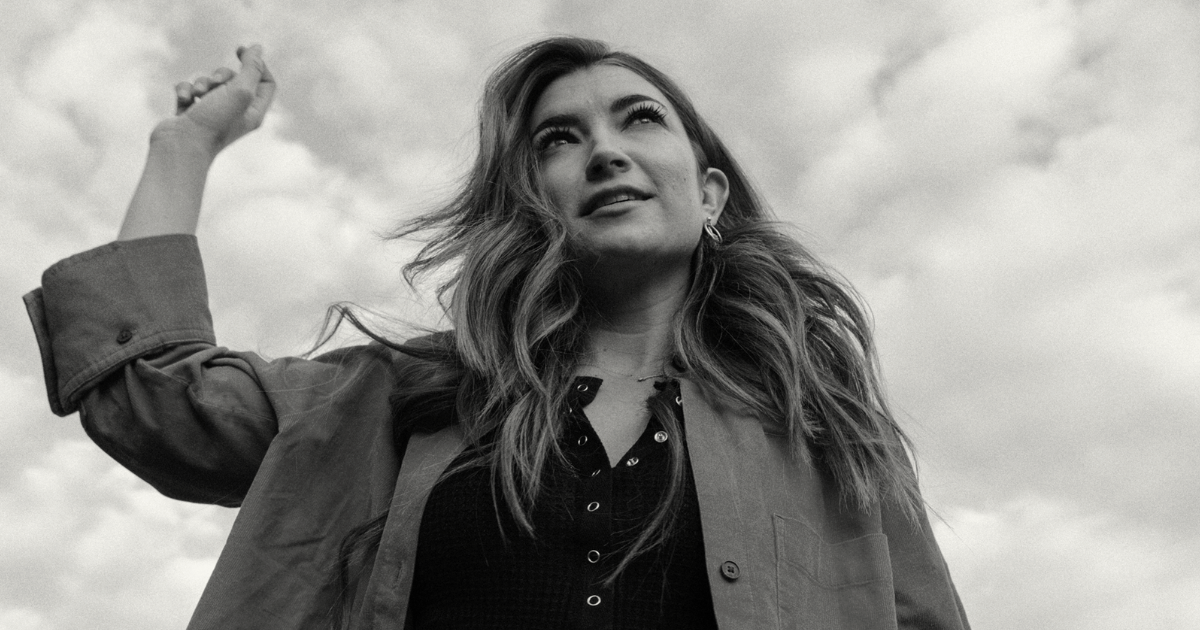
I’m so proud of that whole journey. I have no regrets, but in a lot of ways, it’s like the metaphor of having a [limited] number of crayons in your hand and trying to make a picture out of that. I felt I wanted the whole box back. I never felt like I was trying to create something to fit within [the industry], but I do feel like that kind of a system can’t not have an effect on what you’re doing creatively. I feel this freedom in my hands. What do you do? That’s a whole other process that I’m in the middle of right now, trying to figure out exactly what I want to say and how I want to sound next. It’s so liberating, and it’s also just, “Oh, this is up to me now.”
When you look back on it, do you think that label partnership was no longer the right fit for you, or that the mainstream country marketplace that it exists in was not the right fit for you?
I don’t know. I think maybe a little bit of both. But mostly, I think the major label system just ran its course for me. And I feel open to whatever team there may or may not be in the future. I wouldn’t write that experience off ever again. I think it just depends on the season I’m in creatively and what people are behind it.
What’s funny to me is looking back on the history of country music, the things that have [at certain moments] laid on the outside have actually [become] pillars of what’s created the format that we love and know. So it doesn’t scare me to [say], “I don’t actually feel like I belong in what we call right now the mainstream of country music.” I’m just going to do my thing and whatever we want to call it later, looking back, it’s fine with me.
Earlier we were talking about the singer-songwriter ecosystem that’s long existed in Nashville and has amorphous boundaries – those songwriters play their own intimate shows and write for bigger names in other lanes.
But there’s been far more visible crossing of boundaries than that this year. We’ve had pop superstars going country, and Kacey Musgraves – who never fully left her country label, but was viewed as drifting towards pop – made a folk-pop album that’s gotten her country awards nominations again. And then there are artists like Noah Kahan. I know you’ve expressed admiration for what he does. He’s been having great success with songs that are grounded in folk, but he exists in the pop world – and yet he’s also gotten Americana and country nominations. Have you been looking around you and taking note of how other artists are transcending genre boundaries?
Yes, and it feels so encouraging to be like, “How about you just make what’s you?” And then, what if there are different categories of music lovers who want to listen to stories and songs and voices and actually don’t care what sticker you put on it?
[As for] Noah, that’s just songs that are speaking to people at such a loud volume. I don’t know what you call it, and it doesn’t matter. Longterm-wise, I think Brandi Carlile’s path is a flashlight, to have something that’s just evolved with her as an artist and fit in so many different places. And I think about Patty Griffin. Even somebody like Billy Strings, Marcus King, I think is incredibly inspiring looking at all of these people who are not sticking to one lane.
You are actively narrating the decision-making process for your audience and frequently discussing what it looks like to be an independent artist, what that means, what your aims are, what challenges you face. From what I’ve read, you’ve kept some important parts of your team, management and publishing, but other aspects of the model have changed. What do you feel are the most significant differences in how you’re operating at the moment? What do you most want people to know about your present reality?
I think the biggest shift is how much making videos is a part of actually getting a song to be heard at all. And the creative output of just trying to make noise in a place that’s got way too much noise going on, the internet. That’s the most overwhelming thing that’s very different than what I thought it meant to be a singer-songwriter and write songs and tour.
I’m trying to balance the creative output of constantly being like, “Hey, I’m over here. This is what I’m working on.” And also making sure that my soul is in a good place, not just spinning on a hamster wheel, so that I can make something that I’m really proud to stand on in my life.
I’ve heard that you are working on new music. Are you broadening your circle of collaborators?
Yeah, definitely. I’ve been reaching out to people I’ve not written with before, people I’m just fans of their music and [asking], “Hey, let’s write or let’s get together and just jam.” And then I’m in the stage [where] I’m always writing. I’m at a point where I have a lot of songs and I’m trying to just zoom out and go, “Which ones are speaking the loudest to me?” The theme for me right now is very much about betting on yourself and getting to the heart of the matter without everything feeling too heavy and serious.
I’m at the spot of taking song inventory and trying to make some new friends and keep writing, and working on what might be next.
Won’t it be wild if you have an album that is on a Canadian country chart and then in the U.S., is on Americana and folk charts, the same collection of songs?
I think it’s possible. I believe it is. I love you putting that out there. I’m declaring it right now.
The expression of music is going to fit differently in different places. And I think that’s more possible in the landscape we’re in now than it ever has been.
Read our 2026 interview with Tenille Townes on her brand new album, The Acrobat, here.
Want more Good Country? Sign up to receive our monthly email newsletter – and much more music! – direct to your inbox.
Photo Credit: Lead image by Madison Rensing; inset image by Robert Chavers.
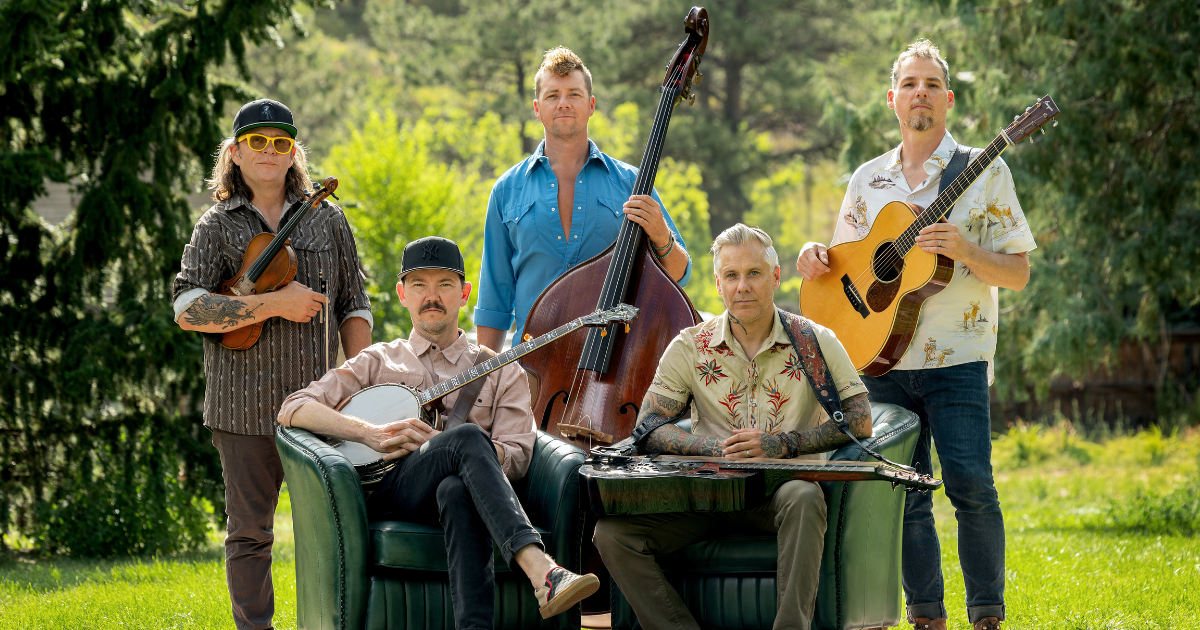
During the Infamous Stringdusters’ recent holiday gig at The Orange Peel in Asheville, North Carolina, the storied venue was packed out with jamgrass freaks, the performance itself a kickoff of sorts for the band’s 20th anniversary in 2026. I found myself standing sidestage when show opener Bronwyn Keith-Hynes came up next to me. A smile emerged on her face taking in the band and the audience.
“The Stringdusters made me want to start a band,” the GRAMMY-winning fiddler said, turning to me. “The Fork In The Road album was the most influential modern bluegrass album for me when I was at Berklee.”
Keith Hynes’ sentiment conjured numerous memories and moments I’ve been lucky enough to be a part of when it comes to the ‘Dusters. The first time I ever laid eyes and ears on them, it was the 2008 Targhee Bluegrass Festival in Alta, Wyoming. I was 23 years old and a rookie reporter for the Teton Valley News, based just down the mountain in Driggs, Idaho. By that point in my life, both personally and professionally, I was diving deep into the jamgrass world – the intersection of ancient tones, psychedelia, improvisation, and a collective love of the Grateful Dead.
The initial spark of the modern jamgrass movement was lit by Yonder Mountain String Band, Leftover Salmon, and the String Cheese Incident, all three acts coming into the national spotlight by the end of the 1990s. A musical template had been formed, and the ‘Dusters would emerge in the early 2000s to throw gasoline onto that melodic fire, ultimately becoming a missing link (alongside Greensky Bluegrass) between jamgrass originators, those ‘90s propagators, and folks currently carrying the torch into new, exciting realms: Billy Strings, Sierra Ferrell, Molly Tuttle, Sierra Hull, and more.
“That’s what’s so beautiful about bluegrass music, in particular,” Stringdusters fiddler Jeremy Garrett told me recently. “You pass it on to the next generation and they take it and they do their thing with it. Luckily for us, we were around at a time that [that] was very important, and a transitional time in the industry.”
In 2010, a couple of years after my introduction to the band at Targhee, when I returned to my native North Country of Upstate New York, I found myself covering a show at the intimate Showcase Lounge at Higher Ground in Burlington, Vermont. I was there to see the ‘Dusters once again. Their sound and energy immediately transported me back to the Rocky Mountains that I missed dearly. (Sharing the bill was another rising jamgrass act, Trampled by Turtles.)
I remember walking away from that gig feeling in awe and refreshed with a genuine feeling that something was happening. Something was on the horizon when it came to bluegrass and string band music. This wasn’t a traditional bluegrass band in matching suits, standing like statues. It was a rock show with acoustic instruments. Baseball caps and long hair, grins ear-to-ear. More provocative than standstill, more vibrant than just going through the motions of what past generations were instructed to do.
“Being able to showcase our own songs, in our own way, [our] writing skills, and making the decisions on what was chosen to play and how to play it [were] foremost for most of us at the beginning,” Garrett says. “Over time, we realized that we were actually growing a community. And after all these years, that honestly has become the most important part, the most important thing that we could possibly do.”
What I witnessed in Wyoming and Vermont years ago is what I’ve continued to experience with the Infamous Stringdusters, in person and in method, from Florida to Colorado and beyond. They set the pace then for where we stand with jamgrass right now, built on a full-throttle approach, one which remains sonically elusive as well as paying homage to the architects of bluegrass and those who broke from the pack and made something all their own.
Aside from the talents of the Stringdusters, either as individuals or the sum of their parts, you also have a unique setup. Alongside founding members, banjoist Chris Pandolfi and Dobroist Andy Hall, who emerged from the prestigious Berklee College of Music in Boston, you have the tradgrass pedigree of Garrett, who was born and raised in a traveling family bluegrass band hailing from Idaho. This fusing of road-tested grit and grace with conservatory-style techniques is at the heart of what this group does best: jam.
All of which circles back to the Asheville Orange Peel performance in late 2025. There were tightly knit melodies and freewheelin’ improvisational explorations. They broke down the invisible walls between themselves and the audience, maintaining a two-way street of momentum, energy, and inspiration from both sides of the microphone – a vortex of sound and scope, all revolving around a deep sense of community.
“The band is stronger than ever and making some of the best music we’ve ever made,” Garrett says. “But, the thing I see that is the most important being carried on is that community factor. We certainly didn’t invent that, but we took note and applied the philosophy to our scene, and hopefully the next generation realizes how important that piece is.”
Ultimately, this 20th anniversary celebration for the Infamous Stringdusters is a culmination of a tried-and-true effort to bring this hallowed music into the unknown and unfolding musical landscape of the 21st century. With their upcoming album, 20/20 (out February 13 via Ameriana Vibes) they continue their efforts to break new ground and forge ahead, together, whatever the next 20 years hold for jamgrass and the ‘Dusters.
The Infamous Stringdusters are our Artist of the Month. Below, enjoy our Essential Infamous Stringdusters playlist and stay tuned as we share brand new and archive content on the ‘Dusters throughout the month of February here on BGS – and across our social media channels. Like our exploration of their 20-year discography or our oral history of the band featuring all five members in conversation.
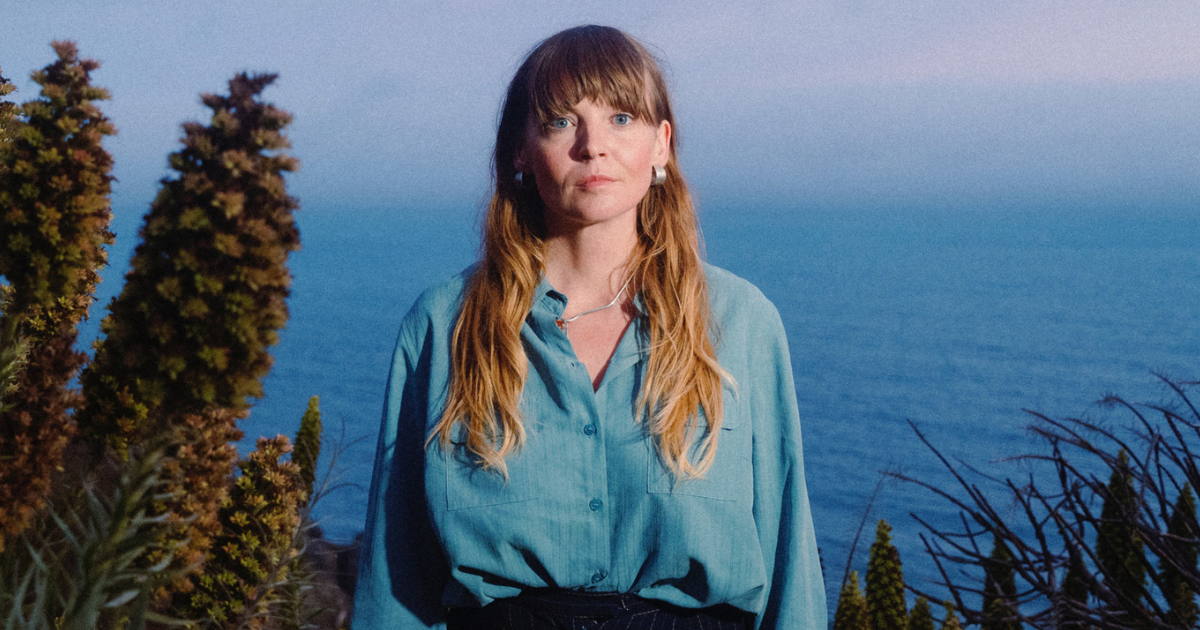
On singer-songwriter Courtney Marie Andrews’ upcoming album Valentine, you can hear her letting go.
It’s a process she ostensibly started – at least, musically or outwardly – on 2022’s Loose Future, a collection on which Andrews also reckoned with being in a period of transition, personally and professionally, letting go of former five- and 10-year plans and recentering in the present.
Approaching four years since that most recent studio album, with Valentine it seems Andrews is intent on reinforcing and revisiting the same lessons she taught us and herself on Loose Future. The new album, which will be released on January 16 by Thirty Tigers, begins with a grand, tone-setting opener, “Pendulum Swing.”
Reminiscent of ‘60s pop-folk and rich with arpeggiated 12-string guitars, Andrews vocally soars into the verses and murmurs each contemplative chorus:
If I get what I want Gotta let the pendulum swing Can’t be good for too long Let the pendulum swing…
It doesn’t exactly strike a listener as the sort of Loose Future Andrews formerly envisioned, but the song also doesn’t seem to wallow in the apparent feeling of impending doom, or the instinct that imbalances of “good for too long” must be righted. Instead, to this writer, it rather sounds like she’s focusing on the instinct itself. On her belief, conscious or subconscious, active or passive, that “karma” or “deserving” necessitates inevitable negative responses to anything positive.
As with all of her impeccable albums, Valentine finds love as a frequent subject – as well as community, perception, expectations, and how all of these topics touch on or intersect with existential dread. But Andrews seems to be letting go of her ideals of what love is or what it can be, as well. Thankfully, her perspective on the subject is always expansive, never simply reduced to just romance or sex or heteronormativity – or some slurried combination thereof. But Valentine is more direct in its approach to love than some of her LPs.
“[Valentine is] a record in pursuit of love,” Andrews explains via press release. But that love “is a lot more than I gave it credit for,” she continues. “It’s built over years, it’s built with trust, with changes, it becomes something new and unrecognizable, the deeper you go.”
Songs like “Keeper,” “Cons and Clowns,” and “Everyone Wants to Feel Like You Do” follow in tight formation behind Andrews’ past songs on love, connection, and romance – especially the masterful album, 2020’s Old Flowers. But other tracks, perhaps chief among them “Best Friend,” indicate that expansion on love as an idea and point back to the creative process here also being one of letting go.
You can sense that surrender, the gradual unclasping of fists and de-whitening of knuckles, in almost every aspect of Andrews’ creative output. It has, after all, been quite a few years since she last released an album. Her prior rhythm of abject road-dogging and releasing LPs every year or two has been replaced by much more thoughtful and intentional tours, performance forays, and product launches. She’s leaned more into another medium, painting, and has gone full-bore as a published poet, too. She’s released two collections of poetry – Love Is a Dog That Bites When It’s Scared having arrived this past August – and has built up her creative, community infrastructure to feed more than just her itinerant musical pursuits and former wall-to-wall, year-round tour schedule.
It’s almost like you can hear the retooling of Andrews’ idea of success happening in real time, from Loose Future through to Valentine. Like you can hear her realizing that giving up the version of herself who existed on Honest Life (2017) through May Your Kindness Remain (2018), and the version of herself from Old Flowers and Loose Future, doesn’t ever mean net loss. Like being on the road less means one could grow flowers, feed stray cats, and build a support system in her new home of Nashville that, especially as an only child and retired nomadic busker, she’s always craved.
The sense of letting go was perhaps infused into Valentine by the specific circumstances that gave birth to these songs. “I was in one of the darkest periods of my life,” Andrews continues in the project’s album bio, “and songs were the only way I could reckon with it.”
“I felt cursed, and the only mental cure felt like songwriting and painting.”
It’s why this album, like almost all of her prior releases, also feels as self-directed as it is outward-facing and primed for wide audiences. Andrews has learned that letting go – of control, of her past self, of expectations, of legalism around or criteria for love, of the “power” (and curse) of individualism, of freneticism and frantic ladder-climbing, or of life itself – is a process we don’t ever graduate from. We never muster out. We have to return to ourselves, to introspection, to the very constructions of our selfhoods over and over again to do that work.
The redemption and sheer beauty of this album are not because Courtney Marie Andrews has found her Valentine, but because she can hold up her wants, needs, and dreams as valid and wholesome goals on one hand, while stripping – and re-stripping – them of any power they may hold over her on the other. It’s an impressive duality, one that wouldn’t be nearly as successful without Andrews already having done so many reps in finding herself and of letting go.
Andrews is our January 2026 Artist of the Month, an auspicious start to a brand new year of roots music. Here, you can read our feature interview with Andrews all about Valentine, its making, and the unique way she and her collaborators went about recording these fantastic songs. Below, enjoy our Essentials Playlist and tune in on social media as we dip back into the BGS archives throughout the month to share all things Courtney Marie Andrews.
For the past few years, as the music industry goes quiet, spooling itself down for a two-week sleep over the Christmas and New Year’s holidays, the team here at BGS has taken the opportunity to utilize December to spotlight a few of our heroes. We began the series with Dylan in December in 2018 and followed up the success of that nontraditional “Artist of the Month” pick in following years with Dolly in December, Del in December, Dawg in December, and last year’s incredibly popular Dead in December.
What better way to spend a cozy, holiday-filled, wintry month than celebrating some of the legends – artists, songwriters, musicians, and bands – that have made our roots music scene what it is today? This year, it’s clear who our December Artist of the Month should be: “Doc” Arthel Watson, himself.
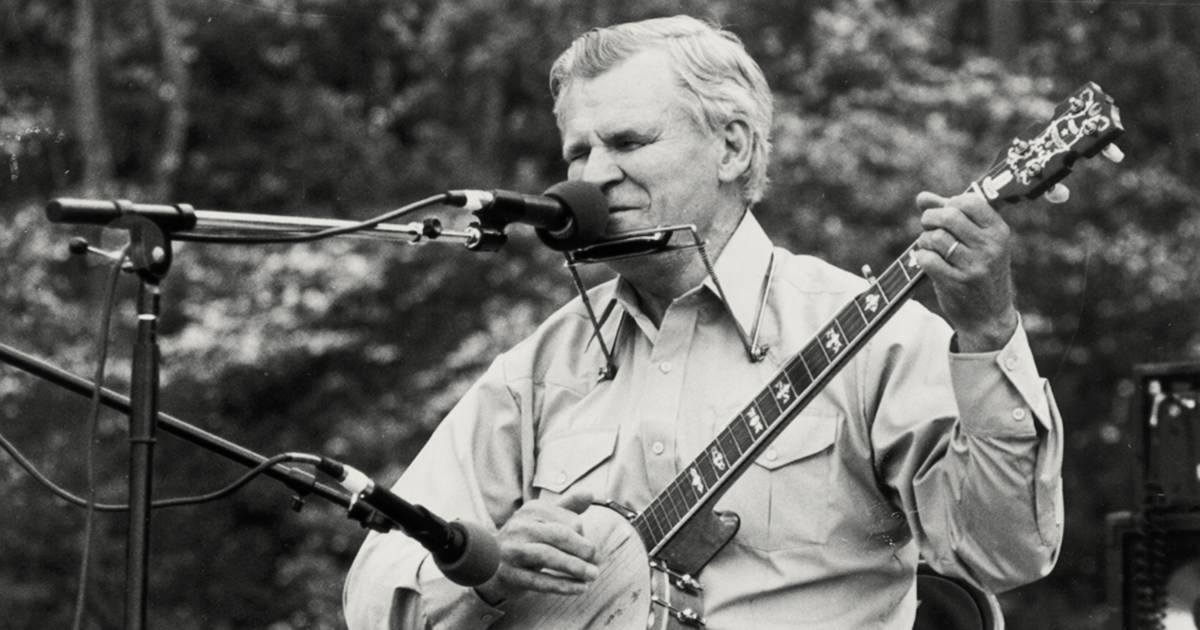
Born in Deep Gap, North Carolina, in the heart of Appalachia in 1923, Doc Watson started playing guitar – and other instruments, too – as a child. Doc lost his vision in his youth, but would go on to become one of the most important American guitarists in history even with his disability. His position in modern roots music, especially in bluegrass, old-time, and folk, is canon. He is a legend to any and all, from the diehard lifelong acolytes to the recently initiated neonates. He’s one of our Americana music figures who tends to get lost, like the forest for its trees, within his own ubiquity and universal adoration. But no matter from which angle you drill down into his career, discography, artistry, and legacy there’s always more to find. To explore. And to enjoy, of course.
Over the course of December, we’ll be doing just that. Our writers and contributors will offer new articles considering Doc’s songs and output and his career as an American guitar hero. And, how even after his passing in 2012, he continues to be a definitional stylist on flat-top, flatpicked guitar. But don’t sell him short, either. Though most known for his fiddle tunes, folk songs, and old-time and bluegrass licks, Watson was accomplished in many genres across the roots continuum; he dabbled in and conquered sounds from hillbilly and rockabilly, electric guitars, blues, ragtime, fingerstyle, chicken pickin’, and more. He collaborated with artists from well within his own circle and far outside it – sonically, socially, and geographically. Watson was incredibly dynamic, a characteristic that has contributed greatly to his lasting, ongoing appeal.
We will also be dipping back into our BGS archives to share past features, playlists, and articles about Doc, and his son Merle; about his festival MerleFest, which continues to this day; and about the albums and offerings celebrating the 100th anniversary of his birth that were released in 2023. Truthfully, there’s nearly an endless supply of BGS content that touches on, focuses on, or mentions Doc. Because of course there is – these genres we all love and hold dear wouldn’t be what they are today without him.
You also won’t want to miss perhaps the most exciting aspect of our Doc in December Artist of the Month celebration. In 2023, BGS was invited to Bryan Sutton’s Blue Ridge Guitar Camp in Brevard, North Carolina. Sutton, alongside his friend and peer Billy Strings, is one of the most prominent proselytizers for Watson in the 21st century, so it’s no surprise his annual camp just up the mountains from Watson’s hometown of Deep Gap is usually dripping with Doc’s music.
That year, one of Doc’s most famous guitars, “Ol’ Hoss” – a 1968 G-50 Gallagher Guitar Watson played in the late ’60s and early ’70s and on many recordings – was also at the Blue Ridge Guitar Camp. The instrument was one of the first of a few Gallaghers that Doc owned. BGS made the trip to Brevard to capture special video performances and interviews with many of the event’s instructors and pickers, each of whom played Doc tunes and shared stories and memories while picking Ol’ Hoss. It was a magical week in the mountains. Now, for the very first time, we’re making select songs from these tapings available in a new series, the Ol’ Hoss Sessions. Three sessions pulled from the shoot celebrates Doc in December and features Bryan Sutton, Courtney Hartman, and will also feature Billy Strings. Stay tuned as we share those videos right here on BGS and on our YouTube channel throughout the month.
It’s not that Doc Watson is underappreciated or underrated, or that he needs any of the visibility that being a BGS Artist of the Month might afford. In our neck of the woods, seemingly everyone knows and loves Doc Watson already. But with so many folks and institutions shouting Watson’s praises from the rooftops lately – artists like Sutton, Strings, and a host of guitar pickers and roots musicians from across our community and scene; the folks who put on and attend MerleFest; the communities of Boone and Deep Gap, North Carolina; projects like I Am a Pilgrim: Doc Watson at 100 – it’s clear there’s always more to learn, love, and enjoy about Arthel Lane Watson.
Get started with Doc in December with our Essential Doc Watson Playlist, below. Plus, follow along right here on BGS and on social media as we share Doc Watson content throughout the month. We’ll have a new feature on Watson’s status as American guitar hero, and you can see our YouTube playlist of his incredible musical collaborations here. Plus, of course, our very special Ol’ Hoss Sessions, exclusively available right here on the Bluegrass Situation. (Watch Bryan Sutton here. Watch Courtney Hartman here.) Plus, we’ll be combing through the BGS archives for everything Doc Watson for y’all to enjoy. Buckle up for a mighty month of guitar pickin’ glory, it’s Doc in December!
This month, BGS is celebrating 100 years of the Grand Ole Opry! It would be hard to overstate the influence of the Opry on American roots music – hell, on music in general – over the past century.
From Earl Scruggs joining Bill Monroe to create the sound of bluegrass; to DeFord Bailey becoming the first Black Opry star and the first Black musician to break into the commercial music scene in Nashville; to the legendary meeting of Johnny Cash and June Carter; the Opry has been a catalyst for so many iconic moments. Below, we kick off our “Artist of the Month” celebration with our Opry 100 Essentials Playlist, which includes some of our favorite live recordings from the Opry, songs famously debuted on that legendary stage, and some of our favorite roots songs written about the Opry and its lore, too.
Did you know that Dolly Parton made her first Grand Ole Opry appearance in 1959 at the age of 13 and received three encores? To get a sense of how young Dolly might have sounded on that stage, we’ve included one of her very first singles, “Girl Left Alone,” (the B-side of the now well-known “Puppy Love”), recorded when she was just 11 years old and released the same year as her Opry debut.
Elvis famously made his Opry debut in 1954 at the age of 19, singing “Blue Moon of Kentucky” in a style that was so poorly received a manager told him to “go back to driving a truck,” or something of that nature. You can hear his rockabilly version on our playlist.
In 1969, Linda Martell was the first solo Black woman to perform on the Opry, singing “Color Him Father” for her debut. Although she faced rampant racism throughout her career, her first performance on the Opry was met with two standing ovations and she went on to perform there 12 times over the years.
The Opry has also been fodder for songwriting, inspiring many tracks over the years. Early Opry star David “Stringbean” Akeman met Bill Monroe while playing semi-professional baseball and went on to play clawhammer-style banjo in his band from 1943 to 1945. After parting ways with Monroe’s band, Stringbean became an Opry star in his own right and penned the song “Opry Time in Tennessee.”
Stringbean and his wife were tragically murdered in 1973 by thieves who had heard of him storing cash in his home. In 2009, Sam Bush released his song, “The Ballad of Stringbean and Estelle,” co-written with Guy Clark and Verlon Thompson. “The thieves laid in wait for hours/ But things didn’t go their way/ But he wouldn’t let go of his Opry pay,” sings Bush on his album, Circles Around Me.
Shortly before the Opry was moved from downtown Nashville’s Ryman Auditorium to the newly built Opry House in 1974, John Hartford released “Tear Down the Grand Ole Opry,” a scathing commentary on the commercialization of country music. “Right across from the wax museum/ They used to line up around the block/ From east Tennessee and back down home again … Broad Street will never be the same,” Hartford sings nostalgically on his legendary Aereo-Plain album.
While the Opry is known as a country music gold standard, over its 100 years as a live-broadcast radio show it has held clout across the genres and in popular culture – not just in country. This year, as part of the celebration of its 100th anniversary, the Opry has been featuring 100 Opry debuts and first-time performances. These special appearances have showcased the broad impact of the Opry, hosting the likes of pop star Sabrina Carpenter who said, “My mom raised me on the artists who have stood up here.”
Whether in country, bluegrass, Americana, or beyond, the Grand Ole Opry continues to be a musical powerhouse, 100 years after its barn dance birth. While we look ahead to the next century of Opry magic, we’re beyond excited to join the Grand Ole Opry family in celebrating Opry 100 for the entire month of November. Enjoy our Opry 100 Essentials Playlist below and relive the Opry 100: A Live Celebration television special on NBC from earlier this year here, too. You can read our primary feature on Opry 100 right here. Plus, stay tuned all month as we have brand new and archive articles, interviews, and features we’ll be sharing here and on socials all spotlighting the incredibly legacy and community of our beloved Grand Ole Opry as we countdown to November 28, 2025 – the Opry’s official 100th birthday!
Lead Image: Opening of the Grand Ole Opry House in 1974, courtesy of Ryman Hospitality Properties.
Author and artist Jenny Odell begins her impeccable book, How to Do Nothing, immediately driving to the heart of the matter:
Nothing is harder to do than nothing. In a world where our value is determined by our productivity, many of us find our every last minute captured, optimized, or appropriated as a financial resource by the technologies we use daily.
The book is a striking, heartfelt argument for a realignment of societal and personal priorities that decenters social media, the “attention economy,” and the ways each of our individual “rat races” have now penetrated every aspect of our own lives and our each and every waking moment. In Chapter 1, “The Case for Nothing,” Odell continues,
Currently, I see a similar battle playing out for our time, a colonization of the self by capitalist ideas of productivity and efficiency. … The removal of economic security for working people dissolves those boundaries – eight hours for work, eight hours for rest, eight hours for what we will – so that we are left with twenty-four potentially monetizable hours that are sometimes not even restricted to time zones or our sleep cycles.
These paradigms of and assumptions about “productivity” immediately jumped into my mind when I first heard singer-songwriter Caroline Spence’s lovely new album, Heart Go Wild. Released August 29, it marks Spence’s return to independently releasing music – on her own terms and retaining ownership of her own intellectual property (and the productivity that birthed it).
Over 12 original tracks, Spence is meditative and introspective, angry and tender, grateful and underappreciated, clamoring for justice and toying with the idea of giving up. There’s self-cajoling and there’s self-acceptance. There are aspirations, too, but the undercurrent of this collection isn’t ambition or climbing Music Row ladders or seeking any sort of superlative recognition. More than perhaps any of her other delicious albums – which also carry through many of these same themes – Heart Go Wild seems to be an exercise in songcraft, music-making, and album production that’s more in the vein of “doing nothing” than “doing everything, for everyone, 100% of the time.”
So, while these songs will surely elicit tears, spur daydreams, trigger longing, and untether dozens of emotions, overall they feel like one long, therapeutic sigh. A “deep breath out” to purge years of being underestimated or overlooked or underserved by record label execs, an exhale to eliminate any traces of ambition only for ambition’s sake, and to say goodbye – once and for all – to making art in order to meet the expectations (or profit margin targets) of others.
Since Spence’s most recent prior album, 2022’s True North, the shape of her professional life and network isn’t the only way her day-to-day has changed. She married her life partner, together they started a family, and the rocky relationship she had with the music business and its executives was just one facet of many in a deep self-searching and realignment of her musical and artistic priorities.
You can hear this shift in – or perhaps, recovery of – her values system in each of these songs. Spence has learned that “doing nothing,” that is, working outside of the machinations of the music industry, has always been her preferred method. And, just as she tends her bulbs, wildflowers, and hydrangeas, rain by rain, day by day, season by season, she now brings the same sort intention to her entire music-making process.
Odell continues in How to Do Nothing, “Our very idea of productivity is premised on the idea of producing something new, whereas we do not tend to see maintenance and care as productive in the same way.”
These songs – whether “Confront It,” “The Sound of You,” “Soft Animal,” “Dried Flowers, Old Habits,” and many others on the LP – indicate a deep, in-her-bones understanding that maintenance, stillness, rejuvenation, and feeding one’s soul – and the souls of your loved ones – is always productivity. Does it pad the pockets of suits in Nashville board rooms? Certainly not. Can it birth one of the best albums of the year? It does seem so!
Heart Go Wild is full of redemption – and the labors required to bring about a “blank slate,” a fresh starting point, and a re-solidified foundation. It may not feel like a totally new turn for diehard Spence fans (either sonically or textually), but there is still a palpable sense of the dust being shaken off and a new and endless creative horizon coming into view – tempting, tantalizing, and ready for Spence to gallop off toward.
As often as these songs are sad and self-challenging they are bold and dripping with agency. There are many moments of looking back and asking, “Why? How?” and “Did it need to end up this way?” Which are that much more impactful alongside their counterparts that say, “I know who I am,” “I know where I’m going,” and “I know who I’m bringing with me.”
Heart Go Wild places at its center – first and foremost – the loved ones Spence will elect for her songwriting and album-producing “board room” in her mind: her loving husband, their child, her family, her friends and peers, and her endlessly faithful rescue dog, Roxy. Spence is looking forward, utilizing the clarity she did gain from looking back to establish a new sort of workflow.
Externally defined productivity clearly won’t have the power over this critically acclaimed and musician-and-artist-beloved singer-songwriter anymore. (Though this writer is skeptical it ever truly did have that power to begin with.) Spence, like many of us, has spent the last few years, especially post-COVID and in the midst of growing her family, to learn how to constructively do nothing.
Now, with this stunning set of songs, she’s passing along those lessons to us. And, as we’ve already established, this kind of nothing isn’t nothing at all, no matter how hard it is to do. This kind of doing nothing is doing everything.
Caroline Spence is our Artist of the Month! Check out our Essential Caroline Spence playlist below and stay tuned as we share content on Spence, her music, and her songwriting throughout the month. We also have a very special “in conversation” interview feature with Spence and Lori McKenna. Follow on social media, too, as we dip back into the BGS archives for all things Caroline Spence all month long.
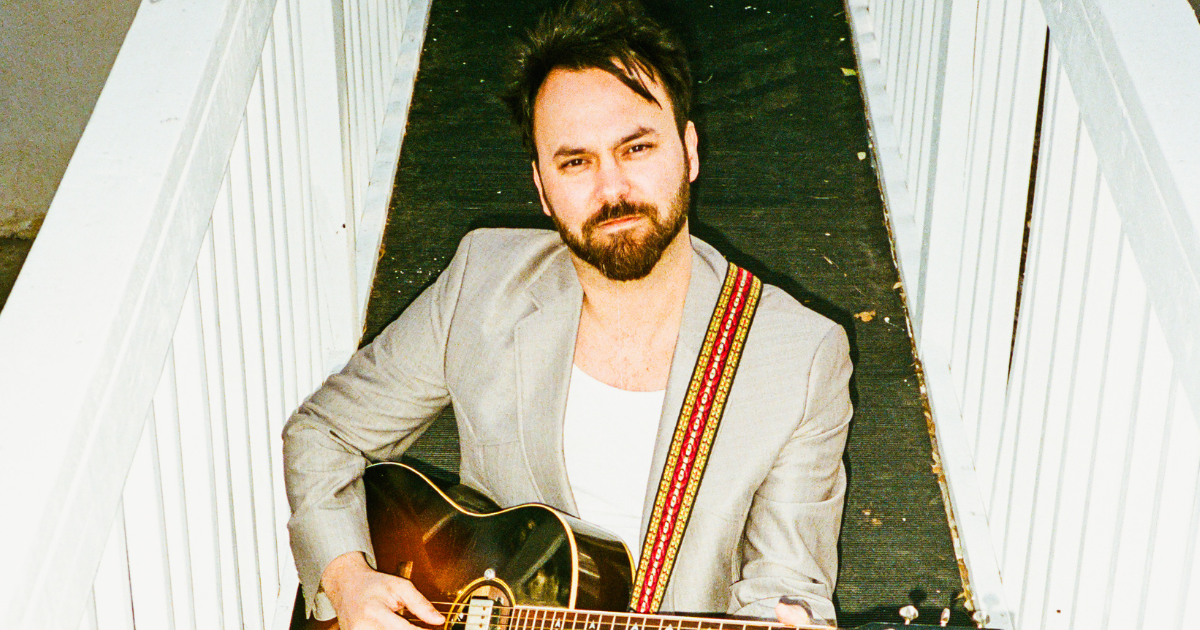
Next to fellow Kentuckians Sturgill Simpson and Chris Stapleton, you’ll be hard pressed to find a singer more influential on the Commonwealth – or on all of Appalachian music – than Tyler Childers.
The Lawrence County-born artist first began cutting his teeth on dark corner stages inside diners across Eastern Kentucky and in grainy YouTube videos prior to laying the foundation for the cult-like following that’s been enamored with him since with 2011’s Bottles & Bibles and 2016’s Live On Red Barn Radio I & II. The following year he burst onto the national scene with his Simpson-produced studio debut, Purgatory.
From a voice as gritty and raw as the black gold he sings about on songs like “Nose On The Grindstone” and “Coal” to lyrics that shatter stereotypes and perceptions cast down on his home region by those outside of it, it’s easy to see why Childers’ music has become a soundtrack for not just part but all of Appalachia.
Whether it be the combination of humility and holler-bred antics within Purgatory, the intimate honky-tonk vignettes of Country Squire, the fiddle tunes of Long Violent History, the gospel-fueled experimentation of Can I Take My Hounds To Heaven? or the spiritual embodiment of Elvis on Rustin’ In The Rain, Childers has found success by shaking expectations at every turn, keeping old fans on their toes and bringing new ones in along the way.
When violence perpetrated by police was front and center during the aftermath of George Floyd’s death in 2020, Childers opted to cap off that fiddle album with its only vocal track, the protest anthem “Long Violent History.” During a heated societal moment, he approached the tune from an angle of empathy rather than pretentiousness as he tried contextualizing everything going on with past events like the Battle of Blair Mountain. Then in 2023 he had his first hit on country radio with “In Your Love,” an epic love tale that he recast as a gay one with the help of then Kentucky Poet Laureate Silas House in 2023.
While some fans have been turned off by his “political” statements, his viewpoints ultimately led to more people going down the rabbit hole of Childers’ catalog than ever before. This growth has culminated in sold-out shows at fabled venues like New York City’s Madison Square Garden, Lexington’s Kroger Field, London’s O2 Arena and the Los Angeles’ Hollywood Bowl. It also resulted in recording a track for last year’s TWISTERS soundtrack, collaborating with Olivia Rodrigo for a cover of “All Your’n” during a GUTS tour stop in Kentucky, and performing during The White House’s Fourth of July celebrations in 2024. Close to 10 years removed from his breakthrough moment, the singer is as popular and influential as ever.
That influence is sure to grow with the release of his latest studio album, Snipe Hunter. Recorded with and produced by Rick Rubin in Hawaii in early 2024, the 13-song compilation charts the red-headed stranger’s creative and spiritual coming of age with stories of the band’s success. The project is sprinkled with a bit of anti-capitalistic sentiment (“Eatin’ Big Time”), a yearning to escape on a trek to India (“Tirtha Yatra”), his fear of Koalas (“Down Under”) and hunting for whitetail deer (“Dirty Ought Trill”).
Much like its predecessors, Snipe Hunter captures Childers signature sound while also sounding like nothing he’s released before it, a fact no doubt aided by Rubin’s knack for crafting material that sticks to the cultural zeitgeist like superglue. Songs like “Nose On The Grindstone” and “Oneida” – a story about falling for an older woman – have been in Childers’ performance rotation, on YouTube playlists for years, and traded as coveted bootlegs, but the versions captured for Snipe Hunter, with their additions of organ, synths, and other studio toys, has each feeling reborn and completely new again.
Collectively, the album feels rooted in country funk bands of old like Goose Creek Symphony just as much as it incorporates more modern influences like Charlie Brown Superstar (whose remixes for Can I Take My Hounds To Heaven? are sublime) and Eric Church, serving up the perfect combination of past, present and future sounds in the process while sticking to the deeply personal Appalachian flavoring that has long highlighted his grand storytelling.
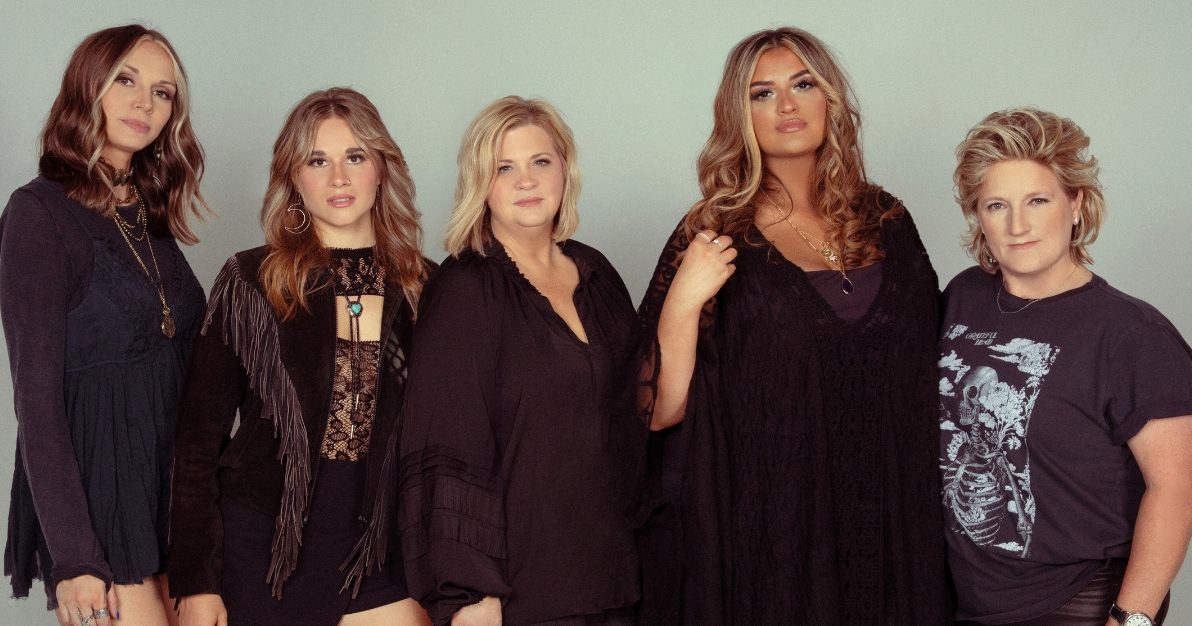
Sister Sadie, one of the most electrifying, interesting, and resonant bands in bluegrass today, have just released their latest album, All Will Be Well, via Mountain Home Music Company. The award-amassing collective of impeccably talented women have once again raised the bar for themselves, offering an LP with limitless star power, heart, and unapologetic grit – musically and otherwise.
Over the years since their origin – a one-off supergroup-style show in 2012 at the World Famous Station Inn in Nashville – Sister Sadie have undergone quite a few metamorphoses. As is the case for many bluegrass groups, where band names may be retained as lineups constantly change, members leaving, returning, and swapping out, the ensemble has seen many a superlative woman picker join or leave their ranks over the last decade plus. Somehow, over these many transitions, the group has emerged with a cogent, cohesive sound – and a brand and sense of identity that remain indelible, whomever they may boast among their members at any given time.
It’s remarkable that this musical identity and their mission statement can be so clear, but is no surprise with stalwarts fiddler Deanie Richardson and banjoist Gena Britt as the sole remaining original members of the group. It’s even more remarkable that this new project, All Will Be Well, truly feels like the most true and one-for-one representation of the band recorded and released to date. No matter what changes may come for this assemblage of women, their perspective – as a band, as songwriters, as collaborators and peers, as first-rate bluegrass pickers – comes more and more into focus. As a result, All Will Be Well shines, tackling generational and familial trauma, highlighting class and social stratifications, uplifting women, femme folks, and the narratives that touch on their lives, all while welcoming and engaging all of their fans, no matter who they are or how they came to love this music.
Most of all, though, this album is pure fun. Redemptive and forward-looking? Yes. Intricate, detail-oriented, and technically on point? For sure. Cerebral, heartfelt, and emotive? That, too. But is it also down-to-earth, danceable, and rowdy? Oh, of course!
Sister Sadie are a bluegrass band, but they’re so much more. The mantle they take up with their music, recordings, and live performances was perhaps lifted in portions from the shoulders of the Chicks, and Alison Krauss, and Lynn Morris, and Ashley McBryde. These songs would feel equally at home on mainstream country radio or your local, once-a-week bluegrass radio show. As driving and barn-burning as they can be, there are as many moments of tenderness, embodied love, tearful compassion, and boundless empathy – for ourselves and for each other. For every sort of “Goodbye Earl” winking moment there are equal touches of “When You Say Nothing At All” and “I Never Wanted To Be That Girl” and “Wrong Road Again.” Whether soaring, blazing, or slowly smoldering, this band moves in and out of each texture with ease.
As for any/all of the all-women groups that have been born of bluegrass, Sister Sadie could have at any point across their lifespan rested on the perceived “novelty” of being a band comprised of all women pickers, singers, and songwriters. Instead, they know firsthand that the reality for women in roots music is one that requires superlative skills, ardent commitment, and a polish and care often not mandatory for the cis, straight, male bands occupying similar niches. Sister Sadie are diamonds forged by such pressure, though, not just rising up to industry expectations, but exceeding them – while finding self expression, originality, and insight in their work. A novelty group this is not. A “mere” supergroup? Not that, either. This is a band, not just a collection of last names and ampersands.
It’s an obvious, forest-for-the-trees sort of statement, but these women are certainly greater than the sum of their parts. With mandolinist Rainy Miatke, guitarists and singer-songwriters Dani Flowers and Jaelee Roberts, who often split frontwoman and lead singer duties, and bassist Katie Blomarz-Kimball currently filling out the band, Richardson and Britt demonstrate time and time again that there are always more women to call who are qualified and interesting and engaging enough to join the ranks of Sister Sadie. And they clearly haven’t even begun to exhaust those resources.
The central messages of All Will Be Well are incredibly apt and well-timed for this particular social and political moment, as well. It’s striking to find these women, as on “Let the Circle Be Broken,” offering and accepting redemption from themselves and each other, instead of any external force or power. Perhaps, in that truth is where they also find their greatest strengths within the music industry, too.
From their GRAMMY nominations to their many (individual and collective) IBMA Awards, this jaw-dropping band truly does not need any external factor to validate their music, their mission, or their existence. It’s how they started, too, a simple pick-up gig at the Station isn’t a particularly ambitious origin story, it’s even passé. Usual. But, from the outset then, the foundation of Sister Sadie hasn’t been one of ladder climbing, belt notching, or industry achievement. It’s been about expressing themselves, making great music, and having a whole hell of a lot of fun.
It’s no wonder, then, that with an album like All Will Be Well, they continue following in the exact trail they’ve blazed for themselves, being, becoming, or striving to arrive at the best version of Sister Sadie possible in each and every present moment, with whomever they find among their ranks. And, above all else, doing it for their own edification and joy before any other purpose. That’s what makes this band a true supergroup. Sister Sadie knows that All Will Be Well, because they are determined to make that reality so.
We are so proud to have Sister Sadie return for their second stint as Artist of the Month. Enjoy our Essential Sister Sadie Playlist below and read an all-skate interview feature with the entire band here. Plus, we’ll be dipping back into the BGS archives for all of the many times we’ve covered and collaborated with this incredible group. So follow along right here on BGS and on social media as we celebrate Sister Sadie for the entire month of July.
Do you remember the human being you were in 2017? When the “first” North American total solar eclipse of the 2000s criss-crossed the United States, stunning millions of sky-gazers? Do you remember how dissimilar life felt then? When you look back, do your memories contain the same person you are now, or is there a vast difference between who you were then and who you are today?
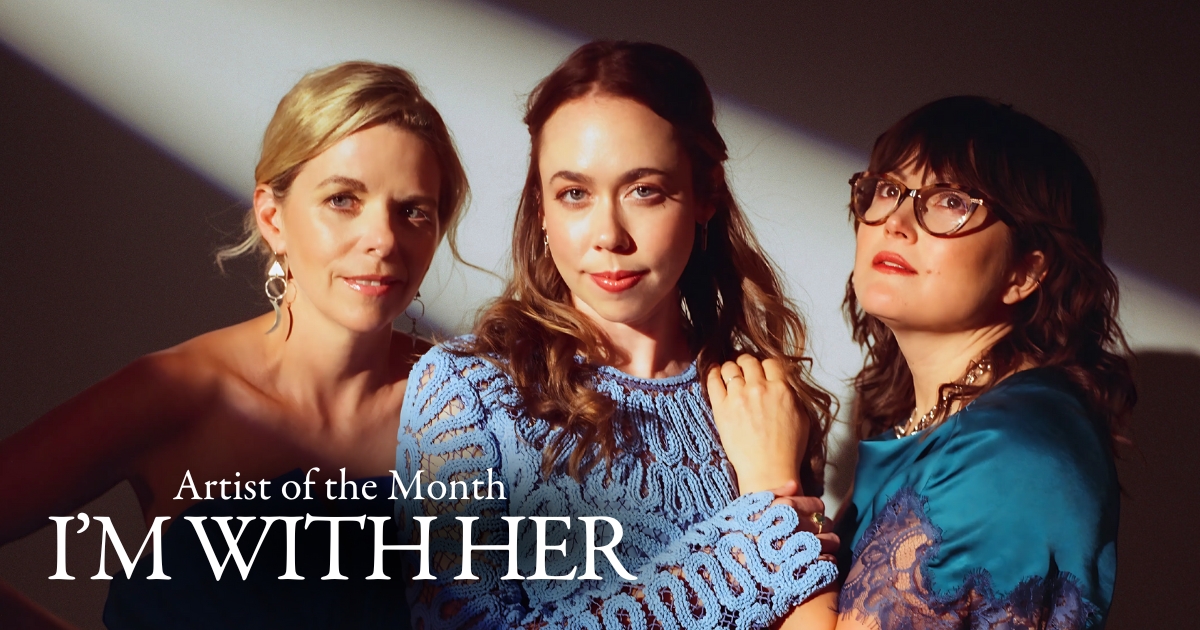
In 2017, I’m With Her – an iconic assemblage of award winning roots musicians Sarah Jarosz, Aoife O’Donovan, and Sara Watkins – were already a band, but a tangible group identity had yet to fully coalesce – and external viewers, listeners or fans or industry professionals, couldn’t tell if this was a temporary “supergroup” or something greater and long-lasting. Yes, they first collaborated as a trio in 2014 at Telluride Bluegrass Festival and their chemistry, musically and otherwise, was immediately palpable. They wrote, toured, and released music together in 2015, 2016, and 2017, appearing on Prairie Home Companion, Live From Here, and festival and venue stages all across the country and around the world. “Crossing Muddy Waters,” a John Hiatt cover and their first release together under the “I’m With Her” moniker, was released in ’15; “Little Lies” followed in ’17. Then, their acoustic cover of Adele’s “Send My Love (To Your New Lover)” performed live with Paul Kowert on tour with Punch Brothers became a smash viral hit later that same year, barely a month after the moon then blocked out the sun.
By all measures, I’m With Her were a very different group 8 to 10 years ago. Neither Watkins nor O’Donovan were yet mothers. The trio had not yet been nominated for a GRAMMY (“Call My Name” would snag a gramophone for Best American Roots Song in 2020). They wouldn’t put out their debut album, See You Around, until 2018. Yet today, on the precipice of what is somehow only their sophomore album, Wild and Clear and Blue (out May 9 on Rounder Records), whether deliberately looking back or relying solely on one’s memories and recollections, it might seem like I’m With Her has always had this outsized presence and impact in bluegrass, folk, and Americana.
Auspiciously, the celestial and grounded, fantastic and natural Wild and Clear and Blue was tracked in New York State coincidentally during/under the more recent total solar eclipse of 2024. The track of that heavenly alignment almost directly crossed the studio where the trio were crafting the new album with producer Josh Kaufman (Bonny Light Horseman, the National). Leave it to the stars, the universe, and these three otherworldly musicians to convene to build yet another masterwork under such an unlikely omen as an eclipse. The results are truly magical. O’Donovan, Jarosz, and Watkins are already writers and pickers who draw heavily on the natural world, the earth, and their own bodies, hearts, and minds not only as intellectual tools, but also as biological beings to fashion their particular style of roots music. It’s difficult not to see how the ’24 eclipse – along with their journeys together over the last decade – greatly informed this new collection.
Solidarity, women uplifting women, motherhood and family, communion with the world around them, connection to nature, challenging the painful realities of our current day-to-day, and – perhaps above all – convivial, heartfelt fun run through Wild and Clear and Blue like shimmering, cosmic rays of light. Where their past releases together have been quite stark and stripped down, often utilizing only as many voices and instruments as the trio themselves could wield in realtime, Wild and Clear and Blue is expansive, confident, and bold. Are these the same humans who first began creating together only just over a decade ago?
Of course not. None of us are the same beings we were back then. Certainly not I’m With Her. They’re GRAMMY winners now, all three married and beginning families, O’Donovan and Watkins by now veteran moms. They’ve had multiple eras together as a band and multiple solo releases unto themselves, individually, too in the meantime. The miles have sped away underneath their feet as they code switch between being an ensemble and being individual artists – while racking up accolades, awards, and listeners as a collective and separately, too. They’re seen alongside other so-called supergroups like boygenius, Bonny Light Horseman, and more; not as novelties or accessories to the “real” artistry of their constituent work unto themselves, but as a sum greater than their parts. Rightfully so!
How lucky are we to be witnesses to that growth, to each of these women’s ceaseless commitment to challenging themselves – and their communities – to move forward, to crest that next mountain, to sculpt that as-yet-undiscovered song from shapeless musical clay? How lucky are we that these three women bathed in the ancient, timeless light of a solar eclipse and alchemized their experiences into this resplendent album?
The path of this incredible trio, unlike the planets in the sky, has been anything but linear – or concentric, or predictable. Still, there’s endless insight and so much joy to be gained from inhabiting this intersection, the confluence of so many occurrences: the trajectory of the group; the track of a total solar eclipse; the Wild and Clear and Blue writing and recording sessions; the terrifying and shocking burning of our planet; the rapid return of abject fascism in this country; the consideration of how to be artists – family members, mothers, community builders – amid all of these realities. It’s a bewildering intersection, but one we’ve all become undoubtedly familiar with since 2014… since 2016… since the sun disappeared in 2017 and 2024.
Wild and Clear and Blue is a soundtrack for togetherness. For being present. For capturing the infinitesimal moments that make life what it is. It’s no surprise I’m With Her were able to create such an awe-inspiring and heartening second album with these celestial (and terrestrial) ingredients. It’s impeccable roots music made for bathing in the ancient light, for standing at the fault line, for staring into the wild and clear and blue with courage, with love, and with songs.
And, we’ll be dipping back into the BGS archives for all things I’m With Her throughout the month of May! Each of the trio’s members have been featured as AOTM individually and/or in other groups and we have plenty of playlists, articles, interviews, and even Sitch Sessions to return to featuring their supreme talents. Buckle up for a transcendental Artist of the Month celebration.
Photo Credit: Alysse Gafkjen
This website uses cookies to improve your experience. We'll assume you're ok with this, but you can opt-out if you wish.AcceptRejectRead More
Privacy & Cookies Policy
Privacy Overview
This website uses cookies to improve your experience while you navigate through the website. Out of these, the cookies that are categorized as necessary are stored on your browser as they are essential for the working of basic functionalities of the website. We also use third-party cookies that help us analyze and understand how you use this website. These cookies will be stored in your browser only with your consent. You also have the option to opt-out of these cookies. But opting out of some of these cookies may affect your browsing experience.
Necessary cookies are absolutely essential for the website to function properly. This category only includes cookies that ensures basic functionalities and security features of the website. These cookies do not store any personal information.
Any cookies that may not be particularly necessary for the website to function and is used specifically to collect user personal data via analytics, ads, other embedded contents are termed as non-necessary cookies. It is mandatory to procure user consent prior to running these cookies on your website.
![“It's like the metaphor of having a [limited] number of crayons in your hand and trying to make a picture out of that. I felt I wanted the whole box back.” - Tenille Townes](https://thebluegrasssituation.com/wp-content/uploads/2026/03/TenilleTownes_GC_QuoteGraphic.png)