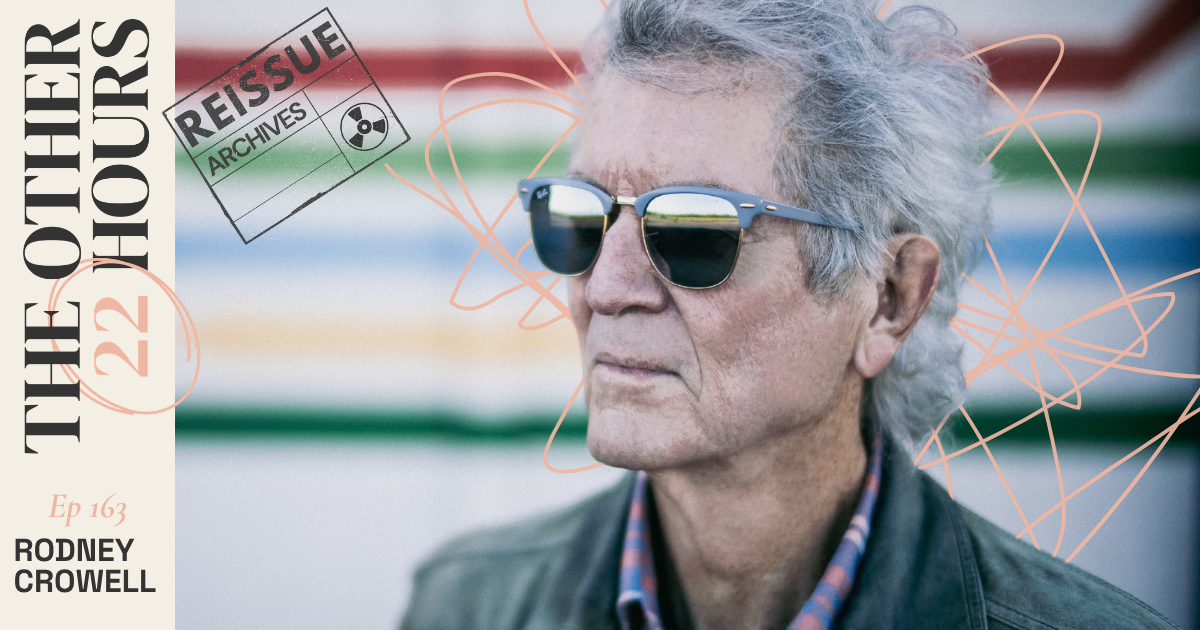
The Other 22 Hours: Rodney Crowell (Reissue)

With two Grammy Awards, 15 number one singles, and a songwriting catalog recorded by legends like Emmylou Harris, Bob Seger, and Waylon Jennings, Nashville Songwriters Hall of Fame member Rodney Crowell stands as one of Americana’s most enduring icons. Yet, after 50 years in Nashville, Rodney’s relationship to his craft is grounded not in recognition, but in the quiet, daily act of showing up.

Powered by RedCircle

LISTEN: APPLE • SPOTIFY • AMAZON • MP3

In this conversation from 2023, Rodney reflects on the early years of roaming Nashville alongside Guy Clark and Townes Van Zandt to evolving past the need for applause, the spiritual discipline of 7-day vision quests, and why a song can take 40 years to finally tell you what it wants to be.

In This Episode:

– Rodney Crowell
– Jedd Hughes
– Marty Stuart
– JD Miller’s Recording Studio
– The Wilburn Brothers
– Emmylou Harris
– Guy Clark
– Mickey Newbury
– Bob Seger

Go Deeper:

Watch: View this entire conversation above or on YouTube.
Explore: Find similar conversations in these themed playlists.
Connect: Join the conversation on Instagram.

The Other 22 Hours is hosted by Aaron Shafer-Haiss (producer, mixer, musician) and Michaela Anne (songwriter, artist, creative coach). More about Aaron’s work. More about Michaela Anne’s work.


Produced by Aaron Shafer-Haiss. Original music written, performed and produced by Aaron Shafer-Haiss.

Photo Credit: Neilson Hubbard

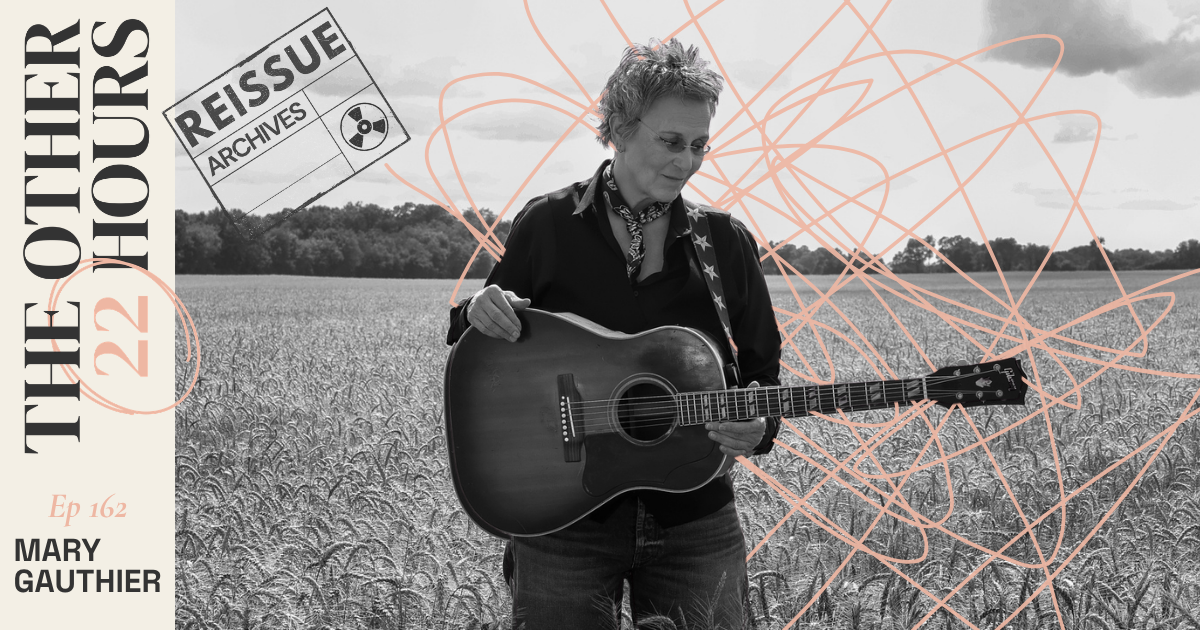
The Other 22 Hours: Mary Gauthier (Reissue)

Grammy-nominated songwriter and author Mary Gauthier, whose songs have been recorded by everyone from Tim McGraw and Blake Shelton to Boy George and Jimmy Buffett, joins us for a deeply resonant exploration of life, survival, and craft. Starting her songwriting journey at age 40 after a successful career as a chef and restaurant owner, Mary offers a deeply grounded perspective on what it means to build a long-haul artistic life.

LISTEN: APPLE • SPOTIFY • AMAZON • MP3

Originally aired on The Other 22 Hours in August 2023 as Episode 27, we are revisiting this favorite conversation from our archive to unpack her 33-year journey in recovery, the necessity of patience in art and persistence in business, and how songwriting serves as a container for processing trauma and bridging human divides.

In This Episode:

– Songwriting With Soldiers 
– Saved by a Song: The Art and Healing Power of Songwriting
– Ep 152 – Matraca Berg
– Ep 43 – Gretchen Peters
– Beth Nielsen Chapman
– Liz Rose
– Patty Griffin
– Neko Case

Go Deeper:

Watch: View this entire conversation above or on YouTube.
Explore: Find similar conversations in these themed playlists.
Connect: Join the conversation on Instagram.

The Other 22 Hours is hosted by Aaron Shafer-Haiss (producer, mixer, musician) and Michaela Anne (songwriter, artist, creative coach). More about Aaron’s work. More about Michaela Anne’s work.


Produced by Aaron Shafer-Haiss. Original music written, performed and produced by Aaron Shafer-Haiss.

Photo Credit: David McClister

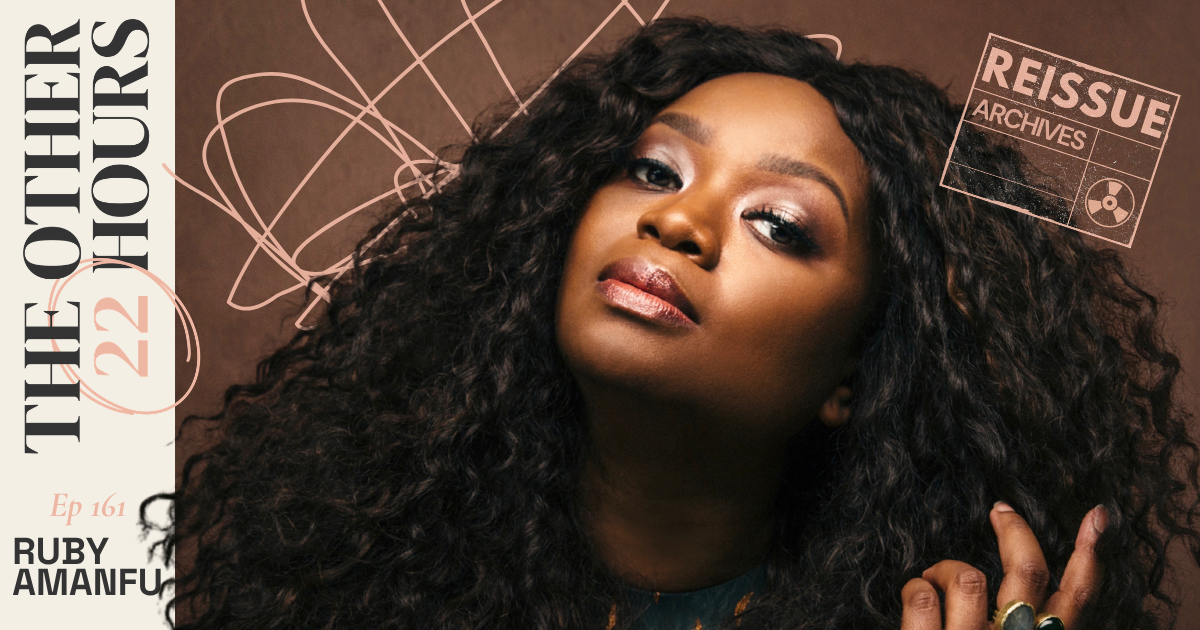
The Other 22 Hours: Ruby Amanfu (Reissue)

This week, we dive into our archives for this special reissue of our conversation with GRAMMY-nominated singer-songwriter, producer, activist, and chef Ruby Amanfu. Known for her profound collaborations with H.E.R., Brandi Carlile, Alicia Keys, and Beyoncé, Ruby has navigated the highest peaks of the music industry while fiercely protecting her inner peace. In this episode, we explore the structural collisions that force us to speak our truth, the reality of reclaiming your identity outside of financial validation, and what happens when we finally release our death grip on how we thought our lives would look.

LISTEN: APPLE • SPOTIFY • AMAZON • MP3

In This Episode:

– Sam and Ruby
– Porter’s Call
– Andy Little
– MusiCares
– Lee Ann Womack
– Willie Nelson
– Love Rising Concert

Go Deeper:


Watch: View this entire conversation above or on YouTube.
Explore: Find similar conversations in these themed playlists.
Connect: Join the conversation on Instagram.

The Other 22 Hours is hosted by Aaron Shafer-Haiss (producer, mixer, musician) and Michaela Anne (songwriter, artist, creative coach). More about Aaron’s work. More about Michaela Anne’s work.


Produced by Aaron Shafer-Haiss. Original music written, performed and produced by Aaron Shafer-Haiss.

Photo Credit: Lead image by Anna Haas; portrait alternate image by Jillian McQuerrey; square alternate image by Shervin Lainez.

The Other 22 Hours: Hrishikesh Hirway

We often treat our creative identities like lanes, fearing that branching out looks like simple dilettantism. This week on The Other 22 Hours, we explore the delicate balance of identity and creative output with singer-songwriter Hrishikesh Hirway, the brilliant mind behind hit podcasts The West Wing Weekly and Home Cooking, as well as the globally acclaimed Netflix series and podcast Song Exploder, which features the likes of Paul McCartney, Billie Eilish, R.E.M., and Lin-Manuel Miranda.

LISTEN: APPLE • SPOTIFY • AMAZON • MP3

Despite a decade of monumental success in the podcast and broadcast worlds, Hrishikesh found himself battling a quiet, profound depression born from leaving his primary identity as a singer-songwriter behind. He recently returned to music with his first album in 15 years and joins us for a beautifully tender conversation on breaking through a 10-year writer’s block, navigating the vulnerability of cold-calling collaborators, and learning to sit comfortably within a “queer divine dissatisfaction.”

In This Episode:

– Song Exploder (Podcast / Netflix Series)
– Alison Russell
– Linda Ronstadt
– Talking Heads
– The Band
– The Grateful Dead
– Bob Dylan
– Phil Weinrobe
– Ep 117 – Maia Friedman
– Jeff Tweedy – How to Write One Song (Book)
– Carl Jung / Depth Psychology
– The West Wing Weekly (Podcast)
– Home Cooking (Podcast)
– Samin Nosrat
– Salt, Fat, Acid, Heat (Book)
– Josh Malina
– Allison Janney
– Jenny Owen Youngs
– Yep Roc Records
– John Mark Nelson
– Matt Ross Spang (Memphis TED Talk)
– Agnes de Mille
– Martha Graham

Go Deeper: 

Watch: View this entire conversation above or on YouTube.
Explore: Find similar conversations in these themed playlists.
Connect: Join the conversation on Instagram.

The Other 22 Hours is hosted by Aaron Shafer-Haiss (producer, mixer, musician) and Michaela Anne (songwriter, artist, creative coach). More about Aaron’s work. More about Michaela Anne’s work.


Produced by Aaron Shafer-Haiss. Original music written, performed and produced by Aaron Shafer-Haiss.

Photo Credit: Elisha Christian

The Other 22 Hours: Amy Grant

What does it mean to inhabit a creative life when that container itself changes? We sit down on The Other 22 Hours with GRAMMY-nominated, multi-platinum crossover superstar Amy Grant. Having shaped the landscape of pop and contemporary Christian music for over four decades, Grant found herself navigating an unexpected wilderness following a series of medical setbacks – including a traumatic bike accident – and a rewritten relationship with her own processing speed. In this soulful, luminous conversation, she explores the deliberate art of slowing down, the creative sanctuary of “Craftopia,” and why she now views aging not as a loss of identity, but as a continual invitation to let go.

LISTEN: APPLE • SPOTIFY • AMAZON • MP3

In This Episode:

– Vince Gill
– Eagles
– Mac McAnally
– Jimmy Buffett
– Coral Reefer Band
– Barefoot Republic
– NPR’s Wildcard podcast
– Ray Charles
– Cicely Tyson
– Roots (miniseries)
– Viktor Frankl
– Man’s Search for Meaning
– Gene Miller
– Dr. Jim Netterville
– Suleika Jaouad

Go Deeper: 

Watch: View this entire conversation above or on YouTube.
Explore: Find similar conversations in these themed playlists.
Connect: Join the conversation on Instagram.

The Other 22 Hours is hosted by Aaron Shafer-Haiss (producer, mixer, musician) and Michaela Anne (songwriter, artist, creative coach). More about Aaron’s work. More about Michaela Anne’s work.


Produced by Aaron Shafer-Haiss. Original music written, performed and produced by Aaron Shafer-Haiss.

Photo Credit: Ed Rode

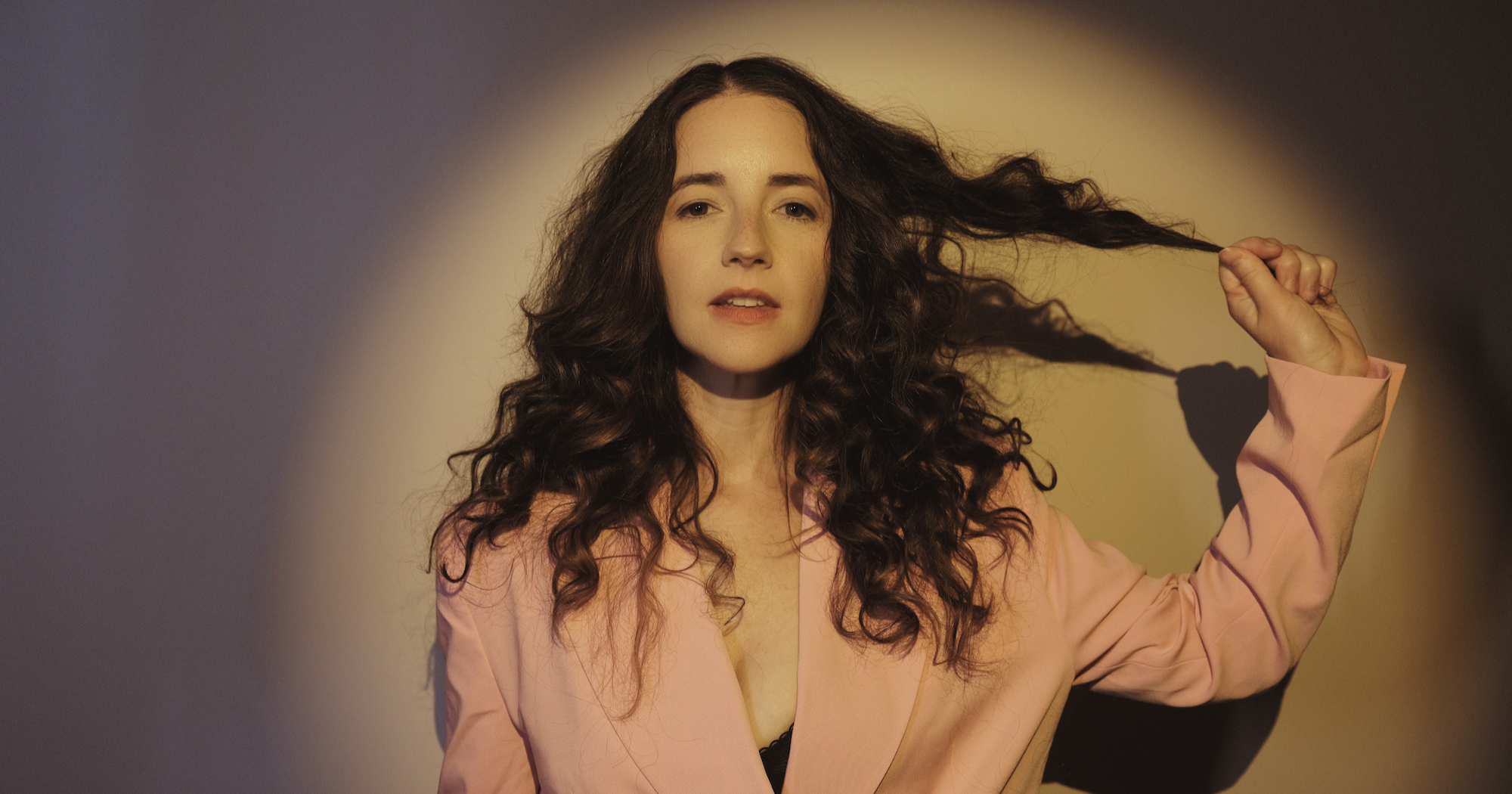
Michaela Anne Finds Tranquility and Clarity in Parenthood

Michaela Anne’s life underwent a cosmic shift over the last several years. She had two kids and quickly learned how “physically taxing” parenting can be, she says. That physical transformation directly feeds into her latest album, These Are The Days, a creatively bold, poetic, and profound set of songs about getting older, fading beauty, and music’s connective tissue.

While out on tour, years ago, Anne stopped by a friend’s house and witnessed several young kids playing, laughing, and making a whole lotta noise. Admittedly, she didn’t know if she’d ever have kids herself. “My friend said to me, ‘Yeah, but this is going to feel like a high for you, like falling in love with these children,’” she recalls.

“I remember the first year of being a mother, texting her, ‘Oh, I know what you’re talking about now.’ And that has really surprised me, that exhilarated feeling that I’ve gotten just from the experience of having children and getting older,” Anne reflects. “What has also surprised me is that you hear people talk about it all the time, how, especially in your 40s – I just turned 40 – you don’t give any fucks anymore. And it’s just whatever. And I’m like, ‘Does that just magically happen?’

“And I have been surprised to feel the progression of ‘it does.’ You start to care less because you just get so exhausted from the energy you’ve spent caring about the things that mattered a lot [before], like status, what people thought of you, or inclusion. That has been very delightfully surprising and freeing.”

These Are the Days swirls with a kind of knowledge you only acquire when you hit your 40s. The changes it reckons with have almost a baptismal effect. Songs like “We’ve Got Bigger Plans” and “Will You Still Love Me with a Broken Heart” reflect her ever-changing self, whereas “Two Pianos,” a song co-written by Caroline Spence, and “B-Sides” capture the magic of music in Anne’s life. “If Your Body Fails You” finds Anne bottling up both her mother’s deterioration post-stroke and our society’s obsession with youth.

The album, produced by her husband Aaron Shafer-Haiss, emerges as a timeless ode to the ephemeral nature of human existence. Letting go, relishing the mundane in busy everyday life, and embracing middle age echo throughout the nine tracks like a starling bobbing and weaving across a rosy sunset. Something is calming about it, and you trust that you’ll get to where you’re going soon enough.

What has been your journey of learning to let go?

Michaela Anne: It is continual. It’s such a common thing to hear people say – and this is kind of woo-woo new age-y saying – “just surrender.” But the actual practice of surrendering to all that is, I have found, incredibly challenging and essential to really being open to what life presents to us. I’m a millennial, and I feel like the way that we grew up is, “Dream big, you can be anything you want.” That was so ingrained in me. I have a song from a previous record called “By Our Design.” It was this whole thing about writing it down, manifesting it, and making it happen. And it didn’t take into account that nothing is actually within our control.

So things happen, like global pandemics or your mother has a stroke. [Or] friends that I witnessed in this age group who want to start a family desperately and can’t get pregnant or deal with pregnancy loss. There are so many things that we cannot control that determine a lot of factors in our lives, and a lot of things about whether or not we can have the life that we envisioned. And accepting it is a daily practice, and really keeping my eyes open to what all that is here, rather than continually looking in my mind to the places I thought it should be, is painful.

There’s also the element of not caring what other people think. I imagine that’s even more difficult as an artist.

I try to consciously reconnect to why I make music all the time. Inevitably, there is an element of wanting to be seen when you’re sharing art that you make and wanting to be loved, wanting to be received and affirmed. And that is beautiful, but it can also be really tricky and detrimental. If we’re looking at it in this transactional way, or also career success– I’m also a military kid. I grew up moving every other year. I was socially conditioned to try and make friends fast and be well-liked, and just fit in and survive the next couple of years before we moved on to the next town. I have to constantly remind myself: it is okay to not be liked by everybody. But I always go back to, “Am I doing my best to show up in kindness and in love and openness?” And you still might not be liked by everybody.

Social media certainly doesn’t help either.

No, it’s corrupting our brains. Now, we have this false sense of metrics to measure ourselves that we translate to our worth. How many likes we get, how many followers, how many streams, and it’s really unhealthy.

Have you ever found that affecting your creativity in any way? Have you ever thought, “Oh, this song has this many streams, maybe if I write something like that, it’ll take off?”

I think I would be lying if I tried to say, “Oh no, it’s separate.” I’ve found that whenever I do try to make something, I don’t actually know what people want from me. And what one person wants from me is different from what the next person wants. Collectively or culturally or music industry-wise, that’s changing so fast all the time that it’s fruitless to try to morph myself into that. I’ve definitely gone outside of the box that I think I was seeing, fitting into, and not seeing the response that I hoped for and have had to do the work of, “Well, that’s okay.”

We can confuse streaming numbers with a measurement of artistic purity. They’re very different things. I always go back to, “Did that feel true to me?” I can only write the songs that feel true that come out. Sometimes that’s well received, and sometimes it’s not. It’s always a gamble.

Another essential piece of the album is enjoying the mundane things in everyday life. What things have you come to appreciate more?

Routine. I used to think I hated routine. I loved being on tour all the time, because there was sort of chaos within a routine. You knew where you had to be every day, but then every show is different and every place was different. I’ve really come to love the routine of waking up around the same time–I have two children, depending on when they wake up. I have a morning routine, that first cup of coffee, just all of that stuff has become really enchanting to me.

When you’re addicted to something, you need more and more to feel the high. I used to need a lot to feel excitement. It’s almost like I’ve come down to stasis, where now, to be totally honest, I sometimes open my compost bin and it’s all these different colors. I think it’s so beautiful. [Laughs]

I don’t go out and get drunk and meet new people all the time. It’s a different high. It’s the calm. Now, bouts of excitement are way more exhausting to me than they used to be. Maybe that’s also just middle age. Kids being asleep, getting a couple of hours to myself or a cup of tea and maybe a bath and a book – that is so exciting.

The wonder of music also comes into play on the album, such as with songs such as “Two Pianos” and “B-Sides.” What moments in your life do you cherish most around music?

Music has always been my companion, my way to cope and understand things. The very first song I ever wrote was called “When Daddy Comes Home.” My dad was a submarine captain and he was out to sea for long months at a time. I always say music was my way of processing longing and sorrow. But it is such a companion for joy. I think about every big moment of my life, there’s a soundtrack, you know? Getting married, there are songs that were part of our wedding. Giving birth, there are specific songs that were the soundtrack that we were playing when both of my children entered this world.

Music is everywhere in our lives. Sometimes, I think when it becomes a career, it can taint it a little bit. I have had to remember this is a relationship on my own that doesn’t need to be influenced by outside forces. Some of the bigger moments are those when we put on songs and just dance in the living room with our kids.

Another thread in the album is the idea that beauty always fades. In your song “If Your Body Fails You” you ask a series of questions about why we avoid the mirror and continue to uphold youth on a pedestal. Why do we do those things?

Capitalism. That song is rooted in watching my mom lose many physical abilities from her stroke. As well as the way that her body looked changing and witnessing her experience that, grappling with my own experience and my own relationship to my mother’s body. It was not something I really thought about. While also experiencing so many changes in my own body, growing a human for the first time. And that paired with this idea that it feels like it’s getting to a fever pitch of this expectation, especially for women, to look preserved, to look frozen, to look so smooth, and not aged at all. And noticing that infiltrates my mindset.

I don’t know why we are obsessed with that, literally, other than powerful marketing campaigns have convinced us to spend a lot of our money trying to freeze our faces and our bodies. But it’s something that I really want to resist, which genuinely feels challenging sometimes, because of those messages.

Numerous celebrities, from Kate Winslet and Meryl Streep to Barbra Streisand, have opposed plastic surgery for just that reason: to resist body standards. Hopefully, that leads to a cultural change eventually.

I hope so. It’s really helpful when public people put that out there in a really positive way, so that we don’t think, “Oh, this unrealistic expectation is what we all need to do.” When I see people owning it, it inspires me and builds my courage to also own it in the same way. When I see women rocking gray hair in their 40s, I’m like, “Okay, I’m going to skip my next hair appointment.” [Laughs] I don’t want to dye my hair.

“Two Pianos” is lyrically hopeful but musically somber. That’s an interesting dichotomy.

The strings were written, arranged, and performed by Kristen Weber, who’s one of my really close friends and has done strings on almost all my records since 2019. I wrote the song with Caroline Spence, who is also a very good friend. Both of those women have been really intimately witnessing my life over the last several years – and vice versa. Some days it’s really hard to recognize all that we have. And I’m going to be honest, sometimes I compare. Sometimes I feel really sad. For what reason, I’m not sure.

But how do I sit in gratitude and keep this kind of, you know, remember to remember – how we say in the song. I actually got it from Chris Wood from the Wood Brothers. He said that in a podcast that I host with my husband. We were talking about all the things in life and how to stay healthy. He said, “Some days, we just need to remember to remember.” Musically, we wanted it to feel expansive, but also be an intimate experience of being really close at your kitchen table, but how universal that experience is for everybody.

The lyric “I never trust my own point of view” stands out. To both remember that you can be an unreliable narrator and to trust your gut.

At least in my experience, my mind can play tricks on me. It can tell me stories that maybe aren’t actually true. Sometimes, it’s good to be distrustful of my own point of view and try to get grounded in what’s reality. Other times, it’s dangerous to ignore my point of view, but that continual challenge and journey to know who I am. And it’s really hard to ground our individual selves in this world.

Other than music, how do you ground yourself?

I have to move my body. Every morning, I work out for a short amount of time, like 15 minutes. Since having a second child, it’s something my husband and I support each other [in]. Every morning, we take turns while the other person is doing breakfast and packing lunches. Fifteen minutes to do yoga, or a little dance video, or go on a run. That stuff is really essential. My ideal would be to be able to meditate and go on hikes more often. Nature really grounds me. But it’s really hard to find the time. And therapy.

“We’ve Got Bigger Plans” reminds me of the saying that “when you know better, be better.” Whether that’s with social issues or in our relationships with others, it’s about actually learning from the past.

That song is very personal, about my experience [over] the last several years of becoming a mother and having a lot of dreams. The first verse opens up with, “I used to be a dreamer who would dream things you couldn’t see.” I stopped believing, and my husband, partner, the producer of my record, Aaron Shafer-Haiss, was the one who was like, “Life is not over. What are you doing?” We can still have so much beauty and opportunity. We can always make art.

The inspiration for the second verse comes from our daughter, and how mystical and magical it was to witness this little child coming to life, and greeting the moon and stars at night. The kind of ritual of seeing the world really opened up my eyes and my heart in a new way. It’s about not getting pulled into unhelpful, unhealthy belief systems and trying to fill your cup where it doesn’t need to be filled. Looking beyond some of these little things that we can get tripped up on and knowing that we’ve got a bigger view.

What’s it been like adding a podcast to your professional life?

It has been so enriching. It is challenging, like balancing the time. But the conversations that we get to have, and the caliber of artists that we get to meet, it feels like such a gift. And I’m constantly like, “This is so cool that we get to do this and that we get to talk to people who create things that mean so much to other people and us.” Then, really get to dig in on what the human experience of it is. And it’s a great source of comfort to me to know that people I admire have a lot of the same anxieties and hopes and fears. And it just reminds us that we are just human beings.


Photo courtesy of the artist.
The Other 22 Hours: James Gardin

How do you build a sustainable life around your art when the traditional definitions of success feel increasingly narrow? In this episode of The Other 22 Hours, we sit down with musician, songwriter, and educator James Gardin. While his joyous, infectious music has found a global audience through major sync campaigns for brands like Apple, Tommy Hilfiger, and Saks Fifth Avenue, James’s core creative philosophy is anchored in something much more grounded: community, education, and the refusal to second-guess the spark. Together, we explore the nuts-and-bolts realities of the licensing world, the absolute humility required to teach songwriting to eight-year-olds, and how letting go of the industry’s arbitrary rules allows us to finally blaze our own paths.

LISTEN: APPLE • SPOTIFY • AMAZON • MP3

In This Episode:

– Lizzo
– Marshmello
– J Dilla
– Proof
– Elzhi
– Slum Village
– Liza Garza
– Def Poetry Jam
– SZA
– Chance the Rapper
– Marmoset
– Musicbed
– iSpot.tv
– TuneFind
– Western States Center
– Eric Ward
– All of the Above Hip Hop Academy
– Trails End Camp
– Brooklyn Philharmonic
– Sinners
– Ryan Coogler

Go Deeper: 

Watch: View this entire conversation above or on YouTube.
Explore: Find similar conversations in these themed playlists.
Connect: Join the conversation on Instagram.

The Other 22 Hours is hosted by Aaron Shafer-Haiss (producer, mixer, musician) and Michaela Anne (songwriter, artist, creative coach). More about Aaron’s work. More about Michaela Anne’s work.


Produced by Aaron Shafer-Haiss. Original music written, performed and produced by Aaron Shafer-Haiss.

Photo Credit: Lead image courtesy of the artist. Alternate vertical image by James Gardin. Alternate square image by Victor Manuel.

The Other 22 Hours: Lukas Nelson

It is easy to look at a lifetime spent traveling on a tour bus in a famous family and assume someone’s creative path was completely clear. We sit down with GRAMMY-winning singer-songwriter and guitar player Lukas Nelson (A Star Is Born, Promise of the Real, Neil Young) for an incredibly honest conversation about moving past the shadow of his father Willie Nelson’s towering legacy, and detangling his identity from the cliched drug-induced creative culture.

LISTEN: APPLE • SPOTIFY • AMAZON • MP3

On this episode of the Other 22 Hours, we explore the distinct clarity that arrives with sobriety, the physiological realities of keeping your body moving on the road, and how treating musical discipline like Olympic training allowed Lukas to fully claim his own voice. It’s a masterclass in boundary setting, honoring the natural muse, and discovering that a long-term commitment to your health and your relationships is the ultimate engine for creative longevity.

In This Episode:

– Lukas Nelson
– Promise of the Real
– Willie Nelson
– Merle Haggard
– Lady Gaga
– Neil Young
– Paramount Theater
– The Red Clay Strays
– Outlive by Dr. Peter Attia
– Willie’s Remedy
– All Things Must Pass

Go Deeper: 

Watch: View this entire conversation above or on YouTube.
Explore: Find similar conversations in these themed playlists.
Connect: Join the conversation on Instagram.

The Other 22 Hours is hosted by Aaron Shafer-Haiss (producer, mixer, musician) and Michaela Anne (songwriter, artist, creative coach). More about Aaron’s work. More about Michaela Anne’s work.


Produced by Aaron Shafer-Haiss. Original music written, performed and produced by Aaron Shafer-Haiss.

Photo Credit: Matthew Berinato

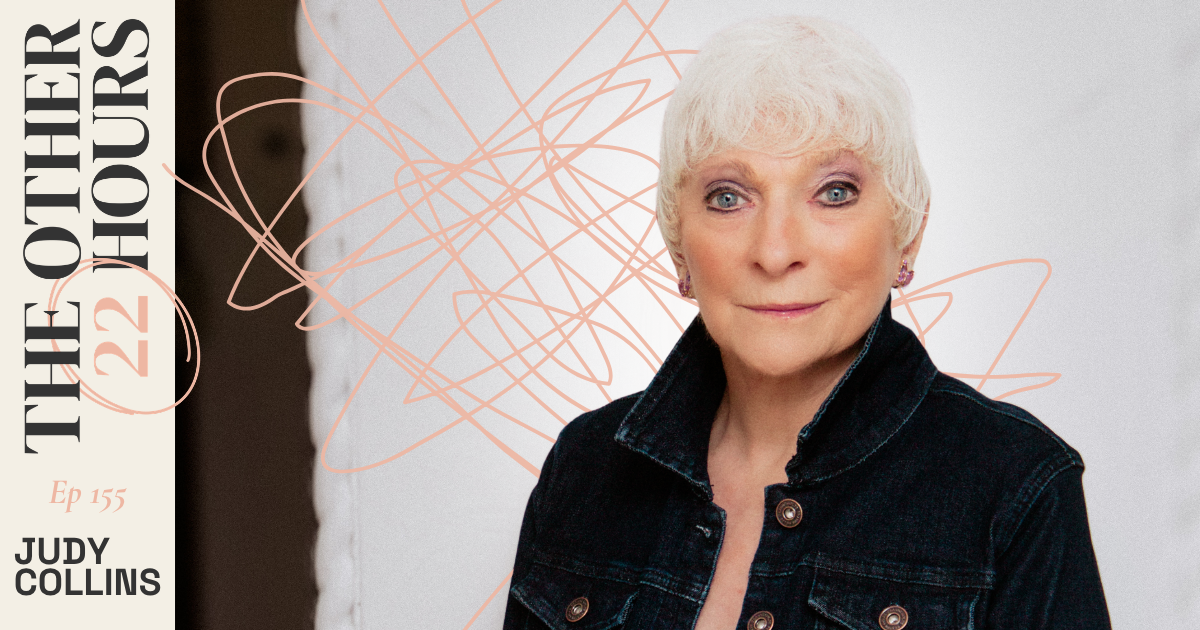
The Other 22 Hours: Judy Collins

“We write to find out who we are.” For over six decades, Judy Collins has been a pillar of American music: from a GRAMMY award for “Both Sides Now,” two platinum records, and an Oscar nomination to writing more than eight books and landing her first No. 1 album at 80 years old.

LISTEN: APPLE • SPOTIFY • AMAZON • MP3

But behind the staggering accolades is an artist who still treats her craft as a sacred, daily blue-collar job. In this episode of The Other 22 Hours, we explore the quiet discipline of her daily routines, the sanctuary of her 48 years of sobriety, and what she calls the “secret channels of songs.” Judy shares her philosophy on processing grief through poetry, the necessity of maintaining community in a solitary profession, and turning off the noise to protect the soul.

In This Episode:

Judy Collins
Catcher in the Rye – J.D. Salinger
Antonia Brico
Mark Ruffalo
Spotlight
Hemangioma
“The Lonesome Death of Hattie Carroll” – Bob Dylan
Ep 100 – Rosanne Cash
Ep 16 – Rodney Crowell
Telluride Bluegrass Festival
Jo Stafford
Barbara Allen
Al Kooper
Al Grossman

Go Deeper: 

Watch: View this entire conversation above or on YouTube.
Explore: Find similar conversations in these themed playlists.
Connect: Join the conversation on Instagram.

The Other 22 Hours is hosted by Aaron Shafer-Haiss (producer, mixer, musician) and Michaela Anne (songwriter, artist, creative coach). More about Aaron’s work. More about Michaela Anne’s work.


Produced by Aaron Shafer-Haiss. Original music written, performed and produced by Aaron Shafer-Haiss.

Photo Credit: Patrick Donovan

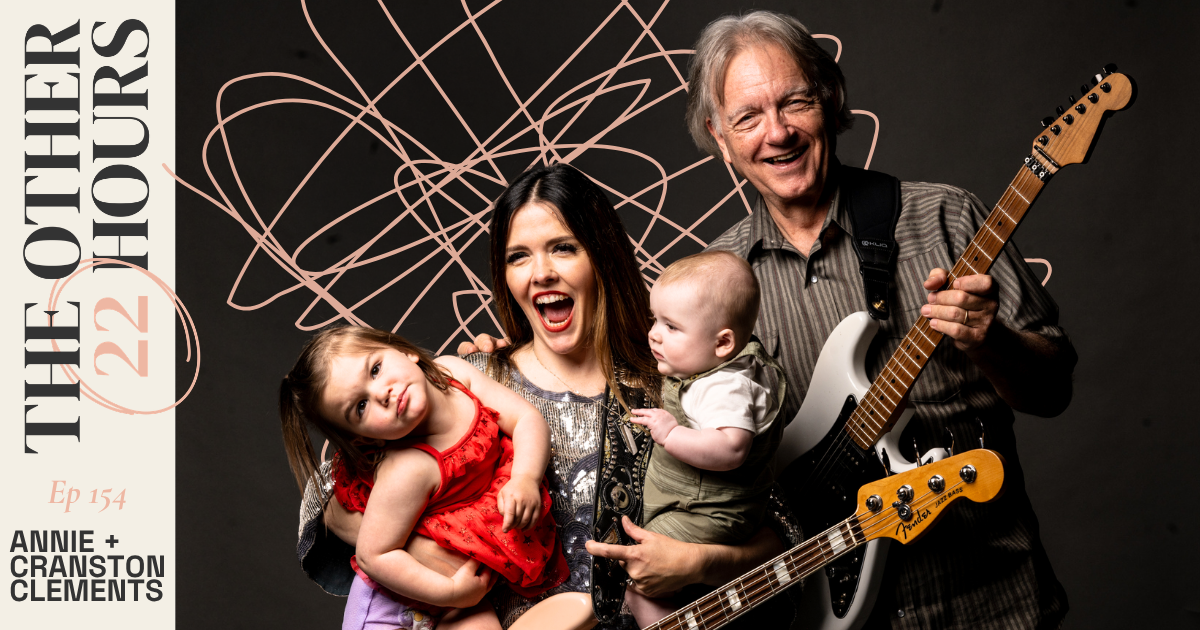
The Other 22 Hours: Annie & Cranston Clements

What does it mean to treat music not as a commodity, but as a multi-generational way of life? We sit down with father-daughter side musicians Cranston and Annie Clements. Cranston, a cornerstone of New Orleans music history, has played guitar with royalty like Dr. John, Allen Toussaint, and Irma Thomas. His daughter Annie is a bass player for massive acts including Sugarland, Maren Morris, and Hootie & the Blowfish.

LISTEN: APPLE • SPOTIFY • AMAZON • MP3

The duo brings a unique perspective on lineage, structural hurdles, and the profound beauty of side musicians’ journeys. Annie shares her vital advocacy work supporting motherhood in the music industry, including working to correct the stark lack of childcare infrastructure in touring. Meanwhile, Cranston details his wild roots in the 1960s counterculture and how a single performance could dismantle a lifetime of prejudice. It is a study on what it truly means to be a “joy facilitator.”

In This Episode:

Annie Clements
Cranston Clements
Ep 151 – Rob Moose
Dejan’s Olympia Brass Band
Tuesday Night Rodeo Club
Maren Morris
Doja Cat
Joy Oladokun
Bad Bunny
Motorhead
Dr John
Boz Scaggs
Maria Muldaur
A Uterus is a Feature Not a Bug – Sarah Lacy
Lucinda Williams
Angine de Poitrine

Go Deeper: 

Watch: View this entire conversation above or on YouTube.
Explore: Find similar conversations in these themed playlists.
Connect: Join the conversation on Instagram.

The Other 22 Hours is hosted by Aaron Shafer-Haiss (producer, mixer, musician) and Michaela Anne (songwriter, artist, creative coach). More about Aaron’s work. More about Michaela Anne’s work.


Produced by Aaron Shafer-Haiss. Original music written, performed and produced by Aaron Shafer-Haiss.

Photo Credit: Michael Weintrob