“We write to find out who we are.” For over six decades, Judy Collins has been a pillar of American music: from a GRAMMY award for “Both Sides Now,” two platinum records, and an Oscar nomination to writing more than eight books and landing her first No. 1 album at 80 years old.
But behind the staggering accolades is an artist who still treats her craft as a sacred, daily blue-collar job. In this episode of The Other 22 Hours, we explore the quiet discipline of her daily routines, the sanctuary of her 48 years of sobriety, and what she calls the “secret channels of songs.” Judy shares her philosophy on processing grief through poetry, the necessity of maintaining community in a solitary profession, and turning off the noise to protect the soul.
Such words as “legendary,” “transcendent,” and “magnificent,” while accurate, only skim the surface in describing the greatness of vocalist Mavis Staples. There’s no idiomatic area where she doesn’t excel and no song, regardless of origin or writer, that she can’t turn into a personal triumph. She’s also a genuine survivor, both in the familial (she’s the last living member of the Staple Singers) and socio-political sense (she’s a cultural warrior and champion of the Civil Rights era whose resonant voice has inspired generations of listeners).
For many artists, claiming they’ve gotten better with age is at best polite overstatement, and at worst woeful exaggeration. But Staples at 86 still has the authoritative edge, tonal quality, and lyrical flair that’s always marked her performances. It seems hard to believe she’s been singing since childhood, and listening to the 10 tracks on her newest release, Sad And Beautiful World (released November 7 by Anti), you hear the confident, jubilant sound of a vocal titan.
That Staples can cover with equal distinction and flair songs penned by Tom Waits, Curtis Mayfield, Gillian Welch & David Rawlings, Leonard Cohen, and Frank Ocean reaffirms her versatility. Producer Brad Cook smartly lets her voice dominate through each setting, regardless of instrumental backdrops, tempo or lyrical setting. Her spoken word narrative adds additional punch to the cover of Ocean’s “Godspeed” and underscores its recurring themes of urgency and redemption that fuel the album’s sensibility.
But the album also contains prominent message tracks, most notably “We Got To Have Peace,” a number whose tone and lyrics couldn’t be more timely in an era where it seems lunacy often runs supreme. “Anthem” and “Satisfied Mind” are just as powerful and energetic in their declarations of the importance of persistence, kindness, and goodwill. “Everybody Needs Love” provides the perfect finale, with Staples superbly punctuating its theme and completing a 38-minute epic work. Indeed, songwriter Kevin Morby has offered perhaps the best tribute to Staples’ brilliance possible, when he gave a press statement about what it meant to have her doing his song “Beautiful Strangers,” which is another memorable and passionate number.
“It isn’t easy to put into words what it feels like having one of the best, most important vocalists and cultural figures of both the 20th and 21st century sing one of my songs,” Morby said. “But hearing Mavis sing ‘Beautiful Strangers’ is hands down the greatest moment and highest honor of my career. Far beyond any kind of accolade or acclaim – having one of my biggest heroes sing something I wrote is the most validating and flattering thing that could ever happen to me as a songwriter and person. Thank you, Mavis.”
Staples has been awesome for so long, sometimes it’s easy to forget how many different periods and genres her artistry covers. The original family unit the Staple Singers were gospel and folk song giants. The unit included her sisters Cleotha and Yvonne, plus her brother Pervis, her father Pops, whose roots reached back to the seminal days of Delta blues, and Charlie Patton, who served as anchor, both vocally and on guitar. The Staple Singers began singing in Chicago churches in the late ’40s, became recording artists in the early ’50s, and earned their first hit with “Uncloudy Day” in 1952, recorded for the Black-owned label Vee-Jay. By the ’60s they were a cornerstone unit of the Civil Rights Movement, often accompanying Dr. Martin Luther King at rallies.
Mavis began really getting noticed as a solo performer during their transition in the late ’60s and early ’70s to a soul and pop unit. The decision to sign with Stax Records and the shift to secular music was one Pops often acknowledged as a controversial one, but it ultimately paid off as the group’s status elevated into crossover stars. They had eight Top hits in the early and mid-’70s; “I’ll Take You There” and “Let’s Do It Again” were chart toppers and “Who Took The Merry Out of Christmas” reached number two. Mavis also cut her first solo single in the late ’60s, then a full self-titled release for Stax in 1969. Their songs were expertly produced, featuring the crisp and outstanding backing of Booker T. & the MGs. Other essential hits included “I’ll Take You There” and “Respect Yourself.”
Slowly but surely, Mavis began to establish herself outside the Staples family trademark. Her soundtrack LP, A Piece of the Action on Curtis Mayfield’s label, helped her reach some new audiences, as did another self-titled mid-‘80s LP. But it was a pair of releases produced by Prince in the ’90s that really helped her reach the next generation of listeners. The second by the duo, The Voice, was another masterpiece. It included her magical version of Prince’s “Positivity,” as well as a cover of “Melody Cool” from the film Graffiti Bridge. Staples returned to the church in 1996 for a marvelous release, Spirituals & Gospels: Dedicated to Mahalia Jackson, that personified the close friendship that Jackson had with the entire Staples family and her influence on Mavis, personally and professionally.
Over the course of the 21st century, Mavis Staples has unquestionably become an iconic figure. The roster of artists with whom she’s worked over the course of her remarkable career is an astonishing one, both in terms of talent and musical approach. She’s recorded with jazz guitarist John Scofield, Los Lobos, Bob Dylan, Johnny Paycheck, Natalie Merchant, George Jones, Delbert McClinton, Aretha Franklin, Nona Hendryx, and Ann Peebles, to cite only a handful. Staples has also continued making emphatic message albums, among them the 2017 dynamo If All I Was Was Black. Her voice has been sampled by rappers and hip-hop and pop artists like Salt ‘N’ Pepa, Ice Cube, Ludacris, and Hozier.
Mavis also been featured in a host of television shows and films, among them The Tonight Show with Jay Leno, The Late Show With David Letterman, Conan, and “CBS Saturday Morning: Saturday Sessions,” and she was the featured performer on the very first episode of The Late Show With Stephen Colbert. Her film resume includes appearances in Martin Scorsese’s The Last Waltz and Antoine Fuqua’s documentary Lightning in a Bottle, about the Salute to the Blues concert at Radio City Music Hall in February 2003.
Mavis!, the first feature documentary about Staples and the Staple Singers, was directed by Jessica Edwards and had its world premiere at SXSW in March 2015. It was later screened in theaters and was broadcast on HBO in February 2016, eventually winning a Peabody Award. Her appearance with Mahalia Jackson at the 1969 Harlem Cultural Festival is among the many highlights in the award-winning documentary Summer of Soul, which was released in 2021. Staples has even been portrayed on film, played by Laura Kariuki in the 2024 hit film, A Complete Unknown.
Staples has rightly won numerous awards. The array includes three GRAMMYs and a GRAMMY Lifetime Achievement Award, induction into the Rock and Roll, Gospel Music, and Blues Halls of Fame, and having been a Kennedy Center Honoree. The Rock and Roll Hall of Fame honored her a second time in 2019 with the inaugural Rock Hall Honors Award for her solo work. Rolling Stone named her 56th among the “100 Greatest Singers of all Time” in 2008, though there was already no question about her inclusion in that select company.
Amazingly, there doesn’t seem to be any slowing down for Mavis Staples. She celebrated her 80th birthday at the Apollo Theater in 2019, returning to the famed venue where she first appeared as a teenager 63 years before that date. She did a series of collaborative birthday concerts that year with special guests that included David Byrne and Norah Jones. She also collaborated with Run the Jewels on the track “Pulling the Pin” from their studio album RTJ4. In 2022, Staples released Carry Me Home, a collaborative effort with the late Levon Helm that they recorded together at Helm’s Midnight Ramble in 2011.
She’s already announced upcoming tour dates for 2026 at three famous sites: Chicago’s Chicago Theatre, Nashville’s Ryman Auditorium, and New York’s Beacon Theatre. Mavis Staples also remains a voice for social justice. Way back in 2010, she performed at the Rally to Restore Sanity and/or Fear alongside singer Jeff Tweedy. In 2011, she was joined onstage at the Outside Lands Music And Arts Festival by Arcade Fire singer Win Butler. The two performed a version of “The Weight” by The Band. Shortly after the release of her 2016 LP Livin’ On A High Note, produced by M. Ward with songs written for her by Nick Cave, Justin Vernon, Neko Case, and others, Staples issued these prophetic words:
I’ve been singing my freedom songs and I wanted to stretch out and sing some songs that were new. I told the writers I was looking for some joyful songs. I want to leave something to lift people up; I’m so busy making people cry, not from sadness, but I’m always telling a part of history that brought us down and I’m trying to bring us back up.
These songwriters gave me a challenge. They gave me that feeling of, “Hey, I can hang! I can still do this!” There’s a variety, and it makes me feel refreshed and brand new. Just like Benjamin Booker wrote on the opening track, “I got friends and I got love around me, I got people, the people who love me.” I’m living on a high note, I’m above the clouds. I’m just so grateful. I must be the happiest old girl in the world. Yes, indeed.
Anyone paying attention to the songs on Sad And Beautiful World knows that’s still the case with Mavis Staples’ music.
Welcome back to BGS Bytes, our monthly column designed to spare you the scroll and key you into the most notable roots-related social media posts! From birthdays to tributes to the dawning of festie season, we’ve got something for everyone. Check out these buzzworthy and viral internet moments from Randy Travis, Molly Tuttle, Chris Eldridge, the Brothers Osborne, and more.
AI Gives Randy Travis’ Voice A Second Chance
@randy.travis Randy’s fans and their desire to hear his voice again inspired Randy to make “Where That Came From” a reality with the help of his team. We are blessed to share this moment with you. Your love inspires Randy to keep on going! Thank you for singing along, always. – Team RT #CountryMusic#NewMusic♬ Where That Came From – Randy Travis
In 2013, Randy Travis suffered a major stroke following his hospitalization for cardiovascular issues, resulting in aphasia that severely diminished his capacity to speak and sing. Devastated, the world thought Travis might never sing again — until just a couple of weeks ago.
Working alongside Cris Lacy, a co-producer from Warner Music Nashville who previously produced Travis’ music, and Travis’ longtime producer Kyle Lehning, a small team of songwriters, musicians, and computer programers put together a new song for Travis, “Where That Came From.”
The track uses scratch vocals laid down by singer James Dupre, which were then filtered through an AI system informed by dozens of sound bytes from Travis’ catalog. Through trial and error, Lehning and engineers worked to ensure that the song seamlessly evoked Travis’ essence. Travis and his wife, Mary, are absolutely elated by the results, calling the experience “magical,” “beautiful,” and “overwhelming.”
Stevie Wonder Celebrates His 74th Birthday by Becoming a Citizen of Ghana
On May 13th, the legendary Stevie Wonder celebrated his 74th birthday while attending a ceremony that granted him Ghanaian citizenship. The first African country to become independent in 1954, Ghana has historically been an epicenter for many African Americans disenchanted with rampant anti-Blackness in the states. In 1975, Wonder began to dream about moving to Ghana to reconnect with his ancestral roots. Though he reconsidered, remaining in the U.S. to record his lauded Songs in the Key of Life, his 50-year dream came full circle this month.
He spoke on the monumental nature of this moment in his speech at the ceremony, stating, “Now, as a Ghanaian citizen, I am committed to fulfilling the dream we’ve cherished for so long — uniting people of African descent and the diaspora.”
Chris Eldridge Pays Homage To His Father, Ben Eldridge
Throughout its history, bluegrass has been well known as an intergenerational genre, passed down through familial, social, and geographical lineages. One glowing example is Chris “Critter” Eldridge (widely known for his role as a vocalist and guitarist with Punch Brothers) and his father, Ben Eldridge, who sadly passed away on April 14th of this year.
In a beautifully written tribute, Chris speaks about Ben’s incandescent banjo playing, the cultural significance of his band the Seldom Scene within the bluegrass and folk landscapes, Ben’s uncanny knack for mathematics, and his beautiful heart. A legend of his time, Ben will be missed greatly and forever revered.
Memorial Day weekend was a legendary one at the 16th annual DelFest, a four-day bluegrass festival taking place alongside the verdant mountains and flowing Potomac river of Cumberland, Maryland.
Listeners were in for a treat when the ethereal Sierra Ferrell came out to join Lukas Nelson’s set with the Travelin’ McCourys for a few songs. Among them was a cover of Adele’s hit, “Someone Like You,” infused with all the melancholy that a little country twang can offer. During a backstage pre-festival rehearsal, Lucas posted a Reel to warn Adele, “You’re going country whether you like it or not!”
In this sweet and heartwrenching post, Molly Tuttle, queen of flatpicking, tells the sweet story of her first Martin guitar. Penny by penny, she saved up enough at the ripe age of 12 to purchase her very own Martin. It is now on display at the Musical Instrument Museum in Phoenix, Arizona, alongside instruments from musical giants like John Hartford, Elizabeth Cotten, Earl Scruggs, Mississippi John Hurt, and more.
AJ Lee & Blue Summit Release New Single, “He Called Me Baby”
A song that has lived many lives, AJ Lee & Blue Summit put their own spin on the classic, “He Called Me Baby.” Written by Harlan Howard, the song was most commonly sung as “She Called Me Baby” until Patsy Cline covered it in 1963. Throughout its history, it’s shifted through many genres and forms, perhaps most notably becoming a Top Ten R&B hit in 1971 with Candi Stanton’s recording.
The Brothers Osborne Guest Judge on RuPaul’s Drag Race
And, being that we’re a few days into June, we simply must include a quick Pride Month teaser! This past week, brothers TJ and John Osborne, most commonly known for their country duo The Brothers Osborne, were featured as guest panelists in Season 9 of RuPaul’s Drag Race All Stars. This iconic crossover is the perfect kickoff to a month sure to be filled with reminders of the inextricable weavings of queer culture and roots music.
Photo Credit: Randy Travis by Marisa Taylor; RuPaul’s Drag Race All Stars productionstill courtesy of QPrime.
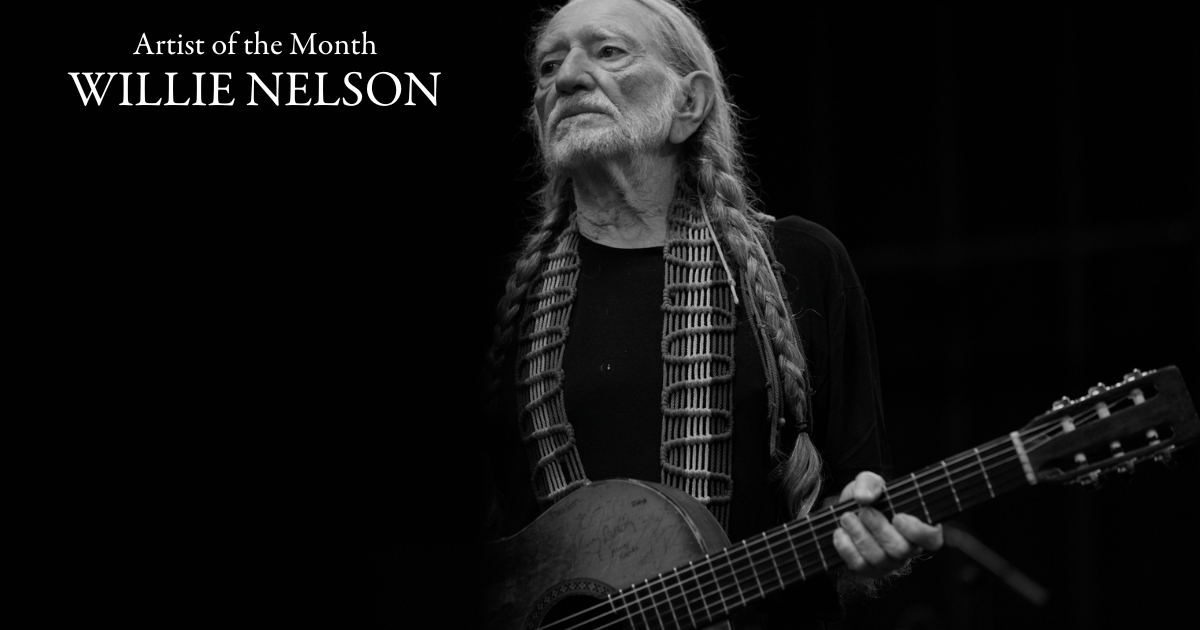
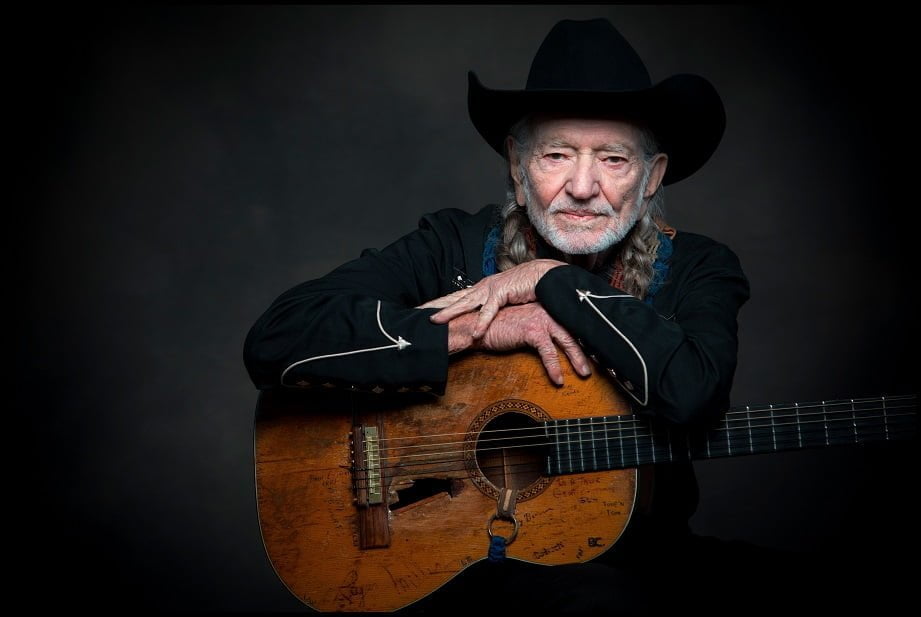
Earlier this year legendary musician, songwriter and recording artist Willie Nelson announced his 151st studio album would be a return to bluegrass, this time reimagining 12 of his own originals with a string band lineup. Available September 15 and simply titled Bluegrass, the Buddy Cannon-produced project reinforces the career-long relationship Nelson has had with bluegrass and bluegrass pickers, calling on old friends and collaborators like Barry Bales, Ron Block and Dan Tyminski, as well as band members and vocalists Aubrey Haynie, Rob Ickes, Josh Martin, Mickey Raphael, Seth Taylor, Bobby Terry, Wyatt Beard and Melonie Cannon.
Nelson is a revered song interpreter and cross-genre adventurer, covering and recording songs from all across the American roots music landscape, from the Great American Songbook to blues and soul, from jazz to Texas swing. No corner of Americana in any/all of its forms has been left untouched by this prolific music maker. But his relationship to bluegrass – similar to his peers like Dolly Parton or Lee Ann Womack, or his acolytes and emulators like Sturgill Simpson and Kacey Musgraves – speaks to the primordial relationship between country and bluegrass, more than just musical touristing or a genre-based gimmick. Nelson doesn’t put on “bluegrass” as a costume, he brings it forward from the earliest days of country music as a genre, before sub-genres like bluegrass had stratified and coalesced as identities somewhat separate from country as a whole. It’s part of what makes Bluegrass a compelling collection, tracks like “Still Is Still Moving to Me,” the album’s lead single, don’t feel like songs wearing bluegrass drag, but rather feel like country gone back to its roots.
Across a career that has touched so many other musicians, singers, and creators – from Waylon Jennings to Ray Charles to Snoop Dogg – it follows that Nelson has counted many bluegrass greats among his album guests, track features, and show bills. He’s toured extensively with Alison Krauss & Union Station over the past two decades; it’s no surprise to find a handful of Union Station alumni on Bluegrass. He’s recorded with Rhonda Vincent, Billy Strings and all the McCoury boys, Del, Rob and Ronnie – the latter two have toured with Willie, too. Country Music, a 2010 release from Nelson produced by Americana superstar T Bone Burnett, was also a bluegrass-centered album, pulling from the deep and broad repertoire of early country, old-time and bluegrass – when the three genres could be represented by a Venn diagram of one circle.
There are so many facets of Nelson’s music making that feel patently bluegrass: his love of borderless, boundless cover songs; his ability as a picker standing equal with his songwriting and one-of-a-kind vocal interpretations; his endless output of personal, meaningful music; his mutual admiration of his compatriots, adorers and mentees. The list could go on ad infinitum. It makes perfect sense that this year he’ll join the father of bluegrass, Bill Monroe, in the Rock & Roll Hall of Fame.
It’s rare that a multi-hyphenate musician and songwriter such as Willie Nelson can shift so effortlessly between contexts, gathering and maintaining a diverse following that understands great music can – and should – transcend not only genre, but all of the trappings of the music industry. It’s part of why Bluegrass feels grounded, honest and resonant. Willie Nelson isn’t playing pretend, he’s just being himself – and that might be the most bluegrass thing about him.
Watch for our Artist of the Month feature, an in-depth exploration of Willie Nelson’s relationship with bluegrass across his life and career coming later this month, and enjoy our Essential Willie Nelson Playlist, featuring many of his bluegrass forays among his popular recordings and our BGS favorites.
As one of country music’s greatest interpreters, Willie Nelson has put his indelible stamp on Guy Clark’s late-career masterpiece, “My Favorite Picture of You.” It is a stunning centerpiece of Nelson’s latest project, Ride Me Back Home.
“What I remember most about recording the song was the reverence and respect with which all the musicians showed the lyrics and melody as we were recording it,” says producer Buddy Cannon. “I chose to present this song to Willie because, from the moment Guy Clark sang it for me at his home one morning a few years ago, I have not been able to get the song and the photograph the song was written about out of my head. As Guy was getting ready to sing the song for me he reached behind him and took the photograph of his wife off the wall and told me the story of where the song came from. The song is timeless, just like Willie Nelson is timeless. A perfect marriage of singer and song.”
In the exclusive video below, Nelson shares his own thoughts on Guy Clark and “My Favorite Picture of You.”
Photo credit: Pamela Springsteen Video courtesy of Sony Music Entertainment
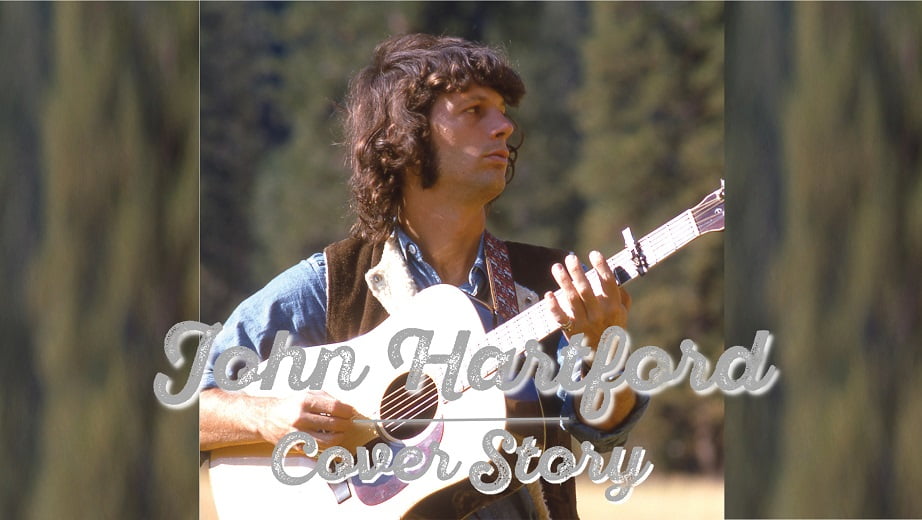
Sum up the importance of John Hartford in one sentence?
That’s the challenge given to Skip Heller.
Five minutes later, after a stream-of-consciousness run of superlatives, analogies and tangents — songwriter, entertainer, transitional figure and simply great are among the terms employed, as is the declaration that Hartford was a “gateway drug to bluegrass music” — Heller finally sighs.
“You are talking with someone who, with money he got on his fourth birthday, bought a John Hartford record,” he says.
In other words, Heller is just too deep into all things of Hartford’s life and music to boil it down to one line. While that worked against coming up with a neat summary, it served him very well as compiler and producer of the new Backroads, Rivers & Memories album.
It’s an illuminating and lively collection of previously unreleased early- and mid-1960s recordings that pre-date and pre-sage Hartford’s soon-to-come impact as a major songwriter (the 1967 Glen Campbell hit “Gentle on My Mind”), a “newgrass” pioneer (the much-beloved, still-unique Aereo-Plain album), and a solo banjoist, fiddler, foot-stomper, noted wit and colorful chronicler of life on Mississippi (a St. Louis native, he piloted the steamboat Julia Belle Swain every summer for much of his life).
And it comes as the presence and adoration of Hartford, who died in 2001 at 63 of Non-Hodgkin lymphoma, has had a resurgence, with a new legion of young fans discovering his music and prominent posthumous places on the soundtracks to the Coen Brothers’ O Brother, Where Art Thou? and 2017’s Lady Bird. For the latter his melancholy “This Eve of Parting” underscores a key scene, his sad baritone conveying the distress of the mother, Laurie Metcalf’s character.
But the genesis of the set can be traced to a fateful ’68 evening in Heller’s family’s Philadelphia living room, the TV tuned to CBS. It was a moment for the then-tyke comparable for him to what many experienced a few years prior watching the same network when the Beatles made their American TV debut on Ed Sullivan’s show.
On the screen was The Smothers Brothers Comedy Hour, and Hartford, a regular on the show picking banjo and appearing in some sketches, was duetting with Glen Campbell on “Gentle on My Mind.” That appearance essentially previewed Campbell’s own variety show that would be inaugurated soon as the Smothers’ summer replacement, with Hartford a major presence on it as well — that was him each week standing up in the audience to pluck the same song’s intro on banjo to start the show.
“If you were inclined toward music and you were going to spend your money on a record, it was going to be that or a Monkees record,” he says, allowing that perhaps Campbell would have been the attraction here for most, “but my parents already had those records.”
The album in question was either 1967’s Earthwords & Music (which included the version of “Gentle on My Mind” that caught Glen Campbell’s ear) or the next year’s Gentle on My Mind & Other Originals (piggybacking on Campbell’s massive hit with the song). He had them both, one that he bought, the other given to him by his “cool uncle,” but he’s not sure which was which. Regardless, the boy’s path in life was set.
So let’s — pardon the expression — skip ahead to the present. Heller, an accomplished and respected roots-and-far-beyond musician based in the Los Angeles area, stands as perhaps the foremost authority on his hero’s life and music, and this new album came from that and from the close relationship he developed with Hartford (opening for him at a Philadelphia concert in 1996 remains a personal highlight) and with his family. The family, including Hartford’s son Jamie, a guitar ace and singer who has carried on some of his dad’s traditions, had already released some archival material and talked with Heller about other possibilities. Ultimately, Heller was sent an extensive digital library and set to assessing, quite the task as Hartford was an obsessive taper.
“He had a tape of pretty much any show he played,” Heller says. “He also had a tape of every jam session.”
After contemplating a compilation of live recordings, Heller hit on the notion of building an album from Hartford’s ‘60s songwriting demos, adding to that some airchecks from his regular radio show on WHOW in Clinton, Illinois (near St. Louis) and — a real treat for fans — the entire eight-song output of his early Ozark Mountain Trio, pretty straight bluegrass.
Overall, it shows an evolution of a singular figure, someone who took traditions and made them his own, infused them with his distinctive talents and personality, and in turn shaped sensibilities of others to come. Along the way there are demos of “Gentle on My Mind,” “Eve of Multiplication,” “This Eve of Parting,” and other songs he would record for his late-‘60s run of albums on RCA. And, as a tantalizing if brief and ephemeral bonus, there’s a 30-second excerpt from a rehearsal with a band of Nashville pros of what would become “Steam Powered Aereo Plane,” which a couple of years later would become a centerpiece of that forward-thinking album he made with fiddler Vassar Clements, guitarist Norman Blake, Dobro master Tut Taylor, and bassist Randy Scruggs.
“The Ozark Trio and radio things, those are the makings of John Hartford,” Heller says. “And you can hear how when he starts finding his own voice through this, Pete Seeger was the transitional figure who was around. He really gets clearer about who he’s going to be. His batting average as a songwriter gets much better, a combination of Pete Seeger and Roger Miller. He gets his elliptical words stuff from Miller.”
Heller found a lot of epiphanies and revelations in the course of putting this all together. One that may strike many is in the Ozark recordings.
“If you didn’t know that was John on banjo, you’d go, ‘Who is that?’” he says. “He’s amazing. Not doing anything J.D. Crowe or other of the ‘real’ guys would be doing, and you can hear Earl [Scruggs] on it, and maybe also Doug Dillard’s influence. One of the things in this album for me was to show how incredibly grounded he was in traditional bluegrass. He could have gone on and just done that, could have made a life of that, just be a banjo player. And on those radio airchecks, he is one of those old-time country guys. To hear that professionalism before he even got to Nashville was an epiphany.”
But even more so, Heller was astounded by how meticulous Hartford was in the songwriting process.
“The revelations to me were often how he would evolve a piece of material in the process of writing before he ever played it,” he says. “There are songs for which we had four, five, six versions. He really could get in the weeds. Any really good songwriters can.”
The biggest questions may revolve around the “Aereo Plane” clip. Why just 30 seconds? And what can we learn from that short passage?
“The whole rehearsal of ‘Aereo Plane’ is like 40 minutes,” he says. “You hear the band that’s on the RCA records rehearsing it — and not quite getting it.”
These are ace musicians, Heller notes, some of the top that Nashville had to offer. But Hartford’s vision has moved in a way that they couldn’t quite follow.
“Once he hits [the album] Aereo-Plain it’s all going to change,” he says, citing that later album’s fusion of old-timey string band gospel and progressive flights of fancy, spiked by touches of both heartfelt tenderness and witty Dada-hippie absurdities (including the two spellings of plane/plain) only hinted at in his earlier works.
“To me that feels like the natural cut-off point, the end of the RCA years. Why? The band he has can’t quite play the next thing he had in mind.”
No genre of American music has been untouched by the influence of Dolly Parton and bluegrass is surely no different. Given Dolly’s homegrown, East Tennessee roots and her pickin’ chops on many of bluegrass’s signature instruments, her connection to the genre perhaps runs deeper than any other style she’s accomplished — besides good ol’ classic country, of course.
In April 2020, Dolly announced six albums – including Little Sparrow, one of her bluegrass forays – from her back catalog would be made available on digital streaming services for the first time. In an episode of 2019’s Peabody-Award winning podcast, Dolly Parton’s America, a portion featuring the London debut of Parton’s 9 to 5 musical details that many of Parton’s inner team regard her 1999 release, The Grass Is Blue, as one of her best – critically and otherwise. We even featured The Grass Is Blue in an episode of The Breakdown. Trio and Trio II, Heartsongs, and even the genre-mashing White Limozeen all contain heavily bluegrass and string-band inflected songs – the influence of her home turf and its musical accompaniment are evident throughout her artistic output.
Live and from the studio, through cover songs, collaborations, and in casual jam circles, Dolly and her songs have fully infiltrated bluegrass. It’s no surprise she speaks of it often, simply referring to the music as she did in her youth (and all throughout her career): as “Mountain music.” To celebrate Dolly in December, here are a few of our favorite Dolly/bluegrass cross-pollination moments:
“Sleep With One Eye Open” — Dolly Parton
Her 1999 all-bluegrass album, The Grass Is Blue, was named one of our 50 Most Greatest Bluegrass Albums Made by Women — and for excellent reason. It may very well be the one of the best bluegrass recordings born in the past few decades (check out that roster of pickers!!) and it brought bluegrass to Dolly’s greater audience — Norah Jones went on to cover the title track. Dolly even made an appearance at the International Bluegrass Music Association’s award show in 2000, as the project won Album of the Year. Dolly’s bluegrass skills are no better displayed than on this perfectly-executed cover of an all-time bluegrass classic.
“I Feel the Blues Movin’ In” — Trio
Both Trio albums (Dolly Parton, Emmylou Harris, and Linda Ronstadt) could arguably be categorized as bluegrass, but Trio II ticked quite a few more of traditional bluegrass’s boxes, especially with this cover of a Del McCoury original. To this day he’ll announce the song on stage as being the best, “Because Dolly Parton sang it!”
“Heartbreaker’s Alibi” — Rhonda Vincent & Dolly Parton
Dolly and the Queen of Bluegrass collaborate on this 2006 release from Vincent’s All American Bluegrass Girl. Vincent and Dolly have gone on to work together on a handful of other projects, as well. Something about that bluegrass vocal blend… Mmmm.
“Jolene” — Alison Krauss with Suzanne Cox and Cheryl White
And of course, covers of Dolly’s countless songs have filtered into the bluegrass songbook across the years. Alison Krauss leads an all-star band on this cover of perhaps Dolly’s most iconic song, “Jolene,” for the 2006 Kennedy Center Honors show.
And it’s not just Dolly’s more country and bluegrass adjacent songs that have found themselves homes in bluegrass set lists and cover projects. Charlottesville, Virginia-based, bluegrass-meets-the-80s band Love Canon covered the iconic Dolly and Kenny duet “Islands in the Stream” for a BGS Sitch Session.
“Muleskinner” — Bill Monroe and Dolly Parton
They both had hit versions of this song, after all. Though this writer might be partial to the version that gleefully shouts, “I’m a lady muleskinner!” It’s badass no matter how you cut it, really. The Big Mon and Dolly, doing it right. And there’s something just so beautiful about Dolly Parton cueing the Kenny Baker into his solo.
“Little Sparrow” — Dolly Parton
2001’s follow up to The Grass is Blue, Little Sparrow continued Dolly’s bluegrass explorations, but with folk and transatlantic sounds joining the mix.
“Viva Las Vegas” — The Grascals with Dolly Parton
The Grascals take the CMA Fan Fest stage in Las Vegas with Dolly Parton singing an absolute classic with a good ol’ dose of bluegrass fire.
“Banks of the Ohio” — Dolly Parton
Not all of Dolly’s bluegrass forays have been… well, bluegrass. Here, she adds her theatrical, dramatic touches with a fresh-written preamble to the classic lyrics of “Banks of the Ohio.” Her soft spoken-word, the sumptuous strings, and a soaring, Dolly-vocal-run-filled arrangement give this staple a special hue that’s 100% herself.
“Why’d You Come in Here Lookin’ Like That” — Della Mae
Della Mae has plenty of experience covering Dolly, even once being the house band for a Dolly Parton tribute show in the UK. Once again, they’re pulling a cover that comes from outside Dolly’s bluegrass-y songs, and it’s fantastic.
“Just a Few Old Memories” — Dolly Parton
A legendary combination. Dolly Parton sings Hazel Dickens. What more would we ever need?
Well… Hazel’s in the Bluegrass Hall of Fame. Maybe it’s time Dolly ought to be inducted, too. After all, you just took a split second scroll over her major influence on bluegrass and vice versa — and her bluegrass outreach, as well. The case is made for itself. Dolly for the Bluegrass Hall of Fame!
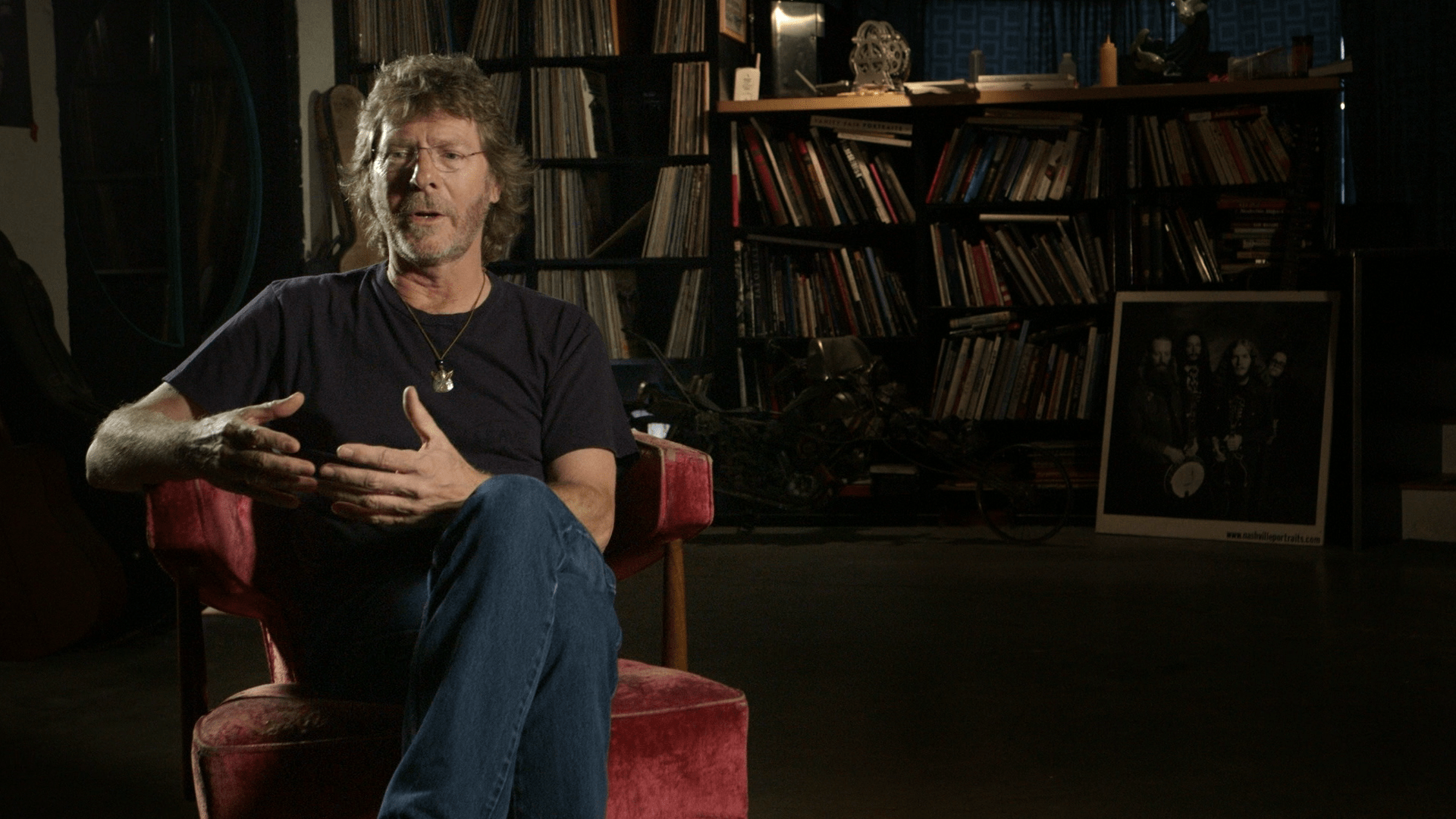
With his extraordinary musicianship and boundless energy, Sam Bush embodies the spirit of bluegrass. The award-winning documentary, Revival: The Sam Bush Story, captures him in peak form, with testimonials from many of his fellow musicians.
“It’s pretty overwhelming,” Bush remarked after seeing the film for the first time. “Your friends are talking about you. You’re watching yourself back when you only had one chin. It’s pretty amazing to think I got out of high school 45 years ago and have been fortunate to play music ever since. I hope people come away from watching the film with a greater appreciation for Americana and acoustic music.”
The film may be purchased or rented on Amazon on Thursday, November 1. Here’s a preview:
Image Used With Permission from Revival: The Sam Bush Story
This website uses cookies to improve your experience. We'll assume you're ok with this, but you can opt-out if you wish.AcceptRejectRead More
Privacy & Cookies Policy
Privacy Overview
This website uses cookies to improve your experience while you navigate through the website. Out of these, the cookies that are categorized as necessary are stored on your browser as they are essential for the working of basic functionalities of the website. We also use third-party cookies that help us analyze and understand how you use this website. These cookies will be stored in your browser only with your consent. You also have the option to opt-out of these cookies. But opting out of some of these cookies may affect your browsing experience.
Necessary cookies are absolutely essential for the website to function properly. This category only includes cookies that ensures basic functionalities and security features of the website. These cookies do not store any personal information.
Any cookies that may not be particularly necessary for the website to function and is used specifically to collect user personal data via analytics, ads, other embedded contents are termed as non-necessary cookies. It is mandatory to procure user consent prior to running these cookies on your website.