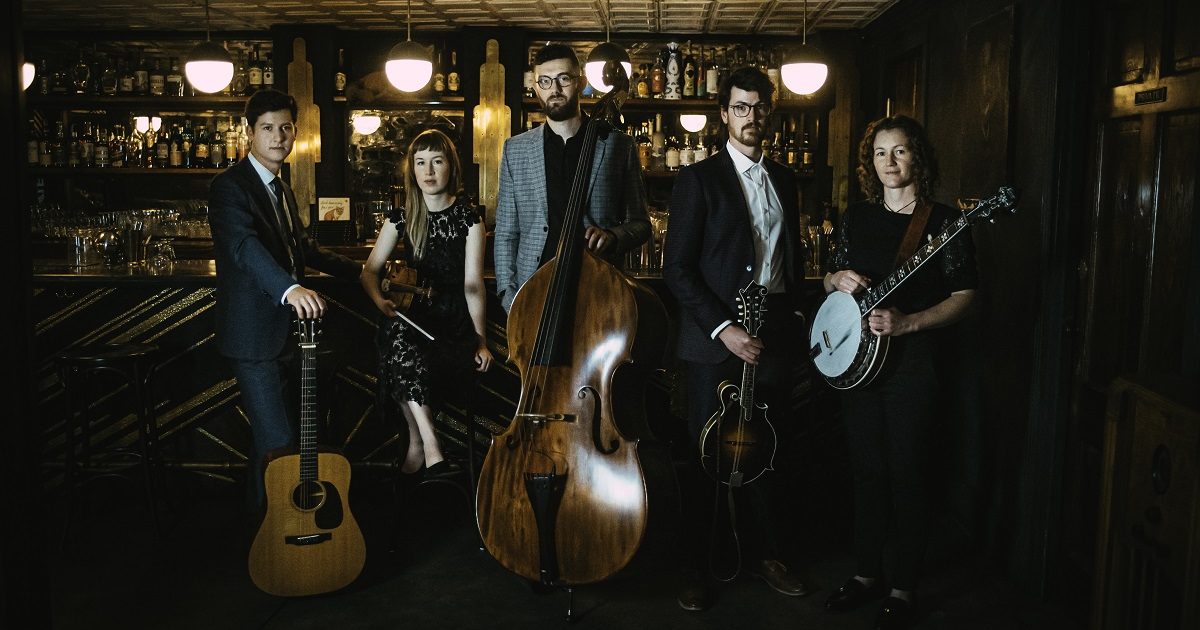
In Their Words: “Back in February we had a few days off the road and decided to spend one of them in Brooklyn, New York, playing music and making videos with some friends. We called up Michael Daves, Jacob Jolliff, and Tony Trischka and ended up having this epic afternoon of arranging a few bluegrass standards for eight people to jam on. Things got pretty wacky, including this video, which is a mashup of the bluegrass song ‘Long Gone’ and the fiddle tune ‘Done Gone.’ We decided to try this medley at first because we thought it would be funny but it turned out they’re both in the key of Bb and it ended up working great. Hope you enjoy!” — Bronwyn Keith-Hynes, Mile Twelve
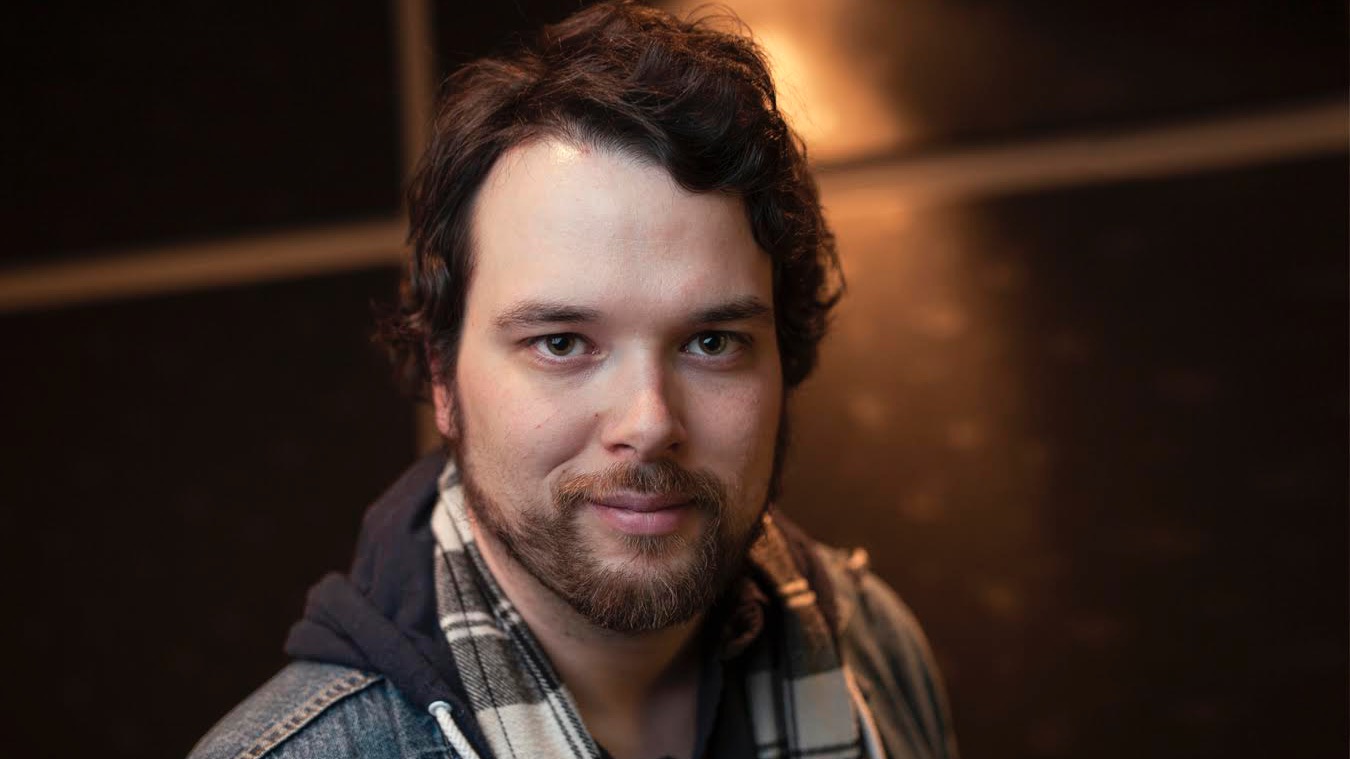
A familiar voice across Canada’s airwaves, Tom Power hosts CBC Radio’s q, an all-encompassing public radio talk show that perhaps best compares to NPR’s Fresh Air or PRI’s Studio 360. Though it does air on some public radio stations in the United States, Power is best known to the north, not only as a radio personality, but as a musician — he’s an accomplished guitarist with remarkable prowess in Irish and traditional Newfoundland musics — and musical scholar.
As it turns out, he’s also a diehard, lifelong fan of bluegrass. As a teenager he picked up the five-string banjo and took lessons (which had a much broader reach than just banjo techniques) from once Blue Grass Boy and now Bluegrass Hall of Famer Neil Rosenberg, who just so happened to live nearby in Power’s native Newfoundland. Though his work as host on q reaches far beyond his home island and his favorite chosen folk musics, his ethnomusicological expertise still centers on bluegrass — and he is a devout and starry-eyed fan.
BGS is proud to partner with Power and his co-producer Stephanie Coleman to present Toy Heart: A Podcast About Bluegrass, a platform for bluegrass storytelling and an examination of the true narratives that gave rise to this singular genre. Over eight episodes in its inaugural season Power will interview Grammy Award-winning, IBMA Award-winning, and truly earth-shattering artists in bluegrass about their lives, their stories, and their songs.
At Folk Alliance International in New Orleans last week BGS and Tom Power unveiled the first five minutes of the first episode of Toy Heart, which features Del McCoury accompanied by his sons Ronnie and Rob. Listen to that trailer right here on BGS, and read our interview, where Power discusses the pros and cons of his status as an “outsider,” the never-before-heard stories he unearthed in his recordings, and much more.
Our BGS audience, being largely American, might not have an understanding of who you are already. Then the audience there in Canada will know who you are as an interviewer and on-air personality, but maybe not that you are a dyed-in-the-wool bluegrass nerd of the best kind.
[Tom laughs]
How does it feel being the person executing these interviews, creating this podcast, and being in the center of that odd Venn diagram between really traditional bluegrass and folks who love it, and your more outward-facing persona on the radio in Canada and, to a lesser degree, here in America?
Tom Power: I am a little apprehensive and a little scared, but I also know that the things that are making me scared about this are making our podcast good. I feel like I have a lot of bona fides in this music, in terms of my knowledge of it. I’ve been obsessed with it since I was about fifteen years old, studied it extensively, did a lot of work on it. When I went down to Nashville and met the community there I started to understand that I was an outsider, that I was not someone who was part of that community. I’m from a very different group, I play very, very different music.
I’m kind of a new member, [everyone has] been very welcoming, but it’s a little intimidating. That being said, I think the perspective I have allows me to ask different questions, or at least think differently about the music than someone who’s in it. In this case I’m on the outside looking in, which allows me to ask different questions, allows me to have different conversations. I wouldn’t know the history of say, Ricky Skaggs and Bill Monroe as well as others. I know the history of how they got together, but I was able to look at Ricky and say, “Hey man, I don’t remember a lot from when I was four years old. Do you actually remember him handing you that mandolin? How is that possible?” Which is a question that maybe someone who was a little more involved in this community may not have thought of. They may have just accepted it as part of the lore.
As you’re describing this apprehension I’m wondering, are you thinking about how to mitigate for folks being like, “What about my favorite Del McCoury song? What about my favorite Ricky Skaggs anecdote?” How much of that are you anticipating and/or how much of this is you specifically turning over stones that haven’t been turned over before?
The format of the podcast is largely autobiographical. Each episode begins with, “Where were you born?” Or, “What was it like growing up?” I try to let the guest [lead]. On the radio show, q, say I have twenty minutes and ten pieces I really need to hit. In this case I have an hour, I have an hour and a half. I’m able to let them guide me where they want to go and I can steer them back around.
One nice thing about my interviewing background, and I think the reason q has been in any way successful in Canada and a bit in the U.S. as well, is because we focus on what the listener might want to know most. When I’m doing an interview I’m always thinking about how it’s coming out in someone’s headphones, how it’s coming out over somebody’s car stereo. What are they shouting at the radio? What are they shouting at their phone? I’m always trying to keep that in mind.
When you imagine that hypothetical listener, the average person you’re trying to target with the podcast, is it a diehard who knows everything about bluegrass, or is it somebody who’s maybe a new initiate? Who do you hope will come into the audience of this podcast?
More than anything what I’m trying to do is trying to get a record of some of this music. I think the podcast format is a great opportunity to get these kind of biographical stories on record. I found myself listening to people like Marc Maron, Howard Stern, and Terry Gross thinking, “Why can’t I do this for the music I love the most? Who’s doing this work?” The music that Del McCoury’s making, the music that Ricky Skaggs is making, or Alice Gerrard or Alison Brown, is as valid to me as something nominated for an Oscar or nominated for the Booker Prize. Who’s treating this music this way? Who’s giving it this attention to detail?
In any kind of music there’s a lot of myth-making and a lot of legend-making. I’m really interested in what the actual story is. Even if it might seem a little boring to them. The eight-hour drive from Nashville to somewhere else, I want to know what they talk about on that bus ride! I want to know the minutiae.
Some of my favorite interviews have been with people who I didn’t know. I’ve turned it on and I’ve gone, “Who is this person? Who is this director? Who is this actor?” And I found myself engrossed in the story. Take Jesse McReynolds, who told me on this podcast about driving around with his brother Jim from schoolhouse to schoolhouse, taking the car battery out of their car, putting it on stage, plugging the PA into it, and seeing if they could just get people to come. Is that not just a beautiful, human story? Bluegrass is the story of the original DIY music, as far as I can tell. These people were living what punks thought they were living for the first time in the 1970s. [Laughs]
I am aware that I’m entering sort of a hallowed ground of music and music aficionados. I really believe that this is just a matter of getting it on the record and using the little bit of training that I’ve had on public radio. Being able to sit down with Del McCoury and go through his entire life, his entire career, and ask, “What was it like when you had to quit music and go work in the logging industry? What was it like working in a sawmill? Tell me about the actual moment. I know the story that you were playing banjo [in your audition] for Bill Monroe and then Bill Keith came in, how’d that happen? Didn’t that hurt? You lost that gig — what was it like playing in a band with a guy you lost a job to?”
You do have these moments with so many of these icons that we know and love. We know their “mythology” intimately, yet you get stories out of them that people like you and I have never heard before, let alone people who don’t think and write about music every day for a living. You mention Del and Jim & Jesse, but is there another story that you’ve uncovered in your recording so far that you were surprised to hear?
I spoke to Del McCoury about the time he [spent] in the military. I said, “So you were in the military, how did that go?” Pretty broad, right? He tells a story about being in the military, about a couple of things that transpired while he was in the military that were hilarious. We laugh about it, and on the way out Ronnie and Rob McCoury stopped me and said, “Tom, we’ve never heard that story before.” These were his sons! Not just sons, but his business partners, his bandmates, and they said they had never heard him tell that story before.
I can tell you, Alice Gerrard told me what it was like to sing at Hazel Dickens’ funeral. I felt so honored that she would even be able to tell me that. I asked Béla Fleck, “Where is Tony Rice?” And what his relationship with Tony is like these days. I asked Jerry Douglas about drug use in bluegrass, something that often gets overlooked. And I should be clear, the goal is not to be in any way sensational. The world I come from in public radio, I find stories about humans way more interesting than stories about legends. What I was able to do is have human conversations while finding out the history of how a bunch of people created this thing that changed my life and it changed the lives of people all around the world. How is that possible? It’s largely by an unglamorous industry, a hard life on the road, touring nonstop, playing small barns, having lean years — the story of what actually happened there is more interesting to me than anything else.
I’ll give you one more. Ricky Skaggs, for the first time ever, tells the story of how Bill Monroe almost hired him to be a Blue Grass Boy. Hearing Ricky’s tone when he told me that story — he says to me, “I haven’t really talked about this before.” I felt so honored that I saw not a bluegrass legend on the Opry, but I saw a kid still being blown away because his hero spoke to him.
I think that’s one of the most beautiful things about bluegrass and even folks with even the most casual relationships to bluegrass understand that the community is just as important a part of the whole thing as the music itself. The legends that you’re describing just so happen to also still be human.
And they have stories they want to tell! And maybe haven’t even had the chance to tell them. I want to hear about it. I want to hear the story of how Béla Fleck heard that Tony Rice was making records without banjo and he thought, “That’s not right, and I gotta be the banjo player.” So he leaves New York! These are the stories of ambition, of love of music, honoring a tradition, and wanting to further things. Of humanity. I find it fascinating.
Ideally, if enough people listen to it, this season will just be one of many. I want to get to everybody! I mean, my white whale is Tony Rice. If you listen to these interviews a lot of them close with, “How do I get in touch with Tony Rice?” [Laughs] Alison Krauss is another I’d love to speak to, because other than Bill Monroe she is maybe the most transformative artist in the music’s history. I want to know what it was like to be a twelve-, thirteen-, fourteen-year-old child prodigy playing this music. I want to know what emails — I know there weren’t Tweets back then — or messages she got when she started adding drums to her music. I’m dying to talk to Larry Sparks! And the Osborne Brothers! These are crucial — I had to limit myself to eight people this time around and it was so challenging.
As someone who got a Bluegrass Unlimited subscription mailed to Newfoundland when he was fifteen, and a Banjo Newsletter subscription mailed to Newfoundland when he was sixteen, I still would not know anything about this if I wasn’t under the tutelage of, in my mind, the greatest mind in the history of bluegrass, Neil Rosenberg. It changed my life forever. When I first took this on the first thing I did was fly back to Newfoundland to see Neil. I told him, “I’m doing this thing, what should we talk about?” And he helped me out. If I can be a pebble onto the beach of the work he has done that would make me very happy.
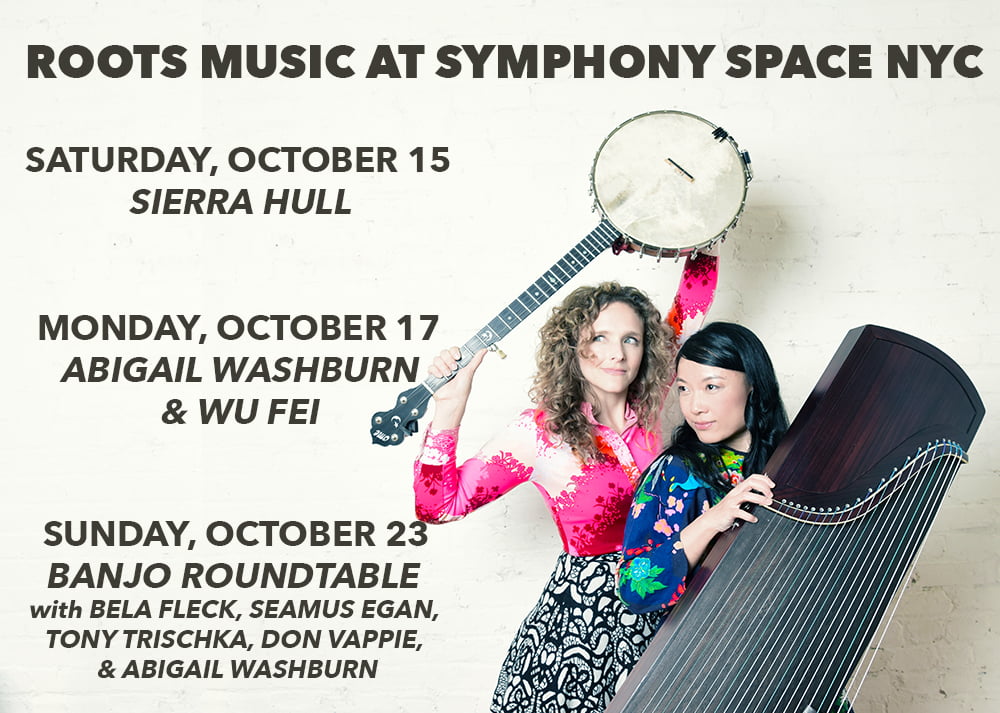
Just the day before, his Nashville house was filled with them, as well as with a few dozen kids. It was the 6th birthday of the eldest of two children of the three-finger-style banjo maestro and his clawhammer-style counterpart, frequent recording and touring partner and wife Abigail Washburn.
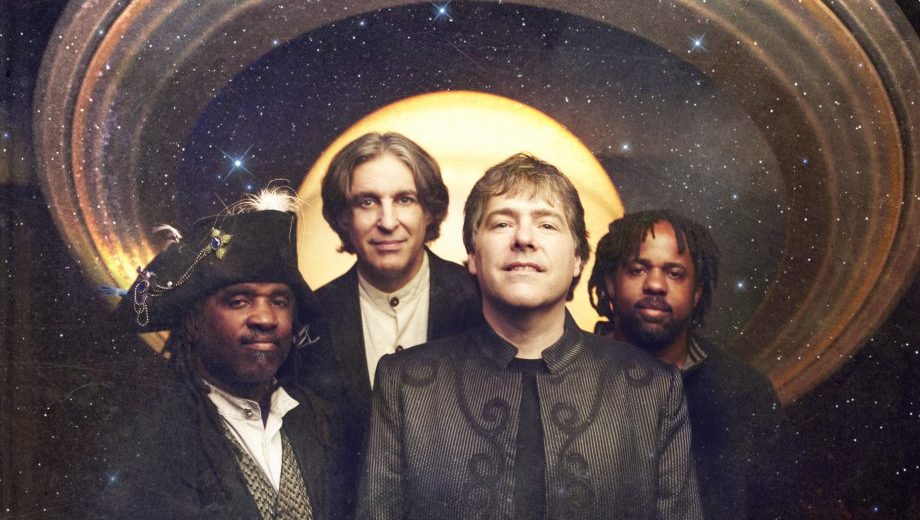
But the days surrounding this have also had a party vibe. He’s been in rehearsals with his cohorts in the beloved jazz-and-way-beyond Flecktones, in preparation for a tour marking the band’s 30th birthday.
Working again with harmonica player/pianist Howard Levy, bassist Victor Wooten, and the singular electro-acoustic percussionist known as Futureman (a.k.a. Wooten’s brother Roy), digging deep into their group catalog of complex flights of fancy mixing daredevil chops, musical depth, and persistent whimsy has been a blast.
“They’re the same guys they were when I first met them,” he says, speaking from home. “Curious, interested, ever-expanding, ever-pulling me with them. There’s a very special bond we have together. I’m realizing it more and more as years go by, one of the great relationships in our lives, musically and personally.”
They’re even pulling out such rarely played and decidedly difficult gems as “Jekyll and Hyde (and Ted and Alice)” from the band’s second album, 1991’s Flight of the Cosmic Hippo. It’s challenging and exciting, enlivening the qualities that made this alchemical combo of characters special from the very start. Futureman, he says, is an “empath and enabler — musical enabler, brings consciousness underneath you.” Victor Wooten too. Levy is “the crazy ideas on top. He’s the brains of the outfit.”
Fleck’s role? “Somehow I thought I was the heart of it, limiting it but making it more understandable for the common man — I was the common man in the band, surrounded by these crazy guys.”
But with a moment to reflect on their collective history and achievements, he finds descriptions of the magic they work together to be elusive.
This is where the balloons come in.
“It has to have heart, has to have melodies, some harmonies,” says Fleck, who turns 61 in July. “Couldn’t just be a groove or a shred-fest. That’s the power of the band. The tunes are strong, good things to pour everyone’s musical power into. Like a balloon. It’s an empty piece of rubber. But these tunes I’d written, we filled them up with Futureman and Victor and Howard — the balloons get real handsome. With the balloons at the party, it occurred to me that you fill them up and they become joyful. That’s what this music is.”
They’ll be sharing that joy on the road now, including two shows of particular import. This 30th anniversary tour began with a big “Friends and Family” kickoff May 30 at Red Rocks near Denver, the friends and family here including Washburn, saxophonist Jeff Coffin, Dobro genius Jerry Douglas, and the Colorado Symphony. And on June 8 they will be taking a cherished headlining slot at the Hollywood Bowl’s vaunted Playboy Jazz Festival.
The Playboy slot is, to Fleck, a particularly meaningful recognition.
“It’s one of the neat things to being around 30 years,” he says of that booking. “From the start I was begging to play it and they said, ‘Yeah, we’ll put you on at noon’ and we’d play once every four years or so. Now we’re in the headlining slot and we’re legacy artists.”
Sure, the Flecktones have had several albums go to the top of the jazz sales and airplay charts and they have won two Grammy Awards for contemporary jazz album, with Outbound in 2000 and The Hidden Lands in 2006. And last year the band was given the prestigious Miles Davis Award by the Montreal International Jazz Festival. And Fleck has found himself partnering regularly on recordings and tours with some of the greats of jazz, one in particular in an ongoing partnership. “I’m playing with Chick Corea, which is ridiculous, on a regular basis,” he marvels, having just returned home from a tour with the ceaselessly groundbreaking pianist.
But, while belated acceptance in the jazz world is frustrating, he understands. See, banjo is pretty much standard in any jazz band… in 1919. In 2019, not so much. Even after 30 years of forging a path for banjo in modern jazz, Fleck remains singular. Asked about others doing anything comparable today, he’s kinda stumped.
He cites New Orleans’ veteran Don Vappie, but he’s generally in the mode of traditions going back to those earliest years of jazz. There’s Matt Davis, a converted jazz pianist who’s on the faculty of the University of Michigan. And there are others who use some jazz chops and sensibilities while not strictly playing that style of music, notably Tony Trischka, Noam Pikelny, Alison Brown, and Pat Cloud.
“But yeah,” he says. “They’re rare.”
Not to mention that the Flecktones as a whole is anything but standard jazz, with a truly eccentric approach and reach into a lot of styles. The 3-CD Little Worlds set from 2003 showed a boundless range that felt to some at once excitingly delightful and confounding.
On the other hand, not fitting in any category is par for the course for Fleck. He’s made a career of it, holding the record for the most categories in which he has been nominated for Grammys, 16 total. The most recent win is a best folk album trophy in 2016 for Béla Fleck & Abigail Washburn.
He’s a charter member, he quips, of the “Modern American Attention Deficit Disorder Musicians.” There are really only two others he’d put in that association: Jerry Douglas (whose fusiony Jerry Douglas Band may be the only thing out there comparable to the Flecktones) and Chris Thile (who’s resumé runs from Nickel Creek to ongoing collaborations with classical cellist Yo-Yo Ma and jazz pianist Brad Mehldau).
There’s one side of his musical hexadecagon he’s underserved for a while now, though. Ironically, it’s the one that first brought him fame when he emerged as a precocious New York City musician in the ‘70s and ‘80s.
“On the bluegrass side, people go, ‘Whatever happened to Béla Fleck? He could have been a great bluegrass player.’” he says. “Someone told me he had heard that. That was when I was at the top of my game, selling out stadiums with the Flecktones on tour with the Dave Matthews Band.”
Well, it has been 20 years since his last true bluegrass album, the on-point-titled The Bluegrass Sessions. And the one before that, the breakthrough Drive, came in 1988, a year before the Flecktones genesis. Well, as it happens, Fleck has a new bluegrass album in the works with a cast of musicians including such longtime buddies as Douglas, mandolinist Sam Bush, Jerry Douglas, bassist Mark Schatz and fiddler Stuart Duncan (all of whom were on the 1988 album) and a mix of fellow veteran stars (bassist Meyer, mandolinists David Grisman and Chris Thile) and relative newcomers (fiddlers Billy Contreras and Michael Cleveland, mandolinist Dominick Leslie, and guitarist Cody Kilby).
The timing? Just seemed right, he says.
“Now the years have gone by and I didn’t have a place for bluegrass to fit in,” he says. “But I had these tunes burning a hole in my pocket and thought I would really love to have a place for them. These sessions have been a knockout. These are hard tunes. And we’re having a blast. It’s as good as I’d hoped.”
The results will be out sometime next year. But first there’s this Flecktones balloon to float.
“One thing I will guarantee you is you will never hear anything else like it,” he says. “There is nothing else like the Flecktones in the world. I promise that. And I am very proud that were are that, and that we are back together.”
As soon as I get Molly Tuttle and James Elkington on the phone, the conversation immediately turns to who is the better guitar player. There’s no showboating or bragging. On the contrary, each insists the other is much more accomplished, much more refined in their technique. “I hadn’t actually heard much of your music until a couple of days ago,” Elkington admits, “but I have to say that you are the far superior guitar player.”
“No way!” Tuttle insists. “I love your guitar playing.”
Their mutual demurrals stem partly from modesty, but also from the fact that both Tuttle and Elkington practice such different folk traditions that there’s very little overlap in their playing styles. A bluegrass picker who grew up in California and made her stage debut at 11 years old, Tuttle attended the prestigious Berklee School of Music in Boston and formed the Good-Bye Girls. On her solo debut, an EP titled Rise, her playing is rhythmically complex, technically precise, and remarkably fleet, as though there are two sets of hands running up and down the frets, yet the guitar remains secondary to her evocative songwriting.
Elkington, who originally hails from a small village outside of London but currently lives in Chicago, is a self-taught guitarist with a background in indie rock, most notably with the Zincs, the Horse’s Ha (featuring members of Eleventh Dream Day and Freakwater), and Wilco. However, his new solo debut, Wintres Woma, leans more toward folk music — specifically, the British folk revival of the 1960s, when players like Davey Graham, Bert Jansch, and Richard Thompson were melding early music, rural folk, jazz, and rock.
Their albums couldn’t sound more different, despite the shared combination of voice and guitar, yet both bluegrass and folk music value technique in service of interpretation; more important than the fluidity of notes or the deftness of picking is how the artist updates, refines, and furthers the musical ideas of the past.
One of the reasons I wanted to get you two on the phone is because I’m fascinated by the very different strains of folk music that you represent. Both of your albums strike me as using something — bluegrass or British folk revival — as a jumping-off point for something very different, very current, and very personal.
James Elkington: I didn’t really grow up in much of a folk tradition, outside of the fact that we sang those songs at school and they always seemed to be around. It seems like it’s probably part of my DNA. When I started writing my own songs, which was comparatively late, other people told me that I sounded like that. I didn’t really know that it was in there, and it’s one of those things that I’ve subsequently found I have quite a deep connection to. But that’s why I don’t perform an awful lot of traditional music, although subsequently I have gone back and arranged those tunes just because I love playing them. Now it’s part of what I do. That’s where I’m coming from.
Molly Tuttle: I grew up listening to a lot of bluegrass. My dad is a bluegrass music teacher who teaches all the bluegrass instruments, so I always heard him playing traditional songs. They seeped into my brain, I think, so that when I started playing, I was learning all these bluegrass songs and old traditionals. That was my background and, as I got older, I started listening to other genres and styles. I started writing songs and still had the bluegrass form in my head, so it was definitely a starting point for me.
JE: You know, funny thing that I’ve found actually … I find that somehow the physicality of playing folk music demands a certain technical ability. It feels good to play, as well as sounding good, and when I started writing my own songs, I wanted that to factor in somehow. In some ways, it adds not a limitation exactly, but something like that. It sets up a nice boundary to work within, if you use those traditional forms as a jumping-off point.
MT: It does make it accessible for other people to learn the songs and join in, too.
JE: And to actually know where you’re coming from.
What other music informs what you do?
MT: A lot of singer/songwriters, actually. I listened to a lot of Bob Dylan, when I was starting to write songs. Before that, I had heard a lot of bluegrass songs and felt limited by that. But when I heard Dylan, lyrically and musically, he was just breaking so many boundaries and that opened up my songwriting a little bit. I was just really inspired by that. Joni Mitchell and Gillian Welch are big heroes of mine, too, and Dave Rawlings, who plays with Gillian Welch.
JE: He always plays the right thing at the right time. The way he thinks of arrangements is …
MT: Yeah, he’s doing a counter-melody sometimes, just always putting the perfect piece in. What about you? I’m interested to hear about where your playing style comes from.
JE: I started playing guitar when I was about 10. There are vaguely musical people in my family, but no one who really plays anything. And the guitar was something that was just for me — something I could do privately, sort of like my own private little island to go and visit. And when I started out, I was just really into chords. This was in England in the 1980s. I don’t know if you can have any conception of what that was like, but it was a lot of really jangly guitar bands. It was like this Renaissance of underground bands, like the Smiths and the Cure. When I was learning the guitar, I was really into those groups — particularly Johnny Marr, who was the Smiths’ guitar player.
MT: He’s one of my favorites.
JE: That’s great to hear, because he’s like really the last great British guitar hero. His guitar playing on those records is amazing. The strange thing about it is that I found out subsequently that a lot of what he does, in terms of using other tunings and his approach to finger-style guitar, is really from people like Bert Jansch, Martin Carthy, and Joni Mitchell — all this stuff that I didn’t grow up listening to, but somehow it filtered through him in a way.
MT: I listened to the Smiths so much in high school. I was obsessed with Morrissey’s lyrics, and then the guitar playing was a second thing that I got really into, but I’ve never tried to learn any of his parts to figure out what he was doing.
JE: When I was a kid, I thought that’s really how you had to play the guitar. What changed me was that, when I was in my late teens, I started working in a music store, and there was a guy there who was really into bluegrass. He wanted me to come and play tunes with him, and for some reason, I had no interest in playing the guitar in that setting. But I had this strange attraction to the five-string banjo. I never got very good at it, but I learned the basic rules. Then, when I’d been doing it long enough to realize that I couldn’t play it well, I just applied all of that to the guitar, and that was the start of me doing finger-style stuff.
MT: I play three-finger banjo, so when I play finger-style guitar, I feel like I’m using some banjo stuff, as well.
JE: So you play banjo and guitar? Do you play anything else? Any fiddle or anything like that?
MT: I’ve tried to play fiddle, but I can’t get the hang of it. I play a little bit of mandolin, but not very well. I saw that you play a lot of different instruments.
JE: To a medium-low standard, I would say. I started out playing drums, which I loved. The drums are my favorite instrument, but I didn’t ever seem to get any better at it. For some reason, guitar is somehow easier for me to play. I do play some other things, but it’s not to the point where I could actually say, “I’ve really got this down.” I think I have a really short attention span, is what it is. I tend to move around a lot.
But you played most of the instruments on your album, right?
JE: Yes, but the arrangements are pretty sparse. My friend Nick Macri plays all the upright bass on it. I’ve been playing on and off with him for a long time. And I have some string players who are part of the jazz and new music scene here in Chicago. But mostly it was just me. It’s some fairly simple stuff. I’m mostly self-taught on most instruments. I really took the slow way round. I learned mainly just from trying to play along with the record. Molly, I saw some footage of your band playing, and they all seem equally amazing. Where did you meet those people? Do you always play with the same people?
MT: It’s a little bit of a rotating cast. For the most part, I’ve been playing with Wes Corbett, who’s a banjo player I met in Boston when I was studying at Berklee College of Music. He was teaching there, and we started playing together after I graduated. Right now, I’m on the road with Joe Walsh, who’s also currently teaching at Berklee. He’s an amazing mandolin player and singer. And then Hasee Ciaccio is playing bass with me right now for the summer and fall, and she’s a great upright bass player who lives in Nashville. We’re actually neighbors. What made you gravitate toward Chicago?
JE: It was a few different things. When I was in my later teens and early 20s, all my favorite music was coming out of Chicago — the underground and experimental rock stuff. I had a chance to come and visit here with friends, and I found that it was almost exactly what I wanted it to be. I’m sure, when you moved to Nashville, it was because you wanted to be around that music and be part of that community. I felt exactly the same thing with Chicago. I felt immediately at home here, like this was the place where I wanted to be. It actually all worked out, too. I really did end up playing music with people whose records I had. It’s really a “Hey, let’s all pull together and make something” type of place. I lived in London before, and I never really felt like that there.
MT: That’s how I feel about Nashville.
JE: Did you make your record in Nashville?
MT: I did. It’s my first solo release, so it’s all original stuff that I’ve been working on for years. I did it in Nashville with producer Kai Welch. It has some of my favorite musicians on it. It was great to finally make something of my own, because I’ve done stuff with other bands before but never released anything under my own name.
JE: That’s something I wanted to ask you: Have you played in other people’s bands a lot? Have you ever been just a guitar player in someone’s band?
MT: A little bit, with different bluegrass people. When I was living on the East Coast, I used to play a little bit with this banjo player Tony Trischka, who is like a great …
JE: Oh my God! Really?
MT: You know him?
JE: Let’s briefly go back to 1989 here. When I thought I was going to be this banjo ripper, Tony Trischka wrote THE best books. This friend of mine was really into that resurgence of bluegrass that Rounder Records were putting out — Tony Rice, Hot Rize. He would give me all these records — Béla Fleck records, stuff like that — and Tony Trischka was one of two people who had written sensible, up-to-date books on how to approach the five-string banjo. So you used to play with him?
MT: I did a few tours with him. I always have a lot of fun playing in someone else’s band and being more of a sideperson. I find that a really fun role. And I have another band called the Good-Bye Girls that I play with. It’s all people I met when I was in Boston. We do a couple of tours a year, but that feels more like less of a lead role to me. I like stepping into different roles and not always doing stuff where I’m the lead.
JE: I’ve found exactly the same thing. I’ve found that actually being able to play in different bands and have the focus be different each time means I never need to take a vacation from it, because it’s different enough each time. If I was just a singer, I think I would need to take a break from time to time. But I never really feel like that, and I think it’s because I have enough plate-spinning that I’m always mixing it up. I can tell from the way that you play that you have a deep knowledge of the bluegrass songbook, that when people call tunes, you can just play them — which is not something that I can do. I can’t even play my own songs sometimes when someone asks me to do that. That’s always something I admire in other people.
MT: Oh, thanks. It’s a really nice tradition, because once you have learned enough bluegrass songs, you can make it through most of the standards, even if you don’t know them. A lot of the songs have similarities, and you can jump in, which makes it fun. Even people who are new to the genre can jump into jams and find their way through songs they don’t know very well.
JE: I stopped listening to bluegrass for a while, but then, a few years ago, a friend of mine who has a band called Freakwater was doing a tour to celebrate an album that came out 20 years ago [Old Paint]. This album had a lot of dobro on it, and they wanted me to play dobro. I play a little bit of lap steel, but I’ve never really played dobro before. So I bought a cheap dobro and really got into it! It totally took over for about a year. That’s all I was doing. But now I don’t get asked to play it very much. I played it a little bit on my own record and I’m planning on playing it more, but I think you actually have throw yourself more into the bluegrass community.
MT: Was it a steep learning curve for you, or did you find it similar to lap steel?
JE: It was not too bad. I could already play some lap steel, and I’ve played bottleneck slide, so I had a little bit of understanding. But I had to watch a lot of Jerry Douglas YouTubes! You don’t even think some of that stuff is possible unless you actually see and hear and do it.
Artist:Sean Trischka (featuring Julian Lage) Hometown: Boston, MA Song: "Dark Windows" Album: The Shuffle
In Their Words: "In the late Winter of 2015, I dropped my phone in the toilet and was, in turn, phoneless for about a week. In that time, I went on a few hikes in Dover, Massachusetts, which helped me re-realize just how dependent we all are on our magical screens (not news to anyone, I know). The song is essentially about the W.O.S. (World of Screen) and how we find ourselves satisfied, despite missing out on so much.
For the video, I decided to use old home movies from my childhood — a time when I was not completely sucked into the W.O.S. — as a stark juxtaposition of how much society's presence has changed in such a short period of time. I, of course, had to incorporate some pixel-y '90s bitmap fonts to really take it home. And the real kicker: I recorded the demo and wrote the lyrics entirely on my iPhone." — Sean Trischka
Photo credit: Louise Bichan
This website uses cookies to improve your experience. We'll assume you're ok with this, but you can opt-out if you wish.AcceptRejectRead More
Privacy & Cookies Policy
Privacy Overview
This website uses cookies to improve your experience while you navigate through the website. Out of these, the cookies that are categorized as necessary are stored on your browser as they are essential for the working of basic functionalities of the website. We also use third-party cookies that help us analyze and understand how you use this website. These cookies will be stored in your browser only with your consent. You also have the option to opt-out of these cookies. But opting out of some of these cookies may affect your browsing experience.
Necessary cookies are absolutely essential for the website to function properly. This category only includes cookies that ensures basic functionalities and security features of the website. These cookies do not store any personal information.
Any cookies that may not be particularly necessary for the website to function and is used specifically to collect user personal data via analytics, ads, other embedded contents are termed as non-necessary cookies. It is mandatory to procure user consent prior to running these cookies on your website.