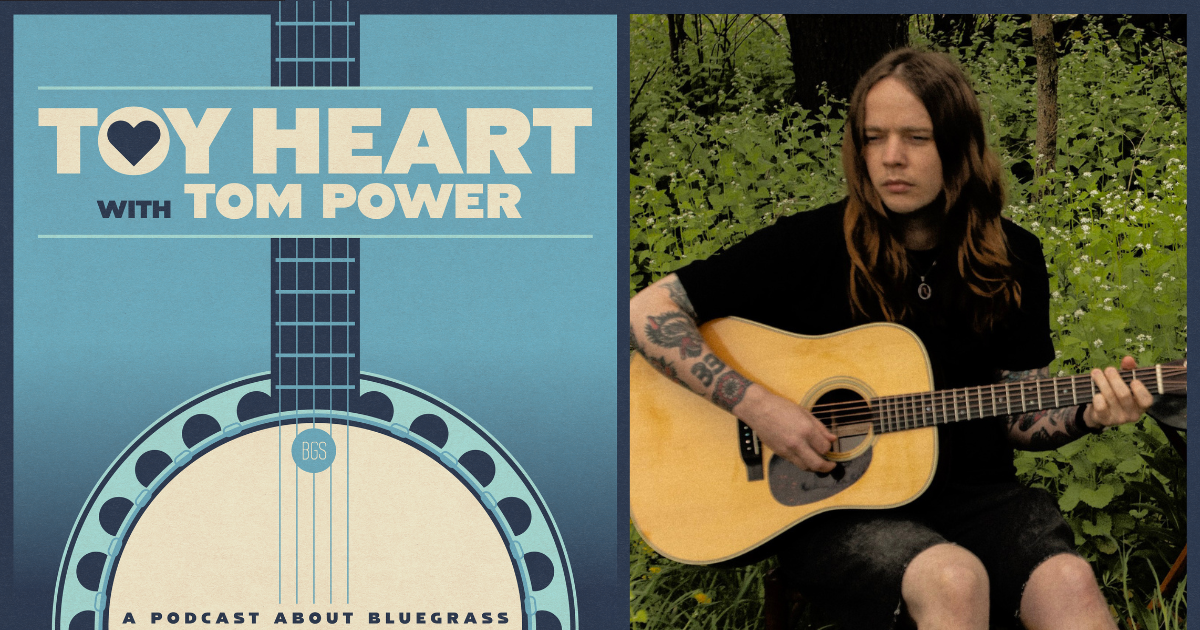
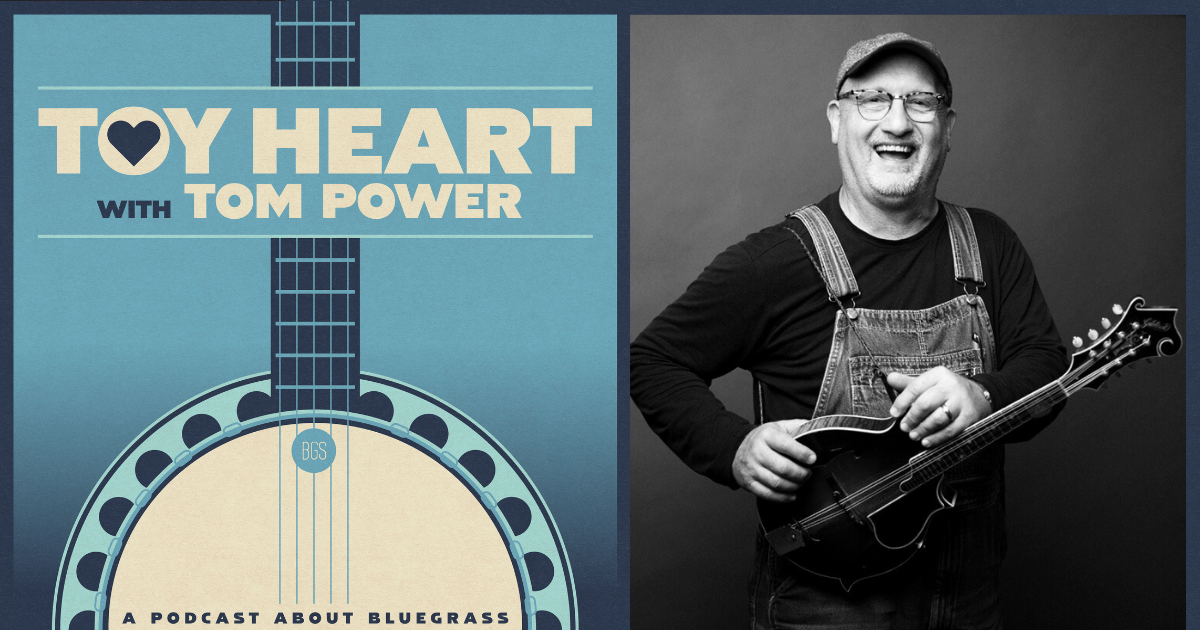
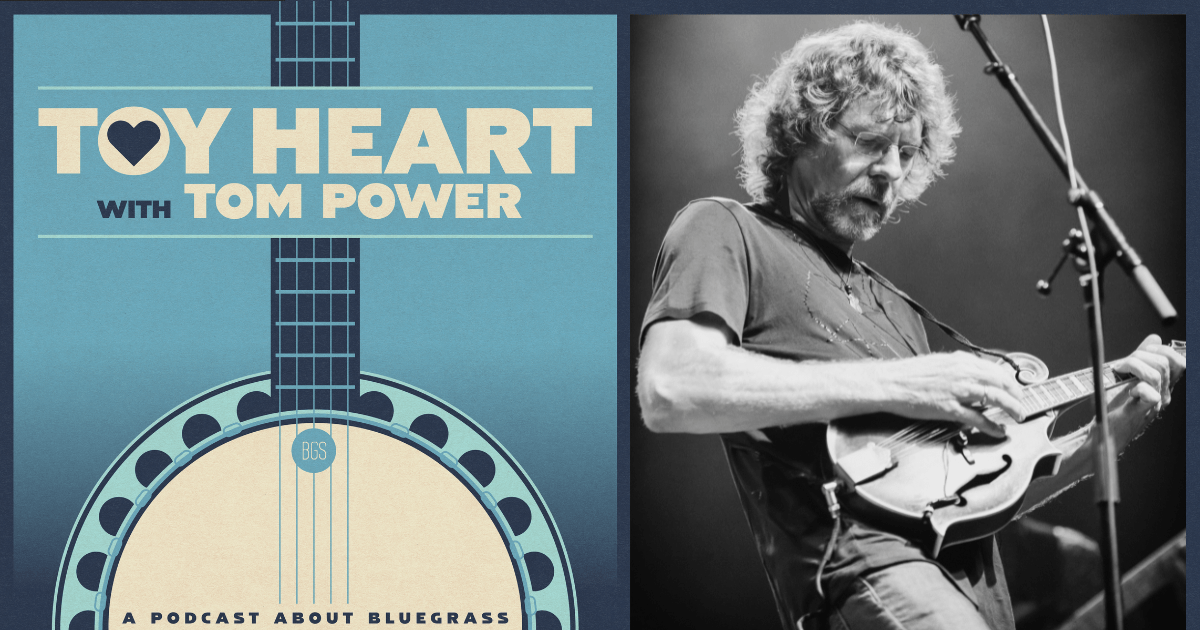
Billy Strings sits down with Tom Power for a special live episode of Toy Heart recorded at the International Bluegrass Music Association’s World of Bluegrass conference in Chattanooga, Tennessee, in the fall of 2025.
Billy traces his journey from growing up playing bluegrass with his father to becoming one of the most influential musicians in the genre today. He talks about the moment he rediscovered bluegrass as a teenager, the artists who shaped his playing, including Bill Monroe, Doc Watson, Larry Sparks, and Jimmy Martin, and how moving to Traverse City, Michigan, opened his eyes to the possibility of making a living as a musician.
He also reflects on discovering the improvisational side of bluegrass through bands like Greensky Bluegrass and String Cheese Incident, learning to appreciate the Grateful Dead and other forms of improvisational music, and why he believes a great song doesn’t need to be changed to connect with a massive audience.
Billy talks openly about poverty, addiction in his family, and the role music played as a coping mechanism and survival tactic. He explains why he isn’t chasing fame or Grammys as much as he is running away from the life he once knew, and why being an ambassador for bluegrass has become one of his life’s greatest purposes.
Last night, Folk Alliance International presented the International Folk Music Awards on the first evening of their 37th annual conference, held this year in Montréal, Quebec, Canada. The awards show included a variety of recognitions, inductions, and trophies handed out: the Spirit of Folk Awards, Lifetime Achievement Awards, People’s Voice Award, and the Clearwater Award as well as Folk Radio Hall of Fame inductions, The Rising Tide Awards, and the nail-biting and exciting Best of 2024 categories. (Find a full list of winners and recipients below.)
Two-time JUNO Award-winner Rose Cousins and the The Brother Brothers opened the IFMAs with a rendition of Robert Earl Keen’s “Feeling Good Again.” The night’s house band included Cousins, The Brother Brothers (Adam and David Moss), and Dean Drouillard. Cousins returned to the stage with Mary Bragg, together performing the Indigo Girls’ “Galileo,” paying tribute to the iconic lesbian folk duo to mark their Lifetime Achievement Award honor. Black-indigenous-Canadian country singer-songwriter Julian Taylor paid tribute to another Lifetime Achievement recipient, the seminal guitar picker and singer Lesley Riddle, with “Red River Blues.” Le Vent Du Nord closed the show with a live performance nodding to Songlines, an important music magazine that was also recognized with a Lifetime Achievement Award. (Stream the full awards show via FAI’s YouTube channel below.)
In the Best of 2024 categories, Susan Werner walked away with the award for Album of the Year for Halfway to Houston. Song of the Year was awarded to “$20 Bill (for George Floyd),” written by Tom Prasada-Rao and performed by Dan Navarro. Crys Matthews won the Artist of the Year Award, racking up her second IFMA.
Tom Power, host of CBC’s Q and a contributor to the BGS Podcast Network, was awarded a Spirit of Folk Award alongside fellow recipients Quebec’s Innu Nikamu festival, longtime Folk Alliance Region Midwest community builder Annie Capps, and singer, songwriter, and My Black Country author Alice Randall.
Randall shared during her acceptance speech, “In My Black Country, I tell the story of climbing out of the hell of being raped by holding on to the sound of John Prine singing ‘Angel from Montgomery.’ I write about discovering the Joan Baez Ballad Book, a double-album set of English, Irish and Scottish folk songs that became my stepping stones to joy after trauma. I owe my sanity to folk music. … On the new album, country-charting songs were stripped of pop productions that erased Black characters and muted political intent. My songs were restored to their folk roots. My book My Black Country is about the Black folk, including Black folk musicians, who made country, country…”
Tom Power poses with his Spirit of Folk Award backstage at the IFMAs. Photo by Indie Montreal.
Elsewhere in the evening’s stacked run of show, Gina Chavez was awarded the People’s Voice Award and DJs and radio personalities Archie Fisher, MarySue Twohy, Taylor Caffery, Matthew Finch, and Chuck Wentworth were inducted into the Folk Radio Hall of Fame.
The IFMAs once again spotlit the important community-building, tradition-preserving, and progress-advancing creativity of the folk music scene the world over, from artists, songwriters, and storytellers to the industry insiders and professionals who make all of this possible. See the full list of winners (in bold), nominees, and recipients below.
Artist of the Year
Flamy Grant Sarah Jarosz Kaïa Kater Nick Lowe Crys Matthews Allison Russell
Album of the Year
Trail Of Flowers by Sierra Ferrell The Space Between by The Heart Collectors Strange Medicine by Kaïa Kater All My Friends by Aoife O’Donovan Ordinary Elephant by Ordinary Elephant Halfway to Houston by Susan Werner
Song of the Year
“Tenzin Sings with Nightingales,” written by Tenzin Choegyal, performed by Tenzin Choegyal and Michael Askill “Woman Who Pays,” written and performed by Connie Kaldor “How I Long for Peace,” written by Abena Koomson-Davis, Peggy Seeger, and Rhiannon Giddens, performed by Rhiannon Giddens “Ukrainian Now,” written and performed by Tom Paxton “$20 Bill (for George Floyd),” written by Tom Prasada-Rao, performed by Dan Navarro
Lifetime Achievement Awards
Indigo Girls Lesley Riddle Songlines magazine
Julian Taylor performs a tribute to Lesley Riddle at the 2025 IFMAs. Photo by Indie Montreal.
The Clearwater Award
River Roads Festival, presented by Dar Williams, Laudable Productions, the Connecticut River Conservancy
The Spirit of Folk Awards
Tom Power Alice Randall Annie Capps Innu Nikamu festival
The People’s Voice Award
Gina Chavez
The Rising Tide Award
OKAN
Folk Radio Hall of Fame Inductees
Archie Fisher MarySue Twohy Taylor Caffery Matthew Finch (posthumous) Chuck Wentworth (posthumous)
All photos courtesy of Folk Alliance International, shot by Indie Montreal. Lead image: Crys Matthews, L; Alice Randall, R.
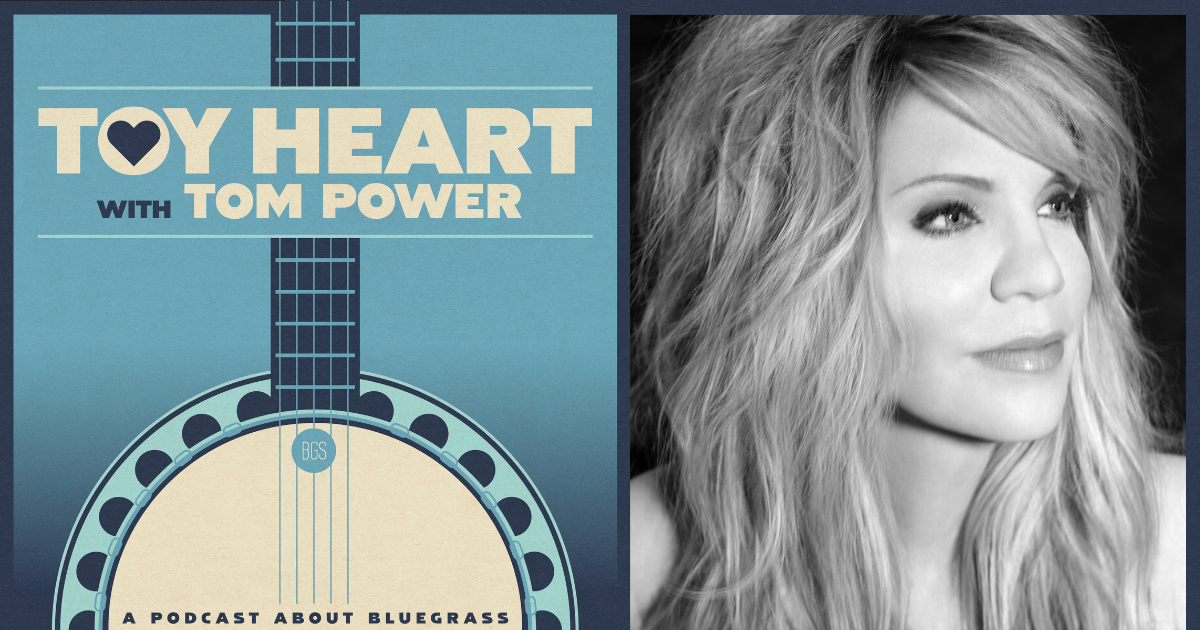
We could hardly think of a better guest with whom we’d conclude our second season of Toy Heart than 27-time Grammy Award winner, Alison Krauss. Arguably the most prominent bluegrass musician in the genre’s nearly one hundred year history – certainly the most well-known in her own generation – host Tom Power’s laughter-filled conversation with Krauss weaves through her childhood and upbringing, from her grandparents immigrating to Chicago (then her parents to Champaign, Illinois) and Alison’s first fiddle contests all the way to her first Grammy win as a young adult.
In a rare podcast interview, Krauss is funny, charming, and open, her candor painting a picture of the bluegrass community’s lifelong support and the winding journey that has brought her to the present, as one of the most recognizable voices and musicians in American roots music. From her earliest hits like “Steel Rails” and “Every Time You Say Goodbye” to collaborating with Robert Plant, James Taylor, the Cox Family, and more, to her Buddy Cannon-produced 2017 album, Windy City, Power and Krauss talk about song selection, her early days touring and road-dogging with Union Station, and how it felt when her musical career really began to take off.
But these stories aren’t just about awards and accolades. They chat about many moments, the big and small, that define Krauss, the festivals that became like homes, and the bonds that music forged with her band, Union Station, and her many collaborators. They explore how Krauss creates on the boundaries of many roots genres – plus what she views as bluegrass and what’s not bluegrass – the authenticity that she’s tried to capture throughout her career, and the cultural waves made by projects like O Brother, Where Art Thou? and the Down From the Mountain tour.
From personal anecdotes about Ralph Stanley and Larry Sparks to her feelings about Billy Strings’ massive success to a jaw-dropping and exciting revelation that she and Union Station are working on a new bluegrass album, our season finale with Alison Krauss is truly one of our best Toy Heart episodes to date.
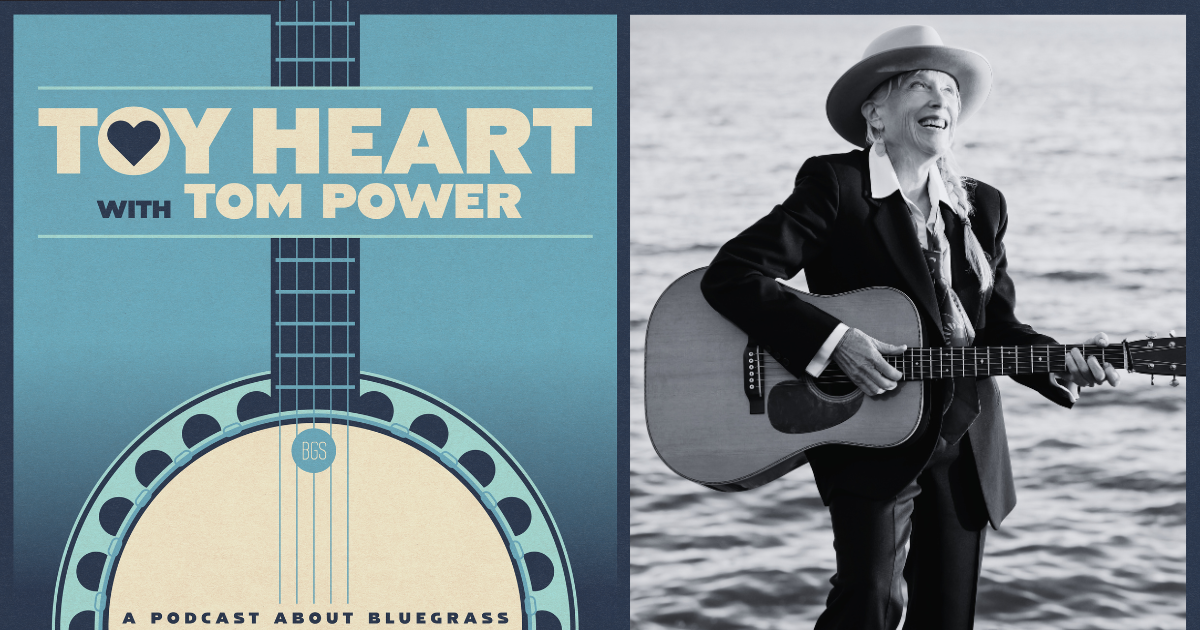
For the latest episode of Toy Heart, we embark on a journey through the primordial musical ooze that birthed bluegrass, old-time, and country music with the incredible Jody Stecher. A multi-instrumentalist adept in many styles and traditions – he even plays sarod, a Hindustani instrument – Stecher’s entire career is a fascinating case study in the interconnectedness of American folk music styles.
Host Tom Power begins their engaging and philosophical conversation by asking Stecher about his childhood in New York City. A grandchild of Eastern European immigrants, he “discovered” country and bluegrass like many in his generation, listening to the Wheeling Jamboree radio program on WWVA and hearing first generation pickers like the Osborne Brothers and Jimmy Martin & the Sunny Mountain Boys, including “Baby Crowe,” a young, just-hired banjo player who went by “J.D.” Soon after, Stecher replaced mandolinist (and one-day industry power player) Ralph Rinzler in bluegrass band The Greenbriar Boys, before joining another group, the New York Ramblers.
From those early years, cutting his teeth in local, regional, and eventually national outfits to iconic albums like Going Up On The Mountain and his current status as a venerated expert and acclaimed elder in American roots music, Jody Stecher utilizes music and his expertise to demonstrate how blurry the lines really are between these folk genres. Power and Stecher discuss teaching, David Grisman – and collaborating with Jerry Garcia! – meditation and music, early sounds and recordings by folks like Bill Monroe and the Stanley Brothers, being a member of Peter Rowan’s band, his duo with Kate Brislin, Utah Phillips, and so much more.
Whether you’re a lifelong fan of roots music or new to these scenes, Tom Power and Jody Stecher’s Toy Heart episode will inspire, highlighting stories, traditions, and techniques that make bluegrass, old-time, and country music exactly what they are today.
Our latest guest on Toy Heart is bluegrasser, multi-instrumentalist, and songwriter Tim O’Brien. His conversation with host Tom Power begins by remembering the music of his childhood, growing up in Wheeling, West Virginia listening to Chubby Checker on his crystal radio set and attending the nationally renowned country variety show and radio broadcast, the Wheeling Jamboree. Encountering the music of Merle Haggard and Doc Watson via local radio and television, he fell in love with music as a kid before a few friends introduced him to Bill Monroe’s mandolin playing while smoking a post-gig joint as a teen.
After dropping out of college, O’Brien hitchhiked west to Wyoming, before landing in Colorado and eventually founding Hot Rize in the mid to late ‘70s with newly married and relocated Dr. Banjo himself, Pete Wernick. Over the course of their winding and dense conversation, Power and O’Brien chat about Gibson mandolins, the burgeoning Colorado string band scene, working with Bill Monroe, and the strange, circuitous story of his fiddle’s provenance.
O’Brien’s career, as multifaceted as it has been, is a wellspring of stories, anecdotes, and yarns about the bluegrass scene of the ‘80s and ‘90s, Irish music, writing hit country songs, working with and alongside so many first generation bluegrass legends, and the inception of Hot Rize’s alter ego band, Red Knuckles & the Trailblazers. Having recorded and performed with the Chieftains, Darrell Scott, the Transatlantic Sessions, and so many others, Tim O’Brien’s career is a melting pot of styles and sounds with one primary throughline: the true originality of his own musical vocabulary. As Power puts it, “I couldn’t tell you what Tim O’Brien sounds like, but I know Tim O’Brien when I hear it.”
Our Toy Heart episode examines O’Brien’s expansive and impressive career at a fascinating juncture in its span, as he shifts from being a bluegrass and Americana workhorse to a forebear, mentor, and roots music elder to entire generations of young musicians.
In the latest episode of Toy Heart, we explore the roots and evolution of bluegrass in the modern era by examining the story of legendary bluegrasser, singer-songwriter, and recording artist, Laurie Lewis.
From her tales of growing up in Berkeley during what Lewis jokingly calls the “folk scare” of the ’60s to finding the joy of music through her father’s classical background and eventually becoming a pioneer for women in the genre, her lifelong career in American roots music is a perfect example of how the innovation and tradition-bending tendencies of bluegrass’s first generation continue full force today. Lewis’s musical transformation over the course of her life shows the entrancing power of bluegrass to steer and alter the course of hers and so many others’ lives.
In our Toy Heart interview, Lewis chats with host Tom Power about the magnetic pulls of Chubby Wise’s fiddle tunes, of albums by the Greenbriar Boys, and of a formative live show by the Byrds. She talks about studying modern dance, “disappointing” her father by “rebelling” and choosing folk music forms over classical, and what eventually led to late-night jams, fiddle contests, and navigating the Bay Area’s bustling bluegrass, folk, and women’s music scenes.
Their conversation closes with a reflection on the ways bluegrass has affected Lewis the most, and, how it continues to shape the identities of its artists and listeners with an intractable, ineffable pull. Power and Lewis point out how current generations – from Molly Tuttle to Tatiana Hargreaves, both mentees and collaborators of Lewis – continue in these same traditions. Plus, Lewis shares what it was like to tour and sing with Dr. Ralph Stanley, himself.
This Toy Heart episode dives deep into the many layers of the genre, helping to demonstrate just some of the many ways bluegrass interweaves itself into musicians’ and fans’ personal and musical identities. Lewis shows there are countless joys in staying true to one’s artistic vision amidst an industry that is always in flux; her insights offer a soulful perspective on continuity and change within the genre, echoing the sentiments of a community that, much like a family, supports and evolves with its members – and that continues to rightly hold Lewis up as a trail-breaker and standard-bearer for the entire genre.
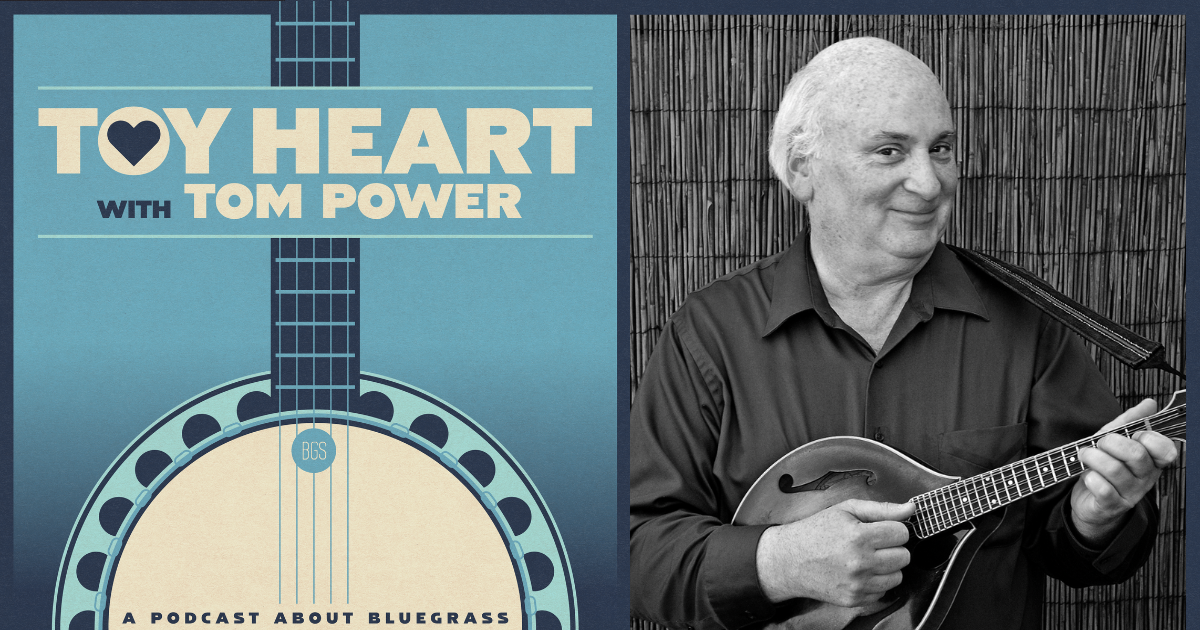
Bluegrass fans know Mike Compton from his long and eclectic resumé, including decades of touring and recording traditional Monroe-style mandolin with greats like John Hartford, Doc Watson, Peter Rowan, Ralph Stanley, Alison Krauss, and David Grisman, as well as venturing into more mainstream music with with Sting, Gregg Allman, Elvis Costello, and many others. He was also heard on the soundtrack for O Brother, Where Art Thou? and traveled with the smash hit tour, Down from the Mountain, which highlighted the artists and musicians on that incredibly popular soundtrack.
But, as Toy Heart host Tom Power points out, it’s not just virtuosity that makes Compton stand out as a mandolinist – it’s just as much about the heart, feel, and grit that he brings to the instrument.
Tom speaks with Compton for over an hour for this exclusive Toy Heart interview, walking through his life and career, from the musical influence of his great grandparents and growing up in Meridian, Mississippi, to the indelible mark left on his own playing style by Bill Monroe. Compton also recalls his childhood, skipping school to hide out in a “dirt pit” to practice all day, his time in Nashville – including a historic visit to China with the Nashville Bluegrass Band – and recounts his collaborations with the legendary John Hartford. You’ll also hear Compton discuss the impact that playing on O Brother, Where Art Thou? had not only on himself and his own career, but on bluegrass as a whole.
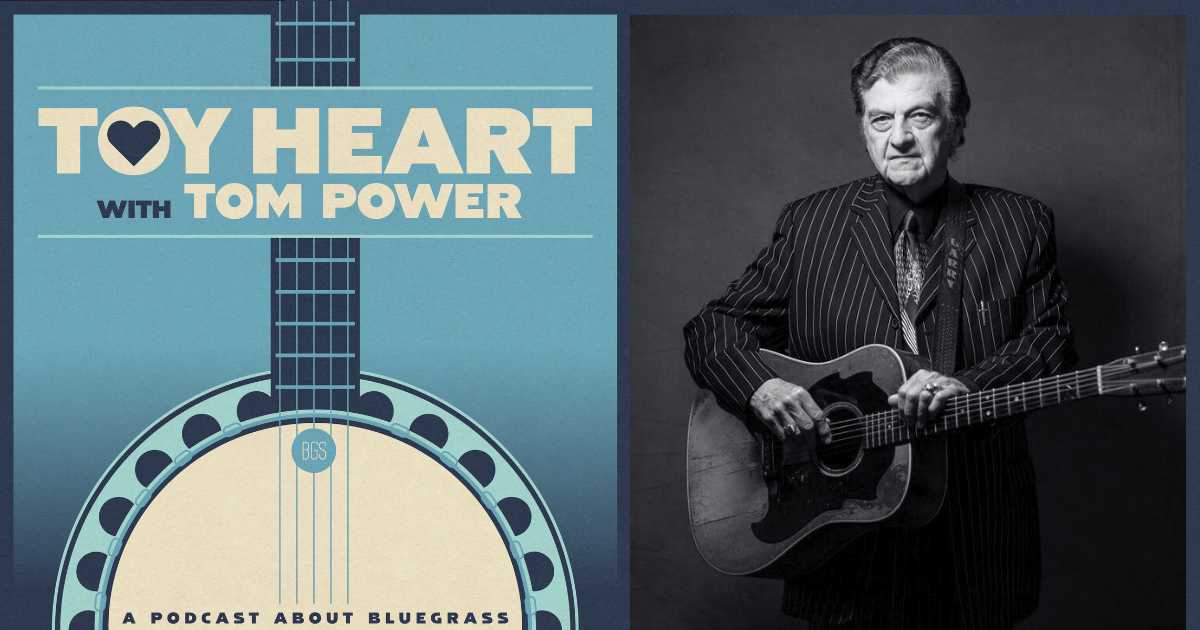
The legendary Larry Sparks, a prominent player in bluegrass for over six decades and a Bluegrass Hall of Fame inductee, joins host Tom Power for this episode of Toy Heart. Sparks shares insightful anecdotes from his early years, touring and performing with the Stanley Brothers and from his tenure with Ralph Stanley & the Clinch Mountain Boys. From traveling in a ‘67 station wagon to the challenges of navigating the music industry over so many decades, Sparks reflects on his particular journey through bluegrass, old-time, and country music. We explore his musical influences, his unique approach to bluegrass guitar playing, and the profound impact of gospel songs on his own soulful, down home sound.
Sparks also offers a glimpse into his Nashville days, highlighting the unique challenges he faced in Music City. His stories reveal a dedication to preserving the essence of bluegrass and his commitment to honest storytelling. Hear Sparks describe making hits like “John Deere Tractor” as well as speaking to the spiritual resonance of gospel music. He paints a vivid picture of a musical legacy that spans more than 60 years, leaving an indelible mark on the heart and soul of the bluegrass community.
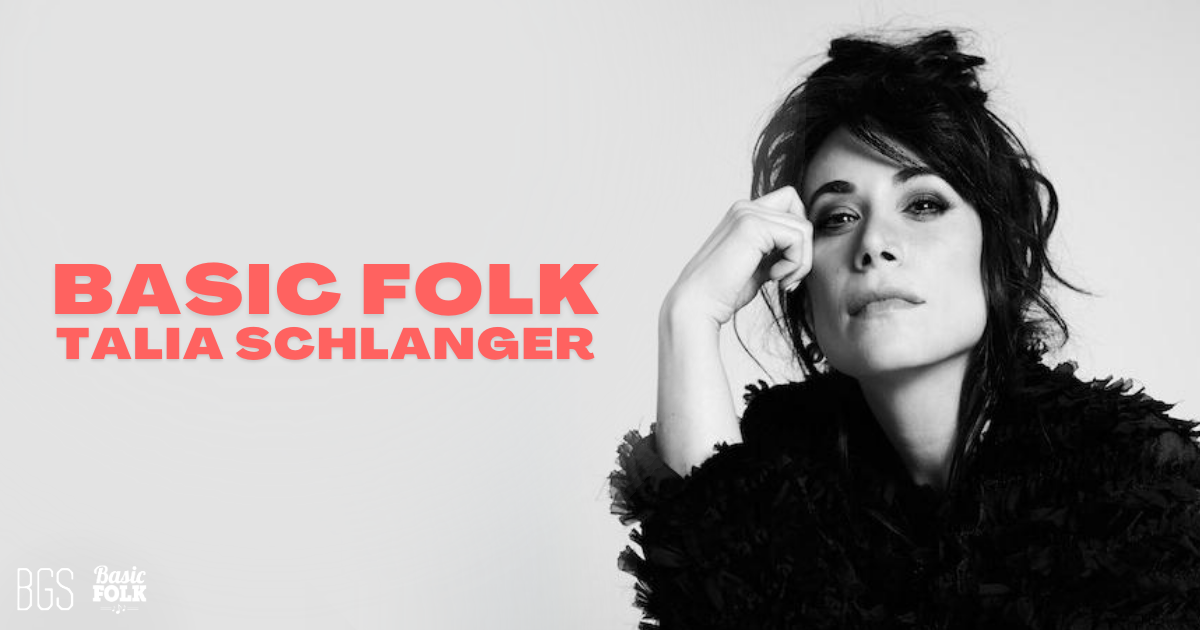
Canada’s Talia Schlanger is best known for her work in broadcasting, guest-hosting Q with Tom Power on CBC and Alec Baldwin’s “Here’s the Thing” podcast, as well as having taken over for David Dye on NPR Music’s World Cafe from WXPN in Philadelphia. Before all that, Schlanger was an actor and singer in many theater productions including Mamma Mia, Queen’s We Will Rock You, and Green Day’s American Idiot. While she has found much success in her two previous careers, something has been pulling on Talia for years. She wanted to write, record, and perform her own music. She had something to say and made the brave leap into the unknown, leaving her coveted role at World Cafe in order to say it. This culmination of events has led Talia to her debut album, Grace for Going.
In our conversation, Schlanger shares insights into her upbringing in Thornhill, Ontario within a Jewish family deeply rooted in faith and family heritage. She reflects on the impact of her grandparents, Holocaust survivors whose stories shaped her childhood. Talia also talks about her unique journey from performing eight shows a week in theater productions to becoming a distinguished radio host. Her evolution as a singer, her bravery and some important boundaries have allowed her to find her authentic voice while maintaining a crucial work-life balance. Throughout the interview, she touches on themes of personal growth, acts of kindness, and her commitment to learning and curiosity, offering a fascinating glimpse into the life and career of this remarkable person.
Newgrass luminary Sam Bush joins host Tom Power for the highly anticipated debut episode of Toy Heart Season 2. Bush – the celebrated mandolinist, Bluegrass Hall of Famer, and co-founder of New Grass Revival and the Telluride House Band – opens up about his illustrious career, from his early days of fiddle contests in Weiser, Idaho, to the pivotal moments learning at the feet of influential figures like Bill Monroe. Bush’s narrative weaves a rich tapestry of bluegrass history.
Season 2’s first episode features stories of Sam’s many genre-breaking collaborations, including playing with the Dillards and New Grass Revival plus his time at Capitol Records. He waxes poetic about the magic of jam sessions and improvisation, and the profound influence of artists like Byron Berline. From the roots of “Callin’ Baton Rouge” to the impact of the Vietnam era, Bush’s journey is a testament to the ever-evolving nature of bluegrass.
Photo courtesy of Prater Day
This website uses cookies to improve your experience. We'll assume you're ok with this, but you can opt-out if you wish.AcceptRejectRead More
Privacy & Cookies Policy
Privacy Overview
This website uses cookies to improve your experience while you navigate through the website. Out of these, the cookies that are categorized as necessary are stored on your browser as they are essential for the working of basic functionalities of the website. We also use third-party cookies that help us analyze and understand how you use this website. These cookies will be stored in your browser only with your consent. You also have the option to opt-out of these cookies. But opting out of some of these cookies may affect your browsing experience.
Necessary cookies are absolutely essential for the website to function properly. This category only includes cookies that ensures basic functionalities and security features of the website. These cookies do not store any personal information.
Any cookies that may not be particularly necessary for the website to function and is used specifically to collect user personal data via analytics, ads, other embedded contents are termed as non-necessary cookies. It is mandatory to procure user consent prior to running these cookies on your website.