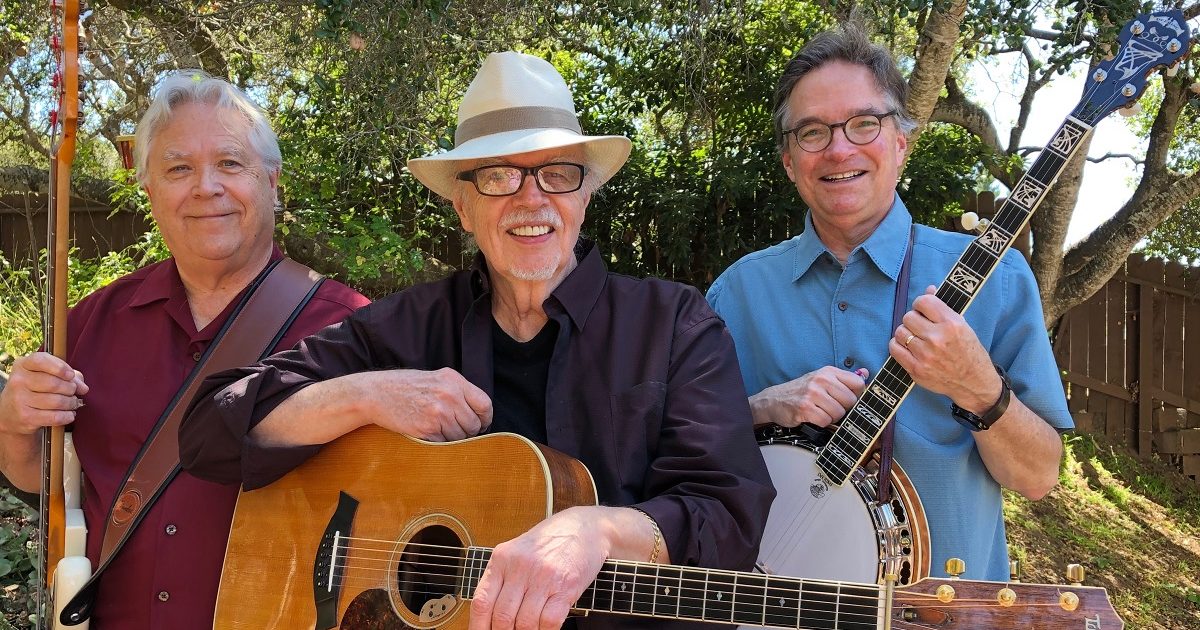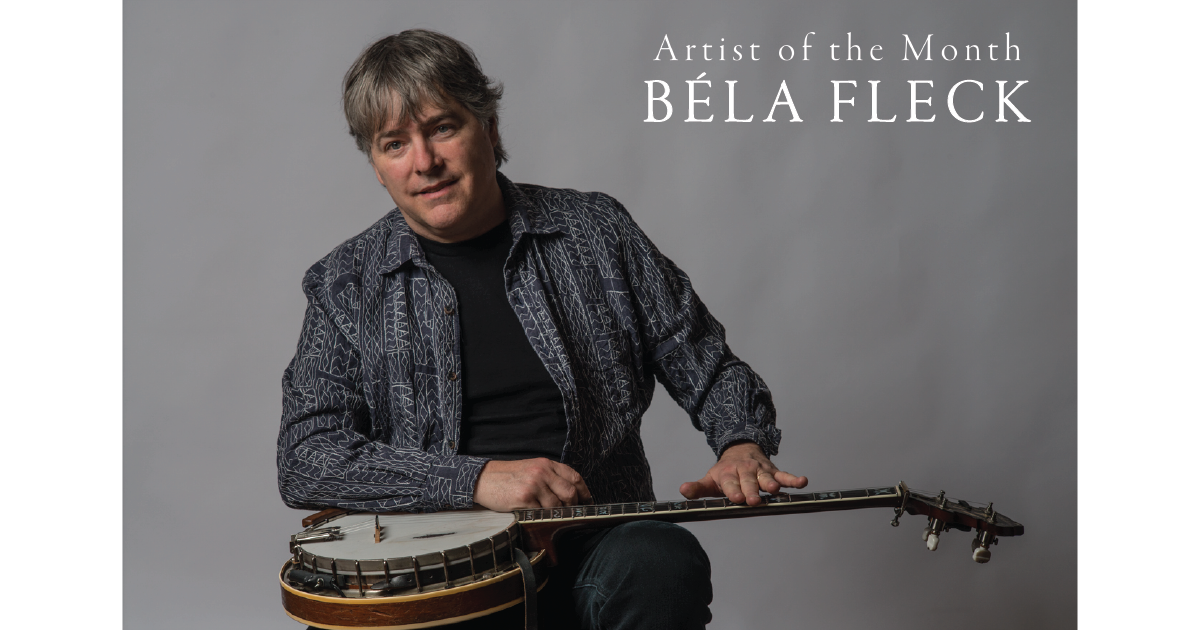
Artist of the Month: Béla Fleck

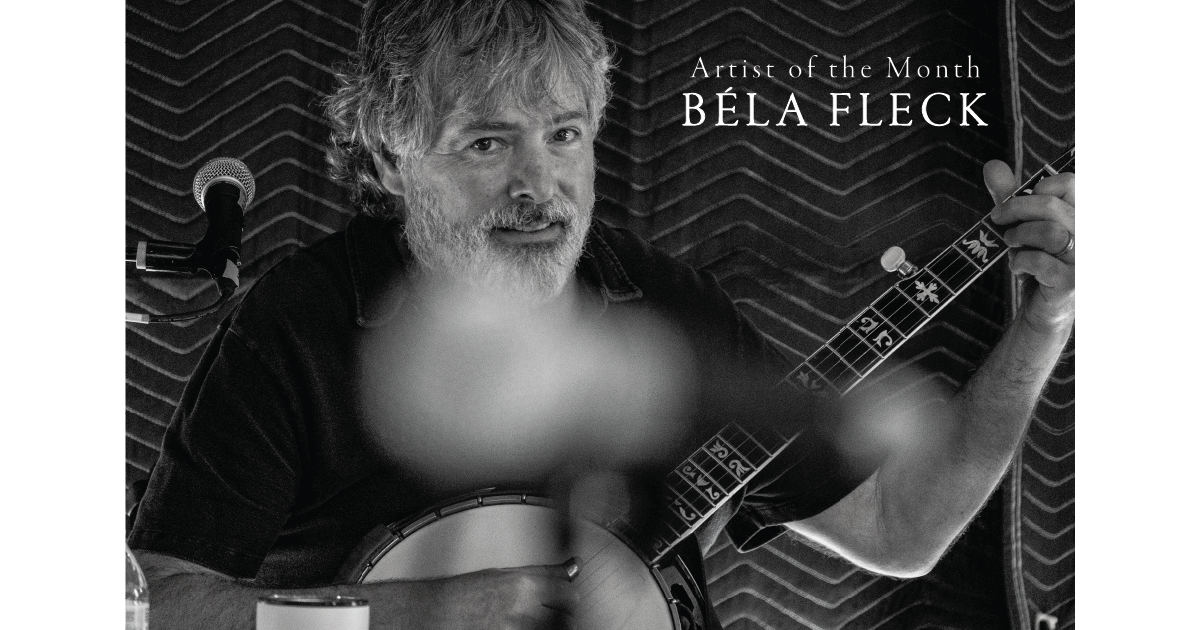
Banjo maestro Béla Fleck has always followed his muse, jamming with collaborators and crisscrossing continents for decades now. His newest album leads him back to familiar terrain, as My Bluegrass Heart is his first bluegrass record in 20 years. “They nearly always come back,” says Fleck, who composed and produced the album (set for a September 10 release). “All the people that leave bluegrass. I had a strong feeling that I’d be coming back as well.”

The reunion encompasses some of his closest comrades, too, like Sam Bush, Stuart Duncan, Mark Schatz, and Jerry Douglas. As a nod to the newest generation of acoustic all-stars, the project also includes guests such as Chris Thile, Molly Tuttle, Sierra Hull, Billy Strings, and Billy Contreras. Longtime allies like David Grisman, Edgar Meyer, and Tony Trischka get in on the action too.

Speaking from his own bluegrass heart, Billy Strings says, “In my opinion, Béla Fleck is one of the most important musicians of all time. He bridges the gap between bluegrass, classical, jazz, world music, and everything in between. It seems like there’s no limit to what he can achieve on the banjo.”

But as with any project involving Béla Fleck, there’s bound to be some exploration. “This is not a straight bluegrass album, but it’s written for a bluegrass band,” he explains. “I like taking that instrumentation, and seeing what I can do with it — how I can stretch it, what I can take from what I’ve learned from other kinds of music, and what can apply for this combination of musicians, the very particularly ‘bluegrass’ idea of how music works, and what can be accomplished that might be unexpected, but still has deep connections to the origins.”

This month, Fleck will be touring in support of the album with Michael Cleveland, Sierra Hull, Justin Moses, Mark Schatz, and Bryan Sutton, concluding with a festival spot during IBMA World of Bluegrass on October 1. He’ll resume roadwork in late November and December joined by Sam Bush, Jerry Douglas, Stuart Duncan, Edgar Meyer, and Bryan Sutton. And it’s not too early to circle the calendar for January 7, 2022, when he’s headlining the Ryman alongside nearly every musician who makes an appearance on My Bluegrass Heart.

In the meantime, read our two-part Artist of the Month interview feature here and here — and enjoy our BGS Essentials playlist spanning his remarkable career.


Photo credit: Alan Messer

Double the Banjos, Double the Fun!

Twin fiddles are the bluegrass instrumental duo that get all the attention, but double banjos are really where it’s at. (Is this writer a banjo player? Why, yes. Is this writer biased? Why, of course!) It makes sense that twin or triple fiddling would end up more popular than double or triple banjos, given that fiddles are sounded by bows, so the melodic contours are more like vocal harmony, often longer phrases and bow strokes languidly and charismatically laced together. Banjos, with their rapid-fire sixteenth notes and syncopated, idiosyncratic rolls, are just more difficult to sync up. Hundreds – if not thousands – of banjo jokes devoted to rhythm and timing will certainly back that claim up.

But double banjo is an art form as old as bluegrass itself – and older, by quite a few dozen decades, if you count early American popular music, banjo orchestras, minstrel and vaudeville songs that all centered banjos before and during the turn of the 19th to 20th century.

In bluegrass, twin five-strings are at their most astounding in jaw-dropping and acrobatic contexts such as High Fidelity’s incredible rendition of the Don Reno classic instrumental, “Follow the Leader.” Famous for his steel guitar and chicken-pickin’ Telecaster licks transferred to banjo, Reno’s harebrained and wonky turns of phrase might seem like the last musical context in which one should attempt perfect synchronization, especially on banjo, but Jeremy Stephens and Kurt Stephenson defy reason, logic, and surely physics with their buttery, seamless, double banjo blend. The track perfectly encapsulates the “WHAT IS THAT!?” quality of five-string, three-finger banjo – raised to the second power.

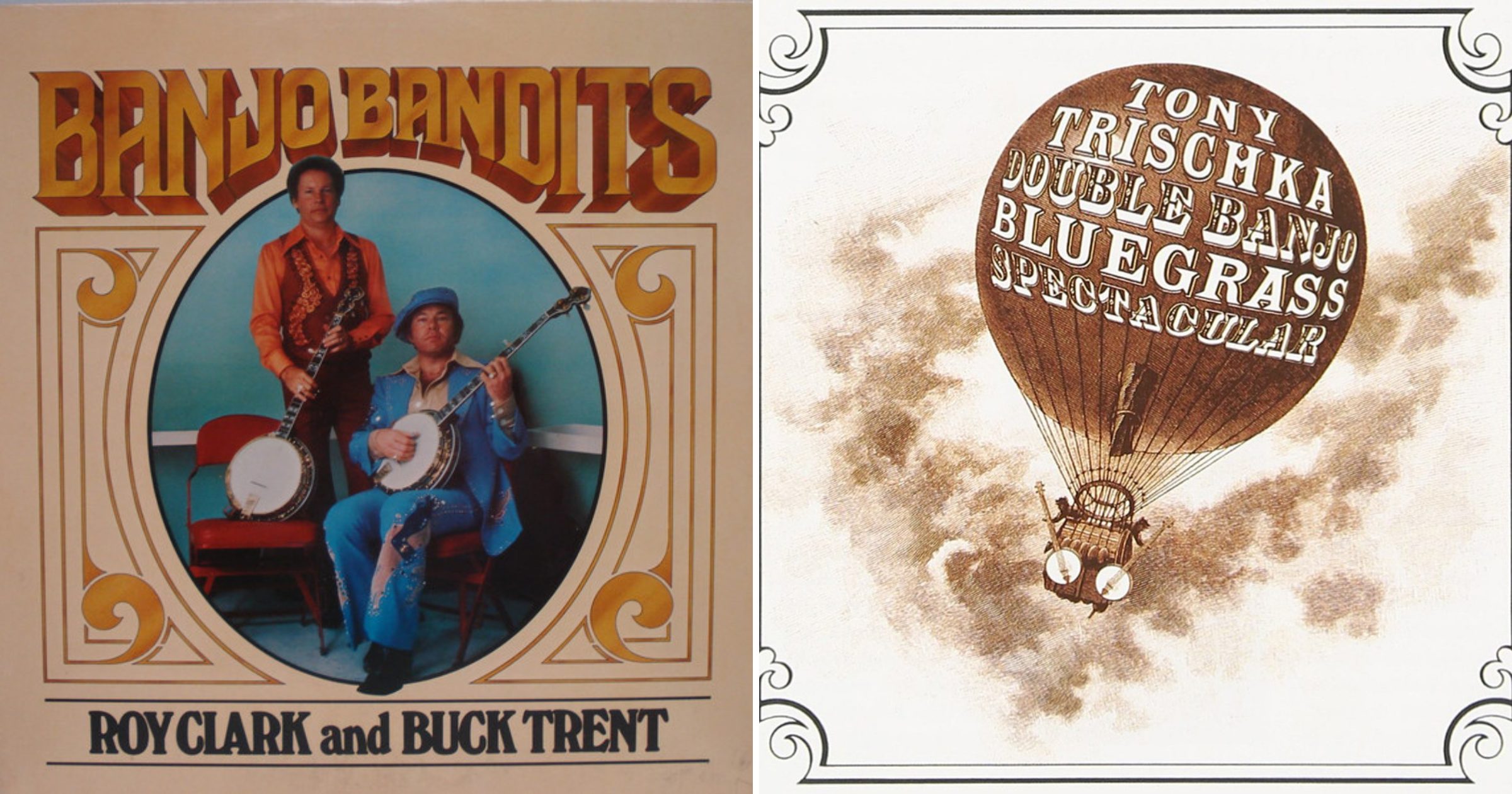
Anyone who grew up tuning in to or has ever binge-watched reruns of Hee Haw knows the beauty of a good double, triple, quadruple, quintuple banjo number, a common feature of the homespun country, comedy, and pickin’ variety show. Roy Clark, the Hee Haw host who could tear through almost any instrument in any style, released an entire album of double banjo music with regular Hee Haw guest Buck Trent in 1978 called Banjo Bandits. “Down Yonder” kicks with all-too-rare (and certainly delicious) bluegrass piano, a delightful intro to a bluegrass, old-time, and American songbook standard that almost sounds like a carnival merry-go-round thanks to the effect of the banjos “in stereo.” Banjo Bandits is something like a bluegrass and country double banjo primer, every track a stunning example of the form.

Like twin fiddling, double banjo lends itself so intuitively to the collaborative, community quality of bluegrass music. Through many a duo album and “featured artist” slot pickers have been using double banjo tunes to bring in their favorites, their mentors, their heroes, and their peers to swap licks, rising and falling, rolling and tumbling in breakneck unison. Alison Brown’s first Grammy Award was won for “Leaving Cottondale,” her double banjo instrumental with Béla Fleck from her also-nominated 2000 record, Fair Weather. In 2007, modern banjo hero Tony Trischka released a 14-track album of all twin banjo tunes entitled Double Banjo Bluegrass Spectacular. Its roster included Earl Scruggs, Brown, Fleck, Noam Pikelny, Steve Martin, and more. On “Doggy Salt,” a silly, winking instrumental that reconfigures the classic chord progression of “Salty Dog,” Scott Vestal joins Trischka, leaning into the humorous, comedic quality of these sorts of duets — a quality we see in Banjo Bandits and “Follow the Leader,” too.

Do not be mistaken, though, putting together a banjo duet isn’t just a comedic or intra-bluegrass activity! Cross-genre double banjo forays are certainly just as delightful, if not rarer and even more difficult to lock into rhythmic synchronization. Those that can mesh together three-finger’s rolling right hand with clawhammer and frailing’s loping, looser right hand are true virtuosos, defying not one but two genre’s expectations that banjos are intrinsically arhythmic and constantly rushing. Old-time players like Allison de Groot, Cathy Fink, Mark Johnson, Victor Furtado, and others all make it look and sound easy, matching their bluegrass compatriots’ rhythms and syncopations with ease and not just blending in, but counterpointing tastefully as well. One such recording, “Cluck Old Hen” from Pikelny’s Beat the Devil and Carry a Rail project, features Steve Martin, once again, on clawhammer. A less traditional approach, the two play with textures and senses, not striving for perfect unison, but rather exploring what an old-time-and-bluegrass dialogue can look and sound like, expanding our ideas of what twin banjo can be.

No matter the context, genre, roster of pickers, or style of playing, this fact remains true: more banjos equals more fun. (To this writer, at least.)


BGS 5+5: Tony Trischka

Artist: Tony Trischka
Hometown:: Fair Lawn, New Jersey
Album: Shall We Hope
Release Date: January 29, 2021
Record Label: Shefa Records

Which artist has influenced you the most … and how?

Earl Scruggs. Pretty much a no-brainer for me. He changed my life when I was 14 years old. His playing is at the heart of everything I do. And on a larger scale, indirectly because of him, I have the wonderful family I have, have had a successful career and many friends around the world.

What was the first moment that you knew you wanted to be a musician?

I can’t say there was a moment like that. I first earned money playing music when I was 14, and continued to do so regularly through college. Though I was a Fine Arts major in school, and had very abstractly thought of a career as a museum curator (who was I kidding?).

What’s your favorite memory from being on stage?

In 1988, our band Skyline was invited to tour communist Czechoslovakia. Since my background is Czech on my father’s side, it was a particularly moving experience. While there, we performed in front of 30,000 people at the Porta Festival in Plzeň. We played a nighttime set and every second or third person in the audience was holding a candle, which made for an unbelievable sight. We were called for a second encore, and the emcee asked us to leave our instruments backstage and just walk to the front of the stage. As we were standing there facing this incredible candle-dappled crowd the emcee said, “You’ve given your gift of music to us, now we want to give you a gift.” He proceeded to divide the audience into thirds and had each third, of 10,000 each, sing a separate note of a major chord for us. Especially considering this was when Czechoslovakia was still communist, it was a profound experience.

If you had to write a mission statement for your career, what would it be?

Push boundaries and explore new areas on the 5-string banjo, but honor the history of the instrument. Don’t get bored.

Since food and music go so well together, what is your dream pairing of a meal and a musician?

Can I bring back Aaron Copland? On an emotional level he has had as much influence on me as Earl Scruggs. As for a meal, we’d have to start with a nice cocktail, and I guess it would have to be a Manhattan. Dinner would be hearty beef brisket with all the sides, and finish off with some good ol’ apple and cherry pie. I think that would cover all of the appropriate culinary bases.


Photo credit: Zoe Trischka

The String – Tony Trischka plus Jordan Tice

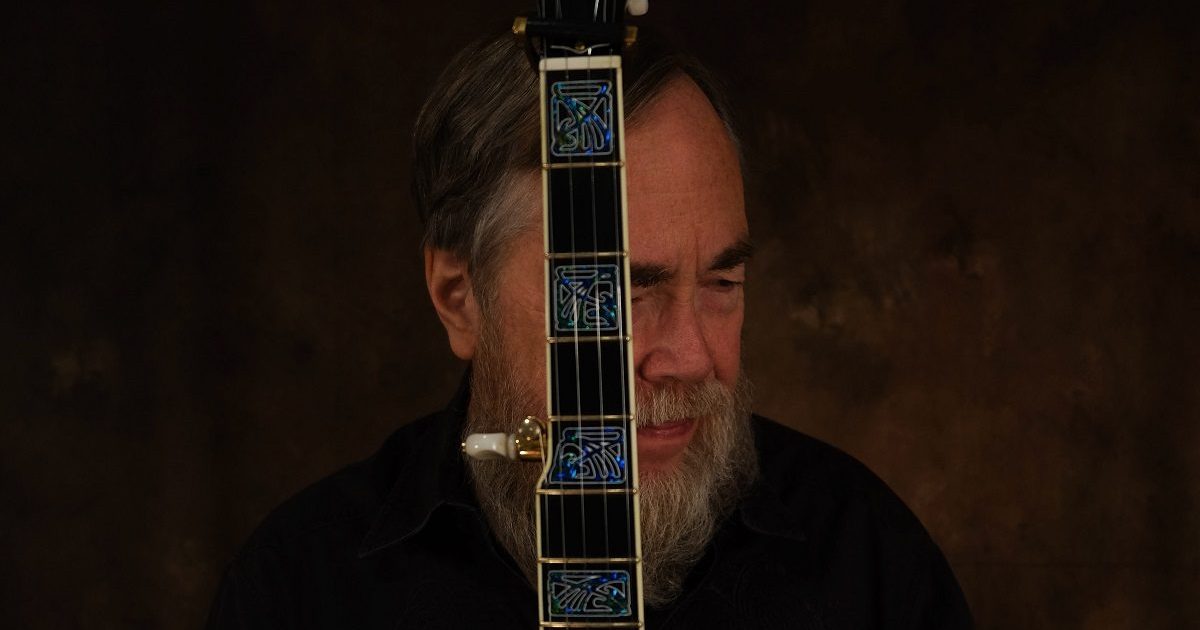
Banjo innovator and string band visionary Tony Trischka has kept his eyes on the future over a fifty year career, but on a new album he looks to our uneasy past.


LISTEN: APPLE PODCASTS

Shall We Hope is a song cycle about the Civil War and its aftermath, featuring a cast of elite collaborators such as Maura O’Connell and Guy Davis. We talk about how the project came together over more than a decade and about Tony’s rich career from his funky band Breakfast Special and teaching Bela Fleck to his work with Steve Martin. Also, another stringed instrument visionary is 33-year-old Jordan Tice of Nashville. The Hawktail guitarist has a new album of solo songwriting and guitar rags in the tradition of John Fahey.

The BGS Radio Hour – Episode 189

For the first time, we are so excited to bring to you the BGS Radio Hour in podcast form! Since 2017 the BGS Radio Hour has been a weekly recap of the wonderful music, new and old, that we’ve covered here on BGS. Check back in every Monday to kick your weeks off with the best of BGS via the BGS Radio Hour.


LISTEN: APPLE MUSIC

Shemekia Copeland – “Clotilda’s on Fire”

Highly awarded modern blues artist — and our current Artist of the Month — Shemekia Copeland brings us a new release, Uncivil War, offering us a number of topical songs with perspectives on gun violence, LGBTQ+ rights, and more.

StillHouse Junkies – “Mountains of New Mexico”

Colorado-based StillHouse Junkies bring us a classic murder ballad inside an ode to the American West.

Marc Scibilia – “Good Times”

Recent 5+5 guest Marc Scibilia brings us a song from his new release, Seed of Joy.

Leyla McCalla – “Song for a Dark Girl”

Leyla McCalla (who you may know from folk supergroup Our Native Daughters) brings us a song from her new Smithsonian Folkways re-release, Vari-Colored Songs: a Tribute to Langston Hughes.

My Darling Clementine – “I Lost You”

UK-based duo My Darling Clementine brings us a new interpretation of an Elvis Costello/Jim Lauderdale co-write.

The Caleb Daugherty Band – “Daylight’s Burning”

The Caleb Daugherty Band pays tribute to Aubrey Holt of the acclaimed Boys From Indiana with a cover of “Daylight’s Burning.”

Madison Cunningham – “The Age Of Worry”

Madison Cunningham is back on BGS with a brand new EP, Wednesday, an interpretation of a handful of cover songs chosen by the California-based singer, songwriter, and guitarist.

Adam Hurt – “The Scolding Wife”

“Clawhammerist” Adam Hurt was a recent feature on Tunesday Tuesday with a solo gourd banjo rendition of “The Scolding Wife.”

The Avett Brothers – “Victory”

Everyone’s favorite roots music brothers — that is, the Avett Brothers — are back with The Third Gleam, a follow up to the first and second Gleam EPs. Much like their earlier sounds, the new record is stripped down, with timely discussions of gun violence, mortality, and the human condition. Check out our conversation with Scott, Seth, and Bob Crawford.

Jeff Cramer and the Wooden Sound – “Aimless Love”

Denver-based singer-songwriter Jeff Cramer brings us an edition of The Shed Sessions along with his band the Wooden Sound, and a wonderful tribute to the late, great John Prine.

Max Gomez – “He Was a Friend of Mine”

Regular friend of BGS, Max Gomez brings us a timely, social justice-inspired song.

Mipso – “Your Body”

Pop string band Mipso is just one of so many great North Carolina groups that we’re proud to feature this month in our Made in NC playlist for #NCMusicMonth!

Julian Taylor – “Love Enough”

Julian Taylor was the guest of honor on our most recent episode of Shout & Shinea series that serves as a platform for Black, Brown, Indigenous, Asian, LGBTQ+, and disabled musicians, who are so often marginalized in genres to which they’ve constantly contributed.

Tony Trischka – “Carry Me Over The Sea”

Quintessential banjo legend Tony Trischka was featured this week with a new single from his 2021 release, Shall We Hope, that also features Irish singer Maura O’Connell.

Susan Werner – “To Be There”

Like many, Susan Werner is currently hoping for better times. And better times is what this Carter Family-inspired number is all about.


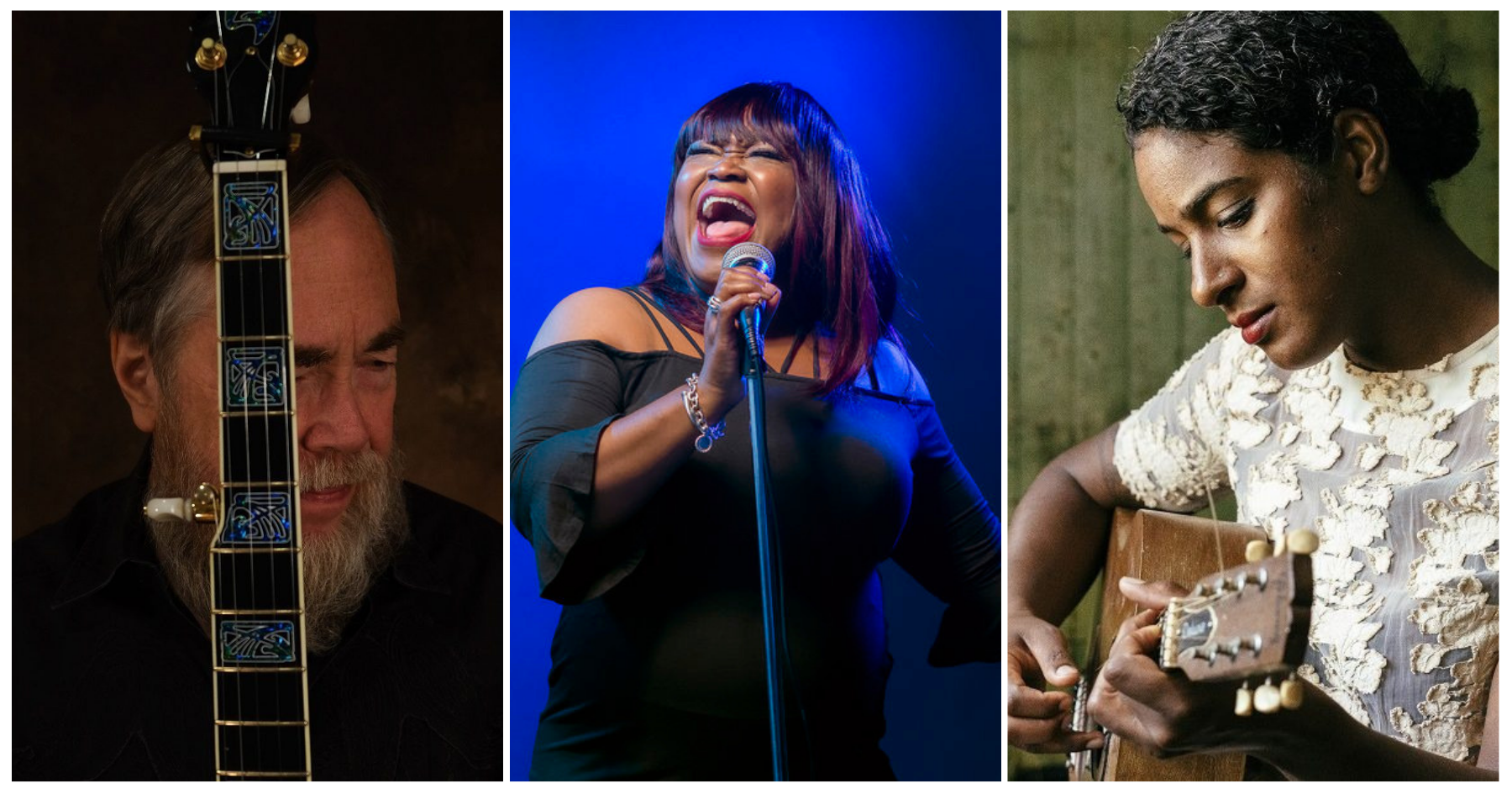
Photo credit: (L to R) Tony Trischka by Zoe Trischka; Shemekia Copeland by Mike White; Leyla McCalla by Rush Jagoe.

LISTEN: Tony Trischka, “Carry Me Over the Sea”

Artist: Tony Trischka
Hometown: Fair Lawn, New Jersey
Song: “Carry Me Over the Sea”
Album: Shall We Hope
Release Date: January 29, 2021
Label: Shefa Records

In Their Words: “This project began without the intention of making a Civil War album, though I’ve had an interest in the conflict since childhood. ‘Carry Me Over the Sea’ was originally conceived as an instrumental, which I composed on a low-tuned cello banjo. I created the person of Maura Kinnear, a powerful Irish woman who lost her husband in a mine cave-in. After leaving her children in the safe care of relatives, she took a ‘coffin ship’ across the sea to America. Settling in the Outer Banks of North Carolina, Maura met the reformed gambler, Cyrus Noble, whom she married and, together, they sent for her children. Cyrus rejected Confederate conscription and ultimately fought for the Union at the Battle of Gettysburg.

“No one but the incredible Maura O’Connell would do to inhabit the character of Maura Kinnear. I first met Maura when she was singing with DeDanaan in the ‘80s. I was bowled over and continue to be to this day. She is joined on most choruses by the equally talented Tracy Bonham.

“A cohesive narrative beckoned, and after a moving visit to a slave graveyard, I adapted the character of John Boston, an enslaved gravedigger in the 1850s. With these three central figures — Maura Kinnear, Cyrus Noble, and John Boston — along with a 1938 reunion of Gettysburg survivors, North and South, I felt I had the elements of a story.

Shall We Hope, a phrase taken from a Phillis Wheatley poem, evolved to be just that, a story of hope. It was not created to mirror the divisions that currently exist in our nation. However, I would wish that the timeliness of a hopeful message would ring true today, and that, in some small way, this album could bring positivity, healing and hope in these troubling times.” — Tony Trischka


Photo credit: Zoe Trischka

BGS 5+5: Crary, Evans & Barnick

Artist: Crary, Evans & Barnick
Hometown: Placerville, California
Latest Album: Prime Time
Personal nicknames (or rejected band names): Three Old White Guys in a Folk Trio

What was the first moment that you knew you wanted to be a musician?

Mark Twain said the two most important days in your life are the day you’re born and the day you discover why. For me it was the day in 1952 (I was 12) when I turned on the radio and accidentally heard Don Sullivan, a Kansas City hillbilly country singer on his noon hour live radio show sing twangy songs and play the steel-string guitar. The sound of the guitar that day struck me like something straight from God. I didn’t even know what it was, but I knew I wanted to play one, to hear more of that beautiful noise. — Dan Crary

My life’s direction pretty much came into focus on February 9, 1964, when I was seven years old. After watching the Beatles’ first live U.S. television appearance, the world wasn’t the same for me after that moment. I went to school on that Monday morning knowing that I would be a musician someday. — Bill Evans

During my year spent with the Mobile Riverine Resources/USN/9th Infantry Division Mekong Delta ’68-69, I met a fellow who had purchased a Hi-Fidelity component stereo system from the PX. He set it up in his hootch. He had pals stateside who were mailing him “care packages” containing the latest vinyl LPs by the boxful. Buffalo Springfield, Jeff Beck, Cream, the Doors, etc. When we thought the coast was clear, we’d load up a “bowl” and then listen to those great sounds coming out of those three-way speakers and the music would take us to another place. I did not play any instrument at that time, but I knew right then that I wanted to figure out how to play. All I had to do was get home in one piece. I did, and once stateside I latched on to the bass guitar and have not ever let it go… over 50 years now. — Wally Barnick

Which artist has influenced you the most – and how?

Musicians who were influential: 1) Fritz Kreisler: When I was 5 years old, about 1945 (!) my mom and grandma took me to a concert in the Kansas City Music Hall of violinist Fritz Kreisler. I never forgot it, it’s like yesterday. 2) Bud Hunt, old-time banjo and guitar guy on The Brush Creek Follies, a ’50s Kansas City country music show. My old Webcor wire recorder caught him one night playing “Wildwood Flower.” I had never heard anything like that, changed my life forever. 3) Sabicas, Segovia, Doc Watson: Their brilliant performances made me want to get serious. 4) The Stanley Brothers: Sheer, stunning beauty for the ages. — Dan

I’ve been playing professionally now for over forty years and the people who have had the most influence on me are those who I’ve gotten to know through playing and touring with them in bands or getting to know them as personal friends: folks like Ron Thomason of Dry Branch Fire Squad, Tony Trischka, Alan Munde, Jim Nunally in California and, most of all, Sonny Osborne. And I’ll count Dan and Wally in this group too — I admire what they have both accomplished in their lives and my respect and love for the both of them knows no limits. — Bill

How often do you hide behind a character in song or use “you” when it’s actually “me”?

Seems like they’re all about me, at least the ones about trying to get it right and loving my lady. — Dan

I’m a composer of instrumental tunes, not songs with lyrics. Often, I set out an assignment for myself in order to get the process started, such as composing a melody over a particularly challenging chord progression or modulation, or something that has an Irish flavor, such as “Winston’s Jig” on Prime Time. In this way, I’m assuming a kind of another identity, most definitely. I feel that way about it, at any rate. — Bill

It is typical that I select and attempt singing songs that mean something to me, even when they are written by someone else. So the short answer is… I sing every song like I mean it, as if it’s mine and as if I’m telling my story. — Wally

What’s your favorite memory from being on stage?

In the ’80s a French festival promoter told me on the phone that Byron Berline and John Hickman and I were, because we worked as a trio, “not real bluegrass.” Then, about three days later we three were onstage playing “Gold Rush” to a few thousand fans at the KFC festival in Louisville. Suddenly, with no advance notice, Bill Monroe himself walked on stage with a big smile, sat down with us and we all played the rest of the set together. At one point Bill announced to that audience that, except for his own Blue Grass Boys, we were his #1 favorite bluegrass band! If I live to be a thousand…. — Dan

That’s tough to narrow down to just one memory. Perhaps the most musically revelatory moment for me on stage was hosting an evening in Berkeley at the Freight & Salvage Coffeehouse around the year 2000 with J. D. Crowe, David Grisman, Ron Block, Ron Stewart, Alan Senauke, and Missy Raines. It was an amazing thing to hear Crowe and Grisman experience the groove they created together on stage. Ron Block, who played guitar that night, commented to me after our show had ended that he had never felt such intense rhythm and awareness of musical space on any stage before. Musicians talk about how powerful a player J. D. is and I was lucky to actually experience it very intensely by being on stage with him. — Bill

Probably the first time that I performed a Cream song (“Sunshine of Your Love”) and I discovered that I could sing and play it, remembering all the lyrics and changes, and the (bar) crowd loved it! — Wally

If you had to write a mission statement for your career, what would it be?

Today I will try to be worthy of the guitar. — Dan

Giving back what’s been given to me and giving more, in whatever way that I can. — Bill

If it ain’t fun, skip it. — Wally


Photo credit: Nola Barnick

Tony Trischka – Toy Heart: A Podcast About Bluegrass

Host Tom Power speaks with progressive banjo legend Tony Trischka at the home of his friend and former student, Béla Fleck.

LISTEN: APPLE PODCASTS SPOTIFY • MP3

Trischka and Power talk about the time he saw and met Bob Dylan when no one was sure how to pronounce his name, and when he went to the first bluegrass festival weekend. An innovator on an archetypically traditional instrument, Trischka also discusses how he fuses jazz and experimental music with bluegrass, the intersection of the folk boom and bluegrass, and the time he played “progressive” banjo in front of Ralph Stanley. The episode covers ground from his recording debut with the band Country Cooking, to his first solo album, Bluegrass Light, having had Bill Monroe over for dinner when he was a kid, his teaching Béla, to carving out a life in acoustic music (and about what the term “bluegrass-adjacent music” means, too).


Béla Fleck – Toy Heart: A Podcast About Bluegrass

On this episode of Toy Heart, Béla Fleck talks to host Tom Power from his home studio and for the first time, he tells his story in bluegrass.

LISTEN: APPLE PODCASTS • MP3


Fleck started out in New York hearing Earl Scruggs for the first time, learning from Tony Trischka, and then making the decision to go (new) south to learn from J.D. Crowe. He auditioned for Bill Monroe, but eventually found ‘his people’ and joined New Grass Revival. He tells of mistakes the band made along the way, the hard decision to leave that band and start the Flecktones, recording with his hero Earl Scruggs, and how he found his way back to bluegrass after all. He also unveils the one change he thinks anyone can make to their practicing to become a better musician.

WATCH: Mile Twelve, “Long Done Gone”

Artist: Mile Twelve
Hometown: Boston, Masschusetts
Song: “Long Done Gone”

In Their Words: “Back in February we had a few days off the road and decided to spend one of them in Brooklyn, New York, playing music and making videos with some friends. We called up Michael Daves, Jacob Jolliff, and Tony Trischka and ended up having this epic afternoon of arranging a few bluegrass standards for eight people to jam on. Things got pretty wacky, including this video, which is a mashup of the bluegrass song ‘Long Gone’ and the fiddle tune ‘Done Gone.’ We decided to try this medley at first because we thought it would be funny but it turned out they’re both in the key of Bb and it ended up working great. Hope you enjoy!” — Bronwyn Keith-Hynes, Mile Twelve


Photo credit: Kaitlyn Raitz