As an Author and Musician, Allison Moorer Writes About Her Tragic Past in ‘Blood’

Allison Moorer has always loved words and it shows in her new memoir, Blood. Expressed in a literary voice that’s both erudite and intimate, her writing goes well beyond the devastation of the 1986 incident where her father shot and killed her mother, and then himself. Surveying Blood as a whole, her childhood stories will be familiar to anyone who has grown up without money, who has relied on other family members to help raise them, and who has found an identity through music.

This fall, Moorer has been touring behind the book by presenting on-stage conversations with music-minded moderators, such as her sister Shelby Lynne (they affectionately call each other “Sissy”) and her husband Hayes Carll. During these events she performs music from her new album, also titled Blood. While that project is inspired by her family trauma, it is not a direct re-telling of it. Longtime producer Kenny Greenberg gives it a sonic texture that fits perfectly in a catalog that now spans two decades.

She caught up with the Bluegrass Situation by phone in between her travels.

BGS: I really admire the research you put into this project. You were willing to try to fill in some gaps. One of the passages that I thought was interesting was the email from your father’s friend, Leon, who wrote this line: “I’ve never figured out if Franklin was two people in one body or if he was one person who made a change into someone I did not know.”

AM: Yeah. That’s pretty powerful, isn’t it?

Do you remember the emotions you felt when you read that message from him?

I felt like I had been seen. Because that’s often how I felt about my father. One of the reasons I wrote to Leon in the first place was because very often I had heard about this great guy that my father was. So many people had admiration for him and the person that they described was not who I knew.

He was a teacher at Leroy High School. This was when I was very small but I remember him being the shop teacher, and he taught English. That’s how he was introduced to my mother in the first place, because he was a teacher where my aunt went to high school. He was a juvenile probation officer. His last job was overseeing the vocational school. And so he had an effect on a lot of people.

But at home, what I had in my mind was not matched up with this person that I heard people outside of our house describe. I spent probably too much time trying to reconcile that and what I know about that is we all are many things. Who we are on the outside is not always who we are on the inside, and we can be more than one thing at the time. So I think in some ways I came up with more questions than answers, but sometimes the questions are more important than the answers.

One thing I found interesting is that he seems to have passed on a love of music and a love of literature to you.

Absolutely.

Have you always been in love with words and storytelling?

Yeah. I don’t think that I knew when I was a kid that I was in love with words. I just knew I liked to read and I had an affinity for them. I somehow kind of knew how to read before I went to school. I went to first grade when I was 5 — funny thing about my momma, she decided that I didn’t need kindergarten and she forged my birth certificate and put me in first grade when I was 5.

It probably had something to do with her work schedule because kindergartners had a shorter school day I think. But they found out that, “Oh, well, Allison at age 5 goes in the advanced reading.” [Laughs] That’s a little revealing about who I am. But I definitely found solace in books and in music when I was a kid and still do, still very much do.

Your father was writing music and lyrics even before you and Shelby came along, but I didn’t know the history of “I’m the One to Blame” on your record. I heard the music before I read the book, then found out later that he wrote those lyrics. I was curious, how did the melody come about to that song?

Sissy wrote it. She found that lyric in his old briefcase, not long after they died. We were definitely in the throes of shock and grief, but I love that she was still able to go, “Hmmm, that’s pretty good. I think I’ll put tune to it.” [Laughs] She did, and she did a fantastic job. So that song’s been around all this time, and neither one of us had ever recorded it. I thought this album was a really good way to do that and to share that with the world. It was important to me that be heard and that he could finally get a song out there. I wanted to do that for him.

I think “The Ties that Bind” is one of the most eloquent songs you’ve ever written.

Thank you. I’m proud of that one, too. I think that’s something that every person asks themselves.

What was on your mind when you were writing that? Did you have to go to a certain frame of mind to get that song out?

Wrestling with the question of inheritance is a big deal for me. How do you take the good and not the bad? How do you make sense of where you come from, and from whom you come? And not drag all of the baggage with you? It’s a tough thing and it’s a never-ending question, right? It’s the theme of a lot of psychological exploration and family therapy and individual therapy. It depends on what school you come from, but a lot of things in people can be traced back to how they were raised, and by who raised them.

We inherited these qualities from our parents whether we want them or not. That’s what “All I Wanted” is about as well. It’s about that same thing – I really am sorry that I inherited your ability to argue with a fence post. But I’m really glad that I got, you know, whatever, this thing or the next thing. I think that’s something that we have to work at as people. I’m fascinated by families and by inherited traits.

There’s a passing reference in the book about how you can feel at home by putting books on the hotel nightstand. That struck a real visual with me. As you’ve moved over the years, you carried all your books with you?

Oh my God. You would not believe how much it cost to move those fuckers. Of course I did! And I’m sure you have the same problem. My books are my prized possessions in a way. I’ve got some guitars, I’ve got a kick-ass shoe collection, and my books, and my heirlooms from family and my little things… I don’t hang on to much. I’m not a hoarder of any kind. I like to keep things pretty sparse but it’s really difficult for me to get rid of a book.

You must feel very comfortable in a bookstore then.

I do. My dream job is to be a librarian.

I am curious about the book event that you just did in Mobile. Because so much of this book is set near there, what was it like for you to go back to that part of Alabama and tell the story?

Well, I played Birmingham on Wednesday night and Mobile on Thursday night, so I had family at both of them, and I have to say I was nervous about talking about this book in front of them. I didn’t ask permission from anybody, and I don’t have to, and I know that, but I still understand that some of these memories are painful. I also realize that some of the things that happened to my sister and me when we were kids might’ve still been unknown to some of our family members and our friends.

So, I’m aware of that and there’s part of me that wants to make sure everybody’s OK. But I also know that’s a trap. And taking care of people is not why I wrote this book. My desire to take care of people is not at all why I wrote this. I think that that’s worth mentioning because I think that not talking about these things is part of what perpetuates the cycle.

So I did feel very much that because I had family in the audience both nights, the instinct is to not say it, to not expose the secrets, to keep hiding because it makes everybody feel better. But what I know is that’s exactly the opposite reason of why I wrote this book. So I had to balance that with myself, and I was aware of it, and I just talked myself through it.

What caught me off guard in this book was the passage titled “What Happens When You Hit Your Daughter.” I felt that deeply.

A lot of people are feeling that.

What have people told you about that passage?

I’ve had a couple of people tell me that they’re going to hang it up in their office because they’re therapists. And I am no therapist. [Laughs] Or any sort of professional. I wrote that passage because I had done so much reading and research on the family and cyclical violence and what the effects of abuse are. On an intellectual level, it’s interesting, but on an emotional and personal level, it’s devastating to me. I have seen to varying degrees all of those things I talk about in that passage applied to my sister, I think. So I wrote it for us.

Look, it’s like this. I recognize that this book has done a lot for me in terms of me coming to terms with my childhood and in realizing what the fallout has been on us. It showed me to myself as art does. We reveal ourselves to ourselves through making art. And the wonderful thing about art and the purpose that it serves in the world is it serves as a mirror for other people. The job of the artist is to reflect the world.

And what I’m getting back from the world about this book is that it is encouraging other people to look under their own rocks and to look at themselves and look at where they came from. They want to then tell me their stories, which is a lot to absorb but I’m also honored and I’m happy about that because so much of these sorts of things are made worse by the shame that they put on us, because we’re told not to talk about Daddy’s drinking or Mama’s violence or whatever’s going on at home.

When children are told to deny what they see and hear and feel, they become distrustful of themselves. I have noticed that in myself. Because growing up we were always told, “Don’t say anything about this. Don’t say anything about that.” In essence, “This isn’t happening,” because you have to deny your feelings. I think that’s absolutely the wrong path. So if someone is able to speak their truth because I spoke mine, then it means I did a good thing.


Photo Credit: Heidi Ross

WATCH: Stelth Ulvang, “Mornings”

Artist: Stelth Ulvang
Hometown: Denver, Colorado
Song: “Mornings”
Album: American Boredom

In Their Words: “I thought it would be nice to shed a small glow on the darker side of tour life. As lighthearted as a tune about seasonal depression can be, I wrote ‘Mornings’ in one of the harder and longer stints of touring (with The Lumineers). The beautiful late light of Sean Spellman’s studio in Westerly, Rhode Island, seemed like the best spot to record with my two bandmates Dorota Szuta and Max Barcelow. Often with everything glowing and bright on the outside, it is even harder to show people that seemingly endless, all encompassing, darkness. Ha, enjoy!” — Stelth Ulvang


Photo credit: Norah Hoover

LISTEN: Jerry Leger, “Tomorrow in My Mind”

Artist name: Jerry Leger
Hometown: Toronto, Ontario
Song: “Tomorrow in My Mind”
Album: Time Out for Tomorrow
Release Date: November 8, 2019
Label: Latent Recordings

In Their Words: “‘Tomorrow in My Mind’ closes the new record, Time Out for Tomorrow. It has a feel and performance that you can only get from playing it live in the studio together, same with the vocals. No tricks, which is the way I like it. I like the playfulness in the lyrics and I love the bridge: ‘Bones are aching, emotions shaking, eyes are waking for love.’ James McKie’s guitar part reminds me something Waylon Jennings would have done. I’m not sure what the song was born out of, I don’t like to over-analyze that. It’s a favourite of producer Michael Timmins’ and the band too. I’m glad it made the cut. I wasn’t sure if it fit at first but it’s a real nice closer to an album that I’m happy folks are getting really into already.” — Jerry Leger


Photo Credit: LPPhotographs

See the 2020 Grammy Nominees for American Roots Music

The Recording Academy announced the nominees for the 2020 Grammy Awards this morning in Los Angeles, including the following artists up for the American Roots Music categories:

Best American Roots Performance

For new vocal or instrumental American Roots recordings. This is for performances in the style of any of the subgenres encompassed in the American Roots Music field including Americana, bluegrass, blues, folk, or regional roots. Award to the artist(s).

SAINT HONESTY
Sara Bareilles

FATHER MOUNTAIN
Calexico And Iron & Wine

I’M ON MY WAY
Rhiannon Giddens with Francesco Turrisi

CALL MY NAME
I’m With Her

FARAWAY LOOK
Yola


Best American Roots Song

A songwriter(s) Award. Includes Americana, bluegrass, traditional blues, contemporary blues, folk or regional roots songs. A song is eligible if it was first released or if it first achieved prominence during the Eligibility Year. (Artist names appear in parentheses.) Singles or Tracks only.

BLACK MYSELF
Amythyst Kiah, songwriter (Our Native Daughters)

CALL MY NAME
Sarah Jarosz, Aoife O’Donovan, & Sara Watkins, songwriters (I’m With Her)

CROSSING TO JERUSALEM
Rosanne Cash & John Leventhal, songwriters (Rosanne Cash)

FARAWAY LOOK
Dan Auerbach, Yola Carter & Pat McLaughlin, songwriters (Yola)

I DON’T WANNA RIDE THE RAILS NO MORE
Vince Gill, songwriter (Vince Gill)


Best Americana Album

For albums containing at least 51% playing time of new vocal or instrumental Americana recordings.

YEARS TO BURN
Calexico And Iron & Wine

WHO ARE YOU NOW
Madison Cunningham

OKLAHOMA
Keb’ Mo’

TALES OF AMERICA
J.S. Ondara

WALK THROUGH FIRE
Yola


Best Bluegrass Album

For albums containing at least 51% playing time of new vocal or instrumental bluegrass recordings.

TALL FIDDLER
Michael Cleveland

LIVE IN PRAGUE, CZECH REPUBLIC
Doyle Lawson & Quicksilver

TOIL, TEARS & TROUBLE
The Po’ Ramblin’ Boys

ROYAL TRAVELLER
Missy Raines

IF YOU CAN’T STAND THE HEAT
Frank Solivan & Dirty Kitchen


Best Traditional Blues Album

For albums containing at least 51% playing time of new vocal or instrumental traditional blues recordings.

KINGFISH
Christone “Kingfish” Ingram

TALL, DARK & HANDSOME
Delbert McClinton & Self-Made Men

SITTING ON TOP OF THE BLUES
Bobby Rush

BABY, PLEASE COME HOME
Jimmie Vaughan

SPECTACULAR CLASS
Jontavious Willis


Best Contemporary Blues Album

For albums containing at least 51% playing time of new vocal or instrumental contemporary blues recordings.

THIS LAND
Gary Clark Jr.

VENOM & FAITH
Larkin Poe

BRIGHTER DAYS
Robert Randolph & The Family Band

SOMEBODY SAVE ME
Sugaray Rayford

KEEP ON
Southern Avenue


Best Folk Album

For albums containing at least 51% playing time of new vocal or instrumental folk recordings.

MY FINEST WORK YET
Andrew Bird

REARRANGE MY HEART
Che Apalache

PATTY GRIFFIN
Patty Griffin

EVENING MACHINES
Gregory Alan Isakov

FRONT PORCH
Joy Williams


Best Regional Roots Music Album

For albums containing at least 51% playing time of new vocal or instrumental regional roots music recordings.

KALAWAI’ANUI
Amy Hānaiali’i

WHEN IT’S COLD – CREE ROUND DANCE SONGS
Northern Cree

GOOD TIME
Ranky Tanky

RECORDED LIVE AT THE 2019 NEW ORLEANS JAZZ & HERITAGE FESTIVAL
Rebirth Brass Band

HAWAIIAN LULLABY
(Various Artists)
Imua Garza & Kimié Miner, producers


NOTE: Yola is also nominated in the Best New Artist category

You can watch the 62nd Grammy Awards on January 26, 2020 on CBS.


Photo credit: James Kay

Exclusive: Bluegrass Underground Reveals Season X Lineup

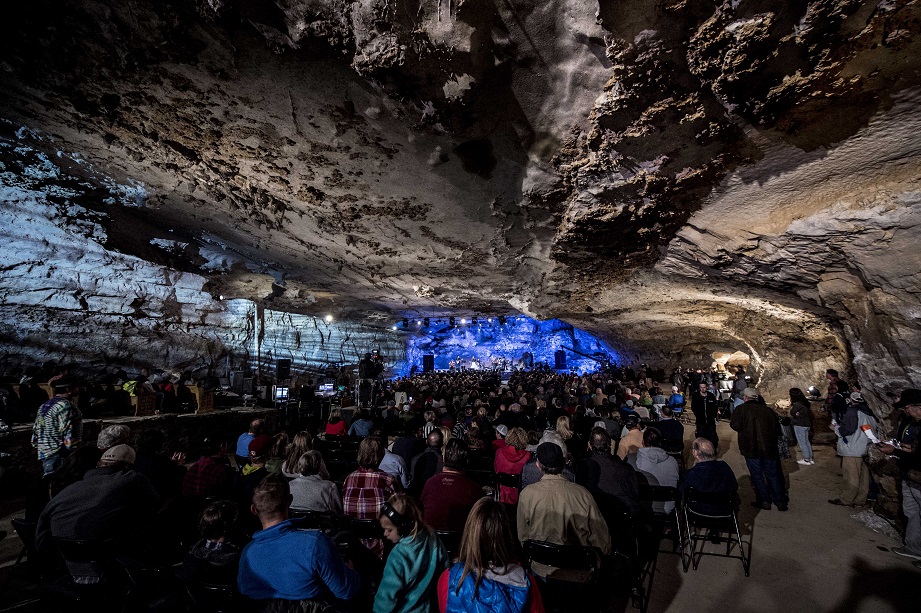
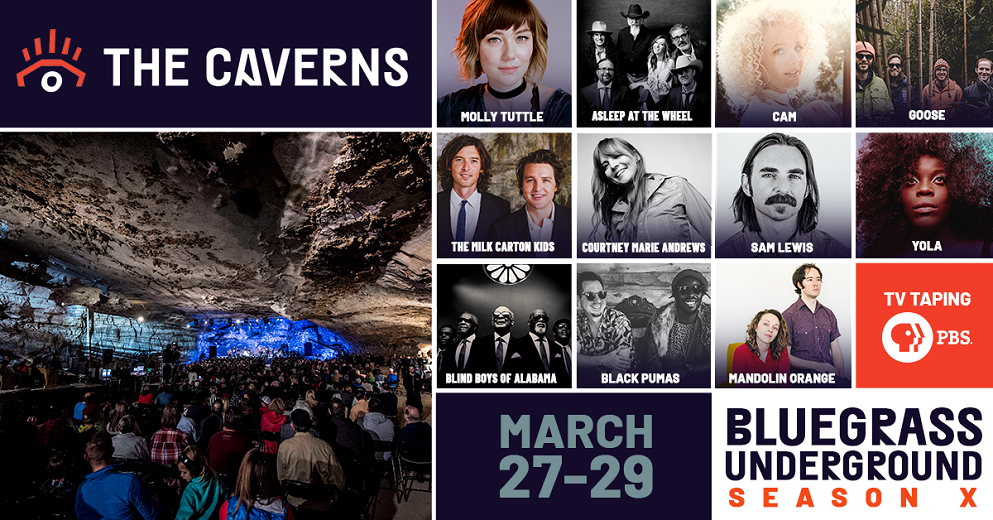
The Bluegrass Situation is pleased to announce the artists for Bluegrass Underground’s milestone Season X on PBS. From March 27 through March 29, the Bluegrass Underground TV taping from The Caverns in Pelham, Tennessee will treat music fans to performances by the finest in roots music and Americana.

This special 10th anniversary taping features cutting-edge singer-songwriters Cam, Yola, Courtney Marie Andrews, and Sam Lewis, and harmonious duos Mandolin Orange and three-time Grammy-nominated Milk Carton Kids, as well as legends like Asleep at the Wheel and Blind Boys of Alabama, and rising stars like bluegrass phenom Molly Tuttle, groove-driven jam band Goose, and psychedelic soul group Black Pumas, plus a surprise act to be announced in the coming weeks.

Jam-packed into one epic weekend of underground concerts, the performances will be captured for the 10th anniversary of the multiple Emmy Award-winning Bluegrass Underground series on PBS. To be in attendance at the 3-day live taping event is a music lover’s ultimate experience. The milestone Season X will premiere in the fall of 2020 on PBS stations nationwide.

“It’s amazing that Bluegrass Underground is the second-longest music series on American Public Television,” says Todd Mayo, Bluegrass Underground creator and co-producer. “And we look forward to the next 10 years of partnering with PBS in presenting the quality and diversity of roots music from one of the most iconic music destinations in the world, The Caverns in Grundy County, Tennessee.”

Three-Day & Single-Day Tickets go on sale on Friday, November 22 at 11 am CT at TheCaverns.com

Here’s the lineup for Bluegrass Underground Season X PBS TV Taping in The Caverns:

March 27:

Molly Tuttle: An artist on the leading edge of bluegrass music, steeped in tradition while driving the genre forward in today’s musical landscape.

Goose: This New England band’s mix of rock, funk, tropical grooves and extended jams will turn The Caverns into a subterranean dance party.

Cam: From a GRAMMY nomination to headlining the Ryman Auditorium, this multi-platinum country singer-songwriter is a force to be reckoned with.

Asleep at the Wheel: Ray Benson has now been leading a Western Swing band longer than Bob Wills, and he brings his iconic group to The Caverns for their 50th Anniversary Tour. Historic.

March 28:

Sam Lewis: Best-known for touring and collaborating with Chris Stapleton (who helped inaugurate Bluegrass Underground in 2008), this singer-songwriter is one of the defining talents of modern Americana.

Courtney Marie Andrews: Powerful vocals, passionate songs from one of today’s finest singer-songwriters.

The Milk Carton Kids: One of Americana’s best live acts, the duo of singer/guitarists Kenneth Pattengale and Joey Ryan combine close harmonies, wonderful original songs and humor.

TBA: Bluegrass Underground will be announcing the day’s fourth artist in coming weeks. Who doesn’t love a surprise?

March 29:

● Blind Boys of Alabama: A rousing Sunday in The Caverns with the five-time GRAMMY Award-winning gospel group that helped create the genre.

● Black Pumas: Austin, Texas is known for its dynamic live music scene. Black Pumas are the city’s leading soul/funk band. Enough said.

● Yola: Demolishing genre with her evocative voice and debut record Walk Through Fire, Yola establishes herself as the Queen of Country Soul from the very first note.

● Mandolin Orange: Intimate and emotional, the music of multi-instrumental duo Emily Frantz and songwriter Andrew Marlin draws you into their world with a sound that floats like a butterfly, but speaks to the heart.


While the national festival season remains in hibernation, Bluegrass Underground and The Caverns will welcome spring to the rolling hills of Tennessee with its unique, world-renowned combination of top artists, award-winning sound and lighting production, and breathtaking natural beauty, creating an underground festival experience like none other. Bluegrass Underground events feature a clean and comfortable, fan-friendly environment, complete with high-quality concessions and beverage offerings, including craft beers.

Tickets & travel packages and Stay-and-Cave hotel packages make for a perfect and easy getaway weekend. Packages include the best seats to all tapings, lodging accommodations for two, transportation to and from the venue, food, and commemorative merchandise. There is no better way to experience the Bluegrass Underground tapings than a Stay-and-Cave package. Packages and tickets will go on sale on Friday, November 22nd at 11am central at TheCaverns.com

Bluegrass Underground is underwritten on PBS by Tennessee Tourism and by Grundy County, Tennessee. The 12-episode series is presented to PBS nationally in partnership with WCTE in Cookeville, Tennessee, which serves the Upper Cumberland and Middle Tennessee.

LISTEN: Wood & Wire, “Left My Girl Behind”

Artist: Wood & Wire
Hometown: Austin, Texas
Single: “Left My Girl Behind”
Release Date: November 15, 2019
Label: The Next Waltz

In Their Words: “This is a traditional tune that we learned from Levon Helm — one of our favorite artists of all time. It’s also called ‘The Girl I Left Behind.’ Outside of bluegrass, we all have different (maybe even more prominent) musical influences. It’s those collective outside influences that really drive our sound. The result is us writing and playing tunes with grooves and feels that people wouldn’t expect from an ensemble like ours. The way Levon did this tune, with a funky backbeat groove, really speaks to us and it’s just a blast to play.

“It’s always our preference to record as organically as possible, working on vibes and performance. We don’t use a click track and we like to move with each other musically. Out at the bunker with Bruce [Robison], the team, and no computers, that’s the only way it goes down. We’ve been performing this one for a while so it was pretty simple — get in there and play the song like we’ve always played it.”


Photo credit: Spencer Peeples

LISTEN: Rosanne Cash, “Time” (Tom Waits Tribute)

Artist: Rosanne Cash
Hometown: New York City
Song: “Time” (Tom Waits tribute)
Album: Come On Up To The House: Women Sing Waits
Release Date: November 22, 2019
Label: Dualtone Records

In Their Words: “What an honor to sing a song like ‘Time.’ Many years ago, I recorded it just for myself, just for the pleasure of singing those words. Maybe I seeded the notion in the deepest part of the creative ether, the place from where these songs travel through Tom. For whatever reason and from whatever source, I’m just thrilled to be a part of this album. There is no other songwriter in the world, past or future, like Tom Waits.” — Rosanne Cash


Photo credit: Michael Lavine

WATCH: Darrell Scott Reminds “It’s A Great Day To Be Alive”

Song sorcerer and musical mage Darrell Scott is celebrating autumn with a refreshed rendition of his ever-popular song, “It’s A Great Day To Be Alive.” In a nod to his acoustic roots, Scott recorded a bluegrass version of the hit, which has been covered by many artists in country, Americana, and bluegrass. In October, he released the official music video — depicting fall festivities like hay rides, a corn maze, and other images of the season — which, as he tells it, was actually inspired by a surprising collaboration.

“I found that a local Nashville corn maze (Honeysuckle Hill Farms) wanted to put my image and song ‘It’s a Great Day to be Alive’ into its corn maze design this fall,” he explains. “And since I had never made a video for the song, and since the song’s message is as needed as ever, we decided to make a video with great help from family and friends. I love the result.”

Feel the warmth of autumn through this music video; watch right here on BGS.


Photo courtesy of the artist.

Don’t Be the “Second One To Know” about Chris Stapleton’s New Video

The idea of success, especially as it relates to being a musician, songwriter, and/or performer, has always been a wily, shifting idea. What are the benchmarks we use to determine someone’s level of notoriety? What are their claims to fame? Owning a tour bus? Having your first number one hit? Being the musical guest on SNL? Having a highway named after you? Or perhaps a proclamation from your local public figures designating a [Named After You] Day?

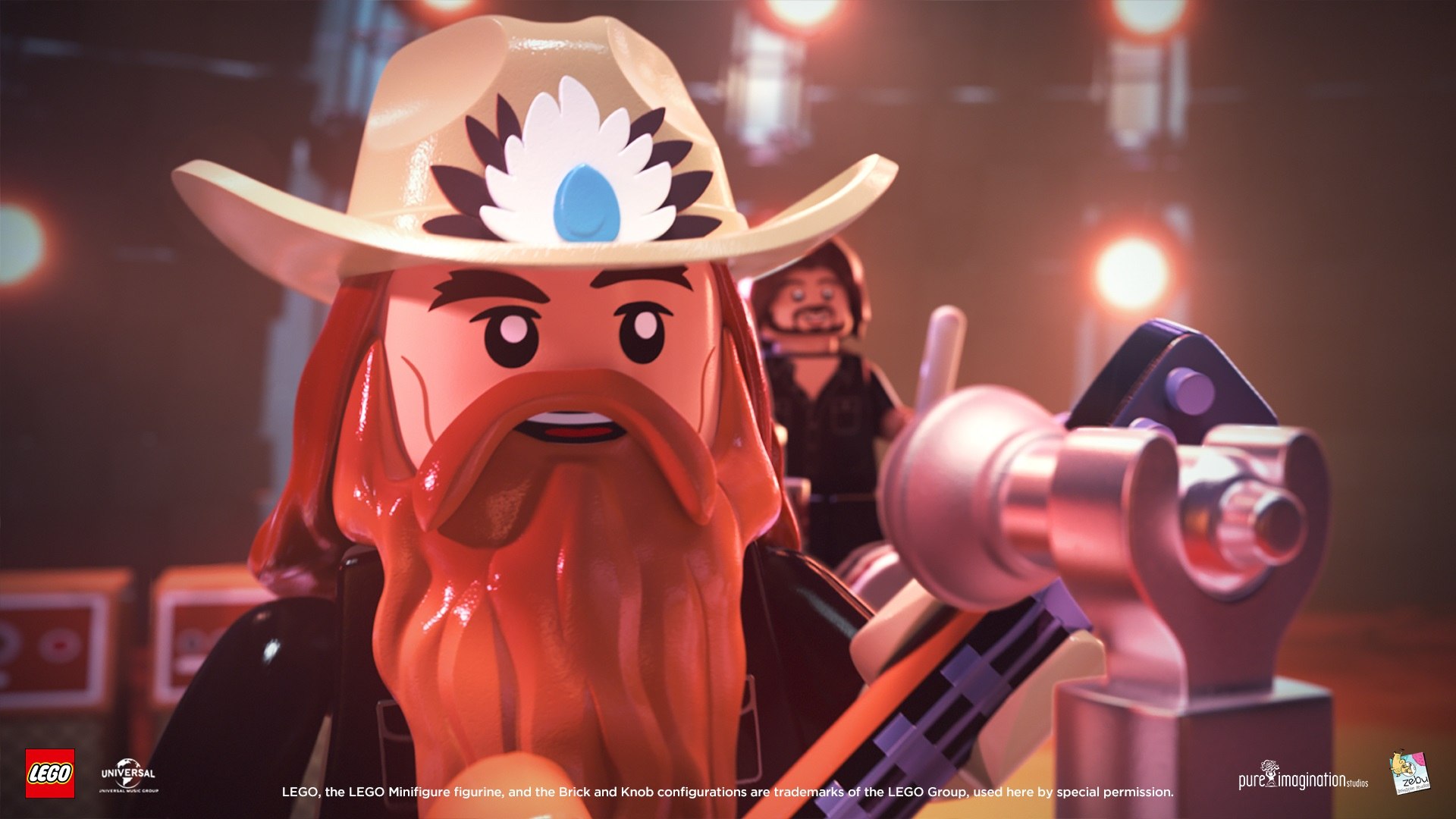
Well, for everyone’s favorite bluegrass powerhouse vocalist turned mainstream country star and global sensation Chris Stapleton, success isn’t measured only by a cameo appearance on HBO’s Game of Thrones. How about having LEGO figures modeled after you, your wife, your band, your stage set, and your otherworldly, music-hating fantastical arch-enemies?

LEGO Group and Stapleton collaborated on the brand new music video for “Second One To Know,” creating a fully realized toy brick universe replete with Stapleton’s signature hat, Morgane Stapleton’s omnipresent tambourine, strikingly accurate LEGO versions of instruments, gear, crew, family members, and even a cameo by bassist J.T. Cure’s cat! (A cat-meo? A cat-meow?)

It may seem a little off the wall for an artist who, while ceaselessly compelling, is generally reserved and counterintuitively subdued — despite his music and window-shaking voice being anything but. But the video is whimsical, painstakingly detailed, expertly crafted, and damn, it’s entertaining. Watch LEGO + Chris Stapleton’s “Second One To Know” right here, on BGS.


Still courtesy of the artist.

Bloodshot Records at 25: An Insurgent Interview with Co-Founder Rob Miller

Bloodshot Records’ 25th anniversary party is taking place in Chicago this Saturday, and they’re gonna party like it’s… 1994.

Long before the term Americana was coined, this fledgling Chicago label was issuing records by Robbie Fulks, Old 97s, and other road-worn musicians who built their careers on a mix of country and punk that the label initially termed “insurgent country.” That description didn’t last but the label forged on, with compelling artists and songwriters like Jason Hawk Harris, Sarah Shook & the Disarmers, and Luke Winslow-King now on the roster.

Bloodshot Records co-founder Rob Miller fielded some BGS questions by email. Check out the newest release, Too Late to Pray: Defiant Chicago Roots, at the end of the interview.

BGS: Launching a record label is a pretty big risk, then and now. Was there a specific moment that convinced you, “OK, the time is right to do this”?

RM: Au contraire! Risk never, ever crossed my mind. When you don’t have a business plan, an expectation of success — let alone longevity — or any idea what you are getting yourself into, ignorance and naiveté are powerfully liberating. The whole idea was, at the very least, a release from the drudgery of drywalling shitty condos in Wrigleyville and Old Town.

The three original partners ponied up a couple of grand from our day jobs, put together our first release, For a Life of Sin, and the day the CDs came back from the manufacturer, POOF!, we were a “label.”

I can’t imagine doing something as ridiculous as that now.

What do you remember about those first few conversations with your friends and your peers when you shared your plans to launch Bloodshot?

Practically nothing. It was a very blurry time. It was at a time in all our lives when all was action and creating and the moment without much thought to consequences. We were just so excited at the prospect of shining a light on this weird little scene in Chicago that I doubt anyone could have talked me out of doing it. The real world had not yet muscled itself to the table and I’ve managed, in many ways, to keep it at bay all these years. Oh, and then there was the tequila. As I said, very blurry.

Why did the phrase “insurgent country” fit the Bloodshot Records vibe, do you think?

It’s something Eric Babcock (one of the original founders) and I came up with one day drinking beer in my backyard — never let two English majors get drunk when there’s a thesaurus within reach, by the way.

We were looking for a catchy way to describe what we were doing, something that spoke to the outsider aspect and added an edge to the frequently off-putting “C” word. At the time, there wasn’t much critical language or reference points surrounding the melding of roots and punk. So, before someone else hung a dreadful tag on us like cowpunk or y’alternative, we thought it would be wise to TELL them what to call us.

Print media was so prevalent as this label was getting off the ground. What role did music journalists play in making Bloodshot a success?

Wait, we’re a success? Who knew? Where’s my pony, dammit!

Having spent my formative years reading fanzines and indie publications, persuading glossy mags or acclaimed daily newspapers to pay any sort of attention to us never crossed my mind. We did then, as we do now, focus on the grassroots. We work from the bottom up, rather than wait around for some “tastemaker” to tell the world it’s OK to like us or our artists. It was in those locally-based outlets where people could write about us with passion and without concern for circulation or broad appeal.

However, there are times when our tastes and popular culture intersected (Neko Case, Justin Townes Earle, Ryan Adams, Old 97s, Lydia Loveless, among others) and the wider world and folks higher up the media food chain paid attention to us. Usually that would take the form of a “trend” piece along the lines of “the new sound of country” or “Whiskey-soaked barn-burning punks” or some such shit. They’d be reactive and reductive, but tried to sound bold and cutting-edge by calling out some hot, fresh underground movement.

And that’s all great, but it doesn’t influence what we like or how we go about what we do.

Don’t get me wrong, or think me the King of Cynics (I am merely a prince), there were some insightful and humbling pieces in places like Rolling Stone, GQ, Village Voice, New York Times and the like. In NYC 1996, we had an afternoon barbeque on the Lower East Side with the Old 97s, Waco Brothers, and others. It was during CMJ and since they wouldn’t let our bands into the festival, we put on our own party (a precursor to our longstanding shindig at the Yard Dog Gallery during SXSW). I went outside to check on the line that snaked down the block and saw a couple writers from Rolling Stone and the legendary Greil Marcus trying to get in. Yikes. Things like that helped lend an air of legitimacy to our strange little crusade.

Who were some of the earliest champions for the label?

Fans, largely. Weirdos like ourselves who quickly responded to what we were trying to do. People who were fed up with the co-opting of the underground, of Lollapalooza, of Martha Stewart “grunge-themed” parties; people who were looking to classic country for the freshness, excitement, and freedom that they used to find in punk; people who were discovering that Johnny Cash, Loretta Lynn, and Hank Williams were 1000 times more interesting and relevant than the Stone Temple Pilots or the Red Hot Chili Peppers would ever be; people who were starting up, or involved in already, their own scenes in their cities who saw us as willing collaborators.

Fortunately, many of these collaborators also worked in the biz, as writers, DJs, promoters, record store owners, distributors, and club owners. We were able, in pretty short order, to stitch together an ecosystem of people who genuinely dug what we were trying to do and could help spread the word to the benefit of all. It was very much a community spread out across the country.

How has the Chicago music scene factored into the Bloodshot Records story?

There isn’t so much a Chicago music “scene,” as there is a Chicago “hustle.”

When I moved to Chicago, I was floored by the vast array of music available to me on any given night. So many clubs, so many bands, so many neighborhoods, so many options. Given our position in the middle of the country, most touring bands stopped here. Rent was cheap. Labels arose in a non-competitive environment which fostered a vibrant, organic and sustained creative burst. Since Chicago is a working town, rather than a company town like NYC, LA, or Nashville, there was an incredible amount of freedom to create and perform without fear of upsetting the “industry” or making a jackass of yourself and failing during your “shot” in front of A&R goons from a major label.

Do what you do. Try new things. We didn’t break rules so much as we never knew what the rules were in first place. Club owners took chances on our bands early on and became fans and advocates, the media cared and wrote about what was happening at the street level, and there were plenty of record stores and left of the dial radio lending encouragement. Coming from a place that lacked such a supportive infrastructure, I never, ever take it for granted.

I firmly believe that Bloodshot would not have thrived anywhere else.

At the time the label launched, vinyl pressings of new releases were very rare. How did the label respond when you all realized that vinyl was making a comeback?

Very true. Early on, other than a series of 7” singles, we didn’t do any vinyl. Occasionally, a European company would license a title and press up 500 LPs or so, but otherwise, it was a dead format. That pained the record nerd buried deep in my DNA.

So, we were quite happy to help with the resurgence of LPs. At first, we’d tentatively press up 500 or 1000 of only the releases we expected to do quite well; LPs are expensive, time-consuming and temperamental to manufacture, and unsold LPs take up a lot of space in our tiny warehouse. AND no one was sure if this was a quick blip or a passing fancy, so all the extant pressing plants were log-jammed for months at a time. But now, with new pressing plants finally opening up, virtually every release has a vinyl component to it and we’ve re-released music never before available in that format as well.

I think people who, by and large, grew up with downloads and streaming respond to vinyl because of its tactile and totemic connection to the music and the artist. As the saying goes, you can’t put your arms around an MP3. It makes the LP a very durable and loveable format.

What do you remember about Bloodshot’s first website?

Funny, I was just talking to an IT person about this the other day. When we moved into our current office 20 years ago, we had one modem for the entire office. If someone needed to get online, they would run through the office telling people to get off the phones so they could log on. We wrote letters and used faxes. We even called people on the corded telephones and talked to them — how very quaint.

If we wanted to edit our site, we’d have to compile a list of changes, and fax them over to our “programmer.” We did that usually every two weeks or so. From where we sit now, it feels so distantly and hilariously primitive, like I was the chimp smashing bones with a femur when the obelisk appears in 2001: A Space Odyssey.

Every once in a while, someone will say something like “I googled that DSP” or “the Wi-Fi crashed and I can’t download the WAV files” and think, good Lord, what would such utterances have sounded like back then? They would have locked you up or tossed you off the bus for being a loony.

In this era, having a record label isn’t essential to release music. However, from your perspective, what are some of the benefits of having label support?

Several years back, the conversation did turn rather aggressively towards “why even bother having a label?” True, the monolithic aspect of THE LABEL has been wholly and, in many cases, rightfully demolished by the internet.

However, artists are artists. They should create and perform. They should not be burdened with the time-sucking (yet necessary) banalities of promotion and business.

That’s where a “team” like us comes in — perhaps that’s a more relevant term than “label.” We can take all those nagging organizational bits off their plate and build the brand. We keep the trains running on time (I refer, of course, to European and Japanese trains, not Amtrak). And, let’s face it, many possessing the — how shall we say? — artistic temperament do not also possess the logistical grace to tackle all the infuriating minutiae that make the whole machine run. No one asks me to write a catchy melody or craft meaningful lyrics delving into the human condition. No one should ask the artist to make sure the digital service providers are given the proper metadata or set up an in-store performance in Fort Collins Colorado.

What excites you the most about the next 25 years?

Ivanka 2040?

The death of the Death of Irony?

Jet packs?

(Hopefully) outliving Henry Kissinger.

Florida and Mar-A-Lago sinking into the sea once and for all?

Making sure the soundboard at the old folks home is powerful enough for Jon Langford’s shouting to be heard over the Matlock re-runs?