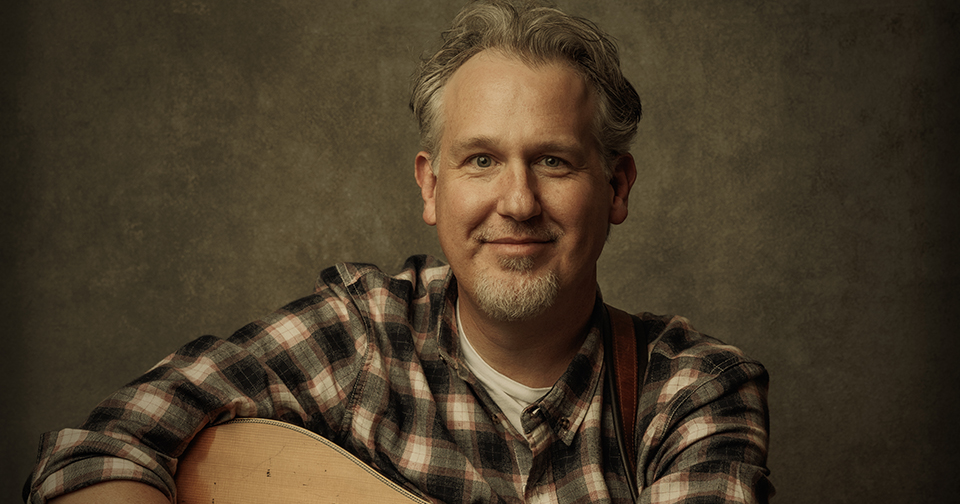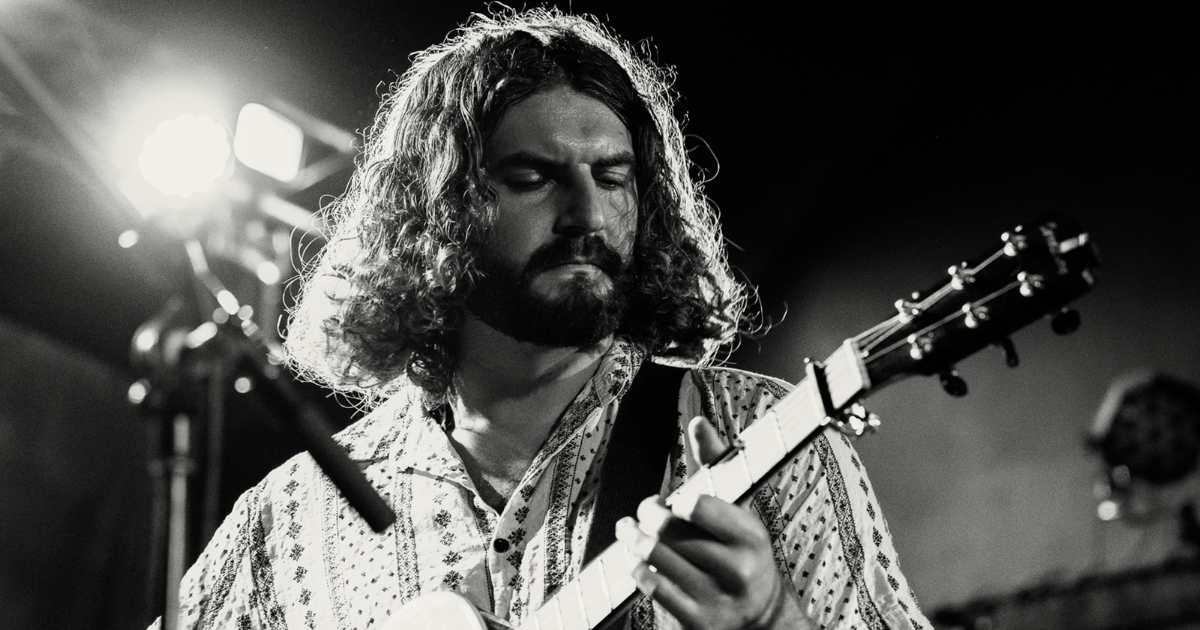
Cole Chaney is
“Anti-Machine”

While many young talents, willingly or hesitantly, bow down to music industry boardroom suits who promise stardom if they’ll follow a professionally curated path, Cole Chaney takes a hard pass. He knows exactly who he is, what he does, and how he wants to get there. He creates songs, not content. He’s a career musician, not a brand. And the only thing he hopes to influence, maybe, is someone, somewhere, who wants to make music for all the right reasons.

Chaney grew up in Catlettsburg, Kentucky, surrounded by the legacies and storytelling of his elders. After graduating high school he worked as a welder, uncertain of his career path, but already fueled by his passion for music. Today, he keeps one musical foot in the bluegrass traditions of his Appalachian roots and the other in guitar-centric, amplified bands like Soundgarden, Nirvana, Alice In Chains, and Stone Temple Pilots.

His debut album Mercy and subsequent OurVinyl Sessions reflect his love of acoustic music and showcase his leanings toward introspection and melancholy. In the Shadow of the Mountain, released last fall, takes that darkness to a new place, balances it with moments of light and leans into the aforementioned rock influences, while never losing the origins of his sound. All of this shines at peak level onstage, captured by Western AF on a Live AF Session.

Sitting outside at home on an April morning, drinking coffee and surrounded by the sounds of birds and a breeze, Chaney spent a couple of hours on the phone with Good Country. He spoke candidly about his music, faith, values, mental health, and the intertwining of inner peace and inner turbulence that make all these things uniquely him.

When you were ready to do this professionally, you went to Lexington. Most songwriters would have chosen Nashville. Was yours a deliberate decision or a natural one?

Cole Chaney: To understand that decision, you have to look at who I was looking up to at the time – and still do – and what drove that decision. When I was in high school, probably around my freshman or sophomore year, 2014 or 2015, I started getting into this band called Sundy Best. They’re from Prestonsburg, Kentucky, which is just down the road from me. This was pre-Tyler Childers. At the time, in Eastern Kentucky, these guys were the biggest thing coming and going. They leaned heavily on being from Kentucky, the same way I do, and they moved to Lexington to get a foothold.

That was my early example, watching those guys. I knew they weren’t going about it the traditional way, which was to go to Nashville and pray somebody picks you up. They did it in Lexington. A couple years later, Tyler Childers comes along – another super-influential figure in my musical upbringing. Of course, he’s anti-Nashville – not the city, but the machine, if you will. I’m pretty sure he lived in Lexington, or at least around the area in the scene, for a while. So did Sturgill Simpson. The list goes on.

I was like, “What business model makes more sense to me? Do I go to the place where there’s more songwriters than the rest of the entire planet or somewhere where people will actually understand what I’m saying and I can maybe build myself a little bit of a foundation?”

The way I saw it is if I started building a sort of fan base or if I had enough ticket buyers, places like Nashville or Denver, these big music scene cities, what choice would they have other than to book us? That’s the way I looked at it.

And it worked.

It did work. It’s a simple business model, but the difference between that model and the other is you’re not sitting around waiting for something to happen. It’s on you to go out and make your own connections. It’s a very grassroots and organic way of doing it and that’s the way I like to do things. I’m anti-machine. Even though I work with some bigger companies, I keep it as limited as possible. That’s so I can play pretty much wherever I want, whenever I want, and they understand that.

On the Whiskey Riff Raff Podcast you said, “Music found me.” Would you mind expanding on that just a bit?

It did. I never would have dreamed at 16 years old that I would be doing this as my full-time job at 25. That was never on the horizon for me. I didn’t know what I was going to do. I knew I was going to weld for a little bit, see what happened, and maybe try to start my own business. And I did. But I really didn’t think it was going to end up like this.

I started realizing that people liked to hear me play and sing around the same time that COVID hit really hard. That gave me an opportunity to sit down, write some songs, and think about what I wanted to do with the rest of my life.

I’m very much a subscriber to the Bible, and I think the Lord has a mysterious way of working. He put me on a path without me even realizing it way back then and I do my best to stay on it now. I think my job while I’m here is to create as much good stuff as I can, stuff that means something, get it out to the people, and get out in front of them and play it for them. As somebody who enjoys going to shows in their free time and watching my favorite bands perform live, I know how that feels, and it’s truly a privilege to be able to offer that same service to other people.

There is music in your bloodlines, not professionally, but family members who played in church and at home. You obviously assimilated the sound of the area, and also this wider scope with bands like Alice In Chains and Stone Temple Pilots. When did all of that begin seeping into your songwriting?

We listened to the radio when I was growing up. I didn’t get educated on music or how to play until I started really getting into it. To this day, I’m still being educated and learning how to play on a daily basis. Part of what keeps it so fun to me is how much I don’t know and constantly learning about things.

Mercy was my first album, and I had access to what was around me. I had just moved to Lexington and I was really into bluegrass. There’s a band called the Wooks that, to this day, Glory Bound is one of my top three favorite records of all time. I was infatuated with that sound and that was what I wanted Mercy to sound like, or at least as close to it as I could get. A lot of the Wooks ended up playing on that album, plus Michael Cleveland. It was crazy.

Alice In Chains has been a mainstay in my musical taste since I was probably 15 or 16 years old. Since I first found them, I was very drawn in by the tone of Layne Staley’s voice and the weight of Jerry Cantrell’s guitar. It feels like you could bite it and chew on it. I don’t know how to describe it.

I’ve also always loved bluegrass, so it was [figuring out] how to bridge the gap of what I listen to and where I want to go with my writing without completely abandoning that sound. And bringing the alternative rock sound into the folk realm, where you have mandolin, upright bass, fiddle, acoustic guitars, and drums. The biggest change in the sound has been the addition of drums over the past two years, navigating that and seeing how it fits into the whole equation. It opened up a lot of avenues for me as a songwriter.

You began playing guitar at 13 or 14. Did you always play acoustic?

The thing about electric guitar, for me, is that it’s such a deep realm of gear and a deep dive. I’ve always been attracted to good-sounding acoustic guitars and players like Tony Rice, so I felt my effort was best spent getting really good at playing the acoustic guitar.

That will carry over whenever I decide to pick up an electric guitar, more so than if I only played electric guitar and tried to write some bluegrass-style acoustic lines. It would be a tougher transition to come over from light gauge strings on an electric guitar to .013s on a dreadnought and trying to play “Blue Railroad Train” or something like that.

Do you have an electric guitar?

I have several electric guitars. I’ve got a ’57 reboot Stratocaster, an American Professional Telecaster, my old Paul Reed Smith that I learned how to play electric on, and a nice Vox amp. I don’t know all that much about electric guitars. I still have a lot to learn.

Prior to this interview, you sent over your touring rig: a Gibson J-45 Banner in standard tuning with a K&K Pure Mini pickup, and a Breedlove sitka/rosewood Custom Dreadnought in drop D/double drop D, with an LR Baggs Element VTC pickup. Also two Grace BiX DI’s and a Lampifier Model 711 cardioid mic for lead vocals.

Those are my road guitars. They aren’t the ones I recorded everything with, but those are what you see at the shows.

In addition to the Gibson and Breedlove, do you have other acoustics?

I have two Gary Cotten guitars. [On] OurVinyl [Sessions, that] was my first Cotten I recorded with. On In the Shadow of the Mountain, many of those songs are my newer Cotten, which is sinker mahogany and an Adirondack top. “Alone?,” “In the Shadow of the Mountain,” “Into,” “Feels Like Rain,” and “Spirit” [were all recorded] on the Cotten.

That guitar sounds huge. It’s an outstanding guitar. I don’t tour with it because I’m scared something would happen to it and it’s too special to me. And Gary’s a great dude. He’s always taken really good care of me, and I want that guitar to stick around for a long time.

I don’t have any electronics in it, either. It’s a very traditional style, it’s a dovetail, and I want to keep it as traditional as I can and keep as much weight out of it as I can, because the more weight you add, sometimes it makes them sound worse.

What makes the Gibson and Breedlove right for touring?

They’re super-versatile and they both sound fantastic plugged in. That Breedlove is the longest-standing guitar I have that I’ve consistently played shows with. I got it in 2019 from 4 o’clock Rock Guitar Shop in Ashland [Kentucky]. It’s a custom dreadnought that they shop-ordered and it’s got the LR Baggs VTC Element in it. It has always sounded so good plugged in. I mean, all guitars sound bad plugged in, but it’s a matter of how much of the original sound can you actually preserve when you plug it in.

I’ve gotten to the point where I am almost starting to desire a little bit of that direct input texture. Maybe it’s because I’m listening to too much MTV Unplugged, but I’m starting to desire that kind of cardboard bad sound.

The Gibson, I put a K&K Pure Mini in and it sounds really close to what it sounds like not plugged in. Man, that Gibson is a beast. I love that guitar. It’s been to every show with me since I bought it last year.

I still have a Paul Reed Smith acoustic guitar and it’s a damned good little guitar. I’ll probably end up using it again on some stuff. It’s one of those that you plug in and it sounds great, too. But when I got into the whole bluegrass thing, I knew I needed something with a little more body.

Sometimes you use a pick, sometimes fingers. Either way, your attack is strong. How did your technique develop?

It’s one hundred percent out of necessity. I had a really bad injury in 2015 and I damn near cut my index finger completely off at the knuckle. I can’t wholly bend my index finger and I can’t feel the picking side of that finger. If you watch some of my older videos, my index finger is flailing around all the time. It’s because I’m picking with my thumb and middle finger, and that’s where I’m holding the pick. That took me long enough to learn how to do.

In recent years I’ve learned how to use my middle finger to lock my index in place and be able to hold a pick. It looks normal, but if you could see how the sausage is made, it’s not that pretty. I wish I had that dexterity in my finger. The takeaway message from that is, “Take care of your hands, y’all.”

Let’s talk about the through line from bluegrass to bands like Stone Temple Pilots and Alice In Chains. You blend the genres seamlessly and it all makes sense. Did you always feel that connection?

If you listen to any playlist I’ve had, I’ll go from Ralph Stanley to Chris Cornell in a heartbeat. Obviously the music is different, but there are common themes between the two. Mountain folk music, hard rock, and that era are very dark and brooding, and they can be heavy in their own ways too.

What is heavy? What makes a song heavy? You’ve got people drop-tuning their guitars, but it’s still not as heavy as Pantera or Black Sabbath or something like that. So it’s not necessarily the sound that makes it heavy. It’s the vibe of the song.

I feel like a salesman a little bit, trying to sell this idea that this stuff can be brought together and related in an authentic capacity. Let’s take [Stone Temple Pilots’] “Big Empty,” for example. To do a cover of that and be looked at as a folk artist or an Appalachian artist, or some people will even say country – which I disagree with, but whatever – it always seems like somebody will start into a cover of this great song, but then they’ll get hokey with it and it loses all its purity.

That’s not at all the intended purpose for me. It’s to say, “This is a fantastic song and it fits the vibe that we’re all going for in this realm.” A lot of people probably didn’t know that a mandolin or fiddle sounds great on “Big Empty,” but now they do, because it fits. That’s the way I listen to that kind of stuff. It’s just how to pull that off without being cheesy or coming off in a capitalistic way. More so in a way of, “I love this song and you guys should listen to it.”

Was it challenging to find musicians who understand going from bluegrass to Stone Temple Pilots and back again?

The band, I think through a lot of prayer/manifestation, has come together and, as you hear, they’re fantastic. They can play anything in any style. Ella [Webster] and Kyle [Kleinman] come from a more traditional folk music side of things. Kyle is a bluegrasser and Ella is an old-time fiddle player. Lars [Swanson] and James [Gooding] are jazz cats, so they have infinite vocabulary when it comes to music. If you can play jazz, then you’re going to be all right. If you can pull off that stuff, you don’t have anything to worry about when it comes to my type of music. Stone Temple Pilots is a walk in the park for you.

In our van, the most listened-to bands between us are Soundgarden, Pantera, whatever James’s choice of jazz is, and Alice In Chains MTV Unplugged. That’s a really good piece of music. But yeah, they’re a great band and they can play anything.

Did Lars and James know each other before they joined your band? To lock in a rhythm section…

No, they didn’t. Once you start playing with a jazz drummer, you need somebody who can comprehend the stuff he’s laying out and answer that on the bass. To have those two sit in a room and jam is really something to witness and listen to, because they speak a language to each other that I don’t understand. But I love when they do it, and it’s great to hear.

I’ll be playing onstage, singing and doing my thing, those guys are behind me and I’ll hear them back there, talking to each other while we’re doing this thing, and it’s awesome. They’re special. Those two dudes – they’re incredible. They’re the unsung heroes of music in general. That’s your metaphorical offensive line right there. If you don’t have a Lars and a James, then your quarterback’s getting sacked all the time.

This is you in 2025 on The Western Side, talking about Shadow: “a lot of darkness and an equal amount of joy in other songs. It’s a good depiction of where I’ve been for the past two years. A tumultuous and chaotic time period, but also great. And I’m still here.”

Then, In 2021, on With A View: “I load the pressure on. It’s how I operate. My brain lives in constant turmoil.” In 2020, talking about “Fever Dream,” “a song about trying to keep it all together. … the way I deal with this is isolation. And when you isolate yourself, you don’t have much of a choice but to hash some things out in your head.”

You are no stranger to the dark place.

Hearing those things, I look at that younger version of myself almost as I would look at a younger brother. Part of me wishes I could put an arm around that kid’s shoulders and be like, “You’re going to be all right, buddy.” Times got a little tough, as they probably should for anybody at points in their life. You can’t really enjoy the great parts of your life without having a little bit of adversity to overcome or deal with. The darkest part, for me, was maybe just growing up and gaining a new understanding of the way the world actually operates and how hopeless that can be at times, but also how beautiful it can be in the same stroke.

What I’ve realized is you get out of this world what you pay attention to, because whatever you want to find, you can find it. It’s there and it’s aplenty, whether you want to find the negativity and suffering, or whether you want to find the positive and the good. I don’t have the answer to where folks are supposed to operate and live, but I think it’s good to help people who are in that suffering side of things. But you can’t let that dominate your existence, and for a little while, I was maybe dominated by the darker side of life.

I try to be as empathetic as I can, but with that comes feeling a lot and also accidentally hurting people sometimes. That’s really tough, because then you have this cycle of guilt that you deal with trying to make it right in your head. As I’ve gotten a little older and maybe figured a couple things out, I try to have a lot more grace for myself. What I’ve learned about the pressure is that it’s really just perceived pressure and none of that exists, and you should just care less what people think.

Obviously, music is where you go during those times.

Absolutely. If something is eating at me that I’m having a hard time getting out in a linear fashion, a lot of times I find myself writing about it without even realizing it. My mom is an abstract painter, so I grew up with an understanding of what “abstract” means and abstract concepts. That’s how I materialize a lot of that stuff, because some of it is things I would never come right out and literally write down, for multitudes of reasons, but things you want to indirectly address. That’s when [abstraction] becomes a great tool for addressing those kinds of things. Metaphors.

It seems, when it comes to expressing those things, you’re in the balance between the emotionally open world of Cornell, Cobain, and others and the world of bluegrass, country, hunting, fishing, and those stereotypes of “manly men” – and not so much emotional transparency.

Not necessarily. I don’t know about the whole “alpha male” personality type. It’s always seemed to me that a lot of times the guys who are trying to be perceived as macho are probably the ones who need a hug the most. Now it’s everybody else’s problem because their dad didn’t do it, and that sucks.

As I’ve emotionally developed a little bit, I’ve really started to respect individuals like Chris Cornell. If you look into him as a person and watch some of his interviews, he’s intelligent and seemingly self-aware. I respect the way he conducted himself, especially in interviews, and the way he made sure to pay attention to people and make them feel seen. The only way you can empathize with people like that and make sure of those types of things is if you’ve been on the other end of that stuff and you’ve felt looked over and brushed off.

I may not be the best at answering Instagram DMs, and I definitely don’t stay on the internet because I think it sucks, but if I talk to somebody in person, I always try my best to give them that and be present in the moment. Somebody else that does a fantastic job of that is Nicholas Jamerson, the frontman of Sundy Best, who’s a mentor, friend, and hero of mine.

Have you ever felt any hesitation about publicly ripping off the mental health Band-Aids? Or, conversely, is there a feeling of opening the door to people having these conversations?

Sure, there’s hesitation about a lot of things. There’s a lot of decisions about, “How do you want to portray yourself in a public light?” But my main goal is and has been to just be as authentic as I can, as representative of how I feel about things as I can, and to be accepting of people and understand that they come from different places and have different perspectives.

With that hesitancy, there’s also much more in the way that when we were talking about 20-year-old Cole, the way I want to put my arm around that kid and comfort him, that’s what I want my music to do for people that feel the way I was feeling at that time.

Listening to you, I’m reminded of something Charlie Daniels said to me during an interview years ago: “Music is too precious for me to prostitute it.”

Oh, yeah. Absolutely. And, too, Charlie Daniels is one of the greatest country musicians ever. I want to go on record saying that.

The way I look at it is, could I see my heroes, people I look up to, going online and being like, “Comment what song you think I should release next”? No, I don’t think I could. When I see someone who has musical and artistic integrity, that’s how I’m going to operate. I’m going to try my hardest to uphold my integrity and not do the TikToks and the really cheap stuff.

You absolutely will suffer financially for not playing the game and if you don’t kiss the right ass, but, to me, that suffering is not negative suffering. I’m honored to be able to suffer like this, because if my options are suffer or have to watch Country Central’s “Hot Take Tuesday,” then give me suffering all day long, because I’m not paying attention to that bullshit. It’s ridiculous. I don’t care who’s beefing and I don’t care what dude is playing cowboy this week.

That’s why I’m trying to get out of the country scene. It’s becoming so fake and there’s so many people trying to be carbon copies of other people. There’s no authenticity. Everybody’s full of shit. We went through this period where people like Tyler [Childers] drove the spear through the heart of this mainstream country thing and it was akin to when Nirvana came on the scene and effectively killed hair bands for a while. But then the Nirvana copycats came along and garnered a lot of the same attention.

I’m not saying that just Tyler Childers is responsible for this. People like Sturgill, and a lot of smaller artists in their own scenes, are responsible for the turning over of the dirt, if you will. But it’s getting stale. It’s past getting stale. It is stale and it’s bad. There’s a lot of really shitty music being put out right now and I don’t want any part of that.

If I’ve got to step away and back off and be out of the internet eye, then fantastic. That doesn’t bother me one bit. If it means a few less people know who I am, then so be it. But I hold out hope that people will eventually realize how cheap and bad a lot of the music is that is being promoted right now, and there’ll be another turning of the dirt soon.

Yes, art is subjective, but art is subjective. Not this corporate bullshit that they’re trying to push. That’s not art. That’s six dudes in a room trying to come up with a song that’s going to sell on the radio or sell on the internet, or “We’re going to put thirty tracks on this album” so they can set streaming records. It’s like, “Man, y’all have lost the complete plot of the whole thing.” There’s nothing interesting about that to me. I’m all about authenticity. I want to believe the person on the other side of the microphone from me, and if I don’t believe you, then I’m out.


Photo Credit: David McClister

You Gotta Hear This: New Music From Aaron Burdett, Trey Hedrick, and More

Happy New Year! We’re so excited to bring you our first collection of new music and videos for 2026. We’ve missed you over the past few weeks and, well, You Gotta Hear This…

Kicking us off, our old friend Joshua Britt returns with a new artist project, The Boy The Earth Sings To, and an official video for an original song, “Eyes Of God.” Falling on the continuum between gospel, sacred, and contemporary Christian roots music, the lush alt-folk track is built around the inspiration of a new mandola, tying the tone wood used to build the instrument to the forested visuals of the video. Meanwhile, Western North Carolina-based singer-songwriter Aaron Burdett unveils a new single, “Arthur’s Last Dance,” which pays tribute to folk dancer Arthur Grimes and his final performances at MerleFest before his retirement. It’s driving modern bluegrass appropriately perfect for flatfooting, clogging, and polishing those floorboards.

Then, from just up the mountains, Lonesome River Band also bring their first new single of 2026, “Bernadette,” written by Bob and Ginger Minner. Below, Bob offers his perspective on writing the tune, which he and his wife immediately imagined LRB recording, as soon as they had finished writing it. If you like crooked contemporary bluegrass that’s steeped in old-time mountain music – with a slightly dark, modal tinge – you’ll love this one.

Let’s continue up the mountains now, across Virginia and West Virginia to southeastern Ohio, where we’ll find the music of singer-songwriter Trey Hedrick and this new track, “Shoestring,” which features Tim O’Brien. It’s a testament to Hedrick’s grandpa, his relocation of the family to Ohio, and the way life, love, work, and place are passed down generation to generation.

Rounding out our collection this week, it’s a premiere we published elsewhere on the site this morning, as well. Celebrating his upcoming collaborative album, guitarist Bryan Sutton launches a hilarious and entertaining animated music video for “The Devil Went Down to Deep Gap” featuring Billy Strings, Del McCoury, and more. It’s a delightful reimagining of Charlie Daniels’ “The Devil Went Down to Georgia” that tells a fantastic version of Doc Watson’s origin story, pitting Doc’s style of picking against shredding metal electric guitars played by Sutton and Strings. You won’t want to miss this masterpiece of country, bluegrass, and flatpicking storytelling.

What a great way to kick off the year, right? There’s plenty to hear, love, and enjoy below. You Gotta Hear This!

The Boy The Earth Sings To, “Eyes of God”

Artist: The Boy The Earth Sings To
Hometown: Franklin, Kentucky
Song: “Eyes Of God”
Album: The Quiet Voice Of God
Release Date: November 7, 2025

In Their Words: “Years ago, my band played a show with Sierra Hull in Montana and that’s where she introduced me to mandolin builder Bruce Weber. Visiting his shop was unforgettable – an old schoolhouse where one room was filled with raw, uncarved slabs of wood that he would walk across, knocking on each piece, saying, ‘They all sound different, but some of them sing.’ It felt like he was listening for the mandolin already inside the wood, the way Michelangelo spoke about finding David inside the marble. Bruce built an octave mandolin for me that became the backbone of this album and while I was writing it I came across another Weber mandola. The first night I brought it home, I picked it up and wrote ‘Eyes Of God’ in one pass, as if the words and melody were already waiting inside that piece of wood. My favorite art has always felt more like discovery than invention.

“For the video I was inspired by time I spent in Bolzano, Italy, reading about the singing trees in the high altitude mountain forest – God placing the best wood high in the mountains, starved for air instead of down in the village. A reminder to me that making something great always requires adventure.” – Joshua Britt

Track Credits:
Joshua Britt – Vocals, mandola, other instruments, songwriter
Matt Menefee – Banjo
Neilson Hubbard – Drums
Colter Britt – Harmony vocals
Sarah Drake – Harmony vocals

Video Credits: Filmed on location in the Colorado Rockies.
Directed by Joshua Britt and Quincy Britt.


Aaron Burdett, “Arthur’s Last Dance”

Artist: Aaron Burdett
Hometown: Saluda, North Carolina
Song: “Arthur’s Last Dance”
Release Date: January 9, 2026
Label: Organic Records

In Their Words: “I was first introduced to Arthur Grimes when I lived in Boone, NC, in the ’90s. He’d materialize now and then at many shows I was playing or attending over the years. So when I played a set at MerleFest 2024 with Steep Canyon Rangers and heard that Arthur was going to be there with Old Crow Medicine Show – to do his last dance before largely retiring – my interest was piqued. After our set, I was checking out other performances and, sure enough, got to see Arthur doing his thing on the Watson stage one last time. It was an event that deserved a few songwriting notes. Those notes I took that night are what turned into this song commemorating Arthur’s long career dancing with any and every band or performer who came through the High Country of NC over the past 50 years or so.” – Aaron Burdett

Track Credits:
Aaron Burdett – Lead vocal, acoustic guitar
Kristin Scott Benson – Banjo
Carley Arrowood – Fiddle
Tristan Scroggins – Mandolin
Jon Weisberger – Upright bass
Wendy Hickman – Harmony vocal
Travis Book – Harmony vocal


Trey Hedrick, “Shoestring” (featuring Tim O’Brien)

Artist: Trey Hedrick
Hometown: Wilkesville, Ohio
Song: “Shoestring” featuring Tim O’Brien
Album: Sing, Appalachia
Release Date: January 7, 2026 (single); February 18, 2026 (album)

In Their Words: “‘Shoestring’ is a song about my Papaw, who was an incredible singer and multi-instrumentalist and the engine to the musical life of my immediate and extended family. Through him I came to the writers and songs that I still call on frequently in my own writings. Pap grew up in Parsons, West Virginia, and when work dried up or, more likely, after a need to move on after his brother Skip died in a mining accident, he moved north to southern Ohio. A move that anchored the geography of our family to southern Ohio after many generations in West Virginia and Kentucky. I didn’t try and likely couldn’t have written ‘Shoestring’ from any perspective other than reverent grandson, intentionally setting aside any precise detail. ‘Shoestring’ is about place, love, work, and life passed down, intentionally or not. I was honored to have Tim O’Brien sing and play fiddle on the track – Tim’s music has been an inspiration and has long meant a great deal to me.” – Trey Hedrick

Track Credits:
Trey Hedrick – Lead vocals, acoustic guitar, songwriter
Tim O’Brien – Lead and background vocals, fiddle
Maya de Vitry – Background vocals
John Mailander – Fiddle
Ethan Ballinger – Mandolin
Frank Evans – Banjo
Phillipe Bronchtein – Pedal steel
Jamie Dick – Drums
Rhees Williams – Bass


Lonesome River Band, “Bernadette”

Artist: Lonesome River Band
Hometown: Floyd, Virginia
Song: “Bernadette”
Release Date: January 9, 2026
Label: Mountain Home Music Company

In Their Words: “My wife Ginger and I write a lot of songs together and sometimes the ideas come from the strangest of places. ‘Bernadette’ came from when one of Ginger’s favorite authors, Shawn Inmon, who asked his fans to offer up unique women’s names to be used in his next novel. We were driving around and joking about names like Ethel, Maude, Calry, etc., and I just blurted out ‘How ’bout Bernadette?’ And out of nowhere I sang that name and first line. We got home and sat down and we wrote it in no time. It just fell out, so to speak. Plus, I always wanted to use the word ‘trifling’ in a song, so it seemed fitting for a woman like Bernadette in the story. We did a guitar and vocal demo of it and I sent it right to my buddy Jesse Smathers, because LRB was who we heard in our heads doing it as we wrote it. Thanks to LRB for cutting this one, we’re honored.” – Bob Minner, songwriter

Track Credits:
Sammy Shelor – Banjo
Jesse Smathers – Acoustic guitar, lead vocal, harmony vocal
Mike Hartgrove – Fiddle
Adam Miller – Mandolin
Kameron Keller – Upright bass
Rod Riley – Electric guitar
Bob & Ginger Minner – Songwriters


Bryan Sutton, “Devil Went Down to Deep Gap” with Billy Strings

Artist: Bryan Sutton with Billy Strings
Hometown: Nashville, Tennessee
Song: “The Devil Went Down to Deep Gap”
Album: From Roots to Branches
Release Date: January 9, 2026 (single/video)
Label: Mountain Home Music Company

In Their Words: “It was listening to Charlie Daniels’ original ‘The Devil Went Down to Georgia’ with my youngest daughter, Lily. She has very eclectic and broad musical tastes. I’ve loved sharing music with her and checking out what she has discovered. We found some other covers of the original and one that stuck with me was Jerry Reed’s interpretation, where he makes Johnny a guitarist instead of a fiddler. I have been working on a duets record for some time, collecting recordings here and there with my pals, and knew I wanted to do something different with Billy, as he and I have a whole record of duet playing.

“Billy and I also share a love for heavy metal. I was trying to think of a way he and I could do something connected to this duets project that would allow us to play acoustic and electric. It all kind of came together when I realized this song would allow for that. The Doc [Watson] origin story came about thinking how to make this not just a cover, but more personal and fun. It’s also another subtle tribute to Doc, who would oftentimes change or add lyrics to a song in order to make it fit for him. I fashioned the story, made a little demo, and sent it to Billy. He was into it and we were off.” – Bryan Sutton

Read more here. 


Photo Credit: Aaron Burdett by Sandlin Gaither; Trey Hedrick by Chris Heidl.

WATCH: Bryan Sutton, “The Devil Went Down to Deep Gap” with Billy Strings

Artist: Bryan Sutton with Billy Strings
Hometown: Nashville, Tennessee
Song: “The Devil Went Down to Deep Gap”
Album: From Roots to Branches
Release Date: January 9, 2026 (single/video)
Label: Mountain Home Music Company

In Their Words: How do you see Doc’s playing influencing both yours and Billy’s?

“I think beyond the specific influence of Doc’s guitar playing that informs most every note Billy or I may play, I know that we both are students of Doc’s complete artistry. To say Doc is just the most influential flatpicker ever is limiting. He brought so much to the table in his honest and emotional singing, his song choices and writing, banjo and harmonica playing, and Travis-style fingerpicking. He was not comfortable being labeled or limited within a specific genre. His onstage persona was true to him. Without being a ‘showman,’ he was informational when the song needed it and willing to share whatever emotion he might be experiencing. It’s also important to note that Doc and Merle’s duo playing has been a huge part of the overall focus for things Billy and I have done together. I know for both Billy and I, Doc provides a lifetime of inspiration, influence, and learning.”

How do you pay tribute to that in this song and video?

“First and foremost, this is kind of a silly or fun thing, along with being a somewhat serious tribute to Doc Watson. I wanted to use the song to have fun with the guitar shredding and good versus evil battle, but also imagine an origin story of how Arthel Watson could have become the ‘Doc’ we all have loved. Maybe it’s a gospel song in the way that Doc, even and especially in his blindness, can ‘see’ through the Devil’s lies. Ultimately, Doc carries his triumphant message to the world, and influences us all with wonderful and heartfelt music.”

It sounds like you had this concept before talking with Billy about it. How did the concept and song come to be, from start to finish?

“It was listening to Charlie Daniels’ original ‘The Devil Went Down to Georgia’ with my youngest daughter, Lily. She has very eclectic and broad musical tastes. I’ve loved sharing music with her and checking out what she has discovered. We found some other covers of the original and one that stuck with me was Jerry Reed’s interpretation, where he makes Johnny a guitarist instead of a fiddler. I have been working on a duets record for some time, collecting recordings here and there with my pals, and knew I wanted to do something different with Billy, as he and I have a whole record of duet playing.

“Billy and I also share a love for heavy metal. I was trying to think of a way he and I could do something connected to this duets project that would allow us to play acoustic and electric. It all kind of came together when I realized this song would allow for that. The Doc origin story came about thinking how to make this not just a cover, but more personal and fun. It’s also another subtle tribute to Doc, who would oftentimes change or add lyrics to a song in order to make it fit for him. I fashioned the story, made a little demo, and sent it to Billy. He was into it and we were off.

“I feel fortunate that Del was into playing the Devil. I also am so happy to have T. Michael Coleman and Sam Bush on the track, who played many years on the road and studio with Doc. My pal Jerry Roe, who is Jerry Reed’s grandson, plays the drums, connecting to the Reed version that inspired me. Once I had the concept and demo for the song, I knew it had to be an animated video and discovered Pat Bradley of Springshoe Animation. It was wonderful working with him to take what had been in my head and be able to visualize it. Ultimately, all this came about a little piece at a time, and I’m so happy to share it with the world.” – Bryan Sutton

Track Credits:
Bryan Sutton – Acoustic guitar, electric guitar, vocal
Billy Strings – Acoustic guitar, electric guitar, vocal
Del McCoury – Vocal
T. Michael Coleman – Electric bass, harmony vocal
Sam Bush – Mandolin
Jerry Roe – Drums

Video Credits: Animation by Pat Bradley, Springshoe Animation.


Lead image courtesy of the artist.

The SteelDrivers Celebrate 20 Years, Usher in New Chapter With ‘Outrun’

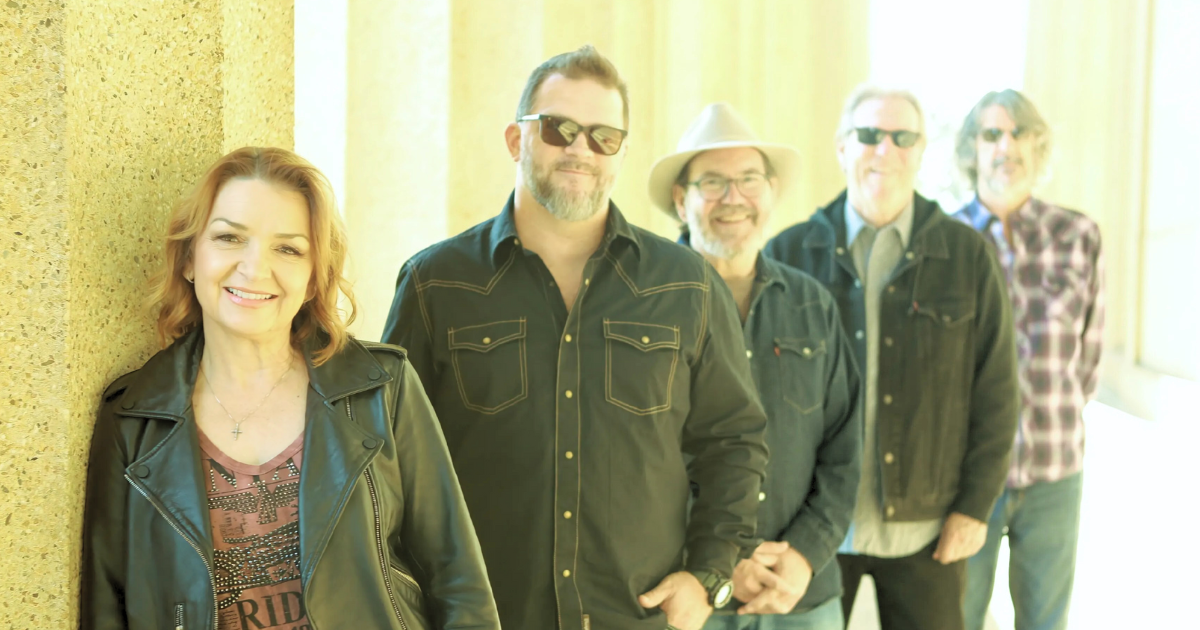
With four lead vocalists, seven studio albums, one GRAMMY Award to their name, and countless fans won over, The SteelDrivers have been one of this century’s most consistent and trailblazing bluegrass bands. That longevity can be credited to three things – the strength of their catalog of all-original songs, their collective precision picking, and the family atmosphere the band has cultivated together since forming in 2005.

Despite not joining forces until then, banjoist Richard Bailey says he’s known bandmates Tammy Rogers (fiddle) and Brent Truitt (mandolin from 2012 to present) since they were teenagers. His first run in with Mike Fleming (bass) and Mike Henderson (mandolin 2007 to 2011) came not long after during a college ski trip, with the group remaining close ever since. In the early 2000s Bailey relocated to Nashville from Memphis and reconnected with Henderson, regularly joining him at the Station Inn during Sunday night bluegrass jams and setting the foundation for what would eventually become The SteelDrivers. Then one day Henderson rang him up and was glowing about a young kid he’d just started writing with named Chris Stapleton who was wanting to play a little bluegrass.

“We eventually got together at his house and nobody knew Chris except for Henderson,” Bailey tells BGS. “We rehearsed a few bluegrass standards and then Chris began singing and Tammy, Mike, and I all looked at each other and went, ‘damn!’ I remember asking if the song he sang was an old Stanley Brothers tune and he said that it was actually one that he wrote.”

By that point, Henderson and Stapleton had already been penning songs together for a few years, with one of their most notable co-writes to that point being “Higher Than The Wall” from Patty Loveless on 2003’s On Your Way Home – a full seven years before The SteelDrivers eventually cut it on 2010’s Reckless. With their songwriting prowess already well established, the band opted to lean all the way in, keeping to the pattern of only recording songs crafted by them. Early on that mostly consisted of songs from Stapleton and Henderson, but has extended to all of the band in the years that followed, with Rogers writing the entirety of 2020’s Bad For You and the band’s newest member, Matt Dame, contributing songs for the first time ever on the group’s latest effort, Outrun.

“Starting with our very first record we determined that we were only going to play original music and we’ve never wavered from that,” explains Rogers. “It’s always been when you come to see The SteelDrivers that you’re not going to hear an updated version of ‘Little Cabin Home On The Hill’ or a modern country song done bluegrass style. There’s nothing wrong with any of that, but the whole point of the band originally was two songwriters coming together – Chris Stapleton and Mike Henderson – and everything else grew around that.”

That persistence of sticking with original material doesn’t only extend to The SteelDrivers recorded catalog, though. As Rogers points out, you’ll also be hard-pressed to hear any covers during the band’s live show. Per Bailey, the only such instance came during their televised Grand Ole Opry debut in 2008 when Charlie Daniels joined them on stage for a sing along to Flatt & Scruggs’ “I’m Gonna Sleep With One Eye Open.”

However, the band has regularly employed and worked with writers outside the group to craft songs centered around what Fleming describes as “uneasy listening music where bad things happen to good people.” This includes the likes of the venerable Verlon Thompson (“Booze And Cigarettes”), George Strait, Martina McBride, and Pam Tillis collaborator Leslie Satcher (“Outrun,” “Bad For You”); and German-born Thomm Jutz (“I Choose You,” “Cut You Down”), with whom Rogers has written over 140 songs (and counting).

“We’re fortunate to have always had wonderful songwriters in the band no matter who the membership was,” clarifies Fleming. “As it’s morphed through different CDs and personnel the strength of the songwriting has never wavered. Our goal has always been to serve the song, no matter who is singing it.”

Regardless of who’s been writing – or singing the songs for that matter – the band’s impeccable storytelling and bluesy grit has never faltered, even when lineup changes shook the band to its core. The first of those came in 2010 when Stapleton left to begin pursuing his solo career – a move that has resulted in him becoming not just one of the most well known country singers, but one of the most renowned vocalists of any genre globally. Henderson followed a year later, with Gary Nichols and Truitt stepping in to fill each of their shoes, respectively.

“I would’ve loved it had Stapleton never left the band – I mean who doesn’t want to be in a band with Chris Stapleton?” Rogers continues, “But when he left we had to make the decision of do we keep going or do we stop, because it wasn’t going to continue the same way that it had before. It wasn’t even a choice to me, though – I wanted to keep playing. To me that was better than no SteelDrivers at all.”

With two of their founding members gone, the band set out to prove they could still create bluegrass bangers and it didn’t take long for their efforts to pay off. Five years into their new look lineup The SteelDrivers won their first GRAMMY Award, taking home the honor for Best Bluegrass Album with The Muscle Shoals Recordings at the Academy’s 58th annual gathering in 2015. According to Rogers, the GRAMMY completely changed the band’s trajectory and continues to have a positive impact over a decade later.

“There’s been a lot of discussion in recent years about the validity of the GRAMMYs, but for us the recognition from the Academy has been a game changer,” states Rogers. “There’s a huge difference between being GRAMMY-nominated and a GRAMMY winner. For us, we were suddenly validated and were able to play bigger shows and venues that wouldn’t have considered or booked us prior to winning.”

In addition to validating their decision to keep pushing on, the band’s success post-Stapleton has also proven that they excel at finding new vocalists with their own distinct styles and vibrant storytelling to fill the void. First it was the funky, bluesy, and soulful sensibilities of Nichols. After him came the rock ‘n’ roll energy and piercing holler of Kelvin Damrell – who Rogers described as “the highest pitched singer of anyone we’ve had in the band.” He’s the only Kentuckian other than Stapleton to ever be in the band and sang lead for over three years – including on 2020’s Bad For You – prior to stepping aside in the summer of 2021.

It was then that the band recruited Matt Dame, solidifying the lineup they still have today. While each of the four singers have their own sounds, Rogers says there’s also plenty of characteristics that tie each of their eras together. “We figured out early on that it’s not about finding someone who sounds like Chris, but finding someone with a soulful, gravely, raspy and bluesy quality and letting them put their own spin on things,” says Rogers. “Aside from looking for those attributes we’ve never asked anyone to sing a certain way. Even though they sound similar, within two seconds of listening to a song I can tell whether it’s Kelvin, Chris, Gary, or Matt singing. They’re all distinct in my mind.”

Arguably even more impressive than the band’s success and consistency in sound through its different chapters has been their knack for continuing to make cutting edge bluegrass music with singers not steeped in bluegrass history with voices that generally “don’t fit” the traditional blueprint. From Stapleton on, the band has gravitated toward gritty blues and southern rock more than anything else. They’re comfortable at the confluence of electric and acoustic sounds, with one foot firmly planted in the past and the other stirring up dust and turning heads as it propels string band music into a completely new dimension.

“Chris Stapleton was not a bluegrass singer,” insists Fleming. “He was more of a blues singer, but the arrangements were always with bluegrass instruments. As a result, our propensity was to go toward playing bluegrass, but we never shied away from a song we thought we might not be able to play. For instance, ‘Midnight Train To Memphis’ from our first album was a bluesy rock ‘n’ roll number that Richard Bailey messed around on with on banjo one day. We have these bluegrass instruments, but we’re not confined to exclusively playing that way as long as we’re serving the song.”

Much like they’ve always served the song, The SteelDrivers’ fans have served them well in return, sticking by their side and continuing to buy tickets and albums through the years as the group has weathered changes in their lineup and sound. It’s led to an unprecedented run of success that Rogers jokingly compared to another bluegrass great.

“It’s almost the Ralph Stanley model,” she jokes. “After Carter [Stanley] passed away he had Larry Sparks, Roy Lee Centers, and Keith Whitley join him. It was a great line of singers that followed, all of whom embodied that Carter Stanley sound. We’ve also had several incredible vocalists with their own styles come through the band that we’ve been able to have success with by honing in on a singular sound together.”

The latest person the band brought in to hone in on that sound, Matt Dame, is a longtime Nashville songwriter and session player who joined in 2021 after a referral by friend and esteemed writer Gary Baker (John Michael Montgomery, Alabama, Lonestar). A couple rehearsals followed and by the end of July he was out on the road playing his first shows with the group. Having worked behind the scenes in the music industry for nearly as long as The SteelDrivers had been around, the move to performing in front of large crowds night in and night out was a big adjustment for Dame, but one he quickly found himself falling in love with.

“You do anything for 15 or 20 years and it becomes your comfort zone,” admits Dame. “I really enjoyed the session world, but it’s a lot different. Now I get a realtime reaction to what I do – there’s no stopping to go live again because you were flat. What I’ve loved most from our shows is the crowd singing the songs back to us, which can really carry you along.”

“There’s never a spot where you lose the audience or feel the need to kick into ‘Wagon Wheel’ to get everyone singing again, because the body of original work is so strong. It stands tall on its own,” he continues. “That speaks more to the power of the song than of any one vocalist, which says a lot because the band has had some incredible singers through the years. I’m just hanging on and trying to put my own spin on things.

“We’re all different, but one way we’re all the same is we all can deliver the songs in our own way that’s very believable. It sounds like somebody’s really living what they’re singing, not just going through the motions.” Even having been on the outside looking in for so long, Dame says that it’s hard to ignore the formidable nature of The SteelDrivers’ songwriting catalog, one that he’s thrilled to finally be a part of on Outrun – the band’s first project on the famed Sun Records (and also the label’s first bluegrass album). The record is his second with the band following 2023’s gospel project, Tougher Than Nails, that saw him only singing and playing guitar. Now, on his second go-round, he integrates himself even further, helping to write the songs “On My Way,” “Emma Lee,” and “Rosanna.”

“It was a really cool feather in my hat to be able to write some songs for this album and getting to do it on Sun Records is like the icing on the cake,” he exclaims. “I’m a huge Elvis fan and growing up in Arkansas listened to Johnny Cash all the time, so my eyes lit up when I heard we’d be their first bluegrass album ever.”

In addition to featuring the co-writes from Dame, Outrun also sees the band paying tribute to Henderson, who died unexpectedly from a pulmonary embolism in September 2023 – mere weeks after the release of Tougher Than Nails – with cuts of his songs “Prisoner’s Tears” and “Painted And Poison.” Although he hadn’t played with The SteelDrivers since 2011, his loss shook the band, which Rogers calls him the architect of, along with the entire bluegrass and country worlds.

“We knew we wanted to honor him in some way, which is what kickstarted talks for this new record and led to our shortest cycle between records yet,” confides Rogers. “In addition to recording two of his songs on it we’re also planning to have a slideshow commemorating him and 20 years of the band on some of our tour dates later this year.”

It’s tough enough to survive as a band for two decades when everything is going right, so it speaks volumes for The SteelDrivers making it as long as they have with all the obstacles that have gotten in their way. At the same time, the group’s unrivaled level of talent – both on their respective instruments and with their insatiable songwriting – have more than cemented their place in the bluegrass and American roots music zeitgeist for generations to come. For Dame, it’s a legacy that’s equally intimidating and exciting to be a part of.

“Professionally I’ve grown, because I’m doing something that’s new to me, but also because I’m doing it surrounded by a band where everybody does their parts with excellence,” he reflects. “If you don’t carry your weight it’s really going to be noticeable, which has pushed me to be better with everything that I bring to the group.”


Photo Credit: Glenn Rose

Bluegrass Memoirs: The Earl Scruggs Revue Beginnings

Nearly 50 years after the Earl Scruggs Revue concert I saw at the University of Maine, an internet search led me to Jaime Michaels of the opening act, Beckett. He still has vivid memories from that night in Orono. I sent him a copy of my report. He wrote back, saying:

I have no idea about the song titles but it was nice that my ’63 Gibson J50 got a mention … I still have it.

He has vivid memories of his time backstage with Scruggs.

… at the very end of Earl’s set as he walked back out for his 3rd or 4th encore he stopped and said to me “If I’d just play the darned thing right, I wouldn’t have to keep going back out …”

A little later as we were all loading out Earl came up to us and said, “Do you guys want to see my new bus?” He took us for the grand tour. I was still pretty young and had never seen a real tour bus before.

He was such a sweet guy with this humble self-effacing humor.

Earl was proud of that bus, I reckon; he’d named an instrumental after it.

When I saw them in 1975, the Earl Scruggs Revue was a polished Nashville rock act that had been together since 1969. Debuting at a folk festival that May, not long after Scruggs split from Lester Flatt, it featured Earl’s sons.

The two oldest, Gary (then 20) and Randy (then 16) were already Nashville recording studio veterans. They’d been in the Columbia studios multiple times (Gary 11 sessions, Randy 15 sessions) since May 1967, helping on the last three albums Lester and Earl made before their split (Changin’ Times, The Story of Bonnie & Clyde, Nashville Airplane).

Also new to Flatt & Scruggs, in the fall of 1967, was Columbia producer Bob Johnston, then 35. Concerned about declining record sales, Columbia had replaced Frank Jones and Don Law, highly regarded Nashville veterans who’d been producing F&S since the fifties, with Johnston, who was producing Bob Dylan.

Dylan had stunned the folk world when he went electric at the Newport Folk Festival in 1965. He first recorded in Nashville in 1966, completing Blonde On Blonde there using mainly Nashville studio musicians. In the next two years he returned, making John Wesley Harding and Nashville Skyline.

Flatt & Scruggs’ final albums reflected their move to Johnston, a leading producer at forefront of Columbia’s move from acoustic folk into electric folk rock.

Later, when asked about what led to the split with Earl, Flatt spoke of his difficulty in singing the band’s new songs. “Johnston,” He said, “…also cut Bob Dylan and we would record what he would come up with, regardless of whether I liked it or not. I can’t sing Bob Dylan stuff. I mean, Columbia has got Bob Dylan, why did they want me?”

Of the final three F&S albums, both Changin’ Times and Nashville Airplane had folk-rock repertoires. At the very first session for Changin’ Times, four folk-rock favorites were cut, three Dylan hits, one by Ian Tyson: “Don’t Think Twice,” “Four Strong Winds,” “Blowin’ In the Wind,” and “It Ain’t Me Babe.” Here, Earl’s boys Gary (singing) and Randy (lead guitar) were together for the first time in the studio with Flatt & Scruggs and Johnston.

Imagine the dismay of Lester (who, soon after splitting with Earl, would record “I Can’t Tell The Boys from the Girls“) at this session! It seemed as if the young longhairs with their strange new music were taking over.

Released in January 1968, the back cover of Changin’ Times was filled with the image of a rock poster. Unsigned notes beside it read:

With their smash appearance at the Avalon Ballroom (a West Coast temple of rock and light-shows) when they turned on the whole of San Francisco, there are no new worlds left for Flatt and Scruggs to conquer. Flatt and Scruggs are for everyone.

One of the album’s 11 tracks was a remake of Earl’s “Foggy Mountain Breakdown,” which had just become a hit through the soundtrack of Bonnie and Clyde. Five tracks were by Dylan; the album closed with Woody Guthrie’s “This Land is Your Land.”

Gary and Randy Scruggs personified the Lovin’ Spoonful’s “Nashville Cats,” but also in the studio for that album were other, older, Nashville cats – Charlie Daniels, Grady Martin, Bob Moore, Charlie McCoy and other A-team studio musicians. Randy and Gary would come to know these men well as they built life-long careers in the Nashville studios. These careers were forged during their years (1969-82) with the Earl Scruggs Revue.

Fortunately, the Revue’s earliest days were chronicled in a television documentary. David Hoffman’s ninety-minute NET TV special, Earl Scruggs: The Bluegrass Legend – Family and Friends, was recorded in 1969-70. It has been issued on DVD several times since then and can be seen on YouTube.

It’s fascinating to watch Hoffman’s documentation of Scruggs as he narrates his past, voices his present, and sets out his future directions. Along the way, Hoffman captures Earl’s music-making with a wide variety of performers and audiences. By the end of those 90 minutes, Scruggs’ cultural and political perspectives are manifest; likewise the breadth of his musical tastes.

Hoffman filmed in New York, North Carolina, Nashville, Washington, D.C., and California. The documentary opens with a five-minute jam session: Earl, Gary, and Randy are in upstate New York visiting Bob Dylan at the home of illustrator and sculptor Tom Allen, who had done many Flatt & Scruggs album covers. After Bob sings “East Virginia Blues,” Earl asks him if he’d like to hear their version of “Nashville Skyline Rag,” the instrumental title track from Dylan’s most recent album. I don’t know when this jam took place, but in mid-August of 1969, when Earl was in the studio with Lester to record Final Fling: One Last Time (Just For Kicks), an album they’d agreed to make after their split, the first track they recorded was “Nashville Skyline Rag.”

The tune became a fixture in the Revue concert repertoire, used, for example, as the show opener at Orono in 1975 and in 1977 when they played PBS’s Austin City Limits. Earl had recorded it again in 1970 for his first solo album, Nashville’s Rock.

After the jam with Dylan, the film’s next twenty minutes take the viewer with Earl and the boys to his North Carolina home with visits to the Morris Brothers (the first group he’d worked with), Doc Watson, and Scruggs family and friends in the Flint Hill community. It closes with a shot in which Earl speaks of how he’d taken the banjo to different types of music: “Now it’s easy to blend with today’s music. It works very well. I’m really happy. I had dreams of this.”

The next five minutes come from a jam session with the Byrds at a ranch outside Nashville. It begins with them doing “Nothing To It” (the title Earl used for “I Don’t Love Nobody,” when he recorded this tune with Doc Watson) followed by “You Ain’t Goin’ Nowhere,” a Dylan tune that was on the Byrds’ Sweetheart of the Rodeo, the 1968 album that is often thought of as a foundational statement of country rock.

It’s followed by four minutes with electronic music pioneer and composer Gil Trythall, who plays along on Moog synthesizer with Earl and Randy doing “Foggy Mountain Breakdown.”

Then comes an interview with Charlie Daniels, at the time an associate of Bob Johnston, soon to become one of country rock’s leading figures. The focus shifts as he, Earl, and the Revue attend the second Moratorium to End the War in Vietnam, held in Washington, D.C. on November 15, 1969 – generally considered to be the largest demonstration ever in Washington. After performing “Foggy Mountain Breakdown” there, Earl speaks of his opposition to the war.

Back in Nashville, Daniels is co-producing (with Neil Wilburn) All The Way Home, the first Scruggs Brothers album, for the New England folk and classical label Vanguard. The film follows them into a Nashville studio.

Earl is also working on an album, his first post F&S solo project, Nashville’s Rock. After listening to a demo of one track at the Scruggs home, we see an old friend of Earl’s, Dr. Nat Winston, give testimony to his character, and then Earl demonstrates how he creates his music, explaining that he’s self-taught. Next, we meet Earl’s wife Louise, who’s worked as his manager for fifteen years. She points out that Earl was immersed in the music from age five and that their son Randy has had the same experience.

A shift of focus to Randy follows, as we see him picking “Black Mountain Rag” (a guitar performance reflecting the Scruggs affinity for Doc Watson), and then go with him to class at Madison High and have a chat with his principal, who talks about Randy’s “skipping school.”

After hearing from Louise about how she met Earl at the Grand Ole Opry, we drive on a spring afternoon (in 1970) with the Scruggs family from home to the Ryman Auditorium in downtown Nashville. Inside, Earl, with Randy, joins Bill Monroe and the Blue Grass Boys in a backstage dressing room for a jam and then we witness the Revue’s debut on the Opry stage.

In the center is Earl on banjo, flanked by Randy on guitar and Gary on bass and vocals. Also in the band is Jody Maphis, a contemporary of the Scruggs brothers and son of country stars Joe and Rose Maphis, on guitar. He would subsequently move to drums and remain in the Revue for about a decade. On piano and tambourine is Leah Jane Berinati. Except for Earl, this was a group of kids, dressed like young flower power types. They perform two very conservative old traditional songs, “Nine Pound Hammer” and “Reuben,” to an enthusiastically appreciative audience.

The last twenty-five minutes of the documentary follow the Scruggs family as they travel, early in 1970, to California’s Bay Area for a visit and a jam in Joan Baez’s home. Joan, with her young newborn son Gabriel nearby, chats with Earl about their 1959 meeting at the first Newport Folk Festival. She sings two songs (both are Dylan compositions) and then, while photos are shown of her husband – Gabriel’s father David Harris, whose Vietnam protests had led to federal imprisonment for draft refusal – she sings “If I Was A Carpenter” with Gary. A heady mix of politics and music.

The film closes with Earl back in North Carolina talking again about his musical aspirations:

Keep up with the times and make as much progress with the banjo along with other instruments as long as it blends in as possible.

As the credits roll, we hear Earl playing “Folsom Prison Blues” using his tuners.

This documentary, aired at the height of the Vietnam war, included a forthright statement of opposition from a leading figure in Nashville, where there was considerable support for the war. The documentary was also a carefully crafted showcase of the Revue’s folk/country rock repertoire, musical style, and cultural connections.

The albums that Earl and his two oldest sons were working on while Hoffman was making the documentary released before its broadcast and both contain songs and tunes that appear in the film. A couple of examples: “Train Number Forty-Five” (F&S’s radio theme in the early days), which is heard in Earl and Randy’s backstage jam with Bill Monroe, is also heard on Earl’s album Nashville’s Rock. Similarly, Randy’s version of “Black Mountain Rag,” an acoustic guitar solo in the documentary, is heard on the Scruggs Brothers’ album, All The Way Home, in an extended version with not only acoustic and electric guitar breaks but also a banjo break in his father’s style.

In the next Bluegrass Memoir we’ll see how, by 1971 and 1972 when this documentary was broadcast, the Earl Scruggs Revue was appearing on a series of albums that realized Earl’s aspirations and helped launch his touring.

(Editor’s Note: Read our prior Bluegrass Memoir on the Earl Scruggs Revue here.)


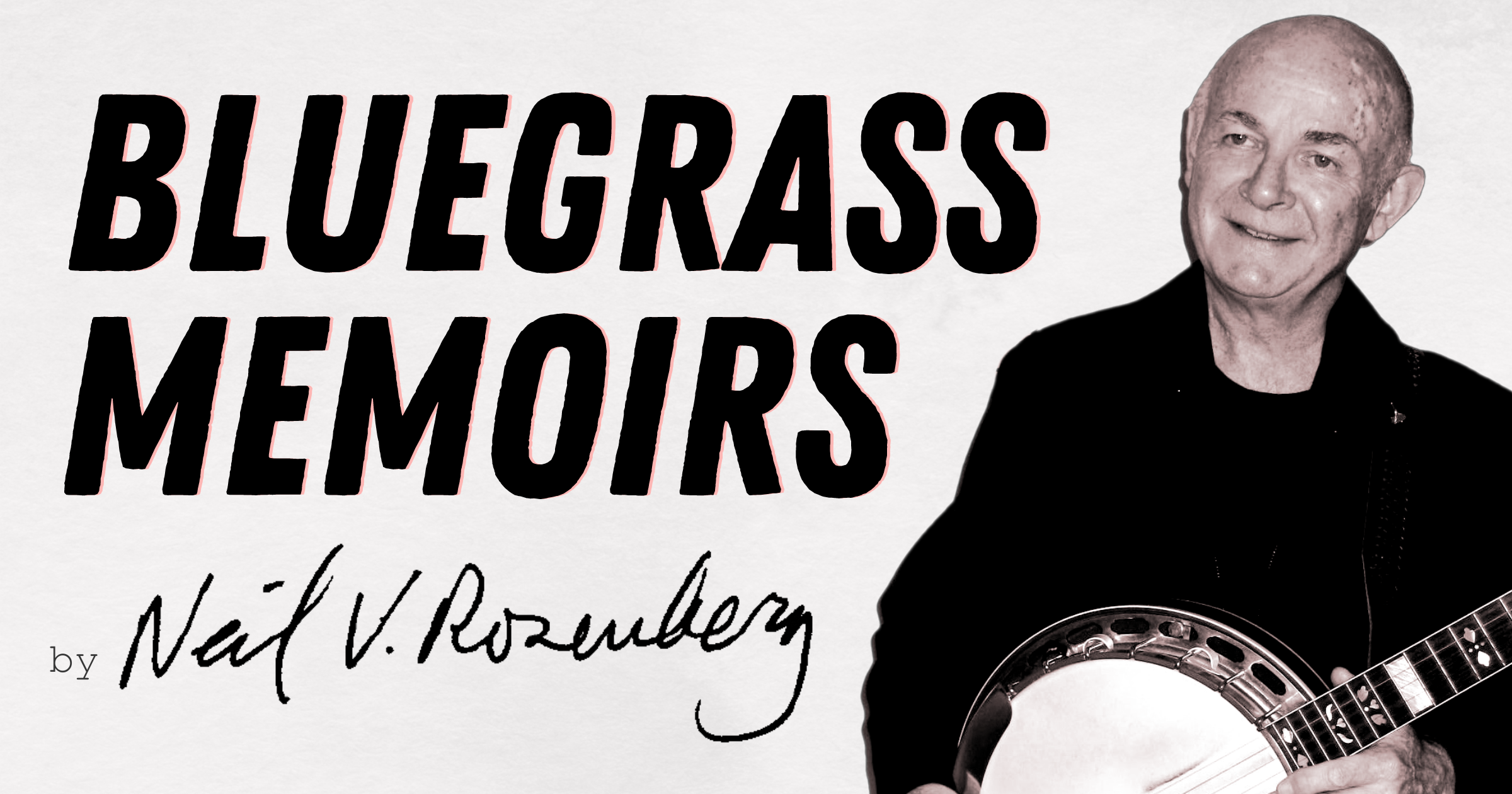
Neil V. Rosenberg is an author, scholar, historian, banjo player, Bluegrass Music Hall of Fame inductee, and co-chair of the IBMA Foundation’s Arnold Shultz Fund.

Photo of Rosenberg by Terri Thomson Rosenberg. 

Edited by Justin Hiltner.

Carolina Calling: the Wilmington Effect

From Blue Velvet to One Tree Hill, scores of movies & TV shows have been filmed in & around Wilmington, North Carolina. Perhaps the best-known is Dawson’s Creek, the popular late-’90s coming-of-age drama series. While the show tried to tackle progressive storylines, its stark lack of diversity made Dawson’s Creek frequently cited as the whitest show ever. Nearly two decades after it went off the air, tourists still come to Wilmington in search of the show’s landmarks.

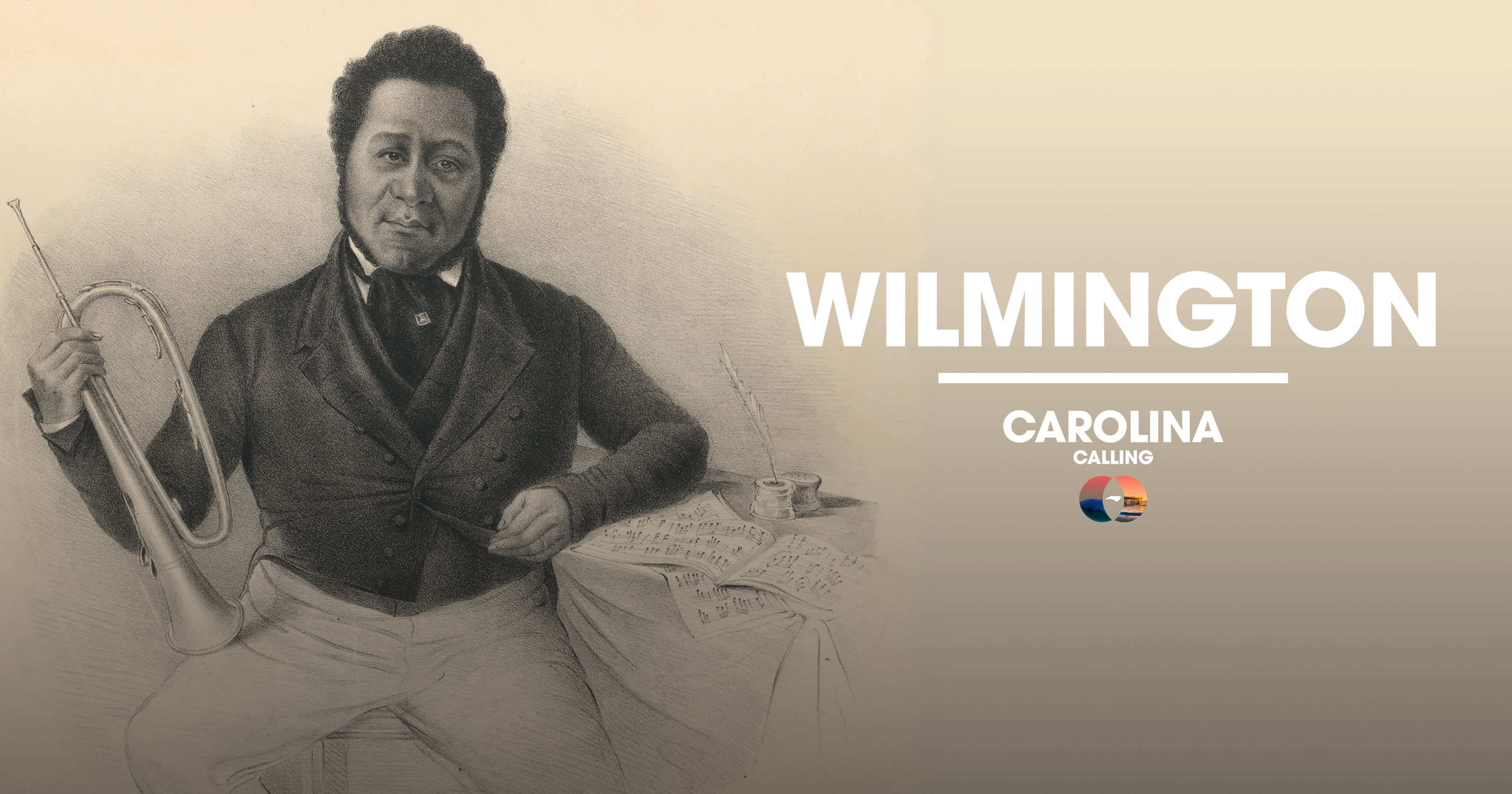
But Wilmington has a more difficult, less visible side to its history, politically as well as culturally, going back to the 1700s. Long before North Carolina became one of America’s original 13 colonies, there were thriving Indigenous communities throughout the region. There was also a time when Wilmington’s most famous musician was a man of color, Frank Johnson: fiddler, composer, and bandleader – and one of the biggest stars in American music in the years before the Civil War.

LISTEN: APPLE • SPOTIFY • STITCHERAMAZON • YOUTUBEMP3
 

During Reconstruction, Wilmington was an unusually progressive, forward-thinking town. In contrast to the state of things elsewhere in the South, Wilmington elected a racially diverse local government, led by both whites and freed Black people.

That came to an abrupt end in 1898 with a white-supremacist coup, a bloody rampage that left numerous people of color dead and Black-owned businesses destroyed. Those the mob didn’t kill, they chased out of town. That left Wilmington with a mostly white population, an all-white local government – and a whitewashed version of the city’s history in which Black people’s contributions were erased from the official story.

This might seem like ancient history, but it’s not. Wilmington’s most famous native-born musician is probably Charlie Daniels, the country-music star who died in the summer of 2020. Daniels was born in 1936 – less than four decades after that 1898 uprising. The real story of the 1898 coup is finally coming to light in recent years, thanks to works like the 2020 Pulitzer-winning book Wilmington’s Lie. But it’s still not widely known.

In this episode of Carolina Calling, we explore Wilmington – a town that keeps its secrets even as they’re hidden in plain sight – through the life and career of Frank Johnson, whose his story and stardom were all but lost to time – or rather, to the erasing effects of the 1898 massacre on Wilmington’s history.

This episode features John Jeremiah Sullivan, a writer and historian who lives in Wilmington and has written extensively about the city’s music and history for The New Yorker and New York Times magazine, as well as Grammy winner Rhiannon Giddens, and musicians Charly Lowry and Lakota John.

Subscribe to Carolina Calling on any and all podcast platforms to follow along as we journey across the Old North State, visiting towns like Durham, Asheville, Shelby, Greensboro, and more.


Music featured in this episode:

Paula Cole – “I Don’t Want To Wait”
“Saraz Handpan C# Minor”
Charlie Daniels – “Long Haired Country Boy”
Traditional – “The Lumbee Song”
Lakota John – “She Caught The Katy”
Ranky Tanky – “Knee Bone”
Lauchlin Shaw, Glenn Glass & Fred Olson – “Twinkle Little Star”
Marvin Gaster, Rich Hartness, Beth Hartness & Harry Gaster – “Rye Straw”
Evelyn Shaw, Lauchlin Shaw, A.C. Overton & Wayne Martin – “Money, Marbles and Chalk”
Marvin Gaster, Rich Hartness, Beth Hartness & Harry Gaster – “Chickens Growing at Midnight”
Rhiannon Giddens w/ Franceso Turrisi – “Avalon”
Rhiannon Giddens w/ Franceso Turrisi – “There Is No Other”
Joe Thompson & Odell Thompson – “Donna Got a Rambling Mind”
The Showmen – “39-23-46”


BGS is proud to produce Carolina Calling in partnership with Come Hear NC, a campaign from the North Carolina Department of Natural & Cultural Resources designed to celebrate North Carolinians’ contribution to the canon of American music.

Portrait of Frank Johnson via the National Portrait Gallery

Carolina Calling, Shelby: Local Legends Breathe New Life Into Small Town

The image of bluegrass is mountain music played and heard at high altitudes and towns like Deep Gap and remote mountain hollers across the Appalachians. But the earliest form of the music originated at lower elevations, in textile towns across the North Carolina Piedmont. As far back as the 1920s, old-time string bands like Charlie Poole’s North Carolina Ramblers were playing an early form of the music in textile towns, like Gastonia, Spray, and Shelby – in Cleveland County west of Charlotte.

LISTEN: APPLE • SPOTIFY • STITCHERAMAZON • YOUTUBEMP3
 

In this second episode of Carolina Calling, a podcast exploring the history of North Carolina through its music and the musicians who made it, we visit the small town of Shelby: a seemingly quiet place, like most small Southern towns one might pass by in their travels. Until you see the signs for the likes of the Don Gibson Theatre and the Earl Scruggs Center, you wouldn’t guess that it was the town that raised two of the most influential musicians and songwriters in bluegrass and country music: Earl Scruggs, one of the most important musicians in the birth of bluegrass, whose banjo playing was so innovative that it still bears his name, “Scruggs style,” and Don Gibson, one of the greatest songwriters in the pop & country pantheon, who wrote “I Can’t Stop Loving You,” “Sweet Dreams,” and other songs you know by heart. For both Don Gibson and Earl Scruggs, Shelby is where it all began.

Subscribe to Carolina Calling on any and all podcast platforms to follow along as we journey across the Old North State, visiting towns like Greensboro, Durham, Wilmington, Asheville, and more.


Music featured in this episode:

Charlie Poole & The North Carolina Ramblers – “Take a Drink On Me”
Flatt & Scruggs – “Ground Speed”
Don Gibson – “I Can’t Stop Loving You”
Andrew Marlin – “Erie Fiddler” (Carolina Calling Theme)
Hedy West – “Cotton Mill Girl”
Blind Boy Fuller – “Rag Mama, Rag”
Don Gibson – “Sea Of Heartbreak”
Patsy Cline – “Sweet Dreams ”
Ray Charles – “I Can’t Stop Loving You”
Ronnie Milsap – “(I’d Be) A Legend In My Time”
Elvis Presley – “Crying In The Chapel”
Hank Snow – “Oh Lonesome Me”
Don Gibson – “Sweet Dreams”
Don Gibson – “Oh Lonesome Me”
Chet Atkins – “Oh Lonesome Me”
Johnny Cash – “Oh, Lonesome Me”
The Everly Brothers – “Oh Lonesome Me”
Neil Young – “Oh Lonesome Me”
Flatt & Scruggs – “Foggy Mountain Breakdown”
Bill Preston – “Holy, Holy, Holy”
Flat & Scruggs – “We’ll Meet Again Sweetheart”
Snuffy Jenkins – “Careless Love”
Bill Monroe – “Uncle Pen”
Bill Monroe – “It’s Mighty Dark To Travel”
The Earl Scruggs Revue – “I Shall Be Released”
The Band – “I Shall Be Released”
Nitty Gritty Dirt Band – “Will The Circle Be Unbroken”
The Country Gentlemen – “Fox On The Run”
Sonny Terry – “Whoopin’ The Blues”
Sonny Terry & Brownie McGee – “Born With The Blues (Live)”
Nina Simone – “I Wish I Knew How It Would Feel To Be Free”


BGS is proud to produce Carolina Calling in partnership with Come Hear NC, a campaign from the North Carolina Department of Natural & Cultural Resources designed to celebrate North Carolinians’ contribution to the canon of American music.

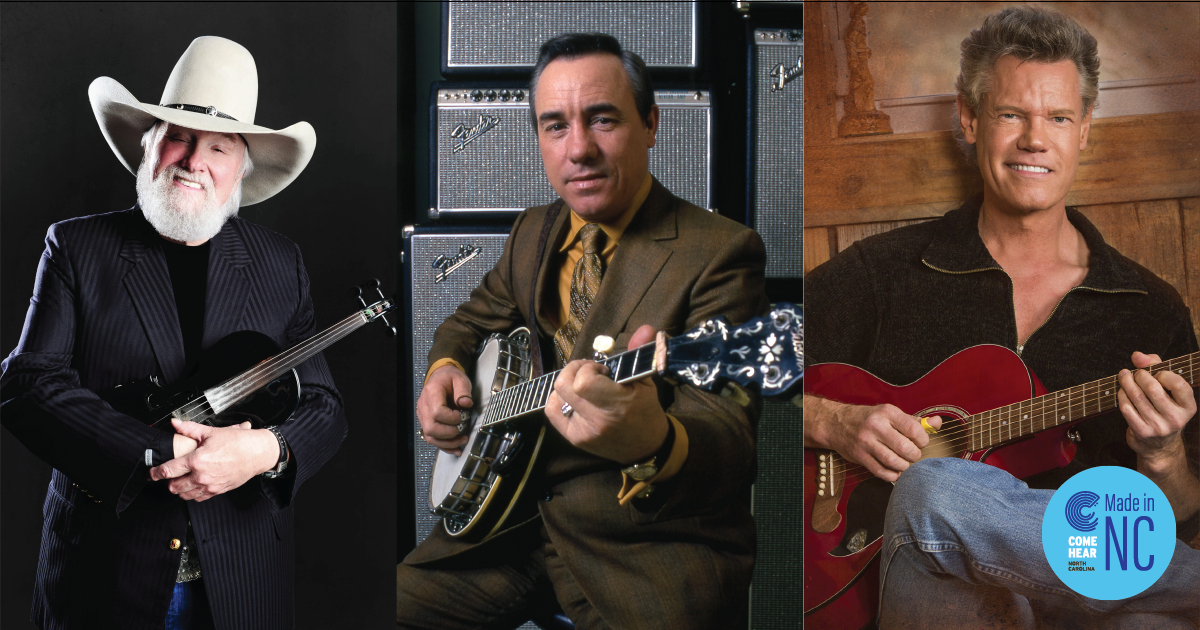
Born in North Carolina, These 10 Stars Shaped Classic Country Music

When it comes to bluegrass and classic country music, North Carolina offers a talent pool that rivals any other state. It’s also red hot on the modern country scene, with stars like Eric Church, Luke Combs, and Scotty McCreery hailing from the Tarheel State. Some would say these contemporary musicians are following in the footsteps of these 10 North Carolina-born artists who made a mark in country music history.

Earl Scruggs
b. 1924 in Flint Hill, N.C.

Without the banjo innovations of Earl Scruggs in Bill Monroe’s band, would we even have bluegrass? “The Ballad of Jed Clampett” and “Foggy Mountain Breakdown” are obvious Flatt & Scruggs classics, though his catalog runs deep — and his creativity blossomed further in the ’70s with the Earl Scruggs Revue. The city of Shelby has renovated its courthouse into the interactive Earl Scruggs Center.


Don Gibson
b. 1928 in Shelby, N.C.

This soft-spoken artist is arguably country music’s first triple threat — a commanding presence as a vocalist, songwriter and guitarist. Born poor, he persisted through every bad break until finally exploding in 1958 with “Oh Lonesome Me” and an Opry membership. He remained active on the charts for two more decades. Shelby has honored him, as well, with a live music venue, the Don Gibson Theater.


Fred Foster
b. 1931 in Rutherford County, N.C.

Behind the scenes, it’s hard to fathom just how well-connected Fred Foster was. He founded Monument Records in 1958 and produced all of Roy Orbison’s early hits on that label, gave Dolly Parton a publishing and label deal when she first moved to town, and landed a co-writing credit on Kris Kristofferson’s iconic “Me and Bobby McGee.” He was inducted into the Country Music Hall of Fame in 2016.


Stonewall Jackson
b. 1932 in Emerson, N.C.

After an impressive audition but no track record, Stonewall Jackson was invited to join the Grand Ole Opry cast in 1956. For the next 10 years, he charged the country chart with “Life to Go” (written by George Jones), “Waterloo” (a five-week No. 1 in 1959), and “B.J. the DJ” (No. 1 in 1964). He sued Opry for age discrimination in 2006, then after a settlement, resumed appearances on the long-running show.


George Hamilton IV
b. 1937 in Winston-Salem, N.C.

From North Carolina to the world, George Hamilton IV may be the top international ambassador of his generation. His stardom began as a teenager with an unexpected million-selling pop hit, 1956’s “A Rose and a Baby Ruth.” He signed to RCA and the Opry in 1960, setting the foundation for a decade of radio success with “Abilene” (a four-week No. 1 classic), “Break My Mind,” “Early Morning Rain,” and more.


Del Reeves
b. 1932 in Sparta, N.C.

A 1965 novelty smash, “Girl on the Billboard” finally established Del Reeves as a likable country star (after four other record deals didn’t pan out). He’d go on to issue Top 10 singles through 1971, often singing for truckers on tracks like “The Belles of Southern Bell” and “Looking at the World Through a Windshield.” Known for his big personality, he joined the Grand Ole Opry cast in 1966.


Donna Fargo
b. 1945 in Mount Airy, N.C.

A leading artist of the 1970s, Donna Fargo won a Grammy, an ACM Award and a CMA Award for her 1972 breakout hit, “Happiest Girl in the Whole USA.” The feel-good release reached No. 1, as did her next three singles — and she wrote them all. Fargo taught high school English courses before exploring songwriting. By 1979, she’d notched 16 Top 10 country hits and landed her own syndicated variety show.


Ronnie Milsap
b. 1943 in Robbinsville, N.C.

Easily one of the most identifiable voices in country music, Ronnie Milsap dazzled listeners with charisma, musical talent, and an impeccable ear for hearing a hit. Inspired by R&B and country music alike, the entertainer shared his soul with fans for decades, with an astonishing 49 Top 10 country singles on RCA. One of the best, “Smoky Mountain Rain,” topped the chart in December 1980.


Charlie Daniels
b. 1936 in Wilmington, N.C.

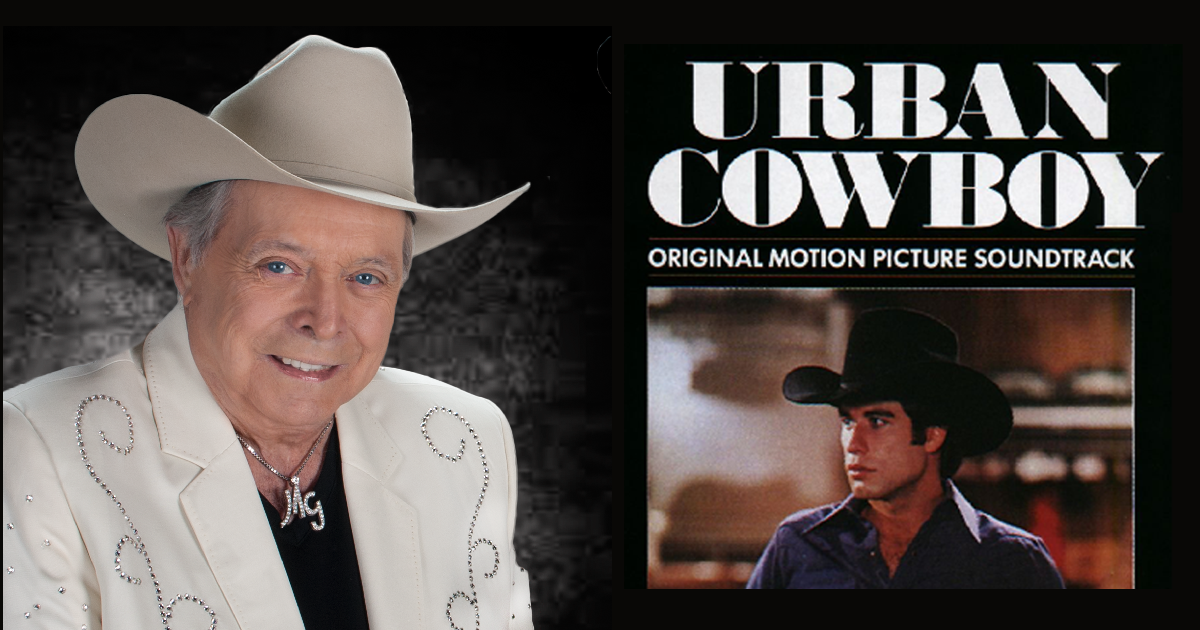
Four decades later, Charlie Daniels Band is synonymous with “The Devil Went Down to Georgia.” Arguably the most famous fiddling song in the country music canon, the single won a Grammy and led to a guest spot in the era-defining film, Urban Cowboy. A member of the Opry and the Country Music Hall of Fame, Daniels remained a highly visible entertainer, especially eager to support causes for veterans and children.


Randy Travis
b. 1959 in Marshville, N.C.

In the mid ’80s, Randy Travis was transformed from a dish-washing hopeful to a country music sensation. Plucked from the kitchen of the Nashville Palace onto the TNN airwaves, Travis was then reportedly rejected by every label in Nashville until finally signing to Warner Bros. And then “1982” changed everything. His resonant voice, though largely silenced now, will live on forever and ever, amen.


Photo of Charlie Daniels courtesy of Charlie Daniels Band, Inc.; Photo of Earl Scruggs by Al Clayton, provided by Sony Music; Photo of Randy Travis provided by 117 Entertainment Group.

Discover more about the North Carolina music scene and #NCMusicMonth through Come Hear North Carolina’s website and on Instagram at @comehearnc.

’70s Music Meets the White House in ‘Jimmy Carter: Rock & Roll President’

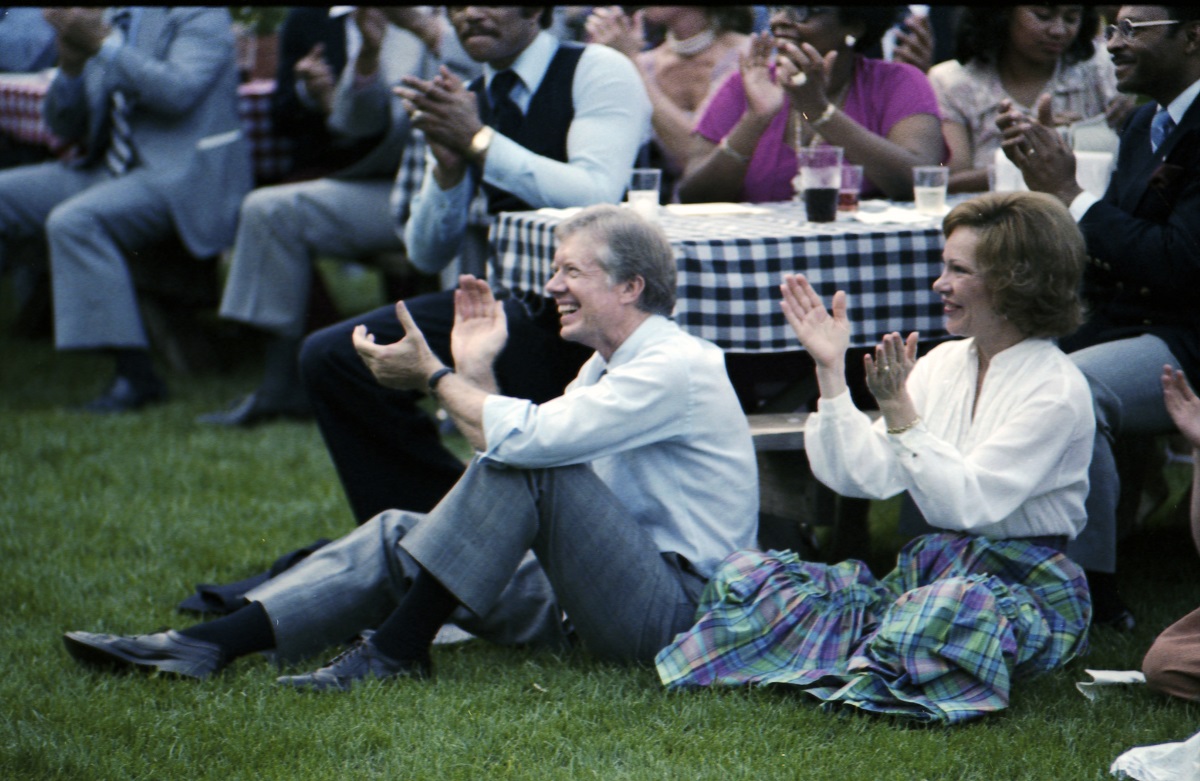
In 1978, during a concert on the White House lawn, legendary jazz trumpeter Dizzy Gillespie put the leader of the free world on the spot. President Jimmy Carter, formerly a peanut farmer in his home state of Georgia, had requested “Salt Peanuts,” a rambunctious tune that had been a hit for Gillespie back in the 1940s, but the musician said he’d only play it if Carter himself sang the lyrics. That’s not a hard job: There are only two words, “Salt peanuts,” repeated over and over, in a fast, staccato exclamation.

Carter gamely obliged and took his place onstage among the jazz greats, wearing not an official suit but a more casual outfit of unbelted slacks and a shirt-sleeve shirt. No musician himself, the President gave it his best shot, but could barely keep up with the veteran players. The song ended in laughter, but it was no joke. Instead, it revealed not only Carter’s sense of humor about himself—a rarity among politicians—but also his abiding love of music. Even as he’s flubbing such a basic vocal, he looks like he’s having the time of his life up there.

That impromptu performance is a key scene in the persuasive and often joyous new documentary Jimmy Carter: Rock & Roll President, which redeems the 39th President by examining his accomplishments in office through his relationship to music. The words stagflation and malaise are never mentioned, nor is there any appearance by an angry rabbit — all issues that have long obscured Carter’s legacy. A naval submarine officer turned politician who farmed peanuts on the side, he served in the Georgia State Senate through the 1960s before running successfully for governor in 1970.

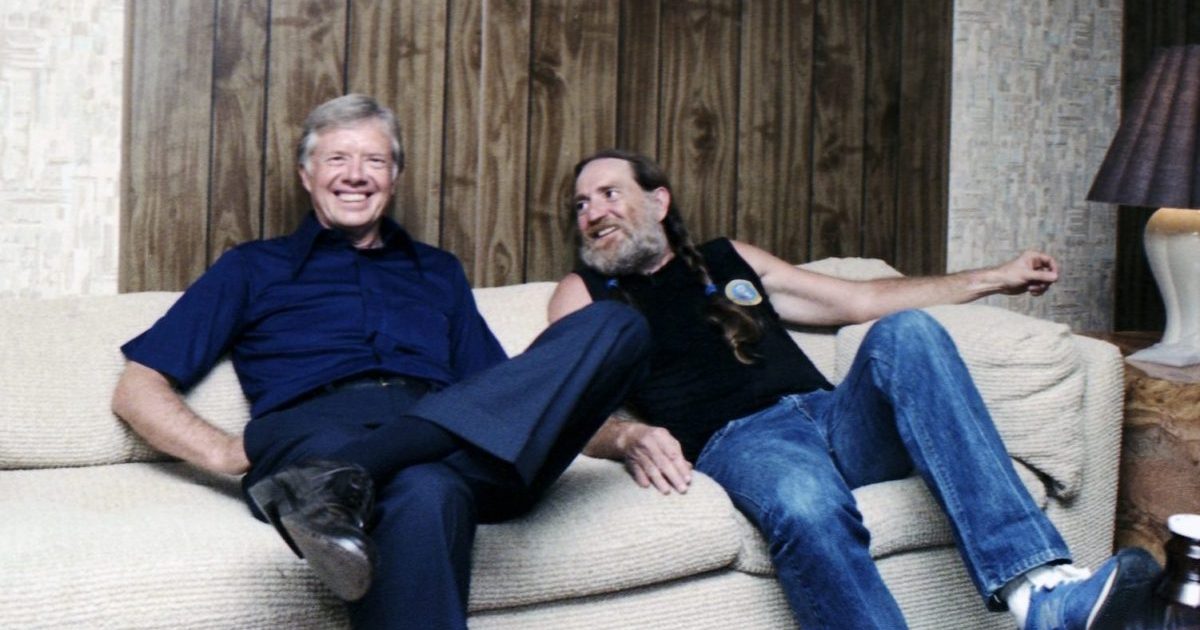
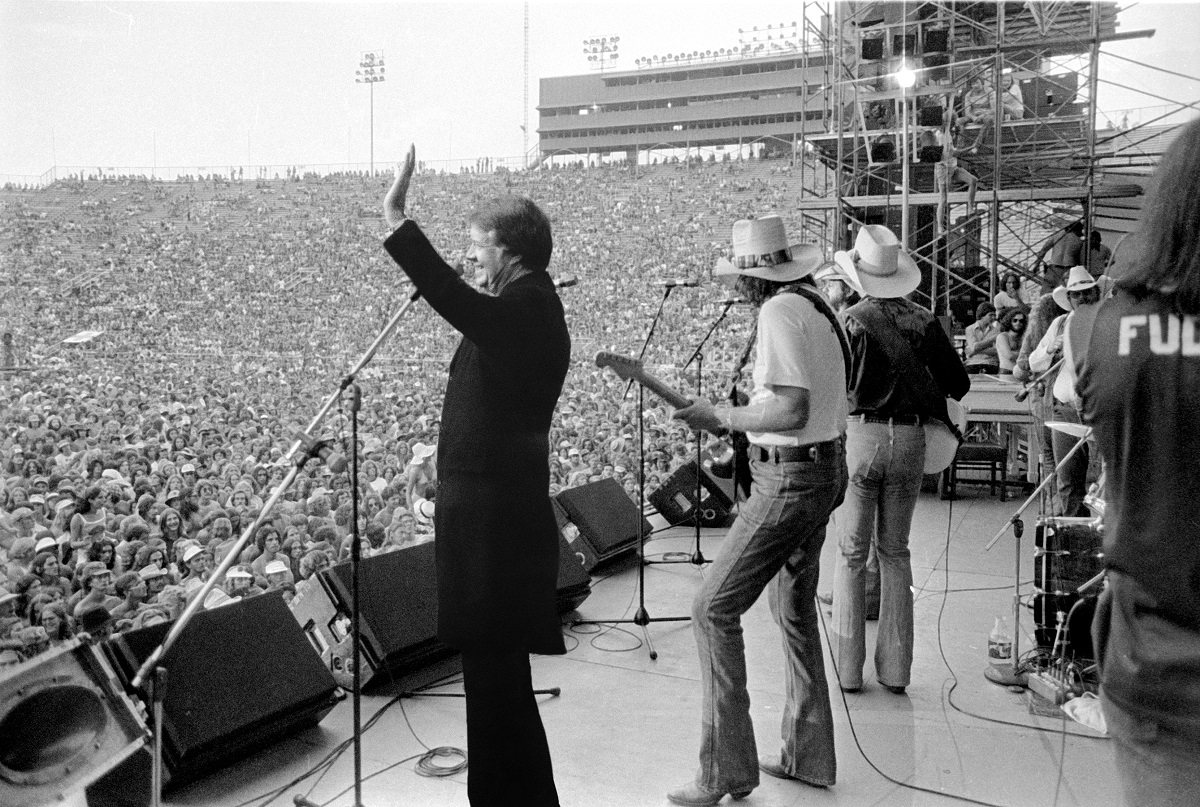
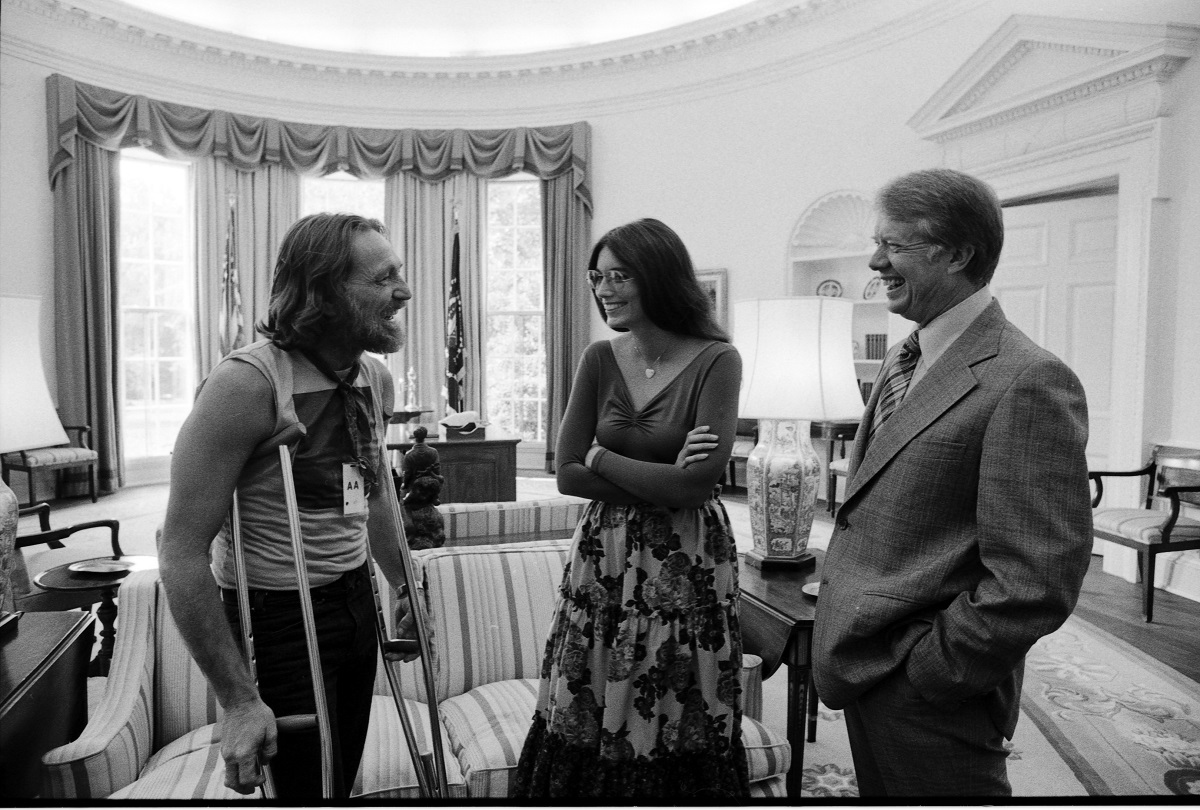
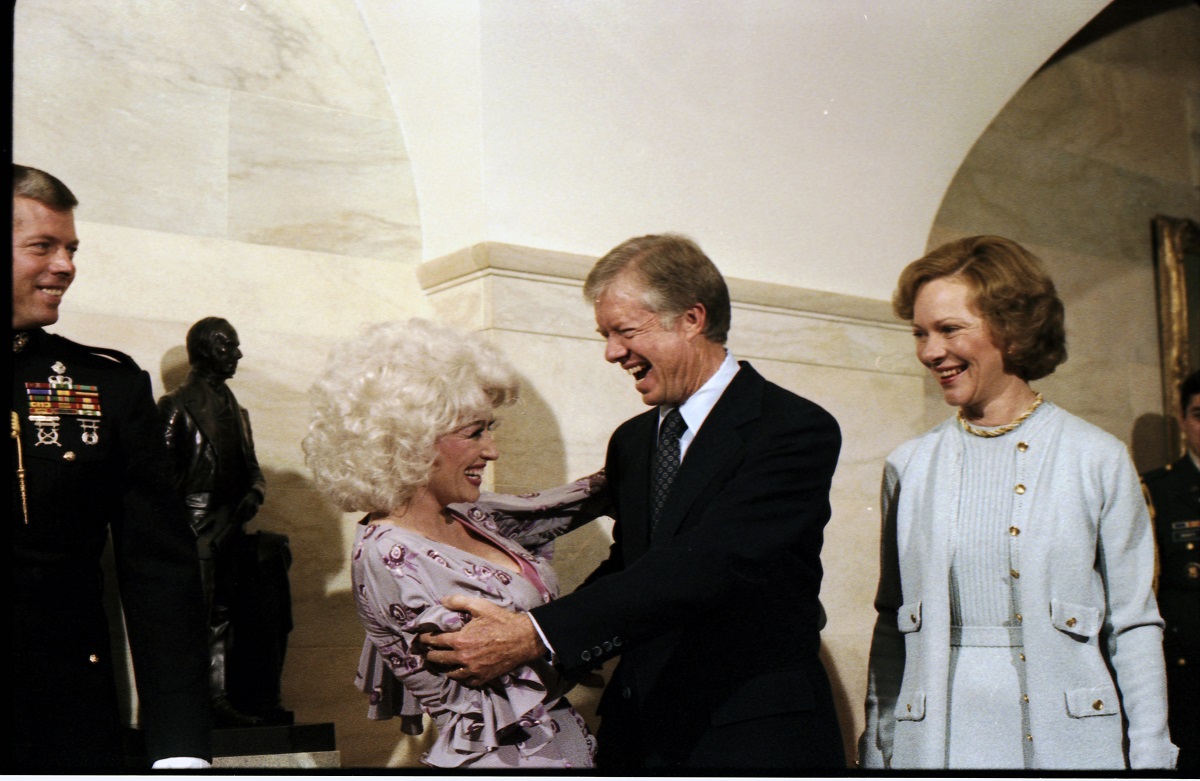
Six years later he ran for president, right at the heyday of southern rock and outlaw country, when the entire nation seemed to be fascinated by the South. Artists like Gregg Allman, Ronnie Van Zant, and Willie Nelson saw in Carter more than a little of themselves: Southern men who didn’t fit the old hick stereotype, who might have called themselves rednecks, but rejected the hostilities and prejudices and buzzcuts associated with that figure.

And Carter was a real fan of the music they were making at that time. They not only befriended but endorsed him, playing fundraisers along the campaign trail and later visiting him in Washington, DC. Willie Nelson was famous for sneaking up to the roof of the White House to smoke pot and Rock & Roll President reveals that it was Carter’s son Chip and not some security guard who joined him. These were not family-friendly pop stars like the Osmonds or the Partridge Family, but countercultural figures who could very easily have hindered a candidate by tying him to drugs or sex or rebellion. Rather than undercut Carter’s gravity or mission, they helped portray him as an outsider who could clean up the mess made by Nixon and Watergate.

As the documentary makes clear, however, this wasn’t just politics as usual. There was no strategy behind Carter’s partnership with these southern musicians. Instead, it came about more organically, a happy accident stemming from his clear love for the music. He and several other talking heads say as much in the film, but the most convincing evidence is visual. Rock & Roll President is filled with archival footage of the President watching and listening to a wide array of music — not just rock, but folk, jazz, gospel, and country — and at every concert he’s there singing along and smiling his big, toothy smile. Rather than playing up a focus-group-approved reaction, he lets his guard down and projects something resembling pure joy. At 95, Carter remains an imposing and presidential presence. Yet, especially when he’s recalling a particular concert or simply putting a Dylan record on the turntable, that unselfconscious smile returns, its hint of mischief intact.

Rock & Roll President includes interviews with a range of artists, some of whom are still identified as progressives (Rosanne Cash, Willie Nelson, Bob Dylan) and others who have swayed further right over the years (Larry Gatlin). But they all respond to Carter’s calls for bipartisanship, his moral leadership, his steady demeanor in office, and of course his musical knowledge. Over time many of his accomplishments have been dismissed, undone, or simply swept under the rug, but the documentary connects some of them — his handling of the historic peace treaty between Egypt and the United Arab Emirates, for example — to Carter’s Christian faith and the principles he found in music.

There are, of course, holes in the story Rock & Roll President presents, but Carter’s idealism is refreshing especially at a moment when politics has become ugly, divisive, and cynical to the point of nihilism. He comes across as a folk hero: embraced by the people and too honest for politics. “There was so much about the story that is timeless, in terms of messaging,” says director Mary Wharton. “During filming and production, there were all these things that would happen in the news that resonated with the stories that were being told in the film. Things like Carter’s role in the Civil Rights movement continue to be more and more relevant.”

She and producer Chris Farrell spent three years researching and filming the documentary, which included two trips down to Plains, Georgia, to speak to the former peanut farmer himself. For our latest Roots on Screen column, BGS spoke to the duo while they were in Massachusetts for the Berkshire International Film Festival, where Rock & Roll President played at a drive-in theater — just like it was ’76 all over again.

BGS: In the film, Carter seems to be very unselfconsciously enjoying himself around this music whenever there’s live footage. What was he like to deal with?

Chris Farrell: He’s in his mid-90s, first of all. He’s a former President. He’s a naval guy. He’s pretty stern, and even in his advanced age, he’s still pretty imposing. He shows up to the interview and sits down and he’s very serious. But within the first three to four minutes, he realizes this is not the typical interview. We want to talk about his love for music, what music meant to him, and how he used music in his personal and political life. I’ll never forget — that smile just showed up, and you can see it in the interview.

Mary Wharton: We were told that President Carter was a very punctual man and that we needed to be ready when he walked in the door. They said he’s not very patient in terms of waiting around for you to get ready for him. He’s a very exacting person who does not suffer fools. And why should he? But it was obvious that he had enjoyed talking about this stuff, and that he had a lot of fun with it. I think he genuinely enjoyed sharing this part of his life that he had never really been asked about before.

Was he the first president to use music this way? How unprecedented was it to have endorsements from this kind of countercultural creative class?

MW: JFK got the endorsement of Frank Sinatra and the Rat Pack. I don’t know if they were doing campaign benefits for JFK or not — I never researched that — and the only other thing I could point to is Nixon inviting Elvis to the White House, because Elvis wanted to be made a sheriff or something along those lines. But that didn’t seem like anybody endorsing anything…

CF: And Johnny Cash, remember? Nixon tried to co-opt Johnny Cash and it didn’t work. Again, the interesting thing was: This was not marketing necessarily for them. As the film shows, from his very early childhood, music was massive in Carter’s life. It was very, very important to him, and that’s why it made a natural component to his campaign. It wasn’t like some campaign manager said, “Hey, listen, boss, just trust us on this. You know, if you hang out with these guys, you’re gonna get endorsements and people are going to like you.” He genuinely loves music, all music, and he really, really felt a strong relationship and bond with these guys, and that’s what made them willing to endorse him.

Willie Nelson, Emmylou Harris and Jimmy Carter

And these weren’t just any old musicians either. They were Southern musicians who seemed to be redefining how the South was being depicted. The Allmans and Skynyrd were popular right when you’re having movies like Walking Tall and Deliverance, and suddenly there are new ways of thinking about the South.

CF: Mary and I are both from the South — and not terribly far away from where Jimmy Carter is from. We’re both from North Florida. Even though we were young when he was elected — I was ten, Mary is slightly younger than me — we spent the ’70s in the South and we remember that it was changing. As Chuck Leavell says very well in the film, and Rosanne Cash says extremely well, things were going in the right direction, and Carter personified that attempt to move us along not only in the South but the country as a whole. Unfortunately, a lot of those issues we were making progress on then, it feels like we’ve gone backwards on, whether that’s civil rights, women’s rights, a whole host of issues.

Looking back, many of the artists associated with that movement are now seen to be very conservative, while Carter was and remains very progressive. It’s interesting to see footage of him sharing a stage with Charlie Daniels.

MW: Charlie Daniels [became] very conservative. But he was more affiliated with Carter and was onstage at his campaign rallies. He did a lot to support Carter at the time, then had a bit of a change of heart during the Reagan administration. Larry Gatlin is another one who’s in our film who is now very conservative. At the time, though, he did support Carter. He saw that Carter was a good man, and he believed in him. The country was a little less polarized back then. As John Wayne says in that clip in the film, he’s a staunch Republican and was known for being “the opposition.” But he makes clear he’s a member of the “loyal opposition.” He saw that Carter was president and said he would support him as best he could. We as Americans may not always agree on every issue, but we need to figure out how we can work together to come up with some kind of compromise that we can all live with. We’ve gotten to a point where that doesn’t even exist anymore.

CF: That’s ultimately the point of the movie: that Carter was able to use music to bring people together. We have so many examples of how music broke down barriers and brought people together, unified people — and would it be nice to think that, somehow, that can happen again.

MW: We had an early screening of a rough cut in New York, just some friends of mine and the editor. We just needed to get some feedback from some outsiders, and there was this one woman in the group who had a very visceral reaction to the Charlie Daniels piece of music in the film. Charlie Daniels is playing at this campaign rally in 1980 where the Ku Klux Klan showed up and were counter-protesting and demonstrating outside the rally. Carter stood up to them and essentially called them cowards for hiding behind white sheets. Charlie Daniels got up on the stage and performed, and that was why we wanted to play that music. This woman so associated the music of Charlie Daniels with many of the beliefs that the KKK espouses. She saw Southerners as automatically racist, and that’s a common misperception. I’ve heard people say, “Oh, you’re from the South, but you’re not a racist. What made you change your mind?”

CW: One of the most beautiful examples of that is the jazz on the White House lawn. There’s the sheer brilliance of those musicians and how Carter brought them all together and how he honored the genre. Carter said part of the reason that jazz had not been recognized over the years was racism. He was able to talk about racism in a way that eludes so many politicians. They find it a difficult topic to deal with, but he tackled it head on. That’s one of those scenes where you really get the essence of Jimmy Carter, where he really shows moral courage and moral leadership.

What I find remarkable is that he’s able to connect that to his Christian faith, which is another issue that people seem to have misperceptions about. Christianity is usually associated with a very specific political stance.

CF: The best example of that in our movie, I think, is the Gregg Allman story, because, to me, that’s the essence of Carter. He didn’t judge Gregg Allman, and he didn’t think he needed to forgive Gregg for something, because he knew it wasn’t his place to forgive him. It was his place to be compassionate and be there for his friend in his time of need. I consider myself Christian. I’m an Episcopalian, and to me that’s what Christianity is all about. It’s about love. It’s about compassion. And I think that he really does exhibit those attributes.

Carter seems to be thought of as a failed president who really came into his own after he left the White House. But the film argues that the traits we associate with his humanitarian efforts were the same traits that guided his presidency and the same traits he found in the music he loved.

MW: The thing we wanted to do with Carter was look at him through this different lens of his relationship with music, and perhaps that might make people reconsider their ideas about his presidency. Jim Free [formerly special assistant on congressional affairs], who’s so great in the film, got angry when he talked about how people saw Carter as a bad president. On both sides of the aisle, people will say, “He was a terrible president, but I love what he’s done post-presidency.” And that would just make Jim angry. He said, “If you like what he’s done post-presidency, then take another look at what he accomplished during his administration because he was about the same things. He wasn’t always successful, because the presidency is not a dictatorship. It’s not a monarchy. You can’t just decide what you want to happen and then, lo and behold, it happens. You have to work with Congress. What Carter was able to accomplish puts him on the right side of history.

CW: If people would go back and look at the record — and we could have done this with the movie, but we decided not to go down this path, because Stu Eizenstat wrote a 900-page book about this — they’d see that Carter had an enormous amount of legislation, some really groundbreaking legislation. He’s one of the most efficient and effective presidents in history, in that regard. Nile Rodgers rightly says that Carter got the short end of the stick somehow. Hopefully, upon further reflection and examination, people will hold him in higher stead. And he loves music and understands that it has this incredible power to bring us joy, to bring us together, and to remind us that we’re more alike than we are different. We all want to dance to a good song.


Lede photo, Jimmy Carter and Rosalynn Carter photo, Jimmy Carter on stage photo, and Jimmy Carter interview photo: courtesy of Greenwich Entertainment; Photos with Willie Nelson and Emmylou Harris, and photo with Dolly Parton, from Carter Presidential Library.

‘Urban Cowboy’ at 40: How a Mechanical Bull Changed Mickey Gilley’s Life

Mickey Gilley admits he wasn’t keen on the idea of installing a mechanical bull at his namesake honky-tonk on the outskirts of Houston, Texas. Nor is he shy about admitting just how wrong he was. That rodeo training device transformed Gilley’s Club into a cultural force. “The mechanical bull was never meant to be in an entertainment establishment like ours,” says the 84-year-old country star. “I thought it was a mistake, but it turned out to be a blessing. Without the mechanical bull, we never would have gotten that film with John Travolta.”

Every night there was a line for the mechanical bull. Demand was so high they installed a second bull and briefly considered buying the rights to the device in order to market it to honky-tonks around the country. Those would-be cowboys — called Gilleyrats after their favorite gathering spot — would compete to see who could stay on the bucking bull the longest, and that contest became the centerpiece of James Bridges’ 1980 film Urban Cowboy, featuring John Travolta in his follow-up to Saturday Night Fever. Exchanging the New York City discos for this dusty, Lone Star honky-tonk, he stars as Bud Davis, a small-town kid who moves to the big city and becomes a master of the mechanical bull.

The film culminates in a showdown with his nemesis, played by Scott Glenn, over the affections of a scene-stealing Debra Winger. As drama goes, this test of saddle skill is anticlimactic, as there is nothing at stake beyond macho pride. Bud isn’t fighting to escape his life (as his character in Fever did) nor to stay at Gilley’s. He’s just fighting. Though never quite satisfying as drama, Urban Cowboy is still fascinating 40 years later as a documentary about Gilley’s and the particular culture that grew up around it.

Gilley and his business partner, Sherwood Cryer, opened the place in 1970. At the time Gilley was only a regional star, with his own TV show in Houston and enough name recognition to open a club. (Being cousins with both Jerry Lee Lewis and Jimmy Swaggart didn’t hurt, either.) In 1974 he had a surprise hit with “Room Full of Roses,” which only brought more attention to his honky-tonk. He played there regularly and invited friends to fill in for him when he was on the road. The place grew into something like a theme park, with a dance floor roughly the size of a football field, several bars, tons of games, even a rodeo arena. “This place is bigger than my whole hometown,” Travolta’s character says when he first steps foot in the place.

Urban Cowboy captures the energy of Gilley’s Club in frenetic long takes that put you right at the bar or out on the dance floor. You can almost smell the sawdust and beer. Gilley even performs during a couple of scenes, as does Charlie Daniels, and the shots of couples shuffling across the floor in tight, fluid choreography are among the film’s highlights.

By the time a suspicious fire destroyed Gilley’s in 1990, the place and the film had already left a deep impression in popular culture. It introduced western wear as high fashion: tight jeans and big hats worn by guys who never rode the range (or a bull, for that matter), but still bought into the mythos of the American cowboy. And its soundtrack, featuring Bonnie Raitt, Boz Scaggs, and Kenny Rogers, peaked at No. 3 on the Billboard Hot 100 and produced chart-topping country singles such as “Lookin’ for Love” by Johnny Lee, “Could I Have This Dance” by Anne Murray, and “Stand by Me” by Gilley himself.

For our latest Roots on Screen column, we chatted with the club’s namesake about accidentally recording a hit single, flying with Travolta, and assaulting the sausage king.

BGS: How did you get to a point where you could open a massive honky-tonk with your name on it?

Gilley: I grew up in Louisiana and got two famous cousins, Jerry Lee Lewis and Rev. Jimmy Swaggart. Jerry Lee was my hero, because without him I probably wouldn’t have gotten in the music business. He came to Houston in ’57 and I saw how well he was doing. I was working construction making $1.25 an hour and that’s when I threw my hat in the ring. Seventeen years later I cut “Room Full of Roses” by mistake and it turned out to be my first No. 1 song. After that I got to tour with Conway and Loretta and next thing I knew John Travolta came knocking on my door. Everything broke loose.

How does somebody cut a hit single by accident?

I had a little TV show in the Houston market. One night I walked into Gilley’s and the lady who had the jukebox called me over and says, “Today on your TV show you did my favorite song, ‘She Called Me Baby All Night Long.’” It’s a Harlan Howard tune. She told me she’s in the jukebox business and if I would record that song, she’d put it on every one of her jukeboxes. I said, “Ma’am, I ain’t made a record in probably three years. The show is doing well. The club is doing well. I don’t really make records anymore.” She said, “Just make that one song for me.”

Well, as you know, back then they had 45s and you had to have an A side and a B side. I went in to cut “She Called Me Baby All Night Long” and for the flip side, I picked “Room Full of Roses.” It’s an old George Morgan song from the late ‘40s or early ‘50s. Lorrie Morgan’s father. I started the arpeggio on the piano and got maybe 30 seconds into it and then stopped. My bass guitar player looked over and said, “What’d you quit for?” I told him it sounded too much like Jerry Lee. And he says, “Who cares? Nobody’s going to hear it. It’s a B side!” So I recorded it. Didn’t think anything about it.

I took the record around to radio stations where we were buying time to advertise the club — “Gilley’s! 4500 Spencer Highway! Pasadena, Texas!” — and I asked if they would play the record when they did the spot on the club. I remember Bruce Nelson at WKNR asked me which side I wanted him to play. I said, “Either side you want. Doesn’t matter to me.” He looked at both sides and said, “I think I like that flower song.” He played it and it shot up the charts. Playboy Records picked it up and took it national for me in 1974.

What was a typical night like at Gilley’s during its heyday?

After the film Urban Cowboy came out, it was packed every night. I never seen anything like it in my life. It went on for about three and a half years. It was totally jam-packed, seven nights a week. People wanted to be a part of what it was all about. They just came out to have a good time. We had a lot of things in the club you could do, too. We had the two mechanical bulls, plus we had quite a few pool tables spread out through the club. Pinball. Punching bags… you know, things of that nature that people would get a kick out of.

How many stages did you have?

We had just the one big stage for music. Of course, my business partner built a rodeo arena back in ’85 or ’86 and hitched it onto the club, because he wanted to stay ahead of Billy Bob’s down in Fort Worth. The concerts we had in there worked out pretty good, because we had Willie Nelson, Waylon Jennings, George Jones, George Strait. People like that do real good in a rodeo arena, but other than that, it was just a big building that we didn’t need.

How often were you playing the regular stage?

I worked the club up until 1985. But I got into a squabble with him about the way the club was running and what was going on, and we got in a lawsuit. I got the club closed down, I got my name off of it, and later it was set on fire and burned. It was arson, but I don’t know who did it, you know? It went up in flames and no more Gilley’s in Pasadena, Texas. But we have a Gilley’s in Treasure Island in Vegas. We have two in Oklahoma and one in Dallas.

What do you remember about filming at Gilley’s?

The main thing I remember was that we had to do it during the day, daylight hours, because we operated the club at night as the regular nightclub. They closed all the doors and tried to make it as dark as they could. I remember the director hollering, “More smoke! More smoke!” to make it look more like a night at the club. They’d start early in the morning and go all day, shooting the parts they had to have. I never had been in a film of that caliber before, so it was different for me. But it was fun.

Was the Urban Cowboy Band something you put together especially for the film?

We had a band there that was playing the club, but I took them on the road with me and renamed them the Urban Cowboy Band when the film came out. Paramount Pictures told me it was OK to use it, so that’s what we did. We were awarded a Grammy for the song “Orange Blossom Special,” which I played piano on. But there were some great songs in the film. “Hello Texas” was written by a Texas guy by the name of Brian Collins and sung by Jimmy Buffett. That’s a great song. We also had Charlie Daniels doing “The Devil Went Down to Georgia” in the film.

Your version of “Stand by Me” was a big hit as well.

It was originally recorded by Ben E. King and written by Leiber and Stoller. The song was brought in by the producer, who was wanting to do what he called a “grudge dance” in the film. They picked “Stand by Me” and asked me to do the song. I was a little reluctant but the arrangement they put on it made it a different song than the Ben E. King version. When we got the song recorded, people were raving about it, and it turned out to be a hit. Now I close my shows with it.

What was it like having someone like John Travolta in your club every day? What was he like to work with?

Well, the one thing that John and I had in common was we both loved aviation. At the time, he was working on his pilot’s license, and I got to fly with him. I was so excited about the fact that I was getting to fly with the star of Urban Cowboy. He had just come off of Saturday Night Fever and Grease, so I’m in awe. I’m just an old country boy that’s had quite a few No. 1 songs, but I never had the popularity John Travolta had. He was working on his pilot’s license at the time, so I went up with him a few times. He went on to fly the big jets, which I’m sure is exciting for him. I never got that far in my career. I got to fly some jets, but they were like the LearJet and the Citation — nothing like the 747 he was flying.

How did the success of that movie and the soundtrack change your career?

It changed my life, because the record company put me with a different producer and he started picking songs like “You Don’t Know Me,” “That’s All That Matters to Me,” “Headache Tomorrow (Heartache Tonight),” and “Put Your Dreams Away.” They were all hits for me and opened more doors for me, as far as casino dates in Reno, Vegas, and Atlantic City. I wasn’t just known as a honky-tonk piano player anymore. I was known as a country performer and it gave me a little more clout. I got to play for two presidents. They gave me a star on the Hollywood Walk of Fame, invited me to come to Hollywood and do some acting roles, and I did The Fall Guy, Fantasy Island, The Dukes of Hazzard, and Murder, She Wrote. I had a scene in Murder, She Wrote where I grab Jimmy Dean, the sausage king! I grab him by the collar and shake him. Sometimes I show that clip in my show and say, “Look at that! I’m trying to shake the sausage out of Jimmy Dean!”

You’re still playing a lot of those songs from Urban Cowboy on tour, right?

Johnny Lee and I have done well by doing the music from that soundtrack and we called it the Urban Cowboy Reunion Tour. I wish we could have gotten more people involved, maybe Charlie Daniels or Bonnie Raitt. But we did pretty good just the two of us. I remember playing a casino down in Louisiana, and at the end of the show I looked at Johnny and said, “Do you realize those people out there dancing wasn’t even born when we did the film?” I think they come out here to see if we’re still alive!


Photo credit: Courtesy of 117 Entertainment