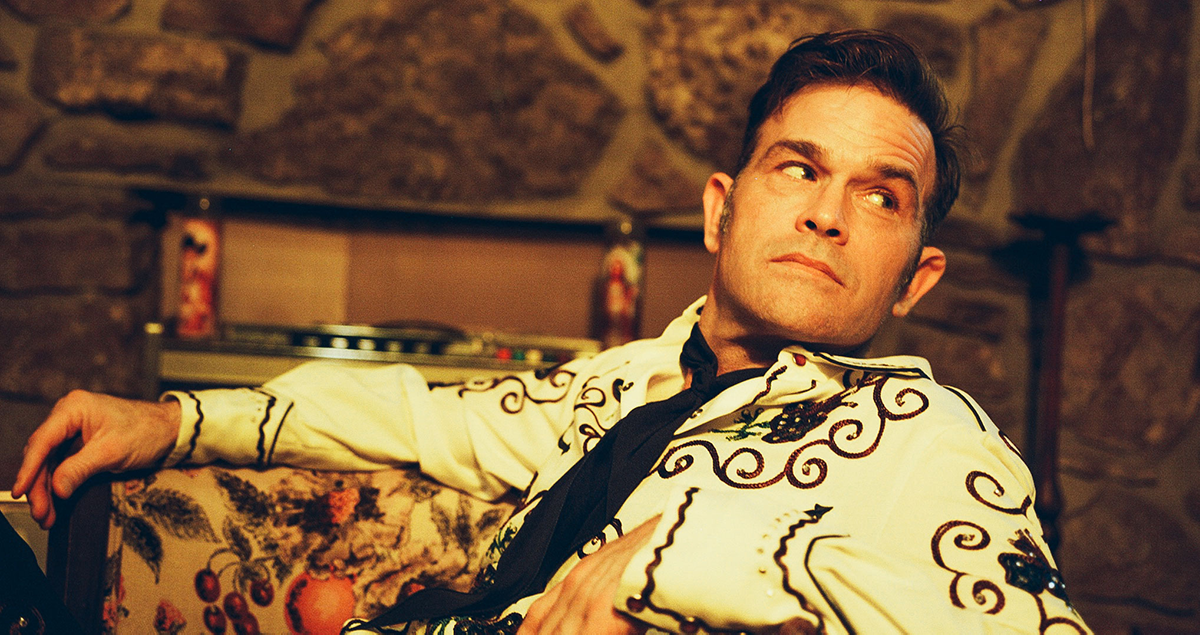
With a New Album About His Turbulent Past, Waylon Payne Makes It Through

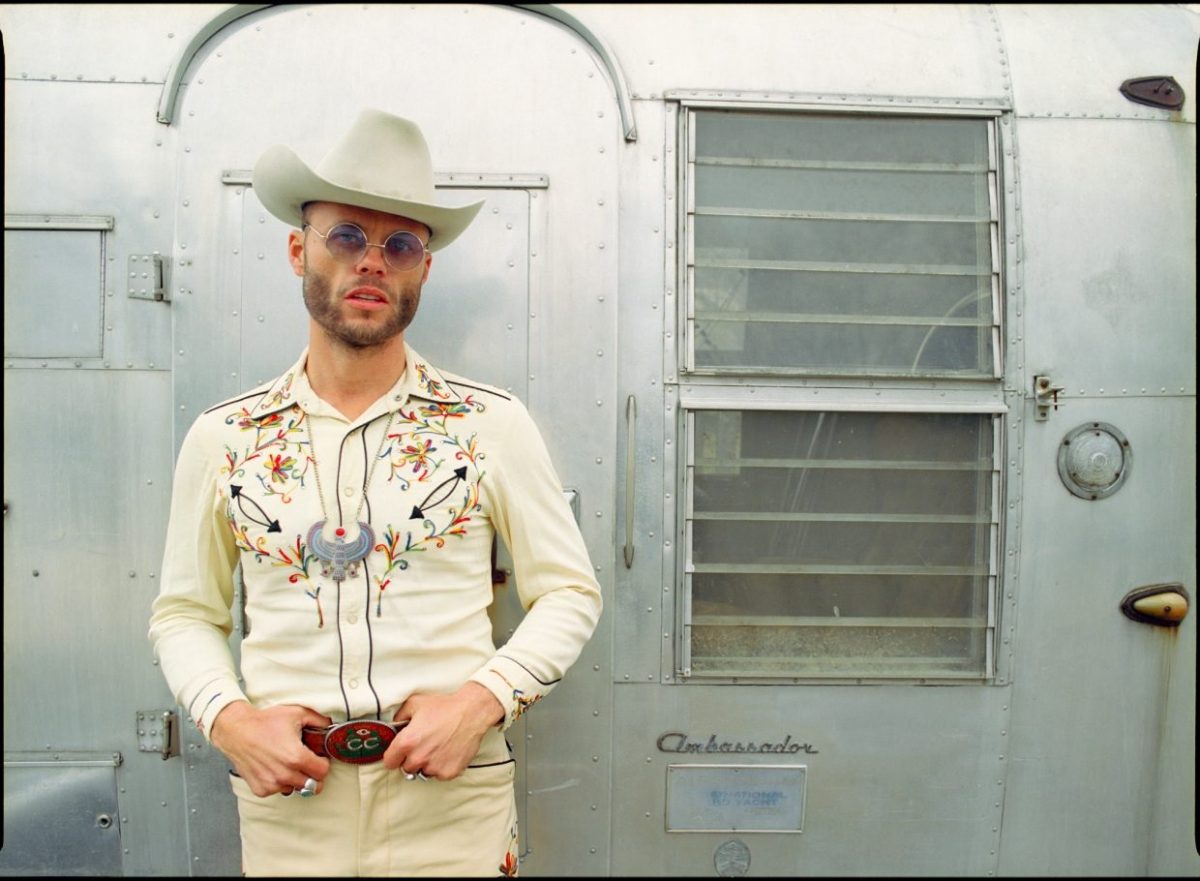
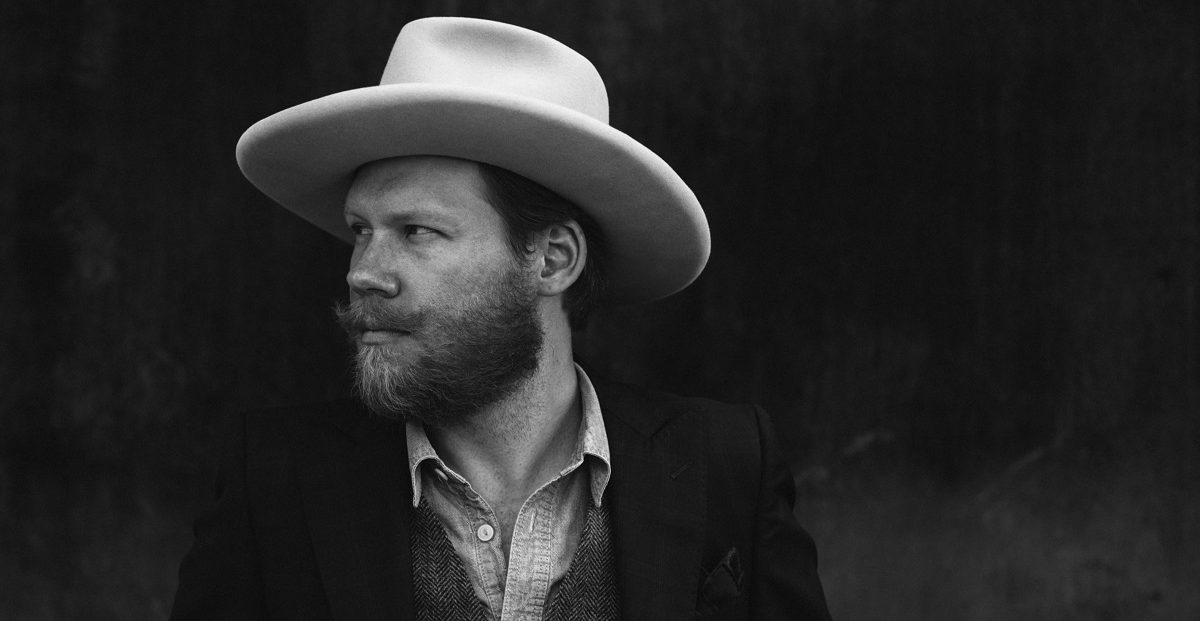
Roughly 20 years ago, Waylon Payne’s life had become enough of a mess that he’d been booted off tour by one of his closest friends. These days he’s in a much better spot, though many of the trials and tribulations of his 20s are woven throughout the narrative of his new album, Blue Eyes, The Harlot, The Queer, The Pusher and Me.

The 12-song collection emerged gradually on digital platforms three songs at a time, though now as a whole, it’s also available on vinyl, and it should fit neatly within his own album collection of Bobbie Gentry, Kris Kristofferson, Willie Nelson, and his late mother, Sammi Smith. His late father, Jody Payne, played guitar in Willie Nelson’s band for four decades.

With classic country music in his blood, Payne has had songs cut by songwriting partners like Miranda Lambert, Ashley Monroe, and Lee Ann Womack, yet Blue Eyes, The Harlot, The Queer, The Pusher and Me is uniquely his own story. “I’m extremely proud of it. Every song is mine, and every song is a story that I’m choosing to tell,” he says. “It’s been extremely freeing and extremely cool to know that I’ve made it out of a dire situation and that I lived to tell about it. That’s all I’m really trying to do, buddy, I’m trying to offer some hope and maybe a different viewpoint that people have heard before.”

BGS: What do you remember about the vibe in the studio while making this record?

Waylon Payne: It was a pretty interesting vibe. We cut it at Southern Ground, which used to be in its heyday the old Monument studio, which is where my mom cut “Help Me Make It Through the Night” and a bunch of her other hit songs. She did sessions when she was pregnant with me there, and I was a baby there, and I was a toddler there. It was pretty interesting to sit in the same spot that she stood and sing all of these songs and do this album. It was just lovely. It was something special and everybody knew it I think.

Did you keep a picture of her with you when you recorded the album?

I have her face on my left forearm so I can’t play the guitar without seeing her face.

How did you learn to play guitar? When did you pick it up?

Early 20s, maybe? My friend Shelby Lynne showed me a few chords, and once it bites you, once it gets its grips on you, you’re a slave to it — once it puts its power on you and gets around you. And that was it. I picked out some chords of my own and I pretty much taught myself everything else, or I’d ask somebody about a chord. I was around 23 or 24.

Is that when you started writing songs?

Yeah, that was around the same time, too. It all came along around the same time. I started learning some chords in Nashville but it was LA mostly that really brought it all home.

At what point did you realize that you enjoyed being on stage?

Probably about 2. [Laughs] Who wouldn’t enjoy that? Like I said, once it bites you, you’re bitten.

Was it the applause? The approval?

I think it was because when I was on stage, I was always with my mother. So, it was family. And that’s what I did it for, for the family.

Your parents are referenced in several songs, almost like characters in the songs. So, I’m curious when you’re singing “Sins of the Father,” is that about your father?

Oh yeah, exactly. I developed a drug problem and it was pretty much his fault. He showed me those drugs. When I got myself together and got myself sober, I had another buddy of mine named Edward Johnson come along that showed me what fathers and sons were really supposed to be like. It changed my life. That song’s about my father and my buddy Edward and his son Lake. Lake’s the one that counts it off in the beginning. Lake saved my life — he and his daddy did. They made me stand up to be a better man and they helped me get sober. I’m really proud of those boys.

There’s a line in “After the Storm” about your mother closing the door on you. And you sing that you have trust that it will open again. Is that emblematic of the experience of coming out to her?

Well, there were some deeper circumstances going on in the house than just me being gay. There was some sex abuse that had happened. It was just hard for the family to deal with. That was a brief period of our life, and that is totally a reference to that time period. [I’m saying,] I know that you’re my mother and I know that you’re the one that gave me life. You’re also the one that’s got to teach me the roughest lessons and that was a hard one, when she shut that door on me. But I knew that it wasn’t shut forever.

How old were you when that happened?

18 or 19.

Was there a moment when she reopened that door, when you felt like that relationship was back on track?

Yeah, about four, five, or six years later. We had a nice moment over Christmas and Shelby was responsible for bringing that relationship back together, too. She’s been like a sister to me for many, many years. I love her, love her deeply.

What year did you go to LA?

I probably ended up there in ’99 or 2000. I got fired out there. I was playing with Shelby [on tour promoting I Am Shelby Lynne] and maybe I was drinking and doing too many drugs. Being a dick, so she fired me. [Laughs] And I didn’t have any money to get home, so I stayed there and ended up making it — that’s basically all I can tell you about that.

When I moved to Nashville in the ‘90s, it seems like aspiring artists had a lot of places to play, and several stages were available to them for showcases and other performances. Were you able to take part in those kind of things during that time?

Man, when I came here in ’93 or ’94, Broadway [the city’s strip of downtown honky-tonks] was a godsend for me. Broadway and Printers Alley saved my life, because they introduced me to the greatest pickers I ever knew in my life. It gave me a place to sing six or seven nights a week. I would go to work at six o’clock at night, and by going to work, I mean we would show up down there and we’d start on one side of Broadway and we would sing on one side, go through Printers Alley, and then down the other side. That was how we got our chops in. We would go and find places to sing. We didn’t make any money, but that’s what I did. I learned how to do that stuff right in my hometown of Nashville, on Broadway.

How did you make ends meet if you weren’t making money in the bars?

Well, I was a prostitute back in the day for a while. I also drove hookers around. I was a construction worker, I was a short order cook, I’ve done a lot of things, pal.

There’s a different vibe in Nashville now than there was in the ‘90s — and of course, the ‘90s were different than the ‘70s, too. What do you like about the Nashville music community now?

What do I like about it?

Yeah, what makes it special, and why do you like to be part of it?

Well, I don’t know that I’m necessarily a huge part of it. I’ve got a group that I write with at Carnival — Lee Ann, Miranda, and Ashley, and those folks. I don’t know if I necessarily hang out with a lot of folks. If I’m part of the Nashville community now, then I’ll take that. That’s pretty freaking cool. That’s something I’ve never really heard with my name before, being part of the Nashville community.

I guess I think of you that way because I see your name as a co-writer on Ashley Monroe’s records. What is it about that writing relationship that makes it click?

Ashley, Miranda, and I started writing together four or five years ago on a regular basis, then Ashley and Aaron Raitiere and I write together a lot. We tend to write pretty good music together. If I write music with somebody and it clicks, and we get good songs, then that’s pretty much a good partnership and I’ll stick with that for a while.

You put this record out three songs at a time, but when I listened to it in its entirety, it struck me that there’s a theme of moving forward, and sometimes outright optimism, that comes through. Do you hear that too?

I mean, I always want to give people hope. That’s one of the biggest things about this record: Even though it’s about tragic situations, I still made it out.


Photo credit: Pooneh Ghana
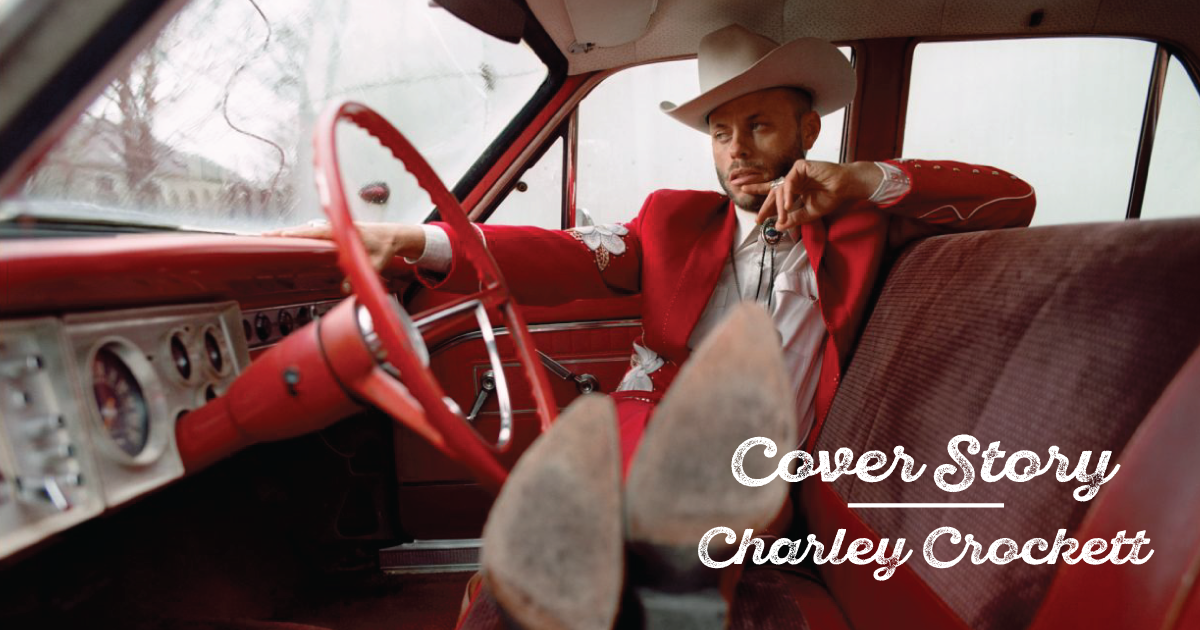
Through His Music, Charley Crockett Speaks to ‘Hard Times’ We’re All Facing

“Welcome to Hard Times,” the opening and title track from country crooner Charley Crockett’s eighth album is Crockett at his finest. He is pensive and pitch perfect, relevant and retro. “The dice are loaded, and everything’s fixed,” he sings. “Even a hobo would tell you this.”

It’s hard to tell if the 36-year-old Crockett is the hobo he references in that line, though it’s entirely plausible. As contemporaries cut their teeth at Belmont and Berklee, Crockett was busking on the streets of New Orleans and New York. While there, he learned how to entertain an audience in pursuit of a tip; perhaps more importantly, he learned the ways of this world, how we’ve all been ushered into a 24/7 casino where the house is telling lies and the gamblers are predestined to sin.

Welcome to Hard Times, comprised of 13 tracks of searing anguish set to slick, ’60s-style, country-western production, culminates with the particularly sorrowful “The Poplar Tree.” It’s a song that Crockett says has been received differently by different audiences, even as he — a man living somewhere between Black and white, privileged and not — feels that his message is obvious. “I have, many times, on this album cycle, said to press folks, ‘Yes, we’re all oppressed folks, but some folks just have it harder,’” he says. “And you have to recognize that.”

By phone, we talked to Crockett about his album, the role of artist as activist, and, of course, these very hard times.

Welcome to Hard Times sounds like you wrote it for this moment — in the midst of a pandemic, with widespread racial unrest — but you actually wrote it before everything went down. What inspired you?

You didn’t need this shit going on this year to know about these problems that we’re talking about. I don’t know how you could travel this world as an artist and not see it. I think that says everything about the nature of people. I recognize people are in different positions, but there are a lot of people who are in positions to not see what’s going on, and there are no consequences for them. Then there’s everybody else who’s forced to see it, who deals with it and suffers for it.

You’ve definitely been vocal in interviews and in your music. But even as you speak now, I get this sense that there’s a push and pull, or a toeing of some line that you’re subconsciously doing.

I’m trying to walk this line that is strange because I have been identified by a lot of my audiences as just a regular white man. Then there are a lot of people that look at me strangely as the complete opposite, as African-American. But I can’t speak for the Black community and I don’t really feel like I’m speaking on behalf of the white community either. I never saw myself as Black but I never liked my whiteness.

What does it mean when you say that you never liked your whiteness?

I dreamt of myself and viewed myself as not white from probably 5 years old. And then I look at myself now in videos and stuff, and I just… I feel like I look strange.

I guess what I’m saying to you is: My issues with my own identity tie to the kind of James Baldwin viewpoint that whiteness is just a metaphor for power, and that my identity as somebody who is uncomfortable in my whiteness says a lot about the relationship between Europeans in America and African-Americans and Natives. The romanticization of genocide is an unbelievable crime, but I think what is probably more savage and brutal is the assimilation through rape, through bondage, through [people like] my grandmother [who was mixed].

The easy thing for somebody to do is say, “Well, you can’t skip white responsibility for institutional and structural privilege.” I see that, so I’m not saying, “Hey, whiteness isn’t real, therefore nothing that’s happening to you is valid.” I’m saying you have to recognize that it’s happening, and then, if you truly wanna change it, at what point in the future do whites need to stop looking at whiteness as meaning anything? That’s the step that I feel is completely absent in the national conversation.

There are conversations happening though, right? And white people, at least some of them, appear to be really listening.

There’s a combination of white consciousness, and then there’s this other, fake, white virtue signaling. I just can’t stand some of that stuff ‘cause I see a lot of these people playing politics with their public image who are not doing anything in their life about shit. It’s whites signaling to other whites, and that’s what Martin Luther King was talking about at the end, you know? He really was. I think Malcolm X saw it at the end; I think James Baldwin, because he was so intellectual, was saying it to everyone, but he managed to get away with it because I think he seemed like he was mostly speaking within that kind of elite, intellectual world.

“Blackjack County Chain” is a song written in the ‘60s about a Black chain gang in Georgia that kills their supervising sheriff. Word on the street is that Red Lane, the writer, offered it to Charley Pride, but he passed on it because he didn’t want to stir up controversy. You covered it on Welcome to Hard Times, and it’s the only song on the album that you didn’t write. Why’d you decide to cut it?

I sung that song mostly ‘cause I listened to the words and identified with it. I feel like I’m dragging chains, you know? I just do. I always have. I think that that’s the other weird thing about America that is really hard to recognize, for a lot of us. It’s, like, no matter how much better a lot of these people have it, the insane thing that I’ve seen about America is, even among all these people in positions of power and privilege, they all view themselves as discriminated against and oppressed.

Your song “Poplar Tree” discusses lynching. Was there a concern about going too far when you wrote it?

I don’t know. I wasn’t thinking a whole lot about where that song was gonna go. It just went there.

Right, because you said this stuff dominates your mind.

It just does. And it’s who I am. I am in the public eye on some level and people got all kinds of crazy shit to say about that. And it is not lost on me that, for whatever reason, these people saying the crazy shit that they’re saying about me, they got nothing like that to say about these people that I’m getting compared to in the independent, Americana country scene. Even if I can sing ‘em under the table, they don’t criticize how they sound, but they criticize me up and down. And I’m not blaming them; I’m not mad at ‘em, I’m asking for it, in a way. I know that I’m asking for it, ‘cause I can just pack up and stop doing this shit.


Like, let’s talk about folk music. Let’s talk about blues, back in the day. When these guys were singing about their situation, it was all code. It had to be code because if it wasn’t, that might mean your life. So I’m stepping up and down to say this shit loudly, but I’m trying to build my audience to a place beyond where it is now. I’m just saying, I don’t exactly know who I’m speaking for, really, because of how completely outside of this society that I feel.

How did playing on the streets for so long shape you as an artist?

To me, that’s the best education I could’ve ever gotten in my life. It was unfortunate circumstances and difficult living that brought me there, but I would never wanna go another direction. It’s informed what I’ve done, and I learned about folk music, hip-hop, and everything else. I just absorbed it all on the street, and I made it into what it is now.

I have people in country who look at me like, “This guy’s an imposter! Look at this video of him on the subway train ten years ago! He’s wearing a beanie and tight pants; he’s not a real cowboy! He’s not country music!” And I’m like, who is more authentic than me? I never got a leg up in the business, period. I never opened up for anybody of note. I built my career out of the most unlikely of circumstances.

Do you think artists have a responsibility to speak up about social issues?

It’s like this: If your art isn’t saying shit, I don’t care about your political opinion. Like, if your art isn’t making an impact, your political opinion, to me, is little more than you trying to get ahead. And I mean that about white people; I mean that about everybody. If the art isn’t doing anything, then what’s the point?


Photo credit: Laura E. Partain. See the full photo story.

LISTEN: Cary Morin, “Valley of the Chiefs”

Artist: Cary Morin
Hometown: Lives in Fort Collins, Colorado; from Great Falls, Montana
Song: “Valley of the Chiefs”
Album: Dockside Saints
Release Date: August 7, 2020

In Their Words: “A true story told by my great grandmother at my Crow naming ceremony when I was about four years old. It tells of when she was a teenager and was kidnapped by a neighboring tribe. When women were kidnapped back then, they were destined to a life of servitude. She and her friends escape the warriors and are able to steal their horses and ride back home. The moral of the story from my great-grandmother to me was that there is nothing in life that you cannot overcome. I believe she was giving me this story to teach me perseverance in the face of any obstacles in my life. The story is familiar to me for my whole life.

“I wrote it as a memory of my life and my culture. I’ve written songs about the Crow side of my family for years. Not many of them were ever published until recently in my career. Earlier in my life, I probably thought that sharing these stories and family history was too personal. It would be interesting to ask other Crow people what their specific naming ceremony stories are. There are many… Now, I feel it is important to share this history and continue the oral history of my people. I’ve always wanted to hear this song with a different presentation. I had previously recorded it as a solo tune. I wanted a presentation with sweeping melodic lines.” — Cary Morin


Photo credit: Reggie Ruth Barrett

WATCH: Charley Crockett, “Run Horse Run”

Artist: Charley Crockett
Hometown: San Benito, Texas / Austin, Texas
Song: “Run Horse Run”
Album: Welcome to Hard Times
Release Date: July 31, 2020 (album)
Label: Son of Davy/Thirty Tigers

In Their Words: “I remember seeing the races at Louisiana Downs in New Orleans when I was a kid. I remember the tension in people’s hands while they waited to see who would win. Like a coin flipping in the air. The dirt flying behind those horses as they ran. They looked like they were running as if they’re life depended on it. I’d say it did.” — Charley Crockett


Photo credit: Bobby Cochran

LISTEN: Monte Warden and the Dangerous Few, “Martini”

Artist name: Monte Warden and the Dangerous Few
Hometown: Austin, Texas
Song: “Martini”
Album: Monte Warden and the Dangerous Few
Release Date: June 19, 2020
Label: Break A Leg Records

In Their Words: “As we first started playing shows, new fans would come up and enthusiastically ask, ‘What do you call this music?!’ We described is as ‘martini music.’ My wife Brandi suggested we write a big, fun up-tempo ode to the martini, so we rode over to Floyd Domino’s house and all did our best to just get the hell outta this song’s way. It’s one of those rare little gems that seemed to write itself. That line ‘country club mosquitoes’ had us all goin’ nuts. I can count on this song to always deliver a musical shovel-to-the-face at any gig.” — Monte Warden


Photo credit: Sean Mathis

LISTEN: Grizzly Goat, “Wallowa, OR 1877”

Artist: Grizzly Goat
Hometown: Provo, Utah/ Knoxville, Tennessee
Song: “Wallowa, OR 1877”
Album: Bound to Go to Waste
Release Date: May 29, 2020

In Their Words: “While in Oregon, performing in the Joseph Mountain Jubilee festival, I spotted a statue of Chief Joseph. This sparked my curiosity as a history enthusiast and I soon listened to the 18-hour audiobook, Thunder in the Mountains. I learned that the area had been home to Joseph’s Nez Perce tribe which the US government wanted to claim for white settlers. Despite Chief Joseph’s efforts to negotiate rights for his people peacefully, a war broke out causing the tribe to flee 1,170 miles before they were surrounded near the Canadian border. When this ‘spaghetti western’ melody came to me, I was inspired to shed light on the story of Chief Joseph and a neglected piece of American history.” — Nate Waggoner, Grizzly Goat


Photo credit: Ryan Carter

LISTEN: Jarrod Dickenson, “A Cowboy & The Moon”

Artist: Jarrod Dickenson
Hometown: Nashville, Tennessee
Song: “A Cowboy & The Moon”
Album: Ready the Horses
Release Date: May 22, 2020

In Their Words: “‘A Cowboy & The Moon’ is a song about change. It’s told through the lens of an aging cowboy, as he remembers a time that’s long since passed. It’s a nostalgic look back at what was once here, and now only lives in the memories of those who experienced it. While this concept is presented in a fictional manner through this song, I think it’s something to which we can all relate. The older we get, the more change we see. It’s inevitable. Places, things, and people who were once a part of our lives will change or disappear altogether. That’s the beautiful and tragic thing about life; none of it lasts forever.” — Jarrod Dickenson


Photo credit: Josh Wool

LISTEN: Heather Anne Lomax, “Heart Don’t Lie”

Artist: Heather Anne Lomax
Hometown: Los Angeles, California
Song: “Heart Don’t Lie”
Album: All This Time
Release Date: May 1, 2020

In Their Words: “This is a song about love and longing. It is a song of yearning and of the unseen ties that bind two souls, regardless of space and time. It’s about ‘memories, pressed between the pages of of my mind.’ I think I wrote this song in ten to fifteen minutes while up late at night, probably around two or three in the morning.” — Heather Anne Lomax


Photo credit: Neil Kremer

With Debut Album, The Panhandlers Take Pride in West Texas

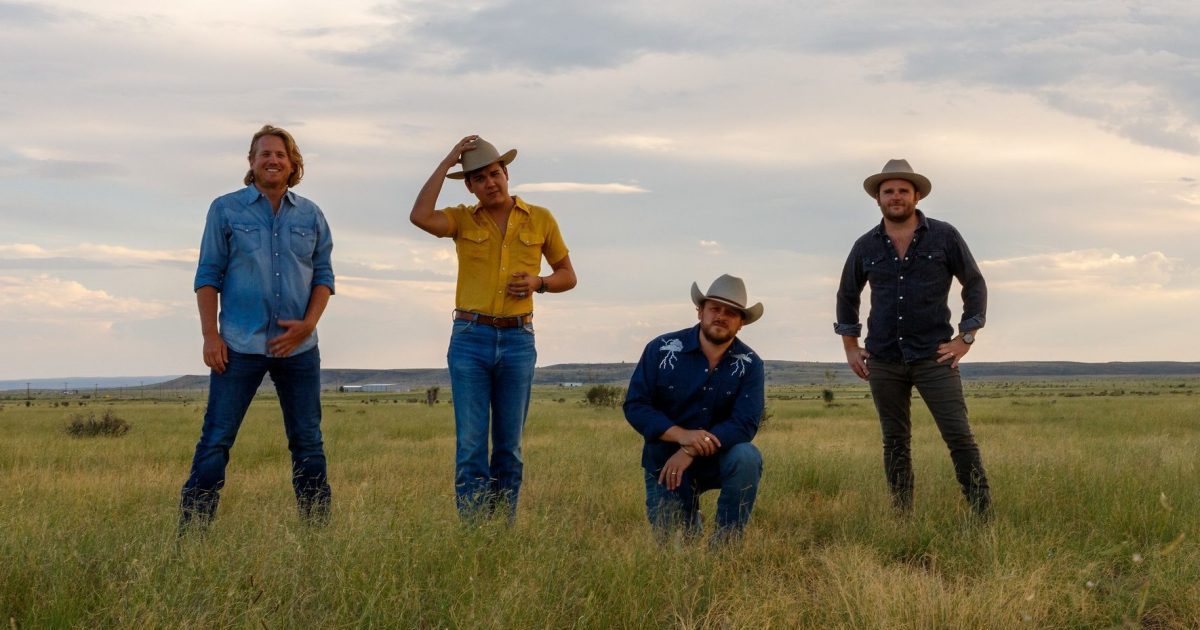
The Panhandlers are carrying on a West Texas songwriting tradition that’s both witty and wistful, and their self-titled debut album will almost certainly appeal to anyone who’s fond of the Lubbock life. With 10 original songs about their home turf, the four artists — Josh Abbott, Josh Baumann, Cleto Cordero, and William Clark Green — teamed up with producer Bruce Robison, who somehow makes the task of balancing four lead singers look like a breeze.

By email, all four of the Panhandlers fielded questions from BGS about working together, writing about each other, and not quite being able to leave West Texas behind.

BGS: I’m sure you guys all knew each other before this project, but when did you all first get into a room together?

John Baumann: Other than music festivals or late-night gatherings after shows on buses, the first time we sat down and talked about this project as a group was at The Next Waltz office in Austin, Texas. I think Josh was still mispronouncing my last name at the time. Needless to say, the group was all on good terms and friendly, but I think this project really bonded us as musicians, songwriters, business partners and made us become friends.

William Clark Green: I have written with Josh and John previously, but it was my first time writing with Cleto. It was a lot of fun getting to see his thought process. Obviously I have a lot of respect for everyone. I knew we wouldn’t be writing any trash songs.

There are several references on this album about leaving West Texas behind. Is that common for people to insist they’re going to move on, but never actually do? And what compels them to stay, do you think?

Josh Abbott: Well it’s twofold: 1) Yes, I think it’s common for people to desire a change and never seek it, and 2) There are a lot of folks who have to move away and reflect on their time there with nostalgia and a fondness. This isn’t exclusively unique to being from that region of Texas by any means, but it’s the lens from how we approached this album.

Cleto Cordero: There’s not much to see or do in West Texas that isn’t related to oil and gas or farming and after a while the sometimes bleak landscape can lend one to ponder what [it would be like] to live in a big city or any other place with topography that isn’t flat or covered in mesquite bush! Oh, and water… jumping into a body of West Texas water only occurs in one’s dream. Most folks entertain the idea of leaving for greener pastures (which is why I believe creatives flourish there, always exercising their dreaming muscles), but end up sticking around because although life there is simple, it is a great place to raise a family. The land is home to many good-hearted, hard-working people — traits that come through persistence and faithfulness.

JB: Ironically, all four of us have left the region at some time or another, but it always calls us back. Mostly for opportunities to perform, but sometimes just to see people you have gotten to know. I have become such close friends with some people in the region that sometimes it feels like I have a second life there when I go back, and I just pick right back up where I left off. I think it’s common for people to want to leave the area, and explore bigger and more developed cities, but there is something about it that always calls you back. I think people also feel compelled to stay. They love the sunsets, and dry air, and the four seasons — one of those only regions in Texas that actually gets four seasons. And seriously Lubbock is one of the friendliest cities in the U.S. Not just because the billboards say it, but because it really feels true.

WCG: I think the Mac Davis song says it best: “Happiness was Lubbock, Texas in my rearview mirror.” The song eventually turns around and tells the story of how much you miss the country and the people

“This Is My Life” captures the life of a touring musician in Texas — brisket for lunch, pizza at night. And you’re sharing it with friends — “a rowdy group of dreamers, drinkers, and has-beens.” Josh, how hard (or easy) was it to kind of distill these guys’ personalities to just a few lines?

JA: Honestly, it flowed pretty naturally. I wrote it in less than an hour at my house the night before our last studio day. Bruce encouraged me to write a feature song where I could have a voice on the album since the other three guys all have features. I originally just wanted to blend in the background on this album, but Bruce said I needed a feature too. So I went home and just wrote a song about the group and the life we live. The only line I debated was “William’s loud but he’s a good hang” mostly because I didn’t want it to seem like a shot at him. But that’s his personality and that’s why everyone loves him. So I kept it in there.

CC: I love how fun and simple that song is. I think Josh captured each of us pretty well.

I like the dry humor on this record, like on “No Handle.” It’s funny without being corny, which is tricky. As songwriters, how do you strike that balance of being lighthearted without going into novelty song territory?

JA: I’m not sure I’ve figured out that balance! But John Baumann sure has!

JB: I just tried to be as plainspoken about it as possible. I just found humor in the fact that there is a guy who is openly unhappy about where he is. I think it is a delicate balance, but I think it’s important for voices in songs, or narrators, to have personality — be it sad, or ironic, or subtly jabbing. It just gives the lyric and the story more truth.

WCG: I think you just have to believe in what you are saying and the rest comes with it.

CC: I heard Carlos Santana say during a video something along the lines of “You should play, write, sing, and perform being led by your Spirit. If you want to be funny or make a joke of everything, you should be a comedian.” I think John (who wrote that song) is a clever man, but he knows the difference between clever and being a jester. I believe he is the former.

“Caprockin’” shows a bittersweet portrait of life in and around Lubbock. What sets that city apart from other places you’ve been in Texas? What do you wish people understood better about it?

JA: I think my biggest frustration with people about Lubbock is [when they say] that it’s in the middle of nowhere and there’s nothing to do. And I just don’t agree with that, especially in the era we live in now. You can fly to Lubbock from the major cities in Texas in less than two hours. And there hasn’t been a city that has transformed as much in a per capita manner than Lubbock has. Businesses are developing constantly, the city is expanding south at a rapid pace, and Texas Tech has grown into an enormous institution. All Lubbock lacks is professional sports teams, high property taxes, and congested traffic. Lubbock is great! I’m glad John wrote this song with a sense of endearment. This song channels Jimmie Dale Gilmore so much to me.

JB: The friendliness of it. People will take the shirt off their back for you at every corner. They treat strangers like friends. They support you when nobody else will. They rarely have a bad word to say about anyone. I wish people understood that it’s more than just a flat desert panhandle town. It has a real community, and it’s a wonderful place to raise a family.

CC: Many towns in West Texas just don’t have the infrastructure that allow artists to flourish. Lubbock seems to be a mecca for artists and musicians of West Texas because it has just about everything you’d need to get a musical dream to take flight: a continuous stream of young, potential listeners (via Texas Tech University), a legendary watering hole and stage to play your original songs (via the Bluelight Live), and various local radio stations that promote and play local artists (via Red Dirt Rebel). I don’t think folks outside of West Texas understand how we find it so beautiful a place, despite it being dry, dusty Flatland.

WCG: I wish people understood how laid-back and nice the people are in West Texas. In all my travels they are my favorite.


Photo credit: Charlie Stout

WATCH: Tami Neilson, “Sleep”

Artist: Tami Neilson
Hometown: Auckland, New Zealand
Song: “Sleep”
Album: CHICKABOOM!
Release Date: February 14, 2020
Label: Outside Music

In Their Words: “This song was written by my dear friend and co-producer Delaney Davidson. He wrote it about keeping the Big Black Dog at bay; my two little boys think it’s a lullaby Mama sings only for them. My brother Jay and I wander into the audience at the end of the night with just a guitar and no amplification to sing this to the hush and send our audience gently home. It becomes what you want it to mean, like every song. But, it’s like a warm blanket, a soft pillow.

“This video was created by my other brother Todd Neilson of Valiant Creative Agency. You would never know the chaos behind the scenes! It is one shot and begins with Jay and I singing at the other end of the studio. As the camera pulls out, it reveals we are on the television set in the darkness of a living room where a family has gathered to watch before bed. However, the camera dolly had to roll straight through the living room and the entire thing had to be assembled within seconds in its wake.

“So, as we were peacefully singing, there was shouting and crashing and banging as the rug, plants and furniture were frantically placed by a team of six, the actors rolled the couch in (it was on skateboards!), sat down and had to look relaxed and calm as my little niece, River Neilson, fell asleep. The result is magical and I can almost feel my Dad’s arms around me, carrying me to bed when I watch it.” — Tami Neilson


Photo credit: Sabin Holloway