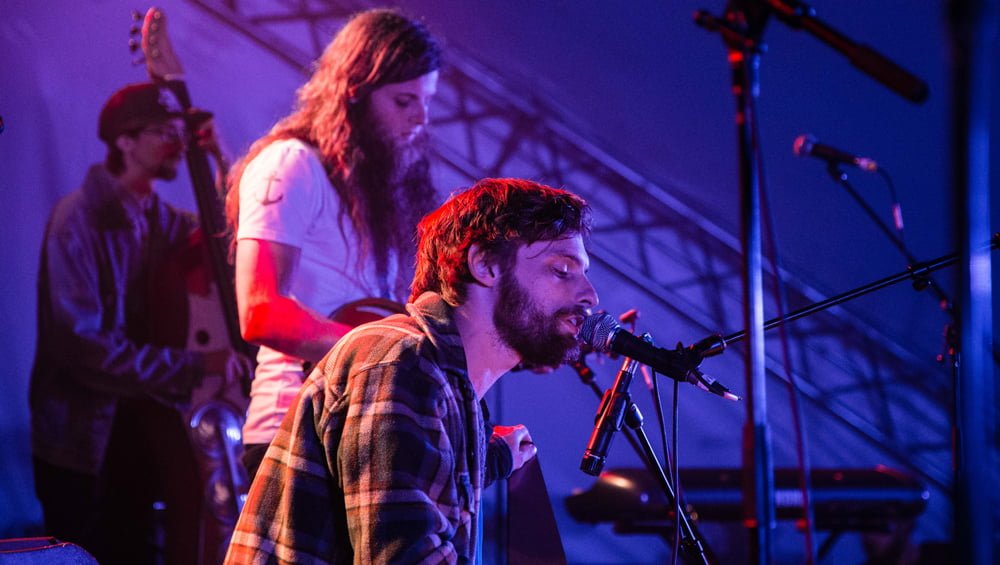
WATCH: Jeremy Garrett, “I Can’t Lay Your Lovin’ Down”

Artist: Jeremy Garrett
Hometown: Loveland, Colorado
Song: “I Can’t Lay Your Lovin’ Down”
Album: Circles
Label: Organic Records

In Their Words: “‘I Can’t Lay Your Lovin’ Down’ was a song that I co-wrote with Jon Weisberger and Josh Shilling. I just loved the vibe of the tune and how it fit with my style, so I decided to record it on my upcoming solo release, Circles. I blend guitar, mandolin and fiddle with a looper to create this arrangement for the song. Conner Pannell shot the video for me and I love how he captured this song. All of it was shot in the studio, partly while tracking and in-between takes.” — Jeremy Garrett


Photo credit: J.Mimna Photography

The Tim O’Brien Band Reaches Beyond

Tim O’Brien is only half-joking when he acknowledges, “You know, I have not been known to show up with the same people from date to date.” True enough, considering he’s been with Hot Rize for four decades, played mandolin and sang on the first Earls of Leicester album, issued numerous collaborative albums with family and friends, and carved out a career as a Grammy-winning folk artist. Along the way, he’s also produced notable roots artists ranging from the Infamous Stringdusters and Yonder Mountain String Band, to Kathy Mattea and Laurie Lewis. His multiple IBMA Awards include two trophies for Male Vocalist (1993, 2006), and another for the 2006 Song of the Year, “Look Down That Lonesome Road.”

That road is less lonesome now that he frequently travels with his partner, Jan Fabricius, a mandolin player and singer who makes her leap into professional music with O’Brien’s new album, The Tim O’Brien Band. In an effort to find players adept at both Irish and bluegrass music, the impeccable ensemble is rounded out by Mike Bub on bass, Shad Cobb on fiddle, and Patrick Sauber on banjo and guitar. Released one day after O’Brien’s 65th birthday, the project leads O’Brien and his colleagues toward tour dates in his native West Virginia… and beyond.

O’Brien invited The Bluegrass Situation into his music room for a chat about being a traveling musician, a songwriter and (much to his surprise) a role model.

BGS: Pretty early on this record, you have some traditional tunes. Why did those songs seem right for this album?

O’Brien: Let’s see, we’ve got “Doney Gal” and the two reels, and we’ve got “Pastures of Plenty” – I guess that’s traditional now. You know, I didn’t write a lot of songs this time, and I revisited one that I recorded before. I had recorded “Crooked Road” solo in the past, but I thought it would be really good with a band, and I wanted to hear that. I was happy with the way it came out.

Whenever I started doing gigs on my own in coffee houses, I always mixed it up with traditional songs and covers and my own tunes when I started writing. So it’s kind of a continuation of that. It’s my style of making a record. I’m itching to write some songs, but I didn’t do it much this time.

When you need to round out an album, how do you decide what to record?

I go to the CD shelf over there. Nowadays, I glean ‘em every year and I get rid of the ones that I know I’m never going to listen to much. The ones I keep going back to, there’s often something on there that makes me go, “Oh yeah, I love this song. Maybe I can sing this song…” And I’ll try it. I have one of those Moleskine books that are filled with lyrics of songs that I want to know — and I’ll write the lyrics of the ones that I’ve just sung on a record and need to remember.

I have to say, I’m touched by your rendition of “Last Train from Poor Valley.”

Oh man, Norman Blake is my hero! I saw him first probably in 1972. He was on that first Will the Circle Be Unbroken record and some other friends that were playing bluegrass already knew about him. They had that first Norman Blake record, which came out around the same time. And when I started playing with Hot Rize, we’d play these festivals and we would meet up with him. We got to be friendly and it was like a regular ol’ friend that you’d see. That’s the great thing about the touring community. You see people week to week in the summertime months. That’s why it’s nice to live in Nashville. I used to go home to Colorado and you wouldn’t see those people in the grocery store or the post office. [Laughs]

Norman and Nancy are old friends, and I go back to see them every now and again in recent years. Their music is just so different from what I do, and what Hot Rize did, and yet all these years later, it’s a lot closer. Even though it’s still very different, it’s a lot closer than a lot of the other stuff that’s going on. But I just love the sentiment of that song, and I knew that song from when his record came out. I like to pay tribute to somebody like that. He’s not on the circuit anymore and I don’t want him to be forgotten.

I like the feel of “Beyond.” It sounds to me like a hero’s anthem. What was on your mind when you wrote that?

I had the idea of writing something about, “Let’s get beyond the day to day.” It sounds like a gospel thing, and it fits in there, but if you could find enlightenment within your daily routine, or just get past the stumbling blocks that frustrate you and say, “Hey, man, things are going to be fine… We can go beyond this and look beyond this.” And maybe if we can live there, we can live life more freely while you’re going about the day-to-day.

Do you consider yourself an optimist?

I am an optimist, yeah. Musicians have to be! [Laughs] My friend Chris Luedecke – Old Man Luedecke, a guy I’ve produced some records for and toured with – he says, “Man, we’re the ultimate optimists. We keep getting up in the morning and trying again.” I suppose everybody does it, if you define it that way. We’re all optimists. But yeah, I’m an optimist and I think it’s possible to change, it’s possible to rise above your problems and get around ‘em somehow, and get beyond.

What is your response when younger musicians see you as a role model?

It’s a funny evolution. I guess it’s happened, that I’ve become this role model. It surprises you, but if you look at who my role models were, a lot of them aren’t there anymore. That means I’m getting closer to the checkout line, so I’ve become a role model because I’m still out there doing it. So I guess it’s an honor, but it gets to be intimidating to continue, because you think you’re not coming up with your best stuff all the time, and you wonder if you can even show it.

Hot Rize is that way. It’s hard to go and record a Hot Rize record because of nostalgia. People look at Hot Rize’s repertoire and go, “Sheesh! There are so many great songs!” But it took, I think, eight records to get all those together. It sort of magnifies things in a funny way, and it will intimidate even yourself, as you’re trying to repeat yourself. Hot Rize can repeat ourselves, but the idea of putting a new record out was like, “Oh man… we really need to be good! We better be as good as all that.” You do a lot of soul searching and you take it more seriously.

I wanted to ask you about writing “Hold to a Dream,” because that song has done well for you – it’s something of a standard, I would say.

“Hold to a Dream” is a good one. I had been into Irish music for a while, and that seemed like an Irish tune. The lyric is not necessarily very specific about anything. It’s a love song, I guess, but it’s like the theme of “Beyond” — it’s possible. We can get past everything and we can still do well. I like that one because it’s got a little rhythm, it’s got a little instrumental bit, and it’s got a little bit of a message – and it’s fun. And it’s got a nice chord progression. [Laughs] …

What I’m surprised about some of the songs that I’ve written that have translated so much, there is nothing heavy about them. But people are distracted by music and then they are allowed to think about other things while they are listening to it. And just a few words will suggest something. I think songs like “Hold to a Dream,” or other songs where there’s an instrumental section, lets people go, “Ah, yeah… hmm….” (laughs) You start singing and they might start thinking of something else.

Newgrass Revival does a magnificent version of that song, and you’ve also had cuts along the way by Garth Brooks, Dixie Chicks, Dierks Bentley, Kathy Mattea, Nickel Creek, and others. As a songwriter, what is that like to hear something you wrote come to life through another artist?

It’s really flattering when anybody sings your song, if they want to. There’s a monetary reward, which is nice, but mostly you’re just flattered. Then you realize, OK, what I’m doing is valid. It means something, so continue. That carrot is the one I really want to catch, knowing that what you’re doing is worthwhile.


Photo credit: Michael Weintrob

Mountain Heart: The Evolution of a Bluegrass Band

I met Josh Shilling on January 5, 2007, the afternoon of the day on which he’d later make his first appearance with Mountain Heart. On the Grand Ole Opry. Singing a song he’d written. At 23.

A lot has happened since then, but in the world of bluegrass, where one eye—at least—is always looking back, it’s worth looking back even further, because Mountain Heart had already been a hard-working, award-winning band for nearly a decade. I wrote the liner notes for their 1998 debut and I’d followed them ever since. When they invited me over to that pre-Opry rehearsal, I knew Mountain Heart as a ferociously talented band that knit together a diverse set of influences—diverse, that is, within a thoroughly bluegrass framework; a distillation and extension of important ‘90s musical trends carried forward and elaborated upon in a new decade.

It was obvious, though, that Josh was bringing something different to the band, even before he brought his piano—and as the years have passed, that’s become a central element. Some bands have different members pass through, yet retain a trademark sound; some keep the same personnel, but move from one sound to another. Mountain Heart has been unusual in that it’s done both—none of the founding members remain, and in many respects, neither does much of the original sound. Yet its evolution has been, if not preordained, organic and thoughtful, and a good chunk of the responsibility for that belongs to Josh, who’s both a musician’s musician and a performer who can connect with thousands at a time.

When we got together to talk about the group’s stunning new album, Soul Searching—the title track written by Shilling and the Infamous Stringdusters’ Jeremy Garrett—that passage of time was an obvious starting point.

You’ve been with Mountain Heart now for….

Eleven years.

I’d say there are a lot of more recent fans of the band who see Mountain Heart as coming out of bluegrass, and so they assume that you came out of bluegrass as well. But you had a whole other thing going before you ever started with the band.

Yeah. I grew up at the foot of the Blue Ridge Mountains—I lived right up the street from (banjo player) Sammy Shelor, I was 45 minutes from the Doobie Shea studio with Tim Austin, Dan Tyminski, Ronnie Bowman—all those guys were up there. So I was around bluegrass, and my dad loved it, but I was drawn to the piano, and so I would always just sit at the piano and figure out simple songs. And then I was drawn to Ray Charles, the Allman Brothers, Leon Russell and people like that. That’s what really pulled me into music. When I started playing live, my first bands were country bands, and then little rock bands, and then all of a sudden, within a year or two, I was in a straight-up r&b band, singing Stevie Wonder and Ray Charles. So that was where I kind of homed in on my vocal style and chops, and learned a lot of chords and all that.

When you go to adding that to a band like Mountain Heart, it really opens things up. I’m sure it freaked some people out ten years ago, but these days, we’ve been yelled at enough, and now I feel like our crowd is way more diverse, and younger. One of the things that’s allowed the band to exist for 20 years this year is turning the pages, bringing new faces. When I joined, it was [fiddler] Jimmy VanCleve, and [mandolin player] Adam Steffey, and [bassist] Jason Moore, and then Aaron Ramsey came right after me, who is just one of the finest players alive. And then we’re talking [guitarist] Jake Stargel, Cory Walker, Molly Cherryholmes, and Seth Taylor and Jeff Partin, and on and on and on. We constantly get incredible players, and I feel like the songwriting’s getting better each record, and that’s what’s allowed us to keep doing it.

Looking at it from the outside, it seems like one of the things that Mountain Heart does is, it takes these great bluegrass musicians, and lets them play other stuff besides bluegrass.

Not only that, I’ve seen a lot of these guys kind of find themselves, and we nurture that. The current guys definitely don’t try to control the way a musician plays. When Seth Taylor joined the band, his guitar hung down to his knees, and he played way out over the hole, and it was the most unconventional, not-Tony Rice-looking guitar style I’d ever seen. But we didn’t try to change that, and he went from amazing to just a force of nature over the course of a couple of years. When I first met Aaron, he was staring at the floor; you could tell that in his brain there was a metronome going, and he was just chopping [mandolin], staring at the floor, and that was it. And within a year or two, this guy was a rock star—he was out front, he was the show. And he still is a huge part of the show.

I’ve seen the band be that for everybody—we don’t try to control anyone, and we definitely do push each other. It’s awesome, the way we all kind of piggyback off each other. And there’s a competitive edge, to keep up with each other, but there’s also a respect in that band. Even on a bad night, everyone’s like, “you’re my favorite.”

So we have parameters, but we push those. We kind of know how the song starts and how it ends, and we all know the main melody and the arrangement. Like with “Soul Searching” or “More Than I Am”—live, they might have a two minute intro. It allows us to be expressive each night. But at the same time, if we go play the Opry, we can simplify and just play a three-and-a-half minute version of that song.

How long did you guys work on this new record?

Between the writing and the A&R and thinking through general ideas, this project started several years ago. But Seth and I had played a lot of these tunes into voice memos for probably a year and a half, and they would develop a little each time. Songs like “Festival”—it was a really slow song, and we all liked the message, but it was never good enough to put on a record. And then one day I imagined the bass line being like “Day Tripper” or “Low Rider”—this really bass-centered groove. So we tried that, and everybody immediately said yes, this is gonna work perfect.

So there were lots of times when we’d meet and talk through the songs, and then eventually we booked the studio time and went to rehearsal. We ran through the songs for two days as a band—singing lead through a PA and everything. Recorded everything, found the tempos we liked, wrote the tempos down, wrote the keys down, made signature notes on what we knew we were going to grab, and what instruments, and if we were gonna have percussion or drums. And then we went into Compass and cut all eleven songs and all the lead vocals in three days. Pretty much everything I sang on there was live, to the point where, when we went in to edit, you couldn’t edit anything.

We cut all of the band’s parts in three days, and then we had Kenny Malone play some percussion, Scott Vestal came down and played some banjo, Ronnie Bowman sang harmony on one, [fiddle player] Stuart Duncan came in one day. And so essentially, it took about three years of A&R and talking, about three days of recording, and then we literally catered the last few days, got some drinks and watched our heroes play along with our tracks.

It’s a band-produced project; we did the art work—we took a stab at it with a couple of different artists, and could not land on what we wanted. And Seth actually drew this herringbone frame on a piece of paper, took a picture of it and sent it to my wife, Aleah, who’s a graphic designer and develops software, and she pulled it into Photoshop—and a lot of this was made on a cell phone. So we all took part in the entire design, from the photography to the design, to the A&R, the writing, the mixing. Garry West was involved for sure as co-producer, and Gordon [Hammond] did a great job of mixing, Gordon and Sean Sullivan tracked a lot of this stuff, Randy LeRoy did a great job mastering.

We’re talking about the next one already, but we may do it all ourselves next time—make it a point that every piece of this is gonna be put together by hand in some form or fashion. I think these days fans like that; they’d rather have…already, with a lot of our presales and a lot of our CD orders, we send out drawings and stuff. I think people really appreciate those things.


Photo by Sebastian Smith
My First IBMA

Ahead of this year’s annual gathering of bluegrass lovers at the IBMA’s World of Bluegrass festival in Raleigh, North Carolina, we asked some of our favorite players to recount a memory of their first time attending the illustrious event. Here’s what they told us:

Chris Pandolfi (Infamous Stringdusters)

“While my first IBMA was certainly exciting, driving roundtrip by myself from Boston for several days of nothing but jams and live music, it was my second IBMA that will always be my most memorable. It was a more formative, purposeful mission — my first trip there as an aspiring ‘professional musician,’ even though I wouldn’t necessarily describe my agenda as ‘professional.’ I had no formal engagements, no hotel reservation, no tickets, no real money to spare, and no worries about any of it. We were there to make music, meet new people, and tap into that magical, living art form that we all know as bluegrass.

The seeds of the Stringdusters had been planted, but we needed to find a few more players, and IBMA was the universal meeting place for anyone serious about the music. So when Travis Book sauntered off the elevator, no shoes and a backpack full of beer, we knew we had a good candidate on our hands. I also met Jeremy for the first time that year at IBMA, and it was definitely the first time that we five jammed together as a group, which was memorable, to say the least. That trip was a key part of the advent of the Infamous Stringdusters, which has become my passion and my life’s work.

Though our main purpose was to get a band going, we were also there as fans. I loved the sound. I was there to chase that passion, and just as important as meeting my bandmates was the ability to get that much closer to the music. I didn’t need a plan to know that making the pilgrimage to IBMA would be worth it, and it most certainly was, as there is no better place to connect with bluegrass.”

Casey Campbell

“I’ve been lucky enough to attend IBMA’s World of Bluegrass all my life. There are so many pictures of me as a baby and little kid running around Owensboro and Louisville. However, I didn’t really start making memories until the event came to Nashville in 2005. At that point, I was starting to get into playing music and discovering that there was more to WOB than just the hotel hallway jams. Thanks to Deanie Richardson and Kim Fox, I joined the Kids on Bluegrass program the following year, and my world opened up as I met these incredible young musicians like Molly Tuttle, AJ Lee, Cory & Jarrod Walker, Seth Taylor, Tyler White, and more. In fact, the majority of the folks I met during my Kids on Bluegrass tenure are still kicking ass across the bluegrass and acoustic music scenes today.

It has been such a joy over the past 10 years to watch so many other great musicians come through that program and find their groove in the musical world. I look at kids like Presley Barker and Giri Peters (who are way better than I ever thought of being at their age) and think that, without Kids on Bluegrass, those two might not have crossed paths for another decade. Of course, there will always be plenty of hallway jamming, exhibit hall perusing, and more hallway jamming, but one of my favorite World of Bluegrass memories will always be in the rehearsal rooms with those other musicians my age and thinking 1) I’ve found my people, and 2) Shit, I need to go home and practice!”

Michael Stockton (Flatt Lonesome)

“The very first year I attended IBMA was in 2008. I believe it was called Fan Fest at the time, and it was still at the convention center in Nashville, Tennessee. I had been hanging out with a few friends through the day on the Friday of that weekend. I worked up an appetite from all of the jamming I had been doing, so I went up to the Quizno’s that was on the top floor of the convention center and got myself a sandwich. Lucky enough for me, as I was walking into the grand ballroom, the Lonesome River band was taking the stage. Being that I was very new to bluegrass, I had no idea what I was in for. I can vividly remember sitting in the very back row of the hall, enjoying my sandwich and the music.

The part of the story that stands out the most, though, is from the last song on their set. They ended with the song ‘Them Blues’ (still one of my favorite LRB songs to this day), and they were getting after it! The song got around to the second banjo break where Sammy hangs on the seven note for the first few measures, and I came unglued! I completely forgot that I had a sandwich sitting in my lap and, when I heard that break for what was the first time in my life, I couldn’t help but jump up out of my seat and holler as loud as a I could! I spilled my sandwich, chips, and coke all over the floor, and I don’t regret it one bit. That was one of the first times I really pictured myself on stage. I put myself in Sammy’s shoes and told myself that I wanted to make someone spill their sandwich one day.

Fast forward to 2017: Flatt Lonesome has won four IBMA awards, and we are nominated again for Vocal Group of the Year and Entertainer of the Year. I never would have dreamed, back in the days of spilling sandwiches, that I would share the stage with my heroes. IBMA has been invaluable for me as a young musician. IBMA is where my dream to play professionally was cultivated, and it’s where that very dream has come true.”

Bronwyn Keith-Hynes (Mile Twelve)

“My first IBMA was wonderful and bizarre and totally exciting and, at one point, I found myself playing a set with two of my biggest heroes. I ran into Peter Rowan at the breakfast of the Super 8 I was staying in, and he recognized me because I’d played fiddle for him once before up in Boston. He told me to come to his set later that day and play fiddle, and I thought it was odd that he hadn’t found a fiddler yet, but I was happy to show up and play, so I didn’t ask any questions. Then I got there and realized he did already have a fiddler and it was Michael Cleveland — one of my biggest fiddle heroes. That was my first time meeting Michael and, once I got over my initial terror of playing in front of him, playing fiddle on stage with him and Peter was one of the coolest moments I can remember from any IBMA I’ve been to.”

Sierra Hull

“I went to my first IBMA when I was nine years old, when I was invited to be part of the Kids on Bluegrass showcase. I had never been to a bluegrass festival of that size before — anything I had ever been to had been very small, local festivals. Seeing a crowd of 1,000 people would have seemed like more than 10,000 to me. I was so excited to see IIIrd Tyme Out; they were my favorite band at the time — they’re still one of my favorites — and Steve Dilling took me under his wing the whole week.

One night, he brought me up to a hotel suite to meet Earl Scruggs. I couldn’t believe I was getting to meet him! Earl wasn’t picking while I was up there, he was just hanging, but they had me get out my mandolin to play some for him. I had only been playing for about a year and I didn’t know a whole lot yet; I just knew a few fiddle tunes. At one point, I remember Earl asking me, ‘Can you play “Pike County Breakdown?”‘ And I said to him, ‘I don’t believe I’ve ever heard that one.’ I couldn’t believe Earl Scruggs had asked me to play a song I didn’t know so the first thing I did when I went back to my mandolin teacher was tell him the story. I said, ‘You’ve gotta teach it to me! Next time I see Earl I need to know this song.’ My teacher just said, ‘You know he wrote that, right?’ Needless to say, I was super embarrassed, but I learned it! That definitely got me into learning more and more fiddle tunes. I had to be ready the next time Earl asked what I knew!”


Photo credit: Joerg Neuner via Foter.com / CC BY-ND

Get Off Your Ass: November Cometh

Shovels & Rope // The Fonda // November 2

Paper Bird // Bootleg Theater // November 3

Jared & the Mill // The Satellite // November 4

Joan Baez // Walt Disney Concert Hall // November 5

Robbie Fulks // McCabe's Guitar Shop // November 6

Jonny Fritz // El Rey // November 10

Sean Hayes // The Satellite // November 10

James McMurtry // Troubadour // November 11

Erykah Badu // Memorial Coliseum Exposition Park // November 13

Sturgill Simpson // The Wiltern // November 15-16

Amanda Shires // Echo // November 17

Kris Kristofferson // The Rose (Pasadena) // November 17

Loretta Lynn // Opry House // November 1

Chicago Farmer // The 5 Spot // November 3

The Steeldrivers // Opry House // November 4

Kelsey Waldon // Station Inn // November 5

O'Connor Band // City Winery // November 7

The Stray Birds // Station Inn // November 9

Madeleine Peyroux // City Winery // November 10

Radney Foster // City Winery // November 12

Darrell Scott // City Winery // November 19

Boo Ray // The 5 Spot // November 19

Will Kimbrough // The Bluebird Café // November 26

Vince Gill // Ryman Auditorium // November 30

Ryley Walker // Villain // November 3

Chatham County Line // Rockwood Music Hall // November 4

Mipso // Rough Trade (Brooklyn) // November 5

Toshi Reagon // Joe's Pub // November 6

Brandy Clark // Mercury Lounge // November 11

The California Honeydrops // Bowery Ballroom // November 13

Charlie Parr // Rockwood Music Hall // November 14

Hiss Golden Messenger // Music Hall of Williamsburg // November 15

Lydia Loveless & Aaron Lee Tasjan // Bowery Ballroom // November 16

Margo Price & Sam Outlaw // Music Hall of Williamsburg // November 16

Infamous Stringdusters // Brooklyn Bowl // November 18

Chely Wright // The Bell House (Brooklyn) // November 29

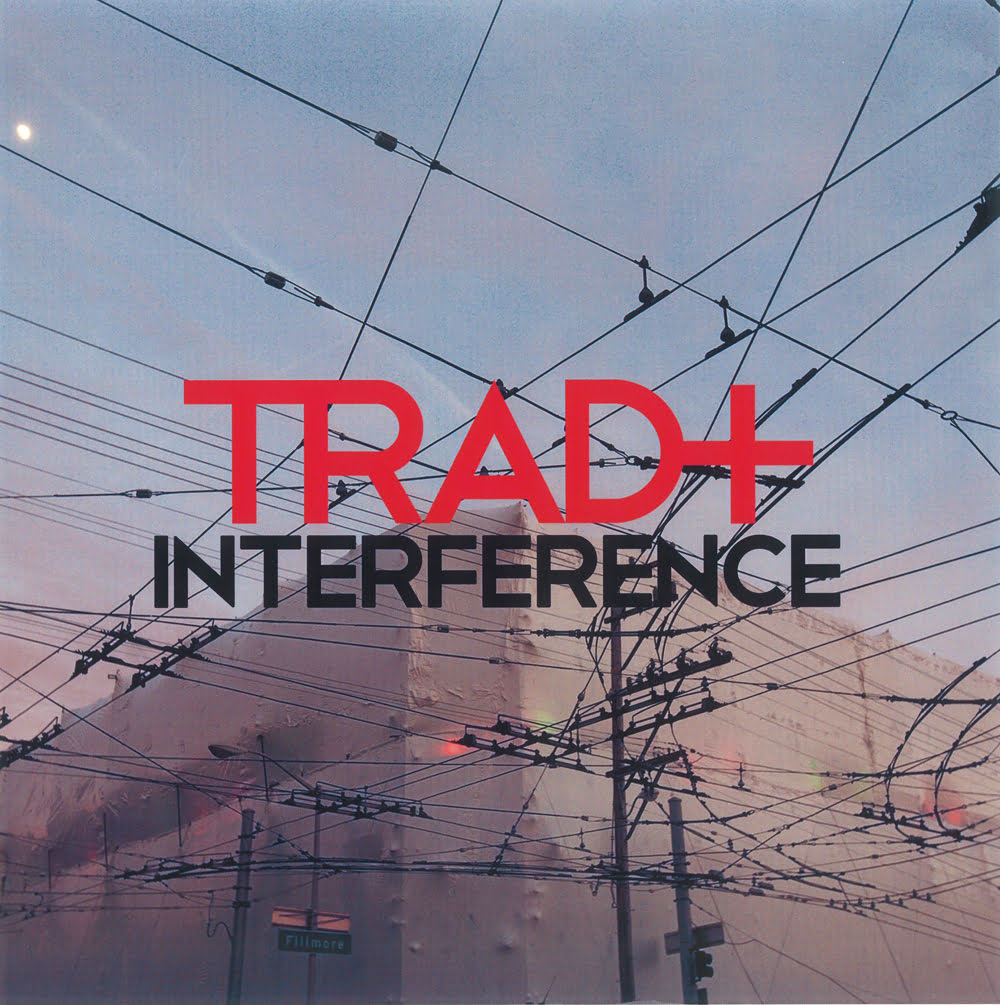
WATCH: TRAD PLUS, ‘Blind’

Artist: TRAD PLUS (Chris Pandolfi of the Infamous Stringdusters)
Hometown: Denver, CO
Song: "Blind"
Album: Interference

In Their Words: "'Blind' is one of my favorite tracks from the record. Like a lot of TRAD PLUS music, I used some samples and live vocals to create a deep bed of sound for the melodies to sit atop. Those melodies evolve as the tune moves along, as do the sounds underneath, to create a musical journey from one place to another, as opposed to the more repetitive forms that are so common in acoustic music. And, at the heart of it all, is the natural tone of the banjo.

I shot the video last Winter in some beautiful places in Puerto Rico, and then laid on some editing effects to create a more psychedelic imagery that fits the vibe of the music." — Chris Pandolfi

RECAP: BGSNorth at the Winnipeg Folk Festival

Last week, the Bluegrass Situation hopped a flight north to Winnipeg, settling in for a weekend of new sights and good tunes with our kind neighbors up in Canada. The festival, which has been going since its inaugural year in 1974, was kind enough to let us take over a stage and be a part of the tradition on Friday for an evening of back-to-back, harmony-filled, banjo-driven goodness capped off by our first-ever #BGSNorth Album Hour Superjam of the Eagles' Hotel California — and the artists rose to the challenge.

Noam Pikelny, the banjo virtuoso of Punch Brothers’ fame, MC’d the event with a heavy dose of dry humor, introducing guests before their performances and returning to the stage for brief interviews during set changes.

By the time the main event revved up, Nicki Bluhm and the Infamous Stringdusters had already railed through a set of their own, so they felt like old friends with the audience as they walked out on stage for the anti-encore — album opener and title track “Hotel California.” Bluhm’s smooth vocals paired well with the deft instrumentals of the bluegrass group for a rendition of the number that had the sizable song singing every word.

The Wild Reeds had already won over many attendees with their earlier set on the stage and were greeted warmly for their take on “New Kid in Town.” Strong harmonies — and stage presence for days — would make this three-frontwomen band compelling enough a cappella, but the rock elements on instrumentals take the Wild Reeds to the next level. Their performance of “New Kid in Town” felt even sweeter with the addition of Pikelny, who had raved about their performance from the stage earlier in the evening and added a certain fullness to the performance.

Canada’s own Foggy Hogtown Boys were faced with high expectations as they came out for hit single “Life in the Fast Lane,” and the group emerged as some of the most skillful and good-natured performers of the evening. Even low-key attendees sitting in chairs couldn’t help but move a bit to the music, and the smiles on the faces of these classic bluegrass players were contagious.


drunk singin don henLeys eagLes with mr jimmy at @winnipegfolkfestival

A video posted by rayLand baxter (@raylandishere) on

One of the high points of the evening came from Rayland Baxter, who sauntered onto the stage, a lone keyboardist accompanying him, to croon through a swoon-worthy “Wasted Time.” Baxter really made the number his own, hamming it up a bit and delivering the kind of performance that would delight your grandma right alongside your stoner buddy. “Wasted Time” may not have been one of the Eagles’ marquee numbers, but Baxter’s rendition surely gave Eagles newbies a reason to take a listen.

Pikelny took the spotlight next, choosing to perform solo for his interpretation of “Victim of Love.” Quips about the Eagles secret origins in the heart of Appalachia (What? You didn’t know about those?) gave way to a hearty run-through of the track on the banjo. It was easy to ignore Pikelny’s sarcasm and just agree with him: Maybe acoustic, solo, and on the banjo really is how the song was destined to be played.

San Francisco up-and-comers Brothers Comatose brought the Wild Reeds back out for help on backing vocals for album track “Pretty Maids All in a Row,” and their well-rounded harmonies on the vocals gave the song an added intensity. After that, the Infamous Stringdusters returned to the stage (sans Bluhm) for “Try and Love Again,” delivering a performance that was a likely favorite for classic bluegrass fans in attendance.

One of the interesting things about playing a full record from start to finish — in the live setting, at least — is that the set list isn’t a surprise. There is no way to hold the audience hostage by saving the well-known tracks for last, and certainly some would opt to beat the traffic and leave before the end of the set. Fortunately, Massachusetts band Parsonsfield’s stage-closing performance of Hotel California’s final song, “The Last Resort,” felt like a real finale. The five-piece drew out the lyrics in dramatic fashion, a wink to their own New England roots fueling a vibe that didn’t need an up-tempo track to feel like a climax.

The whole experience left us ready to turn around and put the whole show on again. Whaddaya say, Winnipeg Folk Festival?


Photos by Travis Ross and Buio Assis

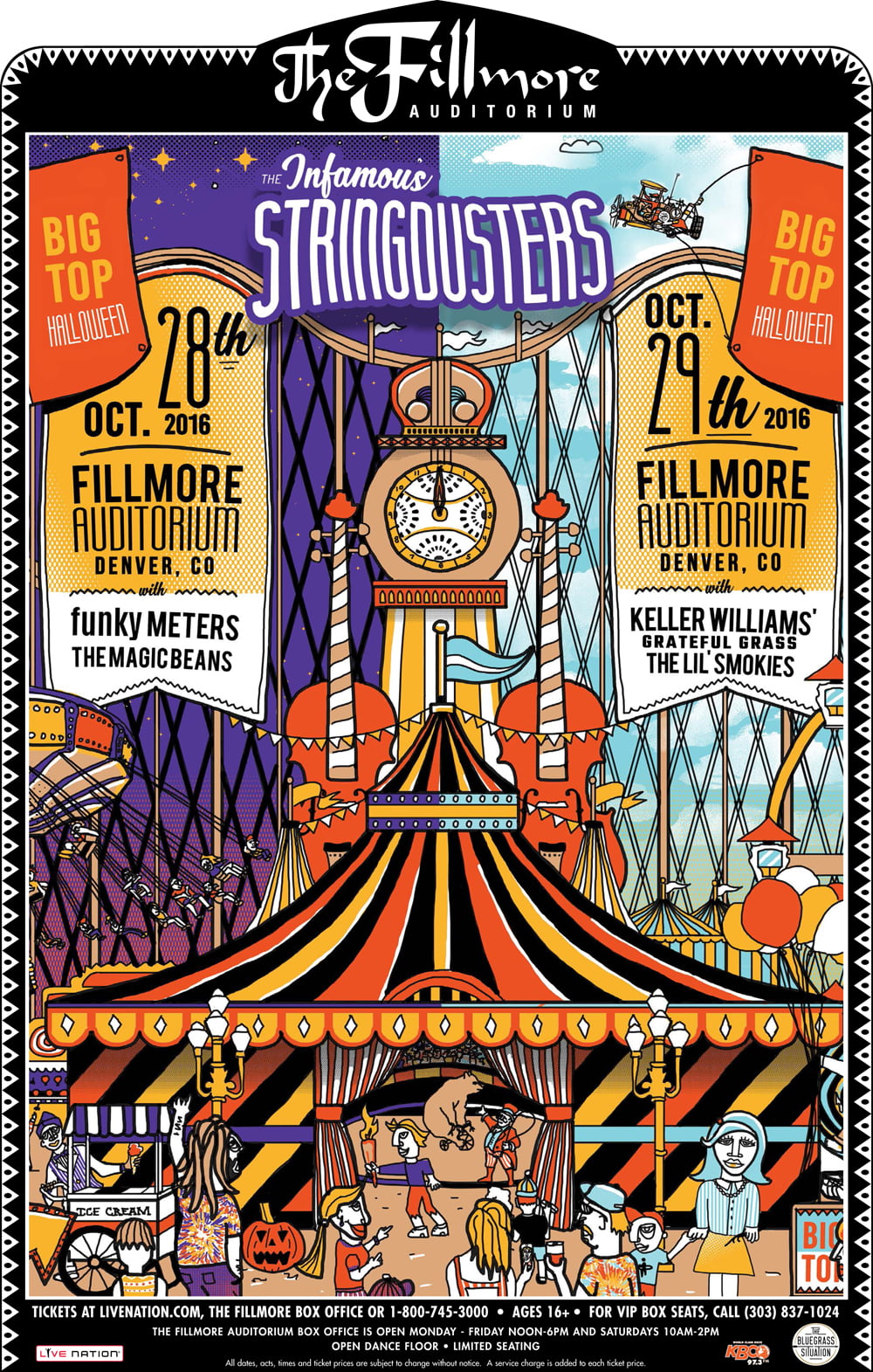
BGS Presents the Infamous Stringdusters’ Big Top Halloween (BONUS: Video Premiere)

We're thrilled to announce two back-to-back Halloween shows with the Infamous Stringdusters and Friends on October 28 and 29 at the Fillmore Theatre in Denver, Colorado. "Big Top Halloween" will also feature funky METERS, the Magic Beans, Keller Williams' Grateful Grass, and the Lil' Smokies.

BGS Newsletter subscribers will get an exclusive pre-sale code in tomorrow's email blast. Pre-sale tickets go on sale this Thursday at 10 am, and will be on sale to the public Friday. Sign up here to get on the list.

To celebrate, here's an exclusive new video from the 'Dusters.

See you in Denver!

(Video shot / edited by Land of Sky Media)

Get Off Your Ass: It’s St. Patrick’s Day!

St. Patrick's Day is a polarizing holiday. Either you love donning green, downing beer, and doing kegstands with a thousand of your favorite rowdy frat boys, or you, well, don't. If you fall into the second of those two camps, we feel you, so we put together a list of several great shows happening across the country tonight. From BGS presenting the Infamous Stringdusters in Nashville to Bruce Springsteen rocking Los Angeles, there's a little something for everyone here. Aren't you lucky you have us?

Nashville, TN // BGS Presents the Infamous Stringdusters // Exit/In

We've presented a number of shows on the Infamous Stringdusters' most recent tour, and it's because we love those dudes so darn much. You'll be hard-pressed to find a better live band, and lucky to see them in as intimate a setting as Exit/In. 

Los Angeles, CA // Bruce Springsteen and the E Street Band // Los Angeles Sports Arena

This one's a no-brainer: What better way to celebrate Irish heritage than with the quintessential American rocker? Maybe he'll wear green; maybe he won't. Who gives a damn? He's the Boss!

New York City, NY // Lucinda Williams // City Winery

Lucinda Williams' roots run Southern, but her affinity for deeply personal songwriting is something she shares with her Irish brothers and sisters in song. Look for tunes from her excellent new album, The Ghosts of Highway 20.

Denver, CO // Darlingside // Swallow Hill Music (Daniels Hall)

Darlingside are one of our favorite new acts in roots today, and their live shows do not disappoint. With a new album under their belt, they put on a dynamic show that highlights both their classically trained chops and their knack for pop-inflected harmonies.

Chicago, IL // Devil in a Woodpile // Hideout

A lot of people like to get a little devilish on St. Patrick's Day, so why not do it with Devil in a Woodpile, a Bloodshot Records band that blends blues, jazz, hillbilly, and ragtime with such ease that you might swear they sold their souls?


Photo credit: sebastien.barre via Foter.comCC BY-NC-SA

Get Off Your Ass: February

From now until the end of time, we'll be asking you to Get Off Your Ass with monthly concert picks. We're taking a look at the top shows we want to see in L.A., Nashville, and New York.

Miss Tess & the Talkbacks (Mleo, the Nova Darlings, the Cabin Fever) // February 6 // The Mint // Tickets

Country meets swing for a rockabilly dance party piloted by retro Miss Tess on vocals.

The Brothers Comatose (The Alpine Camp, Patrolled by Radar) // February 18 // The Mint // Tickets

The Morrison brothers took inspiration from their mother’s folk quartet harmonies and created a pure Americana string band powered by rough country vocals.

Aoife O’Donovan (Robert Sarazin Blake) // February 24 // The Largo // Tickets

There’s no excuse to miss this pro performer and moving songwriter fresh with a new batch of songs with the release of her album, In the Magic Hour.

The Infamous Stringdusters feat. Nicki Bluhm (Della Mae) // February 25 // The Troubadour // Tickets

A masterful balance of classic bluegrass and indie-jam grass, the Infamous Stringdusters (especially with the layer of Bluhm’s vocals) are one of the pillars of modern bluegrass on the scene.

Michael Cleveland and Flamekeeper // February 28 // Pickwick Gardens // Tickets

There definitely should be a flamekeeper kept around when this group plays, given the lightning fast and impressively dexterous bluegrass playing that trails Cleveland’s 10-year run as IBMA’s elected Fiddle Performer of the Year.


The Grascals // February 6 // The Station Inn // Tickets

Not only has this group toured with Dolly Parton, but they also performed for recent presidential inaugural balls — this modern bluegrass group is finding the right balance of tradition and contemporary sound.

Graham Nash // February 6 & 7 // City Winery Nashville // Tickets

Got plans? Change them. Don’t pass up the opportunity to see this legend in the cozy winery setting as he embarks on promoting his newest album, This Path Tonight.

Darin and Brooke Aldridge & Joe Mullins and the Radio Ramblers // February 13 // Cumberland Caverns // Tickets

Enter the depths of this unique venue in the Volcano Room to hear the Aldridges' North Carolina twang and full gospel/a cappella harmony bluegrass of Joe Mullins and the Radio Ramblers.

Valentine’s Day with Sam Bush // February 14 // City Winery Nashville // Tickets

Feel the love and join the King of Telluride and Newgrass for an evening of musical nimbleness over a bottle of wine on this very special occasion.

Trick Pony // February 14 // Bluebird Cafe // Tickets

Amped-up electric country duo with a fiery lead in Heidi Newfield who pushes out melodies that will definitely get stuck in your head.

Hey Marseilles // February 17 // Exit/In // Tickets

Temper Trap meets the Decemberists meets Semisonic — this group creates a dreamy wonderland of West Coast beach drive tunes.


Ryan Bingham // February 5 // Irving Plaza // Tickets

Bingham’s former rodeo days inform his Texas Americana sound and undeniable talent (he performed and co-wrote music with T Bone Burnett for the film Crazy Heart) that will have you dreaming of taking to the open road for a dusty drive.

Chamomile & Whiskey // February 18 // Rockwood Stage 1 // Free

Born out of the Blue Ridge Mountains, this group blends Irish folk with drum-led rock.

The Cactus Blossoms // February 18 & 23 // Mercury Lounge // Tickets

A couple of brothers from Minneapolis pull out the romantic drawls of mid-20th century country songs and make them their own. (Oh, and their first album was produced by JD McPherson.)

Jason Isbell (with Shovels & Rope) // February 25 & 26 // Beacon Theater // Tickets

A power-packed double bill: Isbell’s fire continues to burn off of the raw songwriting on Something More Than Free, and this evening marks the return of magnetic duo Shovels & Rope promoting their delightfully original Busted Jukebox, Vol. 1.

The Shadowboxers // February 26 & 27 // Bowery Ballroom & Rough Trade // Tickets

This Nashville-based group throws out major soul, vocal chops, and inventive covers with influences ranging from D’Angelo to '70s folk.