MIXTAPE: Kendell Marvel’s Inspiration on the Run

“Listening to music when I run keeps my mind from wandering. It keeps me motivated and helps me keep a pace so I can sweat out whatever evil I got into the night before.” – Kendell Marvel

“Running on Empty” – Jackson Browne
Those days when I don’t really feel like going for a run, all I have to do is put on this tune to get moving. That classic ‘70s feel and the lyric to this song are pure motivation. Hell, look what it did for Forrest Gump.

“Against The Wind” – Bob Seger
There isn’t any other song that feels more open-road than this song. Bob Seger may be the greatest songwriter of our time. This song paints a perfect picture of the wind in your face. It just feels like freedom.

“It Ain’t My Fault” – Brothers Osborne
Not only does this song have the stomp, but the guitar riffs, the B3 and the hand claps! Combined, they all make this the perfect tune to kick it up a notch. The first time I heard this ditty I was sitting around the fire in Lake Creek, Alaska, with John and TJ and they played it acoustic. It blew me away.

“Life in the Fast Lane” – Eagles
From the opening riff of “Life in the Fast Lane” it is pure adrenaline. Southern California ‘70s rock ‘n’ roll had it all. From the great melodies to the even greater lyrics, these guys were head and shoulders above any other bands of that era. Except Petty, of course.

“Wrong Side Of Memphis” – Trisha Yearwood
“Wrong Side Of Memphis,” was written by Matraca Berg and Gary Harrison and sung by the great Trisha Yearwood in the early ‘90s. It has that swampy, gritty feel that fires me up. It’s the perfect mid-tempo for an early morning run.

“Boots On” – Randy Houser
This tune by my buddy Randy Houser is the perfect in your face, barn burner country song to work up a sweat to. His vocals are stellar on everything, but this one is exceptionally good. Not many people can sing like that cat.

“Hippies and Cowboys” – Cody Jinks
This one’s my cooldown tune. After a good 4- or 5-mile run, Jinks’ laid-back retro sound brings the heart rate back down. Badass vocal by a badass dude.

“Fast as You” – Dwight Yoakam
Dwight Yoakam is the king of cool and this song from the get-go gets me going. Pete Anderson’s guitar work and production on this song [make it] everything an uptempo song should be.

“Cocaine Country Dancing” – Paul Cauthen
Good Lord, this song! It’s new to my playlist, but all I gotta do is push play and imagine wild man Paul Cauthen runnin’ up behind me. Immediately I knock a minute off my next mile.

“La Grange” – ZZ Top
“La Grange” is dripping with angst. It either make me wanna fight or run. Since I’m a little older now I better stick to runnin’ with this Little Ol’ Band from Texas blaring in my AirPods.

“I Ain’t Living Long Like This” – Waylon Jennings
The title of this Waylon tune, written by Rodney Crowell, pretty well sums up my reason for running every day. A musician’s lifestyle ain’t always the healthiest lifestyle. So I figure if I wanna hang around this world for a while I better stay in half-assed shape, so this title alone is motivation. Plus, this song just feels so good.

“Mowin’ Down the Roses” – Jamey Johnson
I think Jamey Johnson is a modern-day Willie Nelson. This song has so much grit and cockiness it’s hard not to run with a little swagger when it’s on.

“Runnin’ Down a Dream” – Tom Petty
Well, I saved this one for last because who do you play after Petty? Nobody! “Runnin Down a Dream” is the perfect rock ‘n’ roll song as far as I’m concerned. It’s reckless, it’s rockin’, it’s brilliant, and it makes me feel young. How else do you wanna feel when you’re on a run?


Photo credit: Alysse Gafkjen

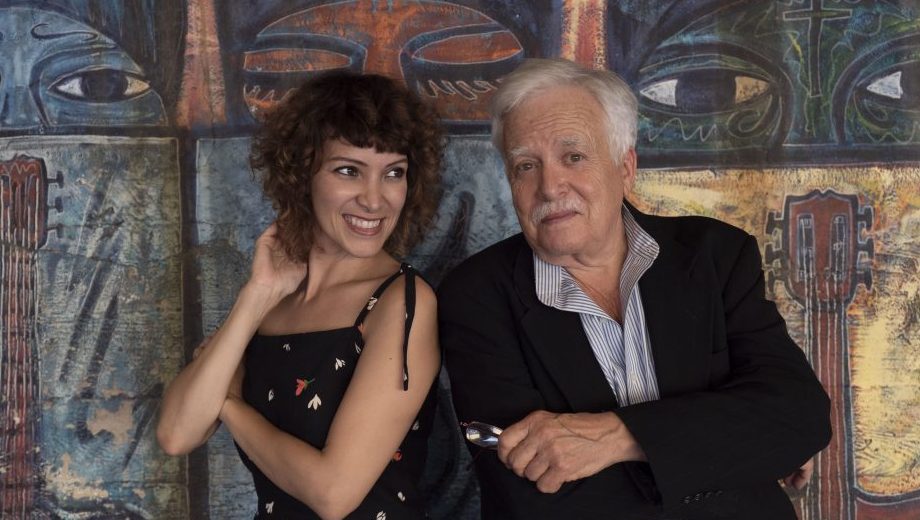
Gaby Moreno and Van Dyke Parks Take a Vibrant Trip Across the Americas

“Oh man, I’m forgetting.”

Gaby Moreno is trying to remember the joke Van Dyke Parks told her earlier this day.

“It was the one about…. shoot! It will come to me.”

And it does.

“It was this one: ‘There are three kinds of people in the world. Those who can count, and those who can’t.’”

Moreno laughs at the simple, if groan-worthy humor, typical of Parks’ always-stylish banter, as anyone who’s encountered the noted composer-arranger-musicologist-raconteur extraordinaire knows. But the joke, inadvertently, relates to another bit of math involving the new album, ¡Spangled! The collaboration between the Guatemala-born nightingale-ian singer Moreno and Mississippi-originated, California-rooted Parks is a vibrant trip through musics the pair have been describing as “Pan-American.”

And that involves the simple equatorial-spanning equation of 1+1+1=1.

“We wanted to imagine a project that could unite both hemispheres of the Americas,” she says. “It’s not just Latin American music, but music that crosses borders, can make us all celebrate the diversity and richness and culture that exists. It’s the whole continent. I think of it as all one America: North, Central and South. It’s a beautiful thing we should all be proud of.”

It’s also, of course, a timely album, though Moreno stresses that while the current situation regarding immigration seems quite acute and divisive, it is hardly a new issue. Parks is not so restrained in his expression, though. “I’m frightened by the toxicity,” he says, not joking at all now. “And we must push back. And my way is with this project.”

¡Spangled! slides through the 20th century and right up to today, moving with ease through countries and cultures — the songs originating in Venezuela, Trinidad, Panama, Peru, Brazil, Puerto Rico and the U.S.

That sweep is represented vividly in Parks’ orchestrations, mostly sporting a sound that can only be called cinematic, marked by such signature Parks flourishes as heavenly harps (both Latin American and “concert” variations) and soaring strings. And then there is Moreno’s naturally pure voice, oft-layered into an angelic choir, whether in Spanish, English or, on two songs, Brazilian Portuguese. The support cast also includes such notables as guitarist Ry Cooder, bassist Leland Sklar and drummer Jim Keltner, though the MVP would likely be Mexican harpist Celso Duarte.

The oldest song is the Venezuelan classic “Alma Llanera,” written in 1914. That is also the song among this batch that first came to Moreno’s attention, something that’s been part of her life since she can first remember.

“It’s kind of the second national anthem for that country. I remember growing up listening to it. My parents would listen to it in the house. It was popular all over Latin America — anyone who is Latin, you ask and they know it. I was very excited to hear what Van Dyke did with the song. He took it to another level. For me singing it, it was very emotional, given the circumstances in Venezuela now. It’s sort of my love letter to them.”

The newest is her own, the very personal “El Sombrerón,” first recorded on her 2008 album Postales in a gorgeously spare version. This one, in Parks’ hands, is anything but spare, the orchestral splendor of his approach illuminating the deep connection it holds for Moreno.

“That’s a folk legend from Guatemala,” she says. “I wrote that many years ago. It was one of the first movies ever made there. It’s about this character, El Sombrerón. And my grandfather was a character in the movie! I was watching it, and in my head I thought it could sound like a song from a Tarantino film.”

And while there is a sense of urgent purpose to it all, it is not really a political album, aside from perhaps two songs: The opening version of “Across the Borderline” (written by John Hiatt, Cooder and Jim Dickinson for the 1982 Jack Nicholson movie The Border) featuring guest Jackson Browne, serves as prologue to a vivid journey. And modern Trinidadian calypso giant David Rudder’s ever-more-topical “The Immigrants,” though written 21 years ago, puts a right-now point on it all.

But aside from that, this is mostly romantic music, from the 1955 Panamanian song “Historia de un Amor” to the ‘70s whimsical hit “I’ll Take a Tango,” written by Alex Harvey and recorded by, among others, Harry Nilsson, a close Parks associate.

“There’s love songs, songs about heartbreak,” Moreno says. “Songs about life.”

A happy album, then?

“Yes!” she says. “Absolutely! Maybe only a couple of songs aren’t. I don’t think there’s anything wrong with that. Life. Ups and downs.”

But that’s migration, too.

“It’s the story of the migration through space and time,” she says. “How the songs evolved, originated in one place and then been taken by other people. The migration of songs through the Americas.”

And that, in turn, is embodied in Moreno’s own story.

“Absolutely,” she says. “I migrated here, almost two decades ago. Yes! I am definitely an immigrant, and it’s very important for me to keep talking about the immigrant issue and how I can help make this a better place, bring some hope to people, through my art, through music. That’s what I’m most interested in.”

It is quite the story, taking her from Guatemala City to the U.S. as a teen, where she started to make a name for herself in such Los Angeles clubs as the vibrant Largo (sometimes as part of Sean and Sara Watkins’ variety-filled Watkins Family Hour shows and on bills put together by Inara George). She’s also a co-writer of the peppy instrumental theme of the hit comedy series, Parks and Recreation.

And now she has gained considerable national exposure as a regular featured guest alongside her friend Chris Thile on the NPR show Live From Here. Along the way she won the Best New Artist Latin Grammy in 2013 and was nominated for Best Latin Pop Album for Illusions for the 2017 Grammys.

Most of these songs were new to Moreno, though, brought in by Parks, whose love for Latin American and Afro-Caribbean music goes back to when he and his brother moved to California in the early 1960s and performed as a duo up and down the coast. Coming from the American South, it was almost like being in another country for them. “In California, I thought I was in Mexico,” he says.

And he embraced the exotic and worked diligently to make it familiar, first to himself and then to the world. “I studied flamenco music and all sorts of Latin music,” he says.

The initial impetus, he says, was classic, if not exactly high-minded: “I wanted to lose my virginity,” he says, thinking at the time that learning music in another language might help with that.

The fascination with the styles became its own love affair, though. He drove his Volkswagen Beetle to Veracruz and returned with a locally crafted folk harp strapped to its top. He went to see Brazilian singer Astrud Gilberto at her first appearance here, at the old Lighthouse club. Later he took his knowledge and passion into his role as a producer and executive at Warner Bros. Records, bringing it into work with Cooder, Bonnie Raitt and many others.

He deftly crafted his Pan-American sensibilities in his own cult-cherished albums, most clearly in his 1972 opus Discover America and its 1976 follow-up Clang of the Yankee Reaper, both largely drawing on Calypso hits from the first half of the 20th century. While he may be best known as Brian Wilson’s chief collaborator on the ill-fated “lost” album Smile (which would be “found” again and reconstructed in 2004), these albums of his own may make for better representations of his vision.

The vision was renewed 10 years ago when he first saw Moreno at one of those Largo shows — George is the daughter of the late Lowell George of Little Feat, with whom Park worked a lot, and he and Inara have made much music together. He was taken with her talents.

Then one day not long after, he was sitting in a hotel lobby in Berlin and a man who recognized him approached and asked if he’d like to do a special performance with an orchestra at the huge Roskilde Music Festival in Denmark in the summer of 2010. Two dates were offered, one being July 4. Pointedly, Parks took that one.

“I came back to L.A. and called Gaby,” he says, and soon the two came up with eight songs that were to be performed in that concert. From there it grew into the full album project, though with their own various commitments, and the inherent expenses of doing it, it took this long to complete. Now there are talks of some sort of full performance of the album, possibly next year. Moreno will be featuring at least a few of the songs in concerts with orchestras Dec. 2 at the Kaufman Music Center in New York and Dec. 6, with Ben Folds as well, at the Kennedy Center in Washington D.C.

It’s not hard to imagine the presentation almost as a musical, or at least a song-cycle, perhaps evoking a time suggested by the arrangements, a time that for Parks brings to mind another Pan American, as in the now-gone airline of that name.

“We can remember when people dressed up to go on an airplane to go find out about music and culture, and people were not so xenophobic,” he says.

Nostalgic fantasy? Maybe. But with ¡Spangled! it’s also a wish for the future.

“It’s a trip back to see what we have lost in our sense of inquiry and the xenophobia of this president,” he says. “That’s why we did this album. Someone said, ‘You’re going all over the place on this!’ Yes! We are!”


Photo credit: Andrzej Liguz
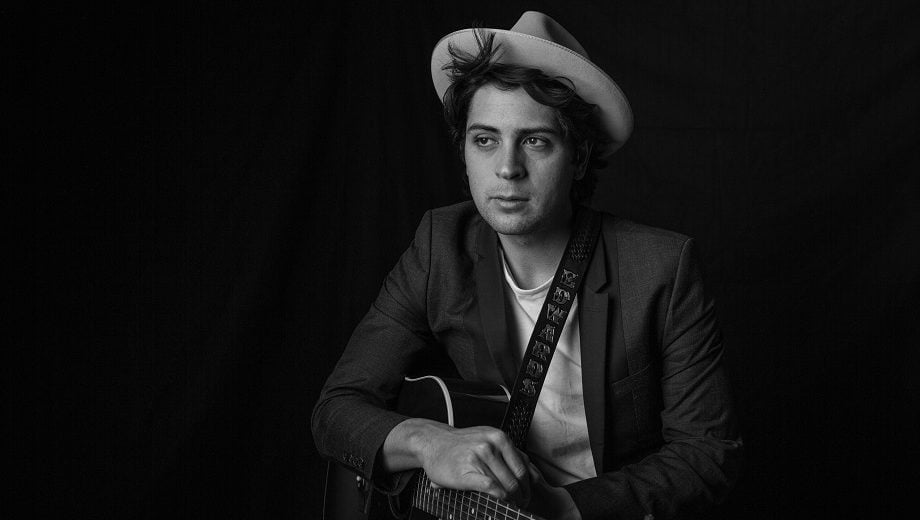
LISTEN: L.A. Edwards, “Reign Over Me”

Artist: L.A. Edwards
Hometown: Los Angeles, California
Song: “Reign Over Me”
Release Date: June 24, 2019

In Their Words: “‘Reign Over Me’ is the follow-up single after our debut record, True Blue. Ron Blair from The Heartbreakers was at the helm producing again, so it definitely models itself after many of the classic Petty records with a fresh take. We wanted to abstain from any sort of modern overproduction and really emphasize lyrical strength and Americana grit, taking inspiration from Petty’s Wildflowers, Neil Young’s Harvest, and Jackson Browne’s Running on Empty. It’s an honest recount of times spent in the Southeast touring during hurricane season with my brothers. We always have a good time singing this one.” — L.A. Edwards


Photo credit: Mike Bresnen

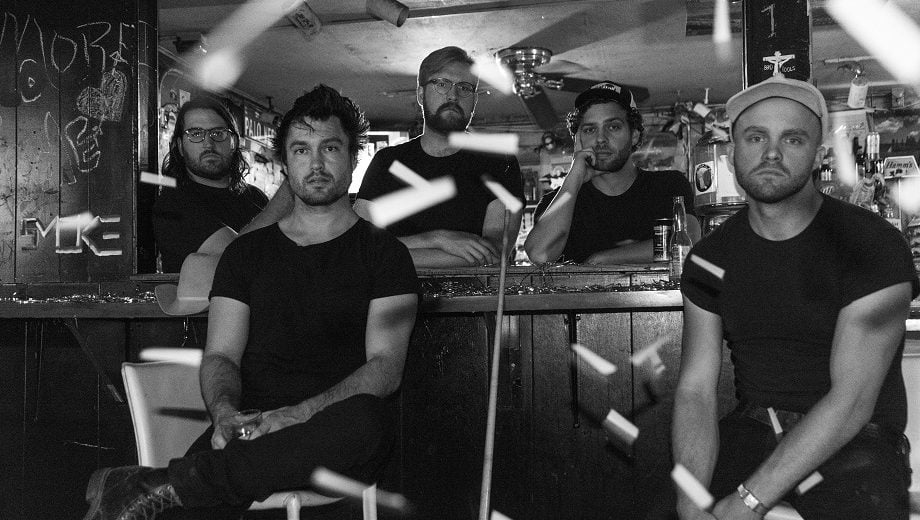
MIXTAPE: Jared & the Mill’s Overnight Driving Playlist

“Overnight drives are the lifeblood of developing into a touring band. Leaving the comfort of street lights and neighborhoods and going into the void to get to the next town in time for soundcheck is as thrilling and mysterious as it is exhausting and daunting. It’s a ritual we share with bands all over the country and it teaches us to identify as the road dogs we are. It’s a powerful sympathy that unites us with others like us. Looking out at the nothingness and knowing there are many hours left without comfort is isolating and forces us to look inward.

“After conversation about the show earlier that night or what we miss back home diminishes, we’re left with the stars, the dashboard, and the radio to keep us company as we try to stay awake through the hypnotic rhythm of yellow lines passing beneath us. These are some of the songs that keep us going as we pass through the voids in between towns, we hope you enjoy.” Jared & the Mill


Gregory Alan Isakov – “Stable Song”

The sonic qualities of this song are absolutely perfect for lonely nights away from home, and the lyrics inspire wanderlust just enough that I forget my homesickness and reinvigorate my excitement for adventure. It’s a godsend on long overnight drives.

James Taylor – “Sweet Baby James”

I was raised on ‘60s/’70s singer-songwriter music for a lot of my childhood, and this song brought my worlds together when I realized its subject matter covers the spirit of chasing a dream away from home and into the void. I come from a cowboying family and really love the idea of the traveling musician being the last of the cowboys.

–Jared Kolesar (vocals, acoustic guitar)


Feist – “Graveyard”
Feist’s “Graveyard” is a slow build that’s always worth it. Lyrically I feel like it dances around the topic of death, the dead, our memories, and our relation to our past, and our past relatives. Great for a long pondering drive. What a wonderful and beautiful chance it is, to be alive and experiencing anything.

Ennio Morricone – “The Good, the Bad and the Ugly – Main Title”

If this song doesn’t make you want to trip back to your previous life, strap on your shooting irons, and gallop down a dry arroyo to avenge your lovers death, then I don’t know what will.

–Michael Carter (banjo, mandolin)


Glen Campbell – “Wichita Lineman”

Glen is an amazing guitarist and the glittery arrangement of this great Jimmy Webb song always makes me long for home.

Jackson Browne – “These Days”

Sometimes thoughts of regret can creep in on those late-night drives. This song has an awesome way of acknowledging past mistakes while moving on from them.

–Larry Gast III (electric guitar)


The Wallflowers – “One Headlight”

Pretty sure this song that was scientifically created to make you feel like you’re in a driving montage in a movie. Maybe one of the best rhythm section grooves in the history of Americana to boot.

Kacey Musgraves – “Space Cowboy”

Kacey makes a stronger case for modern country music with every record she puts out. This is a perfect song for looking out the van window into the darkness of night and wondering why you are the way that you are.

–Chuck Morriss III (bass)


Fleet Foxes – “Helplessness Blues”

Lots of times on overnight drives you wonder if you have chosen the right path, or if a standard 9-5 could be more fulfilling. This song is a good way to consider the possibilities of that life, while the driving acoustic guitar keeps you alert at the wheel after an arduous day.

Robert Ellis – “Elephant”

I love the intricate plucking rhythms in this song, while the lyrics tackle relationship complications of being in a touring band.

Josh Morin (drums)


Photo credit: Cole Cameron

BGS 5+5: Skin & Bones

Artist: Skin & Bones
Hometown: Moorpark, California; Greensboro, North Carolina
Latest Album: Shadowboxing
Personal Nickname: Sweet mesquite Pete and the Carolina Heat

(Answers from singer/guitarist Taylor Borsuk)

What was the first moment you knew that you wanted to be a musician?

I was living with my girlfriend in Dresden, Germany, in winter. I was 19 years old and was addicted to writing songs. I hardly knew anyone there and couldn’t really speak much of the language. The isolation I experienced was really profound. It provided me with a very rare opportunity to consider what I wanted out of life. I made the decision then to put all my efforts into songs.

How often do you hide behind a character in a song or use “you” when it’s actually “me”?

I tend to do this in most of my songs; however I don’t consider it hiding. I write about my own personal experiences and others around me, but at the same time I want the listener to be able to relate to the songs and stories in their own unique way. I’ve used “you” instead of “me” in an attempt to bridge that gap in the hopes that the song feels as if it could be about anyone. In all honesty, what the songs means to me doesn’t matter that much. I’m more interested in what it means to someone else.

What’s your favorite memory from being on stage?

We were performing at The Deer Lodge in Ojai, California. I guess word had gotten around about our music and when we arrived the place was packed. People were singing along to the songs and it was one of those first ‘wow’ moments we experienced as a band. Great fun and we made a lot of new friends.

Which artist has influenced you the most … and how?

This is such a toughie. I pull from a myriad of influences, but I think the artist that has had the biggest impact on me is Jackson Browne. As a child his music was always playing in my home and subconsciously it laid the foundation for my appreciation of songwriting. His work is timeless. It will be just as relevant in a hundred years from now as it was when he first wrote it. When I heard that he wrote the song “These Days” at age 16 it set the bar for me.

What is your dream pairing of a meal and a musician?

Mexican food paired with the Mariachi radio station in a hole in the wall restaurant and I am a happy camper. Bring on the horns.


Photo courtesy of Skin & Bones

MIXTAPE: Janiva Magness’s Folk Is a Four-Letter Word

I have long known that I am, at times, a highly emotional creature. I’m good with that and ever grateful I have the music to help sooth me through it. Folk music has always been a part of that balm and always had a quiet place in me. Although, over time, the definition of what folk music is has changed, depending in part on its popularity. For me, this is a beginning of some of my always and all-time favorite folk music. These tunes contain both comfort and melancholy — for me, two of the “absolute musts” to great folk songs by great artists. — Janiva Magness

Bob Dylan — “If You See Her, Say Hello”

How is it possible to not love this track? Besides, there is no one who can turn a phrase like Mr. Zimmerman. No one!

Blackie and the Rodeo Kings — “Brave”

Steven Fearing of B.A.R.K. has such a soulful voice and tone, then add Holly Cole’s vocal with him, and I find it a haunting tale of deep and abiding love born of infidelity. It is both comforting and stunning.

Joni Mitchell — “Both Sides Now”

An epic song written by a then very fresh Joni Mitchell with so much wisdom, it seemed impossible to come from such a young woman.

Joan Baez — “Diamonds and Rust”

This classic — and at the time controversial — track about Joan and one other very famous folk singer and their love affair remembered.

Gillian Welch — “Look at Miss Ohio”

Just love this song and, though it’s not one of Gillian’s most played tracks, I have worn this out at home, in the car, and everywhere. I love it because it’s about a beauty queen being herself behind the scenes, and doing wrong — grinnin’ all the while.

Taj Mahal — “Corinna”

I have loved this track since first laying my ears on it in the ’70s. Simple folk blues. It don’t get any better than Taj.

Ry Cooder — “That’s the Way Love Turned Out for Me”

A haunting song originally recorded by James Carr, I believe, and then adapted by Ry Cooder. I just love this version because of its fractured vulnerability.

Bonnie Raitt — “Love Has No Pride”

A song penned by Libby Titus and portrayed by Bonnie. Her early ’70s material is incomparable for me really. This tune is a heart broken in two and laying on the floor right in front of you.

Zachary Richard — “No French, No More”

A haunting and, as I understand it, true tale written by Zachary Richard about his upbringing as a young Acadian boy in the swamps and woods of Louisiana, where his native language was French but, once placed in public school, the children were forced to abandon their language and culture for English.

Bobbie Gentry — “Ode to Billie Joe”

A captivating tale of love gone wrong with two teenagers in the rural South. Bobbie Gentry’s painful and almost detached vocal track make it all the more mysterious

Jackson Browne — “My Opening Farewell”

One of the most beautiful and lonesome songs of all time to me. Love and grief. Nuff said.

The Essential Nitty Gritty Dirt Band Playlist

The Nitty Gritty Dirt Band were born out of the burgeoning Southern California folk-rock scene of the late '60s and early '70s. The band was the brainchild of the singer/guitarist duo of Jeff Hanna and Bruce Kunkel, who had worked together as members of the New Coast Two and the Illegitimate Jug Band. Along with Ralph Barr, Les Thompson, Jimmie Fadden and, briefly, Jackson Browne, the band started gigging around Long Beach, California, in early 1967.

After Browne departed for his solo career and John McEuen signed on as a multi-instrumentalist, the band released their eponymous debut disc and won themselves enough attention to score a Top 40 hit, appear on The Tonight Show with Johnny Carson, and open for a strange melange of performers that ranged from the Doors to Jack Benny.

The next several years were difficult for the band as they released a string of commercially unsuccessful records, struggled with disagreements about the band’s direction, and found themselves being treated much like a novelty act. That all changed in 1972 when Jimmy Ibbotson joined the band and they embraced the sound of traditional country and bluegrass. They released their most commercially successful album, Uncle Charlie & His Dog Teddy, won another Top 40 hit (“Mr. Bojangles”), and opened the door to recording what was their career-defining album, Will the Circle Be Unbroken.

Tracked in Nashville, Will the Circle Be Unbroken was a monumental triple album that paired the long-haired, anti-establishment California boys in the band with country legends like Earl Scruggs, Doc Watson, Roy Acuff, and Maybelle Carter. By making that record, the band effectively bridged the gap between two generations of country musicians … and produced amazingly beautiful music in the process.

By the early '80s, the band had changed its name (to just the Dirt Band) and winnowed its roster down to four key members: Hanna, Fadden, Ibbotson, and keyboardist Bob Carpenter (with McEuen leaving in ‘86 and returning in 2001). Musically, the band adopted a contemporary country sound that played well on the radio — and at the record stores — scoring themselves three Top 40 and two Top 10 albums. Their quirky left-of-center style remained even as their sound softened, as witnessed by their appearance in Steve Martin’s hit, “King Tut,” as the Toot Uncommons.

In ‘89, Will the Circle Be Unbroken II was recorded (with contributions from John Hiatt, John Prine, Levon Helm, and Bruce Hornsby) and a third Unbroken collaboration was created in 2002 with a guest list that included Alison Krauss, Emmylou Harris, Tom Petty, and Dwight Yoakam. In the midst of these collaborations, the band spent the 1990s and 2000s making records that blend country, rock, and string music into their own unique sound.

Herein, we offer a brief playlist of tunes that we consider essential to knowing the Nitty Gritty Dirt Band, from their days as cosmic cowboys through their latter-day hits (and, of course, all three versions of "Will the Circle Be Unbroken.")

The Essential Jackson Browne Playlist

Jackson Browne was not yet 18 years old when he wrote one of his most famous songs, “These Days.” It was an auspicious beginning for one of American music’s most beloved songwriters (who also wrote for and played with the Nitty Gritty Dirt Band and Nico while still a teenager). The young singer’s career blossommed further with “Take It Easy,” his world famous co-write with the Eagles’ Glenn Frey.

Once in his 20s, Browne took his first step toward rock ‘n’ roll fame and fortune, signing with David Geffen at Asylum Records, and recording his first album, Jackson Browne. It included the hits “Doctor My Eyes” and “Rock Me on the Water,” lead to touring gigs with Linda Ronstadt and Joni Mitchell, and launched a recording career that now totals a surprisingly small number of just over a dozen albums.

But each one of them — even his critically less popular early ’80s work — holds within its grooves a tune or two that is, by anyone’s standards, a gem. Here is our Essential Jackson Browne Playlist, complete with both radio hits and deep cuts, taken from his albums both old and new.

Tell us your favorite Browne songs in the comments below!


Photo courtesy of Danny Clinch and Jackson Browne

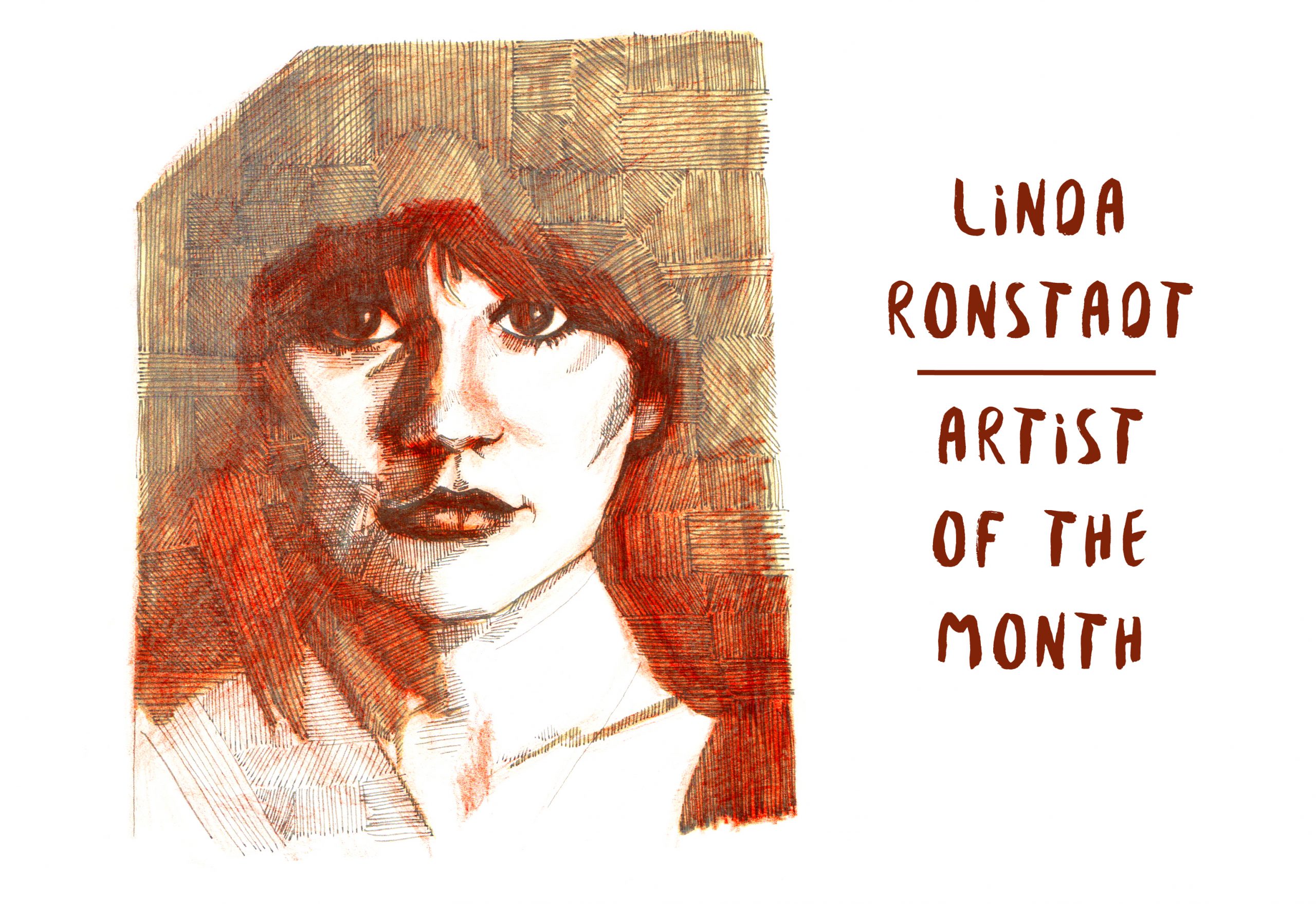
Linda Ronstadt: Hasten Down the Wind

In Home Free, his 1977 novel of faded denim hippie dreams, Dan Wakefield described his wandering anti-hero Gene Barrett overhearing a song on a nearby record player as he dozes in a hammock in Maine — Linda Ronstadt singing her folkish country ballad “Long Long Time” in the alto that wafted through many a window in those imperfect, exploratory days. “Gene was glad it was Linda Ronstadt, not someone soppy or sickly sweet,” Wakefield wrote. “Strong. Gutsy. Belting it out. Her voice didn’t seem just to come from the house, but out of the earth, over the water into the rickety little town and the scrubland and forest beyond it.”

Beginning in the 1970s, Linda Ronstadt’s singing has had that kind of geological effect throughout popular music: steadying, seemingly able to erase time and trends within one flow of feeling that goes below the surface and the deeper strata of American consciousness. In a time of fading utopian hopes, she emerged as an emissary able to connect old musical ways with the new consciousness of her own maverick generation. “She is offering us something very valuable for the '70s: not a fantasy figure, but a reality figure,” wrote the rock scribe Tom Nolan in 1974. Raised on country and the ranchera music that echoed through her Tuscon, Arizona, neighborhood, Ronstadt sang with a verve and directness that eradicated the pretentiousness that could sometimes afflict the children of the counterculture. Album titles like Hand Sown…Home Grown, Simple Dreams, and Hasten Down the Wind celebrated a naturalness that was complemented by a meticulous attention to musical detail and one of the greatest ears of the rock era.

Those who underestimate Ronstadt as a pretty face and voice who rose to fame on the power of others’ songwriting and production talents — and there have been far too many in that camp — are ignorant. From her teenage days in the folk trio the Stone Poneys, Ronstadt developed a persona that spoke profoundly to women waking up to the way many men had condescended to them throughout the early years of the supposed sexual revolution. She was an everywoman who, instead of building a world through songwriting, did so by taking on others’ words and melodies and reshaping them with intelligence and boundless energy. She grew up in public through her recordings. In 1971, when she was 25, she told a reporter that she didn’t have the voice to do soul music; by 1974, she’d developed her own style of testifying that made her funky reinterpretation of Dee Dee Warwick’s 1963 shouter “You’re No Good” into a number one hit, one she’d follow up by reinvigorating songs by Martha and the Vandellas, Chuck Berry, Roy Orbison, and the Everly Brothers, among others. At the same time, she continued championing her own peers, who played on her most successful albums. She was that woman who, like so many others, did the real power lifting within a scene dominated by self-styled heroic men.

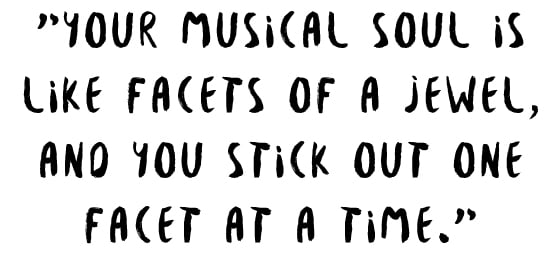
When the multi-platinum success of her fifth album, Heart Like a Wheel, sent Ronstadt into the arena-rock stratosphere, she became the premium interpreter of an American songbook that she’s continued to redefine throughout her career. It now includes everything from George Gershwin and Cole Porter to early rock 'n' roll, the Nashville sound, Mexican canciones, Laurel Canyon balladry, Cajun two-steps, and the punkish sounds of New Wave. She developed her singular eclecticism, in part, as a way of coping with a music industry that would have kept her in a stadium-sized box — she hated playing those big venues, ripping up her voice in front of anonymous-feeling hordes — and turned to theater music and standards as a way of reclaiming her right to be a subtle interpreter. "Your musical soul is like facets of a jewel, and you stick out one facet at a time," she said in a retrospective interview in 2003.

Even as a teenager, when lesser musical adventurers would fall into a rut, Ronstadt would change course. Setting forth on a solo career after early success with the Stone Poneys trio challenged the boundaries of strummable folk music by foregrounding its connections to country and becoming as much an inventor of country rock as was Gram Parsons or the Eagles, who famously formed as her backing band. After finding a niche as the patron of her L.A. neighbors, from Warren Zevon to Randy Newman and Jackson Browne, she teamed up with producer Peter Asher to hone that rocked-up pop sound that made her a superstar. Throughout her career, she would return to that sound which, in turn, became hugely influential, forming part of the bedrock of many future stars’ styles, from Olivia Newton-John to Sheryl Crow to Tom Petty and the Heartbreakers and Carrie Underwood.

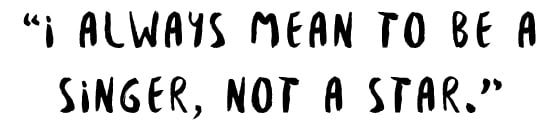
Meanwhile, Ronstadt became a producer herself, an extension, in some ways, of her role as a brilliant collaborator. Her work behind the boards with the soul legend Aaron Neville, for example, complements her many beautiful duets with him. Her deep love of harmony singing, along with her dedication to uplifting the women with whom she feels the deepest musical kinship, led her to form one of the most beloved vocal groups in recent pop memory — Trio, her project with Dolly Parton and Emmylou Harris. “I always mean to be a singer, not a star,” she said when the second Trio album was released in 1999. In fact, Ronstadt’s stardom has been predicated upon her ability to consistently remind listeners that to sing is to cultivate a space where all the trappings of the moment — fashion, fame — fall away, a space of pure joy and sensual release.

Linda Ronstadt can no longer call that space into being in real time, having lost her voice to Parkinson’s disease in 2013. But she remains a bright spirit: the author of a revelatory book, Simple Dreams: A Musical Memoir, and a role model for a new generation of musical boundary breakers. And through her immortal recordings, her voice still permeates the soil of our consciousness, a clear liquid presence easing our minds and, by example, urging us to continue challenging ourselves. A natural gift beautifully cultivated, Linda Ronstadt’s legacy still challenges us to be more free, even as it hastens down the wind.


Ann Powers is critic and correspondent for NPR Music and the author of several books, including Good Booty: Love and Sex, Black and White, Body and Soul in American Music, forthcoming from Dey Street Books in 2017.

Lede illustration by Cat Ferraz.

3×3: Jonah Tolchin on Building Schools, Making Mistakes, and Being a Mayophobic

Artist: Jonah Tolchin
Hometown: Currently Floating
Latest Album: Thousand Mile Night
Personal Nicknames: Merlin


A photo posted by Jonah Tolchin (@jonah.tolchin) on

What song do you wish you had written?

"These Days" by Jackson Browne. One of my all-time favorite songs. It's one of the first songs I ever learned how to play and sing. I recently got a chance to see him play at Tanglewood in Massachusetts and was very touched when he played that song.

If money were no object, where would you live and what would you do?

There are many places that I haven't been to in the world where I would like to go. Particularly parts of Asia. I would like to help fund the start of schools and building of communities in different parts of the world, including here in the U.S. (with an emphasis on nature awareness and the arts). To be honest, I've been asking myself this question a lot recently — and am still learning and discovering what the full answer is. Ask me again next year!

If the After-Life exists, what song will be playing when you arrive?

"We Belong Together" by Mariah Carey. Just kidding. Or am I? Maybe "Magic Party" by Ted Nugent.


Enjoying a special moment in the studio with Mr. James Gadson.

A photo posted by Jonah Tolchin (@jonah.tolchin) on

How often do you do laundry?

Not enough.

What was the last movie that you really loved?

I don't know about a movie, but the first season of Stranger Things was off the chain.

If you could re-live one year of your life, which would it be and why?
For fun, I would have to say my freshman year of high school (I had a great time). For attempting to re-do it better and avoiding mistakes, definitely 2016. This has been
a rough one for me.


We had an exciting visitor on the land this week!!! #bear

A photo posted by Jonah Tolchin (@jonah.tolchin) on

What's your favorite culinary spice?
I love cooking with fresh garlic. In powder form, many Indian spices. Cumin is nice.

Morning person or night owl?

Definitely a night owl. On the rare occasion that I have to wake up before 4 am for a flight, I will sometimes enjoy it. Being up before anyone else and walking by all the houses while the sun is just starting to come up is wonderful.

Mustard or mayo?

Mustard. I am mayophobic. I'm getting better with it, though! One step at a time.