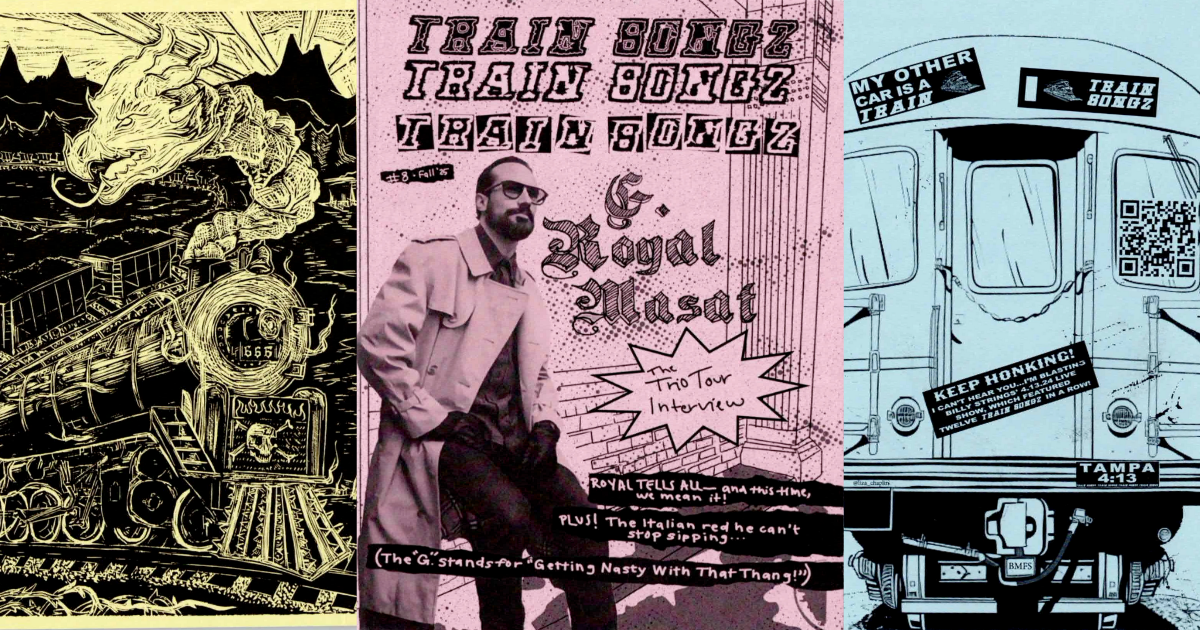
Somethin’ About Train Songz

What first began as a locomotive and string music meme page has transformed into one of the most quirky and beloved sources of independent journalism in roots music, one zine at a time.

Founded by Anthony “The Conductor” Perasso and James “Promontory Paul” Lucey in July 2023, Train Songz has since grown its community to over 28,000 Instagram followers and more than 1,200 paid subscribers. Readers collectively contribute anywhere from $33-$99 per year (or $11 per copy), with three to four issues published per year. The latest, eighth edition features a 44-page interview with Billy Strings’ bassist Royal Masat.

The interview for Masat is a full circle moment for Train Songz, which began with a Billy-centric focus before expanding to feature other bluegrass acts like Mountain Grass Unit, East Nash Grass, and Valley Flower. In fact, it was a Billy Strings show in Bridgeport, Connecticut, attended by Train Songz co-founders (that they rode the train to themselves, no less) where the concept for the then-meme page first came together.

“At the show Billy was wearing a hickory-striped railroad hat that someone (who we’ve since connected with on Instagram) threw up on stage a few shows prior, as trains were passing by the stage,” recalls Perasso.

“I tweeted from my personal account a photo of Billy with the hat on and the caption ‘Train Songz,’ which was a Trey Songz pun – like if Trey Songz is Trey Songz, then Billy Strings is Train Songz,” Perasso laughs. “Four days later, I locked down the @train_songz username and posted our first meme.”

After publishing some popular Billy and Grateful Dead inspired memes, Train Songz began transitioning to a zine in December 2023, while Perasso was home for the holidays and more sedentary than usual after recovering from multiple surgeries. No stranger to producing print media, having previously worked on a satirical newspaper while in college, he says the zine quickly filled a void left empty since graduating in 2017. Now two years in with eight installments of the printed zine, Train Songz has grown into a thriving community bigger and wilder than Perasso, Lucey, and the rest of the core team – including Liza Chaplin (art/design) and Mitchell “Brakeman” Harbin (writer/editor) – could have ever imagined.
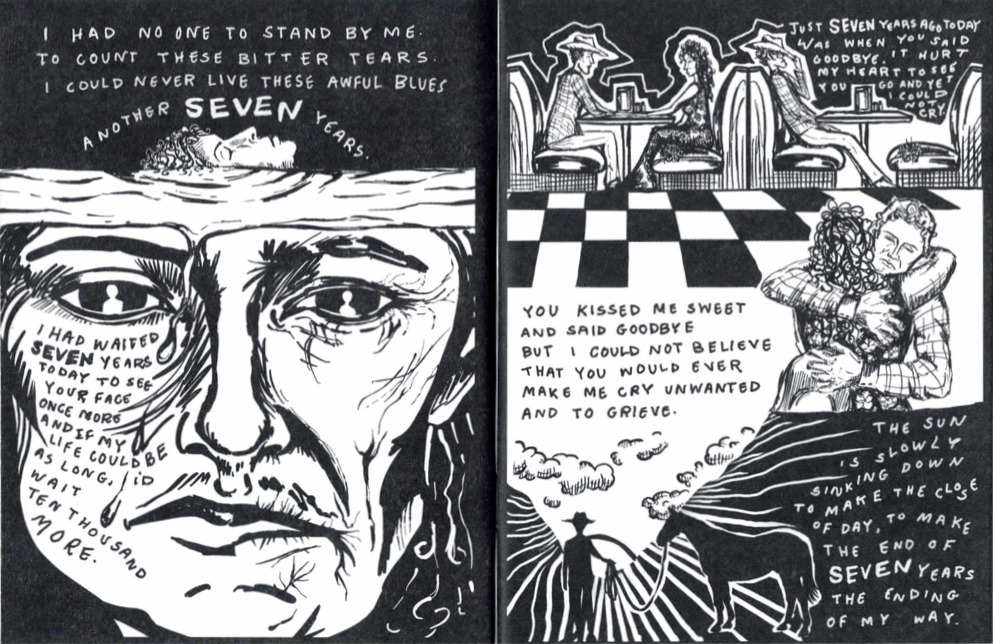
Original artwork by Morganne Allen from ‘Train Songz’ Vol. 7, Summer 2025.

“Beyond my personal penchant for print, Train Songz was gathering a community of wooden-instrument-music enjoyers, so print felt like a natural extension of that vibration,” Perasso continues. “And from a more boring media strategy point of view, print (and email!) offers you a direct relationship with your audience that algorithms can’t get in the way of and platforms can’t take away. So for both those reasons, a Train Songz zine felt like a perfect move.”

After wrapping up production on the eighth installment of the zine, the Train Songz crew spoke with BGS via Zoom about the zine’s origins, how they first discovered Billy Strings, the publication’s next steps for growth, and more.

Y’all use pen names in the zine (except for Liza). How did each of you come up with your alter egos?

James Lucey: Before I get to that, I’ll just add that leading up to this interview we all debated if we should do this as ourselves or go by our pen names. It’s been an interesting dynamic, [navigating] who are we in relationship to the zine [and] what the zine is in relationship to us and our audience. We made the zine to try and participate in some way in the broader conversation about modern-day bluegrass music; we’re not the face of the zine, we’re just the people that are powering it.

But regarding my pen name, “Promontory Paul,” he’s the voice of the Old Tune Review, which is one of the core pieces of the zine. In it we pick a handful of old songs [and] dive deep into [their] history through independent research. It’s born out of the idea that these old songs are still being played today and still resonate in some way. In some ways it’s like a time machine, because you’re feeling the same emotions that someone felt hundreds of years ago when they wrote these things. So it’s cool to dive in and see what the actual genesis of those songs are.

[Paul’s] the guy who runs that, but we also feature him in a little recurring cartoon series that sees him playing banjo and getting into all kinds of crazy adventures. “Promontory” is a reference to the Promontory Summit, which was the final completion [point] of the first transcontinental railroad in Utah, when the Union Pacific Railroad and the Central Pacific Railroads (which had been building from Nebraska and Sacramento, respectively) finally met.

This effectively connected the old world with the new one, sort of like what we do with the zine.

Mitchell Harbin: My name actually came out of the fact that a brakeman is a role on an actual train – he’s the guy that pulls the brakes. It was actually during the production of the zine’s third issue that I had come aboard to help with proofreading and copy editing. There were a couple of times in that process where James and Anthony were like, “Alright, we’re good to go, ready to launch” and I would pump the brakes and say, “Whoa, hold up.” Which is what eventually spawned the name idea.

Liza Chaplin: I’m still working on mine. [Laughs] It’s an ongoing thing that I’ve been thinking about, but so far I haven’t gotten anywhere with it. At first I decided to put my own name on it to use as a portfolio-building mechanism, but now with how the zine has grown it feels very silly to still have my actual name on it.

Anthony Perasso: “The Conductor” came to be when James and I were talking about taking the meme page offline [and moving] into print form with our first issue. We made a decision that Train Songz was the name of the publication and brand and community – or whatever vibration of people who value the same kind of music as we do, cultivating this eponymous meme page.

As the person who had started the meme page, I didn’t want Train Songz to be seen as an individual, as in, “That’s Anthony, he’s Train Songz.” Our desired outcome would be: “That’s Anthony, he’s The Conductor for Train Songz.” That allowed Train Songz [to be] less a single being and more of a vehicle for those involved. Pun intended. (A mentor even recommended to me that the title of The Conductor be something that can be passed on from individual to individual, like the Pope or the President. Time will tell if we get to that point!)
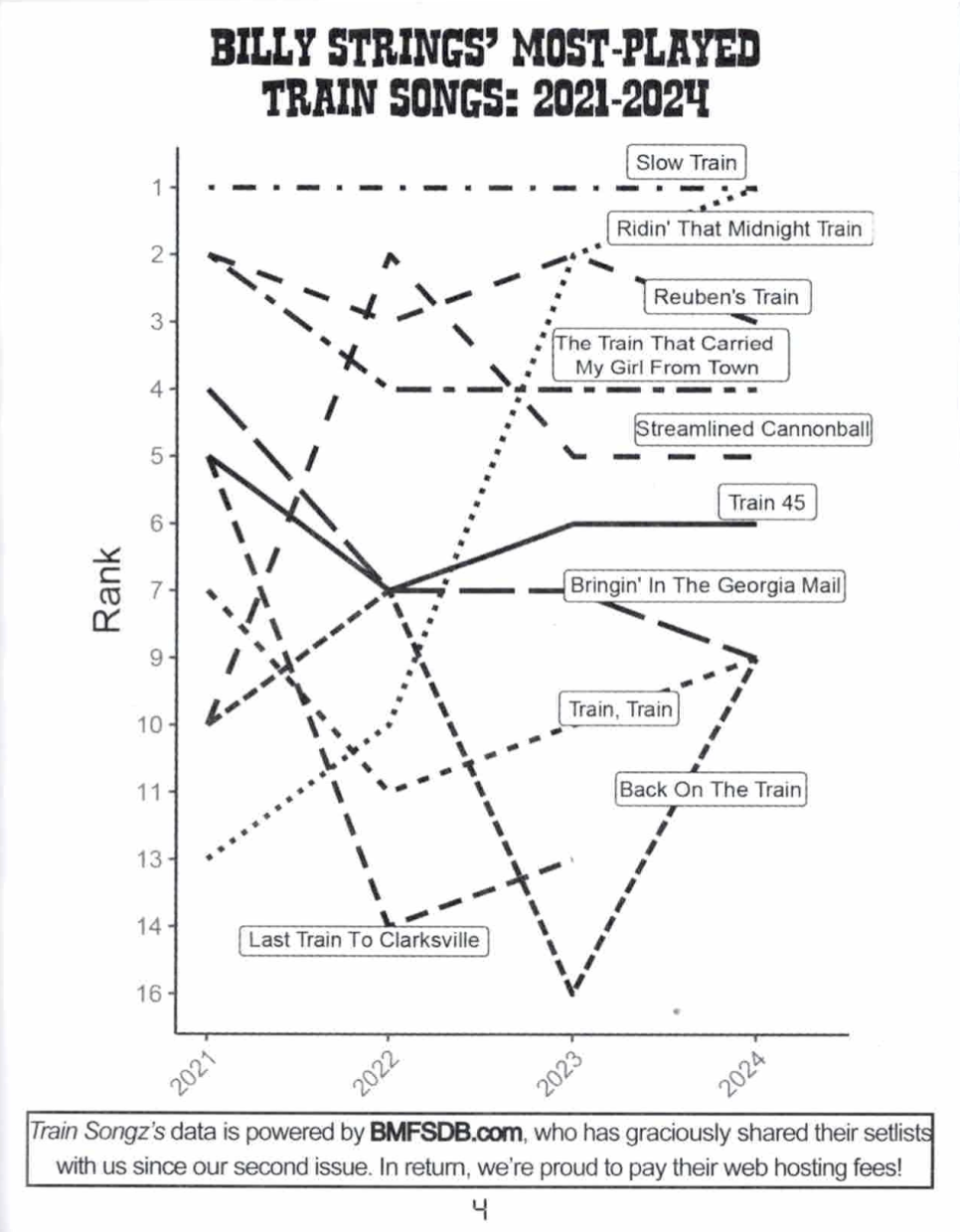
A Billy Strings train songs data visualization from ‘Train Songz’ Vol. 5, fall 2024.

What was Promontory Paul’s role in this latest issue of Train Songz given its focus on the Royal interview?

AP: Paul’s column still exists in the newest zine, but he went about it in a really cool way. The idea began with our third edition, when we gave Promontory Paul an entire section to write about old bluegrass songs regularly covered by the likes of Billy, the Sam Grisman Project, and whatever other bands we listened to or saw live that quarter. So we’d cite where we heard it played before diving into a history lesson and where it came from.

Then, for this issue with Royal, we took that Old Tune Review and instead of songs we heard out in the wild made it all about songs that he mentioned during the interview. Throughout the interview there are little interjections from Promontory Paul – almost like Clippy, the office assistant on Microsoft Word. It’s been fun to take these gimmicks that worked for us a year ago and apply them to the restrictions presented by this long-form interview. Royal gave us so much that we wanted to give him the entire issue, but we’re still going to sprinkle in the ethos of what our readers are familiar with and what we like to do, which is to connect something that’s happening in the present day – like the recent Billy Strings and Bryan Sutton tour with Royal – to the past. It’s been really fun connecting with folks like that through the zine. It’s almost like Paul’s on a time-traveling train or something. [Laughs]

We send surveys out to our subscribers after publishing each issue and Promontory Paul’s history lessons are always towards the top when it comes to [readers’] favorite parts of the zine. It’s also been a cool way to make note of the fact that it’s not just us behind the scenes who are enjoying this. It really speaks to how much we respect the audience that we have and how that drives us to create the best issue possible every quarter.


View this post on Instagram


A post shared by Royal Masat (@royalmasat)

I saw recently that Royal left a copy of Train Songz #7 at the NPR Tiny Desk following the session he recorded there with Billy. What did seeing that mean to y’all?

AP: He’s been a follower of ours for a long time and brought that copy of the zine to NPR on his own after reaching out to us to subscribe about a year ago. We knew he’d been reading along for a while, so once this tour came up with him, Bryan, and Billy, it just seemed like the perfect thing for the zine to cover. It was important for us to capture the combination of old and new in those shows dedicated to Doc and Merle Watson and T. Michael Coleman and featured the King of arena-grass playing these smaller rooms of 400 to [2,200] people with one of the most preeminent guitarists alive in Bryan Sutton.

It took us a second to come around to the idea, because we’ve been very cautious about not becoming a Billy Strings-exclusive fan zine. We want to serve the broader ecosystem, but that tour was something we couldn’t pass up, especially with Royal being a reader. Once we did reach out, he blew us out of the water with the time he put into it. His interview with Mitchell ended up being over 4,000 words that he sent us by email after wrapping up a tour in Europe. Once that wrapped I remember him sending us a literal tome – he took it very seriously and his responses were so thoughtful.

The final result almost looks like a children’s book with the way Liza designed it. None of that would be possible without our paying supporters, who make it possible for us to work with the 17 artists we partnered with on this issue to bring it even more to life with quirky illustrations that tie back to things Royal said, like throwing in an illustration of a medieval horse with a knight in shining armor where Royal refers to his bass as his trusty steed. I like to refer to what she does as “Andy Warhol-ing.” [Laughs]
Inset artwork by Sara Dennis from the 8th and most recent edition of ‘Train Songz.’

I know you just mentioned not wanting to become exclusively a Billy Strings fan zine. However, I’m curious to hear when and how y’all first encountered his music?

LC: The first time I saw Billy was at RiverRock, a free festival on Brown’s Island in Richmond in 2019 before he blew up. I had heard of him prior to that, but after seeing him live I became absolutely mesmerized. I didn’t like bluegrass for the longest time, but something clicked with me when I saw Billy and was like, “Oh, this is what I want to keep following and chasing.”

MH: In college, I was a huge Deadhead and Phish fan and was consumed by the jam world. Then I heard about Billy on some Facebook groups and message boards, talking about how he covers The Dead really well.

I moved to Boston shortly thereafter and the first month I was living there Billy played at the Wang Theater. I wound up buying a ticket and went without having listened to his music at all beforehand and was absolutely blown away. To me, it was like a psychedelic Dead or Phish show combined with bluegrass, which in hindsight probably hit on the homesickness I was feeling at the time, because I had been around bluegrass before, but wasn’t really interested in it when I was living in the South. From there, I jumped down the rabbit hole into more old-time bluegrass, which is when I started playing the music myself. So I attribute my musical pursuits now to that moment and think that is probably true of other people, too.

JL: I remember [going down] a YouTube [rabbit] hole in 2020 and coming across a set of Billy playing Doc Watson tunes. It may have been Royal’s first gig with him. I just so happened to be in a bit of a bluegrass moment at the time I found that video of Billy and was instantly hooked, resulting in me digging even deeper. I was already a Deadhead as well, so I loved his covers of those songs too. Then I worked my way to his original stuff – which is also sick – and I have YouTube to thank for it!

AP: I remember James, “Promontory Paul,” showing me Billy for the first time. Like most of the bands I like, I channel my music taste through him. When we first got into him there was still a lot of remote work going on, so we’d listen to Billy while doing that or even while we were playing games like Fortnite. I started listening to a lot of The Dead in order to try to get to the point where I could listen and name the year the show came from. But over time Billy started taking more and more of the market share of my listening time away from the “What year is this Grateful Dead show from?” project.

What are your next steps for continuing to grow Train Songz?

AP: We occasionally host concerts (the next one is February 12, 2026 with The Asheville Mountain Boys), and have captured audio recordings – which we call Tiny Train Sessions – in the past, but we look at them more as a marketing tactic than a growth mechanism.

My day job is a social media manager and doing that I’ve noticed that the best way to get a lot of views on Instagram is to post reels, because they [are served] to non-followers and new followers first. We could post a bunch of concert clips and other things to build our audience, but we intentionally opted to not do that because we’re firm believers that things that grow slow last a long time. We don’t want to gatekeep or make it hard to find us, but rather [hope folks will] find us organically through a friend sharing one of our memes or sending you a copy of the zine itself. I want the first point of contact to be someone who’s already within our ecosystem that really digs it and turns you onto it, one person at a time.


All visuals, artwork, and zine scans courtesy of Train Songz. Learn more about artists Morganne Allen and Sara Dennis.
Watch Billy Strings Perform His First Ever Tiny Desk Concert

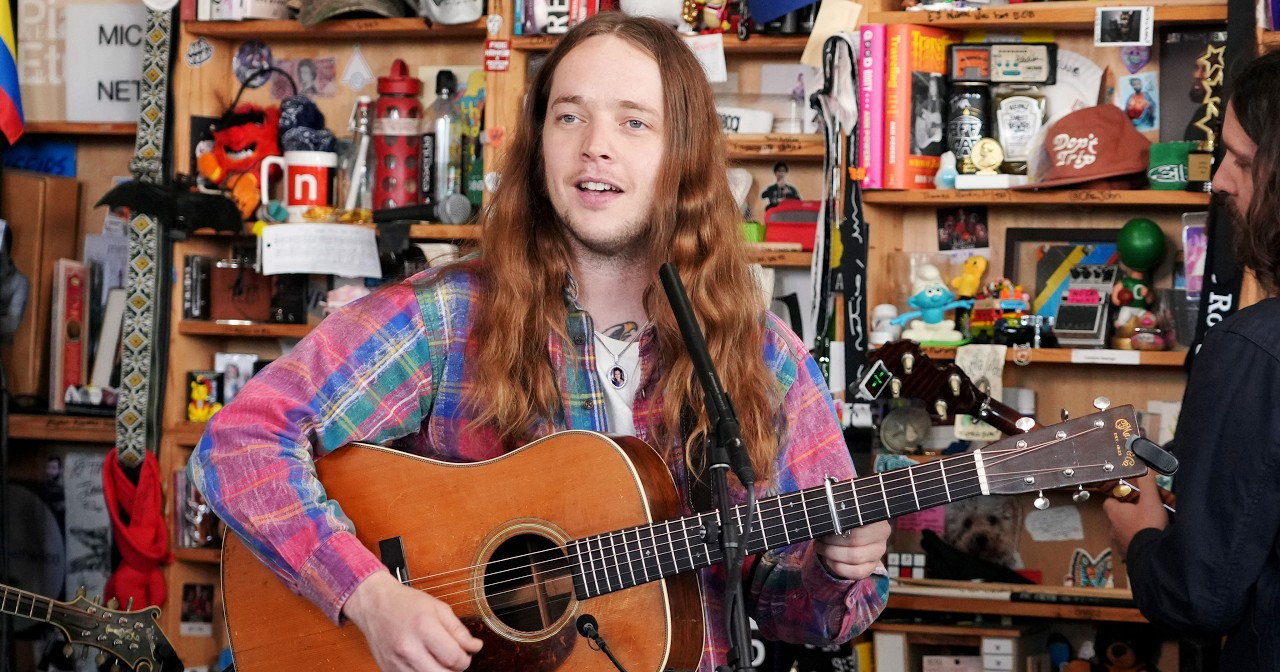
NPR Music brought all of us an early holiday gift – skipping placing it under the tree entirely – when they released Billy Strings’ first ever Tiny Desk Concert on December 10. With his touring band of Jarrod Walker (mandolin), Royal Masat (bass), Alex Hargreaves (fiddle), and Billy Failing (banjo) circled up around him, Strings performed three tracks from his GRAMMY-nominated 2024 album Highway Prayers as well as a fan favorite, “Red Daisy,” from 2021’s Renewal, which kicked off the set. Watch above.

Bluegrass is perfectly suited to the stripped-down, acoustic Tiny Desk setting of course, the genre seemingly designed for just these sorts of informal contexts, with listeners gathered around and that high lonesome sound cutting above. Still, the NPR Music staff gush in their post of the concert about Strings’ sonic instincts in the space. “It’s rare these days for an artist to ask for fewer microphones,” they write in their description of the mini set, “but after warming up in our space, Billy Strings did just that.”

Strings and his band routinely step away from their pedal boards, pick ups, and instrument and vocal mics even on the biggest arena stages in the country, so it’s no surprise they leaned further into the cozy and informal vibes of NPR’s Tiny Desk, dancing around the single center microphone while certain instruments are augmented slightly by clip-on condensers.

No matter the heights to which this group ascends, they never forget their unassuming bluegrass roots. Strings is noticeably excited and humbled to take his turn behind the Tiny Desk. “We’ve been lucky to play a lot of cool venues,” Strings says during his set. “But this one’s different. It has that same soul to it because — I’ve seen so many amazing performances that happened right here and I kind of believe that love and spirit kind of soaks into this environment, so just standing here feels like a special thing.”

Though, like all Tiny Desk performers, they only perform a handful of tracks, Billy Strings and his band did indeed accomplish a very special thing with their debut Tiny Desk Concert.

Highway Prayers is nominated for a GRAMMY for Best Bluegrass Album at the 2026 GRAMMY Awards to be held in February in Los Angeles. We spoke to Strings around the release of the project in 2024, when he was our Artist of the Month.


Watch Billy Strings Perform on The Late Show with Stephen Colbert

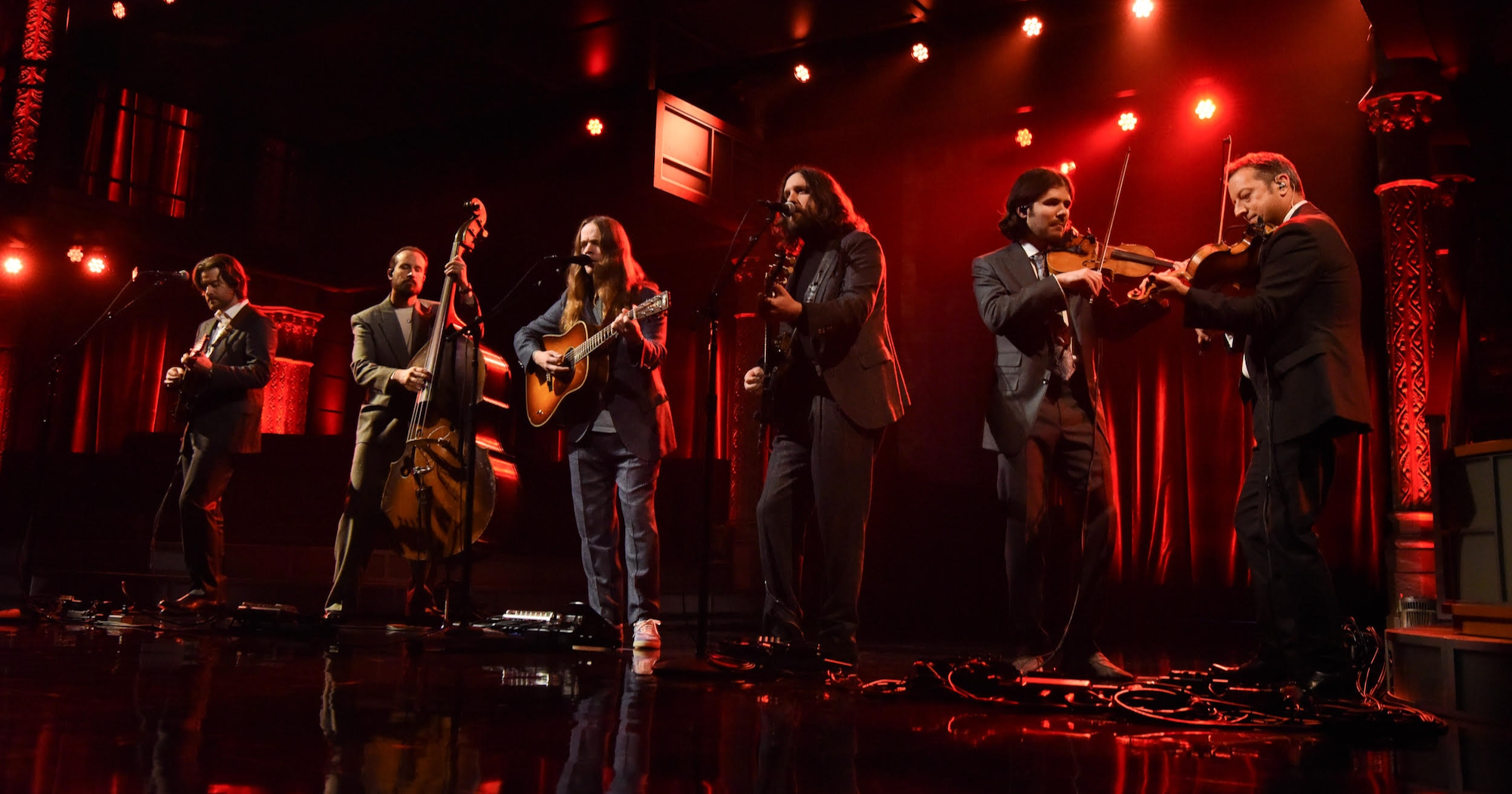
On Thursday, November 20, 2025, Billy Strings and his band returned to The Late Show with Stephen Colbert for another exciting bluegrass performance broadcast over the television airwaves. Strings’ 2024 album, Highway Prayers, was recently announced as a GRAMMY nominee for the Best Bluegrass Album award at the upcoming 2026 GRAMMY Awards, which will be held in early February. On Colbert, the group performed “Leaning on a Travelin’ Song” off the project to celebrate the LP’s nomination. (Watch above.) It’s Strings’ eighth GRAMMY nomination since 2020 and, if he wins in 2026, will be his third trophy for Best Bluegrass Album.

The band, which includes Jarrod Walker (mandolin), Royal Masat (bass), Billy Failing (banjo), and Alex Hargreaves (fiddle), were joined by fellow Best Bluegrass Album nominee Jason Carter for a twin-fiddle arrangement of “Leaning on a Travelin’ Song.” (Carter is GRAMMY-nominated with Michael Cleveland for their debut duo album, Carter & Cleveland.) Carter guested on the track on Highway Prayers, as well, supplying delicious twin fiddle and reprises his album role on the Colbert stage. The song begins with mournful a cappella three-part vocals and dramatic guitar strums before kicking into time with the lush, burning fiddling of Hargreaves and Carter.

As Nickel Creek’s Sara Watkins put it in a comment on Instagram, “Yes sirs!! Nothing like some singin’ twin fiddles on National Television!” We and the many other commenters and viewers on the internet agree. Strings and his cohort sound excellent, offering warm, lively, and crisp, fresh-sounding bluegrass to millions over the television airwaves. The world could always use more twin fiddle, and it certainly always craves more Billy Strings.

We spoke to Billy Strings about Highway Prayers while celebrating the album’s release last fall when he was BGS Artist of the Month. Check out that interview here.


Photo Credit: Scott Kowalchyk for The Late Show with Stephen Colbert.

SURPRISE! Billy Strings & Bryan Sutton Release ‘Live at the Legion’

A year ago today, on April 7, 2024, the American Legion Post 82 in East Nashville was packed to the gills with rabid flatpicking fans, geared up for a special appearance by two of the greats: Billy Strings and Bryan Sutton. Far from their first show together or their first collaboration, it was still one of the hottest tickets in Nashville and fans lined up down the sidewalk and up the drive of the humble Legion for their chance to witness bluegrass guitar history in the making.

To the delight of the many hundreds of thousands who would have but couldn’t also squeeze into the cinder block building known for two-stepping, honky-tonkin’, and bluegrass jams, today Strings and Sutton surprise released a live-recorded album of that evening’s show, Live at the Legion. Available digitally – with CDs and vinyl on the way August 1, and physical pre-order open now – it’s a two-disc, 20-song collection of traditional tunes, medleys, covers, and two of the most personality-rich and unique improvisational voices on the instrument.

Strings makes it no secret that, like many younger guitar pickers in bluegrass and adjacent styles, Bryan Sutton is a hero. The two have collaborated often in the past, formally and informally, getting together for jams and lessons, Strings appearing at and attending Sutton’s Blue Ridge Guitar Camp, performing as a duo at the Station Inn, Sutton guesting on stage with Strings and band, and more.

These are two generational talents, understood within and outside of bluegrass to be standard-setters for the instrument and for flatpicking at large. Together, their musical dialogues are entrancing, exciting, and as charming as they are downright unpredictable. Billy’s power and aggression on the six-string ease, while each player listens ardently and responds to the other with comfortability, or a wink, or a tasteful counterpoint, or an outburst-inducing surprise. Sutton is endlessly lyrical, drawing out such responses from Strings. For their level of chops, the collection rarely strays into self-involved jamming or ego-driven ideas.

Later this year, in September, Strings and Sutton will perform a short series of intimate duo shows to celebrate Live at the Legion – and give any who couldn’t be there in East Nashville in 2024 for the taping of the album another chance to catch the magic. The pair will appear at the Bluegrass Music Hall of Fame & Museum in Owensboro, Kentucky; at Nashville’s Ryman Auditorium; in Chattanooga, Tennessee; and in Boone, North Carolina with accompaniment by Strings’ bassist, Royal Masat. Due to anticipated demand, tickets for any/all of the shows must be requested by April 21, 2025, after which lottery winners will be notified. Sign up to request tickets here.

Bluegrass boasts many an iconic duo album, especially focused on the guitar. In the future, will we group Live at the Legion alongside other such definitive recordings as Blake & Rice? It seems almost inevitable. From Blake & Rice to Skaggs & Whitley, Watson & Monroe, and Grisman & Garcia – or even the just-released Carter & Cleveland – it seems immediately clear Billy Strings & Bryan Sutton’s Live at the Legion will be going down in bluegrass history. Tuck into this double album delight to see and hear why for yourself.


Photo Credit: Joshua Black Wilkins

John Mailander’s Improvisational Forecast Says ‘Let The World In’

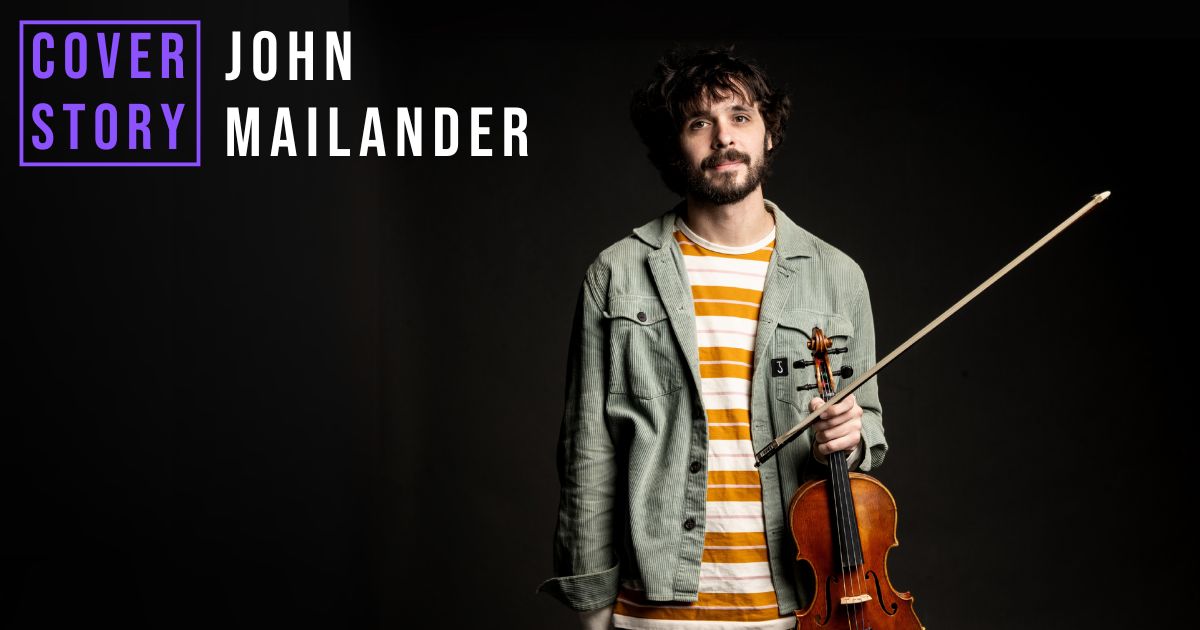
Whether or not you know it, you’ve likely heard John Mailander music. Chances are he’s even worked with one (or some) of your favorite artists, from Bruce Hornsby to Billy Strings, Noah Kahan, Joy Williams, Lucy Dacus, Molly Tuttle, and many more.

No disrespect to his work with the Noisemakers (who he’s toured with since 2018), or Strings’ GRAMMY-winning album Home, or any other projects, but it’s Mailander’s original works where his musical wizardry glows brightest. On his latest effort, Let the World In, his abilities are stronger than ever as he combines the influences from everyone he’s worked with into an adventure of orchestral bliss guided by trance-like, open-ended jazzy jams.

Helping Mailander to paint these soundscapes across nine tracks and 35 total minutes of run-time are his longtime band members in Forecast – Ethan Jodziewicz, Chris Lippincott, Mark Raudabaugh, Jake Stargel, David Williford – who he first started playing with during a Nashville residency at Dee’s Country Cocktail Lounge in 2019 to celebrate the release of his debut album of the same name. Through eight instrumental tracks (and a cover of Nick Drake’s “Road”) they send listeners on an introspective journey throughout Let the World In that brings the jazz leaning work of Hornsby and jam-fueled tendencies of Phish together, showing just how far he and Forecast have grown and evolved since first coming together.

“The first record was a blueprint, the second was settling into and discovering who we are, and this record is the most confident statement of who we are,” Mailander tells BGS. “Harmonies, colors, melodic themes, it can all be tied back to the first record in some way.”

Mailander spoke to us ahead of the album’s release about how all of his prior collaborative experiences set the stage for Let the World In to shine, writing on the piano, reality checks from recording, song sequencing, and more.

From your work with Billy Strings and Bruce Hornsby to your own music, you’ve always had a very collaborative way about you and this new record is no exception. What are your thoughts on the significance that played in the process of bringing this album to life?

John Mailander: Collaboration and improvisation are some of the most beautiful parts of being a musician. I love working with the widest variety of artists that I can. It’s a great way to become closer on a human level with the people you’re working with.

Initially, when I was starting this Forecast project, I envisioned it as more of a collective of musicians where we could all bring our own original tunes to the table and improvise freely. However, over time it’s formed into a more regular lineup with the six of us, allowing for the group to grow together as a unit.

Is the album title, Let the World In, meant to be a nod to that collaborative nature and outside influences that loom so large on the project?

Absolutely. The title has a lot of different angles to it. I hesitate to say everything it means to me because I don’t want to put it into too much of a box – I want to leave room for the listener to imagine what it means for them as well. It’s a follow-up to the last record [Look Closer] that we made in isolation during the pandemic.

While that record was very introspective, this new one is much more expansive, because of the world opening up more now and having this constant flood of information coming at us from all directions. It’s an overwhelming time to be alive, so this album feels like a companion piece to the last one, almost like the other side of the coin.

The title track also features the “Let the World In Sound Freedom Expressionists” – Hannah Delynn, Maya de Vitry, Gibb Droll, Ella Korth, Lindsay Lou, and Royal Masat. What was your intention with recruiting them for that one track, and what do you feel they brought to it that it may not have had otherwise?

They are a collection of very dear friends in Nashville who have been there for me in my personal life through a lot. It felt really important to me to credit these friends on the record in some way. That manifested into this collection of sound bites from each of them including poetry, sound effects, singing, and field recordings, which I put together into the sound collage you hear in the track. I love knowing that all of their voices are in there. I hope with each listen you can tune into different elements of it and hear new things.

In terms of outside influences on the record, I know Bruce Hornsby played a big role. What tricks and lessons from him did you implement into these songs?

Bruce is one of my greatest teachers. He’s been really encouraging over the past few years to pursue this project, grow into a band leader, and becoming more confident on the piano. I’m very rudimentary, but I’ve become obsessed with learning the piano recently, in large part thanks to Bruce and watching him play it so much. Everything on this record – except for the cover, “Road,” and the improvisational tracks – were ones I wrote on the piano, which was a huge change in direction for me.

I’ve also tried to incorporate elements of how he leads a band, like having dueling conversational solos rather than individual ones or weaving in and out of and finishing each other’s lines, into what we do with the Forecast as well.

Process-wise, how did the construction of these songs on the piano differ from when you’re composing on fiddle?

Going back to the title of this record, the piano gave it a wider scope compositionally for me, because I was thinking a lot more about bass lines and counter melodies and other things that as a fiddle player aren’t as prevalent. With the fiddle I think much more melodically – it’s kind of the top voice – which makes it harder for me to compose that way because even though it’s my primary instrument it’s hard to get a full picture with it. On the piano it felt more like writing for an entire ensemble rather than just writing a melody in chords.

You ended up knocking out the recording for this album during four consecutive days last year. What was it like doing it all rapid-fire like that compared to the more conventional, slow and steady approach?

It was intense, and we even recorded more than just what made it on the record. A lot of the work in post [production], for me, has been crafting everything we recorded into something that tells a story, which would’ve been tough to do across multiple sessions with the band over time, given that they’re all touring musicians as well. It felt good getting together with everyone from basically 10 to 6 every day and working our butts off as much as we could. It was the most concentrated and focused time we’ve ever had together as a band, as well as a reality check about things in the band we needed to work on.

It’s like putting a microscope on everything because we’ve been playing live at Dee’s every month for a few years, but now we’re in this hyper-focused environment where we can hear and analyze every minor detail. It opened up a lot of rabbit holes that I ended up going down later, but I think we really grew as a band through the process of making it this way.

You mentioned the time being a reality check for what you needed to work on as a band. What were some of those things?

It was like putting a microscope on how the particular instrumentation and individual voices on our instruments really blend and work together, revealing sonic and dynamic things that worked or not. It revealed some habits we’d gotten into through playing live that we discovered didn’t always translate to a record. The sessions were an awesome and intensive way to grow as a unit.

You’ve produced all of the Forecast records thus far. Is that something you plan to continue doing in the future?

Actually, the next record we do I’d like to have another producer. I love producing, but I’m realizing that for my own music I’d like to get another perspective in the room next time we do it. It’s really tough taking on both of those roles, but I’m really proud of what we did and grateful for producing it again this time around.

One of my favorite elements of the record is how well the songs flow from one into another – if listened through in order it presents almost as one long, 35-minute track. Tell me about sequencing this record and the importance for listeners to digest the full project from start to finish?

I’ve always been a nerd about sequencing records. I think it’s a really important part of the experience of listening to music. With this one I put a lot more attention into connecting the tracks. Some of them blend into one another, which is something that my mastering engineer Wayne Pooley – who I know through the Bruce Hornsby world – and I spent countless time laboring over the microseconds between every track to make sure each one hits you in a very intentional way.

Only one track on the album has lyrics – your cover of Nick Drake’s “Road.” Why’d you choose it, and what do you feel it contributes to the overall narrative you’re striving to present on the record?

[Nick’s] been a huge inspiration for years. Even as more of an instrumentalist I’ve always been drawn to his writing. But in terms of that song, I’ve known it for a while and love the entire record it’s on, Pink Man. About a year and a half ago – just before work on Let the World In began – I brought the song to the band. Nick Drake’s version is around two minutes long, but I thought it would be cool to use the song as a tool with our band to improvise and jam like we do at our live shows. We did just that by stretching it out to over nine minutes long. Lyrically it fits with the themes on the rest of the record, but it’s not heavy-handed either. It’s still open to interpretation, which is what I really value in it.

Initially I thought about having a guest vocalist on it, because on our last record we had a couple guest singers. But as we got closer and closer to the studio sessions I realized that it was important for me to sing this one myself, and I’m really proud with how it turned out.

If you could collaborate or have a jam session with any musician past or present, who would it be?

My hero, Trey Anastasio. It would be a dream to play or collaborate with him someday.

What has music, specifically when it comes to the creation process for Let the World In, taught you about yourself?

It’s allowed me to connect with my bandmates on a deeper level than I know how to do any other way. Through that I’m able to tap into those energies that exist between us as people, which is a type of connection I practice and strive to achieve every day.


Photo Credit: Michael Weintrob

Artist of the Month: Billy Strings

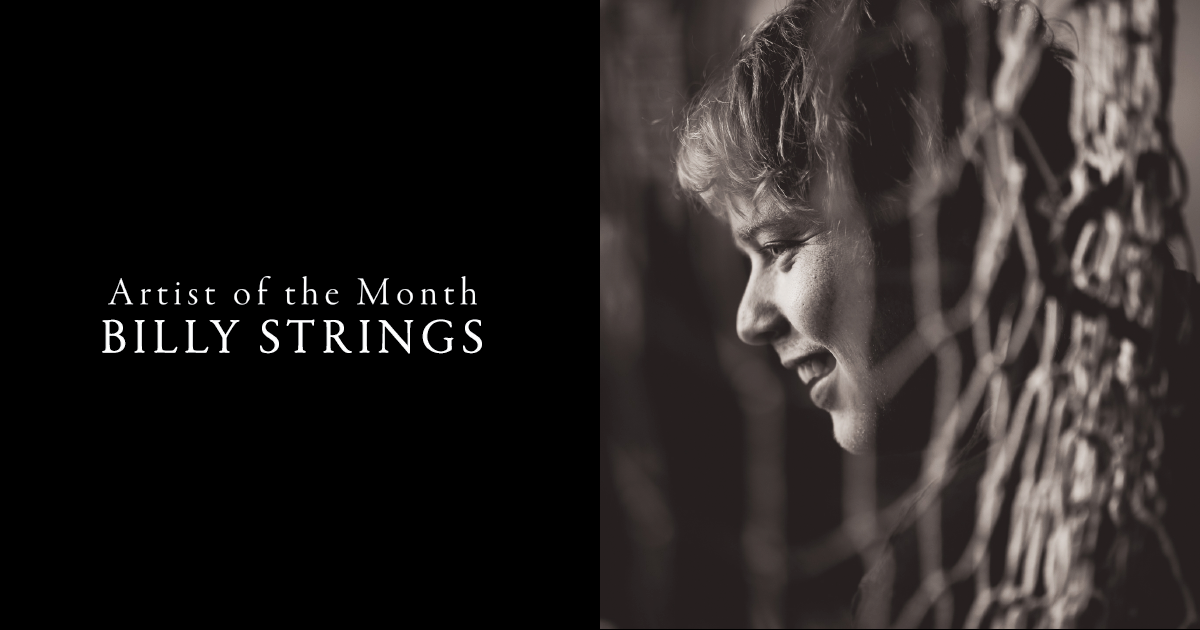
Billy Strings takes things up a notch for Renewal, a long-awaited collection of original songs produced by Jonathan Wilson. But is it bluegrass? Or is it rock ‘n’ roll? Perhaps more on the psychedelic side? Truly there’s no right (or wrong) answer to these questions. As Strings himself puts it, “I’ve learned, you’ve just got to let the song do its thing. So that’s what I try to do — write songs and let them come out however they do.”

Billy Strings is no stranger to the festival circuit, bluegrass or otherwise. His career trajectory over the last few years has netted him international acclaim, a handful of IBMA Awards — including Entertainer of the Year at this year’s IBMA Awards show — and even a Grammy for his 2019 album, Home. A Michigan native who now lives in Nashville, Strings says, “I called my last record Home, and then a few months later that’s where we all got stuck. Right now, we’re heading back into opening back up, and doing some more touring with real concerts and real shows. Hopefully we can renew everything. I think it’s an interesting word. It reminds me of how every morning is a renewed day and another chance.”

With Renewal, Strings seizes upon the opportunity to surprise his listeners and to expand his own musical horizons. By winning the Grammy, he discovered a newfound confidence to consider every creative path that presented itself. Because he’s bringing in his touring bandmates Billy Failing (banjo, vocals, piano), Royal Masat (bass, vocals), and Jarrod Walker (mandolin, vocals, guitar), as well as guests John Mailander (violin), Spencer Cullum Jr. (pedal steel) and Grant Millikem (synth), Renewal is far more than just a singer-songwriter record, even if it exposes his own mindset more than any of his material to date.

“I listen to this album now and it’s emotional,” he says. “I could sit there and tweak it forever, but there’s a point where it’s like building a house of cards. Yeah, I could add an extra tower on top, but it might collapse. I’ve always doubted myself, and I still do, but this album makes me think, ‘Hey, you’re doing all right, kid. You just need to keep going.’”

Read our exclusive two-part interview with Billy Strings here, and enjoy our BGS Essentials playlist below.


Photo credit: Jesse Faatz

The Hit Points, ‘Guile’s Theme’

Bluegrass, as a genre, is built upon nostalgia. Especially in its contemporary iterations. Modern bluegrass plays like a primer of the form itself, referencing the genre’s founders, its historical moments, its popular songs, and all of its favorite themes and buzzwords, no matter how trope-ish — because nostalgia is a commodity.

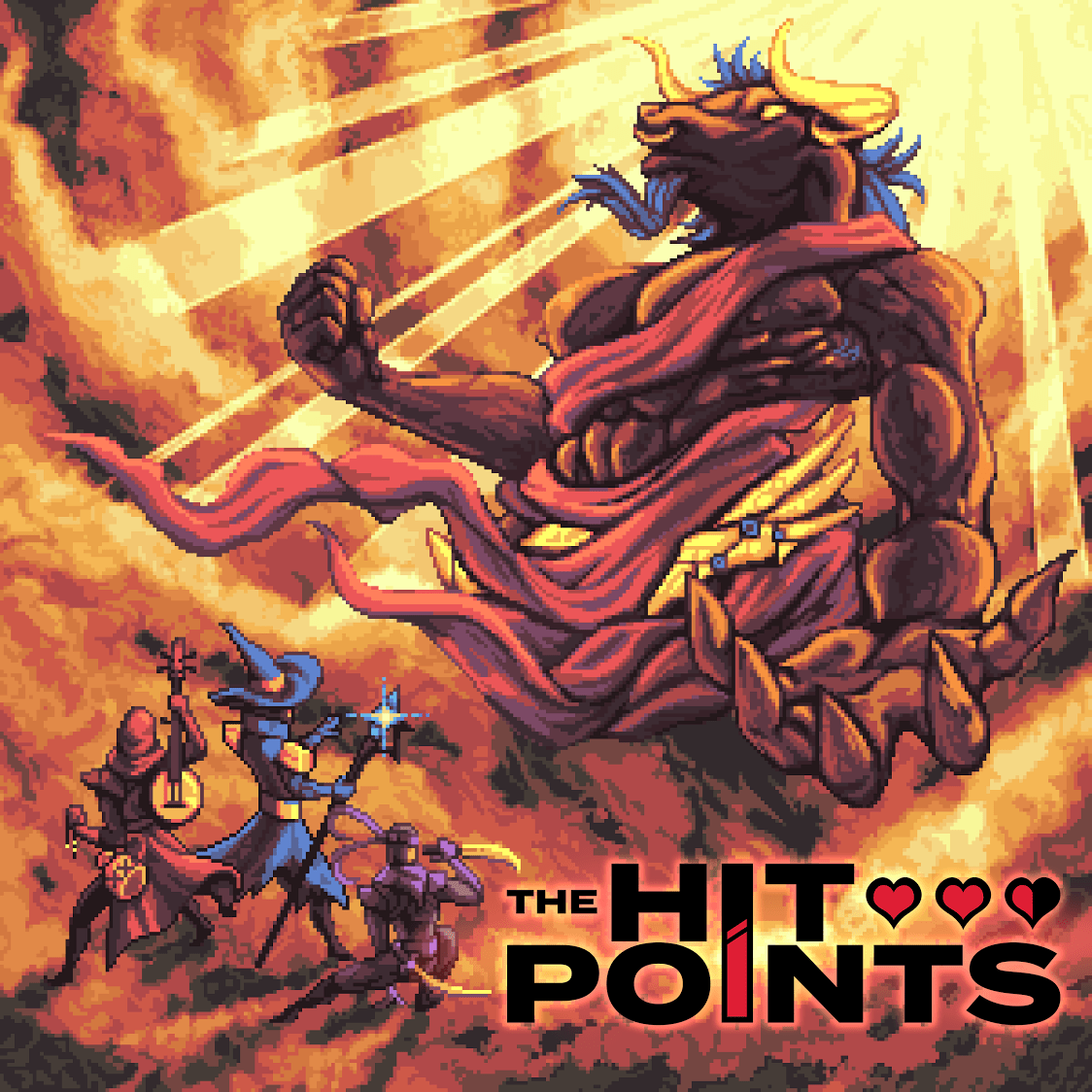
But, what’s that sound? It’s not pining for the hills and home, it’s nostalgia for an entirely different time, place, and feeling. The feeling being a creeping dread at the inevitability of your loss at the hands of Ryu, E. Honda, or Chun-Li. The decadent, joyful nostalgia that The Hit Points — fiddler guru Eli Bishop (Lee Ann Womack, the Deadly Gentlemen) and banjo wizard Matt Menefee (Cadillac Sky, ChessBoxer) — conjure on their blazing cover of “Guile’s Theme,” from Nintendo’s iconic video game, Street Fighter, will send you careening back in time. You’ll land on a couch, or high pile carpet, or flimsy futon in front of a TV, where as youths (or as youthfuls), you consumed hours and hours of video game entertainment. And with it, you also consumed hours and hours of incredible music, without ever realizing that the otherworldly, impossibly complicated tunes could actually be performed by human beings. Let alone by bluegrass musicians, on bluegrass instruments, with such ease and aplomb that it would nearly strike listeners as just another new acoustic, Dawg-grass tune.

The Hit Points’ debut, self-titled project is chock-full of nearly note-for-note covers of 8-bit music, crafted with loving care and aggressive creativity — and surrounded by a talented cast that includes Jake Stargel (Mountain Heart), Sierra Hull, Royal Masat (Billy Strings), and Paul Kowert (Punch Brothers), it shouldn’t be a surprise. This is instrumental acoustic music and bluegrass pickin’ at its best.