Tag: Sam Grisman Project
Somethin’ About Train Songz
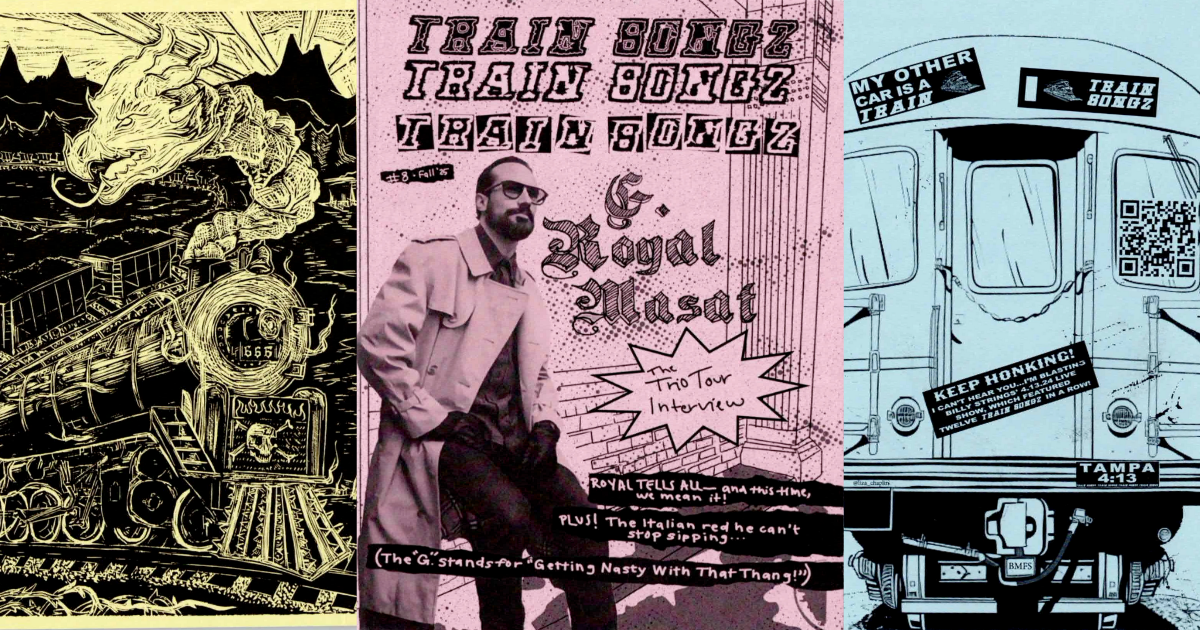
What first began as a locomotive and string music meme page has transformed into one of the most quirky and beloved sources of independent journalism in roots music, one zine at a time.
Founded by Anthony “The Conductor” Perasso and James “Promontory Paul” Lucey in July 2023, Train Songz has since grown its community to over 28,000 Instagram followers and more than 1,200 paid subscribers. Readers collectively contribute anywhere from $33-$99 per year (or $11 per copy), with three to four issues published per year. The latest, eighth edition features a 44-page interview with Billy Strings’ bassist Royal Masat.
The interview for Masat is a full circle moment for Train Songz, which began with a Billy-centric focus before expanding to feature other bluegrass acts like Mountain Grass Unit, East Nash Grass, and Valley Flower. In fact, it was a Billy Strings show in Bridgeport, Connecticut, attended by Train Songz co-founders (that they rode the train to themselves, no less) where the concept for the then-meme page first came together.
“At the show Billy was wearing a hickory-striped railroad hat that someone (who we’ve since connected with on Instagram) threw up on stage a few shows prior, as trains were passing by the stage,” recalls Perasso.
“I tweeted from my personal account a photo of Billy with the hat on and the caption ‘Train Songz,’ which was a Trey Songz pun – like if Trey Songz is Trey Songz, then Billy Strings is Train Songz,” Perasso laughs. “Four days later, I locked down the @train_songz username and posted our first meme.”
After publishing some popular Billy and Grateful Dead inspired memes, Train Songz began transitioning to a zine in December 2023, while Perasso was home for the holidays and more sedentary than usual after recovering from multiple surgeries. No stranger to producing print media, having previously worked on a satirical newspaper while in college, he says the zine quickly filled a void left empty since graduating in 2017. Now two years in with eight installments of the printed zine, Train Songz has grown into a thriving community bigger and wilder than Perasso, Lucey, and the rest of the core team – including Liza Chaplin (art/design) and Mitchell “Brakeman” Harbin (writer/editor) – could have ever imagined.
“Beyond my personal penchant for print, Train Songz was gathering a community of wooden-instrument-music enjoyers, so print felt like a natural extension of that vibration,” Perasso continues. “And from a more boring media strategy point of view, print (and email!) offers you a direct relationship with your audience that algorithms can’t get in the way of and platforms can’t take away. So for both those reasons, a Train Songz zine felt like a perfect move.”
After wrapping up production on the eighth installment of the zine, the Train Songz crew spoke with BGS via Zoom about the zine’s origins, how they first discovered Billy Strings, the publication’s next steps for growth, and more.
Y’all use pen names in the zine (except for Liza). How did each of you come up with your alter egos?
James Lucey: Before I get to that, I’ll just add that leading up to this interview we all debated if we should do this as ourselves or go by our pen names. It’s been an interesting dynamic, [navigating] who are we in relationship to the zine [and] what the zine is in relationship to us and our audience. We made the zine to try and participate in some way in the broader conversation about modern-day bluegrass music; we’re not the face of the zine, we’re just the people that are powering it.
But regarding my pen name, “Promontory Paul,” he’s the voice of the Old Tune Review, which is one of the core pieces of the zine. In it we pick a handful of old songs [and] dive deep into [their] history through independent research. It’s born out of the idea that these old songs are still being played today and still resonate in some way. In some ways it’s like a time machine, because you’re feeling the same emotions that someone felt hundreds of years ago when they wrote these things. So it’s cool to dive in and see what the actual genesis of those songs are.
[Paul’s] the guy who runs that, but we also feature him in a little recurring cartoon series that sees him playing banjo and getting into all kinds of crazy adventures. “Promontory” is a reference to the Promontory Summit, which was the final completion [point] of the first transcontinental railroad in Utah, when the Union Pacific Railroad and the Central Pacific Railroads (which had been building from Nebraska and Sacramento, respectively) finally met.
This effectively connected the old world with the new one, sort of like what we do with the zine.
Mitchell Harbin: My name actually came out of the fact that a brakeman is a role on an actual train – he’s the guy that pulls the brakes. It was actually during the production of the zine’s third issue that I had come aboard to help with proofreading and copy editing. There were a couple of times in that process where James and Anthony were like, “Alright, we’re good to go, ready to launch” and I would pump the brakes and say, “Whoa, hold up.” Which is what eventually spawned the name idea.
Liza Chaplin: I’m still working on mine. [Laughs] It’s an ongoing thing that I’ve been thinking about, but so far I haven’t gotten anywhere with it. At first I decided to put my own name on it to use as a portfolio-building mechanism, but now with how the zine has grown it feels very silly to still have my actual name on it.
Anthony Perasso: “The Conductor” came to be when James and I were talking about taking the meme page offline [and moving] into print form with our first issue. We made a decision that Train Songz was the name of the publication and brand and community – or whatever vibration of people who value the same kind of music as we do, cultivating this eponymous meme page.
As the person who had started the meme page, I didn’t want Train Songz to be seen as an individual, as in, “That’s Anthony, he’s Train Songz.” Our desired outcome would be: “That’s Anthony, he’s The Conductor for Train Songz.” That allowed Train Songz [to be] less a single being and more of a vehicle for those involved. Pun intended. (A mentor even recommended to me that the title of The Conductor be something that can be passed on from individual to individual, like the Pope or the President. Time will tell if we get to that point!)
What was Promontory Paul’s role in this latest issue of Train Songz given its focus on the Royal interview?
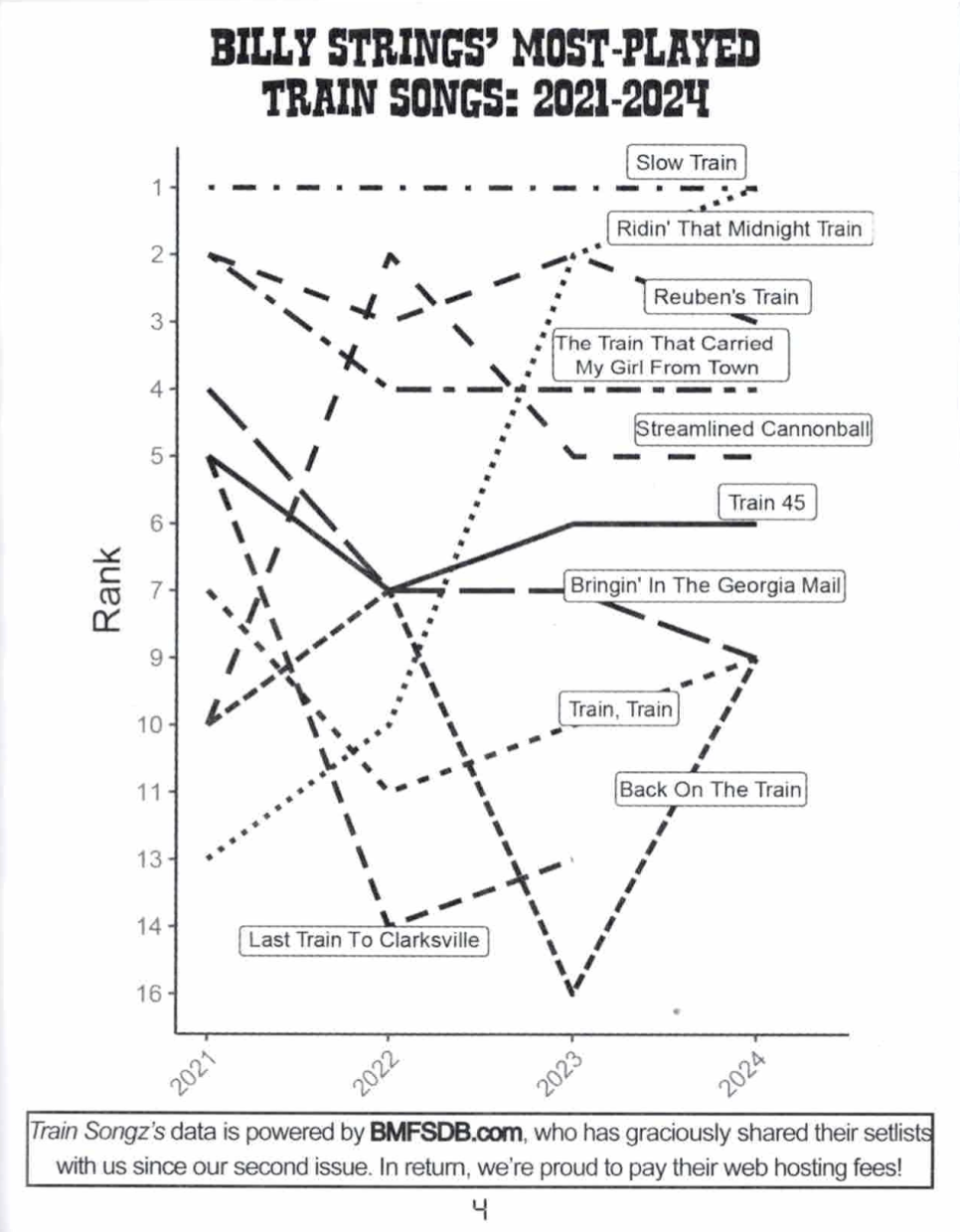
AP: Paul’s column still exists in the newest zine, but he went about it in a really cool way. The idea began with our third edition, when we gave Promontory Paul an entire section to write about old bluegrass songs regularly covered by the likes of Billy, the Sam Grisman Project, and whatever other bands we listened to or saw live that quarter. So we’d cite where we heard it played before diving into a history lesson and where it came from.
Then, for this issue with Royal, we took that Old Tune Review and instead of songs we heard out in the wild made it all about songs that he mentioned during the interview. Throughout the interview there are little interjections from Promontory Paul – almost like Clippy, the office assistant on Microsoft Word. It’s been fun to take these gimmicks that worked for us a year ago and apply them to the restrictions presented by this long-form interview. Royal gave us so much that we wanted to give him the entire issue, but we’re still going to sprinkle in the ethos of what our readers are familiar with and what we like to do, which is to connect something that’s happening in the present day – like the recent Billy Strings and Bryan Sutton tour with Royal – to the past. It’s been really fun connecting with folks like that through the zine. It’s almost like Paul’s on a time-traveling train or something. [Laughs]
We send surveys out to our subscribers after publishing each issue and Promontory Paul’s history lessons are always towards the top when it comes to [readers’] favorite parts of the zine. It’s also been a cool way to make note of the fact that it’s not just us behind the scenes who are enjoying this. It really speaks to how much we respect the audience that we have and how that drives us to create the best issue possible every quarter.
View this post on Instagram
I saw recently that Royal left a copy of Train Songz #7 at the NPR Tiny Desk following the session he recorded there with Billy. What did seeing that mean to y’all?
AP: He’s been a follower of ours for a long time and brought that copy of the zine to NPR on his own after reaching out to us to subscribe about a year ago. We knew he’d been reading along for a while, so once this tour came up with him, Bryan, and Billy, it just seemed like the perfect thing for the zine to cover. It was important for us to capture the combination of old and new in those shows dedicated to Doc and Merle Watson and T. Michael Coleman and featured the King of arena-grass playing these smaller rooms of 400 to [2,200] people with one of the most preeminent guitarists alive in Bryan Sutton.
It took us a second to come around to the idea, because we’ve been very cautious about not becoming a Billy Strings-exclusive fan zine. We want to serve the broader ecosystem, but that tour was something we couldn’t pass up, especially with Royal being a reader. Once we did reach out, he blew us out of the water with the time he put into it. His interview with Mitchell ended up being over 4,000 words that he sent us by email after wrapping up a tour in Europe. Once that wrapped I remember him sending us a literal tome – he took it very seriously and his responses were so thoughtful.
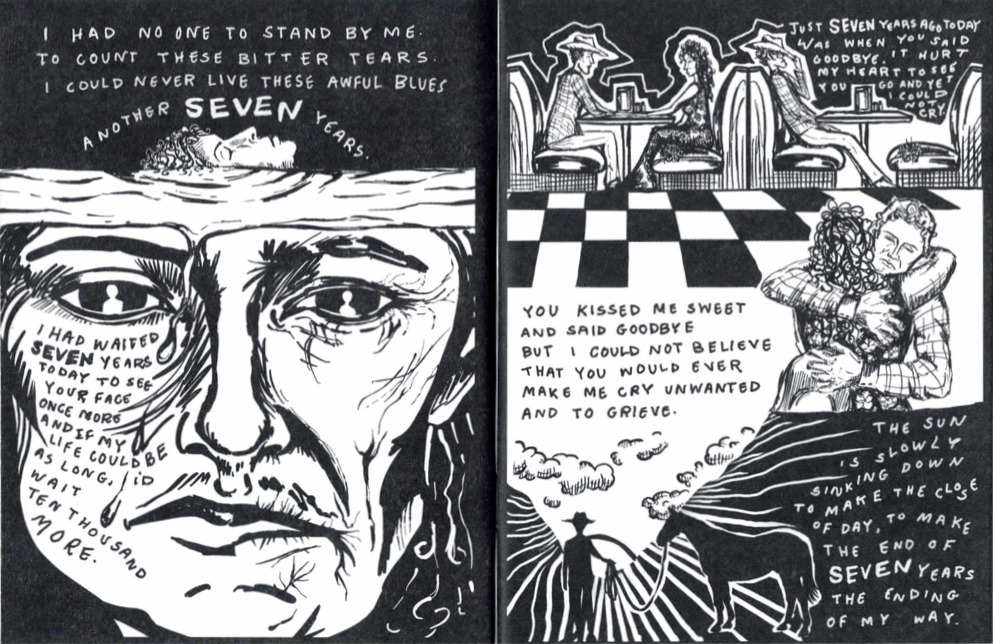
The final result almost looks like a children’s book with the way Liza designed it. None of that would be possible without our paying supporters, who make it possible for us to work with the 17 artists we partnered with on this issue to bring it even more to life with quirky illustrations that tie back to things Royal said, like throwing in an illustration of a medieval horse with a knight in shining armor where Royal refers to his bass as his trusty steed. I like to refer to what she does as “Andy Warhol-ing.” [Laughs]
I know you just mentioned not wanting to become exclusively a Billy Strings fan zine. However, I’m curious to hear when and how y’all first encountered his music?
LC: The first time I saw Billy was at RiverRock, a free festival on Brown’s Island in Richmond in 2019 before he blew up. I had heard of him prior to that, but after seeing him live I became absolutely mesmerized. I didn’t like bluegrass for the longest time, but something clicked with me when I saw Billy and was like, “Oh, this is what I want to keep following and chasing.”
MH: In college, I was a huge Deadhead and Phish fan and was consumed by the jam world. Then I heard about Billy on some Facebook groups and message boards, talking about how he covers The Dead really well.
I moved to Boston shortly thereafter and the first month I was living there Billy played at the Wang Theater. I wound up buying a ticket and went without having listened to his music at all beforehand and was absolutely blown away. To me, it was like a psychedelic Dead or Phish show combined with bluegrass, which in hindsight probably hit on the homesickness I was feeling at the time, because I had been around bluegrass before, but wasn’t really interested in it when I was living in the South. From there, I jumped down the rabbit hole into more old-time bluegrass, which is when I started playing the music myself. So I attribute my musical pursuits now to that moment and think that is probably true of other people, too.
JL: I remember [going down] a YouTube [rabbit] hole in 2020 and coming across a set of Billy playing Doc Watson tunes. It may have been Royal’s first gig with him. I just so happened to be in a bit of a bluegrass moment at the time I found that video of Billy and was instantly hooked, resulting in me digging even deeper. I was already a Deadhead as well, so I loved his covers of those songs too. Then I worked my way to his original stuff – which is also sick – and I have YouTube to thank for it!
AP: I remember James, “Promontory Paul,” showing me Billy for the first time. Like most of the bands I like, I channel my music taste through him. When we first got into him there was still a lot of remote work going on, so we’d listen to Billy while doing that or even while we were playing games like Fortnite. I started listening to a lot of The Dead in order to try to get to the point where I could listen and name the year the show came from. But over time Billy started taking more and more of the market share of my listening time away from the “What year is this Grateful Dead show from?” project.
What are your next steps for continuing to grow Train Songz?
AP: We occasionally host concerts (the next one is February 12, 2026 with The Asheville Mountain Boys), and have captured audio recordings – which we call Tiny Train Sessions – in the past, but we look at them more as a marketing tactic than a growth mechanism.
My day job is a social media manager and doing that I’ve noticed that the best way to get a lot of views on Instagram is to post reels, because they [are served] to non-followers and new followers first. We could post a bunch of concert clips and other things to build our audience, but we intentionally opted to not do that because we’re firm believers that things that grow slow last a long time. We don’t want to gatekeep or make it hard to find us, but rather [hope folks will] find us organically through a friend sharing one of our memes or sending you a copy of the zine itself. I want the first point of contact to be someone who’s already within our ecosystem that really digs it and turns you onto it, one person at a time.
All visuals, artwork, and zine scans courtesy of Train Songz. Learn more about artists Morganne Allen and Sara Dennis.
Peter Rowan and Sam Grisman Project Will Bring Old & In the Way to the Ryman
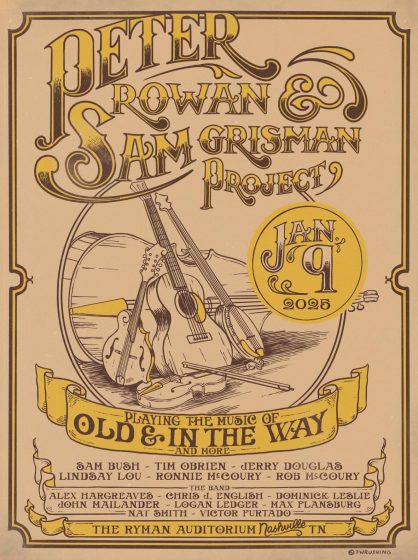
On January 9, 2025, there will be a special performance – more so a once-in-a-lifetime celebration – of the groundbreaking music of Old & In the Way at Nashville’s famed Ryman Auditorium.
Led by the “Bluegrass Buddha” himself, Peter Rowan, the legendary singer-songwriter and founding member of the group will be backed by the Sam Grisman Project. The gathering will also feature a murderers’ row of talent: Sam Bush, Tim O’Brien, Lindsay Lou, Ronnie & Rob McCoury, and more.
“In bluegrass, you just do the beautiful grace of presenting the music, being good neighbors and all that stuff,” Rowan told BGS in an exclusive 2022 interview. “But you could hear us in the band going, ‘go, man, go.’ Go for it, that’s where we came from. That’s what Old & In the Way was – the ‘go for it’ signal to everybody.”
To preface, Old & In the Way started as impromptu pickin’-n-grinnin’ sessions in the early 1970s between Rowan, his longtime friend, mandolin guru David Grisman, and Jerry Garcia, iconic guitarist for the Grateful Dead, who reached for his trusty banjo during the gatherings at Garcia’s home in Stinson Beach, California.
“We started picking every night after supper [at Jerry’s],” Rowan remembers. “We went through old song books and learned a bunch of material.”
At the time, Garcia was searching for new avenues of creative exploration, seeing as the Dead were in the midst of taking a much-needed hiatus after years of relentless touring and recording. He was also, perhaps subconsciously, trying to tap back into his roots before the Dead, this landscape of the late 1950s/early 1960s where Garcia was heavily involved in the San Francisco Bay Area folk scene.
“And you realized that Jerry was an intergalactic traveler, just dropping in on the Earth scene for a little while, but he was totally at home,” Rowan says of Garcia’s restless penchant and lifelong thirst for acoustic music.
When Old & In the Way formed in 1973, the trio recruited bassist John Kahn, as well as a revolving cast of fiddlers (Richard Greene, John Hartford, Vassar Clements). Sporadic gigs were booked around the Bay Area, with the vibe of the whole affair casual in nature – the ethos one of camaraderie and collaboration, but without expectations or boundaries.
“I remember singing the ending of ‘Land of the Navajo’ at the first rehearsal and I looked over at Jerry,” Rowan recalls. “He kept nodding his head like, ‘go.’ It was like Jack Kerouac at Allen Ginsberg’s poetry reading at City Lights Bookstore – ‘go, man, go.’ Encouragement, encouragement.”
By 1974, Old & In the Way simply vanished into the cosmic ether, but not before capturing a handful of live performances that have become melodic sacred texts of a crucial crossroads for acoustic music. To note, Old & In the Way’s 1975 self-titled debut album went on to become the bestselling bluegrass album of all-time – until it was dethroned by the O Brother, Where Art Thou? soundtrack released in 2000.
As it stands today, Rowan, now 82 years old, is the only remaining member of Old & In the Way still actively performing. Garcia, Clements, Kahn, and Hartford have all sadly passed on, with the elder Grisman and Greene retired from touring. Grisman’s son, standup bassist Sam Grisman, is now carrying his father’s bright torch.
And although the tenure of the Old & In the Way was short-lived, the ripple effects of the band’s ongoing influence and enduring legacy remains as vibrant and vital as it was those many years ago, when a handful of shaggy music freaks kicked off a jam that will perpetuate for eternity.
In preparation for the upcoming Old & In the Way showcase at the Ryman on January 9, BGS recently spoke with Sam Grisman, who talked at-length not only about his continued work with Peter Rowan and the intricacies of Jerry Garcia, but also why a band Grisman’s father started over a half-century ago still captivates the hearts and minds of music lovers the world over.
You were five years old when Jerry Garcia passed away. You were really young, but do you remember anything that you hold onto?
Sam Grisman: Yeah, I have a very vivid memory of what our house felt like, smelled like, and just what the energy was like when Jerry was around. And I remember that sort of ease, just the way that he made people feel. It seemed like my parents were at ease when he was around.
And he probably felt at ease being around them. It was probably a safe haven at that house.
Definitely. And, you know, my parents smoked weed in the house. But, my mom was pretty strict about cigarettes. [She] wouldn’t let anybody smoke cigarettes in the house. But, when Jerry was around, he smoked cigarettes in the house. So, part of this smell in my blurry five-year-old memory is the smell of cigarettes. And Jerry would sometimes wear a leather jacket, maybe the smell of leather.
I remember the sound of his laugh. I remember all that music, and some of it I remember so vividly that I just know that part of that memory is reinforced by being there as a little toddler when they were working up [music]. Because they would often work on tunes upstairs in the living room and then take them down to the studio, put them on the mics and pull them.
You just wanted to be around it all and soak it all in.
I was a really curious kid.
With the Ryman show coming up, there’s been a lot of celebration of Old & In the Way as of late, especially with you touring with Peter Rowan and the current Jerry Garcia exhibit at the Bluegrass Hall of Fame & Museum. You’ve been around those songs your whole life. But, when you think about the context of Old & In the Way, and what you’re doing at the Ryman, what really sticks out with why that was such a special time in not only bluegrass, but in the lives of those people?
I mean, what a lightning-in-the-bottle chapter of all those people’s lives, you know? I think 1973, ’73/’74, was a particularly fertile time for Jerry. He was playing a full schedule with the Dead. He had Jerry Garcia Band stuff. He was playing in Old & In the Way. He was playing pedal steel with the New Riders of the Purple Sage. It seemed like he really had an itch to go back to where his roots were, especially when you look at [the Grateful Dead album] Workingman’s Dead [that was released a] couple years prior.
For all of us, who are looking back on it 50 years in the future, it seems like this momentous, heady time that was just meant to be. But, for those guys in the moment, it was just total serendipity. And the quintessence of just going with the flow – Stinson Beach, California, vibes. They just kind of stumbled into this reality.
“Y’all wanna play?” “Sure, why not.”
Yeah, where it would just be really fun to have this bluegrass band that they didn’t take super seriously, which I think really comes across in the recordings, you know? Because there’s all this joy in that music that might not necessarily have been there if those guys were taking it super seriously or if they needed it to pay their bills. It was a very interesting circumstance.
And for them to call their hero Vassar Clements into the mix, on a sort of whim because Peter found his number on a card in his wallet. It was sort of like a fantasy camp for these guys. Like a bunch of hippies sitting around on the beach, smoking a joint, thinking: “Wouldn’t it be great if we had the world’s greatest fiddle player just show up?” “I bet you we could book a gig.” “Hey Jerry, you got these legions of people following you around, you could probably get us a gig, right?”
And that’s kind of how it happened. Those gigs were so magical, because they happened mostly for all of these Deadheads in Marin [County, California], for like 16 months or something.
So, if you really had your finger on the pulse of it and you were going to the Keystone [music club in Berkeley, California], to see [the Jerry Garcia Band] and you loved what the Dead were doing, you knew that they were going to take this time off, but you just saw Jerry the week before and he never took his guitar off. He just finished the [Jerry Garcia Band] set and walked backstage with his guitar on and was smoking a cigarette, and then you saw him 30 minutes later talking to somebody off the side of stage, still had his guitar on — you’re thinking, “Gee, this guy’s not going to stop playing music this year, so I better keep my eyes peeled for what’s next.” And they played all these little gigs mostly around the Bay Area — they kind of captured some lightning in a bottle.
With playing these Old & In the Way melodies not only throughout your life, but also extensively nowadays with Peter Rowan, what’s been your biggest takeaway on what makes those songs and the ethos/history behind them so special to you? What about in terms of musicality, technique, and approach?
It’s hard to articulate how special it is to be exploring these beloved songs that mean so much to so many folks, myself included, with Peter and a cast of some of my best friends and favorite musicians. It’s a catalog that’s got a lot of depth.
Old & In the Way would play anything from songs by bluegrass heroes like Bill Monroe, The Stanley Brothers, Reno & Smiley, and Jim & Jesse to Vassar [Clements], Jerry [Garcia], and my pop’s instrumentals, to the tunes that Peter was writing at the time, which are some of my absolute favorite songs ever written.
Songs like “Midnight Moonlight,” “High Lonesome Sound,” and “Panama Red.” Playing these tunes with Uncle Peter makes me feel connected to the times he spent with David and Jerry in Stinson Beach in the early ’70s.
I grew up in Mill Valley and loved going to Stinson Beach with my friends, so I have a pretty vivid image in my mind’s eye. They played tunes, hung out, relaxed, took in the sea breeze, smoked a bunch of great weed, and developed a highly individuated “West Coast” approach to playing and singing this bluegrass music that they all loved and respected so much.
And then, they called one of my bass heroes, John Kahn, and their fiddle hero, the inimitable Vassar Clements and gave the world about one glorious year – I think around 50 shows – of a rare and lovable breed of bluegrass.
So much of everyone’s personality comes through in the music, and you can hear their camaraderie in the recordings. I guess my biggest take away from getting to play this music with Peter is how important it is to bring your own approach to these timeless songs that we love, while still honoring what it is that makes us love them in the first place.
You’ve known Peter Rowan since you were born. But, what has this latest endeavor together meant to you, to play the Old & In the Way catalog to not only lifelong fans, but also a whole new generation of acoustic music fans and bluegrass freaks?
It means the world to me to get to spend some time out on the road sharing space and time in service of this music with Uncle Peter. Getting to meet all of these folks who care so much about this music and feeling their appreciation and gratitude for Pete has been truly special.
There are so many people from so many different ages and different walks of life for whom this music has been the soundtrack to many fond memories, and I’m honored to be one of them. It’s also been a joy to see fresh faces in the audience and some folks taking in this music with a new perspective.
In your honest opinion, what is the legacy of Old & In the Way when you place it through the prism of the history of bluegrass and the road to the here and now, especially this current juncture where the torchbearers are selling out arenas and creating this high-water mark for acoustic, traditional and bluegrass music?
For many folks who know and love the music of Jerry Garcia and the Grateful Dead, Old & In the Way has been their first exposure to bluegrass. So many people over the years have told me how listening to Old & In the Way led them to further explore bluegrass music and its roots and branches. And others have told me how it inspired them to become pickers and start bands of their own.
I think Old & In the Way has been pivotal in bringing a wider audience with a more adventurous musical palette into the bluegrass universe. The legacy of Old & In the Way is one of exploration and preservation, and they certainly paved the way for many of us to walk a similar path — honoring the music that we love, while exploring its boundaries and finding our own voices and approaches.
It’s wonderful to see my friend Billy Strings out there playing for so many folks on such a big scale simply being himself, playing his own songs with a great group of friends, and also honoring the material that made him the musician that he is — maybe that’s a part of the legacy of Old & In the Way.
Photo Credit: Elliot Siff
Poster Credit: Taylor Rushing
New Exhibit, “Jerry Garcia: A Bluegrass Journey,” Opens at Bluegrass Hall of Fame
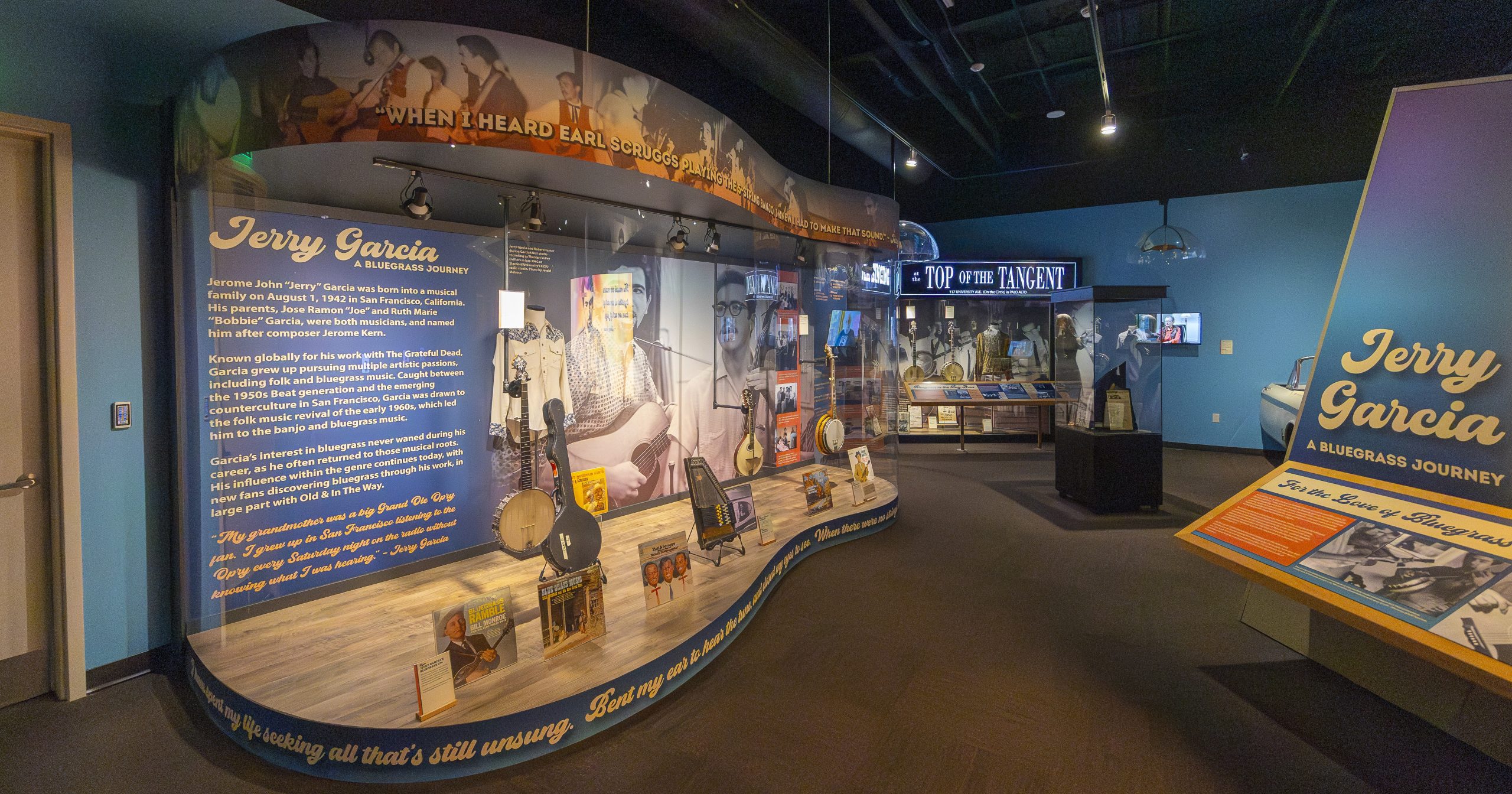
Although it will be showcased for the next two years, the recent grand opening celebration of the “Jerry Garcia: A Bluegrass Journey” exhibition at the Bluegrass Music Hall of Fame & Museum will go down as not only a monumental gathering of musical legends, but also an unforgettable moment in time for all involved.
“This exhibit is coinciding at a great moment for bluegrass,” says Carly Smith, museum curator. “[Jerry] funneled so many people to [bluegrass]. And a lot of present day artists — Billy Strings, Molly Tuttle — are incorporating Jerry’s style into what they’re playing.”
Located in downtown Owensboro, Kentucky, along the mighty Ohio River, the Bluegrass Hall of Fame has created an incredibly impressive and intricate ode to Garcia and his undying love of the “high, lonesome sound,” demonstrating how his indelible fingerprint on the genre is still clearly visible in this current high-water mark moment for bluegrass.
Known as one of the finest electric guitarists to ever pick up the six-string instrument, Garcia, who passed in 1995, is eternally known as the de facto leader and musical zeitgeist at the helm of the Grateful Dead. And yet, the foundation of Garcia’s playing and skillset lies in American roots music — folk, blues, and bluegrass.
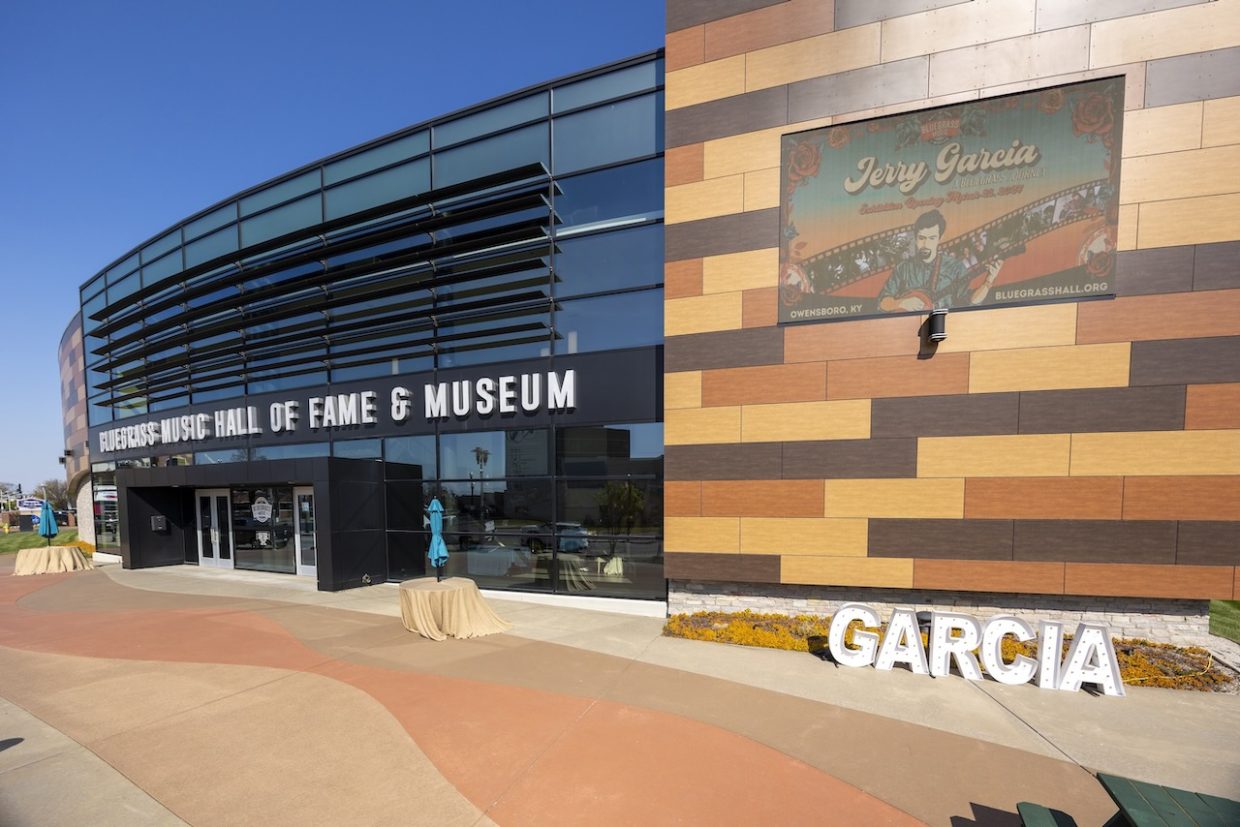
The exhibit weaves through Garcia’s early years as a folk musician in the 1950s, his lifelong friendship with musician/lyricist Robert Hunter, his time in a slew of acoustic outfits in the 1960s – including Mother McCree’s Uptown Jug Champions (an early footprint of the Dead) – as well as a keen focus on Garcia’s work in Old & In the Way and New Riders of the Purple Sage.
“I cried through the entire [opening weekend] press conference,” Cliff Seltzer, the exhibit’s creative director, says in a humbled tone. “I’ve been trying to keep my composure for this weekend because it’s overwhelming.”
For Seltzer, the journey to the opening weekend has been five years in the making. A well-known former artist manager, Seltzer was touring the museum in 2019 with one of his friends and clients, Vince Herman of Leftover Salmon. With curator Smith guiding the duo through the building, the group started kicking around ideas for what to put in a then-empty gallery portion of the second floor.
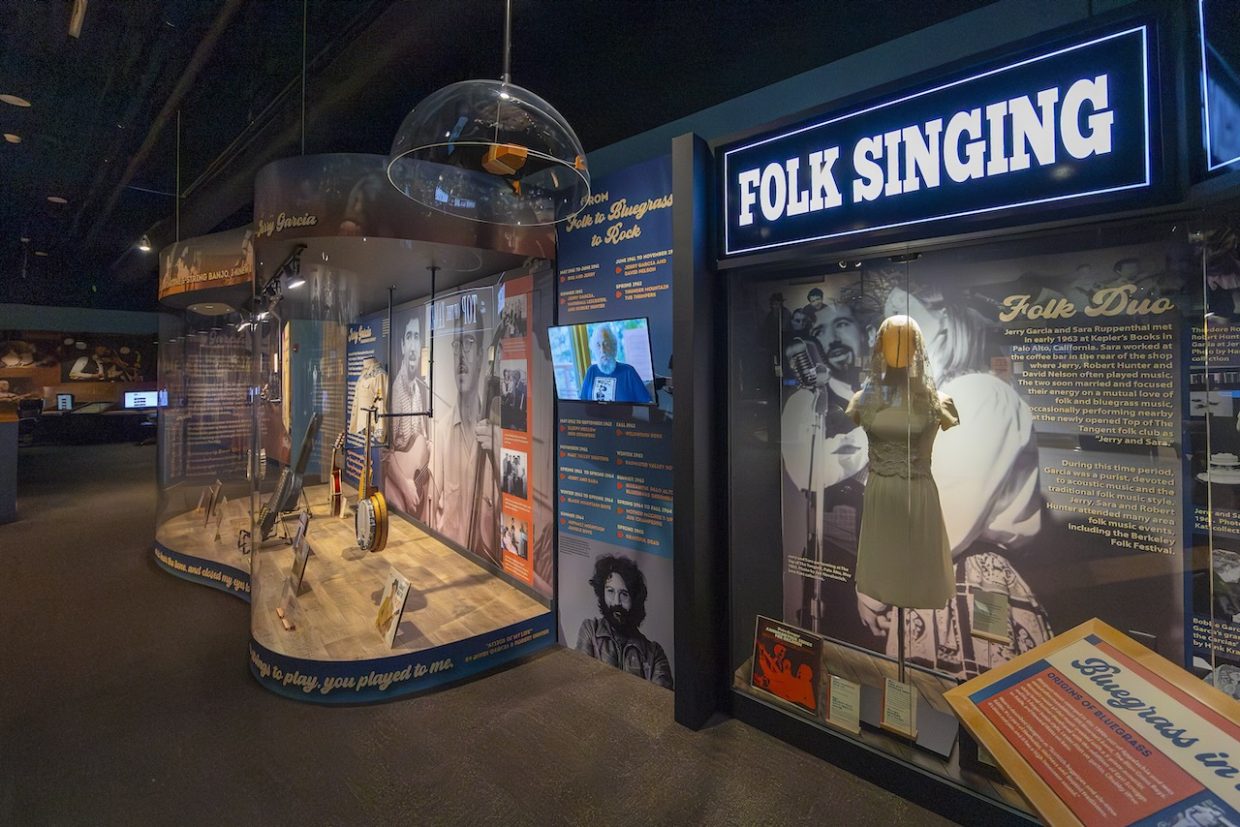
“We’ve always talked about a Jerry Garcia exhibit, and it just kind of snowballed from there,” Smith says. “And it was very unexpected how open Jerry’s family was with [helping] us. What I’ve learned over the last two years, really working with them, is that bluegrass was part of [Jerry] — that’s what he was doing when he wasn’t on the road, that’s what he did at home.”
For the better part of the last half-decade, Smith, Seltzer and a small crew of folks roamed America, not only in search of Garcia artifacts to display (instruments, photographs, family heirlooms), but also numerous interviews with some of the biggest names in bluegrass to share in the exhibit — each talking at-length about Garcia’s cosmic lore, larger-than-life legends, and lasting legacy.
“Every genre of music has to morph and change. New people enter the fold and introduce new things,” Seltzer said. “With Billy [Strings], Molly Tuttle, Sierra Ferrell, and others, bluegrass is bigger [now] than it’s ever been — it’s only going to continue to grow.”
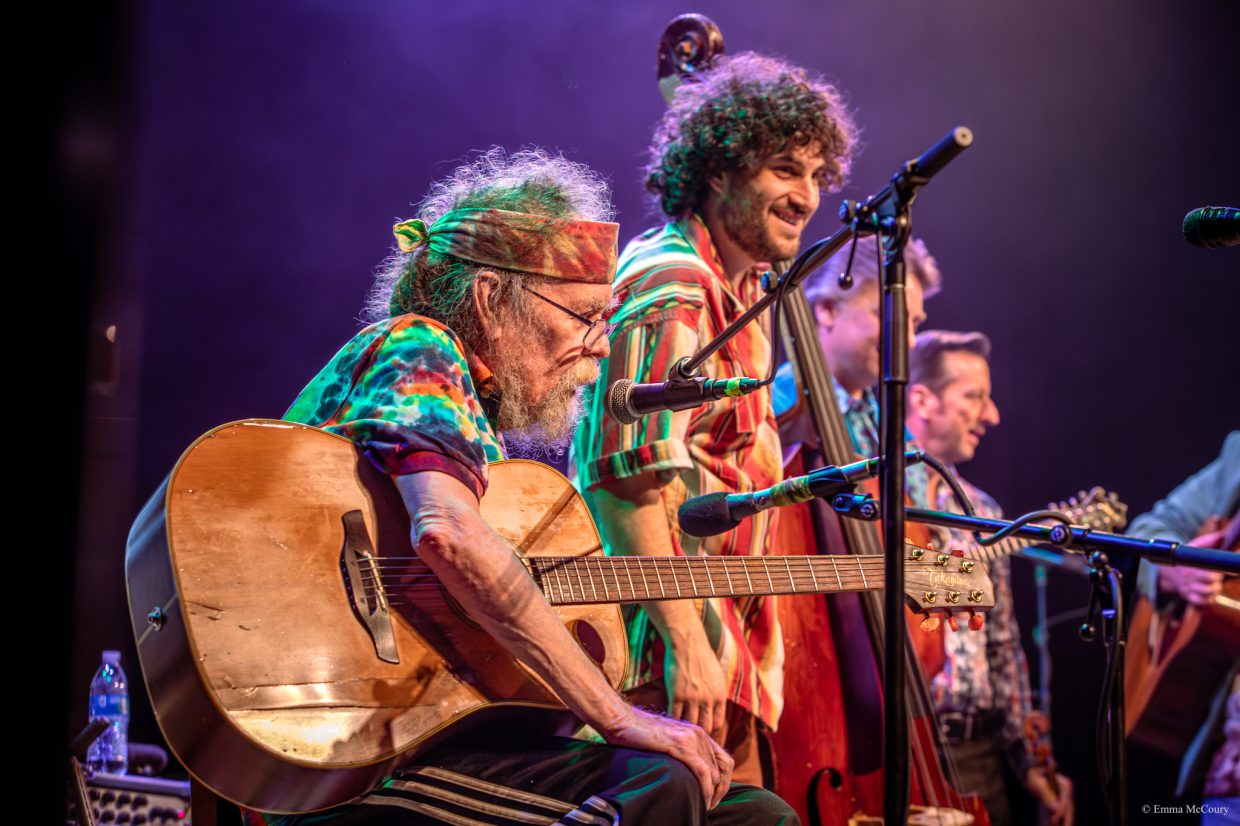
Way before the Dead — before any of the melodic chaos and intrinsic beauty of what that band created onstage any given night for its 30-year tenure — there was Garcia himself, simply a huge bluegrass freak who, perhaps someday, would become a member of Bill Monroe & The Blue Grass Boys.
And although Garcia would eventually swerve into the electric sounds of rock and roll and blues, he was never too far from bluegrass. There were always side projects and low-key jam sessions with a bevy of acoustic musicians throughout the early years of the Dead in the 1960s and 1970s.
Most notable of those collaborations was with mandolin virtuoso David Grisman. Through Grisman, Garcia met guitarist Peter Rowan in 1972. A former member of Monroe’s Blue Grass Boys, Rowan found a kindred spirit — in sound and in attitude — with Garcia. The kismet trio would jam often at Garcia’s Stinson Beach, California, home, with Garcia plucking his trusty banjo.
“We started picking every night after supper [at Jerry’s],” Rowan says. “We went through old song books and learned a bunch of material. I remember singing ‘Land of the Navajo’ and looking at Jerry like, ‘This is really weird, isn’t it?’ He goes, ‘Keep going, man.’”
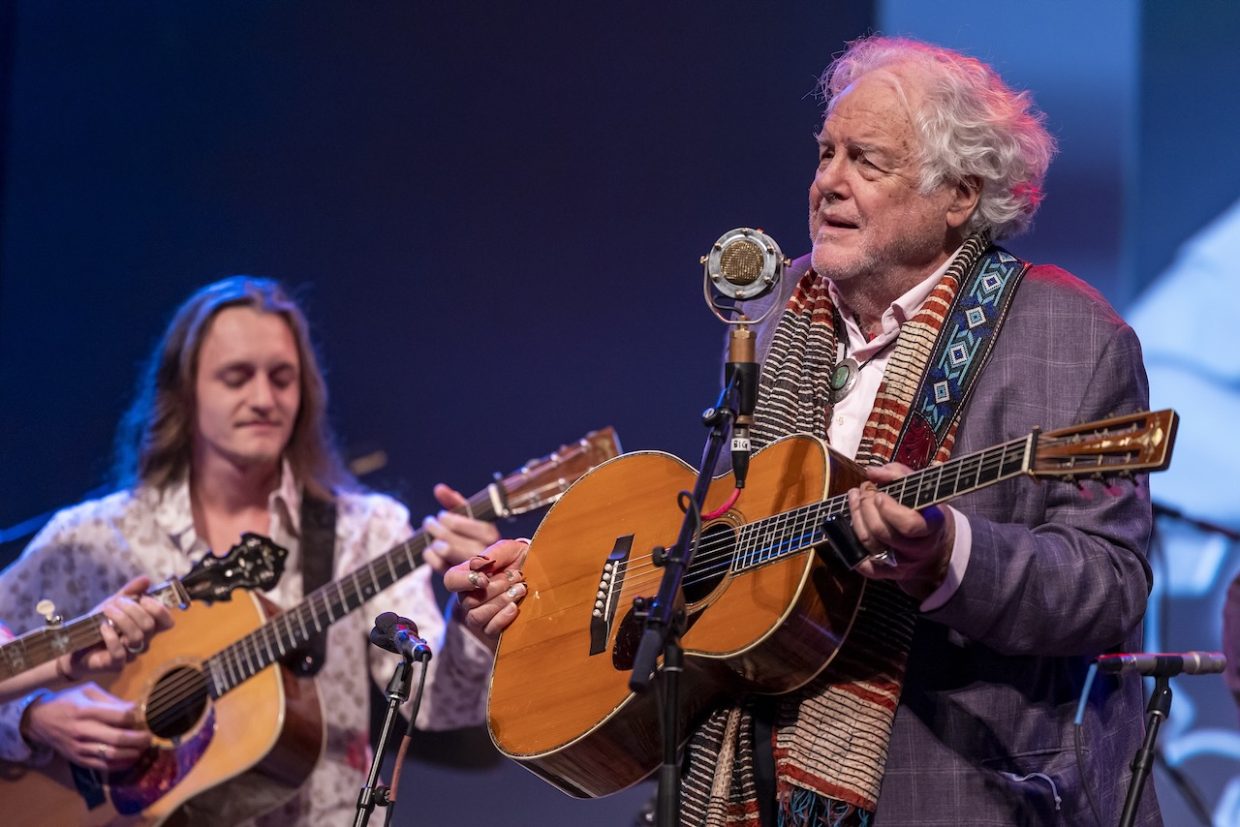
What was birthed from those happenstance pickin’ and grinnin’ sessions became bluegrass super group Old & In the Way. Like a shooting star in the tranquil night sky, the band — featuring Garcia, Rowan, Grisman, bassist John Kahn, and a revolving cast of fiddlers (Richard Greene, John Hartford, Vassar Clements) — would only last the better part of two years (1973-1974).
But, in it remains one of the most important and groundbreaking acts to ever emerge in the bluegrass scene. To note, Old & In the Way’s 1975 self-titled debut album went on to become the bestselling bluegrass album of all-time – until it was dethroned by the O Brother, Where Art Thou? soundtrack released in 2000.
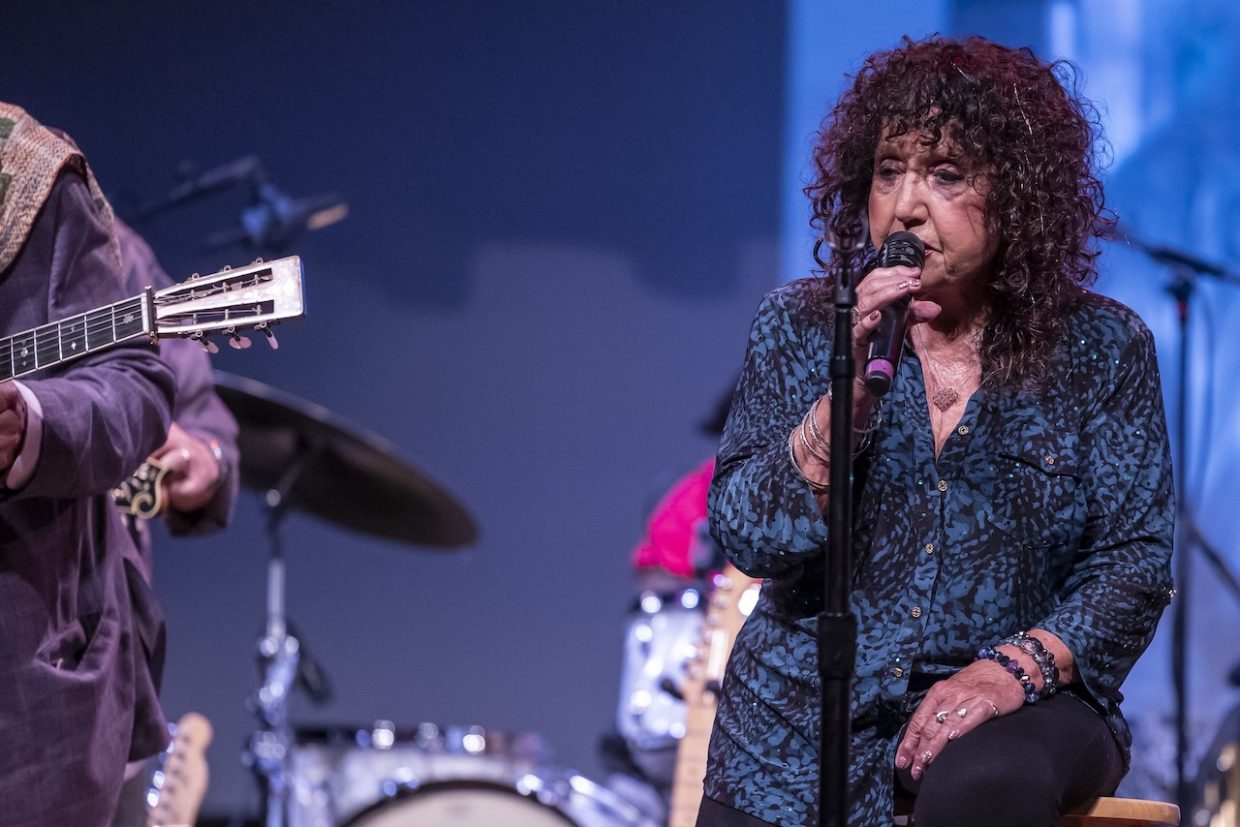
Alongside an onslaught of beautifully touching performances (Leftover Salmon, Maria Muldaur, Jim Lauderdale, Kyle Tuttle, Peter Rowan, Ronnie McCoury, Sam Grisman Project) and poignant gatherings of artists and music lovers throughout the “Jerry Garcia: A Bluegrass Journey” opening weekend, there were also several panels taking place each day at the museum.
Of which, “Garcia: Legend & Lore of a Bluegrass Freak” featured Peter Rowan (Old & In the Way), David Nelson (New Riders of the Purple Sage), Pete Wernick (Hot Rize), Sam Grisman (son of David Grisman) and Eric Thompson (Mother McCree’s Uptown Jug Champions).
“Old & In the Way really helped everything get bigger,” Wernick says. “It was this whole group of material that means so much to all of us in the bluegrass scene — it suddenly became something that people all over the world knew about.”
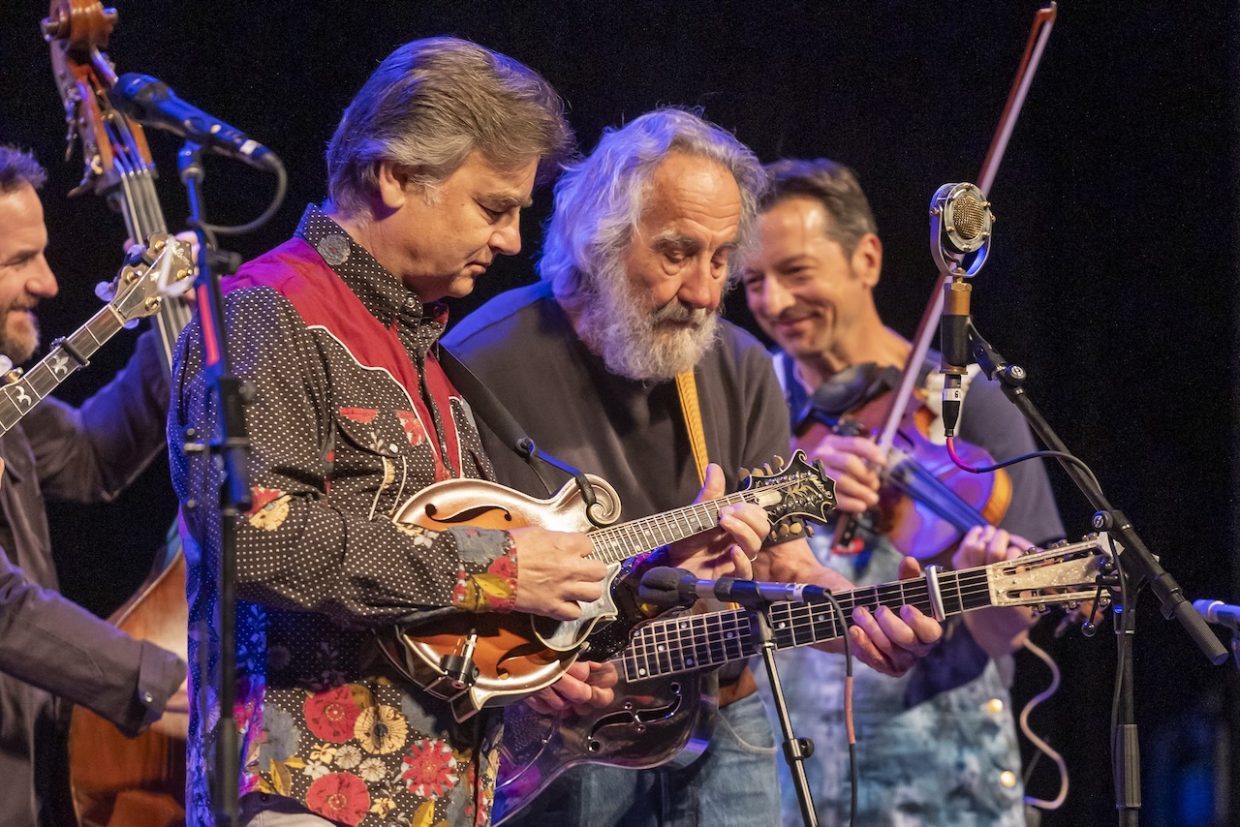
Below are a few excerpts for that artist panel conversation:
Eric Thompson: I grew up in Palo Alto, California, kind of the nexus point for the folk world in the early ’60s. Joan Baez was from there. The Kingston Trio was from there. I got into the bluegrass guitar in [1961]. [Jerry] ended up there after he got thrown out of the Army. He got into all kinds of folk music and he would just devour a style. [He’d say], “Oh, I’m going to do that,” then two weeks later he’s got a whole repertoire. I was 15 years old and made friends with Jerry right away — it changed my life.
David Nelson: We’d go down to Kepler’s bookstore, which is an old hangout in Palo Alto. There was a section of it where you could get an espresso, sit down at a picnic table, and read a book. And there’s this guy [there]. It’s summer, so he’s got his shirt open and [big] hair. And he’s playing a 12-string guitar. Somebody comes up and says, “That’s Jerry Garcia.” We went over and pitched the idea [of jamming together]. Sure enough, next Tuesday night, we’re waiting and waiting. Then, all of a sudden, here comes the car and there’s Jerry coming up the stairs with a guitar and some friends. It started off a whole [jamming] thing at the Boar’s Head [Tavern], which just went on for months and years maybe. [Jerry] was interested in bluegrass banjo and I was interested in bluegrass guitar. I got me a banjo. Jerry said, “Oh, man, borrow my guitar. Can I borrow this banjo?” He happened to have a 1940 Martin D-18 [guitar].
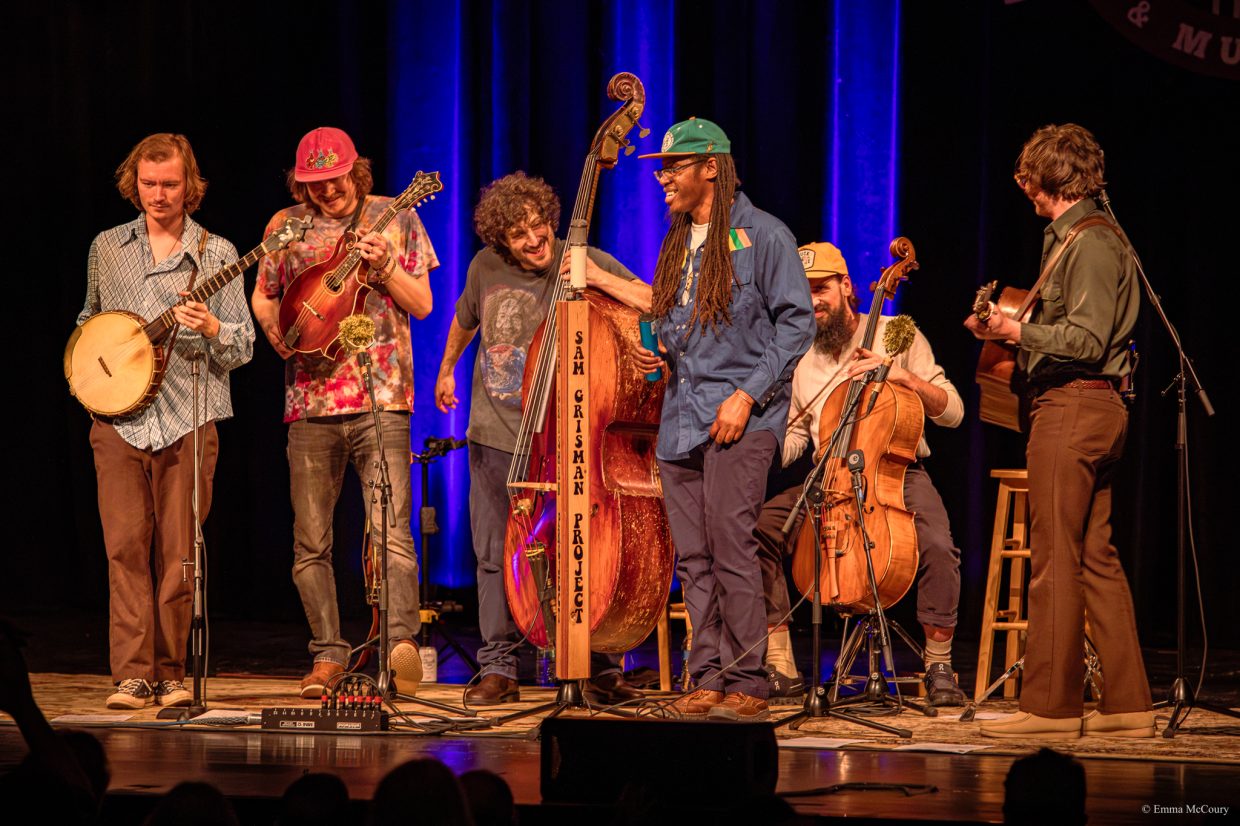
Thompson: [Jerry] brought some openness to the approach [of bluegrass music]. I know [so] many people, who are mostly not bluegrass musicians, who found out about [bluegrass] because of Old & In the Way. It was open and expressive and, at the same time, paid respect to what came before. It was this new, intelligent thing. And intelligence is what Garcia brought to the music, [as well as] imagination, articulation.
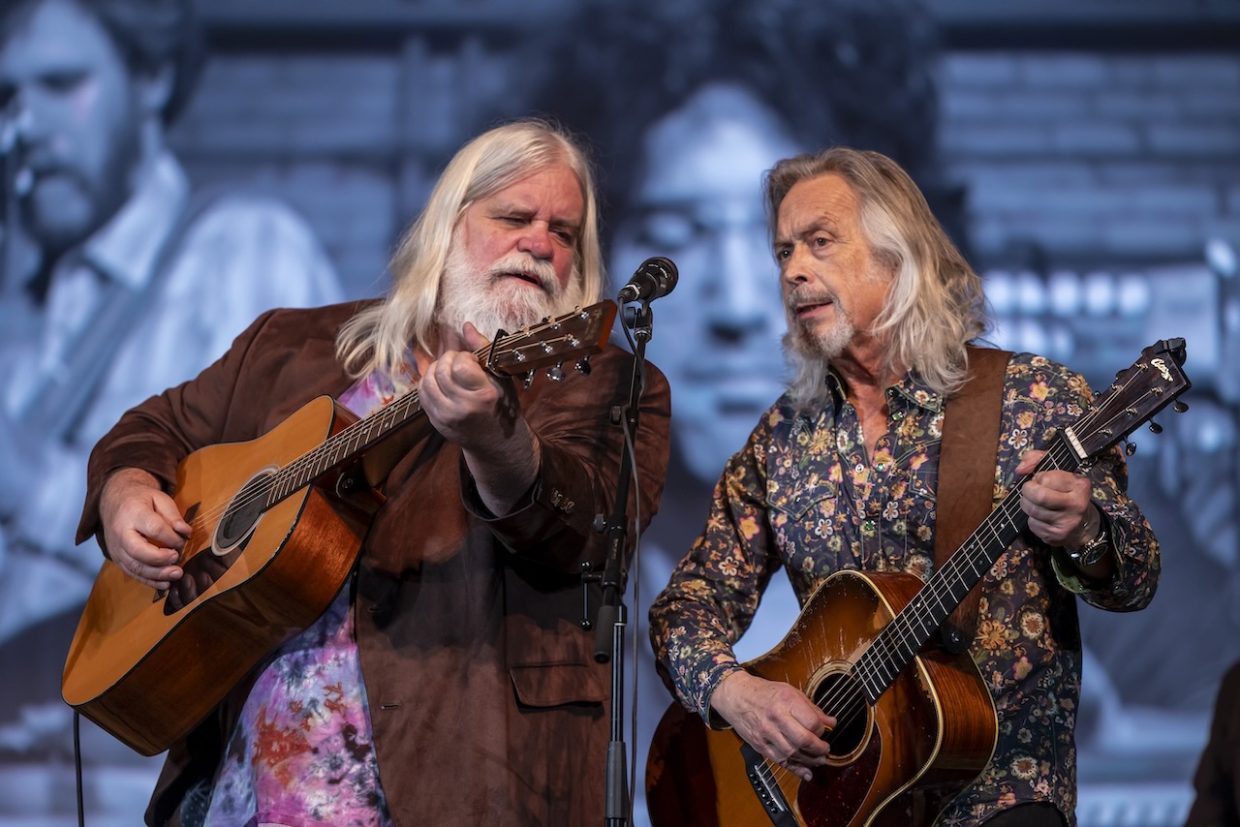
Photo Credit: All photos by Chris Stegner and Emma McCoury, as indicated. Courtesy of the Bluegrass Music Hall of Fame & Museum.
Sam Grisman Project Honor “Dawg Music” In Their Own Way
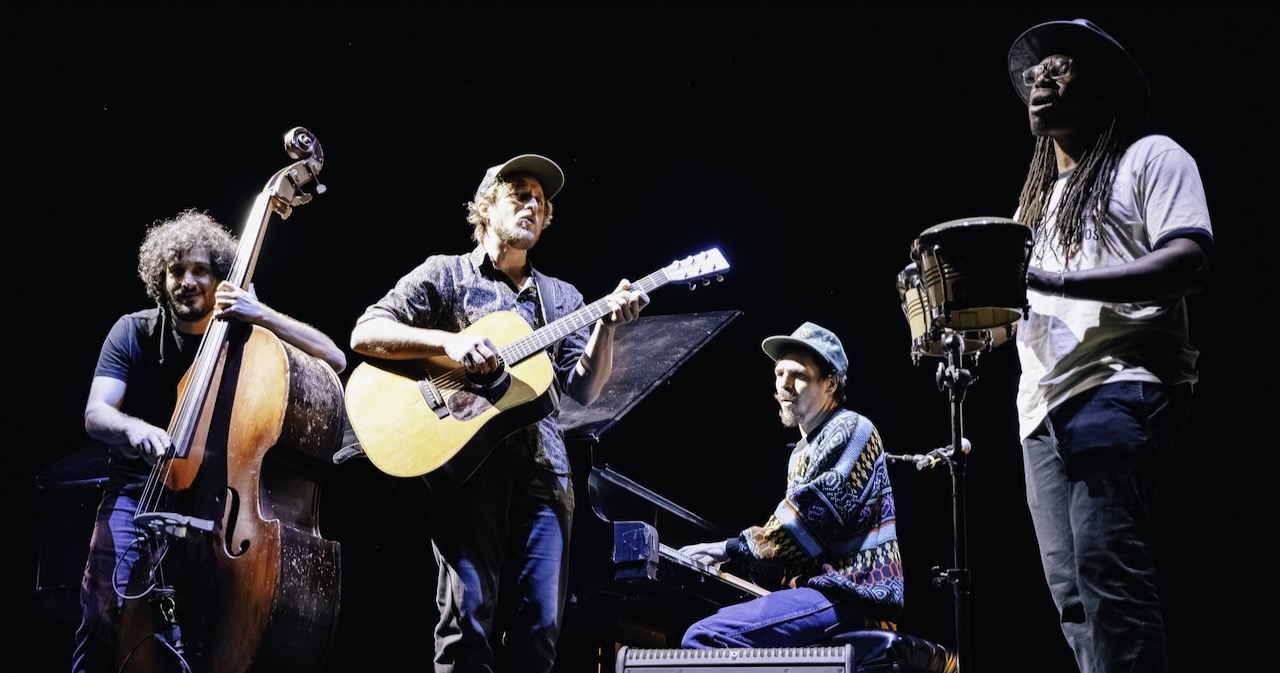
There’s something special that occurs when music is rooted in friendship and a shared mission. Perhaps no one exemplifies this better than Sam Grisman Project, founded by the youngest son of “Dawg music” pioneer David Grisman. Seeking to honor the likes of his father, Jerry Garcia & the Grateful Dead, and other musical heroes, SGP maintains a singular style and groove.
With its core iteration featuring seasoned multi-instrumentalists and songwriters Ric Robertson, Chris “Hollywood” English, and Aaron Lipp – and often featuring a host of other guests who run the musical gamut – SGP is bringing fresh authenticity, originality, and passion to the roots music and jam band scenes.
BGS spoke with Sam Grisman in early February 2024 about the origins of, inspirations, and plans for this remarkable and rising group.
What are the origins of Sam Grisman Project?
Sam Grisman: Ever since rekindling my musical friendship with the great Ric Robertson, who I’ve known since I was 14, I’ve been wanting to start a band that showcases the impact that the legacy of my dad and Jerry’s music has had on me. Ric and I started scheming on ways to make some music together and what that might look like. I figured we might have a good opportunity to play out in the live touring landscape if we paid tribute to the catalog of music that my dad and Jerry recorded together; that it could create the space for us to really do whatever we might want musically. We’re not limiting ourselves to the catalog of music that my dad and Jerry played together or individually, but we are honoring the spirit of what they did together, which was to dive into great songs that they had a shared love of.
I’ve always had a talented group of friends, going back to the time that I spent growing up at bluegrass festivals, fiddle camps, and the Mandolin Symposium. We have chemistry, and that is irreplaceable. Ric started playing music with Aaron Lipp around the time we turned 20 and he has been a part of my musical reality since then. He and Ric have developed strong chemistry, where they’ve been finishing each other’s musical sentences for years now. Aaron is from Naples, New York, about an hour away from Rochester, New York, which is where the great Chris English hails from. When Ric started making some music with Chris and telling me about what an amazing drummer and human being he is, I knew he would fit into the core of this band perfectly.
Who are you honoring with this project and why?
We’re honoring the musical heroes who influenced us the most. For me, because they provided the soundtrack to most of my earliest musical memories, that’s my dad and a lot of his friends who came through our house in Mill Valley to record. The friend who came around the most was Jerry [Garcia], but also John Hartford, Mike Seeger, Doc Watson, Tony Rice, Del McCoury and Ralph Stanley.
We honor our heroes, not just my dad and Jerry. We play lots of John Hartford music and Townes Van Zandt songs. Lots of Bob Dylan’s music, some Alan Toussaint, Dr. John, John Prine, Warren Zevon, Randy Newman, and Peter Rowan.
Can you describe what Dawg music is and what you’ve learned from your father?
Dawg music is a highly evolved form of acoustic music that is a synthesis of many different genres including old-time, bluegrass, hot club swing, jazz, and funk, with elements of classical music. It’s really a sort of genre-less genre pioneered by my father. It showcases – but is not limited to showcasing – the sound of the mandolin. The instrumentation in his quintet has traditionally been one or two mandolins, guitar, upright bass, and violin, but that’s expanded over the years to include percussion and drums.
That instrumentation of percussion, mandolin, guitar and bass is what I modeled the core of this band after. I’ve learned so much from my father about music and the music business – how to treat your friends and how to honor your elders. I am profoundly grateful to have been born to my particular set of parents and I’m grateful that there are other folks who have a deep appreciation for my dad’s impact on the musical landscape. I’d like for people to also appreciate how wonderful a human he is, so this is a small way that I get to share my dad with other people. He loves everybody, he’s grateful for the support, and he can feel it.
Who are some of the musical guests that have performed with SGP, and what does that mean to SGP?
It means a lot. It’s a representation of the community that we’re a part of. We’ve brought in some of our heroes as guests including dear family friends like Lowell Levenger “Banana” from the Youngbloods, Maria Muldaur, Eric Thompson, and Peter Rowan. We’ve had my dad sit in three times, which has been an absolute honor, and we’ve had a whole slew of our guests who bring different insights and a similar passion to the project: Dominick Leslie, Alex Hargreaves, Roy Williams, Bennett Sullivan, Nathaniel Smith, Phoebe Hunt, Lindsay Lou, my dear friend Tod Patrick Livingston, Mike Witcher, Chad Manning, Wyatt Ellis, Matt Eakle (the great flute alumnus from my dad’s quintet), and more. Eddie Barbash came and played a set with us in New York. Max Flansburg, who has a similar passion for this material and highlights a different corner of the Garcia/Hunter catalog than we do, played two of our New Year’s shows with us. We also had our old-time banjo hero, Richie Stearns, on all of those gigs that weekend. We’re going to have Logan Ledger on some shows coming up, and we’ll have Victor Furtado and Nathaniel Smith in the band.
When did SGP start touring in its current iteration, and how is the experience of touring with your best friends?
We had our first run as a band in January 2023. This conversation with you comes at the end of our longest break as a band, where we’ve had the entire month of January off. We’re starting back up on February 4th in Tucson, at a festival called Gem and Jam. It’s an absolute treat to travel the country with the people I care the most about, and to make great music and memories and friends everywhere we go. It’s important to anchor ourselves and ground ourselves in the music, because there’s a lot of work that goes into being out on the road that can make you lose perspective on how special it is to be doing something that you love for a living and to be able to do it for people who love what you’re doing.
SGP is obviously celebrating and continuing a particular musical legacy, but doing so with your own flavor. What makes SGP unique?
Our branding is our individuality and our honesty. I grew up in the house where my dad and Jerry recorded all of this music and I really do enjoy playing that music with my best friends. It gives me a sense of purpose to be able to play some of that music for folks who are passionate about it. There’s definitely room in the live music space for bands who take a preservationist approach to carrying on the musical traditions and catalogs of artists that came before them. A lot of musicians try to sound like their musical heroes, but that’s not our approach. I hired my friends to participate because I love their individuality and how they play, sing, and write music. I wouldn’t want to steer them towards sounding more like Jerry Garcia or my father.
We have been influenced by listening to tons of great music our entire lives, but we try to stay true to ourselves when we’re playing, so nobody is reaching for a sound that isn’t theirs. We all enjoy injecting our individuality into this music and having the flexibility to take the material in different directions depending on how we’re feeling. It’s amazing to have such versatile friends to work with.
How does original material fit into the broader vibe of SGP?
All three of the core guys – Ric Robertson, Aaron Lipp, and Chris English – are amazing songwriters. All the time I’ve known Ric, since we were teenagers, he’s been writing great songs. He was always a great singer, but he’s become one of my absolute favorite singers on the planet. There’s a lot of his music that lends itself incredibly well to looser, more long-form arrangements, which is something that SGP has become comfortable with.
Aaron Lipp is also an amazing songwriter who writes incredibly poignant music and aphoristic lyrics. Chris English writes amazing, feel-good music – not always overtly happy, but always with a strong message. His tunes add a lot of depth to our sets and take us to a more groove or bassline-oriented place, which is really refreshing for us and our audiences. I think there’s always going to be room for original music in SGP. As much as these guys are inspired to play their own tunes, I want to play them.
You released a great EP in 2023. Is there anything else currently in the works?
We’re gonna make a full length album at some point in 2024. Over the course of the last hundred or so gigs we’ve developed a pretty good repertoire and a strong rapport with each other. I don’t think it would take very long to put some of these tunes down in the studio, but we also multitrack most of our shows and we have an archive of live music to sort through. We’re going to be putting some shows up on Nugs.net pretty soon. We have a pro-taping policy to encourage folks to come and tape the show. I share Jerry [Garcia]’s philosophy that if you bought a ticket to the show, the performance is really yours as long as you’re not charging anybody else for it. Some of those shows have made it to archive.org, which is a free internet resource where folks can listen to live music. At some point we’ll probably put together some compilations of live material and put them up on the streaming services. I think our live show is always going to be the emphasis of what we do, so it’s important to have some recorded examples out there for people to check out.
What’s in store for SGP in 2024, and what does pursuing that mean to you?
We’ve got another solid year shaping up. We played about a hundred gigs in 2023 and we’ll probably make it pretty close to that in 2024. I’m going to expand the cast of characters a little bit in 2024 and bring some other friends into the fold. I’m looking forward to introducing my new friends and audiences to my dear musical compatriots who care about this music as much as I do. I’m grateful and humbled to get to do it. It means a lot to get to honor my father every night by playing his music. We take out the mandola that he gave me for my 21st birthday, the mandola he recorded “Opus 38” on. We get to play “Opus 38” on that very same mandola for people who appreciate what’s happening, and I feel like he and Uncle Jerry are with us every night. It’s a big blessing all around.
Photo courtesy of the artist.
Artist of the Month: Dawg in December
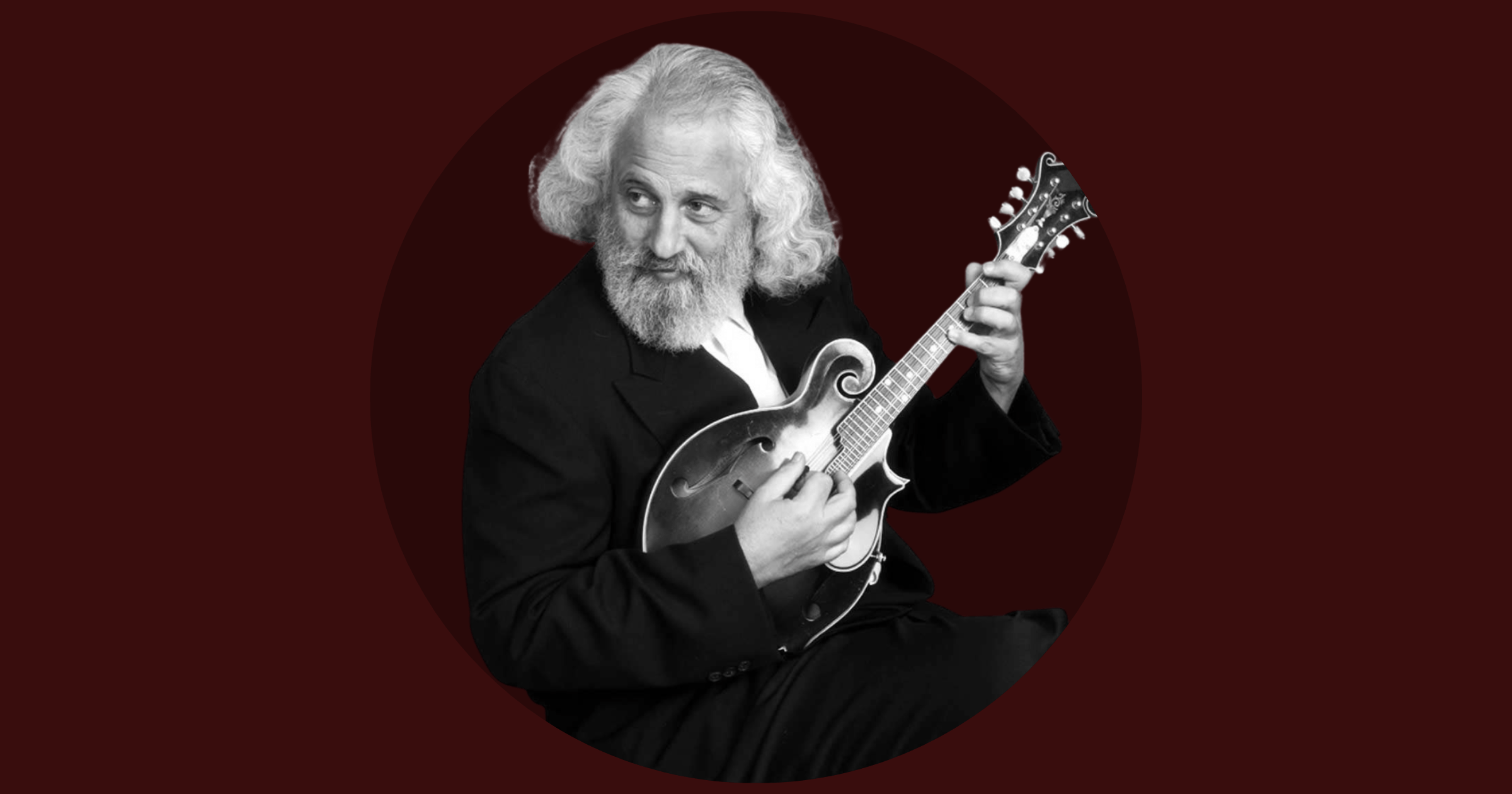
Earlier this year, David “Dawg” Grisman was inducted into the Bluegrass Music Hall of Fame at IBMA’s annual awards show in Raleigh, North Carolina. Grisman was unable to attend, but gave remarks via a pre-recorded video; his acceptance speech was striking. Dawg poured forth unmetered gratitude, listing so many artists, bands, peers, and forebears who gave him a shot, hired him, got him started, stuck with him, and contributed to his success.
It was a laundry list of names, some enormous in his creative life – Jerry Garcia, Hazel Dickens & Alice Gerrard, Mike Seeger, Roland and Clarence White, Ralph Rinzler – and others with much more granular and specific impacts. Though his speech was barely four minutes long, Grisman gave a remarkably holistic overview of his broad and varied career, pinpointing respective “dominos” in his musical life that each tipped over into the next, leading to the decades-long, groundbreaking musical output for which we all know, respect, and adore the Dawg.
He even remembered the very moment he heard bluegrass music for the first time, beginning his self-taped video mentioning the Mike Seeger-produced vinyl compilation, Mountain Music Bluegrass Style, and Earl Taylor & the Stoney Mountain Boys’ rendition of “White House Blues,” his first pivotal taste of the music that would define his life – and that he would re-define, time and time again, over the course of his career. He thanked Doc Watson, a frequent collaborator and recording partner, for being “the first professional musician to ever invite this mandolin picker on stage, when I was 17 years old.”
But Dawg’s musical pedigree – unassailable as it is – wasn’t the focal point of his Hall of Fame acceptance. Instead, Grisman positioned his lengthy and name-drop-heavy resumé not as proof of his own bona fides or validation of his music and impact, but as evidence of his own gratitude. Gratitude at the honor of being inducted into the Hall, yes, but more importantly, gratitude at having been given the opportunity to find, become, and be himself, unapologetically and with mandolin in hand.
Whether in duet with Tony Rice, Del McCoury, Jerry Garcia, Tommy Emmanuel, or Andy Statman, or in groups like Old & In the Way and the David Grisman Quintet (or Trio or Sextet), Dawg has routinely and effortlessly pushed every musical envelope he’s inhabited. He, his friends, bandmates, and collaborators invented new genres and sub-genres, brought bluegrass to hundreds of thousands of new fans, and folded in virtuosos (often unknown to bluegrass) from across the roots music landscape and around the globe. No matter how “out there” or fringe Dawg’s music became, it was and continues to be indelibly rooted in a reverence and love for the traditional, vernacular roots of bluegrass and old-time – as genres, yes, but as communities and folkways, primarily.
It’s why his catalog includes music made for and with folks like Stephane Grappelli, Frank Vignola, Jerry Garcia, Dolly Parton, Linda Ronstadt, Bonnie Raitt, and James Taylor, but in his acceptance speech he went out of his way to thank and spotlight bluegrassers like Frank Wakefield, Curly Seckler, Jesse McReynolds, Bobby Osborne, and Herschel Sizemore instead. It’s also why, despite building a career and identity out of coloring outside the bluegrass lines, Dawg is still proudly claimed by the bluegrass hard liners and “that ain’t bluegrass” sorts – as well as the wooks, hippies, jamgrassers, and chambergrass acolytes.
From the highest-selling bluegrass album of its time, Old & In The Way, to The Pizza Tapes; from “E.M.D.” to the Grateful Dead’s American Beauty; from Tone Poems to “Dawggy Mountain Breakdown” playing at the beginning of each and every episode and rerun of NPR’s quintessential hit, “Car Talk;” David Grisman’s legacy is resplendent, exhaustive, and one-of-a-kind. But it’s not just a resumé to Dawg – or just a history, benign and objective. To David Grisman, the most important thing about making music is people – the ones who make it, the ones who hear it, and the ones who love it.
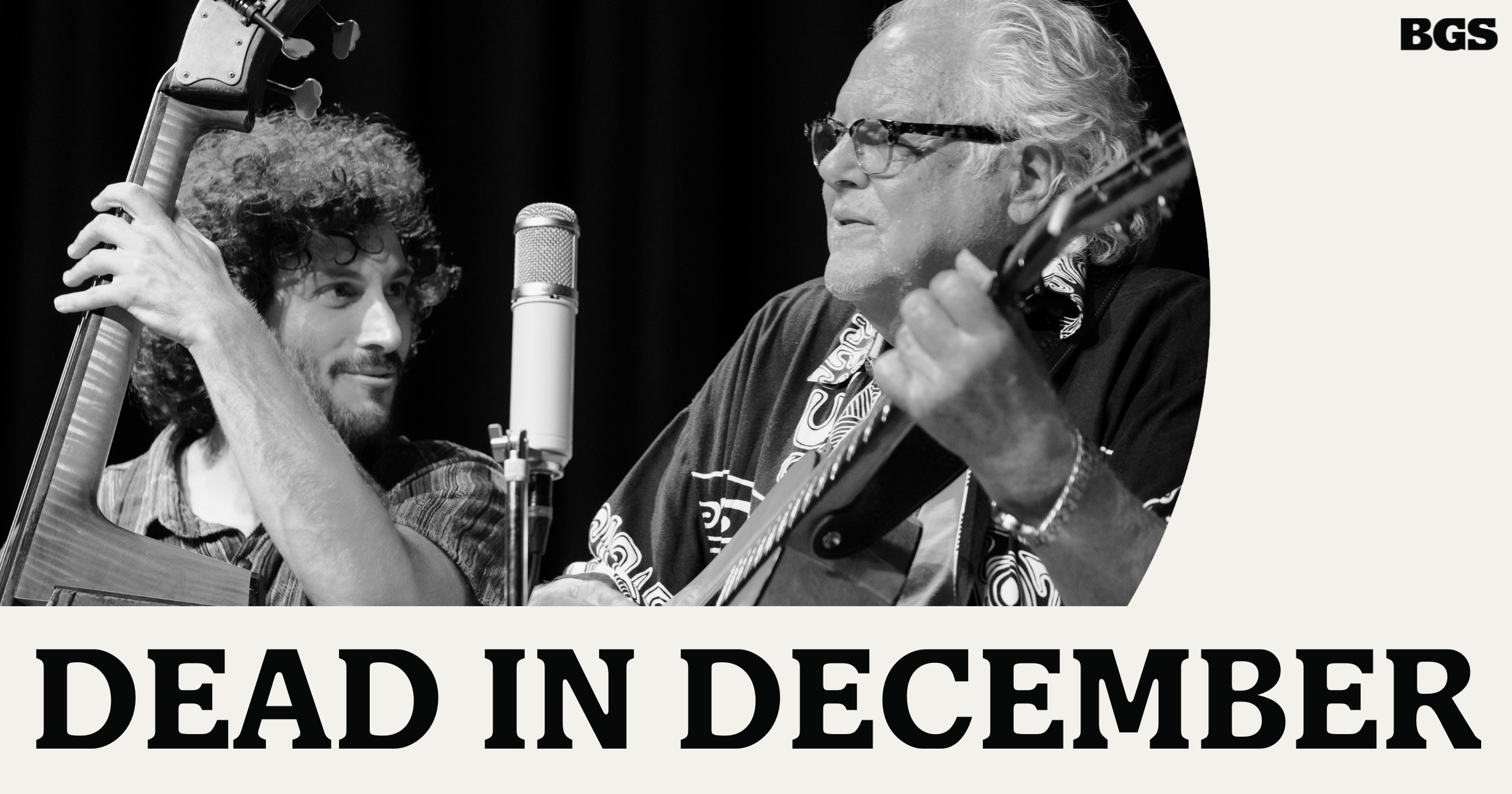
All month long we’ll be celebrating Dawg in December. Enjoy Artist of the Month content like our Essentials Playlist (below), plus we’ll be chatting with friends of Dawg about what it’s really like to know him and make music with him, we’ll dip back into the BGS Archives for our favorite Grisman content, we’ll feature his son’s new band, the Sam Grisman Project, and much more. So join us as we celebrate Dawg’s induction into the Bluegrass Music Hall of Fame and his entire groundbreaking career for Dawg in December.
Photo courtesy of Acoustic Disc