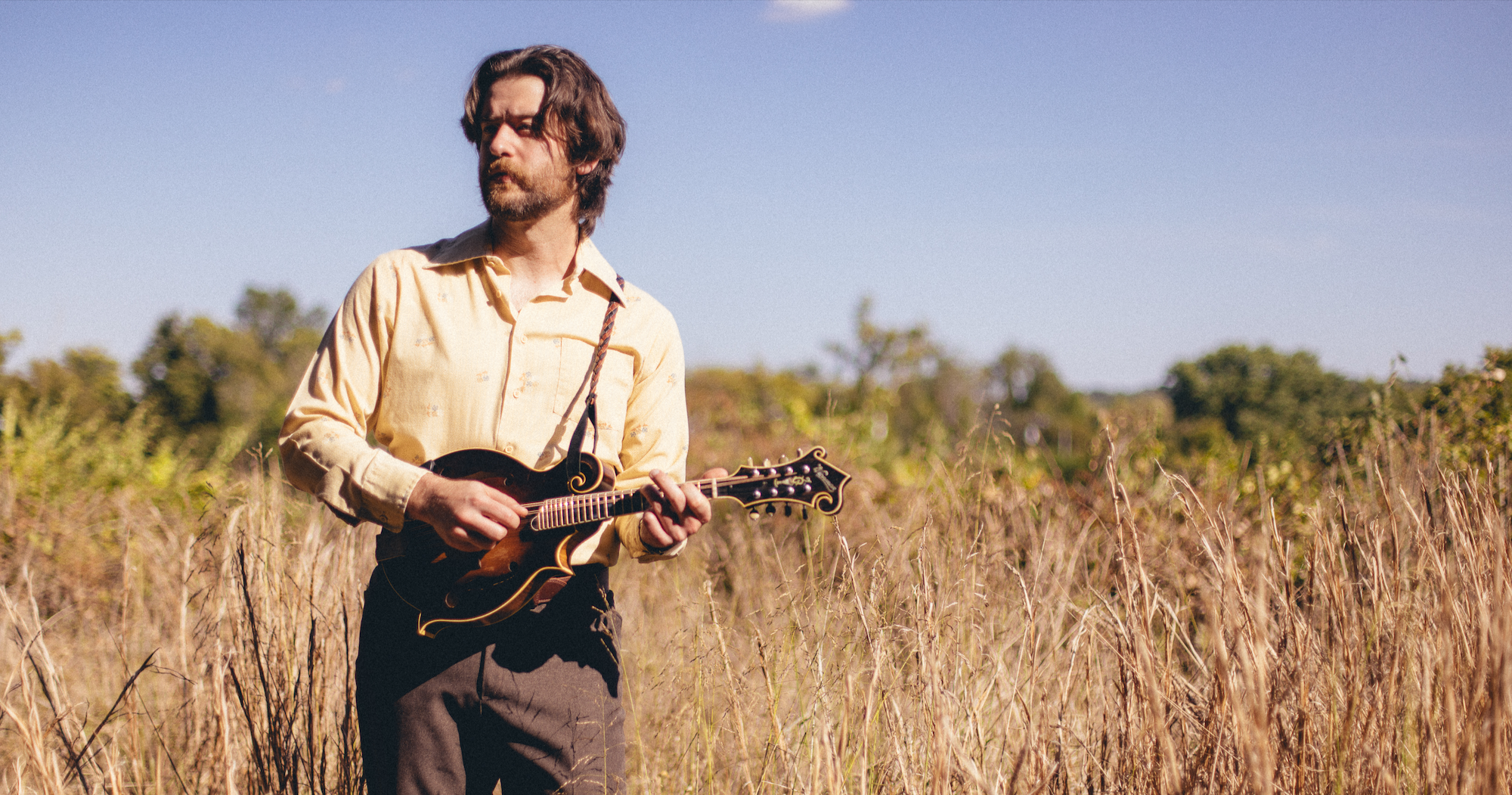
Steep Canyon Rangers Are “A String Band Again”

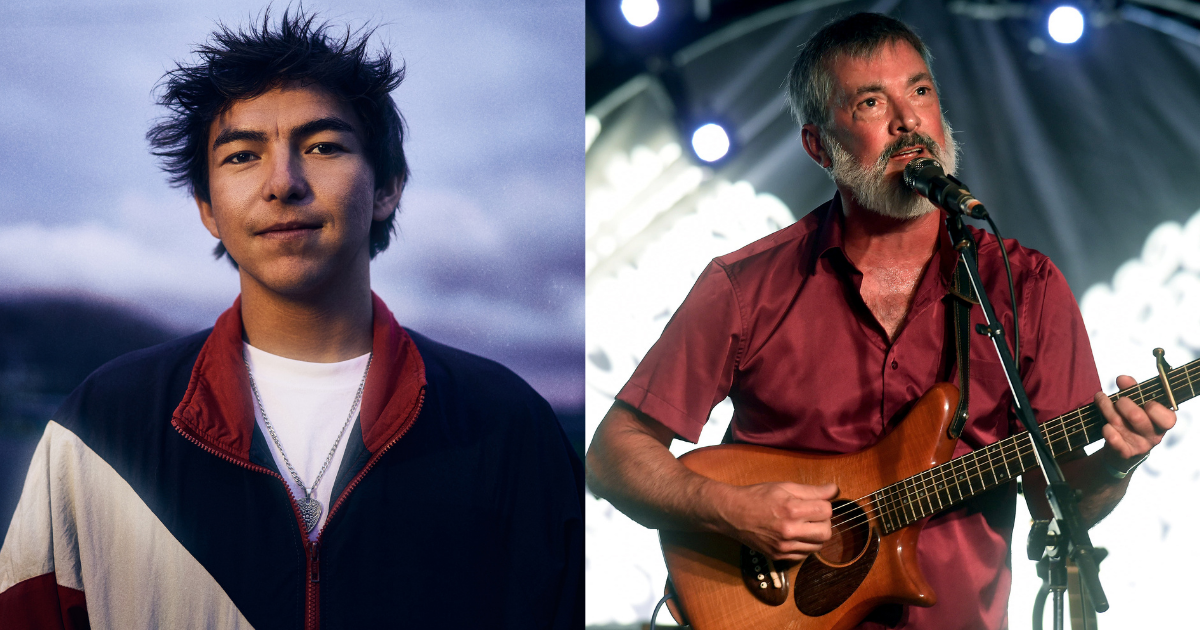
Twenty-six years into its life as a band, the Steep Canyon Rangers get back to basics on Next Act, unplugging their amps and instruments in favor of an acoustic setup with minimal percussion. It marks a return to the foundations that first set the group up for success.

Releasing May 22, Next Act is the second studio effort to feature guitarist and vocalist Aaron Burdett, who joined the Rangers in 2022 following the departure of founding member Woody Platt. In addition to appearing on their 2023 album, Morning Shift, Burdett is part of the Rangers’ 2024 live record, which features several of his own compositions, too.

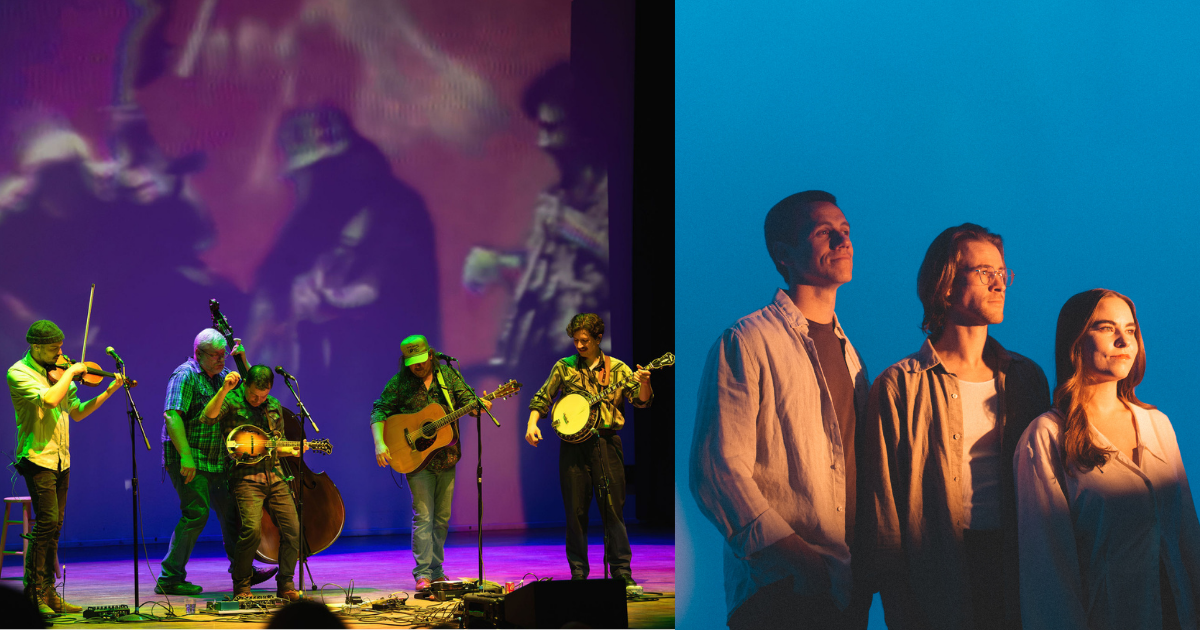
Alongside the band’s other members – Graham Sharp (banjo), Mike Guggino (mandolin), Nicky Sanders (fiddle), Mike Ashworth (percussion, Dobro), and Barrett Smith (bass) – Next Act brings Burdett into the fold even more, with six tracks written or co-written by him. “Roll of the Dice” catalogs Burdett’s early days traveling with the band and “Hard Times” finds him reflecting on adversity and how moments that once felt overwhelming can later soften in memories.

According to Ashworth, the growing role of Burdett in the band is simply a carryover of having multiple voices contributing to their songwriting over the past decade, with Sharp being the other primary force of late.

“Aaron came into that role really well with a bunch of his own material while also taking lead on some of the stuff Graham had written as well,” Ashworth explains. “After incorporating more of his own stuff on that live record, the next step was to up the ante even more on this album by bringing even more of his older work into the studio.”

Steep Canyon Rangers’ Mike Ashworth and Barrett Smith caught up with BGS to delve into how books inspired two of the album’s songs, how a road trip instigated “Halfway To Reno” featuring Edie Brickell, what remains on the group’s bucket list, and more.

How did Aaron’s level of involvement on this record grow compared to Morning Shift?

Barrett Smith: It feels like Aaron has always been here – he just fits with us so well. He’s become such a close friend and a great person to work and make art with. We’re just excited with everything having to do with the band right now, and Aaron is a big part of that. Things went well when we worked together on Morning Shift, even though we were considerably less worn-in and stable than we are now on this album. We’re really cooking right now and feel great together as a group.

Mike Ashworth: From a relationship standpoint, things have gelled much further than I’d ever hoped. It does feel like Aaron’s been a member for more like 10 years, not three. On this record you can see the band in more of a way that feels like a group that’s sure of itself. The last time we were in the studio we arranged in more of a rock ‘n’ roll style where everybody reinforces the same rhythms, but on Next Act we gave everyone a lot more room to explore their own parts. It’s indicative of how much we trust each other now and how much growth artistically the band has seen in the last few years.

BS: Another good indicator of the growth is that on Morning Shift we worked with a producer, Darrell Scott, even though we enjoy and produce ourselves really well. But then when Next Act came along, we felt like we had enough chemistry together that we could move forward without an outside producer this time. Doing that allows us more space to bounce ideas around and feed off each other, which we feel like is our greatest superpower as a band.

As well as y’all work together, it’s hard to pass up a collaboration with someone like Darrell Scott when it presents itself!

MA: I imagine it’d be hard to come into a band like this and produce, because oftentimes we have to be careful to not already be done with everything. As a result, we intentionally leave certain things unarranged or on the table to give them something to do or else we’ll just wind up taking everything away from them.

BS: I remember Darrell, a number of times, looking around and saying, “Y’all are pretty weird with how you do things.” One time when we were recording, I remember him stopping and asking us if we always had so many opinions about each song that we communicated to each other. Eventually he started telling us to just “shut up and play” – that was one of the catchphrases of our studio time together. [Laughs] If you have an idea, we want you to be confident that it’s going to be heard. There’s a lot of trust in the whole system.

MA: Another thing Darrell pointed out was, “Y’all really care so much about the story.” He’d never heard an entire band comment on the lyrics and stories behind each song like we do – whether it’s where to punch things up or down or when to add harmonies.

That’s the cool thing about this new record. It delves even more into that exploratory realm of the band trying to sell the story – and the whole band, not just one singer, absorbing what it’s all about.

Tell me about naming the album Next Act. Is that a nod to this full circle journey that’s brought you back to being more of a traditional string band?

MA: The intention was twofold, but that was definitely a part of it. As the title of the song, it’s about picking yourself up, moving into a new phase of life, and embracing change. However, Next Act for the band is us reflecting on our change and growth and the ability to reveal what our potential is at any given moment. Because of that it became a pretty conscious decision to make it the title of the record.

BS: On Arm In Arm [in 2020], it was fun getting to mess around in the studio with organs, electric guitars and all these special guests – it was like our own mini-Brian-Wilson-like experience. But on this record, we wanted to bring it back home and return to being a string band again. Because of that, this new record doesn’t have any electric instruments on it. There is percussion, but it’s not a full drum set. We’ve been doing a lot more stuff around one mic at our live shows recently and feel like these new songs are very representative of that.

MA: We’ve all had amps and drums buzzing around our heads for years, so we wanted to remind ourselves that this thing still starts around a campfire and can always come back to that. I don’t think fans will know what to call what we’re going to do on any given night, because even we won’t [know] until we see the room and start to feel the vibe of the city and people there. Doing this record has allowed us to rediscover the foundation of what we are when you strip everything away. That’s been a really cool and unnerving process to get out from behind all the extra noise and see that when you take those things away, the art is still really good.

There’s a couple songs on this record – “Back of Beyond” and “Circling the Drain” – that were inspired by books, Barbara Kingsolver’s Demon Copperhead and Horace Kephart’s Our Southern Highlanders, respectively. With that in mind, how would you say literature informs the band’s songwriting, not only with this record, but overall as well?

MA: Graham actually wrote both those songs, but I do want to speak about Demon Copperhead, because we all just absolutely loved that book. We’re not just a band, we’re also a close circle of friends, and with that comes shared mutual interests, like books. I’m so glad that Graham is my friend, because he can write things that I wish I had the ability to say. But once something is written, whether it be a book or a song, it doesn’t belong to [the writer] anymore, it belongs to you, [the reader/listener]. That’s the really cool thing about art.

I love that Graham is a voracious reader because we wind up getting a lot of great songs out of it, like these two. Damon [Demon Copperhead’s protagonist] is such a wonderful, resilient character that reminds me so much of people I grew up with – and I’m sure Barrett would agree.

BS: As a writer, artist, and creator, I think it’s a good habit to have different areas you pull inspiration from to keep you out of a rut. For Graham a big one is literature. Demon Copperhead threw all of us for a loop as it was getting passed around the bus. When we found out he was basing a song off it we jumped right on it.

As for “Back of Beyond” and Our Southern Highlanders, I think that book is essential reading for any Western North Carolinian. “Back of Beyond” was simply a term that came from meaning the middle of nowhere out in the country, in a place where you can go for days without seeing anyone or speaking a word.

“Back of Beyond” is a song that’s been lingering with y’all for several albums before finally getting recorded now. What made Next Act the right spot for it to land?

BS: During my time in the band, I would say that “Back of Beyond” is the biggest survivor, in terms of songs that have stuck around and taken on many different forms before finally making it onto a record. We actually wanted to include it on Morning Shift, but Darrell Scott didn’t think it would be a good fit, so we didn’t. We may have even called that album “Back of Beyond” if it had been on it. But when that happened, we knew it would reappear on our next record. After it missed the cut we all really wanted it for this one, which is why we call it a survivor.

I was also curious about the song “Halfway to Reno,” which came from a roadtrip you [Mike] had with Aaron from California to a gig in Reno, Nevada. Is that right?

MA: That’s right. I think Aaron was behind the wheel that day. From my view, he’s someone that is more influenced by an experience or feeling than anything else, which he can then take like putty and mold into a piece of art. That’s the beauty of being in this band, these guys will come up with these nuggets – and if it hits the Steep Canyon grinder and comes out the other end still in one piece, then they’ll take it and finish writing it.

Then when we were mixing that song we kept envisioning a high voice on it, but couldn’t figure out exactly who to ask to fill the role. Then we sent it to our dear friend Edie Brickell and she ended up putting the icing on the cake. The song is about one lover trying to get back to the other and the little things that you carry through your day – especially when you’re separated by distance – that keep you tied to home. She really understood the assignment and put this beautiful piece on top of the tune that I absolutely love.

How did the opportunity to work with Edie on the tune come about?

MA: We first met her over a decade ago through Steve Martin. He would send her banjo ideas and she’d send them back to him with lyrics over them. That quickly evolved into a fantastic record produced by Peter Asher called Love Has Come For You in 2013. But touring together is where we really befriended her, during late nights on the bus and in the dressing room. I remember being drawn in by her spontaneity and creativity and the way that she can write a song in the moment about that moment. It’s almost like a fortune teller.

Since that first encounter we’ve recorded many times together through the years and she’s become not just one of my favorite female artists, but one of my favorite artists, period. She’s just so heartfelt every time she adds to something. It comes from a real place and that’s harder and harder to find these days.

Speaking of Steve, what did it mean to have him featured with you on “Heart’s the Only Compass”? I think this is his first time on an album or single with you since 2020’s “California.”

BS: It’s always a huge honor any time we’re able to work with Steve. He’s an iconic American art figure, so to have the opportunity to create with him is a treat. When we decided we wanted clawhammer banjo on that tune we tossed a few other names around first, but it all came back to Steve, because the prowess he has on the instrument is second to none.

From what I understand, you reconstructed “The Kindest Thing” in the studio at the behest of Nicky. Tell me about that process and how the final song differs from what you were initially going for?

BS: That song took on a bunch of different forms in the studio, as our songs often do. At one point it had this Don Williams, cool country kind of feel and Nicky heard that pretty late in the game, but didn’t care for it. Instead he kept talking about “Going to California” by Led Zeppelin, which led to Mike Guggino kicking off this riff similar to the one in that song that wound up setting the foundation for what the song eventually turned into. Ultimately, it was a good decision on Nicky’s part.

Steep Canyon has been together for 26 years now. With that in mind, is there anything that remains on your musical bucket list?

BS: The band hasn’t won a GRAMMY since I’ve been a part of it, so I’d love to see that happen – maybe even with this album. [Laughs] Aside from that, it’s hard to think of specific venues, not that there aren’t any, but because we’ve gotten to play so many of our dream places already. My bucket list is mainly just keeping on and continuing to discover and hone my role in this band.

What has bringing this album to life taught you about yourselves?

MA: I thought I’d become more patient as I became older, but I actually think I’m becoming less. [Laughs] In all seriousness, this session taught me to slow down again. I kept wanting to schedule and have it done sooner rather than later, but instead, the cycle for this record was one of the longest we’ve ever endured. In the end I think it’s exactly what it wanted and I’m grateful for how it got me to take it easy and be more in the moment.

BS: Even though we’ve been playing together for so long, working on this record brought me a new level of comfort and trust with the band. I have more faith in the people in the band, what we’re doing and my place in it than ever before, which is such a good feeling. I’m really enjoying where we are right now and am excited to see how we keep building upon it.


Photo Credit: Jay Strausser

Our Jamgrass column is brought to you in partnership with Preston Thompson Guitars.

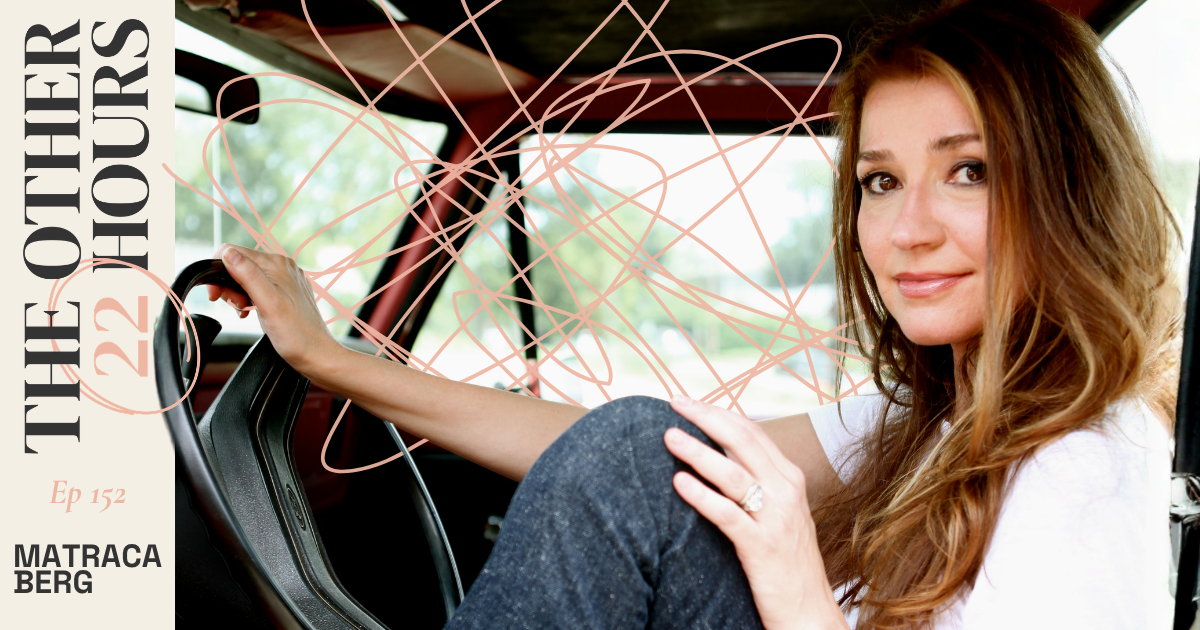
The Other 22 Hours: Michaela Anne & Aaron Shafer-Haiss

To celebrate our 150th episode of The Other 22 Hours, we try a bit of an experiment: interviewing ourselves, for the first time. After nearly two decades of partnership, we examine the evolution of the creative self. Michaela Anne – whose fifth record, These Are The Days, marks her first in over 10 years for which she retains total ownership – discusses the “massive shift of self” required to walk away from industry gatekeepers. Aaron Shafer-Haiss, whose compositions have scored major network dramas like Station 19 and The Good Doctor, reflects on the “utilitarian creativity” of a producer. It is a conversation about resilience, the “growth seesaw” of a creative marriage, and the realization that the dream is already happening.

LISTEN: APPLE • SPOTIFY • AMAZON • MP3

In This Episode:

Michaela Anne
Aaron Shafer-Haiss
These Are The Days
Ep 109 Major Jackson
– Nonesuch Records
Hardly Strictly Bluegrass Festival
Bonnaroo
Cayamo
Mountain Stage
Folks Fest
Middle Tennessee State University
Owen Biddle
Seth Taylor
Ethan Ballinger
Kyshona
Lyle Davinsky
Lauren Balthrop
Post Malone

Go Deeper: 

Watch: View this entire conversation above or on YouTube.
Explore: Find similar conversations in these themed playlists.
Connect: Join the conversation on Instagram.

The Other 22 Hours is hosted by Aaron Shafer-Haiss (producer, mixer, musician) and Michaela Anne (songwriter, artist, creative coach). More about Aaron’s workMore about Michaela Anne’s work.


Produced by Aaron Shafer-Haiss. Original music written, performed and produced by Aaron Shafer-Haiss.

Photo courtesy of the Other 22 Hours.

Survival of the Heart and Survival in Alaska

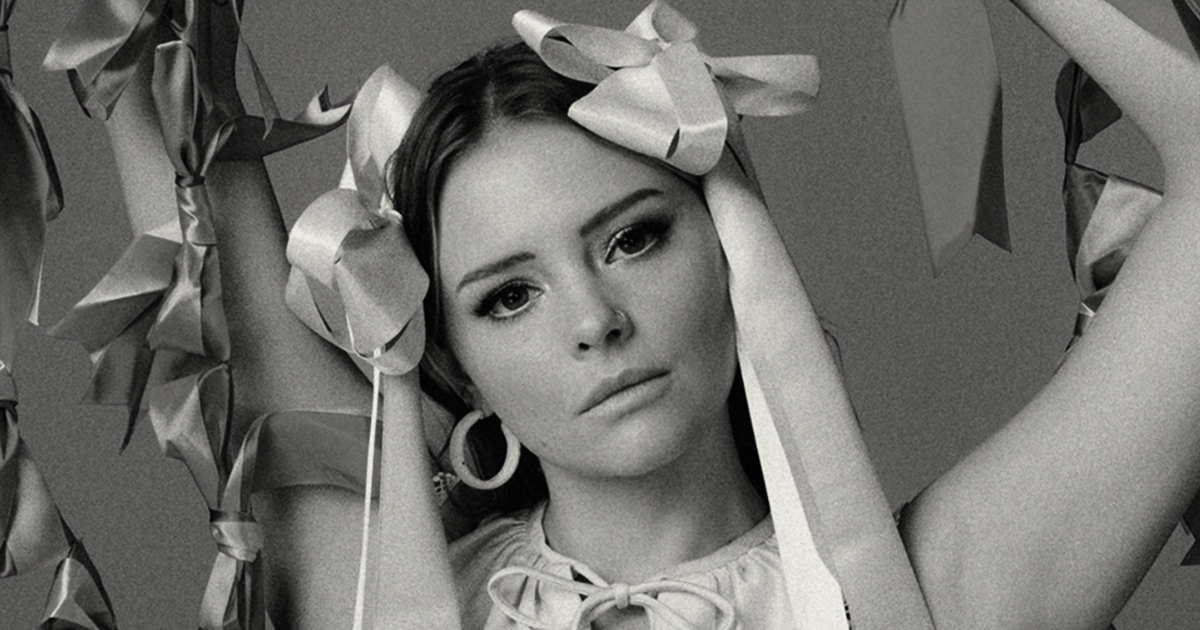
During the Klondike Gold Rush, the Red Onion Saloon in Skagway, Alaska, operated as a thriving brothel and a rare (sometimes) source of autonomy for the women who worked there. More than a century later, Juneau-based singer-songwriter Taylor Dallas Vidic found empowerment at the old bordello too, by offering feminist tours in character as Madam Anya Johnson. Innuendos loosened up tour groups, forging a connection that made them receptive to some serious history lessons – alongside dick jokes.

“What working at the Red Onion did for me was make me feel really comfortable about being a human in front of other humans, and to talk about things that often feel taboo or uncomfortable, and to normalize them,” Vidic says. “It’s translating from making sex jokes to feeling comfortable standing in front of a lot of people and saying, ‘Hey, here’s what it felt like when I broke my heart or when someone else broke my heart.’”

Vidic’s songwriting is warm and vulnerable. She’s equally capable of belting above sultry and coy jazzy tracks, carrying intricate, stripped-down folksongs on her magnanimous voice alone, and building grand theatrical numbers, as well. She does all of it on her debut album, Cat & Mouse, a collection of 13 (mostly) love songs that deliver an expansive, playful representation of what is perhaps humanity’s most perplexing and intoxicating experience. And it’s all rooted in the same multifaceted understanding of shared humanity that Vidic used to bond with strangers on those summer stints in Skagway.

Beyond an exceptional, arresting voice and range, Vidic’s songwriting conveys an acuity of emotion which pushes what is superficially an album of love songs well beyond predictable tropes. “They tell you it takes time, you’ll see/ To remember who you use to be/ Remember how to sit in the quiet/ On your own,” she sings on the album’s opening track, “Falling Out of Love,” which lays out in minute, closely felt detail the experience of returning to self after a breakup:

I’ve learned to fill the space that
I’d kept for only you, dear
I smile at all the faces
Walk past all the places
We used to go
Each breath a little deeper
Each song a little sweeter
Now that the scent of you doesn’t linger on my pillow
Anymore

Heartbreak might be age-old song fodder, but Vidic extends it far beyond breakups to many kinds of aches (loss, longing, unbearable certainty) with an alluring immediacy. In her hands, the simple mechanics of falling in and out of love – or wishing to fall in love, even if just for the evening – become a comforting exercise in self-discovery and relatable human experience.

There’s “In a Song,” about a crush that’s missed its moment. “High,” which yearns for the good parts of a past entanglement. And “In Your Arms,” a cinematic, self-aware disquisition on a relationship’s irreconcilable differences: “I said it’s a big ole world/ The place we could go, the people we’ll see/ Just imagine the strangers we could meet,” Vidic sings, adding: “He said/ My corner’s just fine with me.” By song’s end, Vidic is off on the grand adventures she dreamed for them both, solo.

Part of Vidic’s remarkably evolved approach to love songs derives from practical necessity. Juneau, Alaska – population 32,000 – is small and isolated both from the rest of the country and even the state, by geography; with no roads out of town and flanked by impenetrable mountains, ice fields, and the Gastineau channel, it’s accessible only by boat or plane. Living within those few square miles, it’s impossible to avoid running into an ex regularly. In the same way that Vidic’s ethos accepts humanity’s many facets, so too she’s maintained love and respect for her exes. Indeed, most of them were invited to – and attended – her album release show.

“Finding ways to actively reframe relationships when they have run their course is a matter of survival of the heart. And it would be such a loss to not get to continue to care for the people that I have loved, that have loved me,” Vidic says. “I don’t know if I’m just lucky in that I’ve found people that are willing to do that – even though it is messy and hard at times and a little confusing at times, too, and uncomfortable; we spend so much time with people that we choose to love and we share so much…I really like holding onto those moments.”

Juneau’s geographical limitations and eccentricities crop up on the album in other ways, as well. “I let those mystery boys get me every time/ When the stakes are low I’m better at not losing my mind/ An hour is too far when an airplane is in play,” Vidic sings on “Muse.” Nothing quite as bittersweet as unrequited love, specifically one that’s unwanted.

“Twice a Day,” the album’s opening foray into its folk/Americana B-side, is the only song that doesn’t overtly take place in Alaska, written during a few months in New York City. On it, Vidic, a consummate observer of the world around her, contemplates the near-infinite possibility for human interaction in a big city surrounded by so many more souls than in her hometown: “Maybe I would make you laugh each day/ Maybe when it ended I’d be begging you to stay/ Maybe we’d grow old and see, we’re as happy as we’d ought to be/ But we’re always a platform away.”

First albums are always special. Often, they represent the culmination of years’ worth of a musician’s best and hardest fought work – John Prine’s eponymous debut, Emmylou Harris’ Pieces of the Sky, Guy Clark’s Old No. 1 – and Cat & Mouse is no exception. Written over more than a decade (Vidic penned its oldest song, “Muse,” at 21), the album is, for Vidic, a scrapbook of her life and formative early adulthood.

“I think most people can agree that songs take us back to moments in our lives, be it a playlist that was on the radio a lot when we were in middle school, or that particular song that helped you get over a breakup or a song that makes you think about your parent,” she says. “And these songs do that for me, but they are snapshots of my existence and of the people that I’ve come across.”

From her delivery on stage to the studio production of Cat & Mouse, Vidic also brings the banter and cheek of her madam tour guide gig, as well as the showmanship she’s cultivated as part of burlesque troupe, The Nude & Rude Revue, and through many community arts events she’s helped organize. Leaning into her life’s dualities, Vidic made the album with two distinct sides; Cat, the album’s A-side, is jazzy with a big band sound; Mouse is a stripped-down, folksy, and sparsely-instrumented B-side. It’s a concept that easily could have been sonically incongruous, but both sides flow together through the power of Vidic’s voice, aided by the album’s title track, which she rendered in both styles and delivered at the end of each side, respectively.

Juneau’s geographic isolation can be a mighty impediment for musicians, but it’s also a blessing that breeds collaboration and allows musicians a certain freedom to grow and flourish without the pressures of bigger music cities in the U.S., says Juneau-based musician Andrew Heist. Heist has played in a myriad of bluegrass bands in Alaska over the last 20 years, and lends his scintillating mandolin to “Falling Out of Love.” He also shares stages with Vidic as part of their songwriting group, the Muskeg Collective.

“Without the pressure to get a product out there to build her name in a competitive scene, there’s this community familiarity that is so rare and amazing in Juneau,” Heist says. “It’s sort of like the old soul version of hearing somebody sing, there’s a depth to the way that she brings her music forward.”

Most of Vidic’s songs are exceedingly personal, yet she manages to spin the exquisite pain of heartbreak into something universally relatable, and she’s equally vivid when singing about someone else. Vidic wrote “Wet Tennis Shoes” in part thinking about a friend whose father left when she was too young to remember him. The song effuses not just ache, but a crushing loss of innocence, as well: “Boats made of paper float on the pond/ A little girl playing wonders where you have gone/ You took all the sunshine and made her skies grey.” And though the paper boats do not actually dissolve, the song’s omnipresent drizzle – “Rain on her window/ Rain on her head/ Rain on the rooftop as she lies in bed” – evokes the dissolution even more effectively.

After spending most of the album exploring feelings’ small intricacies, Vidic’s final track before the “Cat & Mouse” reprise is “Stockades,” a showy, declarative pop number about the enormity of falling head over heels. “The Stockades fell/ When he touched my hips/ And he kissed my lips in ways they’ve never been kissed,” she cries before continuing: “Lord knows it took one night to tear this empire down/ The walls we built, they’re falling faster than Jericho to the ground.” Still, kingdoms fall and so do powerful loves; and again by the end of the song, Vidic is reminding herself how to get back up and stand on her own two feet. Now, and always, too.

The strength of Alaskan songwriters’ connections extends beyond helping each other and into the community at large as well. As part of her album crowdfunding (Cat & Mouse was also partially funded by a prestigious local grant), Vidic asked for funds to bring music into the state’s network of nursing homes, a goal inspired by visiting her mother in a long-term care facility and a few concerts she’s already given.

Memorably, Vidic recalls how at a Christmastime performance she stepped offstage to sing among the audience to bring herself into focus for them. Next to a man she’d noticed never uttered a word on previous visits, Vidic sang “Silver Bells.” Part way in, the man joined her, singing along with words he’d learned long ago.

Nursing homes are often undesirable performance locations; they’re sterile, poorly lit, and underfunded, their residents not the most attentive or engaging audience members – yet, Vidic observes, those people deserve live music, joy, and respect, as much as anyone. She plans to rework her stage performance into a version with which to bring music to those spaces where it’s rarely heard, and sorely needed.

“That again brings me back to my time at the Red Onion and finding that shared humanity with strangers, and just feeling like we’re all just human beings doing our best, sharing spaces and trying to find joy and make moments worth living,” Vidic says. “What’s the point without it?”


Photo Credit: Sydney Akagi

Alt-Country, the Blues, and Oklahoma

Editor’s Note: Each issue of Good Country, our co-founder Ed Helms shares a handful of good country artists, albums, and songs direct from his own earphones in Ed’s Picks.

Rodney Crowell

Great news from a roots-country legend, Rodney Crowell returns with a “new/old” album on June 26, Then Again. Largely recorded over two decades ago in the early 2000s with Steuart Smith co-producing and completed with Dan Knobler stepping in, its lead single, “Are You One of Us?,” is the final recording by Crowell and his friend and compatriot Guy Clark. It’s a track perfectly suited for these divided times we’re living in, bringing wisdom and wit like only Crowell and Clark could. We can’t wait to hear more from Then Again!


Shakey Graves

We’ve known, covered, and collaborated with our friend Alejandro for years and years, so we’re especially excited to have him as our current BGS Artist of the Month, celebrating his brand new album Fondness, Etc. For an artist who’s adept at sonic and aesthetic reinvention, his music still always sounds exactly like himself – even as he bends and breaks the barriers of alt-country, neo-folk, Americana, and western to his liking. This is one of our favorite Shakey eras yet.


Taj Mahal

Another legend of American roots music, Taj Mahal is woefully underappreciated and undersung, even while being rightfully worshipped by so many as a keystone of blues, Americana, string band, and country musics. His new album, Time, released with his Phantom Blues Band on Resonatin’ Records/Thirty Tigers, shows that he remains as dynamic and innovative as ever. The title track is a deep-pocketed and smooth never-before-heard Bill Withers number that Taj makes his own. If you’re used to his gritty, playful, and down home blues, the sound here may surprise you – but damn, that’s Good Country, isn’t it?


Reba McEntire

Our queen of country, Oklahoma, and corn dogs is celebrating her 50-year groundbreaking, iconic career with new music – lucky for all of us! A brand new track, “One Night In Tulsa,” leads off an EP that encapsulates a few of her musical tributes to her home state from over the years: “Tulsa Time,” “Oklahoma Swing” featuring Vince Gill, “Does the Wind Still Blow in Oklahoma” with Ronnie Dunn, and the excellent Buddy Cannon-produced “No U in Oklahoma.” “One Night In Tulsa” is a soaring, dramatic, and longing love song to Tulsa and beyond, uttered like only Reba could. This version is the just-released live performance video of the song shot live at Reba’s Place, her restaurant, gift shop, and music venue in Atoka, OK.


Jobi Riccio

Jobi Riccio charmed the country universe with her 2023 debut, Whiplash, but hold onto your necks, ‘cause her brand new album, Face the Feeling, finds the Coloradoan singer-songwriter evolving her production styles and genre descriptors in a big way. She’s infused grunge, alt-folk, and country-rock into these new songs; the results vary from straight-down-the-middle Southern rock to expansive, electronic indie-twang. We especially find Good Country touches in songs like “Pilar, NM” and “Wildfire Season,” but they can be found throughout the rockin’ project.


Listen to this issue of Ed’s Picks in one YouTube playlist here.

Listen to the full Ed’s Picks archive playlist here.


Want more Good Country? Sign up to receive our monthly email newsletter – and much more music! – direct to your inbox.

Photo Credits: Rodney Crowell by Claudia Church; Shakey Graves by Jonathan Terrell; Taj Mahal by Mike Coeyman; Reba McEntire, One Night in Tulsa album cover; Jobi Riccio by Rett Rogers.

The Working Songwriter: Eddie Schwartz

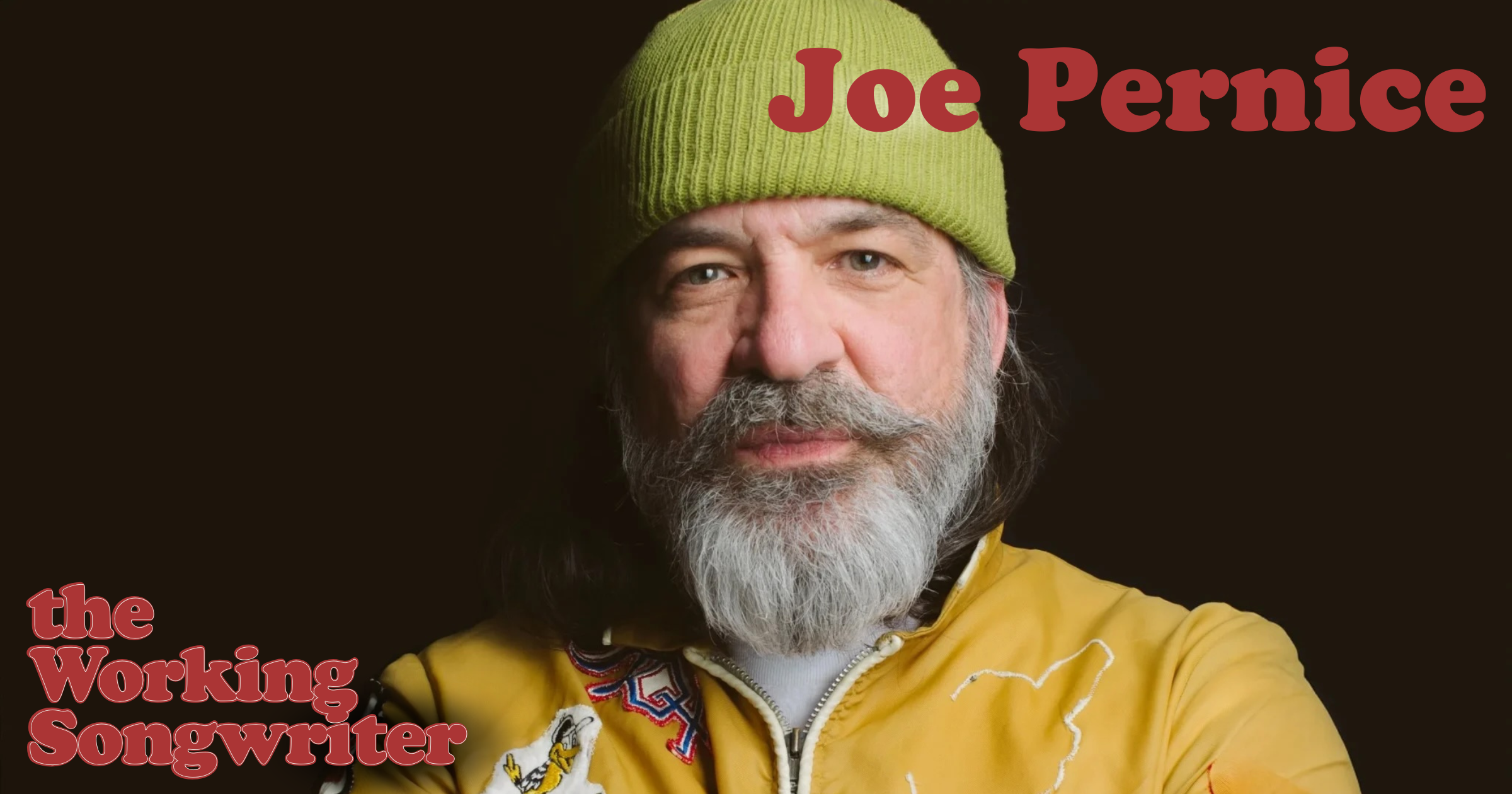
Our guest this week on the Working Songwriter hails from Canada and has spent over four decades writing hit songs. Eddie Schwartz got his start as a solo artist, but has found great success writing for and with other artists. His song “Hit Me With Your Best Shot” was recorded by Pat Benatar and became a certified platinum crossover hit. He went on to pen songs for Donna Summer, the Doobie Brothers, the Pointer Sisters, and many others.

LISTEN: APPLE • SPOTIFY • REDCIRCLE • MP3

As a former president of the Songwriters Association of Canada and the International Council of Music Creators, Schwartz has been a tireless advocate for songwriters. He’s received multiple BMI, SOCAN, and JUNO Awards. In 2012, he was awarded the Order of Canada, one of the country’s highest civilian honors.

I got a chance to catch up with Mr. Schwartz a few months ago to hear about his musical journey so far.


Photo courtesy of the artist.

You Gotta Hear This: Thomas Cassell, Greenwood Rye, and More

Another weekly roundup is here! You Gotta Hear This.

To get us started, Thomas Cassell reveals another track from his upcoming duo album. “Makin’ Some Noise” features his longtime friend and shredder Trey Hensley joining in on a Tom Petty & the Heartbreakers track with just enough of a Bill Monroe flair to excel with the bluegrass treatment. Plus, Colorado-based bluegrass band Jake Leg preview their new album with its title track, “No One Lives Here Anymore.” It’s an apt harbinger for the thoughtful, lonesome, and melancholic songs found on their upcoming collection – due to drop in June.

From elsewhere in bluegrass, the Lonesome River Band debut “Back When,” a song dripping with nostalgia that was co-written by LRB member Jesse Smathers with Nick Goad and Barry Hutchens. The track features a traditional instrument all too rare in bluegrass these days – the electric guitar! Nashville bluegrass outfit Greenwood Rye call on some mighty collaborators for their new song, too. “Ready to Burn” is indeed a barn burner, boasting features by Mason Via (who co-wrote the song with Greenwood’s Shawn Spencer), Vince Herman of Leftover Salmon, and IBMA Award winner Vickie Vaughn. It’s jammin’, energetic, and certainly fiery.

Don’t miss folk and Americana duo Great Willow included below as well. Their new song, “Age of Reason,” speaks to these highly divided times we’re living through – and everyone is talking about. “[We] don’t remember a time when the America we love has felt quite this disconnected and hostile against itself,” the duo tells us via email. “Americans can be so sweet and generous – you’d see it in every region as a traveling musician. How did we all fall so far so fast?” Their indie-folk track – lush with sounds and styles of the ’60s, ’70s, and Laurel Canyon – is charming in its consideration of such an existential question.

Singer-songwriter Kyle LaLone encourages all of us to “Slow Down” on his new Americana track. Inspired by quite literally running on fumes, LaLone speaks to the need we all face on the day-to-day to be present, to take deep breaths, and more. Sometimes all you need is to slow down. And make sure to hear the latest from singer-songwriter Mia Kelly, as well. “Big Time Roller Coaster Feeling” is about the highs and lows of having an all-encompassing crush, leaning into that free-falling feeling – of love and rollercoasters, both. It’s vibing and modern indie/acoustic folk that really enables the lyric and stories Kelly tells to shine.

There’s plenty to enjoy! You know what we think – You Gotta Hear This…

Thomas Cassell, “Makin’ Some Noise” (Featuring Trey Hensley)

Artist: Thomas Cassell
Hometown: Nashville, Tennessee via Norton, Virginia
Song: “Makin’ Some Noise” (featuring Trey Hensley)
Album: Guitar Collection
Release Date: May 18, 2026 (single); August 21, 2026 (album)
Label: Common Loon Records

In Their Words: “Trey Hensley has been a longtime favorite of mine and more recently a great friend that I’ve been fortunate to make lots of music with. When I started to plan this collaborative album, Trey was one of the first calls I made. We are both huge Tom Petty fans, so it was natural to choose something from his catalog. This 1990s Heartbreakers track was on my mind as there was something about Mike Campbell’s guitar riff that was so Bill Monroe. It was a pleasure to work with Trey on this track – he’s truly one of the best singers and guitar players to ever do it and every time I stand next to him, I realize that in a whole new way. Hopefully this track is as fun to listen to as it was to make!” – Thomas Cassell

Track Credits:
Thomas Cassell – Mandolin, lead vocal
Trey Hensley – Guitar, lead vocal
Jeff Picker – Bass


Great Willow, “Age of Reason”

Artist: Great Willow
Hometown: Los Angeles, California
Song: “Age of Reason”
Release Date: May 22, 2026

In Their Words: “Erin and I don’t remember a time when the America we love has felt quite this disconnected and hostile against itself. Americans can be so sweet and generous – you’d see it in every region as a traveling musician. How did we all fall so far so fast? Our song is a lament for that lost open-heartedness and a call to hopefully return to it. Maybe reconnecting with the beautiful natural world is a start.” – James Combs

“We recorded ‘Age of Reason’ in producer Susan James’ home studio out in California horse country – with avocado trees and exotic chickens on the hill out back and her hairless Sphynx cat crawling through our cases and being hilarious inside. Susan is a preternaturally gifted artist, arranger and producer. We loved working with her. And we love the amazing Dobro and slide Ben Peeler (Mavericks, Wallflowers) played on our song. It’s the special sauce the puts it over the edge.” – Erin Hawkins

Track Credits: 
Erin Hawkins – Cello, vocal, songwriter
James Combs – Guitar, vocal, songwriter
Susan James – Organ, producer
Ben Peeler – Dobro, slide guitar


Greenwood Rye & Mason Via, “Ready to Burn”

Artist: Greenwood Rye, Mason Via, Vince Herman, Vickie Vaughn
Hometown: Nashville, Tennessee
Song: “Ready to Burn”
Release Date: May 15, 2026

In Their Words: “‘Ready to Burn’ is a jammy bluegrass party song! When Mason Via and I got together to write it, we were both in a place where we had put a ton of effort into our respective albums and everything we were doing was very serious. So we wanted to shift gears a little bit and make something purely for fun. We wrote a song about getting together with our friends and preparing to have an epic barn burner. The recording of the song started as us wanting to get together to make some social media content. We ended up doing it at Parlor Studio where our friend Ethan Greek was working as an engineer. It snowballed into a full studio recording and then we thought, ‘Why stop there? Let’s get some features.’ So we called two of our favorite Nashville bluegrassers, who we love to jam with, Vince Herman (Leftover Salmon) and Vickie Vaughn (Della Mae), and asked them to join the party!” – Shawn Spencer

Track Credits:
Shawn Spencer – Guitar, vocals, songwriter, producer
Mason Via – Guitar, vocals, songwriter
Taylor Shuck – Banjo
Cat McDonald – Fiddle
David Freeman – Mandolin, BGVs
Larry Cook – Bass
Vince Herman – Vocals
Vickie Vaughn – Vocals
Sasha Ostrovsky – Dobro


Mia Kelly, “Big Time Roller Coaster Feeling”

Artist: Mia Kelly
Hometown: Gatineau, Quebec, Canada
Song: “Big Time Roller Coaster Feeling”
Album: Big Time Roller Coaster Feeling
Release Date: May 22, 2026 (album)

In Their Words: “‘Big Time Roller Coaster Feeling’ is a song that details all the instances in which I have fallen for someone. As playful as it is personal, each verse describes a crush. When it came the time to make the video we decided to depict each of these crushes as a classic date, with the date’s face obscured by something ludicrous. The chorus draws from that joyful free-fall, that tummy-flipping feeling you get when you’re in love.” – Mia Kelly

Track Credits:
Mia Kelly – Lead vocals, acoustic guitar
Connor Seidel – Bass, piano, organ, slide guitar, percussion
Olivier Fairfield – Drums, percussion
Ben Plotnick – Fiddle
Aaron Collis – Mandolin, accordion
Adam Brisbin – Electric Guitar, slide

Video Credits: Randy Kelly – Videographer, director, editor


Kyle LaLone, “Slow Down”

Artist: Kyle LaLone
Hometown: Diamond Bar, California
Song: “Slow Down”
Album: Make My Own Way
Release Date: May 15, 2026 (single); June 12, 2026 (album)

In Their Words: “Another song that started with the title and whose lyrics were sparked by a specific event. One morning I had to drive to catch a flight to an out-of-town gig after having played a gig the night before. Once I got in my car I realized I was really low on gas and wouldn’t have enough time to stop to fill up on my way there. Luckily I made it to the parking garage near the airport but knew I would be running on fumes to find a gas station before the drive home. That situation inspired the first verse and got me thinking about my tendency to just keep going until I’m out of gas figuratively and literally when what I really need to do sometimes is slow down.” – Kyle LaLone


Jake Leg, “No One Lives Here Anymore”

Artist: Jake Leg
Hometown: Lyons, Colorado
Song: “No One Lives Here Anymore”
Album: No One Lives Here Anymore
Release Date: May 15, 2026 (single); June 13, 2026 (album)

In Their Words: “‘No One Lives Here Anymore’ is the first single and title track from our sophomore album coming out on June 13. It was probably one of the first songs written for this album and touches on the themes of sadness and isolation that show up throughout this collection of songs. I’ve always really loved and connected with sad songs so that tends to show in my writing fairly often. ‘No One Lives Here Anymore’ is sort of an ‘anti-story’ of someone who has lost connection with the aspects of life that make it fulfilling and has fallen into the pattern of observing life as it goes by rather than participating in it. Musically, the chord progression kind of folds around on itself and I think is representative of the cyclical nature of some of these feelings that we experience throughout life.” – Dylan McCarthy

Track Credits:
Eric Wiggs – Guitar, vocals
Dylan McCarthy – Mandolin, vocals, songwriter
Justin Hoffenberg – Fiddle
Aaron Hoffenberg – Bass


Lonesome River Band, “Back When”

Artist: Lonesome River Band
Hometown: Floyd, Virginia
Song: “Back When”
Release Date: May 15, 2026
Label: Mountain Home Music Company

In Their Words: “I’m so proud to have had a hand in writing ‘Back When’ with my pals Nick Goad and Barry Hutchens. As we had a conversation on Barry’s back porch we reminisced about our youth, the mischief we got into, and of course being musicians, our first chords, and songs we learned. Looking back, those moments are so sentimental and they made me into who I am today. It’s important to be aware of those subtle reminders that take us to our formative years way ‘back when.'” – Jesse Smathers, songwriter, guitarist

“The essence of ‘Back When’ is how the least little thing – a conversation with an old friend, a song, etc. – can cause memories to come flooding back. It was a real privilege for me to have the opportunity to write it with Jesse and Nick. They are both such talented writers and musicians. It’s one of those songs that came about simply by the three of us sitting around and reminiscing about when we were kids and growing up playing music.” – Barry Hutchens, songwriter

Track Credits:
Adam Miller – Mandolin, lead vocal
Sammy Shelor – Banjo, harmony vocal
Jesse Smathers – Acoustic guitar, harmony vocal
Mike Hartgrove – Fiddle
Kameron Keller – Upright bass
Rod Riley – Electric guitar


Photo Credit: Thomas Cassell by Scott Simontacchi; Greenwood Rye courtesy of the artist.

The Expansive Universe of Hiss Golden Messenger

Next year, singer and songwriter MC Taylor will have been leading Hiss Golden Messenger for two decades. For most of that time, critics and listeners have relied on a few familiar narratives about Taylor: that he is a singular figure, for example; or that his move from California to Durham, North Carolina, marked a formal shift from punk to Americana; or even that he thinks slightly more than he feels. Talking to Taylor, from his home in Durham (well, there was a Zoom call involved), I found these cliches about his practices were limiting, factually accurate but emotionally untrue.

Instead of laser-focusing on one narrative, on telling the same stories over and over again, listening to Taylor speak, I encountered a new understanding of his practice, one which placed Taylor in the background and moved his bandmates and genre-play into the foreground – shifting from the centrality of a singular figure to a greater emphasis on generosity and expansiveness.

That the new album is called I’m People is the first clue that Taylor wants to expand the perception of his music; it’s a title that considers mutuality as central to the enterprise of musicmaking. So, how does one expand this thinking – one could consider him geographically or complicate these tales of origin, or think about who is playing on this record, or even refuse the standard narratives of genre.

Instead of focusing on the fact that Taylor began playing in hardcore bands in California, think about the other influences: that he played in a band named after Joni Mitchell’s Court and Spark, an album marked by an urbane distrust of other people’s desires. Or that, around the time he was carefully listening to Mitchell, he was also following that most American portable utopia, the Grateful Dead. Or think about his move to Durham, not strictly to play in a band, but to study folk music academically.

Or, consider how this album was recorded – at least partially – in upstate New York. A more cynical writer would note that Taylor borrows from Dylan’s Nashville Skyline, and that album itself was the foundation of a more isolated, lonely understanding of tradition after abandoning folk music, seeking a slightly more commercial understanding. Recording this in the Hudson Valley could be considered a pilgrimage or homecoming.

I don’t think that it is a homecoming just for Taylor; the record sounds lush, expansive formally, too. Perhaps because the people who sing or play on this record play in a collective of other bands, including Rhett Miller, the Mountain Goats, Bonny Light Horseman, and the Hold Steady.

The expansive nature of the band is not only connected to the history of music they listen to, or the other bands that they play in, but also more unexpected influences like Sade. The idea that Taylor is the band is false, and it is not even that Hiss is the band. Taylor expands the possibility of Hiss, but Hiss itself pushes the possibilities – because of where they come from, their other projects, and even the possibility of geography. Not because Durham is magically a place where music coalesces, but because for a long time it was a college town where rent was relatively cheap and lots of people liked playing music together.

When addressing genres, the promotional material calls the album Americana – but Americana is a useless category, one which might be country or folk or something else entirely. I’m People has a kind of intense richness that is neither of these genres. Listening to the LP, something happens where the expansion or fracturing of those playing on this record becomes its own kind of post-genre.

There are a lot of reasons not to love America right now, but emphasizing the American instead of Americana allows us to consider this album as a consequence of the totality of American music – Taylor addresses the improv nature of jazz as part of this, or traditional folk music, or even 1970s easy-listening. He speaks fondly of the detective novels of Elmore Leonard, and on at least one of his early albums the photography of William Gedney became a powerful totem.

I think of I’m People as a kind of ebbing and flowing for and against tradition, part of that decades-long wrestling with aesthetics and history. Consider the last song, “Depends on the River,” is another of his great songs about waterways. In a 2016 profile of Hiss, New Yorker critic Amanda Petrusich wrote about Hiss’s long tradition of river songs and how it fits into a century of metaphors from blues singer Geeshie Wiley to Joni Mitchell, working this tradition. Petrusich writes: “Taylor frequently evokes river imagery in his work; the river, of course, can be understood as its own kind of road, a direct line to somewhere else, far away.”

I don’t know if that’s wrong, but I also think about rivers as they turn into oxbow lakes, rivers which flow into swamps – literally bogged down – rivers that flow into oceans, and rivers that dry up depending on the season. Hiss’s meandering, deepening quality depends on that river, both the direct line that Petrusich talks about and the larger metaphor, one where Taylor literally talks about whether he dares to cross it. On I’m People, he not only crosses it and crosses it again, but brings along a whole community of other performers. And, an audience who is hungry for the difficulty and ambivalence of so much time playing – and thinking – with him, to the other side.

I know you have a degree in folklore studies, I also noticed that in the last few years there has been a cluster of second- or third-generation performers who have some academic training in folk traditions (see also: Jake Blount, Jake Xerxes Fussell, Willi Carlisle, etc.). Can you talk a little bit about the kind of intersection of formal and informal folk studies and also about your relationship to people who are making this kind of work? I’m thinking about the line on the song “Mercy Avenue” where you talk about the “boys on the corner knowing more than those with PhDs.”

MC Taylor: Well, it’s been a really long time since I was in the academics here. And that universe was one that I feel like I passed through briefly. I wasn’t destined to be in that realm forever. So, I’m not sure that I can totally speak to [that]. Like the place of academic/creative work.

I will say that my time in that space was a really good time for me, when I was restarting my brain and re-centering myself. School was a good way for me to step away from whatever I had been doing previously. I did a lot of field work at that time. I interviewed a lot of people, and I think that it made me a much better listener.

I think that, more than anything else, [that] is what I came away with, this feeling that people really, really like to be heard. So I think I just really tried to develop my listening skills.

Can you talk a little bit about working with a band – especially this band – and about how the bandmates are part of their own creative worlds? Is there a kind of politics there, or a kind of community making?

The basic tracking of the album was done with JT Bates playing drums and percussion, Cameron Ralston playing bass – both electric and upright – and Josh Kaufman, who was producing the record with me, playing guitars, mandolin, piano. My friend Chris Boerner was engineering the record. He plays guitar.

The road version of Hiss Golden Messenger, you know, [are] involved in a whole variety of things. JT, Cameron, and Josh play in Bonny Light Horseman. All three of them have also at various times been members of Hiss and have toured with Hiss. And in fact, that’s where those guys met – playing in Hiss. All of us have known each other for many, many years, so I consider those guys really good friends.

But we’ve never made a Hiss Golden Messenger record before. … They’ve worked on [other] records [together], but we never came together to create a Hiss Golden Messenger record together. It was this funny and unique situation in which we were already old friends, doing something that felt new and fresh. It didn’t feel like a complicated record to make for me. I think Josh Kaufman maybe would say the same thing, but Josh was performing sort of a different task than I was in the situation. It was a complicated record to write, but that was something of the solitary endeavor that took place over probably a year or a year and a half.

I really love those guys and I am delighted that they could be there to play on the record. I think of them as absolute top-tier musicians, every one of them. Cameron is currently playing with the Mountain Goats, he plays all kinds of jazz, he plays in the Spacebomb House Band. JT Bates plays drums with Big Red Machine, which is Aaron Dessner and Justin Vernon. And [he’s] just a legendary drummer in Minneapolis. Josh Galvin plays with everybody.

There are some songs on this album about hope and I wondered about making work about hope in this specific social and political moment? “Shaky Eyes” or “Heavy Worlds,” for example.

[I am interested] in how we [have] the energy to get through the messiness of life. And not only this particular time that we’re living through – although that is the most depressing. But just like life in general. I don’t think that we can do – or I don’t think I can do – life alone. So, in a way this record is me writing to myself. Maybe now [about] how important other people are.

I think I realized that the most important part is moving through, and needs to involve being around [other people]. Over the past few years, just speaking personally, the idea of community has felt like a more and more important part of it.

Thinking about that – and how dense/lush the production here is – though you are marketed as “Americana,” I wonder about how you view genre. And also how your band does – I’m thinking about background vocalist Annie Nero’s bio for radio: “She loves to find the common thread between musical ideas and genres…but also break free of genres because life’s too short to limit ourselves based on perceived taste!”

I listen to lots of different stuff. I think all of that stuff finds its way into what I’m doing. It’s a little tricky. I used to have a stronger stay-in-your-lane [attitude] about the term “Americana,” but I just don’t think that I care very much anymore. It’s not a word that I generally use. But I understand why it exists. Many of my favorite songwriters exist in that world.

What would you call your genre then?

I mean, I wouldn’t. I guess that’s what I’m saying.

Like, if I was at the dog park and I was talking to a stranger, and they said, “Oh, you’re a musician? What kind of music do you play?” I’d probably say, “Kind of rock and roll.” I generally am not describing my music in terms of genre, I guess. If I told someone that I played rock and roll, and they asked me to extrapolate on that, I would say something like, “Rock and roll that’s really swinging.” I try and concentrate on the rhythmic elements. I love singer-songwriter type music from the ’60s and ’70s. I like really oddball stuff. I love Bruce Ruffin reggae; I love free jazz. There’s a lot of music that I have inside of me. There’s a lot of music that Josh, Cameron and Chris – [that] we all have inside of us. I think it’s just a question of how we get it out and put it into use in a way that feels genuine and not forced. …

Thinking about the tension on this album between distinct geographical spaces and a more universal emotions – for example on “Seneca (Time is a Mother, Baby)” or “Mercy Avenue.” And also that becomes a larger theme of your work, thinking about how Amanda Petrusich writes about your decades-long commitment to writing about rivers. There’s even the river song on this album. What do you think your relationship is to the land, to rivers – especially. when you sing “Depends on the River.” Or is there specifically one river?

On previous Hiss records there are specific geographical places like city names mentioned. And not only are those places part of the fabric of the story that I’m trying to tell, but they sort of served as poles, maybe? What I’m trying to accomplish is sort of like a poetic travelog of my life growing up in America. I’ve been traveling as a musician since I was 18. I have been, it seems like, everywhere in this country – more than once or some places 10 times. I’ve been all over every highway. So, maybe the dimension of place names throughout is sort of like carving my name on a tree or something. It’s just kind of like, “I was here.” “This is where we are in this song right now.” “This is where we are in my life.” And then, “Now we’re over here.”

In terms of rivers, a river is always flowing, always changing. A river can kill you if you’re not careful. It can keep you alive and get you to the next place if you treat it with respect and understand its rules. The coda on that song, [“Depends on the River”], the last thing that we hear on the record is “the line depends on the river exactly.” I guess the meaning depends on what river of life we’re talking about. It depends how lucky we get.

I’ve always been impressed by the wide range of your reading, listening, and looking. For example, your careful thoughts on the photos of Gedney. What are you reading, what are you listening to, what are you looking at these days?

Well, you know what I’m reading right now? I’m like about 200 pages into this Gary Stewart biography. Gary Stewart, the country singer. It’s called I Am From the Honky-Tonks. Gary Stewart actually was someone that Chris Smith from [record label] Paradise of Bachelors turned me onto like 15 to 16 years ago. Those of us that are obsessive about him all knew that this book was coming. It’s finally out and yeah, if you’re Gary Stewart fan, it’s kind of like you can’t believe it exists. I’ve been waiting for it.

In terms of what I’m listening to, I’m always listening to all kinds of stuff. I just bought this record [that’s] The Sun Ra Arkestra doing Disney themes. It’s so beautiful, really makes you think about those compositions in a different way, [about] actually how deep they are. I’ve been revisiting some Ted Lucas. I’ve really been liking this McCoy Tyner record called Asante. It’s a 1974 record; might be my current favorite. It’s very deep in the zone with like Alice Coltrane and Pharoah Sanders – that era. Oh, it’s beautiful. [I’ve been listening to] some Paul Brady from ‘78. He’s amazing! I’ve been listening to Welcome Here Kind Stranger. [Also] a record that I was checking out for a while [was] by the Universal Liberation Orchestra. It’s kind of this weird, very minimal– I guess it would be jazz.


Photo Credit: Graham Tolbert

The Other 22 Hours: Molly Tuttle

Molly Tuttle has shared stages and recorded with Ringo Starr and Billy Strings, yet she still grapples with the unpredictable “ups and downs” of a musician’s schedule and the inherent instability of the road. We talk with the GRAMMY-winning artist – who was also the first woman to win IBMA Guitarist of the Year – about the “baggage” of turning a passion into a profession. We explore the necessity of trusting one’s gut over industry expectations, how she navigates the transition from bluegrass traditionalism to rock-leaning solo projects, and the quiet power of having a partner who understands the nuance of tour routing.

LISTEN: APPLE • SPOTIFY • AMAZON • MP3

In This Episode:

Molly Tuttle
Nonesuch Records
Tyler Childers
Berklee College of Music
Ep 3 – The Milk Carton Kids
The Goodbye Girls
The Stray Birds
Ozark Mountain Folk Center
First Ladies of Bluegrass
Alison Brown
Ep 50 – Sierra Hull
Missy Raines
Becky Buller
Ketch Secor
Old Crow Medicine Show
Chris Stapleton
Ep 28 – The Wood Brothers

Go Deeper:

Watch: View this entire conversation above or on YouTube.
Explore: Find similar conversations in these themed playlists.
Connect: Join the conversation on Instagram.

The Other 22 Hours is hosted by Aaron Shafer-Haiss (producer, mixer, musician) and Michaela Anne (songwriter, artist, creative coach). More about Aaron’s workMore about Michaela Anne’s work.


Produced by Aaron Shafer-Haiss. Original music written, performed and produced by Aaron Shafer-Haiss.

Photo Credit: Ebru Yildiz

Phillip Phillips’ Songs for Curing (or Wallowing in) Homesickness

This Mixtape sits in that space between where you came from and where life has taken you, full of memories, change, and longing for home. Songs like “Old Friends” by Ben Rector and “Rivers and Roads” by The Head And The Heart reflect on growing up and holding onto the people who shaped you, while “Fast Car” and “Clocks” capture that pull between escape and comfort.

At the center is my song, “Homesick,” written from the tension of chasing a dream while missing the people I love most. It’s about time passing, love deepening, and the quiet ache of being away from home. I’m excited to be touring later this year and releasing more music, and this playlist feels like a piece of that journey I get to share. – Phillip Phillips

“Old Friends” – Ben Rector

I love how this song connects the dots of those friends you grew up with and where you are as you’re older with them. Things change. Life goes on. But the memories and things you shared growing up with someone you’ll always remember. I love the lyric, “But I’ve never seen their parents’ back porch…” Such a real thing.

“Clocks” – Coldplay

Timeless song. You feel as though you need to be somewhere that gives you comfort if things start to feel uneasy or too much.

“Home” – Phillip Phillips

It’s me. Take it as you will and have your own meaning!

“Fast Car” – Tracy Chapman

Such an emotional song about needing to get out of the place that feels like it’s suffocating you. Sometimes the places we come from can feel that way.

“Rivers and Roads” – The Head And The Heart

For me it’s feels like time passing. Longing for the little moments that made life feel slow. I have kids now and it hits that much harder. To go the distance to see the ones you love just one more time.

“To Build a Home” – The Cinematic Orchestra, Patrick Wilson

I cry every time I listen to this song. So pure and raw. “Emotional” is an understatement for this one. It’s hard to listen to sometimes for me.

“Homesick” – Phillip Phillips

This is my newest song. I love it so much. I travel a lot and I get to do something I love, but I also have to sacrifice, spending time away from the people I love more than anything. I wrote this while my son was napping. Knowing that I was going to leave for another trip soon. I love playing music, but I love to be home to change the dirty diapers and take the trash out. Playing in the mud. I hope you love it as much as I do.

“Danny’s Song” – Loggins & Messina

Love over money. Always the goal. I love this classic song. Makes me think about being with my wife before getting married and having kids. How special those times are when you’re building a foundation in a relationship.

“The Book of Love” – The Magnetic Fields

I didn’t hear this song until later in life and it hit me like a train. Gets me emotional every time. Saying that love is boring and long. Which it really can be at times, and that’s okay. Loving someone is difficult. And for me, this song speaks to all relationships. Not just a husband or wife. I have flashbacks of my life when listening to this song.

“Livers and Onions” – Aaron Espe

My good friend wrote this song and when I first heard it, it made me think of growing up and being with my uncle Joey and my dad and thinking about my relationships as a kid with my cousins and family. Such a great song.

“Father and Son” – Yusuf / Cat Stevens

This song is just everything. I can only dream to write a song half as good as this. Makes me cry. Makes me think of being a father to my son and my relationship with my father.


Photo Credit: Sean O’Halloran

You Gotta Hear This: New Music From Courtney Hartman, Dee White, and More

It’s another week where popcorn may be necessary to fully enjoy our weekly new music round-up, with all of the new music videos included below! You Gotta Hear This…

Our first screening is some cosmic California country from Mac Cornish, who’s sharing a music video for the title track of her upcoming album, Wayfaring Woman. The full LP will launch in September, so enjoy this early taste of the project, a song about finding, re-finding, and returning to oneself despite time, geography, and all that comes between.

We have a couple of fun and funny videos you’ll enjoy as well. Nashville-based husband-and-wife roots duo Zaggie (Zach & Maggie White) have a new single and video for “Parking Lot Vacation.” Sometimes a need to unplug, unwind, and relax can be satiated with a good ol’ fashioned sit in a parking lot. The video is witty and hilarious to match the flowing, island-getaway sonics of the song. Plus, Essence & Gold Country have a gut-busting video to tribute Mother’s Day and every “Good Mom” out there. As frontwoman Essence Goldman puts it, it’s all about “the beautiful chaos of motherhood and the truth that we don’t have to lose ourselves to be a good mom.” It’s bluegrassy country that will get your toe tapping while bringing a smile to your face.

Also just in time for Mother’s Day, our old friend Courtney Hartman shares an intimate and tender peformance video for “Honey, Honey,” a song she wrote dripping with love for her young daughter, describing the perfection of her child through her own eyes and building her up for a life built on love, confidence, and strength. It’s gut-wrenching and comforting at the same time, a deft balance that Hartman is well known for in her songwriting and guitar picking. It’s a lovely video for the occasion – and beyond – and announces her upcoming album, With You: From The Garden Shed, set for release June 12.

From bluegrass, Jaelee Roberts has a new single that was written by bluegrass radio personality and songwriter Terry Herd. “I’m Putting You Out of My Misery” pulls inspiration from traditional hard-driving bluegrass and contemporary sounds equally and boasts a stacked roster of pickers rounding out the band behind Jaelee’s gorgeous, crystalline vocals.

Country and Americana powerhouse Dee White has a new song as well, “Green River Rye,” which dropped earlier this week. Check it out below, it’s a pretty stripped-down recording made with just a simple acoustic trio – with Brian Murray and Jimmy Law – that lands somewhere between classic folk, country & western, and bluegrass, aesthetically. With whiskey as its centerpiece, it’s a lonesome and longing song that feels truly timeless – like you could sing along intuitively immediately, even on first listen. And don’t miss singer-songwriter Zach Seabaugh’s “Owes You Nothing,” a song about navigating Nashville, Music Row, and the music industry without losing your sense of self – or comparing yourself to everyone else you meet along the way. It’s a lovely track built on sensitive and brooding modern country sounds.

Celebrate your Mother’s Day weekend by calling your mama (who is definitely a good mom), sipping some Green River Rye, and taking a parking lot vacation – you’ve earned it. And, You Gotta Hear This!

Mac Cornish, “Wayfaring Woman”

Artist: Mac Cornish
Hometown: Raised Bay Area, California, based in Nashville, Tennessee
Song: “Wayfaring Woman”
Album: Wayfaring Woman
Release Date: May 8, 2026 (single); September 25, 2026 (album)

In Their Words: “‘Wayfaring Woman’ is a song about a girl who stays moving so her past won’t catch up to her – and so she won’t have to face herself. By the time I finished writing it I realized it was about myself. It was my way of telling myself, ‘It’s alright to cry, but it’s time to remember who you are and stop this cycle.’ So when I sing, ‘Even in yours lows, you can always go home,’ I mean the place and the state of mind.

“Making my way back to myself has always felt connected to the California home of my youth. Those canyon roads and golden hills remind me of who I am and who I always dreamed of being. I might not be able to access those places physically anymore, but the sense of self that I found there is within me and this song is a reminder to myself that I can always go back, I can always go home to myself. ‘Wayfaring Woman’ is the title track and first single off my second record, set to come out in September 25. It’s steeped in cosmic California twang, and I don’t think I’ve ever sounded more like myself.” – Mac Cornish

Track Credits:
Mac Cornish – Vocals, acoustic guitar, songwriter
Hillary Fretland – Harmony vocals
Charlie Fuertsch – Electric guitar
Cooper Dickerson – Steel guitar
Jack Lawrence – Bass
Dave Racine – Drums

Video Credit: Directed and filmed by Janaya Pardo.


Essence & Gold Country, “Good Mom”

Artist: Essence & Gold Country
Hometown: San Francisco, California
Song: “Good Mom”
Album: Father’s Daughter
Release Date: May 8, 2026 (video); September 26, 2025 (album)
Label: Blue Elan

In Their Words: “This ‘Good Mom’ video is about the beautiful chaos of motherhood and the truth that we don’t have to lose ourselves to be a good mom. It holds that tension between giving everything to our children and still claiming space for our own soul, and taking care of ourselves so we have more to give.

“This song gets the best reaction when I perform it live. I just watch the mothers start laughing and shaking their heads in agreement. It is hard for me not to laugh when I sing it. Any mom out there can relate. We thought it was fun to release this music video as as a gift to all the moms on Mother’s Day. Though in my opinion, every day should be Mother’s Day!” – Essence Goldman

Video Credits:
Laura Kudritzki – Director, cinematographer
Essence Goldman – Producer
Austin Grose – Executive producer
Craig Morton – Assistant producer
Margaret Bolton Grace – Stylist
Angela Shippen – Hair, makeup
Andres Campos – Hair, makeup
Elise Bigley – Hair, makeup
Keldon Duane-McGlashan – Editor


Courtney Hartman, “Honey, Honey”

Artist: Courtney Hartman
Hometown: Eau Claire, Wisconsin
Song: “Honey, Honey”
Album: With You: From The Garden Shed
Release Date: May 8, 2026 (single); June 12, 2026 (album)

In Their Words: “‘Honey, Honey’ is a love song to my daughter – a collage of daily imagery and truths I want her to hold onto. She has taught me about delight and even as I am the one cradling her and giving her comfort, it is often my own heart being mended by her.

“In the final verse I list a few things I want her to remember when I am not there to hold her, ‘quiet waters, soothe and sway, sunlight and kindness, the cradle of a day. You’re brave as an iris, a bright display, a trumpeter swan lifting up and away.’ Tift Merritt co-wrote this song with me, helping me clear away the debris and uncover within my own days the scenes I most wanted to sing.” – Courtney Hartman

Video Credits: Filmed by Kyle Lehman.
Edited by Erik Elstran.


Jaelee Roberts, “I’m Putting You Out of My Misery”

Artist: Jaelee Roberts
Hometown: Nashville, Tennessee
Song: “I’m Putting You Out of My Misery”
Label: Mountain Home Music Company
Release Date: May 8, 2026

In Their Words: “‘I’m Putting You Out of My Misery’ is one of those songs that stopped me in my tracks the first time I heard it. Terry Herd wrote an incredible song and I fell in love with it right away. To me, it strikes the perfect balance between that hard-driving traditional sound and a touch of contemporary bluegrass. I absolutely love how everything came together in the studio. I’ve always enjoyed a song with a little bit of attitude and this one definitely delivers.

“I was also fortunate to have some amazing musicians join me on the recording. Alan Bartram on bass, Ron Stewart on banjo, Tony Wray on guitar, Michael Cleveland on fiddle, Justin Moses on mandolin and Dobro, and Zack Arnold adding harmony vocals. Getting to collaborate with such talented players made this project especially meaningful to me. I’m truly proud of how the track turned out, and I’m so thankful to each of them for being part of it. I hope you all enjoy listening to it as much as I enjoyed recording it.” – Jaelee Roberts

Track Credits:
Jaelee Roberts – Lead vocal
Alan Bartram – Bass
Ron Stewart – Banjo
Tony Wray – Guitar
Michael Cleveland – Fiddle
Justin Moses – Mandolin, resonator guitar
Zack Arnold – Harmony vocal


Zach Seabaugh, “Owes You Nothing”

Artist: Zach Seabaugh
Hometown: Marietta, Georgia & Nashville, Tennessee
Song: “Owes You Nothing”
Release Date: May 8, 2026 (single)
Label: Cloverdale Records

In Their Words: “This song came at a time when I needed to check myself – on where I was in life – and on the people in my life I didn’t want to take for granted. I wrote it with Park Chisolm and Reid Haughton on Music Row. I was talking to them about how hard it is sometimes to show up in Nashville, to be creative for a living. You can fall into the comparison trap when so much of the industry around you is trying to set out for the same thing. But I don’t like feeling sorry for myself. I’m super grateful for what I have and who I get to live life with and at the end of the day, I guess this world owes you nothing. So you gotta make the most with what you got—that’s when you realize you got all you need.” – Zach Seabaugh


Dee White, “Green River Rye”

Artist: Dee White
Hometown: Slapout, Alabama
Song: “Green River Rye”
Release Date: May 6, 2026

In Their Words: “I first discovered Green River Rye Whiskey during a hunting trip to Kentucky. The bottle instantly caught my eye – it was the same one I remembered from an antique lithograph that hung in my childhood home. At the time, my girlfriend had just left me, and the chorus melody had already popped into my head. Later that night, I was hanging out with my buddies Jimmy and Brian and we finalized the music and lyrics. The very next evening, we went into the studio and recorded it as an acoustic trio in Nashville.” – Dee White


Zaggie, “Parking Lot Vacation”

Artist: Zaggie
Hometown: Nashville, Tennessee
Song: “Parking Lot Vacation”
Album: Turpentine Mind
Release Date: May 6, 2026 (single); August 26, 2026 (album)
Label: Zaggie Records

In Their Words: “‘Parking Lot Vacation’ came from the exact mental-headspace-shift the song is about. I was supposed to be writing. Instead, I was staring at a blank page for long enough that it started staring back. Eventually I just… leaned back, let myself off the hook for a bit, and the song showed up. Turns out vacations are less about where you are and more about the moment you stop letting petty anxieties run the show. A good car seat, a warm breeze, a window cracked just right is sometimes all I need. We’ve seen a lot of beautiful places in the world and a parking lot on the right day is genuinely in the conversation.” – Zach White

Track Credits:
Zach White – Vocals, guitar, songwriter
Maggie White – Mandolin
Dan Needham – Drums
Byron House – Bass
Chris Walters – Piano

Video Credits:
Cast: Annabelle Fox-Tieman, Douglas Waterbury-Tieman, Ollie Fox-Tieman, Huck Fox-Tieman, Emily Rogers, Josée Klein.
Directed and edited by Zach White.
Location Videography by BAMM Productions.


Photo Credit: Courtney Hartman by Michelle Bennett; Dee White by John Peets.