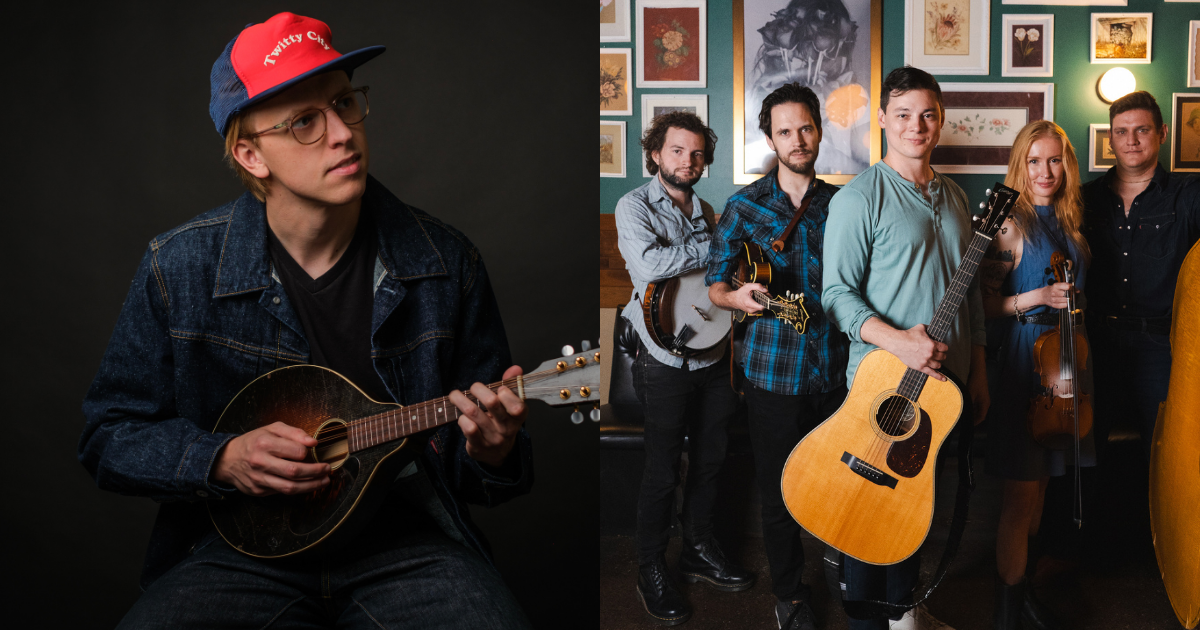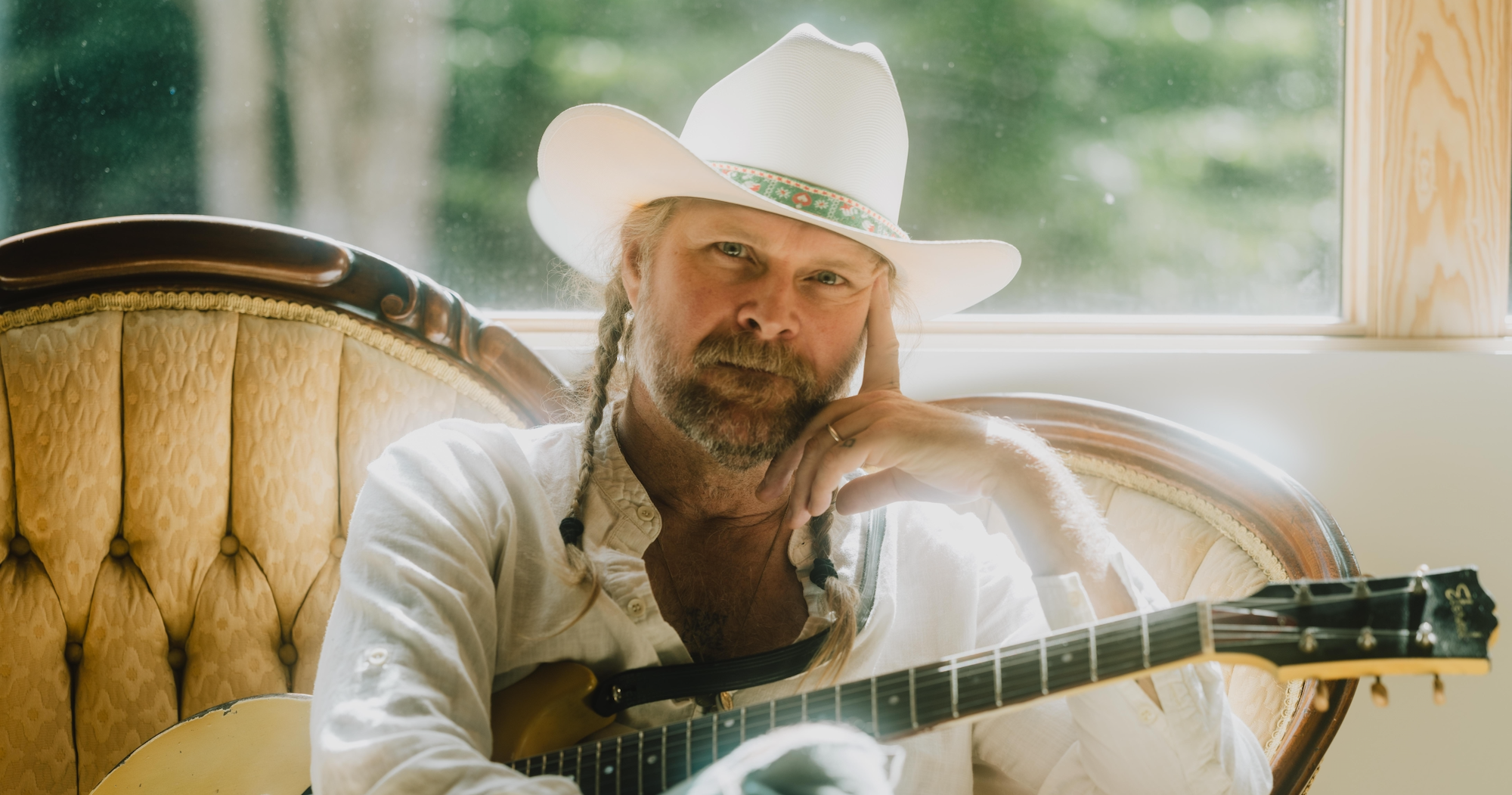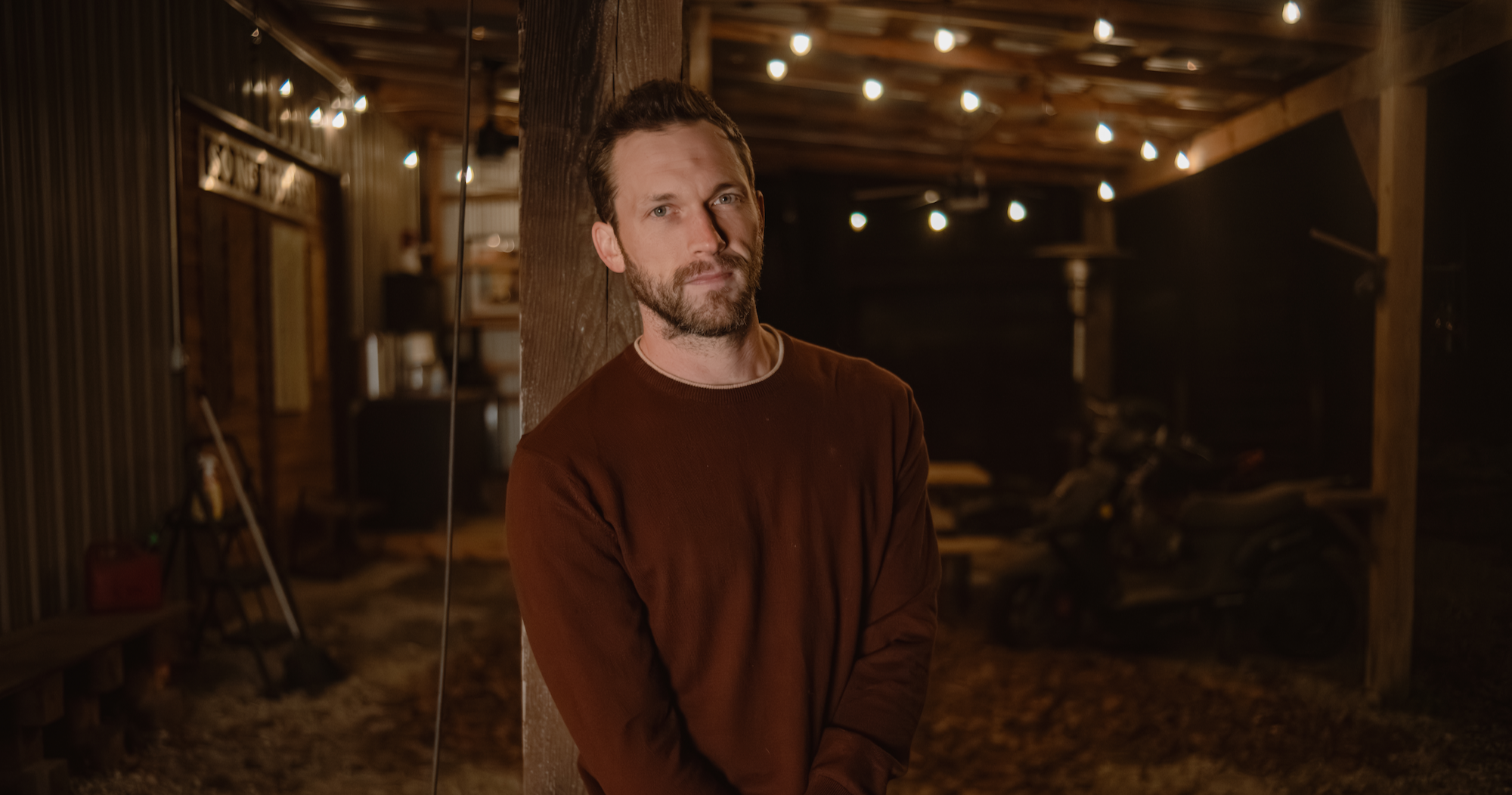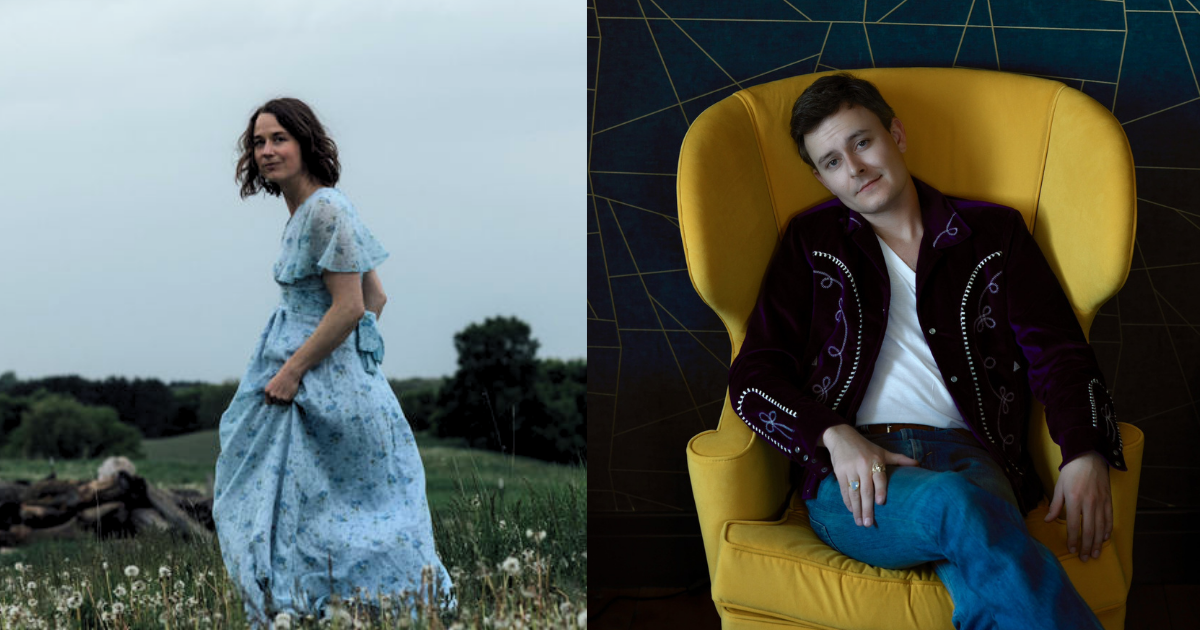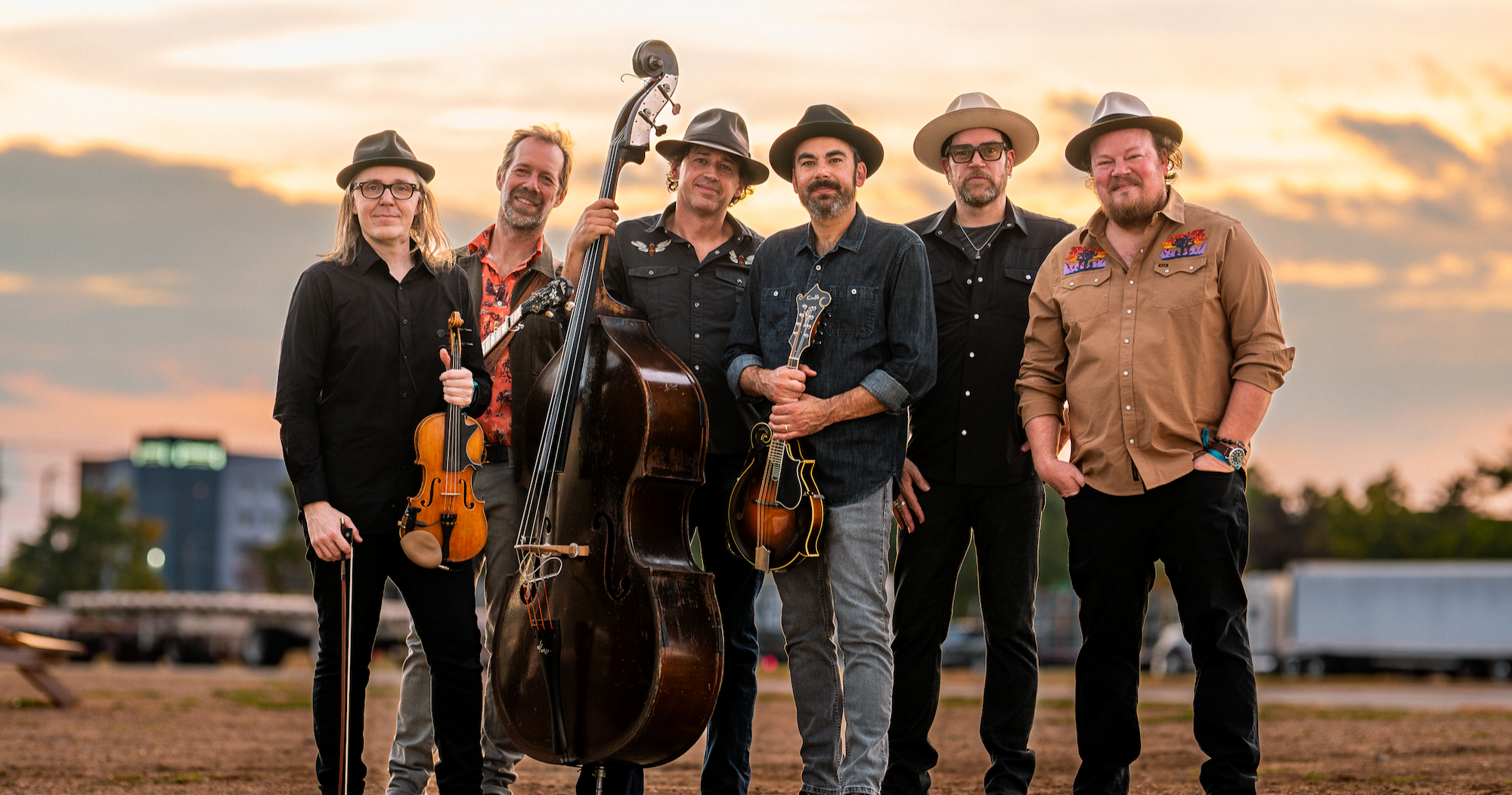
Unplugging Made Josiah and the Bonnevilles’ As Is Possible

By now, Josiah Leming is a master of reinvention. In the early 2000s, he signed a major label deal, then went indie for a while. Some of his albums leaned on his rock influences; others were more folk-oriented. He’s released a healthy number of covers projects, but can write songs as well as anybody who’s been in the business for 20 years. Leming also recorded under his own name before rebranding himself as Josiah and the Bonnevilles. And he’s about to be all over the map, literally, when he launches his Redline North American Tour in May with openers Max Alan and Brenna MacMillan.

Josiah and the Bonnevilles’ base should only grow with As Is, out May 8 on Rounder Records. Returning with a more electric approach, Leming co-produced the album with Konrad Snyder.

“It was important to me that the album sound different, but not so different that people don’t recognize it,” Leming tells BGS. “That was actually a pretty tough thing to do, because it’s easy to change things and really turn them on their head, but to have it still feel like it came from the music that came before it was something I thought a lot about.”

A proud native of Morristown, Tennessee, and now living in Nashville, Leming caught up with BGS to talk about how he picked up the banjo, the positive results of listening to Ralph Stanley, and how Jack Reacher helped him define his relationship with his fans.

I noticed the first line of the first song on the new album is, “I’ve been staying out and off the internet,” and after listening to the album a couple times, I realized that’s an important line for this whole record. Was there sort of a recentering, or a desire to disconnect, maybe, as you went into this album?

Josiah Leming: It was a huge part of it. And I still struggle with it a little bit, because the reason I got to where I am now is because I embraced the internet, I embraced social media, and I shared my life with people, day in and day out. I was 33 years old, fighting and scrapping to have a place, making music as a living. But I found as we got toward the end of 2024, the things that I was doing to sustain the level that I was at were coming directly at the cost of the essential thing that goes into the music.

Like, things had never been better. My shows were as big as they’d ever been. Everything was cooking on all cylinders, but I didn’t have any new songs that I was very excited to share. I needed to completely cut myself off from that world of the promotion cycle and the daily posting. … I have always written so autobiographically, and it would have been very easy for me to write an album about the struggles of the road or an album that would make a lot of sense to me. But I started thinking about 13-year-old Josiah in Morristown, Tennessee, and that guy doesn’t care what it’s like to be in Tulsa on a Thursday night, and maybe you’re a little lonely. Like, I gotta cut deeper to the core of this thing that’s not just about me.

That took me 30 or 40 songs to write out all of that stuff, to get to where I could look a little deeper for the meaning and the songs that somebody would understand if they weren’t a touring musician. That was the ultimate goal for me with the record, to make something where people don’t think about me when they listen to it. They can maybe just put it on in the garage. When I put on Ralph Stanley or AC/DC in the garage, I don’t think about Angus Young or Malcolm Young or Brian Johnson. I think, “Damn, this is an awesome day. This is a soundtrack to my life.” And I hope I have done that somewhere on this album.

How much of an influence did your Appalachian roots have on this album?

It’s really interesting. So the bio for the album was written by an author named Silas House. We had a chat and he actually asked me a similar question. He was like, “It feels Appalachian, even though it isn’t that obvious.” I think that’s because of the language I use that I grew up with. I think a lot about when I write, “Would my dad understand it?” My dad’s a simple, working-class man. So if things get too complicated, lyrically, then I want to change that to make it simpler.

That’s a lot of it, and I really went into the deep phase with Ralph and a lot of older stuff. That really changed my perspective on how I see myself in this industry. It’s very easy to start to get into this race to the top, and you’re looking at analytics, and you want more monthly listeners and all this stuff. Listening to bluegrass, and Ralph Stanley especially, all that kind of disappears, and it just becomes about the raw emotion of it. Which is what I fell in love with in the first place, when it felt like I had to do music.

How did Brenna MacMillan get involved with the project?

I was tracking a demo to a different song, a song I love but that’s very strange. And I was like, “I really want a banjo player.” Back in the day, I used to use Craigslist to find background singers because I love finding new people. So I put up an Instagram story and somebody sent me Brenna’s account. I watched one video and I thought, “This is just like lightning in your veins.” She’s so awesome. The energy in the banjo and the voice. And we had connected but it didn’t work out that particular moment.

So when it came time where I wanted banjo on the record, I hit Brenna up again because we’d exchanged numbers. She came in, and she’s just amazing. She doesn’t know how good she is. She’s been tour managing the band East Nash Grass, which I love. I’ve been listening to them a ton right now. I was like, “We need you in the band.” So now she’s in the band, she’s touring with us, and she’s going to open up the shows. I’m so excited for people to hear her.

When did you first pick up the banjo?

My grandpa gave me a banjo. He loved George Jones. He was a hard-drinkin’, George Jones-lovin’, bluegrass-lovin’ guy. He had a banjo and a Dobro he gave me, and I fiddled around with that. And then, all of us guitar players, when we find the six-string banjo, we’re so pumped because we don’t have to learn all these new chord shapes. So, it’s been a couple of years that I’ve been adding in the six-string banjo on things when I play, and I still play that on “Redline.” I am using the finger picks now, rather than my nails. So I feel like I’m starting to cross the bridge… if I can learn some shapes on the real banjo, maybe I can do some damage one day.

In “Redline,” it seems like you’re writing for the people you grew up with. People in your life who have hope, but it’s just hard. Who do you have in mind when you write a song like “Redline”?

It makes me emotional, honestly. I think about my dad all the time. It’s like I have all this… it’s not anger, but there’s very strong feelings. While I’m doing very well in my career, it’s better than it’s ever been, most people that I know are not winning in this modern world. Where everything is through the phone, and it’s the only way to access social circles. It’s the only way sometimes to order a damn McDonald’s sandwich. And there’s just this barrier, there’s this divide.

I see it with my dad, and my grandparents, just being left behind. And also working people. We shot the video for “Hell Without the Flames” down in Colombia, because that’s where all these jobs have gone, and now they pay these people even less than they paid before. So there’s just something that I can’t get out of my brain. I think about it all the time. That’s an important song to me. We love playing it. The band loves playing it. So I appreciate you asking that, it means a lot.

You’re welcome, and this may be a good segue to ask about “You’ll Never Leave Harlan Alive.” I found your version when I was going through your Country Covers EPs. It tells a similar story, about how grandma and grandpa had to keep working to live. Why did that song pull you in?

I probably heard that song first on Justified and I think that would have been the Darrell Scott version, the original. And I had always loved it. I mean, that’s just one of the best songs ever made. Talking with Silas about it, or anybody from the region, it’s so complicated because there’s so much pride. I like to think that there’s so much pride in working for so little, but these people are exploited over and over again. We don’t have aspirations of gold palaces or island complexes, so we’ve just been consistently taken advantage of, because we have this value system that’s a lot different. It makes you sad, sometimes it makes you angry, and sometimes it also makes you proud, and it’s really complicated feelings around all of it.

But it also seems like it’s important for you to share the music that you like. You’re writing songs that you want your audience to relate to. You’re covering songs to maybe introduce the music you like to your fans. You’re bringing musicians you like out on tour with you. Your fans can tell what you’re into through the company you keep. Is that part of your creative vision, to share with your audience who you’re listening to and what you like?

I think so, yeah. I was thinking recently, I always had service jobs growing up. I would serve tables or I would bartend. As I get older, I just see myself as having a responsibility. I think I had the responsibility to get off the internet for a year to write the best album that I could, rather than perpetuating my brand with songs that sounded similar. I feel like I have a responsibility to have the upbeat songs in the set list. If people are flying into town or driving 10 hours, it’s my responsibility to give them an experience.

There’s a great quote that I love from the Jack Reacher books. I love anything like James Bond, Reacher, or Tom Clancy. I love that stuff. But the author of Jack Reacher has a great quote about a handshake. And to make a handshake work, there’s got to be the hand on the other side that shakes back. I think about that in everything I do these days, since I read that. I wouldn’t get a lot of benefit out of just making music that I love and putting it out in the world if there’s not that hand on the other side. So I am at the point in my life where I think about those people that I’m looking at when I play live, and there’s a responsibility to me to weave what I’m excited about into what I hope will connect with them.


Want to see Josiah and the Bonnevilles live at the Fonda Theatre in Los Angeles on May 21, 2026? Enter to win tickets here!

Photo Credit: Sam Desantis

Shakey Graves: Time, Tape, and the Shape of Becoming

There has always been something uncontainable about Shakey Graves – a sense that his songs arrive not as glossy statements but as lived artifacts, scuffed at the edges, humming with the residue of wherever they’ve been. Born Alejandro Rose-Garcia, he first emerged from Austin’s DIY scene as a one-man band, stomping out rhythms on a suitcase kick drum while threading guitar lines that felt equal parts front-porch confession and desert hallucination. It was a sound built on immediacy and invention, earning him a devoted following long before the industry quite knew what to do with him.

That restless instinct runs straight through Fondness, Etc., his fifth studio album, due May 15, and the subject of the hour-long Artist of the Month conversation that follows. Where earlier releases by Graves leaned into the spectacle of one-man-band ingenuity, this collection turns inward – quieter, stranger, and more revealing. Recorded at home over a single, focused month, the album trades gloss for atmosphere, unfolding as a lo-fi meditation on time, memory, and the uneasy grace of becoming someone new while still carrying who you once were.

The record often feels more uncovered than constructed. Graves tracked the songs onto a pair of TASCAM tape machines, committing performances in ways that resist the endless revisions of digital recording. What remains are nine lived-in tracks that breathe with their surroundings – passing trains, stray birds, the soft blur of the tape – all of it absorbed into the music’s grain. In that sense, Fondness, Etc. becomes a document of a moment, caught before it could be refined into something less human.

That approach shapes the album’s sound, which drifts between avant-garde folk and restrained indie rock without settling too comfortably in either. Graves plays nearly everything – guitar, drums, synth, even Optigan – building arrangements that feel intimate but slightly off-center. There’s a tactile quality throughout, as if each sound has been handled, worn down, and set in place with intention rather than perfection.

“I Once Was an Ocean,” the album’s lead single, offers a clear window into that sensibility. Inspired by mid-century composer Martin Denny, the track re-envisions exotica through the stark geography of West Texas. It moves in a slow, dreamlike sway, as if the land itself were remembering what it used to be. The idea that the Big Bend area of the Rio Grande River was once a prehistoric ocean lingers beneath the surface, mirroring the album’s quiet fixation on change and the long arc of transformation – how nothing holds its shape forever, and perhaps never did.

Elsewhere, the album keeps its footing in that same reflective terrain. A cover of “Time Flies,” originally by Frankie Sunswept, is rendered with a measured restraint, its string arrangement adding a subtle weight to an already wistful meditation on love and impermanence. Across the record, Graves circles a familiar tension: how to hold onto the past without getting stuck in it.

That question carries added weight now. Removed from his early, road-worn persona, Graves approaches this work from a life reshaped by family and fatherhood. The songs don’t proclaim that shift, they absorb it. There’s a quiet awareness of time passing, of priorities morphing in ways that are less dramatic than they are decisive – changes that, indeed, tend to reveal themselves only in hindsight.

If there is a unifying thread here, it is the idea that imperfection can tell the truth more plainly than shine. By choosing limitation – tape over digital, immediacy over endless revision – Graves has made a record that resists easy categorization. It stands as a snapshot of a particular stretch of life, captured without much concern for how it might be received.

In the interview that follows, he traces that path with candor, moving between the making of Fondness, Etc., the milestones that have marked his recent years, and the earlier chapters that continue to echo through his work. It’s a conversation about process, memory, and the slow accumulation of experience – how a life in music is shaped not just by forward motion, but by the willingness to look back and take measure of what still lingers.

You’ve had an ongoing relationship with the Bluegrass Situation over the years, across different formats and moments. What has that meant to you?

Shakey Graves: I’ve always really loved the way Bluegrass Situation approaches things. It’s never just one lane – it’s a bunch of different formats, different kinds of events, different ways of presenting music. That flexibility feels true to how music actually exists in the world. I’ve gotten to be part of it at a bunch of different stages, and it’s always felt natural, never forced. There’s something about that openness that I really connect with.

Austin is a destination for so many people – a pilgrimage of sorts. But you were born there. What has it been like watching it change from the inside?

Growing up, Austin always felt small. Not isolated, but intimate – like a place where you could run into people you knew almost anywhere. Even as the capital, it had a small-town heartbeat. That’s probably the most noticeable shift: it’s now fully becoming a major city.

There was a time when “Keep Austin Weird” didn’t exist. That slogan showed up at some point during my lifetime and, honestly, people who grew up here didn’t feel like it was necessary. It was already weird. So when that phrase came along, it felt almost like labeling something that didn’t need to be labeled.

Now it’s different. The growth is real, the changes are real, but at the same time, the essence is still there if you know where to look. For me, Austin isn’t just a place – it’s the backdrop to everything I’ve done creatively. I don’t really know how to separate it from my identity.

Your parents were both involved in the arts. How did that shape your sense of what was possible?

They both ended up in Austin through the University of Texas theater department. My dad was a set designer, my mom’s an actor who later taught directing. So from the beginning, I was surrounded by people whose lives revolved around making things – plays, performances, stories.

But it wasn’t a traditional path. It wasn’t like there was a clear blueprint for success. I used to think of it as “magic beans income.” Somehow, through theater or dance or whatever project was happening, we’d get by. That unpredictability didn’t feel scary to me. It felt normal. What that did was make creativity feel viable. It never seemed unrealistic to pursue something artistic, because that’s what the adults around me were doing. The more I’ve traveled, the more I’ve realized that’s actually a rare environment. Austin gave me that without me even realizing it at the time.

What are your earliest musical memories – the ones that really stuck with you?

Music was always there, but it wasn’t always front and center. It was part of the atmosphere – something happening around me all the time. The first moment where I really engaged with it was in middle school. My mom let me go to a concert with my neighbor; we saw the Bloodhound Gang at La Zona Rosa. I got to come into school late the next day, which already felt rebellious. Then at the show, I got crowd-surfed, got kicked in the head – just total chaos. It was perfect. That’s probably my first vivid concert memory.

At home, my parents had their own band, Moon Coup. It was kind of this eclectic, world-music thing. There were always strange performances happening – Alejandro Escovedo playing in our backyard at a birthday party, stuff like that. It wasn’t polished or industry-driven. It was just… happening.

What about the records that shaped your taste early on? How did you discover music for yourself?

It was a mix of tapes and CDs, a lot of those old mail-order deals – buy one, get a bunch free. I got a steady stream of whatever my parents were into: R.E.M., Talking Heads, The Beatles, even Enya. For a long time, I didn’t really know what I liked. So I leaned heavily into soundtracks. If I loved a movie, I’d get the soundtrack, even if the music didn’t quite hold up outside the film. I had some strange ones – like the Predator 2 soundtrack, a lot of Alan Silvestri stuff. So my early listening habits were kind of all over the place. It wasn’t curated. It was just whatever stuck.

You’ve experimented with performance in a lot of settings, but busking never really stuck for you. Why is that?

I’ve barely done it – maybe a handful of times. It’s not something I enjoy. Even when I built my setup in LA, which could have worked for busking, it wasn’t about that. It was about having control over my sound wherever I went. I wanted to feel like I could present something intentional, not just fill space.

The challenge with busking – or even playing certain bar gigs – is that you’re often background noise. And I’ve always wanted the opposite. I want people to stop, to listen, to be pulled into it. I had friends who were incredible at busking. They had systems, routines, ways to make real money doing it. But for me, it felt like it took me away from what I actually wanted, which was connection.

Where did you first start playing your own material in a serious way?

A lot of that happened in Los Angeles. I was bouncing between LA and Austin at the time. One of my first gigs came through Craigslist – a Chinese restaurant on the [Sunset] Strip. I thought it sounded great. It wasn’t. I basically played to people who were just trying to eat dinner, yelling songs at them for half an hour.

Then there were the pay-to-play situations, like the Viper Room, where you had to bring a crowd or pay to perform. I didn’t always know what I was getting into, but I learned quickly. At the same time, I was playing DIY spaces – warehouse shows, house shows. That’s where things started to make more sense. When I moved back to Austin, everything clicked a bit more. I got a happy hour slot at the Hole in the Wall, and that place became foundational for me. It’s still one of the most important venues in my life.

You’ve said there’s no “right” or “wrong” way to make music. Where does that philosophy come from?

It’s something I come back to constantly. It’s kind of my guiding principle.

Recently, my daughter gave me a new perspective on it. She’s two, and at her preschool they were explaining how she loves the process of doing things. Like painting – she’ll get excited about setting everything up, picking colors, putting on the apron. But when it comes to the actual painting, she doesn’t really care about the result.

That hit me. Somewhere along the line, we lose that. We start focusing on outcomes – on whether something is “good” or “successful.” But the process is the real thing. You don’t need a studio or a perfect setup to make music. You can make it with anything. What matters is that you’re engaged in it. Some days I feel completely lost with my gear and other days everything aligns. That unpredictability is part of it.

How has fatherhood changed the way you approach your work and your life?

It shifts everything. Suddenly, the stakes are different. Spending hours worrying about a reverb setting feels a little absurd when you’re also responsible for raising a person. But at the same time, I’ve realized how important it is to hold onto your sense of self. Parenthood can completely disrupt your routines – everything you’ve built to manage your life just gets wiped out. You have to rebuild from scratch. That process – figuring out how to balance those things – is a big part of what this record came out of. It’s not about losing one identity to gain another. It’s about learning how to carry both.

Fondness, Etc. feels reflective, even intimate. How did it take shape?

It felt less like building something and more like uncovering it. Like an archaeological dig. I don’t usually go in with a clear concept. I start with a song, or even just a feeling, and follow it. The first piece was “When the Love Is New,” which I wrote before my daughter was born. It had a certain honesty, a kind of Western tone, and that became the direction. From there, the record revealed itself as a series of vignettes – little snapshots of relationships. Not necessarily my own, but drawn from experiences, observations, stories. It’s not linear, but it’s cohesive in its own way.

Big Bend shows up in your writing. What draws you to that landscape?

It’s an otherworldly place. Growing up in Texas, you learn that it was once a shallow ocean and when you’re out there, you can almost see that history. It looks empty, but it’s full of life – you just don’t always see it. That contrast is something I connect with. Texas in general has that dual nature. It’s complicated, layered, sometimes contradictory. No matter who you are, there’s a little bit of that mythology in you if you’re from Texas. Big Bend just makes it visible.

You’ve also talked about exotica music influencing you. What appealed to you about that genre?

I got into it pretty late – about 10 years ago – and then went all in for a while. What I love about it is that it’s not literal. It’s music imagining a place rather than representing it. It’s like fictional geography in sound form. That idea resonates with me. I’m not a traditional country artist, but there’s something Western in what I do. It’s not about authenticity in a strict sense – it’s about interpretation, imagination.

As a DIY artist, who helped shape your sense of independence?

Elliott Smith was huge for me – someone who could do everything himself. And Beck, especially One Foot in the Grave. That record felt chaotic and free. Hearing that made me realize there were no rules. Songs could be short, messy, weird – whatever they needed to be. That freedom has stayed with me.

Your audience has grown steadily over time. What does that connection feel like?

It means everything… The first time someone I didn’t know – someone far away – connected with my music, that was it. That was the moment I felt like I’d made it. What’s really amazing is how people continue to discover it. There’s always a new group coming in, finding something in it that I might not have even intended. That’s incredibly comforting.

Have you ever felt like walking away from it, or has it always been forward momentum?

I’ve never really felt like quitting, but I do think about expanding. If I could go back, I might have separated some of my projects under different names, just to give myself more freedom. Everything being under one umbrella can get a little limiting. Moving forward, I want to collaborate more, experiment more, maybe not always be the center of it. That feels exciting.

Storytelling is such a big part of your work. Where does that come from?

It’s always been there. My family are storytellers, my dad especially. And then there’s what I grew up on: Calvin and Hobbes, The Far Side, The Simpsons, Shel Silverstein. Those things are deceptively deep. They’re funny, but they’re also philosophical. Later, hearing artists like Townes Van Zandt or Tom Waits, it felt like a natural extension of that. Storytelling through music just made sense.

There’s a remarkable story behind the 1932 Gibson L-7 guitar that you’ve recorded with on this new album and other previous offerings. What does that instrument mean to you?

It’s one of those things that feels almost mythic. I met a guy at a weird speakeasy in LA, a bar in the warehouse district when I was figuring out who Shakey Graves was. After talking for a while, he told me he had this guitar – his grandmother’s boyfriend had owned it. The guy played on the Chitlin’ Circuit, took it to World War II, survived a fire that burned his hands, but still kept playing. It was a crazy guitar with all of the newspaper clippings of the guy who played it.

After the ten-year anniversary of my first album, Roll the Bones, the guy I met in LA gave it to me. When I first handled it, it was this stubborn, living thing – it didn’t want to stay in tune, felt like it had its own personality. But I connected with it immediately. I wrote some of my most important songs on that guitar. Then I broke it. The neck snapped clean off. It stayed like that for years before it was finally restored. Getting it back for this record felt like being reunited with something essential. Like picking up a tool that had shaped you in the first place.

What do you want at this point in your life and career?

I want everything. I want contradiction. I want to be obscure and famous. I want to be a family man and also like a scamp disappear into something unpredictable. I don’t think I’ll ever stop wanting all of it at once. That’s kind of the beauty of it. I don’t think I’ll ever be able to stop wanting every opposing direction in some shape or form.


Explore more of our Artist of the Month content on Shakey Graves here.

Photo Credit: Jonathan Terrell

BGS 5+5: Spencer Cullum

Artist: Spencer Cullum
Hometown: Nashville, Tennessee
Latest Album: Spencer Cullum’s Coin Collection 3 (released March 27, out now!)

What other art forms – literature, film, dance, painting, etc. – inform your music?

I’m a film nerd. I try to watch as many movies as possible, and also love the cinema (shout out to the Belcourt in Nashville), so if I’m burnt out from touring or music I fall back on that for influence. If you hear my music there is a deep influence of British folk horror from classic titles such as The Wicker Man and The Blood on Satan’s Claw to modern British folk movies such as Enys Men and Bait.

I do tend to go on the hunt for obscure ones I haven’t seen. I recently watched the 1977 TV series Children of The Stone and 1972’s A Warning to the Curious. Both incredible early origins of folk horror. Worth a look if that floats your boat.

What’s your favorite memory from being on stage?

Bonnaroo with Rich Ruth. Our backline was these giant Fender Twin [amps] and we all just turned up. It was this incredible wall of sound. I also think a big percentage of the audience had taken acid and there was a certain sway to everything.

Green Man Festival in Wales was also pretty magical, the sun was setting over Bannau Brycheiniog [National Park] and I got to play my favorite Trees cover, “Road,” in that environment with Sean Thompson, Erin Rae, and Hollow Hand.

What has been the best advice you’ve received in your career so far?

Surround yourself with friends that inspire you and encourage you. Be in a community you treasure.

Commit to what you enjoy and care about.

This is more advice for the “session” musician world. For years I was insecure about not being as good as x-y-z or the older players I look up to, but there’s something so powerful about harnessing insecurity. It’s what makes art special. To be confident in taking a risk and not knowing the outcome. There’s a lack of that in Music Row cause everyone plays to a formula, so the idea of risk and insecurity is not there.

What is a genre, album, artist, musician, or song that you adore that would surprise people?

Oh, I have some very questionable tastes. Especially if I’m behind the wheel and it’s an eight-hour drive home. I love Robert Palmer. I weirdly like Primus (especially the Brown Album) – I think it’s a nostalgia thing with them. Kicking around blasting Tommy the Cat at the Romford Skate Park on my CD Walkman.

Oh, Bruce Hornsby. I can burn through three hours of Bruce in one stint. Easy!

What would a perfect day as an artist and creator look like to you?

With my wife and two dogs on a hike, then a pub lunch by the seaside (somewhere in Cornwall), then a cheeky tobacco pipe outside in the evening with the cat listening to John Peel archives, but like the intense Aphex Twin archives… really loudly.


Photo Credit: Rebecca Moon

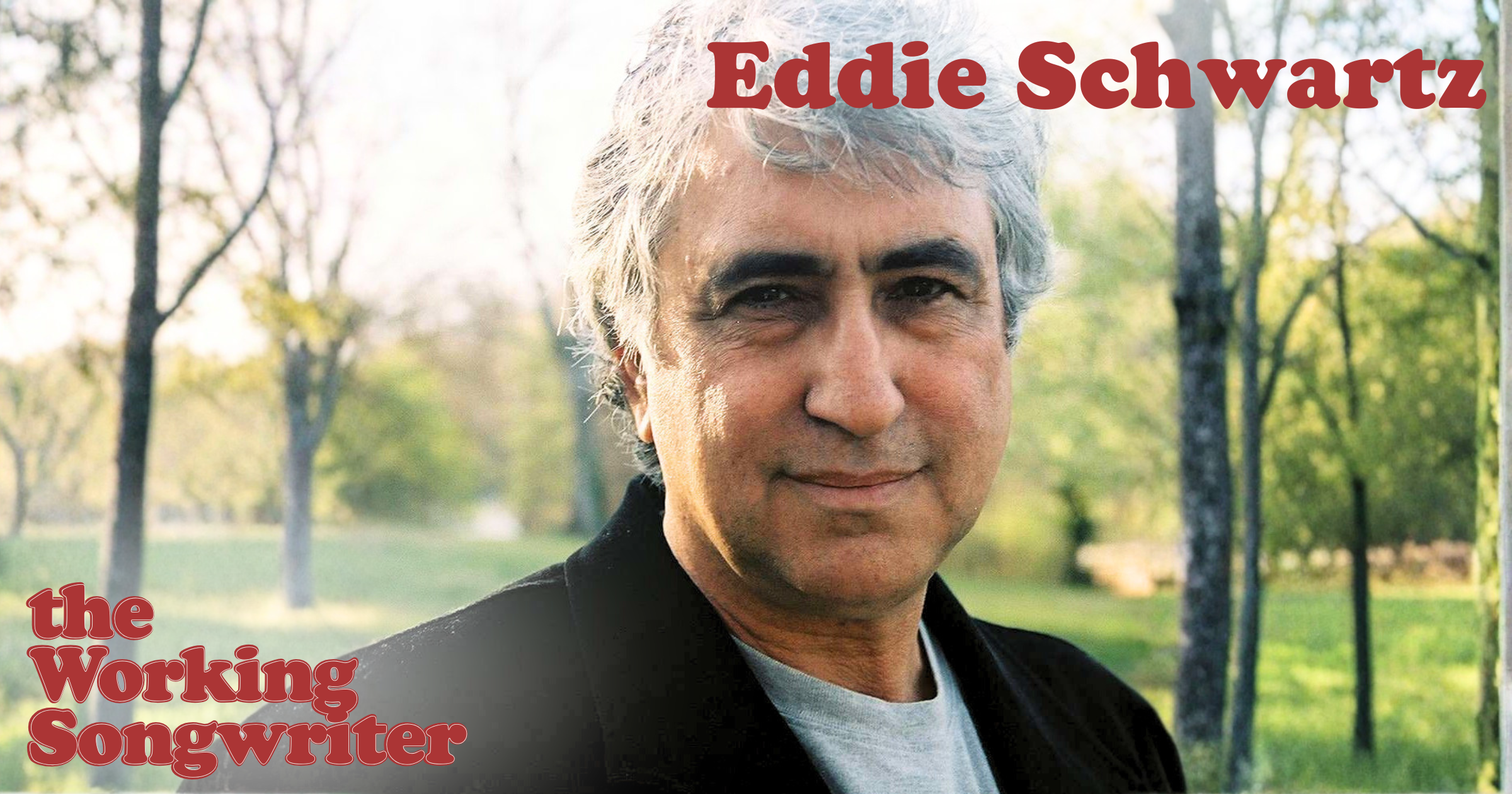
The Working Songwriter: Mary Chapin Carpenter

Our guest this week on the Working Songwriter hails from my neck of the woods, Washington, D.C. Mary Chapin Carpenter got her start in the proto-Americana music scene of 1970s and ’80s D.C. She broke out of that local circuit with her signing to Columbia Records; her 1992 album, Come On Come On, went quadruple platinum.

LISTEN: APPLE • SPOTIFY • REDCIRCLE • MP3

Carpenter has toured with Emmylou Harris, Shawn Colvin, and Rosanne Cash, she’s won five GRAMMY Awards, two CMA Awards, and two Academy of Country Music Awards. Her song, “Shut Up and Kiss Me,” went to the top of the country radio charts. She has appeared on the Late Night with David Letterman and Rolling Stone calls her “one of the most grounded, sentient songwriters of her generation.” NPR has said that she’s “a singular voice in country and folk” and the New York Times praises her “intelligent, literate songwriting with emotional depth.”

Simply put, she’s an all-timer. I got a chance to catch up with her earlier this year and hear about her musical journey so far.


Photo Credit: Aaron Farrington

You Gotta Hear This: Margo Price, Darren Nicholson, and More

A fresh batch of roots music has arrived! You Gotta Hear This.

To kick off our weekly roundup of new music, singer-songwriter Jacob Augustine shares a music video for “Halfway to Harlem,” a jangling, twanging, and bluesy roots track with post-apocalyptic vibes – and the video to match. For how forbidding the video and lyrics are in their subject matter, the song is still charming and inviting. You’ll also enjoy a new song from Swedish roots duo Orange Oak. “well, well, well” is tender and contemplative and, as they put it themselves, it “explores the struggles of confronting yourself after a period of avoidance and inner conflict.” Still, there’s ample redemption to be found in the alt-folk track.

For a bit of troubadour storytelling, Pennsylvania’s Jeff Mamett unveils “Like Old Uncle Jim.” With a bit of dark country & western tinge, it’s a story song that pays tribute to larger-than-life figures and finds truth even in fiction and mythology. Mamett’s baritone vocal is rich and engaging. Plus, Irish artist Helen O’Shea, who’s now based in New Jersey, calls on her friends the Carlile Family Band for her new track and lyric video for “There Will Be Days.” It’s Americana with a party vibe, but the subject matter is much more deep and involved, passing on wisdom and considering the many cycles of living life. It’s ripe for a sing along!

In bluegrass, mandolinist and singer-songwriter Darren Nicholson launches his new album, Lonesome Trails and Tall Tales, today. To celebrate, we’re sharing “All Trains Must Come to Pass” for release day. It’s a barn-burning traditional bluegrass number that Nicholson co-wrote with Charles Humphrey III and Thomm Jutz. And don’t miss the latest duo recording from Bryan Sutton, this time featuring guitar wizard Tommy Emmanuel alongside. “Don’t Let Your Deal Go Down” is a common choice by Sutton, but in this arrangement with Emmanuel there are equal infusions of jazz and swing alongside bluegrass and flatpicking.

Also out today is a new tribute album to Guy Clark produced by Dan Knobler and released by Truly Handmade Records. Old No. 1 Revisited features performances by Jade Bird, Erin Rae, Brennen Leigh, Kelsey Waldon, Logan Ledger, and more. For our roundup, we’re sharing Margo Price’s rendition of “Rita Ballou.” Both Price and Knobler tell us their stories of how the track came to be below – it’s an absolutely lovely tribute to a songwriting and Americana legend.

There’s so much to enjoy! You Gotta Hear This…

Jacob Augustine, “Halfway to Harlem”

Artist: Jacob Augustine
Hometown: Portland, Maine
Song: “Halfway to Harlem”
Album: I Love You Forever
Release Date: April 29, 2026 (single); May 22, 2026 (album)
Label: Team Love Records

In Their Words: “Post-apocalyptic survivor studies. Car alarms serenading the cities of America to dead battery silence.

“What is it to fall in love, raise a child, and save the world all at the same time? This song explores these themes and questions. Questions I don’t really have the answers to. But questions that need to be asked I think.” – Jacob Augustine

Video Credits:
Directed by Jacob Augustine.
Co-directed, filmed, and edited by Joshua Powers, Wavin AM.
Starring Brandon Wardwell.
Produced by Wavin AM.


Jeff Mamett, “Like Old Uncle Jim”

Artist: Jeff Mamett
Hometown: Central Pennsylvania
Song: Like Old Uncle Jim
Album: Fortunate Son
Release Date: May 1, 2026 (single); August 21, 2026 (album)

In Their Words: “I grew up around people like this – the kind of man whose stories don’t always land the same way depending on who’s listening. With Uncle Jim, I was interested in that gap between what people say about somebody and what you see for yourself. As a kid, you don’t question it the same way, you just take it in.

“The details were important to me – the cigarette, the pony ride, the way he carried himself. Those things felt more honest than trying to explain him. By the end, the truth is there if you’re paying attention, but it doesn’t come out and announce itself. It just sits in the room. I think that’s how a lot of people are. You don’t always know who they are unless you’re looking closely.” – Jeff Mamett


Darren Nicholson, “All Trains Come to Pass”

Artist: Darren Nicholson
Hometown: Canton, North Carolina
Song: “All Trains Come to Pass”
Album: Lonesome Trails and Tall Tales
Release Date: May 1, 2026
Label: Mountain Home Music Company

In Their Words: “‘All Trains Come to Pass’ is a barn-burner! It was written by Thomm Jutz, Charles Humphrey III, and myself. The song speaks metaphorically about the passing of time and how important it is to live in every moment. Breathe it in. The band is kicking on this one, and it was so much fun to record! We hope you enjoy listening to it as much as we did creating it.” – Darren Nicholson

Track Credits:
Darren Nicholson – Mandolin, lead vocal
Kristin Scott Benson – Banjo
Mark Fain – Upright bass
David Johnson – Acoustic guitar
Tony Creasman – Drums
Deanie Richardson – Fiddle
Kevin Sluder – Harmony vocal
Avery Welter – Harmony vocal
Jennifer Nicholson – Harmony vocal


Orange Oak, “well, well, well”

Artist: Orange Oak
Hometown: Stockholm, Sweden
Song: “well, well, well”
Album: almost, I thought to myself
Release Date: May 1, 2026 (song); September 11, 2026 (album)
Label: Nettwerk Music Group

In Their Words: “This song explores the struggles of confronting yourself after a period of avoidance and inner conflict. It moves between self-criticism and a quiet desire for change; realizing escape is no longer sustainable. There’s tension between wanting control and accepting vulnerability. There’s strain in letting go of anger and returning to life with a new sense of honesty. At its core, ‘well, well, well’ is about self-reflection, reconciliation, and finding the courage to begin again and again and again.” – Filippa Frisell and Erik Olsson, Orange Oak


Helen O’Shea, “There Will Be Days”

Artist: Helen O’Shea
Hometown: Born in Limerick, Ireland; living in Long Branch, New Jersey
Song: “There Will Be Days”
Album: Songs In The Key Of O
Release Date: May 1, 2026
Label: White Butterfly Music

In Their Words: “The song ‘There Will Be Days’ started out in a conversation between Caroline Carlile and myself. She was starting out as a young artist with tremendous potential and I was telling her that there will be days when she feels the world is against her, but that is exactly when she must let her starlight shine through. First this line became a poem and then Caroline and I decided to write a song about it together, with help from Jay Carlile and Marc Swersky. The result is this beautiful duet between Caroline and myself with Jay on harmonica and the Carlile Family Band on backing vocals against the music of Andrew Carillo (Joan Osborne), Rob Clores (Jesse Malin), and Aaron Comess (Spin Doctors).” – Helen O’Shea

Track Credits:
Helen O’Shea – Vocals, songwriter
Caroline Carlile – Vocals, songwriter
The Carlile Family Band – Background vocals
Marc Swersky – Producer, songwriter
Andrew Carillo – Guitars
Rob Clores – Keys
Aaron Comess – Drums
Jay Carlile – Harmonica, songwriter

Video Credits: Story & Bone


Margo Price, “Rita Ballou”

Artist: Margo Price
Song: “Rita Ballou”
Album: Old No. 1 Revisited
Release Date: May 1, 2026
Label: Truly Handmade Records

In Their Words: “Many years ago, I was lucky enough to find Guy’s Clark’s perfectly crafted album, Old No. 1, while shuffling through the jukebox at the Devil’s Backbone Tavern in Fischer, Texas. His fingerpicking and storytelling on ‘Rita Ballou’ pulled me in. And I was hooked.

“Guy’s a carpenter in every sense of the word and every song he builds is ornate, solid, and reliable. It’s an honor to interpret his songwriting for this tribute, alongside producer and guitar virtuoso Dan Knobler, harmonies by my talented bandmate Logan Ledger, and the incredible, top-tier musicians that played on this track.” – Margo Price

“Margo Price was the immediate and obvious choice to extol the charms of ‘Rita Ballou.’ These songs do the work, all we have to do is cast them appropriately. So in that spirit I appointed the tracking room at Good Wishes with a proverbial joy carnival of musicians: octopus double drums from Jamie Dick and Dom Billett, powerhouse Jen Gunderman at the keys, the legend Russ Pahl walking into the studio with his steel on his shoulder, Will Honaker holding it down on bass, me strumming and picking. Margo stood out on the floor with us and nailed the song to the wall. Logan Ledger and Nicki Bluhm provided the backup choruses and a good time was had by all.” – Dan Knobler, producer

Track Credits:
Margo Price – Vocals
Logan Ledger – Harmony vocal
Nicki Bluhm – Harmony vocal
Maya de Vitry – Additional harmony vocals
Rachael Davis – Additional harmony vocals
Dan Knobler – Acoustic guitars, electric guitar
Jen Gunderman – Piano, organ, Wurlitzer
Russ Pahl – Pedal steel
Will Honaker – Bass
Jamie Dick – Drums, percussion
Dom Billett – Drums, percussion


Bryan Sutton, “Don’t Let Your Deal Go Down” with Tommy Emmanuel

Artist: Bryan Sutton with Tommy Emmanuel
Hometown: Nashville, Tennessee
Song: “Don’t Let Your Deal Go Down”
Album: From Roots to Branches
Release Date: May 1, 2026 (single)
Label: Mountain Home Music Company

In Their Words: “[Tommy is] another guy that’s just been gracious to me over the years… a big pal and he’s a big energy. Every time he sees me, you just get all of his attention … he’s a wonderful friend and a lovely dude. Certainly, the world knows how strong a musician he is, but you know, the choice for that song, something with energy, that sort of comes from more of a bluegrass background. Those chord changes lend a little more to the swing and jazz world, and that’s where he and I have spent a lot of time playing other songs together.

“I was a partner on his duet record some years ago. We did ‘C Jam Blues’ and some other swing music like that. Trying to choose songs that sort of honor a certain angle of our relationship, musically, so that mix of bluegrass and jazz and swing is where Tommy Emmanuel and I find some common ground.” – Bryan Sutton

Track Credits:
Bryan Sutton – Acoustic guitar, lead vocal
Tommy Emmanuel – Acoustic guitar, vocal


Photo Credit: Margo Price by Yana Yatsuk; Darren Nicholson by Jeff Smith.

Ber Is No Longer Hiding Her Folk Elements

When you think of common musical touchpoints for young roots artists, the Shrek movies’ soundtracks likely don’t come to mind. But those compilations, beginning with the first film in 2001 and continuing through a handful of sequels in the aughts and ‘10s, feature an impressive if surprising roster of artists, including Rufus Wainwright, Tom Waits, Frou Frou, and David Bowie.

Quickly rising singer-songwriter Ber laughs as she reveals her penchant for those soundtracks, but her affection is sincere. On the Minnesota-born artist’s first full-length album – the newly released Good, Like It Should Be – she turns that winking sincerity inward, writing a dozen songs about opening up to love despite the real risk of heartbreak.

Ber wrote and recorded the bulk of the LP with close friends and collaborators Rob Milton, Austin Ward Sherman, and Bradley Hale, who joined her on a writing trip to Pepin, Wisconsin, and helped deepen both the record’s narrative vulnerability as well as its sonic range. The resulting songs are self-assured and lived-in, with an emphasis on melody and emotional tension that lets her agile, nuanced vocal shine.

Below, BGS catches up with Ber the day before Good, Like It Should Be releases, chatting about songwriting, a-ha moments and, yes, everyone’s favorite big green ogre.

Tomorrow – or in just a few hours, really – you’ll release your new album, Good, Like It Should Be. What are you feeling in this last stretch as you get ready for folks to listen to the project in its entirety?

Ber: It’s a little crazy. I think it’s actually out in Australia already. Maybe this slow burn of me realizing, all day, that it’s just gradually coming out will make it a little less overwhelming. But I would say overwhelming is the default nature of the last month. Coming up to this April 3 date has been challenging but also really exciting, and something I’ve tried to accept and just be really happy about, because it’s really crazy to be putting a whole album out. It feels really, really wild. I’ve never done that before. It’s new territory. We’ve been rolling out singles for six months, and I’ve been listening to the whole album for like a year, so really it’s not going to hit me that other people haven’t sat with it yet until tonight. I’ve been crying a lot, mostly happy tears. But it’s definitely a little bit of a release, emotionally, too. So, it’s a weird one to have to process.

To your point about living with this music for so long, do you feel like your relationship to the music has shifted in that time? Has any new meaning or insight been revealed to you?

It feels really solid. I don’t think it’s shifted so much outside of maybe me reaching for songs for the month of November, and then kind of getting sick of that one so then going for another one. I think I’ve sat with all of it in different ways. I haven’t been doing loads of writing in this period of releasing the album, so this is really the stuff that exists for me right now. And it is where I am still, which I think is really fun. We were pretty careful about choosing what the singles would be, so that there was still some magic in the unreleased tracks that people could hopefully discover when the whole album came out.

Let’s talk about the early days of the record. As you mentioned, this is your first full-length album. Did you originally set out to write a full LP?

Definitely. When I decided that it was going to be an album, there was a moment where I shocked myself that I even felt capable of that. But we definitely were like, “Okay, this is going to be a full-length record. We’re going to do 12 songs.” It was pretty concise in the planning that way, but I didn’t realize I was writing it at the time. The first songs from the album were just moments where I was pulling from things and writing for fun. I hadn’t really signed up to the task yet, so I think that’s really fun.

The first song that was written for the album is called “Smooth Ride.” I wrote that in my second EP cycle, in 2021 or 2022, with Rob Milton and Benjamin Francis Leftwich, who are just great. It was the first day we had all met and it was the first day I met Rob, who since then has been this really sturdy and really inspiring collaborator. We wrote that song and I didn’t like it then, so it got tabled. It’s something we revisited last summer, and I was like, “Oh, it lives on the album. It’s here. It’s time. I wasn’t ready for this yet, but now I am, and I love it now.” It’s one of my favorites…

The rest of it all came in a window of eight months of really intentional writing towards the album and trying things with different people, being in London or going back to Minnesota, going on this writing trip with my friends Brad and Austin [Ward Sherman] to this Airbnb in Pepin, Wisconsin. We wrote eight songs in three days and five of them shaped what the album ended up sounding like and feeling like and being about. It was the glue for all these other songs that I’d been working on in my own time with Brad. So, it was really like a puzzle to piece it all together and to choose the track list. There were probably 50 songs that we whittled down to 12.

To write eight songs in three days, you must have a special creative relationship with those friends. Do you know what it is about your working relationship that makes it so fruitful?

I just trust them implicitly. They both know so much about me and I think that trip really cemented our relationship as a collaborative team. We had been working together for a few years at this point, but Brad, who produced the record, is one of my dearest friends… It’s a really specific thing to be able to sit in the studio with someone and just make eye contact and go, “So that’s what this is.” Or, “Oh no, that’s not what you’re trying to say.” He could call my bluffs a lot and tell me to chase something, and I could follow that direction, because I trust him and I love him.

Then bringing Austin into that, too, was so fun, because he’s brilliant and he suggests things that I would never in a million years think of. He has a very band-y sensibility about his production and his vision for music and I really loved that… When you do a writing session with someone, you basically spill your guts for a few hours. You have to be really honest with yourself and with the people around you, otherwise the thing you make is gonna sound like trash. With the album, I really wanted to make something that felt true to where I was at the moment, and I was falling in love. I had to be really vulnerable with them about the things I was feeling and the way I would possibly describe it.

It is indeed a very personal record, so it makes sense to hear you are so close with your collaborators. When you write songs grounded in your own experience, do you end up understanding yourself or your place in those experiences better?

Absolutely. It’s a point of reflection for me, often. I used to journal a lot. I’ve been doing that a little bit less recently, which is something I want to pick back up. But when we were writing these songs, regardless of what we would walk into the room with, as you’re writing about it and sitting there with music around you, you’re thinking about how it actually feels. You’re putting down words onto paper and it is a very telling experience, because you find stuff and you write words in an order and it moves you, and you go, “Oh, my God. I didn’t even think that I felt this way about that.”

“Good, Like It Should Be,” I cried after writing that song. We all did. I’m tearing up thinking about that moment. That song was about getting out of your own way and letting something just be good, because it is good and you don’t have to question everything being good. At that point, I don’t think I even realized that I was suppressing so much.

There’s a line in there that’s like, “I know it’s a choice, I can be sturdy/ Let it be good, good, like it should be.” And I was like, “Oh, wow, that explained it to me. Actually, this new love, this letting something be good, this is actually a decision for me. Not only is it natural, but I have to also accept it and come to terms with this.” It was such a big moment that was like a light bulb for the entire album, and for what I had been writing about for a year at this point. Writing these songs revealed pieces of me that I didn’t really know were in there, and that’s such a treat. It’s exhausting emotionally, but in the good type of way where you feel like you walk out of it learning something new about yourself. It’s like tarot, getting you toward those subconscious things that need to come up.

The production is so lush and intricate, and really gives a fullness of emotion to the lyrics you wrote. Could you hear a fleshed-out version of a song in your head as you were writing it, or did they find that fullness in the studio?

Probably both in different situations. I’m so pleased with the production. It was really fun to sit with Brad and to sit with Rob, and not only watch them create magic but also be able to listen to it and partake and play these instruments. We played all of the guitars. I got to play tambourine on a lot of stuff. Brad took it upon himself to teach me how to engineer a little bit while he was recording all the drums in our basement, which was really fun. And it gave me the itch to get into more production.

But yeah, when we wrote them, there were some songs that just had to be the way they are. “Forget Me Not” was like, “Okay, we should essentially just do a demo. This is so touching and beautiful.” When we did that writing trip, we just brought this one Korg eight-track recorder and that was all we were allowed to use. So, we did a lot of in-the-room recordings of the six songs that ended up on the album from that trip. “Hey, Bluebird” and “Give It All Away” both have samples from those demo recordings in the final product. We wanted to hold on to the energy…

With other songs that are a little bit more produced, like “Cool, Boy,” I did that one with Rob and he had just gotten off of vacation. He was like, “I am only listening to Clairo and I absolutely love the beach, and I think we should do something beachy and flirty and fun.” And I was like, “Bet, that sounds cool. Let’s just see what’s up.”

In addition to Clairo, what were you listening to or feeling inspired by while you were making the record?

You might laugh, but I pretty much exclusively listened to the Shrek soundtrack. It’s brilliant. There’s just bangers on there. “I Need a Hero,” the Frou Frou version, is amazing. We were referencing Counting Crows. I also am a massive Kacey Musgraves fan. I grew up on Mumford & Sons, and the Decemberists, and Kings of Convenience, and some really rootsy stuff my parents turned me onto.

For a long time, at the start of me writing songs on my laptop and posting them and putting EPs out, I was really hiding from this folk element that I knew I had in me. But I wasn’t ready to touch it yet. I decided with the album we’d just really dive deep and let it be good. It’s some of the stuff I resonate with the most. But yeah, Clairo has been a huge indie inspiration. I love everything she does. And, again, it was Shrek that really did it.

You spent a lot of time figuring out the record’s sequence. How did you eventually settle on a final track list?

There were, like, 40 iterations of the track listing. It was the bane of my existence for a long time. And I actually really credit my manager for putting up with me for that window of time. Honestly, I love where it landed, but it was never my first choice. All I knew was that I wanted to sandwich the entire album between “Good, Real” and “Good, Like It Should Be,” that was my non-negotiable. So, it was like a deck of cards, sort of feeling it out.

I know a lot of people like to try and tell a story through the songs, but as I was listening to them, the story was just me. These are all things I felt and there wasn’t necessarily an order or a rhyme or a reason to it other than I made them. I would be remiss to say it was purely artistic.

My team was pretty heavy on the idea of most of the singles landing on side A of the record. And I hated that. I was so angry at the time, because what do you mean we’re gonna prioritize how an album feels on a streaming platform, of all things? It genuinely drove me over the edge for the longest time. But then I got to this point where I was like, “Maybe it’s not that deep.” … I wanted to have the journey of listening to the album feel like you land somewhere at the end, and it’s like a soft pillow. I think with where it’s landed, that’s the experience I at least have. You get to boogie a little bit in the first few and then I slowly go through the motions.

You’ve already been out playing shows around the record and you have more dates coming up later this month. What are you enjoying and looking forward to most about playing this new music?

These songs are where I feel I resonate the most at the minute anyway, so what a treat to be able to push these and to sit in them and sing them for people. I love my first three EPs and I have a lot of empathy for the girl who wrote them. I love those songs and how far they’ve reached people, and I definitely will never just let them go, but I think it’s going to be so special to be able to sit down and sing most of these songs at, like, First Avenue in Minneapolis. I’ll probably cry so much that day.

I’ve been testing the waters on these last two tours. I’ve been so lucky to fill the first quarter of my year with touring with SYML in the EU and then touring now with Callum Scott on the West Coast in America. It’s given me the opportunity to sing acoustic versions and the response I’ve gotten has been amazing… It’s really wild, I think artists are constantly releasing and performing behind themselves, in the sense that you grow so much in the time that it takes to put out an album. So often, that album and that album cycle exists in a year or two years before the person you are when you’re actually performing them and talking about it to people. But in this moment, it feels true to me and it feels really exciting to talk about still. It’s very cathartic.


Photo Credit: Tom Thornton

You Gotta Hear This: New Music From Charlie Worsham, Maya de Vitry, and More

New Music Friday is here! Our final Friday of April finds our roundup sharing excellent country, folk, and Americana. You Gotta Hear This.

To start, Los Angeles based neo-folk artist Malena Cadiz has released a very cool track, “Smoke Rings.” It’s a Les Paul cover recorded on the original Les Paul recording console. Music nerds will get the importance of the first-ever multi-tracking console and how apropos the song selection is, too, with Cadiz offering her own rendition of a song by Paul and Mary Ford. It’s jazzy and lazy – deliciously relaxed. Also based in LA, Dominique and the Diamonds launch a vibing and glittery honky-tonkin’ song, “I Don’t Mind,” to announce their upcoming album Honky Tonk Queen. It evokes California in a sonic package that shines like it’s covered edge-to-edge in sequins, pulled forward by Dominique Gomez’s lush voice.

Earlier this week, Irish artist Glen Hansard released a gorgeous live video for “Don’t Settle,” the title track for his new album out today, Don+t Settle – Transmissions East. Hansard and his ensemble perform the impassioned song in the round, surrounding each other and surrounded by their audience and a circle of shadows. It’s dramatic and compelling. Out in the sunshine, singer-songwriter Maya de Vitry announces her new upcoming album with a fresh song, “Confidence of the Sun.” Written in the warm and soft sunlight of the Texas Hill Country, the track showcases de Vitry’s penchant for finding redemption in herself, in breaking old habits, and in being present – within music and without – to do so. It’s a lovely harbinger for what’s to come.

Texan Jacob McCoy shares a new song with us today, as well. “All Our Days” is rich with deeply stacked vocal tracks and a country-meets-indie twang. One of the last songs written for his EP, Deep Deep Water, it’s also one of the singer-songwriter’s favorite tracks he’s written to date. His EP is out everywhere today. To round us out and finish us off, our old pal Charlie Worsham – country’s modern renaissance man – returns with a new single, “Grass,” out now. It’s a tribute to his favorite pastime (mowing), his favorite surface for walking barefoot, and his rowdy 20s (IYKYK). With a heaping helping of the humor he’s often known for, “Grass” is a summer anthem perfect for farmers tans and coming in the house smelling like a fresh-trimmed lawn. As Worsham performs at Stagecoach this weekend, we’ll be cheering him on and enjoying “Grass” right here on BGS.

There’s so much to enjoy below. Get listenin’, because You Gotta Hear This:

Malena Cadiz, “Smoke Rings”

Artist: Malena Cadiz
Hometown: Los Angeles, California
Song: “Smoke Rings”
Release Date: April 20, 2026
Label: Sad Mall

In Their Words: “A few months back, an old friend from NYC, Tom Camuso, reached out that he was in LA working on an exciting new project. Tom, who’s worked with Lenny Kravitz, Blondie, and Steve Earle, was in charge of refurbishing the original Les Paul recording console. For music nerds this is HUGE. Les Paul created the very first multi-tracking console in 1957 and it now has a new home in the historic United Studios in LA.

“He invited my band and I to track a few songs on the console to test the gear – this was the first time anyone had recorded on this machine since it had been put in storage decades ago. We were obviously over the moon to be invited and decided the first track recorded on Les Paul’s console after all these years should be a Les Paul song. We chose to do a version of Les Paul and Mary Ford’s ‘Smoke Rings.’ I’ve loved this song forever for its dreamy, whimsical quality and Mary Ford’s gorgeous performance.

“My buds Jason A. Roberts (Norah Jones, Spoon, Bedouine), Leeann Skoda (Noah Cyrus), and Aaron Stern (Curtis Harding) came into the studio with me and I do not exaggerate when I say it was a semi-spiritual experience to get to record in this legendary space – they even got to play Les’s original guitars for the recording.” – Malena Cadiz


Maya de Vitry, “Confidence of the Sun”

Artist: Maya de Vitry
Hometown: Lancaster, Pennsylvania
Song: “Confidence of the Sun”
Album: All My Faith
Release Date: May 1, 2026 (single); July 24, 2026 (album)
Label: Mad Maker Studio

In Their Words: “Over the years, I have shed what feels like many skins. When I wrote the first lines of this song, ‘It took me a long time to recognize peace as a place I belong,’ it felt healing just to sing it and own that truth. It’s taken years for me to begin to rewire some painful patterns, some deep grooves of self-doubt and self-sabotage. For anyone who has ever been through periods of interpersonal chaos, times of loud endings and quiet beginnings, an era of coming back to honesty in your body and spirit after going through the motions – it can be hard to actually see and feel and appreciate in your bones just how far we’ve come, you know?

“I wrote this song in the unapologetically bright-yet-soft sunlight of the Texas Hill Country, in spring, at the Blue Rock Artist Ranch & Studio. I received a gift of attending a writing residency there, and it allowed me the space and time to slow down and listen to my own heart. I love this arrangement so much, the way it feels like home for me to rest my vocals in Dom Billett’s drum groove, the way the band rises and falls in energy together because this all happened in one whole live take, and the comfort and camaraderie of singing in unison with Shelby Means and Joel Timmons before we split into some joyous three-part harmony towards the end of the song.” – Maya de Vitry

Track Credits:
Maya de Vitry – Vocals, acoustic guitar
Shelby Means – Harmony vocals
Joel Timmons – Harmony vocals
Jo Schornikow – Keys
Ethan Ballinger – Electric guitar
Spencer Cullum – Pedal steel
Ethan Jodziewicz – Fretless electric bass
Dom Billett – Drums


Dominique and the Diamonds, “I Don’t Mind”

Artist: Dominique and the Diamonds
Hometown: Los Angeles, California
Song: “I Don’t Mind”
Album: Honky Tonk Queen
Release Date: April 24, 2026 (single); June 26, 2026 (album)

In Their Words: “Before moving to LA, I lived in a small farm town on the coast of Northern California. I didn’t want to leave, but I had to escape a dangerous relationship I was in. I was heartbroken for having to leave the town, not so much the relationship itself. I had plans of making it back one day and settling down, but when I found out my ex had planted roots out there, I knew it wouldn’t be safe for me to go back. I felt like he took a dream of mine away from me. I wanted this song to sound like that coastal town I was living in; a song that could transport you to that same beach where the sea touches the redwoods of Muir Woods. It might seem contrary for the song’s title to be ‘I Don’t Mind,’ but it’s how I feel about everything now. Moving to LA was the best decision of my life and unfortunately I don’t think I would have ended up here if I hadn’t experienced all of those terrible things up north. There would be no Dominique and the Diamonds, this incredible, dreamlike life that I live now because of this project would have never existed. So in the end, I don’t mind that my ex took my old dream away from me. This is exactly where I was meant to be.” – Dominique Gomez

Track Credits:
Dominique Gomez – Vocals, acoustic guitar
Hamilton Boyce – BGVs, bass
Tyler English – Pedal steel
Craig Jacobs – Drums
Glenn Brigman – Piano, producer
Dominique and the Diamonds – Producer


Glen Hansard, “Don’t Settle”

Artist: Glen Hansard
Hometown: Dublin, Ireland
Song: “Don’t Settle”
Album: Don+t Settle – Transmissions East
Release Date: April 21, 2026 (video); April 24, 2025 (album)
Label: Plateau/Secretly Distribution

In Their Words: “‘Don’t Settle’ is a song I wrote to a younger version of myself, the song came quite fast. A kind of roadmap of dos and don’ts for the sometimes treacherous tightrope that is one’s life in music. Stay the road, know your north. Listen only to your own heart and gut. Your road is your road. You’ll know the signs. Don’t deviate. And when you do, deviate completely. Don’t settle for less than you envisioned.” – Glen Hansard

Video Credits:
Frank Machel – Director, editor
Markus Mörtz – Producer, editor
Sara Kelly-Husain – Documentary, unit manager
Vincent Chmiel – Documentary
Martin Ullrich – DOP
Eric Poß – Camera
Armin Riedel – Camera
Stephan Bodner – Technical assistance, camera


Jacob McCoy, “All Our Days”

Artist: Jacob McCoy
Hometown: Amarillo, Texas
Song: “All Our Days”
Album: Deep Deep Water (EP)
Release Date: April 24, 2026

In Their Words: “‘All Our Days’ was one of the last songs written for the EP, and to date is one of my favorite songs I’ve written. I wrote it with friend and fiddle player Coral Bradshaw just a few weeks prior to recording. Something about it contains this seasoned, hard-earned romantic intimacy that just immediately drew me in like a lot of old country songs do. The song moves through all of the seasons of a long love – summer’s ease, winter’s frozen hope, and the slow return of spring – before landing somewhere that feels genuinely hard-won.

“Sam and I cut it on the first day of recording in his small above-garage studio in Nashville and it came together very organically. Syncopated fingerstyle guitar provides the foundation for the entire song and almost immediately you become immersed in intimate harmonies, with a waltzing bass line and support from an upright piano that provides some forward motion. For the interludes, I ended up playing my mother-in-law’s old cheap classical [guitar] from the ’70s that almost gave it a Willie Nelson feel, which given that he was always playing somewhere in the background growing up, I absolutely love. It might be my favorite musical moment on the entire project.” – Jacob McCoy

Track Credits:
Jacob McCoy – Vocals, acoustic guitar, classical guitar, bass
Sam Westhoff – Upright piano, producer


Charlie Worsham, “Grass”

Artist: Charlie Worsham
Hometown: Grenada, Mississippi
Song: “Grass”
Release Date: April 24, 2026

In Their Words: “‘Grass’ is an ode to my favorite surface to walk on barefoot, my favorite domestic pastime (mowing), and maybe a wink to a certain favorite pastime of my 20s, IYKYK…

“More than that, ‘Grass’ represents the blend of blues and bluegrass influences that raised me. I play that song and it takes me back to drinking from the water hose, attending my first MerleFest, walking out to the lawn seats at amphitheaters across the country, whether I was playing the show that night or catching a show with my friends.

“Some people like sand. Some people like snow. Some people like the concrete, where ain’t nothing grows. But I’d rather be… sweatin’ all summer on a John Deere stacking up cash cash cash…” – Charlie Worsham


Photo Credit: Charlie Worsham by PJ Brown; Maya de Vitry by Ethan Jodziewicz.

The Mythology and Alchemy of Thomm Jutz

Thomm Jutz has worked with a wide cast of characters since moving to Nashville in the early 2000s – John Prine, Nanci Griffith, Todd Snider, Billy Strings, and the SteelDrivers’ Tammy Rogers. But on his latest record, Ring-A-Bellin’, he strived to capture each song with the smallest musical unit possible.

The result of the 18-track album, released April 3, is a distinctly timeless vibe that feels just as much rooted to the present day as it does the mid-1900s or Civil War era, due to its recurring themes of history, mythology, and working with your hands. From self improvement (“Sharpen Your Knife”) to using natural disaster as a metaphor for perseverance (“Holy Mother Mountain”), the mastery that comes with time (“The Hammer And The Anvil”) and becoming more grounded in yourself (“Settle Me Down”), the GRAMMY-nominated transplant from Germany waxes philosophical and takes listeners back to a period long before we walked the Earth.

According to Jutz, the approach – recording with only a small group of people all in the same room not wearing headphones – is his way of replicating the process for how musicians would’ve recorded a century ago.

“This is how I want to make music right now,” he declares. “I don’t want to make a layered record – not because there’s anything wrong with that, it’s just not what I’m feeling at the moment. It’s like saying I don’t want to use red in my paintings right now, because I’ve used enough of it already.”

During a lengthy conversation with BGS at his Belmont office on Music Row, Jutz spoke about his concept of home, how psychology and mythology informed Ring-A-Bellin’, and a companion book that takes listeners even further into the world of his 18 new songs.

You’re releasing this album with a companion book. Tell me a little about what’s inside and why you decided to adopt this approach?

Thomm Jutz: It’s more and more important to create some kind of parallel narrative to the music nowadays. Vinyl has seen a resurgence over the last couple years, but it is not practical for me to take on my one trip to Europe every year. Because of that, I wanted to create something that was still a larger format, fun to hold, and had all the liner notes present without being something so small it’s hard to read.

I’ve also always enjoyed writing and reading – especially during my last 10 years as an instructor at Belmont – so I wanted to articulate some of those thoughts as they relate to the songs on this record in a longer form. When I got to working on it I quickly realized I was in over my head with the graphic design aspect of it, so I consulted my friend Gina Meredith. I just told her what I wanted artwork for and commissioned various folks to create pieces for each song. But rather than tell them what to make, I just sent them the music and had them use the songs as their creative prompts. Because of that I don’t always see the linear connection between the songs and the graphics that were made, but that’s also my favorite part.

A lot of my thoughts on this record revolve around analytic and Jungian psychology, alchemy and things like that, which are difficult to talk about in a tiny CD booklet, so I wanted to do something that allowed for a more longform format.

Overall, this record has a timeless feel – it could be (and is) from 2026, but if I didn’t know any better I wouldn’t second guess if someone told me it was from the mid-1900s or Civil War era as well, especially songs like “Sharpen Your Knife” and “The Hammer And The Anvil.” What are your thoughts on the vibe you were able to conjure up here?

I’m a traditionalist at heart, so everything I do is always trying to bring something new to the way I perceive what came before us, whether that’s lyrically, thematically, or in the recording process – which in this case was mostly all done live. I just think there tends to be more mystery with that music. There’s new music that does that too, but it’s easier for me to find that in old music because the cultural context can be studied since it’s not as close to my own lived experience. No matter how much I listen to or read about Charley Patton, I’ll never understand what he fully experienced because I was never there.

Regarding the songs you mentioned, both talk about people working with their hands, but they’re also metaphors for working on yourself – like you are the hammer, you are the anvil, you are the iron that’s being forged. Those mantras are rooted in human thought and analytical psychology, which is something I’ve dealt with and thought about a lot over the last 15 years. Particularly in terms of how mythology and history go together, and how understood the former is.

On one hand, some people think a myth is a lie and others say a myth is a fact, but both are wrong. A myth is a metaphor and must be understood as one. These songs are an effort to create a mythological framework that is a mirror image of my development as a person and artist. If you ever want to develop as an artist, you must develop as a person first.

With so much of this record wrapped up in concepts like history, psychology, and mythology, what’s the timeline for bringing the 18 songs on it to life?

These songs came from a period of about three years, but when I started I wasn’t setting out to make a record – I just wanted to experiment with a couple things. I had a few songs that I co-wrote with my friend Adam Wright that I wanted to test out with only me singing and playing and Mark Fain on bass. And it worked out really well. As I got fascinated with that process I began looking through my catalog and noticed that the songs which spoke to me the most were all ones that formed a narrative arc.

However, it’s not an autobiographical record that says, “I was born here,” “I did this,” and “This is how it made me feel.” But more so, one that explores spiritual development. I’m not interested in autobiographical songwriting. I find it very claustrophobic how you have to spell everything out to the listener. When you do that you’re shutting them out with nothing to do, which has me opting for a more open approach. A song is only ever truly finished when the listener interprets it for themselves, not with what the person who wrote it intended.

One of the songs on Ring-A-Bellin’ that is tied to more recent events is “Holy Mother Mountain,” which was inspired by the fallout of Hurricane Helene, specifically in Western North Carolina. But it’s also a metaphor for overcoming adversity. Care to explain?

That song is a good example of how writing with someone else – in this case Mando Saenz – can profoundly shape an idea. I remember Helene happening and having this line “Holy Mother Mountain” appear to me out of nowhere. From then on I couldn’t stop thinking about it, so I brought it to a writing session with him and said I didn’t know what to do with it. Then the co-writing dance ensued, with him taking the lead, followed by me for a bit, until it started becoming much clearer that there was no way to move forward without it being about Hurricane Helene somehow.

While it was inspired by that, the song is also about overcoming adversity and understanding that it’s going to happen again. Just because you live through Helene doesn’t mean there’s not another storm coming right behind it. If that storm showed us anything, it’s that perceived climate safety in Appalachia is not true. Also, “mother” and “mountain” are not just a nice alliteration, but there’s also a feminine quality about a mountain. An inverted mountain is a valley – or a place you can seek refuge in – and if you go on top of a mountain, you might find yourself closer to some kind of spiritual awareness.

The song is much more a collection of images that relate to the archetypal images of mother and mountain. Maybe even the word “holy” in the title has something to do with the fact of how little modernity treats nature with respect. Maybe that’s what we need to do – not bring offerings, but bring out attention to it instead of riding around and abusing it like crazy.

On “Too Many Walls” you sing about the idea of home. Given that you moved to the states 25 years ago from Germany, what is “home” to you?

Home and time are two of the biggest themes we write about, and it’s longing that connects the two – longing for home, longing to belong somewhere, longing to live in a different period of time, longing to get over something. Over the last couple years, I’ve also started thinking more about how strange a thing it is to build a house, because you’re just enclosing space that’s been there all along. You’re building and calling it something that wasn’t there before, but the land was always there. It’s a strange construct, and at the same time we need shelter.

From an early age I didn’t feel at home where I was because I longed for a place where music was part of the everyday lived experience. But in Germany after 1945 that was completely out of the picture, because the Nazi regime had completely and absurdly abused any sense of folklore. Since I was longing for an environment where people played music, I went to Ireland for the first time with my wife when I was 18 since it was much closer than coming [to the United States], which we couldn’t afford at the time. I was amazed by the music coming out of the pubs there – it felt so natural, like it was rising out of the Earth.

That fascination carried over into my love of American roots music. In that sense, “home” is where I feel connected to a place through music since that’s my main way of expressing myself. Additionally, southwestern Appalachia and the Black Forest that I’m from in Germany can look astonishingly similar sometimes, so when I go back to visit my parents I occasionally feel like I’m navigating the mountains around Johnson City, [Tennessee]. When I’m in Johnson City I sometimes imagine I’m back in Germany. But Appalachia has more importance to me now because it’s where I live and long to be. If it weren’t for all the writing I do in Nashville and my work at Belmont, I’d be in Appalachia fulltime, because it just speaks to me. When I haven’t been in a while I can start feeling something deep inside me – it’s not a heaviness, but a feeling of “I just really wanna fucking go.” [Laughs]

What has bringing this record to life taught you about yourself?

It’s taught me that I know nothing about graphic design and should always let someone else handle that instead. [Laughs]

In all seriousness, it has taught me that while I don’t consider myself a great singer, I can still enjoy the way I deliver a song if I do it correctly. It’s also taught me that while I have great deficiencies as a guitar player, I do enjoy the way I play guitar and this record, where I’m keenly aware of everything wrong with my playing. Even Tony Rice said that about his playing.

It’s not a sense of having completed my journey as a guitar player, but quite the opposite. It’s more like I’m aware of what’s missing. It’s also taught me that staying on the path of creating and writing a lot. You have to be in it for the long game in today’s environment and be doing it for the right reasons or you’ll run yourself ragged. I already understood that a little bit, but now I understand it even better. Maybe that’s what it’s all about – gaining a little awareness and moving on.


Photo Credit: Don VanCleave

Drayton Farley Asks the Big Questions

You’ve got to have some durability to name your album A Heavy Duty Heart. For Drayton Farley, paying a decade’s worth of dues is an important part of the story.

After a slow but steady build of recording albums and relentless touring, Farley picked up four significant synch placements in 2025, with songs “Blue Collar,” “Touch and Go,” and “It’s Called Doubt” heard in the Paramount+ series Landman, and “Turn Around” appearing in the CBS show Sheriff Country. That remarkable achievement seemed like a perfect way to set up A Heavy Duty Heart, which was recorded with his touring band and produced by Sadler Vaden.

“What I found is, usually the biggest enemy is me when it comes to how I’m feeling about how it’s going,” Farley says. “When things like that happen, it pulls you again out of your head and reminds you, ‘No, everything’s going great, actually. You’re doing really well, and you should just keep doing it and get out of your head a little bit.’”

In an interview with Good Country, the Birmingham, Alabama-based singer-songwriter retraces his trajectory to becoming one of roots music’s most promising performers. He explains why he considers Robert Earl Keen a role model and shares the song that still makes his wife cry.

The opening song, “Love We Mean,” captures that moment in a relationship where you have a rare moment to reflect. What was on your mind as that song was taking shape?

Drayton Farley: Yeah, it was pretty much that. I wanted to write a song about that moment where the kids are gone and you’re not on the road and there’s not a lot going on. All of a sudden, you’re both just at the house and there’s nothing to do or worry about. [Laughs] And you’ve both been going a hundred miles an hour, sometimes in the same direction, sometimes in the other direction, but all of a sudden, everything just kind of stops and gets quiet. Then you’re both looking at each other like, “What the hell just happened?” And you start kind of taking stock and checking in.

I sensed a theme throughout this album of assessing where you are in life and asking those big questions. Then I looked you up and saw that you’re just 30 years old. Have you always been the kind of guy who’s willing to look inward and analyze the world around you?

Yeah, I think so. I don’t know why. I think that feels easier to do. I celebrate my 10th wedding anniversary in May. You know, I’m only 30, but I guess I’ve worked enough of the real jobs and been married long enough with two daughters now, these kinds of things feel required to do.

What were the day jobs you had before you could finally dedicate yourself to music?

Out of high school, I spent about three and a half years working on the railroad [as a subcontractor for Norfolk Southern doing derailment cleanups]. I got married while I was working there, then quit that job, and I got a job working for Mercedes-Benz. I worked on the assembly line building cars for the next four years. During that last year is when I started releasing music. I spent the last two years there, kind of gigging after work every day that I could, just trying to build whatever local presence I could and release as much music as I could and build a catalog. And this is just me and a guitar with a few microphones. Just lo-fi. It’s really demo tapes. They’re live recordings really, just in the house.

Then I left that job so that I could gig more. I got a job working for Safelite, doing auto glass for about two months. Then I booked myself opening a few tours and I booked a little headline run for myself. I told my boss, “Man, I gotta do music. I thought I could just open my schedule a little more and that would make me happier. But it’s pretty obvious now that music is what I have to do.” In the next month or two, I met my agent at CAA, met my manager, and hit it off with David Macias at Thirty Tigers. All the dominoes started falling immediately. Within three months of quitting that last job, I was already booked to open two shows for Willie Nelson. So it all happened fast, and it’s like reassurance that I’d made the right choice.

I’m going to quote a lyric back to you, which is “Somewhere deep inside I knew/ And I know you knew it, too/ Couldn’t be more proud to see we saw each other through.” That’s got to be the best feeling to know it actually happened for you. You held onto the dream. How did you stay motivated when things weren’t exactly going fast for you?

I think, especially for those times, the struggle was the motivation. It came pretty naturally. That song specifically, “Dream Come True,” that is mine and my wife’s story. I spent those years working the jobs – and even on the railroad I brought my guitar with me to write songs in the hotel rooms. I played open mics after work. We traveled for work on that job. So, those days, all the way leading up to, I guess around ‘22, that was it.

It was always just like, “How do you even make a career in music?” You know, “I’ve never been to Nashville. I don’t know anybody in Nashville. I really don’t know anyone in the Birmingham music scene. I don’t even know where to start or what to do, other than use social media to try to get my stuff out there.” And then fast forward to Mercedes. I was gigging after work for a few years, like Thursday, Friday, Saturday, as many shows as I can play, and I’m releasing EPs that I’ve self-recorded. The dream was always to do music and just find a way to be able to support us with music, instead of these other jobs that aren’t what I’m supposed to do.

We were trying to have kids and start a family and we ended up losing the first pregnancy. We kept trying after that, we had a second pregnancy, and we lost that one. So there for a while, it just felt like music wasn’t going to happen. How do you get that to kick off? And we’ve lost two pregnancies, so who knows if we can even have kids? That was our shared dream. That is what the whole song is about. We have two daughters now and this is what I do. When my wife hears that song now, she cries.

Being married myself, I appreciate these songs about the depth of that relationship, just leaning on each other and trusting each other.

I just needed something in my catalog that would reflect those parts of my life, because I’ve written so much about other things. Just looking back through all the songs, I was like, I have a severe lack of love songs going on, you know? Why not write an entire album of it?

I also picked up on the Robert Earl Keen reference in “Feel Like Getting High.” What do you enjoy about the music that he’s made over the years?

It spans a lot of different moods and I want to be more that way. So far, a lot of my projects and albums and catalog have had a similar atmosphere around it all. What he’s talking about, and what he sings about and writes about, is a pretty broad spectrum. As a writer, I want to get more in that direction where I’m not gridlocking myself to a certain topic or a certain mood. I would say that’s inspiring from him.

Why did the album title, A Heavy Duty Heart, seem to fit?

That was the hardest part of this whole thing, just naming it. It had me stuck for a while, trying to figure out the name. I don’t know where that came from. It was just a thought and I kind of liked the way it rolled off the tongue. Looking through the songs, almost all of these songs say the word “heart,” and it’s talking about the inward, deeper, zoomed-in struggles and details of my life, being a touring musician and having children and a wife, and our journey to get there. So, it felt like it would take a pretty strong heart and will to keep going through all that and keep your eye on the prize. I thought that title reflected the overall idea of the album.

I really like “Turn Around” right there at the end of the record. What was going on in your life when you were when you wrote that song?

That was a similar thing to what I was talking about earlier, where it was kind of throwing yourself a pity party and losing perspective. “Why is this going on?” “Why are these tickets not selling more?” “Why is this artist doing more than I’m doing? Two years ago, we were at the same place.” It’s just a game of comparison on social media and that can really begin to affect you, just wondering if you’re stalling, or if you’re doing well or not.

But the truth is, that’s just your mind going to those places because you haven’t kept your own perspective on everything. Like, me five years ago wouldn’t believe anything that me right now would have to tell them about all the things I’ve done and accomplished. That’s the real perspective. And when you lose it, you get too far in your head, for no good reason. And then stopping and turning around, kind of taking stock of where you’re at, and what all you have, and measuring yourself again.


Photo Credit: Leah Dockery

A One-of-a-Kind Conversation with Jonny Fritz

It is deeply joyful sitting with Jonny Fritz at a restaurant he suggested (Pollos Puebla #1) in an area of Los Angeles he’s an expert on (Pasadena/Altadena border) and talking about subjects he thinks about a lot, ranging from rebirthing ceremonies to alimony to how…“different” Nashville is now. He’s keenly honest about his life, his work, and his thoughts about any question thrown his way. Nothing is out of line or off limits. Nothing is filtered by a publicist or an agenda. It is off the cuff and real and wild.

We met over grilled chicken, rice, and beans to discuss his newest work, Debbie Downers (Woodwinds), a reimagining of the original 2025 album Debbie Downers. The conversation unfolded much like the album, with unexpected turns and humor that expose raw nerves about an unfriendly music industry, the beauty of PG Tips, the subtlety of serving a song, and the goal of taking a ride on the wave of a sliced open above-ground pool.

Well, let’s talk about Woodwinds. I’m a huge woodwind fan. How’d this come about?

Jonny Fritz: Oh, yeah? Me too. I love woodwinds. I’ve always loved them. I think they’re so great.

It’s so expensive making a record. It’s just stupid, you know? For example, the last record I made, Sweet Creep, I made it pretty cheap. I think it cost about 12,000 bucks. But ATO Records had an option on it so they could pick it up. They bought Dad Country, the record before that, for 5,000 bucks. It cost me five grand to make. “We’ll pay you five grand for it.” All right, fine. And then, hidden in the contract – or at least hidden to me – they got the option on the next one. Same deal. So when I made Sweet Creep they picked up the option. So for $5,000, they got this record that cost me $12k. I was like, “Jesus, man, this business is so rough.” And I just knew it was going to be something similar with the next one.

By this one, Debbie Downers, I thought, “What do I really want to do?” I might as well just do what I want, because there’s nothing worse than having something be expensive and unsatisfactory. I just decided I really wanted to make the record over and over and over again. I have a bunch of different visions for how it should go and I wouldn’t call any of them the one.

The Woodwinds one was something I’ve always just wanted to do. So I’m pretty pleased with it. I got this amazing guy in Highland Park who does film and TV stuff. There’s not a lot of work going on right now, so he was willing to do it. And the first couple of arrangements that he came up with, I was just giddy. I couldn’t believe how cool it was.

Were there any revelations for you? When you heard them in that arrangement, was there anything that shocked you about it?

Hmm… Yeah, some of the versions with the woodwinds really lent themselves to the winds better than any other version. I wrote this song called “Have You Seen Her.” I wrote it coming off of anesthesia. I was out of my mind. I got a hip replacement at UCLA 10 years ago. You know, coming off anesthesia affects people in weird ways. I’m one of them. It really got me, I wrote this song and I felt like it was the most brilliant thing.

It was so embarrassing. I wrote everybody who I knew who was high up at Rolling Stone, and all the Newport Folk Festival team, and all their PR team. I mean, I wrote everybody. And I wrote these really incoherent emails. I haven’t actually looked at them in a long time. I looked at them right after I wrote them and I was so ashamed. But I wrote all these emails being like, “You’re gonna want to get Scarlett Johansson down here. I need to perform this for her. And you need to get Joaquin [Phoenix] here, too.”

I’m not a social climber, but there was something in me that was like, “You need to make some moves. Call out a lifeline.” I was so ashamed of it for so long, because it was one of the most embarrassing moments in my life, for sure.

All of that to say, I didn’t want to play it or record it. I had to overcome it, admit it, and start talking about it. When I heard it with the woodwinds, I was blown away.

Years ago, I worked with Chris Crofton on a comedy event at Third Man Records that involved a compilation of found video footage that was submitted. There were so many submissions of people coming out of anesthesia, and I remember Chris immediately going, “No, that isn’t funny.” It really isn’t; you aren’t in your right mind.

God bless that man. He always knows exactly what the fuck is up. He is driven by pure heart and knows exactly where his morals should be. He’s incorruptible.

Do you spend a lot of time on social media? What is your relationship to it as a creator?

Pretty passive. I like social media. I feel like I’m kind of floating above social media. By like eight feet, just kind of looking down at it. Like, “What are you guys doing? That’s insane.” Then I dive into it to interact, and then just kind of get out of it. I get a little hooked on it for sure, but I hear about the addictions and the stuff that people fall for, and just like the amount of engagement. But it’s like engagement versus quality of life. I get so much fulfillment from everything else. I like playing with it. I always have fun with it, but I try not to let it get sticky.

Well, one of my favorite social media posts in the past bit is the one with your kiddo singing “Tea Man.”

Oh, wasn’t that so sweet?

So sweet.

She’s 6.5 now. She was like 2.5 then. And I just was like, I can’t post this. It felt so…I don’t know…

Personal?

It was personal, but I didn’t have a problem with that. I definitely want to protect her, you know? But that’s not her anymore. She doesn’t even look like that. She’s like doubled since that song came out. But then I was like, “Oh, fuck yeah, I’m posting this!” There was no risk of seeing her in public and recognizing that she’s the girl from the video.

Are you a tea man? In real life?

I got a PG Tips tattoo. I really like tea. I drink enough tea to float a canoe every day.

Really? All caffeinated?

Usually. Well, when I’m on tour, yeah. I get so tired. I can’t really mess with coffee. It just makes me so jittery. But I can just drink tea all day.

Are you an equal opportunist, or is it mostly black tea?

Oh, I like it all. Really like it all, but I love the black stuff, though. I think it happened when I was on tour 10 years ago with Josh Hedley. We were in England somewhere on a train, and they came down the lane with a steaming cart and it was £1 for a cup of tea. I don’t have an addictive personality. I don’t care about alcohol or anything. But I felt like, “Oh, I’m in trouble.” Just sitting on a cold, rainy train going through England with a cup of PG Tips.

It reminded me of something I heard about Andy Warhol. Although I’m not a big fan, I don’t know much about the guy. But what I do know about him is that one thing that made me really like him. I heard that he doused his whole world in a certain scent for a season. For example, in the summer of ‘63, he would just cover everything with lavender oil. And then come winter, it would be a totally different scent. And you’d put lavender away, and it’d be bergamot. So then the sense memory of whatever happened around that time would be so strongly connected to that scent that you could be completely brought back. And I really love that.

I think there’s something to it with the tea thing, because that tour was really big for me. It was a fantastic time. It was a really, really wonderful, lovely tour, and drinking PG Tips like that, I just got into English culture too. Everywhere you go, somebody’s like, “Well, you want a cup of tea?” Like, yes, I fucking do. I decided I’m never turning down a cup of tea. And I never have since.

Tell me about writing “Hot Chicken Condos” with Jordan [Lehning] and Skylar [Wilson]. I deeply connect with that song because I also left Tennessee, and for many of the reasons you list in the song.

Yeah, that was the point. Everybody who really gets this place will really understand these things, even like Pit Bull puppies in parking lots.

And humidity.

Fucking unrelenting humidity.

Were those things you were storing? How did that song come about?

God, why I love writing with Jordan and Skyler is because they don’t bring any ego to the write. They don’t fucking care. They’re just such good vibes. I’m really pretty neurotic about writing and also I’m pretty protective of my words, too. When I get into the writing space, I’m just so sensitive about what’s being said. So if somebody says or suggests the wrong thing, I can quickly be like, “This is the wrong association.” I can be a little trigger-happy.

But with Jordan and Skylar, they’re always just like, “Just play what you got.” And they usually edit everything that I have. With that song, one of the lyrics was “Mustard in the corner of his tiny little mouth.” And Jordan said, “Why don’t you say, ‘Mustard cracking in the corner of his tiny little mouth?'” And it was perfect. Mark Twain said the difference between the right word and almost the right word was the difference between lightning and the lightning bug.

It’s so true.

I got to hang out with Guy Clark once in Nashville, and it was like one of the best moments of my Nashville career. I was going through really bad writer’s block. And I asked him, “Do you ever get stuck?” And he said, “Yeah… Do you ever write with other people?” And I told him, “I don’t like the idea of giving somebody 50% of the song just because they’re sitting in the same room.” He leaned over and he goes, “Well, you never would have fucking wrote it if they weren’t sitting there.”

I was like, “Damn, old man schooled me.” Because so much of writing, I feel like, is picking up on something else that’s happening. And who’s to say you don’t owe somebody credit just because they’re sitting there?

The other thing that Jordan suggested for [“Hot Chicken Condos”], which was so right on, was that he asked me how high I could go on the Tennessee part. I told him I could go falsetto, and he told me to try it. I hit it and he said, “That’s it.” He took an idea of a song and made it a song. I just so appreciate those guys.

I just feel it is like a pedal steel player who plays about eight notes per song. That’s the best player in town, ‘cause all the other players are nonstop. Same with fiddle. Take Josh Hedley. The guy just stands there most of the time, then he pulls out something incredible, and he sets it back down. He doesn’t overplay. If you don’t overwrite and you don’t overplay, those are heavy attributes.

Those are both things to do in service of the song, not in service of self.

Absolutely. You know who I saw last night was Erin Rae. Kevin Morby and I were standing next to each other, just like, ”Oh my god, she’s so good.” One of the most amazing things about her is that she underplays the guitar. She’s playing the whole time, but if you really focus on how much she is actually playing, it is barely. It’s just enough to fill in where she’s not singing and she works the mic so well.

All those things are so important, but nobody teaches them, you know? You have to kind of know it. It’s innate, right?

Or you got to learn it trial by fire. And you have to be playing with players who know what they are doing to learn that.

Yeah. That’s right. Sometimes people are technically good, but they just don’t stop noodling, and it sucks.

You took a long hiatus from music, huh?

I did. I took nine years between records. I didn’t mean to. And I didn’t actually think that I was doing it. I was playing shows here and there. I blame it on real estate. I got into real estate because my heart got broken from music so many times from wanting to do better. Wanting to succeed more. Really, really caring what people said and thought and comparing myself. All the things you really shouldn’t do ever in any aspect of life. I mean, if you did that in a relationship, then your therapist would be like, “That’s your problem. Stop. Don’t do that.”

I couldn’t get out of it. I just felt so bad about how it was going. And I know what I’m doing is not for everybody, and it’s not gonna take off. But I love what I do. I’m not putting myself down, but I just knew my ambition was a lot faster than everybody’s interests. It was just wearing on me and I needed to do something that’s purely about money and doesn’t have anything to do with creativity, because I’m just getting my feelings hurt. And I got polyps in my vocal cords. I was touring too much. It just wasn’t going well.

So I thought, “I’m just going to pivot. I’ll still do shows and if somebody asks me to do something, I’ll do it. I love music.” I stopped prioritizing writing. I stopped prioritizing recording, and then the pandemic happened, and I had a kid, and real estate took off, and I looked up, and it was 9 years. It really was like, “Oh, crap, how did that happen?” It shocked me.

What’s your writing process like typically? Do you write everywhere?

I write everywhere. I use my voice memos a lot. I really love just making up new country songs and fake country songs – like, really bad ones. I find that if I can get them out, I can expand upon them or delete them and move on.

I was writing with Skylar [Wilson] one time and we were trying to write a song called “Remember the Alimony?” We wrote for hours and hours and it was a stupid song and it didn’t go anywhere. It went, “I’m just a poor man. All I eat is beans and write checks to my ex, one and only. I rolled the dice, but I lost my wife. But I remember the alimony.” So stupid. God. But we were writing all day and just hanging out, and neither of us thought to finish it. It just didn’t work. But then I got home and I had like 6 other song ideas that went on Sweet Creep. It’s that muscle thing that everybody talks about.

I’m also a pleasure seeker to the nth degree. If things aren’t fun, I just drop them so quick. I’m really bad about that. So I just make sure that it’s really fun and get the idea out quickly. I try to stay hovering above it, just stay light. Because as soon as I dig into it, that’s when I’m like, “Oh, my God, right. I don’t know how to do this.” Just keep it fun and it will grow. But I like to write all the time, every day.

Do you wake up and do it?

It is in the shower, on the way to school, washing dishes. You know, when you have a great idea and no way to write it down.

Soapy hands! Sometimes it happens when there’s an absence of anything else and those ideas pop up.

I have to really protect myself when I’m diving in. I wash all the dishes, do all the laundry, sweep up a bit, and make sure no one is going to ask me for anything. I’m really self-conscious about that. If nobody is home, I’m going to the basement and putting on Ken Burns’ Civil War, and I turn the radio on at low levels where it is just kind of humming. I drink a tremendous amount of caffeine. That’s my favorite.

But it is intense. I can get really emotionally rocky after diving in pretty deep.

I was thinking about Roger Miller when you were talking about the “Alimony” song. I’m drawn to that kind of writing because you can get really dark while staying very light.

People think that the meat is deep, but the nerves are on the surface. There’s meat down there, but it’s dead. I feel like the most cutting and incredible songs kind of sound like an email to an old friend. My favorite Lucinda Williams songs all sound like they were written to a buddy.

Or she’s talking to somebody over tea.

So true. And John Prine, too. Everyone’s like, “How did they do it?” They just did it. They’re just talking.

Will you play any live shows with the woodwinds?

Yes, actually, April 14, we’re doing a free show at Zebulon. It’s going to be good. I have this giant golf ball, it’s like a concession stand, and I’m bringing that to the show. The whole point of it is to give away free tea. It’s my tea ball. The tea is free, just buy a house from me!

What will the live configuration look like? How many players will you have?

Four, but they play multiple winds. It’s the players on the record. They’re such pros. They’re all symphony kids.

There’s something about stripping it down to just woodwinds; it’s so cinematic. It takes you directly to the meat and it makes you lighter when it is time, as music does for film. It helps direct your emotional experience.

I like that. I’ve always loved demos of songs. Sometimes I just want to hear someone play the songs, not the record. Or just hear someone sing it. As close to the song as I can get, I’m most happy. I love a cappella stuff. Sometimes the most powerful way to arrange a song is to remove everything.

With winds, too, it’s nice because that’s pretty much it. There’s the vocal and then there’s some wind behind it. I love that.

At the top of my notes that I took while listening to the record, I have the words “jello rebirth” scribbled down regarding the song “Polished Turd.” Can you tell me more about that concept?

For this record, it was a bit of a cynical and fatalistic career thought, but I wanted to make a record of real estate songs. The whole idea behind it was that people would hear it and would say, “This sucks.” And my reply can be, “Yes. That’s what happens when you give up on your dreams.” Music really suffers when you just write about what you’re doing. It’s like this martyrdom thing.

You know the three D’s in real estate are like death, diapers, and divorce – all the things that make people sell their homes. So I wrote one that went, “Death, diapers, and divorce. And the lottery, of course.”

During the pandemic, I had this fantasy of buying someone an above-ground pool. Have you heard of rebirthing ceremonies?

No.

Oh, rebirthing ceremonies are a thing. A fucking thing. People simulate a mother’s vagina in like a mega fucked up Christian ceremony. They make you relive your birth so you can be reborn and let go of all your childhood traumas. They have a gelatinous vagina and people push themselves through it. So anyway, I got that in my mind and thought, “What the hell is this world?” But I could see that for real estate, like a used car salesman going, “We are doing rebirthing ceremonies, come on down!”

And I have always wanted to slide through the tsunami of an above-ground pool that gets sliced open.

Yeah, that does look fun.

Right, who hasn’t wanted to do that? But then I want to turn it into jello. And then I thought maybe I should do that for my clients or have a commercial about it. I could cut a slice in the pool with a katana sword, then they’d ride in slow motion through the incision of the above-ground pool, I could hand them the keys, and they’d be reborn into home ownership. Follow me?

Yep.

That is a song very near and dear to me, but it is a hard one to explain. What was your experience with it?

Well my first thought was that wherever it was coming from and whatever it meant, you have thought a lot about it.

Fair enough, that’s true.


Photo Credit: Bobbi Rich