Greensky Bluegrass Capture the Live Jam on ‘All For Money’

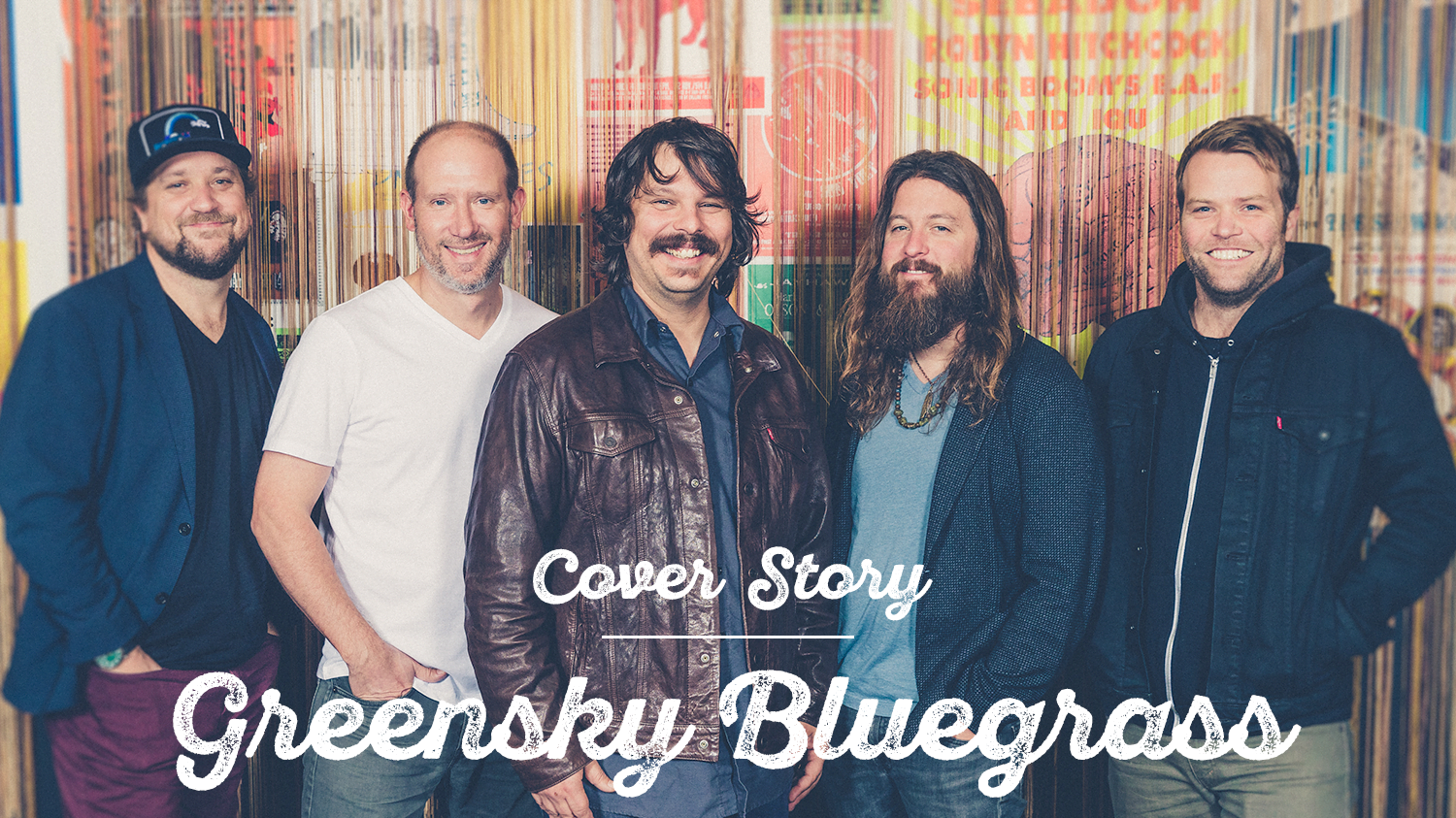
With their progressive mindset and undying faith in the power of the jam, the electrifying live shows put on by Greensky Bluegrass have captivated roots and rock fans alike for nearly two decades – but the Midwestern five piece has always been more than a group of gifted musicians. Layered, thought-provoking songcraft is also a big part of their DNA, and with their new album, All For Money, those two worlds come together like never before.

This month, the band – composed of mandolin player and primary songwriter Paul Hoffman, guitarist Dave Bruzza, banjo picker Michael Arlen Bont, Dobro player Anders Beck, and bassist Mike Devol – embarked on a milestone tour of listening halls that are well suited to showcase both sides of the Greensky Bluegrass double helix, and according to Hoffman, that everything-at-once approach is the next step of their journey.

“We don’t have any grandiose dreams or visions of things we haven’t accomplished,” he says, “and I think it’s been that way for the last 10 years. Being able to go out and play the right venue in all the right towns where we can put on a big show and present everything we do … it’s about getting that to happen everywhere now.”

BGS: You guys were inspired early on by The Grateful Dead, and I hear that improvisational spirit on the new album. Do you feel like All For Money is a return to your roots?

Paul Hoffman: We talk about this album being a lot more like a show than previous records because for us, [studio work and being onstage are] kind of two separate art forms. … With this record we went for the show aspect right from the get-go. It’s a little loose, and a little improvised, and we’ve succeeded with that more and more on every record – finding ways to capture that live spirit but still utilize all the tools available to us in the studio. Like for example, maybe there’s a place where there’s two mandolins at once. We couldn’t do that live, but if it sounds cool on the record, let’s do it.

Tell me about recording in Asheville. What kind of vibe do you guys get there?

We love that town. In the young days of the band we thought we should move there and maybe it would spark our career. We didn’t, and it was probably for the best, but the studio is really cool. It’s like an old church and it’s got a lot of room to work in. All our early records were done in Michigan in this studio that’s really small, and you don’t need a big room or an extra room downstairs with a ping pong table and video games and a kitchen and three couches. You don’t need any of those luxuries, but as soon as we went to [the studio,] Echo Mountain, to record the last record, it was like “Man, this is nice” … and now we probably do need them. [Laughs]

Digging into the live show versus studio album idea, you have a couple of really lengthy songs here. “Courage for the Road” is over nine minutes long, and I get that in a live setting, but why stretch it out for the album?

I think sometimes we’ve found that our fans are separate. Some of them are live music aficionados and don’t really enjoy listening to the records, and some people who like our records come to the show and are like “Why are all these songs so long and psychedelic?” I think there’s a part of us that figures those things don’t need to be separate, and maybe if we did a bit more from both sides of the equation, there’s something there for everybody.

The goal for that song is for it to remain interesting the whole time, and when I listen to it I feel like I’m listening to a well-mixed, well-recorded, live jam. It was so organic with how it happened that it kind of had to be left alone, and I think that translates to the listener as live energy. That’s the thing you sacrifice in the studio if you start overdubbing too much, and that’s when some people complain. What they’re really complaining about is that it loses some of that honest energy and integrity, so those jams should preserve that.

Tell me about the inspiration behind that song. Is this literally about being on the road, or more of a relationship thing?

It’s all of the things. I like to write about multiple things at the same time, and I think it helps. People are gonna read into it how they want anyway. So I’ll often start talking about something and then realize I’m talking about something else, too. It works really well as a simple song about being on tour, but it also works as a song about being in love with someone and not being able to let go, or being obsessed with something for the wrong reasons.

Why might you need some courage for being on the road?

It’s a lonely place sometimes, and that in itself is a paradox. You’re surrounded by people who love you every night, but then the lights go down and the crowd goes home and you’re all alone again. It’s hard to even have an argument for feeling lonely on tour when so many people are coming to see us and support us, but they are real things. And even in general, when you make that commitment to quit your job and leave your family for six weeks at a time, and maybe come home with little to show for it, it’s hard for musicians to keep sticking it out.

Tell me about the song “All For Money” and the interlude in the middle. When you were writing it, were you thinking, “It would be cool to do two minutes of jamming right here”?

Sometimes it comes up in the moment, but with that song it was real intentional. I wanted to explore this idea of the pressure of success and the whole “Be careful what you wish for” kind of thing. Back in the day when we were playing in a bar and all we had to do was win over some fans, in hindsight that’s almost easier than living up to the expectations of all these fans now, who travel and spend money to see us all the time.

They see us a lot so it’s like you’ve got to come up with new tricks and something happened in the last couple of years where it was like the pressure built up. That’s not to say it was too much or that we don’t love it, but it occurred to me that there was a real paradox of success happening where it was like “Man, this is hard!” Sometimes we joke around like “Why don’t they stop following us?!” … Which is absolutely not what we want.

So there’s a joke there, or at least a duality to be explored, and I wanted to set the song up in a way that it’s supposed to get creepy or disorienting, and to make you feel uncomfortable. I talk about being supported but surrounded, contained but captured, and then it comes around to that triumphant chorus that’s all about the love and the songs creating emotion and camaraderie. It goes on this journey of joking around and all these lies we were told in the beginning, and then it gets scary and uncomfortable on purpose. It’s almost supposed to be discomforting, more than a jam.

I love your lyrics, because as you explained there are lots of layers and you’re not afraid to question yourself. What were you trying to get at with “Do It Alone”?

I was trying to touch on this angst-y, rock and roll thing. I wanted something that had an anthem vibe, something a crowd would cheer along with, and again I was thinking about a couple of different things at once. One moment I’ll be thinking about a friend of mine who’s in love with a girl who doesn’t love him anymore, and the next I’m like “Man, I miss my dog.” [Laughs] Sometimes really specific lyrics about really different things can help you get some insight into that other thing.


Photo credit: Dylan Langille/ontheDL Photo
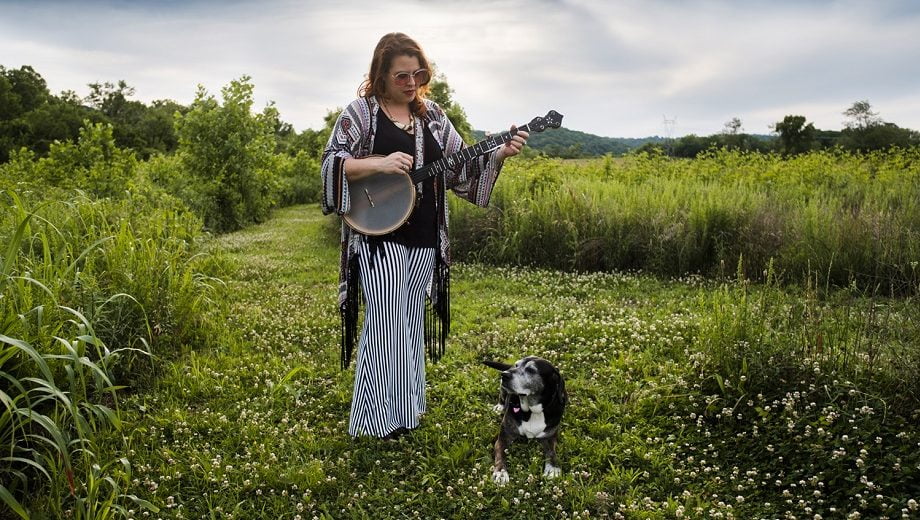
LISTEN: Ashleigh Caudill, “The Road Rolls On”

Artist: Ashleigh Caudill
Hometown: Nashville, Tennessee
Song: “The Road Rolls On”
Album: The Road Rolls On, Songwriter Sessions Volume II
Release Date: February 1, 2019

In Their Words: “Life is pretty uncertain and there aren’t always neat endings to the stories that make up our lives. You never really know what’s coming next and sometimes things don’t turn out the way you planned, but the wheels keep turning and the road rolls on. In that spirit, this track was captured live at Sound Wave Studio by engineer and co-producer Daniel Rice. I played guitar and sang, along with John Mailander on the fiddle and Colin O’Brien on the percussive dancing. I overdubbed the upright and electric bass later on.” — Ashleigh Caudill


Photo credit: Scott Simontacchi

Kaia Kater’s Banjo Carves a Space and Opens Doors on ‘Grenades’

Sometimes self-exploration doesn’t yield the answers we seek. For those patient enough to keep prodding, the real truths emerge in the process, rather than the culmination of examining who we are. Kaia Kater learned as much on her third album, Grenades, which stretches across generations, hemispheres, and textures, and left the singer-songwriter “swimming in her own shadow.”

Born in Canada, Kater grew up hearing about her father’s life in Grenada before he fled at age 14 when the United States invaded the small island country in 1983. As a result, a part of her always existed in a land that lay far away. With the banjo as her guiding force on Grenades, Kater strings a tightrope between her Canadian sense of self and her Grenadian heritage, in order to find a balance between those two poles.

Why did it feel like the right time not only to turn inwards, but to seek a connection back through the generations?

I think it was a multitude of things. I’d been two years out of school, and I found I had more time and space. I’d also had more conversations with my dad, and at a certain point he was like, “You’ve got to go back. You can’t keep putting it off. You’ve got to do it.” I came to agree with him. What started this whole thing is last Christmas I interviewed him in the basement of his house about growing up in Grenada and coming to Canada as a refugee.

And at the age of 14.

I know! It’s kind of crazy. I was 24 at the time I was interviewing him, so just to think about where I was at 14 — it’s kind of terrifying to think about becoming an adult that quickly. It’s kind of unbelievable. But he didn’t really talk about it a lot. I think that’s the thing, people do extraordinary things in order to lead very normal lives.

That’s a beautiful way to put it.

Yes, it’s the story of immigration and the story of refugees. I don’t think my dad ever hid his story, but I don’t think he ever thought it was an extraordinary story. He thought it was his path on the way to doing what he wants to.

It’s fantastic, then, that in addition to fitting your own voice into this musical genealogy you were able to include his voice three times on this album.

Those were from those interviews at Christmas. So much of the music and the emotion was born from that conversation that it felt like an imperative for me to include them. They were not only contextualizing the music, but they were also serving as these light posts for a pretty complicated storyline.

You’ve described Grenades as a lifeline to the South, and yet you grew up in the North. North and South have long existed as such stark dichotomies. Do you think, speaking about your identity, reconciliation is possible, or have you come to accept that there will always be a tension?

I do think it’s like being a hyphenated Canadian. I think there’s a certain cognitive dissonance that happens. This album is really great because it’s given me the space and the time to start to talk to more first and second generation Canadians about “What does being Canadian mean?” In comparison to Grenada, which is 95 percent black, Canada is a multi-ethnic place. It is richer for that. We acknowledge the richness that comes with diversity, but I think it also creates these problems of identity.

I have a friend whose parents are Ghanaian. She’s black and she grew up going to a Ghanaian church in Toronto, and then she went back to Ghana after she got her journalism degree. She was faced with this thing of like, “I have Ghanaian roots, but there’s a part of me that…my accent and the words I use are very Canadian.” I feel a little bit all over the place. Even the nature of exploring all these things is how I feel about it, which is like, I haven’t particularly arrived to a conclusion.

Nor should you. That’s the beauty of any creative form—it allows you to keep exploring. Turning to the album itself, you said you wrote the songs across winter and summer?

I started writing this album really in earnest after I’d had that conversation with my dad at Christmas. Then I went to Grenada in April, and obviously it’s very warm and it’s very beautiful, so it did feel, more than the natural course of the seasons in Canada, like I went suddenly from winter — this gray March — to summer. That’s why I feel it as this change between seasons, but also like we’ve been talking about, it’s a change in hemisphere too.

When it came time to stitch those halves together, what was the process like?

I challenged myself to write all original music on this album. I knew that in order to do that, I would have to push myself and get really analytical with my work. Just changing my environment and going to Grenada was a great help because it brought out different words and melodies and expressions. If all the songs were color-coded in my head, and one is blue for winter and yellow for summer, I can see them that way.

Of the arrangements on the entire album the three that most stand out are “Canyonland,” “The Right One,” and “Poets Be Buried.” Speaking of the latter, the beautiful slow-burn brass is exquisite. How did that unfold?

At this point, I should really credit my wonderful producer, Erin Costello. She is an artist herself; she’s actually releasing a record right around the same time as me. Keyboard is her main instrument, so she works mainly in R&B and soul, but she dabbled a lot in electronic music, and has a Master’s in composition. I feel like her musical tastes are really broad, and she really doesn’t shy away from a challenge, which is why I enjoyed working with her. And it’s also nice to be working with a woman.

I was going to say!

So many of them are men, so it’s nice to have a change of energy. She lives in Halifax. We recorded the album in Toronto, and the next day we flew to Halifax with the hard drive and mixed it there. I’d expressed that “Poets Be Buried” needed something more, and so the brass was actually the last musical piece that we added to the entire album before we mixed it. It was amazing. She had these players come in for an afternoon, and she wrote up the parts in 15 minutes. It sounded beautiful. It’s just French horn and trombone.

If you had to define the banjo’s power as an instrument and storyteller, what would it be?

The banjo has a very ancient quality, and I think especially when it’s played percussively like the clawhammer style, it can bring you into this trancelike, dreamlike state. I’ve found that with traditional music a lot, especially in a jam situation. It’s everybody playing the melody and chording all of the time — it’s not solo-based. When you’re in a jam, you get this trancelike quality where you’re playing this A/B pattern 50 or 60 times. I think the banjo lends itself well to this trance of storytelling. It brings me this inner peace that’s pretty indescribable. I think that’s why I was so attracted to it and why I’ve written on it for so many years.

I read that you play two or three banjos, but your grandpa made one for you?

Yeah, I’m looking at it now on my wall.

If we’re talking about generations, and how your new album encompasses all these different stories, that connection to your grandfather brings it to a whole other visceral level.

I hadn’t thought about that; that is a good point. It’s funny, at the risk of sounding too cheesy, it’s been a guiding light in my life. It’s opened the doors to so many things — not only studying in Appalachia, but also writing things that I may have been too scared to say openly. It’s a really beautiful instrument and a powerful one.

In the liner notes, you remark, “Here’s to swimming in your own shadow.” In dealing with your father’s voice and other generations, how did you create the space for your voice in the midst of intertwining these other narratives?

I think I still am. In the same way when we were talking about northern and southern hemispheres, I think that’s an ever-evolving question for me. For a long time, I’ve had an existential anxiety about having two sides to my family who both have very strong people and very strong narratives, and thinking, “Where do I fit in this picture?” That’s why I create albums, so I can give myself the time and space to explore that.

I’ve put Grenades out, and now I’m going to get to know what it’s about. The “swimming in your own shadow” thing is about getting comfortable essentially with being uncomfortable, and with having a lot of conflicting narratives, and trauma that comes from war or from being biracial, or from being a woman in the world, which people are really starting to talk about. It’s my own way of dealing with that. The album is me carving out that space for myself.


Photo credit: Raez Argulla

BGS 5+5: Rachel Sumner

Artist: Rachel Sumner
Hometown: Lancaster, California
Latest album: Anything Worth Doing
Personal nicknames (or rejected band names): No nicknames, but strangers universally call me “Rebecca” when they can’t remember/don’t know my name.

Which artist has influenced you the most … and how?

My original background is in classical music and composition. When I started playing guitar it was primarily because of my affection for bluegrass music, which developed after hearing the Smithsonian/Folkways Pioneering Women of Bluegrass album by Hazel Dickens & Alice Gerrard. Because I was introduced to that music only a handful of years ago, I still find myself being exposed to new artists who influence me in very significant ways.

One artist whose work I consumed and who’s had what I would consider a major influence during the creation of my new album is Anaïs Mitchell; musically, of course, but I also have been inspired by her trajectory through varying genres and projects, everything from reinterpretations of traditional ballads to extended narratives, to writing a successful folk opera turned Broadway show. I still can’t believe that. She’s amazing.

What other art forms — literature, film, dance, painting, etc — inform your music?

Paintings and poetry are probably the most informative non-musical mediums to me. One of my favorite places on earth is the Museum of Fine Arts, Boston (MFA). I used to visit almost every week while I was in college. I had the most incredible art history professor while I was a student at Berklee — his name was Henry Tate and he used to be the curator at the MFA. Henry made it his mission to show his students the parallels between painting and writing music: we learned how artists guide the viewer from the beginning or “entrance” of the painting along a particular path, all by manipulating placement and color.

When I sit down to write, I often think through those terms and techniques and notice similarities between the two mediums — songwriters can also create paths in songs for listeners to take, and they don’t necessarily have to be linear. Poetry activates me in a similar way. Sometimes I find a really good poem that feels like a familiar and forgotten thought; something I thought about once but couldn’t express myself. Jack Gilbert is a current favorite, and in fact his poem “Failing & Flying” inspired my song “Anything Worth Doing.”

What rituals do you have, either in the studio or before a show?

When we were about to record the first Twisted Pine album, I thought it would be really fun to record the entire thing in my pajamas just so I could listen back and think, “Gee, I made that in my PAJAMAS.” We ended up filming the sessions, so I settled for wearing my slippers. Now I always record in my Studio Slippers.

Which elements of nature do you spend the most time with and how do those impact your work?

I’m a Southern California transplant living in New England, and I’ve lived here as long as I’ve been writing songs. Something new to me, that I spend a lot of time either enjoying or warring with, are the seasons. I’d never experienced the full spectrum of seasons before moving east. In Lancaster, California, we essentially just have summer and winter, and winter there is barely comparable to winter in New England. There is nothing like seeing fall in full swing in Western Massachusetts and Vermont. Nothing. There is also nothing like the thawing feeling you get when the first beautiful spring days arrive after harsh, snowy winters. I like the winters, though. I find the theme of seasons comes up a lot in my writing, generally as a reference point for the listener.

Since food and music go so well together, what is your dream pairing of a meal and a musician?

Since I live on the opposite coast from where I grew up, I don’t have the pleasure of indulging in my grandmother’s tamales nearly often enough. And at the top of my list of musicians who I haven’t seen live but would love to is Joanna Newsom. Her music and language are so vibrant and delicious — so are my grandma’s pork tamales. So, I can’t imagine a dreamier paring.


Photo credit: Louise Bichan

BGS 5+5: Rachel Baiman

Artist: Rachel Baiman
Hometown: Nashville, Tennessee
Latest album: Thanksgiving EP
Label: Free Dirt Records
Personal nicknames: “Baimo” (from my guitar player Cy)

What other art forms — literature, film, dance, painting, etc — inform your music?

Literature is a big influence on my writing. One of the first songs I wrote, “Weight of the World,” is based on an amazing scene from the book Cold Mountain. While I’m driving I like to listen to The New Yorker Fiction podcast; short stories are great for writing songs because they are small windows into a particular scene, situation, or world – kind of the same amount of story that you can fit into a song.

“Throw Away the Moon,” a song I wrote with Caroline Spence, is based on a crazy short story I listened to in which the people had decided that the moon was looking too old and scuffed up, so they got a crane to take it out of the sky and replaced it with a new, shinier model. Poetry is big for me, too. I’ve written two songs based on poems: Sylvia Plath’s “Mad Girl’s Love Song” and Ishmael Reed’s “When I Die I Will Go to Jazz.” Reading fiction helps me to see the world around me as a million different stories and characters, to hear phrases and thoughts as song lyrics.

What’s your favorite memory from being on stage?

I was just reminded of this great stage memory from a show I did in Washington DC many years ago with Christian Sedelmyer as 10 String Symphony. We were in the middle of a song on which Christian sang the lead vocals. Suddenly he starts hacking and coughing…misses half the verse and finally we finished the song. Christian said to the audience, “I’m so sorry, there must have been some dust on this mic or something,” and the whole audience yells out, “It was a moth!” So he had swallowed an entire moth in the middle of the song. We told that story fondly for many subsequent shows.

What rituals do you have, either in the studio or before a show?

I have a pretty strict tour regimen. When I’m touring my own trio I have to be really careful with myself to make sure that I can operate at 100 percent and play a good show every night. I’m in charge of everything–schedule, driving, booking accommodation, writing set lists, selling merch, making sure everyone is well-fed and in a good mood–so it feels a little bit like being an endurance athlete.

I don’t drink almost at all on tour. I don’t even drink coffee unless it’s one of those three-hours-of-sleep nights and I really need it. I stick to green tea. I try to get plenty of sleep, go running every other day, and eat a ton of Rx bars. Then when I get home I feel like I can relax and party a little bit. I generally party a lot more at home than I do on the road, which is probably not what most people would expect.

Since food and music go so well together, what is your dream pairing of a meal and a musician?

An awesome pairing of food and music can be found at Plaza Mariachi in Nashville. My friend Alexa Voytek introduced me to this spot; she’s always got her finger on the pulse of something really interesting and fun. Plaza Mariachi is big, open-court mall celebrating Latin American culture. There are tons of great food stands, bars, and in the middle of the mall, traditional music and dancing. Friday is Mexican cowboy night and you can bet it’s a hell of a time.

How often do you hide behind a character in a song or use “you” when it’s actually “me”?

I don’t usually hide the “me” because I think it’s all too obvious to the people for whom it would matter, but I have definitely written songs about other people and tried to hide it. I think that all songwriters do, we have to write about emotional situations, and you can’t always say to people what you actually think about their lives, nor would they want you to.

Sometimes you write about somebody as you see it, and you could be completely wrong, but it still makes for a great song. At the end of the day, the feelings are merely fuel for the creative process. The song goes through so many iterations and then it becomes a piece of art all on its own. It shouldn’t really matter who it’s about or how accurate it is to that person, but rather how it rings true as a song or statement of its own.


Photo credit: Gina Binkley

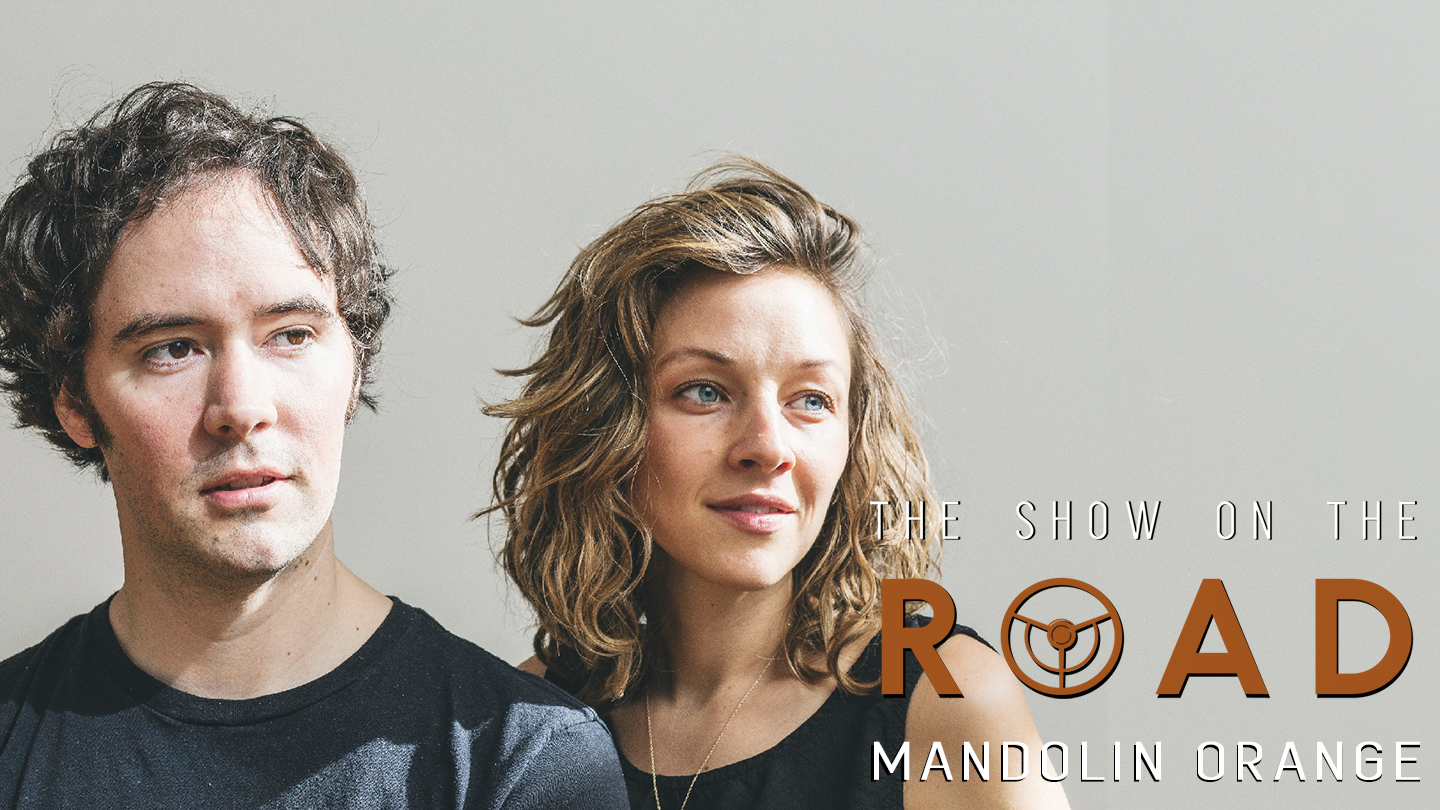
The Show On The Road – Mandolin Orange

For nearly ten years, Mandolin Orange, the North Carolina folk duo comprising of Andrew Marlin and Emily Frantz, have made their quietly powerful, deeply-entwined harmonies sing out from stages around the world, Red Rocks to Newport Folk Fest.

LISTEN: APPLE PODCASTSSTITCHER • MP3

Host Z. Lupetin talks with Emily and Andrew about how discussing Andrew’s southern family history and politics can be like fighting wildfires around the dinner table — and how Emily’s morning running routine has made her more in tune with each new city she arrives in on tour. Make sure you stick around to end of the show where Andrew and Emily play an exclusive performance of “That Wrecking Ball”.

Song – “That Wrecking Ball”

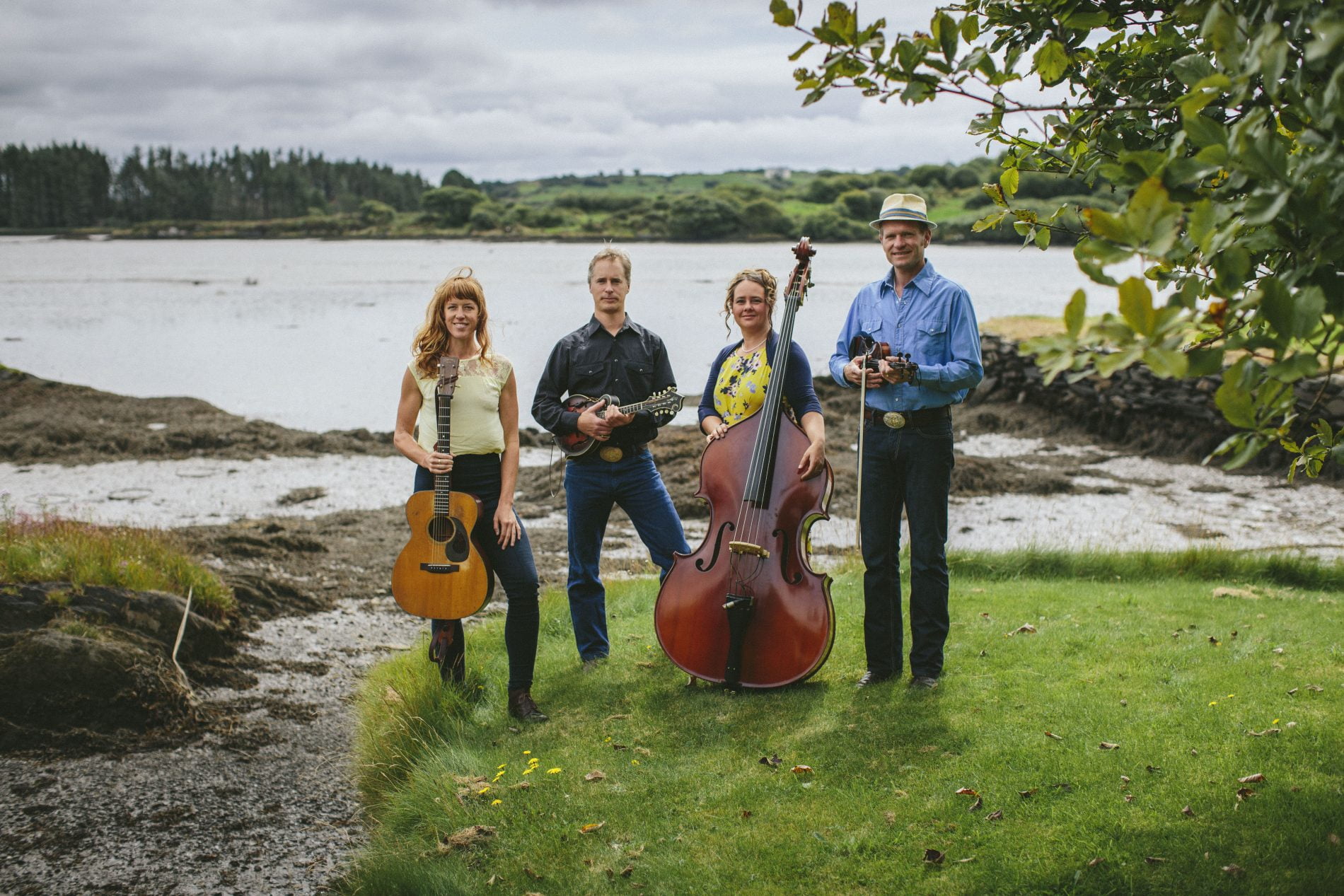
WATCH: Foghorn Stringband, ‘Reuben’s Train’

Artist: Foghorn Stringband
Hometown: Portland, Oregon; Pointe-à-la-Croix, Quebec
Album: Rock Island Grange
Song: “Reuben’s Train”

In Their Words: “‘Reuben’s Train’ is the first track on Foghorn Stringband’s newly-released album, Rock Island Grange. A classic in the bluegrass and old-time worlds, our version has influences from every version we’ve ever come across. It contains all the elements of the typical bad man ballad, from adultery to a train wreck to explosive dismemberment! The video was recorded last September in Santa Paula at the Deep End Sessions in front of a lovely and very lively audience. It has always been a favorite of ours to play live and we are excited to finally have captured a version of it on record!” — Foghorn Stringband


Photo credit: Emma Jervis

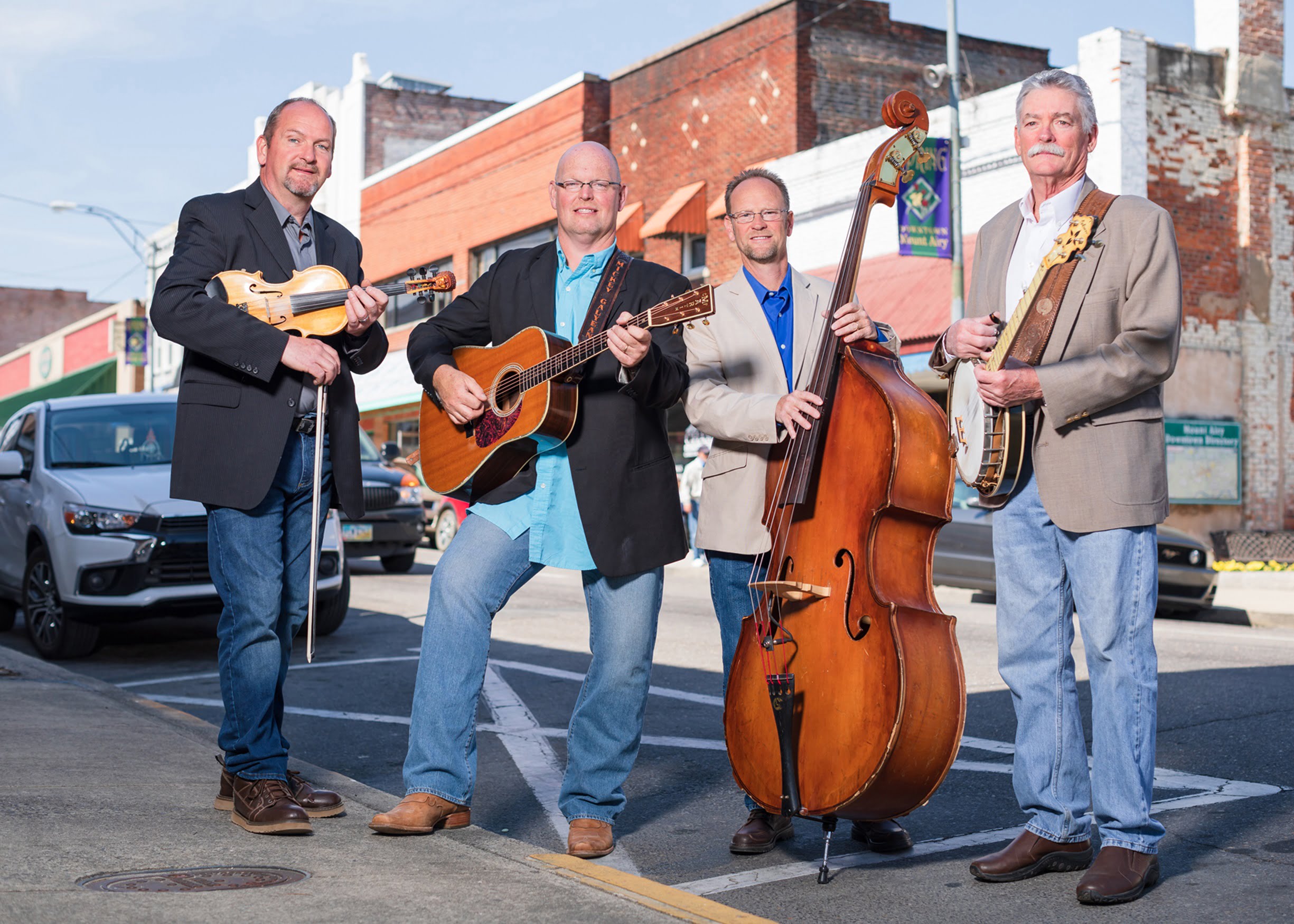
LISTEN: Mickey Galyean & Cullen’s Bridge, “Now I’m Losing You”

Artist name: Mickey Galyean & Cullen’s Bridge
Hometown: Lowgap, North Carolina
Song: “Now I’m Losing You”
Album: Songs from the Blue Ridge
Release Date: November 16, 2018
Label: Rebel Records

In Their Words: “I started writing this song one night while sitting in a snowstorm in my truck. I was thinking about missing my beautiful wife. Then it took on a fictional turn of a ‘lonely wife leaving’ type song. My father, the late Cullen Galyean, used to tell me stories of writing his songs this way. I was listening to a lot of Junior Sisk at the time and kinda kept his groove in the song. Or at least tried to. Junior is a great friend and one of my heroes.” — Mickey Galyean


Photo credit: Richard Boyd

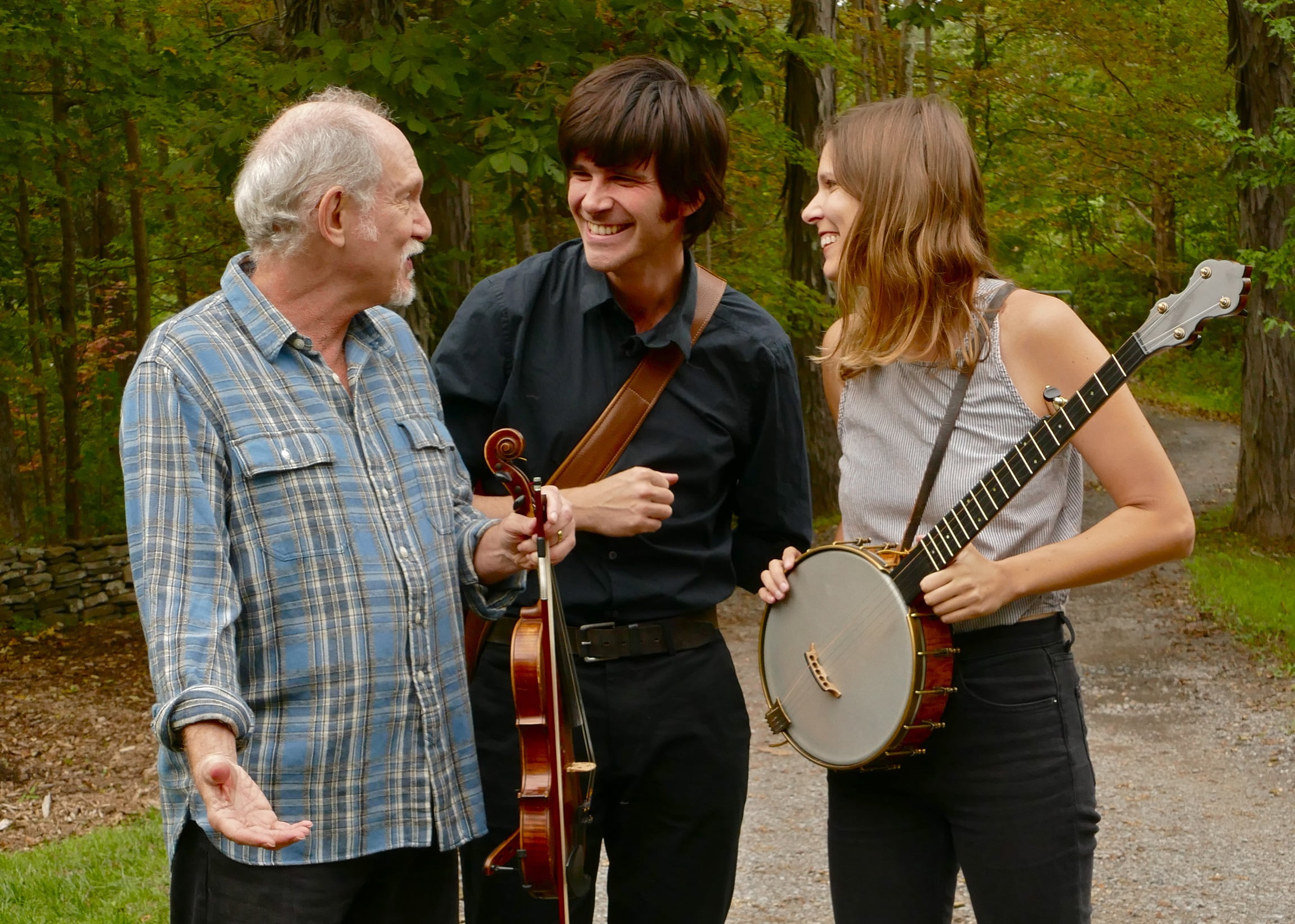
LISTEN: Molsky’s Mountain Drifters, “There’s a Bright Side Somewhere”

Artist: Molsky’s Mountain Drifters (Bruce Molsky, Stash Wyslouch, Allison de Groot)
Hometown: Boston, Massachusetts / Beacon, New York
Song: “There’s a Bright Side Somewhere”
Album: Closing the Gap
Release Date: February 22, 2019
Label: Tree Frog Music

In Their Words: “It started while on tour in Australia last year when Molsky’s Mountain Drifters were asked to lead a multicultural musical workshop at the wonderful Woodford Folk Festival, for all to join in a piece of music together. The band wanted to present a musical setting that offered a spark of hope and optimism in troubled times, something both beautiful and accessible that could bridge across cultures. I remembered one of my favorite songs from the great Reverend Gary Davis that I used to love and try to play as a teenager, ‘There’s a Bright Side Somewhere.’

The band got to work–changing it from Reverend Davis’ very personal bluesy guitar rendition into a fiddle/banjo stringband rendition with harmonies that everyone could sing along with. It energized the event, so much so that we have decided to include it on our second record. We’re really excited to release this song as our very first single as well.” — Bruce Molsky

https://soundcloud.com/user-746930522/theres-a-bright-side-somewhere/s-V7czs


Photo credit: Amy Fenton-Shine

LISTEN: Crooked Still, “I’m So Lonesome I Could Cry”

Artist: Crooked Still
Hometown: Boston, Massachusetts
Song: “I’m So Lonesome I Could Cry”
Album: Crooked Still Live At Grey Fox – July 16, 2006
Release Date: November 9, 2018 (vinyl reissue)
Label: Signature Sounds

In Their Words: “When we played Grey Fox back in 2006 we felt like we had really made the big time! This live recording caught an amazingly true snapshot of the band at that moment in time. Crooked Still had first played ‘I’m So Lonesome I Could Cry’ at the Cantab Lounge, the iconic bluegrass dive bar in Cambridge, Massachusetts, where we used to gig in the band’s earliest days. (Bluegrass night at the Cantab is still going strong, by the way.) Aoife O’Donovan and Heather Masse (The Wailin’ Jennys) used to sing it, along with so many other terrific duets they worked up while they were in college together. This live Grey Fox version doesn’t have Heather on it, of course, but it has plenty of other things going for it. We’ve come full circle by finally releasing it on vinyl!” — Greg Liszt


Photo credit: Aaron Farrington