WATCH: Amanda Fields & Friends, “When We’re Gone, Long Gone”

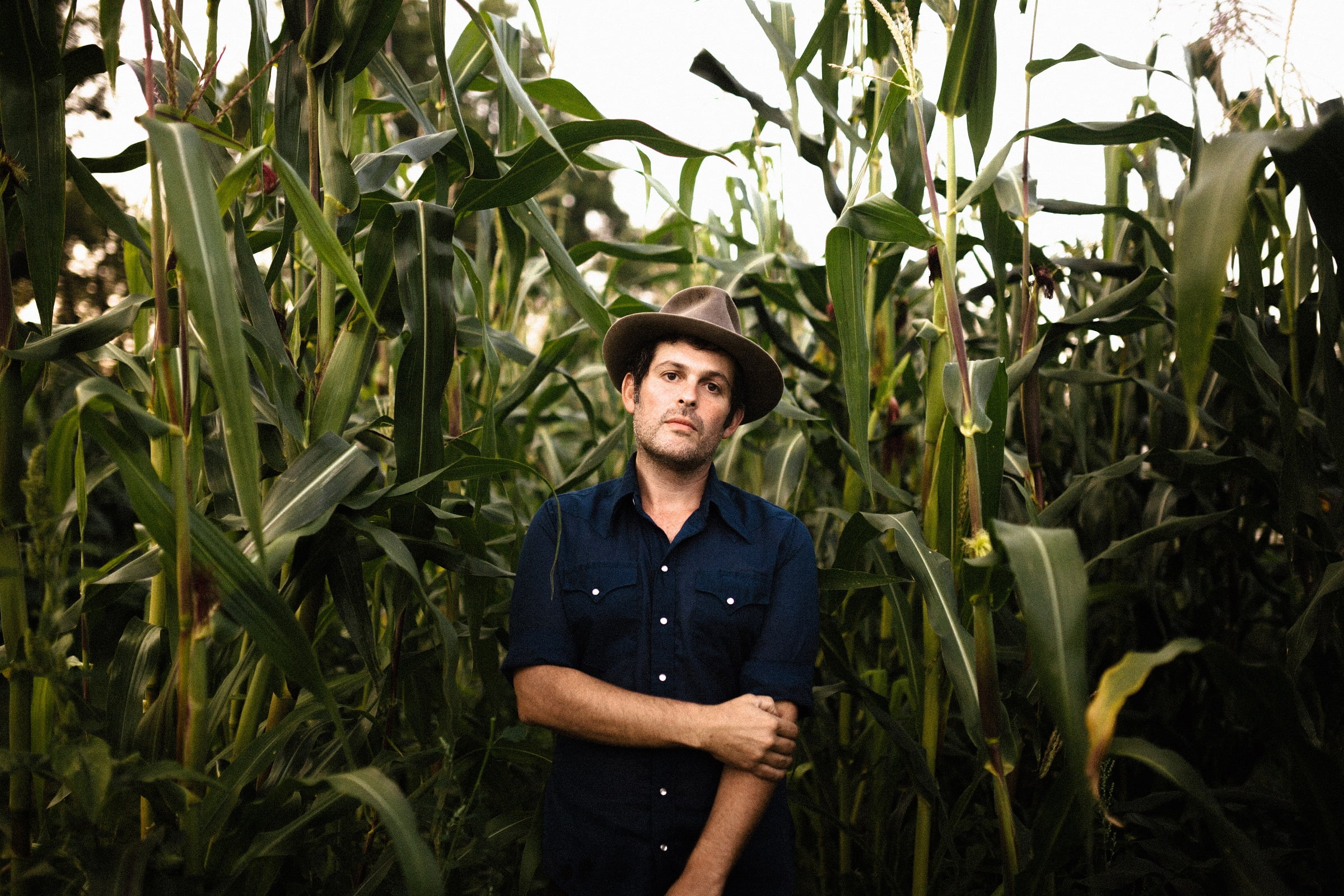
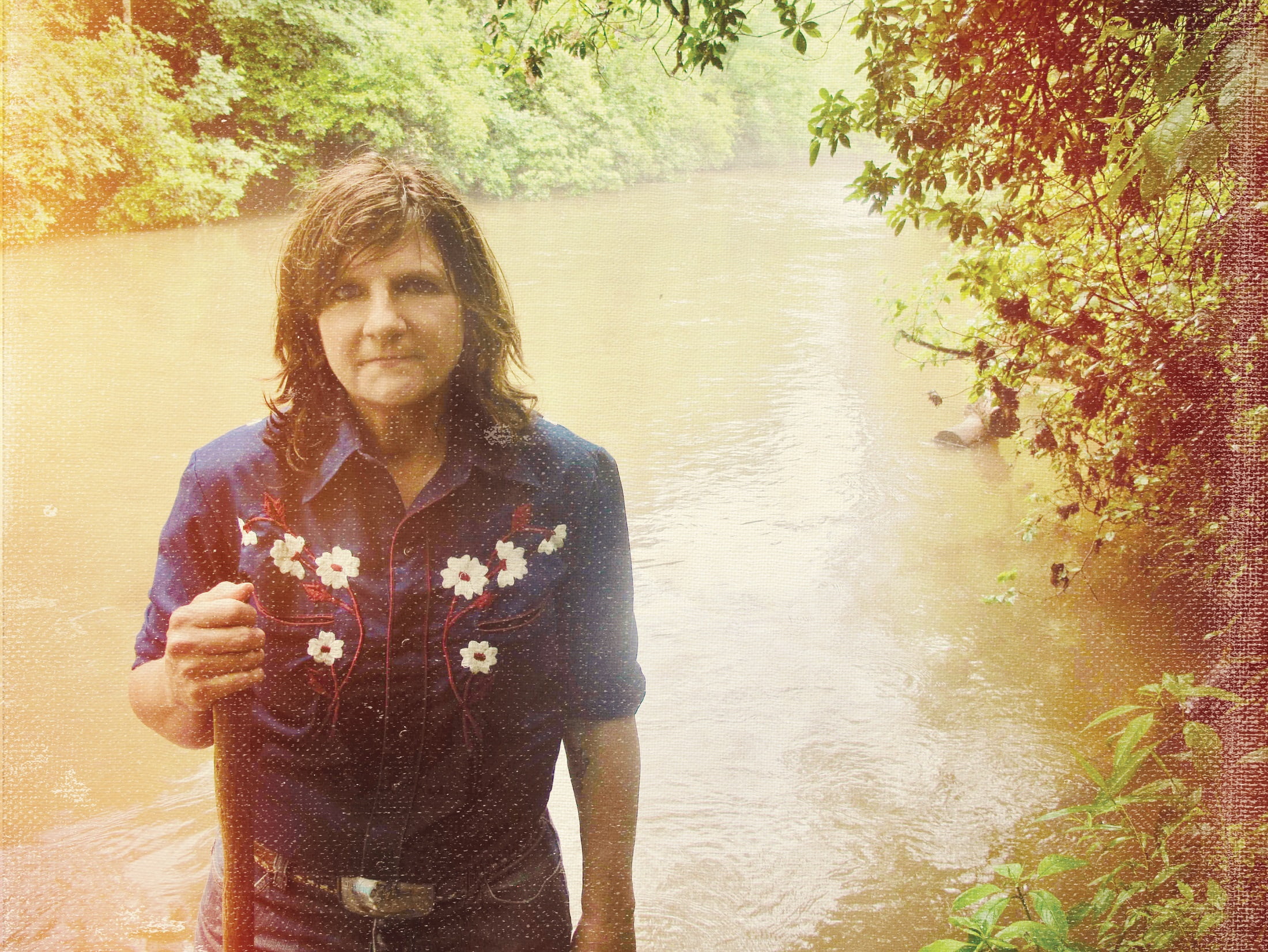
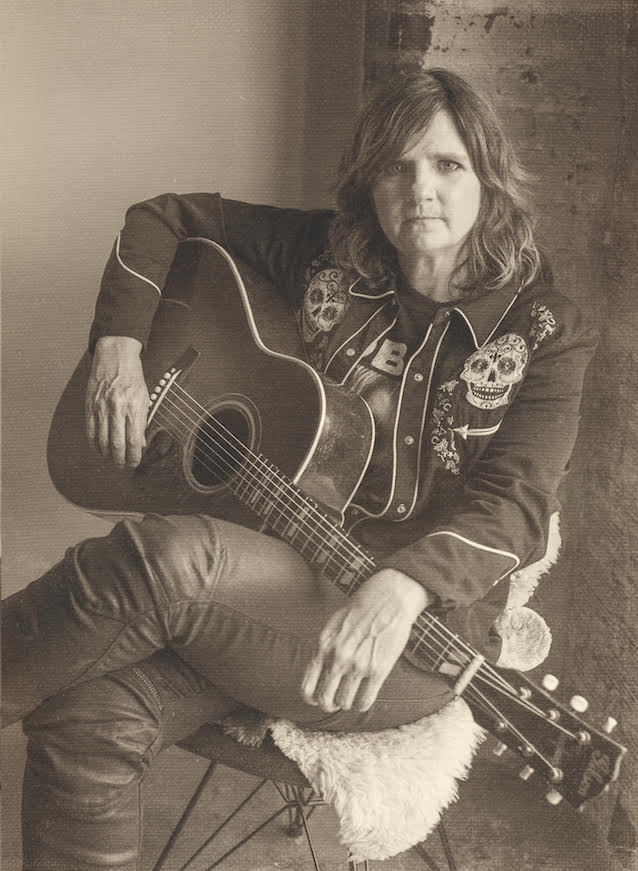
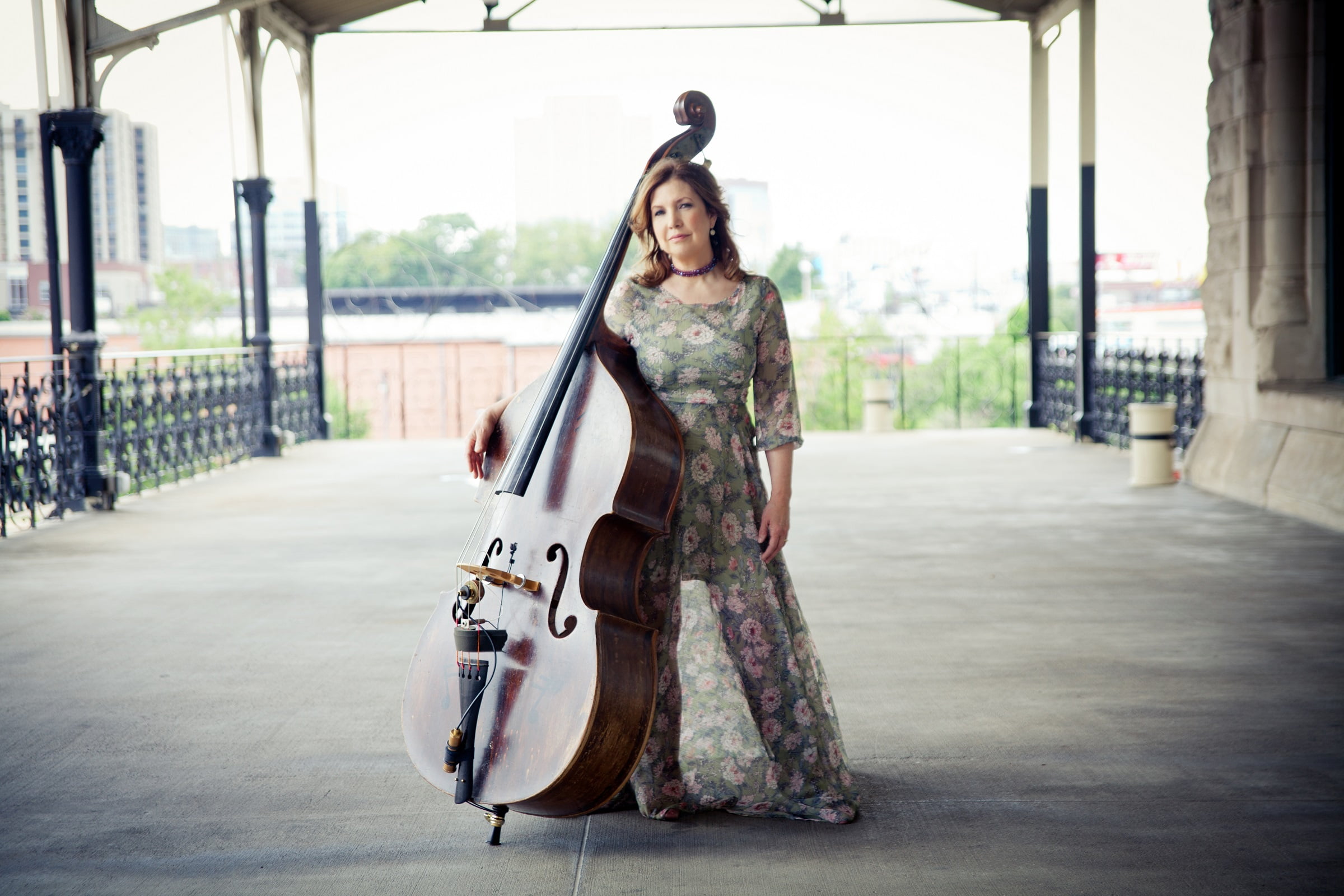
Artist: Amanda Fields & Friends
Hometown: Nashville, Tennessee
Song: “When We’re Gone, Long Gone”

In Their Words: “I was going through a difficult time at the end of this past summer and I thought that doing something creative with my friends would lift my spirits. I called Nathan Shuppert (director), and fellow musicians Jenni Lyn Gardner (mandolin, vocals), John Mailander (fiddle), and Ashleigh Caudill (bass, vocals), who all jumped on board with the idea of capturing a performance of the sweet song, ‘When We’re Gone, Long Gone,’ written by the O’Kanes. From my perspective, this video documents the healing power of music and friendship.” – Amanda Fields


Photo Credit: Allen Clark

WATCH: Dillon Carmichael, “It’s Simple”

Artist: Dillon Carmichael
Hometown: Burgin, Kentucky
Song: “It’s Simple”
Album: Hell on an Angel
Release Date: October 26, 2018
Label: Riser House Records

In Their Words:  “My co-writers and I all grew up in very small towns. We wanted to write a song about how we appreciate our childhoods and what life was like then. Things can get so complicated, but it’s the little things that impact our lives so much. We wrapped up that write that day, all of us knowing we had something special.” — Dillon Carmichael


Photo credit: Cameron Powell

MIXTAPE: The Brother Brothers, Tunes to Get Us Down the Road

If you’ve looked at our tour schedule recently, you’ll notice that it’s jam-packed, and each place is hours from the next. One of us will be on driving duty and the other on the tunes/podcasts. This is a list of tunes that have found their way onto our speakers in times of natural serenity, boredom, inspiration, or just plain “Ooh, I want to listen to that song.” They consist of friends, heroes, and people we admire — if it were all of them it would go on for hours. Here is a quick list for now, and it may get longer by the day.

“Ditch” – Sam Baker

There are many modern songwriters that can spin a story that makes the listener feel like they’re living it, but Sam is really one of the coolest and relaxed. Every time I hear one of his songs I feel like I’m remembering a dream I’ve just awoken from.

“Dad’s Gonna Kill Me” – Richard Thompson

Needless to say that Richard is one of the most influential songwriters of all, and this is a song that has really hit me hard recently. Songs of fighting war are a common theme in songwriting, and this one is very effective.

“Katie Dear” – The Blue Sky Boys

When you do research to learn harmonies, you stop here.

“Down in a Willow Garden” – The Kossoy Sisters with Erik Darling

Boy is this just good and in the way like not much else.

“Willie O’ Winsbury” – Anne Briggs

I remember the first time I heard this version. I’d listened to many others before and then the clouds parted but the rain kept pouring down and I was in heaven

“If You Ain’t Got Love” – The Revelers

What is there to say about the essence of country? This is where it lies for me. It is kind of the perfect song.

“Tired of Your Tears” – Feufollet

After attending the Black Pot Festival in Lafayette, LA we heard this band. To describe a better time listening to music would be very few and far between. What a great dance band and group of musicians

“Diggin’ Holes” – Brent Cobb

There are very few times that you hear a song and decide it’s time to quit music because you could never be as clever or sincere or capture a feeling to its core as Brent does in this song. I hate how good this song is.

“Fool Me” – Buck Meek

Listening to Terry Allen and Michael Hurley is one thing, and our pal Buck does it so very well with this song. It’s so perfect.

“Jonathan” – Adrianne Lenker

There are times that I sit down to write a song and just can’t because this song haunts me. It is the stars I am shooting for.

“Take Me Back” – Sarah Jarosz

We had the wonderful opportunity to do a bunch of opening shows with Sarah and this is the song that has stuck with me all this time. I wake up with it sometimes and can’t seem to get enough of it.

“Cosmic Doo Doo” – Blaze Foley

What can I say, but how great is this song?

“Real Peach” – Henry Jamison

He doesn’t remember how, but Adam found out about Henry, and we listened to his album every day in the car for weeks. It’s so good.

“Ain’t That Bad” – Timmy the Teeth

This is just a hit and I love the sentiment. His voice and the vibe and the words, it just is the butter that makes you want another.

“Emmylou” – First Aid Kit

We heard three different bands cover this song before we checked out the original. Then we listened to it over and over again. It’s just one of those earworms that gets in both ears.

“The King’s Shilling” – Karan Casey

When you visit Scotland and the UK you just end up falling in love with it all, and this is one of my favorite songs I’ve heard that isn’t twenty minutes long.


Photo credit: Erika Kapin

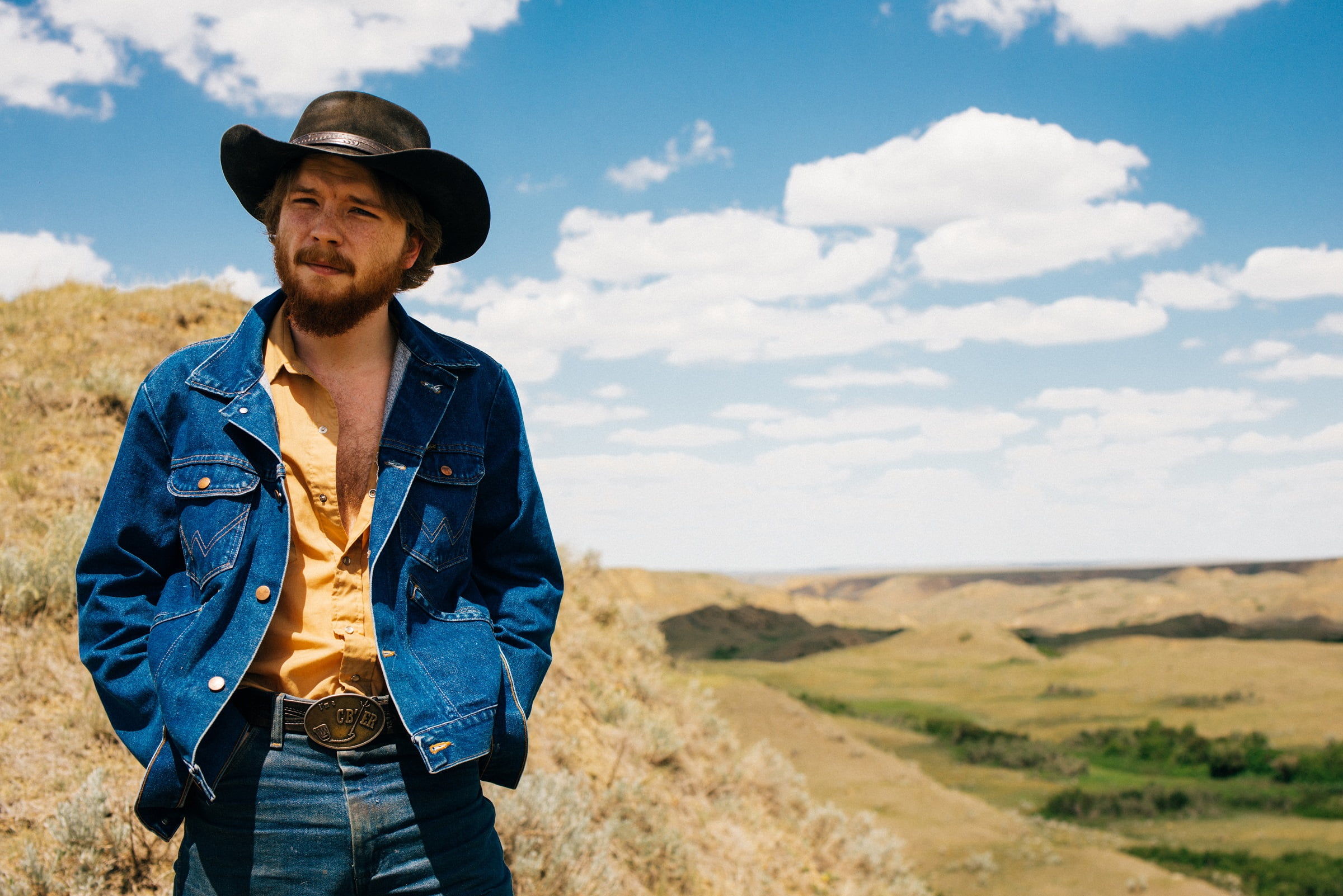
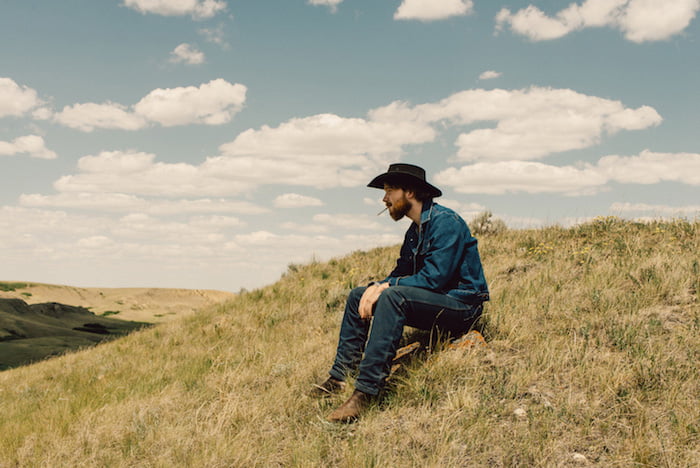
Colter Wall Revives Western Country on ‘Songs of the Plains’

He’s only 23 years old, but Western Canadian musician Colter Wall has created an album which echoes through time with Songs of the Plains.

A traditional Western love letter to the wide open, often-frozen prairies of his native Saskatchewan, Wall’s sophomore project once again highlights booming baritone vocals and an appreciation for historic sounds – but it’s more living artifact than relic of the past. Mixing originals in with covers of Canadian classics like “Calgary Round Up” (by Wilf Carter), “Night Herding Song” and “Tying Knots in the Devil’s Tail” (both cowboy traditionals), its 11 tracks feels as fresh as the first wildflower bloom of spring.

Dave Cobb produced Songs of the Plains, with Canadian country stalwarts Corb Lund and Blake Berglund joining harmonica great Mickey Raphael and pedal steel legend Lloyd Green as guests. But it’s Wall’s youthful enthusiasm for the genre – and his timeless approach to song craft – which stands out. He spoke with The Bluegrass Situation about his love for Saskatchewan, working with his heroes and what it’s like recreating a good-old-fashioned campfire song.

You grew up in Saskatchewan, and Songs of the Plains is very much a Western album. What makes a life out West different? Why does it lend itself to inspiring its own genre?

That’s a great question. Just like any place, the people have an entirely unique culture, and we have our way of doing things, our own way of talking and our own way of telling stories. When I think of the West, because of its history and because of the way people romanticize it, it’s sort of a land of myth. It’s a land of harsh realities and a sort of mythos – one of wild, tall tales. And it’s been painted in a lot of different ways, often by people who aren’t actually from that part of the world.

Not many people are doing this kind of music anymore. How did you get turned on to traditional Western music, especially being such a young guy?

Well I’m just a huge fan of traditional music in general and have been for a long time. … I love those old tales and folk songs and how they’re so rooted in people, being passed down from year to year, changing and shifting over time. I’ve always been fascinated by that. Probably the first cowboy songs that I heard and really dug – and tried to learn – were done by Ramblin’ Jack Elliot, who was notorious for doing cowboy and Western songs, but he played folk music from all over. He would also play Blind Lemon Jefferson songs and Woody Guthrie songs, bluegrass traditionals, country traditionals, and then those old cowboy songs. So I had been listening to his catalog and stuff like Jimmie Rodgers and from there I started to dive down the rabbit hole and discovered all the greats like Marty [Robbins], Tex Ritter, and all those guys.

I really love the opening track, “Plain to See Plainsman.” It seems like autobiography, so what did getting away from home teach you about it?

The short answer is that distance makes the heart grow fonder. I had always loved Saskatchewan, but I didn’t realize how much until I moved down here [to Nashville] and started to travel around a lot. I think I became more interested in our history and culture. Before [moving] I was aware of it, but maybe not trying to actively learn about it and write about it.

“Saskatchewan in 1881” speaks right into that history, right? It’s kind of a warning to a city slicker from Toronto about what he’ll find if he comes West looking to get rich. Why did you set the story in 1881?

That’s my take on prairie humor. The 1880s are when they first started to ship people out to the Western Provinces – and they weren’t even provinces yet, they were territories. The people in the cities back East had just realized that we had all these natural resources out West, so they started surveying the areas and sending people out to settle them. That started in the early 1880s, so the premise was to tell in a humorous way about the lives of people and what life might have been like back then, having to deal with all the frustrations of frontier life. It’s kind of a regional joke.

You’ve got Mickey Raphael and Lloyd Green on this album, and they add so much Western flavor. What was it like bringing those guys on board?

I had known I wanted Mickey to play on the record long before we went into the studio. I had met him probably a year ago at a show where he was part of the house band, and I was already a huge fan. I think he’s the best harmonica player in the world. Since then he’s been really nice and supportive and kept in touch, so that was just a matter of waiting to get in the studio.

With Lloyd, I have to be honest. I wasn’t even aware he was still around. I told Dave [Cobb] I wanted some pedal steel, and he said ‘Why don’t we get Lloyd Green?’ My eyes about fell out of my head. So we called Lloyd and sure enough he came down. I helped him carry his stuff in, then I got to hear him play pedal steel on my songs for about an hour – which was pretty incredible – and then after that I got to listen to him tell stories about playing with [George] Jones and [Johnny] Paycheck, all these legends. It was surreal.

The power and depth of your vocal has always stood out. Does it still surprise people?

The most common thing I get is ‘How old are you?’ And I tell them, and then there’s always some surprise there.

When did you notice you had this deep, timeless baritone of singing voice?

I’ve been working at it for a long time. When I turned 18 I had been trying to sing, and it wasn’t really working out, but I realized I could sing low a little bit in the baritone register. It felt natural, so I kept doing it, and I’m still working at it. I feel like these three records, to me they’re like little stepping stones on my road of trying to figure out how to sing. Listen to that first EP and then the first album, there’s quite a difference in the vocal. And then if you listen to this new record, this is the first time I’ve felt comfortable and like I had control over my voice. I think it sounds better.

You let your voice stand on its own on “Night Herding Song,” and I read you left the studio to record that. How did that decision happen?

We tried to cut it in the studio, but the thing about RCA [Studio A] is that it’s a really big room, but it’s a studio so it’s kind of dead in there – there’s no natural reverb. I don’t record with headphones on, so singing a capella in a room like that, it’s kind of hard to hear. It just wasn’t working out, so we decided to go out to Dave’s house – this tucked-away little spot in the trees with a studio in the basement. But just outside the studio is this patio and fire pit, and we figured we’d cut it outside, just pull the microphone out the door. I was really trying to get a campfire vibe going on, which is a cowboy tradition, and really went with the nature of the song. So I went out there and started a little fire, and recorded it that way. It was a lot easier, and it turned out great.

Did this project satisfy your urge to make a real Western album? Where will you go from here?

Yeah, I’m pretty pleased with the way it turned out. I had more of an idea of what I wanted going into the studio than ever before, and I’m proud of it. As for the future, I’ve got a few ideas of where I might want to go, but it’s hard to say this early. I’ve been playing a lot more shows with my new band, and we’ve been messing around with some interesting sounds, but I just hope people enjoy this one when it comes out. After that we can start worrying about the next one.


Photo credit: Little Jack Films

LISTEN: Patrick Dethlefs, “Remembering”

Artist: Patrick Dethlefs
Hometown: Kittredge, Colorado
Song: “Remembering”
Release Date: October 26, 2018

In Their Words: “This song has actually been around for a few years, in different forms. It was one of those songs where you catch a wind and write the whole thing in one night. Once finished, I let it sit around for a while and collect dust. It had always been in the back of my mind. Knowing that there was ‘something’ to this song I felt a pull to hear it fleshed out. After rewriting some lines and feeling out what sounds best fit, I think in the end we found that ‘something’ I was looking for in ‘Remembering.'” — Patrick Dethlefs


Photo credit: Brooke Svitak

LISTEN: Belle Plaine, “Squared Up”

Artist: Belle Plaine
Hometown: Saskatchewan, Canada
Song: “Squared Up”
Album: Malice, Mercy, Grief and Wrath
Release Date: October 19, 2018

In Her Words: “‘Squared Up’ isn’t about grief, but it is about the choices that musicians make to follow what they love into the world and leave their families. We give up routine and stability to do what we love. I wrote it for my friend Zachary Lucky specifically, but it’s become a song that I sing for all my friends who tour. We’ve become each other’s family – putting each other up when we cross paths, setting up shows, and calling each other for support. There’s as many conversations with my music friends that end in ‘I love you- as with my relatives.” — Belle Plaine


Photo credit: Little Jack Films

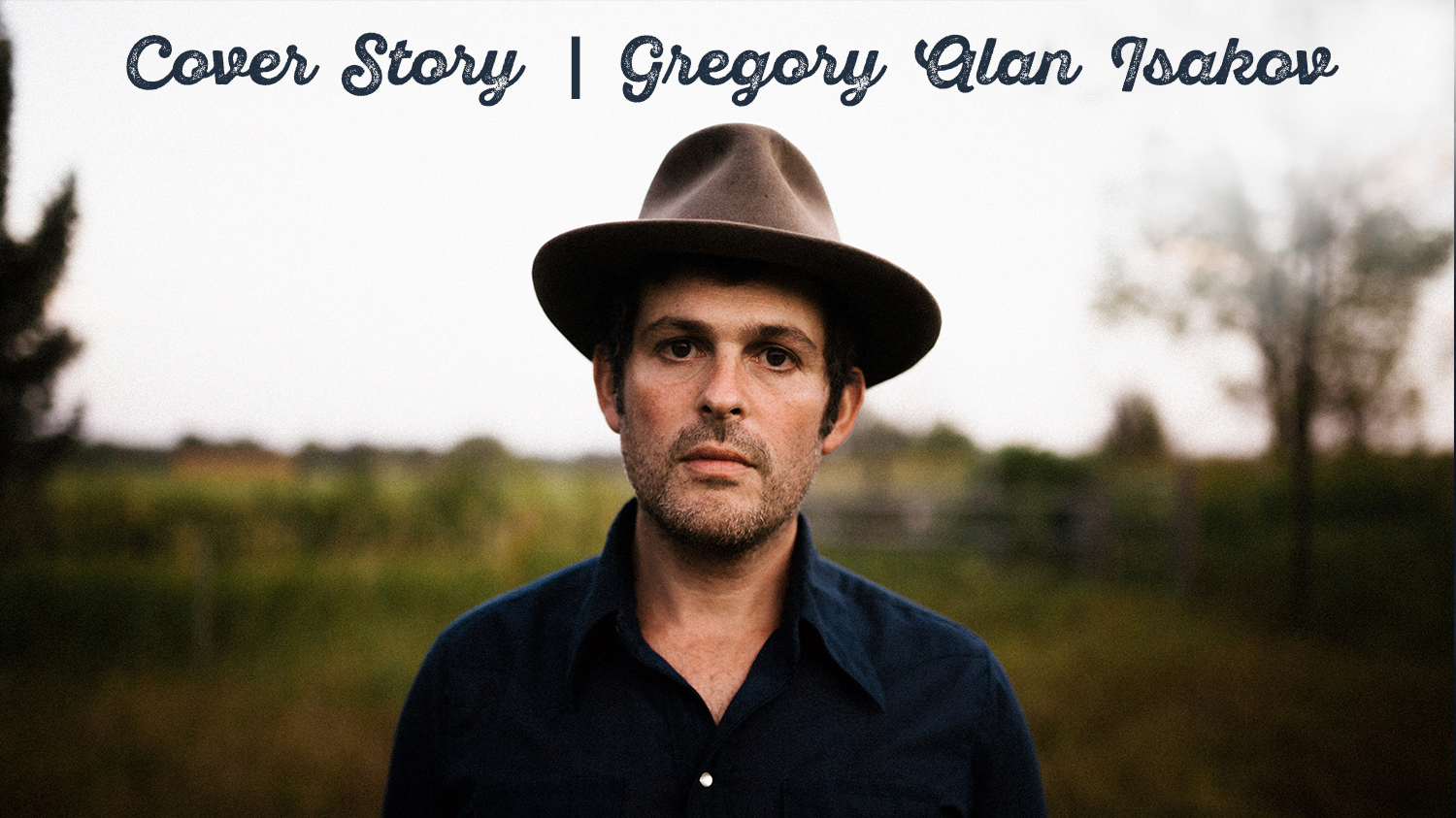
An Otherworldly Landscape: A Conversation with Gregory Alan Isakov

You could call it an epiphany of sorts. Gregory Alan Isakov was riding an elevator with the rest of his band when the doors slid open and a woman got in. She noticed their instruments and asked the question musicians dread. “What kind of music do you play?”

Isakov chuckles. “I never know what to say to that question, you know? So I said, ‘Oh, like, sad songs about space.’” It was, the band immediately agreed, as perfect a genre definition as Isakov could have given.

The singer-songwriter’s new album, Evening Machines, is undeniably dark and cosmic. Atmospheric, opaque, and layered with texture, its electronically accented folk-rock is a departure from the spare, intimate sound Isakov has favoured in the past. And while he is perfectly upbeat today, looking out from his kitchen window onto his four acres of Colorado fields and handful of sheep, he admits that his latest music came from “a pretty dark birth.”

On the face of it, Isakov’s life was going great. But even as he had just fulfilled one of his most fantastic career goals – orchestrating his work for the Colorado Symphony – he was beginning to suffer from a debilitating physical anxiety. “When you’re touring, and trying to figure out how to put out records, you forget about peace and quiet for long periods,” says Isakov, who admits to being a natural introvert. “You’re just hustling all the time. I did that for so long I forgot how to unplug. And it caught up to me in a way I’ve never experienced before.”

And then, on the plane home from Scotland after a six-month tour of Europe, he heard the news that Donald Trump had won the presidential election. “I’ve never had a sense of overwhelming darkness and anxiety like I had that year. You can’t ignore it on an emotional level, whether you read the news or not. And it does make it into the landscape of music or anything that you’re doing. You’re going to feel that stuff. It’s part of being alive.”

Songwriting was a focus and a release; it was also, he says, a reminder that he was someone who needs space and quiet built in his life. Hence the sheep. Isakov took 12 months off from touring and immersed himself in the life of the land he has been working for some years now, supplying vegetables to restaurants and markets. When Isakov was not in his recording “barn” with engineer Andrew Berlin, he was out in the fields, planting salad greens, turnips, and cucumbers, feeding and watering his 10 sheep. “They’re great, they have good vibes when you want to chill,” he smiles. “They’re so easy to look after.”

While the songs on the album draw from what Isakov calls an “otherworldly landscape,” the farm itself is a very real character in his recording process. Apart from the live symphony recording, every album he has released has been made in his own home – “because I really don’t like studios,” he laughs. “I don’t like the glass, I don’t like going into another room to listen, I like to have the words to the songs up everywhere, and all the stations ready to go.”

For Isakov, the key factor is speed: the ability to capture, as quickly as possible, the emotions and sensations he is exploring. Evening Machines, it turns out, is full of first takes. “To maintain whatever feeling you’re having is really important. In the moment you say, ‘This is just an idea, but later I’ll do this good,’ you know? And then I’ll come back to it and something’s different and I can never get back that initial emotive, ineffable something.”

So Isakov developed his own mantra – “sketch to keep” – and created a working space nimble and nearby enough that he could to capture inspiration whenever it struck. The ‘evening machines’ of the title are actually the blinking lights of his electronic equipment, which he visited mostly at night. By the time he came to create the record, he had more than 40 tracks to choose from.

The songs that made the final cut – the ones that felt, to Isakov, to “live together” – share a common, haunting feel. Images return in numerous songs, stars and weightlessness, gunpowder and bullet holes, while the sounds of the machines – a Juno synth from the ‘80s, a compressed drum kit, an Orcoa pump organ that sounds like a toy – provide an unnerving and ethereal backdrop. It is a sound far heavier and, dare one say, dirtier than Isakov’s previous albums. And yet the lyrics remain fraught with the fragility of human essence.

Some, like “Powder,” read off the page like poems – “were we the hammer/were we the powder/were we the cold evening air” – which pleases Isakov to hear. “That’s the goal!” he laughs. “Powder” in particular was inspired by one of Isakov’s favourite poets, Billy Collins. “I bring his poems out with me on the road because I tend to slow down whenever I read them.” And if meaning can feel mysterious in Isakov’s songwriting, it’s not only obscured to the listener: Isakov says he often doesn’t know what his songs are about until after he’s written them.

Take “Berth,” which he wrote with his brother Ilan – a film score composer and “one of my all-time favourite songwriters.” The pair often spend the summers together, engaged in all-night-co-writes. “We start after dinner, and this time I had a melody in my back pocket, that crooked piano part, and I went to one end of the building and he went to the other and we wrote as many verses as we could and then met back up, and mixed them together. The original song was 17 minutes long!” It was only when they edited it down to its final version that they realised what they’d written. “And then we were like: I think this is an immigrant song. We didn’t see that coming.”

Isakov was born in South Africa at the heart of the apartheid era – “a pretty rough situation” – and his family emigrated to the U.S. when he was a young child. For the first couple of years, he lived in a one-bedroom apartment with his parents, his granny, and his two brothers. “A lot of friends I made growing up were immigrants and I really connected to their families a lot. They had a different vibe to the American kids I knew.

“Even now – in no way is our country somewhere that feels safe all the time, or going in a good direction at all – but, man, we are lucky to be in a place where we can have a sense of freedom and be able to work and create whatever we want. That doesn’t exist hardly anywhere and it’s a nice perspective to have.”

His upbringing also created a close bond with his brothers, who would play instruments together in the basement: “I was always excited to get back home from school to play with them. That was the fun part of my day.” Not that music has made any of them any less introverted, Isakov admits. “When we’re hanging out, we don’t even talk,” he laughs. “One of us will ask, ‘Who’s he dating now?’ and the others will be like, ‘I don’t know, we don’t talk about that.’”

But then, Isakov is happy to live with uncertainty. It’s a principle that’s central to his creativity. “I’ll read an interview with another artist saying ‘I wanted to write a song about this or that,’ but that’s never happened to me,” he says. “I never set out to write a song about anything.

“I feel like I’m sort of holding on, not even driving. You just hope you can get it all. Sometimes you do, and when you do it’s the greatest feeling, you’ve struck gold or something. But there’s plenty of times I don’t get it. My trash can’s pretty big.” It makes him reluctant, he says, even to take credit for his songs – and even more so to imbue them with too much narrative. For instance, “Was I Just Another One” can sound to the unknowing ear like a simple love-gone-wrong story. “To me that song’s about a relationship with someone on heroin but it never says that. And it’s not interesting what I think it’s about.”

His fascination with roots – from jazz and blues standards to the old-time clawhammer banjo he learned to give him a break from guitar – has not left him. “Some of the traditional songs that are so relevant today, stuff like Mississippi John Hurt, you can listen to it and they could have been written right now.” And now that his own dark period is, happily, over – “I’m so lucky to be on the other side of that” – the lighter tracks he recorded over the past year will be repurposed into a new, more country-influenced collection. If this record has taught him anything, however, it’s never to assume. “Songs have minds of their own,” he laughs. “And I’m just following them along!”


Photos of Gregory Alan Isakov: Rebecca Caridad

BGS 5+5: Liam Russell

Artist: Liam Russell
Hometown: Nashville, Tennessee
Latest album: No Contest
Personal nicknames (or rejected band names): Liam Titcomb

Which artist has influenced you the most … and how?

Up until a few years ago, it would have been The Beatles. I learned everything about popular music from The Beatles. Chord progressions, melody, harmony, rhythm, lyrics, attitude, production. … I was pretty obsessive in my teen years about them and I honestly think it improved me greatly as a musician. I learned to play guitar by learning all their songs. I completely learned how to sing harmonies by deciding one day to only sing along to them in harmony and because I knew the songs so intimately, it worked!

A few years ago, I started to dig deeper into lyrics and so I’m returning to other things I’ve loved over the years and going over the lyrics with more of a fine-tooth comb. Lucinda Williams is a really big one for me these days but also Patty Griffin and John Prine, etc. It’s a long list.

What’s your favorite memory from being on stage?

I got to take part in a 70th birthday tribute to Joni Mitchell in Toronto for the Luminato festival. They got Joni’s band to be the house band, Brian Blade was the musical director and then there was a handful of singers. Myself, Chaka Khan, Kathleen Edwards, Rufus Wainwright, Glen Hansard, Lizz Wright, etc… Joni decided to come to the event and had said she wasn’t sure if she would sing but then I got an email that said: “Joni’s been singing at every rehearsal and has decided to sing a couple songs.”

That alone was exciting enough for me because I’d never seen her live before and now I was gonna be really really up close and personal. The whole thing was like a dream. I had to pinch myself even during rehearsal with those incredible musicians because Brian Blade is probably my most favorite drummer of all time and they were all just so damn good.

Then I met Joni before one of the shows (we did two nights) and she was delightful and had watched my performance and was giving me wardrobe tips for the second night because of the lights for my songs. It was wild. But all this to say that my favorite memory from being on stage is singing “Woodstock” with Joni and that band as the grand finale. That was just unbelievable and so special. I’ll never forget it. She killed it and she was so supportive of me too. What a woman.

What was the first moment that you knew you wanted to be a musician?

I was 7 years old at an after-party for a big fundraiser show that was for one of my dad’s best friends, Bob Carpenter. There were all kinds of folk music big shots there and people were clumped into groups of four to eight, all having little jams. My ah-ha moment happened when I saw Soozi Schlanger playing Cajun songs. She was playing the fiddle and singing with all her heart and it blew my mind. I totally had the thought, “That’s what I wanna do.” And I did! I convinced my God-mum to rent me a violin, got my parents to beg Soozi to teach me and it all started there, playing second fiddle with Soozi and learning to sing in French phonetically.

What’s the toughest time you ever had writing a song?

“To Be a Man” is a song off this new EP inspired by the #MeToo movement and it was definitely the hardest song I’ve ever written. I wrote it with my friend Robby Hecht (another great Nashville singer-songwriter). We had gotten together to write a song and started talking about the movement and what it meant to us as self-identifying “good guys” and whether we even really were good guys and it just spiraled into this heavy conversation about what it is to be a man and we thought “we should write about this” but neither of us realized how hard it was going to be.

It took us about six get-togethers to get it done and it was a slog every time. We labored over every line and made sure to run it all past my wife Zoe Sky Jordan to make sure nothing would be misconstrued. It was a serious challenge but one I’m very proud of. Frankly, after thousands of years of men taking advantage of women in one way or another and them suffering from it, it had better be hard and a little painful for me to write a song about it. Men deserve to feel a little discomfort for a change.

How often do you hide behind a character in a song or use “you” when it’s actually “me”?

I used to this a lot. I think it’s very common to do this as a young writer. It’s hard to confront your true self, let alone put it on display for everyone else in a song. I mean, how often do we even do that in conversations? The older I get, the more I value writers like Lucinda Williams who just lays everything out for all to see. Every ugly bump, every beautiful twist and turn. To me, the most fascinating writing is the honest and vulnerable writing because that’s what we all are! We’re vulnerable and we have warts and we’re just trying to figure it out and not fuck it up. I endeavor to never make this mistake in my writing again and really hope I only get more honest as time goes on.


Photo credit: Blu Sanders

Curiosity and Persistence: Amy Ray Gets Down to Her Roots on ‘Holler’

Amy Ray’s new project, Holler, is the closest thing she’s made to a classic country album in a career that stretches across nearly 30 years. As one-half of the Indigo Girls, she’s won a folk Grammy and toured the world, sharing her musical path with Emily Saliers. But on Holler, Ray retreated to Asheville, North Carolina, with a hand-picked band of musicians who knew how to play country music – and she was eager to record the new music to tape using the studio’s vintage machines.

“For this band in particular, there is a real kind of magic quality to knowing that you can’t go back and change a lot of things,” she says. “So it keeps you on your toes the whole time. You have to be well-rehearsed. And at the same time, you just want to go for it.”

Taking a break from signing vinyl copies of Holler a few days before its release, Ray chatted with the Bluegrass Situation about finding happiness on a clawhammer banjo, discovering a commonality with Connie Britton’s character, Rayna Jaymes on ABC/CMT’s Nashville, and staying curious about the world.

How much did you rehearse this new material before going into the studio?

This unit has been playing together for about almost five years, so that’s like been our rehearsal — just touring. For these songs in particular, we did have some rehearsals, but most of the stuff we had rehearsed or worked on arrangements at my house. Or we would have a gig, like we opened for Tedeschi Trucks here and there, and I would use that as an opportunity to practice the day before. We would get together at the hotel and go to the conference room and work on songs – like at the Microtel or whatever – and do arrangements. It bought us a lot of time.

So the band knew the songs well in advance.

Yep, except for “Dadgum Down,” which was a wildcard, which no one knew. We didn’t even know if we were going to do it. I kept saying, “I have this song I wrote on banjo, but I don’t know what I’m going to do with it,” like a broken record over and over and over again. Jeff Fielder, the guitar player, and Alison Brown, who guested on banjo on the track – those two really came up with what became the arrangement for the song. It turned out to be a really fun experience because I put my banjo down and said, “I’m just going to sing.” But everything else, we had really worked on it and spent a lot of time fine-tuning the arrangements.

So the reference in that song about the sting of the bee — is that a reference to drugs?

It’s everything. The stinging [lyric] was another song I was working on, and I was like, “Oh, these are actually about the same thing.” Which is addiction, and relationships. So it’s like, it’s in the nature of the bee to sting. And it’s in the nature of love, and it’s in the nature of drugs. You can’t get mad at that item, because that’s part of their nature, and it’s also what you’re hungry for.

So it’s meant to be more than one dimension because the song is about wrestling with addiction — addiction to a person, and addiction to drugs, and addiction to anything. I’m always fascinated by that because I have an addictive personality, but also I have a lot of friends in recovery. And I don’t drink anymore, so I know how it is to try and beat that.

I want to ask about your musicianship. How did you get interested in the guitar?

It was just a vehicle to sing with probably. I mean, that’s probably why I’m not a better guitar player, too, because I looked at it as, “I want to write songs, and I want to sing, so I gotta learn how to play something.” I was playing piano, but not very successfully. I was in fifth grade and I got a guitar and took lessons at the Y. I learned like five chords and I could play all the Neil Young songs. So I was like, “This is perfect.”

What was the path to learning the other stringed instruments?

Well, mandolin, I just learned. It was like a natural thing for me, I guess. I was interested. I think I learned it because…. I’m trying to remember why I picked up a mandolin. I think I borrowed somebody’s flatiron mandolin and I liked it a lot. I thought this was cool, these chords. And I never really learned how to play properly, which I really want to do one day. But I was learning more from mountain music, like field recording kind of stuff. So I didn’t really learn the bluegrass style, or any of that. And then banjo is just something to knock around on, I don’t really know how to play.

Yeah, but it makes you happy right?

It makes me happy! It doesn’t matter. I try to play clawhammer and it makes me happy. [Laughs]

I’ve followed your career since that first Indigo Girls record, and you always seem to be doing something new and having something coming up. Where did that work ethic from?

Probably my parents, my family, just the way I was raised — workaholic.

Yeah, but you’ve never really rested on your laurels or waited around for it.

I get bored with laurels, and there’s not enough of them to rest on, either. I like the process as much as the prize. I mean, seriously. So for me it’s like I get bored and I really do want to become better at what I do. I think the only way to do that is to keep doing it. And for Emily and I, persistence was our friend forever. I mean, if we hadn’t worked hard and been persistent, and then had a lot of luck, we wouldn’t have made it.

That reminds me of “Tonight I’m Paying the Rent,” which is about putting in the time. Some gigs are not necessarily feeding your spirituality, but you’re still working, doing what you love. What’s the reward for what you’re telling me about – where you’re working, and traveling, and staying busy?

I don’t know, I’m just proud of it. Because when I do a solo tour and get to the end of it, and been able to play all the gigs, and drive all the miles and everything, I feel proud of it. I don’t know why. The process is fun, and I like the people I’m with. I’m just compelled. I think we are compelled by something, and it probably is fear of mortality and all of those deep things too. But it’s also like, well, it beats us sitting around. And it’s fun to try to do something that’s hard to do, and then be able to do it. It feels good.

Is it a calling for you, do you think, to be up there singing?

Who knows? I mean, I have no idea. It’s all I know, though. It’s all I know how to do. So I don’t know if it’s a calling or like a compulsion. I mean, “Tonight I’m Paying the Rent” really also grew out of needing an attitude check. Emily and I were playing a few of these private party kind of things, and I had such a negative attitude about it because they’re soul-sucking. And you’re just doing it for the money, and we stopped doing them because of that.

But then at the same time, I was watching an episode of Nashville where Rayna has to play a private party for a venture capitalist in California. And of course, the guy that hired her is a big fan, but no one else likes her, or likes country. And she’s out there, and she’s smiling, and no one’s listening. And I was like, I’ve totally been there a million times. Then her attitude about it after the show was like, “We all have bills to pay,” or whatever she says.

And that’s the attitude I have. Like, “Tonight I’m paying the rent.” That’s what that song grew out of. It’s like, “Why be so negative about this thing?” Yeah, maybe it’s not fun, but it beats digging a ditch. And look – you’re actually paying bills. That’s hard to do.

To me, “Didn’t Know a Damn Thing” is about history that you haven’t been taught, that you discover it on your own by seeking it out. Where does your own sense of curiosity come from?

I think that’s probably from my family and growing up with role models that were curious. Even my dad, who was super conservative, was also curious about everything. Even though we disagreed about a lot of things, one thing I know about him is that he was curious, and he would always listen to the other side. All the best teachers I ever had in high school and my favorite youth minister at church were curious and they didn’t mind it when I questioned things either.

And I don’t know why I always felt like I needed to question things. … I think part of that was paranoia. It was like the flip side of curiosity, which is paranoia. And I was like, this can’t be all there is, there’s got to be something else going on. It doesn’t feel right. And when you start feeling those feelings, you know you’ve got to look into it.


Photo credit (color): Carrie Schrader
Photo credit (black-and-white): Ian Fisher
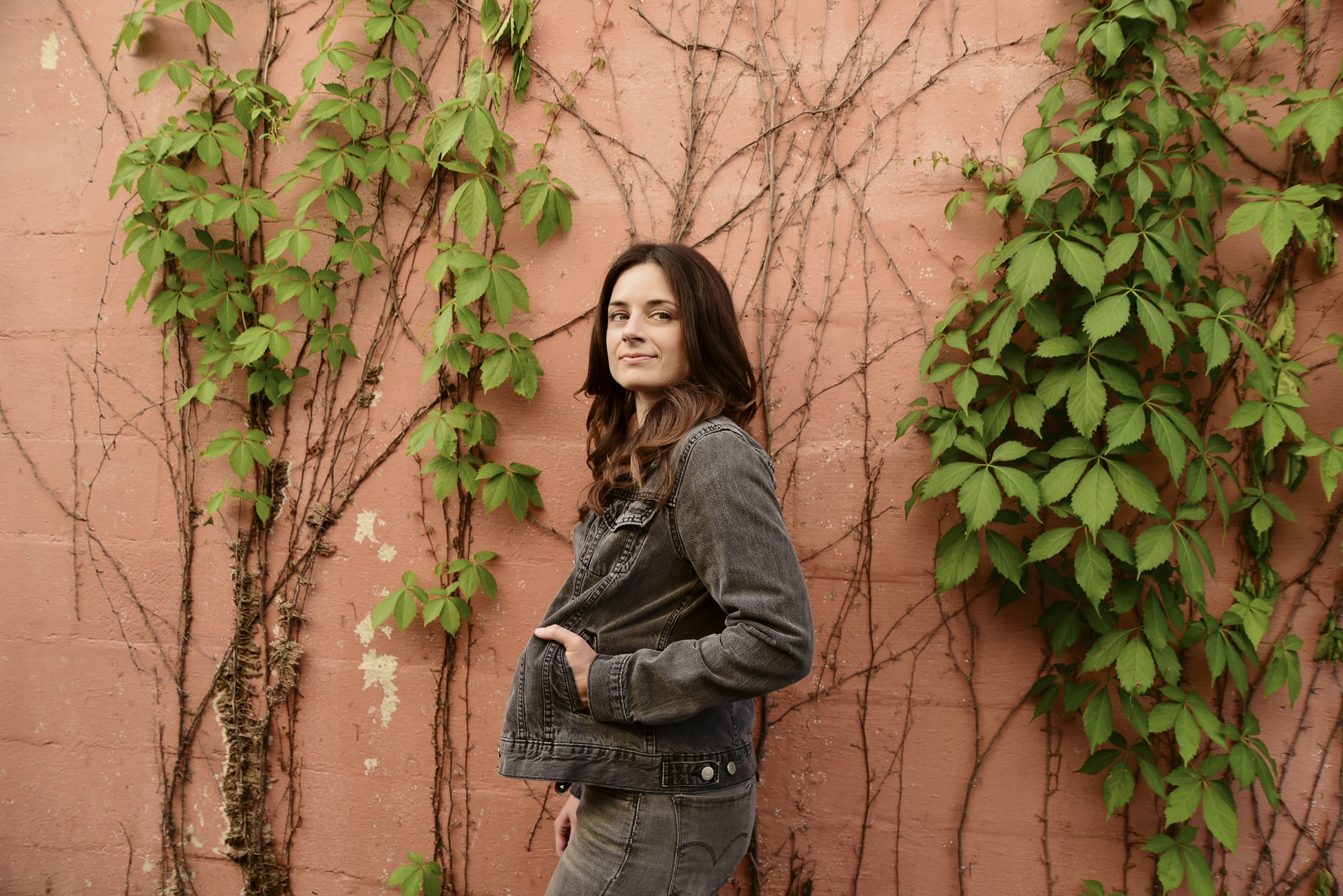
WATCH: Missy Raines, “Allegheny Town”

Artist: Missy Raines
Hometown: Nashville, Tennessee
Song: “Allegheny Town”
Album: Royal Traveller
Release Date: October 5, 2018
Label: Compass Records

In Her Words: “I grew up in the Allegheny mountains of West Virginia, leaving home at 18 to follow my dreams. I didn’t realize then the cost of time away from loved ones – time you never get back. I wrote this song ‘Allegheny Town’ for my family, for those who went searching and perhaps more importantly, for those who stayed behind. This video offers a personal glimpse into my life from long ago with scenes and people who are no longer with us. ‘And I can hold you up, against the eastern sky, and we can try our luck, to never say goodbye.’” –Missy Raines


Photo credit: Stacie Huckeba