With a Fighting Spirit, Town Mountain Branches Out on ‘Lines in the Levee’

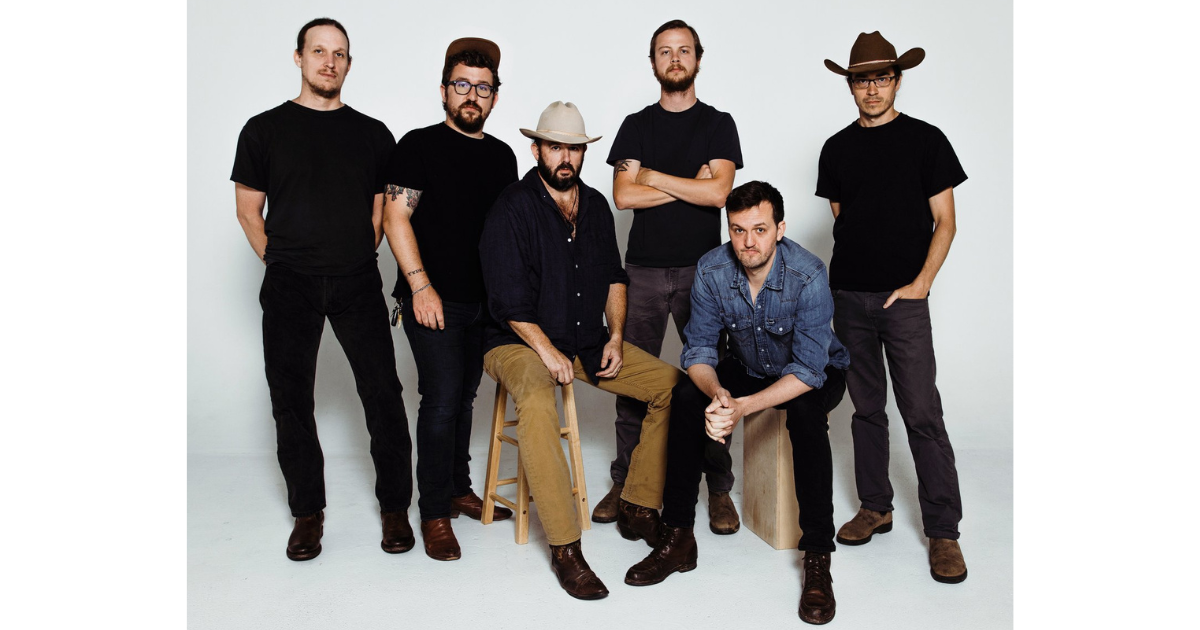
With its latest album, Lines in the Levee, Town Mountain has justified itself as one of the most interesting and promising acts in an ever-evolving musical landscape, with the quintet purposely blurring the lines between the Americana, bluegrass, folk, and indie scenes.

Known for its raucous live antics and “good time Charlie” attitude, the Asheville, North Carolina, group is a juggernaut of raw power and boundless energy onstage and in the studio — something that’s remained at Town Mountain’s core since its inception in 2005 atop a ridge of the same name in the city of its birth.

Lines in the Levee also symbolizes a milestone for Town Mountain as its debut release for famed Nashville label New West Records. For an entity that’s remained fiercely independent amid a longtime DIY mentality — whether artistically, sonically, or in its business dealings — the signing to New West breaks the band into the mainstream arena of possibility, nationally and internationally.

While navigating an industry that tries to pinpoint just what direction a band will go in next, Town Mountain charges ahead, come hell or high water. Recorded at Ronnie’s Place studio in Nashville, the album is a snapshot of where we stand as an American society, in sickness and in health, and each selection puts a mirror up to the face of the listener. Ultimately the project poses several urgent questions, the most important of which being — where to from here?

BGS: Lately, Town Mountain is really starting to crack into this different, unknown, and exciting level for the band. From your perspective, what do you see?

Phil Barker (mandolin): This is an evolutionary period for us, where we’re kind of moving into a new realm of soundscapes, this new sound for the band. It’s just a new place for us in the world of Americana or whatever you want to call it. It’s a bigger sound and bigger expression of who we are as artists and what we are as musicians.

I feel like Lines in the Levee might be the most true-to-form album of where the band is, and what it actually is tonally.

PB: Yeah, I think you’re spot on with that. You know, maybe in the past we tried to fit our songs into a formula, or a little more of a formula, given our instruments. But now we’ve let our instruments not define our genre, even though that’s still our voice and still what we speak with. We’re using bluegrass instruments, but in our own way, and trying to make our own sound. That’s really been the focus of ours since the beginning of writing our own material and doing original music. [Lines in the Levee] is just a further example of us trying to come up with a sound that’s our own, and hoping people enjoy it.

Jesse Langlais (banjo): Bands are built around a sound, so that kind of almost makes it what it’s going to be. We’re a democratic band, and sometimes nothing gets done because of it. But everyone has an equal say. You know, there’s the three of us (Barker, Langlais, and guitarist Robert Greer) that are the “business owners of Town Mountain,” but the other guys in the band, [fiddler] Bobby [Britt] and [standup bassist] Zach [Smith], are just as equal partners as anyone else. Everybody’s voice is heard, and that’s important to have a workplace environment like that.

The last thing you want to do is to fit a song into a box of whatever you think it should be — you want to serve the song. It’s about quality songwriting.

PB: Right? And we have done that in the past, feeling like maybe we had bought into the pigeonholing of bluegrass sometimes. We’re not the first band to travel down this road of taking bluegrass instruments and doing different things with it. But it was time to branch out, as musicians and as people, and see where the road takes us.

JL: We’ve been playing bluegrass for a long time, and it’s easy to get [pigeonholed] because of the love of the music, and then you’re just kind of choosing to be pigeonholed. And that’s okay. In some genres of music, it’s about preserving the legacy of the sound and whatnot. But we know for things to progress for Town Mountain, we’ve got to keep it fresh for ourselves, fresh for our fans, and to expand the fan base. Changing up the sound, then allowing more influences to come through in our live shows and in our albums — that’s what needs to happen.

So, how does that play into your songwriting? Especially on this album, it’s very clever songwriting — commentary on the fragility of where we are as a country, and people trying to make sense of all the noise out there.

PB: For sure. This album is the most personal record we’ve ever made. A lot of the songs are super autobiographical. We’re expanding on some social commentary, and just having the time to reflect on all that as a songwriter — if it’s on your mind that much, it’s going to come out in your writing. With [“Lines in the Levee”], that song is a reflection of the changes happening around us in society, where I wanted to capture the fighting spirit of people maybe feeling disenfranchised by everything that’s going on around them.

[During the shutdown], we had a lot of time to reflect on who we are as people, where we are as a band, where we are individually as far as a career in music or our place in the music business, the struggle we’ve been through to make a living doing this. Thinking back, I ran the gamut all the way back to when I decided to become a musician and try to do it full-time. It’s a commitment — to your art, and to priorities in life. And I feel I’ve covered a wide swath of who I am as a musician, and who we are as a band.

JL: If you go back and listen to our catalog, our recorded music, you’ll see that [social commentary] has always been splashed in there to a certain degree. We’ve always touched upon certain subjects on our albums, but it was never fully realized until now. Personally, for me as a songwriter, there were other things that I needed to say, and sometimes the thing you need to say doesn’t fit inside of a box [of an album], so you let it go. And we broke out of that box because we were always trying to still bear that flag of bluegrass music. We also felt pressured by the bluegrass community to do that, because we were trying to be part of different festivals and scenes.

But with this album, everything just clicked. It evolved, it moved into this thing that was completely a subconscious move. It feels good to not have to pander to any one audience. We can now bring whatever songs we want. It doesn’t have to be what Town Mountain expected a song to be eight years ago — and that’s liberating. I think we kind of maximized our potential within that [bluegrass] scene, which is not to say we couldn’t ever go back and be part of that scene, and maybe one day record a bluegrass album. Who knows? [Lines in the Levee] is for our loyal fan base and for the potential to bring new people in, who maybe didn’t necessarily like bluegrass music, but could get onboard with the acoustic sound.

What sticks out most about those early years starting out in Asheville and starting to tour around Southern Appalachia and beyond?

PB: Well, in the early days, there really weren’t any goals. We were just excited to get out, go across the country, see new places, meet people, and have fun playing music — that’s been the genesis of it. We feel like we were doing something exciting, let’s take it to as many people as we can. In those early days, we would be sleeping on people’s floors. We couldn’t afford to get hotels. Just some of the struggles we went through financially those first years. But we have always tried to figure it out. It’s a struggle, per se, but each year has been a little bit of progress.

What does it mean for y’all that the original core of the band — Phil, Jesse, and Robert — is still together and still “doing the thing,” to look over and they’re still right there onstage after all these years?

PB: It’s just a testament to our belief in each other. We’re all on the same page with our musical vision, and we still believe we can take this thing to new heights, to make it bigger and bring more people into the fold, to connect with more people. It’s hard to keep a band together, it’s real hard. But the fact we’ve managed to keep the core together for as long as we have is a testament to our musical friendship.


Photo Credit: Emma Delevante

LISTEN: Ashley Heath, “The Letter”

Artist: Ashley Heath
Hometown: Marshall, North Carolina
Song: “The Letter”
Album: Something to Believe
Release Date: October 21, 2022
Label: Organic Records

In Their Words: “I was listening to a lot of country and Americana songwriters when I wrote this song. This song was written about when you’ve exhausted every avenue of trying to fix a problem that even hand writing a letter and spelling it out wouldn’t change it. My favorite line is ‘If you had a heart to break, I wouldn’t know any better.’ I think that clearly sets the tone. The instrumentation has more of a Nashville country vibe to it with some big guitar swells and this one is probably also the most radio-ready song from the EP.” — Ashley Heath

Crossroads Label Group · 03 The Letter

Photo credit: Sandlin Gaither

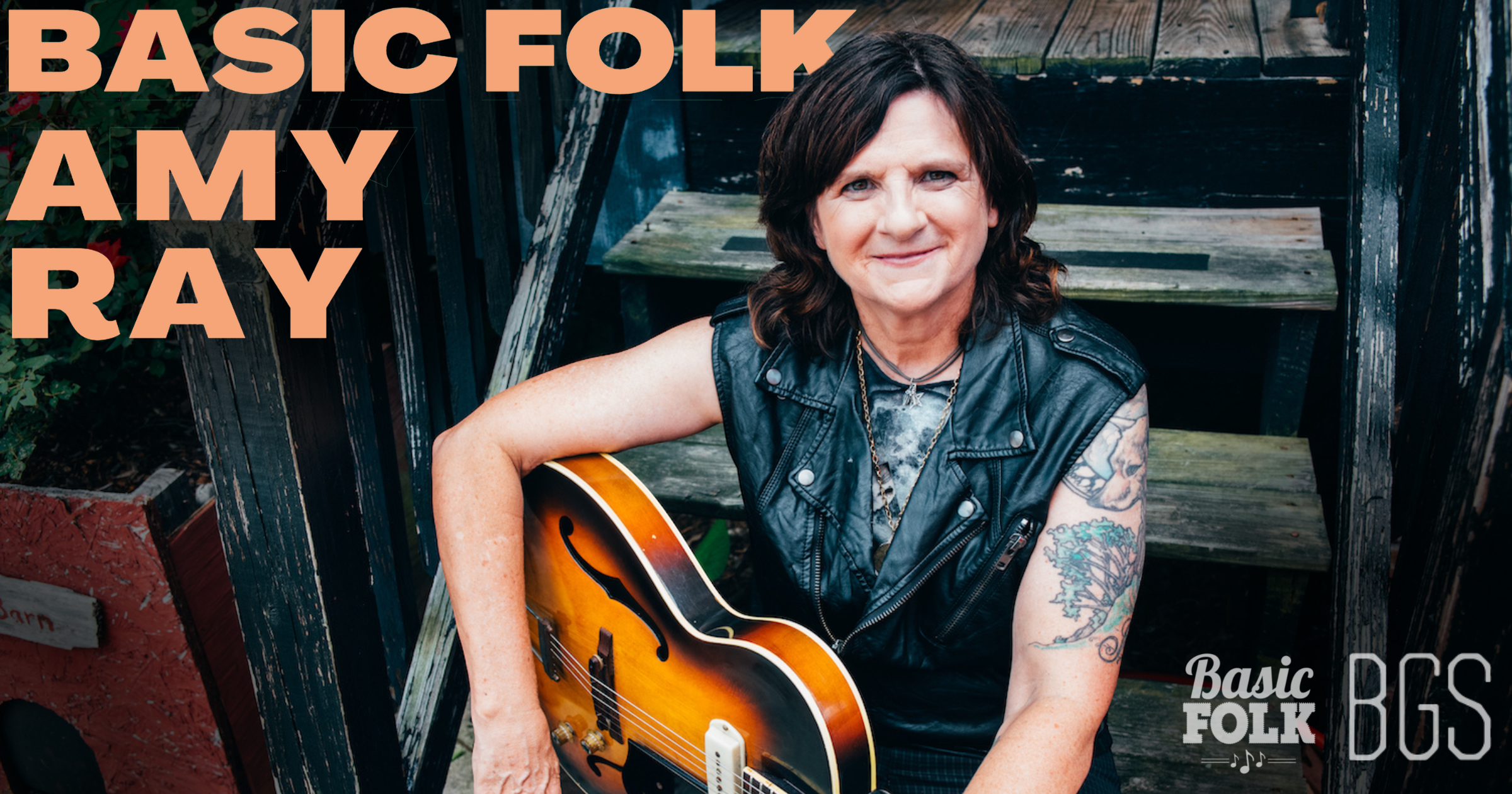
Basic Folk – Amy Ray

Amy Ray is best known for being one half of Indigo Girls with Emily Sailers, a band that’s been going strong since the late 80’s. She’s also known for her activism and love for all types of music. On her latest solo album, If It All Goes South, Amy’s bringing us songs of comfort and healing. Recorded live to tape in Nashville, this album features an incredible lineup of guests like Brandi Carlile, I’m With Her, Allison Russell, Phil Cook and Alison Brown. She’s confronting racism, homophobia, religion and mortality in her songs and we go deep into those topics in this episode.

LISTEN: APPLE • SPOTIFY • STITCHERAMAZON • MP3

Aside from exploring gender identity and being comfortable in your own body, I had an agenda in our interview. I’ve talked about this a little on the podcast, but recently our dog Willis suddenly and unexpectedly died. Amy’s new album features the song “Muscadine,” which was written when her oldest dog passed away. The song’s about “learning to love and receive love in the purest way, and to not be picky about life, but to stay the course with curiosity and gratitude.” I was grateful for Amy’s words of wisdom about the loss of a dog and am happy to share them with you. Actually, Amy’s full of wisdom and is always so open to whatever questions come her way. Enjoy this conversation with a very, very good person.


Editor’s Note: Basic Folk is currently running their annual fall fundraiser! Visit basicfolk.com/donate for a message from hosts Cindy Howes and Lizzie No, and to support this listener-funded podcast.

Photo Credit: Sandlin Gaither

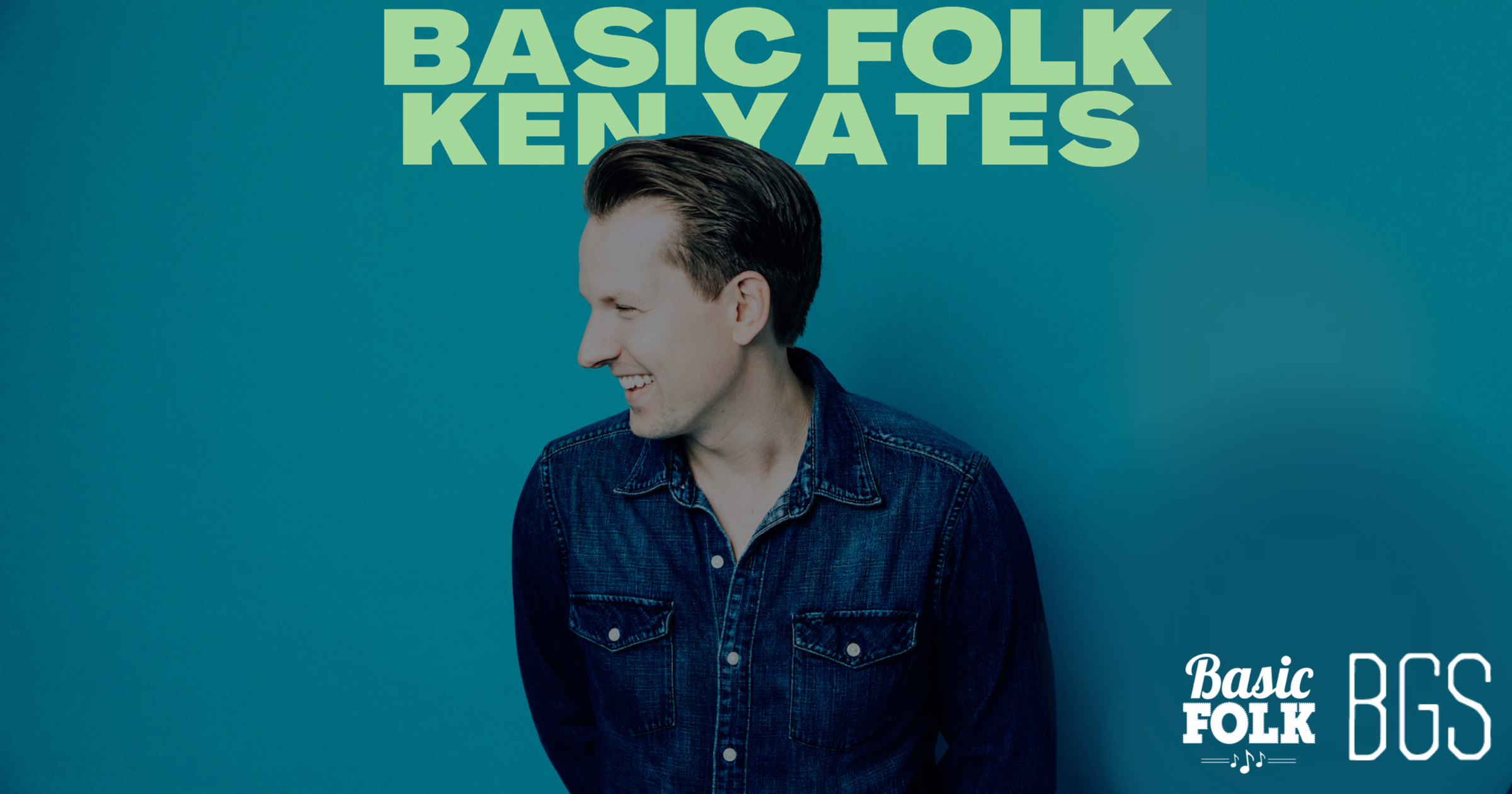
Basic Folk – Ken Yates

Ken Yates grew up in the college town of London, Ontario and he is truly Canada’s Next Top Model, by which I mean he is wonderfully talented, disarmingly nice, and from Canada, obviously. Ken is a Berklee College of Music graduate, and I took the opportunity to talk with him about that experience. Why would somebody choose to go to music school, what were you hoping to gain, and what did you actually get out of it, are questions that are fascinating to me, and Ken’s answers were super interesting. One takeaway I learned from his stories of Berklee is that even some of the most talented musicians feel like they have no idea what they’re doing.

APPLE • SPOTIFY • STITCHERAMAZON • MP3

Ken’s breakout 2016 album, Huntsville, earned him the Emerging Artist of the Year award at the Canadian Folk Music Awards. It was not just a huge and competitive honor, but it was also a defining moment where Ken started getting categorized as a folk artist.

Ken released a beautiful album, Quiet Talkers, in 2020, and instead of touring in support of that album, he had to do a bunch of covid-era online shows. I was impressed with how gracious and level-headed he seemed despite the crappy circumstances. This grace, perspective, emotional openness, and flexibility are a big part of what makes his new album, Cerulean, so special. Cerulean came out in 2022 and it bridges the gap between folk and indie rock, between skepticism and hope, between the pain of losing someone and the possibility of embracing what you have. Cerulean has a distinct groove, features vocals from Americana stars like Kathleen Edwards, Liz Longley, and Katie Pruitt, AND some of the prettiest production I’ve heard all year.


Photo Credit: Jen Squires

Americana Honors & Awards 2022: See the Full Winners List

It was a wonderful night of music, celebration, reflection, and joy last night at the Ryman Auditorium as folks gathered for the 21st Annual Americana Honors & Awards.

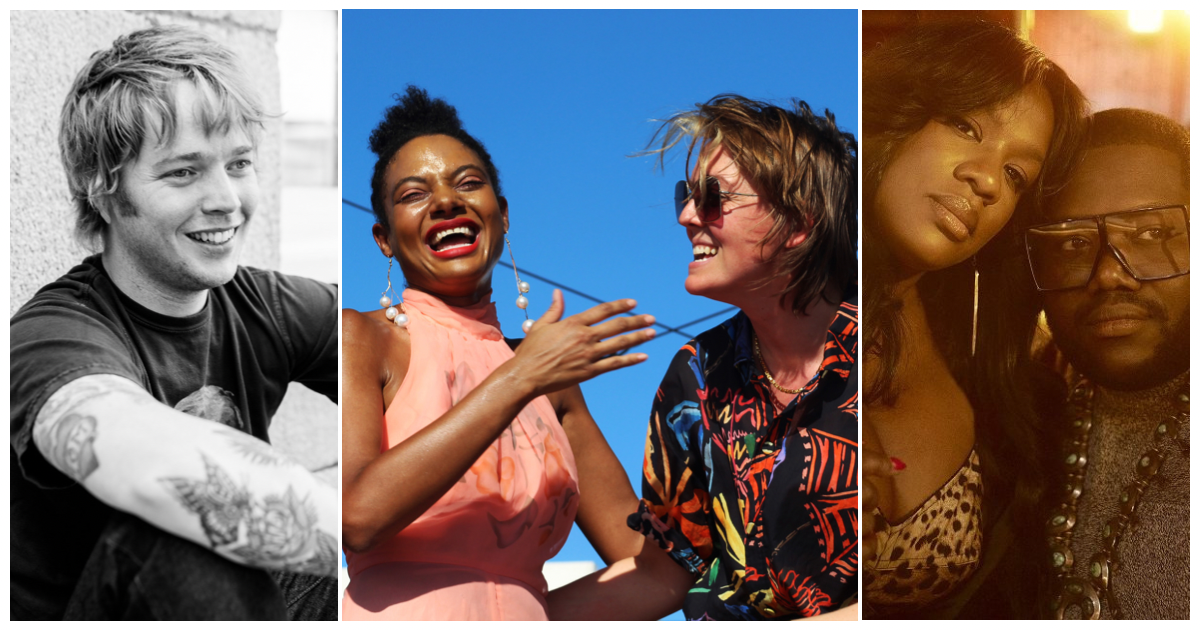
Billy Strings was crowned Americana’s Artist of the Year, with Jerry Douglas presenting the award.

Triple nominee Allison Russell earned the Album of the Year Award for her record Outside Child, produced by Dan Knobler. She accepted the award from respected music critic and NPR writer Ann Powers.

Allison Moorer and Hayes Carll awarded two-time Artist of the Year Brandi Carlile for the Song of the Year with “Right On Time,” written by Carlile, Dave Cobb, Phil Hanseroth and Tim Hanseroth.

The War and Treaty (Michael and Tanya Trotter) won Duo/Group of the Year after winning Americana Emerging Act of the Year in 2019.

On the heels of her new album Long Time Coming, Sierra Ferrell was also honored by the Americana music community and received this year’s Emerging Act of the Year Award.

Multi-instrumentalist Larissa Maestro took home the Instrumentalist of the Year Award, as Molly Tuttle recognized the Berklee College of Music grad. Maestro has performed and recorded with many high caliber artists and musicians, including Allison Russell, Mickey Guyton, Eminem, Ms. Lauryn Hill, H.E.R., Michael Bublé, Margo Price, and Gillian Welch and Dave Rawlings.

Highlights from the evening include Brandi Carlile and Allison Russell delivering a soul-stirring rendition of “You’re Not Alone,” as well as the iconic McCrary Sisters honoring their late sister Deborah (who passed away in June) with a chills-inducing performance of “Amazing Grace.”

Americana stalwart and reigning All-Star Band musical director Buddy Miller was surprised by Robert Plant, who presented Miller with The Lifetime Achievement Award, which was previously unannounced. Miller graced the audience with his classic “Wide River To Cross.”

Throughout the night, attendees were treated to additional performances by the Fairfield Four, Indigo Girls, Lucinda Williams, Adia Victoria, James McCurtry, Lukas Nelson, Morgan Wade, Neal Francis, The War and Treaty, Sierra Ferrell, and JP Harris honoring the late Luke Bell.

Previously announced Lifetime Achievement honors were accepted by the Fairfield Four (Legacy of Americana Award, co-presented with the National Museum of African American Music [NMAAM]), presented by NMAAM’s Katie Rainge-Briggs and award-winning producer Shannon Sanders; Chris Isaak (Performance), presented by Lyle Lovett; the late Don Williams (President’s Award), presented and accepted on behalf of the Williams’ family by producer Garth Fundis; Al Bell (Executive), presented by music executive and Chairman of the Black American Music Association Michael Mauldin; and the Indigo Girls (Spirit of Americana Award, co-presented with the First Amendment Center), presented by Brandi Carlile and First Amendment Center’s John Seigenthaler.

Here’s the full list of the 2022 Americana Honors & Awards Winners and Honorees:

Album of the Year: Outside Child, Allison Russell; Produced by Dan Knobler

Artist of the Year: Billy Strings

Song of the Year: “Right On Time,” Brandi Carlile; Written by Brandi Carlile, Dave Cobb, Phil Hanseroth and Tim Hanseroth

Duo/Group of the Year: The War and Treaty

Emerging Act of the Year: Sierra Ferrell

Instrumentalist of the Year: Larissa Maestro

Legacy of Americana Award, presented in partnership with the National Museum of African American Music: Fairfield Four

President’s Award: Don Williams (posthumous)

Lifetime Achievement Award for Performance: Chris Isaak

Lifetime Achievement Award for Executive: Al Bell

Spirit of Americana Award: Indigo Girls


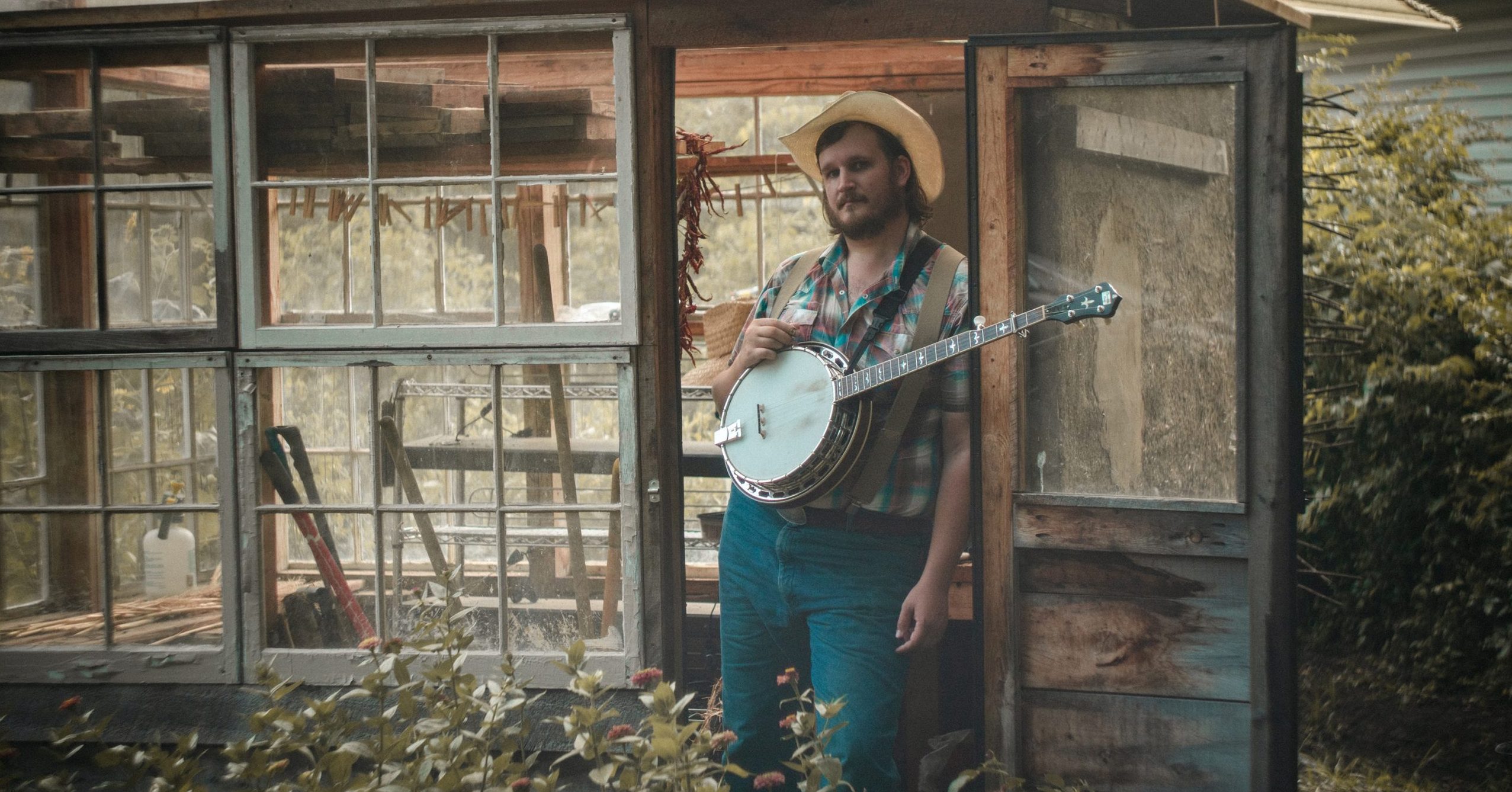
Willi Carlisle’s ‘Peculiar, Missouri’ is Both Extraordinary and Simple

Musician, folklorist, and instrumentalist Willi Carlisle is a bona fide troubadour in genres often populated by mimics and pretenders. But even so, and quite strikingly, his professional and artistic persona is not at all cast through a “greater than thou” light – or through the self-righteousness with which most creators stake their claim to the outlaw fringes of roots music. His debut album on Free Dirt Records, Peculiar, Missouri, is a testament to this dyed-in-the-wool road dog’s commitment to a populist, accessible, and identity-aware brand of country music. 

Peculiar, Missouri is all at once intimate and grand. Brash and rollicking radio-ready singles intermingle with raw, “warts and all” tracks that sound live and visceral, tender and ineffable. Stories of cowhands and wagon-train cooks and circus performers and legendary figures are peppered with queer text and subtext and underlined with a class consciousness. The result is not only inspiring, it will stop a listener dead in their tracks.

But the pause that this album supplies is not due to Peculiar being demonstrably extraordinary. Just the opposite. The simplicity, the downright everyday-ness of this record is its shining accomplishment. The seemingly infinite inputs that Carlisle distills, synergizes, and offers to the listener – regional roots music, old-time country, queerness, vaudeville showmanship, folklore and storytelling, the Ozarks, poetry, and so on – are perfectly synthesized in a remarkably simple and approachable format. Peculiar, Missouri is fantastically free, but not scattered. It’s extraordinary in its refusal to be anything other than ordinary. 

We spoke to Carlisle via phone ahead of his appearances this week at AmericanaFest in Nashville, where he’s excited to continue to grow the community that centers around the small business of his music. “I want to play a hundred and twenty, a hundred and fifty shows a year. I want to work my ass off,” he explains, excited for the weeklong conference and festival. “I’ve got a small business and it’s built on this group of people that I really love and that I really trust. Now I get to bring them together. It feels like a really unique and positive situation in a pretty garbage industry, sometimes!”

Our conversation began with Peculiar’s extraordinary simplicity.

BGS: I think the most extraordinary thing to me about the record is that it kind of refuses to be anything other than ordinary. And I hope that that doesn’t seem like a backhanded compliment, because to me the music feels so grounded, raw, and authentic – but in a way that doesn’t just propagate antiquated ideas around what “authenticity” is. So, I wanted to ask you how you crafted the vision for the project, because it did end up so simple, but I know that simplicity doesn’t necessarily mean building the concept for the album was simple at all. 

WC: Simplicity is hard to do and I’m the kind of person that has forty ideas and maybe a couple good ones in there, so I had a lot of songs. I give a lot of credit to friends and family in Arkansas and the folks at Free Dirt for helping me figure out how to try to nail [my vision] to the wall. I wanted to play old-time music on the record. I’ve been really lucky to do square dances and play old-time music in the Ozarks for a long time. I want to be old-time music and I want to be country and I want to be queer and I want to be a poet. I want [the album] to be grounded in American literature, and also want it to be grounded in American old-time music, so that it feels like the songs are highly regional and from specific traditions that I’ve learned from. 

This might make it sound like getting to simplicity was simple, but it really came down to a series of checkmarks. I want to be able to learn from Utah Phillips forever and his legacy and the legacies of the people that worked with him. So I knew I wanted to do a Utah Phillips song. I wanted to do something that felt more like a square dance call than like a capital S “song.” So we did “The Down and Back.” I’ve been setting poems to music for fun for a long time and that was why we did that song, “Buffalo Bill.” I’d always wanted to just tell a story, too, so we set a story to my own fingerpicking, because there’s a lot of that style in the ‘70s and from people I admire the most, like Steve Goodman and Gamble Rogers. It also came down to what traditions we were working in. “How do we evoke these different traditions in a way that is diverse but is unified?” At the end of the day, it might just be my voice and limited capacity instrumentally that unifies it. [Laughs]

The record feels “agnostic” to me in so many ways: The genre aesthetic (or lack), agnostic. The songwriting perspective, agnostic. The identity narratives, agnostic. The regional qualities, too. And when I say “agnostic” I mean, they all feel very defined and tangible, but not that you’re professing any one of them as traditional or as truth. You’re placing this music so specifically within a longstanding tradition of old-time country and string band music, but you’re doing it in a way that doesn’t feel like it’s trying to ensconce a “correct way” to make music. 

Carl Jung, who writes the best shit [Laughs], writes about some kind of “spiritus mundi,” some kind of larger idea of the world that can bind us all together, psychologically. In a lot of these things about America, we receive these overarching stories about what it is to be an American, what it is to be free, what it is to be this, that, or the other. These stories have identity concerns, but they have to be agnostic, because they’re too general to ever be specific. Which is to say, it’s all sort of false. 

I guess as I was looking at all of the historical moments that I wanted to underline, I found that the overarching narrative was that there was not going to be one. The title track is about traveling for a long time and having a panic attack in a very specific place, but also a very non-specific place, which was a Walmart. It may be the most unifying place in the country, now. I wanted to take the idea of this universal American spiritus mundi and locate it within as many specific voices that were inspiring to me. And usually those are people that tried to do folk music or vernacular music in this big, all-encompassing way.

That agnosticism, that acceptance of the duality of all things, that’s such a queer perspective. And it’s not just because of the pink album cover. [Laughs] It feels like the undercurrent and overcurrent of this record.

Yeah, it’s designed to be, it has to be inclusive. [The album] also includes voices that are on the very edge of slipping out of existence. It also sort of includes failure and incompetence and foolishness and folly. I think a lot of our “sad bastard,” dude country – which is really one of my favorite genres, it ain’t me ragging on sad, sad country. [Laughs] “Tear in my beer,” I’m 100% behind that! But for some reason we’re willing to valorize those feelings, but not valorize historical discomfort and the total dissipation of huge groups of feelings. And [we valorize] money. 

Like, if I was going to do a Utah Phillips song, the one to me that fit the most was “Goodnight Loving Trail.” One, because it’s stone cold banger and two, because it’s about a cook on a wagon train. And if I think that somebody is going to get the idea that I’m going to talk about rootin’ tootin’, gunslinging, and stuff, I wanna fight that with, “Here’s a song about the emotional condition of a pissed off cook who stays up all night playing melancholy songs on his harmonica.” That’s it! There’s nothing else, the only message of that song is we get old and we die. We outlive our youthfulness, and to what end? 

“Sad bastard” or, as I like to call it, “sad boi country” – sad boi anything is so, so hot right now. Especially this kind of idea of “sad boi” or “dirt boi” country, and it’s really prevalent in Americana. But I feel like this record is turning that new-ish trope on its ear. Something about straight, cis-, white, privileged men self ascribing “sad boi” or “dirt boi” always rings untrue to me as a listener. But Peculiar, the sadness intrinsic in it doesn’t seem like “sad boi country” to me, because it does have that queer thread. Do you agree or disagree? 

Well, the title of the record is intended to be a pun: “Queer sadness, peculiar misery.” I guess I would include that. I think there are perfect sad boi country songs out there. Formally, I don’t really have anything against the form, I just want to do my own version of it. If I’m totally honest, that’s mostly the way it comes out. That tends to be the way it comes out, in this format. I have written songs that go in circles around, I guess, a more normal sort of self-indulgent sadness, but I’ve never felt them to be my best work. It’s nice to lean into the thing that hurts you, I think that there’s power in that. 

I think that a lot of that sad boi country is angry at women, or is saying, “I’m no good and women hate me.” Or, “I’m no good and my mama knows I’m no good.” Or there’s “I’ve tried to be good and I can’t.” Instead of like, looking inward and being like, “I want to be better, I need to be better. My problems are my own.” 

I want to talk about production, because one of the things I love about the record is that you’re playing with sonic space so much. Some of the songs are placed very close to the listener, like a radio mix. Others are really quite distant and you play around in that space, kind of mischievously at times. Where did that production quality come from and why was it important to you? 

Well, I don’t want to take credit after the fact. It was the idea of the producer, Joel Savoy, who essentially was like, “Hey, I’ve got this old vaudeville theater, I’ve never gotten to use it, but I think that you could spread a couple tracks out in this old theater.” It’s like hundreds of years worth of people dancing in this theater, it’s just gorgeous. I also told him, “Look, I want a couple tracks ready for the radio. I want to be able to take a real shot.” 

On the other level, it’s just me and an instrument. I want it to sound like I’m sitting on the edge of somebody’s bed and they’re sitting with the covers pulled over them. That’s pretty much what I said [to Savoy]. A lot of the production is me having an interest in the record reaching some kind of minimal commercial viability, I want to say pretty clearly that that’s an intentional move. I know that I can make a record that will never reach commercial viability. I just got nominated for an award in outlaw country and that really just means I’m not ever going to reach commercial viability, but they do agree that I’m country. [Laughs]

I wanted to be able to share the project and create a couple of things that would invite people in that might never normally hear the message on the record. But, if I was only known for the tracks that were radio-produced, I wouldn’t like that at all. The idea is to invite people into the whole record. 

I’ve said quite a bit, what’s more outlaw country than being anti-normative, anti-idyll (in this case, read: queer) in country music? That’s what I feel like is coming through in “I Won’t Be Afraid,” because it’s not outlaw country in that it’s professing that you must forsake emotion and forsake heart and forsake these sort of non-masculine, anti-normative ideals to be outlaw. It’s outlaw in a way that embraces otherness and any form of the other can be outlaw. To me, it’s not a song that’s just a personal declaration, but also an industry-wide one. And it’s more than that, too.

The song came out all at once. It was one of those crying fit songs. I was like, “Okay, that’s a crying fit song, I know what that is. That goes deep in the drawer and we don’t really bring that one out.” Well, I did share it with a couple of people and they liked it. At the point I recorded it, I’m still, I’m just… I almost used the phrase “a sack of shit,” but I guess I wanna say I was an absolute mess in that place. I was not able to contain the feelings I was having in order to play a G chord. I think that does give it a quality that I like, but also gives it a quality that I wish I could, oh, slap a little tape or a little rouge or something on it.

As far as outlaw stuff goes, I made up this saying that outlaw shit is kissing your buds and dancing like your grandma is proud of you. [When I came up with that,] I was thinking about how hard it is to do. And what kind of risk it entails, to actually feel happy with yourself and happy with where you come from. … I do agree, on some level, with the maxim from the outlaw country guys early on that it’s about doing things your own way and it’s about not doing what the institution tells you to do. But that’s also a marketing scheme that’s appeared on T-shirts at Spencer’s in the mall ever since I was a kid, right? It’s not going to work for me. I want to revise it. I’ve gotten some kickback over the virulence with which I might be revising it, but we’ll see how it goes. I don’t think my career’s over or anything. [Laughs]

What’s more outlaw than people saying you’re not outlaw? 

It’s a snake eating its own tail!


Photo credit: Lead photo by Tim Duggan, square thumbnail by Jackie Clarkson.

Cayamo Cabin Giveaway: Your Ticket to a Journey Through Song

This year’s Cayamo cruise is gearing up to be one for the books. With artists like Trampled by Turtles, Patty Griffin, Allison Russell, Nitty Gritty Dirt Band, Jeff Tweedy, the Jerry Douglas Band, and so many more across roots music genres onboard, we’re looking forward to the musical collaborations destined to take form and many more fun moments. Gather some of the top musicians in the game on a ship for seven days, and magic is bound to ensue.

Here’s an opportunity to join in the fun: we’re giving away a free cabin! Enjoy an immersive week of unique performances and showcases as you drift through the beautiful Caribbean from Miami to St. Maarten and Tortola alongside fellow music lovers. You can enter the giveaway here.

Take a look at our photo recap of last year’s festivities in anticipation!

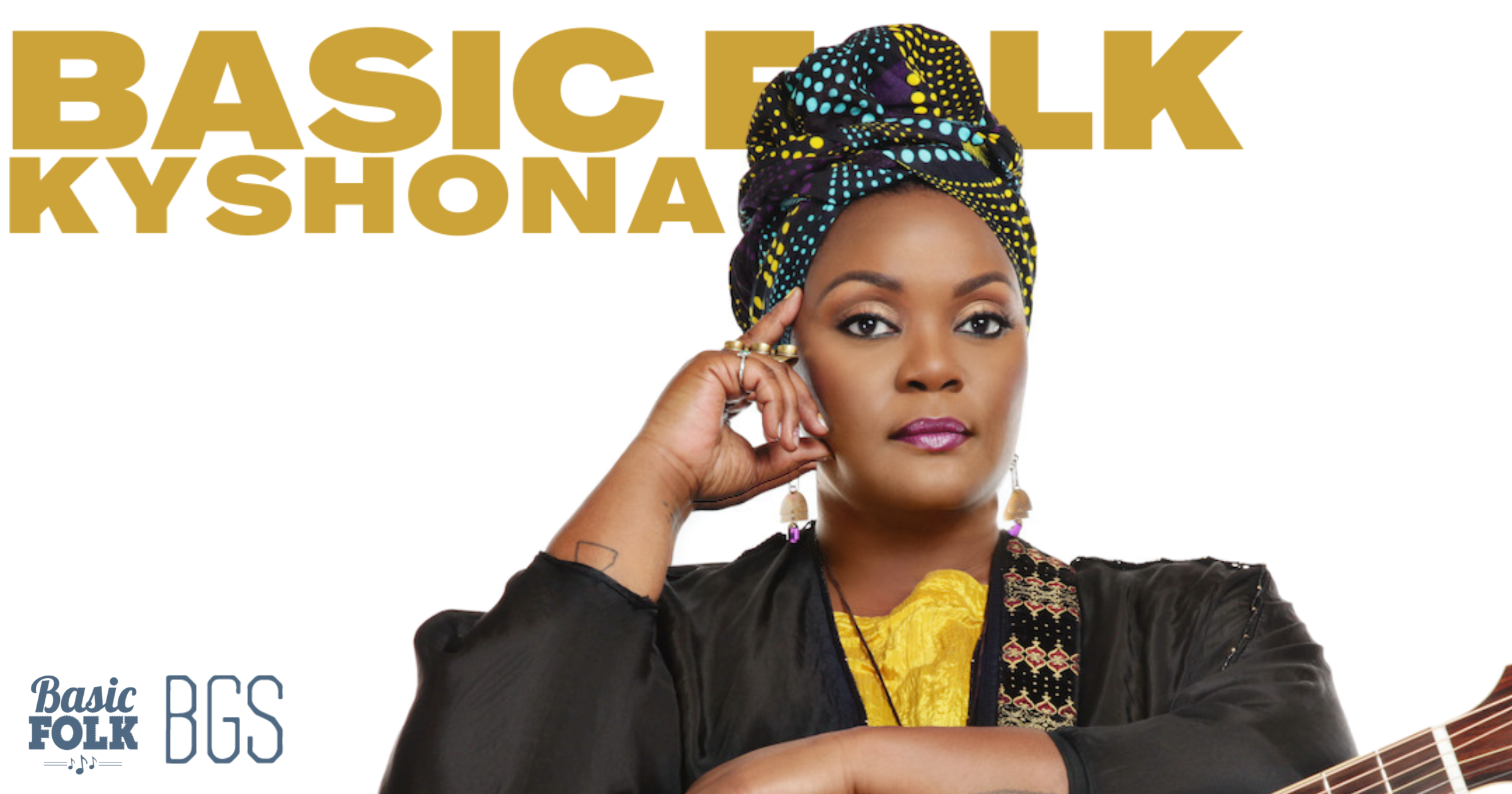
Basic Folk – Kyshona

Kyshona is an artist with a literal mission statement: “To be a voice and a vessel for those who feel lost, forgotten, silenced and are hurting.” She’s found that having this tool at her disposal gives her work meaning, especially on those nights when she’s felt like she hasn’t sold enough tickets, merch or gotten enough applause. If one person comes up to her and tells her they feel seen, she walks away feeling like she’s done her work.

APPLE • SPOTIFY • STITCHERAMAZON • MP3

That work also includes many years of being a music therapist with mental health patients, children and those who are experiencing incarceration. Through music, she’s found that everyone has a story to tell. It is her honor and privilege to help them tell their stories.

Growing up in South Carolina, she was surrounded by music thanks to her father and grandfather’s musical groups. She was classically trained on the piano and also the oboe, which she compares to a human voice. After receiving a music scholarship, she found her way to the field of music therapy and found so much purpose and meaning. After graduating from University of Georgia and working as a music therapist, she found her own way to her songwriting in order to keep a separation from her work. She’s released several solo albums, most notably, her 2020 album Listen, whose title track made waves in the Americana world. Recently, she’s released three singles leading us to highly anticipate her next full length. Enjoy the wise and delightful Kyshona!


Editor’s note: Kyshona will be a part of BGS’ 10th Anniversary Happy Hour celebration at Nashville’s City Winery Lounge as part of Americanafest on Wednesday September 14, along with Willie Watson and Rainbow Girls.

Photo Credit: Nora Canfield

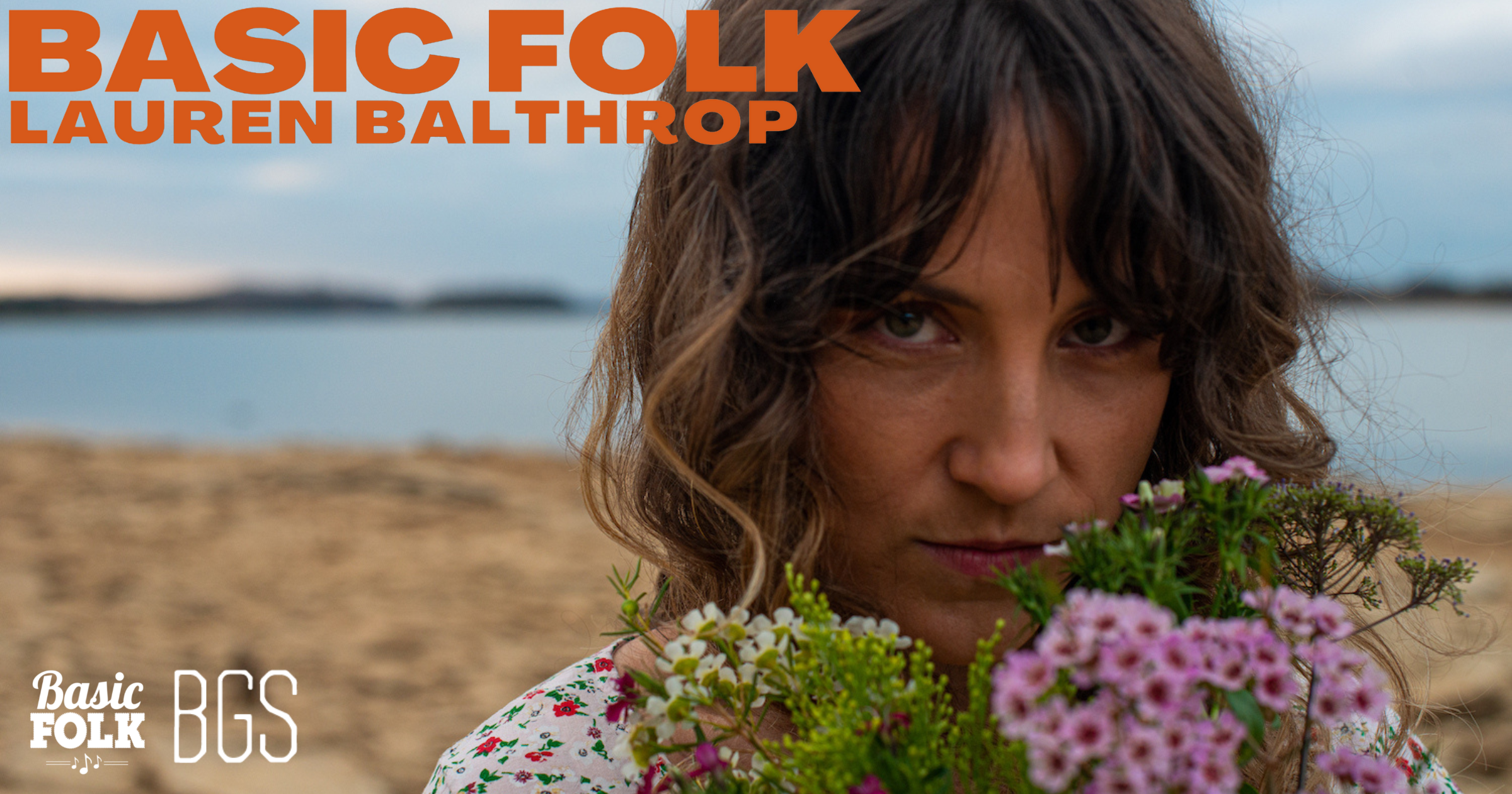
Basic Folk – Lauren Balthrop

Lauren Balthrop’s Mobile, Alabama upbringing saw her soaking in the music of The Andrews Sisters, Steve Sondheim, R.E.M., Elliott Smith and Neil Young. As a child, she was involved in activities that varied from sports, to drama, to music and beyond. She never really settled on a passion, until she found acting and theater. She pursued that dream from fourth grade until after college, moving to New York to go after auditions and acting parts. She found a soft landing in the city by moving in with her brother, Pascal. The two would then go on to form the large band (they called it a traveling small town) of Balthrop, Alabama. From 2007 to 2012 they toured the country with as many as nine band members taking to the road. In this experience, she met Dawn Landes and Annie Nero, with whom she joined up for the harmony centered trio, The Bandana Splits.

LISTEN: APPLE • SPOTIFY • STITCHERAMAZON • MP3

In 2013, she released a solo album under the name Dear Georgiana, which referred to Georgiana Starlington, the pseudonym she used in Balthrop, Alabama (everyone went by a character name.) She called those “the songs her brother doesn’t like,” at least not for their band… After that, she wrote a bunch more songs that felt as though they were written in her own voice, which she released under her name as the album This Time Around. Her new solo album continues the sentence: Things Will Be Different. She’s exploring the themes of change, upheaval and heartbreak while looking towards the future with hope. What’s also cool for Lauren is that she’s finding new meanings in these songs that differ from their original purpose. Lauren is a curious learner who seems like she’s always got her antenna up. I love her new record: the lush sounds and humor are hitting me right. It was great to talk to Lauren in this medium! We have known each other for almost 15 years and have instigated many antics over the years. Enjoy!


Photo Credit: James Paul Mitchell

The Story Within Violet Bell’s New Folk Album Is More Than Just a Celtic Myth

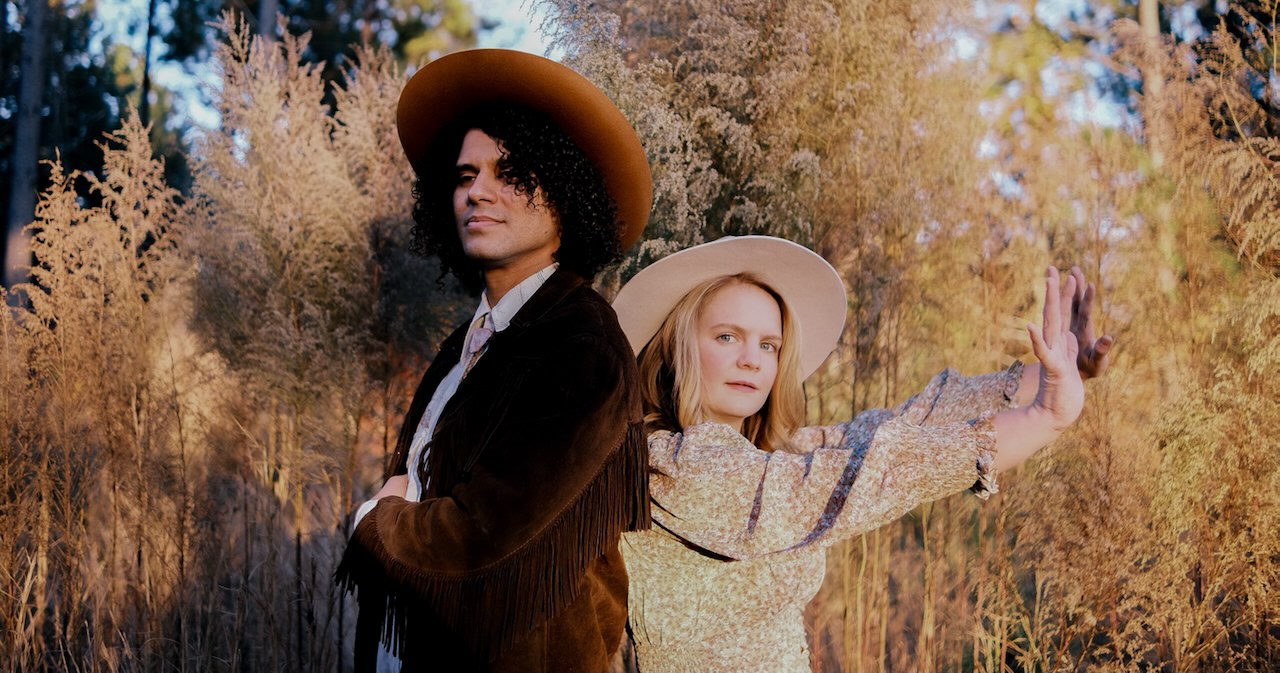
Americana duo Violet Bell‘s new album, Shapeshifter – out October 7 – tells a story of the mythological selkie, a mermaid-like creature from Celtic folklore that embodies a form that’s half woman, half seal. In their retelling and reshaping of this ancient folk narrative, they tease out its connections to the transatlantic journey of American roots music, to the cultural and social melting pot of the “New World,” and to agency, intention, and self-possession. 

A concept album of sorts, the music is remarkably approachable and down-to-earth, while the stories and threads of the record tell equally ordinary and cosmic tales. At such a time in American history, with fascism once again on the rise and attacks on bodily autonomy and personal agency occurring with greater frequency at every level of governance, Shapeshifter offers a seemingly timeless lens through which to engage with, understand, and challenge the overarching social and political turmoil we all face on the daily. Moreover, it’s an excellent folk record, demonstrating Violet Bell’s connections to North Carolina, Appalachia, and the greater communities that birthed so many of the genre aesthetics evident in the album’s songs.

Shapeshifter is a gorgeous exercise in community building, an artful subversion of societal norms, and a stunning folktale packaged in accessible, resonant music with a local heartbeat and a global appeal. Read our interview with duo members Lizzy Ross and Omar Ruiz-Lopez and listen to a brand new single from the project, “Mortal Like Me,” below.

BGS: I wanted to start by asking you about community, because I know it’s always very present in your music making. I feel it, definitely, in Shapeshifter. Not only because you’ve got Joe Terrell and Libby Rodenbough (Mipso), Joe Troop, and Tatiana Hargreaves on the project, but because I can feel that community is a tent pole of this record. What does community, musical and otherwise, mean to you in the context of this project? 

Lizzy Ross: It was such a wild time to be making the record because it was March of 2021, so vaccines hadn’t quite happened yet and we had all been on lockdown for about a year. We were obviously really missing our community and the live music community. There was also this strange thing, where our friends who would normally always be on the road all the time were at home. So we had an incredible opportunity to call up people, like calling up Tati and Joseph and Libby and Joe Troop – who lived in Argentina but came home because of COVID! The way that it worked out, people were around and we were able to convene and make this album in circumstances that probably wouldn’t have been possible, because everybody would have been on the road. 

Omar Ruiz-Lopez: Or, [we would have had them] recording remotely. Which is not the same. One of the reasons why I play music is because of the community. That ability to bring people together and share music and hold space together, the energy that comes from that is so vital to the human experience. Getting to create that space, to bring an album to life, there’s not much else in this world that I live for, besides that. Getting the opportunity to bring everybody together, especially after such a big isolation, was so life-affirming and helped bring me back to why I make music in the first place. 

That’s definitely palpable in the music itself, but also in the overarching viewpoint that y’all have within this record. I also find that it’s very grounded. You might have heard BGS just released our first season of a podcast called Carolina Calling, about North Carolina’s history through music. One of the through-lines that keeps coming up in all of our interviews is that North Carolina specifically has such a strong sense of musical community. Even though this is kind of a story record and kind of a concept record, it feels very grounded in North Carolina and in the South. 

LR: Omar and I are kind of mongrels from the non-South. But we’ve come and steeped ourselves in this land and these traditions and this community, so I think that what our music reflects is the internal sort of “musical diet.” Our musical diet is probably atypical when you consider what most people think of as North Carolinian or Southern music. The music we were listening to going into this even, we were listening to a lot of Groupa

ORL: Groupa is a Scandinavian folk band that makes these albums based on music from different countries, like Iceland, Finland, and Sweden. I feel like anything that’s not from here is called “world music,” but their brand of folk music is very beautiful and out there and organic and grounded in the different traditions they represent on their albums. It’s mostly instrumental music, it’s pretty powerful. We were listening to that a lot, as well as Julia Fowlis, a singer who sings in Gaelic primarily. Those cultures – Scottish, Irish, Scandinavian folk – they’re related to the music here like old-time, bluegrass, and Appalachian folk traditions of fiddle and banjo. 

To bring it back to the question, I’ve been here for twelve years. I was born in Panama and raised in Puerto Rico listening to Spanish and Latin folk. When I say Spanish, I mean Spanish-speaking, the language of our colonizers. But there’s something still not-from-Spain in the native, Indigenous musical and cultural influences in that music. Like in Bachata and Cumbia. Then I moved to the States and fell in love with rock ‘n’ roll and more of the singer-songwriter tradition here. 

LR: Originally I came here for school. I grew up in Annapolis, Maryland, where I didn’t really find a musical community. There was one, I just didn’t find it. When I came to North Carolina it was the first time I saw people gathering together over a potluck and music, with like shape note singing and like the Rise Up Singing book. Having this experience of big, group harmonies I had this realization more and more that music could be a part of my daily life in a way it hadn’t been as a child. Or, rather, as a way of public, shared daily life. Because it was always part of my life, but it was part of community life here in North Carolina. That was a big element of how music and North Carolinian music in particular drew me in and captured my heart. 

Can you talk a bit about the central storyline of this album and how you picked up the mythos of the selkie and turned it into this project? 

LR: The story of the selkie came to us and it’s something that is in the culture, it’s floating around. Many folks have seen the movies Song of the Sea or The Secret of Roan Inish. The first song that came to me, Omar and I were at the beach one day and I was playing on the banjo and this song came out. It was “Back to the Sea.” We were in the Outer Banks of North Carolina at that time, at the ocean, and I was kind of just listening for who this character is and what they are saying. It was a selkie. It was a selkie singing of getting to return home. 

I would say that coming home to ourselves is one of the central themes of this album and one of the themes the selkie story really brings into focus. The whole myth is centered around a being, a mystical ocean being, who gets yanked out of her native waters and forced to live in a world that doesn’t understand her and wasn’t built around her existence. To me, there’s a really clear connection. That story is a medicine for the cultural wound of when we don’t fit into the prescribed paradigm of power. If we don’t fit into white supremacy or if we don’t fit into normativity or if we don’t fit into patriarchy. It’s the sense of feeling like we have to cut off parts of ourselves that aren’t compatible with those power structures so that we can be acceptable to the power structure at-large.

This story says, “No, don’t do that.” You can reclaim the parts of yourself that you’ve had to orphan in order to survive. You can reconnect to those pieces of you and you can come home to yourself. It speaks to integrating who we are, the characters of the land and the sea in this story are really powerful to me. The sea, to me, is this cosmic force. It’s a pervasive, creative, destructive, loving, mysterious force that the selkie comes out of. It doesn’t follow the rules of the land-bound world. To me, it’s like the structures and hierarchies of our culture – whether it’s capitalism or something else.

One of my questions was going to be about how queer the record is, and not just Queer with a capital Q, but also a lowercase Q, the idea of queerness as just existing counter to normativity. But it’s not just a story of otherness, it’s a story of otherness in relationship to embodiment. In the South right now especially, but in this country in general, embodiment is under attack. Whether we’re talking about COVID-19 or abortion access or trans rights. There’s something in this record that speaks to all of that. 

LR: I think one of my experiences [that informed this music] is that I’m in a female body. There’s a line in one of the songs, “I Am a Wolf” – that song is two parts. First is the fisherman speaking, he’s kidnapped the selkie, taken her out of her native waters, he’s made her come be his bride, and he’s like, “Why isn’t this working?” It sucks, he’s lonely, he thought things would be better. The second half is the selkie responding and she says, “I am a wolf, not a woman.” That’s the first thing she says. That was something I said at one point, when I was connecting with a sense of deep grief and rage within myself around what I felt were the prescribed cultural parameters of my existence. 

ORL: The people who made this album were mostly by BIPOC people and [people who fall outside those norms]. Joseph Sinclair and I are not white and Joe, Tati, [Lizzy], and I are not straight. I feel like a lot of different perspectives went into making this album. We didn’t just get white, straight dudes to make this album and it felt good that way, getting different musical perspectives on this. We could have just made it ourselves, that’s the other thing. I’m a multi-instrumentalist and Lizzy is a harmony singer, we could have overdubbed to kingdom come. Part of the reason why we got all these people together into the same room is because of their unique perspectives on the traditions they brought to the table. 

LR: This thread about embodiment is really important and by asking this question you’re helping me articulate something that I’ve been sitting with for months, a year, as I’ve been thinking about the writing and the words and characters in this story. And also, what is it for me in this story that I’m trying to unravel with this album. Also on a cultural level, what are we talking about here? 

The selkie, her skin is taken away from her in a moment of innocent revelry. The story starts with her dancing in the moonlight on a rock and that’s when the fisherman steals her skin. When I think about the people that I know and love, I think a lot of these systems are violent towards people whether or not they fit within the system’s perception of dominant power. When I think about the six-year-old version of a person or whatever version of a person was able to un-self-consciously dance or feel good or go into their mom’s closet and put on her clothes and makeup and not feel ashamed – there’s a different version of this for literally every person and what that means. That innocent revelry, it’s experiencing oneself not through the eye of an external observer but through the juicy presence of embodiment and joy and a sense of wholeness and rightness in your being.

Everybody’s had the experience of having their “skin” stolen from them. When you get yanked out of your sovereignty, your joy, your bliss. You get catcalled, you get shamed, you get this or that. There’s violence done to you, whether it’s physical or not, there’s that sense of losing your skin, when we start to separate from ourselves and regard parts of ourselves as less than. I think that dysphoria is a really important part of this story and this album. When we don’t experience ourselves or feel ourselves as the cultural perceptions tell us we’re supposed to be, whether it’s a question of gender or color, this feeling of not being at home in our bodies, I think that was a lot of what really resonated with me, even unconsciously, about the selkie. One of the ways that it took root and grew in my consciousness and eventually in our shared consciousness, between me and Omar and the folks who are on this music.

As a picker I have to talk about “Flying Free” and “Morning Girl,” because I think having instrumentals on this record makes so much sense. I have some ideas about how they fit into the story, not just based on the titles, but also based on how the tunes are so evocative like the rest of the project. Why, on a record that feels like a concept record, why instrumental tunes? 

LR: Words are our inheritance from so many of the same structures that can oppress us. And they’re also our freedom. Words allow us to develop and communicate concepts and they also contain hierarchies and power structures that we may or may not really need. The name of the song, “Flying Free,” and the fact that it’s instrumental, to me it’s like this somatic sensation of the selkie plunging back into the sea and the joy of being reunited with her home waters. Which to me is her sense of self, her sense of worth and safety and agency. 

ORL: Sound, organized sound inside of space, one of the powerful things about it is that we are able to attach emotion to it. It’s kind of beautiful how two people could feel similar things listening to one piece of music. When it came time to put together the songs for this album, there were a handful of tunes that came up that weren’t asking for words. But that totally helped paint the picture of the world of the selkie and what she was going through. 


Photo credit: Chris Frisina