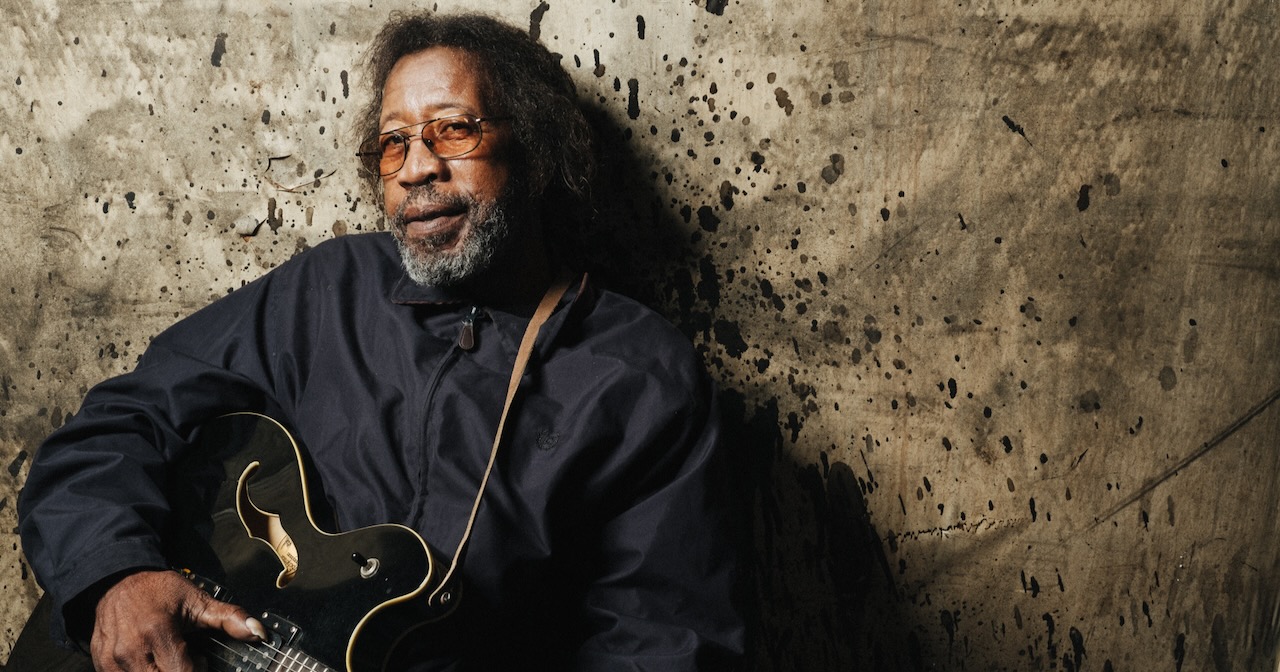
Artist: R.L. Boyce Hometown: Como, Mississippi Song: “Coal Black Mattie” Album:Tell Everybody! 21st Century Juke Joint Blues Release Date: August 11, 2023 Label: Easy Eye Sound
In Their Words: “I first heard Fred McDowell play [this Ranie Burnette song] when I was a teenager and it’s been one of my favorites ever since. There’s a lot of people that have done that song, but everybody got their own way of doing it, and I got my own way of doing it that don’t nobody else do. It’s one of them [songs] you can put whatever you want to in it.
“When I got there in the studio, they asked if I wanted to go over anything first. I said, ‘There ain’t nothing to go over. Let’s just sit down and get to it. I’ll play whatever comes to me.’ It’s always good to work with Kenny [Brown] and Eric Deaton. They from down my way, you know. [Dan Auerbach is] a cool dude and treated me very nice. I’m glad he asked me to come up to Nashville. He knows his blues, and once we started playing, he hung there with us pretty good.” – R.L. Boyce
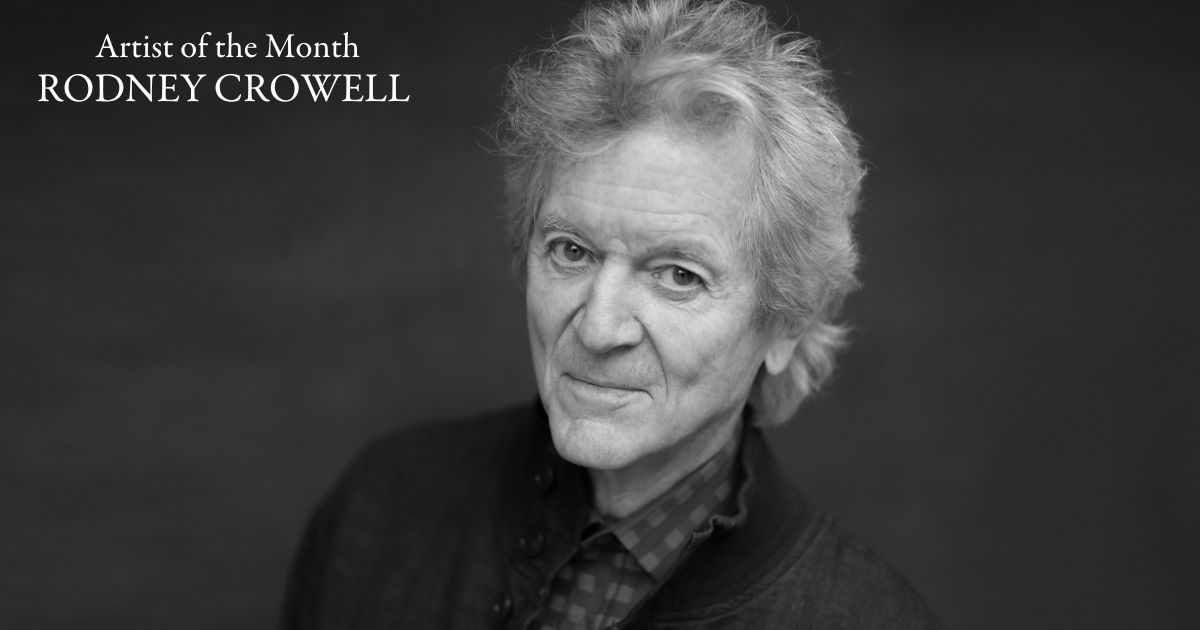
Throughout Rodney Crowell’s best work, there’s a rhythm — one could say a heartbeat — in the way he sings and writes about love and mistakes. You can feel the pulse inside of his poetry, an undeniable energy that marks this Texas native as one of the most intriguing and important country and Americana songwriters of his generation. He can be sentimental but rarely sappy, always ready to reassess a situation through a song without making you feel like you’ve heard it before. His albums reveal themselves further over time, rather than chasing a trend.
Longtime fans of Crowell’s work are likely to keep his new album, The Chicago Sessions, in rotation alongside classics like Diamonds & Dirt or The Houston Kid. (Even the album’s cover image is a throwback to his 1978 debut.) Compelling new songs like “Making Lovers Out of Friends” are delivered in a voice that’s weathered but not weak, yet he also offers salutes the late great Townes Van Zandt with a poignant rendition of “No Place to Fall,” composed decades ago by Van Zandt from the perspective of a sad wanderer who’s looking for someone to count on.
For The Chicago Sessions, Crowell counted on producer Jeff Tweedy and recording engineer Tom Schick to frame the collection in a manner that feels eloquent as well as immediate. Crowell and Tweedy also team up to sing the album’s lead single, “Everything at Once,” and the mutual admiration is evident.
Upon its release, Crowell noted, “It occurred to me that Jeff and I are both songwriters, and we ought to write something together for this album. We could have harmonized on it and gone down an Everly Brothers route, but ultimately we decided to just sing in unison and throw it out there like an all-skate. I love that we didn’t get too precious about it.”
Tweedy added, “The way that Rodney writes is deeply connected to a classic era of country songwriters that I’ve always loved. In my estimation, it’s as close as I can get to working with Townes Van Zandt or Felice and Boudleaux Bryant — people who crafted songs with a very specific sensibility. And I like being near that.”
Same here. For that reason and many more, we’re proud to reveal Rodney Crowell as our BGS Artist of the Month. In a few weeks, we’ll share our exclusive interview about his new work, plus we’re diving into our archives for our favorite tracks and videos from his admirable career – like his 2017 Sitch Session performance of “East Houston Blues.” Meanwhile, enjoy our BGS Essentials playlist for Rodney Crowell.
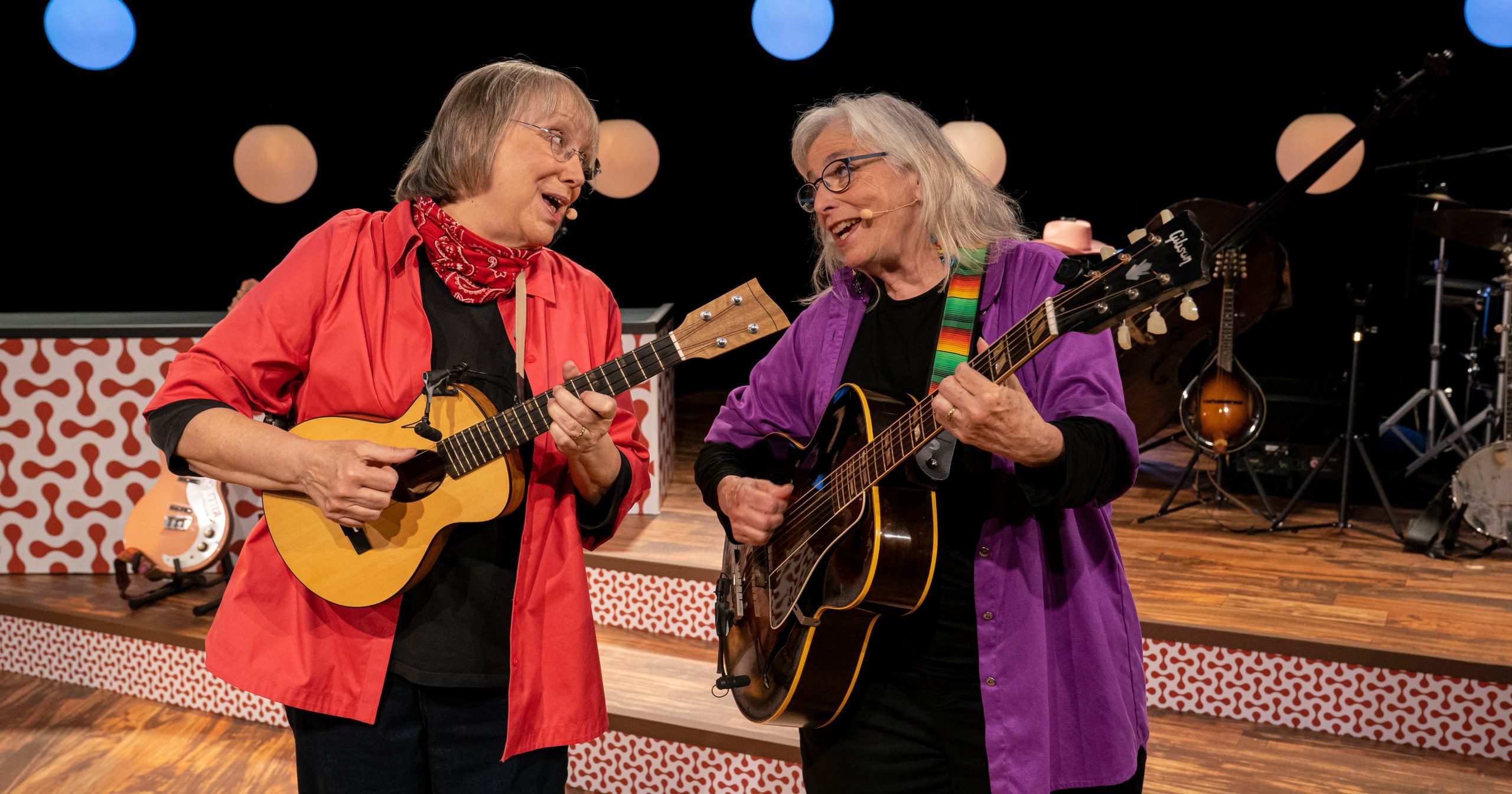
There is hardly a sphere of the music industry that musicians and community builders Cathy Fink & Marcy Marxer have not conquered, from bluegrass and folk music to children’s music and the Grammys. Now, these multi-hyphenate musical polymaths have set their sights on a new medium through which they can create, storytell, and connect with audiences: film.
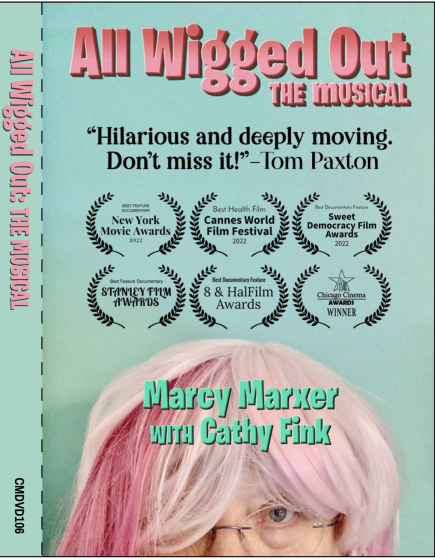
All Wigged Out is a documentary musical film that tells the story of Marxer’s journey through breast cancer diagnosis, treatment, and recovery. The film, which will be available on demand May 16 on Amazon, Google, and many more, utilizes musical mastery, eclectic wit, storytelling, and comedy to share the poignant, bittersweet, hopeful, and downright zany tale spun together from Marxer’s unique perspective, writing style, and multi-instrumental approach. On April 28, an album of the catchy, hilarious, and touching songs from the musical – entitled, All Wigged Out: Songs from the Musical – will be available wherever you download and stream music. (Pre-order on Bandcamp). Watch a trailer for the film:
“[All Wigged Out] is a way to entertain people, but educate at the same time – educate patients and caregivers,” Marxer explains via phone. “Not educating in a condescending way, but there were just so many things that I could not expect, that I didn’t know how to deal with. This is just a way of sharing my experiences – which is just one experience – and help folks to live life one day at a time, doing your best with what you’ve been given to make decisions and move forward. And the next day, when everything changes, you still just make the best decisions that you can at that moment. Then you can live life with no regrets.”
“And don’t lose your sense of humor!” Cathy adds from the background – they both laugh.
Over the course of their widely variable careers, Fink and Marxer have certainly never lost their senses of humor – cancer or not. Together and separately, their careers have exceeded four decades in folk music, old-time, bluegrass, children’s music, and so many other realms of the entertainment industry. It comes as no surprise, that despite not having any prior experience writing, producing, and staging a musical documentary film, that they were able to leverage their personal and professional communities, teach themselves these often punishing skill sets with steep learning curves, and put together a film that’s musically engaging, humorous, joyful, and actually says something. All at a markedly clean-and-crisp, professional level.
All Wigged Out also shines a spotlight on Cathy & Marcy’s relationship, the way they rely and depend on each other not only in their musical careers, but also in their personal lives. They demonstrate, through this film and in all their efforts, that their penchant for community and community building starts at home. They’re committed leaders, mentors, and friends to all in the roots music industry and beyond, so it feels absolutely grounded and genuine to see them both expand their vision for community to include cancer support groups, associations, and all kinds of organizations with missions of supporting and uplifting folks who have had cancer touch their lives.
With no shortage of laurels and film festival accolades, All Wigged Out is certainly poised to bring Fink & Marxer and their community-minded music to so many new audiences within and outside of the music community, especially with their activist and organizing experience. They’ve taken All Wigged Out to screenings, talk-backs, fundraisers, discussions, and panels, often partnering with Cancer Support Communities and Gilda’s Clubs, as well as making appearances at the NC Museum of Art, Silicon Valley Chamber of Commerce, American Nurses Association, National Women’s Music Festival, and so many more.
This week, in celebration of the film’s release, they’re partnering with Ebeauty on a film screening and panel that features Marxer, her surgeon, and a representative from Ebeauty, which is a non-profit organization that facilitates cancer patients obtaining wigs and other cancer resources. During the event, Marxer will donate the film’s titular wig to Ebeauty, which will use the hair piece to train wig technicians and cosmetologists on wig styling for patients, then the wig will be passed along to another cancer patient facing hair loss as part of Ebeauty’s wig exchange program. This is just one example of the many ways this film and its music can touch folks’ lives and help them on their own journeys back to health and wellness.
Whether teaching ukulele, competing in local fiddler’s conventions, participating in diversity, equity, and inclusion efforts, or just camped out in a festival parking lot picking, Cathy Fink & Marcy Marxer lead by example, putting their hearts and souls into everything they make and by doing so, they open a wide, hospitable door to anyone and everyone they meet. The connection, compassion, and poignance of All Wigged Out will make this task even easier, despite its often challenging or bittersweet subject matter. The joy – and the belly laughs – in this film are second only to what we love most about Cathy & Marcy to begin with: their music.
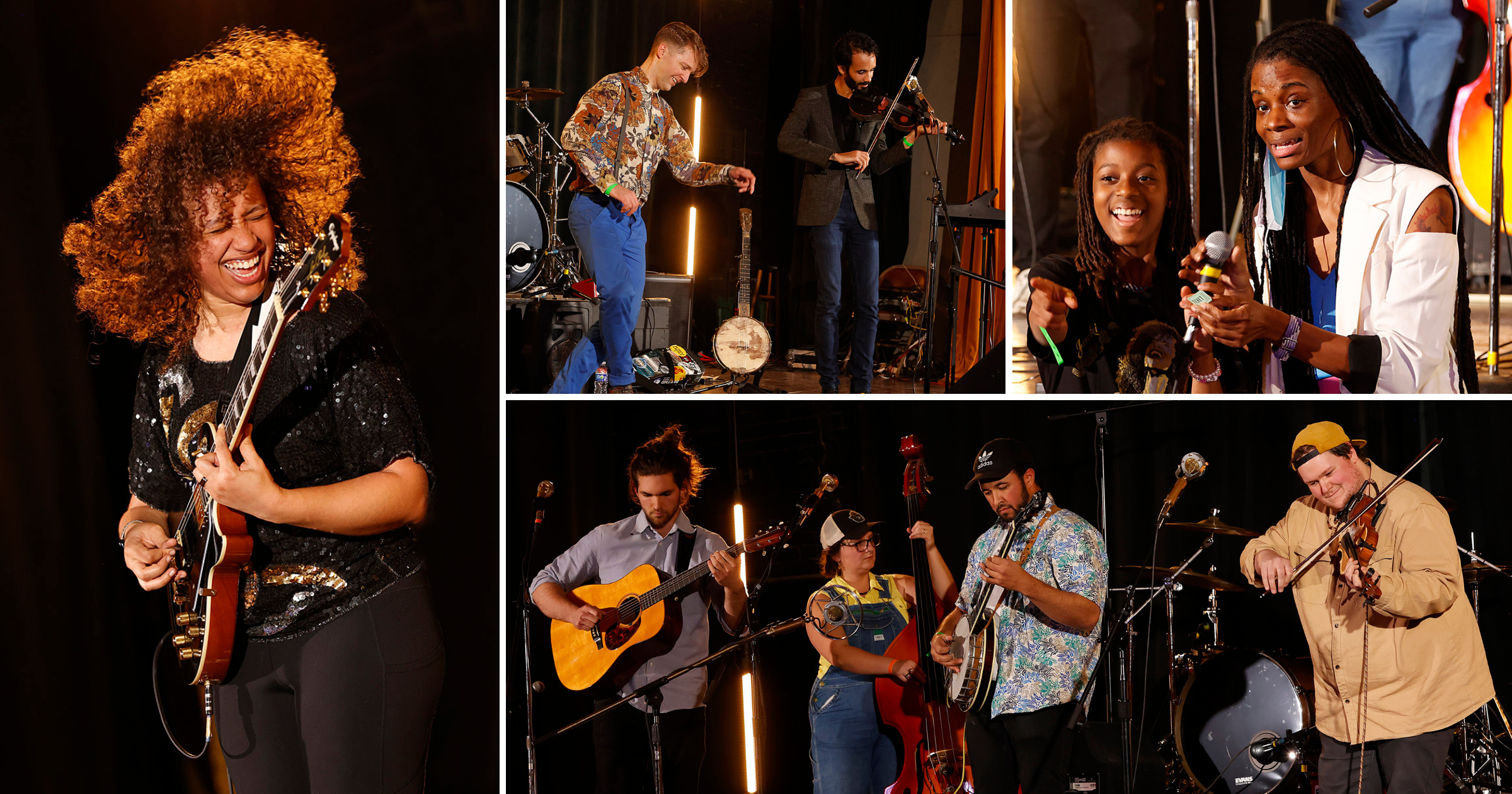
A small, enthusiastic audience of first arrivals chat in excited, hushed tones as they listen to Hubby Jenkins soundcheck into a pair of Ear Trumpet Labs microphones in the ballroom at Fort Worth, Texas’s Southside Preservation Hall. It’s an unseasonably cool Saturday afternoon in March, with crystal blue skies and wispy clouds backgrounding the historic Fairmount-Southside district. Over the next nine hours, ten musical acts will grace the stage. Many of them are already in the room, contributing to the light buzz and chatter; this already feels like a generative space.
In its third year, the Fort Worth African American Roots Music Festival (known lovingly as FWAAMFest) has a very specific vision within the Americana/folk/old-time/bluegrass festival space: to highlight the depth and breadth of contemporary African American roots music and, by doing so, underscore the seminal, vital contributions of Black folks to every single roots genre in this country. Presented by Fort Worth-based non-profit Decolonizing the Music Room (who BGS has collaborated with on multiple occasions), the event carries forward the organization’s mission, explained artfully and succinctly by DTMR founder Brandi Waller-Pace as she kicks off the day introducing Hubby Jenkins: “To center Black, brown, Indigenous, and Asian voices in music and related fields.”
“There are so many eyes and ears on culture and the arts in Fort Worth,” she continues. “And I want Fort Worth to be at the forefront of the conversation…”
Hubby Jenkins began the day’s many conversations with a couple of banjo tunes, because, he admitted, “I’m a little nervous and [banjo tunes] make me feel cozy.” It was indeed a lovely, cozy easing into the day’s marathon lineup of music and presentations. During his set Jenkins picked guitar, banjo, bottleneck slide guitar, and played bones. And, he plays the festival’s first of many gospel numbers, “Jonah in the Wilderness,” inviting the audience to sing along, grounding his performance in the history of the Southside Preservation Hall space and these rootsy genres’ origins.
Kicking off the day with a gospel-filled set in a historic former church made so much sense, calling each of us as listeners to be active participants in the day’s festivities and also in its mission: to recenter these community-based musics on the folks who gave rise to each of them, reminding us we each have a role to play in telling a fuller, more just history of these musics.
Next up on the lineup is Justin Golden, who jokes that he and Hubby run into each other on gigs constantly and have the same repertoire, but from the outset his similar-seeming act couldn’t have felt more different. Working within the same vernacular and with such broad overlap, Golden and Jenkins are each still so distinct and unique – and illustrate the wide variety intrinsic to Black and African American roots musics, even within one form. Golden’s first number is an original, “I Hate When She Calls.”
He peppers older, classic Texas blues numbers – though he admits this is his first time in Texas – throughout heartfelt, poetic, and direct originals. His music’s foundation is fingerstyle blues, but with modern crispness, timeless touches, and a crystalline, focused singing voice.
Festival-runner and founder Brandi Waller-Pace stepped back on stage, this time as performer, for the next set of the day with songwriter, composer, and banjoist Kaïa Kater as the debut performance of their duo, Sable Sisters. They swap out banjos and guitars and a bass, singing folks songs and originals with nearly familial harmonies. A double clawhammer banjo cover of Stevie Wonder’s “Happier Than the Morning Sun” is their set’s highlight, with the legendary Justin Robinson’s guest appearance to play a set of old-time tunes ranking an honorable mention. Other festivals would be wise to consider booking Sable Sisters; if duo supergroups were a thing, this is one. Superduo? You get my meaning.
Between each set of music, as the stage was changed over, representatives from partner organizations, sponsors, and community leaders spoke to the audience, which slowly grew from a couple dozen into a small-but-mighty one to two hundred attendees. Tables in the lobby featured literature, information, and calls to action for DTMR, FWAAMFest, and these partner orgs – and from the back of the ballroom wafted the tantalizing aromas of Lil Boy Blue BBQ. (If only all music festival barbeque offerings were this legit.)
After Sable Sisters’ set concluded, the next event was a live podcast taping featuring a collaboration between Rissi Palmer, of Color Me Country Radio on Apple Music, and Garrett McQueen of Trilloquy Podcast. The conversation was titled “Redefining ‘Classic’” and featured Palmer, McQueen, and their FWAAMFest lineup-mates Jake Blount, Demeanor, Hubby Jenkins, and Dr. Angela Wellman. Palmer and McQueen took turns prompting their panelists to consider ideas around canon, genre lines, what terms like “classical” really mean, and so much more.
A theme that emerged throughout the taping was how often there aren’t hard, fast, concrete answers to these big, zoomed out questions about justice, representation, art, creation, space/placemaking, and community building. The panelists and hosts encouraged and challenged each other and themselves, reminding all of us that engaging in these kinds of conversations is part of the process and having the space – like FWAAMFest – to engage, build, and hold community like this is so important.
It’s not lost on myself or perhaps anyone else in attendance just how much gratitude each of these participants have at being enabled to be in this FWAAMFest space. Each of the performers and speakers, in their own way and in their own words, effortlessly carried the event’s mission with them as they brought themselves to the space, wholly and vulnerably and powerfully.
The podcast recording gear struck, rapper and banjo player Demeanor took the stage for his first ever full-band set – and it was revolutionary. During the Trilloquy x Color Me Country conversation Demeanor (given name Justin Harrington) stated so eloquently that “Rap is folk music, because hip-hop is an indigenous Black American art form… From the porch to the stoop.”
He and his band immediately and indelibly illustrated his point with an energized, powerful set based on sometimes spitfire, other times free flowing rap lyrics with poppy, sung verses and choruses. It’s lyrical, content rich, witty and sharp. Demeanor’s writing and production style are full of forward motion, punctuated by arena rock guitar and Wooten-like bass lines. While often centered on banjo, the five-string is not the only way roots music oozes from these songs. Their lyrics and hooks are sharp and the vocals are strong – his singing isn’t an afterthought or simply in service of a hook. Several songs were from an upcoming unreleased album, including one stand-out track said to feature Rhiannon Giddens (his aunt) and Charly Lowry.
The delight of Demeanor gave way to the delight of dance and musical dialogue, as longtime friends and jaw-dropping collaborators Jake Blount and Nic Gareiss took the stage. Blount began the set solo, accompanied starkly by low, droning synth sounds gently, languidly warbling through half tones as he sang, dirge-like, above the sound bed, commanding silence. Blount brings us back to gospel, again looking backward to look forward, and in just a couple numbers the droning synth gives way to droning fiddle.
Gareiss and his singular approach to percussive dance and traditional step-dancing injects energy and joy into the crowd, who’ve been listening and engaging for almost six hours now. Audience members are on their feet, often with phones out, disbelieving the stunning musicality of Blount and Gareiss together, sixteenth notes perfectly, bafflingly in sync.
Nic dancing to Jake’s fiddle recalls the interconnectedness of Irish step dance and Black percussive dance traditions. Where cultures, practices, and folkways overlapped at the lowest of classes in America’s urban centers, dance flourished and Irish step dance cross pollinated with Black movement traditions and Appalachian and southern steps. Over the past century and more, movement and roots music have often been compartmentalized, privatized, and sequestered from each other. Bringing them back together in this intentional way is not just a radical act given the identities represented – in this duo and in this day of programming – but simply by existing together, with intention, Blount’s and Gareiss’s talents underline what these musics were initially created to do, say, and be.
The vibe in the Southside Preservation Hall ballroom at this point was reaching “full blown party,” and when the first of the festival’s headliners, Tray Wellington Band, took the stage the energetic momentum was raised further still. For all intents and purposes a straight-ahead bluegrass band, Tray Wellington’s four-piece group demonstrated this IBMA Award winner has found his voice. His critically-acclaimed album Black Banjo certainly feels mature and fully-realized, but this was the first this writer had caught Wellington’s band since long before that record was released. The growth they’ve sustained, musically and as a unit, in the interim is remarkable. They execute chamber music level virtuosity, but with bluegrass bones. With Katelynn Bohn (bass), Josiah Nelson (mandolin), and Nick Fallon Weitzenfeld (guitar), Tray references Dawg, Béla, New Grass Revival and many more, but with an underpinning that feels as bluegrass as Appalachia – say Johnson City, TN, where he’s from.
They play a Kid Cudi cover, which is promised to be on an upcoming release, and the audience descends into mayhem as the melodic hook is slowly recognized in ripples throughout the crowd. Whether covering hip-hop or playing an old-time tune, these pickers demonstrate amazing soloing: modern, in-the-moment musical ideas without ego or self-absorption. And with Tray’s right hand anchoring all of the above, it reminds of Earl Scruggs in his Revue days – solidly bluegrass, but intimating musical ideas that come from so far afield, way beyond what we consider bluegrass territory.
Chambergrass, or whatever you want to call it, is seen as more “high-brow” or “intellectual” given its adjacency to conservatories and storied music schools, but this style of virtuosic playing is so well placed within the musical vocabularies of people from the region that birthed string band traditions. And in this context it can be executed with equal ease, aplomb, and athleticism, and with a much more grounded approach.
A quiet, slightly exhausted euphoria tingles through the stalwarts of the crowd who remain for Jackie Venson’s no-holds-barred FWAAMFest finale. Waller-Pace returns to the stage one final time to introduce the night’s last headliner, with her daughter Sparrow (who waits patiently to get her Jackie t-shirt signed at the end of the night.)
Venson is accompanied only by drummer Rodney Hydner – and her signature DJ sampler that allows her to play along with tracks, sound beds, background vocals, and play solos over loops. Even with just a two-person act, her trademark joy immediately washes over the entire room and re-energizes the crowd. Venson’s songs are soaring, anthemic, and huge, matched only by her broad grin as she smirks and laughs at herself and her own playing like it’s an inside joke.
Perhaps the best guitarist of her generation, certainly the best rock-blues guitarist of the past thirty years, the internet is in a four to six week feedback loop of discovering and rediscovering Venson’s playing at the moment, with her Tweets and TikToks seemingly going wildly viral about once a month. She’s been retweeted and signal boosted by a who’s who of Twitter personalities and musicians, and it’s all because hers is a singular voice, perspective, and skill.
Watching her improvise over each song recalls Nic Gareiss’s dancing from earlier in the evening. When you’re watching something so visceral and in the moment, you can’t help but inhabit that moment with them. And many of us do inhabit these moments with Venson by moving, standing, dancing, reveling in the ever-present joy of her music.
Venson’s brand of modern blues is unconcerned with divorcing itself from the blues of the past (and of the present) that some feel is stoic, stuffy or dusty, and out of step with modernity. Her brand of blues, no matter how distant it has traveled from its roots, still honors the sounds of old-time and ragtime and down home blues, because it knows where it came from and to what it’s connected. Venson’s connections to Texas and Austin further reinforce this point – and help place Venson and her style of playing squarely within “guitar culture,” too.
At one point during her performance Venson marveled at how the FWAAMFest gathering was, in her words, “Pretty legendary!! You’re going to be talking about this in 10 years, telling people you saw everybody on this lineup here today.”
It was a feeling that began creeping up much earlier in the festival, that what we were present for wasn’t just a community music festival, it was so much more.
Black, Brown, Indigenous, Asian, and Disabled folks – artists and creators and movers and musicians – continue to offer and model ways to hold the past within ourselves while looking ahead to the future, a duality that modernity and westernism struggles to acknowledge or inhabit. What’s striking about this conglomeration of creators and musicmakers on this lineup at this festival is that they make it look easy. It seems effortless to understand, uplift, and uphold a mission like FWAAMFest’s. Partly because the participants all are stakeholders in that mission to begin with! With their music, their insights, and their storytelling these musicians and thinkers demonstrate the past is the future and the future is the past. Roots music – the kinds that center the experiences, stories, and seminal contributions of Black, Brown, and Indigenous folks – can spotlight and move through this dichotomy better than so many art forms, while remaining grounded firmly in the present.
FWAAMFest’s success wasn’t simply because it’s a festival with a novel, substantive mission. It was a soaring, generative, forward-looking success because it focuses on what “the mainstream” perceives as a niche within a niche within a niche – African American roots music – and shows all of the possibilities, all of the many universes of artistic expression endemic to such a niche. The specificity here is not prohibitive or exclusive, it’s unfailingly, infinitely expansive. In sound, genre, content, tradition, and beyond.
As Jackie Venson said, we all will still be talking about 2023’s Fort Worth African American Roots Music Festival for many years into the future.
Editor’s note: Follow Decolonizing the Music Room on social media to catch footage from FWAAMFest 2023 as it’s released and make sure to DONATE to support their mission and future FWAAMFests!
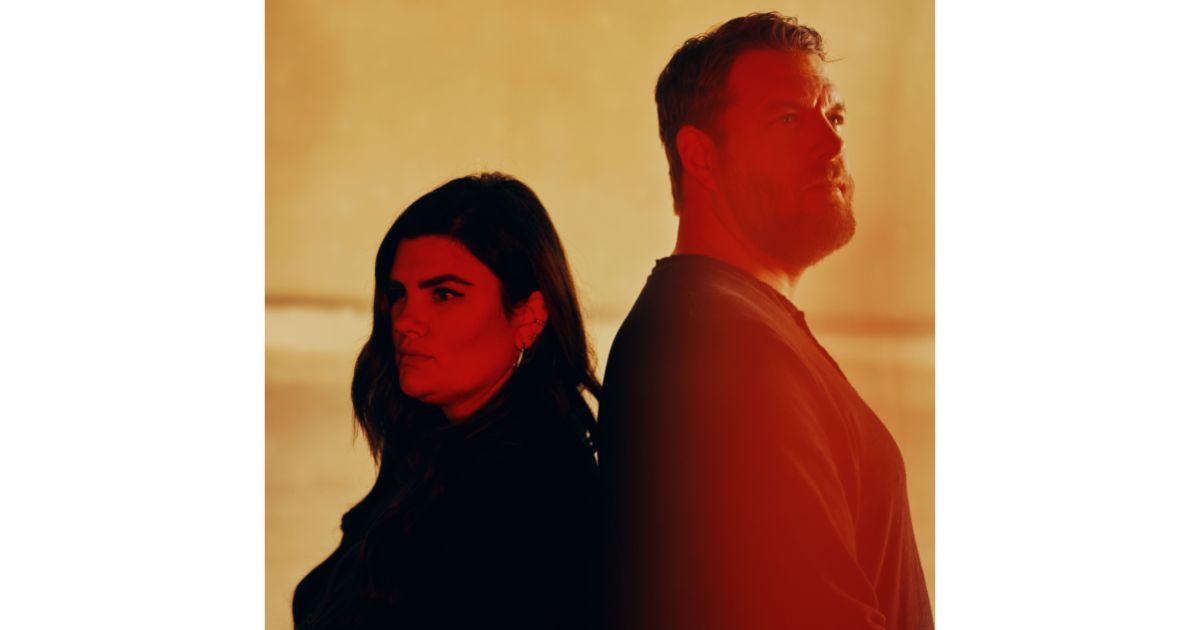
Artist:Carolina Story Hometown: Nashville, Tennessee Song: “Magic” Album:Colors of My Mind Release Date: April 7, 2023 Label: Soundly Music
In Their Words: “‘Magic’ is about embracing the unknown and the mystery of existence. Having immense gratitude for the fact that we’re even here on this rock out in the cosmos. It’s a song about contentment, being at home in your own body, and at peace with your journey so far. We have a choice to see things through a positive or negative lens every day. It’s choosing to view the world with the wonderment and awe of the inner child, knowing that the tragedies, failures, and dark parts of ourselves can be used to help others feel less alone while we’re here in this blink-of-an-eye daydream together.” — Ben and Emily Roberts, Carolina Story
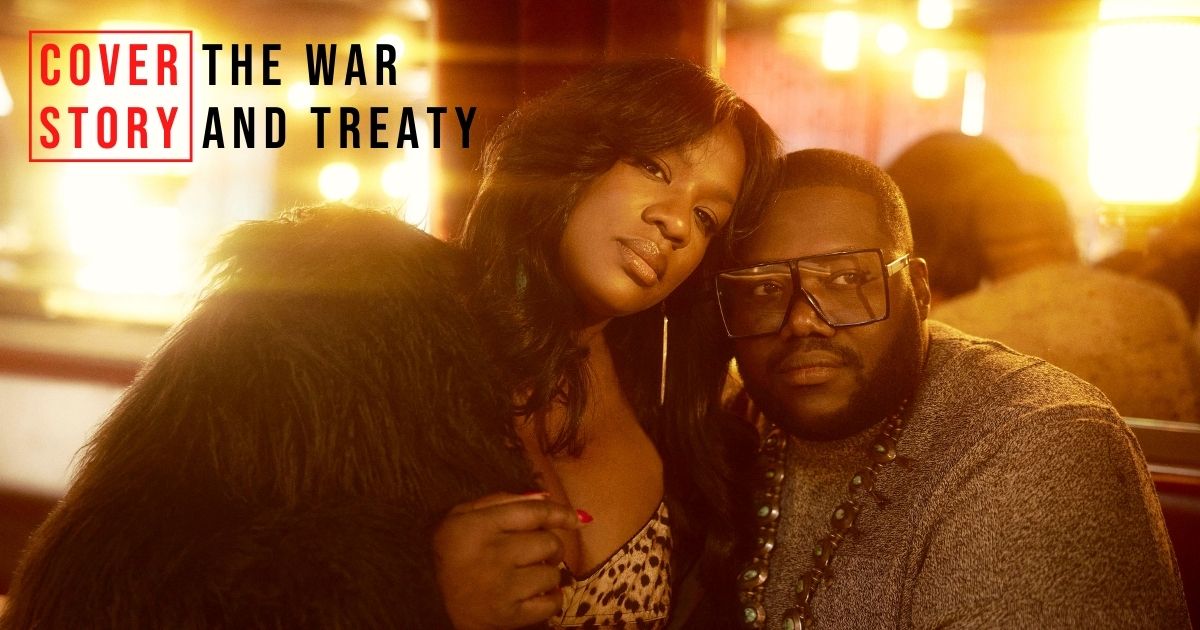
The War and Treaty’s new album, Lover’s Game, is a fitting tribute to the force that brought Michael and Tanya Trotter together. The Iraqi war veteran and the former singing prodigy who signed her first record deal at 16 have been capturing hearts with their riotously soulful sound since they began performing together in 2014. At home in Nashville, mid-tour, they discuss with BGS how their partnership has shaped their songwriting.
You’ve been together 13 years and your latest songs suggest you’re as fiercely in love as ever. What’s the secret?
Michael: This is what Lover’s Game is all about… it’s us realizing that there’s more to relationships, there’s many different kinds of love. And when you’ve found something serious, hold on to it.
You’ve admitted to being inseparable since you met at a festival and there’s a nod to it in the track “Blank Page” – “When I first saw you, I said to myself that’s a good look…” What was it you saw in each other that day?
Michael: I saw honesty. A lot of love in Tanya’s eyes. A desperate kind of hope: “Somebody in this world has to make me an honest woman when I say love is still here.” And I wanted to protect that. And hold her. Aside from the fact I saw her walk away one day and the bounce of her backside really encouraged me…
Tanya: [laughing] He took what I was going to say. When I first saw him I literally saw love in his eyes. And he talked so vulnerably – you don’t meet people who say right away “I have nothing.” Most people want to put on a front. And I had a son, and when I saw him with his – now our – daughter, it made me want to be a better mother.
As a married couple who tour you’re together all the time. And your performances are famously emotional affairs. Do you have to take time apart from each other?
Michael: [nodding vigorously] I’m learning that Tanya needs that a lot. She’s created a space in our house called The Pink Room where she goes alone to recharge. She says I’m tired, get out of here, go away man! I am completely different. I need to be stimulated till I pass out. It’s irritating!
Tanya: It’s not irritating, he just needs to watch a movie. He’ll put his bags down, sit in his recliner and the TV is on for three or four hours, that’s his way of coming down.
Michael: She’s being kind. Let me tell you how bad it is. Today, she wanted to get her nails done, but I didn’t want to be apart. So I just made some shit up: “I have some places to go…”
Tanya: [surprised] Oh, you didn’t have anywhere to go?
Michael: I went to goddamn Wendy’s.
Tanya: [laughing] Oh my God! He said he had this big plan…
Michael: I was going to tell you eventually, this is embarrassing. I circled the parking lot, went to Wendys, had a little food, went back to the car and watched movies.
It’s like your song “That’s How Love Is Made” says… “Can’t hate all your wrongs and only want all your rights…”
Michael: “Can’t say I’m tired when I don’t ask for help…” In my moments of neediness I will say I actually need you to touch me today. Hold my hand, rub my hair, put water on my head, because I can’t stop these thoughts racing. That’s post-traumatic stress disorder I have from the war. And she knows immediately how to get in gear. That is our balance, accepting each other’s…
Tanya: …quirks.
Do you think that’s part of your bond, that ability to understand what he’s going through? In your song “Five More Minutes” the pair of you wrote about the moment that Michael’s PTSD overwhelmed him to the point where he was ready to take his life. But Tanya you had your own experience of depression before you met him…
Tanya: Yes, when I was living in Dallas in my mid-20s, I took pills and ended up on 72-hour suicide watch. When I came out of hospital, I stayed with my mum for a year, and no discredit to my family but when you’re going through a dark time most people don’t know what to do. They’re clueless, even the ones who love you with everything in their heart. When I learned what Michael was going through I thought “What would I have wanted someone to do for me?” I would have wanted someone to literally stop everything they were doing and just help me get back to me. “You be better” doesn’t fix a person who is on the brink of giving up. You’ve got to spend time to get them off the ledge. Michael’s scars were invisible to the average person who doesn’t know the signs. He was giving love to everybody and no one was pouring it back into him.
And it was your experiences of war, Michael, that first led you to songwriting, paying tribute to the comrades you lost in Iraq. Is it hard to revisit what you went through then, having to go into detail for the sake of the writers working on the movie?
Michael: I can talk about it now – I can’t shut up about it. I understand the responsibility to tell how you made it out. Unlike some of my friends, I got home.
It feels like things have really taken off for the band this past year – you won the Americana Music Association’s award for duo/group of the year last September, and your set at the CMA Awards was the most talked about performance of the night. But back in 2020, when you played at the Grammys you must have thought that the breakthrough was coming a lot sooner…
Michael: Yes, from 2018 The War and Treaty had a real trajectory, and our management was saying 2020 was going to be our year. We were getting different invitations to perform, we were getting calls from John Legend saying “Let’s go on on tour…” and then COVID happened. It was a very emotional time, because Tanya was part of the first wave that caught COVID and I thought she was going to die. It was pretty bad. She would cough and it sounded like 10 lawnmowers being started up. So this moment now, we’ll never ever take it for granted, every day is by grace.
Did that experience change your approach to music?
Tanya: Yes – it taught me you’re always learning. I started taking vocal classes. I found a personal trainer online. I was more open to writing with other people.
Michael: The subjects we wrote about broadened, we realized it’s not just about what we’re going through. And our writing deepened because we lost people – we lost John Prine, we lost my aunts and my uncles, so many people where it crippled you for a minute. You’d go to write and all you’d get is tears. And it wasn’t just the pandemic, it was what happened after the George Floyd killings too. You have to respond to that. The problem is in how we see ourselves, we don’t see ourselves as one, we see ourselves as opposites. But we’re one race, we’re the human race.
Is songwriting therapeutic for you?
Michael: Always. I have to write because I don’t always get a chance to verbalize properly what I’m feeling.
You used to say you wrote 10 songs a day and most of them ended up in the trash can.
Michael: I’ve been chastised about the trash can. One man’s trash is another man’s potpourri. I keep everything now.
Tanya, you’ve been in the business three decades now – what have been the most valuable lessons?
Tanya: There’s a thin line between your creativity and the business. You have to separate the two. When we started we tried to do everything ourselves but approaching music from a business standpoint takes the specialness away from what you do when you get on stage. Let the manager do that kind of thinking, let them do what they’re paid to do. Although you still have to know what’s happening – learn to read a contract.
Your mother was a professional opera and Broadway singer…
Tanya: And my brother’s a gospel singer. My dad can’t sing but he still tells everyone we got it from him!
Did your mum teach you and your brother to sing?
Tanya: No but she exposed us to different styles. She put us in ballet and tap classes, too.
Michael, was your family into music?
Michael: I came from a weird, split home – my mother only listened to contemporary Christian music, she didn’t want to hear secular music. Dad was a rebel, he was listening to death metal! And when he was driving he would only listen to classical – Mozart, Paganini… Then my grandmother, she was from the country, so Granny’s favourite artists were Willie Nelson and The Outlaws and Loretta Lynn.
What were you drawn to?
Michael: Much like Tanya I was in love with Rodgers & Hammerstein musicals, and gospel, everything from Thomas Whitfield and James Cleveland to Shirley Caesar and Sam Cooke. When I joined the military, Johnny Cash guided me, and kept me in some tough times when I needed to be kept. I grew up listening to music, period. I didn’t know the difference between genres.
You’re a keen appreciator of bluegrass, too – Jerry Douglas and Chris Eldridge both played on your last album, Hearts Town, you sat in with Billy Strings at WinterWonderGrass…
Michael: I grew up on The Gaithers and Ralph Stanley, so it’s great seeing bluegrass get this pump of life with Billy Strings, he’s pretty fearless right now. I don’t think people really truly understand what a true genius Chris Eldridge is as well.
The atmosphere at your gigs is often described as being like a “revival meeting” – how much does the background of your church tradition influence your sound?
Tanya: It’s intentional.
Michael: Yeah, we used to run from this question. Because the answer can be crippling when the religious experience for African Americans is dictated by pain. But that grit, that power, that resilience that is in Aretha Franklin’s version of “Amazing Grace,” the reverence that is in Mahelia Jackson’s “How I Got Over” – now I know, no matter the history, gospel singers were placed in our world to be the uplifters, to give hope. And for Tanya and I that’s in our blood. So to be able to put that same vigour, that urgency to a love song, to say I mean what I say – “I wholeheartedly believe that when I say I love you no one else can say it the same way” – that’s the gospel. Love.
Tanya: Every December we go over to Switzerland and perform at a gospel celebration. And those songs – “O Happy Day,” “Eye of the Sparrow” – pack out the place. Gospel means something different in Japan or Europe and that helped us open up our eyes. People would show up to our shows with a fire, wherever they go they expect you to bring hope. We want to keep that feeling and bring it back to the US.
These have certainly been times that people in the US and in the world in general need hope.
Tanya: Michael said to me this morning that the world is suffocating. We may not have been wearing masks for a while but people still feel like they’re drowning. They want to breathe again.
Michael: Well come on to our show, ’cos we’re going to breathe together.
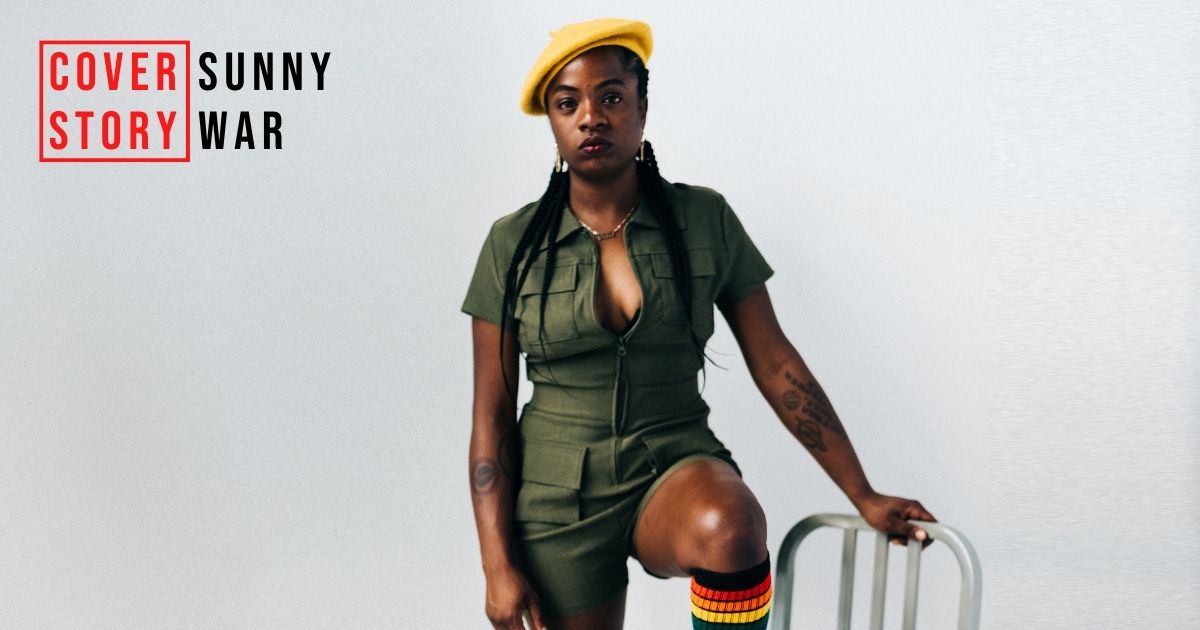
Sunny War’s stunning new album, Anarchist Gospel, is never preachy, because it doesn’t need to be. War’s evocation of both anarchy and gospel in this context is strikingly grounded, blossoming from everyday understandings and interactions with each concept. And deeper still, in these sweeping, grand arrangements built on sturdy bones of fingerstyle, folk-informed right-hand guitar techniques, she indicates actions really do speak louder than words.
These songs are active. Bold, resplendent, and broad with dense, fully-realized production leading to tender, contemplative, and microscopic moments, War draws from her lived experiences, her days and years navigating poverty, living unhoused, sheltering in abandoned buildings, relying on and offering mutual aid, to direct messages of hope, resilience, resistance, and joy, not just to us, her listeners, but also to herself.
Perhaps that’s why, in this collection of songs born out of a harrowing and challenging emotional, spiritual, and mental period of Sunny War’s more recent past, there is so much hope in hopelessness, a constant – though sometimes minute – light shimmering at the end of the tunnel. Anarchist Gospel isn’t preaching at us, because she is compassionately, kindly, and tenderly talking to herself. And we all, as listeners, audience members, and fans, are just so fortunate enough to be brought into this internal dialogue, from which we can learn and challenge ourselves, and each other, to make a better world for everyone right now.
It’s a record whose underpinning moral-to-the-story is never burdensome or heavy, but rather uplifting and soaring, exactly as an Anarchist Gospel ought to be. We began our Cover Story interview connecting with Sunny War at home in Chattanooga over the phone, discussing how anarchy is not simply an academic concept, but a real, everyday practice.
I know that in your life, anarchy isn’t just a concept, it has a very real, concrete application in your day-to-day. I think first of your work with Food Not Bombs and the mutual aid work you’ve done in Los Angeles – and wherever you’ve lived. A lot of people right now, especially in younger generations, have frames of reference for anarchy and collectivism and mutual aid work, but usually in the abstract. As if these concepts can only be for some imagined future. So why is anarchy something you wanted to represent in the album and its title, and what does the concept of anarchy mean in your life?
Sunny War: The album title isn’t really political, to me. I felt like the big choruses [on the album] felt gospel in a way, but it wasn’t religious so I felt like it was Anarchist Gospel. It was really because of the one song, “Whole,” where I just felt like the message of the song was kind of about anarchy, in a way that most people could understand. I guess I’m more of a socialist now, but it’s the same sentiment. I just want people to have what they need. That’s more what anarchy means to me. It seems like it’s government that’s in the way of people getting what they need.
For me, it’s more personal. When I was homeless, a lot of times we would be living in abandoned buildings and we’d get arrested for that. Anarchy, to me, means, “Why can’t we be here? Nobody else is going to be in here. Why are you keeping us from this?” It feels weird that we don’t get to claim where we live, but other people do. Why do they have more rights to the same places? I don’t know if that’s anarchy, so much as I just think people have a right to everything.
It feels like there’s this agnosticism to the album, this come-togetherness, as something we can all feel and inhabit without necessarily being called to by a higher power. We really can all realize, whatever our starting points, that all we have is each other.
I’m not against people that need God, or whatever. I’ve been in places where I’ve felt like I wanted to believe in that before, so I can relate to where that comes from. But then, I don’t know… [Laughs] Whether it’s religious or spiritual, I don’t know.
This sounds like a record where we’re all supposed to be singing along. Part of that is the gospel tones, the title but also in the genre and production style, but part of it is also the messages here. Uplifting people from darkness, hope in hopelessness – so to me, so many moments on this album feel like church!
I love church! I grew up in church – well, I don’t love church, but I love gospel. I still listen to gospel and I guess I’m being nostalgic, but also it just slaps. That’s just good music. If you like original R&B, it’s the basis of so much of American music. I wish it was a little more, I dunno… I guess I wish it wasn’t religious. [Laughs] Then I’d really be into it. But it’s cool how it is.
In the moments in this record that feel like they’re at the lowest point, I still hear so much hope. I hear surrender in this album, not the kind that’s giving up, but the kind that feels generative and hopeful – especially in “I Got No Fight” and “Hopeless” and “Higher.”
This record was a lot of me talking to myself. It’s definitely the loneliest I’ve ever been writing something. Every other album I’ve ever made, I was in a relationship. This was different. After me and my ex broke up, I wasn’t even really socializing with my friends, because we had the same friends and I was embarrassed about our break up. I was so bitter, I didn’t want to be around anyone. I felt like I couldn’t be around anyone. I was barely leaving the house, I was isolating myself and got really morbid. I wasn’t turning lights on. [Laughs] I would sit in the dark a lot, I was lighting candles – [Laughing] I don’t really know what was going on, but it was mostly bad, I would drink a lot, and then I’d be like, “I’m drinking too much, I gotta get sober.” It would just repeat over and over again. But I was desperately trying to finish the album, because I was broke. I had the deal with New West, but I still had to produce the album before anything could get rolling. It was just what I had to do, but I was also going insane at the same time, and really angry.
Do you feel like making the record brought closure to any of that for you? I feel like I can hear a release of tension in this album, but I wonder where that comes from, because so many of the songs, individually, have these big, emotional releases. How does it feel to be at this point, looking back with the clarity you have now?
The second I wrote “I Got No Fight” I remember immediately feeling better. I made the demo, and afterwards it made me feel like I was just having a tantrum. But it was like I had to make the song to really understand what I was going through. After making the demo, I realized, “I am just freaking out, I think I’m having a panic attack.” After hearing this song, it helped me understand like, “This is not real, this is just a temporary feeling.” But I couldn’t really feel anything else until after that.
I have spent so much time over the past couple years trying to teach myself that the point of feelings is to feel them.
Yeah, but they suck most of the time. [Laughs] I don’t want most of them.
The line in that song, “Sometimes the end is the only light I see,” might be my favorite line on the record. There’s nihilism and existentialism in it, but it doesn’t feel hopeless or despairing. It’s kind of a cheerful, “Oh right! Nothing matters!” Where did that line come from for you?
That gets me through the day, a lot. Sometimes I think of life as just a jail sentence and I always think like, “Well, I probably am only going to live fifty more years at the most.” Sometimes that helps me get through the day. [Laughs] I know that that sounds negative, but that can really be uplifting if you chose for it to be!
It feels a lot lighter, to me at least, once you realize that nothing matters. Suddenly you can laugh a little bit more, improvise more – like lately, I’ve been trying to accept that I have no idea what I’m doing. I’m trying to get comfortable with it. In my twenties, I felt like I was trying to make plans all the time, planning so far into the future and just getting disappointed with stuff. It’s better to [recognize] – which is almost like religious people – you’re just powerless. Just try to eat something, drink some water. [Laughs]
Let’s talk about your guitar playing. I love your right hand so much. I think what’s entrancing about your guitar on this album is that it’s holding these songs together, but not as much as a rhythmic instrument or comping instrument, like in your past records. It’s more textural, to add depth and complexity, but your playing is still so hooky, melodically. Your personality comes through the guitar on top of all of these tracks. How did you accomplish that balance, having the guitar front and center and immediate, but it’s also not necessarily the centerpiece of these songs?
I think it’s because this is the first record where I knew how to use Logic, so my demos were almost full tracks already. I was adding keyboard and bass and programming drums to things before even going into the studio. A lot of the songs are all based on riffs that I’ve had for a while, that I couldn’t figure out how to use. Before, a lot of my other stuff, I was just writing a song. Now, I just collect guitar parts and I try to make them work in something, but I don’t really have a [plan for them, initially.] I’m basing it more off the guitar parts now.
How do you like the banjo? Is this the first time you had banjo on a record?
Yeah!
What do you think writing on the banjo leads you to that a guitar or keys or writing on another instrument wouldn’t lead you to?
Anything that’s tuned differently makes me have to think differently about stuff. I still don’t really “get” the banjo, it’s weird because I have had a banjo for over 10 years now, but it still seems like something I’m trying to learn about. I just recently got okay with being like, “I’m just going to make sounds with it.” I’m not going to try to “learn” it. [Laughs] I definitely want to make more songs with the banjo – and maybe even without a guitar, and see what that’s like. Some of my favorite buskers I’ve ever seen are just a singer with a banjo. I think it makes people sing different. I gotta get my banjos out now…
Guitar culture – guitar shop culture, guitar show culture – it’s such a toxically masculine scene, and it’s so competitive and punishing, that I kind of have realized over the past few years that the people helping me realize I still love the guitar and guitar culture are all women and femmes. Like, Jackie Venson, Molly Tuttle, folks like Celisse and Madison Cunningham, or like Kaki King and Megan McCormick and Joy Clark – I can think of so many guitarists who aren’t just really good, but they’re also pushing the envelope, they’re innovating, and they have really strong perspectives and voices on the instrument, like yourself. So I wanted to ask you about your own relationship with guitar culture and the guitar scene, because as a queer banjo player who loves music, I kinda hate people who love guitar. But I’ve been so grateful that all these women are reminding me I can love guitar and it’s not just a patriarchal, toxically masculine instrument and scene.
I just try to stay out of it. Sometimes at shows, guitar guys talk to me and I just tell them, “I don’t know. I don’t know.” [Laughs] Because I don’t want to get into any discussion about it. I know a lot of people who can really play, but [guitar guys] make it so you have to be kinda crazy, kinda obsessive. And it’s so competitive. That doesn’t sound fun to me. I don’t get how that’s fun anymore. It’s not art, at that point. It’s almost like a sport. Which you can, go ahead and practice scales all day so you can play the fastest, but then a lot of times people can be really technically good, but there’s no soul in it. They’re just trying to cram as many riffs into something as possible. They take all the art out of it, they’re technically playing perfectly, but I don’t feel anything.
I would much rather be listening to my favorite guitar player, who is Yasmin Williams. It’s not just because of technical ability, but because it’s progressive. I’m like, “That’s outta the box, I don’t know where that’s going.” That’s what I like about it.
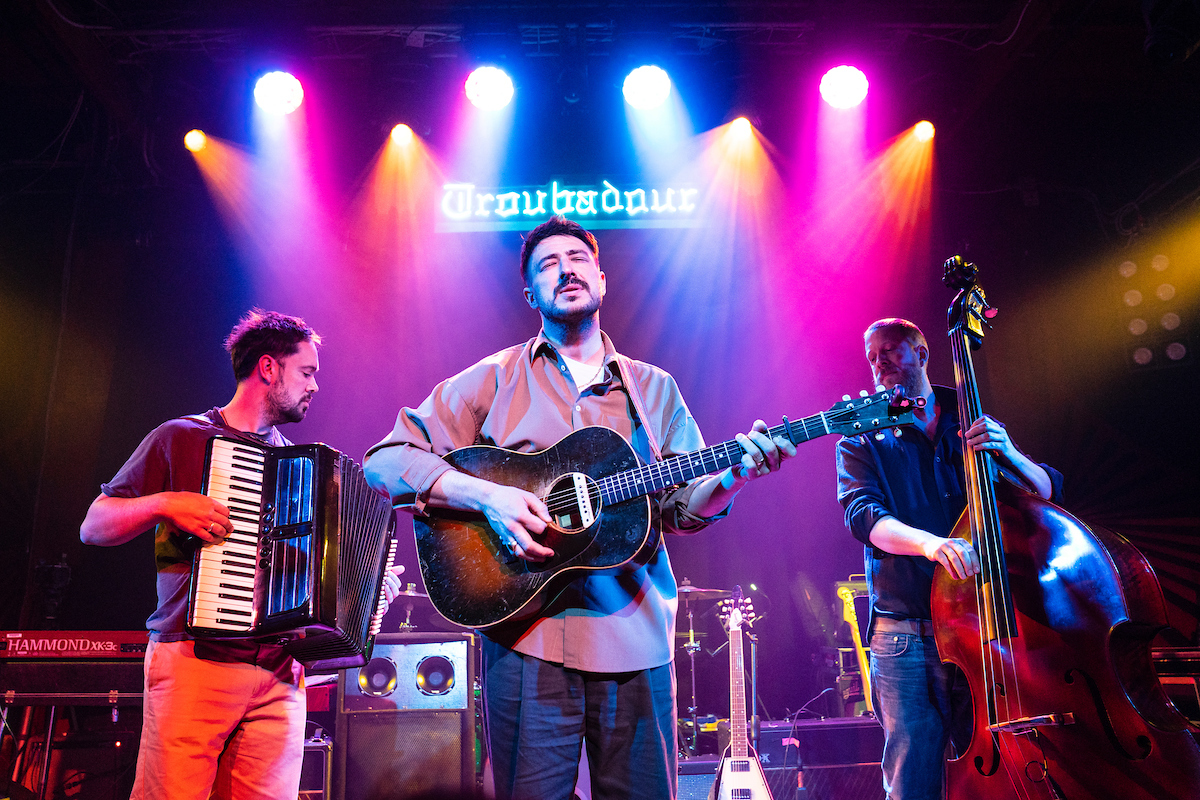
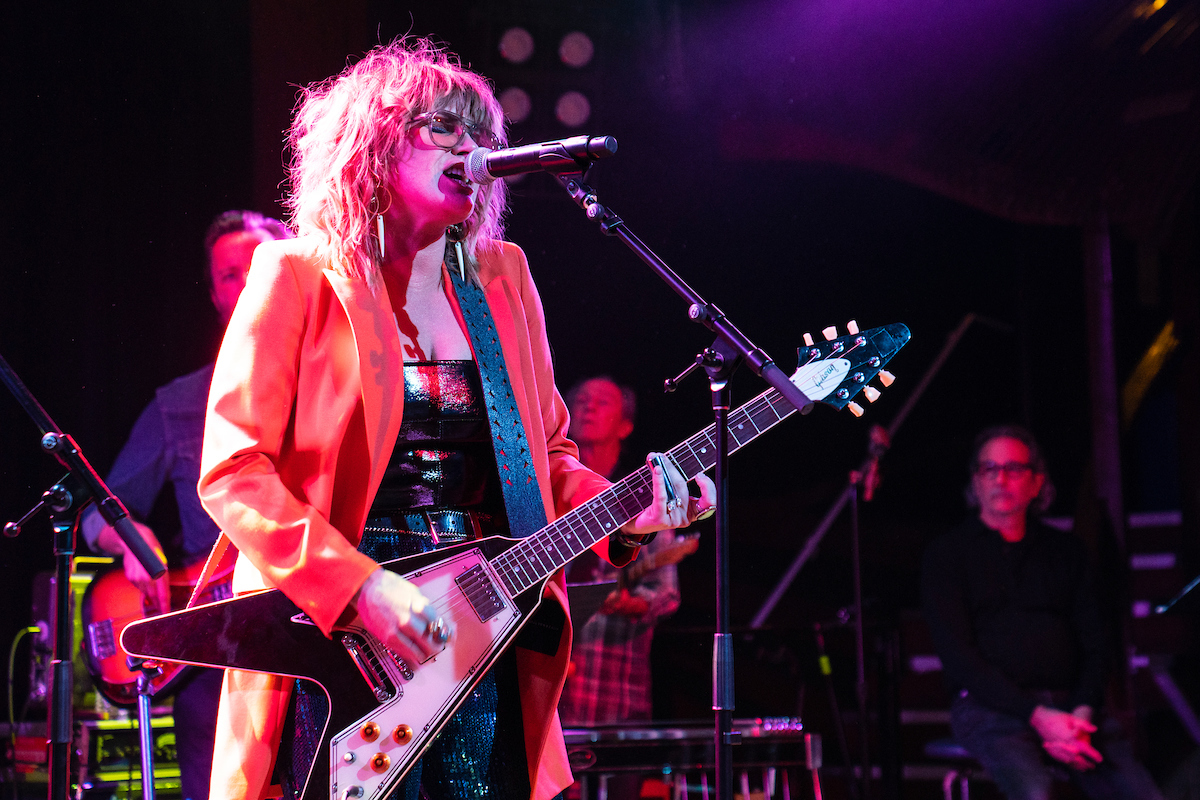
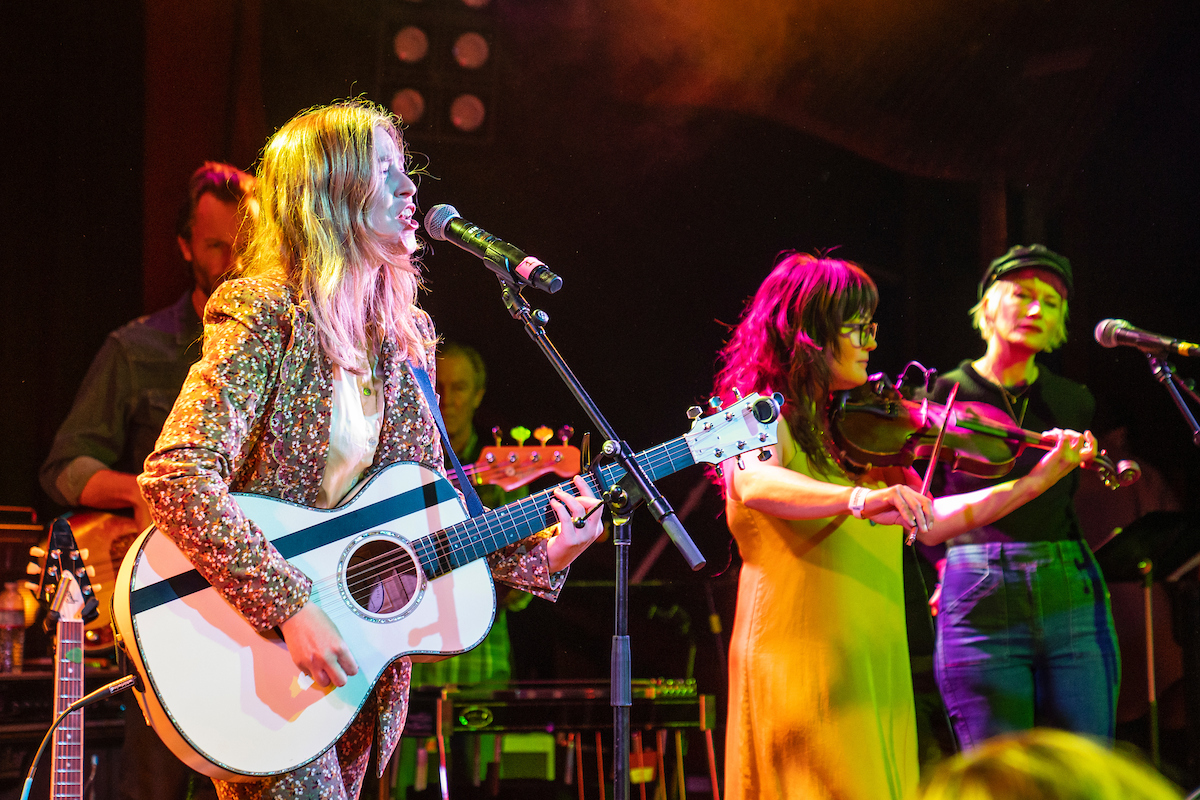
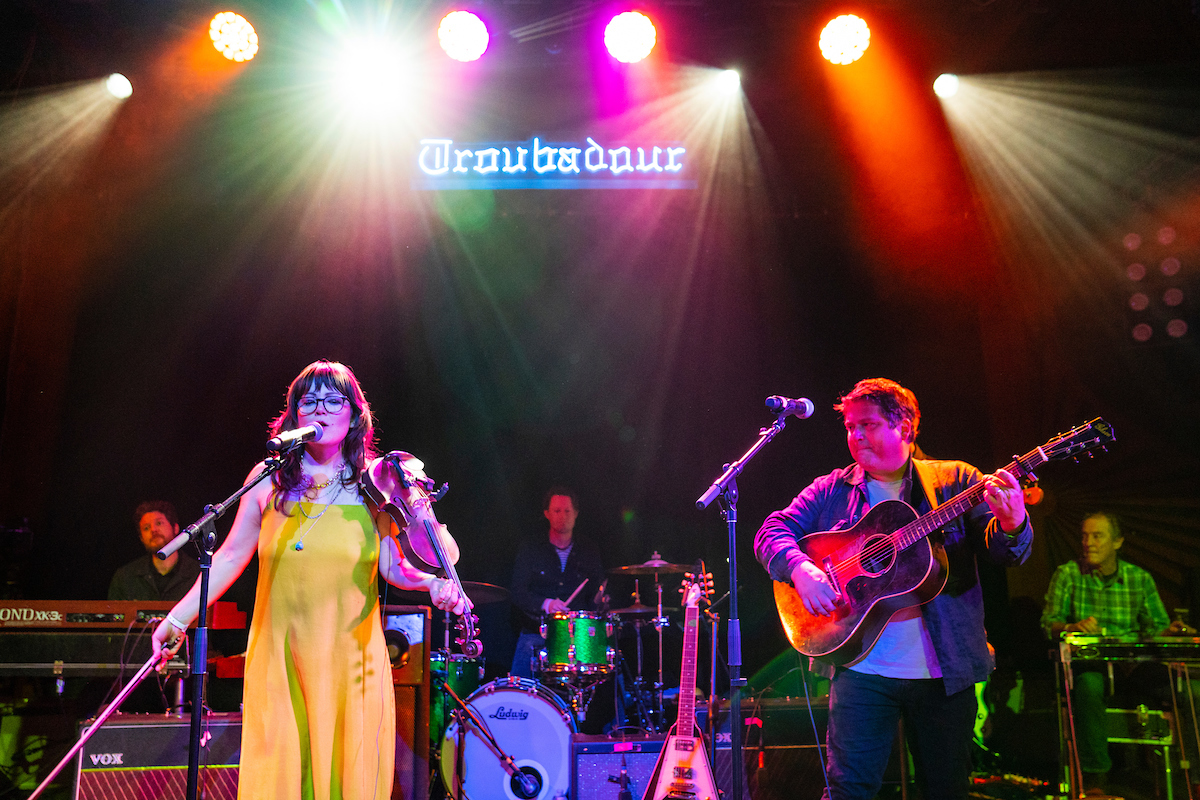
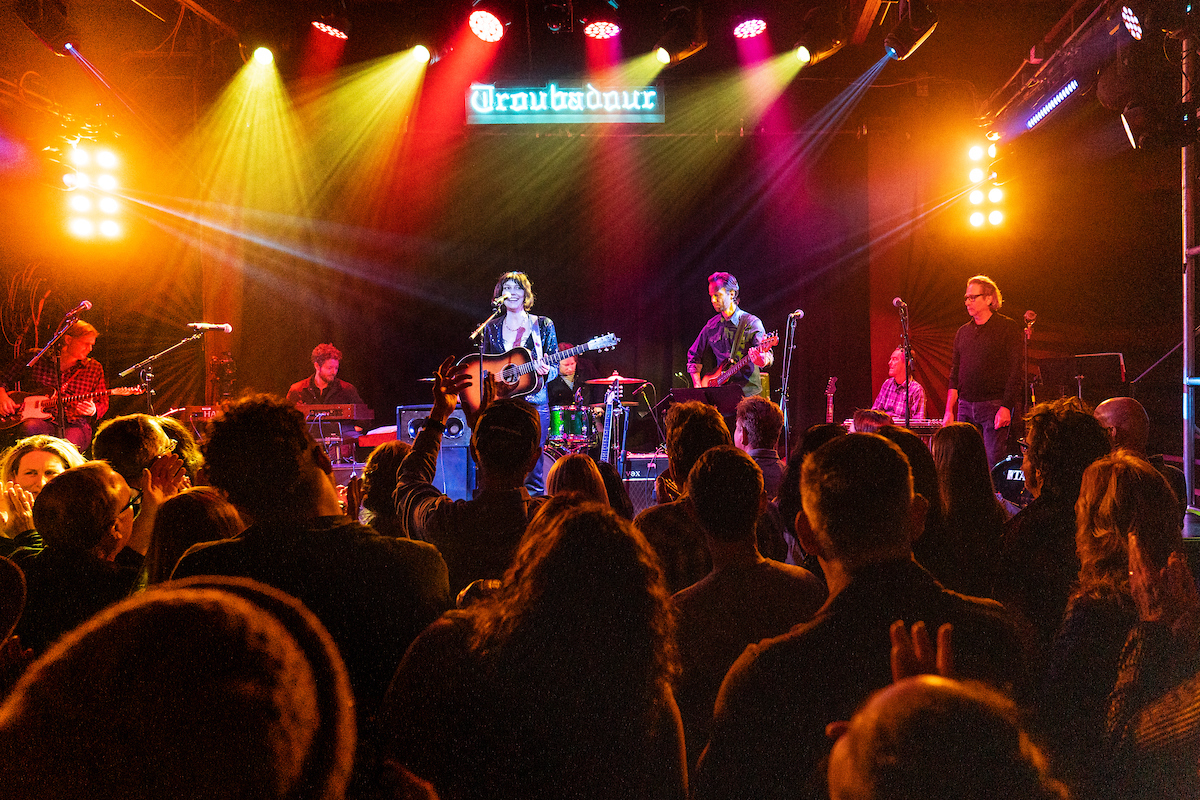
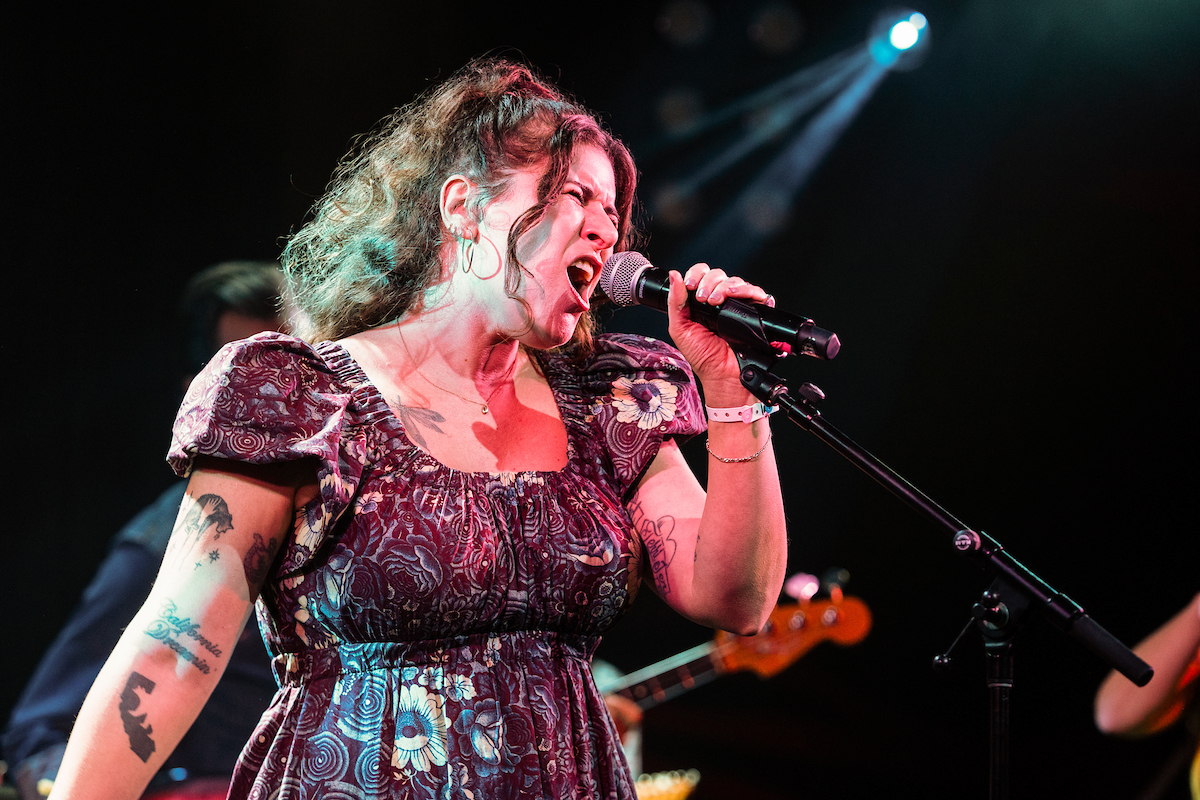
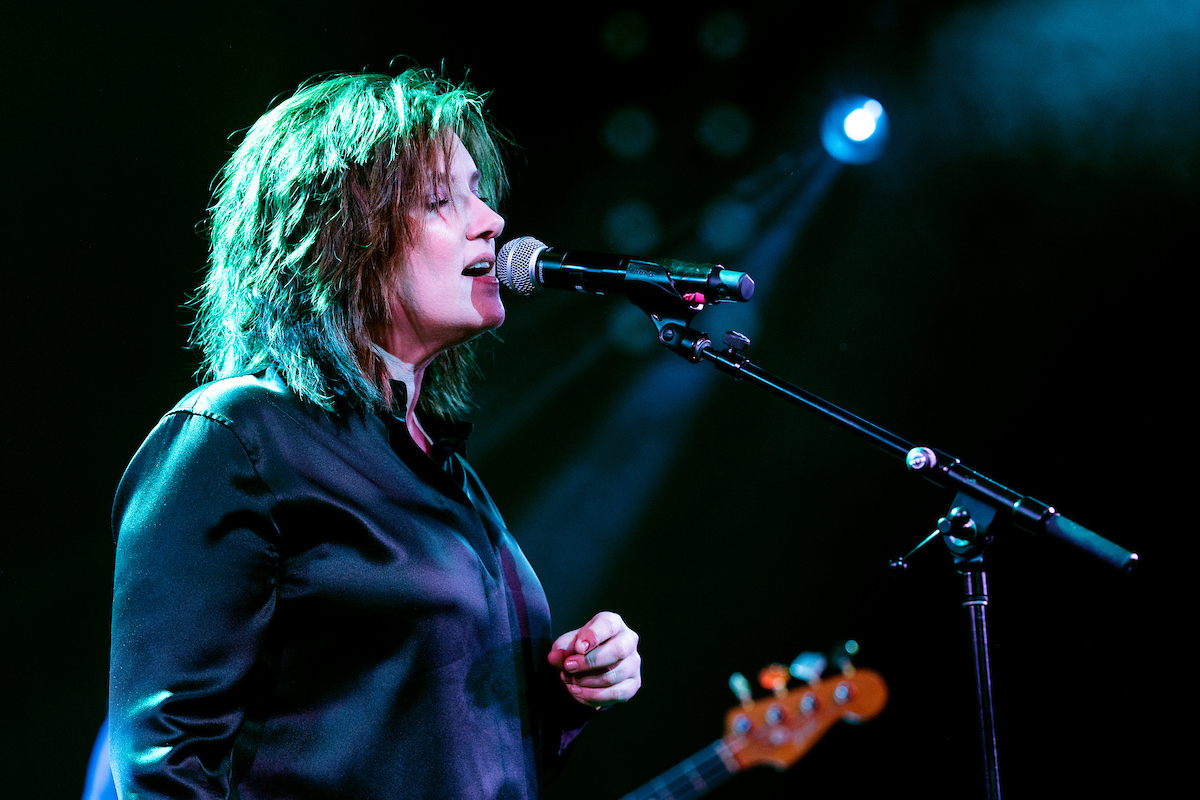
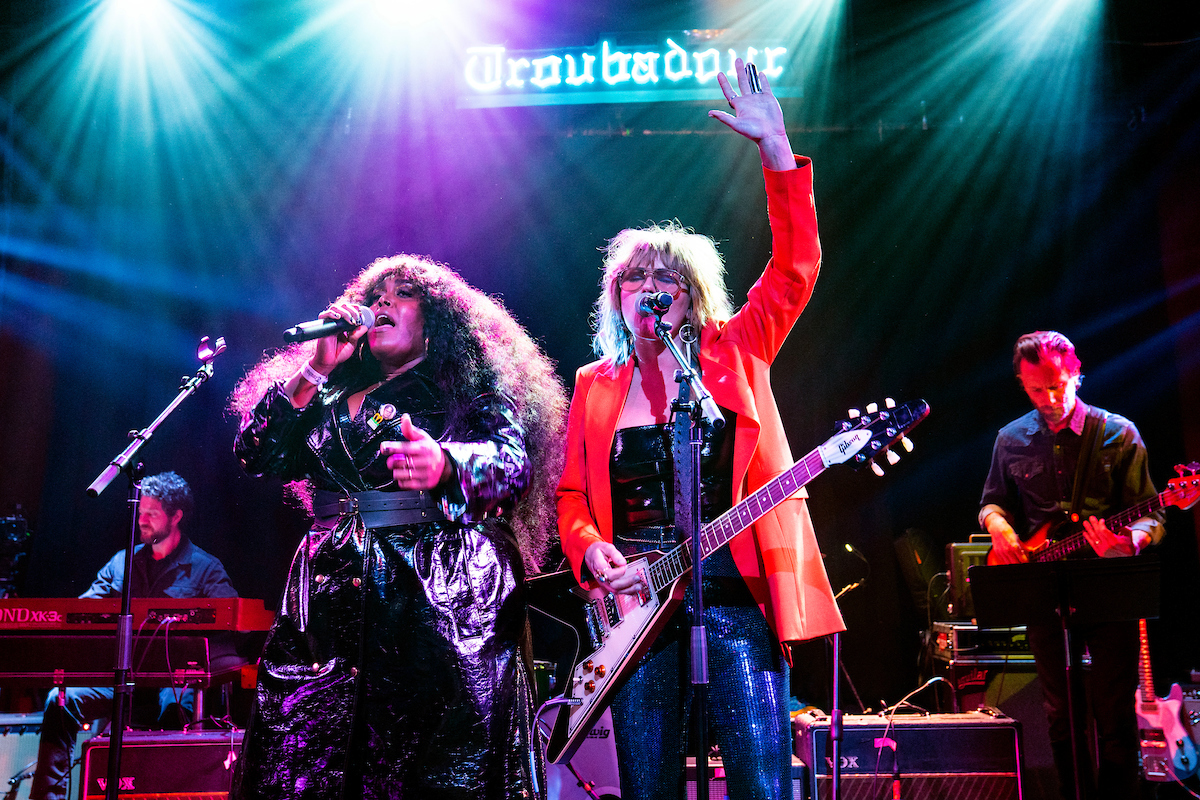
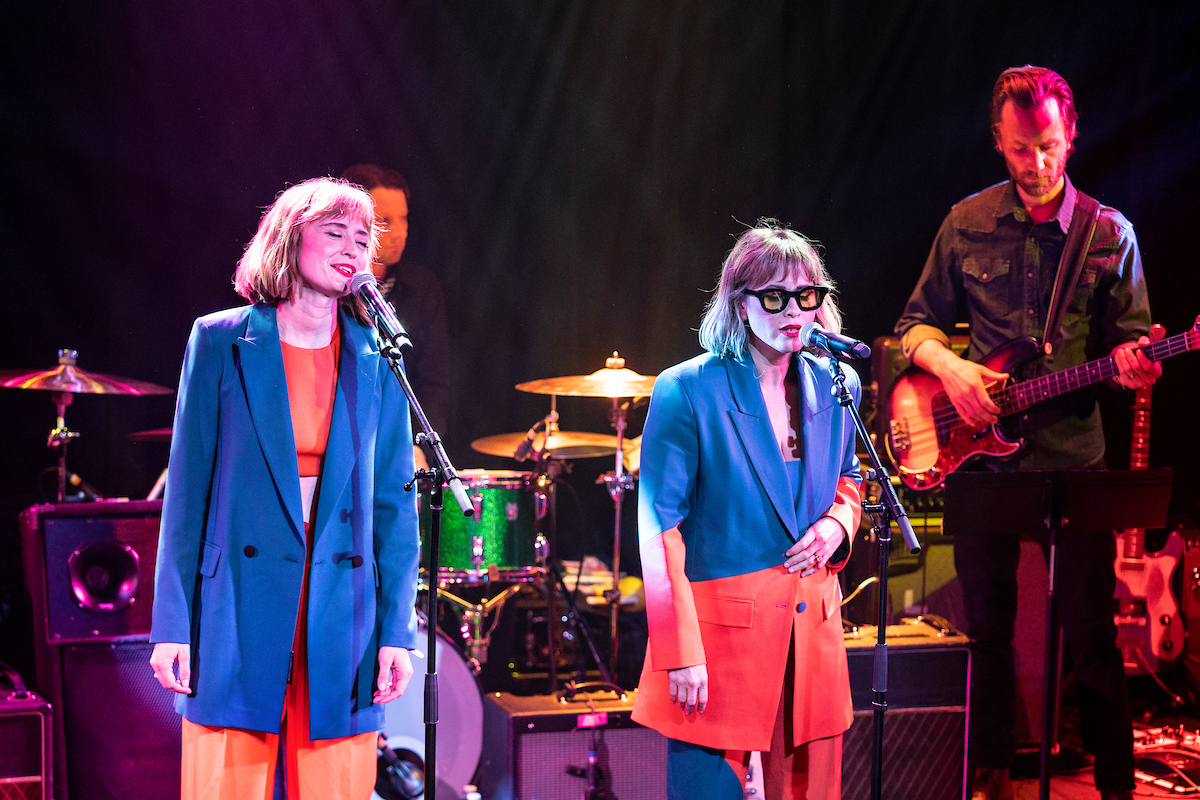
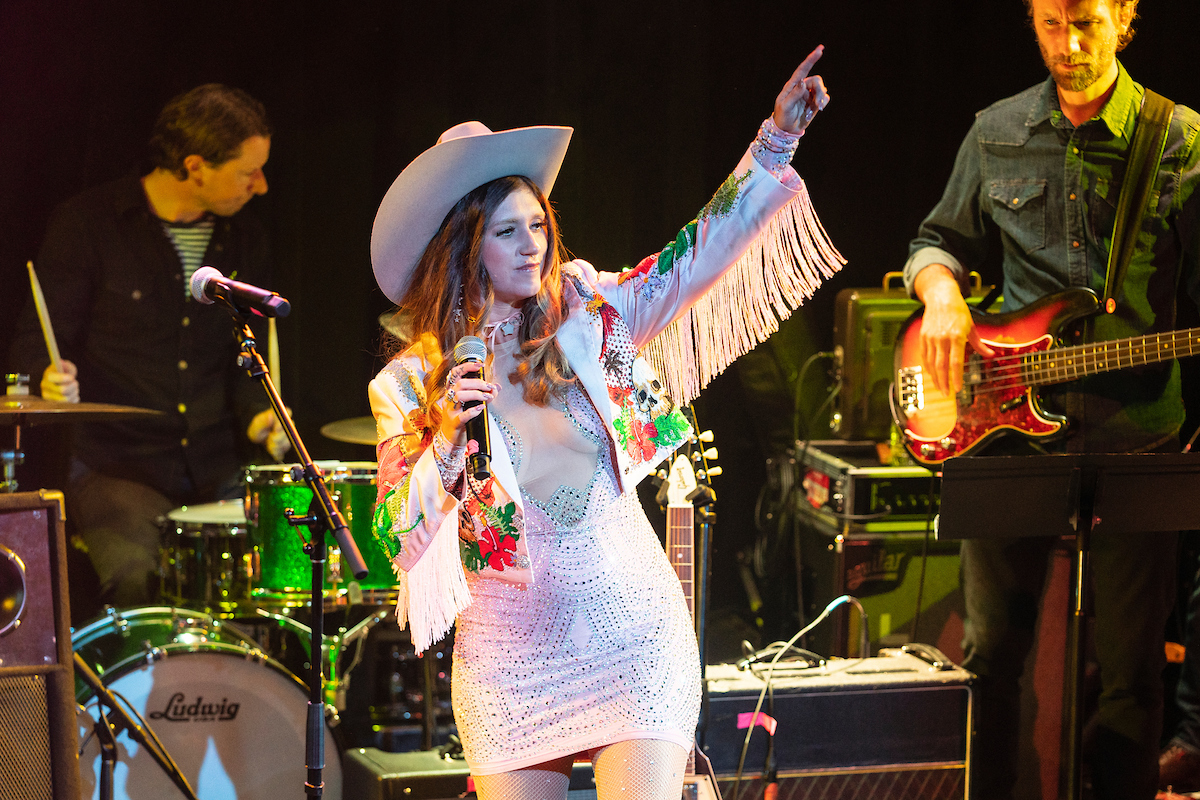
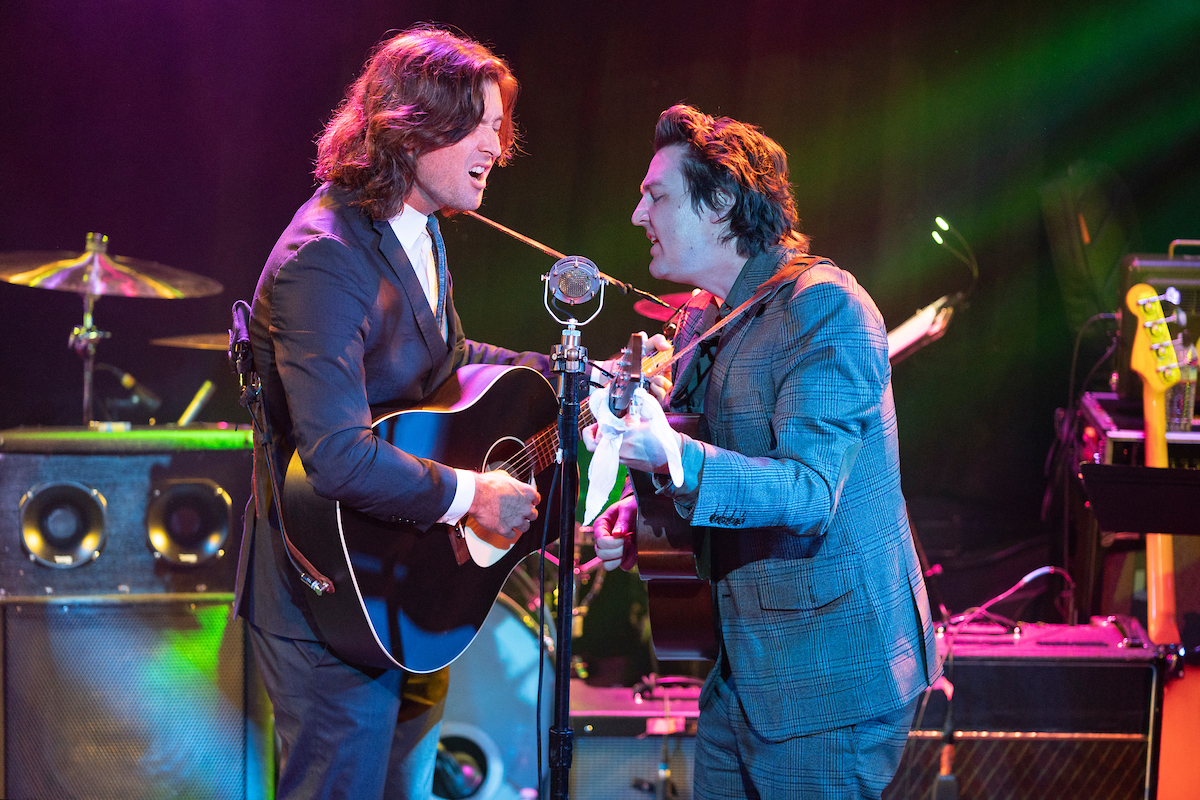
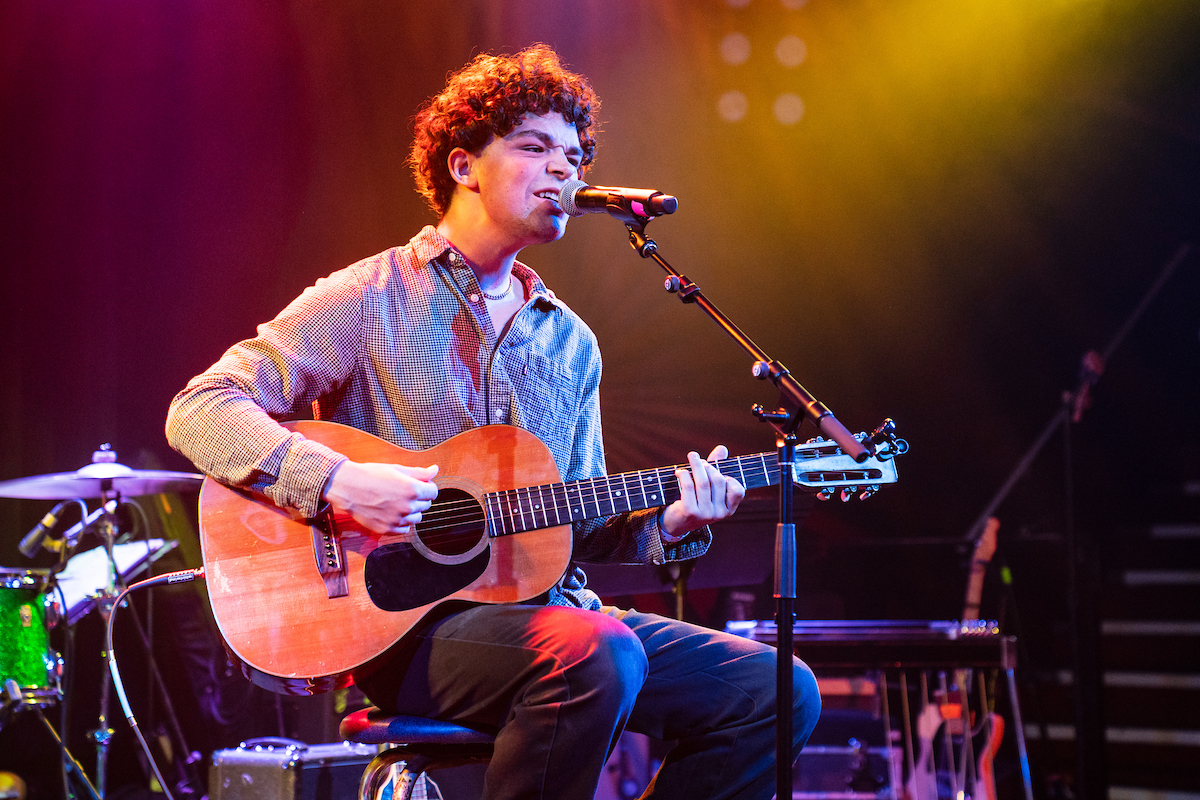
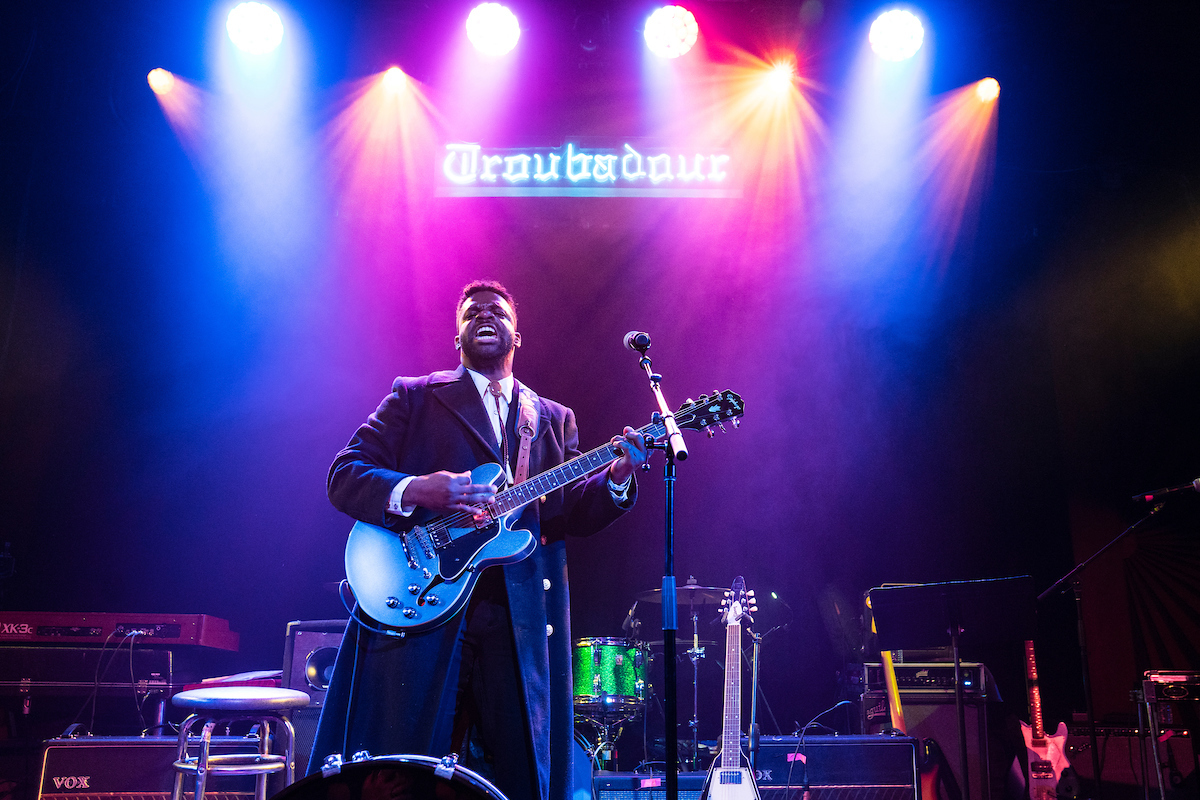
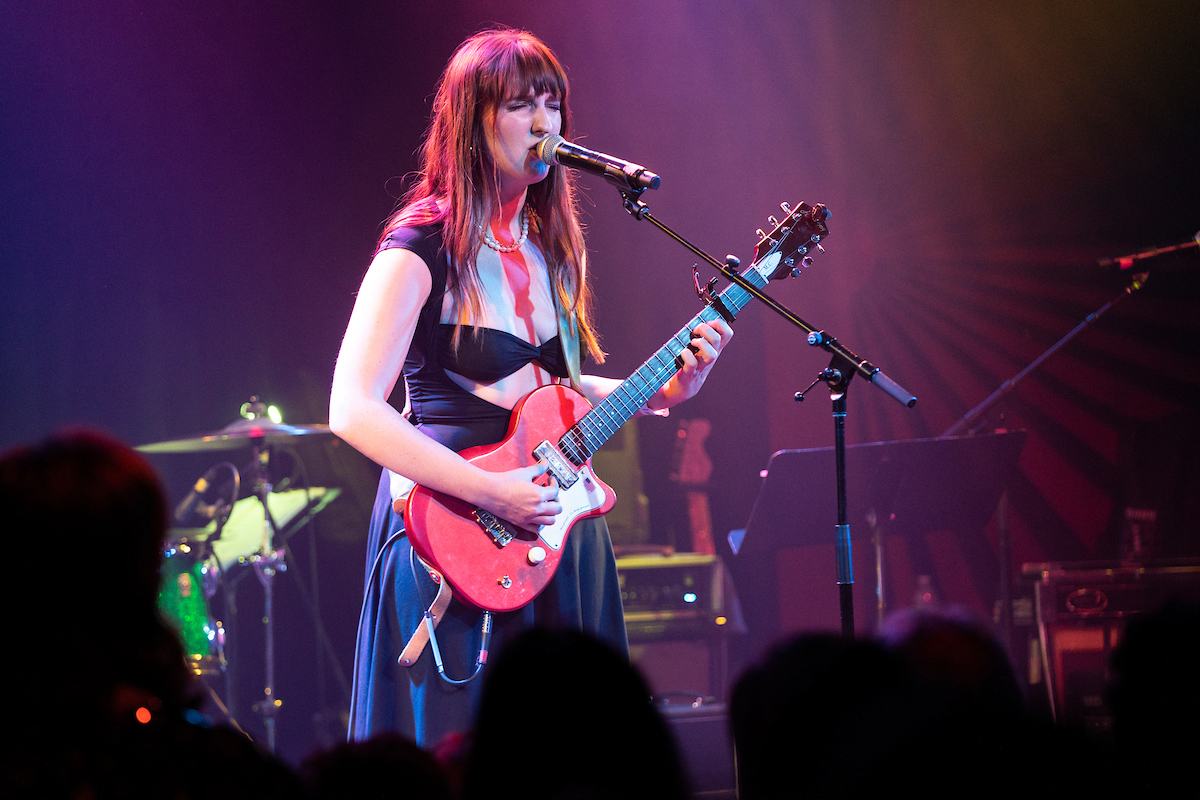
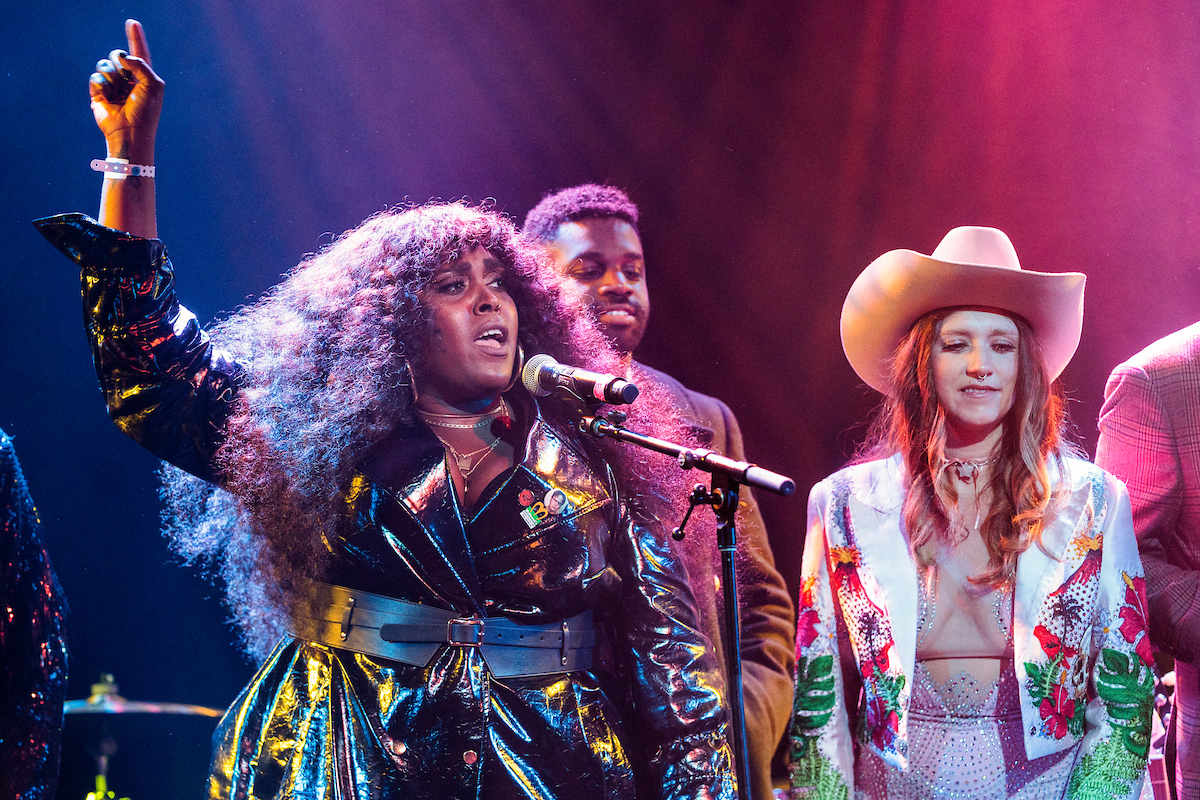
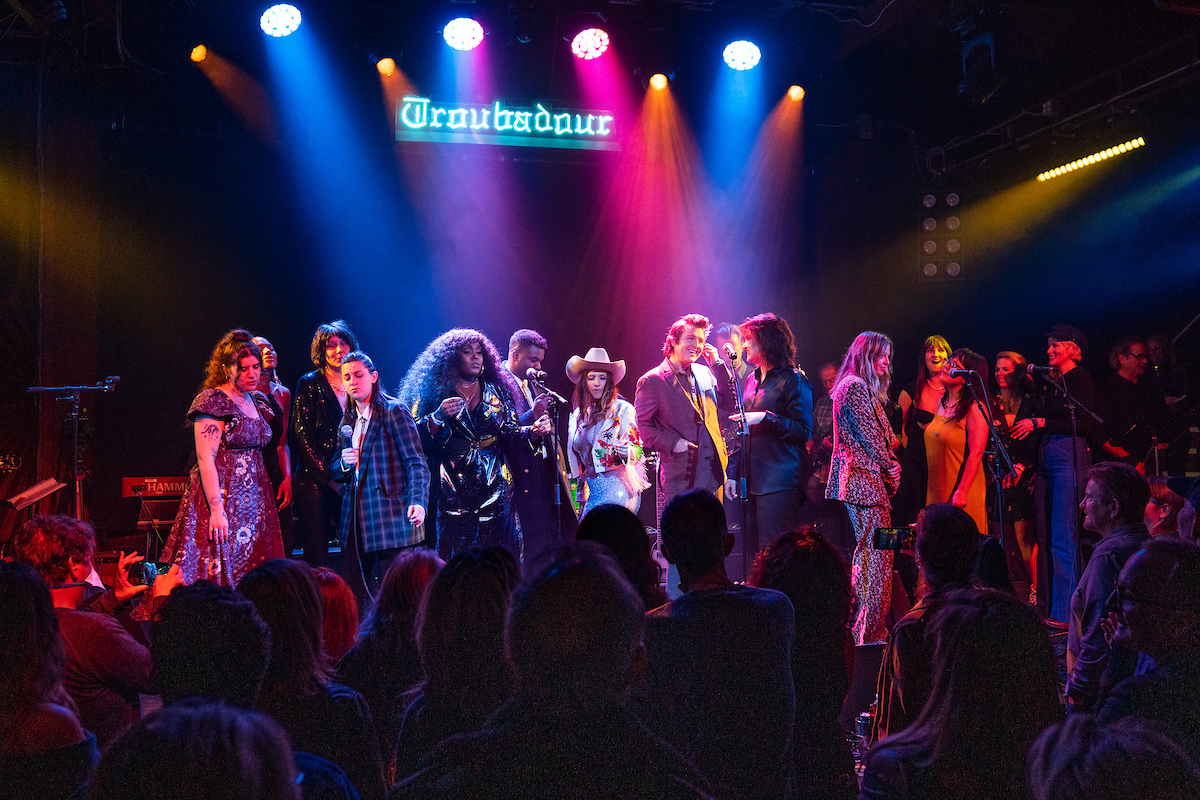
Few artists are more associated with Americana music than Lucinda Williams, even as her incredible career is hard to categorize. Her Grammy wins range from Best Country Song (“Passionate Kisses”) to Best Contemporary Folk Album (Car Wheels on a Gravel Road) to Best Female Rock Vocal Performance (“Get Right With God”). Just a few days following her 70th birthday, the Americana Music Association hosted an impressive all-star tribute concert at the fabled Troubadour club in Los Angeles on Saturday, February 4. The intimate performances underscored Williams’ versatility as a songwriter, with each of the performers putting their own personal stamp on her songs without ever losing the straightforward and often sensual lyricism that she’s known for.
Enjoy photos from the AMERICANAFEST Pre-Grammy Salute to Lucinda Williams:
Grace Potter kicks off the AmericanaFest Pre-Grammy Salute to Lucinda Williams.
Jade Bird performs at the AmericanaFest Pre-Grammy Salute to Lucinda Williams.
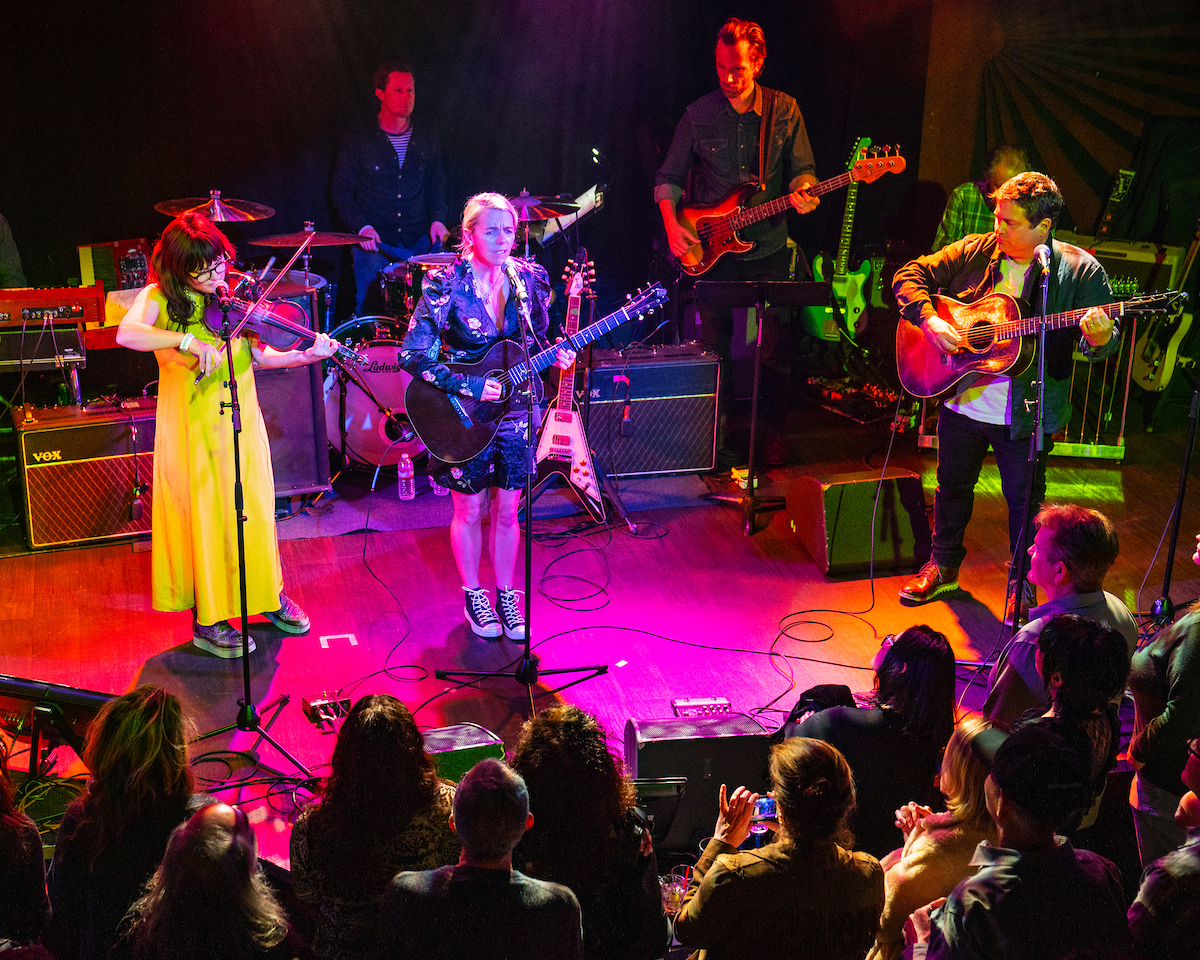
Sean & Sara Watkins at AmericanaFest Pre-Grammy Salute to Lucinda Williams.
Aoife O'Donovan joined by Sean & Sara Watkins at the AmericanaFest Pre-Grammy Salute to Lucinda Williams.
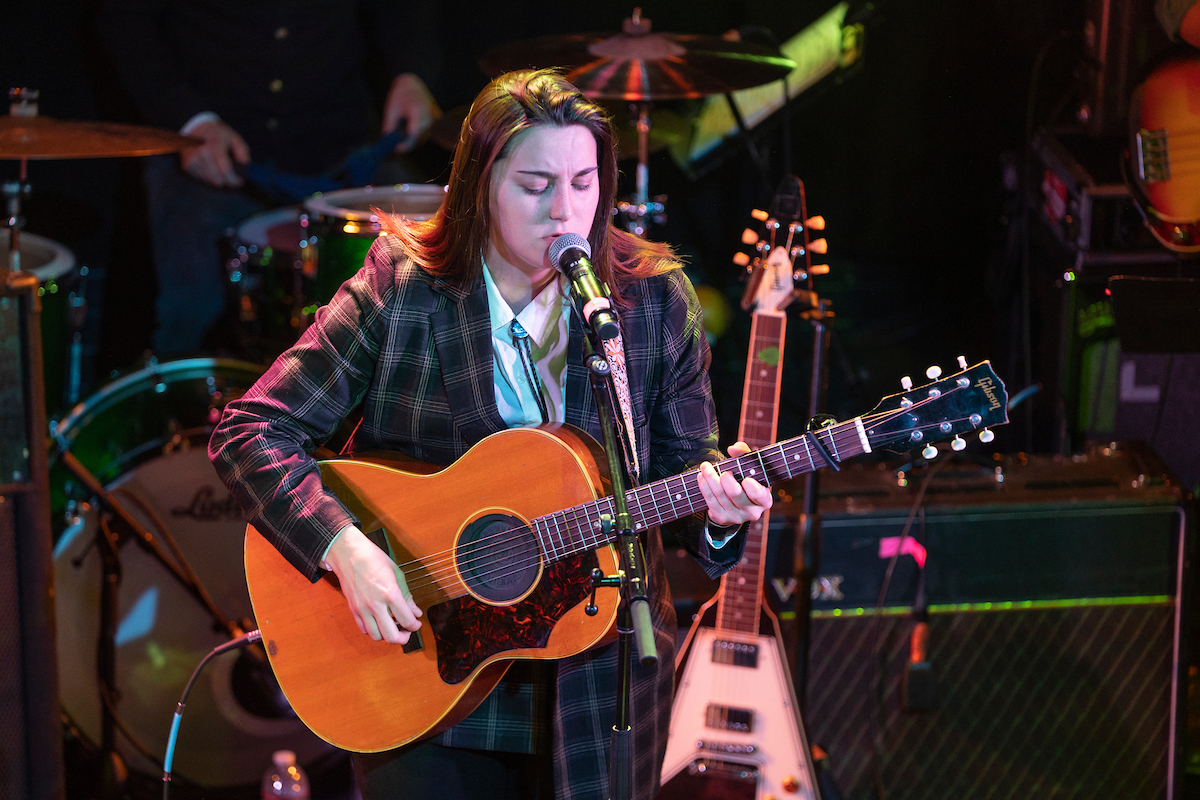
Katie Pruitt performs at the AmericanaFest Pre-Grammy Salute to Lucinda Williams.
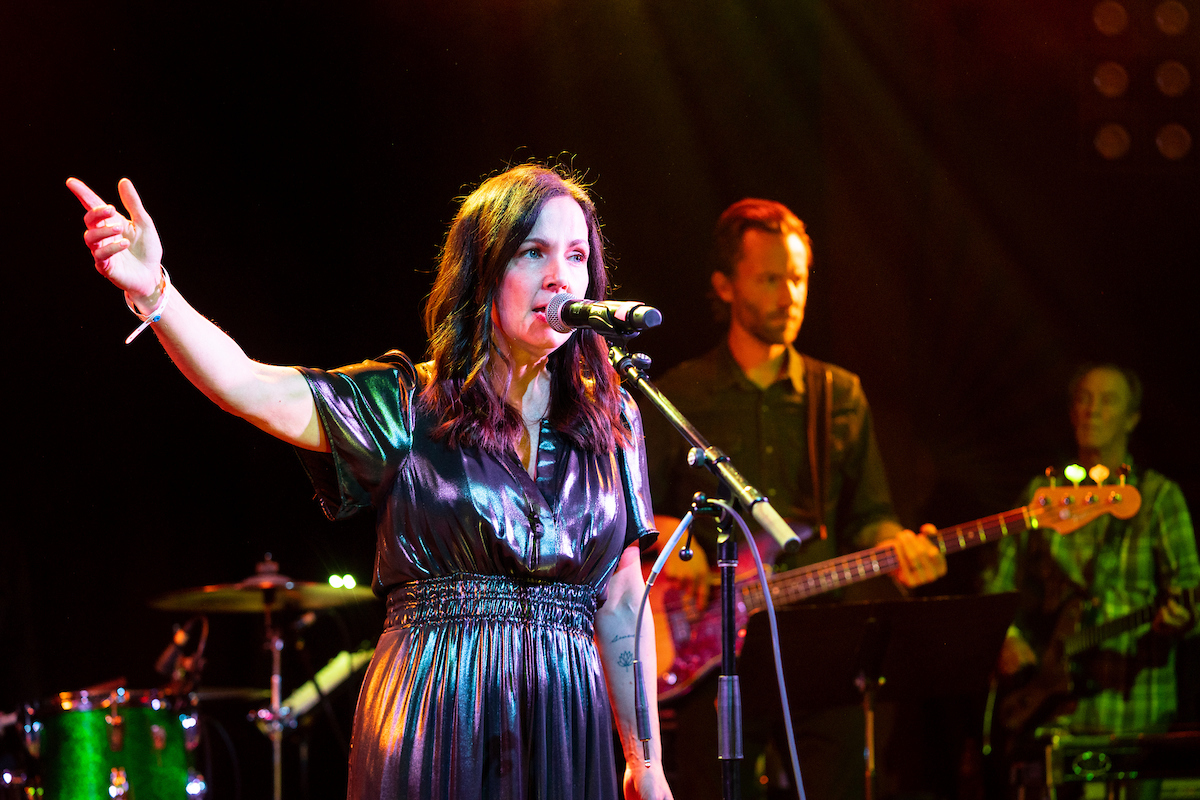
Lori McKenna at the AmericanaFest Pre-Grammy Salute to Lucinda Williams.
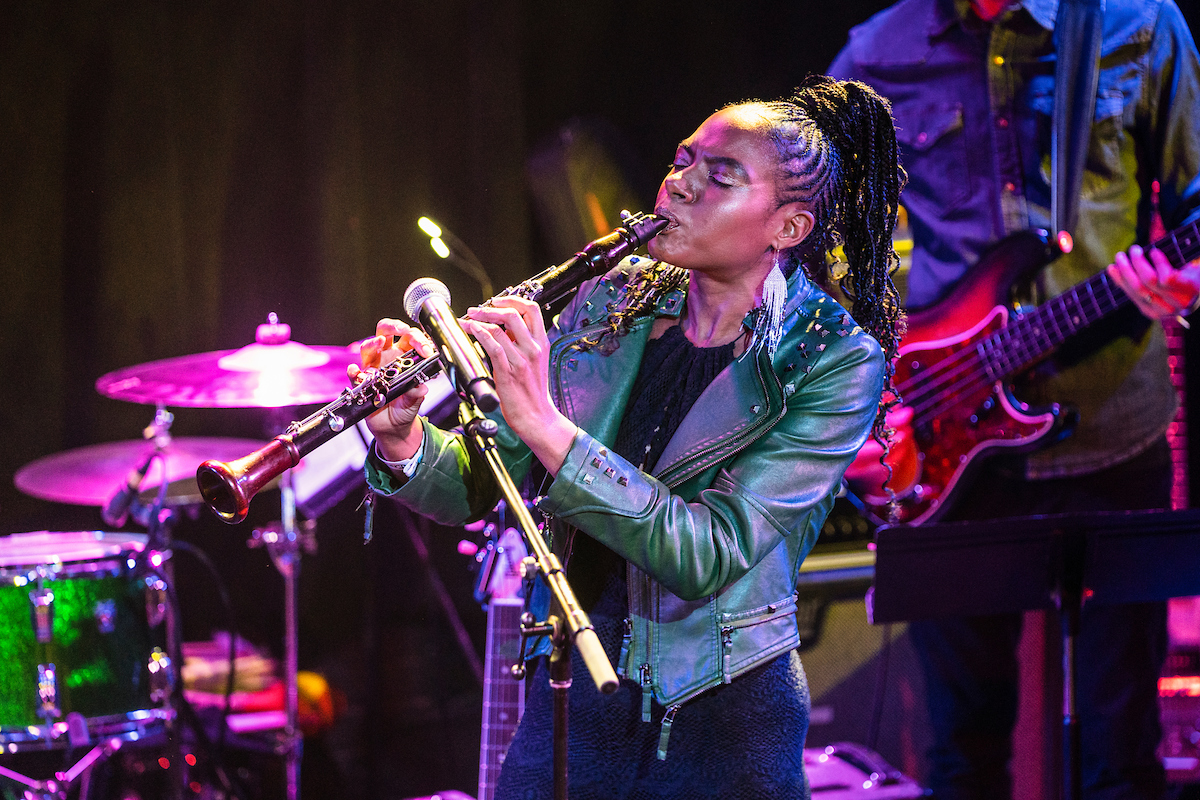
Allison Russell plays clarinet at the AmericanaFest Pre-Grammy Salute to Lucinda Williams.
Now Grammy winner Molly Tuttle at the Troubadour for the AmericanaFest Pre-Grammy Salute to Lucinda Williams.
Bethany Cosentino at the AmericanaFest Pre-Grammy Salute to Lucinda Williams.
Brandy Clark sings at the AmericanaFest Pre-Grammy Salute to Lucinda Williams.
Brittney Spencer and Grace Potter collaborate at the AmericanaFest Pre-Grammy Salute to Lucinda Williams.
Lucius perform at the AmericanaFest Pre-Grammy Salute to Lucinda Williams.
Sierra Ferrell at the AmericanaFest Pre-Grammy Salute to Lucinda Williams.
The Milk Carton Kids perform at the AmericanaFest Pre-Grammy Salute to Lucinda Williams.
Charlie Hickey at the AmericanaFest Pre-Grammy Salute to Lucinda Williams.
Abraham Alexander at the AmericanaFest Pre-Grammy Salute to Lucinda Williams.
Our January Artist of the Month, Madison Cunningham, performs at the AmericanaFest Pre-Grammy Salute to Lucinda Williams.
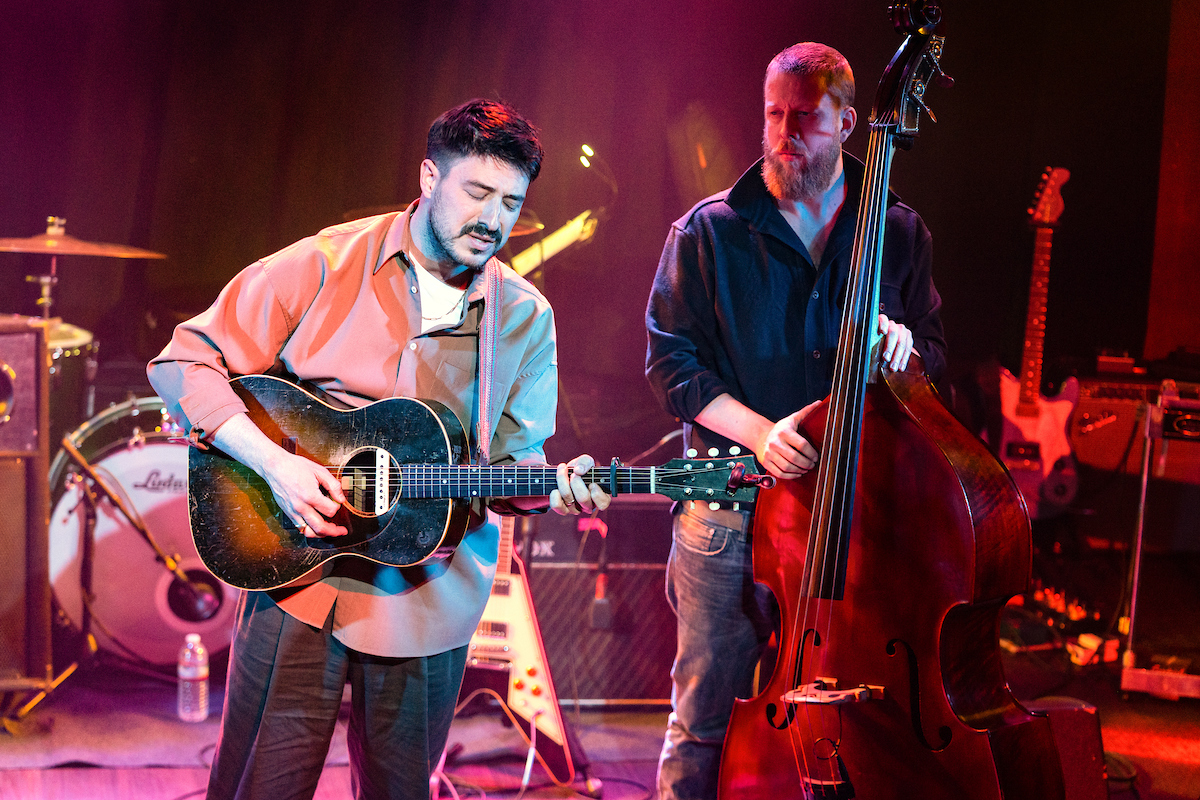
Mumford & Sons at the AmericanaFest Pre-Grammy Salute to Lucinda Williams.
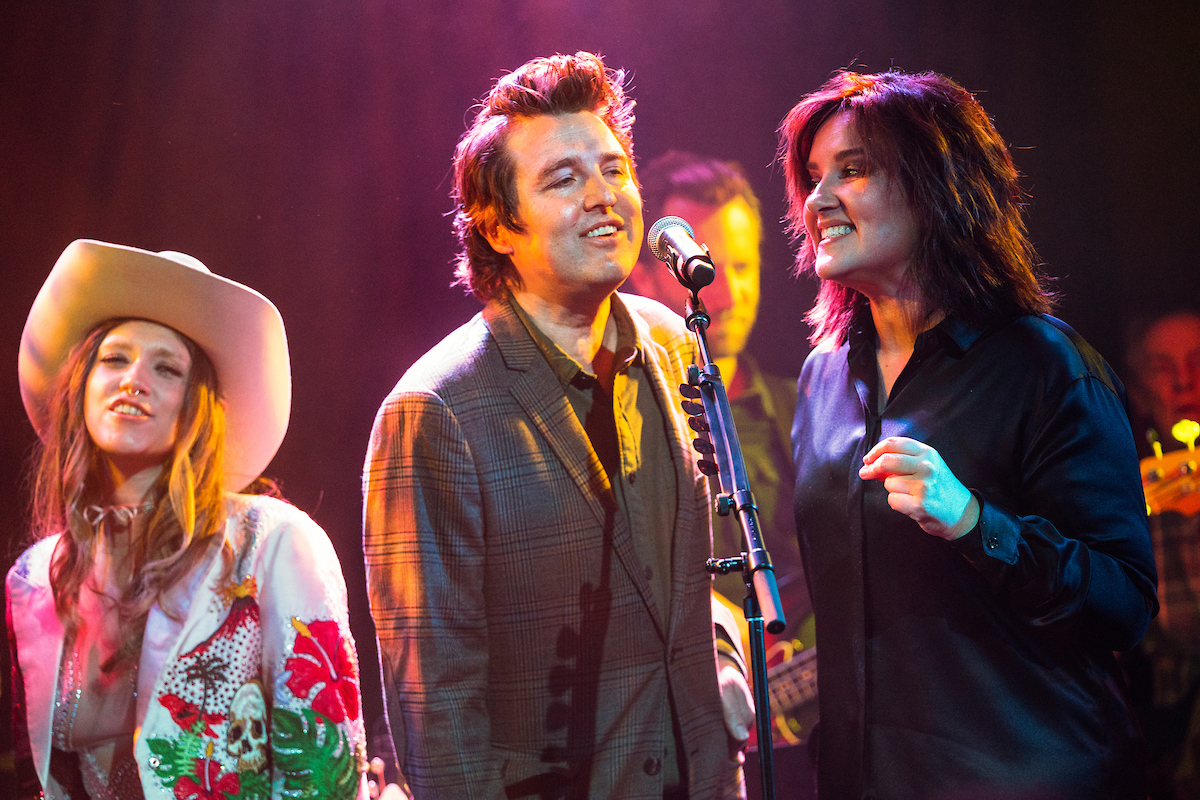
Sierra Ferrell, Kenneth Pattengale of Milk Carton Kids, and Brandy Clark during the grand finale of the AmericanaFest Pre-Grammy Salute to Lucinda Williams.
Brittney Spencer and Sierra Ferrell during the finale at the AmericanaFest Pre-Grammy Salute to Lucinda Williams.
The grand finale of the AmericanaFest Pre-Grammy Salute to Lucinda Williams.
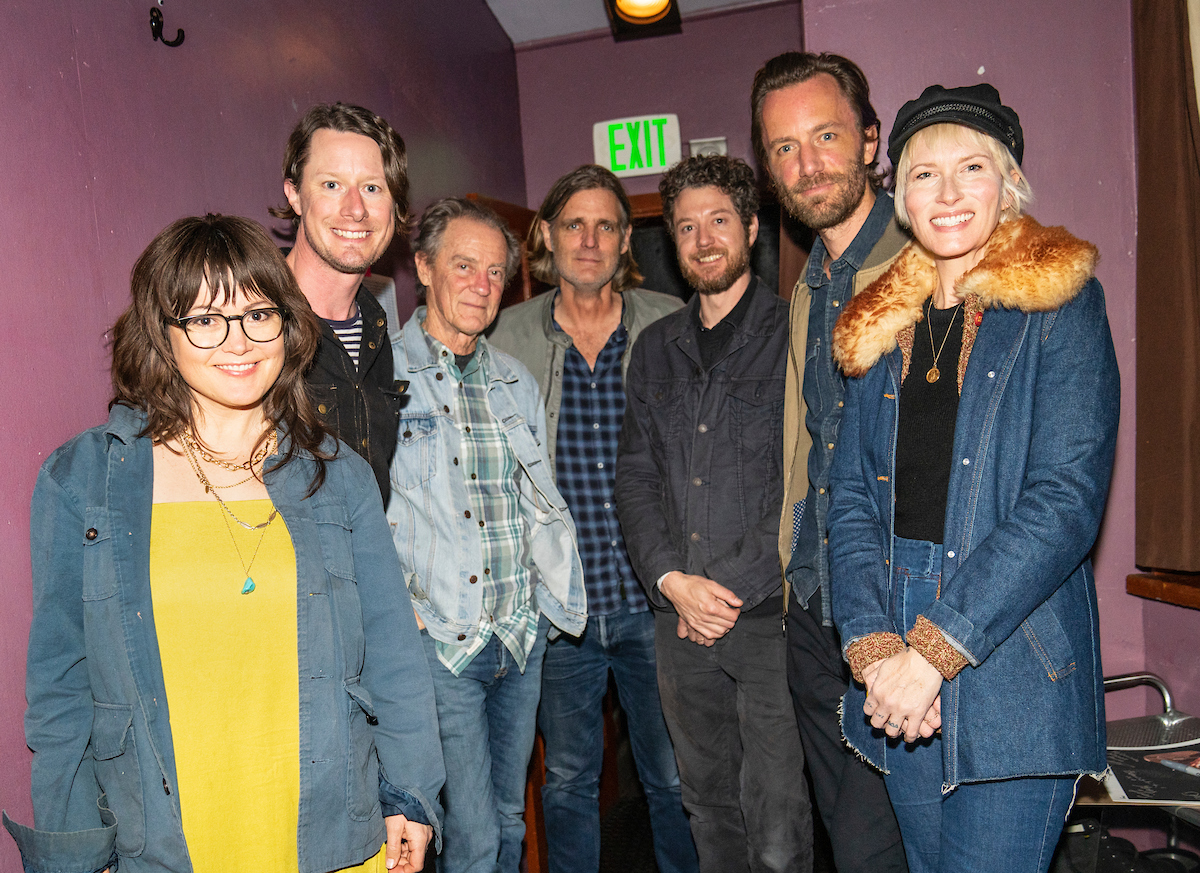
The evening's house band backstage at the AmericanaFest Pre-Grammy Salute to Lucinda Williams. L to R: Sara Watkins, Mark Stepro, Greg Leisz, Val McCallum, Lee Pardini, Daniel Rhine, Molly Jenson.
All Photos: Erika Goldring, Courtesy of the Americana Music Association.
Since the beginning, BGS has sought to showcase roots music at every level and to preserve the moments throughout its ever-developing history that make this music so special. One of the simplest ways we’ve been able to do just that has been through our Sitch Sessions — working with new and old friends, up-and-coming artists, and legendary performers, filming musical moments in small, intimate spaces, among expansive, breathtaking landscapes, and just about everywhere in between. But always aiming to capture the communion of these shared moments.
In honor of our 10th year, we’ve gathered 10 of our best sessions — viral videos and fan favorites — from the past decade. We hope you’ll enjoy this trip down memory lane!
Greensky Bluegrass – “Burn Them”
Our most popular video of all time, this Telluride, Colorado session with Greensky Bluegrass is an undeniable favorite, and we just had to include it first.
Rodney Crowell and Emmylou Harris – “The Traveling Kind”
What more could you ask for than two old friends and legends of country music reminiscing on travels and songs passed and yet to come, in an intimate space like this? “We’re members of an elite group because we’re still around, we’re still traveling,” Emmylou Harris jokes. To which Rodney Crowell adds with a laugh, “We traveled so far, it became a song.” The flowers were even specifically chosen and arranged “to represent a celestial great-beyond and provide a welcoming otherworldly quality … a resting place for the traveling kind.” Another heartwarming touch for an unforgettable moment.
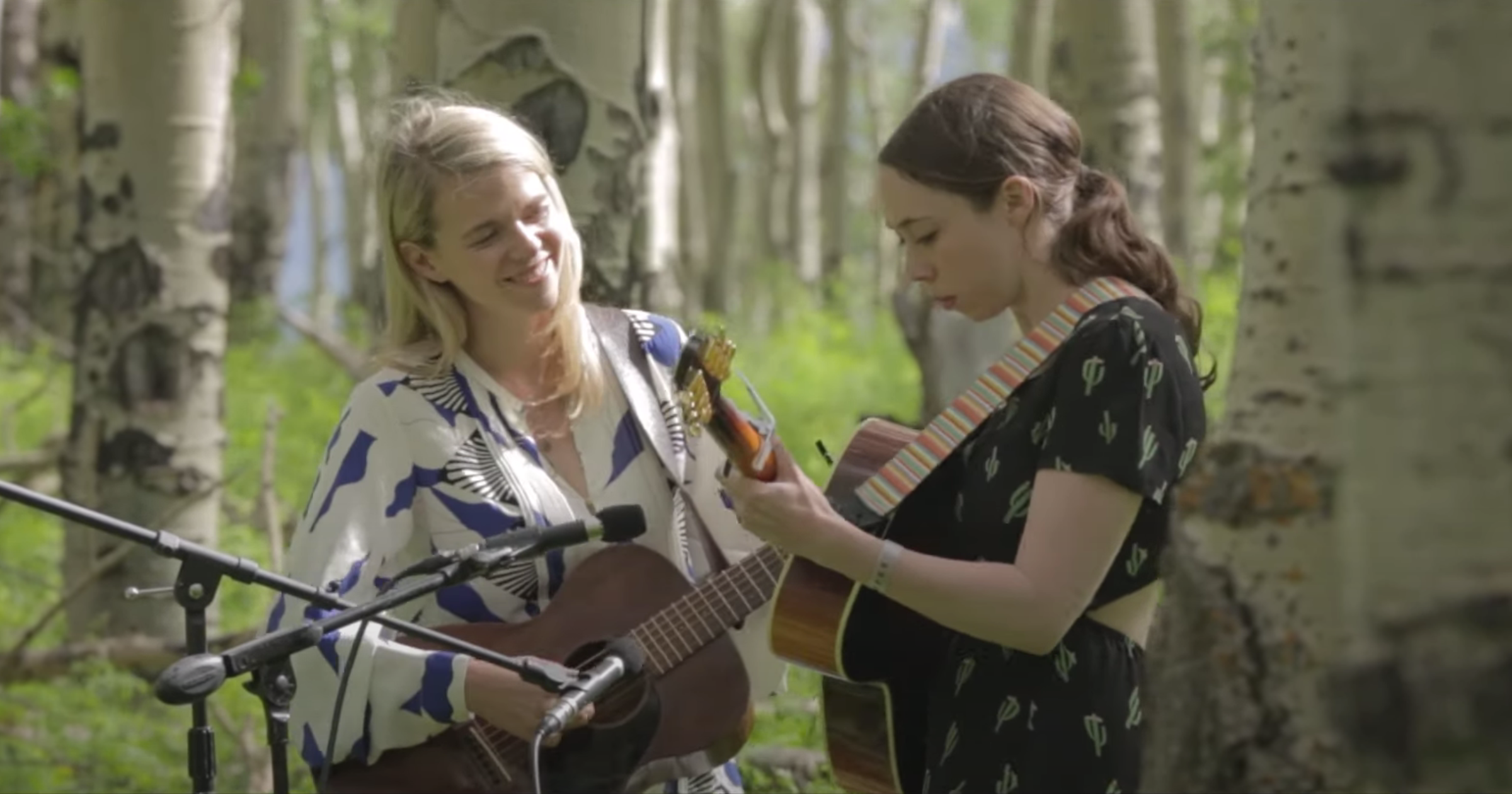
Sarah Jarosz and Aoife O’Donovan – “Some Tyrant”
In the summer of 2014, during the Telluride Bluegrass Festival we had the distinct pleasure of capturing Sarah Jarosz and Aoife O’Donovan’s perfectly bucolic version of “Some Tyrant” among the aspens. While out on this jaunt into the woods, we also caught a performance of the loveliest ode to summertime from Kristin Andreassen, joined by Aoife and Sarah.
Rhiannon Giddens – “Mal Hombre”
Rhiannon Giddens once again proves that she can sing just about anything she wants to — and really well — with this gorgeously painful and moving version of “Mal Hombre.”
Tim O’Brien – “You Were on My Mind”
Is this our favorite Sitch Session of all time? Probably. Do we dream of having the good fortune of running into Tim O’Brien playing the banjo on a dusty road outside of Telluride like the truck driver in this video? Definitely.
Enjoy one of our most popular Sitch Sessions of all time, featuring O’Brien’s pure, unfiltered magic in a solo performance of an original, modern classic.
Gregory Alan Isakov – “Saint Valentine”
Being lucky in love is great work, if you can find it. But, for the rest of us, it’s a hard row to hoe. For this 2017 Sitch Session at the York Manor in our home base of Los Angeles, Gregory Alan Isakov teamed up with the Ghost Orchestra to perform “Saint Valentine.”
The Earls of Leicester – “The Train That Carried My Girl From Town”
In this rollicking session, the Earls of Leicester gather round some Ear Trumpet Labs mics to bring their traditional flair to a modern audience, and they all seem to be having a helluva time!
Sara and Sean Watkins – “You and Me”
For this Telluride session, Sara and Sean Watkins toted their fiddle and guitar up the mountain to give us a performance of “You and Me” from a gondola flying high above the canyon.
Punch Brothers – “My Oh My / Boll Weevil”
The Punch Brothers — along with Dawes, The Lone Bellow, and Gregory Alan Isakov — headlined the 2015 LA Bluegrass Situation festival at the Greek Theatre (a party all on its own), and in anticipation, the group shared a performance of “My Oh My” into “Boll Weevil” from on top of the Fonda Theatre in Hollywood.
Caitlin Canty feat. Noam Pikelny – “I Want To Be With You Always”
We’ll send you off with this delicate moment. Released on Valentine’s Day, Caitlin Canty and Noam Pikelny offered their tender acoustic rendition of Lefty Frizzell’s 1951 country classic love song, “I Want to Be With You Always.”
Dive into 8 of our favorite underrated Sitch Sessions here.
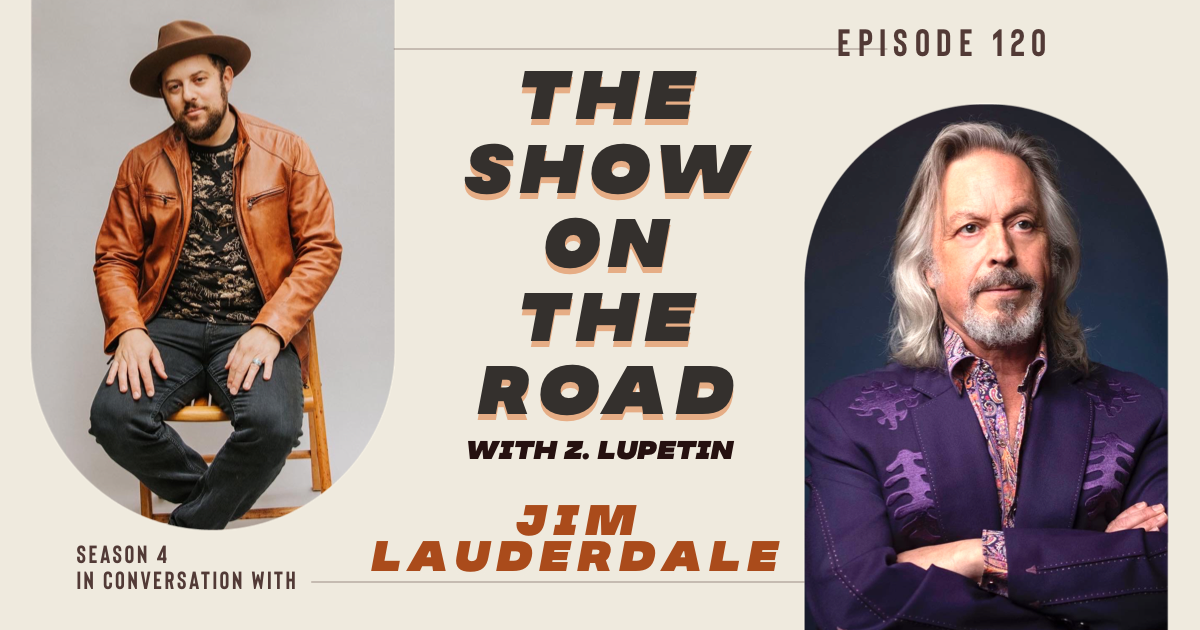
This week, we call on an Americana pioneer and a beloved fixture of the Nashville roots-country scene, the always affable Grammy-winner Jim Lauderdale. This year he celebrated the release of his thirty-fifth record, Game Changer.
Growing up in both North and South Carolina, as a young man Lauderdale fell in love with country music but took an unconventional path to becoming a sought-after songwriter, harmonist and writer in Music City. He toured in New York theatre productions when he was starting out, and ended up in LA. Even today you can hear the drama in his aching harmony-soaked songs like “Lightning Love” off Game Changer.
While sales and national recognition haven’t always aligned, the “stylistically restless” Lauderdale has played the Opry over 200 times, collaborated on albums with his heroes like the late bluegrass legend Ralph Stanley, written tracks for artists as diverse as George Strait and Elvis Costello, and has accidentally become one of the leading elder-statesman of the Americana movement.
What is Americana exactly? Even Jim impishly won’t say. But it’s that earthy genre-bending sound that has kept his longtime fans coming back for more nearly four decades into his storied run.
Photo Credit: Scott Simontacchi
This website uses cookies to improve your experience. We'll assume you're ok with this, but you can opt-out if you wish.AcceptRejectRead More
Privacy & Cookies Policy
Privacy Overview
This website uses cookies to improve your experience while you navigate through the website. Out of these, the cookies that are categorized as necessary are stored on your browser as they are essential for the working of basic functionalities of the website. We also use third-party cookies that help us analyze and understand how you use this website. These cookies will be stored in your browser only with your consent. You also have the option to opt-out of these cookies. But opting out of some of these cookies may affect your browsing experience.
Necessary cookies are absolutely essential for the website to function properly. This category only includes cookies that ensures basic functionalities and security features of the website. These cookies do not store any personal information.
Any cookies that may not be particularly necessary for the website to function and is used specifically to collect user personal data via analytics, ads, other embedded contents are termed as non-necessary cookies. It is mandatory to procure user consent prior to running these cookies on your website.