What Was Tony Rice Really Like? Todd Phillips Reminisces With Robbie Fulks

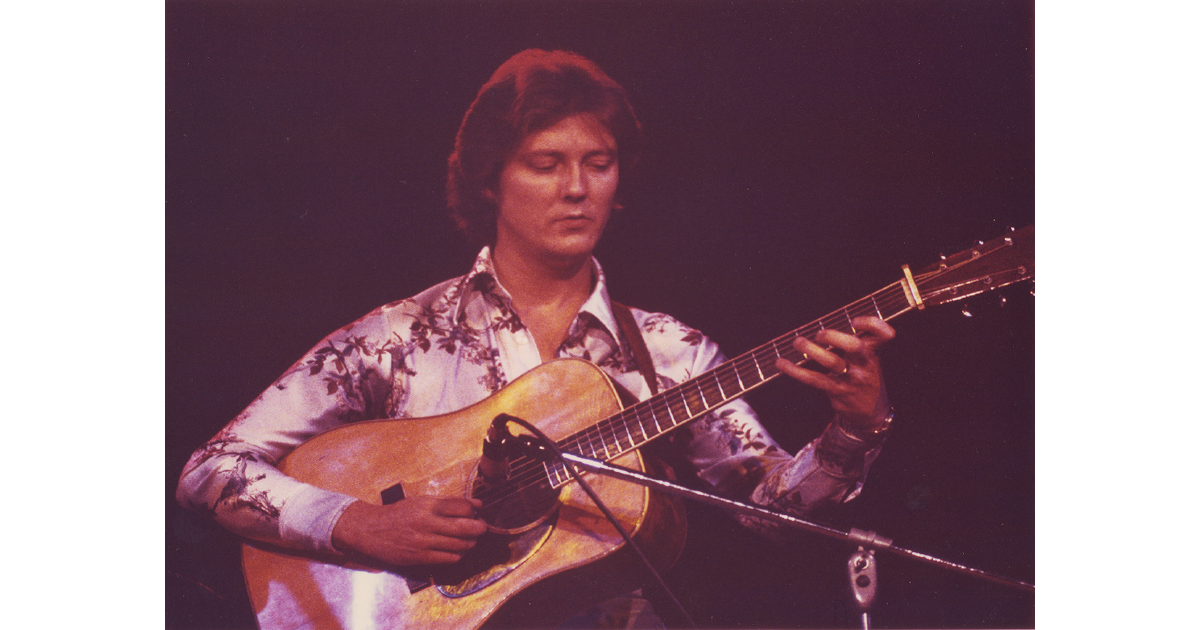
No BGS reader needs a rundown of Tony Rice’s biography or accomplishments. Earlier this month I chatted with Todd Phillips, Tony’s close friend and bassist across multiple groups (David Grisman Quintet, Bluegrass Album Band, Tony Rice Unit) from 1975 to 1985. During these years Tony used inspiration from mid-century jazz and musical peers, along with his innate willpower, as levers to crack open a stunning new guitar vocabulary. In doing so he rose from a bluegrass badass to a global force, operating well above tribes and vogues.

When Todd emerged in the 1970s, bass guitar was a cross-genre norm. A young upright player who melded Scott LaFaro’s gracefulness with J.D. Crowe’s timefeel was a fairly wonderful anomaly in bluegrass. I started working with Todd in 2014, and grew close with him fast. He brought something rare — a relaxed whiphand — to the feel onstage. In the van, he indulged my ceaseless fanboy questions about the old days. An equable ex-stoner with a mildly grumpy edge, he’s as adept at building an instrument or a chicken coop as analyzing acoustic riddles, and his long experience working with people as unalike as Joan Baez, David Grier, and Elvis Costello gives him a high perch from which to reflect. He reminisced fluidly about Tony over the phone with me for two hours, stopping only twice, once overwhelmed by emotion and once to get a bottle of tequila. (Read more from our conversation at my blog.)
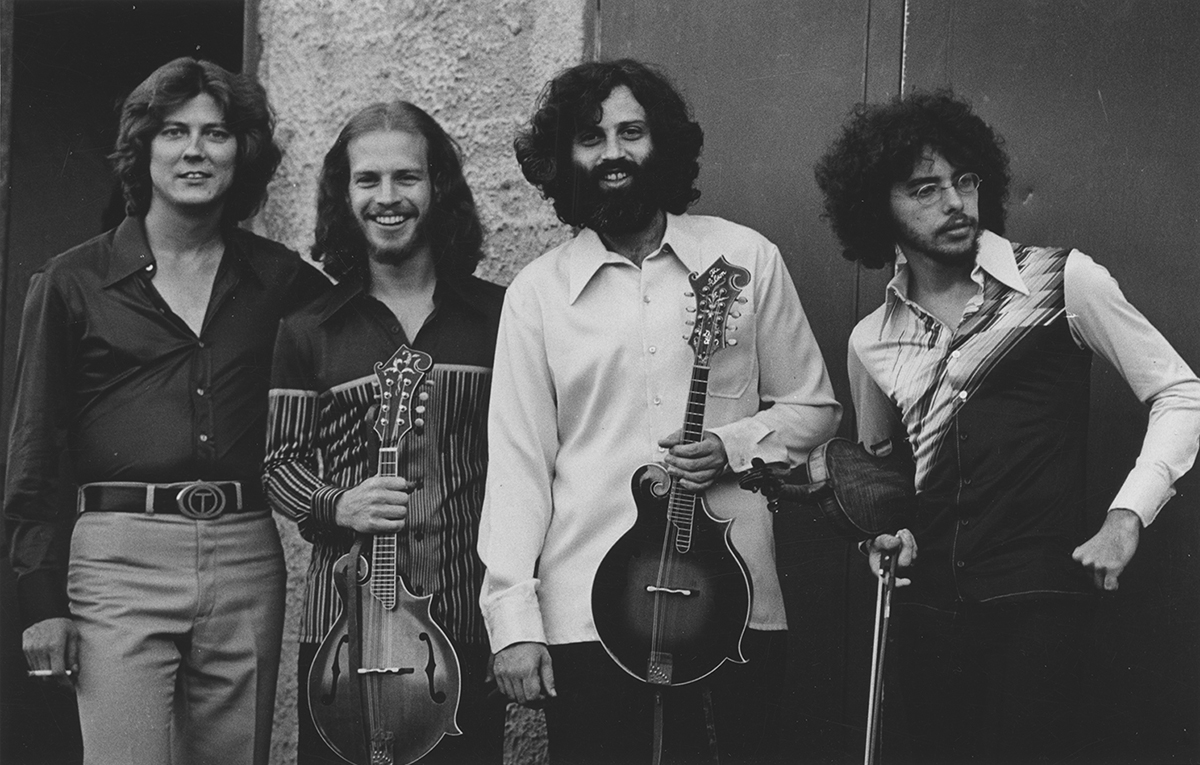
Members of David Grisman Quintet, 1977. L-R: Tony Rice, Todd Phillips, David Grisman, Darol Anger. (Photo by Jon Sievert.)

Robbie Fulks: I listened back today to California Autumn and other records I hadn’t heard for ages, and heard little passages that sounded uncharacteristic of Tony. Did gestures come into his vocabulary, stay there for a while, and then fade off as he went to concentrate on another idea?

Todd Phillips: That’s true, yeah. He would go through cycles, get on a kick. He’d get on riffs, like hearing Billy Crystal: “You look marvelous.” He’d say that 40 times a day, and a year later, drop it for some other riff. The vocabulary would change, according to the era.

That’s fascinating, to compare it to a non-musical example. So let’s dive in, go back to the start. Tell me about meeting Tony — when, where, and how you guys got underway with the Grisman project.

I was a beginning mandolin player, and I was certainly in over my head, playing mandolin with David, but he’d never heard me play bass, which I’d played since I was a little kid. This was 1974, and Clarence White had died the year before. And we just thought, this is a good band, we don’t need a guitar — no one else could fill Clarence’s shoes, and he’d be the only guy that would work in this thing. Then David came home from a Bill Keith recording session and said, “I just met the guy that could do it.”
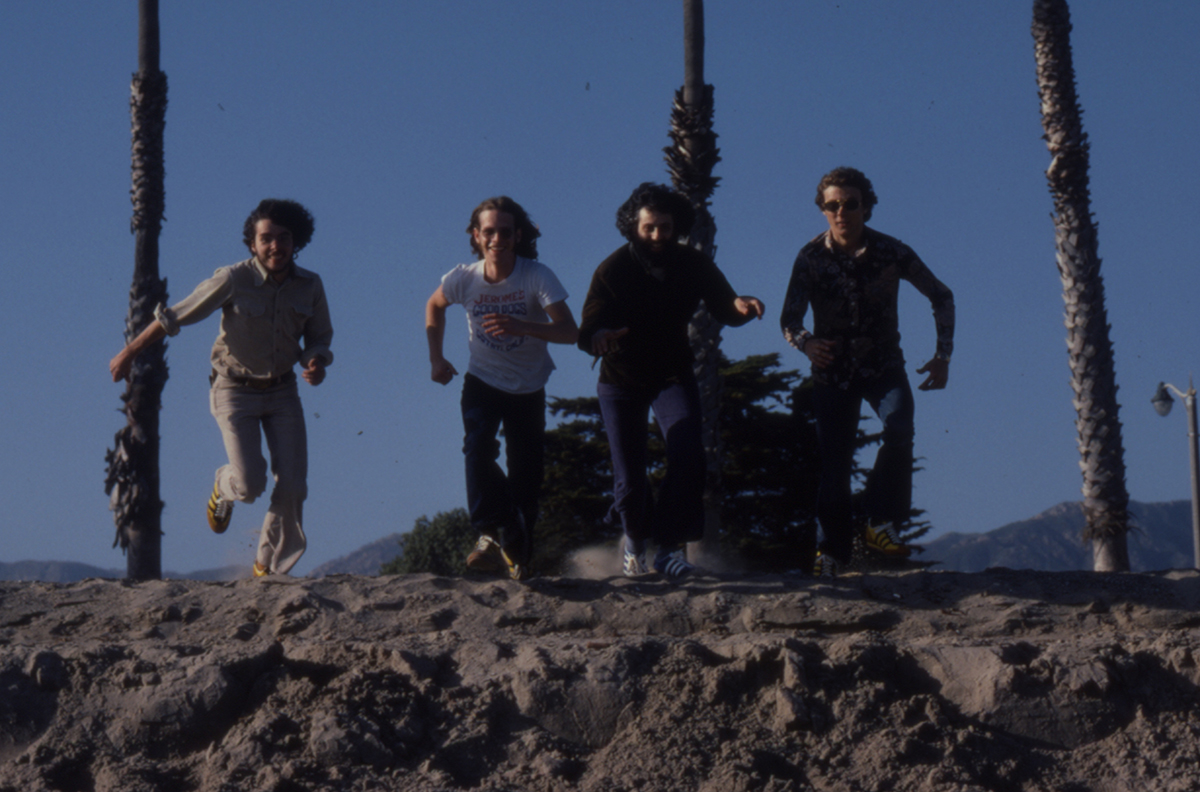
(Photo by Todd Phillips)

Shortly after that, J.D. Crowe and the New South were on their way to Japan, and they stopped in San Francisco to play one gig. They hung with us for a couple days and… I had never hung with, um, that many guys from Kentucky all at once. [Laughs]

I’ve told you about that Mexican restaurant in Berkeley. The Californians — me, Darol, and David — and the Kentucky guys — J.D., Tony, Ricky, Jerry, and Bobby — were seated at one giant round table. First, Crowe ordered: “Six tacos and a Coke!” Then each New South guy ordered exactly the same. I guess they were used to the little three-inch tacos you can eat in two bites. So this big table ended up covered with plates full of giant tacos, surrounded by a pretty interesting mix of characters. I wish we had a photo. Polyester and tie-dye T-shirts all around.

After they came back from Japan, Tony gave J.D. his notice. He hooked up a little U-Haul trailer — clothes, suitcase, guitar, and stereo system — and got an apartment in Marin County. And we started rehearsing. At that point, we had what we had, but then Tony’s chemistry came into it. And it just catalyzed the whole thing. It was huge. Tony had to learn his harmony and a bunch of chords he hadn’t really played before — but we had to learn to play rhythm like J.D. Crowe. So we probably rehearsed for another six months before we went out and played our first shows.
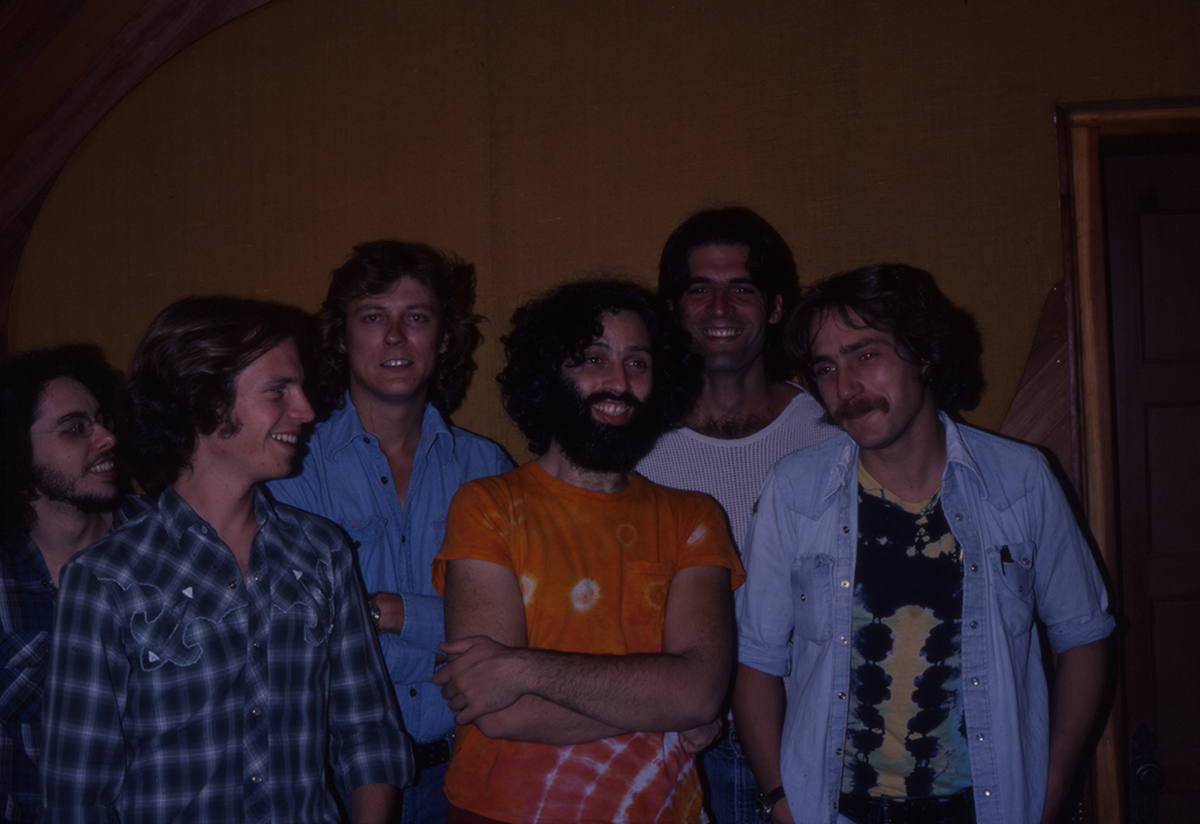
Recording the first David Grisman Quintet album. (Photo by Todd Phillips)

Tell me about the first gig.

Our first show was in Bolinas [in Marin County], in the community center. We made our own posters and put them up all over Bolinas, so it was sold out. And no sound system. We wanted people to hear us just like we rehearsed. There were probably 200 people there.

So small room, gather round, and somehow the guitar projected through.

We played with dynamics — if Tony was soloing, we shut ourselves up. We got down light and tight under him. Since we hadn’t played through a sound system, we just did what we did every day anyway.

The first on-the-road thing, not long after, was in Japan. Our show was a bluegrass quintet with Bill Keith and Richard Greene, followed by a set of DGQ. Then, as soon as we got back from Japan, we recorded the first quintet record. So it still had that energy. We were still excited to hear it, too, every time — it would raise the hair on our arms! It was kind of a… strong existence. Life felt — pumped up, you know?
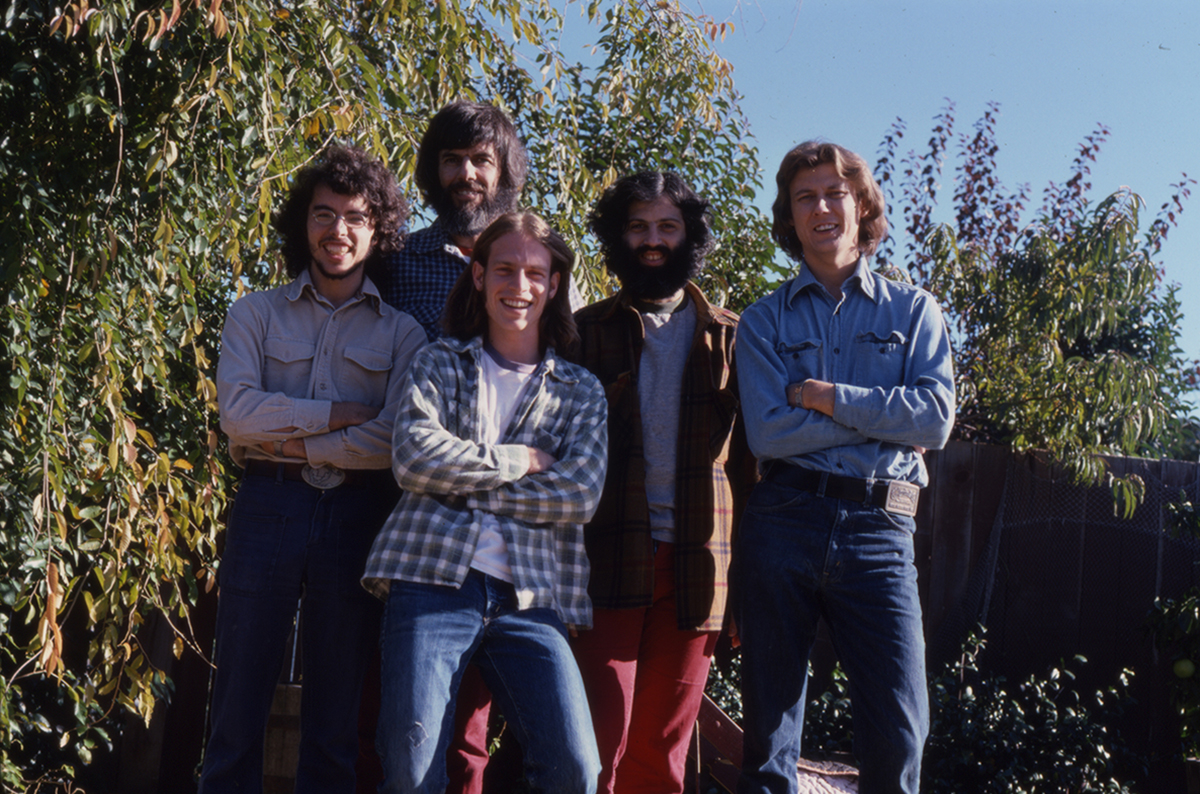
First photo of David Grisman Quintet, 1975. (Photo by Todd Phillips)

Close companions in an intense situation. A lot of people have been in a band or in the army. But on top of that, you guys were altering the course of music.

Yeah. Maybe it is a little like an army buddy. I was a cross between his bass player and his little brother. Also his babysitter, sometimes! He had left his old friends, and when he came to California, I seemed to be the guy he gravitated to. On off days, all of a sudden there’s a knock on the door at 10 a.m., and it’s Tony — “Hey man, let’s go the boardwalk, ride the roller coaster. Let’s go to the record store.” We went to the record store a million times. Came home with bags of records and stayed up all night listening — I mean, he taught me to listen close, whether playing music or just listening to records.

Any memories of the 1975 Grisman Rounder album sessions?

Tony was hilarious! We’d go out to eat, and he’d come back with a couple of cloth napkins. He’d fold one up and put it on his head, and put on sunglasses. Looking like a weird Quaker. And then drape another napkin over his left hand and go, “I don’t want anybody to steal any of my licks.” [Laughs] He’d leave that thing on his head, with the sunglasses, for like, three hours.
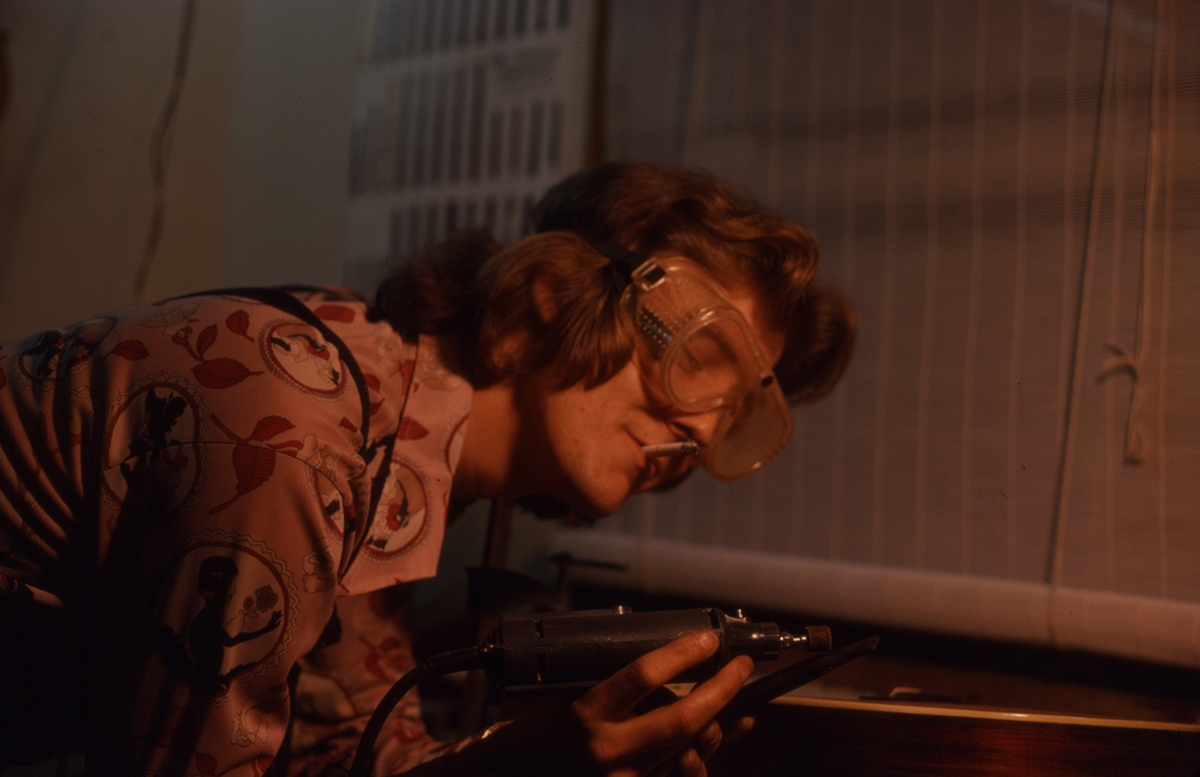
(Photo by Todd Phillips)

Have you heard guitarists who managed not to sound like Tony, in the years since?

Well, because Tony opened the door, after Clarence, you can’t help but sound like him as a bluegrass soloist. He found those avenues on a fingerboard that you can play with a strong attack and accurate, strong expression. A lot of it is mechanics. A D-28 with semi-high action, there are certain phrases that fall naturally under your fingers, and Tony found those. So I think a lot of guitarists use those avenues because — they’re there. You might hear different phrases but they’re not as strong. They might be more interesting, or more academically pleasing, but the effect — I haven’t heard it as strong as in those passages that Tony found.

Tell me about Manzanita.

There was no preparation that I remember. The guys came to Berkeley and we went to work. We ran a tune for 20 minutes, then recorded it maybe three to six times.

Béla Fleck said Tony didn’t like to rehearse much.

Yeah. Sink or swim.
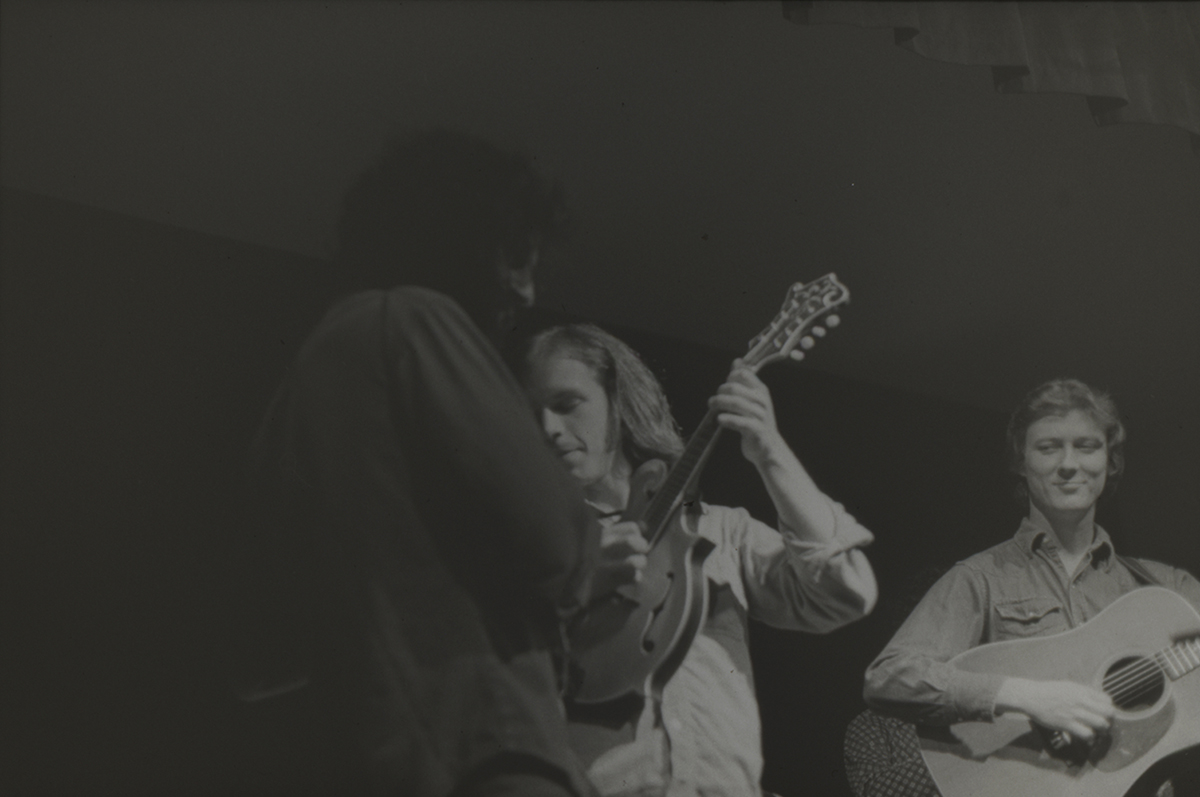
David Grisman, Todd Phillips, Tony Rice (Photo by Todd Phillips)

Any road memories involving Tony?

He didn’t go out a lot. We went to Japan once, the three Rice brothers — Larry, Wyatt, Tony — and me. And Tony — maybe that’s when he started — he just never left his hotel room.

What was he doing in there?

Ordering room service. Later, traveling with the Unit, he’d stick to the room. I mean…he pretty much lived in front of his stereo, smoking cigarettes and drinking coffee. That’s what he thrived on.

How did you listen to music away from the home stereo back then?

In the early days, he drove a noisy Dodge Challenger. A muscle car, with a cassette player in the dashboard. We’d listen loud. And driving from Grisman’s house back to mine every night, it was pretty much all John Coltrane, the classic quartet.

Interesting!

Yeah, and later, a lot of Oscar Peterson. He’s like Tony: you recognize the phrases, and they’re strong as hell. Meticulous mechanics. Tony never studied music academically — but the sound of it. He took that in and it’d come out later somehow, the power and the attitude, more than specific notes or theory.
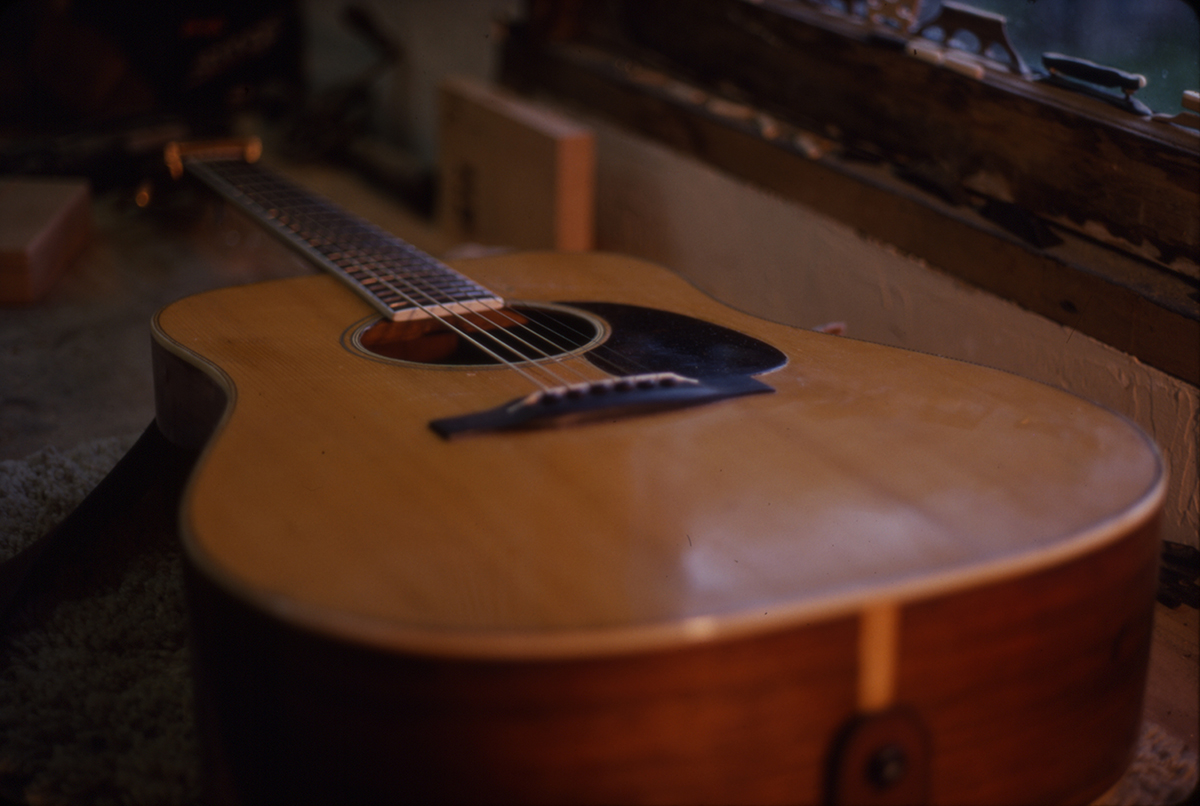
(Photo by Todd Phillips)

Did he have any relationship to the written page?

No. Not at all.

Tony cited Miles Davis and Eric Dolphy as favorites, but I don’t hear a strong kinship.

I think those were unique voices. Like Django, or Vassar.

Individualists.

I think that’s it. The attitude. He liked those kind of characters, like David Janssen — he really had an obsession with David Janssen. Or Lee Marvin.

Ha!

I’m not kidding! The Marlboro Man.

People that laid it down.

Exactly.
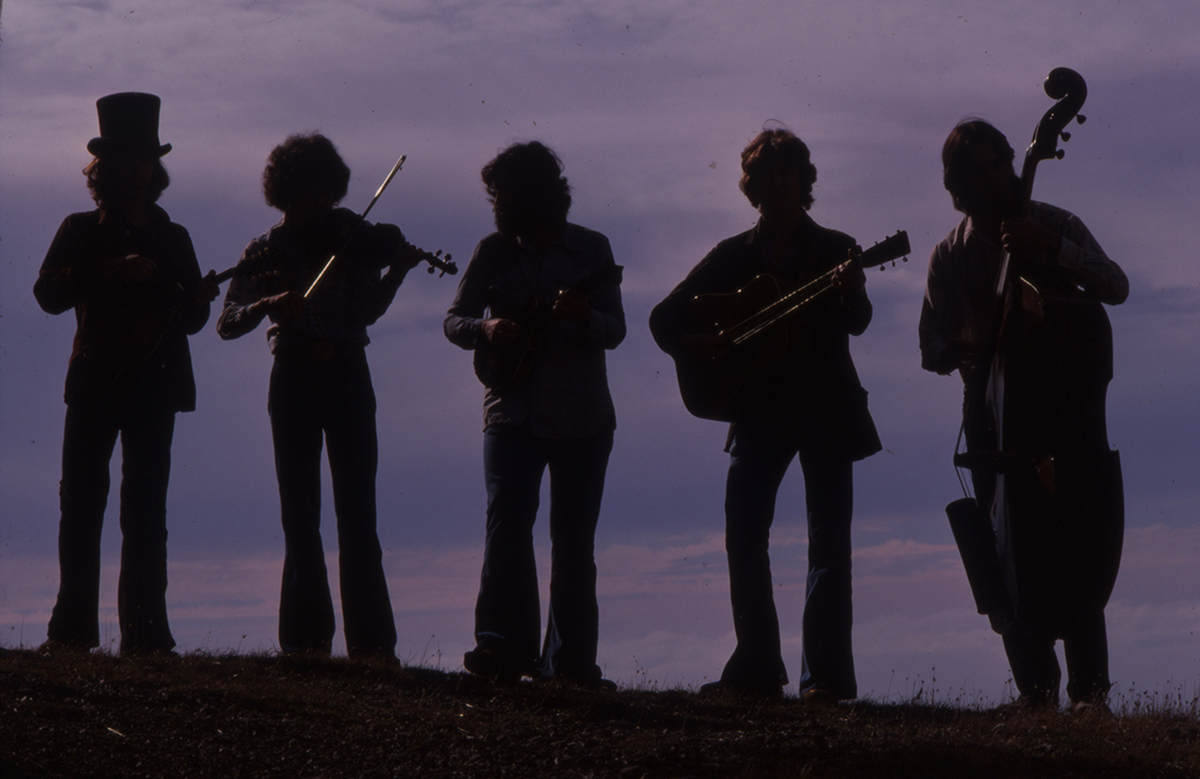
David Grisman Band in silhouette, 1976. (Photo by Todd Phillips)

I’m curious about the chemistry between Tony and other strong personalities. You’ve told me your take on the Skaggs-Rice dichotomy, the good and bad guys from everyone’s high school…

Yeah, Ricky would be class president and Tony would be Eddie Haskell. [Laughs] There’s a little of that, but musical respect bridges all gaps.

With David, did Tony slip easily into a sideman role?

The chemistry was — not volatile, but exciting. The New Jersey hippie and Mister Perfection. You know, when Tony was new to California, David’s living room was a real event. You never knew who you’d run into — Jethro Burns, Taj Mahal, Jerry Garcia. I think that excited Tony. He’d dig in his heels, just be who he is, and people respected that. He was…I guess I want to use the word “stubborn.” Clear-headed, with his vision.

Were cigarettes it for Tony, or were there harder things he liked to do?

No! He actually went light on the marijuana, compared to everyone else in Marin. He kinda puffed a little bit, just to participate.

Any whiskey?

No, he drank a few beers at home. I don’t remember any hard liquor at all.
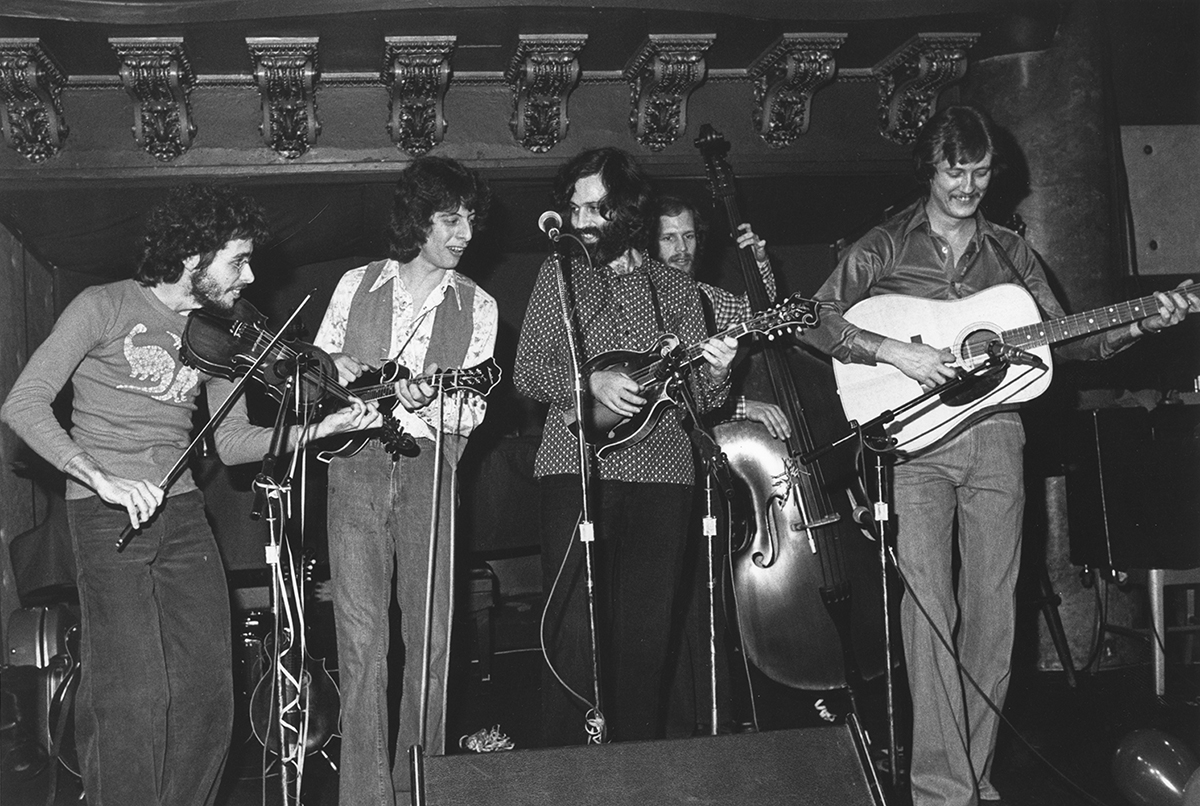
New Year’s at Great American Music Hall, 1978-1979. (Photo by Jon Sievert.)

I read in The Guardian obit: “apprentice pipe fitter”…?!

Yeah! His dad was a welder, pipe fitter, and Tony and his brothers did that too.

What did he do to keep his fingers strong besides play?

Nothing. He bit his nails. He had no fingernails, and his fingertips looked like blocks of wood. Like the rounded end of a wooden dowel. The guy played a lot. He had hands that physically, mechanically, work in a different way. He could push down with his thumb, on his right hand, but also push up, with his first finger. You can look at YouTube and see it — a really strong muscular mechanism between thumb and index.

His down and upstrokes weren’t ascribed to the usual beats, weren’t automatized in the normal way — and were equally forceful.

Yeah. And rhythmically, a lot of triplet syncopation on the upstrokes. People just say “syncopation,” but technically it’s playing 3/4 against 4/4, like Elvin Jones’s drumming. You can’t tell if it’s in 3 or 6 or 4 or 2. It’s all of it. It’s all of it! And those subdivisions, I learned that from Tony — you slice that up in all kinds of ways, so those polyrhythms are all churning in your hands or head at the same time. That’s what generates good time, not tapping your foot. Tony had all those superimposed polyrhythms in him.
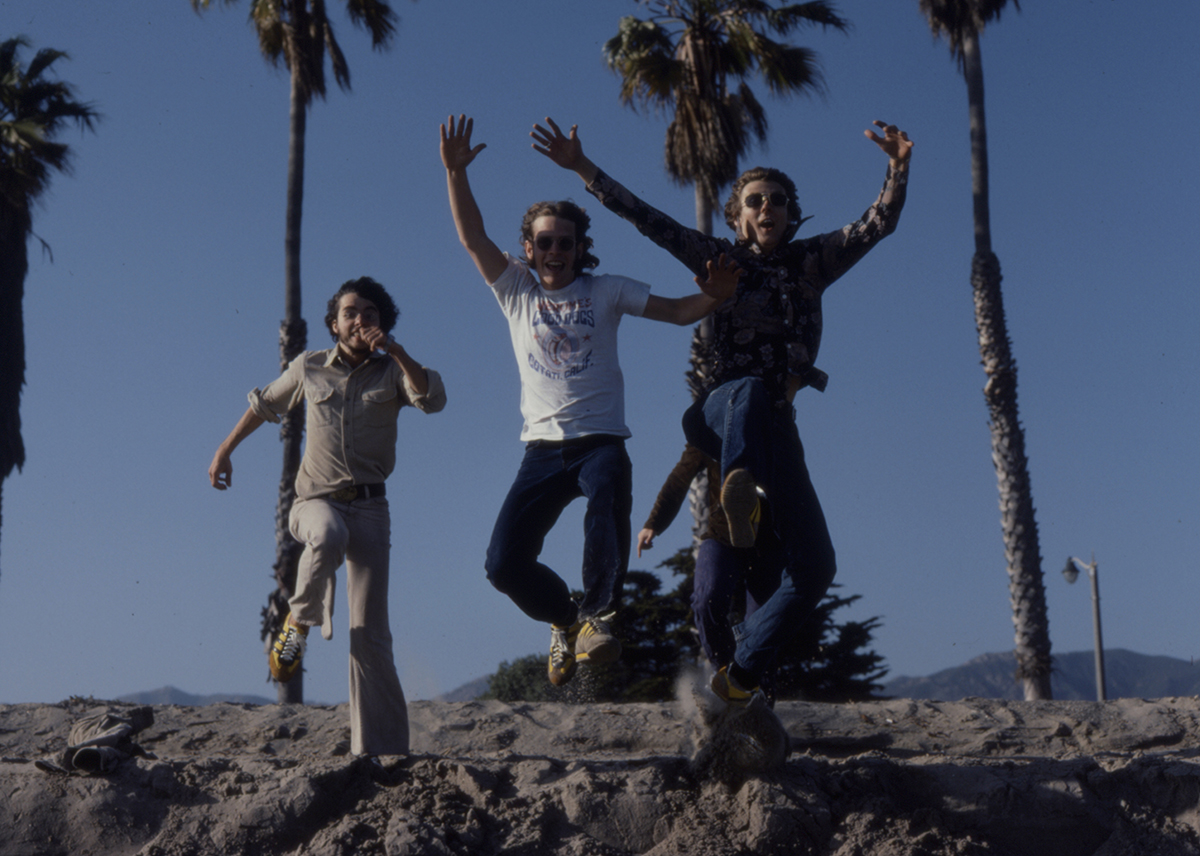
(Photo by Todd Phillips)

Bluegrassers work hard and live long, on the whole. And with so many players of your generation now in their 70s and performing as energetically as ever, Tony’s story looks more profoundly sad to me.

You know, I don’t know why Tony went the way he went. Why he couldn’t be as youthful as Sam Bush. Who knows, if there was some kind of a depression, or if that desire for perfection wore him out. You know? Because he did play with joy, but it was also that crazy obsession, to be perfect and accurate — maybe he was just too hard on himself.

He was hard on everybody around him. I know that I developed way more than I ever would have developed if I’d never known him. It was not that he was ever mean or harsh to me, but being around him, you put pressure on yourself to live up. I think everybody that played with him was like that. He jacked up the music to this level — and then it was your challenge to get up there with him. Being around him changed me forever.


Lede image by Heather Hafleigh. All photos provided by Todd Phillips and used by permission.

Maeve Gilchrist, “The Storm” and “The Calm”

If you aren’t already aware, you should know that the harp is having something of “a moment.” Between pop- and mainstream-adjacent singer-songwriters like Joanna Newsom and Lizzie No who write on harp to traditionalist, Irish and old-time pickers like Alannah Thornburgh, there’s no shortage of non-classical entry points to this often esoteric instrument. Viral TikTok sensations @hannah_harpist and @olivia_harpist (Hannah Stater and Olivia Ter Berg, respectively), whose harp-centered “sounds” have been liked, shared, and reshared by hundreds of thousands of users, are true harp influencers, capitalizing on the growing visibility of the instrument.

Lifelong harpist, singer, composer, and virtuoso Maeve Gilchrist — whose own journey on the instrument began as a child at the feet of her two harpist aunts — knows that this global harp moment is no flash in the pan. She’s performed around the world with DuoDuo, the Silkroad Ensemble, notable instrumentalists such as Yo-Yo Ma, Darol Anger, and Esperanza Spalding, and she was even a featured soloist on the How to Train Your Dragon: The Hidden World soundtrack.  

Gilchrist’s just-released album of harp compositions, The Harpweaver — named for and inspired by the eponymous work by poet Edna St. Vincent Millay — includes two compositions written for a community school of 107 young harp students in County Laois, Ireland. “The Storm” and “The Calm” were written as part of a suite entitled “White Horses,” which Gilchrist wrote for a harp orchestra of young County Laois girls ages 5 to 18. A native of Scotland and now based in Brooklyn, New York, Gilchrist teaches often in Ireland and the British Isles, building upon the instrument’s deep roots in the folk and Celtic musics of the region. 

“Back in the days,” Gilchrist explains via email, “when a lot of Irish music and culture was being oppressed, the harp was outlawed because of its ability to so powerfully stir the spirit.” In teaching these young girls the harp, Gilchrist is handing down the legacy of its evocative ability to subvert these sorts of moral expectations – especially those projected upon women. “I loved the image of white horses (the waves of the sea) as a metaphor for these girls,” she continues. “So strong and elegant, wielding their harps as modern day peaceful warriors!”

On The Harpweaver, “The Calm” comes after the storm, turning the age-old cliché on its head, further subverting our expectations for an instrument and a genre aesthetic that has too long been relegated to quiet background music in elevators and office spaces. The harp is a tool for so much more, and on The Harpweaver, Gilchrist’s compositions, as well as her efforts to spread the harp to new pupils, acolytes, and fans, demonstrate this clearly, stunningly, and captivatingly. 


Photo credit: J. Goodman

Eight Great Cuts of “Eighth of January”

It’s one of bluegrass and old-time’s favorite days of the year! The “Eighth of January” can be heard from every jam, every folk club, every radio tuned to the bluegrass airwaves – well, it ought to be like that.

To do our part, we’ve collected eight great versions of “Eighth of January,” that is, “The Eighth of January,” or “Jackson’s Victory,” or “Gulf of Mexico” to mark this auspicious day. At the end, we hope you’ve found a new lick to add to your own versions of the tune and we hope “eighth” doesn’t look like a word to you anymore, too!

Tui

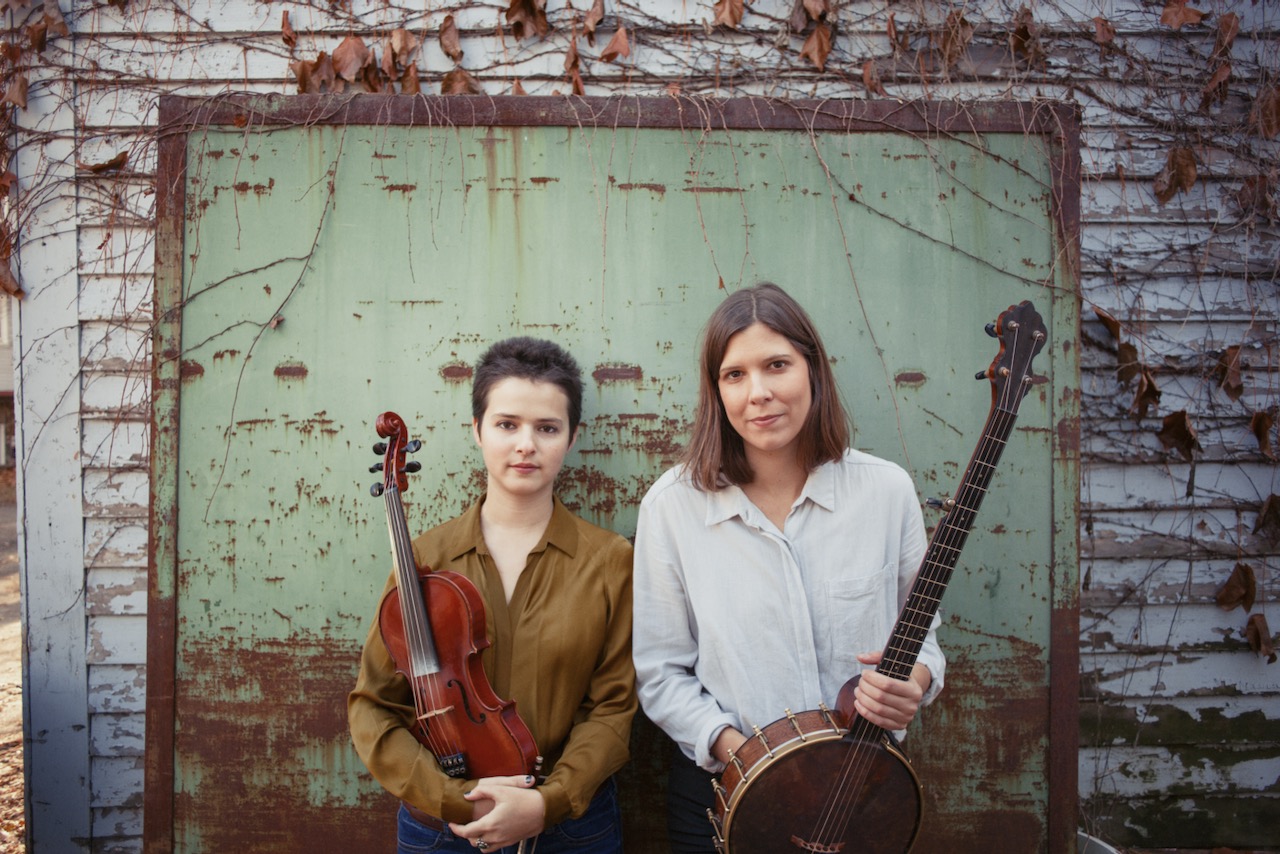
Let’s start with a decidedly old-time take from fiddle/banjo duo Tui, AKA Libby Weitnauer and Jake Blount. Here’s hoping you make a stank face when they ever-so-slightly pass over the b7 — if you recall your last music theory course, see also: “the subtonic” — in the B part. (If the parts have been counted wrong, this writer begs your forgiveness.) The frailing rakes by Blount on the banjo, the pair’s playful deviations from each other, only to return, totally enmeshed a moment later… it’s delicious.


Charlie Walden

The old-time fiddler of Missouri, if Charlie Walden doesn’t come up in the first round of results when you search the internet for “Eighth of January” something is very wrong. His command of raw, timeless (and seemingly effortless) fiddling stems from a wealth of talent combined with his insatiable appetite for tunes — he’s collected countless melodies, stories, and songs from fiddlers all across his home state.


Tony Rice

An old-time fiddle tune fully assimilated into the bluegrass canon? This right here is how. That’s Darol Anger and David Grisman on the tasty twin parts, Todd Phillips on bass, and the one and only Tony Rice holding it down and shredding it up all at once. Every time they slightly push, syncopating the tail-end of a random melodic phrase here and there, a shiver should go down your spine.


Jeremy Stephens

No one alive plays Don Reno-style banjo better than Jeremy Stephens. Full stop. Now, if you’ve already hit play and have listened through to his first solo, you should know this: He recorded Scarlet Banjo at the ripe old age of 16. You know him now thanks to his quintessential sound with High Fidelity, but Stephens has been burning a torch for unencumbered, fully-realized traditional bluegrass for a long time. And it’s always been this good!


Scotty Stoneman with the Kentucky Colonels

The Kentucky Colonels were inducted into the Bluegrass Music Hall of Fame in 2019 and though Stoneman was not an original member, he left an indelible mark on the band’s legacy, which manifests chiefly through his “hot” fiddling on the band’s essential live recordings. Though fans may be most familiar with hearing the Colonels hold on for dear life in the wake of his bow at truly incomparable tempos, Stoneman is relatively subdued in his captivating improvisations over “Eighth of January.”


Eric Weissberg

Deliverance reverberates throughout the ages for all of the wrong reasons. If you forgot this was on the original soundtrack to the infamous film, we don’t blame you. That’s why we’re here to remind. Weissberg’s banjo playing — especially his fantastic melodic approach, heard here — certainly deserves more recognition than simply being regarded as the originator of “Dueling Banjos” in its modern form.


Johnny Cash, “The Battle Of New Orleans”

We may have neglected to mention earlier that this tune is named “Eighth of January,” commemorating the day of “Jackson’s Victory,” because (cruel, genocidal) President Jackson won “The Battle of New Orleans” that very day in 1815. Yes, this tune has a lot of titles — and lyrics, to boot! Here’s the Man in Black lending the dusky patina of his baritone to our song du jour.


Allison de Groot & Tatiana Hargreaves

This particular variation on “Eighth of January” was found in recordings of African American musicians Nathan Frazier and Frank Patterson, who were first recorded in Nashville in the 1940s, so you’ll notice de Groot and Hargreaves stray from the melodic phenotype of the others on this list. It’s a gentle reminder that the way these tunes travel — from picker to picker, across generations, across counties and countries — is just as important to the history of string band music as the tunes themselves. Just about a year ago (hmm, how is that so easy to remember?) we featured this track in an edition of Tunesday Tuesday, solidifying this BGS tradition.


Photo of Tatiana Hargreaves (L) and Allison de Groot: Louise Bichan

LISTEN: Kat Wallace and David Sasso, “Farewell to Trion”

Artist: Kat Wallace and David Sasso
Hometown: New Haven, Connecticut
Song: “Farewell to Trion”
Album: Stuff of Stars
Release Date: August 16, 2019

In Their Words: “We worked up our arrangement of this Alabama fiddle tune after David learned it from late fiddler Stacy Phillips at a local old-time jam just a week before his untimely passing. We took inspiration from the fiddle and mandocello recordings of Darol Anger and Mike Marshall while pulling from our own classical roots. We enjoyed playing around with classical form and phrasing while keeping that good old-time groove. The arrangement builds to a climax where fiddle and mandocello trade the C [third] part hook just before a reharmonized outro. This track is one of two instrumentals on our debut album, which leans on our shared love of folk and bluegrass and showcases our original songwriting.” — Kat Wallace and David Sasso


Photo credit: Naomi Libby

MIXTAPE: Mike Barnett’s Favorite Fiddlers

If you want to know who the best fiddlers in bluegrass and old-time are, ask one of the best fiddlers in bluegrass and old-time … right? Here, Mike Barnett rattles off not just a list of songs by great players, but the reasons they are so great. Enjoy his insider’s view.

“Flannery’s Dream” – John Hartford

Records from John Hartford like Wild Hog in the Red Brush and Speed of the Old Long Bow got me really excited about the energy in old-time music. I never got to meet Hartford, but feel a connection to him through his music. He brings a special vibe that I’ve often tried to channel. I’ve heard stories that he used to have a guideline that nobody in his band could repeat their accompaniment/part for more than one section of a song, everyone had to mix up their playing often, which gives his music a certain drive and breath.

“Black and White Rag” – Johnny Gimble

When I heard Johnny Gimble play at Mark O’Connor’s camp maybe 14 years ago, it was so strikingly Texas, so rooted in that tradition. I particularly remember his feel when playing Texas rags captivating me, like here in the “Black and White Rag.” Johnny helped me understand more deeply the true spirit and community of Texas-style music.

“Bound to Ride” – John Hartford, Tony Rice, and Vassar Clements

Vassar Clements invented his own, incredibly unique style of fiddling. The vibrato, silky tone, double stops and slides … it’s like magic whenever he touches the fiddle, and I can tell within two notes if it’s him. This recording of “Bound to Ride” is a great snapshot into Vassar’s unique way of playing around a melody, backing up the vocal, and lifting the energy of a song.

“Dill Pickle Rag” – Buddy Spicher and Vassar Clements

Buddy Spicher is one of the legends, and one of those fiddlers you’ve probably heard but maybe didn’t know it was him. It was Buddy who got me wanting to play second fiddle — the harmony. This recording of Buddy with Vassar on “Dill Pickle Rag” shows some of Buddy’s genius and virtuosity (and Vassar’s!).

“Lonesome Moonlight Waltz” – Kenny Baker

Hard not to mention Kenny Baker here. I listened to his album Kenny Baker Plays Bill Monroe frequently growing up, and I’m still trying to understand those bowings! His playing is so clean, clear, good tone and time, and great melody player.

“Sally Goodin'” – Paul Warren

“Sally Goodin'” was actually the first COUNTRY hit! #funfact It was Tony Trischka who got me listening to Paul Warren when I was about 17. Another one of the legends in bluegrass fiddle, Paul brings a grit and edge that is often lost in modern bluegrass fiddling.

“Estrellita” – Bobby Hicks

Once Bill Monroe was asked if he had a favorite fiddler of those who’d played in his band. Bill said, “I’ve had a lot of fiddlers come through my band, but I believe Bobby Hicks was the truest fiddler I ever had.” Bobby is the double-stop king, and took a lot from what Tommy Jackson did with his single note playing around a vocal and made it his own.

“Back Up and Push” – “Benny Martin

Benny Martin’s double stops, attack, and full-throttle style really resonate with me. The tone he gets in this version of “Back Up and Push” makes it seem as if he’s got a brick tied to the end of his bow. And when he gets to the shuffle, it’s clear that so many contemporary fiddlers have been heavily influenced by how he did it.

“Raggedy Ann” – Curly Ray Cline

If you’re wondering who ever had the most fun playing the fiddle, all you need to do is search “Curly Ray Cline Orange Blossom Special” on YouTube, and you’ll find that it was in fact Curly Ray Cline! He’s most known for his work with the Lonesome Pine Fiddlers and Ralph Stanley and is as much a treat to watch as to listen to. I love his note choice and where he plays in the beat — what he does with the time.

“Fire in the Mountain” – Scotty Stoneman and Bill Emerson

Scotty Stoneman was a wild man of a fiddler. His double stops and slides, and aggressive approach to the fiddle, are some things I’ve always gone and checked back in with in my listening. You can hear some of what I’m talking about with Scotty’s sound in the recording of him playing “Fire in the Mountain.”

“Learnin’ the Blues” – The Del McCoury Band

The Del McCoury Band is one of the finest — if not THE finest — bluegrass bands still in the business. One G run from Del will set you straight for the whole year. Jason Carter has got the old bluegrass sound, and I love how much he digs in and goes for stuff, and pulls so much sound and soul out of the fiddle.

“Pickin’ the Devil’s Eye” – Bruce Molsky

I’ve always loved this recording Bruce Molsky made with Rushad Eggleston, Darol Anger, and Michael Ducé of “Pickin the Devil’s Eye.” The groove masters! Or maestros! Bruce’s propulsive bowing, groove, and reverence for tradition is really remarkable. He’s basically a one man band, and hearing him here is transcendent.

“Buffalo Nickel” – Béla Fleck and the Flecktones

Stuart Duncan has played on countless recordings so it was hard to choose just one, but Béla Fleck’s Bluegrass Sessions was one of the most influential for me, and a major landmark in acoustic music. “Buffalo Nickel” is gorgeous, and Stuart plays the melody with so much taste, tone, feel, soul, intonation … all the good things. To me, Stuart has always been sort of a perfect combination of all the things I love about fiddling.

“Future Man” – Strength in Numbers

Mark O’Connor is one of the most versatile players on the planet, combining so many styles and influences so flawlessly to create his own incredible voice. Telluride Sessions by Strength in Numbers is another must-have album. The way everyone plays together, and Mark’s precision and virtuosity … amazing. His solo here on “Future Man” is a highlight — a glimpse of what Mark is capable of.

“Ducks in the Millpond” – Aubrey Haynie

Aubrey Haynie is the initial reason why I got into bluegrass. His sound made me want to learn how to do that. One of my favorite fiddle albums out there is Aubrey’s The Bluegrass Fiddle Album. I like this cut of “Ducks on the Millpond” — a really cool instrumental that weaves between three sections. Aubrey mostly plays the melody with so much tone and taste, and varies it slightly toward the end.

“Sweet Georgia Brown” – Billy Contreras

Not everyone is familiar with the fiddle stylings of Billy Contreras, as his genius is less substantially documented. I think he is the greatest improviser on the violin to ever live, and a master when it comes to bluegrass, swing, modern jazz… he can do it all. His brilliant, almost mathematical mind for music, combined with his deep heart for it all, is endlessly inspiring.

“Lee Highway Blues” – Darol Anger and Stuart Duncan

Growing up, I listened to so much music that Darol Anger is responsible for: Republic of Strings, duo with Mike Marshall, his own projects, his work with the David Grisman Quintet, etc. Besides his amazing lead playing, he is known for paving new roads for the violin as a rhythm instrument with his infectious groove and development of the fiddle chop. His album, Diary of a Fiddler, has so many thoughtful duets with great fiddlers of different styles.

“It Don’t Mean a Thing” – Stuff Smith

Matt Glaser, who turned me onto so much priceless music during my time at Berklee College of Music, introduced me to Stuff Smith. I love Stuff’s emphasis on groove and blues, and the grit and directness in his sound.


Photo credit: Justin Canerer