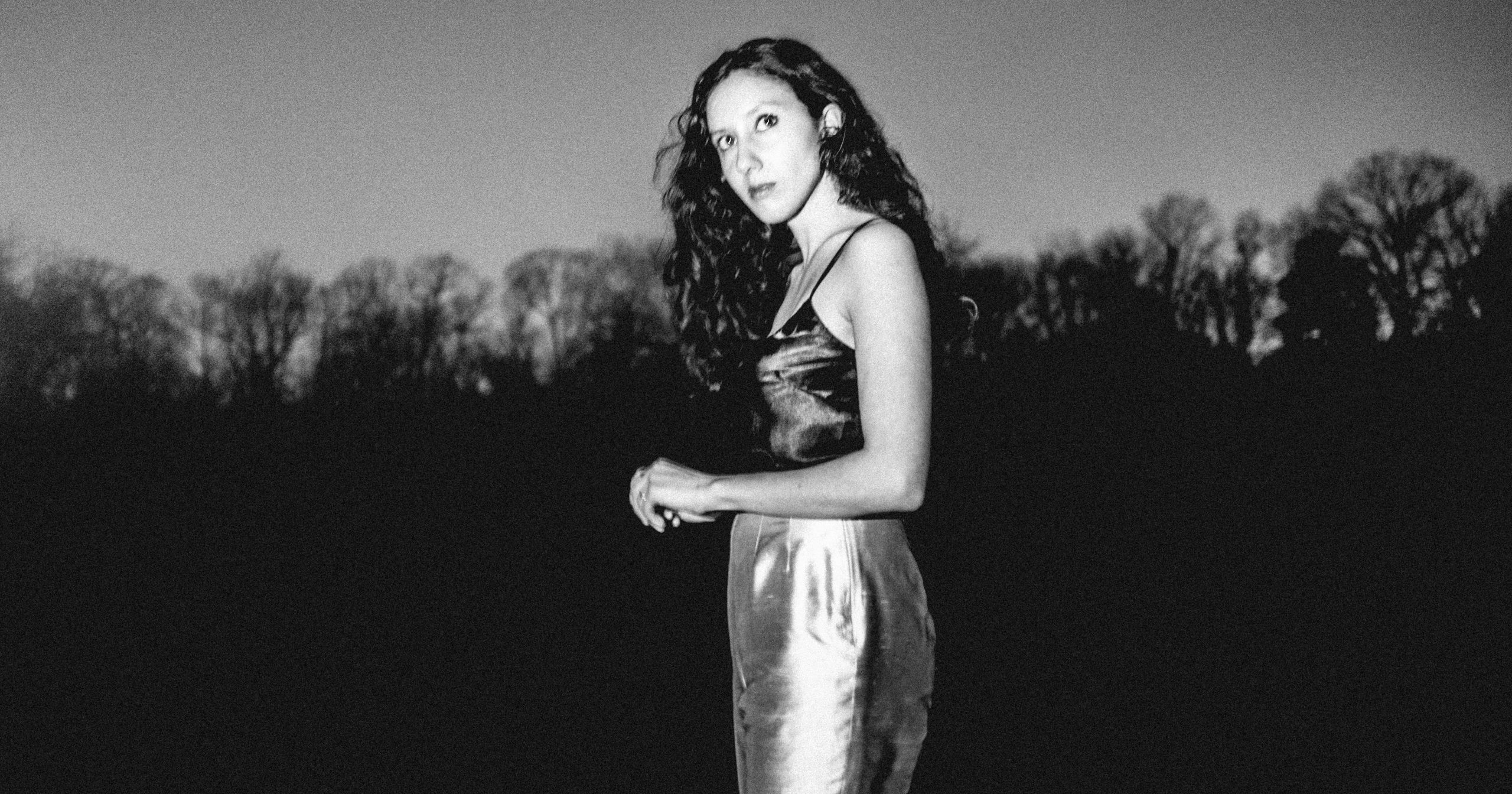
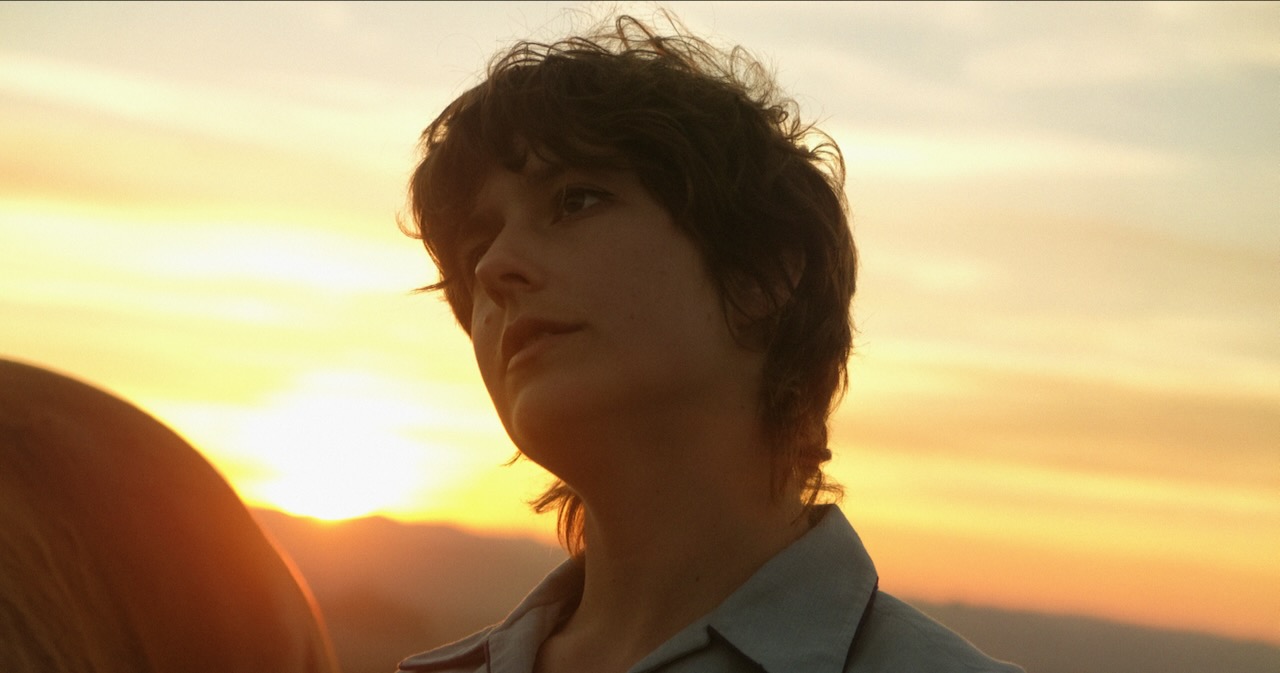
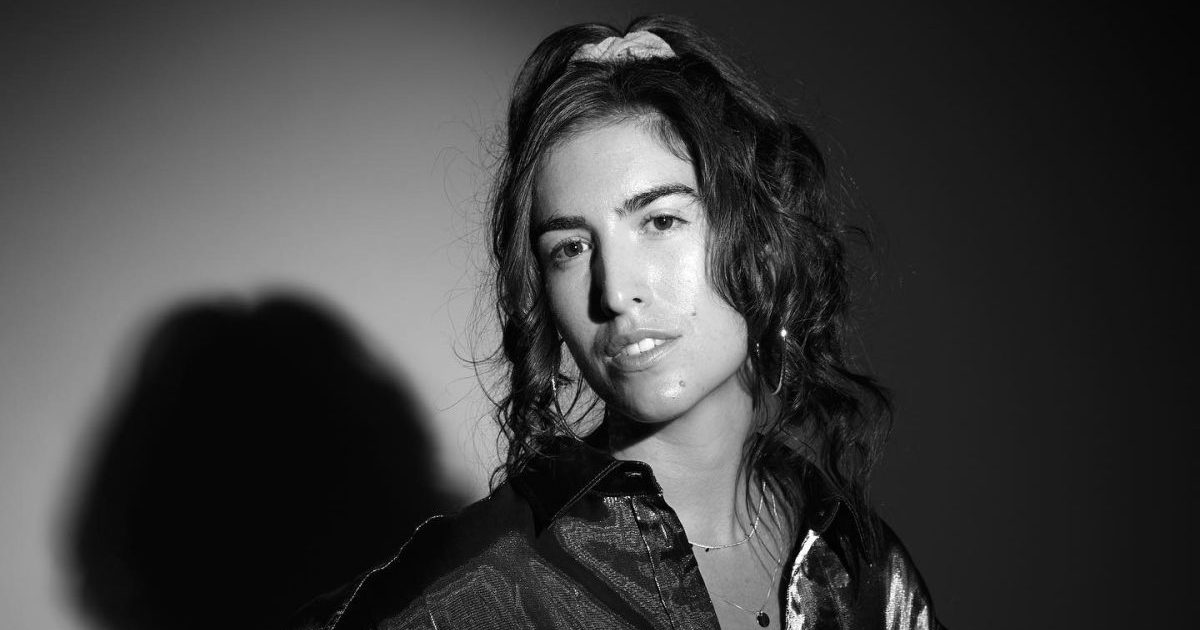
Ever since I started making music, it’s been in this sort of folk-infused soundtrack sort of style. When I was little, I would imagine that I was in a film constantly. I would hear music in my head supporting the emotions I may be feeling. It sort of helped me express my feelings to myself and figure out what sort of character I want to be in this life. My brother is famous for his excellent mixtapes and he introduced me to most of my favorite contemporary artists, many of whom make music in this way; fusing together modern attitudes and techniques with personal impressions of roots music.
There’s something about traditional sounds that really resonate with me. I grew up in a rural place and spent my childhood playing the fiddle. Folk music has always been connected to nature and the sounds that go along with it. Nature is where I do my best self-reflection. The hypnotic rhythm of an acoustic guitar line repeated. The rich, molasses drones of the violin.
On my debut album Black Cloud, I intentionally challenged myself to produce in a more edgy, alt-rock style. However, I could not escape many of the musical sensibilities I grew up with. You can hear undertones of trad music in my guitar playing, in the song forms, vocal inflections, and choice of vocabulary. This playlist starts off with the first track on my new record and ends with a song from my folk duo with Emily Mann, Paper Wings. Both are songs I wrote and feel very close to my heart. The songs in between have all been inspirations to me over the years and demonstrate of the cinematic quality realized when folk techniques are fused into modern creations and vice-versa. Hope you enjoy. – Wila Frank
“Tonight” – Wila Frank
I wrote Tonight over a rolling guitar line inspired by traditional banjo techniques. While the rest of the production is quite contemporary, you can hear elements of folk influence in my singing. Especially in the line “It’s a long and lonesome road” — a reference to lyrics you would hear in a bluegrass song.
“Fire Snakes” – Laura Veirs
This has been a favorite song of mine forever. I love the beautiful and unusual contradiction of the acoustic guitar line with the artificial beat. To me, it makes the song feel more emotionally vital and critical. The strings at the end are a luscious bonus.
“Desert Island Disk” – Radiohead
This song reminds me of the trance-like quality of a lot of traditional Malian guitar playing such as Ali Farke Toure who I’m also obsessed with. The simplicity of the production on this song is essential and perfectly supports the beautiful message of the lyrics.
“Walkin’ Boss” – Sam Amidon
This is the only trad American folk song on the playlist. Sam Amidon has a really neat way of taking old Appalachian songs and bringing them into a new contemporary light. The rhythm of the banjo and drums together make you wanna groove and bring out the power of the lyrics.
“Psyche” – Massive Attack
I included this one because the repeating artificial guitar line reminds me of the banjo and is a cool example of the magic achieved when electronic artists sample natural sounds. This particular song was an essential inspiration for me in coming up with the guitar line on my song “Tonight.” When it comes to cinematic music and transporting the listener to a new world, you can’t get any better than Massive Attack.
“Imitosis” – Andrew Bird
I was obsessed with Andrew Bird when I was a kid for his witty lyrical style, use of the violin as a support instrument for his songs, and the unapologetic quirkiness of his music. On this album, he fuses all kinds of music and makes something completely unique.
“Ecstasy” – Crooked Still
I grew up going to a lot of music camps and owe much of my musical development to various members of Crooked Still. Aoife was one of the first singers I learned from and I was lucky enough to spend a lot of time around this music. I love this album in particular and how this song fuses Appalachian fiddle tones with classical string parts.
“The Weekend” – Dave Rawlings Machine
This song features pop chords, but has Dave Rawlings signature guitar style all over it. It’s a fun Americana-style story of a song. I like how the violin parts sound almost like they’re imitating synthetic strings. A cool example of folk music imitating pop music.
“Dog Walkers of the New Age” – Breathe Owl Breathe
One of my favorite albums ever. Completely unique and vibey. The lyrics are quirky and witty, and somehow get at an essential emotion of feeling less alone.
“Grizzly Man” – Rockettothesky
The shimmering acoustic guitar in this track brings this beautiful and spooky song to life. This is the only song I really know from this band, but the haunting, witchy vocal style in this song has stuck with me through the years and has an essence of woodsy appeal.
“Dyin Day” – Anaïs Mitchell
Anaïs Mitchell does a really nice job of innovating within the structure of a song itself. There are elements of traditional call and response in this song, religious references and images of nature, but somehow it still feels relevant and potent.
“Carrie & Lowell” – Sufjan Stevens
This was an incredibly influential album for a lot of people I think. Stevens’ swirling guitar style paired with the vocal effects and simplistic percussive elements make it feel like a pop song without any overly artificial elements. There’s even banjo on this song, but used almost like you would use an arpeggiated synth.
“Middle Distance Runner” – Sea Wolf
To me, this is a perfect pop song with a folk song structure. I love the natural guitar tones and the use of real sounds as percussion.
“The History of a Cheating Heart” – Damon Albarn
One of my favorite artists, producers, and songwriters of all time. Damon Albarn released this solo record in 2014 upon which he plays this song paired down with acoustic guitar. There’s very minimal production featuring dry and stark strings along with a chorus of harmonies on the bridge. It’s rare to hear such a minimal song recorded at such a high level and the result is beautiful.
“Clementine” – Paper Wings
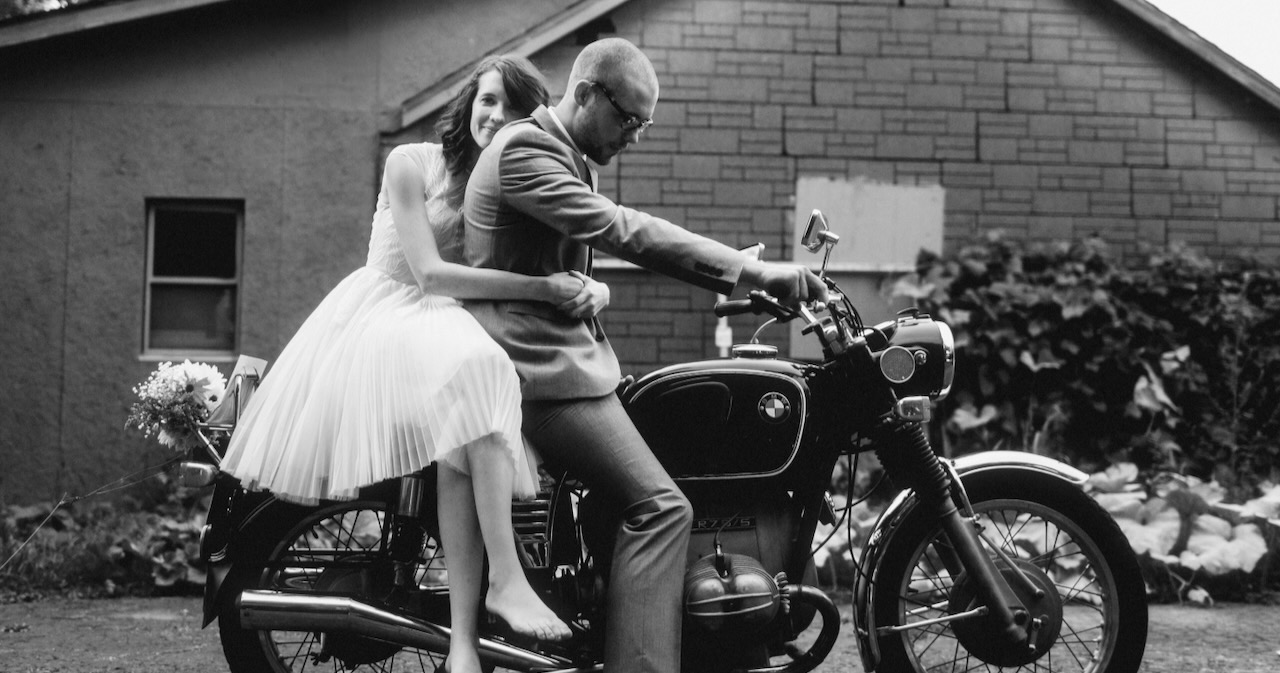
I wrote Clementine on a writing retreat we went on in Big Sur. Emily and I spent the week sitting in the sun amongst the trees and flowers overlooking the ocean. This is really a simple pop love song, but we paired it down and sang it in harmony over fiddle drones. Arranged this way, it became stark and vulnerable and the essence of the song revealed itself. The imagery of nature became more vivid, and the emotions came across as more sincere.
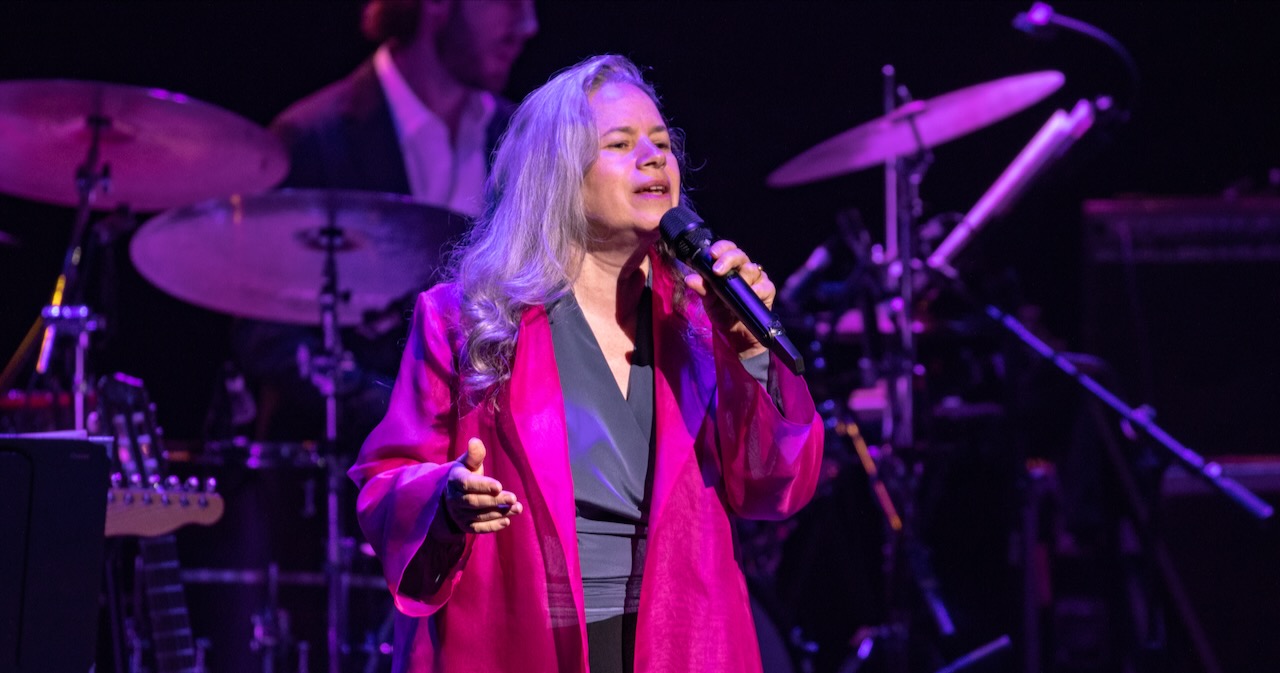
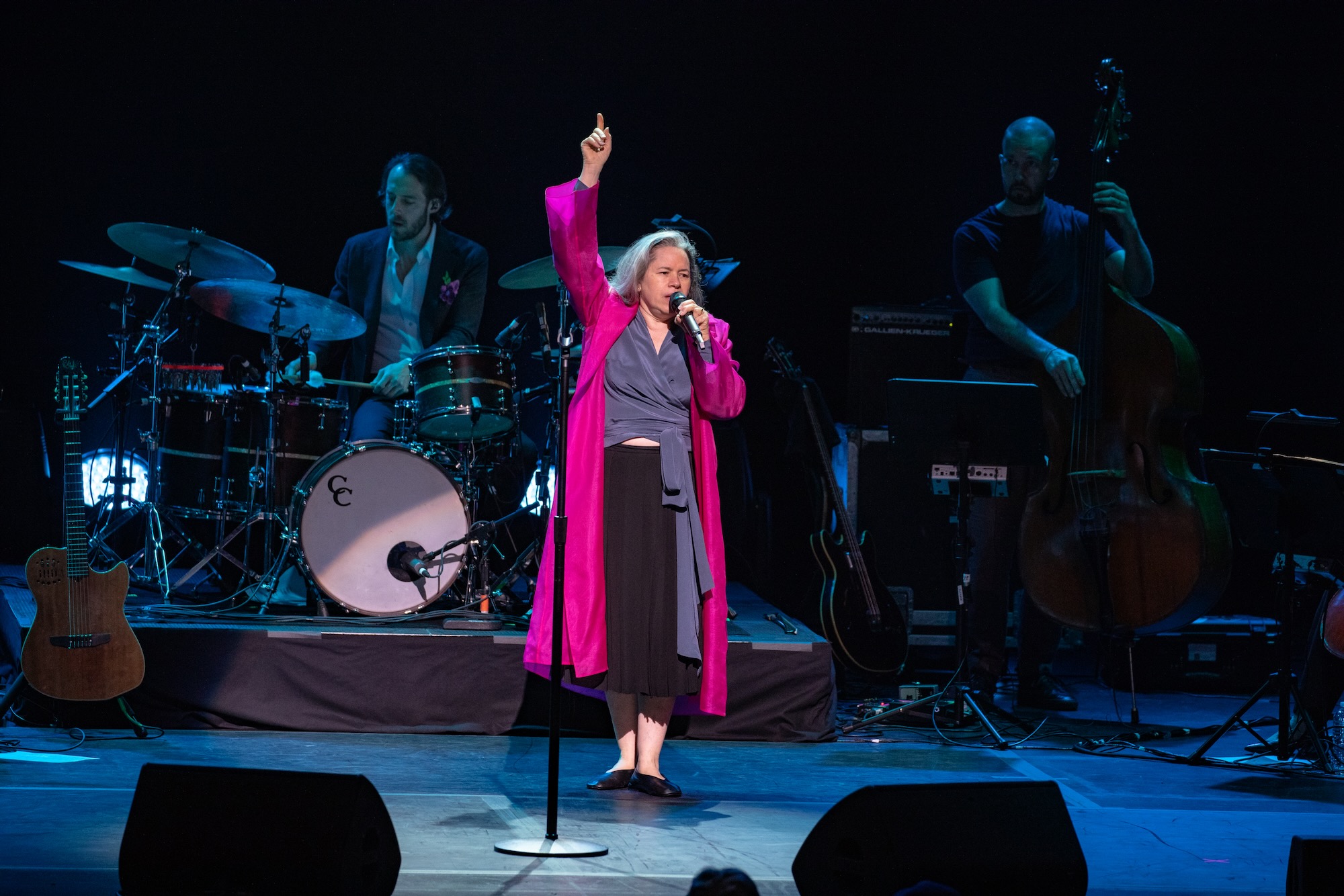
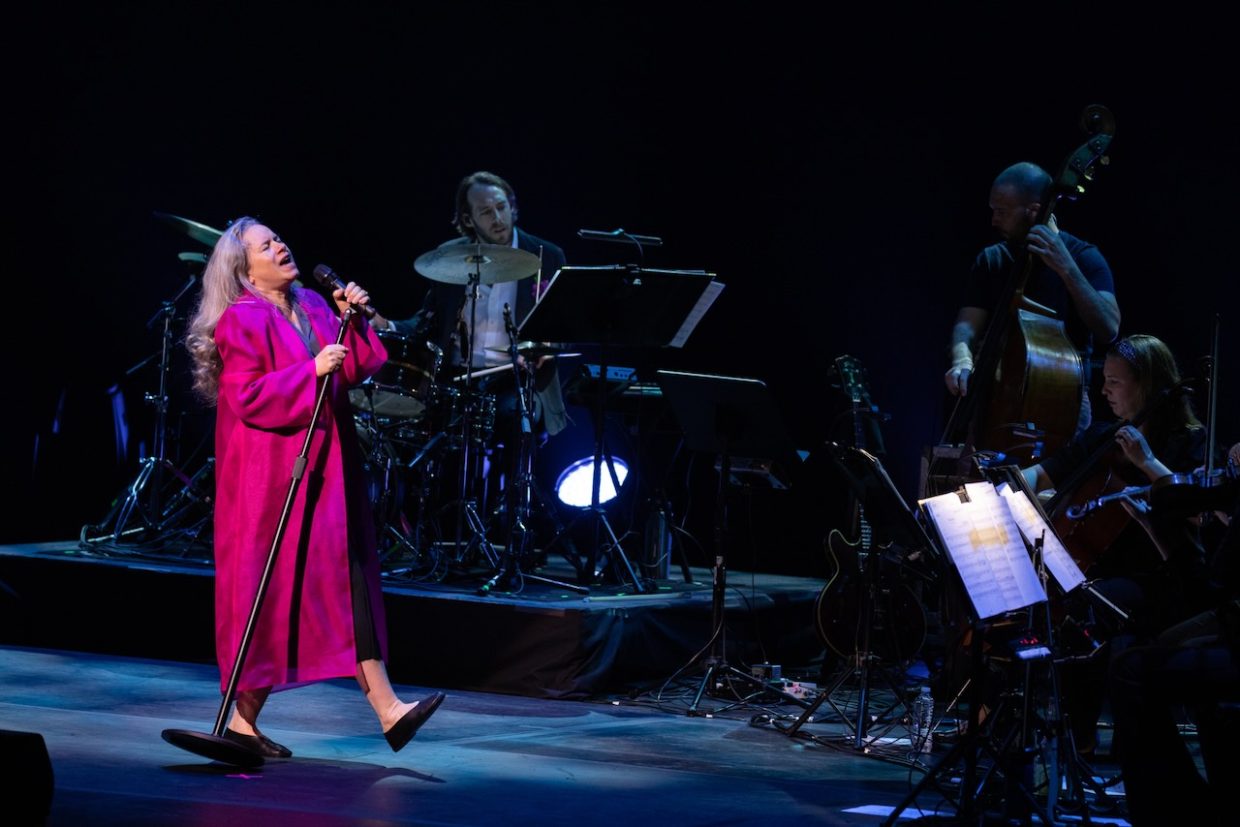
From the moment Natalie Merchant gained fame as the lead singer and lyricist for 10,000 Maniacs, it was clear she was no conventional pop star — in fact, during her dozen years with that band and subsequent decades as a solo artist, she has resolutely avoided the entire notion of stardom. Merchant has instead simply followed her muse, whether it has inspired her to create music, step up as a political activist, work with underprivileged children as a Head Start volunteer, or devote herself to raising her daughter, Lucia, now 20.
Since her multiplatinum solo debut, Tigerlily, came out in 1995, Merchant has released music sparingly; her new album, Keep Your Courage, is her first collection of new material in nine years. Though she has a reputation for writing songs more focused on external issues than her own heart, onthis self-produced effort she takes a deep dive into the subject of love, surveying it from multiple angles via thoughtful, engaging lyrics sung in her deftly nuanced, yet strongly sure voice. Weaving rich — yet never overdone — orchestrations around gospel-soul grooves, bits of Bourbon Street, catchy pop and sometimes Celtic-influenced balladry, Merchant crafts a sound imbued with both elegance and earthiness.
During a long, sometimes quite amusing, dialogue stimulated by her enormous intellectual curiosity and vast range of interests, it becomes clear that “elegant, yet earthy” might describe the woman as well as her art. Surprising tidbits she shared include the fact that she’s named after the late actor Natalie Wood and that she appreciated learning square-dancing in grade school. (“It was so inclusive; everybody got a chance to be someone’s partner.”) She also divulged a penchant for graphically describing the eating habits of avian predators hunting the acres surrounding her home in New York’s Hudson Valley, and confessed that, as a TV-deprived kid seeking thrills in the small upstate-New York enclave of Jamestown, she indulged in all sorts of reckless activity — including hiding near stop signs on icy roads, then leaping out to grab car bumpers and be dragged as far as possible. (“I think it gave us all character,” she says of weathering those risks, though she admits with a laugh, “If I saw my daughter doing that, I would say, ‘Look at yourself. What are you thinking?’”)
BGS: I’m so charmed by this album; the orchestrations are just beautiful. But I want to start with the Joan of Arc image on the cover; you refer to having kept it in your ephemera collection. I love the phrase, and the concept. Can you tell me more about that?
NM: Oh, my ephemera collection — I think I was 14, 13 when I started collecting junk. It’s very well organized. I’m going upstairs to look at it so I can tell you. There is an entire cabinet of glass-plate negatives; tintypes, daguerreotypes … 10 boxes of postcards, catalogs, Victorian parlor photos. I collect real-photo postcards, from the turn of the century to the 1930s; you would have your photographs made into a postcard. … Mentor (magazine) folios, advertiser cards — which I love — studio portraits, childhood images, “Museum of Mankind” — for some reason, I named that box — ethnic costumes, flowers and insects, large photographs, children’s book research, sketches … I started collecting it because I lived in a small town where there wasn’t that much to do. I basically wanted to create my own little museum in a box, so I did. [Laughs] When 10,000 Maniacs started making records and having to make posters and all that, I was responsible for doing a lot of the design work, and I would use my ephemera collection. That leads to the Library of Congress’ American Folklife Center and your appointment to the Board of Trustees. I understand that you’re passionate about making the archives more accessible for research and education. Can you tell me a bit about how you regard those archives and what you’d like to see happen with them?
Well, my appointment happened at the end of November and had to be passed by Congress, so I didn’t get official word that I could be in the building with credentials until Christmas. I went down in early January just to meet the staff and have a tour, then went back a few weeks later because I was so excited. It’s awe-inspiring. They have millions of articles and artifacts, and it’s not just folk music. For instance, they’re in charge of the AIDS Memorial Quilt and all the objects that were donated with the quilt.
When I first heard of the appointment, all I thought [was] it was the Lomaxes, because that’s what I’m familiar with. I did a little research of my own when I was down there last time, just to see how the archive works, and just to be holding the field notes of John Lomax and see the equipment that they recorded with, and they had a card catalog – I love card catalogs! The quote from one of the people on the staff was, “We’re not just about banjos and quilts.”
Your song “Sister Tilly” is an accounting of a time in history and women who created it; that’s folklife.
I found a website that had all sorts of feminist posters from the 1970s of International Women’s Day rallies and things like that. That’s folklife — it certainly is.
And your little museum in a box; man, you were destined for this.
If I hadn’t been a musician, I would have been a librarian or teacher, or a historian.
Your bio contains the statement, “For the most part, this is an album about the human heart,” and you reference both Aphrodite and Narcissus, two ends of the spectrum. You’re beckoning the goddess of love on one hand and singing about the ultimate rejection on the other. Care to elaborate about those choices?
Well, the album’s about love in so many different forms, whether it’s platonic or romantic, or love for a family member. Or in the case of “Sister Tilly,” it’s expressing love and gratitude toward an entire generation of women — my mother’s generation, who transformed our society; women who came of age in the mid- to late ‘60s and up to the mid ‘70s. I really consider those women responsible for making the society that we took for granted.
And in the romantic love column, there’s the ecstasy of falling in love or wanting to fall in love, or invoking the goddess to bring love into my life. And then, in “Big Girls,” I say love can be deceiving and harmful, but [it’s] also encouraging people who’ve been injured in love, both in “Big Girls” and “The Feast of Saint Valentine,” to persevere, to keep their courage, to keep moving forward. The worst thing that can happen is your feelings get hurt. And the best thing that can happen is that even if you’re injured in love, there’s opportunities to grow. I think most of us will admit the most difficult things we faced in our lives were the experiences that made us grow the most.
Let’s talk about another literary figure in your life, Walt Whitman (the subject of “Song of Himself”). When did you fall in love with him?
Uncle Walt. Maybe 20 years ago. I wanted to write about Walt Whitman because I found a lot of solace in his poetry during the recent times of unrest in our country. He had such an expansive, radical love. All inclusive. In a time when people were really limiting the people who were worthy of loving. And he believed in equality — for women, Native Americans, enslaved people, just everyone. And when he went to Washington — he spent three years in Washington — he originally went because his brother was in a hospital in Washington, but he ended up staying. He got a job working as a clerk, and every day, he would go after work and spend time with the soldiers. He didn’t discriminate between Confederate or Union soldiers. They were just injured young men, or dying young men, oftentimes. He would write letters home for them, as they were dying and after they died, to tell their parents what fine, fine men they were.
He saw the humanity, not the side of the argument they were on.
Yeah. And when you’re sitting at the bedside of a 15-year-old farm boy from rural Alabama, I don’t think he understood why he was fighting anyway, other than it got to a point where you were fighting to defend your own family. I don’t think there was a lot of ideology involved in the farm boys from villages all over the North and South.
The funny thing is, Walt Whitman being a great American literary figure, our greatest poet, I wanted [the song] to sound very American. But I tried putting fiddle on it three times, I tried putting banjo on it, and it just wanted to be a song about guitar and piano. I just couldn’t fit those other instruments in. Then it occurred to me that Walt was more of a sitting-in-the-parlor-with-the-parlor-piano [type], and he also loved opera; he went to the opera all time, so I thought, this is probably more representative of him anyway.
How does “Hunting the Wren” fit in?
To me, “Hunting the Wren” is loveless love. That was written by an Irishman named Ian Lynch, who’s in a band called Lankum. I thought it was a traditional song, but when I found out that he had written it, I found an interview with him. The wren is just a metaphor for these outcast women who “flock ’round the soldiers in their jackets so red for barrack room favors, pennies and bread,” and I wanted to know the story behind this brutally simple description of prostitution, the redcoats — obviously, the British — and barracks. What I found out from his interview, it was about a group of women who lived in the most abject poverty and privation you can imagine. The local authorities wouldn’t even let them construct shelters. They lived on the outside of these British barracks, on an open plain called the Curragh, and they would dig holes in the ground and cover them with rags and sticks, to live in. They would go into the village to get food and they would be spat on and beaten. Most of these women had lost their families in the famine. Some were common-law wives of the soldiers, but they weren’t allowed to live in the barracks, and some were prostitutes. The act of sex can be called lovemaking, but if it’s bought and sold, then there’s the loveless love.
So this is an actual story.
This is Irish history. There’s an amazing account that was written by Charles Dickens. The thing that Dickens points out is they had this mutual protection for each other. Some of the women were old, just homeless women; they had different generations. The older women would take care of the children while the other women went to get food or make money in any way they could. They lived like this, I think, 50 years. It was that or the workhouse, and in the workhouse, there was a good chance you would die of disease or be raped or destroyed by working. It was forced labor. It’s pretty grim, but I really was moved by the song and I wanted to include it. And it wasn’t like I was setting out to write a song cycle about the human heart. But when I was writing the liner notes, that’s when it occurred to me that I had written these songs that had some very close connections, and then some very distant connections, but they were there, and it fit in.
Artist:The Lowlies Hometown: Delevan, New York Song: “Simple Reminder” (feat. Sara Watkins) Album:The Lowlies Release Date: October 6, 2023 Label: Airloom
In Their Words: “Maybe the most hope-filled tune I’ve written. There’s something simple and obvious, but somehow deep and mysterious about how uplifting a springtime morning with birds singing hits me every year. And I used those images to portray the new life I felt actually one day in the dead of winter, a season of depression and addiction. A friend called me out of the blue from across the hemisphere to tell me hi and say my work was inspiring him that day. He doesn’t know it, but that call somehow sparked a springtime in my life. It was the simplest thing, but also the truer thing… more true than the thoughts swirling in my head.” – Caleb Spaulding
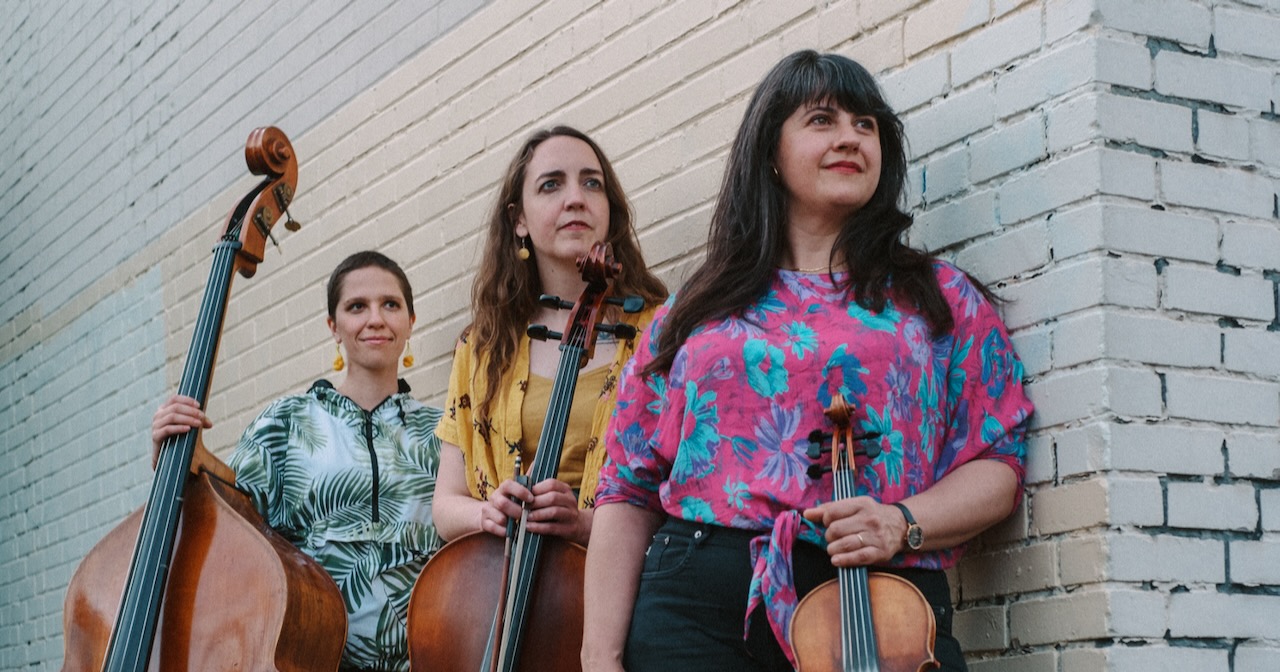
Artist: Laura Cortese & the Dance Cards Hometown: San Francisco, CA / Ghent, Belgium Song: “Three by Three” Release Date: April 28, 2023 Label: Compass Records
In Their Words: “…The song tells the story of a walk [my daughter and I] took together in early Spring 2021. I used her favorite syllables from an old Dutch children’s song in the chorus to see if she noticed. And … she did! The first time I sang it for her, she sang along. So naturally, we had her join in on the track itself.
“After the recording of ‘Three by Three’ in Colorado with Jayme Stone, we headed to Oregon on tour. While there, we were invited by boutique microphone maker, Ear Trumpet Labs, to take a tour of their workshop and film a video using their beautiful hand-built microphones. It had a been a rainy day, but just as we started to play, the sun came streaming through the big glass window at the back of the workshop.” – Laura Cortese
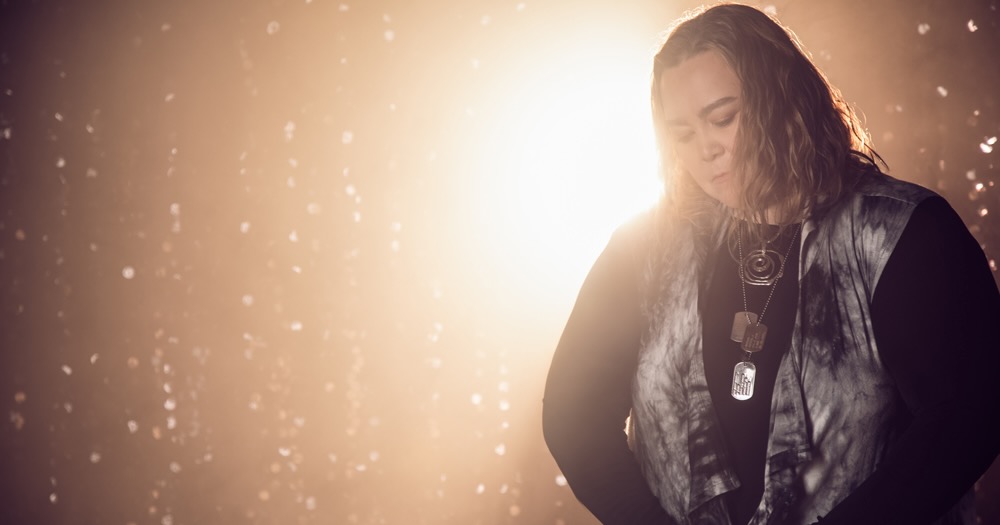
Artist:Keturah Allgood Hometown: Brevard, NC Song: “Rosary Beads” Album:Shine Release Date: May 29, 2023 (single); August 25, 2023 (album) Label: Charlotte Avenue Entertainment
In Their Words: “This song was written in my cabin on my farm where I was living at the time. It was a snowy day and everything outside was beautiful and peaceful. I closed my eyes and this song unfolded like a movie. I could see a young man driving down a Southwestern highway with rosary beads hanging on his rearview mirror. He was grappling with his childhood memories which were beautiful and his current reality which was formed from trauma, from war, from pain. The movie in my head was beautiful and tragic all at the same time. My partner is a combat vet and as the person who loves him and is close to him I watch him struggle with his past and how to live a happy and fulfilled life while still being faced with the trauma of war. No matter where we come from all of us have darkness that we have to confront and deal with in order to heal and move forward. I don’t want anyone to ever feel alone with that struggle and that is why it was so important to add a message at the end of the video for this song to remind everyone that they are not alone and that there are resources out there if you find yourself struggling. You don’t have to be afraid to ask for help.” — Keturah Allgood
“As a Director, working on a song as beautiful as ‘Rosary Beads’ and an artist as gifted as Keturah, leaves you a wide open pallet to work with. Keturah and I discussed some issues that were near and dear to her when coming up with this powerful story and I couldn’t be more proud of this video and Keturah. The cast was amazing and our production crew and DP were all stellar.” – Michelle Robertson (producer, Charlotte Avenue Pictures)
Artist:ISMAY Hometown: Petaluma, CA Song: “Stranger In the Barn” Album:Desert Pavement Release Date: May 25, 2023 (video) Label: Ismay Music
In Their Words: “‘Stranger In the Barn’ depicts a child living on a farm who goes to do chores in the morning, when they encounter a man sleeping in the barn. After running to their parents, the family has to make a decision about how to confront him – should they attack the man and chase him away? They decide to offer him food and drink, and he makes his way on to the grange hall down the road. The story is about taking down our walls, and rather than meeting the unknown with contempt and anger, instead offering curiosity.” – ISMAY
Artist:Nina de Vitry Hometown: Born in Lancaster, Pennsylvania; based in Nashville, Tennessee Song: “Open” Album:What You Feel Is Real Release Date: August 25, 2023
In Their Words: “At its core, ‘Open’ is intended to coax listeners out of their shells. My personal experience creating the song and video parallels this message, as I found myself expanding out of my own comfort zone both as a musician and a visual artist in the creation process.
“‘Open’ builds from lonely, sparse verses to layered vocal harmonies and string parts, pleading with listeners to step out of isolation and towards connection. I originally intended to completely hire out the arrangements, but it soon became apparent to me that it was personally meaningful to arrange the harmony violin solo and the vocal harmonies (with background string pads by composer/arranger Duncan Wickel). Using my own voice as a violinist and harmony singer enhanced my creative confidence, and the ensuing world of strings and vocals elevated the expansive openness that I aimed to create.
“In the visual representation of ‘Open,’ a flower opens and the black and white illustration eventually turns into a full watercolor painting. The experience of making the video was cathartic, and reconnected me to a part of myself that I thought I had lost. Though I had always loved to draw as a child, I found that I had closed myself off to this creative outlet as an adult. Producing this song and video has helped me to expand my definition of what I do as an artist, and open myself to new artistic possibilities. It is my hope that pairing the song with this visual can appeal to the childlike wonder in all of us, and that it might inspire viewers to open themselves up to the world in a new way.” — Nina de Vitry
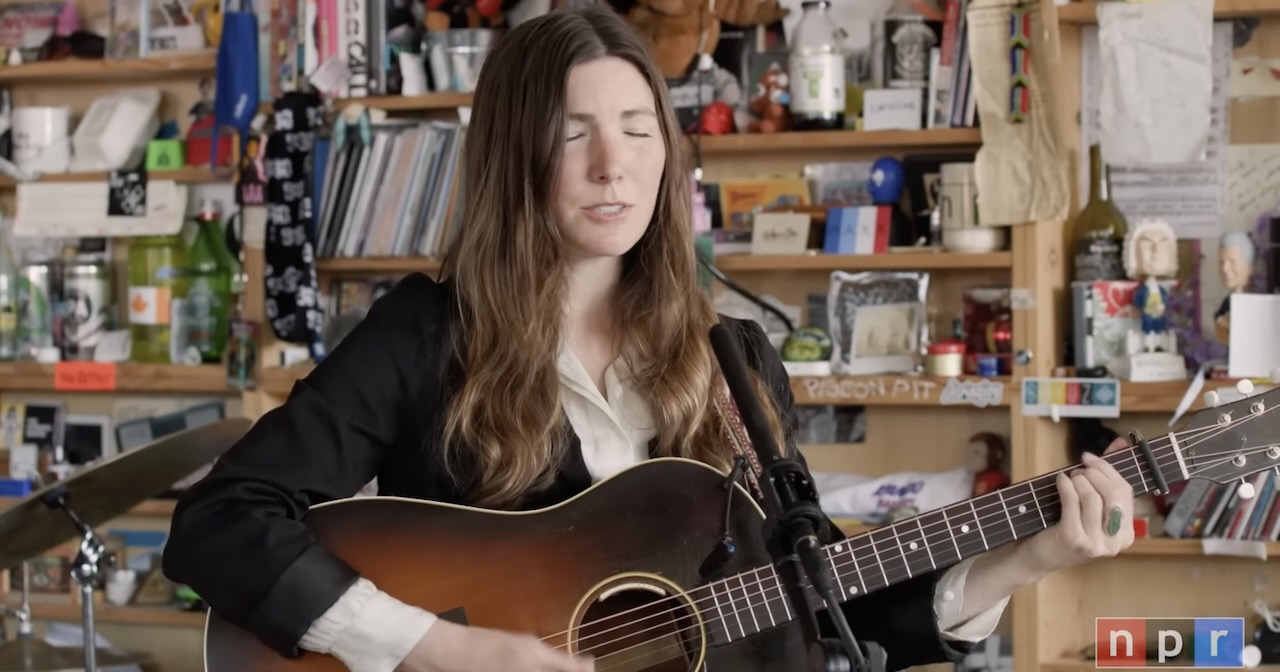
Singer-songwriter and musical storyteller Anna Tivel recently stopped by NPR headquarters in Washington, D.C., to perform at the iconic Tiny Desk. Supported by drummer Micah Hummel and Galen Clark on keys, her four-song set showcases her empathetic, tender, and heartfelt style that runs through her entire 2022 release, Outsiders. But her performances are anything but one-note, she teases nuance from each number and complicates the stories within them through emotion and passion and, at times, a beautiful understated tension. The team at NPR Music puts it aptly: “Tivel’s remarkable empathy elevates her folk-based, jazz-touched compositions from mere stories to secular prayers.”
Enjoy Anna Tivel’s Tiny Desk Concert right here, on BGS.
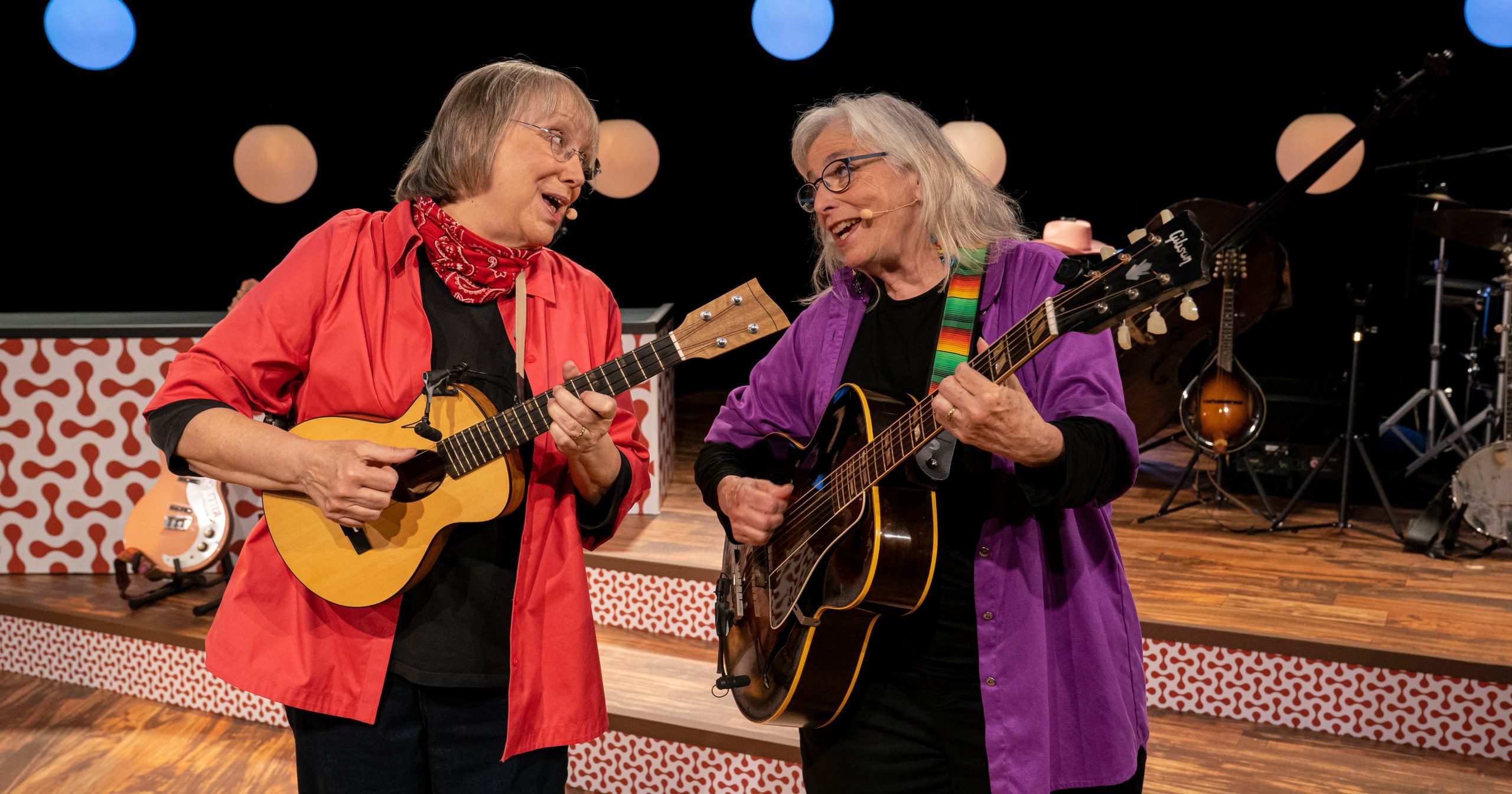
There is hardly a sphere of the music industry that musicians and community builders Cathy Fink & Marcy Marxer have not conquered, from bluegrass and folk music to children’s music and the Grammys. Now, these multi-hyphenate musical polymaths have set their sights on a new medium through which they can create, storytell, and connect with audiences: film.
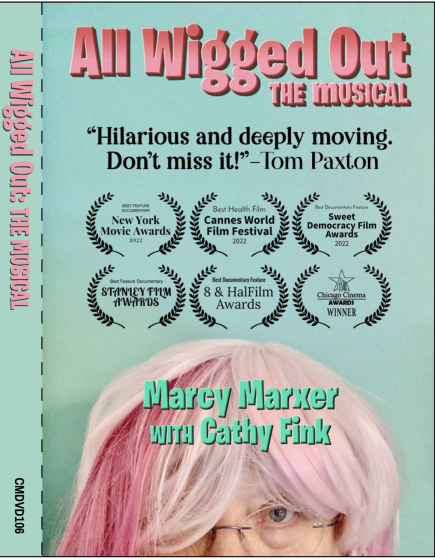
All Wigged Out is a documentary musical film that tells the story of Marxer’s journey through breast cancer diagnosis, treatment, and recovery. The film, which will be available on demand May 16 on Amazon, Google, and many more, utilizes musical mastery, eclectic wit, storytelling, and comedy to share the poignant, bittersweet, hopeful, and downright zany tale spun together from Marxer’s unique perspective, writing style, and multi-instrumental approach. On April 28, an album of the catchy, hilarious, and touching songs from the musical – entitled, All Wigged Out: Songs from the Musical – will be available wherever you download and stream music. (Pre-order on Bandcamp). Watch a trailer for the film:
“[All Wigged Out] is a way to entertain people, but educate at the same time – educate patients and caregivers,” Marxer explains via phone. “Not educating in a condescending way, but there were just so many things that I could not expect, that I didn’t know how to deal with. This is just a way of sharing my experiences – which is just one experience – and help folks to live life one day at a time, doing your best with what you’ve been given to make decisions and move forward. And the next day, when everything changes, you still just make the best decisions that you can at that moment. Then you can live life with no regrets.”
“And don’t lose your sense of humor!” Cathy adds from the background – they both laugh.
Over the course of their widely variable careers, Fink and Marxer have certainly never lost their senses of humor – cancer or not. Together and separately, their careers have exceeded four decades in folk music, old-time, bluegrass, children’s music, and so many other realms of the entertainment industry. It comes as no surprise, that despite not having any prior experience writing, producing, and staging a musical documentary film, that they were able to leverage their personal and professional communities, teach themselves these often punishing skill sets with steep learning curves, and put together a film that’s musically engaging, humorous, joyful, and actually says something. All at a markedly clean-and-crisp, professional level.
All Wigged Out also shines a spotlight on Cathy & Marcy’s relationship, the way they rely and depend on each other not only in their musical careers, but also in their personal lives. They demonstrate, through this film and in all their efforts, that their penchant for community and community building starts at home. They’re committed leaders, mentors, and friends to all in the roots music industry and beyond, so it feels absolutely grounded and genuine to see them both expand their vision for community to include cancer support groups, associations, and all kinds of organizations with missions of supporting and uplifting folks who have had cancer touch their lives.
With no shortage of laurels and film festival accolades, All Wigged Out is certainly poised to bring Fink & Marxer and their community-minded music to so many new audiences within and outside of the music community, especially with their activist and organizing experience. They’ve taken All Wigged Out to screenings, talk-backs, fundraisers, discussions, and panels, often partnering with Cancer Support Communities and Gilda’s Clubs, as well as making appearances at the NC Museum of Art, Silicon Valley Chamber of Commerce, American Nurses Association, National Women’s Music Festival, and so many more.
This week, in celebration of the film’s release, they’re partnering with Ebeauty on a film screening and panel that features Marxer, her surgeon, and a representative from Ebeauty, which is a non-profit organization that facilitates cancer patients obtaining wigs and other cancer resources. During the event, Marxer will donate the film’s titular wig to Ebeauty, which will use the hair piece to train wig technicians and cosmetologists on wig styling for patients, then the wig will be passed along to another cancer patient facing hair loss as part of Ebeauty’s wig exchange program. This is just one example of the many ways this film and its music can touch folks’ lives and help them on their own journeys back to health and wellness.
Whether teaching ukulele, competing in local fiddler’s conventions, participating in diversity, equity, and inclusion efforts, or just camped out in a festival parking lot picking, Cathy Fink & Marcy Marxer lead by example, putting their hearts and souls into everything they make and by doing so, they open a wide, hospitable door to anyone and everyone they meet. The connection, compassion, and poignance of All Wigged Out will make this task even easier, despite its often challenging or bittersweet subject matter. The joy – and the belly laughs – in this film are second only to what we love most about Cathy & Marcy to begin with: their music.
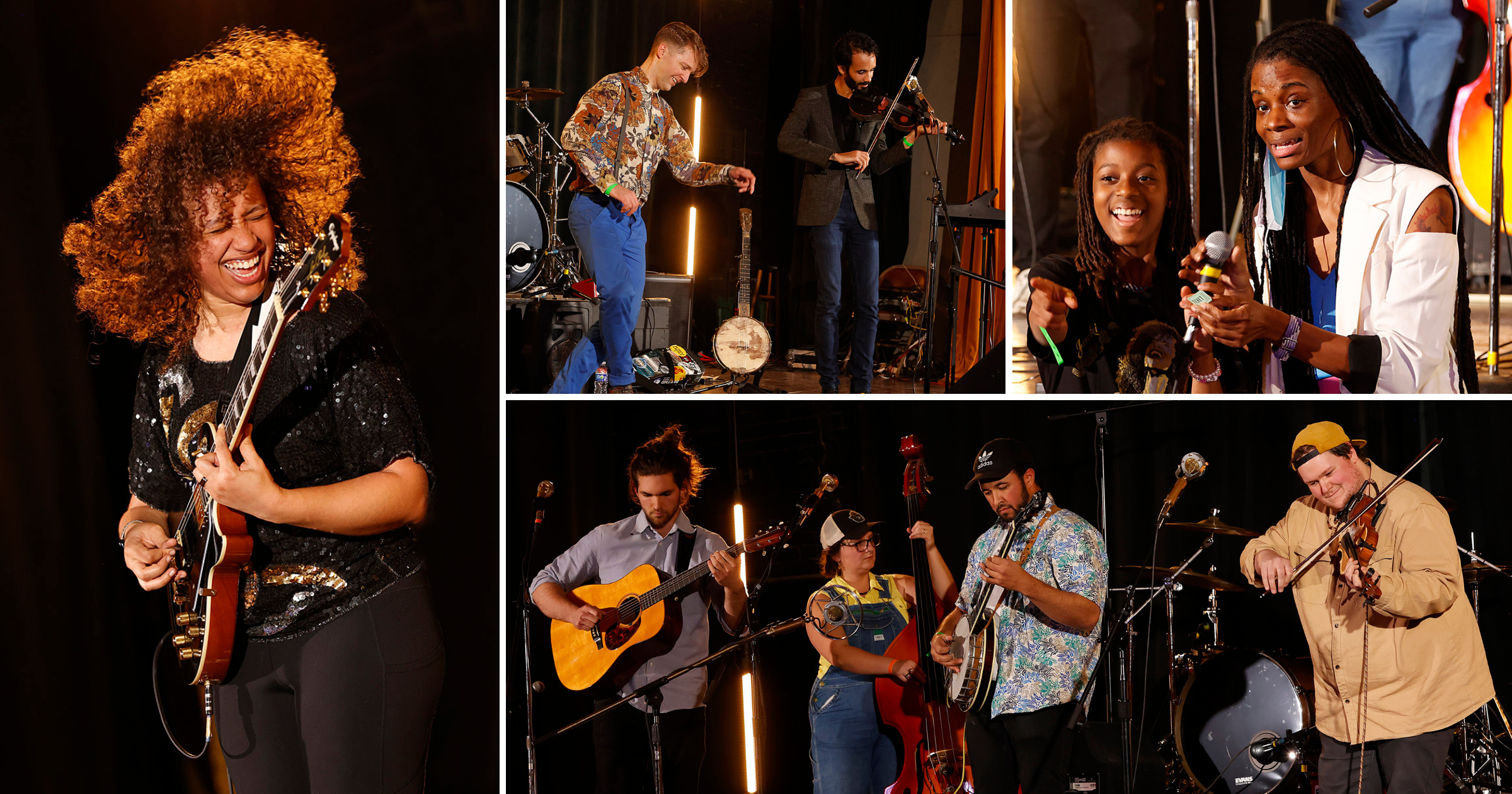
A small, enthusiastic audience of first arrivals chat in excited, hushed tones as they listen to Hubby Jenkins soundcheck into a pair of Ear Trumpet Labs microphones in the ballroom at Fort Worth, Texas’s Southside Preservation Hall. It’s an unseasonably cool Saturday afternoon in March, with crystal blue skies and wispy clouds backgrounding the historic Fairmount-Southside district. Over the next nine hours, ten musical acts will grace the stage. Many of them are already in the room, contributing to the light buzz and chatter; this already feels like a generative space.
In its third year, the Fort Worth African American Roots Music Festival (known lovingly as FWAAMFest) has a very specific vision within the Americana/folk/old-time/bluegrass festival space: to highlight the depth and breadth of contemporary African American roots music and, by doing so, underscore the seminal, vital contributions of Black folks to every single roots genre in this country. Presented by Fort Worth-based non-profit Decolonizing the Music Room (who BGS has collaborated with on multiple occasions), the event carries forward the organization’s mission, explained artfully and succinctly by DTMR founder Brandi Waller-Pace as she kicks off the day introducing Hubby Jenkins: “To center Black, brown, Indigenous, and Asian voices in music and related fields.”
“There are so many eyes and ears on culture and the arts in Fort Worth,” she continues. “And I want Fort Worth to be at the forefront of the conversation…”
Hubby Jenkins began the day’s many conversations with a couple of banjo tunes, because, he admitted, “I’m a little nervous and [banjo tunes] make me feel cozy.” It was indeed a lovely, cozy easing into the day’s marathon lineup of music and presentations. During his set Jenkins picked guitar, banjo, bottleneck slide guitar, and played bones. And, he plays the festival’s first of many gospel numbers, “Jonah in the Wilderness,” inviting the audience to sing along, grounding his performance in the history of the Southside Preservation Hall space and these rootsy genres’ origins.
Kicking off the day with a gospel-filled set in a historic former church made so much sense, calling each of us as listeners to be active participants in the day’s festivities and also in its mission: to recenter these community-based musics on the folks who gave rise to each of them, reminding us we each have a role to play in telling a fuller, more just history of these musics.
Next up on the lineup is Justin Golden, who jokes that he and Hubby run into each other on gigs constantly and have the same repertoire, but from the outset his similar-seeming act couldn’t have felt more different. Working within the same vernacular and with such broad overlap, Golden and Jenkins are each still so distinct and unique – and illustrate the wide variety intrinsic to Black and African American roots musics, even within one form. Golden’s first number is an original, “I Hate When She Calls.”
He peppers older, classic Texas blues numbers – though he admits this is his first time in Texas – throughout heartfelt, poetic, and direct originals. His music’s foundation is fingerstyle blues, but with modern crispness, timeless touches, and a crystalline, focused singing voice.
Festival-runner and founder Brandi Waller-Pace stepped back on stage, this time as performer, for the next set of the day with songwriter, composer, and banjoist Kaïa Kater as the debut performance of their duo, Sable Sisters. They swap out banjos and guitars and a bass, singing folks songs and originals with nearly familial harmonies. A double clawhammer banjo cover of Stevie Wonder’s “Happier Than the Morning Sun” is their set’s highlight, with the legendary Justin Robinson’s guest appearance to play a set of old-time tunes ranking an honorable mention. Other festivals would be wise to consider booking Sable Sisters; if duo supergroups were a thing, this is one. Superduo? You get my meaning.
Between each set of music, as the stage was changed over, representatives from partner organizations, sponsors, and community leaders spoke to the audience, which slowly grew from a couple dozen into a small-but-mighty one to two hundred attendees. Tables in the lobby featured literature, information, and calls to action for DTMR, FWAAMFest, and these partner orgs – and from the back of the ballroom wafted the tantalizing aromas of Lil Boy Blue BBQ. (If only all music festival barbeque offerings were this legit.)
After Sable Sisters’ set concluded, the next event was a live podcast taping featuring a collaboration between Rissi Palmer, of Color Me Country Radio on Apple Music, and Garrett McQueen of Trilloquy Podcast. The conversation was titled “Redefining ‘Classic’” and featured Palmer, McQueen, and their FWAAMFest lineup-mates Jake Blount, Demeanor, Hubby Jenkins, and Dr. Angela Wellman. Palmer and McQueen took turns prompting their panelists to consider ideas around canon, genre lines, what terms like “classical” really mean, and so much more.
A theme that emerged throughout the taping was how often there aren’t hard, fast, concrete answers to these big, zoomed out questions about justice, representation, art, creation, space/placemaking, and community building. The panelists and hosts encouraged and challenged each other and themselves, reminding all of us that engaging in these kinds of conversations is part of the process and having the space – like FWAAMFest – to engage, build, and hold community like this is so important.
It’s not lost on myself or perhaps anyone else in attendance just how much gratitude each of these participants have at being enabled to be in this FWAAMFest space. Each of the performers and speakers, in their own way and in their own words, effortlessly carried the event’s mission with them as they brought themselves to the space, wholly and vulnerably and powerfully.
The podcast recording gear struck, rapper and banjo player Demeanor took the stage for his first ever full-band set – and it was revolutionary. During the Trilloquy x Color Me Country conversation Demeanor (given name Justin Harrington) stated so eloquently that “Rap is folk music, because hip-hop is an indigenous Black American art form… From the porch to the stoop.”
He and his band immediately and indelibly illustrated his point with an energized, powerful set based on sometimes spitfire, other times free flowing rap lyrics with poppy, sung verses and choruses. It’s lyrical, content rich, witty and sharp. Demeanor’s writing and production style are full of forward motion, punctuated by arena rock guitar and Wooten-like bass lines. While often centered on banjo, the five-string is not the only way roots music oozes from these songs. Their lyrics and hooks are sharp and the vocals are strong – his singing isn’t an afterthought or simply in service of a hook. Several songs were from an upcoming unreleased album, including one stand-out track said to feature Rhiannon Giddens (his aunt) and Charly Lowry.
The delight of Demeanor gave way to the delight of dance and musical dialogue, as longtime friends and jaw-dropping collaborators Jake Blount and Nic Gareiss took the stage. Blount began the set solo, accompanied starkly by low, droning synth sounds gently, languidly warbling through half tones as he sang, dirge-like, above the sound bed, commanding silence. Blount brings us back to gospel, again looking backward to look forward, and in just a couple numbers the droning synth gives way to droning fiddle.
Gareiss and his singular approach to percussive dance and traditional step-dancing injects energy and joy into the crowd, who’ve been listening and engaging for almost six hours now. Audience members are on their feet, often with phones out, disbelieving the stunning musicality of Blount and Gareiss together, sixteenth notes perfectly, bafflingly in sync.
Nic dancing to Jake’s fiddle recalls the interconnectedness of Irish step dance and Black percussive dance traditions. Where cultures, practices, and folkways overlapped at the lowest of classes in America’s urban centers, dance flourished and Irish step dance cross pollinated with Black movement traditions and Appalachian and southern steps. Over the past century and more, movement and roots music have often been compartmentalized, privatized, and sequestered from each other. Bringing them back together in this intentional way is not just a radical act given the identities represented – in this duo and in this day of programming – but simply by existing together, with intention, Blount’s and Gareiss’s talents underline what these musics were initially created to do, say, and be.
The vibe in the Southside Preservation Hall ballroom at this point was reaching “full blown party,” and when the first of the festival’s headliners, Tray Wellington Band, took the stage the energetic momentum was raised further still. For all intents and purposes a straight-ahead bluegrass band, Tray Wellington’s four-piece group demonstrated this IBMA Award winner has found his voice. His critically-acclaimed album Black Banjo certainly feels mature and fully-realized, but this was the first this writer had caught Wellington’s band since long before that record was released. The growth they’ve sustained, musically and as a unit, in the interim is remarkable. They execute chamber music level virtuosity, but with bluegrass bones. With Katelynn Bohn (bass), Josiah Nelson (mandolin), and Nick Fallon Weitzenfeld (guitar), Tray references Dawg, Béla, New Grass Revival and many more, but with an underpinning that feels as bluegrass as Appalachia – say Johnson City, TN, where he’s from.
They play a Kid Cudi cover, which is promised to be on an upcoming release, and the audience descends into mayhem as the melodic hook is slowly recognized in ripples throughout the crowd. Whether covering hip-hop or playing an old-time tune, these pickers demonstrate amazing soloing: modern, in-the-moment musical ideas without ego or self-absorption. And with Tray’s right hand anchoring all of the above, it reminds of Earl Scruggs in his Revue days – solidly bluegrass, but intimating musical ideas that come from so far afield, way beyond what we consider bluegrass territory.
Chambergrass, or whatever you want to call it, is seen as more “high-brow” or “intellectual” given its adjacency to conservatories and storied music schools, but this style of virtuosic playing is so well placed within the musical vocabularies of people from the region that birthed string band traditions. And in this context it can be executed with equal ease, aplomb, and athleticism, and with a much more grounded approach.
A quiet, slightly exhausted euphoria tingles through the stalwarts of the crowd who remain for Jackie Venson’s no-holds-barred FWAAMFest finale. Waller-Pace returns to the stage one final time to introduce the night’s last headliner, with her daughter Sparrow (who waits patiently to get her Jackie t-shirt signed at the end of the night.)
Venson is accompanied only by drummer Rodney Hydner – and her signature DJ sampler that allows her to play along with tracks, sound beds, background vocals, and play solos over loops. Even with just a two-person act, her trademark joy immediately washes over the entire room and re-energizes the crowd. Venson’s songs are soaring, anthemic, and huge, matched only by her broad grin as she smirks and laughs at herself and her own playing like it’s an inside joke.
Perhaps the best guitarist of her generation, certainly the best rock-blues guitarist of the past thirty years, the internet is in a four to six week feedback loop of discovering and rediscovering Venson’s playing at the moment, with her Tweets and TikToks seemingly going wildly viral about once a month. She’s been retweeted and signal boosted by a who’s who of Twitter personalities and musicians, and it’s all because hers is a singular voice, perspective, and skill.
Watching her improvise over each song recalls Nic Gareiss’s dancing from earlier in the evening. When you’re watching something so visceral and in the moment, you can’t help but inhabit that moment with them. And many of us do inhabit these moments with Venson by moving, standing, dancing, reveling in the ever-present joy of her music.
Venson’s brand of modern blues is unconcerned with divorcing itself from the blues of the past (and of the present) that some feel is stoic, stuffy or dusty, and out of step with modernity. Her brand of blues, no matter how distant it has traveled from its roots, still honors the sounds of old-time and ragtime and down home blues, because it knows where it came from and to what it’s connected. Venson’s connections to Texas and Austin further reinforce this point – and help place Venson and her style of playing squarely within “guitar culture,” too.
At one point during her performance Venson marveled at how the FWAAMFest gathering was, in her words, “Pretty legendary!! You’re going to be talking about this in 10 years, telling people you saw everybody on this lineup here today.”
It was a feeling that began creeping up much earlier in the festival, that what we were present for wasn’t just a community music festival, it was so much more.
Black, Brown, Indigenous, Asian, and Disabled folks – artists and creators and movers and musicians – continue to offer and model ways to hold the past within ourselves while looking ahead to the future, a duality that modernity and westernism struggles to acknowledge or inhabit. What’s striking about this conglomeration of creators and musicmakers on this lineup at this festival is that they make it look easy. It seems effortless to understand, uplift, and uphold a mission like FWAAMFest’s. Partly because the participants all are stakeholders in that mission to begin with! With their music, their insights, and their storytelling these musicians and thinkers demonstrate the past is the future and the future is the past. Roots music – the kinds that center the experiences, stories, and seminal contributions of Black, Brown, and Indigenous folks – can spotlight and move through this dichotomy better than so many art forms, while remaining grounded firmly in the present.
FWAAMFest’s success wasn’t simply because it’s a festival with a novel, substantive mission. It was a soaring, generative, forward-looking success because it focuses on what “the mainstream” perceives as a niche within a niche within a niche – African American roots music – and shows all of the possibilities, all of the many universes of artistic expression endemic to such a niche. The specificity here is not prohibitive or exclusive, it’s unfailingly, infinitely expansive. In sound, genre, content, tradition, and beyond.
As Jackie Venson said, we all will still be talking about 2023’s Fort Worth African American Roots Music Festival for many years into the future.
Editor’s note: Follow Decolonizing the Music Room on social media to catch footage from FWAAMFest 2023 as it’s released and make sure to DONATE to support their mission and future FWAAMFests!
Photos by Ben Noey Jr.
This website uses cookies to improve your experience. We'll assume you're ok with this, but you can opt-out if you wish.AcceptRejectRead More
Privacy & Cookies Policy
Privacy Overview
This website uses cookies to improve your experience while you navigate through the website. Out of these, the cookies that are categorized as necessary are stored on your browser as they are essential for the working of basic functionalities of the website. We also use third-party cookies that help us analyze and understand how you use this website. These cookies will be stored in your browser only with your consent. You also have the option to opt-out of these cookies. But opting out of some of these cookies may affect your browsing experience.
Necessary cookies are absolutely essential for the website to function properly. This category only includes cookies that ensures basic functionalities and security features of the website. These cookies do not store any personal information.
Any cookies that may not be particularly necessary for the website to function and is used specifically to collect user personal data via analytics, ads, other embedded contents are termed as non-necessary cookies. It is mandatory to procure user consent prior to running these cookies on your website.