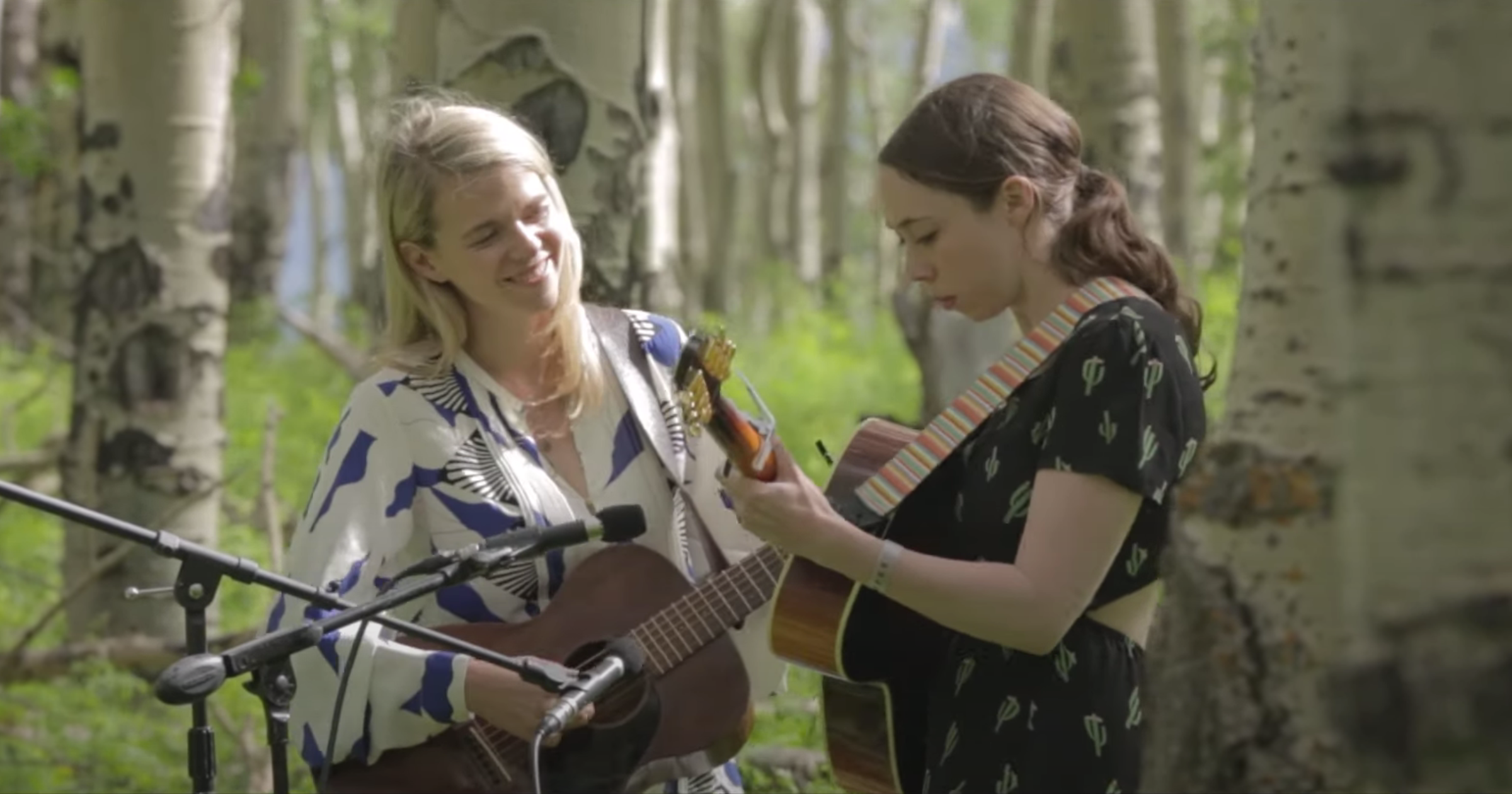
Newport Folk has long been a place where legendary moments are formed. The festival achieved yet another moment in its storied history last weekend when Joni Mitchell joined Brandi Carlile during the festival’s closing jam, marking the iconic songwriter’s first return to the festival in over half a century and first public live performance in decades. Brandi & Co. gave us a moment we all needed. Hearing Joni’s words and calming, dulcet tones was a balm for an uncertain society; a collective pause for us to reflect on time and its passing, and how different the world looks since the last time Joni played this stage.
We’ve rounded up a collection of the best videos around the internet from Joni’s historic set so that even if you weren’t there, you can take that joy in from every angle.
Brandi Introduces Joni
Questlove caught much of Brandi’s introductory speech building the excitement for the Joni Jam – and a bit of electric uncertainty among the crowd whether or not the guest of honor would actually be in attendance – as well as the first two numbers (“Carey” and “Come in From the Cold”) up close and personal.
But it’s wholly worth watching Brandi’s speech in its entirety, as she acknowledges the power of congregation and radical love. “To power structures, folk music is — and always has been — utterly fucking destructive… It’s a truth teller and a power killer.”
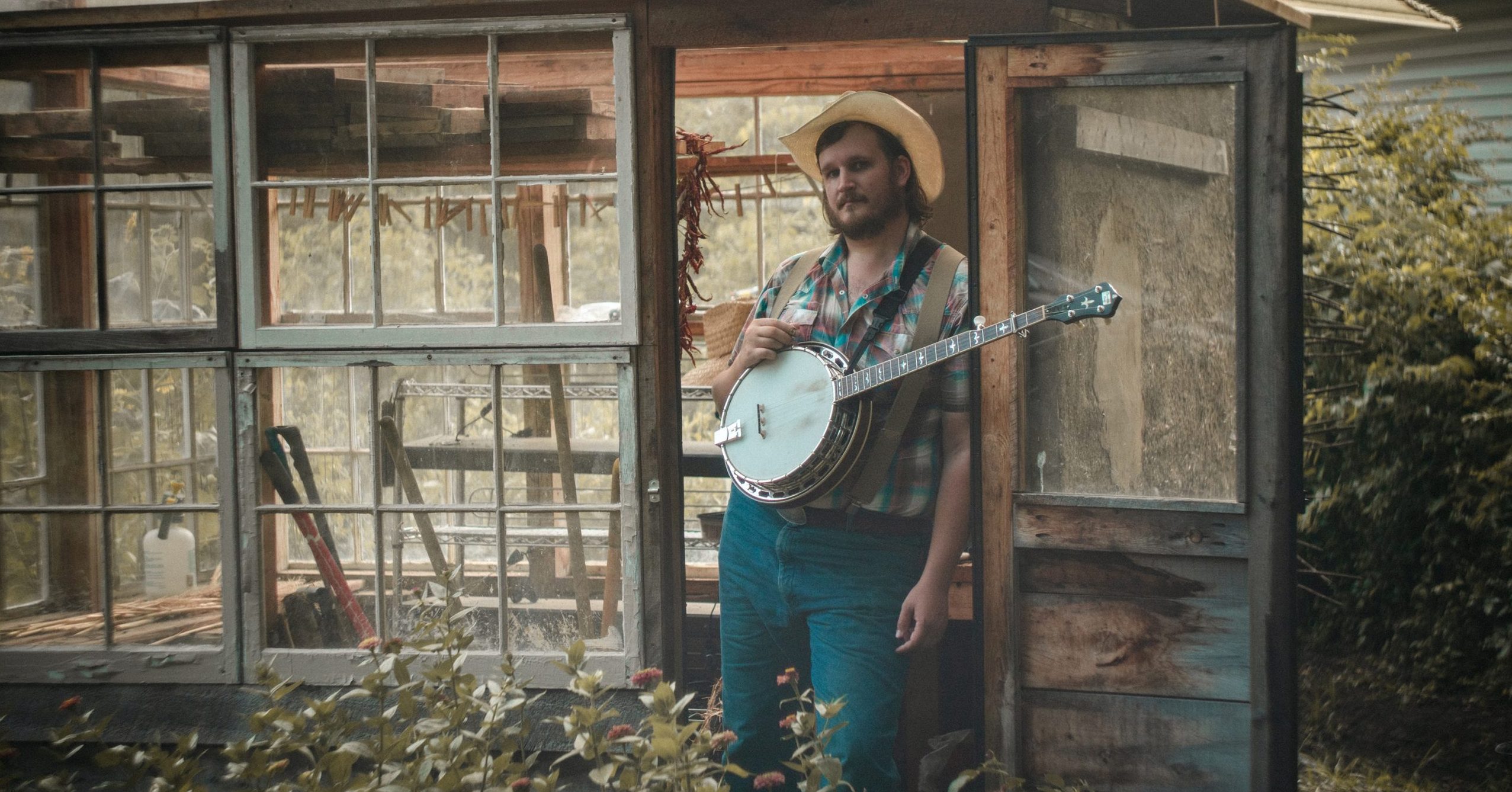
It’s hard to not fall a little in love with Willi Carlisle. The former high school football captain (he’ll tell you it was just for his junior year), poet, madrigals singer and freaky dreamer is irresistible on stage and on record. He grew up an outsider and the feeling remains in his adult life.
In writing about his intense life, he’s found an outlet and in his music we, the others, feel seen. His history is filled with complex experiences like having a musician father, singing in punk bands, getting a masters in poetry and finding true home and community at square dances in the Ozarks.
I got Willi to talk about a couple of notable contradictions in his life including his unflinching willingness to lay it all out for his music, living alongside not trusting himself or believing that he can do this. He also loves high-brow poetry and punk rock, but “I don’t want to come across as too heady, but I also don’t want to be so punk rock that I lack polish.” We talk about those contradictions and, of course, the music. His new album, Peculiar, Missouri, is filled with songs that seem very hopeful and these songs, even the protest songs, are coming from a place of love. Willi’s not reached a state of queer joy, which he’ll freely tell you, but he’s working on it. Meanwhile, his honesty, curiosity and big heart have us hooked.
When Leon Timbo was a teenager, he prayed for a singing voice. As a young poet and the child of a preacher, he was a born storyteller, but he dreamed of being able to sing. Leon’s remarkable artistic journey has been the answer to that prayer.
Timbo started writing and performing songs on DIY solo tours in his native Florida, eventually expanding his reach across the United States. He focused on connecting with each audience member and immediately started building a loyal following. It was on one of these tours that musician and actor Tyrese Gibson fell in love with his music and storytelling and invited Leon to open for him. Gibson’s mentorship helped Leon hone his sound and opened massive doors of opportunity.
Each step of Leon’s musical path has been guided by faith, spirituality, and the power of human connection. He has performed with the legendary Fisk Jubilee Singers and hung out at a bar with Quincy Jones. He has a unique take on Americana, R&B, gospel, and folk music. His new album, Lovers & Fools, Vol. II, is a vehicle for his hopeful worldview, and of course, for his spectacular voice.
Singer-songwriter and guitarist Gordie Tentrees didn’t begin his career as a globe-trotting performer until he moved to a vibrant, supportive music city – that is, Whitehorse, Yukon. In a town of approximately 40,000, there’s long been a bustling musical economy, one that supported Tentrees even before he had released any recordings.
Place – whether rural northern Canada, or the far reaches of New Zealand or western Europe or Australia – informs so much of Tentrees’ writing and music-making, especially on his most recent release, 2021’s Mean Old World. With a global perspective and a local level of care, he unspools big, often daunting political and social questions with humor, intention, and aplomb. Child welfare, Indigenous rights, solidarity, working class issues, and more are packaged in tidy honky-tonking, blues-inflected, string band songs, making these sometimes gargantuan pills that much easier to swallow.
That Tentrees prioritizes community, building bridges, and human connection in his music makes it that much more compelling. He uses his rural, multi-ethnic hometown as an entry point, a doorway, through which he not only brings folks into his own world, but brings his world to them, too. And in doing so, even with an album titled Mean Old World, he reminds us that living on this earth doesn’t always have to be so forbidding, exclusive, and mean. BGS connected with Gordie Tentrees via phone, while he picked up his Indigenous daughter from school on his bicycle, to discuss this recent album.
BGS: I wanted to start by asking you about place. I’ve been obsessed with place these days, especially as it relates to music and music-making. I was struck by the fact that you didn’t begin songwriting or performing until you moved to the Yukon. How did moving there inform your music-making? To me, it feels like there’s a strong sense of place on this record.
Gordie Tentrees: Well, I blame the Yukon – I credit the Yukon as well as blame it [Laughs] – for the path I’m on. It is a good conduit and supportive community that encourages the arts. Writing songs and playing an instrument is something that’s seen as a valued occupation, one that’s sort of embraced and lifted up. It’s not hard to get on the stage here. Early on, when I started playing, I hadn’t even made my first record yet and I was headlining some northern festival stages. [The Yukon] really gives you a chance to get on a stage and expose yourself to audiences like that. I really believe if I had lived anywhere else in Canada or the world I wouldn’t have been given so much time on the stage.
The other thing is that a lot of people spend their time creating art here and writing songs here – there are a lot of songwriters here. It’s a highly valued thing. I live in a community full of writers and songwriters. That’s really supported and endorsed. You can knock on someone’s door if you want to learn an instrument and they’ll show it to you. There aren’t barriers for those that are aspiring to be songwriters or musicians. It’s quite wonderful.
At one point, in our little community of 40,000 people – Whitehorse, Yukon, where I live – we even had up to 25 music venues at various points, all happening. One thing about Whitehorse that not many people know is that it has the highest number of musicians per capita that actually make a living from music in Canada.
As much as the Yukon has informed your music-making, you travel so much and you play so many shows all around the world, so while there’s this strong sense of place in this album, Mean Old World, I do sense that it’s also informed by your travels. “Danke” clearly references this. How has the cross-pollination of the Yukon and your travels created the musical aesthetic you have now?
I think that’s attributed to what I do, as far as being a performer and musician. I get to go to different parts [of the world] because I’m not just a songwriter and play various instruments. For example, if I play in English-speaking countries they like the songs and the stories. Countries where English is a second, third, fourth language they rely more on melody and stuff like that, so if you have a show that sort of hits people both ways, it allows you to travel as much as I have. Which I really sort of figured out early on, you can play in all these different markets and do different things because you’re not just a one-trick pony.
As far as playing different genres, there are so many genres of music here in the Yukon; it goes from jazz, blues, and hip-hop to funk music. I get often put into a country festival, bluegrass festival, or a folk festival as the guy who’s kind of on the edge of all those things. But it also touches on all those things. That’s allowed me to travel all over the place and sort of steal genres from all of the artists that have inspired me, whether it’s Southern and Delta blues music or Eastern Romanian dirges.
We are The Bluegrass Situation, so I would be remiss if I didn’t ask you about the bluegrass influences I hear on Mean Old World. I wonder where they stem from for you? It sounds like that type of rural bluegrass that is genre-less and draws from many influences.
Because I’m a guitar player, I’m drawn to flatpicking. I went, “Okay, bluegrass, this genre is like high-speed chess.” Like high speed math along with jazz. We have a local bluegrass festival up here so it’s all around. String band music is quite popular up here. Where I live in the Yukon you’re exposed to it from the jazz scene to the bluegrass scene. If you know music from those genres at all, that’s sort of enveloped and absorbed by the people who live here.
I wanted to ask you about the stories that went into “Mean Old World” and “Every Child,” not only your own experience in foster care, but also your experience of raising your Indigenous daughter and how that’s informed these songs. Partially because I think these are really heavy sort of big topics, but the way you approach them feels very grounded and very real.
It was all inspired by one song that I wrote, the title track, “Mean Old World.” The song was really about the best interests of every child, which I believe are health, safety, and happiness. Regardless of your background, politics, or the current state of the world, I think those are the most important things. That song is inspired by that, following my journey as a foster child from a broken home and going through the social services system and then also becoming a foster parent to our daughter six years ago. We had no idea [what we were doing], it was a really educational experience. Where I live in the Yukon, 50 percent of the community is Indigenous. I’m not Indigenous, my background is actually Irish. We’re very lucky that we’re educated and exposed to these experiences and our families and our communities – Indigenous or non-Indigenous – are affected by it. So we come together and support each other.
Through my daughter, being a parent of a female is one thing. It’s difficult for females in this world, [especially] one with brown skin. I think I keep it really simple and I think about what she faces every day and how she would get passed over or looked upon as a child that might need more work or more time, even if she was ahead of everybody else, because of the color of her skin and because of her background. Once that’s in your home, and you’ve experienced that, it’s pretty alarming! At the same time, we’re so grateful that we’ve had this experience and have realized that as parents we are here to bridge the gap between my daughter and her birth parents and her birth family. To build that human capacity to bridge that space that’s been created due to trauma.
You also bring a lot of lightness – levity, humor, and joy – into your music-making. Why is that important to you in the context of these kind of bigger, sometimes daunting topics?
When I was a kid, humor was a defensive coping mechanism to get through all the darkness. There were always pretty dark situations that were absurd, and if you could bring some light to it, it always made it easier to deal with. I felt like I was a witness and a passenger to my broken childhood and an observer. I watched it all and would kind of make light-hearted jokes about it even though it was painful, to get through it. I find that humor is my constant companion, also recognizing that even though I use it a lot I still have to deal with some of the reasons that I use it.
One of my favorite writers from early on was John Prine. I heard him in my house when I was a kid, and the way he can use heavy subjects: “There’s a hole in Daddy’s arm where all the money goes.” Everything from that ranging to, “Swears like a sailor when she shaves her legs.” That kind of humor in his songs is something as a kid that I grew up knowing was possible. You can use humor for these heavy subjects. I have a song on my last record called “Dead Beat Dad.” I felt it was ahead of its time because it shocked the audience, at least until I had them in my hand. I would shock them, a little jolt. Just to push them, give them a little poke. Now that song, those taboos are more behind us now. I want to take people down those roads, but I also want to bring them back, usually with humor.
The quality of the music, being that sort of honky-tonk country meets a back porch jam, really communicates that your priority is establishing these relationships with your audiences so you can have these bigger conversations.
A lot of my audience is a rural audience, teaching, sharing with them that yes, you can grow up in those places and it’s okay. Everything’s going to be okay, you’re going to be okay. You’re going to grow and it’s never too late to learn. It’s just never too late. Once you stop learning, that’s when we’re all in trouble. I’ll have these conversations, most of my audience is rural communities and they’ll expect me to do this hillbilly, honky-tonk, “hold my beer while I kiss your wife” nonsense and I can open the door with that and then they’ll be like, “Wait a minute, he’s not singing about beer, he’s singing about… Whoa!” I love having that effect. I love going through that doorway.
I recognize my role when I go around night to night in whatever country it is, I realize I walk in and I can lift, change, alter a lot of people’s lives in a short amount of time. I can do it over and over again, repeatedly, and I get to go to bed at night and go, “Wow. That felt pretty good.” I’m really enjoying it. I’m enjoying it more now than I have in the sixteen years I’ve been doing this. I feel really grateful that there’s a place for me – I feel like there’s more of a place for me now than there’s ever been. I’m just so lucky. I get to be a small helper in a larger community.
S.G. Goodman’s Kentucky upbringing is front and center in a lot of her songwriting. She is an artist concerned not just with her roots, but also with what it means to stay and invest in community even when it is hard. We started our conversation digging into the DIY music scene that inspired S.G.’s Jim James-produced debut album, Old Time Feeling.
Goodman’s new record, Teeth Marks, portrays the scars of love and grief. It is a complex, rock-inflected album rooted in relationship. Whether telling a story of romantic love, playfully establishing a connection between the artist and audience, or interrogating a community’s attitude toward the “other,” these songs made me think long and hard about what we are really doing when we talk to each other.
S.G. was also down to talk religion and politics, addressing which issues she wishes more artists would discuss in their works. She is a serious person, a singular artist, and a fascinating person to talk with.
Richard Thompson’s memoir, Beeswing: Losing My Way and Finding My Voice 1967 – 1975 (now out in paperback) is a page-turner of a read about a legend at the dawn of British folk rock. Thompson details his early days with Fairport Convention, one of the most influential folk bands of all time. He writes how they strived to be different and sought out then-unknown songwriters like Joni Mitchell and Leonard Cohen while adapting a modern sound for traditional British folk songs, some that were over 500 years old. He recounts tragedy when the band suffered a huge loss: the 1969 car accident that killed their drummer, Martin Lamble and Richard Thompson’s girlfriend of just two weeks, Jeannie Franklyn. He writes about their first experiences in America: rolling around Los Angeles with the likes of John Bonham and Janis Joplin and their triumphant debut at The Philadelphia Folk Festival.
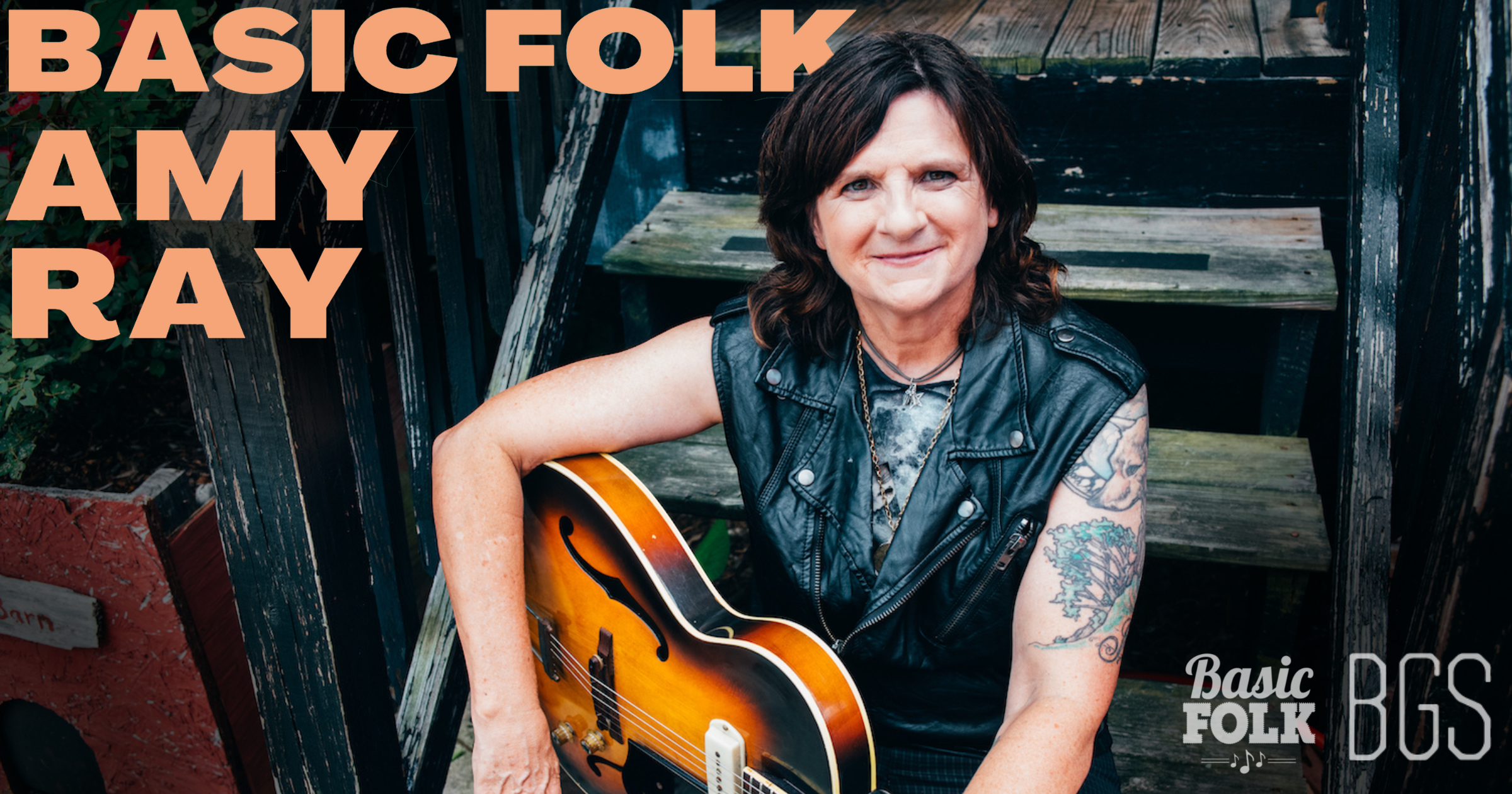
RT was game to get into anything I threw at him: talk about experiencing such excruciating grief at a young age, what British fortitude means to him, did he ever really get to know his parents, being outwardly calm and inwardly chaotic. There’s a chapter in the book where he details some session work he did in between the time he left Fairport Convention in 1971 and his solo work and work with his then-wife, Linda Thompson. I had a blast looking up all these albums on YouTube, especially Lal and Mike Waterson’s Bright Phoebus from 1972. Very fun music and fun that RT is playing on it! I highly recommend his memoir and hold out my hopes that there may be a part two in his future. I think there is much left to write: his days after the very public breakup with Linda, establishing himself as a solo act and then coming back to work with his extended family in the group Thompson in 2014 on the album Family. Richard’s got a busy summer ahead of him with a couple of cruises and the tenth anniversary of his writing camp, Frets and Refrains. I’m grateful he was able to make some time for us on Basic Folk!
Artist:Ash & Eric Hometown: Worcester, Massachusetts Song: “Never Walking Out” Album:Sure Release Date: May 6, 2022 Label: TPIH Music
In Their Words: “‘Never Walking Out’ is a snapshot story of the 60-year marriage between Eric’s grandparents (Dick & Brenda). Inspired by the performances of June & Johnny Cash, we unflinchingly address our highs and lows of life shared over decades. We imbued it with candor and humor so listeners can imagine a lively conversation as though we’re sitting across a table sharing a couple beers or cups of tea. The video features actual studio footage of our many takes at Eagle Hill School in Hardwick, Massachusetts. One of our fans’ favorites, the heartbeat of this song, as with all songs on our new album, is our honest attempt to capture our dynamic chemistry, recorded in real time using just four microphones. After grabbing our favorite take, Eric added additional instrumentation including upright bass, high-strung guitar, percussion, and Mellotron to fill out a folk singer-songwriter vibe reminiscent of yesteryear. It was a very fun and cathartic process.” — Ash L’Esperance
Fiddler and singer-songwriter Lily Henley’s latest album, Oras Dezaoradas, is a full-on celebration of her Sephardic Jewish Heritage. The lineage of Sephardic people can be traced back to the Iberian Jews expelled from Spain and Portugal in 1492. For Jewish people, there are many diasporas and lots of different ethnic heritages and practices that have been adopted and blended from many other groups along the way. Lily’s heritage is different from the Ashkenazi Jewish people, which is the most represented Jewish sect in the United States, who can be traced back to Eastern Europeans. Lily graciously gives a very brief overview of the diaspora (which is pretty amazing to take in) and the geographical and cultural differences.
Lily grew up moving around a lot and talks about how that act of moving from place to place impacted her as a young person and how it still affects her. She found a sense of belonging and home at the fiddle camps she attended alongside other musicians her own age. At camp, she learned to play Celtic, old-time and Cape Breton style tunes. While at home, she played traditional Sephardic tunes sung in the Ladino language, also called Judeo-Spanish, which is a combination of Spanish with Hebrew, Arabic, and Turkish elements spoken by less than 100,000 people. As an adult, she was inspired by living in Tel Aviv for three years and immersed in Sephardic culture. She was awarded a Fulbright research grant and is currently an artist residency at the Cité Internationale des Arts in Paris. She recorded her latest album in Paris: on a label run by a Sephardic community leader while being embraced by and collaborating with the Sephardic community there. OH! Lily has another new non-Ladino album on the way: Imperfect By Design coming January 2023. It’s an Indie-Folk anthology about love, belonging, independence, and change. Look out for that and enjoy this deeply educational conversation!
Known as the Gate City, Greensboro, North Carolina is a transitional town: hub of the Piedmont between the mountain high country to the west and coastal Sandhill Plains to the east, and a city defined by the people who have come, gone, and passed through over the years. As a crossroads location, it has long been a way station for many endeavors, including touring musicians – from the likes of the Rolling Stones and Jimi Hendrix at the Greensboro Coliseum, the state’s largest indoor arena, to James Brown and Otis Redding at clubs like the El Rocco on the Chitlin’ Circuit. Throw in the country and string band influences from the textile mill towns in the area, and the regional style of the Piedmont blues, and you’ve got yourself quite the musical melting pot.
This historical mixture was not lost on one of Greensboro’s own, Rhiannon Giddens – one of modern day Americana’s ultimate crossover artists. A child of black and white parents, she grew up in the area hearing folk and country music, participating in music programs in local public schools, and eventually going on to study opera at Oberlin Conservatory in Ohio. Once she returned to North Carolina and came under the study of fiddler Joe Thompson and the Black string band tradition, she began playing folk music and forged an artistic identity steeped in classical as well as vernacular music. In this episode of Carolina Calling, we spoke with Giddens about her background in Greensboro and how growing up mixed and immersed in various cultures, in a city so informed by its history of segregation and status as a key civil rights battleground, informed her artistic interests and endeavors, musical styles, and her mission in the music industry.
Subscribe to Carolina Calling on any and all podcast platforms to follow along as we journey across the Old North State, visiting towns like Durham, Wilmington, Shelby, and more.
Music featured in this episode:
Rhiannon Giddens – “Black is the Color” Andrew Marlin – “Erie Fiddler” Carolina Chocolate Drops – “Cornbread and Butterbeans” The Rolling Stones – “Rocks Off” Count Basie and His Orchestra – “Honeysuckle Rose” Roy Harvey – “Blue Eyes” Blind Boy Fuller – “Step It Up and Go” Rhiannon Giddens, Francesco Turrisi – “Avalon” Carolina Chocolate Drops – “Snowden’s Jig (Genuine Negro Jig)” Barbara Lewis -“Hello Stranger” The O’Kaysions – “Girl Watcher” Joe and Odell Thompson – “Donna Got a Rambling Mind” Carolina Chocolate Drops – “Country Girl” Carolina Chocolate Drops – “Hit ‘Em Up Style” Our Native Daughters – “Moon Meets the Sun” Rhiannon Giddens, Francesco Turrisi – “Si Dolce é’l Tormento”
BGS is proud to produce Carolina Calling in partnership with Come Hear NC, a campaign from the North Carolina Department of Natural & Cultural Resources designed to celebrate North Carolinians’ contribution to the canon of American music.
Photo Credit: Ebru Yildiz
Enter to win a prize bundle featuring a signed copy of author and Carolina Calling host David Menconi’s ‘Step It Up and Go: The Story of North Carolina Music,’ BGS Merch, and surprises from our friends at Come Hear North Carolina.
Artist:Natalia M. King Hometown: Brooklyn, NY, currently based in Paris Song: “One More Try” Album:Woman Mind Of My Own Release Date: February 18, 2022 Label: Dixiefrog Records
In Their Words: “When ‘One More Try’ by George Michael came out back in 1988 I was an itty bitty youngster who could relate to the emotion of the song but not the experience. All I knew in listening to him and feeling him was that something hurt, and it hurt bad…I was moved by his sadness and his necessity to be released, to be ‘let go’ from a love that was no longer serving his life or his heart. It was later on in life that his words were given sense and meaning with the different births of intense experiences of loves lost and found and lost again. The fact that I was also searching to define my sexuality at the time was a plus! His interpretation was so feminine! I was sure he was gay! With all that said and done, and to simply boil it down: ‘One More Try’ felt right! The timing, the knowing, the experience. Today, as a liberated, experienced, sexual, and quite emotional woman, it was almost commonsensical, logical for me to interpret this song! On this album! In my bluesy-folk way!” — Natalia M. King
Photo Credit: Philip Ducap
This website uses cookies to improve your experience. We'll assume you're ok with this, but you can opt-out if you wish.AcceptRejectRead More
Privacy & Cookies Policy
Privacy Overview
This website uses cookies to improve your experience while you navigate through the website. Out of these, the cookies that are categorized as necessary are stored on your browser as they are essential for the working of basic functionalities of the website. We also use third-party cookies that help us analyze and understand how you use this website. These cookies will be stored in your browser only with your consent. You also have the option to opt-out of these cookies. But opting out of some of these cookies may affect your browsing experience.
Necessary cookies are absolutely essential for the website to function properly. This category only includes cookies that ensures basic functionalities and security features of the website. These cookies do not store any personal information.
Any cookies that may not be particularly necessary for the website to function and is used specifically to collect user personal data via analytics, ads, other embedded contents are termed as non-necessary cookies. It is mandatory to procure user consent prior to running these cookies on your website.