Award-Winning Bassist Vickie Vaughn Is Ready to Travel On

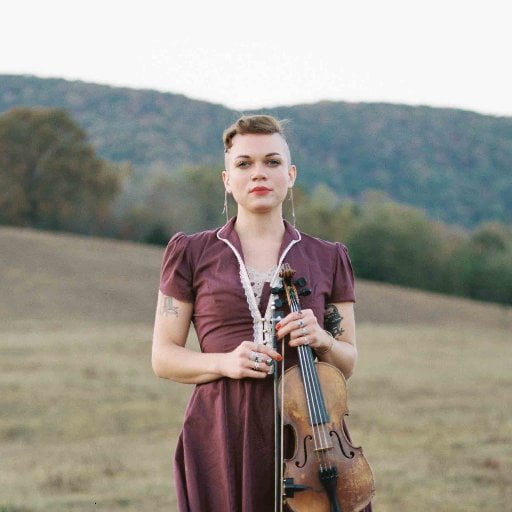
If you’ve listened to bluegrass made in the last decade, odds are you’re not only familiar with but absolutely enamored by the utter powerhouse that is Vickie Vaughn. Named the IBMA Bass Player of the Year thrice in a row (2023, 2024, & 2025), Vaughn has established herself as more than a class act – she’s an integral anchor of today’s bluegrass scene and beyond. Presently touring with the acclaimed all-women supergroup Della Mae, Vickie has a slew of accolades under her belt, having sung background vocals with Patty Loveless, toured with High Fidelity, and collaborated with just about every esteemed bluegrass musician under the sun.

November 21, 2025 saw Vaughn set sail unto uncharted waters with the release of her debut full-length solo album, Travel On. Released by Mountain Home Music Company, Vaughn deploys an all-star cast to bring her dynamic compositions to light. The record features guest vocals from Ronnie McCoury, Casey Campell on mandolin, Wes Corbett on banjo, Cody Kilby on guitar, Dave Racine on drums, harmony vocals from Justin Hiltner, Lillie Mae, and Frank Rische, and fiddle from Deanie Richardson, who also serves as the record’s producer.

Travel On champions Vaughn as its frontwoman, a role she hasn’t chronicled in studio since her six-song EP came out a decade ago. Her songwriting is full of dynamic abundance, from the deeply stirring gospel song “The Pilot,” to the absolutely raging “Sleepin’ in the Rain” to the emotive and heartfelt “Mama Took Her Ring off Yesterday.” Vaughn manages to strike a full range of emotions throughout the album’s thoughtful arc, a narrative bound by her buoyant relationship to both rhythm and melody alike.

Ahead of the album’s release, BGS had the unmatched pleasure of sitting down with Vickie Vaughn for a chat about Travel On, music, machinations, musicianship, and more.

Congratulations on the album release! I want to hear all about Travel On, but I’m wondering if you’d be able to take us back to the start for a bit and tell us about your personal musical history.

Vickie Vaughn: Oh golly! I started really early because of my cousins, who I adored growing up. I really looked up to them and they were just great singers who sang all the time and could play piano and guitar. I grew up in a Baptist church. When I was little, maybe six years old, the preacher’s wife found out that I could sing, so she asked me to come sing in the choir. I grew up singing in church and then when I was nine years old, back in Kentucky where I’m from, I got hired as a background vocalist. I know it sounds insane – I’m so normal now, but I was like a freak kid! I could hear harmony and sing every part. When the guy running the Kentucky Opry found that out, I was hired as a kind of novelty act at nine years old. I was there every weekend from when I was nine to when I moved out at 17 as a resident female vocalist and background vocalist.

As for the instrument side of things, my parents had me play classical piano and I hated it so much. I honestly got into bluegrass kind of late for a bluegrass musician – around 14. You know, Sierra Hull, Kimber Ludiker – they started when they couldn’t speak words, but I was a little late to the game. I would go to these bluegrass jams and there would be a bass there, but nobody would be playing bass. So I would pick it up, and I could add decent rhythm, stay on beat, learn the open chords. But then I started taking lessons from this guy named Scottie Henson. He traveled with the Grand Ole Opry touring band back when that was a thing. He was a banjo player, but he taught me how to play bass, which is incredible.

When I was 17, I moved to Nashville to go to Belmont and I was a classical vocalist there. I moved to commercial vocals my junior year and bass was a hobby. I got involved in the bluegrass ensemble and that’s kind of how I got known as a bass player in school. And then I got hired by a touring band from a girl I knew from bluegrass ensemble. The rest is history!

As you were growing up drenched in music, do you recall any songs that particularly sparked inspiration or curiosity for you as a child?

I remember when I was in the car with my dad, I used to love the music he listened to. Mama would always listen to Southern gospel and that was just not my jam. I remember telling Dad, “I hate the stuff that mom listens to.” And he was like, “Oh god, me too.” And I just remember thinking, “You’re so cool, Dad.” Once, we were listening to a classic rock station and the freaking “Wreck of the Edmund Fitzgerald” came on – I know there are all these memes about it now. But I remember having a moment with him in the truck where I was just like, “What is this?” And he was like, “Oh yeah, it’s a true story.” And I was like, “Get out!” That one really struck me.

Another one, which isn’t really a song, but there was this radio station, the local country station – 93.3 WKYQ. On the weekends, starting at 10 p.m. on Fridays and Saturdays, there was a radio program called the Outlaw Hours, and they would play stuff like Waylon Jennings, Merle, Steve Earle, Charlie Robison. It was outlaw music, edgier rootsy stuff, even some edgier bluegrass stuff. I remember riding in the car back from the Kentucky Opry and I’m just like, “Daddy, let’s listen to Outlaw Hours.” He was like, “You like that stuff??” Because I was little, and you know, a lot of that was not appropriate for a child to listen to, but I just loved it.

I can totally see how that influence carries through into your music today.

Well, I liked the subject matter. It wasn’t all about love. I don’t really like to write songs about love. There are already a lot of songs about love. I don’t have anything unique to say about love. I have something unique to say about the way I process a hangover. Or my faith! My faith is so individualistic and personal. If I feel like I don’t have a new idea, I’m not gonna write it or sing about it.

What is the songwriting process like for you? How did you go about selecting the songs on this album?

This might sound silly too, but do you ever walk around the house and just sing about what you see? So many of my songs come out that way. Like with “Bottle of Wine” – I collect wine, so I always have some on hand. Then it was the day after a breakup and I was super hungover, because I had decided to just drink about it. I walked out of my bedroom and I saw all these empty bottles of wine on the coffee table. And I thought, “I don’t want to see another bottle of wine. Maybe I’ll write that into a song when I’m feeling better.” That’s how most of my songs come out, the hook will come to me and then I’ll just expand on it. Sometimes I like to co-write, like with Thomm Jutz, we co-wrote “Bottle of Wine.” But then “The Pilot,” a song about my faith, I wrote by myself. Faith is so, so personal. Even if a person of faith and I could agree on some fundamental levels, my faith and my walk are so different than literally anyone else’s. So I had to write my own unique faith-based song.

Then “Mama Took Her Ring Off Yesterday” I co-wrote with Deanie Richardson. I brought that idea to her because my dad passed and he was one of my best friends in the world. He hated sappy sad songs, so I didn’t want to write that. I knew I needed to write a song, then I went to visit my mom about three months after he passed. We went to a Mexican restaurant and she slid her left hand over past the chips and salsa, showing me that she took her ring off. I support her and everybody grieves differently, but I still told her I thought it was early for that. But she’s bootstrap Kentucky and she was like, “We have to move on. Life doesn’t stop.” I was just left thinking, “Wow, Mama took her ring off yesterday. That’s the moment I need to write about.” I took it to Deanie because she knew my dad and knows my mom and she really walked with me through my grieving process.

That one turned out so beautifully! I’m curious – you’ve had an extremely successful bluegrass career for a number of years. What made now feel like the right time to put out a solo album?

The awards. Women always apologize for winning and here I am, apologizing for saying “my awards,” but that’s really what it was. People are paying attention. If I’m gonna write a song, I don’t want it to hit deaf ears. Making a record is such an expensive and painstaking process and your heart and soul go into it. After my dad died – well, he was such a cheerleader for me. And an inspiration – he just inspired me. If I was feeling bad about something, I felt like if he believed in me, then I could do it, you know? I didn’t believe in myself without him for a long time, so I couldn’t do it. Especially in the music industry, you can’t do shit if you don’t believe in yourself. It’s too hard. So I waited a while until I felt like there were enough people who believed in me and then I believed in myself. That’s when I felt like I had the energy and the belief to make a record that people would actually hear.

That makes a ton of sense. How do you feel like your relationship to music has changed now that you’ve taken on the role as captain of a project?

This is the first time I’ve ever made a full-length record that’s my own and not just playing on somebody else’s. And of course, Deanie is producing it, but being in control of the material and the direction of the record – it’s funny that you ask, because I almost didn’t realize the direction of the record until it was done. I realized after I heard it all in one setting. The concept is vulnerable joy.

Working on anybody else’s record and supporting them in that way – especially with the bass, which is such a big vibe creator as an instrument – I never felt like I could choose, or was confident enough to choose, the direction. But finally, here I am in my mid-30s, and I’m ready. It was so fun taking the reins artistically, getting to sign off on every bit of it. Every choice I felt in my heart. I was able to say, “If this doesn’t scream Vickie as fuck Vaughn, then I don’t want it!” I would rather not make a record [any other way]. Because when I was younger, I made EPs that I thought other people would like. That was the point for me. But now I’ve traveled around and I know what works. I know what an audience likes to hear; that base is covered. The process of just having to make it totally “me” – that was my favorite part.

How did you go about choosing the community to help you out with bringing this record to life?

So the engineer, Sean Sullivan, I’ve worked with him for a long time on other people’s records, and then I did a small project with him that never got released. This might sound nitpicky, but I feel like the sound engineer in a recording process makes one of the biggest differences. It’s hard when there’s too much input – that’s the producer’s job. But I wanted to work with Sean because he’s so efficient, he’s quick and he has such a calm spirit. He gives direction or a suggestion so seldom that when he does I really take it to heart.

And then, as for Deanie Richardson, my producer, I always knew that she was an amazing musician, but this is the first time that I have really been enamored with her production abilities. It’s the first time I’ve worked with her as a producer. She has taken each song and made it into my record. I would come to her with just bass and vocals, and she would just shape each song and make them each sound different. She’s a freaking genius! And she’s totally unafraid to just be herself. She’s an unashamed woman and that’s the energy I wanted in my record.

The band on the record is all folks that I’ve known and played with here in town. I didn’t want there to be anybody on the record I hadn’t played with or loved or traveled with. Because it’s my first record and I know me, and I know that I would be self-conscious if there was a stranger in the room. And then Justin, my best friend, he just matched my freak so hard on there. We have such a beautiful community.

It’s so beautiful how y’all uplift and support each other! How is it feeling for you to finally have this piece coming out into the world?

I’m terrified, but I don’t know – I kind of like that! I like a challenge. If I’m not scared, then I don’t care. I’m really excited to hear what folks think about it. I want to see what songs touch people and learn from that. And I’m really excited for Deanie to be introduced as a producer, and for everybody to see her talents in that area. I’m really excited to learn from the release. I’ve learned so much in the process already, because there’s so many firsts, and I’m excited for the reception of this record to influence my next. That one will be even more me. I never want to stop growing!


Photo Credit: Laura Schneider
PHOTOS: Remembering Bluegrass Hall of Famer Bobby Osborne

The bluegrass community is collectively grieving two major losses as both Jesse McReynolds and Bobby Osborne – two revered and iconic Bluegrass Hall of Fame-inducted mandolinists and Grand Ole Opry members who helmed first-generation bluegrass bands with their brothers – have passed on. McReynolds, who was 94, died on Friday, June 23 at his home in Nashville with his wife, Joy, at his side; Osborne’s death was announced on social media early Tuesday, June 27 – he was 91. Both pickers were two of the sole survivors of bluegrass’s first generation. They leave enormous musical legacies that will live on, surely into infinity.

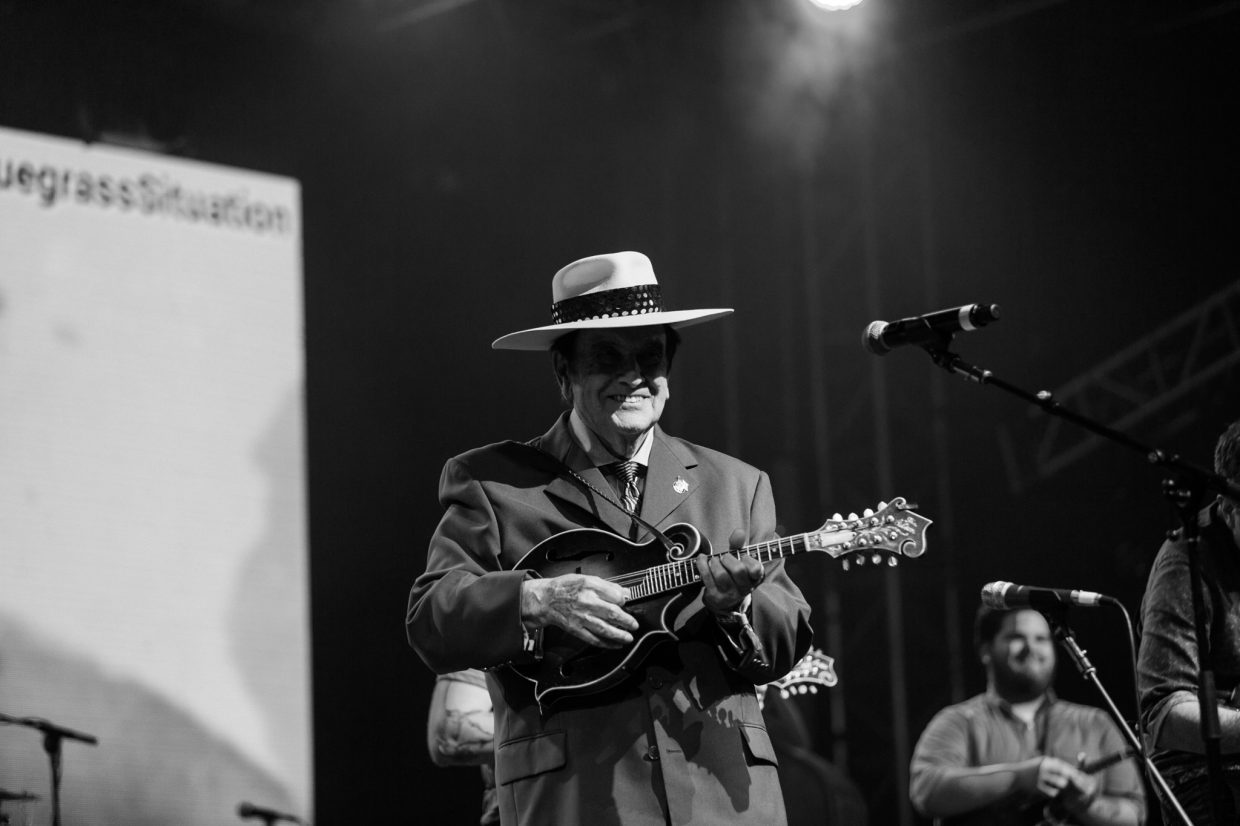
In 2017, the Bluegrass Situation team had the incredible honor of inviting Bobby Osborne to join our super jam at the world-famous Bonnaroo music festival in Manchester, Tennessee. To our delight, he said yes.

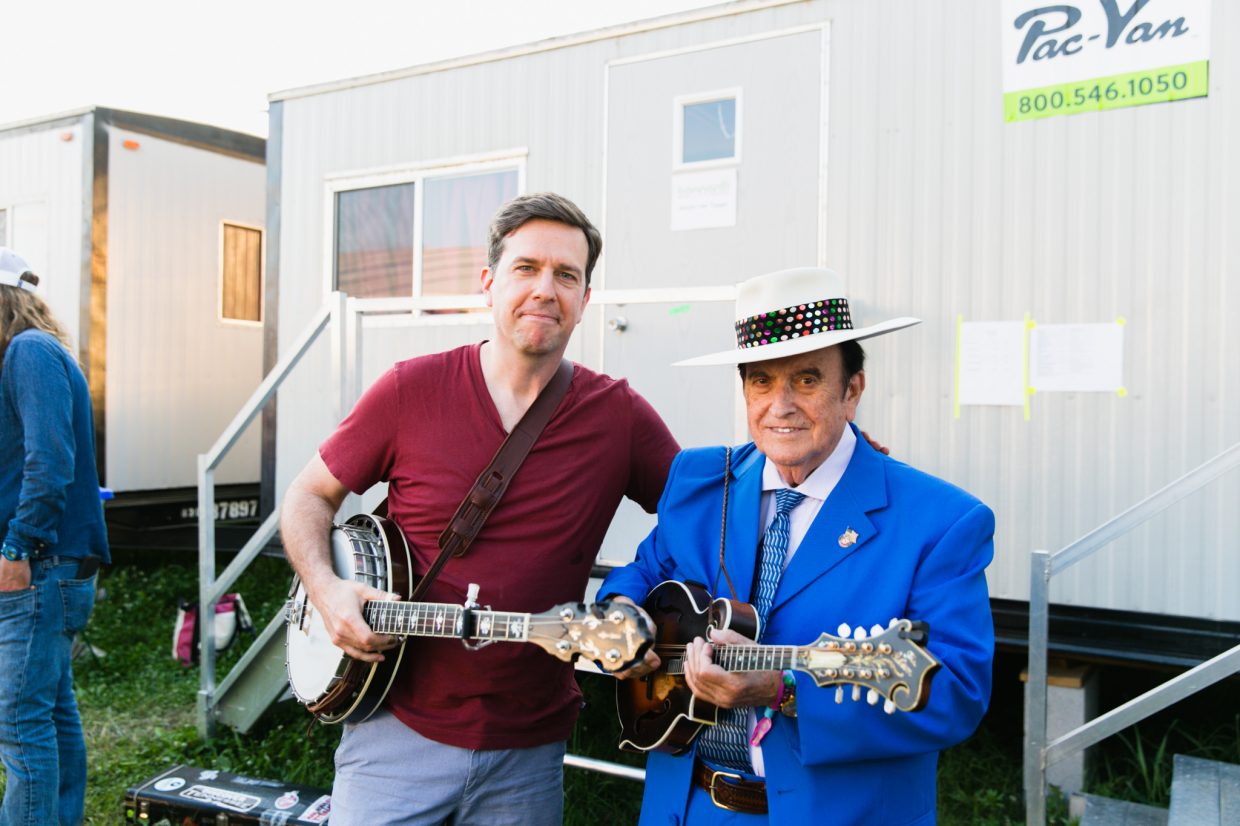
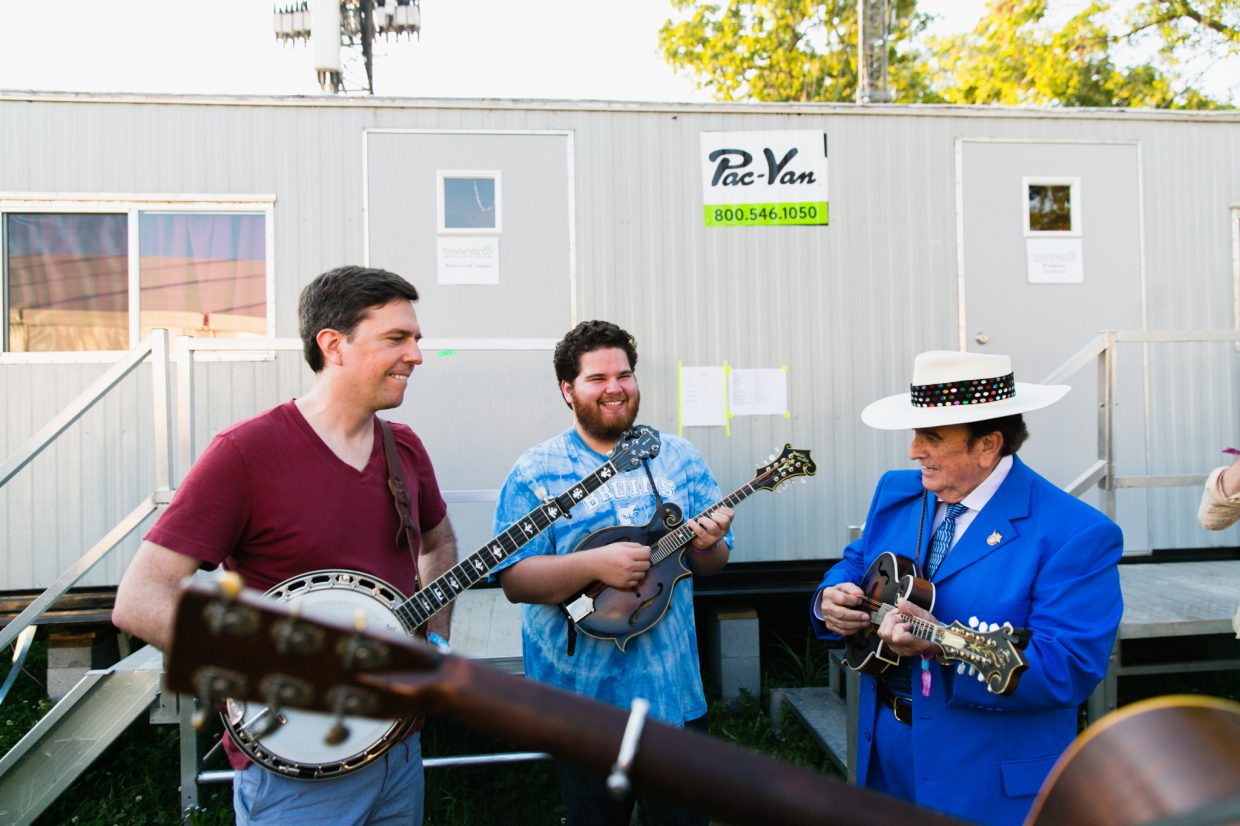
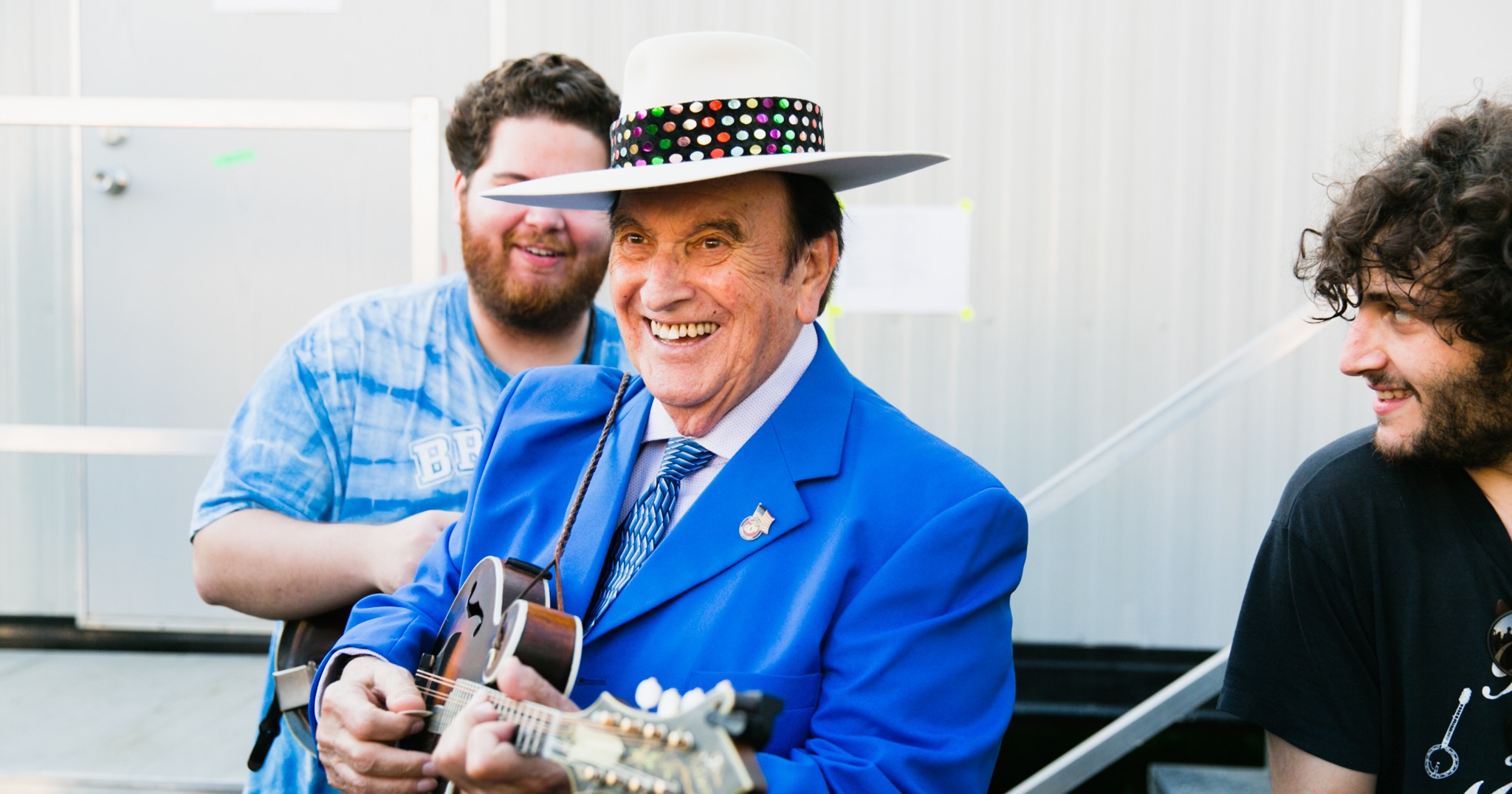
BGS co-founder Ed Helms and Bobby Osborne

Over more than ten years of creating and holding space for roots music in our industry, there are so many moments of which we are so proud. But one of the most memorable and meaningful BGS achievements from the past decade was hearing 20,000+ audience members and fans, packed into That Tent, roar unfathomably loud for the iconoclastic voice that made a hit of “Rocky Top” – and so many others.

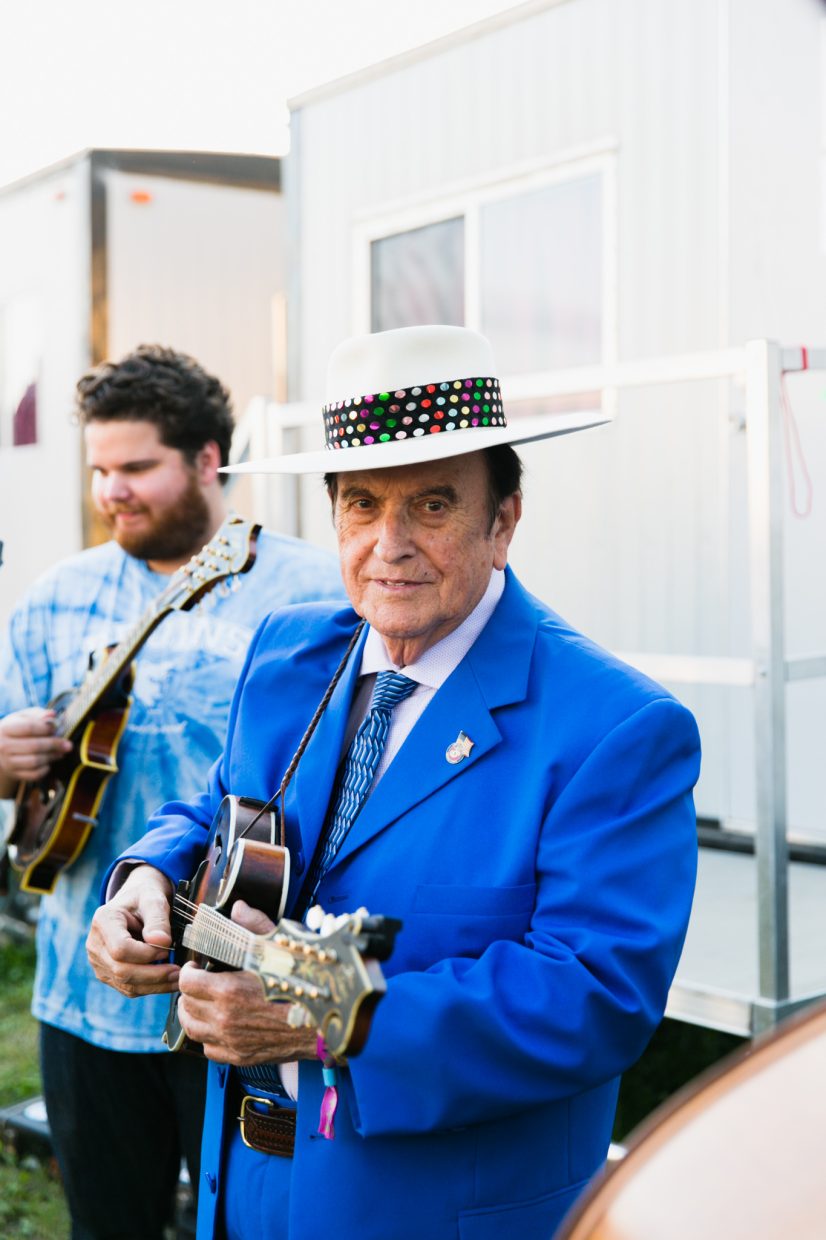
That day, Bobby seemed to bask in the limelight. He was kind, down-to-earth, approachable, and seemed genuinely tickled at the fanfare and excitement that orbited him and his sharp, technicolor suit and sparkly hat. After a storied career that landed him and his brother, Sonny, in so many widely variable musical contexts, from the obscure to the mainstream, Bobby was perfectly at home at Bonnaroo. His audience knew it, and they ate it up. We all did.

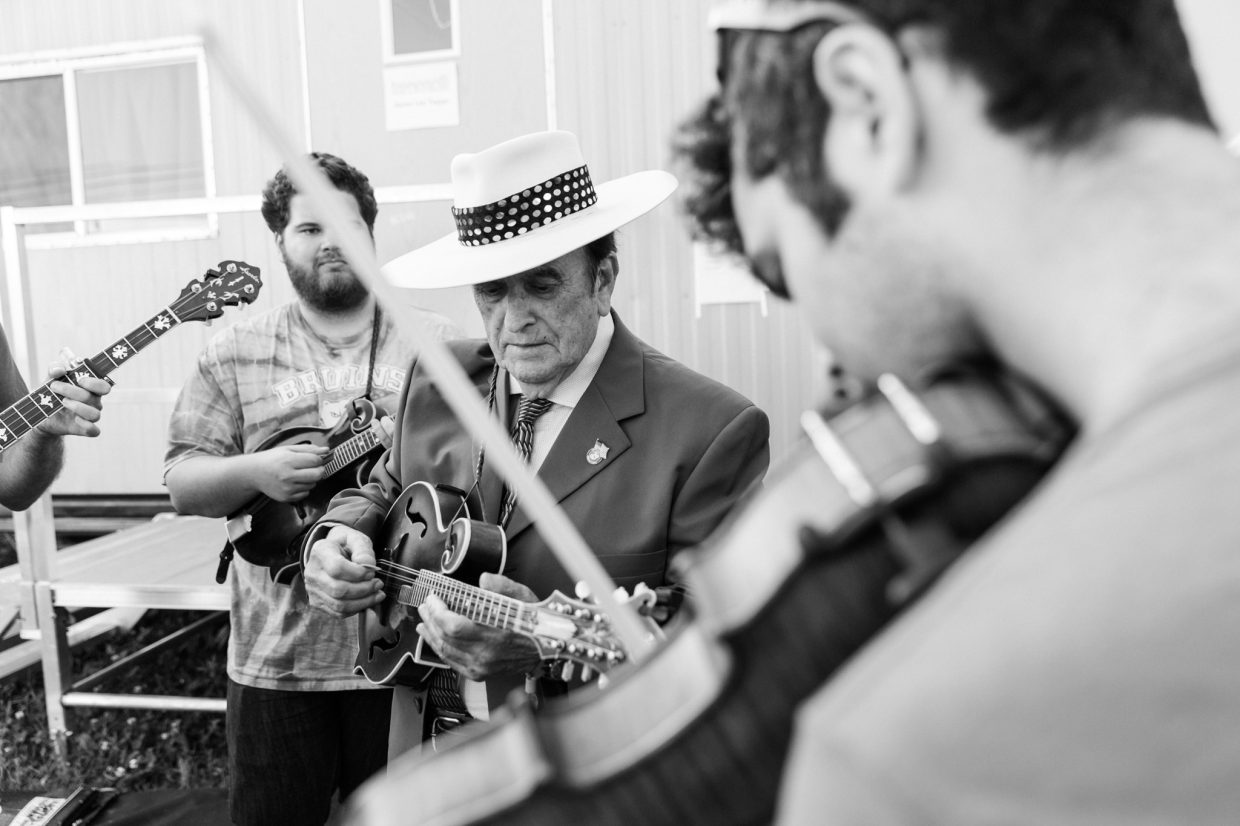
Bobby Osborne with Casey Campbell (background) and Mike Barnett (foreground)

In light of his passing, the entire BGS team is holding gratitude for his kindness, generosity, and, most of all, for his music. Rest in peace to one of the most important and impactful first generation bluegrass music makers, Bobby Osborne.

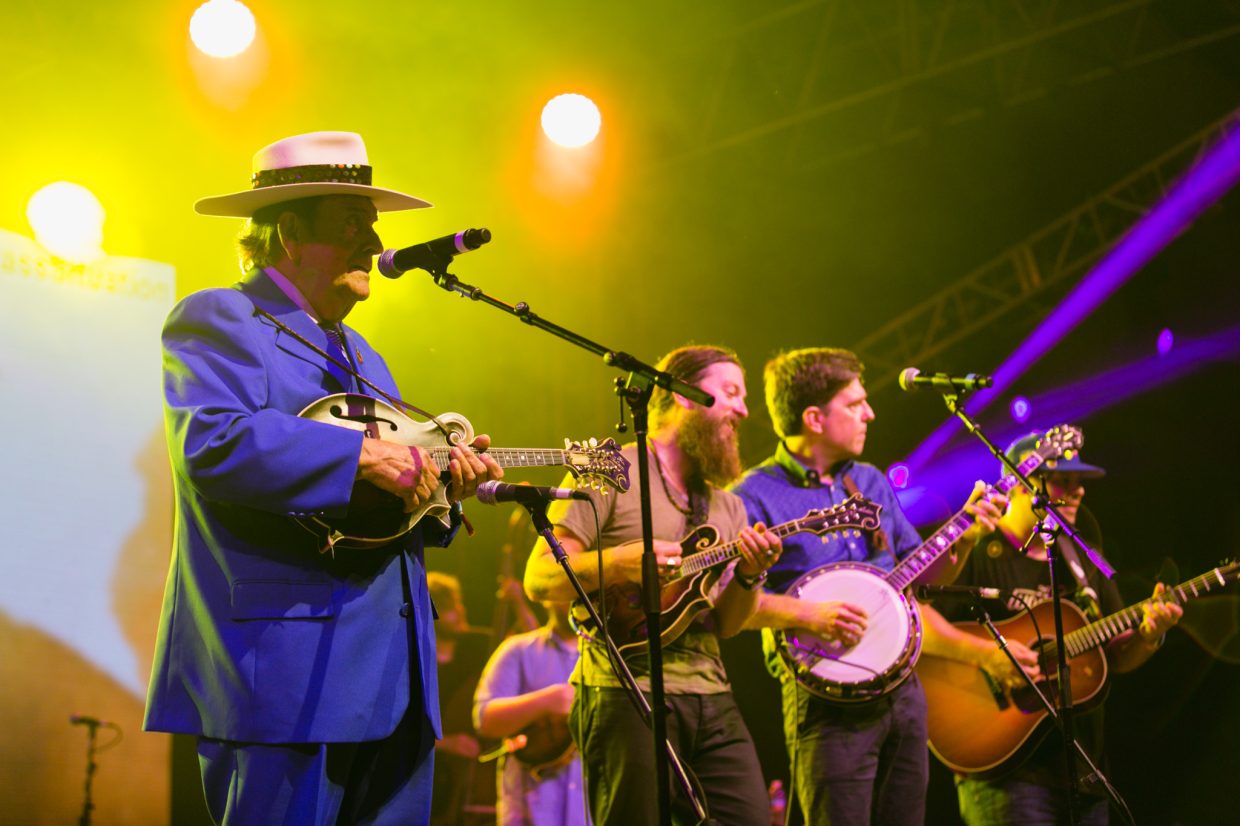
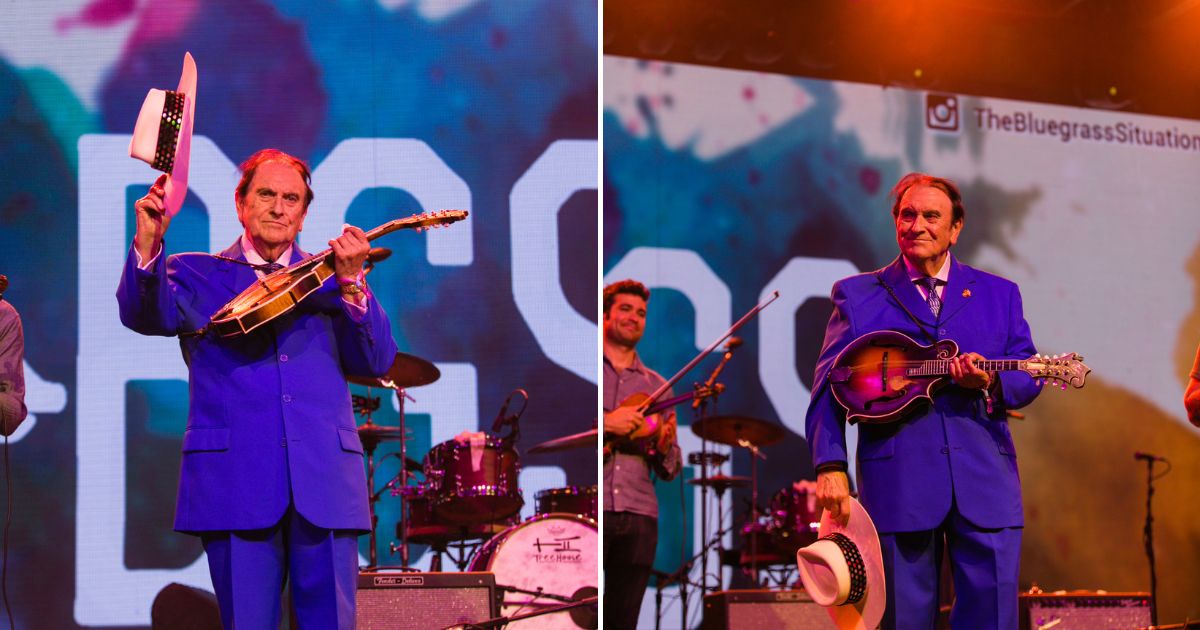
We hope you’ll enjoy these back stage and performance photos, shot by Elli Lauren Photography, from Bonnaroo 2017 and the BGS Super Jam at That Tent.

Bobby Osborne, Paul Hoffman, Ed Helms, and members of Greensky Bluegrass and Bryan Sutton’s house band.


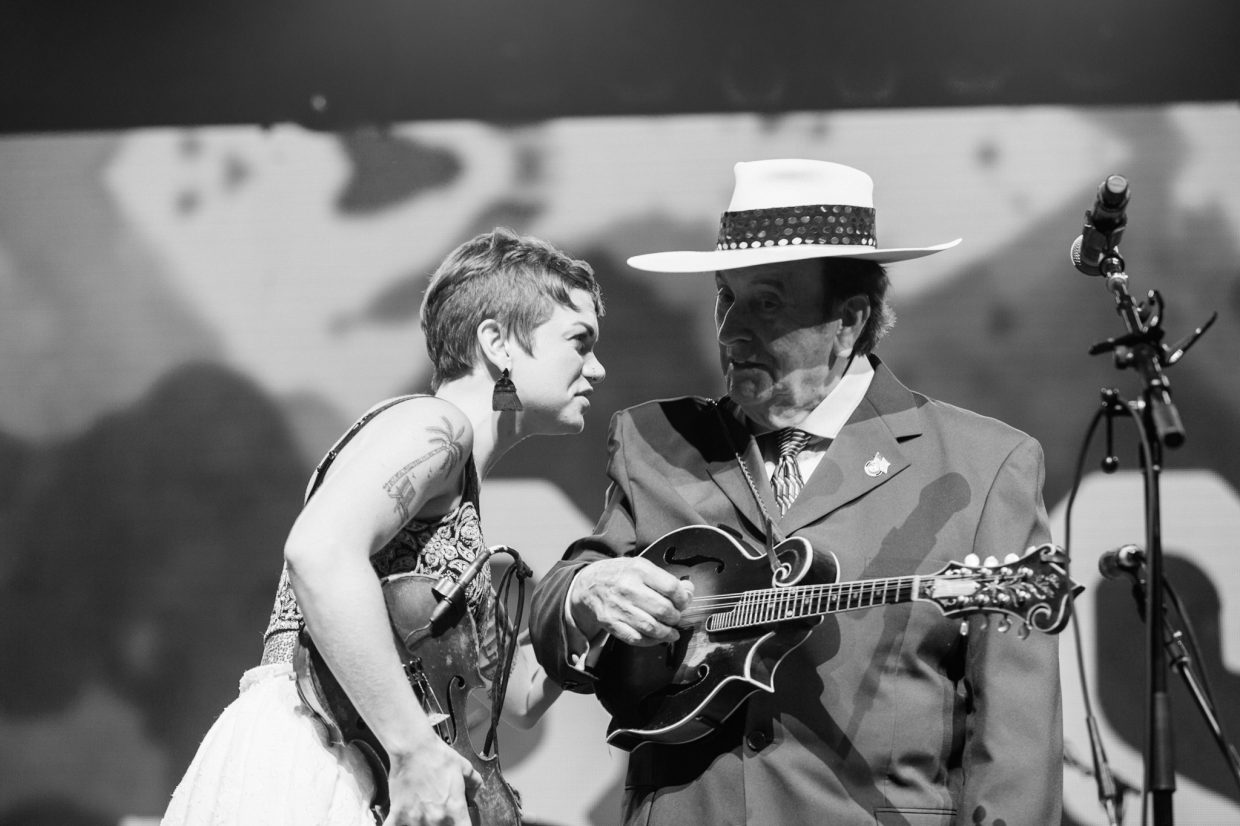
Lillie Mae and Bobby Osborne share a laugh on stage prior to their duet.


Bobby Osborne
Ed Helms, Casey Campbell, Bobby Osborne, and others


Bobby Osborne and Casey Campbell (background)


Bobby Osborne closes his 2017 Bonnaroo appearance with a bow and a tip of his hat.


All photos: Elli Lauren Photography for BGS

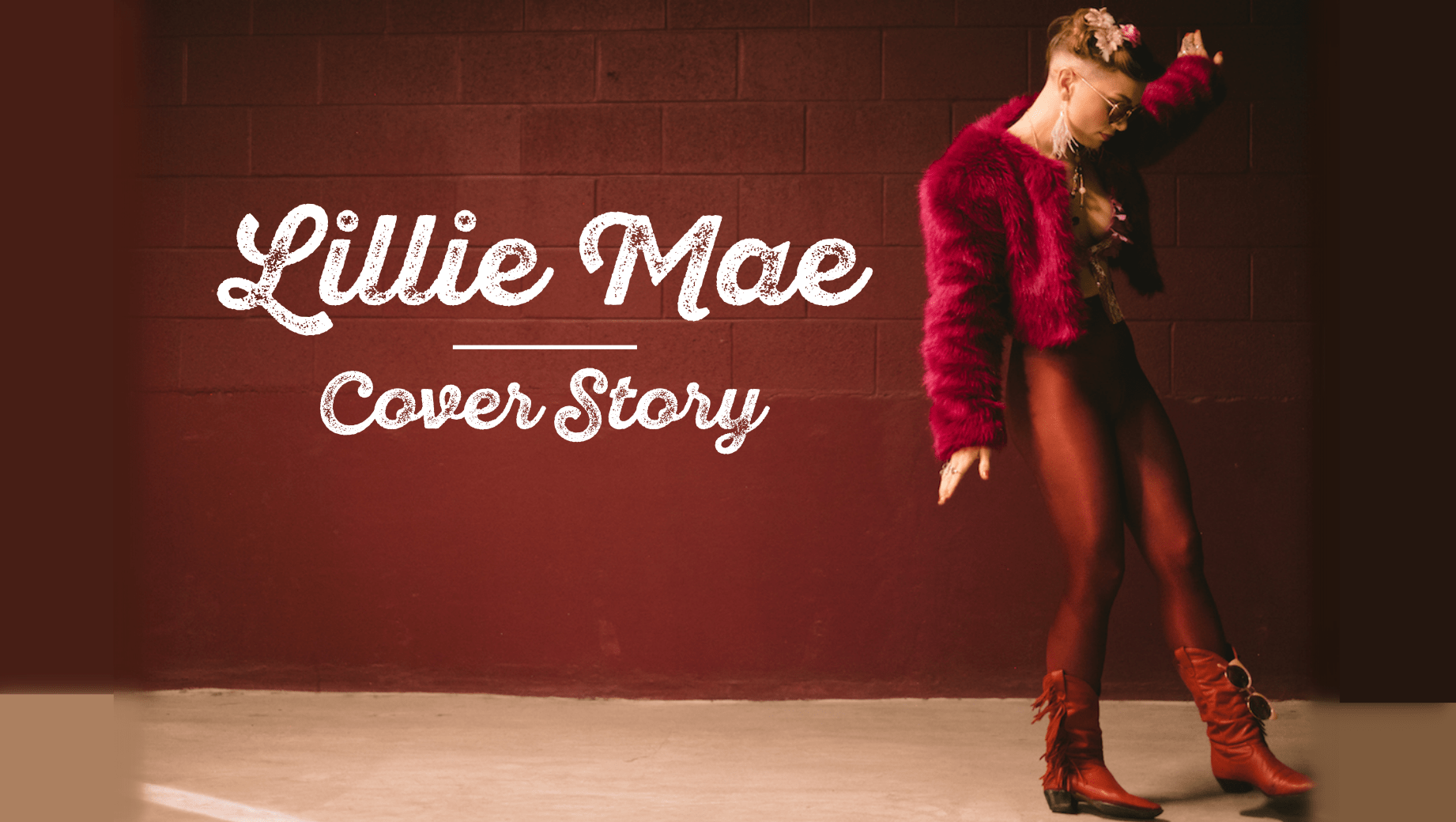
This Could Be a Golden Year for Lillie Mae

Brown’s Diner is the kind of hole-in-the-wall that your eyes have to adjust to, after stepping in from a sunny afternoon in Nashville. However, Lillie Mae shines like a beacon in the dim light of the dark booth as she gabs with the staff she’s clearly known for years.

A twenty-year Nashville veteran, her very first business meeting as the youngest member of her former family band, Jypsi, was in this very restaurant. A true road warrior, Lillie Mae and family traversed the country playing bluegrass festivals and churches. On the heels of a censored childhood steeped in traditional music, she graduated to the honky-tonks of Lower Broadway and on to her own burgeoning career as a solo artist now signed to Third Man Records.

Settling in at the beloved burger-and-fries mainstay after three weeks on the road with The Raconteurs, Lillie Mae detailed the process of making her brand new record, Other Girls, with producer Dave Cobb, as well as songwriting inspiration, a crummy golden year, and what works feels like when it doesn’t feel like work.

BGS: Your lyrics leave a lot to the imagination. They weave a story and put you in a setting but they aren’t inculcating anything for the listener. But tell us more about “A Golden Year.”

That one and the last one are my favorites on the album for sure. Basically, my birthday is June 26 so my golden year was a year ago. We were in The Refuge in Appleton, Wisconsin, and we’d played a couple of gigs up there and we were leaving this monastery. It is an amazing place where musicians and artists of all kinds can go and live for free. Food and everything is taken care of. They get government grants and they have a studio. It is an amazing place right on the water.

We were rolling out and I went to do one more look around and my brother was still wrapping up so I was just walking through the hallways. They have a chapel where they do shows and I heard a choir singing “Ahhhs” and I just heard the whole song and I had a guitar in my hands. I rummaged through rooms to find a pen. I sat down on the guitar case and wrote it. It came from somewhere else. It is a perfect example that we are just a vessel. I had been looking forward to my golden year my whole life and then it turned out pretty lousy for me. I was super depressed and down and writing that song was probably the best part of it.

Do you sit down to write or do you mostly write when you are inspired?

You know, mostly when it starts to come through. But if I sit down and pluck on the guitar or something for a minute, I will easily find myself trying to come up with something. I don’t sit down and try to write nearly as often as I should.

Did you have to do any of that for this record as you were putting the songs together?

Nah. There were a couple of things that were not completely finished, like the last song on the record. I was tweaking words until recording. Some stuff was almost there. And every once in a while, if a second verse is not coming, I’ll just repeat the verse, though that’s kind of cheating.

With your ingestion of art being censored in your religious upbringing, there is some open sexuality on this record. Bluegrass, folk, and country have all been known to suppress that. Have you ever come up against censorship from co-creators or folks in the business realm?

Totally. I think a lot of it you can do it to yourself. You can put yourself in a little conservative box easily. But these days, I’ve just lost my care about what people think. It just doesn’t matter. I have a couple of songs that I haven’t been open about what they are about — on the last album, that were written about abortion. Songs that were really heavy to me and I never talked about that. It wasn’t a secret but “Why do we need to talk about this?” because it can mean whatever it means to anyone. But that is coming from a very conservative place of trying to please all ears.

Having these old mindsets of being in old Nashville, I definitely have been more conservative than I truly am. For me to not mute or hide lyrics or not be open about things, it has been a step for me. There is a song on the album called “Crisp & Cold” that was inspired by a friend of mine who is transgender. There is a line in the song that says, “Don’t be scared/Be more.” When you literally have to worry that some people might take your life because of that. It is crazy. There are times when you don’t want to offend anyone but those days are over.

But growing up in bluegrass, we did the circuit. We were always on our way to another festival. My sisters were older than me and were beautiful young women who were experiencing growing out of the whole religious thing. We did Beatles covers back then when I was a little kid and bluegrass snubbed us. To love something so much and to be ousted from it because you’ve developed some fashion sense or something. It sucks to be such a supporter of something and to not have them have your back. But it has changed a lot.

Did you and your siblings grow up listening to any specific artists?

It was super limited, what we were allowed to listen to and we grew up playing full time. We played churches and bluegrass festivals. We had a lot of live influence. As far as what we were allowed to listen to, it was not very much. We’d be allowed to listen to some Del McCoury songs but not all of them because of the content. A lot of Marty Robbins and Hank Williams, but always excluding some stuff because my folks were super strict.

Did you find yourself seeking ways to listen to those excluded songs?

Not me. I’m the youngest in the family and I never did. I’m really bad about that still. I don’t go out and pick out music. If I go to a record store, I have a panic attack. Every single time I end up on the floor in a corner just sitting cross-legged waiting for everyone to check out. I have full-on attacks. Maybe I’ll be better now. It has been a minute since I’ve been in one. I never got joy out of going to buy a record.

I was the youngest and growing up, I never had a choice. I didn’t get to pick where we went or what we listened to or anything. I just listen to what other people are listening to. I really rely on my boyfriend or my brother playing cool music. Unless I hear someone at a gig or a festival, then I’ll pick up their music. Like Natalie Prass. My brother met her at a show a couple of years back and he brought her CD home. And I was like, “Oh my God.” Her music changed me.

Jack White gave me a record player but I didn’t have speakers and I’m technically challenged so I could never figure out how to hook it up. The vehicle I have doesn’t have music. I have very little music on my phone and rarely listen to it. I do think I have Natalie Prass’ record on there. [Laughs]

What was it like working with Dave Cobb on this album?

He was wonderful to work with. He’s a really nice person. The first conversation we had, we talked about some bluegrass bands. I think it was something different for him. I was very nervous as first to go in because I was out of my comfort zone but it was really easy. We went in and recorded a song, took a lunch, and came back and recorded another song. It was a pretty easy process.

How was it out of your comfort zone?

Well, Dave uses his drummer Chris Powell on most of his stuff so for me going in because I’m such a picky asshole, I was nervous about playing with someone I hadn’t played with. I was just nervous it wasn’t going to be my vibe. But it was. It was wonderful. It’s an amazing studio [RCA Studio A] with great sounds and a great crew.

So it was pretty easy once it started?

Totally. After song number one. The first song had two different time signatures the way it was written but it got straightened out to just one. At first, I was like, “What is going to happen here?” It ended up a great thing, but I was a little stubborn at first.

Did that create friction?

No. Not at all. I kept it to myself. I went to the bathroom, cried it out, and came back ready to give it a try.

That’s awesome you trust your producer.

Well, I’d be foolish. Who am I, you know? Here’s a shot to work with some amazing people. If I threw a wrench in it, there are too many people on board. There are too many people invested in me. I owe too many people too many things. There’s a time and a place. Maybe next album. [Laughs]

I’ll get OCD and have little brain freak-outs. One can come across as stubborn, and all I’ve ever tried to do is be opposite of that. I’ve tried hard to be positive and give my all no matter what the project is, but those little OCD things, they can hinder you for sure.

Have you ever made concessions that you regretted making because the art didn’t turn out the way you wanted it to?

If I’ve thought like that, I’ve tried to change my outlook and be like, this is the way it was supposed to be. It (the process of making the album) wasn’t what I had anticipated. I anticipated buckling down. I anticipated really working hard, and then when I wasn’t working hard and it was just coming really easily and naturally, I felt like I wasn’t doing a lot. When you are used to hustling and it comes easy, it feels like something must be wrong.

How do you feel about the release of the new album? What is the period like right before it comes out?

The last couple of weeks [touring with The Raconteurs] were super exciting. It was fun to be out playing the tunes. I wasn’t ready to be done. I enjoyed it a little too much.

I’m pretty level. Just from so many years of getting my hopes up, not even just about music. I used to get so excited about something but I crashed and burned too many times. I don’t allow myself to get excited about much of anything. People will get the wrong impression that I’m not enjoying myself or that I’m not grateful. I’m so thrilled but my expectations are pretty low. I’m excited about it coming out, but if I got dropped tomorrow I think I’d be prepared. Which is not good! [Laughs]

My boyfriend took the pictures for the album campaign. And my sister Scarlett and our friend Amy helped with the photo shoot. It was just us, so it feels super close to home, and I feel really proud of it.


Photo credit: Misael Arriaga

The String – Charley Crockett

Charley Crockett has a story that’s difficult to imagine playing out in the 21st century – he’s hoboed around the country, lost loved ones, scuffled with the law, played on the streets for a decade.


LISTEN: APPLE PODCASTS

And recently he endured open-heart surgery. At 35, he’s lived several of our lifetimes. And the thing is, he’s poured it all into his remarkable country blues, and he’s finally getting the renown he deserves. It’s what roots music is all about. Get ready for his September 20th release of The Valley with this conversation, which took place backstage, hours before his Grand Ole Opry debut in the WSM Room. Also in the hour, Nashville’s Lillie Mae is back on the program to discuss making her second album for Third Man Records at Studio A with super-producer Dave Cobb. It’s part of a longer conversation that will be posted soon by our friends at WMOT.org.

25 Roots Artists Under 25

Roots music has long been known as a family affair, with folks gathered on porches or around campfires pickin’ and pluckin’. For that reason, players often get started at a very young age so, by the time they hit 25, they are well on their way to greatness. To prove this point, we’ve gathered 25 of the best roots artists still under the ripe young age of 25. Check out the whole playlist below, after hitting some of the highlights: 

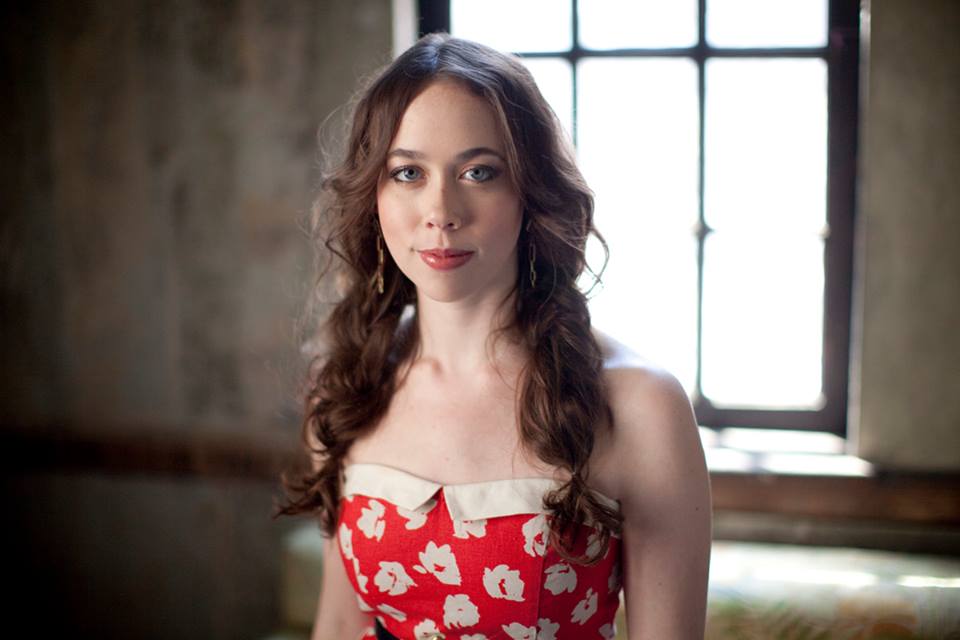
Sarah Jarosz — “House of Mercy”

From Sarah Jarosz’s most recent album, Undercurrents, this cut is reminiscent of Fleetwood Mac’s “Gold Dust Woman” with open chords, eerie bends, and powerful harmonies topping off the quietly epic feel. As if that was not enough, about a minute before its end, Jarosz lets loose on an acoustic guitar solo that is much better heard than it is described. Even with all the amazing women that are gracing the roots music scene today, Jarosz still stands in a league of her own, and she proves that in this song. 

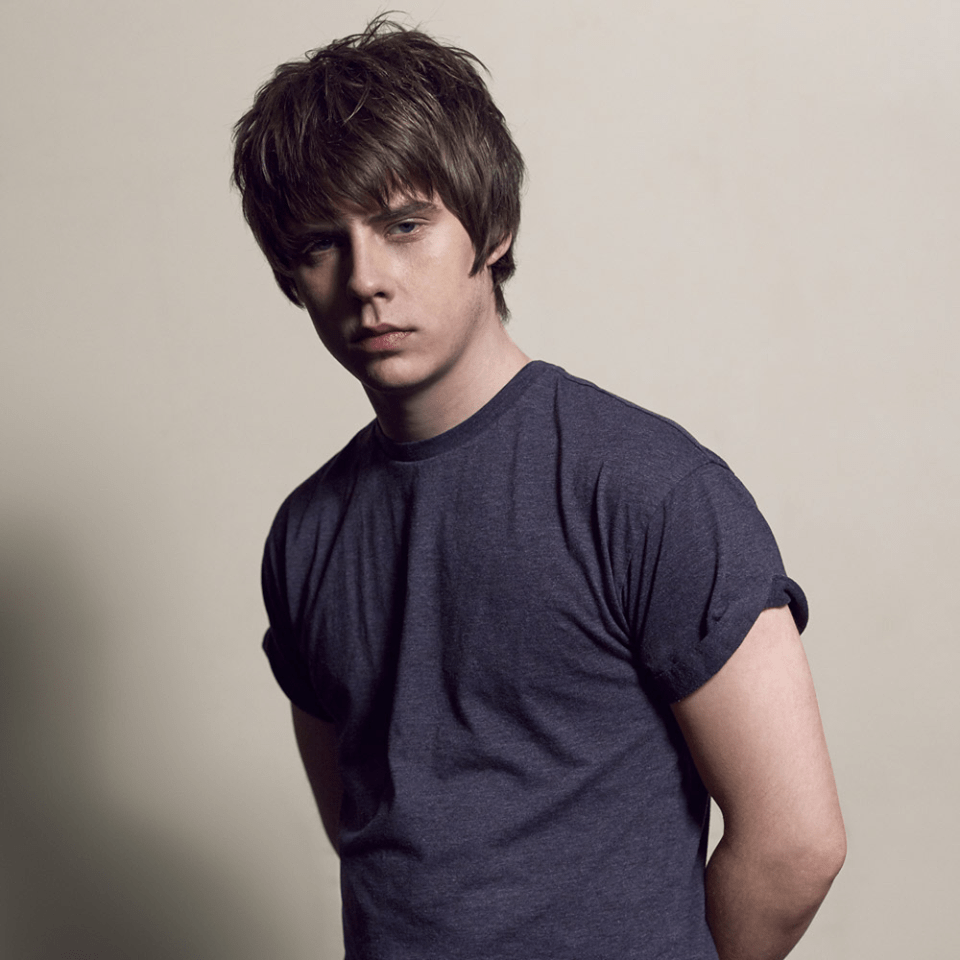
Jake Bugg — “On My One”

Jake Bugg exploded onto the scene with “Lightning Bolt,” the lead track from his self-titled debut album in 2012, and toured heavily for the years that followed. This track, “On My One,” and the collection of songs on the 2016 album by the same name, tells a story of loneliness on the road and the often unclear path to finding oneself. Bugg tones down his guitar playing and his singing throughout the album, with the natural grit of his voice taking care of the trademark sound he’s come to be known for.

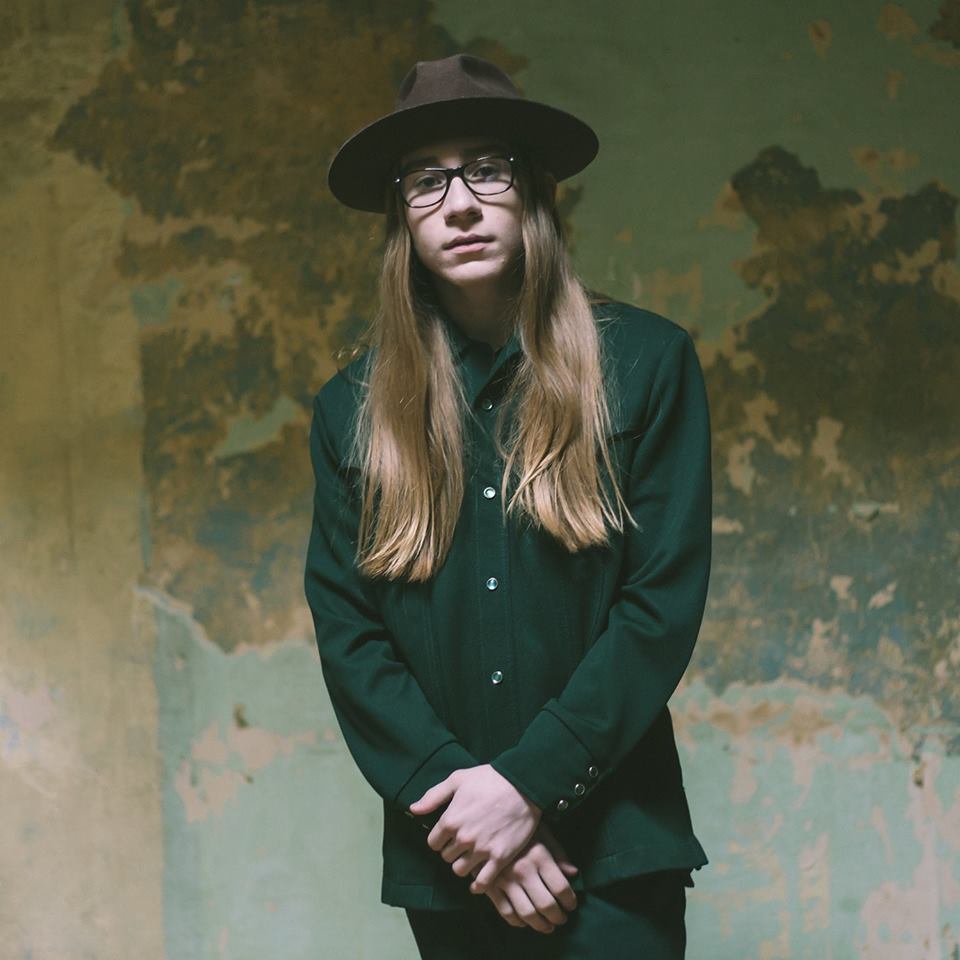
Sammy Brue — “Once a Lover”

At just 15 years old, Sammy Brue has wisdom and maturity, as conveyed through this calming and somber tune, that are truly unbelievable. The story feels like it could only have come from someone who has lived and learned for many years. Brue, instead, merely listens and observes, then puts those stories into his music, somehow making it feel genuine and capturing every ounce of emotion necessary to make a great song. Look out for Brue — who knows what kinds of music he will continue to make as he grows and has his own experiences to draw from.

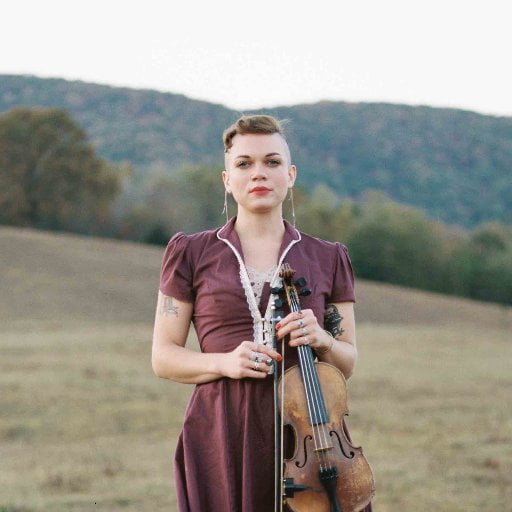
Lillie Mae — “Over the Hill and Through the Woods”

A classic country voice with a badass rock ‘n’ roll presence can be found in Lillie Mae and on this song. The twang of the electric guitar cuts through as the rest of the instrumentation fills the space elegantly, with Mae’s voice and accompanying harmonies adding even more beauty. The balance of grit and grace is what makes Mae such an exciting talent, and at the age of 25, this is only the beginning. With glowing endorsements from Jack White and many others, Mae is poised to become a powerhouse in music for many years to come. 

First Aid Kit — “You are the Problem Here”

After a three-year hiatus, the Swedish sisters are back with “You Are the Problem Here,” a track that switches out their usual charming harmonies for rage-driven, sociopolitical vocals with heavy guitars to match. Lead vocalist Klara Soderberg bluntly tells her audience how she feels about the patriarchy and sexual assault in the world today, evidenced most clearly at the end of the first verse: “When did you come to think refusal was sexy? Can’t you see the tears in her eyes? How did you ever think you had the right to put your entitled hands up her thighs?” It’s a powerful, important, and timely message. And, yes, half the duo is not under 25, but a little First Aid Kit never hurt anyone, right?

3×3: Lillie Mae on Time Jumping, Train Riding, and Touring without Dogs

Artist: Lillie Mae
Hometown: Nashville is home! But hometown was any RV park or parking lot across America until the year 2000 when Nashville became home. 
Latest Album: Forever and Then Some
Personal Nicknames: LM

If you could go back (or forward) to live in any decade, when would you choose?

My decade of choice? Whatever decade will let me travel by horse … But not too early for instrument STRINGS to not be easily accessible. And I’d like to be a boy then, also, because I wouldn’t be happy wearing them hot-ass thousand-degree dresses (been there). Though they sure are pretty!

Who would be your dream co-writer?

My dream co-write? Does the dream get half????? Shoooooot, rats! 

If a song started playing every time you entered the room, what would you want it to be?

“Raging Rivers” sung by my friend Billy Droze, written by my friend Kathy Hudson


Killer gig last nite !!!!!! Thanks for the photo miss jaedra Wedel!

A post shared by Lillie Mae (@littlefiddle7) on

What is the one thing you can’t survive without on tour?

Can’t survive without INSTRUMENTS and dogs. (I do survive without dogs on tour occasionally, but it’s pointless and way, way, way less fun.) Toothbrush … and a football helps things along sometimes … all the time!

What are you most afraid of?

I’m afraid of letting people down!!!!!!!! It’s my least favorite thing. Example? Possibly forgetting the words or a part or simply not performing to my capability.   

Who is your celebrity crush?

No celebrity crush this week. (I don’t have a TV or a computer, so I’m kind of out of the loop.)


Having a blast on the road with @BenHarper & The Innocent Criminals! by @mcspixs at Soul Kitchen last Saturday.

A post shared by Lillie Mae (@littlefiddle7) on

Pickles or olives?

Olives, but how about less salt olives?

Plane, train, or automobile?

Hate flying, my arms are always tired when we get to the gig! (hehehehe) TRAINS every day! And I love driving, so yes to trains and cars. Preferably pick-up trucks. But I’d trade both of them for a horse or two.  

Which is worse — rainy days or Mondays?

Mondays, we get to start anew, and it was my only day off Lower Broadway for 10 years plus … and the Time Jumpers play, so we need those. And we need rainy days!!!! Both are treasured!  

ANNOUNCING: BGS SuperJam at Bonnaroo 2017

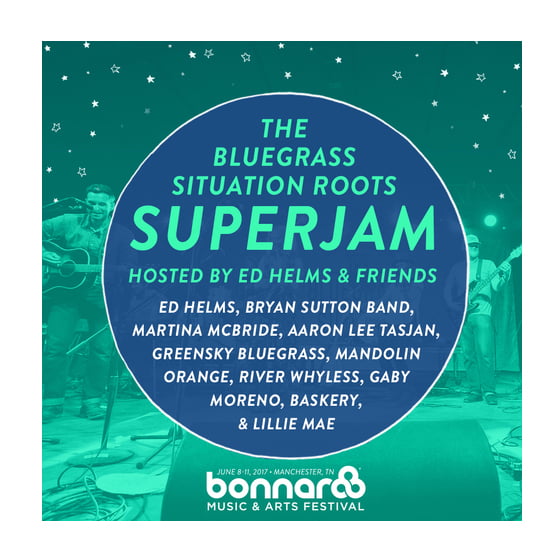
You probably already know about the BGS Stage at Bonnaroo 2017 happening on Sunday, June 11 with Aaron Lee Tasjan, Greensky Bluegrass, Mandolin Orange, and River Whyless. But, once again, we’ll be hosting our fifth roots music SuperJam to close out the last night of ‘roo.

As always, the Bluegrass Situation brings together the best of bluegrass, Americana, folk, and country for a rip-roaring round of fun guests, left-field covers, and classic favorites.

The 2017 BGS SuperJam will be hosted by BGS’s own Ed Helms with the Bryan Sutton House Band and all the artists from our day stage, as well as Gaby Moreno, Martina McBride, Baskery, Lillie Mae, and more.

See you there!


Bonnaroo Music & Arts Festival takes place June 8-11 in Manchester, Tennessee. Click here to see the full lineup.