BGS Class of 2025: Best in Bluegrass

If you’re looking for a definitive, qualitative, and deliberate ranking; a firm and scientific rubric; or an unbiased, sterile reckoning of the best albums made in bluegrass this year, this roundup may not be for you.

Truthfully, as someone who’s worked, been acquainted, and become friends with many of the artists on this list in various capacities – from bio writing to onstage performances to media coverage to pickin’ parties to recordings and beyond – objectivity isn’t something I, personally, could establish anyway. And such year-end or other merit-based lists and collections aren’t all that interesting, are they, if not just to argue with their curation and selections.

I would not even attempt such things, because to me – to many of us – that’s not what bluegrass is about anyway. Bluegrass is about a feeling. It’s about innovation. It’s about virtuosity. It’s about tradition, loving it or retooling it or coaxing it or turning it upside down. It’s about adrenaline and a high pulse – and passing a mason jar around. It’s about feeling downtrodden or alone, shedding tears into that very ‘shine, and wailing along with the high lonesome sound. It’s folk music as much as it’s abject commercial country in “poor people drag.” It’s endlessly interesting and complex, but pretty damn simple, too.

Anyone with even an ounce of sense knows and understands that bluegrass can’t ever be objective. So indeed, why try? Why not acknowledge that bluegrass is always a matter of taste, of preference, of whimsical or capricious or convicted opinion? Bluegrass is always debatable, because, after all, bluegrass is always in the eye of the beholder.

In the eyes – and especially ears – of this particular beholder, these albums released in 2025 were the best, the most memorable, the most engaging. These collections stick to ribs like ham hocks, or stick in your throat like the tastiest clod of emotional peanut butter. They each advance, subvert, perpetuate, or wrinkle our core ideas of what bluegrass is – and what it can be.

Are each and every one of these LPs the best in bluegrass from 2025? Perhaps not… But also definitely yes.

Big Richard, Girl Dinner

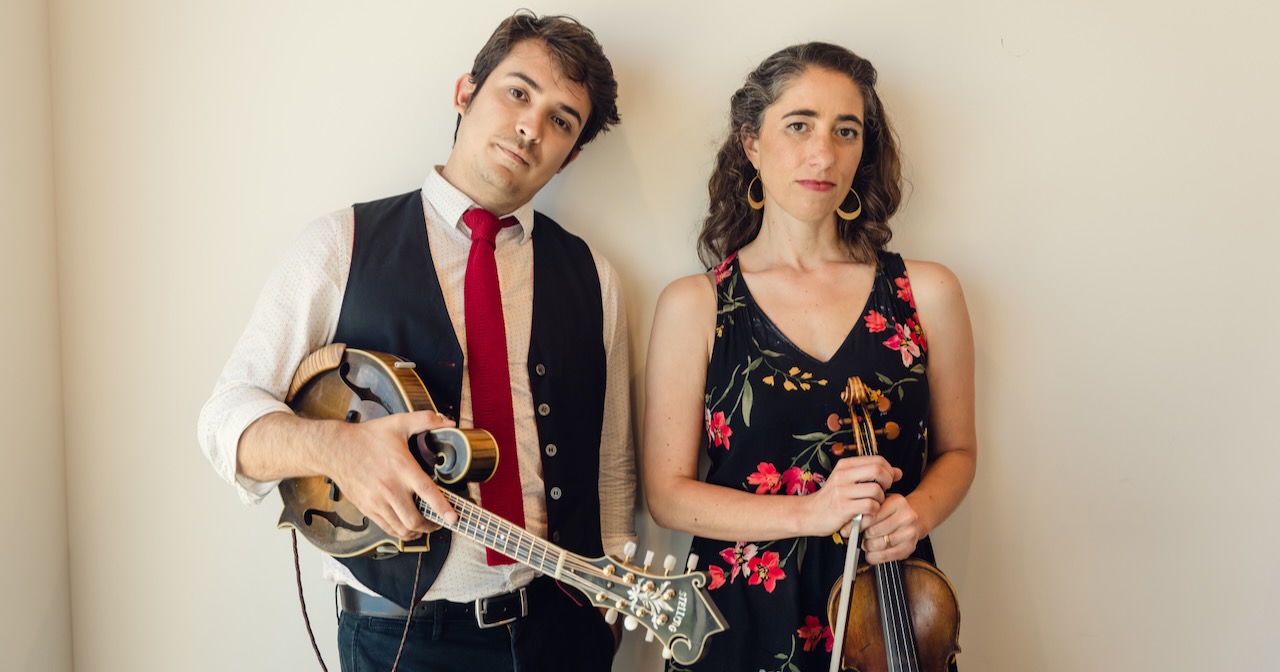
In January, we gobbled down a heaping helping of Big Richard energy with the nourishing and nutritious Girl Dinner. The project may have been the band’s album debut, but this Colorado all-women quartet had already been making remarkable waves in the bluegrass, jamgrass, and string band scenes – and each of the members had extensive and glitzy musical resumés before they even convened. With a new album, Pet, on the horizon for February 2026, a signing with Signature Sounds, and an upcoming co-bill tour with fellow femme outfit Della Mae, we can tell this Girl Dinner is set to become an ongoing traveling feast.

Shawn Camp, The Ghost of Sis Draper

I remember attending Station Inn shows in Nashville in the early 2010s and sitting with rapt attention – like Martha’s sister Mary at the feet of Jesus – as Shawn Camp performed his suite of Sis Draper songs with his star-studded bluegrass bands. Often you’d hear just “Magnolia Wind” or just “Sis Draper.” Sometimes he would perform a more complete handful of the tracks he had written, individually and with his hero and mentor Guy Clark, about the mythical roots music figure from his home state of Arkansas. Now, he’s collected the slate of material – what could easily become a musical or multi-disciplinary theatre work of some kind – into one commanding, lovely, and visceral album. These are timeless songs, written and rendered as only Camp could.

Jason Carter & Michael Cleveland, Carter & Cleveland

Every now and again a new collaborative duo album comes along and makes you think, “Oh! This must have been what it felt like when Skaggs & Rice was released.” Or Tone Poems. Or Ralph Stanley and Jimmy Martin’s First Time Together. A monumental occasion, captured for posterity’s sake in the studio. When fiddlers Jason Carter & Michael Cleveland released their duo debut, that was the feeling. History made in the present, a work that will be regarded as seminal ages into the future being enjoyed in real time. Carter and Cleveland have collaborated quite a bit over the decades they’ve known each other, but what a gift to have that musical friendship ensconced forever on this album. We hope there is more to come.

Wes Corbett, Drift

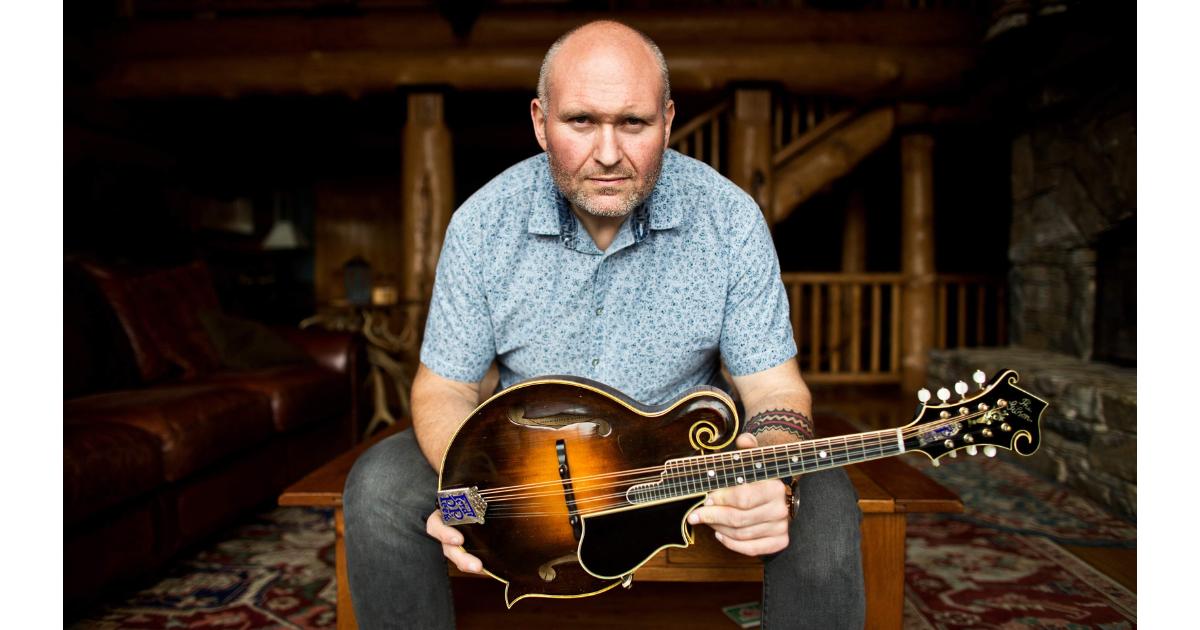
Look, if all modernist banjo players sounded like Béla Fleck and Noam Pikelny, that would certainly be great. But thankfully there are dozens of five-string pickers continuing to expand on the Fleck (and Pikelny and Munde and Keith and Trischka) school of Scruggs-style, each in their own veins. Corbett is one of the best. Though he blends effortlessly into Scott Vestal’s former role in Sam Bush’s band – or into any number of recordings and one-off pick-up bands that boast his playing in newgrass and bluegrass and beyond – Corbett is a true idiosyncratic banjo player and composer. Drift, his latest, often employs traditional techniques as tools for innovation and contemporary tunesmithing. He recalls the great melodic pickers while always sounding first and foremost like himself.

East Nash Grass, All God’s Children

A few years ago, if you had told me the ragamuffin band holding down Monday nights at Dee’s Country Cocktail Lounge in Madison, Tennessee, would in 2025 release an album you’d describe as “heartfelt, contemplative, and intentional,” I would have probably laughed. East Nash Grass were just as jaw-dropping good then as they are now, but with that down-home silliness and clumsy charm all the great bluegrass bands born of indentured residencies have had. All God’s Children finds the band all the way grown up (but not really), and they never forsake their banter-rich, never-know-what-you’re-gonna-get roots. That overlap – of silly and heartfelt and virtuosic and not too serious – is where most (if not all) of the best bluegrass is born, anyway.

Sierra Hull, A Tip Toe High Wire

Every single time Sierra Hull releases a new album, journalists and critics love to talk about how she’s now “found herself” and “found her sound.” This writer, however, disagrees. I first saw Hull perform when we were both in our mid-teens and then as now I knew, wholeheartedly, this is someone who knows who they are. Granted, Hull has done plenty of finding herself along the way, as we all do, but the songs and tunes of A Tip Toe High Wire were obviously not born of someone just locating her voice, musically or otherwise. They don’t feel experimental or out on a limb, they are each solidly in her wheelhouse. They do still push the envelope, though, and they all tell personal stories, draw on individual experiences, and chase those treasured Hull-ian melodies wherever they lead.

I’m With Her, Wild and Clear and Blue

Perhaps all future I’m With Her albums should be made while basking in the “Ancient Light” of a total solar eclipse, given the striking sonic successes of Wild and Clear and Blue. Is that cosmic magic why their second full-length release feels so distinct and metamorphosed from their debut? Is it all the years and personal growth in between recordings? It’s not like they reinvented the wheel, they’re the exact same band – but something feels different here. Whatever the special sauce may be, all of I’m With Her’s offerings over the course of the band’s lifespan have been stellar, but this latest full-length project stands apart. As long as Jarosz, O’Donovan, and Watkins are making music together, we will be unendingly grateful they offer us these recorded windows into their creativity.

Kissing Other ppl, Kissing Other ppl

Bluegrass and old-time birth new projects, bands, and collaborations all the time. Some are purposefully momentary, some are unintentional flashes in the pan, some are such long strings of last names ampersand-ed together you know there’s no future for them. We hope Kissing Other ppl are here to stay. Rachel Baiman and Viv & Riley joined forces on the album – and band – turning mainstream and pop songs into bluegrassy and old-timey string band arrangements that positively vibrate with passion and life. “Sad boi” covers these are not, though you may at times find them subdued or tender or mild. Long may this old-time Americana musical polycule reign.

Cameron Knowler, CRK

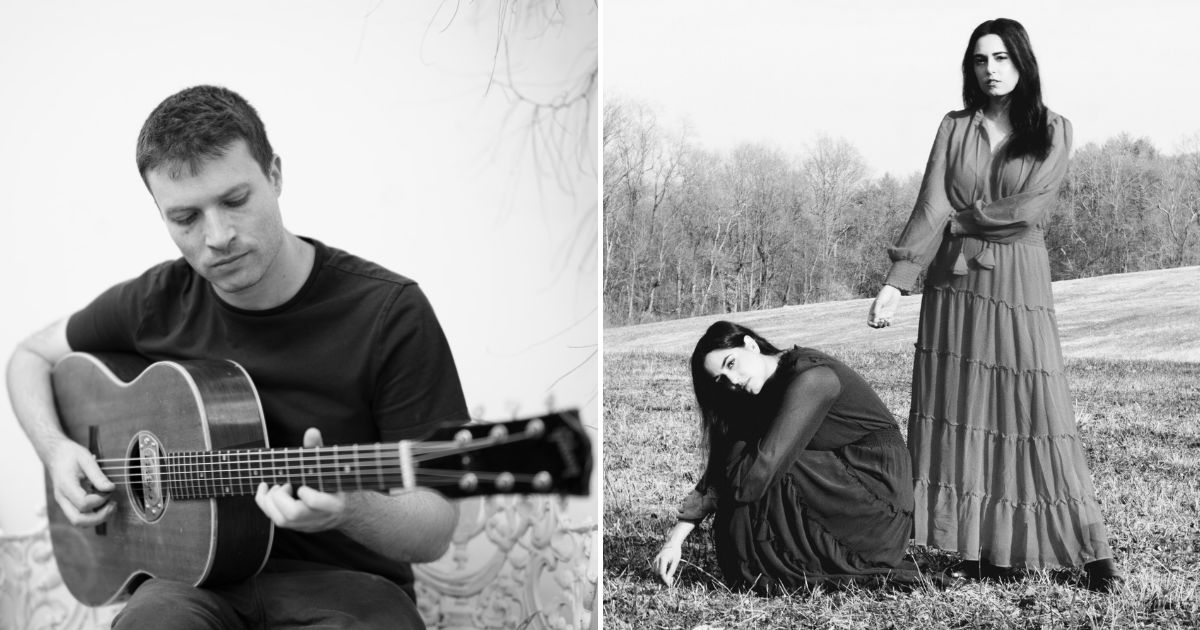
If you’ve been craving a contemporary storyteller and poet who utilizes the guitar as their medium – like Norman Blake or Doc Watson or Tony Rice or so many others – I am so pleased to step onto my soapbox to tell you about Cameron Knowler. Also a writer (at times for BGS), archivist, photographer, and visual artist, Knowler’s guitar-centered album, CRK, is almost anything but a “guitar album,” despite each and every composition centering on the instrument. The LP paints vivid and haunting musical portraits of a place Knowler loves, longs for – and despises or begrudges, too – Yuma, Arizona. Knowler wouldn’t even pretend to compare himself to Norman Blake or state that he’s deliberately taking up Blake’s heavy, heavy mantle in the 2020s, but I’m saying he is. Thank goodness.

Bryan McDowell, Bryan McDowell

You may recognize multi-instrumentalist Bryan McDowell from his time performing, recording, and touring with artists like Claire Lynch, Sierra Hull, Molly Tuttle, Alison Brown, and many, many more. He’s an incredibly talented sideman and session player, so when I first received his new self-titled solo album, I imagined the sort of formless instrumental project most pickers with similar resumés create. What a pleasant surprise to find a fully fledged, well-rounded, complete song sequence chocked full of original songs and McDowell’s lovely, honeyed singing voice. (I know Bryan and I didn’t know he sang like this!) It’s on me, really – I shouldn’t have been surprised at all – but McDowell’s skill set is clearly no longer just geared towards backing others up. I am looking forward to seeing what’s next.

Shelby Means, Shelby Means

Speaking of artists ready to step out of the role of sideperson or session musician. Bassist, singer, and songwriter Shelby Means’ debut solo album is fantastic. Since departing Molly Tuttle’s Golden Highway, Means has already built striking momentum as an artist unto herself, and the quick success of her album has played a huge role in that. With originals, tasteful (and surprising) covers, and a star-studded roster of pickers – Tuttle, Ron Block, Michael Cleveland, and more – the project certainly doesn’t feel like a debut. And it shouldn’t, Means has crisscrossed the country and the globe for decades, she’s more than ready to step to the center of the stage. She’s done it before, she’s doing it again – and now a lot more frequently, I’d bet.

The Onlies, You Climb the Mountain

All the best bluegrass is old-time these days. (I say that over and over again, here’s what it means.) While mainstream bluegrass sounds more like ‘90s country played by a bluegrass string band, or jamgrass, or “MASH” – all of which depart greatly from the 1945/1946 sound of its origin – modern old-time becomes more and more of an audio swatch of essential parts of what bluegrass used to sound like and used to include. One album this year that epitomizes this phenomenon is the Onlies’ You Climb the Mountain. Is it phenotypical bluegrass? Oh, no. It’s not. But it also has plenty of textures and tones endemic to original bluegrass that are becoming increasingly rare in its modern forms. I shouldn’t sell the Onlies short, though, they aren’t here because they’re “better bluegrass” than bluegrass, or more authentic, or more “real.” They’re here because this album is excellent, on its own terms.

Danny Paisley, Bluegrass State of Mind

Danny Paisley is celebrating 50 years of bluegrass with his latest album, Bluegrass State of Mind. Still looking for new challenges and trying to add fresh sparkle to his dyed-in-the-wool traditional sound, the new LP includes Dobro (for the first time), drums (sacrilege!), and a bit of an Americana lean. (Don’t you dare call it “grassicana.”) To BGS readers, the project will most likely sound like straight down the middle bluegrass of the highest order. Longtime fans of Paisley & the Southern Grass, though, may notice that very sparkle Danny has been chasing, as he targets new audiences and still sets new goals, five decades into his career as a bluegrass tradesman. It’s the family business.

Missy Raines & Allegheny, Love & Trouble

Missy Raines is one of the winningest musicians in the history of IBMA, amassing 10 Bass Player of the Year trophies over the years and and a handful of honors in other categories, as well. She may have won her biggest prize, though, when she landed on her latest band lineup, Missy Raines & Allegheny, a few years ago now. Her second album with the group, Love & Trouble, continues building upon the chemistry and collaboration that dripped from 2024’s Highlander. They often rise to the occasion of my preferred nickname for them, Mashy Raines & Allegheny, but they remain a consistently dynamic group capable of gritty, barn-burning bluegrass and contemplative and emotive slow burners, just the same.

Red Camel Collective, Red Camel Collective

They began as Junior Sisk’s backing band, and like many of the great “spinoff” bluegrass bands of yore – Quicksilver (Authentic Unlimited), the New South (American Drive), and many more – Red Camel Collective have quickly shown they’ve got the chops to take the same route. Their debut self-titled album was released earlier this year and was made at Sisk’s suggestion – and with his blessing. (He regularly steps off the stage at his own shows to spotlight the Collective and their music, as well.) This band of lifelong pickers have clocked so many miles playing bluegrass and executing the visions of others that, when charting their own course as Red Camel Collective, they’re able to sound exactly like themselves. It’s tough to sound singular in modern, radio-inclined bluegrass. But Red Camel Collective do. Is that why they won New Artist of the Year at the IBMA Awards this fall? It sure ain’t coincidence.

Sister Sadie, All Will Be Well

Sister Sadie’s All Will Be Well is like dropping the needle on a 45-minute bluegrass therapy session. I don’t say it flippantly or sarcastically; it is indeed shocking the level of earnest contemplation, processing, emoting, and growth evident in the songs on this album. At the same time, when you hear the tracks played down at a bustling bluegrass festival or a packed rock club or a subdued listening room, they never feel twee or try-hard or sodden with greeting-card level sentiments. They never feel heavy, actually – this is fun, often hilarious, party-ready music. Dance-along music. Shout-along songs. You’ll laugh, you’ll cry. (At the vocals alone.) These are real human ideas, thoughts, and feelings set to bluegrass. Imagine.

Larry Sparks, Way Back When

How does this album seem like it could have been pulled from any year, any decade of Bluegrass Hall of Famer Larry Spark’s sceptered career? Because it could have been, damnit. He’s Larry Sparks. Way Back When sounds warm and live, like listening to tape or vinyl over earbuds or cell phone speakers. Like being in the room with that resonant, vibrant, and patinated voice. The material is timeless, but never tired or lost in retrospection. Sparks is obviously making bluegrass in the present, as he always has. He just sounds exactly like this. And the way he talks about making music – as he did in a BGS interview set for publish in January 2026 – you can tell, for him, it’s essential to inhabit the present and inhabit the song. Bluegrass really is his calling, and we’re all all the better for it.

Billy Strings & Bryan Sutton, Live At The Legion

One of the best bluegrass albums of the year? Of course. One of the best live shows and tours of the year? Doubly, triply, quadruply of course. You’d think it would be brain-melting to listen to hours of two acoustic guitars and an electric bass pick through bluegrass, fiddle tunes, and Doc Watson classics, but it was divine. Trance-like – not with eyes glazed over, but on the edge of your seat. I wasn’t at that show at the Legion when they tracked the album, but was lucky enough to catch their show this fall at the Ryman in Nashville. If you weren’t so fortunate, don’t worry, ‘cause this isn’t an incredibly exclusive club. This record really does capture all that’s ineffable of being “in the room.” (No one is surprised.) Turns out, you can actually bottle and sell it, if you’re these two. Now if only you could buy the skillset, too…

Thompson the Fox, The Fox in Tiger’s Clothing, vol. 1 & vol. 2

Maybe once a year I trip over or into a new music discovery that gets me so excited I start getting annoyed with myself from having to hear me recommend them over and over again. With Thompson the Fox, it never got annoying (not to me, at least) and the excitement of turning folks onto their music still hasn’t worn off. So here we are, again. If this is your initiation, don’t thank me, thank the people who sent Thompson the Fox my way. Jazz, newgrass, bluegrass, bebop, ragtime, and oh-so-many more styles and textures combine in a completely fresh and distinctive form. I’ve never heard new acoustic music quite like this, yet it’s clearly rooted in that tradition. The simple math of xylophone, banjo, bass, and drums doesn’t quite math, but this group sounds resplendent, rich, and fascinating. Takumi Kodera on banjo is a revelation and Rie Koyama (xylophone), Akihide Teshima (bass), and Tomohito Yoshijima (drums) complete the Tokyo-based ensemble.

Cristina Vane, Hear My Call

Cristina Vane exists at an intersection of roots music that far too few inhabit, because very few can manage there. Vane can. She does blues, bluegrass, old-time, country, and Americana. Sometimes blended, sometimes compartmentalized. She’s got short-form, short-attention-span, vertical-video appeal for days, but her songs are never vapid or playing to any kind of commercial common denominator. Her instrumental skills and the passion for learning and song collection across roots and folk genres that she exhibits bring it all together. I’d not want to subject either woman to the corniness of comparing one to the other, but for folks who love Sierra Ferrell and are looking for more artists in a similar roots-meets-mainstream space, Cristina Vane can do it. She is doing it.

Vickie Vaughn, Travel On

Vickie Vaughn has won IBMA Bass Player of the Year for three years in a row and on the heels of that remarkable accomplishment, she’s released her debut full-length solo album, Travel On. Produced by Deanie Richardson of Sister Sadie, it’s Vaughn’s first recording under her own name released in 10 years. Original songs and covers are packaged in a sound that’s always trad bluegrass, but often infused with a dash of Osborne Brothers from the ‘80s or Jim & Jesse with a drum kit. It’s an Earl Scruggs Revue sort of flair, troubadour-steeped bluegrass-country. And it’s divine.

To conclude this long yet non-exhaustive and surely myopic list of the best bluegrass albums of 2025, let me leave you with this gentle reminder. What’s bluegrass and what’s best are always in the eye – and the ear – of the beholder.

What was your favorite bluegrass album of 2025? Let us know on social media. We hope you discover some new music to love in our BGS Class of 2025 and we can’t wait to make new discoveries with you, too.


BGS Staff contributed to this list.

Photo Credit: Shelby Means by Hunter McRae; Shawn Camp by Neilson Hubbard; Sierra Hull by Spencer Showalter.

Award-Winning Bassist Vickie Vaughn Is Ready to Travel On

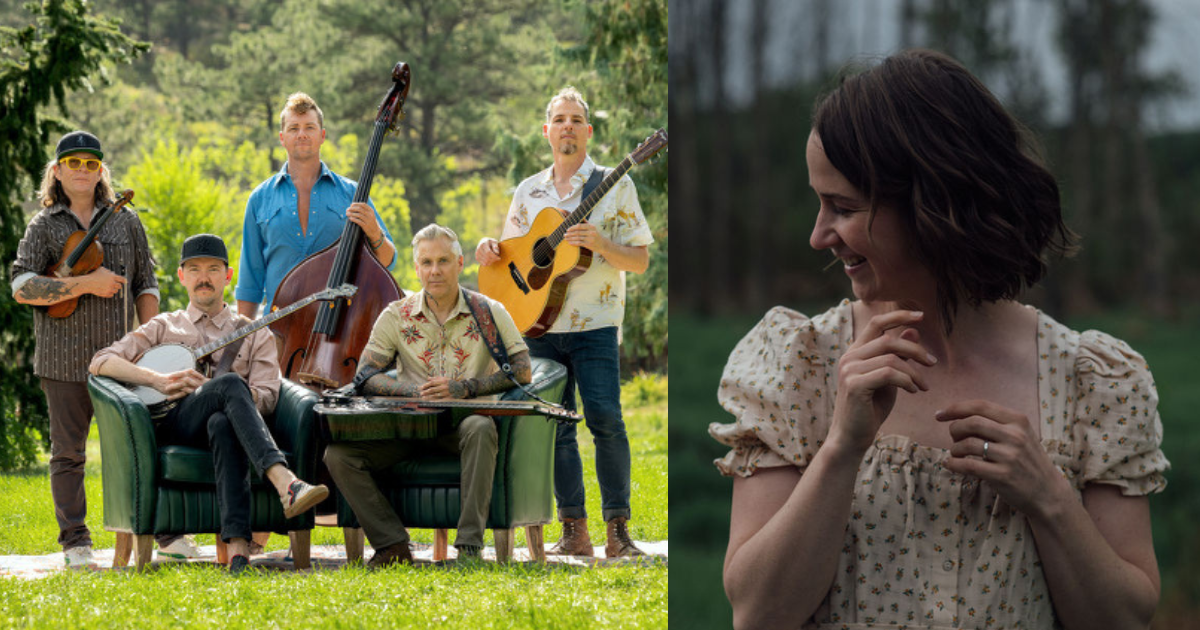
If you’ve listened to bluegrass made in the last decade, odds are you’re not only familiar with but absolutely enamored by the utter powerhouse that is Vickie Vaughn. Named the IBMA Bass Player of the Year thrice in a row (2023, 2024, & 2025), Vaughn has established herself as more than a class act – she’s an integral anchor of today’s bluegrass scene and beyond. Presently touring with the acclaimed all-women supergroup Della Mae, Vickie has a slew of accolades under her belt, having sung background vocals with Patty Loveless, toured with High Fidelity, and collaborated with just about every esteemed bluegrass musician under the sun.

November 21, 2025 saw Vaughn set sail unto uncharted waters with the release of her debut full-length solo album, Travel On. Released by Mountain Home Music Company, Vaughn deploys an all-star cast to bring her dynamic compositions to light. The record features guest vocals from Ronnie McCoury, Casey Campell on mandolin, Wes Corbett on banjo, Cody Kilby on guitar, Dave Racine on drums, harmony vocals from Justin Hiltner, Lillie Mae, and Frank Rische, and fiddle from Deanie Richardson, who also serves as the record’s producer.

Travel On champions Vaughn as its frontwoman, a role she hasn’t chronicled in studio since her six-song EP came out a decade ago. Her songwriting is full of dynamic abundance, from the deeply stirring gospel song “The Pilot,” to the absolutely raging “Sleepin’ in the Rain” to the emotive and heartfelt “Mama Took Her Ring off Yesterday.” Vaughn manages to strike a full range of emotions throughout the album’s thoughtful arc, a narrative bound by her buoyant relationship to both rhythm and melody alike.

Ahead of the album’s release, BGS had the unmatched pleasure of sitting down with Vickie Vaughn for a chat about Travel On, music, machinations, musicianship, and more.

Congratulations on the album release! I want to hear all about Travel On, but I’m wondering if you’d be able to take us back to the start for a bit and tell us about your personal musical history.

Vickie Vaughn: Oh golly! I started really early because of my cousins, who I adored growing up. I really looked up to them and they were just great singers who sang all the time and could play piano and guitar. I grew up in a Baptist church. When I was little, maybe six years old, the preacher’s wife found out that I could sing, so she asked me to come sing in the choir. I grew up singing in church and then when I was nine years old, back in Kentucky where I’m from, I got hired as a background vocalist. I know it sounds insane – I’m so normal now, but I was like a freak kid! I could hear harmony and sing every part. When the guy running the Kentucky Opry found that out, I was hired as a kind of novelty act at nine years old. I was there every weekend from when I was nine to when I moved out at 17 as a resident female vocalist and background vocalist.

As for the instrument side of things, my parents had me play classical piano and I hated it so much. I honestly got into bluegrass kind of late for a bluegrass musician – around 14. You know, Sierra Hull, Kimber Ludiker – they started when they couldn’t speak words, but I was a little late to the game. I would go to these bluegrass jams and there would be a bass there, but nobody would be playing bass. So I would pick it up, and I could add decent rhythm, stay on beat, learn the open chords. But then I started taking lessons from this guy named Scottie Henson. He traveled with the Grand Ole Opry touring band back when that was a thing. He was a banjo player, but he taught me how to play bass, which is incredible.

When I was 17, I moved to Nashville to go to Belmont and I was a classical vocalist there. I moved to commercial vocals my junior year and bass was a hobby. I got involved in the bluegrass ensemble and that’s kind of how I got known as a bass player in school. And then I got hired by a touring band from a girl I knew from bluegrass ensemble. The rest is history!

As you were growing up drenched in music, do you recall any songs that particularly sparked inspiration or curiosity for you as a child?

I remember when I was in the car with my dad, I used to love the music he listened to. Mama would always listen to Southern gospel and that was just not my jam. I remember telling Dad, “I hate the stuff that mom listens to.” And he was like, “Oh god, me too.” And I just remember thinking, “You’re so cool, Dad.” Once, we were listening to a classic rock station and the freaking “Wreck of the Edmund Fitzgerald” came on – I know there are all these memes about it now. But I remember having a moment with him in the truck where I was just like, “What is this?” And he was like, “Oh yeah, it’s a true story.” And I was like, “Get out!” That one really struck me.

Another one, which isn’t really a song, but there was this radio station, the local country station – 93.3 WKYQ. On the weekends, starting at 10 p.m. on Fridays and Saturdays, there was a radio program called the Outlaw Hours, and they would play stuff like Waylon Jennings, Merle, Steve Earle, Charlie Robison. It was outlaw music, edgier rootsy stuff, even some edgier bluegrass stuff. I remember riding in the car back from the Kentucky Opry and I’m just like, “Daddy, let’s listen to Outlaw Hours.” He was like, “You like that stuff??” Because I was little, and you know, a lot of that was not appropriate for a child to listen to, but I just loved it.

I can totally see how that influence carries through into your music today.

Well, I liked the subject matter. It wasn’t all about love. I don’t really like to write songs about love. There are already a lot of songs about love. I don’t have anything unique to say about love. I have something unique to say about the way I process a hangover. Or my faith! My faith is so individualistic and personal. If I feel like I don’t have a new idea, I’m not gonna write it or sing about it.

What is the songwriting process like for you? How did you go about selecting the songs on this album?

This might sound silly too, but do you ever walk around the house and just sing about what you see? So many of my songs come out that way. Like with “Bottle of Wine” – I collect wine, so I always have some on hand. Then it was the day after a breakup and I was super hungover, because I had decided to just drink about it. I walked out of my bedroom and I saw all these empty bottles of wine on the coffee table. And I thought, “I don’t want to see another bottle of wine. Maybe I’ll write that into a song when I’m feeling better.” That’s how most of my songs come out, the hook will come to me and then I’ll just expand on it. Sometimes I like to co-write, like with Thomm Jutz, we co-wrote “Bottle of Wine.” But then “The Pilot,” a song about my faith, I wrote by myself. Faith is so, so personal. Even if a person of faith and I could agree on some fundamental levels, my faith and my walk are so different than literally anyone else’s. So I had to write my own unique faith-based song.

Then “Mama Took Her Ring Off Yesterday” I co-wrote with Deanie Richardson. I brought that idea to her because my dad passed and he was one of my best friends in the world. He hated sappy sad songs, so I didn’t want to write that. I knew I needed to write a song, then I went to visit my mom about three months after he passed. We went to a Mexican restaurant and she slid her left hand over past the chips and salsa, showing me that she took her ring off. I support her and everybody grieves differently, but I still told her I thought it was early for that. But she’s bootstrap Kentucky and she was like, “We have to move on. Life doesn’t stop.” I was just left thinking, “Wow, Mama took her ring off yesterday. That’s the moment I need to write about.” I took it to Deanie because she knew my dad and knows my mom and she really walked with me through my grieving process.

That one turned out so beautifully! I’m curious – you’ve had an extremely successful bluegrass career for a number of years. What made now feel like the right time to put out a solo album?

The awards. Women always apologize for winning and here I am, apologizing for saying “my awards,” but that’s really what it was. People are paying attention. If I’m gonna write a song, I don’t want it to hit deaf ears. Making a record is such an expensive and painstaking process and your heart and soul go into it. After my dad died – well, he was such a cheerleader for me. And an inspiration – he just inspired me. If I was feeling bad about something, I felt like if he believed in me, then I could do it, you know? I didn’t believe in myself without him for a long time, so I couldn’t do it. Especially in the music industry, you can’t do shit if you don’t believe in yourself. It’s too hard. So I waited a while until I felt like there were enough people who believed in me and then I believed in myself. That’s when I felt like I had the energy and the belief to make a record that people would actually hear.

That makes a ton of sense. How do you feel like your relationship to music has changed now that you’ve taken on the role as captain of a project?

This is the first time I’ve ever made a full-length record that’s my own and not just playing on somebody else’s. And of course, Deanie is producing it, but being in control of the material and the direction of the record – it’s funny that you ask, because I almost didn’t realize the direction of the record until it was done. I realized after I heard it all in one setting. The concept is vulnerable joy.

Working on anybody else’s record and supporting them in that way – especially with the bass, which is such a big vibe creator as an instrument – I never felt like I could choose, or was confident enough to choose, the direction. But finally, here I am in my mid-30s, and I’m ready. It was so fun taking the reins artistically, getting to sign off on every bit of it. Every choice I felt in my heart. I was able to say, “If this doesn’t scream Vickie as fuck Vaughn, then I don’t want it!” I would rather not make a record [any other way]. Because when I was younger, I made EPs that I thought other people would like. That was the point for me. But now I’ve traveled around and I know what works. I know what an audience likes to hear; that base is covered. The process of just having to make it totally “me” – that was my favorite part.

How did you go about choosing the community to help you out with bringing this record to life?

So the engineer, Sean Sullivan, I’ve worked with him for a long time on other people’s records, and then I did a small project with him that never got released. This might sound nitpicky, but I feel like the sound engineer in a recording process makes one of the biggest differences. It’s hard when there’s too much input – that’s the producer’s job. But I wanted to work with Sean because he’s so efficient, he’s quick and he has such a calm spirit. He gives direction or a suggestion so seldom that when he does I really take it to heart.

And then, as for Deanie Richardson, my producer, I always knew that she was an amazing musician, but this is the first time that I have really been enamored with her production abilities. It’s the first time I’ve worked with her as a producer. She has taken each song and made it into my record. I would come to her with just bass and vocals, and she would just shape each song and make them each sound different. She’s a freaking genius! And she’s totally unafraid to just be herself. She’s an unashamed woman and that’s the energy I wanted in my record.

The band on the record is all folks that I’ve known and played with here in town. I didn’t want there to be anybody on the record I hadn’t played with or loved or traveled with. Because it’s my first record and I know me, and I know that I would be self-conscious if there was a stranger in the room. And then Justin, my best friend, he just matched my freak so hard on there. We have such a beautiful community.

It’s so beautiful how y’all uplift and support each other! How is it feeling for you to finally have this piece coming out into the world?

I’m terrified, but I don’t know – I kind of like that! I like a challenge. If I’m not scared, then I don’t care. I’m really excited to hear what folks think about it. I want to see what songs touch people and learn from that. And I’m really excited for Deanie to be introduced as a producer, and for everybody to see her talents in that area. I’m really excited to learn from the release. I’ve learned so much in the process already, because there’s so many firsts, and I’m excited for the reception of this record to influence my next. That one will be even more me. I never want to stop growing!


Photo Credit: Laura Schneider

You Gotta Hear This: The Infamous Stringdusters, Courtney Hartman, and More

Happy Friday! There’s plenty of new music to enjoy this week in our latest edition of You Gotta Hear This, our regular roundup of upcoming and just-released tracks and videos.

Kicking us off, innovative banjoist Wes Corbett (who currently tours with Sam Bush) shares the second single from his upcoming album, Drift. “Eagle Harbor” was inspired by the vibe and structure of Jackson Browne’s music and the picturesque ferry ride to Bainbridge Island in Washington state, where Corbett grew up. Guitarist, poet, and singer-songwriter Courtney Hartman is returning with new music as well; this time it’s a lush and whimsical neo-folk song co-written with Ana Egge about how being a mother and raising a child transformed the way she saw everything around her. It’s set to an intimate and cozy new music video you’ll love to watch.

New Mexico-based artist and songwriter Michael Rudd will release a new track, “Not Today,” next week and below you can find a preview of the number. It contemplates war, history, loss and their legacies; Rudd was spurred to write “Not Today” by the many wars ongoing today, especially in Gaza, and by his recent travel to Germany, Poland, and to visit monuments of the Holocaust.

Lauren Morse is ready to get you dancing with her new track and music video. “Let that Fiddler Fiddle” is a message we can certainly get behind. Inspired by Nashville’s ever-popular Honky Tonk Tuesday, it’s a two-stepping song sonically found where country and bluegrass meet – and perfect for toe-tapping or hip-swaying (or both). Trey Hedrick brings us a very enjoyable bluegrass track as well; “Passing Through” began to come together while Hedrick was out west and longing for the hills of home. With a talented roster of pickers and musicians on the song, Hedrick says it’s “a self reminder to go, to try, and to not leave the important things undone.”

Rounding us out, a group we’ve loved and collaborated with for a very long time, The Infamous Stringdusters, have a brand new single and a video to go with it. “Dead Man Walking” was written by Jeremy Garrett and Larry Keel. Don’t be fooled by the title, this is a song of uplift and positivity, set to the grooving and gritty style of bluegrass we all know and love from the Dusters.

It’s another stellar collection this week, if we do say so ourselves, and You Gotta Hear This!

Wes Corbett, “Eagle Harbor”

Artist: Wes Corbett
Hometown: Nashville, Tennessee
Song: “Eagle Harbor”
Album: Drift
Release Date: September 15, 2025 (single); October 3, 2025 (album)
Label: Adhyâropa Records

In Their Words: “As a kid, Jackson Browne was playing around the house a lot so that music has always filled me with a sense of warm nostalgia. As an adult I’ve realized how gorgeous his music is and how profound of an impact I think it’s had on me as a musician. ‘Eagle Harbor’ is a reflection of this both in vibe and in structure – wide warm sounds, open space, and what I hope is a strong melody. It’s named after the main harbor on Bainbridge Island where I grew up, which looks particularly beautiful during golden hour as you approach on the ferry with the Olympic Mountains as the backdrop. This group of musicians is an absolute dream to make music with! With so much emotional depth and their masterful touches as a bedrock it has become one of my favorites on Drift. I feel so lucky and honored to have the chance to cut this track with them.” – Wes Corbett


Courtney Hartman, “Bright Eye”

Artist: Courtney Hartman
Hometown: Eau Claire, Wisconsin
Song: “Bright Eye”
Album: With You
Release Date: September 17, 2025 (video); August 27, 2025 (single); November 14, 2025 (album)

In Their Words: “I began writing ‘Bright Eye’ the first summer after my daughter was born. Loving her transformed the way I saw everything around me and I found myself surprised by the joy of seeing our life through her eyes. I believe that this is what love does: love of any kind changes how and what we see. It lets the light in.

“Ana Egge is a favorite songwriter of mine, she has a wonderful way of articulating melodies. I sent her an early version of the song and we finished it together. ‘Bright Eye’ also features harmonies from my dear friend and fellow Eau Claire artist and mother, Sarah Elstran (The Nunnery).

“I wanted the video for the song to give a real sense of the spirit behind With You – the community, the care, and the laughter. The album came about during a season of heaviness, but the women who co-wrote the songs with me, along with the friends who recorded them, truly helped to carry me through.” – Courtney Hartman

Track Credits:
Courtney Hartman – Voice, guitars, songwriter
Ana Egge – songwriter
The Nunnery – Harmony vocals
Ben Lester – Synth, pedal steel
S. Carey – Drums, piano, synth
Shane Leonard – Percussion
Zoe Guigueno – Electric bass

Video Credits: Filmed by Kyle Lehman, edited by Erik Elstran.


Trey Hedrick, “Passing Through”

Artist: Trey Hedrick
Hometown: Wilkesville, Ohio
Song: “Passing Through”
Album: Sing, Appalachia
Release Date: September 19, 2025

In Their Words: “‘Passing Through’ started with my time living out West. I went out there looking for adventure, and I found it – mountains, open skies, and a pace to life that felt more open. But even then there was always a pull toward home, toward the hills. The song is about moving through places and seasons, chasing what you need to see while you can. It’s also about how all of us are just passing through in life, and how easy it is to get stuck only talking about the things we want to do. I’ve never wanted to live that way. That’s where the line ‘I ain’t afraid of dying, just the things I never did’ comes from. It’s a self reminder to go, to try, and to not leave the important things undone.” – Trey Hedrick

Track Credits:
Trey Hedrick – Lead vocal, acoustic guitar, songwriter
John Mailander – Fiddle
Ethan Ballinger – Mandolin
Frank Evans – Banjo
Phillipe Bronchtein – Piano
Jamie Dick – Drums
Rhees Williams – Bass
Maya De Vitry – Harmony vocals


The Infamous Stringdusters, “Dead Man Walking”

Artist: The Infamous Stringdusters
Hometown: Nashville, Tennessee and Colorado
Song: “Dead Man Walking”
Album: 20/20
Release Date: September 19, 2025 (single); January 2026 (album)
Label: Americana Vibes

In Their Words: “I had this idea about a pitiful character that needed to snap out of their life and take a bigger view of everything before it was too late. I kept having Larry Keel’s voice in my mind as I worked through the melody of the song a bit, so I sent him a verse or two and he sent me back some. His lyrics were awesome, uplifting, and on the positive side. In a few sessions, we came up with what feels like a powerful chorus and a cool hook. It felt so natural for Dusters to make this one as country as we could and I just hope it resonates with everyone who listens, as it did with Larry and me as the songwriters.” – Jeremy Garrett

Video Credits: Directed and edited by Jack Gould at Ninja Video Production.
Craig Babineau – Second camera


Lauren Morse, “Let That Fiddler Fiddle”

Artist: Lauren Morse
Hometown: Jackson, Michigan
Song: “Let that Fiddler Fiddle”
Album: The Sweetest Sound (EP)
Release Date: September 12, 2025 (video/single); January 2026 (EP)

In Their Words: “I wrote this song after a Nashville Honky Tonk Tuesday. I was being spun around by a man old enough to be my grandpa at the American Legion and I thought, ‘This is so much more fun than my date was the previous night.’ I immediately wanted to write a song folks could two-step to and that’s what I set out to do. Playing it out around Music City, I was always getting compliments on how it felt like nostalgic country music. It is the best feeling in the world to see the intention for the song to be played out in a music video with the same people who inspired it! I think it’s a real special song people get excited about and can’t help but clap or dance along.” – Lauren Morse

Video Credits: Directed by William Gawley.
Produced by Michelle Robertson, Charlotte Avenue Pictures.
Director of Photography – Wayne Taylor with Giovanni Gotay
Drone pilot – Wayne Taylor
Edited/color – Color Synch Visuals


Michael Rudd, “Not Today”

Artist: Michael Rudd
Hometown: Albuquerque, New Mexico
Song: “Not Today”
Album: Ways of the World
Release Date: September 26, 2025 (single), February 27, 2026 (album)
Label: Invisible Road Records

In Their Words: “‘Not Today’ is about the legacy of war, both for the vanquished and the ‘victor.’ In a time when wars seem to be everywhere, the song considers not just the impact on those fighting now, but also on generations to come. ‘Not Today’ is from the perspective of a man who has lost everything – his family, his home, his land – but not the knowledge of who he is. It was most directly inspired by the war in Gaza and settler violence in the West Bank, as well as my visit last year to Berlin, Warsaw, Krakow, and Auschwitz. As an American Jew who grew up with the cornerstones of Israel, Jewish ethics, a knowledge of historical antisemitism, and the specter of the Holocaust, I wonder how future generations will process the current war and the influence it may have on how they see themselves and the world.” – Michael Rudd

Track Credits:
Michael Rudd – Vocals, electric guitar
Pat Malone – Electric guitar
Mark Clark – Drums
Brant Leeper – Hammond organ
Asher Barreras – Electric bass
Kelly Kuhn – Backing vocals


Photo Credit: The Infamous Stringdusters by Daniel Milchev; Courtney Hartman by Michelle Bennett.

Combining Classical and Bluegrass, Scroggins & Rose Improvise and Inspire on ‘Speranza’

Acutely expressive, profoundly innovative, and ceaselessly gripping, Scroggins & Rose are masters of sonic storytelling. The project consists of Alisa Rose (violin) and Tristan Scroggins (mandolin), both virtuosic talents with a sprawling list of credits each in their own right. While Scroggins primarily forays in the bluegrass sphere and Rose spent her musical upbringing largely studying classical music, the two alchemize a blend of genres to achieve their distinct style.

The duo’s third collection, Speranza, relays a moving dialogue between fiddle and mandolin, drawing upon a diverse range of musical influences to weave together a thoughtful assortment of colors and textures. Initial ideas for the project began back in the quarantine days of 2020, and Speranza – which consists of six immersive instrumentals, a dynamic assortment of original and familiar tunes – now arrives nearly five years later in a moment where its intonations of hope feel just as crucial.

BGS had the pleasure of sitting down with Scroggins & Rose to discuss their origins, influences, and the percolation of their most recent release.

Congratulations on the album release! To start us off, could you talk about how the two of you came into playing together?

Alisa Rose: We both taught at NimbleFingers, which is a camp in British Columbia.

Tristan Scroggins: It’s a bluegrass week of workshops that has been going on for a couple decades. I always describe it on stage as “sleepaway camp for adults who want to learn how to play the banjo and drink.”

AR: There’s a really nice feel at that camp. Tristan was in a band with his dad at the time, so I did some shows with them there. Then one night, I remember the two of us improvising by a picnic table and we just had a really nice musical chemistry where we follow each other’s ideas around. Immediately it felt like, “Oh, this is a good musical fit.”

TS: At that time I was playing with my dad in Jeff Scroggins & Colorado, and we were touring full-time. So I just ended up in California a lot and I would tack on extra time to come hang out with Alisa. And we started writing music and playing shows. I live in Nashville now, so these days it’s more of a deliberate effort when I come out to collaborate.

At this point you’ve been able to flesh out that musical chemistry over the course of three collections. What would you say unites your musicality or differentiates it?

AR: I think when we improvise, it’s playful and creative and experimental – we’re not afraid to leave what may be reasonable behind, and sometimes that takes us to good places, and sometimes we fall on our faces. We also have a similar sense of rhythm and how we respond to it. It allows us to improvise freely because we feel rhythm in the same way. So that’s where we unify, but we have really different musical backgrounds.

Could you tell me more about that?

AR: Sure. Growing up I played a little bit of fiddle, but mostly I grew up in the classical world. I was a Suzuki kid, so I learned by ear initially, which I think has allowed me to play a lot of different music, but I was learning primarily classical violin growing up. Tristan grew up very much in the bluegrass world, and I’ve studied bluegrass and I’ve played in bluegrass bands, but I still have a different sense of melody and expressiveness. I think a lot about how to make music really expressive emotionally and I play with timings – those two things are less common in the bluegrass world.

TS: I think it’s been really valuable for me, generally musically and especially in the context of this project, to be exposed to those different ways of thinking about playing. I grew up playing with my dad, and in mandolin contests just learning how to play bluegrass, which does instigate this question of, is bluegrass expressive or not? I think it is sort of, but it’s so different from how classical music is expressive or how jazz is expressive. I’ve had to work a lot on navigating that challenge, because for me, I didn’t go to school at all for music. So much of how I play is very instinctual and this project often has me figuring out how to adapt those instincts in order to have more options, especially since there’s just two of us. We have to really be on the same page a lot of the time and work together to fill in spaces or leave holes where we want them to be – they have to line up, and it’s really obvious if they don’t.

Speranza does an excellent job at combining those classical and bluegrass sensibilities to achieve expression while still leaning into roots-like melodies. Can you tell me about the impetus behind your latest release? What drove you to create this third collection?

AR: So our first collection, Grana, was very improvised and we were a new duo. Basically we set out to make a demo – we wanted to record, like, three tunes and get some gigs. We got an Airbnb, rented some recording equipment, had our awesome engineer friend set it up for us, and we just hit record over and over for a weekend. By the end it seemed like it was an album, so that’s how that one came to be. Very improvised, very sort of exploratory. There were like 1000 takes of everything. Well, not actually 1000 because we didn’t have that long, but there was definitely a sort of trial and error of figuring out what we wanted to create.

And then for the second album, Curios, we worked out everything. We rearranged everything and really sought to emphasize the strength of melodies. A lot of that album was about making the melodies come out. To me, it’s also an exploration of different sound colors. We worked with Wes Corbett on that one and he helped bring that out in that album. We really tried to shape each tune into a little story, so they’re more composed. Some have solo sections, but they’re more like little pieces and arches – I mean, I would call them miniatures, but really they’re sort of standard length for bluegrass. In the classical world they might be considered miniatures– little, crafted, sparkly gems.

But we put [Curios] out in the pandemic, which was very anticlimactic. We were supposed to have a release tour and we worked really hard on that album for a long time. We had received a great grant from FreshGrass and were able to do a lot of things in the way we wanted. We worked with Dave Sinko as our engineer, who was awesome, and recorded in this pretty church in Nashville with Egyptian stained glass.

So the third one, Speranza, is more organic. We’ve grown as a duo in terms of creating, so we decided that instead of writing a whole record of stuff we would write and record as we went, or write and improvise as we went, and do some of both. So I believe this album combines the freedom of the first album and the shape and craft of the second album. And the material for Speranza came out of the pandemic – that was such a crazy time. Life seems sort of normal now, but a lot of the tunes started in that time and then we finished them once we could get back together.

TS: I think that in a lot of ways Speranza feels very shaped by the reality of the pandemic, 2020, things getting shut down – the first stuff that we worked on remotely, because we had to. It feels wild that we’ve been working on this for years now. It’s funny, similarly to the pandemic, it doesn’t feel like that was five years ago. We recorded it over different sessions and then mixed it over different sessions.

AR: “Pandemic Buddy” and “Reaper” are the darkest ones – those I did write in like that first month of the pandemic, but I just came up with the beginning idea and then as a duo, over two or three or four visits, we finished writing the pieces together. We’re often coming up with ideas, kind of sitting with them, and then recording voice memos and listening to them. It takes us a fair amount of time to do it and we really flesh out the arrangement and how our parts fit together in person. That tends to be pretty time-intensive. Basically we’re writing the pieces, but we’re memorizing them at the same time, with space for improv – everything is fluid, but the basic composition is pretty worked out. So our compositional process is pretty spacious and lengthy.

What was inspiring you during the composition of these pieces? Any art that you were ingesting or other cultural touchstones of during that moment?

AR: In the beginning of the pandemic, Tristan did a tune challenge, which is where some of these songs started. There was a word prompt every day to write a tune about. For example, “Reaper” began with the prompt “death.” “Pandemic Buddy” was for the prompt “friend.” It was a really nice way to channel energy at the beginning of the pandemic, when everything was crazy. I spent hours every day writing these tunes and trying to get a good video, and I think I got a little better at them as I went.

TS: I mean, it’s sort of an obvious one, but we talk a lot about Mike Marshall and Darol Anger. It’s the same mando and violin pairing, but I love listening to them and listening to other people who do this kind of new acoustic music/composing. I spend a lot of time in Nashville with Wes Corbett. Wes produced our second album, but he’s also a friend of mine, and I helped him with publicity for his first album, which has a lot of really beautifully written instrumental pieces.

It’s interesting – we spent so much time working on this in chunks and that was a very different part of my brain than the part of that was working very hard on, like, Texas-style fiddle tunes. Those weren’t crossing over, exactly. I think rather than being influenced by something specific, it’s more that I try to cultivate something within myself by listening to both stuff I like and new stuff. Absorbing all of that, letting it ferment inside, and then figuring out how to express that all together, rather than trying to emulate any one thing.

AR: I tend to think that when composing, everything you’ve ever listened to, everything that ever resonated with you and definitely anything you’ve ever played with your body or had in your body – whether you danced to it, or you physically played it – is a part of your musical sensibility. I don’t know what I was listening to when I was writing these tunes, but I definitely love Darol Anger and Mike Marshall. I also love Schubert string quartets, I love Beethoven piano sonatas, and I love Debussy piano music – I love a lot of different kinds of music, and I think all of that is part of what comes out. That’s all part of what’s in my head when I’m conceiving of new material.


Photo Credit: Lenny Gonzalez

You Gotta Hear This: New Music From LULLANAS, Ethan Sherman, and More

New music Friday might just be the best day of the week, right? This week, BGS readers enjoyed an exclusive premiere from Gangstagrass featuring Jerry Douglas and a brand new Rootsy Summer Session with Emily Scott Robinson joined by Violet Bell.

In this week’s edition of You Gotta Hear This, you can check out the new Gangstagrass single, “The Only Way Out Is Through,” and Robinson’s two performances from Falkenberg, Sweden. Plus, don’t miss exclusive premieres from artists and musicians like LULLANAS, Ethan Sherman, Jake Byrne, Bri Bagwell, and Mia Dyson. Also, Angus & Julia Stone at long last release a studio version of “The Wedding Song” – a fan-favorite track and a frequent wedding ceremony and reception playlist choice – for the first time.

It’s all right here on BGS and… You Gotta Hear This!

LULLANAS, “Pretty Lies and Time Machines”

Artist: LULLANAS
Hometown: Philadelphia, Pennsylvania
Song: “Pretty Lies and Time Machines”
Album: Pretty Lies and Time Machines
Release Date: February 9, 2024 (single); June 14, 2024 (album)
Label: Nettwerk Music Group

In Their Words: “Throughout our writing process, Nishita and I almost always envision visuals or a music video concept for each song. If we can’t visualize it, the song isn’t complete yet. ‘Pretty Lies and Time Machines,’ co-written with Jake Etheridge, explores the thoughts that keep us up at night. After finishing the song, we envisioned strolling through a whimsical ghost town, surrounded only by our thoughts. Collaborating closely with our friend and producer, Keith Goodwin (Good Old War), every element added to the track helped tell that story, bringing our vision to life.” – Atisha Lulla


Ethan Sherman, “Lake Aire”

Artist: Ethan Sherman
Hometown: Los Angeles, California
Song: “Lake Aire”
Album: Passages
Release Date: March 8, 2024
Label: Indoor Recordings, distributed by Free Dirt

In Their Words: “This is a new-fangled old-time-adjacent slow-jam-rager of an instrumental. When I first wrote it, it was a lot faster and had a few extra parts. My producer extraordinaire, Wes Corbett, suggested we take out all the filler and slow the tempo down to really make it sing. Like all of the music on Passages, the thing that makes this tune ‘work’ is the way this stellar band played it – with deep interaction and lots of in-the-moment interplay. My favorite parts are Rob Ickes’s beautiful phrasing of the melody on the Dobro and the collective improvised build in the middle of the tune. It was so fun to work this up with these guys.” – Ethan Sherman

Track Credits: Ethan Sherman – guitar
Rob Ickes – Dobro
Wes Corbett – banjo
Thomas Cassell – mandolin
Avery Merritt – fiddle
Ethan Jodziewicz – bass


Jake Byrne, “Robbed A Giving Tree”

Artist: Jake Byrne
Hometown: Lake Ozark, Missouri
Song: “Robbed a Giving Tree”
Release Date: February 9, 2024

In Their Words: “I wrote ‘Robbed a Giving Tree’ when I was transitioning from a very purpose driven career to one working from home that just paid the bills. To emotionally compensate, I became overly generous with my time, talents, and resources with near strangers. I grew symbiotic relationships with some people that have flourished into beautiful friendships, but I also created toxic relationships that, to me, equate to being nothing more than ‘their giving tree.’ I unfortunately learned the difference between being useful versus being used. Ultimately for the sake of self preservation, I had cut off a bit of my generous side that was supposed to bring me a sense of purpose.” – Jake Byrne


Angus & Julia Stone, “The Wedding Song”

Artist: Angus & Julia Stone
Hometown: Sydney, Australia
Song: “The Wedding Song”
Album: Cape Forestier
Release Date: February 9, 2024 (single); May 10, 2024 (album)
Label: Nettwerk Music Group

In Their Words:“We’ve received so many requests from fans for a proper recording to use on their special day, so we decided to make that happen. ‘The Wedding Song’ was originally written for a friend’s wedding years ago. Since then, we’ve been honored to play it at several friends’ and family’s weddings, including our mum’s… We chose it as our first single from our upcoming record because it’s all about love. The song is a celebration of love and human connection. In a world that can feel disconnected and frightening, we want to share something that reflects the beauty of how humans choose to treat each other, love each other, and make promises to build something beautiful together.” – Julia Stone

Video Credits: Directed by Jarrad Seng.
Animation by Johanna Gousset.

Bri Bagwell, “The Rescue”

Artist: Bri Bagwell
Hometown: Grew up in Las Cruces, New Mexico; now New Braunfels, Texas
Song: “The Rescue”
Release Date: February 9, 2024
Label: New Texican Records

In Their Words: “I found my chihuahua, who I named Whiskey, in February of 2019 in the middle of the road, southeast of Austin, Texas. I have always heard the phrase ‘who rescued who,’ but I know in my heart that she rescued me more than I rescued her! I stopped traffic when I saw her in the middle of the road and chased her until she eventually gave in and let me catch her. She was heartworm positive, cold, and dirty; I was in a toxic relationship, sad, and tired. We’ve been inseparable ever since! The only artistic license in the song is finding her at night, when it was actually midday. The rest is our true story!

“I enlisted the help of one of my absolute favorite songwriters and friends, Helene Cronin, to help me write the tune. She is very careful with lyrics and melodies, and I trust her deeply with my important ideas. This one happened rather quickly, but Helene had to sing it for the worktape, because I was sobbing like a baby. The first few times performing it live, I couldn’t get through it… Someone even apologized to me about my dog passing away, which made me laugh with embarrassment. She’s fine and healthy, and my love for her just overflows to tears sometimes.” – Bri Bagwell


Mia Dyson, “Sunny Hills”

Artist: Mia Dyson
Hometown: Torquay, Australia
Song: “Sunny Hills”
Album: Tender Heart
Release Date: February 23, 2024

In Their Words:“My husband and I wrote this song together, thinking of the eternal Sunny Hills that all who have loved before us have played in. When we love, all the lovers from the past are with us. If we listen quietly we can hear them guiding us. Extending this love out to those we disagree with or don’t like is a radical and rebellious thing to try. Hatred and cynicism are easy. Love is difficult. My job is not to get brought down by my fear and hatred and greed. Everything changes when I look through the lens of knowing I have the company of all who have gone before.” – Mia Dyson


Gangstagrass, “The Only Way Out Is Through”

Artist: Gangstagrass
Hometown: All over the USA! Rench: Brooklyn with Oklahoma roots; Dolio the Sleuth: Pensacola, Florida; R-SON the Voice of Reason: Philly; Danjo: Washington, D.C.; Farrow: Omaha; Sleevs: Baltimore.
Song: “The Only Way Out Is Through”
Release Date: February 7, 2024 (video); February 2, 2024 (single)
Label: Rench Audio

In Their Words: “I’m really into how much we played with tension and energy to craft this track, the dynamics came out so powerfully. Especially with the horns! (Provided by Lowdown Brass Band.) We were stunned by the quick ‘yes’ from the one and only Jerry Douglas, who put in a blisteringly intense Dobro solo. I dare you to tell me you’ve heard anything like this before. I feel like this will be a great song for psyching yourself up to kick ass at whatever you are about to do.” – Rench

Read more.


Rootsy Summer Sessions: Emily Scott Robinson

Last summer, the videographers from I Know We Should were on hand for Rootsy Summer Fest ’23 in Falkenberg, Sweden, shooting a series of Rootsy Summer Sessions featuring artists from both sides of the Atlantic. At golden hour one evening during the festival, as the waning sun gleamed over the North Sea and Skrea Strand, Colorado singer-songwriter Emily Scott Robinson performed “Old Gods” and “Landslide” with Nashville-based North Carolinian duo Violet Bell.

Read more and watch both performances.


Photo Credit: LULLANAS by Luda Ronky; Ethan Sherman by Harrison Whitford.

MIXTAPE: Bertolf’s Dutch Bluegrass & Newgrass

My name is Bertolf Lentink, I was born in 1980 and I’m from the Netherlands. I was spoon-fed bluegrass music by my father, who endlessly played his records by the likes of Doc Watson, Tony Rice, and Tim O’Brien in my parental home. At a young age, I learned to play both from and with him.

I have released six albums here in the Netherlands and they were more in the singer-songwriter/pop style. But for my seventh album, I decided to return to my roots and my first love: bluegrass. I had the chance to record an album of my own material with some of my favorite musicians of all time, such as Jerry Douglas, Stuart Duncan, and Mark Schatz – guys I’ve been listening to and admiring since I was like 6 years old. The band was completed by two fantastic instrumentalists of the younger generation: Wes Corbett and David Benedict. The album was recorded and mixed by David Sinko in the Sound Emporium Studio in Nashville. I really had the best week of my life recording it; it was everything I hoped for and more.

The album is called Bluefinger because residents of Zwolle, the city I live in, are called Bluefingers. But it’s also a reference to bluegrass and getting blue fingers from studying so hard on the guitar trying to be good enough to record with my heroes.

Bluegrass music has surely travelled all around the world. It even made its way to the Netherlands and continues to inspire young people here. This is a mixtape of the stuff that inspired me and that’s going on in the blue- and newgrass department here right now. Dutch Grass! – Bertolf

“Before The Storm” – Bertolf featuring Ilse DeLange 

It was quite a surreal experience to record with my heroes, but at the same time it felt really familiar when I heard those guys’ instruments coming through my headphones. Like I was coming home somewhere I’d never been before.

“Uncle Pen” – Bill Monroe

Bill Monroe learned to play from his Uncle Pen. Full name: Pendleton Vandiver. Uncle Pen’s great-great grandfather was Bill Vandiver, an immigrant from the Netherlands. Vandiver is actually derived from the Dutch Name “van de Veer.” So if Bill Monroe is the Father of Bluegrass and Uncle Pen is the uncle of bluegrass, then Bill van de Veer is the great-great uncle of bluegrass. So there’s the Dutch connection with bluegrass for ya! 

“Keep on Pushing” – Country Gazette

My love of bluegrass music is entirely my father’s fault. In 1972, when he was 16 years old, he heard a song on the radio: “Keep on Pushing,” by Country Gazette. That song was actually on the Dutch pop charts at that time! My father was completely blown away and it was the start of his love of this kind of music. And when I grew up, he played nothing else but bluegrass, so I couldn’t help but to fall in love with it, too. (The original ’70s recording of “Keep on Pushing” is not on Spotify, so here is the ’90s remake.)

“Amsterdam” – Douwe Bob

Douwe Bob is a famous artist here in the Netherlands. I wrote this song with him and we thought it was nice to try and write a bluegrass song not about the hills of Kentucky or something, or to once again pretend to be American, but to write a bluegrass song about the city we know, Amsterdam. 

“Crying Shame” – Blue Grass Boogiemen & Tim Knol

Blue Grass Boogiemen are a great high-energy bluegrass band from the Netherlands who have been on the scene for a long time now. Here’s a song from an album they made with the great singer-songwriter Tim Knol (who happens to sing a nice harmony vocal on my album Bluefinger as well)

“Fallin’” – Nathalíe

Here in the Netherlands, I’m playing live with a great band of musicians who also happen to have their own bluegrass bands. This song is from the band Nathalíe, that feature my band members Nathalie Schaap on vocals and double bass, Jos van Ringen on banjo, and Janos Koolen on mandolin. I really love what they’re doing.

“The Bipolar Bear” – The Charivari Trio with Janos Koolen

Janos Koolen is the mandolin player in my band. He’s a fantastic multi-instrumentalist and composer as well. Here’s his beautiful composition, “The Bipolar Bear,” with the Charivari Trio.

“Tapdancing on the Highwire” – Ilse DeLange

My career in music started by playing in Ilse DeLange’s band. She’s a big country/pop star here in the Netherlands, and she’s very fond of bluegrass music as well. Here’s one of her songs that I really love from a live album we did back in 2007. 

“One Tear” – 4 Wheel Drive

4 Wheel Drive is probably my favorite Dutch bluegrass band. The band also features Joost van Es on fiddle, who’s playing live with me right now. I went to see them live a lot as a kid, and I was always left really impressed and wanting to learn to play, too. I also need to mention the bands The Country Ramblers and Groundspeed, who were from the city of Kampen (which was jokingly called the “Nashville by the Ijssel”), but sadly their albums are not on Spotify. 

“Deeper Than the Holler” – G-runs ‘n Roses.

G-runs ‘n Roses is a band from the Czech Republic, with two Dutch guys playing in it: Ralph Schut on guitar, banjo, and vocals and his brother Christopher Schut on bass.

“Till I Found Someone” – The Bluebirds

The Bluebirds are a band that do great and heartfelt three-part harmony. Here’s a song that I wrote with them, with J.B Meijers on dobro.

“Team Hoover” – Bertolf

I’d like to end this mixtape with an instrumental that I’m really proud of, once again from my album, Bluefinger.

I hope you enjoy it and thanks for listening! Cheers from The Netherlands.


Photo Credit: Dirk Schreuders

WATCH: Bronwyn Keith-Hynes, “Can’t Live Without Love”

Artist: Bronwyn Keith-Hynes
Hometown: Nashville, Tennessee
Song: “Can’t Live Without Love” (Featuring Molly Tuttle, Sam Bush, Bryan Sutton, Jerry Douglas, and more)
Release Date: October 13, 2023 (single); October 17, 2023 (video)
Label: Sugar Petunia Records

In Their Words: “I’m so happy to share a behind the scenes studio video from the recording of my debut vocal single, ‘Can’t Live Without Love’ featuring Molly Tuttle and Sam Bush. This song is the first track I’ve released from my upcoming album, out in Spring 2024. We tracked it last fall in Nashville, at Brent Truitt’s studio, ‘The Cave,’ and it was actually the first song of the first day of recording the album, so it’s kind of fitting it should also be the first song to be released.

“I’m joined by some of my absolute favorite musicians: Jerry Douglas, Bryan Sutton, Dominick Leslie, Wesley Corbett and Jeff Picker. They all brought so much joy and magic to this track! And it was such an honor to get to sing with Molly Tuttle and Sam Bush, both of whom inspire me so much on a musical and personal level. This song by Jamie Hartford is a beautiful meditation on what we can and can’t live without in this life and how we can overcome challenges by focusing on what’s important.” – Bronwyn Keith-Hynes

Track Credits: Written by Jamie Hartford

Co-produced by Brent Truitt and Bronwyn Keith-Hynes
Recorded by Brent Truitt. The Cave, Nashville, TN
Mastered by Alex McCollough. True East Mastering, Nashville, TN

Bronwyn Keith-Hynes – lead vocal, fiddle
Molly Tuttle – harmony vocal
Sam Bush – harmony vocal
Jerry Douglas – Dobro
Bryan Sutton – guitar
Dominick Leslie – mandolin
Wesley Corbett – banjo
Jeff Picker – bass


Photo Credit: Alexa King Stone
Video Credits: Shot at The Cave in Nashville, TN; produced by Steve Voss of Solar Cabin.

LISTEN: Darren Nicholson, “Arkansas Without You”

Artist: Darren Nicholson
Hometown: Canton, North Carolina
Song: “Arkansas Without You”
Release Date: January 27, 2023
Label: Mountain Home Music Company

In Their Words: “’Arkansas Without You’ is our bluegrass story of romance, deception and when emotions overtake you. It’s our modern-day bluegrass murder ballad. I watch a lot of forensic files and true crime, and there are many tales like this that show the darker side of the human condition. Colby Laney on guitar and Zach Smith on bass provide a rhythmic groove that was so easy for Wes Corbett (banjo) and Billy Contreras (fiddle) to float over. The vocal tells the story, but the instruments are the props on the stage which are helping set the mood. I’m very excited this recording will be available in Dolby Atmos spatial audio. It’s a unique listening experience for sure. The tones and the clarity are just at a different level. This is my first time using Ferdinand, my 1923 Loar, as well as my first time having a song in Dolby Atmos. The new frontier of mixing!” — Darren Nicholson

Crossroads Label Group · Darren Nicholson – Arkansas Without You

Photo Credit: Reed Jones

Tray Wellington Shares a List of Banjo Players Thinking Outside the Box

North Carolina musician Tray Wellington is fresh off a nomination for this year’s IBMA New Artist of the Year, following the release of his full-length debut album Black Banjo. Still in his early 20s, Wellington pulls from a myriad of influences — on his latest album he cites jazz as the major influence of his progressive bluegrass style. Many other banjo players of this younger generation are using the influence of genre and blurred genre lines, adapting and subverting narrative and traditions, and utilizing sheer unrestrained creativity to operate outside the traditional confines of the instrument.

In honor of BGS Banjo Month, Wellington gathered a collection of current artists who are thinking outside the box, creating their own voice on the banjo in new and innovative ways, and striving to make the banjo a better-known and appreciated sound.


Photo Credit: Dan Boner

We’re giving away a Recording King Songster Banjo in honor of Banjo Month! Enter to win your very own RK-R20 here.

Wes Corbett’s Banjo Needs: 10 Songs That Make Him Happy

Wes Corbett is a banjo player who wears many hats. The self-described “musically omnivorous bluegrass musician” is a true multi-hyphenate: 5-string aficionado (having released his solo album Cascade back in 2021), producer, former professor at Berklee College of Music, and musician with the likes of Joy Kills Sorrow, Molly Tuttle, and most recently Sam Bush Band.

Before hitting the road again with Sam Bush, the Washington native shared an exclusive playlist for BGS of “Wes Corbett’s Banjo Needs,” or as he puts it: the official home of all the songs that take him to his “happy place.”

“Fortune” – Adam Hurt


“Sliding Down” – Béla Fleck, Edgar Meyer, Mike Marshall


“Saint Elizabeth” – Kaia Kater


“The Hunt” – Kristin Scott Benson


“Milford’s Reel” – Noam Pikelny


“Your Love Is Like a Flower” – Flatt & Scruggs


“Come Back Darlin’” – The Bluegrass Album Band


“Poe’s Pickin’ Party” – Alison Brown


“The Over Grown Waltz” – Béla Fleck


“Goodbye, Honey, You Call That Gone” – Jake Blount


We’re giving away a Recording King Songster Banjo in honor of Banjo Month! Enter to win your very own RK-R20 here.