How Courtney Hartman
Made With You

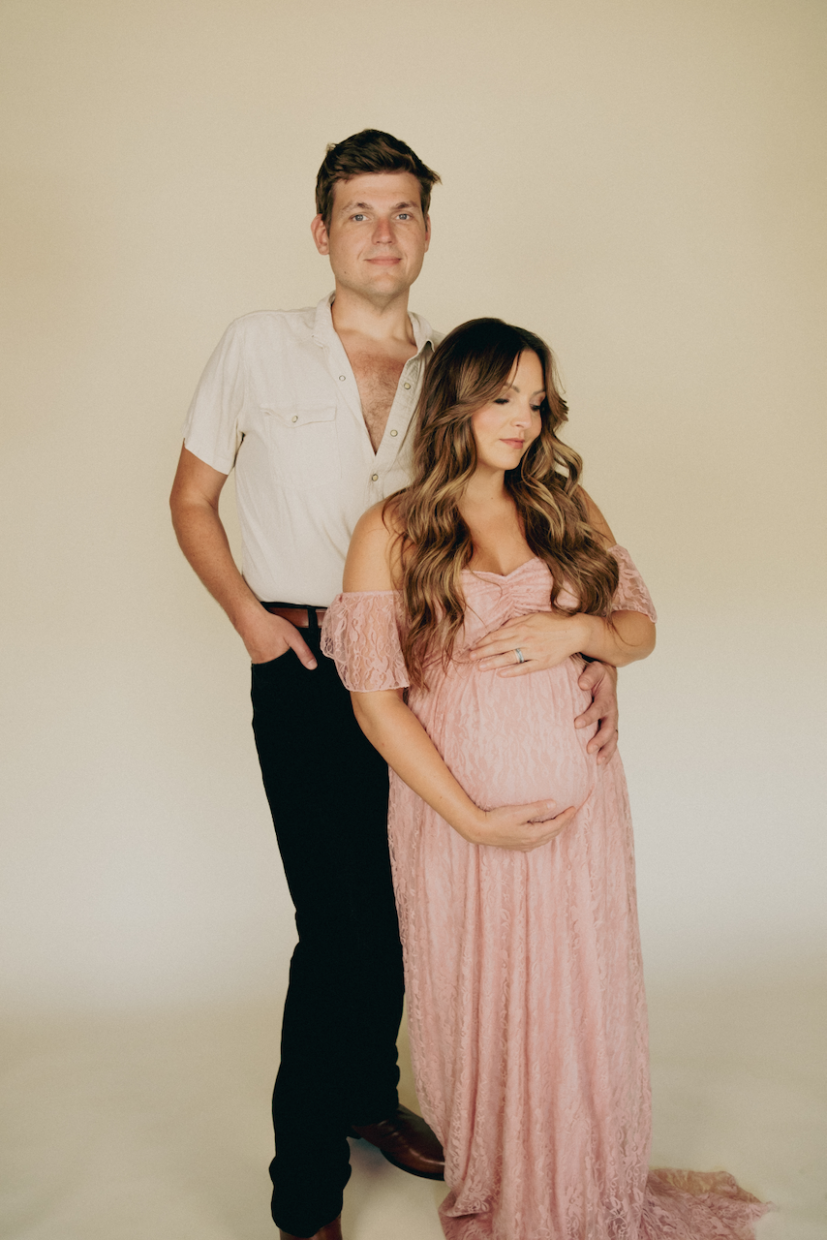
In the late summer of 2022, Courtney Hartman realized that the songs she had written for a new album were not the songs she needed to release. “I had found out I was pregnant a few months earlier, [and already] had a batch of material I was working on for a new record. I felt this quiet urging to set all of that aside and give my attention to what was happening in our life and in my body,” she says.

She discarded everything and began writing her third album, With You, a personal journey through motherhood set to music.

“What was happening in our life” refers to a tumultuous string of events that saw Hartman and her husband, John, through the best and worst of times. Best because the couple were expecting their first child, rebuilding their house in Eau Claire, Wisconsin, and Hartman was on tour; worst because her husband fell off a ladder, could not work for months, lost two jobs, she was dropped by her booking agent, and they totaled their car.

The cumulative effect left the couple in need emotionally, physically, and financially. They soon found themselves uplifted by their community – their immediate one and her music community at large. The experience left Hartman deeply grateful and dedicated to giving back even more than she received.

In September of that year, Hartman began writing “in earnest” the songs that became With You. She and her husband welcomed their daughter in February 2023 – more best of times followed by worst of times as Hartman struggled with postpartum depression.

“At the end of [2023] I had all this material and realized I wanted to invite in other voices and stories and perspectives, specifically those of other mothers,” she says.

Once again, she drew on her community, calling on a fellowship of songwriter mothers – Sarah Siskind, Dawn Landes, Ana Egge, Tift Merritt, Kristin Andreassen, and Emily Frantz Marlin of Watchhouse – to help take her deeply personal new songs to an even higher level.

“I spent another few months, December [2023] to February [2024], writing mostly over Zoom, finishing the material with those other writers,” she says. With You was recorded in June and July 2024, at The Hive studio in Eau Claire, with Hartman producing and Brian Joseph as co-producer and engineer.

As one might expect from Hartman, there are plenty of guitars on the album – her Lawrence Smart Archtop, Bourgeois Parlor,
PreWar (modeled after a Gibson J-45), Bischoff Dreadnought, Martin 00,
and a Telecaster – but if you’re looking for the lightning flatpicking work that makes her a bluegrass force to reckon with, you’ll be best served on YouTube. With You tells a story that calls for understated guitars as a palette for its songs.

“Things weren’t all bright and shiny in that season,” she says, “but the impetus to write and pay attention helped me pay attention to some of those lighter moments. Not all the songs on With You are about everything being light, because that’s just not how it is. But there was this extra attention to some of those details that do help buoy your spirit when things are a little more challenging.”
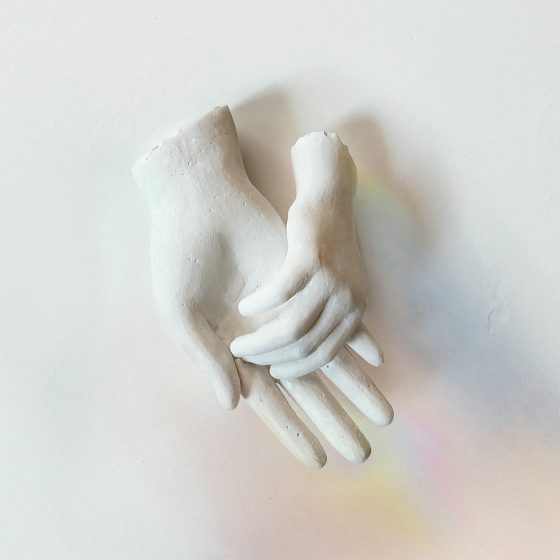
Courtney Hartman’s ‘With You’ album cover art, created by Claire Lindwall.

Completing the journey is With You’s striking cover art. The work of Hartman’s close friend Claire Lindwall captures the music’s delicate intimacy. “Claire is primarily a watercolor artist and illustrator,” says Hartman. “A special part of creating an album, for me, is giving the music to someone who then translates it into a visual piece of art. Every time, it’s surprising and expansive in a new way.”

Lindwall cast her own hand and that of her daughter’s, and positioned the casts so that one holds the other. “We experimented with drawings around it, then having just a splash of watercolor behind the piece,” says Hartman. “That’s all it needed.”

With this album now making its full debut, how do you feel about sharing so much vulnerability?

Courtney Hartman: The processing has happened in phases. I think it started just by saying yes to writing the material. There was an accepting of, “I’m writing about this thing that feels more vulnerable and more naked than anything I’ve written about before.” Bringing those songs to other writers, to collaborators, there was another level of vulnerability there.

A year ago I brought all of this material to my greater community and asked for support, because at that point I needed help putting the album out. Now, to give it to the rest of my community and listeners in the world, there’s a level of vulnerability, but I feel mostly excited. It feels like, “We made it.”

You’ve explained in other interviews that you had to use funding meant for the songs that came before these in order to get back on your feet. Needing financial assistance is also a vulnerable place and one that often brings publicly imposed shame and guilt. How did you process it?

You’re bringing up something that my husband and I have been talking about a lot, just with the news cycle and trying to get an understanding of what we can do for folks in our community. And having had small tastes of that in our life, because I know what we’ve experienced is so small compared to what so many people live through and are currently living through.

An important [word] that you touched on is shame – the shame of needing help; of not feeling like you can do it on your own or you can stand on your own two feet; of needing help for basic things like groceries. I think maybe accepting help and accepting care expands our capacity to feel compassion and to be able to then care for others.

In a podcast for Acoustic Guitar, you used the phrase “the intimacy of sound.” Could you talk more about what that means in the songwriting and guitar playing?

What I hear when you reflect that phrase back to me is the sound of the skin of your finger on the guitar string, or the sound of hands against a percussive instrument. When we went into the studio, I told the friends that were with me there on the first day, “Just as a guiding directive, whenever we imagine a sound that we want to create, let’s see if we can find something natural to create it with.”

Everyone took it in their own way, some on their instruments. Sean Carey was heavily involved on the record and he took that more literally in a lot of the percussion work. He found a nest outside when he was wandering around and that became the percussion on a track. Or even just the sound of skin on skin being a sound that we used as well; bringing in and magnifying some of these quieter sounds and allowing that to be a part of the soundscape [was part of the intimacy of sound].

Did you select the guitars around the songs or did some of the songs develop around your guitars?

Sometimes you think you know what a song wants before going into the studio and then you sit behind a mic and you’re like, “This isn’t serving it quite right.” And sometimes that experimentation takes a little longer than you think it will. Or sometimes you sit down with a first instinct and it’s totally right. That’s part of the reason it’s fun to have a good array of instruments in the studio.

Is the guitar as much a part of expressing your feelings as the lyrics?

It is. I think part of that comes from how long it’s been an instrument that feels like a voice to me. Songwriting came around the same time. I was about 12 when I started writing songs. Singing feels like something I still have so much exploration and learning to do.

How did working with other mothers, and their lived experiences, bring understanding to what you were going through?

What I was given [was the] shared experience and the acknowledgement of, “This is really hard. It’s really beautiful, but it’s also really challenging.”

So much of the caregiving that happens [as a mother], especially in that first year … so much of it is invisible. Maybe an aspect of that applies to all sorts of giving care – that it’s invisible other than to the one giving the care and the one receiving the care. When you feel invisible, it can also make you feel isolated and that can really feed into some of the struggles. A lot of folks have postpartum [depression] and societally we’re not set up to honor and support that season very well at all. It’s something I care a lot about, both from experiences with my family, but also as I’ve delved into work as a birth doula.

When you say, “Societally we’re not set up to honor and support that season very well at all,” what do we need to do?

We need to honor and uphold the importance of rest and nutrition and preparation. Parents are prepared for “Here’s what birth might look like,” but after that six-week checkup [traditional care usually ends]. Postpartum extends far longer than that.

A lot of [postpartum] mental health struggles won’t show up until maybe nine months or a year after a child is born. Better supporting [people postpartum] that would be the first thing I can think of. We live pretty isolated lives, as families in our insular homes, and so we’re not set up to receive support very well.

Or ask for it.

Yes, totally, [we need to be] preparing [people] to know that this is a time to accept and receive care. Preparing your heart for that is such a big piece of it, to know that we, as your village and your community, want to care for you in this time.

You’ve spoken openly about postpartum depression. What was that period of time like for you?

Moments of real happiness, but also moments of hitting my head against the wall … when I was struggling. [It was] hard to admit to myself and then to speak that [struggle] out loud to anybody. It wasn’t until afterwards that I could say, “That was hard.”

All depression is misunderstood and will often make people in your circle run away.

Let’s go back to your community, and the community of mothers, and how they lifted you.

I felt so cared for by our community in a way that was deeply humbling and in a way that somehow prepared me to do some of the caregiving that was going to be required of me. I was receiving so much love and support and meals and folks showing up. That kind of care is life-changing. It changes the way we see the world and our community around us.

My daughter was about nine months old or so when I started reaching out to other mothers, asking if they would collaborate on some songwriting. Having some tether creatively helped pull me through that season. It helped weave together the woman I was prior to having a child with the woman I was in that new space. … Sometimes it feels like … you almost can’t remember who you were before.

I was really afraid of [losing parts of myself]. I was afraid I wouldn’t create music again. There’s all these fears, irrational or not, that show up. Creating and being able to have these conversations that normalize what you’re experiencing. Having women who are [a] few years ahead of me be like, “It might be extra-challenging now, but it doesn’t stay that way forever.”

It’s almost 2026 and society still misunderstands and stigmatizes mental health, certainly PPD, and even some aspects of pre- and postpartum healthcare. Why are we uncomfortable talking about things that are so natural and important to discuss? Are we making progress or going backward?

I hope we’re making progress. It was a lot easier for me to ask, “Why don’t we talk about these things?” when I wasn’t part of the “we.” As soon as it was also part of my story to talk about and share, [I had to come] to terms with my own hesitancy. Why do I not want to talk about something as normal as pregnancy and motherhood in my songs? Why do I feel like if I put this music out, it will be discredited and potentially ignored, even though it may speak to so much of the population? …

I still don’t have an answer. Maybe it’s because there’s so many generations of women having to hide those things for fear of losing wages, or jobs, or discrimination, whatever it might be. For everybody’s sake, there’s so much we have to learn from mothers’ voices, and I hope we’re beginning to really listen.

On a podcast, The Other 22 Hours, you reflected on the period after Della Mae and the realization, at the time, that “Music was not a healing thing.” What role does music now play in your healing and mental health?

It has become healing again. Years ago, I was dealing with physical pain in my hands. That was magnified by touring all the time, being on the road so much, and the strain on my body. So I was speaking about it in a physical way. [Music] has become a lot more than just physically healing [for me]. I think this album exemplifies that.

You have worked with so many people. Who is your wish-list artist or artists?

Oh my gosh. The first person that came to mind – and maybe it’s because I’ve been listening to her record all week – I would love to play music in the same room as Brandi Carlile. She gives all of herself and it’s so good.

We had a listening party [for With You] and as I was listening to the album for the first time with a whole group of friends and collaborators, what I hear on it is my friends and heroes, which is such a joy. There are so many folks on this album that I look up to so much and who have been dream collaborators. So, in that way, a lot of it has been a dream list fulfilled.


Photo Credit: Michelle Bennett
Brit Taylor’s New Momma Playlist

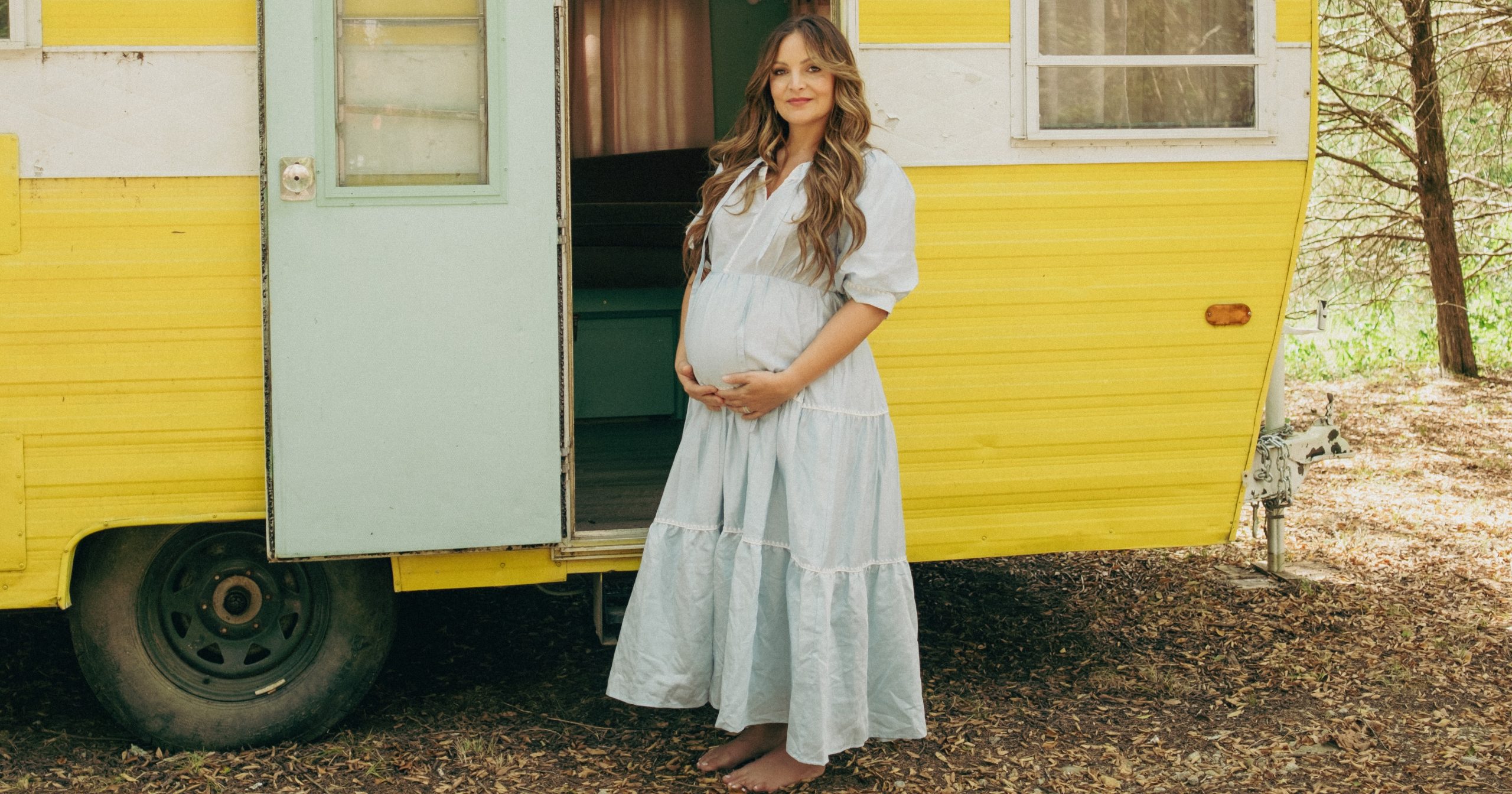
Sitting here in my baby’s room, feeling her kick in my belly while looking around at the dusty pink painted walls, baby owl wallpaper, refurbished 1960s furniture, a painting from her great grandmother on one wall, and her name – shared by two other great grandmothers – on the other wall, I’ve never been more certain that I’m exactly where I am meant to be in my life at this moment. Beulah Anne Chaffins. We love her so much already.

Like so many women in the music industry, I put off having a family thinking when my career takes off, then I’ll have my family. But “takes off” is so subjective, especially when you’re constantly moving the finish line for yourself. Earlier this year, I realized that if I kept waiting, I could literally wait myself forever out of the opportunity to have a family. I’m about to play Bourbon & Beyond, the biggest festival I’ve ever played, and I will be almost 8 months pregnant. It’s funny that this is actually the most outlaw thing I’ve ever done.

I didn’t grow up in a musical family. “Playing music” to my parents meant turning on the radio. I’m really excited to bring my daughter into a world of music. My husband, Adam Chaffins, and I do everything together. We garden, take care of our animals, travel, tour, write songs, and make records together. Beulah Anne already lights up when she hears us sing and play. I can feel her ball up in my belly, close to my guitar, and kick and turn as her daddy sings.

I put together a playlist of songs that I believe will be great to play for Beulah Anne when she finally gets here! It’s full of uplifting songs that don’t make us want to beat our heads against the wall. I know, I know, that will come eventually when she’s able to choose, but maybe if we start by instilling good taste early, it won’t be so bad? Wishful thinking? Maybe! – Brit Taylor

“Oo-De-Lally” – Roger Miller

Should be on any children’s playlist.

“Little Green Apples” – Bobbie Gentry & Glen Campbell

This wasn’t meant to be a kid’s song, but it is such a great love song and the melody is so simple and easy to remember. Adam and I love singing this one together.

“The Big Rock Candy Mountain” – Harry McClintock

The O Brother, Where Art Thou? soundtrack is one of my favorite albums. There’s something about the old timey sound of this one that makes me feel like we’ve travelled back in time when things were just more simple.

“Didn’t Leave Nobody but the Baby” – Gillian Welch, Alison Krauss, and Emmylou Harris

This is from the same soundtrack. I can see myself singing this one to baby Beulah, trying to get her to sleep. Maybe I’ll leave out a line or two!

“You’ve Got a Friend in Me” – Randy Newman

An amazing way to let your kid know they’re not alone. I love this one by Randy Newman from Toy Story.

“Here Comes The Sun” – the Beatles

Could put anyone in a good mood.

“You Are My Sunshine” – Norman Blake

There’s so many great versions of this song, but I love this one by Norman Blake on the O Brother soundtrack. The Dobro gets me.

“(Let Me Be Your) Teddy Bear” – Elvis

This is a requirement for any children’s playlist I make. My daddy would play this one for me – along with every other Elvis song ever recorded.

“Build Me Up Buttercup” – The Foundations

Another one my Dad would play and sing to me. I remember loving this one and naming one of our dogs Buttercup!

“I Love” – Tom T. Hall

Tom T Hall was a poet and also from my hometown of Hindman, Kentucky. I love this one from his children’s record.

“Love is Like A Butterfly” – Dolly Parton

This has such a whimsical vibe! I love having this one in the mix. It transports you to a fairytale land.

“What A Wonderful World” – Louis Armstrong

I want Beulah Anne to always be able to see the beautiful things in the world. I don’t want her to be afraid of it. Perspective is key and songs like this can do just that.

“God Only Knows” – The Beach Boys

Adam and I sang this song on a Valentine’s Day livestream when he surprised me by proposing! My answer was a big fat “yes,” obviously. I can see us singing and dancing to this one with Beulah in our arms!

“(They Long to Be) Close To You” – The Carpenters

I always loved the Carpenters when I was little. My mom would play them for me. Especially at Christmas. Karen Carpenter’s voice is like a warm hug. There’s just something dreamy about this song, and I love the lyrics.

“Top Of The World” – The Carpenters

I want Beulah Anne to have a positive outlook on life. I want to instill positive self-talk, so when she hears her inner voice it’s encouraging instead of scary or mean. I hope starting her off on music like this will help her always feel more like she’s on top of the world instead of down in the gutter, even in the hard times of life.

“Ol’ Blue” – Willie Nelson

A must. Beulah’s first dog will be our dog, Blue, so this one was definitely a sure bet.


All photos by Natia Cinco.

Out Now: Wild Ponies

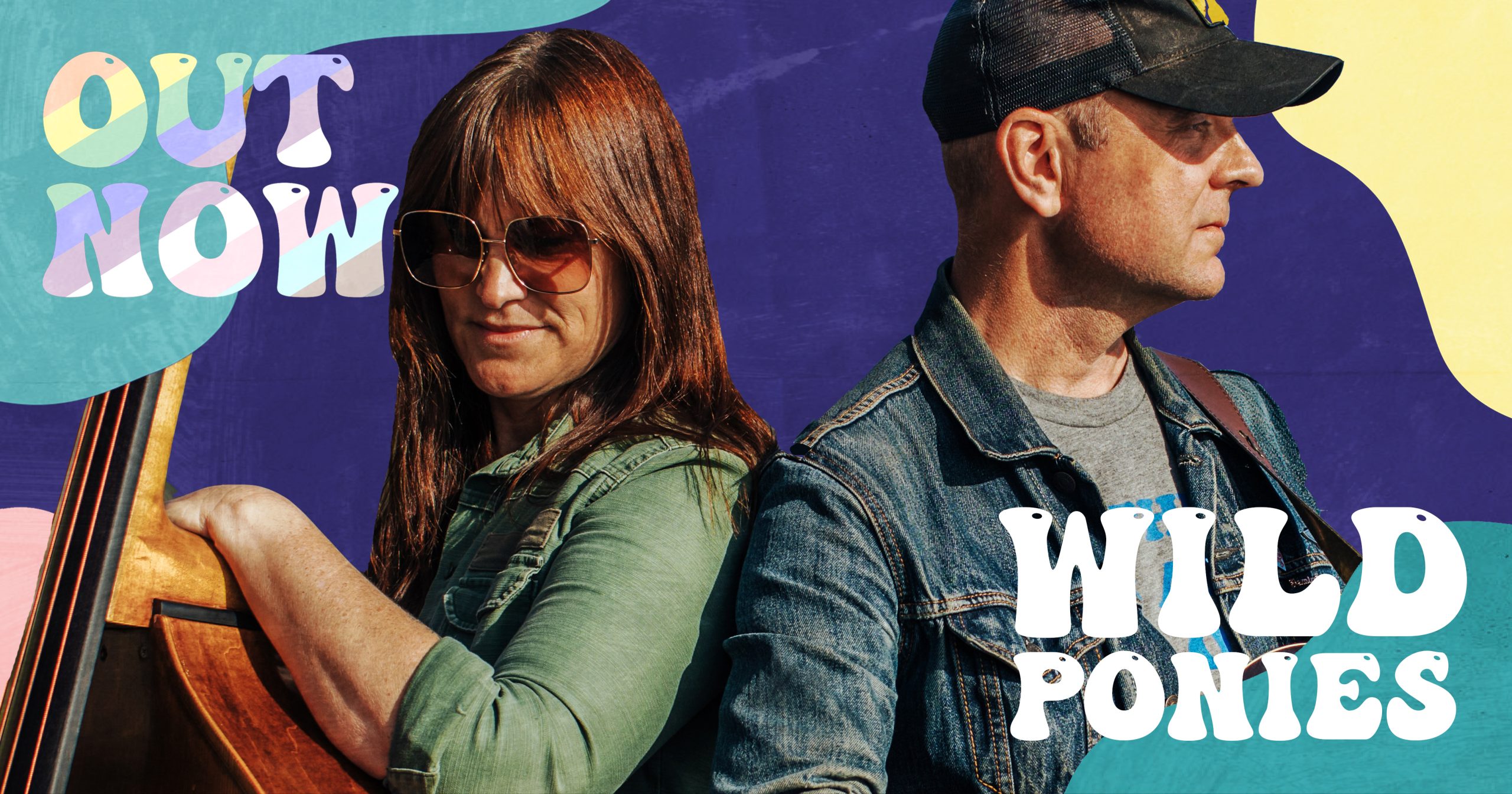
Wild Ponies is a country-folk duo composed of Doug and Telisha Williams. As partners in music and life, they have developed a cohesive and refined sound. Their album, Dreamers, is out August 23, 2024. The album is an exploration of life, love, and loss, covering joy and grief, queerness and polyamory, and their journey pursuing fertility treatments. It’s a beautiful and touching collection of songs.

Before crafting Dreamers, the duo were asked by a fan where their dreams were. They reflected on the idea of where, not what, their dreams were and their response was, “Our dreams are everywhere, buzzing around like energetic bees… At times, our dreams are hard to wrangle – a wild pony…”

This idea of dreams set the concept for the new album. We are excited to dive into Dreamers and Doug and Telisha’s experiences as touring musicians in a queer, polyamorous family.

What does the album Dreamers mean to you personally? What excites you the most about sharing this release?

Telisha Williams: This record is very personal. We talk about becoming a polyamorous triad, being queer foster parents in the state of Tennessee, struggling with fertility issues, working on being more mindful. It’s basically a peak into our home, hearts, and heads. I’m excited about the way it sounds. Brandy ZDAN did a beautiful job producing this record. The band is amazing, and we couldn’t be more proud.

Doug Williams: Dreamers is the story of who we are. It’s not all easy and it’s not all pretty, but it’s all true. I love this record. Maybe that’s not something I should say about our own work but it’s true – I’m really proud of it.

Your song “Heartbeat” touches on your experience with fetal embryo transfer and even includes your child’s in-utero heartbeat. Is there anything you’d like to share about your journey with fertility treatments?

TW: Doug actually wrote that one after we thought that we had lost our pregnancy. We had a pretty traumatic “episode” when I was at about 5 weeks and we were sure that she was gone. The next morning, we went in for an ultrasound and there was her sweet little heartbeat on the screen. Strong and healthy. My process to becoming a mother was challenging and worth it. Our first embryo was a gift from a dear friend and we were so excited about the possibility of raising our genetic siblings together. Unfortunately, that one didn’t take and we didn’t know how to move forward. Our implications counselor connected us with another woman wanting to do an open embryo adoption. We met over zoom and now, we’re family. She has 2 boys that are the genetic siblings of our daughter. They live nearby and we all get to spend time together. It’s been an incredibly generous journey.

DW: This one was tough to write. We were sure we had lost another embryo. Sure of it. It was pretty difficult. So, we scheduled an emergency ultrasound, but we weren’t feeling good. The joy and tears when we saw that heartbeat on the screen is something that I just can’t describe. I tried to describe it in the song. Just pure joy and gratitude.

How do you balance a career in the music industry and touring with your roles as parents? How does polyamory play a role in this for you?

TW: We’re still figuring that part out. There are some advantages of being a three-parent household. Our partner Laura also travels for work as a photographer and we’re able to help each other as the parents that are holding down the homefront from time to time. We also enjoy traveling all together as a family of 5, but it’s hard to find room for the bass. [Laughs]

DW: I don’t know that there is really a good balance. Accepting that makes it easier, maybe? When you know it’s just going to be a little fucked from time to time, it’s just not as much of a surprise. But we’ve got to prioritize what’s best for the kiddos. And, I do think it’s good for them to see the possibility of living life on your own terms. That’s what we want for them, so we try to model it.

Is there anything you’d like to share with our audience about queerness, polyamory, and love, and how these experiences can vary for different people?

TW: We didn’t necessarily seek out polyamory. Doug and I are both bi/pansexual and have had an ethically non-monogamous relationship for a long time. When we met Laura and started spending time together as friends, we started having “more than friends” feelings for each other. We realized that it didn’t divide or diminish our experience as a couple. If anything, we felt stronger and more connected with each other and Laura. That realization that love was not a finite resource changed everything for us. We know that this relationship model is not for everyone. It requires a great deal of communication and intentionality, but we couldn’t be happier or more proud with this dream that we’re creating.

DW: Yeah, it takes a lot of communicating. A lot of talking. Check-ins. Podcasts. Books. Like Telisha said, we kept a lot of our identity fairly quiet for most of our career. It feels really good to be able to completely live our lives out in the open now. It can be a little scary in the state of Tennessee at times, but at this point it feels like the right thing to do is stay and fight to make it better here. Hopefully we’ll be able to continue to do that and make is safer not only for us, but for the rest of the queer community as well.

For anyone reading this who might not be out of the closet, were there any specific people, musicians, or resources that helped you find yourself as a queer individual?

TW: I can’t name anyone specifically, but I will say that when folks from the LGBTQ+ community show up at our shows or events we’re hosting, it means the world. Feeling seen and supported by this community has transformed me as a human and helped me to be more open and available to support others in and out of the community.

DW: That is a good question. Honestly, just our community. For us, or for me, it just took a lot of talking and a lot of checking in with folks we know. Friends who were already out and very public.

Who are your favorite LGBTQ+ artists and bands?

TW: I mean, we have to acknowledge what Brandi Carlile has done for our community, right?! She’s really elevated and supported the LGBTQ+ community in so many ways. From there, I’d say my friends, Heather Mae and Crys Matthews. I’m inspired by the music of Adeem the Artist. The community is strong and talented, y’all.

DW: Oh yeah, all of the above – I was so blown away by Adeem The Artist! Such amazing songs. And Crys and Heather both have killer new projects. I also love Ana Egge, Anne McCue, Amelia White, Aaron Lee Tasjan… just all of our friends, I guess.

What does it mean to you to be an LGBTQ+ musician?

TW: It means that I can sing about all of it. I don’t have to hide in the stories and the pronouns. I can share the beauty of the love I am so lucky to have in my life. I can share it out loud, and I dress in way more colors than I used to. Taste the Rainbow, people!

DW: [Laughs] I love T’s answer. Yeah, it’s new for us to be so public about our identities. We were mostly closeted for a long time. Definitely publicly [closeted]. It feels so good to live our authentic life in front of people now. There’s so much joy in it. So much love. It’s a powerful and beautiful thing that we weren’t sure we’d ever feel comfortable sharing so openly and now I wish we’d done that a long time ago. It took us a while and it was a slow coming out even when we started the process.

What’s your ideal vision for your future?

TW: We want to keep making art and connecting with people. That’s been our drive all along. That connection and building community. We plan to tour more intentionally in the coming years, because home has a bit more of a pull with the kiddos and family, these days. We also plan to travel with them, introduce them to the amazing community of music fans, and show them that families are made, not just born.

DW: Yeah, the ideal vision would be a life where our family and our career work together. We’re definitely finding ways to do that. It’s difficult, but I don’t think it’s impossible.

What is your greatest fear?

TW: I guess, since the pandemic, I’ve been a bit afraid of losing myself as an artist. When we couldn’t get out and “do what we do,” we weren’t exactly sure who we were anymore. It turns out that we’re still as connected to those fans and friends as we’ve always been, it just looks a little different now.

DW: Woof. You mean other than a second Donald Trump presidency? I don’t know – I think again, honestly, it has to do with identity. I love my new role as “Daddy.” I just want to do a good job and take care of these kids. I also really want them to see that it’s possible to live an artistic life. I guess my greatest fear is failing them in some way.

What would a “perfect day” look like for you?

TW: Oooo! I’d get to sleep until the big number is on the 7, then I’d have a fun morning with the kiddos, take them to their amazing daycare, come back for a walk/workout, morning pages and some time to write or play music. Then, the afternoon, I’d intentionally filter through some emails, pick the kiddos up, play, play, play, throw in a dance party and a jam walk, and sing them to sleep. Then, I’d have a little connected time with my partners and hit the hay. Throw in a coffee, walk, or cocktail date with a friend a few times a week, and that sounds pretty great to me!

DW: A perfect day… High of 82 and sunny. Like T said, sleeping a little late would be such a luxury. Then a little morning time with the kiddos before diving into work. Do a little writing, play some guitar? Then around lunch time take a nice twisty motorcycle ride to a great taco truck about 45 minutes away. Come home, get a little more work done, hang with the family and have a great dinner together. After the kids go to bed, maybe read a little while or listen to some vinyl and enjoy a drink or two. And if we’re really talking about a perfect day, there’s a little more… but we’ll stop there.

Why do you create music? What’s more satisfying to you, the process or the outcome?

TW: I think the outcome is more satisfying to me, but I also love the process and I believe to my core that the process is more important than the product. I know that music has healing powers. I have experienced that first hand, so that’s why I create music. To heal and experience joy, share or release sorrow, express disappointment or hope. Music and emotions are directly related, in my mind, so in order for me to be healthy and happy and present, I need to be creating.

DW: We talk about this all the time! Yeah, we’re huge believers in the process being more important than the product. But, still, it’s such a great feeling to have a new little song and watch it go out into the world and connect with people! I think that’s why most artists create – the desire to connect, to say something. The good that the process is doing in our lives and in our heads is something we usually discover later. Sometimes that even happens with songs no one else will ever hear.

What are your release and touring plans for the next year?

TW: Dreamers will be released on August 23. We’re touring very intentionally for the remainder of the year with shows in the Southeast and Midwest, mainly. We’ll continue to tour in support of the record in 2025, balancing our time at home with our family and out on the road. We’re excited to see where this new record takes us!

DW: Yeah, intentional touring is the main thing, I think. We won’t play as many shows, so if you see us coming to your town, get tickets! We’re just going to be a little more precious with our family time. But, still creating art, still connecting, still holding community events. We’re so excited to get this record out. I’m really proud of it.


Photo Credit: Laura Schneider