How-dee! And Happy 100 to the Grand Ole Opry

In 1925, world leaders were signing the final treaties coming out of WWI; Congress authorized work on Mt. Rushmore as a national memorial; the Scopes Trial was held in Tennessee; and the first patent on radio transmission was only 28 years old.

And, in 1925, WSM first broadcast its barn dance – soon to become the Grand Ole Opry.

One hundred years later, the Grand Ole Opry is the world’s longest-running radio program. After a century that saw changes unparalleled in world history, audiences are still drawn to the Opry. Every week thousands make the pilgrimage to the Grand Ole Opry House in Nashville while others tune in around the world. The show continues to inspire new generations of performers to aspire to step “into the circle” on the Opry House stage.
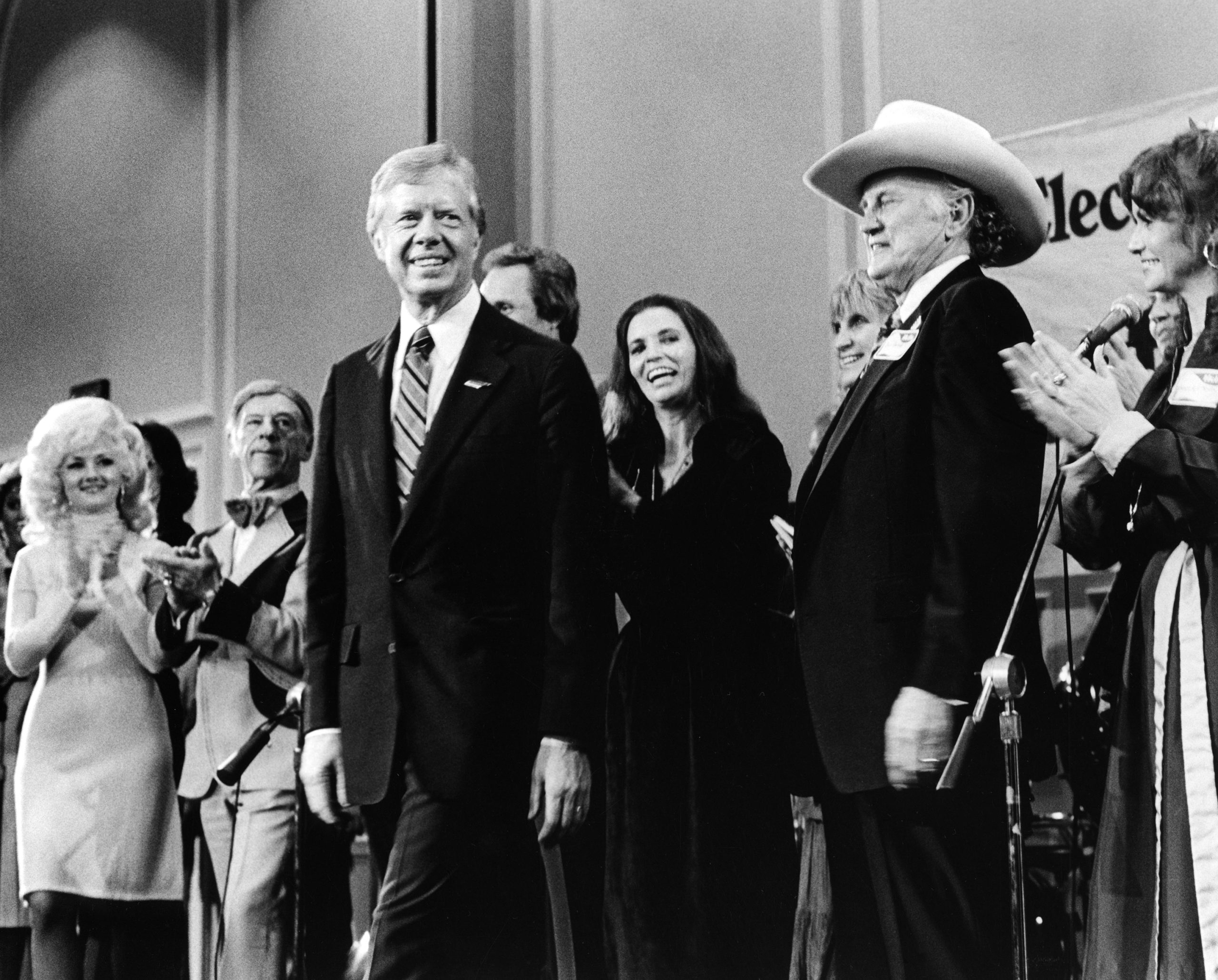
President Jimmy Carter on the Grand Ole Opry stage with Kelly Foxton, Hank Snow, Mel Tillis, June Carter Cash, Skeeter Davis, Bill Monroe, Jeannie C. Riley, and others on October 9, 1980. Photo courtesy of Ryman Hospitality Properties.

In The Beginning Was Insurance

In the 1920s, Edwin Craig was watching radio stations emerge across the nation – and seeing the money-making potential for sponsors and owners. He convinced Cornelius Craig, his father and founder of the National Life and Accident Insurance Company, that a radio station could sell a lot of insurance.

Soon, the fifth floor of the company’s downtown Nashville building held a radio studio. The call letters WSM stood for “We Shield Millions,” the company’s motto. A program that would become the lifeblood of country music started as a way to promote life insurance.

The hiring of George D. Hay away from Chicago’s WLS was the beginning of the WSM Barn Dance. The 30-year-old who called himself The Solemn Old Judge and started every show with a steamboat whistle would set the tone for much of the Opry’s 100 years – including its name.

Which all started with a clash of cultures.

Some upper-crust Nashville residents complained the only radio they could hear on weekends was string band programming from the dominant WSM station. In response, WSM began carrying the syndicated “Music Appreciation Hour.”

The Barn Dance slot followed the classical program, and Hay, not one to pass up a good line, said, “For the past hour, we have been listening to music largely from Grand Opera, but from now on, we will present ‘the Grand Ole Opry.”
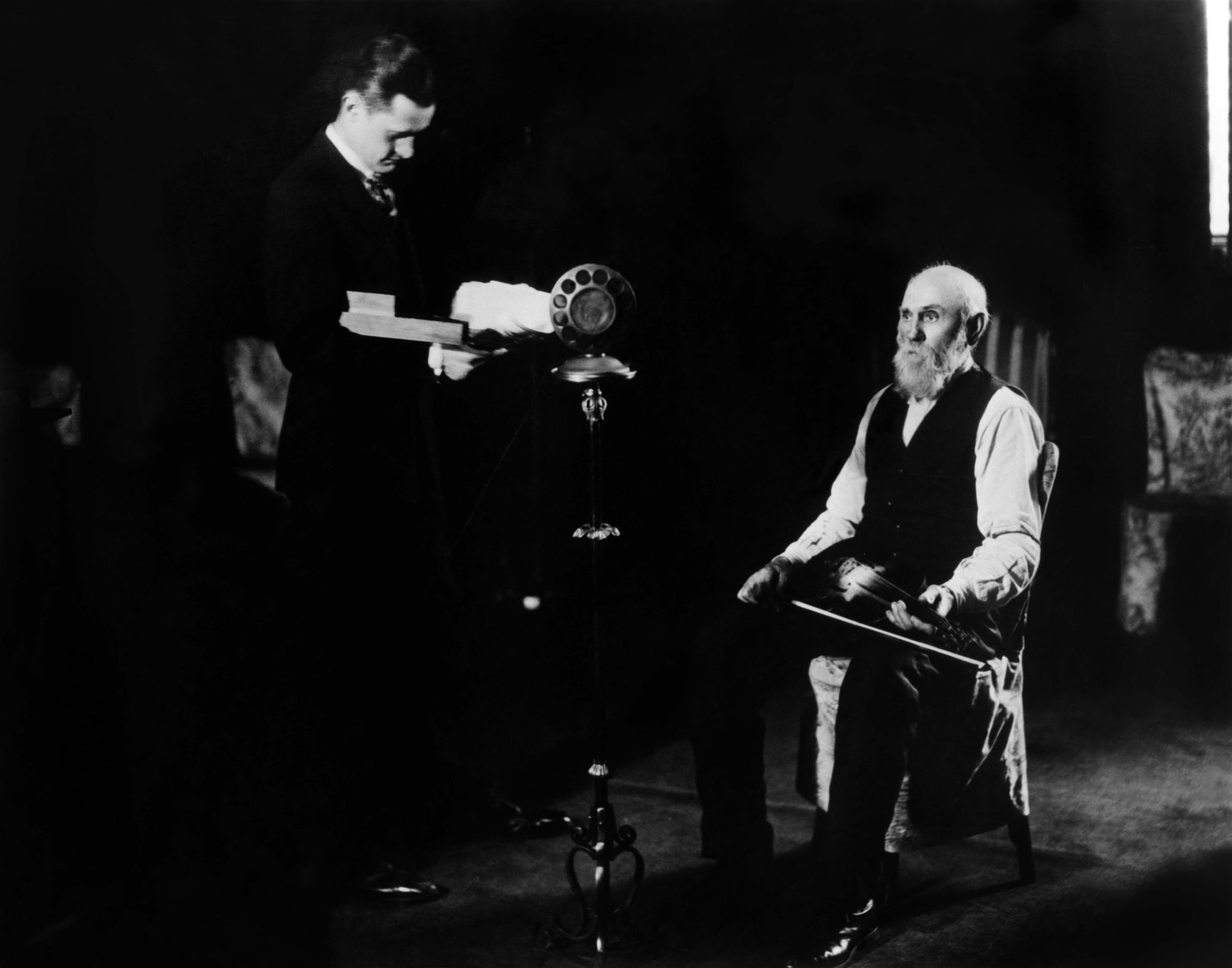
George D. Hay is pictured at microphone with a whistle and Uncle Jimmy Thompson is seated in this 1925 photograph from when the Grand Ole Opry was still the WSM Barn Dance. Photo courtesy of Ryman Hospitality Properties.

For years, the Shield Men – door-to-door National Life and Accident insurance salesmen carrying the company’s shield logo – introduced themselves as representing the Grand Ole Opry. They would even listen outside windows to see who was tuned in to the Opry – and who would be a likely customer.

The earliest WSM shows relied on local talent, running heavily toward fiddlers and string bands. But Hay would invite whoever he thought the audience would like.

DeFord Bailey, a Black musician grounded in both the blues and old-time string band music, became a regular, wowing audiences with his harmonica. Kitty Cora Cline, the first female soloist, performed on hammered dulcimer, and Fred Shriver played the accordion. Uncle Dave Macon on his banjo with Sid Harkreader on fiddle and guitar set the stage for the comedy that would remain central to the Opry’s success, with songs like, “Keep My Skillet Good and Greasy.”

A Beacon

As the recording industry grew, the variety of musicians available to the Opry grew, as well. The show began featuring brother duets, cowboy music, Western swing and solo crooners. Bill Monroe & the Blue Grass Boys were featured stars for decades.

Opry singers expressed the joys of new romance, the happiness of Sunday dinner on the lawn, the sorrow of lost love, and the loneliness of leaving home. Audiences across America listened – and related. The Opry became a focus of family life.

Dolly Parton, like many rural listeners, grew up without electricity. Her family faithfully listened to the Opry on a battery-powered radio. Waylon Jennings’ dad would hook their radio to the car battery. Jeannie Seely’s family would pile in the car and drive up a hill until they could get the signal. Opry history is filled with stories of musicians who listened as children – and dreamed of growing up to perform, like their idols, on the iconic stage.

Opry member Dierks Bentley, who gracefully moves between country and bluegrass, told BGS, “Being invited to join at all is the biggest honor – especially for me, personally. I grew up listening to all the Opry greats on the radio with my dad, so becoming a member is like having the ultimate backstage pass to see the best musicians in the world. And to be invited by Marty Stuart … hands down, it was one of the coolest nights of my life.”

Dan Rogers, the Opry’s senior vice president and executive producer, said the Opry has always been a place to celebrate the good times and be uplifted during the tough times. “Think about,” he said, “the folks who tuned in on Saturday nights during World War II. That was their only source of entertainment throughout the week.” Minnie Pearl, with her signature “How-dee,” and Roy Acuff gave them respite from war news.

On the first show after the 9-11 attacks in 2001, Rogers said, “Our background singers sang an a cappella version of ‘God Bless America.’ And one by one, the people in the audience stood and sang along. And I remember thinking, I bet everybody tuned in across the country is singing along to ‘God Bless America.’”

The Opry’s response to the COVID-19 crisis created desperately needed connection during a frightening time of isolation.

Just a week after deciding that live audience shows weren’t safe, Opry staff arranged a pared-down streaming production with no audience and a skeleton crew. Longtime cast members Bill Anderson, Jeannie Seely and Connie Smith held down the first night alongside Mandy Barnett, Michael Cleveland & Flamekeeper, and Sam Williams.

For the second weekend of restrictions, veterans Vince Gill, Marty Stuart, and Brad Paisley sat on stools spread out across the stage and pulled off what Rogers called “a beautiful, beautiful show.”

Watching from his office, Rogers started reading comments from grateful listeners. For months, people marked their calendars to tune in. They wrote, “I’m in Europe. I set my alarm. It’s 2 a.m. here, but I wanted to experience this with a community.”

Marty Stuart, Vince Gill, and Brad Paisley perform for an empty Grand Ole Opry House during the COVID-19 lockdowns in 2020. Photo by Chris Hollo, courtesy of Ryman Hospitality Properties.

Kathy Mattea, the newest Opry inductee, feels those connections whenever she performs there.

People may have sung along to her hit “18 Wheels and a Dozen Roses” in their car or in the shower, but at the Opry, she says to BGS, “Here’s your chance to sit with an audience and sing this song that everybody knows. Nobody knows who the person next to them voted for and it doesn’t matter at that moment.”

“The Ellis Island of Country Music”

In the early days of radio, what was called hillbilly music was as limitless as the range of a 50,000 watt radio station. And the Opry remains dedicated to maintaining those wide open spaces.

Garth Brooks and Trisha Yearwood, in their forward to the book 100 Years of the Grand Ole Opry, refer to the show as the “Ellis Island of Country Music – a place where all are welcome.”

Contemporary country often has been accused of being homogenous and limited. But despite the factors that have controlled commercial country, the Opry maintains its open-arms attitude. Rogers said, “The two core tenets of an Opry show are celebrating the past, present, and future of country music, and also showcasing multiple genres under the country music umbrella.”

In any show, he said, “You might have something that’s on the top 20 of the country charts today. And you’ll have country classics. You might have a contemporary Christian song, Americana string music, or even something from outside the genre by somebody who just happens to be a country music fan or was influenced by country music.”

In 1974, the R&B-oriented Pointer Sisters included an original country song, “Fairytale,” on their second album. The cross-over hit earned them an invitation to the Opry stage, where they became the first Black group to perform.

Ringo Starr appeared for the first time in 2025 and James Taylor’s debut on November 11 will be remembered as a big part of the 100th anniversary celebration.

And, Rogers said, “Because we can do it, it’s fun to take a chance on a new artist.”

Before his first Opry appearance in July 2022, Zach Top had no hits to his name. But Rogers remembered the programming team saying, “You don’t see an artist like that every day. It sure feels to us like our audience would absolutely eat that guy up!” Today, Top’s music is everywhere.

Bluegrass has been a staple since before it had a name and it has never lost its place on the stage. Bentley and Del McCoury played “Roll on Buddy, Roll On” when the Grand Ole Opry House first reopened after the 2010 flood closed its doors for months.

Charlie Mattos is a 10-year veteran Opry announcer and longtime co-host and producer of WSM’s morning show. He said that on any given night, a portion of the Opry House audience “may truly have never seen a bluegrass band play.”

“And when Del McCoury and the boys finish with an incredible instrumental,” Mattos continued, “or Sister Sadie blisters the stage … the enthusiasm that comes out of that crowd, the immediate standing ovation for the insane musicianship that they have just witnessed …” Mattos said, “it blows their minds.”

Mattea said, “Bluegrass is front porch jazz – the virtuoso playing and the vocals and the harmonies and the trading off of licks. That’s how I fell in love with bluegrass.” And the Opry exposes millions to that brilliance.

A Good-Natured Riot

The Opry show is a complex set of acts and sets requiring precision planning, flexibility, and good nature on the part of the announcers – and commitment on the part of the performers. Rehearsals are brief or non-existent. Timing is everything.

Borrowing a phrase from George D. Hay, the Opry is still sometimes called a “good-natured riot.”

Mattos said, “When you come to see the show live, you see it all. The set changes. The artists leaving as the announcer sends them off. You can see the stage crew out there and usually in 90 seconds they can completely swap things around.”

But while reading a commercial during set changes, Mattos may notice the stage manager giving the “stretch” signal. He might have to keep talking for as long as four minutes – a millennium in radio time.

Sometimes the commercials themselves become the entertainment.

The first time Glad Wags sponsored an Opry segment, Chuck Morgan was announcing. While he stood off-stage reading the dog food commercial, house bassist Bill Linneman came up behind him and started barking. “By my last year there, there were like 20 people behind me going at it,” Morgan said. (The consensus is that Connie Smith does a great chihuahua imitation.)

A Family

Jeannie Seely – who racked up nearly 5,400 performances on the Grand Ole Opry before her passing in August 2025 – remembered it was more than the music that fueled her desire to join the Opry: “That’s hearing these people, like Mr. Acuff and Minnie [Pearl] and Jimmy Dickens and all of them, coming together every week,” she says in 100 Years of the Grand Ole Opry. “They always sounded like they were so glad to be together. They picked on each other and joked, and I thought, that’s just like a family.”

And they were family. When the plane Jim Reeves was aboard crashed in a wooded Nashville suburb, Marty Robbins and Ernest Tubb joined the search party, as did the elegant Nashville socialite Sarah Ophelia Colley Cannon – known as Minnie Pearl.

Opry star Jean Shepard was expecting her second child with husband Harold “Hawkshaw” Hawkins when Hawkins died in the plane crash that also killed Patsy Cline and Cowboy Copas. After months feeling adrift, as Shepard was quoted in the 100 Years book, “I looked down my driveway one day and here come two big black limousines full of the so-called ‘higher-ups’ from the Grand Ole Opry. They said, ‘We want you to come back to the Grand Ole Opry.’ And it really meant a lot to me.”

The family feeling is no accident. In earlier years, Opry members had to perform a specified number of Saturday nights a year. While there’s no set number today, Rogers said they look for a sense of commitment in new members. “It truly is about that relationship,” he said.

Rogers quoted Mattea, upon her invitation to become a member, saying, “These people treat you like family, no matter what.”

One of Mattea’s favorite Opry memories involves a bass player who toured with her. “He was sitting on a stool, playing and singing some old Western swing chestnut, and suddenly Riders in the Sky leaned into the dressing room in full regalia and started singing harmony.

“He was gobsmacked. He felt it was the highlight of his life,” she said.

Bluegrass performer Kody Norris’ music is influenced heavily by first- and second-generation bluegrass. But the band’s preference for flashy suits dates back to a family-friendly welcome Norris received 25 years ago.

His parents took nine-year-old Kody backstage at the Opry, “and I met Bill Anderson. And he had on a red rhinestone suit. That’s the first one I ever saw up close, where I could touch it.”

Later that day, upon meeting his equally rhinestone-clad hero, Porter Wagoner, young Kody got so excited he spit out his chewing gum. Wagoner graciously grabbed two Opry-logoed napkins, one of which the little boy used for his gum. The other one the grown Norris still keeps in perfect condition.

The Circle is Unbroken

In 1974, the Opry left its revered home of decades, the Ryman Auditorium, to move to the deliciously air-conditioned 4,400-seat Grand Ole Opry House.

To honor its longtime home, the Opry crew cut a circle out of the Ryman stage and inset it in the new Opry House stage. The circle symbolizes the Opry’s continuity, respect for the past, and optimism for the future.

Mattea experienced that sense of a completed circle on the day she became an Opry member.

“Suzy [Bogguss] was there. We’ve toured together and sung on each other’s records. She’s my closest artist friend, and she was the only one at the ceremony who was not a member. And I thought how generous it was of her to be there.

“So, while I was overflowing with celebration, to get to invite my friend to the party publicly in the name of the Opry was the sweetest gift. It was a moment I’ll never forget, and I’m going to be there for her induction, too.” Bogguss will officially be inducted as an Opry member in early 2026.
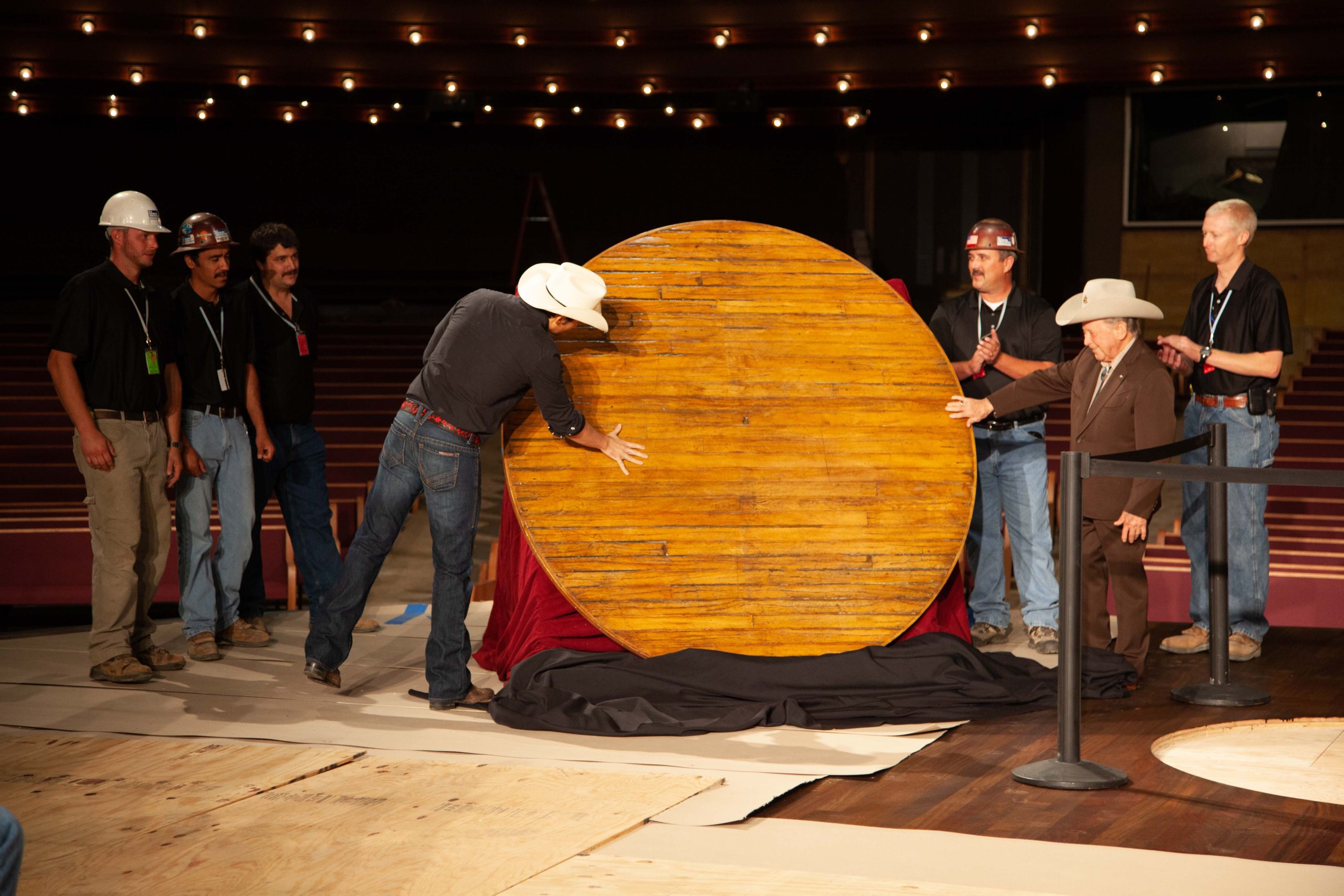
Braid Paisley and Little Jimmy Dickens return the Circle to the Opry stage after the 2010 flood. Photo courtesy of Ryman Hospitality Properties.

Join The Celebration

There’s nothing low-key about the Grand Ole Opry – so in the classic Opry spirit, fans have had plenty of opportunity to celebrate the centennial all year long.

Earlier this year, NBC broadcast a three-hour anniversary special, with dozens of stars ranging from Reba McEntire to Jelly Roll to The War and Treaty. The Opry also took the show to London’s Royal Albert Hall for the very first time. You can stream clips of these and other Opry events on YouTube and social media.

With the Virgin Music Group, the Opry has produced the album Opry 100, Country’s Greatest Songs (released November 7). Among the unforgettable recordings are Vince Gill singing his heart-rending “Go Rest High on That Mountain,” Dolly Parton singing “I Will Always Love You,” and Ashley McBryde covering the classic “Your Cheatin’ Heart.” You can order the album from the Opry site.

Craig Shelburne, Brenda Colladay, and Opry members and employees collaborated on 100 Years of the Grand Ole Opry, a book filled with anecdotes and photos that vividly illustrate the Opry’s remarkable history. And to teach your children well, there’s also a new childrens’ picture book written by Emily Frans and illustrated by Susanna Chapman. Find them in your local bookstore.

And, on November 28, 2025, the official 100th anniversary of the Grand Ole Opry we all hold dear, the Opry is celebrating with two huge birthday party shows featuring country stars and Opry members like Vince Gill, Ricky Skaggs, Trace Adkins, Dailey & Vincent, Bill Anderson, Jamey Johnson, Marty Stuart, and many, many more. Tickets are available here.

Of course, the celebrations will continue in 2026.

“The Opry is the core and soul of country music,” Bentley said. “It’s a place where the past, present and future of our genre all come together. There isn’t anywhere else like it.”


Continue exploring our Artist of the Month coverage of Opry 100 here.

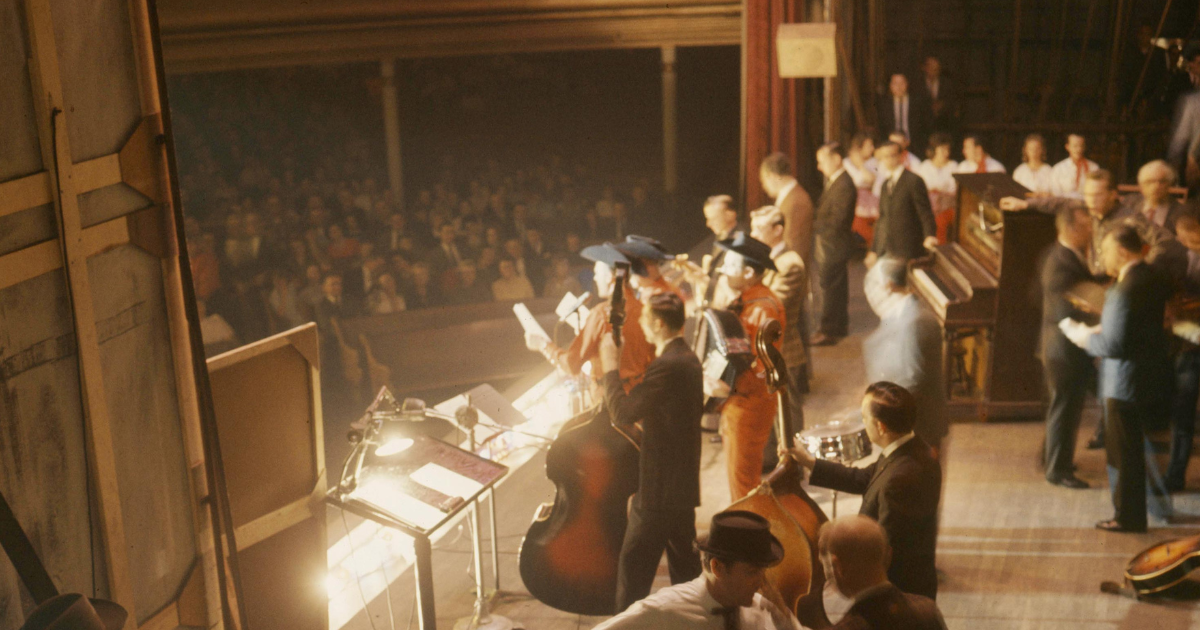
All photos courtesy of Ryman Hospitality Properties, credits and attributions as marked. Lead image: Bill Monroe & the Blue Grass Boys and the Opry Square Dancers take the Opry stage at the Ryman Auditorium in the 1960s.
As the Newest Supergroup in Bluegrass, Mighty Poplar Goes Back to the Classics

At your average live music event on the folk and bluegrass circuit, the stage isn’t the only place where great performances are happening. There’s the campfire and parking lot picking scene at the big outdoor festivals, of course. But a lot of it goes on out of sight backstage, too, when musicians who don’t often see each other come together to play with and for each other. A close approximation to listening in on that is Mighty Poplar (Free Dirt Records), the self-titled first album by the group of the same name.

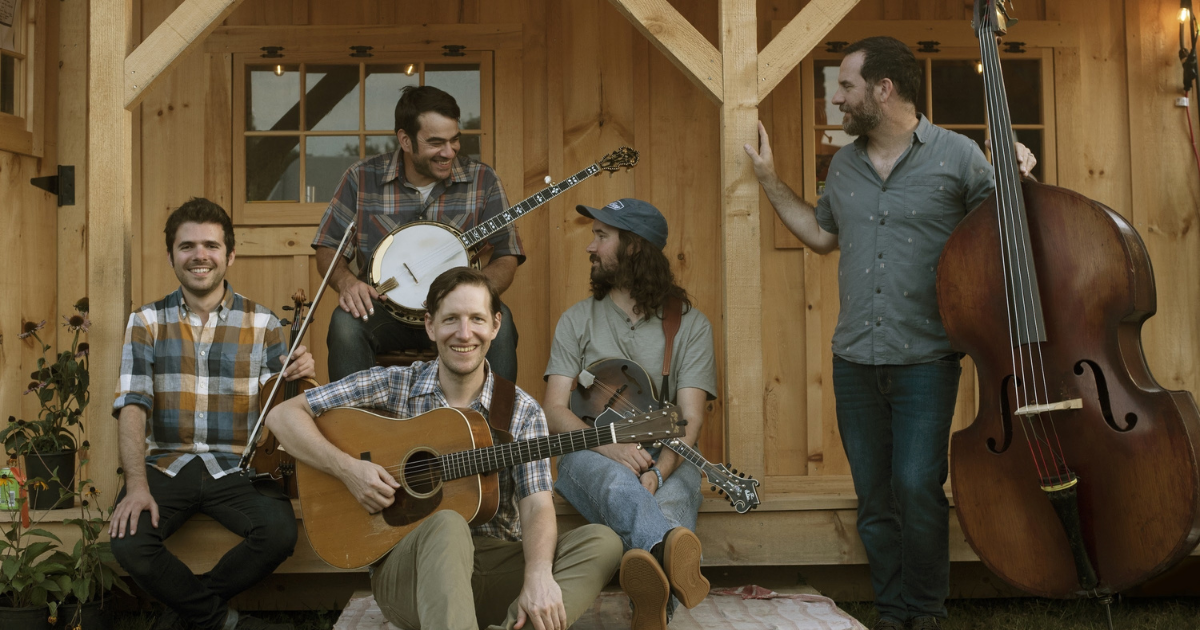
The bluegrass world’s newest supergroup, Mighty Poplar is a five-piece band centered around three virtuoso players from the Punch Brothers orbit — banjo player Noam Pikelny, guitarist Chris “Critter” Eldridge and original Punch Brothers bassist Greg Garrison, currently in the band Leftover Salmon. Out front as primary vocalist is Watchhouse mandolinist Andrew Marlin, with well-traveled fiddler Alex Hargreaves (currently knocking ’em dead in Billy Strings’ touring band) filling out the lineup. Over the years, various subsets of this quintet would cross paths out on the road and jam, generally falling back on the old numbers everyone knew as a common language. That’s how Mighty Poplar began to coalesce.

“There’s a pretty complex web of relationships between all five of us that began with a lot of hanging out,” says Pikelny. “There’s this beautiful thing about bluegrass, the amazing music and all the shared songs. There’s a great social component that can exist with the music if you let it, and it became a reason to get together and have fun.”

While none of Mighty Poplar’s members come from acts you’d really call “bluegrass,” you could say they’re all at least bluegrass-adjacent. And none of them have ever come down as top-dead-center old-school bluegrass as on Mighty Poplar. The album’s 10-song tracklist draws material from A.P. Carter, Bob Dylan, John Hartford and Leonard Cohen, with songs made famous by the likes of Hazel & Alice, Uncle Dave Macon and Bill Monroe fiddler Kenny Baker.

Monroe, the Father of Bluegrass, also figures into the proceedings in terms of inspiration for the ensemble’s name. Proposing Mighty Poplar as a moniker was Marlin, someone who definitely knows his way around names involving wordplay (witness the original name of Watchhouse: Mandolin Orange).

“I was listening to a Bill Monroe and Doc Watson live recording where they were about to kick off ‘What Would You Give in Exchange for Your Soul?’” Marlin recalls. “Bill said he and Charlie recorded it in ’19-and-36’ in Charlotte and it had been ‘mighty poplar down through the Carolinas.’ We had a huge text thread already going about band names, where my phone was always going BING at 2:30 a.m. So many names we considered, but everybody thought Mighty Poplar was a good awning to stand under.”

While Mighty Poplar is only now coming out in the spring of 2023, the album has actually been in the can for a couple of years. It might never have happened without the Coronavirus pandemic shutdown of 2020-21, which took everyone’s regular bands off the road for an extended period of time.

In isolation, everyone felt drawn toward bluegrass as the musical equivalent of comfort food. So they took this on as a pandemic project, convening with engineer Sean Sullivan at Nashville’s Tractor Shed for a brisk three-day session in October of 2020.

“There was a sense that we were getting away with murder, traveling across the country and podding up while everything was closed up,” says Pikelny. “There were logistical hurdles and we had three days, so we had one shot to get it all at once. So we worked out as much as we could ahead of time, even the sequence. The concept, if there was one, was that this was the closest thing to a real-deal, traditional, classic bluegrass project any of us have done in a long time, maybe ever.”

As lead vocalist on six of the album’s 10 songs, Marlin is the primary out-front voice of Mighty Poplar. But he felt like he had to step up his game on the instrumental side, to keep up with his bandmates.

“It was intimidating, but not because those guys are intimidating,” Marlin says. “As a musician, I’ve had to figure out how to feel like I can express myself in front of people I look up to. But that’s on me for projecting my own shit onto them, because they don’t wear that. So ‘Grey Eagle,’ an instrumental fiddle tune Alex brought forth, I was kind of sweating that one in the studio. That kicked off at 150 beats per minute and everybody else is just looking around, casually exploring the nooks and crannies of the tempo while I’m popping a vein and kind of being drug behind the horse. But I managed to keep it together. Ultimately all those guys still love a great song as much as anyone. There’s something about simple songs that leave it up to the player to bring whatever they want. I love it when the song’s not telling you how to play it, and I feel lucky that they were down to explore that approach.”

Song choice was pretty casual, mostly in favor of material from a bit off the beaten path. Even with a Hall of Fame list of songwriters, they focused on less-well-known songs from the repertoire of each — Dylan’s take on the A.P. Carter tune “Blackjack Davy” rather than “Will the Circle Be Unbroken,” or Hartford’s Mark Twang riverboat song “Let Him Go On Mama” rather than “Gentle On My Mind.”

“It all happened pretty organically,” says Eldridge. “In the initial text volley about what to do, there were a lot of songs we would’ve been happy to cut. It’s hard to say why we landed on these particular songs other than that they felt right. I would not say there was an overarching concept beyond good songs that felt right.”

While they considered including some originals, ultimately they decided to stick with covers, mostly of older vintage (the most recent song on it is Montana singer/songwriter Martha Scanlan’s “Up on the Divide,” from 2012). In that way, Pikelny looks at Mighty Poplar as a classic folk record.

“In other genres, people might call this a ‘covers album,’” says Pikelny. “But if you record solo Bach compositions, that’s not ‘Bach covers.’ It’s repertoire, reinterpretations of classics to pass down. It was born of a desire, almost a need for all of us, to gather around a bluegrass project. And it was such a joyous process. It felt like coming home for Thanksgiving or Christmas and being around family you’ve not seen in a while, in the home you grew up in with a turkey in the oven. It was that kind of comfort, the warm fuzzy feelings of gatherings like that.”

It went so well, in fact, that they were in no hurry to get around to the detail work of mixing and mastering the record after they finished tracking. Pikelny says they felt almost paranoid about not wanting to touch it, for fear of messing up a good thing.

“We’ve been sitting on this for so long because it felt like such a special session,” Eldridge says. “So effortless and deeply joyful. Magical, even. We didn’t want to let it go because it felt like all we could do was ruin it. But I kept coming back to it, listening now and then and thinking, ‘I really like this. We have to share it, plus it’s a good excuse for us to get together again.’ It’s ironic that we’ve not actually played it live yet, and we’re already kind of getting the next batch together.”

Indeed, Mighty Poplar’s first real touring commences in May. With Hargreaves busy playing arena-sized venues with Strings for the foreseeable future, John Mailander will stand in for him on the first leg of touring. And all the principles are cautiously optimistic that Mighty Poplar’s first album won’t be its last. Pikelny likens their hoped-for trajectory to Tony Rice and J.D. Crowe’s Bluegrass Album Band, which periodically convened to make albums and tours through the 1980s and into the ’90s.

“Bluegrass Album Band was never a full-time group for any of those guys, it was a very sustainable side project whose records served as homecomings,” says Pikelny. “They’d go off to do whatever else and then come back for another edition. It’s a celebration of our love for bluegrass. As long as it stays as effortless as this felt, I think we’ll keep doing it when we can.”


Photo Credit: Brian Carroll

BGS Top Books of 2018

As we turn the page on another year, the Bluegrass Situation has compiled ten music-related books from 2018 that may appeal to fans of bluegrass, roots, classic country, and yes, even alt-country.

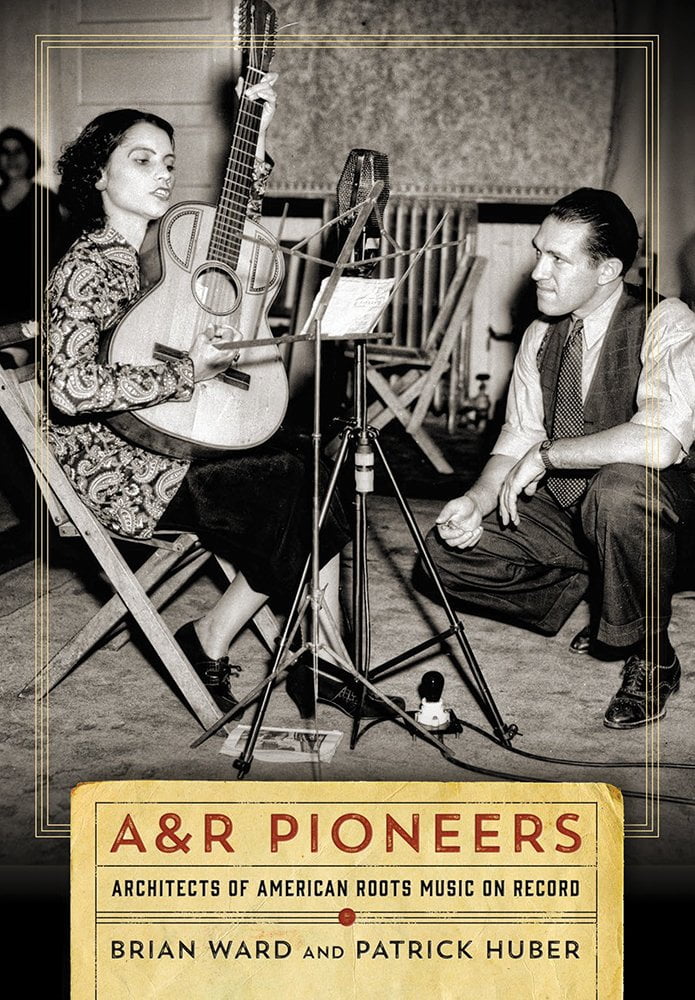
A&R Pioneers: Architects of American Roots Music on Record
Authors: Brian Ward and Patrick Huber
Some musicians just have that “it” factor – as true 100 years ago as it is today. This historical volume looks at the men and women who shaped raw talent for record labels as A&R (“artists and repertoire”) scouts. With an emphasis on roots music, the book focuses on important figures like Ralph Peer, Art Satherley, Frank Walker and John Hammond, as well as many less-celebrated figures. It also acknowledges that some of these A&R executives were not exactly virtuous. Authored by two professors, the project is jointly published by Vanderbilt University Press and the Country Music Foundation Press.


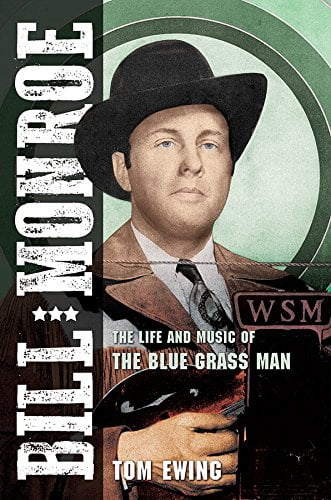
Bill Monroe: The Life and Music of the Blue Grass Man
Author: Tom Ewing
In addition to spending 10 years on the road as Bill Monroe’s bandleader and guitarist, author Tom Ewing may be the foremost expert on the Father of Bluegrass. At 656 pages, this biography ties together Monroe’s personal and professional life without glossing over the tougher times. Ewing writes with the knowledgeable bluegrass fan in mind, making this an especially rewarding book for students of bluegrass and those who are familiar with Monroe’s contemporaries. With hundreds of new interviews and rare access to Monroe’s archive, Ewing is able to build a comprehensive narrative that is likely to become the definitive account of an American music legend.


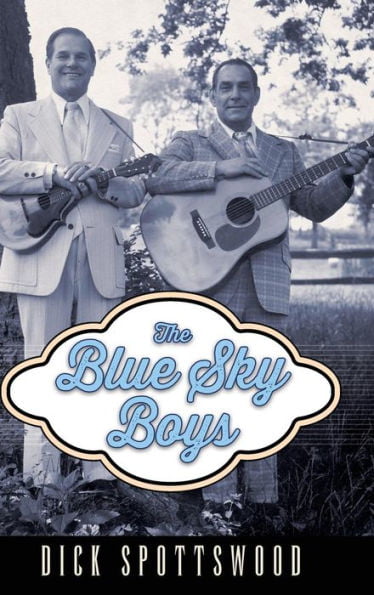
The Blue Sky Boys
Author: Dick Spottswood
Born and raised in North Carolina, the Blue Sky Boys emerged as one of the first and finest brother duos in country music. As teenagers, Bill and Earl Bolick riveted radio listeners in the Southeast with a stunning harmony blend. Earl sang baritone lead and acoustic guitar, while Bill sang tenor vocal and played mandolin, although their music was never fast and high like bluegrass. A deal with RCA Records in 1936 led to appealingly understated recordings such as “The Sunny Side of Life.” Drawing on archived interviews and Bill’s written accounts, this biography also compiles vintage photos and a complete discography.


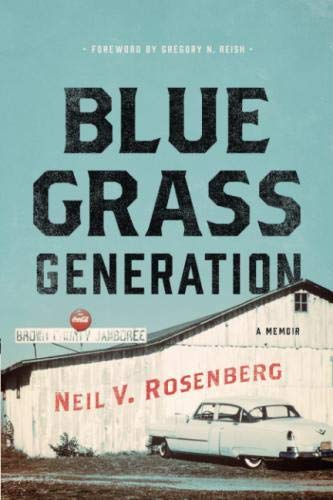
Bluegrass Generation: A Memoir
Author: Neil V. Rosenberg
Author and historian Neil V. Rosenberg vividly recounts his own experiences with Bill Monroe and many other memorable characters at the Brown County Jamboree and the Bean Blossom Bluegrass Festival in the early 1960s. Through these recollections, Rosenberg shows how these seminal concert events helped solidify Bill Monroe as a bluegrass icon. Rosenberg’s scholarly reputation is already well-established, thanks to his prior books and the title of Professor Emeritus of Folklore at Memorial University of Newfoundland. Yet this volume is more personal, as it describes how an eager college student in Indiana became entrenched in bluegrass banjo and the festival scene.


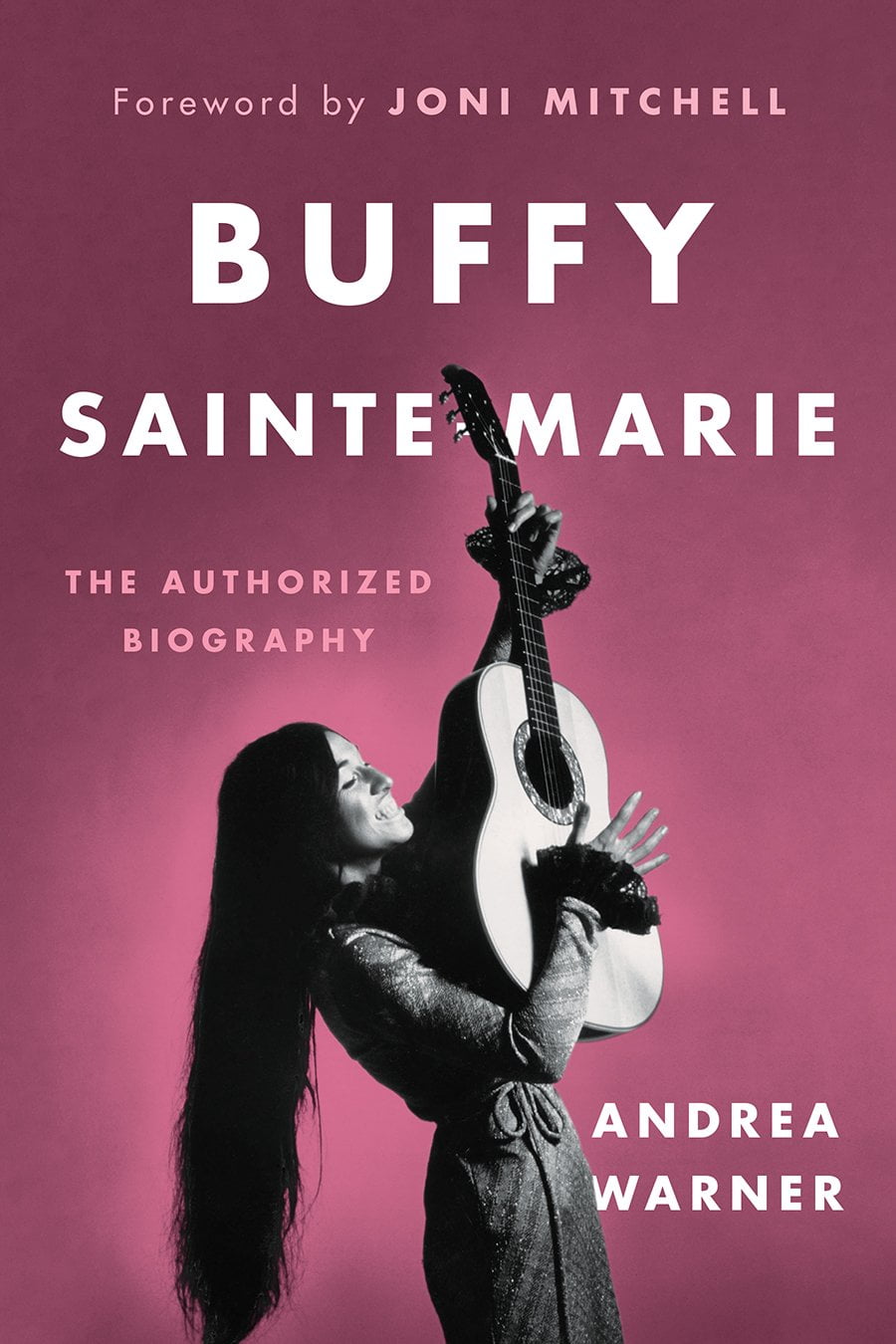
Buffy Sainte-Marie: The Authorized Biography
Author: Andrea Warner
In February, Buffy Sainte-Marie will receive the People’s Voice award at Folk Alliance International in Montreal. Presented to an individual who unabashedly embraces social and political commentary in their creative work and public careers, the songwriter known for the poignant 1964 anti-war anthem “Universal Soldier” fits that description neatly. This approved biography portrays the Cree musician as an advocate for Indigenous rights, as well as a woman who endured a traumatic childhood and intimate partner violence. Feminist author Andrea Warner distilled more than sixty hours of original interviews into an insightful story that illuminates Sainte-Marie’s activism and art.


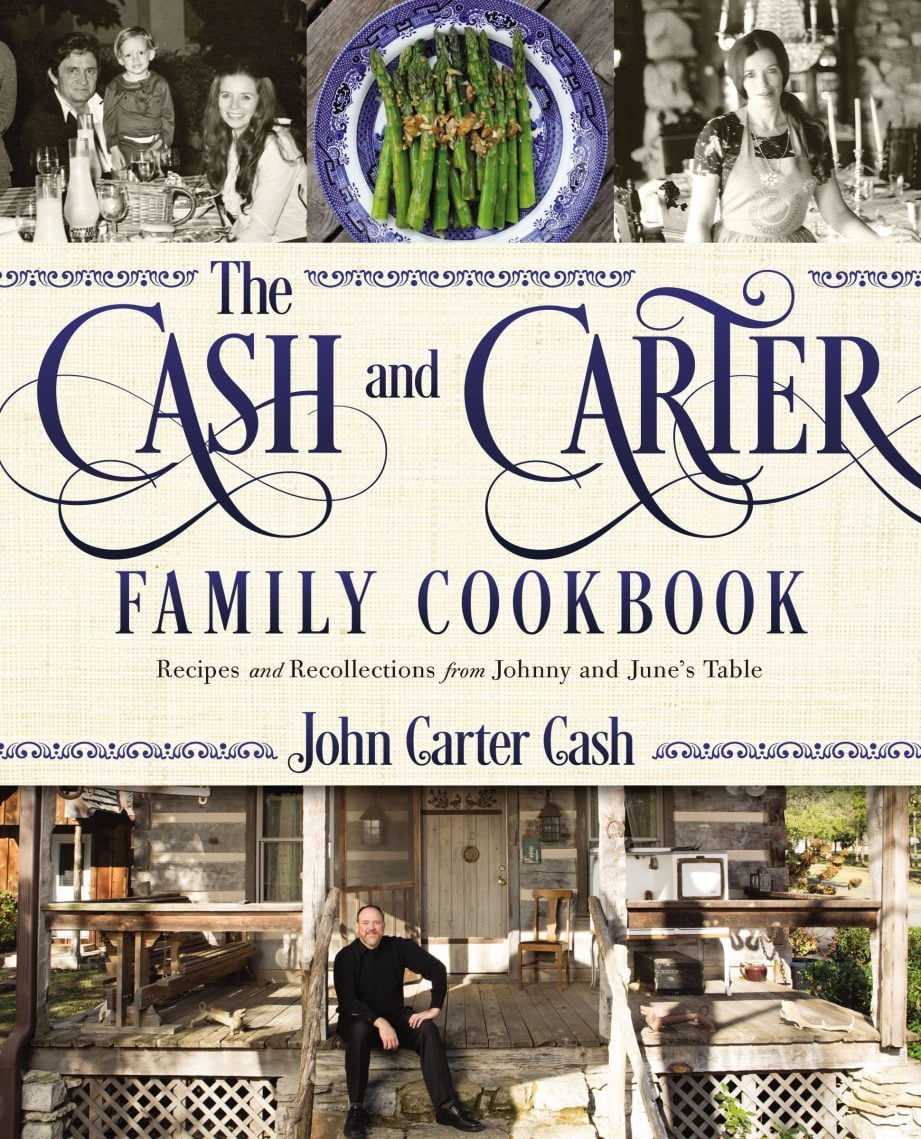
The Cash and Carter Family Cookbook: Recipes and Recollections from Johnny and June’s Table
Author: John Carter Cash
John Carter Cash is a foodie and it shows in this lovely cookbook dedicated to his parents, Johnny Cash and June Carter Cash. Family recipes abound, with the first two recipes being June’s biscuits and Mother Maybelle Carter’s tomato gravy. This isn’t all Southern cooking, however. Johnny and June also liked Asian flavors and vegetarian dishes, including their own veggie burger (a.k.a. Cashburger). The full-color photos are beautiful but the coolest pic is in the front, where the Man in Black presides over a barbecue wearing a white apron and shorts. His famous recipe for Iron-Pot Chili is in here, too.


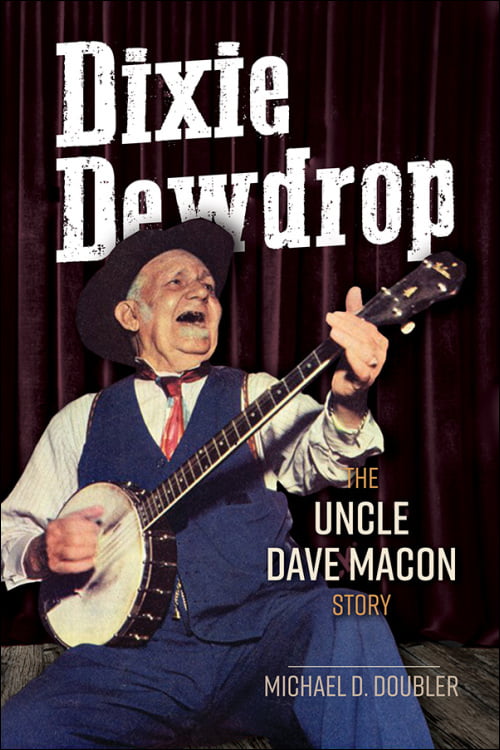
Dixie Dewdrop: The Uncle Dave Macon Story
Author: Michael D. Dubler
Considered the first superstar of the Grand Ole Opry, Uncle Dave Macon is remembered as one of the finest banjo players of his era. This well-researched biography by his great-grandson, Michael D. Dubler, also captures the entertainer’s complex personality. Pulling from original and archived interviews, the narrative provides a detailed account of Macon’s recording output, as well as crucial personal moments, such as his father’s murder in Nashville. Because Macon’s career didn’t really take off until he was 50, the book also conveys just how much strength – both physical and emotional – it took for Macon to stick with it.


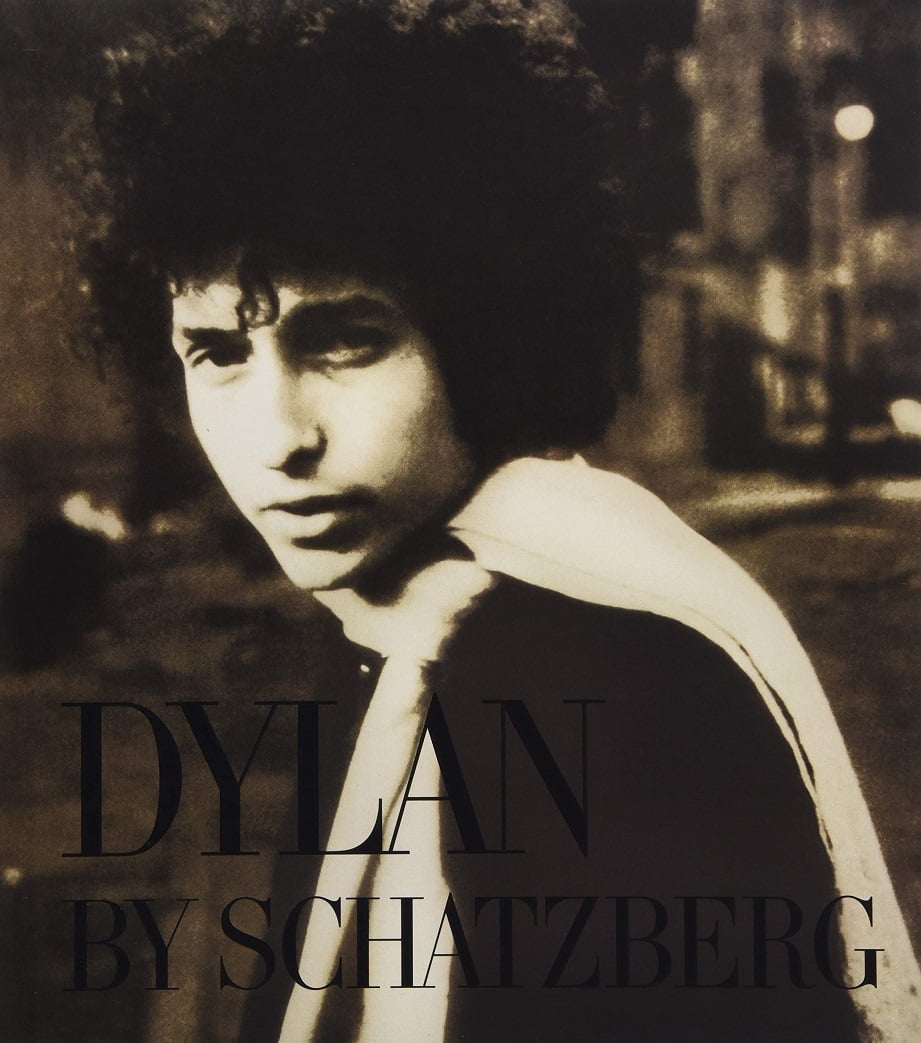
Dylan by Schatzberg
Author: Jerry Schatzberg
Bob Dylan seems the epitome of cool when gazing at the lens of photographer Jerry Schatzberg, who took innumerable pictures of him in the 1960s. Now in his 90s, Schatzberg has compiled personal stories and never-before-seen photos from that era for Dylan by Schatzberg. Inside, the enigmatic subject is documented in recording studios, concert stages, and city streets. For example, Schatzberg snapped the famously blurry Blonde on Blonde album cover in the Meatpacking District in Manhattan. Some believed it was a metaphor for drug use, but Schatzberg says it’s out of focus simply because both men were shaking in the cold.


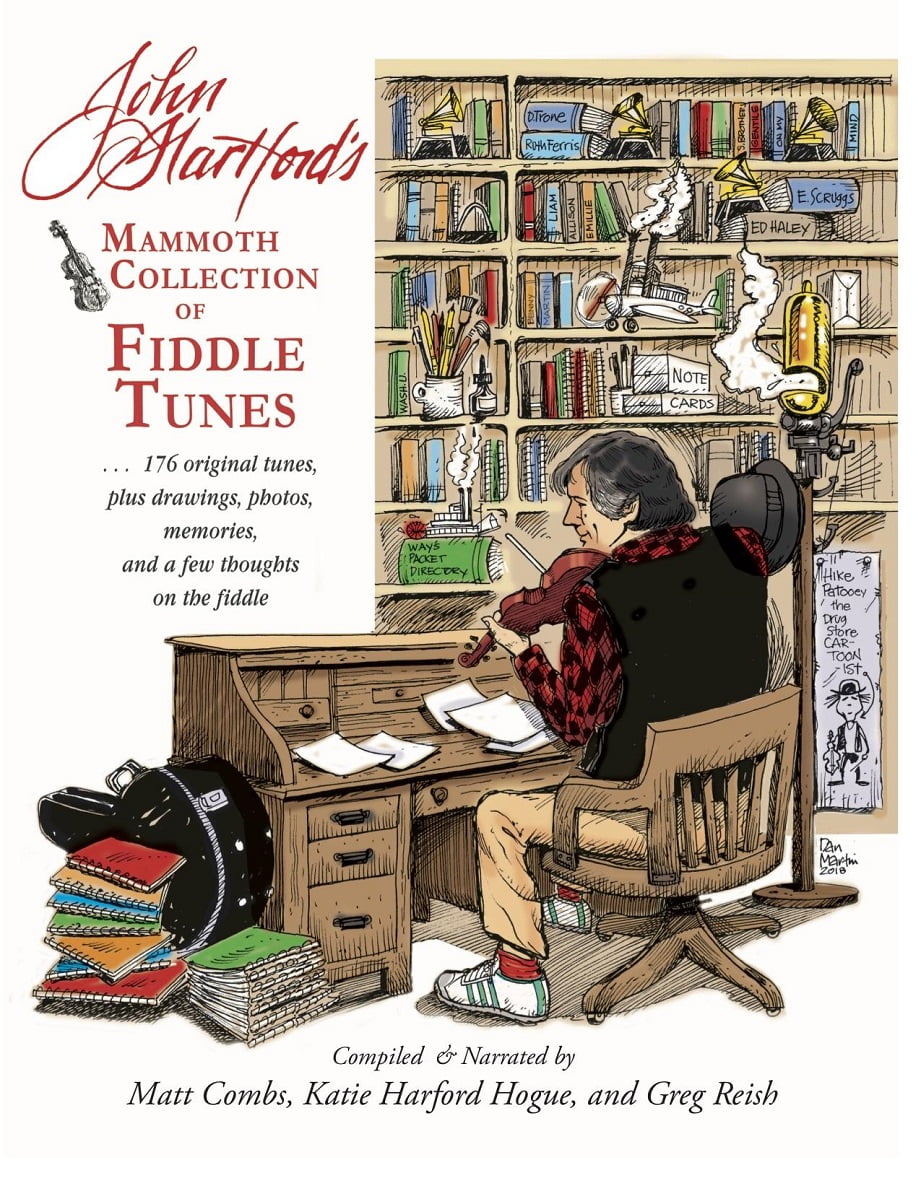
John Hartford’s Mammoth Collection of Fiddle Tunes
Authors: Matt Combs; Katie Hartford Hogue; Greg Reish (Author), John Hartford (Illustrator)
One of acoustic music’s most treasured talents, John Hartford left behind a brilliant legacy that is ceaselessly resonant. This full-color book goes a long way to explain why generations of bluegrass fans continue to admire him. Co-authored by accomplished fiddler Matt Combs, Hartford’s daughter Katie Hartford Hogue, and musicologist Greg Reish, the volume expands beyond career landmarks like writing “Gentle on My Mind” and recording Aereo-Plane. Readers can also peruse 176 original compositions (some never before published), more than sixty of Hartford’s personal drawings, interviews with musicians who still consider him an essential player of American music, and Hartford’s own ruminations on playing the fiddle.


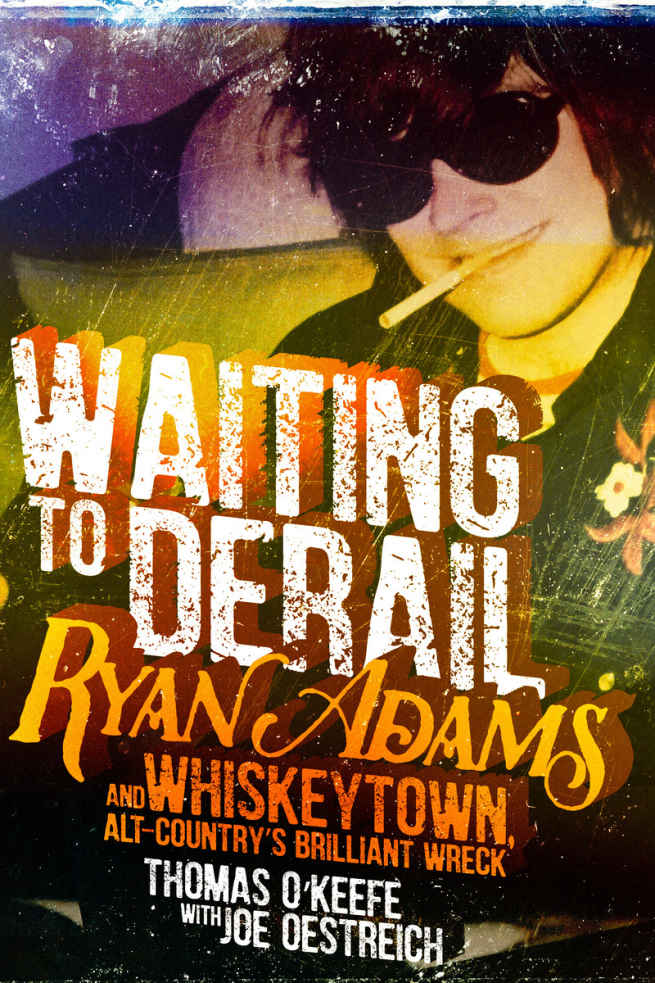
Waiting to Derail: Ryan Adams and Whiskeytown, Alt-Country’s Brilliant Wreck
Author: Thomas O’Keefe
Time has been kind to Whiskeytown’s 1997 album, Strangers Almanac, with country-tinged tracks like “16 Days” and “Yesterday’s News” paving the way for the Americana movement. (Back then it was usually called “alt-country.”) But why didn’t the band have more national success? This candid book written by their former tour manager makes it obvious that Ryan Adams didn’t care about playing nice to fans, venue owners, influential radio programmers or the music industry. Still, there’s an important scene where Adams silences a North Carolina club with “Avenues,” serving as a potent reminder of just how powerful his music can be.