LISTEN: Gina Leslie, “I See You Everywhere I Go”

Artist: Gina Leslie
Hometown: New Orleans, Louisiana
Song: “I See You Everywhere I Go”
Album: No, You’re Crying EP
Release Date: February 11, 2022

In Their Words: “This song comes from a small bedroom in a yellow house in New Orleans, where I was nursing my heart back to health after a never-ending ending. Surrounded by the photos on the walls, dead flowers and love letters, I was spinning in my heartbreak. This song came to light as a call to letting go, even when I know there’s no forgetting. I had all the pieces of the song swirling around for some time, and my good friend Elise Leavy helped me finish the puzzle.

“I started recording my EP just a few weeks before the lockdown, and the project got stalled for months, so I holed up in that same room and recorded my own harmonies to stay busy. The most sparse track on the EP, I wanted to keep the raw and intimate feeling that song was born from. I sent it to my friend Alex Hargreaves and he added a ghostly and melancholy string section that makes the hair stand up on the back of my neck.” — Gina Leslie


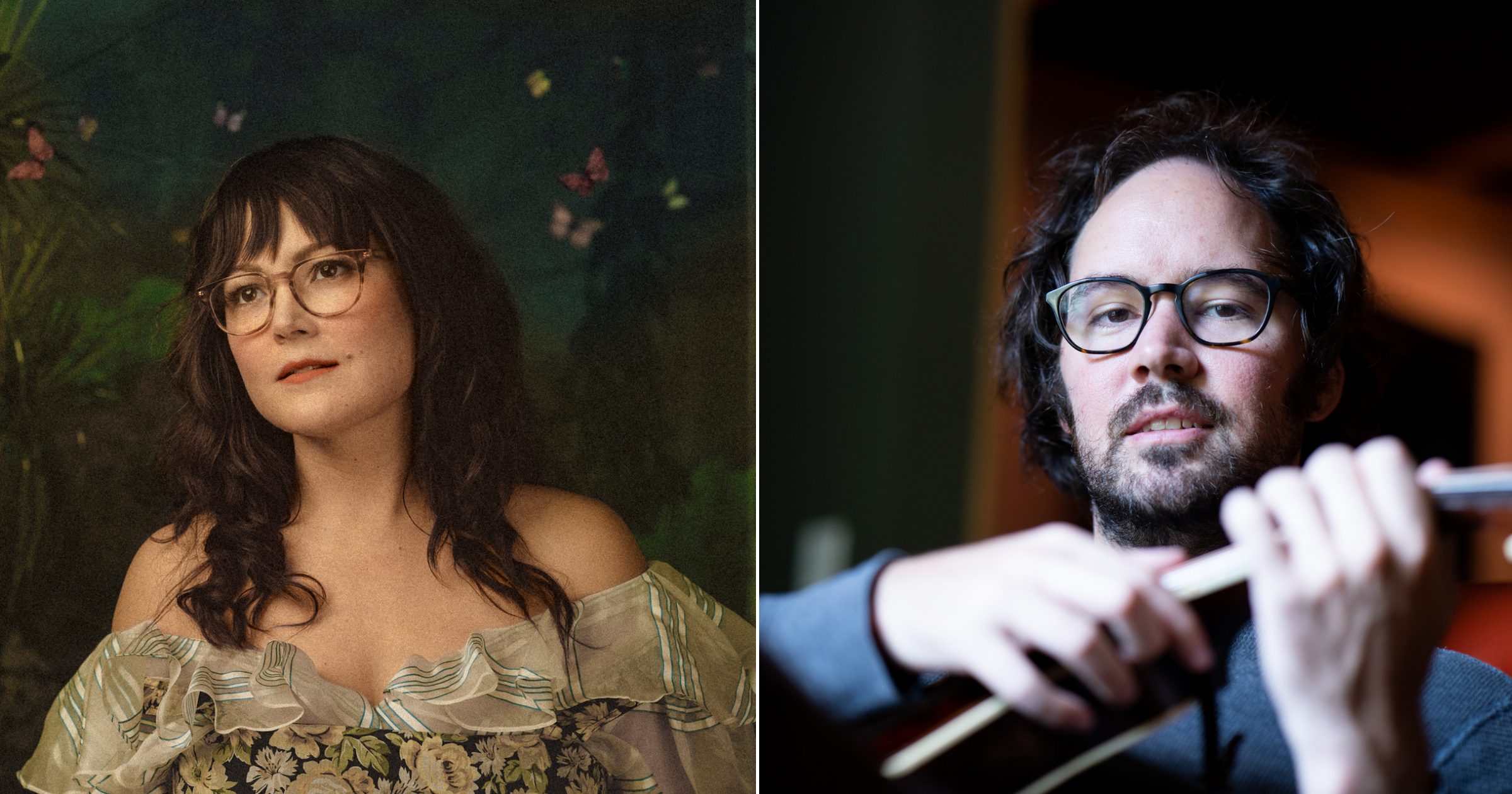
Photo Credit: Noe Cugny

John Reischman’s “Salt Spring,” Tune of a New Old-Time Generation

The “bluegrass songbook,” a suitably vague though well-known concept in bluegrass and old-time circles today, is a phrase that references the collective of songs and tunes most popular and most played by the community that makes up bluegrass and old-time music. Most of the melodies included in this informal — though often gatekept and debated — canon have well established origins, from source recordings, legendary writers and composers, famous performances, and so on. Even so, it’s difficult to trace each and every Bluegrass Album Band hit or Del McCoury favorite back to the beginning, when it was first being adopted and popularized among jam circles, as fiddle tunes, by and for laypeople as much as the performing professionals. 

With material by forebears like Flatt & Scruggs (“Foggy Mountain Breakdown” to “It Ain’t Me Babe”) or Bill Monroe (“Muleskinner Blues” to “Monroe’s Hornpipe”) or the Stanley Brothers (“Ridin’ that Midnight Train” to “Little Maggie”), the Osborne Brothers, Hazel & Alice, Reno & Smiley, and on down the line, it’s not so much a question of why or how their charming, archetypical songs made it to open mics and festival parking lot jams. But in modern times, as in bluegrass days of yore, just as many new, contemporary tunes, songs, lyrics, and melodies are being translated from professional studio recordings, radio singles, and on-stage hits to sing-alongs, play-alongs, and day-to-day jam fodder. And the process by which this happens is, part and parcel, what bluegrass and old-time are all about.

How did “Rebecca” become an almost meme-level instrumental in the past fifteen years? How did Frank Wakefield know that we needed a “New Camptown Races?” How many millennial and Gen Z pickers learned “Ode to a Butterfly” or “Jessamyn’s Reel” note for note? Each modern adoption into the bluegrass songbook, into that unflappable canon, is an idiosyncratic marvel unto itself — and perhaps no modern, original instrumental tune encapsulates this phenomenon better than John Reischman’s “Salt Spring.”

Being a picker myself, I first learned “Salt Spring” in Nashville in perhaps 2012 or 2013, taught to me by fiddlers who encountered the melody from John himself — and through the bluegrass and old-time camp scene in which he’s pretty much a ubiquitous figure, especially on the West Coast, where he lives and grew up. At that point, the song was regarded as a Colorado-grass staple, transplanted east by a regional genre phenotype that celebrates and capitalizes on timeless, sometimes ancient-sounding aesthetics played with chamber music-level intricacies and techniques. The forlorn, winsome — though simple — chord progression in the A part give way to a longing, pensive, and momentum-building B part — and no matter how “Salt Spring” is rendered, as an “everyone play at once” old-time jam song, or a thoughtful chamber-grass slow burn built to a raucous, defiant end, or as a no-holds-barred SPBGMA style MASH number, it’s a chameleonic composition, allowing itself to fit into every single context in which it’s applied. 

“Salt Spring” is truly the instrumental song of the post-Nickel Creek, post-Crooked Still, post-grass generation. As string band genre aesthetics dissolve in the global music marketplace, songs like “Salt Spring” typify this generation’s longing for music that feels honest, true, and real as much as it’s approachable, whimsical, and joyful; songs that celebrate the traditions that became the bedrock of these musics, without being predicated upon militaristic and arbitrary rules to “protect” or propagate those traditions. 

And, though modest to a fault, unassuming, and generally pretty subdued as a person and performer, Reischman has felt this phenomena metamorphosing his composition all along. With his first recording of “Salt Spring” available digitally and writ large, he’s communicating to everyone who loves the song that yes, he knows what it means to us, what it’s become, and what it could grow into still. It’s no wonder then, that when putting together the roster for this new recording and iteration of the track, that he didn’t simply call on his band, the Jaybirds, but he looked to the very generation that’s chosen “Salt Spring” as its own with Molly Tuttle on guitar, Alex Hargreaves on fiddle, Allison de Groot on clawhammer banjo, and Max Schwartz on bass.

A veteran of The Good Ol’ Persons, the Tony Rice Unit, and many other seminal acts of his own generation and time, Reischman knows firsthand the value of cross-generational knowledge sharing and his new album, New Time & Old Acoustic demonstrates this ethos in both conscious and subliminal ways. “Salt Spring” is a perfect distillation of these values and it’s truly fitting, as the tune will forever be enshrined and ensconced in the indelible, if not somewhat squirrelly and subjective, bluegrass and old-time songbook and canon.

(Editor’s note: New Time & Old Acoustic is available for pre-order now.)


Photo courtesy of the artist.

The BGS Radio Hour – Episode 208

Welcome to the BGS Radio Hour! Since 2017, this weekly radio show and podcast has been a recap of all the great music, new and old, featured on the digital pages of BGS. This week, we bring you new music from both our Artist of the Month, Allison Russell, off of her brand new album Outside Child, and from the late Tony Joe White, too — plus much more! Remember to check back every week for a new episode of the BGS Radio Hour.

APPLE PODCASTS, SPOTIFY

Maia Sharp – “Things to Fix”

Moving across the country is stressful enough on its own. At the end of a 21-year marriage, Maia Sharp put her energy directly into working on her new Nashville home — painting one room, then another, and another. She took the idea to her co-writer on “Things to Fix,” relating the things that could have been fixed in her relationship to what she was fixing in the house.

Last Year’s Man – “Still Be Here”

Singer-songwriter Last Year’s Man (Tyler Fortier) explained his new track “Still Be Here” to BGS, relating, “I think we’re all eager for life to get back to what it was in some way or another and this is a love song built out of the idea that it will.”

Casey Driessen featuring Taro Inoue – “Little Cabin Home on the Hill”

Casey Driessen’s recent project Otherlands: A Global Music Exploration, is a self-produced travelogue of on-location recordings, short films, and essays that documents collaborations with masters of regional music in Spain, Ireland, Scotland, India, Finland, and Japan, where he recorded this bluegrass standard with his friend and mandolinist Taro Inoue.

Tony Joe White – “Smoke From the Chimney”

Legendary country singer and songwriter Tony Joe White, who penned hits like “Polk Salad Annie” and “Rainy Night in Georgia,” passed away in 2018, leaving behind quite a legacy of music. However, the material didn’t quite stop after he died. His new posthumous record, Smoke From the Chimney, was recorded a year later in 2019, as producer Dan Auerbach built the music around voice and guitar demos that White had left behind.

Carsie Blanton – “Mercy”

Carsie Blanton wrote “Mercy” for her husband Jon, who helped her find out that love can be a gentle force that allows us to become more ourselves: “Once I discovered that, I was able to envision a whole world of love; a world that’s less about control and more about compassion.”

Angela Autumn – “Sowin’ Seeds”

“Sowin’ Seeds,” the latest track from Americana singer-songwriter Angela Autumn, explores the could-be life of a musician, one of imagined ease and free from sacrifice.

Danny Paisley and the Southern Grass – “Date With an Angel”

Up next is Baltimore bluegrass royalty Danny Paisley with a track off of his newest record, Bluegrass Troubadour. Paisley started out performing in the Southern Mountain Boys with his father, Bob Paisley, and Ted Lundy. Years later, Danny formed the Southern Grass and performs with his own son as well as the sons of Ted Lundy. They’re a two-family, three generation band! Paisley is the most recent IBMA Male Vocalist of the Year, an award he’s received more than once. Listening to Bluegrass Troubadour, you can see why.

Beth Whitney – “I Go”

Singer-songwriter Beth Whitney wrote “I Go” inspired by her family’s tradition of taking backpacking trips and her favorite Wendell Berry poem, “The Peace of the Wild Things.” While she’ll be the first to admit that she doesn’t backpack gracefully, though as blisters and bug bites take hold, “as the wilderness takes me in, it starts to heal me somehow and I come into focus.”

Amy Helm – “Sweet Mama”

“Sweet Mama” is a rock and roll track made with love in Woodstock, NY by Amy Helm with one and only Phil Cook on harmonica!

Allison Russell – “Montreal”

Our current Artist of the Month, Allison Russell, has just released her stunning solo debut, Outside Child, an album that delves deeply into the extreme trauma she experienced in her youth spent in Montreal. We recently spoke with Russell about her experience making the record and the relief that songwriting, music and art can bring.

Mike Barnett featuring Alex Hargreaves – “Piece O’Shrimp”

Mike Barnett, a Nashville-based fiddle player who recently released +1, an album of duets with friends and heroes, had originally slated the album for release in late summer 2020, but was delayed when he suffered a cerebral hemorrhage, putting his career and life on hold. Undergoing extensive rehabilitation, he posted a welcome update in February on his GoFundMe (support here) that a full recovery is still possible and likely! While we’re wishing Mike the best, and supporting his recovery through his GoFundMe, we’re also enjoying a “Piece O’ Shrimp” from his new album, featuring Alex Hargreaves.

Christina Alden & Alex Patterson – “Hunter”

UK-based folk duo Christina Alden & Alex Patterson wrote “Hunter” inspired by an unlikely friendship between a grey wolf and a brown bear, as captured by Finnish photographer Lassi Rautiainen.

Charlie Marie – “El Paso”

Country singer-songwriter Charlie Marie recently joined BGS for a 5+5, that is 5 questions and 5 songs. She talks growing up listening to Patsy Cline, meditating before “big” shows, listening to Frank Sinatra at old school Italian restaurants, and more.


Photos: (L to R) Amy Helm by Ebru Yildiz; Allison Russell by Marc Baptiste; Tony Joe White by Leann White

With Day Jobs on Hold, These Acoustic Musicians Go Solo (Sort Of)

The widespread shuttering of the music industry during coronavirus has given many musicians, bands, and artists the opportunity to inspect and reconfigure their priorities. In the many months since COVID-19 was declared a pandemic, this phenomenon has been well-documented in writing about music — music released as a result of the coronavirus or released in its all-eclipsing shadow, both. Artists have altered so many of the ways they interact with and create music and watching creatives respond to this worldwide cataclysm has been all at once entrancing and existential. 

Especially in instrumental music. Especially in instrumental music made in the off time — away from the “day job,” the main gig, or perhaps, again the off time afforded by COVID. In the gaps, where life allows, acoustic musicians in bluegrass, Americana, and old-time have been exploring the existential questions brought about by the pandemic — and also often by parenthood, by identity, by health and well being, or simply by the pursuit of self — in endlessly fascinating musical endeavors.

Andrew Marlin, co-frontperson of longtime Americana string duo Watchhouse (formerly known as Mandolin Orange) released not one but two albums of such endeavors this year, ostensible results of introspection of his role as a father, fighting-while-resigning-to the day-to-day beauties and fears within fatherhood. There’s a bleak, beautiful nakedness to “The Jaybird,” off Fable & Fire, an age-old sounding fiddle tune with sleek, modern simplicities that seem to indicate the gorgeousness possible from being still, watching, waiting, and listening. 

On Witching Hour, “Too Hot To Move” isn’t a barn burner, it’s a Musgraves-level slow burn; a tepid, mosquito-laden, languid afternoon on a back porch, the air thick with humidity. Again, striking in its display of the delectable everyday, in not just occupying the same place with the same people daily, but inhabiting that place with intention. Marlin’s backing band of Clint Mullican (bass), Josh Oliver (guitar, piano, and more), Jordan Tice (guitar, bouzouki), and Christian Sedelmeyer (fiddle) is largely consistent between the projects as well, reiterating this point.

Sara Watkins, known for many a “main gig” — whether that be Watkins Family Hour, Nickel Creek, or I’m With Her — released another fantastic solo offering, built on many of the same tenets evident in Marlin’s recordings. Under the Pepper Tree, whose title track is the album’s sole instrumental, is a whimsical, winking collection of near-lullabies and other ageless classics rendered as only Watkins could, with pop underpinnings and gloss, but a worn, charming patina of bluegrass and Americana via the American Songbook and its associated canon. 

“Under the Pepper Tree” listens like a fiddled campfire coda to a day on the trail; or, similarly, as if a goodnight to Watkins’ young daughter, after returning from tour. While the album as a whole carries the movement and adventure of the Wild West, as well as theatre and cinema and gaiety, its sense of place — of rootedness — is remarkable, especially in “Under the Pepper Tree,” oozing of lessons learned and intentions made underneath its boughs through pandemic isolation. 

Continuing on fiddle, Mike Barnett’s non-Ricky Skaggs & Kentucky Thunder project released in 2020, +1, feels like somewhat familiar territory, a collection of duets with friends and musical compatriots that stretches out purposefully and athletically from his tours with the Country Music Hall of Famer (who also appears on the album). “Piece O’ Shrimp,” with guest Alex Hargreaves on twin fiddle, is wonky, newgrassy, orchestral, and sly with old-time baked in and a dash of Darol Anger & Mike Marshall’s duet work. 

The poetry in the tune, and the entire project really, came from a health-related pausing of a different kind, though. While the rest of us felt the world halt due to the coronavirus, Barnett’s record release, as well as his performing career, were unexpectedly paused when Barnett suffered a cerebral hemorrhage in July 2020. This collection of songs gains an entirely new meaning, not only in the context of COVID-19, but also as a waypoint on Barnett’s journey through music, his recovery, and his eventual return to playing. Still in in-patient rehabilitation and therapy, Barnett posted an update via GoFundMe (support here) in February 2021 that closed, “…A full recovery is possible and likely!” 

Finally, to conclude our foray into solo instrumental explorations, Sam Armstrong-Zickefoose, multi-instrumentalist and songwriter of Meadow Mountain, considers ideas of place, identity, and belonging on his upcoming crowdfunded release, Spark in Your Smile. Decidedly forsaking tradition-adjacency, perhaps more than might be expected if a listener’s entry point is Meadow Mountain, the album is a testament to Armstrong-Zickefoose’s commitment to community building; he’s utilizing music and creative expression for that purpose. The expansive quality of the project’s lack of genre conjures joy first and foremost, especially on “Mona,” and globe-crossing communities as a near second, each instrument, texture, and tone evidence of what’s possible when roots music allows folks to be and to belong. A priority high on everyone’s list, but especially queer folks in bluegrass, old-time, and Americana like Armstrong-Zickefoose.

As touring bands return to the road, it will continue to be fascinating to watch musicians navigate the reconfiguration of their priorities — and how they will continue to carve out the time to express themselves, instrumentally and otherwise, while life, and the music industry, charges on ahead.


Photo credit: Sara Watkins by Jacob Boll; Andrew Marlin by Lindsey Rome.

WATCH: Garrison, Gordy, Hargreaves, Walsh, “Sports”

Artist: Garrison, Gordy, Hargreaves, Walsh
Hometown: Brooklyn, New York/Denver, Colorado/Portland, Maine
Song: “Sports”
Album: Bluegrass and the Abstract Truth
Release Date: April 16, 2021

In Their Words: “Instrumental tunes are wonderfully subjective, like little movies whose narratives and meanings can transform and reflect the places they’ve seen. ‘Sports’ started as a little tune in my head riding the D train home from Manhattan to Brooklyn, and had its first public appearance on a local jazz gig. It followed me around, enjoyed some unveilings in the UK under a few different titles — I think I even took a fruitless audience survey to come up with a fitting appellation. When we went into the studio to record this group, its true title came to light and Joe, Alex, and Greg expressed its shifts of mood and character masterfully. We were so delighted to see our friend Danny Barnes’ take on what ‘Sports’ was communicating, and the video he made couldn’t have been a better fit for the mood of the piece.” — Grant Gordy


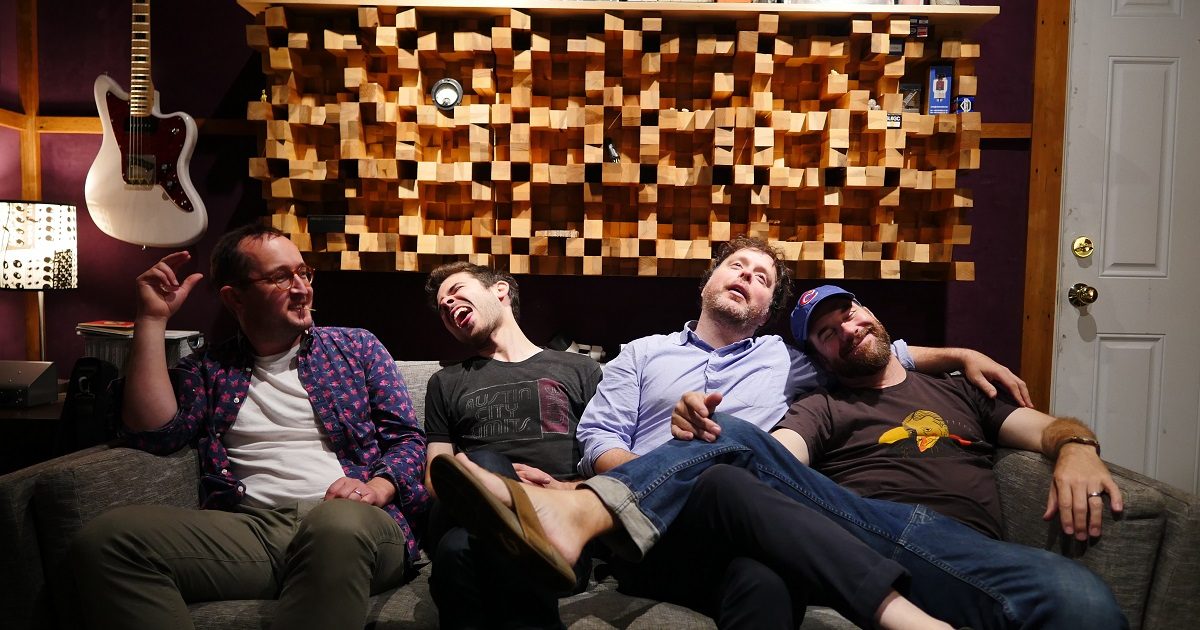
Photo credit: Dan Cardinal

Sam Reider, “Trio Sonata”

All disbelief suspended, composer and accordionist Sam Reider’s work is essentially string band music. Yes, he’s an accordionist (which shouldn’t really be remarkable, because… Sally Ann Forrester), and yes, Eddie Barbash plays saxophone on the most recent album, The Human Hands EP, but we’ve suspended disbelief here for a reason. Whether the rest of the band were rounded out by Dominick Leslie, Duncan Wickel, Alex Hargreaves, Dave Speranza, and Roy Williams or not, these tunes would feel fiddle-y. They’re folky and down-to-earth and approachable and danceable and they cheekily, defiantly traipse across the borders of bluegrass. 

The truly remarkable thing about this music is not this feat in the face of (gasp) an accordion and a saxophone!? It’s that these folky-feeling tunes are… composed. These melodies and ideas are directly tied to a musical history and tradition often regarded as devoid of any idea rootsy or vernacular. “Trio Sonata,” a two-part composition on the new The Human Hands video EP, draws from the Baroque trio sonata, a 400-year-old musical form that derived from popular dances of the day. The three parts of Reider’s “Trio Sonata” are I. Reel, II. Jig, and III. Breakdown, amounting to an unlikely, four-century-old parallel to modern fiddle contest song selections. 

In this way, there’s a satisfying sense of symmetry to Reider’s idiosyncratic approach to fiddle-oriented instrumental music. It defies any so-called logic we might try to use to justify certain genre designations, it mocks the idea that we ought try to delineate between “classical” versus “folky” approaches to writing and creating music, and perhaps above all else, the music centers dance. Movement is certainly a unifier, and in this case, it unifies all of these musical eccentricities — from squeezebox to Bill Monroe to Baroque compositions to sax — in a perfectly digestible package.

LISTEN: Carrie Newcomer, “Shelter of the Sky”

Artist: Carrie Newcomer
Hometown: Bloomington, Indiana
Song: “The Shelter of the Sky”
Album: The Point of Arrival
Release Date: March 22, 2019
Label: Available Light Records

In Their Words: “Growing up near Lake Michigan, you learn to love expanses of sky and freshwater, so I have always felt a certain kind of homecoming under the dome of an expansive sky. No matter where I am, there is the dome, the wide arms of something always changing but timeless. Because I am a touring musician, I am often a stranger who is far from home. It is easy to get ungrounded when you travel so much. But everywhere I go, there it is again, my feet on the earth and the dome of the sky above.

“The musicianship on this album and this song is nothing less than joyous. What a delight to work with such brilliant and totally original artists — Jordan Tice, Tristan Clarridge, Alex Hargreaves, Moira Smiley, Joe Phillips and Gary Walters. Together it felt like we created something that moved and expanded like fast-moving cloud banks, opening up into solos that felt like flying.” –Carrie Newcomer


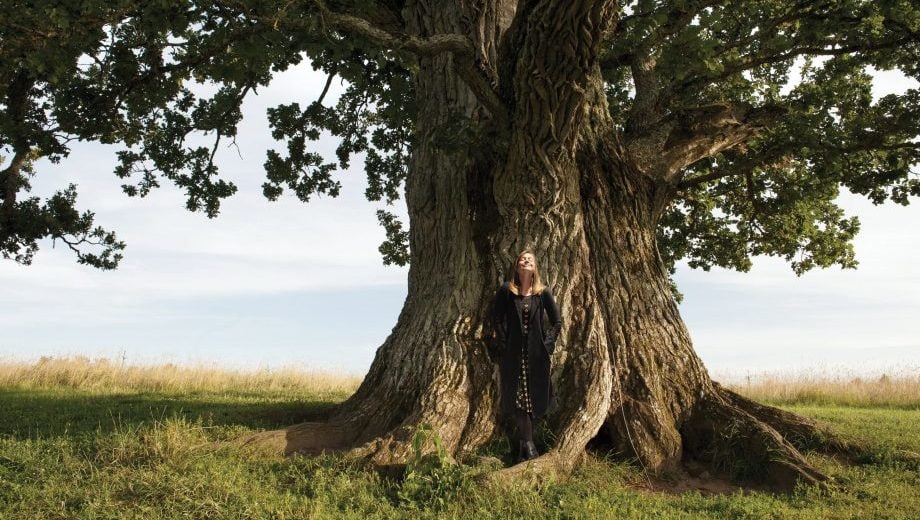
Photo credit: Hugh Syme

Sam Reider, ‘Valley of the Giants’

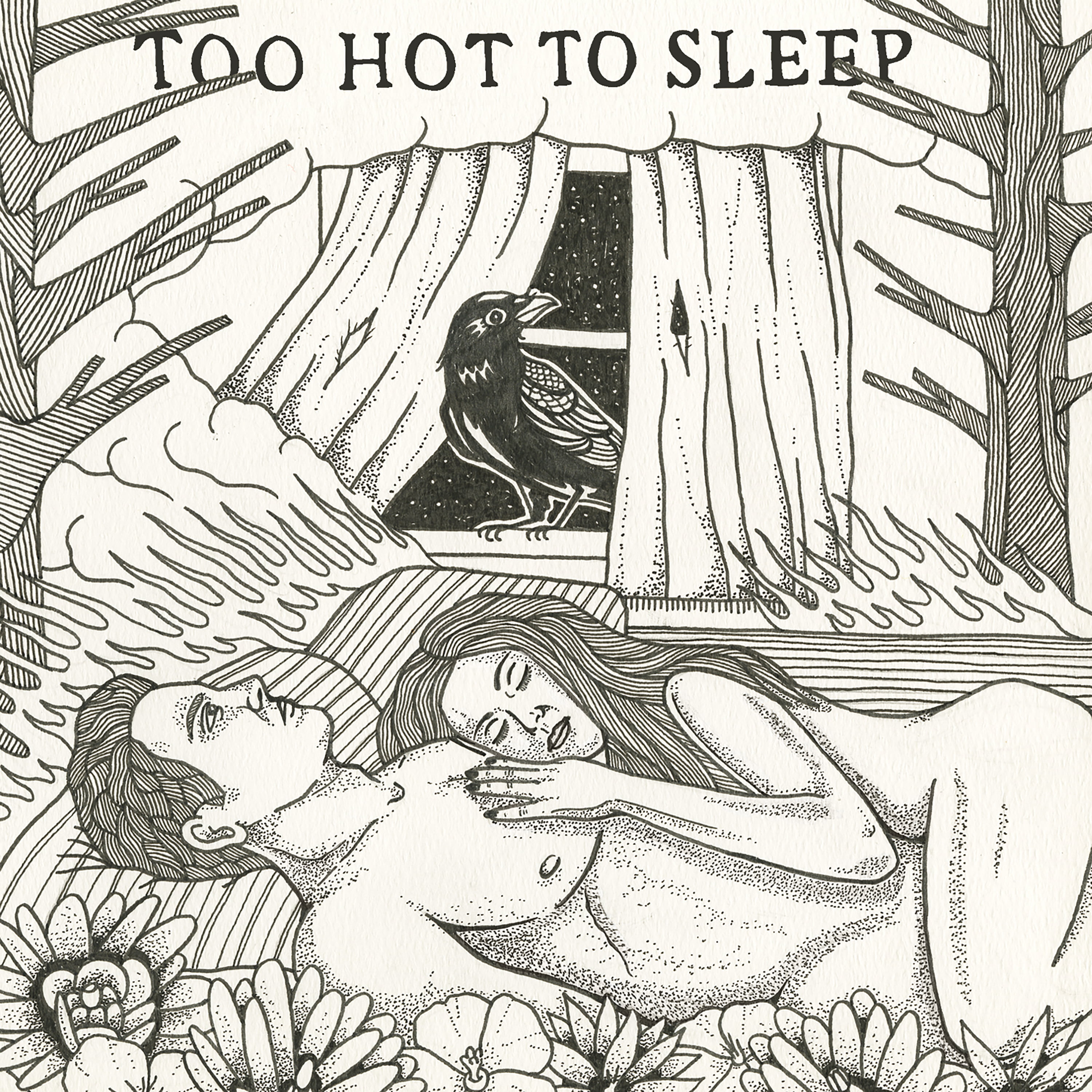
Accordionist, pianist, and composer Sam Reider was inspired by wandering through the surreal landscape of Valle de los Gigantes in Baja California, Mexico. The park is named for the gargantuan cardón cactus, a species that resembles saguaros of the U.S., but grows larger and taller and can live longer than 300 years. It might seem that the Sonoran desert — dotted by enormous, otherworldly plants — would evoke meditative, minimal, dreamy sounds — a musical reflection of desolation and austere beauty — but “Valley of the Giants,” off Reider’s debut album, Too Hot to Sleep, is anything but.

It’s rollicking and frenetic, lilting and energetic — more like the Wild West, replete with stampedes and tumbleweeds, than a silent, spiritual desert. The album’s roster of savvy pickers (Dominick Leslie on mandolin; Alex Hargreaves on fiddle; Roy Williams and Grant Gordy on guitars; David Speranza on bass; and Eddie Barbash on saxophone) pull from their overarching bluegrass expertise to drive the tune forward at a pace just shy of breakneck, galloping-horse-chase soundtrack speeds. Dashes of folk influences from around the world are sprinkled into its string band aesthetic like melodic Easter eggs. Reider’s accordion is the unyielding anchor, giving a dose of soulful, raw timelessness, but with a modern crispness and confidence. Somehow, it simultaneously conjures arid Baja and transatlantic scenes in an Irish pub or the countryside in France. It’s like a mini-vacation, wrapped up tidily within an instrumental.