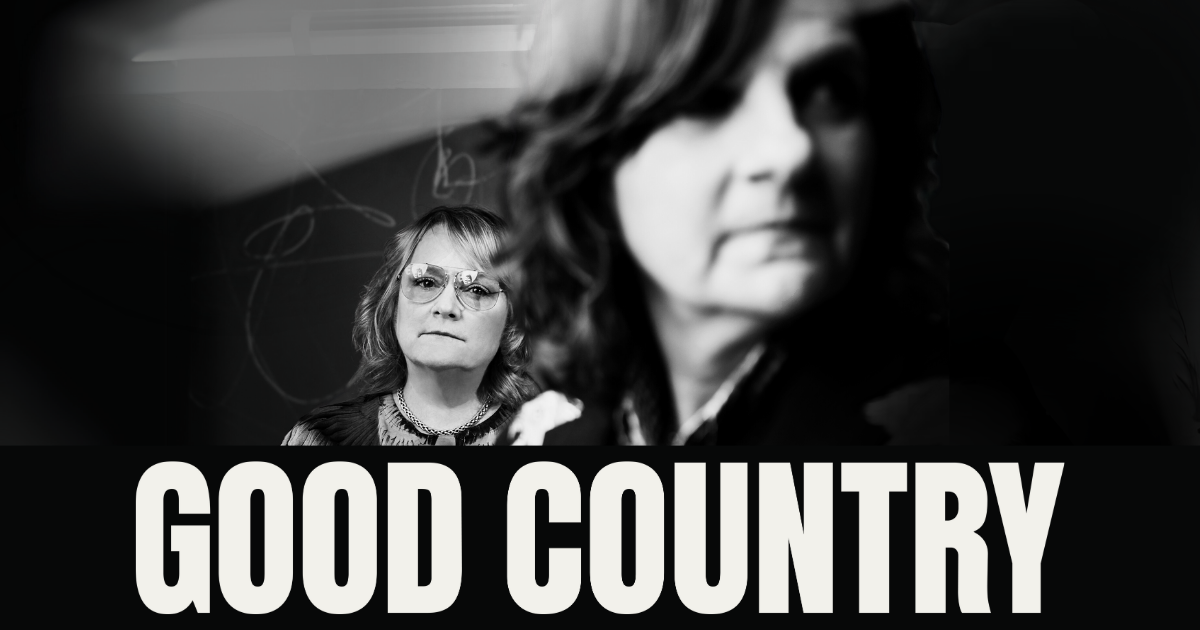
LISTEN: India Ramey, “Montgomery Behind Me”

Artist: India Ramey
Hometown: Nashville, Tennessee
Song: “Montgomery Behind Me”
Album: Shallow Graves
Release Date: September 4, 2020

In Their Words: “‘Montgomery Behind Me’ is somewhat autobiographical. I got married young, the first time. My first husband (who is a nice man) was from a ‘good family’ in Montgomery. I was not, so I was a square peg in a round hole. I just never fit, not with him, not with anyone there. I felt guilty for not being happy and not making everyone else happy. Eventually I had to accept that my time there was an exercise in futility. I also had to muster the courage to accept who I am and be not just OK with it, but be happy about it. When I would think about leaving, I had this vision of me heading down that long, flat highway with the small Montgomery skyline behind me and never looking back. Above and beyond the personal stuff, this song is a refusal to people-please and an acceptance and liberation of one’s true self.” — India Ramey


Photo credit: Stacie Huckeba

WATCH: Molly Tuttle, Old Crow Cover Neil Young’s “Helpless” for WhyHunger

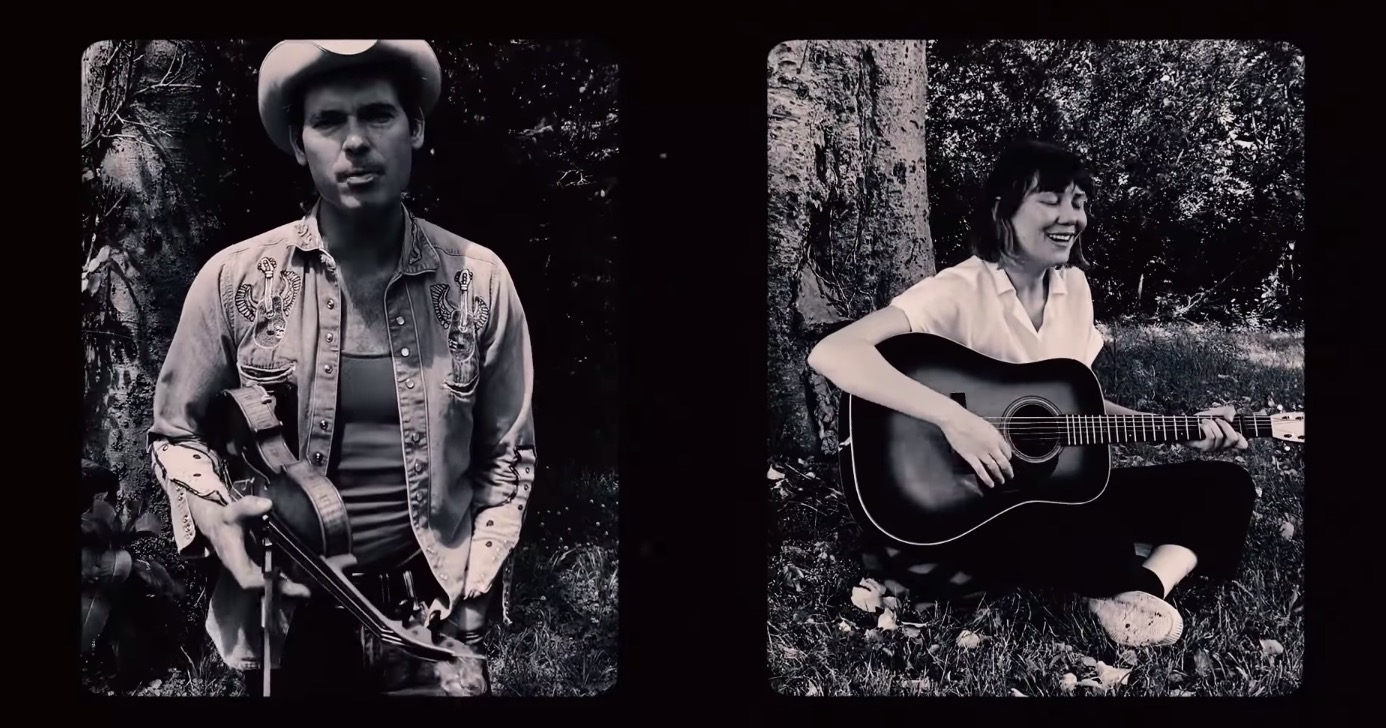
Molly Tuttle and Old Crow Medicine Show have combined their voices to bring attention to a terrible byproduct of the COVID-19 pandemic. Together the BGS favorites cover Neil Young’s “Helpless,” spreading awareness and raising funds for WhyHunger, which works to eradicate hunger through community solutions rooted in social, environmental, racial and economic justice.

The accompanying music video for “Helpless” shares eye-opening statistics detailing what the coronavirus has meant to families and individuals facing food insecurity in the U.S. and around the world. WhyHunger aims to establish an understanding of food as a basic human right and to address structural inequities that cause varying degrees of access to food. Tuttle and Old Crow are further supporting WhyHunger by donating all proceeds collected from this track to the organization. 

Watch “Helpless” right here, and consider giving to WhyHunger to support this critical work.


LISTEN: Kris Delmhorst, “The Horses”

Artist: Kris Delmhorst
Hometown: Buckland, Massachusetts
Song: “The Horses”
Album: Long Day in the Milky Way
Release Date: August 14, 2020
Label: CEN/The Orchard

In Their Words: “For me, Rickie Lee Jones represents artistic fearlessness and uncompromising freedom. Her work always offers the inspiration to take risks and reach farther. She’s a deep musician and a serious student of song — I love her covers records so much — but she’s also a free-range seeker, unhindered by the boundaries of genre. There’s such curiosity, joy, humor, and deep compassion running through all of her music.

“I don’t generally include covers on my albums, but while we were in the studio for this one we caught a version of ‘The Horses,’ and it ended up feeling like it belonged. I love how it resonates with the record’s themes, persistence and struggle and hope. And I love the idea of RLJ’s presence gracing the proceedings like an honored guest, a patron saint.” — Kris Delmhorst


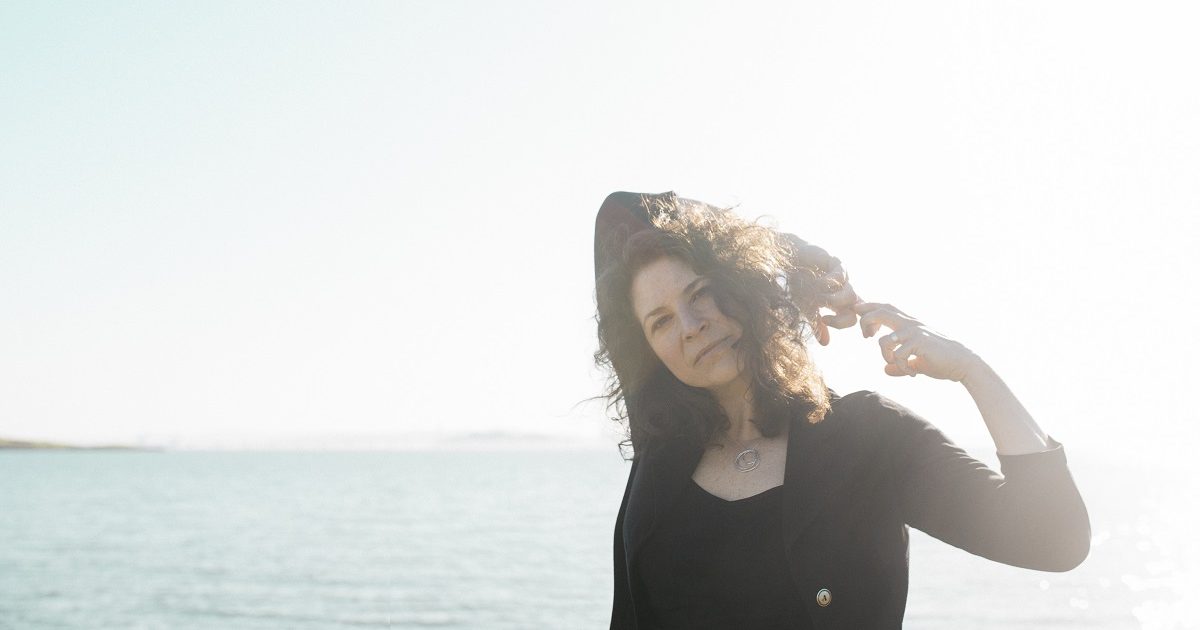
Photo credit: Brittany Powers

BGS 5+5: Ondara

Artist: Ondara
Hometown: Nairobi, Kenya
Latest Album: Folk n’ Roll Vol. 1: Tales of Isolation

Which artist has influenced you the most … and how?

I accidentally discovered Bob Dylan’s music after losing a bet about the authorship of the song “Knocking on Heaven’s Door.” I was 17 years old at the time, a confused and troubled teenager, uncertain about his future. I enjoyed writing stories, but I didn’t know how to turn any of that into a career. The pressures from everyone I knew, to pursue a more traditional career such as law or medicine were mounting; but I felt an itch for something else. Something I was unable to name, unable to imagine, and with no guidance or encouragement I had no way of discovering what it was.

Finding Dylan was like a scratch to that itch. After listening to records such as Freewheelin’, Highway 61, and Blonde on Blonde, and being completely taken by the writing, I was hit by a burst of inspiration. I had this very wild thought that perhaps I could turn the stories I’d been writing into songs, then I could travel the world and play those songs, and perhaps I could turn that into some kind of a career. It was a crazy and impractical thought since there was no path from where I was to anything like that, but it was something to dream about. Whether the dream came true or not was irrelevant, sometimes as a boy you just need a dream, and finding Dylan is what showed me that dream. “A boy’s devices will always create mayhem, therefore a boy needs a dream, because without a dream the boy is left to his devices.”

What’s your favorite memory from being on stage?

I played a show in Paris last year at a venue called Élysée Montmartre. It was a very memorable show for a few reasons. At the time, I was touring Europe playing shows solo with my guitar, but for that Paris show I wanted to do something different since it was going to be a bigger concert than the rest. I decided I would put together a band. I asked my team to contact some musicians and we assembled a last-minute band just a few days before the show. None of the musicians knew the songs prior, and we only had time for one short rehearsal.

Despite being entirely unprepared it ended up being one of my favorite shows. There was a magical feeling that we were all speaking the same language. The musicians and I understood the language as we played the songs as though we had been playing them for years; the audience understood it as well as they listened to us play. By only communicating in this universal language of music we all had a communion of spirit. This communion is what I miss the most, now that concerts have become rare.

At that same concert, the lights went out towards the end of the show; for about 15 minutes of black out the audience lit the room with their phones and took over the show by singing a new song I had taught them. A memorable night it was. It always is in Paris.

If you had to write a mission statement for your career, what would it be?

We go through most of life on autopilot. The piloting mechanism being cultures, trends, upbringing, education, trauma, and many other things that define us yet we have no control over them. Stories and other forms of art are a mirror to this subconscious state of the society, a way for us, the participants of life, to view ourselves. In a way it is how we watch ourselves sleep. And as we view ourselves, we see our folly.

We have a better chance of fixing our faults if we can see them. If we can’t see them, then we’re not consciously aware of them, and if we’re not aware, then there is nothing to fix. So then people remain oppressed because we have become hateful and uncaring but we can’t see it. Stories are a conduit to compassion, and I am of the mind that compassion is the medicine, so if I had a mission statement, it would be to tell many stories and to tell them far and wide.

What other art forms — literature, film, dance, painting, etc. — inform your music?

Gazing at paintings is one of the things that bring my ever-racing mind a few moments of quiet. I get lost in them in a meditative way. When I was younger I thought paintings spoke to me; not in a figurative way, but in a literal fashion. They would tell me the sorrows and joys of the world, and I would write them down in the form of stories. Now in my adulthood, I still hear them, I’m just more aware that it’s my mind being slightly insane.

What was the first moment that you knew you wanted to be a musician?

I accidentally found a song called “Forget Her” by Jeff Buckley when I was about 9 years old. It was the early 2000s and back home in Nairobi, pirated music was as prevalent as the ubiquitous roasted maize, sold on the streets. Music vendors would set up shop in markets or by the streets; they would go online and download random songs, put them on a CD and sell them. Oftentimes, nobody knew the songs they were selling, not even the vendors knew them. They just downloaded random songs online, an attempt at finding something interesting to sell to increase their income at a time of economic difficulty. In the streets, they would advertise the music by playing it loudly to invite customers, sometimes they would call you as you walk past and ask you to listen to some of their new downloads. If you liked a song you would then buy the CD. It was like wine tasting but for music.

I found many bands that I fell in love with that way: Jeff Buckley, Death Cab for Cutie, Radiohead, among others. Finding that song “Forget Her” was a pivotal moment for me. I was so fascinated by Jeff’s singing that I would lock myself in my room and try to imitate him. I was always fascinated by words, but around this time is when my interest in singing began. Since then, I always knew I wanted to be a musician but because there was no path towards a career of that kind, that desire remained stifled until much later when I couldn’t ignore it anymore, and when the universe conspired to send me to America.


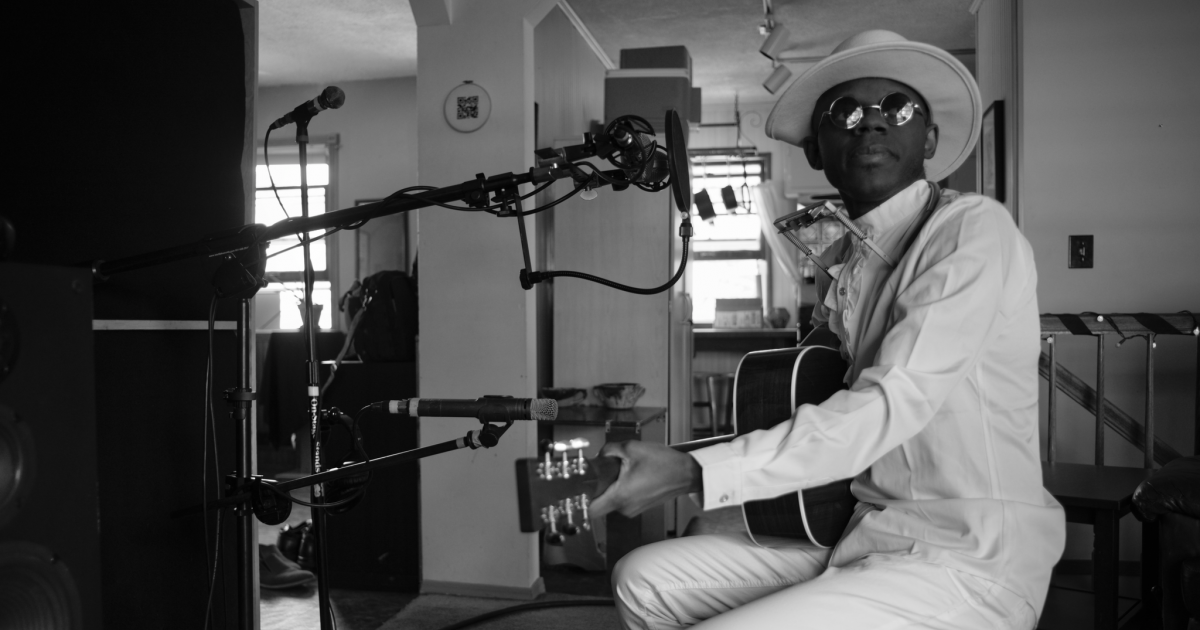
Photo credit: Ian Flomer

LISTEN: William Matheny, “Mind for Leaving”

Artist: William Matheny
Hometown: Morgantown, West Virginia
Song: “Mind for Leaving”
Album: Split 7″ single with Frontier Folk Nebraska
Release Date: July 11, 2020
Label: Soul Step

In Their Words: “‘Mind for Leaving’ was written and recorded in January, which feels like approximately 800 years ago at this point. In between tour dates, we holed up in a cabin outside of Point Pleasant, West Virginia (home of the Mothman, Shawnee leader Hokoleskwa and Mister Bee Potato Chips). No one was socially distancing yet, but given the set and setting, it felt like we got an early jump on it. Like most Januarys, I remember the days being brief, gray and severe. I finished the song while the mics were getting placed and we arranged and tracked it that same afternoon. It was just the way my band and I like to work: quickly, without distractions and, hopefully, no cell phone service.” — William Matheny


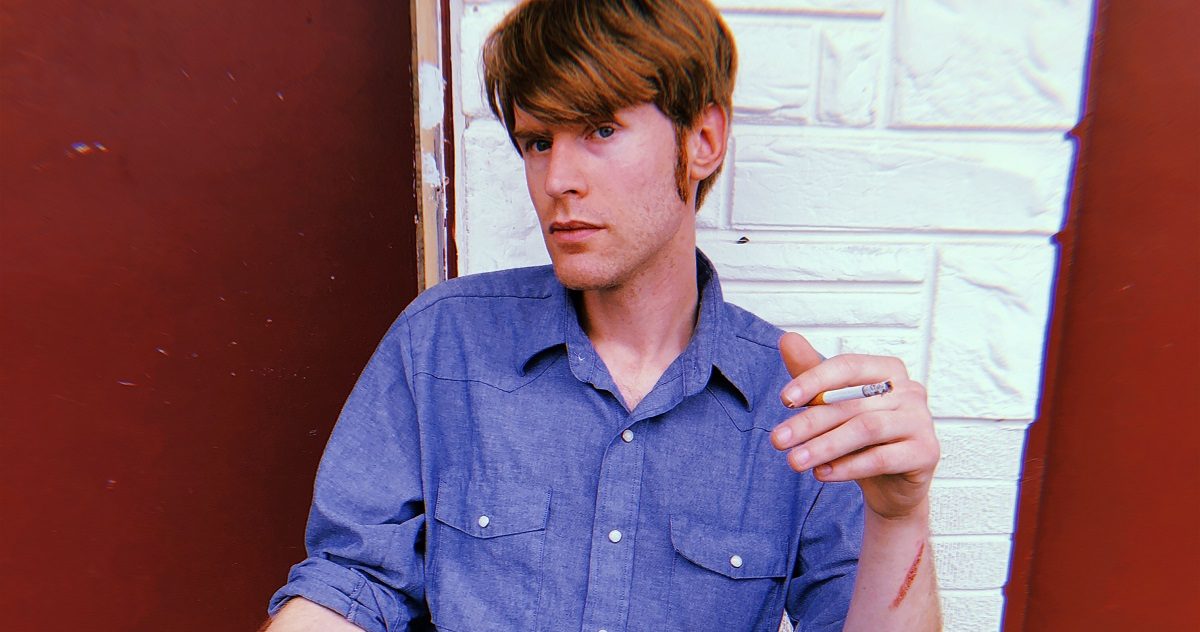
Photo credit: Max Nolte

LISTEN: Eilen Jewell, “Green River”

Artist: Eilen Jewell
Hometown: Boise, Idaho
Song: “Green River”
Album: “Green River”/ “Summertime” 7-inch single
Release Date: July 8, 2020
Label: Signature Sounds

In Their Words: “Every summer for the past twelve years or so, as the Green River Festival in Greenfield, Massachusetts, rolls around, I’ve had Creedence’s song ‘Green River’ stuck in my head. For about as many years I’d wanted to surprise the audience with a rendition of that perfectly summery tune as my homage to the beloved festival, which is presented by Signature Sounds, the label I’ve been happily working with since the beginning of my career. I have so many great memories of that festival over the years: meeting Lucinda Williams for the first time, getting my guitar autographed by Emmylou Harris, being moved to tears by Mavis Staples singing about the Freedom Highway, loving the music in the rain, or in the sun, or the crazy wind, every year having a distinctly amazing experience.

“Last summer the planets aligned just so and my band and I were able to present our version of ‘Green River’ to the Green River Festival on the main stage, and my daughter, part of the next generation of festival goers, was there to witness it. I’m not sure which Green River John Fogerty had in mind when he wrote the tune. I know he did so long before the Green River Festival began, but just as the song is synonymous to me with all things summer, so is that festival. When we recorded the song in August of last year, we would never have believed that the future of that festival, and nearly all festivals, and our own future as touring musicians, would be so imperiled. It’s my hope that the spirit of those free-flowing summer festival days and nights can live on brightly in our hearts and minds, that we can keep that spirit alive until rosier days, and pass the torch to the next generation to keep it lit.” — Eilen Jewell


Photo credit: Joanna Chattman

WATCH: Chris Knight, “I’m William Callahan”

Artist: Chris Knight
Hometown: Slaughters, Kentucky
Song: “I’m William Callahan” (Niangua Coffee Sessions)
Album: Almost Daylight
Label: Thirty Tigers

In Their Words: “I wrote ‘William Callahan’ with a friend of mine, Tim Krekel. We both were staff writers for Bluewater Music then. We wrote it and went on to the next song. I pulled the song back out before Almost Daylight and rewrote some lines and completely changed the melody. It’s probably my favorite song on the album now.” — Chris Knight

“While we were in Kentucky filming Chris’ recent music videos, we decided to take some time one afternoon and film a few live performances behind Chris’ barn. The acoustic performances turned out to be some of the most intimate, raw songs we’ve ever captured.” — Nathaniel Maddux, Slate & Glass, director


Photo credit: Ray Kennedy

WATCH: Market Junction, “Nebraska”

Artist: Market Junction
Hometown: Houston, Texas
Song: “Nebraska”
Album: Burning Bridges
Release Date: Aug. 7, 2020

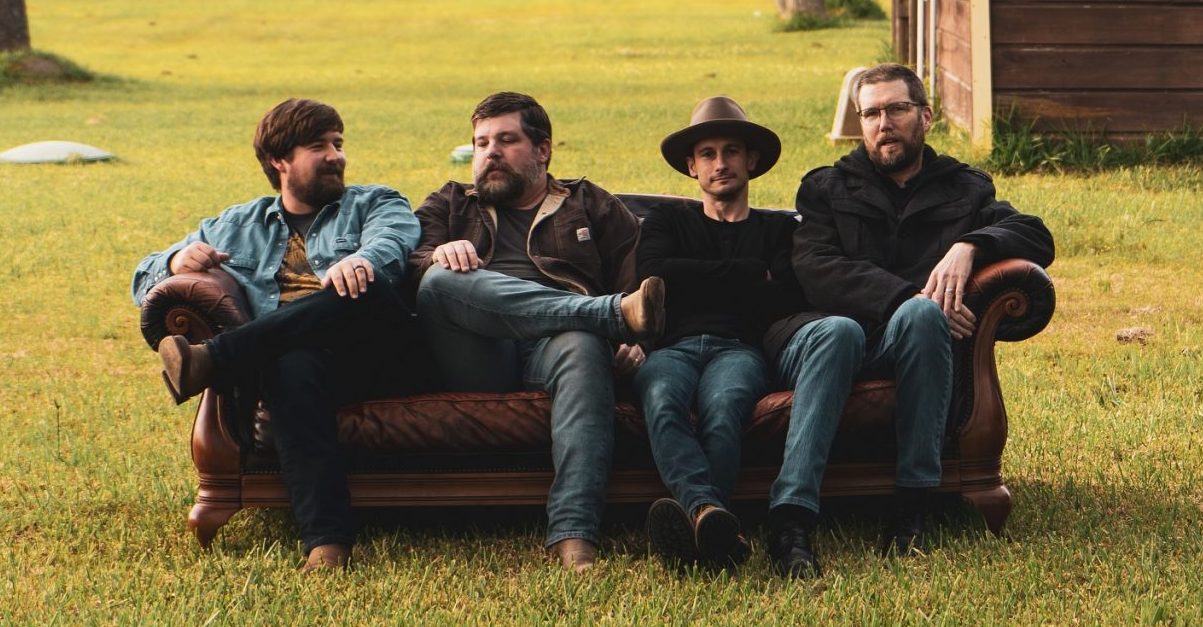
In Their Words: “What we are most afraid of is that this dream of making a living in music and simultaneously being the fathers and husbands we know we need to be is impossible. This song is a foreshadowing of that fear. Sometimes you have to speak your fears out loud to relieve the tension in your own chest. ‘Nebraska,’ at least in this song, is less about a geographical location but more of a metaphor for whatever place you find yourself lost in.” — Matt Parrish, Market Junction


Photo credit: Jason Allison

WATCH: Charley Crockett, “Run Horse Run”

Artist: Charley Crockett
Hometown: San Benito, Texas / Austin, Texas
Song: “Run Horse Run”
Album: Welcome to Hard Times
Release Date: July 31, 2020 (album)
Label: Son of Davy/Thirty Tigers

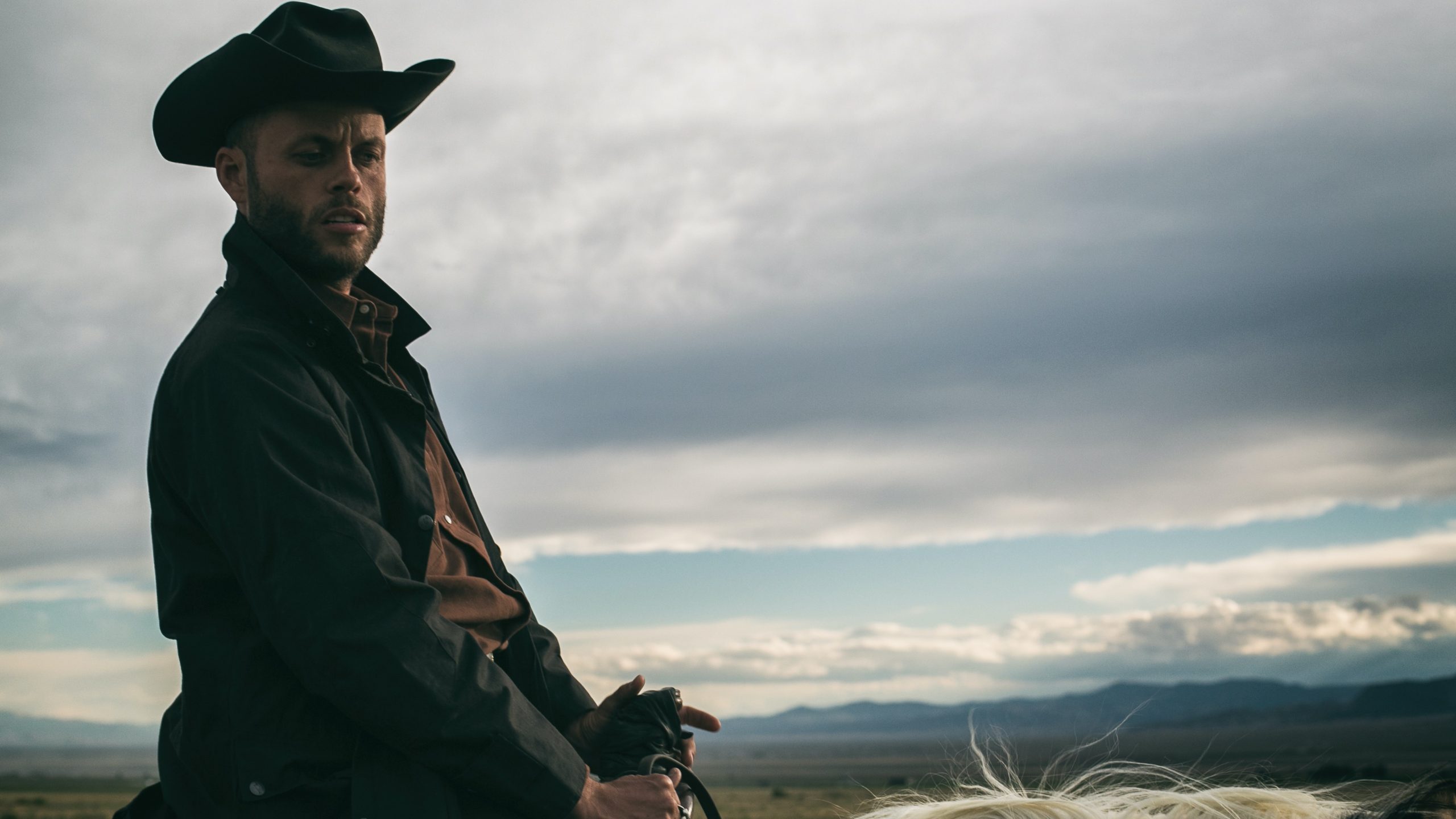
In Their Words: “I remember seeing the races at Louisiana Downs in New Orleans when I was a kid. I remember the tension in people’s hands while they waited to see who would win. Like a coin flipping in the air. The dirt flying behind those horses as they ran. They looked like they were running as if they’re life depended on it. I’d say it did.” — Charley Crockett


Photo credit: Bobby Cochran

Indigo Girls Expand “Country Radio” With Black, Brown and Queer Musicians

Hollywood, the 2020 Netflix series from director-screenwriter Ryan Murphy, is a resplendent show dripping in Art Deco that does not wholly reimagine Los Angeles’ golden era, but rather subtly inserts a quintessential question: “What if?”

What if Hollywood hadn’t been as… ___-ist? (Sexist, racist, misogynist, ageist, etc.) If one happens to be born into a region, a folkway, a culture, an art form that doesn’t include you, or that doesn’t quite love you back, one often doesn’t realize it until it’s too late. And then what? Do we, the rural, country-loving queers, wait around for our Ryan Murphy to reimagine the world to better include us? Not quite.

For Emily Saliers and Amy Ray of Indigo Girls — and, for that matter, almost each and every queer who has ever loved roots music — that “What if?” question is existential, but it also doesn’t matter. What if country music loved LGBTQ+ folks? The lyrics of “Country Radio,” a track off the duo’s sixteenth studio album, Look Long, tell it plainly: “But as far as these songs will take me/ Is as far as I’ll go/ I’m just a gay kid in a small town/ Who loves country radio.”

While curating the following playlist of their favorites from country music airwaves and songs they wish were included there, Saliers and Ray offer a quite simple solution actionable in each present moment: Be who you are, listen to the music that brings you joy, love who you love — and be anti-racist.

Emily Saliers: [I began with the idea:] What are the songs that I listened to that I latched onto, that sort of gave me a feeling of “I can’t get into this song [because of its heteronormativity], but I love this song so much”? One of the first songs that came to mind is “Mama’s Song” by Carrie Underwood. 

I should preface this by saying, I don’t expect that there can’t be heteronormative country songs, or that queer life has to be explicitly represented in songs, it’s not that. It’s the feeling of the way a song moves me emotionally, but then it stops me a little bit short of being able to fully experience it because of the language or the obvious implications of man and woman.

I love Carrie Underwood’s voice and she’s taken more of a harder, pop direction since “Mama’s Song,” but she sings this so beautifully. She’s talking to her mother, “He is good… he treats me like a real man should,” and yet the beauty of her song [is in] her telling her mom that’s she’s going to be okay. 

Amy Ray: For me it’s a little different because I never had the experience of feeling like I wish I could put myself in a song. I think it’s because, gender-wise, I always just related to the male singers. I kinda have that gender dysphoria, you know? [Chuckles] I have these filters that sort of make it my own — probably out of necessity, from growing up loving the Allman Brothers, Pure Prairie League, and Randy Travis so much. [Sings] “Amie, whatcha gonna do?” Pure Prairie League!

It’s very odd — Emily’s perspective on this is something I can understand, and I agree that it’s this weird disconnect with country music. We have to kind of acclimate it to ourselves, in some way, using some kind of trick in our minds. But I’ve always had that internal translator…

ES: Another example is Brett Young’s “In Case You Didn’t Know.” Now this is a song that you can listen to and fit your own queer life into it — as far as I remember it doesn’t have any gender pronouns. Then I watched the video and of course he’s singing to a woman who comes into the audience and he plays to her, alone. It’s a love song to his girlfriend — or wife or partner or whatever — so I could live in that song and think back to relationships and apply it in my own life, but then I watched the video and that door shut a little bit.

AR: I love Angaleena Presley, the Pistol Annies. Presley is such a great writer. “Better Off Red” is one of my favorite songs that she’s written… Honestly, if I hear songs, if I like it, I just put myself in it. I don’t really think about it or worry about it. It’s a survival mechanism from my youth, not that it’s the right thing to do. It’s built inside me.

…I thought you couldn’t be a country singer if you were gay and left-wing and a complete dyke. That made me feel more alienated than the songs themselves, that idea of its inaccessibility. Or, if you went to a show and you were sitting there in that audience, in the early days before it all kind of busted open, you would feel scared. Or judged. Or uncomfortable.

ES: Think about what a splash that song by Little Big Town, “Girl Crush,” had. Just the implication of a lesbian relationship or feelings! That song was a big hit, but it got people talking. [Probably] the majority of the people in this world lean more heteronormative, so they’re representing themselves in these songs. There’s absolutely nothing wrong with that. 

I wouldn’t want to listen to just albums that are for and by queer people, oh my god. No way! But we have to have them as part. I think about what an influence Ferron was, how much Amy and I love Ferron. When her first album came out, it was like, “Oh my gosh this is one of the best songwriters in the country and she’s queer!” I can’t describe how important it was to have an artist like that.

Even Lil Nas X, who had the number one hit forever-ever-ever with Billy Ray Cyrus. It’s awesome to know that he’s queer! And a guy like Young Thug, a rapper out of Atlanta, who’s not gender normative by any stretch, to me. It’s interesting. It’s good to have a mish mosh! It’s not that the majority of songwriters out there can’t be represented in their own songwriting, we just have to have ours, as well.

AR: [We] should add Amythyst Kiah. Amythyst is amazing.

[Racism] is the pivotal struggle of the Americana scene and the roots scene. How do you honor Black and Brown folks who want to be in this scene — and maybe some of them don’t even want to be in this scene because even Americana is rooted in questionable legacy. How much do people of color want to be immersed in that scene when it still feels so racist? Even the best parts of it. It’s a huge question to unwrap and it has to do with such a long history of where country music came from.

We stole the banjo and put it in our hillbilly music in the mountains and called it our own. We forgot all the stuff we learned from “our slaves,” you know? It’s crazy to me, if you think about the racist roots of where a lot of this comes from. Merging this racist legacy with this incredible populist music — music for the people, like Woody Guthrie, like the Carter Family. You get those two things bumping up against each other constantly, how do you entangle that and make this a space where it doesn’t matter what color you are? Where it doesn’t matter what your religious persuasion, or your political party, or your gender, or your sexual preference, or anything.

I think the way we deal with it is by all of us thinking all the time and being mindful of [that racist history]. And including [Black artists] in our playlists and touring with them. Some people are like, “What does it mean if you’re forcing this integration? Is it just going through the motions?” No! No, no, no.

ES: I’ll [echo] the things that Amy said, practically: Tour with Black musicians or Brown musicians or musicians who have not been able to feel that they’re welcome and make everybody welcome. Like Amythyst or Chastity Brown. Those are artists of color who have been discriminated against, who feel other-than in the world of their genres.

I think, first, we all — we white people, we people “of no color,” we “colorless” people — should dig deep, identify our own racism and how far it goes, how much we use it. Break it down, talk about it, identify it in each other. Really start from the core of things and hopefully act outwardly as a result of what we’ve dug through, inwardly. Try to heal and fix, you know? We’ve got to ask artists of color what their experience is like and why it’s like that. I’ve got to assume that there must be some Black artists, who if they hear a song from a white, country, roots singer about the freedom of driving down a dark, country road, they’re not going to feel the same way about the history of Black people down dark country roads. A lot of it is context and, as Amy says, there’s so much to be unraveled. But we are at a tipping point.

AR: Sister Rosetta Tharpe, I feel like there’s a lot of crossover, to me from that and the beginnings of early rock ‘n’ roll. That’s kind of what Elvis Presley was doing and borrowing from. I think about that sometimes, that territory. I like old recordings, like field recordings almost, of all the Alan Lomax type stuff he would collect. Field songs, prison songs. I think a lot of country writers have taken from that stuff, you know? 

I remember an interview with Kathleen Hanna that really resonated with me. She said, when they ask you who your favorite artists are, most of us name all these male artists. That’s who we can think of, because that’s who’s archived the best. Straight men, bands, and writers. If you sit down and really think about who you love and make a list of the women and the queer folks — this is what she was talking about, she wasn’t talking about color at the time or race or the social construct of race — and you take that list to your interviews and rattle off those names, you’ll be more honest, because you’ll be talking about who you really listen to and not just trying to remember [anyone] off the top of your head. 

People are so out of the habit — and so in the habit — of white supremacy that we don’t even know how to do the right things, just in our instincts. We have to learn, write it down, so we remember to do it.


Photo credit: Jeremy Cowart

This interview has been edited and condensed for clarity.