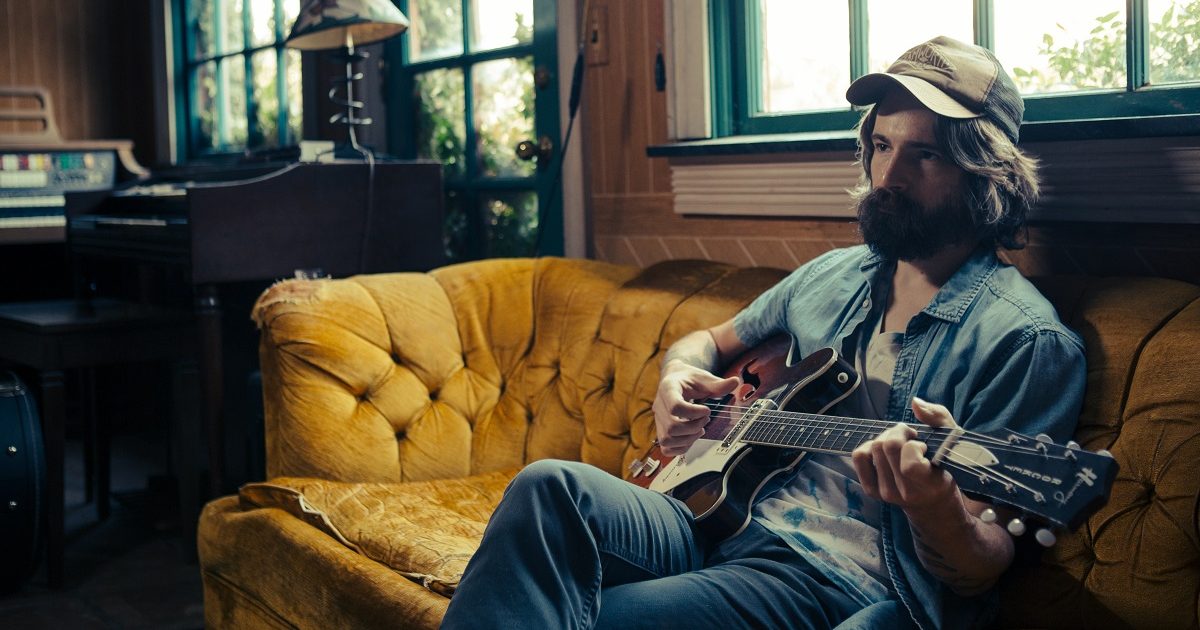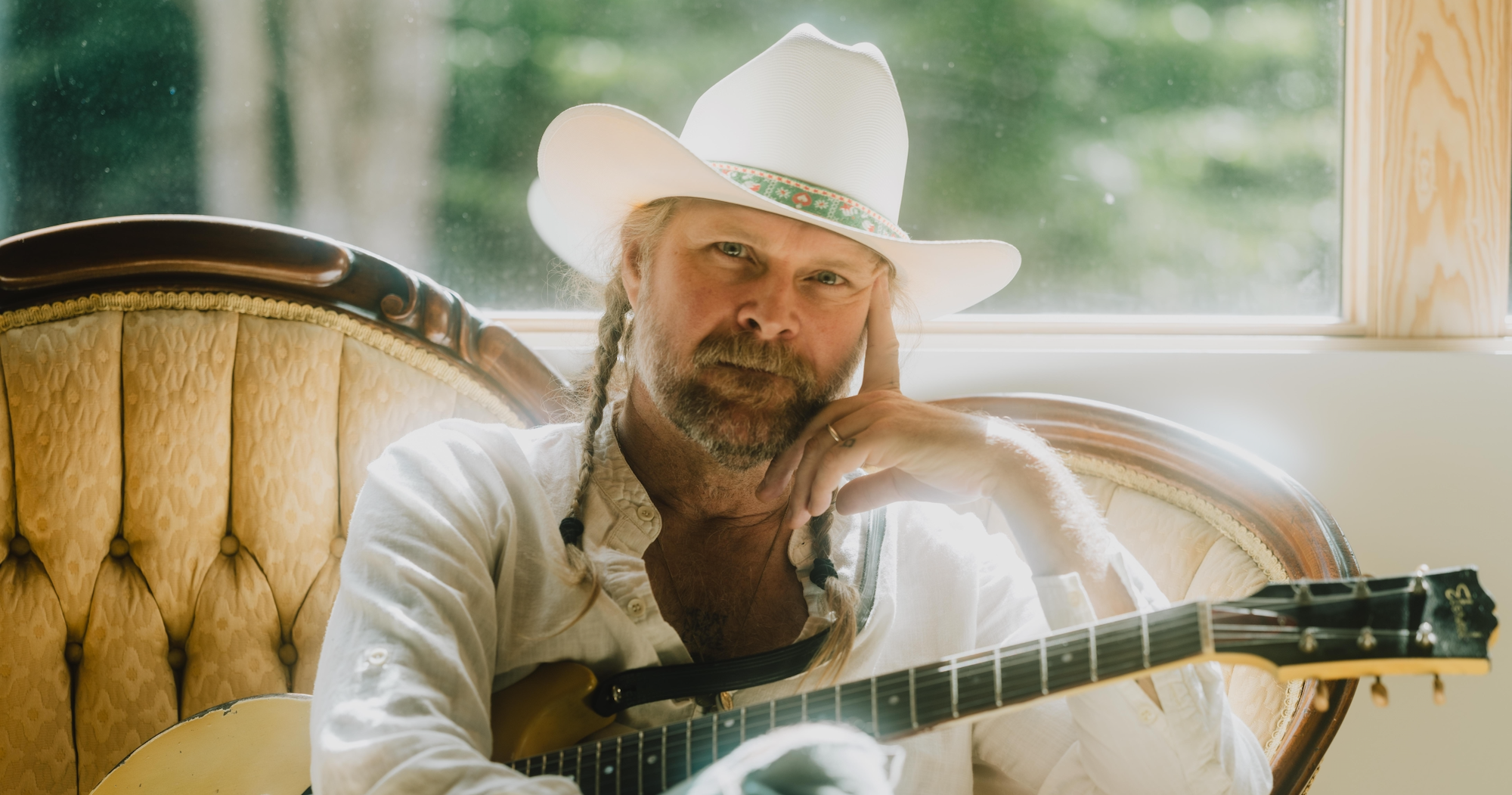
The Expansive Universe of Hiss Golden Messenger

Next year, singer and songwriter MC Taylor will have been leading Hiss Golden Messenger for two decades. For most of that time, critics and listeners have relied on a few familiar narratives about Taylor: that he is a singular figure, for example; or that his move from California to Durham, North Carolina, marked a formal shift from punk to Americana; or even that he thinks slightly more than he feels. Talking to Taylor, from his home in Durham (well, there was a Zoom call involved), I found these cliches about his practices were limiting, factually accurate but emotionally untrue.

Instead of laser-focusing on one narrative, on telling the same stories over and over again, listening to Taylor speak, I encountered a new understanding of his practice, one which placed Taylor in the background and moved his bandmates and genre-play into the foreground – shifting from the centrality of a singular figure to a greater emphasis on generosity and expansiveness.

That the new album is called I’m People is the first clue that Taylor wants to expand the perception of his music; it’s a title that considers mutuality as central to the enterprise of musicmaking. So, how does one expand this thinking – one could consider him geographically or complicate these tales of origin, or think about who is playing on this record, or even refuse the standard narratives of genre.

Instead of focusing on the fact that Taylor began playing in hardcore bands in California, think about the other influences: that he played in a band named after Joni Mitchell’s Court and Spark, an album marked by an urbane distrust of other people’s desires. Or that, around the time he was carefully listening to Mitchell, he was also following that most American portable utopia, the Grateful Dead. Or think about his move to Durham, not strictly to play in a band, but to study folk music academically.

Or, consider how this album was recorded – at least partially – in upstate New York. A more cynical writer would note that Taylor borrows from Dylan’s Nashville Skyline, and that album itself was the foundation of a more isolated, lonely understanding of tradition after abandoning folk music, seeking a slightly more commercial understanding. Recording this in the Hudson Valley could be considered a pilgrimage or homecoming.

I don’t think that it is a homecoming just for Taylor; the record sounds lush, expansive formally, too. Perhaps because the people who sing or play on this record play in a collective of other bands, including Rhett Miller, the Mountain Goats, Bonny Light Horseman, and the Hold Steady.

The expansive nature of the band is not only connected to the history of music they listen to, or the other bands that they play in, but also more unexpected influences like Sade. The idea that Taylor is the band is false, and it is not even that Hiss is the band. Taylor expands the possibility of Hiss, but Hiss itself pushes the possibilities – because of where they come from, their other projects, and even the possibility of geography. Not because Durham is magically a place where music coalesces, but because for a long time it was a college town where rent was relatively cheap and lots of people liked playing music together.

When addressing genres, the promotional material calls the album Americana – but Americana is a useless category, one which might be country or folk or something else entirely. I’m People has a kind of intense richness that is neither of these genres. Listening to the LP, something happens where the expansion or fracturing of those playing on this record becomes its own kind of post-genre.

There are a lot of reasons not to love America right now, but emphasizing the American instead of Americana allows us to consider this album as a consequence of the totality of American music – Taylor addresses the improv nature of jazz as part of this, or traditional folk music, or even 1970s easy-listening. He speaks fondly of the detective novels of Elmore Leonard, and on at least one of his early albums the photography of William Gedney became a powerful totem.

I think of I’m People as a kind of ebbing and flowing for and against tradition, part of that decades-long wrestling with aesthetics and history. Consider the last song, “Depends on the River,” is another of his great songs about waterways. In a 2016 profile of Hiss, New Yorker critic Amanda Petrusich wrote about Hiss’s long tradition of river songs and how it fits into a century of metaphors from blues singer Geeshie Wiley to Joni Mitchell, working this tradition. Petrusich writes: “Taylor frequently evokes river imagery in his work; the river, of course, can be understood as its own kind of road, a direct line to somewhere else, far away.”

I don’t know if that’s wrong, but I also think about rivers as they turn into oxbow lakes, rivers which flow into swamps – literally bogged down – rivers that flow into oceans, and rivers that dry up depending on the season. Hiss’s meandering, deepening quality depends on that river, both the direct line that Petrusich talks about and the larger metaphor, one where Taylor literally talks about whether he dares to cross it. On I’m People, he not only crosses it and crosses it again, but brings along a whole community of other performers. And, an audience who is hungry for the difficulty and ambivalence of so much time playing – and thinking – with him, to the other side.

I know you have a degree in folklore studies, I also noticed that in the last few years there has been a cluster of second- or third-generation performers who have some academic training in folk traditions (see also: Jake Blount, Jake Xerxes Fussell, Willi Carlisle, etc.). Can you talk a little bit about the kind of intersection of formal and informal folk studies and also about your relationship to people who are making this kind of work? I’m thinking about the line on the song “Mercy Avenue” where you talk about the “boys on the corner knowing more than those with PhDs.”

MC Taylor: Well, it’s been a really long time since I was in the academics here. And that universe was one that I feel like I passed through briefly. I wasn’t destined to be in that realm forever. So, I’m not sure that I can totally speak to [that]. Like the place of academic/creative work.

I will say that my time in that space was a really good time for me, when I was restarting my brain and re-centering myself. School was a good way for me to step away from whatever I had been doing previously. I did a lot of field work at that time. I interviewed a lot of people, and I think that it made me a much better listener.

I think that, more than anything else, [that] is what I came away with, this feeling that people really, really like to be heard. So I think I just really tried to develop my listening skills.

Can you talk a little bit about working with a band – especially this band – and about how the bandmates are part of their own creative worlds? Is there a kind of politics there, or a kind of community making?

The basic tracking of the album was done with JT Bates playing drums and percussion, Cameron Ralston playing bass – both electric and upright – and Josh Kaufman, who was producing the record with me, playing guitars, mandolin, piano. My friend Chris Boerner was engineering the record. He plays guitar.

The road version of Hiss Golden Messenger, you know, [are] involved in a whole variety of things. JT, Cameron, and Josh play in Bonny Light Horseman. All three of them have also at various times been members of Hiss and have toured with Hiss. And in fact, that’s where those guys met – playing in Hiss. All of us have known each other for many, many years, so I consider those guys really good friends.

But we’ve never made a Hiss Golden Messenger record before. … They’ve worked on [other] records [together], but we never came together to create a Hiss Golden Messenger record together. It was this funny and unique situation in which we were already old friends, doing something that felt new and fresh. It didn’t feel like a complicated record to make for me. I think Josh Kaufman maybe would say the same thing, but Josh was performing sort of a different task than I was in the situation. It was a complicated record to write, but that was something of the solitary endeavor that took place over probably a year or a year and a half.

I really love those guys and I am delighted that they could be there to play on the record. I think of them as absolute top-tier musicians, every one of them. Cameron is currently playing with the Mountain Goats, he plays all kinds of jazz, he plays in the Spacebomb House Band. JT Bates plays drums with Big Red Machine, which is Aaron Dessner and Justin Vernon. And [he’s] just a legendary drummer in Minneapolis. Josh Galvin plays with everybody.

There are some songs on this album about hope and I wondered about making work about hope in this specific social and political moment? “Shaky Eyes” or “Heavy Worlds,” for example.

[I am interested] in how we [have] the energy to get through the messiness of life. And not only this particular time that we’re living through – although that is the most depressing. But just like life in general. I don’t think that we can do – or I don’t think I can do – life alone. So, in a way this record is me writing to myself. Maybe now [about] how important other people are.

I think I realized that the most important part is moving through, and needs to involve being around [other people]. Over the past few years, just speaking personally, the idea of community has felt like a more and more important part of it.

Thinking about that – and how dense/lush the production here is – though you are marketed as “Americana,” I wonder about how you view genre. And also how your band does – I’m thinking about background vocalist Annie Nero’s bio for radio: “She loves to find the common thread between musical ideas and genres…but also break free of genres because life’s too short to limit ourselves based on perceived taste!”

I listen to lots of different stuff. I think all of that stuff finds its way into what I’m doing. It’s a little tricky. I used to have a stronger stay-in-your-lane [attitude] about the term “Americana,” but I just don’t think that I care very much anymore. It’s not a word that I generally use. But I understand why it exists. Many of my favorite songwriters exist in that world.

What would you call your genre then?

I mean, I wouldn’t. I guess that’s what I’m saying.

Like, if I was at the dog park and I was talking to a stranger, and they said, “Oh, you’re a musician? What kind of music do you play?” I’d probably say, “Kind of rock and roll.” I generally am not describing my music in terms of genre, I guess. If I told someone that I played rock and roll, and they asked me to extrapolate on that, I would say something like, “Rock and roll that’s really swinging.” I try and concentrate on the rhythmic elements. I love singer-songwriter type music from the ’60s and ’70s. I like really oddball stuff. I love Bruce Ruffin reggae; I love free jazz. There’s a lot of music that I have inside of me. There’s a lot of music that Josh, Cameron and Chris – [that] we all have inside of us. I think it’s just a question of how we get it out and put it into use in a way that feels genuine and not forced. …

Thinking about the tension on this album between distinct geographical spaces and a more universal emotions – for example on “Seneca (Time is a Mother, Baby)” or “Mercy Avenue.” And also that becomes a larger theme of your work, thinking about how Amanda Petrusich writes about your decades-long commitment to writing about rivers. There’s even the river song on this album. What do you think your relationship is to the land, to rivers – especially. when you sing “Depends on the River.” Or is there specifically one river?

On previous Hiss records there are specific geographical places like city names mentioned. And not only are those places part of the fabric of the story that I’m trying to tell, but they sort of served as poles, maybe? What I’m trying to accomplish is sort of like a poetic travelog of my life growing up in America. I’ve been traveling as a musician since I was 18. I have been, it seems like, everywhere in this country – more than once or some places 10 times. I’ve been all over every highway. So, maybe the dimension of place names throughout is sort of like carving my name on a tree or something. It’s just kind of like, “I was here.” “This is where we are in this song right now.” “This is where we are in my life.” And then, “Now we’re over here.”

In terms of rivers, a river is always flowing, always changing. A river can kill you if you’re not careful. It can keep you alive and get you to the next place if you treat it with respect and understand its rules. The coda on that song, [“Depends on the River”], the last thing that we hear on the record is “the line depends on the river exactly.” I guess the meaning depends on what river of life we’re talking about. It depends how lucky we get.

I’ve always been impressed by the wide range of your reading, listening, and looking. For example, your careful thoughts on the photos of Gedney. What are you reading, what are you listening to, what are you looking at these days?

Well, you know what I’m reading right now? I’m like about 200 pages into this Gary Stewart biography. Gary Stewart, the country singer. It’s called I Am From the Honky-Tonks. Gary Stewart actually was someone that Chris Smith from [record label] Paradise of Bachelors turned me onto like 15 to 16 years ago. Those of us that are obsessive about him all knew that this book was coming. It’s finally out and yeah, if you’re Gary Stewart fan, it’s kind of like you can’t believe it exists. I’ve been waiting for it.

In terms of what I’m listening to, I’m always listening to all kinds of stuff. I just bought this record [that’s] The Sun Ra Arkestra doing Disney themes. It’s so beautiful, really makes you think about those compositions in a different way, [about] actually how deep they are. I’ve been revisiting some Ted Lucas. I’ve really been liking this McCoy Tyner record called Asante. It’s a 1974 record; might be my current favorite. It’s very deep in the zone with like Alice Coltrane and Pharoah Sanders – that era. Oh, it’s beautiful. [I’ve been listening to] some Paul Brady from ‘78. He’s amazing! I’ve been listening to Welcome Here Kind Stranger. [Also] a record that I was checking out for a while [was] by the Universal Liberation Orchestra. It’s kind of this weird, very minimal– I guess it would be jazz.


Photo Credit: Graham Tolbert
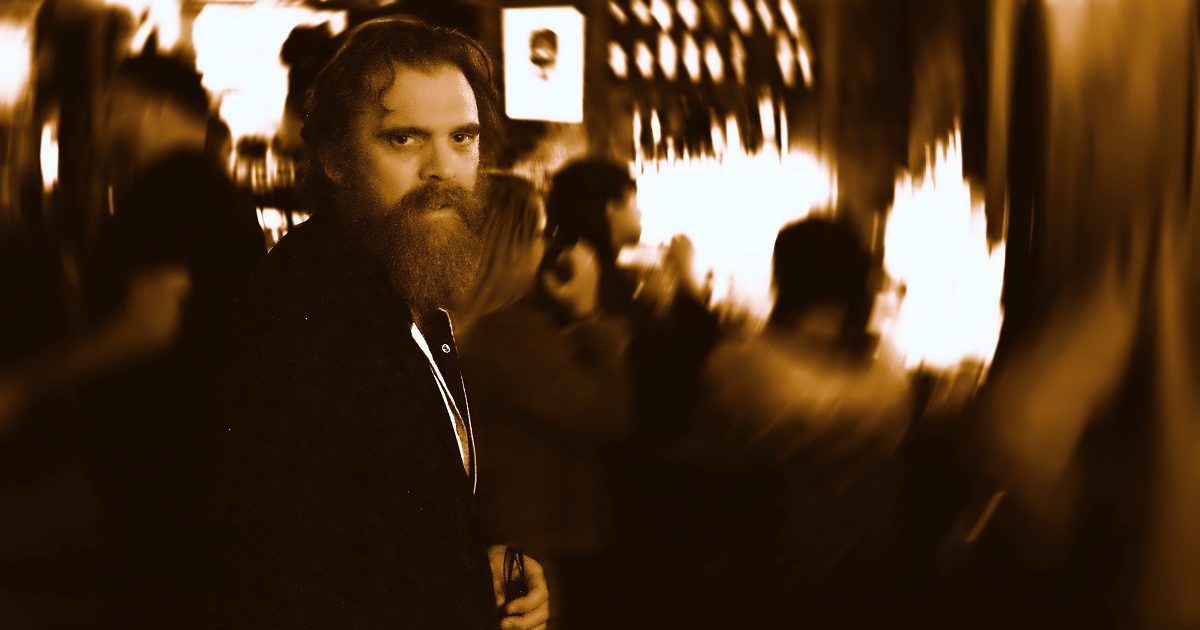
MIXTAPE: David Newbould’s Songs for Sinking In / Digging Out

I found myself digging into my comfort music throughout ’20-’21. It felt like a hard time to be adventurous. These songs are from so many records I’ve spent so music time with, and which surely informed my new album, Power Up! (out June 10). It also features a few of the great folks we lost during this period. — David Newbould

Thin Lizzy – “Try a Little Harder”

I probably listened to more Thin Lizzy over the last two years than I did to any other artist. They have so many songs I wish I could just crawl up inside of and never come out. This song is at the top of the list. Phil Lynott just had everything to me. He wrote the life he lived. He somehow enhanced it but never sugarcoated it, and in the end it was all too real. This song feels like it could be one of the defining songs of the 1970s but it was an unreleased B-side. “When all those dark days came rolling in I didn’t know whether to stop or begin / To try a little harder…”

Joe Strummer & The Mescaleros – “Get Down Moses”

I love the rawness of this track, the gang vocals, the reggae telecaster, and the way Joe always sang with the passion of a thousand rock ‘n’ roll ambassadors rolled into one electric folksinger body. I wrote a song years ago called “One Track Heart,” based on a line I heard Pete Townsend say. Supposedly when he heard Joe Strummer died (of a heart defect), he said, “Well that makes sense, his heart was always too big.” I’ve come back to this excellent posthumous album over and over throughout the years, starting with this track. It always fills my heart and makes me miss him.

Gregg Allman – “These Days”

Gregg Allman’s voice will always be comfort food to me. I remember putting this on during one of the first days of lockdown setting in and feeling, “Somewhere, sometime, a different world existed, and maybe if I just keep listening to the music from it, it will exist once again.” I’m not sure about the second part yet, but it sure felt good listening to songs like this over and over again. A perfect version of an already perfect Jackson Browne song.

Bob Dylan – “Pressing On”

I’m not a religious person, but the performance of this song is powerful enough to make me believe in a different dimension. It’s one of Bob’s most impassioned studio vocals ever, and how to not love Jim Keltner and the incredible band and backup singers on this album? “Shake the dust off of your feet, don’t look back / Nothing now can hold you down, nothing that you lack.” To me there is no more defiant Bob Dylan than religious-era Bob Dylan. I see him standing on the hull of a ship, saying, “This is it, friends. Get on board with me or don’t. I really don’t care…but here’s why you should.” It took me years to get to this album because of all the critics I would read saying how bad it was. I’m pissed at every one of them for that and I’ve never listened to any of them ever again. How can people hold a job in which they are so wrong so much of the time?

Black Sabbath – “Wheels of Confusion”

This is one of the saddest and most soulful guitar lines to open a song ever. This band was all heart on record. Heart and drugs. Like Phil Lynott, they wrote the life they lived. Fortunately, they all made it out the other side. I feel that on all their records, particularly the original band. This was the first album of theirs I bought, when I was 14. It was so dark and groovy, and really spoke to me. Bill Ward’s drumming gets something close to funky at a certain point, while Ozzy sings Geezer Butler’s lyrics about being a 22-year-old multimillionaire prone to depression who was something close to homeless a couple of years prior. Hard to resist.

The Rolling Stones – “Ventilator Blues”

One of my favorite songs ever, off an album that just keeps sounding better and better with every decade. From the slide guitar opening riff, to Charlie… When I put on Rolling Stones vinyl through my old handed-down Celestion speakers and turn it up, Charlie’s drums do something physically to me. There is movement and life in those spaces that make everything groove and shake. And a snare that makes my eye twitch. Like so many of the greatest Stones songs, seemingly simple but deceptively complex in the layers, colors, and fluid relationships between all the instruments. Like jazz, but with four chords and in (usually) 4/4 time. I truly believe this specialized blend of simplicity and complexity is their secret weapon.

Patti Smith Group – “Ain’t It Strange”

Just another all-hands-on-deck tidal wave performance from a band truly locked in to what makes them great. Patti Smith has such a way with melody and cadence, and can belt the shit out of a lyric, too. Damn! Radio Ethiopia is the one for me. I love the humble raking guitar chords that open the song that hint at the thunder to follow. I also have a weakness for songs in A minor, the official key of the 1970s.

Bruce Springsteen – “Youngstown”

Bruce is one of the most empathetic songwriters ever. The amount of research he puts into some of his songs when he really swings for those fences — songs like “Youngstown,” “Nebraska,” “Highway Patrolman” — he does such a thorough job of inhabiting the character, I find it very moving and inspiring. I was stuck in this song for days and days, and finally stole some of the chords and melodies and out of it came the song “Peeler Park.” I couldn’t stop myself. I had to change a chord or two so that it wasn’t out-and-out theft. Sorry, Bruce.

Steve Earle – “Taneytown”

See above! God, I feel everything inside of this troubled boy in the song. It’s so fierce and gut wrenching, and just a masterclass in empathetic songwriting by one of the best at it. Brutal vocal delivery to match. Also it’s in A Minor.

James McMurtry – “Rachel’s Song”

See above again! Few people’s work can put an unsuspecting lump in my throat on a regular basis like James McMurtry. He gives you just enough detail, and yet it’s so much. This song makes my heart hurt for this person, this single mother trying to keep her life in order for the sake of her son. And then she pauses to fixate on the snowflakes dancing outside the window. I know where it’s going every time, but I still get a chill when it does. Another song that does that to me is “If I Were You” by Chris Knight. Every time, I shudder. The power of songs like these haunts me.

Jerry Jeff Walker – “Long Afternoons”

When my wife was pregnant with our son, we would walk through the park and I would listen to this song and think, “I want our life to end up like how this song feels.” There are so many beautiful lines, and the lazy and relaxed pace of the guitar and vocal is something Jerry Jeff really had figured out. Music like this has a way of making me nostalgic for a place I wasn’t even really a part of. But that’s the power of great music and art right there. Paul Siebel wrote this song. We lost both of them over the last 2 years.

Gary Stewart – “An Empty Glass”

The most vulnerable, honest, and painful country singer I’ve ever heard is Gary Stewart. His voice is not shy at all but has so much open vulnerability to it, and his songs match the instrument to a “T.” This song paints such a picture in my mind. End of night, blurry bottles, random people, helpless inability to stop drinking the emptiness away. Deep deep pain that started as early as the character can remember. Once again, the mark of a great record is to make you feel the life of the character in the song — from the instrumentation to the production, lyrics, and of course the performance of the singer. Gary Stewart was a master.

Nellen Dryden – “Tullahoma”

This song just feels like pure freedom to me. It was cut 100% live and just bounces up and down the open highway, singing in search of a new life that surely awaits. It’s so infectious, and the playing and Nellen’s vocal feel so effortless. I also love songs that do the thing where the verse and chorus are the same chord progression, but still completely different parts. It’s a hard trick to pull off! “Everyday People” is another great example of this. Great song here. Check out Nellen, y’all.

Pete Townshend – “Slit Skirts”

Pete has a gift of taking the truly uncomfortable and making it truly powerful, examining it in truly epic pieces of rock. The time changes and chord progressions here are from heaven. Yet he’s singing about people hitting middle age, dreaming of the clothes they once wore, of the feelings they could once stir up in their lover, and crystallizes it with a line like, “can’t pretend that getting old never hurts.” Ouch! It’s just so good, it’s always impossible for me not to feel what he’s feeling, no matter where you are in your own life. He’s an original. I have leaned on his music a lot over the years.

The Wailers – “It Hurts to Be Alone”

This is another song I return to again and again and again. When I first heard this, I was with someone in a very painful situation in a very painful room, and it felt like time suddenly stopped. When the song ended I asked if we could put it on repeat, and lo and behold time just kept stopping. I love songs that can take you right back to both the moment you first heard them, and also somehow into the moment they were recorded. The vitality of this record. The voices in this song just explode out of the speaker, and the chords and lyrics are so incredibly deep. And oh that guitar (Ernest Ranglin)!

Dave Alvin – “Border Radio”

This is another song where time once again stopped as I first heard it. There are some artists you come across later than you ought to have, and when you do, you think, “Where the hell have you been my whole life?” Dave Alvin is one such artist for me, and it all started with hearing this song on the radio. It’s a perfect recording harkening back to a very specific era, and it’s a perfect song. During The Twilight Zone-esque 2020/2021, I just wanted crutches that I already knew made me feel right. Ideal or not, it’s just how it happened for me.

John Prine – “When I Get to Heaven”

One of the most frustrating and sad losses. Mr. Prine was a beautiful man who wrote about our world and life through every unique lens under the sun, and somehow had a way to make you still feel OK about it. Then he got taken down by the stupidest thing imaginable. But what joy he brought, how much perspective he helped us see through, and what a sendoff he left us. This, the last song on his last album, this spoken-word ragtime jig about going to heaven. It can’t help but make you laugh and cry at the same time. Thank you, John.


Photo Credit: Ryan Knaack

Shaped by String Bands and Bluegrass, John R. Miller Delivers ‘Depreciated’

On his new album Depreciated, John R. Miller shows a true appreciation for traditional country songwriting and progressive bluegrass musicianship, even though his music isn’t neatly defined by either one. A West Virginia native who now lives in Madison, Tennessee, Miller unveiled the material at a club show in Nashville just a few days after the album’s release on Rounder Records. His original songs are rich in detail and humor, although his lyrics can get moody enough to satisfy anybody who’s looking for the darker side of acoustic music. Delivered in his rough-hewn baritone, his songs somehow feel like familiar stories that you want to hear again.

Before returning to the road, Miller caught up with BGS at an East Nashville coffee shop to talk about his acoustic heroes, where he found his first guitar, and why he puts a fiddle in a rock ‘n’ roll band.

BGS: You announced this record by releasing “Lookin’ Over My Shoulder,” which is not exactly a happy song, but it does makes me laugh. What was on your mind as that song was taking shape?

Miller: I wrote that after I moved away from the town I’d lived in for a while. It’s a small-town scenario. When you go back after being away, you’re in the mode of trying to avoid some people. It can be tricky to navigate but I thought it was a funny little song that I didn’t think we would end up recording. Then we rearranged it a little bit and turned it into what it is now – and it’s the first song on the record. You just never know, I guess.

Where is your hometown?

The place where I grew up is just off the highway in the eastern panhandle of West Virginia. It has historically been pretty rural. There’s a lot of development around the highway, so it’s turned into a strip mall highway town. Just over the mountain, it gets real country real quick. But for most of my 20s I lived in a river town called Shepherdstown. It’s small, just a couple of bars in town and everybody knows everybody. That was home for a long time, but I felt like I needed a fresh start, so I moved down here. I spent so much time traveling and felt untethered in the first place. A lot of my friends started getting older and moving away. A few of them actually came down here. This was the next place, where I knew the most people and the most couches to crash on for a little while. I decided to give it a shot and I’m still here.

When did you gravitate toward playing guitar?

I was about 14 when I picked up guitar. My dad had a nylon string guitar in the closet that I never saw him play. I was starting to get into music more, and into punk bands that I found out about from my friends. Basically I was trying to learn power chords on this classical nylon string guitar classical guitar. Eventually I wrote that out and got a Stratocaster and tried to do garage bands in high school.

Were you and your friends listening to acoustic music too?

Maybe not when I was a teenager. We were mostly into indie rock and punk rock growing up, like skater kids. It probably wasn’t until I was 19 that my musical interests expanded a little bit. I started getting into songwriters. The real gateway for me was that Steve Earle and Del McCoury Band album, [1999’s The Mountain], which is one of the best out there. I had already found my way into Steve Earle’s music and then that dovetailed nicely with bluegrass and old-time music with that record. That was a big one for me.

Are you a bluegrass fan?

Oh yeah. I’ve lived in the bluegrass world a little bit and during times in my life a whole lot. I used to play in a string band too. It was more like a fiddle-centric string band, but we did some bluegrass stuff as well and got on that circuit for a little while. There were a couple of guys in the string band that were ahead of me in terms of what they knew about and what they liked, so they helped me learn about a whole lot of stuff.

Who were some of your influences in bluegrass?

I’m a huge Jimmy Martin fan. That stuff’s so cool and just kind of ragged in all the right ways. The Stanley Brothers, of course. There are some modern bluegrass bands that I’ve grown to love a whole lot. Town Mountain is one of the best out there. We crossed paths with them a little bit back in the day and it’s cool to see them still doing it. The Seldom Scene’s Live at the Cellar Door record is a classic too. I really love that. I also really love that early newgrass stuff, like Old & In the Way and John Hartford. That Old & In the Way record was a constant in the van.

Speaking of that, how did you get the idea for “Half Ton Van“?

That song in particular, I spent months looking for an old van to get the band moving. I was on Craigslist and Marketplace a whole lot. I feel like I was seeing a lot of the same tricks, you know? I went to look at a lot of terrible vans. It was a few years ago and I had already been through a few vans with other bands, and it always feels like I’m trying to find one at the last minute. I ended up getting one that was full of rust holes and leaking oil and everything like that. So the song is an amalgam of all those experiences of people trying to sell their junk to you.

At your show, the crowd really responded to “Shenandoah Shakedown,” which surprised me. It has that gothic feel, and seems to be the sleeper on the record.

That one seems to be doing pretty good. I wouldn’t have expected that either because it’s kind of different. It doesn’t strike me as an accessible song necessarily. That one is heavily inspired by living on the river out there. It’s more of a collection of vignettes of time spent up there, and some mushrooms and whatnot involved, you know? Some of the characters are composites but there are specific people in it, for sure.

There’s a lot of fiddle on this record too. Why do you like having that in the mix?

I love fiddle tunes and fiddle music and I spend a lot of time at fiddlers conventions, like the Clifftop Appalachian String Band Music Festival in West Virginia, or in Mt. Airy, North Carolina. It’s been a constant in my life for a really long time now. I’ve got a lot of buddies in that world and I play a little fiddle myself too. It’s a great way to just sit down and play tunes with people. The communal feeling and the non-commerciality of it is really cool. So I’m a little obsessive about it. Putting fiddle in a full rock ‘n’ roll band sounds good to my ears, and I also feel like if it wasn’t there, I would miss it — the presence of it.

Why did you want to include a guitar instrumental, “What’s Left of the Valley,” on here?

I’ve definitely written a couple of guitar pieces, but my partner Chloe really liked that one. I played it for her and it was her idea to just try it in the studio. We took a break from doing the stuff we had on the docket and gave that a try. It ended up feeling so nice, I thought it would be a good way to break up the songs on the record. I like that kind of stuff too, like an instrumental interlude.

At your show I was happy to hear you cover a Gary Stewart song, “Single Again.” What is it about that honky-tonk sound that appeals to you?

Man, it just sounds so cool to me. There’s a really wide range of it but that Gary Stewart stuff is so cool and so nuanced. A really high level of musicianship playing pretty accessible music is pretty awesome. I love country music very much. That’s been my soul food. Early to mid ‘70s is the sweet spot for me.

As a songwriter going into a music career, did you always want to have a full-band sound?

I don’t mind playing by myself — it’s kind of its own thing — but I’ve always played in bands and I love that connection. It’s so much fun. I prefer to be making music with my buddies and I’m fortunate to be playing with the band I’ve got now. They’re easygoing folks and great musicians. We’ve been on the road for a little over a week now and this is the first long tour that we’ve gotten to take together. We’re all getting used to it again.

Listening back to this record now, what goes through your mind?

I’m really proud of the work we did and what I love most about it is that I got to actually sit and play the songs live in a room with some of my close friends. Adam Meisterhans, who played guitar with us the other night, co-produced the record. He and I played in bands in West Virginia. I know him from Shepherdstown too. He’s like a brother to me. So it’s been cool to very intentionally work on a project and have it get finished and work out, you know? It’s nice to know that we did it the way we wanted to.


Photo credit: David McClister

BGS 5+5: Jaime Wyatt

Artist: Jaime Wyatt
Hometown: Fox Island/Gig Harbor, Washington
Latest Album: Neon Cross
Personal nicknames (or rejected band names): My family and close friends call me James

Which artist has influenced you the most … and how?

Gram Parsons is one of the most influential artists for my life and creativity. I identify deeply with Gram: He was a hippie who was obsessed with country as well as soul and his original music was a perfect blend of genres, incorporating vintage and modern influences. I try not to make a perfectly vintage sounding country song, as I feel like I’d rather listen to the classics than listen to a straight reproduction.

What’s your favorite memory from being on stage?

I toured with Wheeler Walker Jr. as support and during a set in Los Angeles, a man screamed, “Jaime, I wanna have your baby!”

What rituals do you have, either in the studio or before a show?

For both pre-show and pre-recording sessions, I do yoga, meditate, go for a jog and do some mat exercises, vocal warm-ups and then crack a Coca-Cola and smoke a cigarette and pace until I hit the stage, or pick up a guitar and pace around with the guitar.

What’s the toughest time you ever had writing a song?

Many many times for many many songs. For me, following the melody is very important and it should lead the lyrics. I write mostly in my head then bring to an instrument, so a lot of songs come to me while I’m sleeping, driving, meditating or walking outside.

Just a Woman” almost didn’t make the record, because I did not want to risk comprising the potential of that song. I felt I was representing women with that one, which might be a total lie, but I did not want to fail all of womankind, by making the lyrics cheesy. I finished the bridge right before we tracked the song with the band. I heard a major/minor Beatles thing when I woke up that morning and was blessed enough for that melody to return to me while I was outside pacing in the courtyard. Then I finished the second verse maybe one hour before the final recording session.

How often do you hide behind a character in a song or use “you” when it’s actually “me”?

I’d say 50 to 60 percent of the time. I’ve done this to hide that I’m gay or that I don’t want anyone I know to know how I feel and I’ve done it to give a wider demographic of people the opportunity to connect to a song.


Photo credit: Magdalena Wosinska