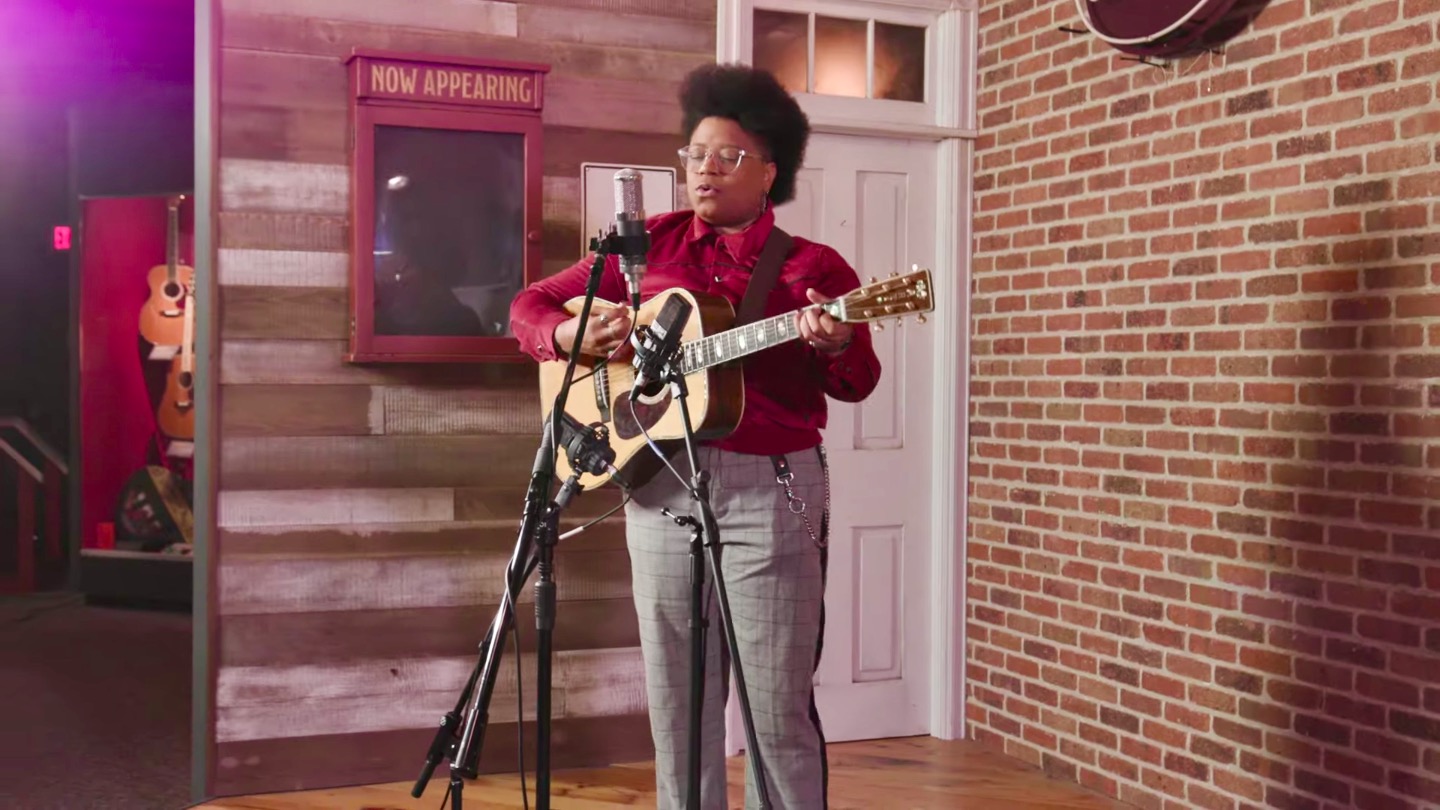
Grammy-nominated singer/songwriter Amythyst Kiah holds a direct line to the heart of emotion in each note she plays and every word she sings. Her powerful song, “Black Myself,” was the opening track on her latest release with Our Native Daughters, a collaboration that also features Rhiannon Giddens, Leyla McCalla, and Allison Russell. The lyrics’ unapologetic tone and fierce in-your-face quality earned Kiah a nod at the 2020 Grammy Awards, as well as Song of the Year honors at the International Folk Music Awards at Folk Alliance’s conference in January. Though maintaining a quite busy performing calendar, a full-length solo record is slated for release sometime this year. Until then, audiences will have to indulge in Songs of Our Native Daughters as well as this new video from the museum at Martin Guitars. Watch as Amythyst Kiah sings “Black Myself” behind a 1942 Martin D-45.
Tag: Americana
The Hurt Behind Nathaniel Rateliff’s ‘And It’s Still Alright’ (Part 1 of 2)
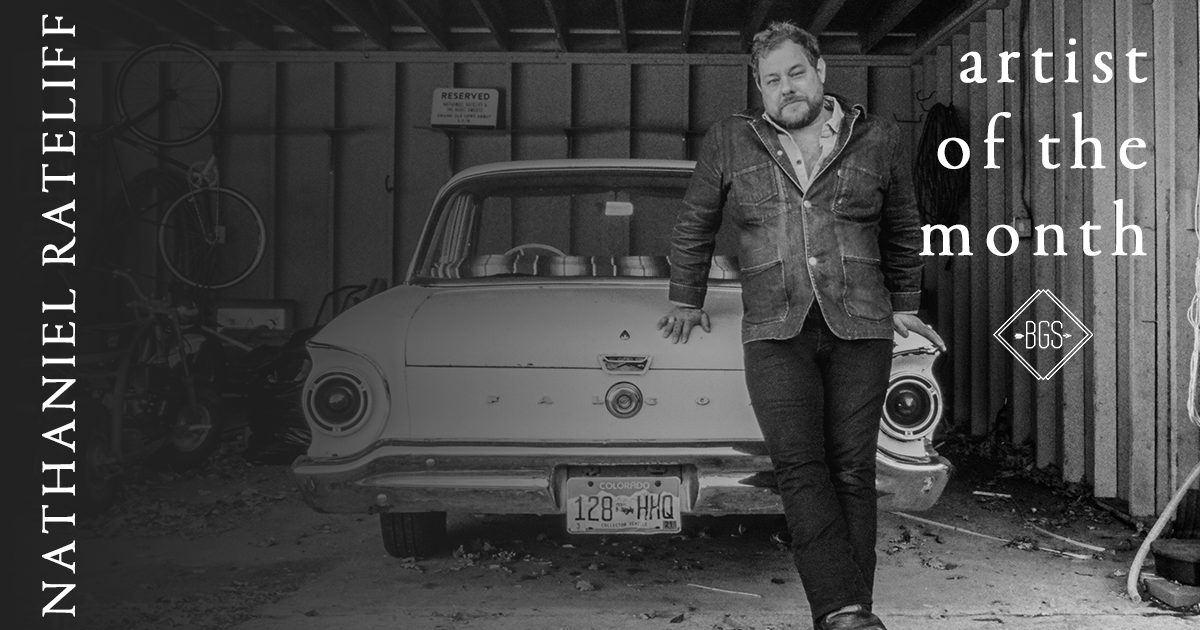
Nathaniel Rateliff’s And It’s Still Alright retains much of the soul and swagger of his work with his band the Night Sweats, but its subtler arrangements and sparser atmosphere offer more room for Rateliff to showcase his introspective side as both a songwriter and vocalist. Songs like the title track, which chronicles the aftermath of unexpected loss, and the poignant “Time Stands,” hark back to his salad days as a solo singer-songwriter while also marking his immense artistic growth over the past decade.
As his first full-length solo album in seven years, And It’s Still Alright comes on the heels of two acclaimed albums from Rateliff and the Night Sweats, both of which released via STAX Records and found the Missouri-born artist digging deeper into rock-influenced soul and R&B music.
Rateliff originally planned to make the new album alongside friend, frequent collaborator, and beloved producer Richard Swift, who died unexpectedly in July 2018 at the age of 41. Swift’s passing is a heavy presence across the LP in myriad ways, including Rateliff’s decision to record the bulk of And It’s Still Alright at Swift’s National Freedom studio in College Grove, Oregon.
Below, read part one of our conversation with Rateliff, held in the weeks leading up to And It’s Still Alright‘s release.
BGS: You’ll release And It’s Still Alright in just a couple of weeks. What are you feeling as you anticipate having this new music out in the world?
Rateliff: I’m excited. I’m excited to share it. This is kind of the first time that me and the band have done real rehearsals. [Laughs] I feel like with the Night Sweats we’d be like, “Oh, we know these songs,” and just kind of rock through them. These songs have such a different intention than that, and there’s so much more subtlety in performing them live together. It’s been an interesting yet fun challenge to figure that all out together.
Having been a few years since you last put together a project that wasn’t with the Night Sweats, what was behind your decision to move forward with another solo album this time around?
When we were making the last Night Sweats record, I had a lot of these songs that I was working on. I was sharing them with Richard. We had intended to make this record together before he passed away. So I guess I followed through on my commitment to him in making this record. We tried to do it the way we thought he would do it.
What did those early song ideas, as well as those early conversations with Richard about what you envisioned for the album, sound like? Was there a moment or a song that made the project feel like it had clicked for you?
I remember playing “All Or Nothing” — I had the chord progression for it, and some of the words; it wasn’t really done yet — and I was kind of sharing it with Richard and he was like, “Man, I love this. You can’t be too Nilsson, man.” And so I would say, “OK. We’ll see how Nilsson we can get.” That was one of the things I wanted the record, or at least some of the songs, to have, that feel and similar approach to Harry Nilsson’s. Then a lot of the songs had a lot to do with Richard passing away, and some of our similar struggles that we shared in our personal lives and in our friendship together. So it seemed fitting to follow through and make a record.
Would you be open to sharing a bit about what you were feeling after he did pass, and when you made the decision that you were going to follow through with the album? How did doing the work feel in the wake of his passing?
It’s devastating, still. I still think about Richard and miss him most days, you know? He had this amazing ability to make the people around him feel very loved. As far as a creative partner, he was my favorite person to really work with. I really hadn’t intended on working with anybody else. So a really big part of the process of making this record was to go back to his studio. It has such a sound and feel to it there, so it kind of made me feel like he was with us in some way…
The band and I had all worked a lot with Richard and kind of new some of his tricks, which he was super open and willing to show us when he was still around. We really tried to approach it like, “What would Richard do?” song-by-song. Then there’s always that point in the process when you listen to the songs and say, “OK, what is there too much of here?” and kind of strip it back. Then we added a bunch of things to it. [Laughs]
The title track is so powerful and is one of several songs I’ve found myself returning to often since first sitting down to listen through the album. What was the experience of writing that song like for you? Did it bring about any healing for you?
I had a bunch of songs that I was writing with Richard in mind. When we were in Cottage Grove making this record in March, I’d had that song and was sitting at the kitchen table having coffee in the morning and just kind of instantly wrote it all out. At first, when you’re listening to it, the words came out so naturally that you don’t really take the time to question or examine what you’re trying to express personally. There was a moment in the recording process when I was like, “Oh fuck, I can’t believe I’m writing about this.” It’s heartbreaking at first but there is an element of healing to it. Sometimes to relinquish things you just have to say them out loud.
Read Part two of our interview with Nathaniel Rateliff.
Photo credit: Rett Rogers
WATCH: Tami Neilson, “Sleep”
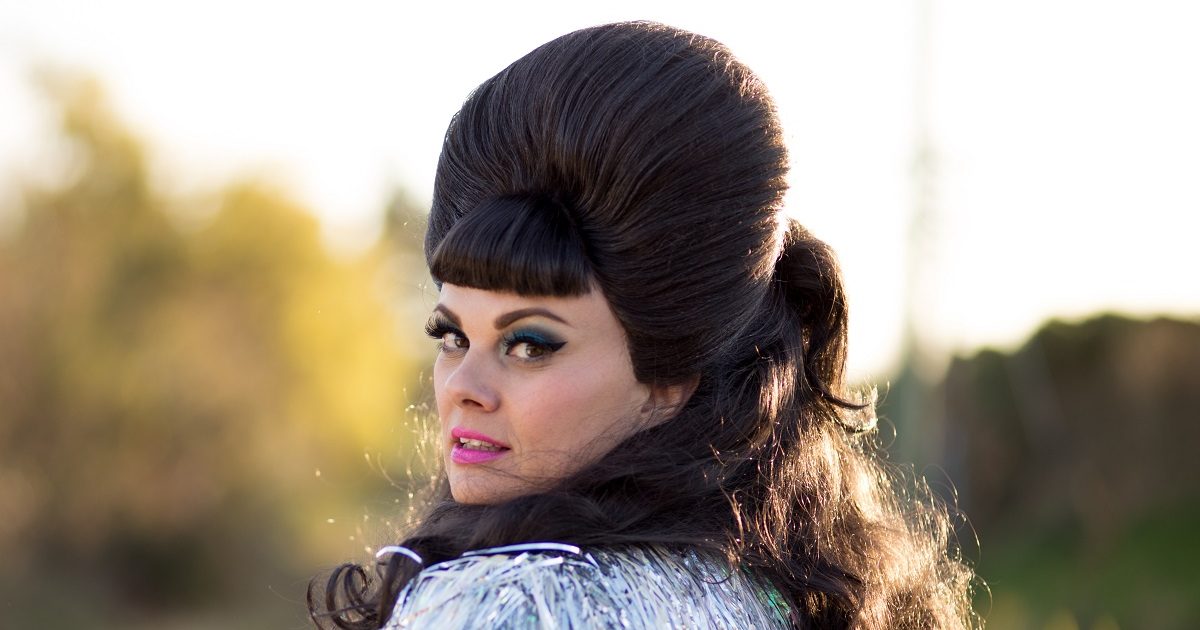
Artist: Tami Neilson
Hometown: Auckland, New Zealand
Song: “Sleep”
Album: CHICKABOOM!
Release Date: February 14, 2020
Label: Outside Music
In Their Words: “This song was written by my dear friend and co-producer Delaney Davidson. He wrote it about keeping the Big Black Dog at bay; my two little boys think it’s a lullaby Mama sings only for them. My brother Jay and I wander into the audience at the end of the night with just a guitar and no amplification to sing this to the hush and send our audience gently home. It becomes what you want it to mean, like every song. But, it’s like a warm blanket, a soft pillow.
“This video was created by my other brother Todd Neilson of Valiant Creative Agency. You would never know the chaos behind the scenes! It is one shot and begins with Jay and I singing at the other end of the studio. As the camera pulls out, it reveals we are on the television set in the darkness of a living room where a family has gathered to watch before bed. However, the camera dolly had to roll straight through the living room and the entire thing had to be assembled within seconds in its wake.
“So, as we were peacefully singing, there was shouting and crashing and banging as the rug, plants and furniture were frantically placed by a team of six, the actors rolled the couch in (it was on skateboards!), sat down and had to look relaxed and calm as my little niece, River Neilson, fell asleep. The result is magical and I can almost feel my Dad’s arms around me, carrying me to bed when I watch it.” — Tami Neilson
Photo credit: Sabin Holloway
New Singer, Same Edge: The SteelDrivers Deliver on ‘Bad For You’

The SteelDrivers’ new lead singer, Kelvin Damrell, already grasps the driving force behind the band, which is marking its 12th year with a brand new album, Bad For You.
“You couldn’t play our songs if you weren’t passionate about what you were doing,” the Berea, Kentucky, native believes. “It wouldn’t sound right at all, in any position in the band. From the mid-range harmony part to the hardest-playing guitar riffs, to the hardest-playing fiddle, it wouldn’t sound nearly as good as it does if you didn’t love what you were doing, and playing with as much passion as you could.”
On Bad For You, Damrell steps into a role once filled by Gary Nichols and Chris Stapleton for the group’s first album since winning a Grammy with 2015’s The Muscle Shoals Recordings. All five of the SteelDrivers — Richard Bailey, Damrell, Mike Fleming, Tammy Rogers (whose daughter discovered Damrell on YouTube), and Brent Truitt — invited BGS over for a chat.
Kelvin, how long had you been in the band by the time you went into the studio?
Kelvin: Goodness, how long has it been now? I joined in October 2017. I was just so looking forward to the release date of the album that I’d forgotten when we went in.
Mike: He had to go to boot camp first. [Laughs] Bluegrass boot camp! We had to take him out of Kentucky. He had his first airplane flight. You saw the ocean for the first time, right? You left a lot of things laying around. [All laugh] You went through airports with knives when you shouldn’t have. But listen, it was good! We all got comfortable with each other, and we needed some time just to feel that, and it got to that point.
Kelvin: When I joined the band, I was really unsure about what was going on, about my position. I had made the cut as far as getting to be in the band, but Brent kept telling me we needed a couple of months to see how we jibe together. I thought that was just him saying that, but it was the truth. We switched vehicles pretty regularly and I rode with different people. We really saw how we jibed together before we made a full decision on whether we were going to keep me, or if I was going to go back to sweeping chimneys.
The song “Bad For You” has such a cool groove. You sent it out as your first single and you named the album after it. What is it about that song that is special to you?
Brent: To me it was the perfect fit for this band. It was the song that hit me right out of the chute. It encapsulates the sound. It’s really edgy, and we’re a little bit on the edgy side of bluegrass.
Mike: It was one of the strongest songs, as far as that kind of feel. It’s like a “Here we are!” kind of song. You know, “Look out!” The way Kelvin sang it, Tammy told him, “Sing it like a rock ‘n’ roll singer.”
Kelvin: I almost got emotional when we played it for the very first time. I really did, that’s the truth. The first night we debuted it, after we hit that last big note, I almost did get a little emotional because it’s like something is finally coming to fruition with my position in the band. I’d done all this other stuff that vocally belonged to Gary and vocally belonged to Chris, and now this one vocally belongs with me at the lead. And man, that three-part harmony! Everything about it was good, and it really did make me emotional.
I’m glad you mentioned harmony because that’s a really important component of this band that doesn’t get talked about enough — how well you can stack those voices.
Tammy: Thank you. But you’re exactly right, I think that’s always been a really strong facet of the band. It’s this rock ‘n’ roll lead singer with this really strong three-part harmony coming in on the chorus. From a writer’s perspective on this album, I thought about that a lot, and how that was still a big part of the sound, and to keep that consistent because I think that does set us apart.
Brent: In our live set, I’m thinking of one or two songs that end with the vocal trio by itself, doing the swell and bending into a note, and the crowd loves it every time. It’s a big part of bluegrass, period, but it’s a big part of our music too.
Brent, how would you describe the SteelDrivers’ sound?
Brent: For me, personally? It’s gritty, grind-y bluegrass. With a lot of soul.
Tammy: Think about the Rolling Stones if they were to play with bluegrass instruments. That’s us.
Mike: With a blues/rock ‘n’ roll singer. … It’s intense! I’m tired after our set. It’s a workout. We keep the emotion and the intensity going quite a bit, but we let up occasionally and do a nice song.
On this record, you do have that slower moment on “I Choose You,” which brings out another side of the band.
Tammy: Yeah, we’ve always had a song or two like that. On the first record, “Heaven Sent” has always been one of our most-requested and popular songs, and it has that great, easy, rolling feel to it. We call it the hippie dance. And when Thomm Jutz and I wrote “I Choose You,” that was definitely musically where I wanted to go with that, to have that feel to it. But it’s still a very serious lyric, even though it has a positive message, in a way. It has a lot of depth and meaning to it.
Richard, do you have a favorite track on this album?
Richard: Umm… “Forgive.”
What do you like about that one?
Richard: I like what I played on it. [All laugh]
Tammy: See, it’s all about the banjo! We joke about it but people love the banjo!
Mike: It’s got a great groove.
Brent: It’s one of my favorite songs too.
Kelvin: It’s funky. It’s like “Bad For You” is rock ‘n’ roll and “Forgive” is funky!
Kelvin, what were you listening to about three years ago, before joining the band?
Kelvin: Three years ago I was on a really big Cinderella kick. [All laugh] I’m still on the kick. I still listen to mainly rock ‘n’ roll when it’s just me in my truck, driving for hours on end.
Did the band prepare you for the honesty of bluegrass fans, and how they’ll tell you what they think?
Kelvin: I was ready for it before I started! I knew how much of a following they had. I know how much people loved Gary. I know how much people loved Chris. And I was ready for it – I prepared myself for people saying, “This guy sucks. You need to get somebody else.” [I’ve heard that] twice, I think, the whole time I’ve been with the band. It’s been great — because I was expecting it at every show!
Tammy, do you have young women coming up and telling how cool it is to see a woman on stage?
Tammy: Yeah, it’s really awesome and I appreciate it a lot. Because when I was growing up there were very few women playing, and the ones that did were usually bass players. Mama might be back there thumping on the bass or whatever. There were very few women role models for me, of that generation. There were a couple — I remember Lynn Morris was playing and Laurie Lewis was playing a few years ahead of me in those circles. Not many in the country world. I was a huge Mother Maybelle fan and part of that was because she played the guitar. That was fascinating for me as a kid.
And now in the generation after me, there’s just unbelievably talented women – not just singers, but instrumentalists. It’s phenomenal, the jump from mine and Alison Brown’s ages, to Sierra Hull, who is a genius on the mandolin, and Kimber Ludiker and all the Della Mae girls we love, and Molly Tuttle is absolutely slaying it on guitar. Sara Watkins, I’m With Her, Sarah Jarosz … it’s just on and on and on. If I in any way influenced any of those players, I am deeply honored.
What would you want bluegrass fans to know about this new record?
Tammy: We’re excited this year to get out and we’ll be playing a lot of different kinds of venues. We don’t play that many traditional bluegrass festivals anymore, but it’s my hope that people hear the music and still see the thread that’s in there. The subject matter that we choose to sing about is not as cleaned up as some other stuff, but to me it’s just another facet of the music, and I think we’re hopefully carrying it forward and carrying a torch.
Photo credit: Anthony Scarlatti
WATCH: My Sister, My Brother, “Forever Now”

Artist: My Sister, My Brother (Garrison Starr, Sean McConnell, and Peter Groenwald)
Hometown: Nashville, Tennessee and Los Angeles, California
Song: “Forever Now”
Album: My Sister, My Brother EP
Release Date: March 6, 2020
In Their Words: “When we wrote ‘Forever Now,’ I remember us all being excited about writing something upbeat. There’s nothing wrong with a sweet slow song, but we had already covered that ground. While having a different feel, this song comes from the same place as the others do. We were kind of trying to speak from the perspective of a 90-year-old man or woman, sitting on their front porch, wanting to share the worth of their experiences. There will be great days and terrible ones, you will love and you will lose, but none of it is forever. Don’t take the good for granted, and try not to hold on to the bad.” — Peter Groenwald
Photo credit: Joshua Black Wilkins. Director: Josh Kranich
LISTEN: Shelby Lynne, “Don’t Even Believe in Love”

Artist: Shelby Lynne
Hometown: Frankville, Alabama; Currently living in Los Angeles, California
Song: “Don’t Even Believe in Love”
Album: Shelby Lynne
Label: Thirty Tigers
In Their Words: “When love walks in, there’s not a damn thing you can do about it. You can’t fight it, defy it, or deny it. Love decides.” — Shelby Lynne
Photo credit: Amanda Demme
LISTEN: Dom Flemons, “Hot Chicken”
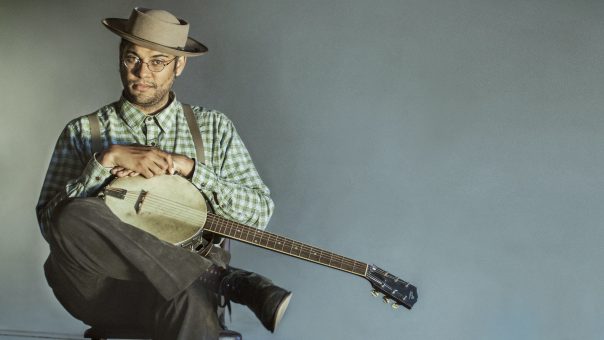
Artist: Dom Flemons
Hometown: Phoenix, Arizona; now living in Washington D.C.
Song: “Hot Chicken”
Album: Prospect Hill: The American Songster Omnibus
Release Date: February 28, 2020
Record Label: Omnivore Recordings
In Their Words: “In 2012, I was in Murfreesboro, Tennessee, doing a tintype photo session with photographer Bill Steber. Knowing that I was in the area for a few days, Bill recommended that I try one of the best-known regional dishes, hot chicken. After the session, I made my way over to the strip mall in East Nashville, Tennessee, where Prince’s Hot Chicken, the original restaurant, was located. I was fortunate to have my friend Bill prepare me for what I was about to encounter with this amazing dish. He explained that it would take me on a mystical journey if I ordered the extra hot. So, I decided to indulge in the medium-hot flavor and I was instantly inspired to write this song.
“This hokum song is reminiscent of the 1930s era of music that was developed by songsters like Thomas A. Dorsey, Tampa Red, Bo Carter, and Papa Charlie Jackson. Songs like these use small lyrical vignettes to frame a chorus that has a free changing meaning throughout each verse. The vignettes I’ve created incorporate a lot of animal imagery and parables, which is a strong part of early African American music and folktales. This version from What Got Over (a 2015 EP released for Record Store Day) features my vocals and harmonica accompanied by a muscular guitar vibe from Guy Davis. Here’s something I shared in my podcast about the song in a special bonus episode of American Songster Radio.” — Dom Flemons, The American Songster
Photo credit: Timothy Duffy
WATCH: Mark Erelli, “Blindsided”
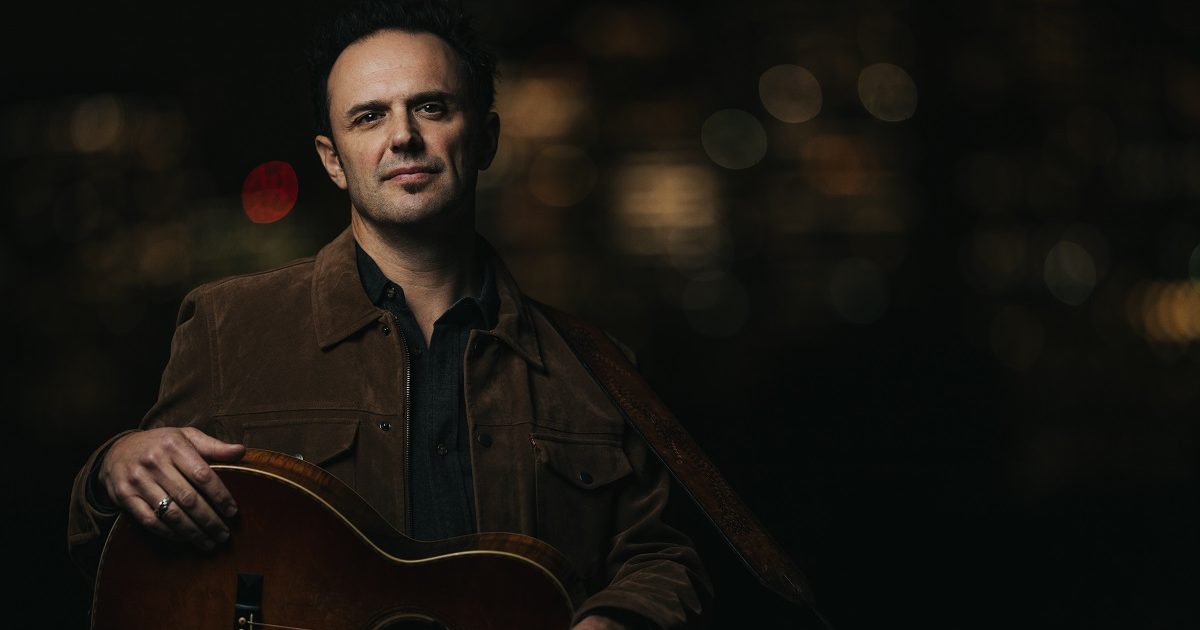
Artist: Mark Erelli
Hometown: Boston, Massachusetts
Song: “Blindsided”
Album: Blindsided
Release Date: February 21, 2020 (single); March 27, 2020 (album)
Label: Soundly Music
In Their Words: “The word has negative connotations, but I thought it would be interesting to use it in the context of a love song. Sure, you can be blindsided by an attack or caught unprepared by stormy weather. But love also has a funny way of finding you when you least expect it, regardless of whether you’re looking for it or not. With its soaring vocal harmonies, majestic strings and the band firing on all cylinders, this track really embodies and hints at all the sonic elements to come on the album.” — Mark Erelli
Photo credit: Joe Navas
Possessed by Paul James: The Texas Schoolteacher Who Goes Wandering
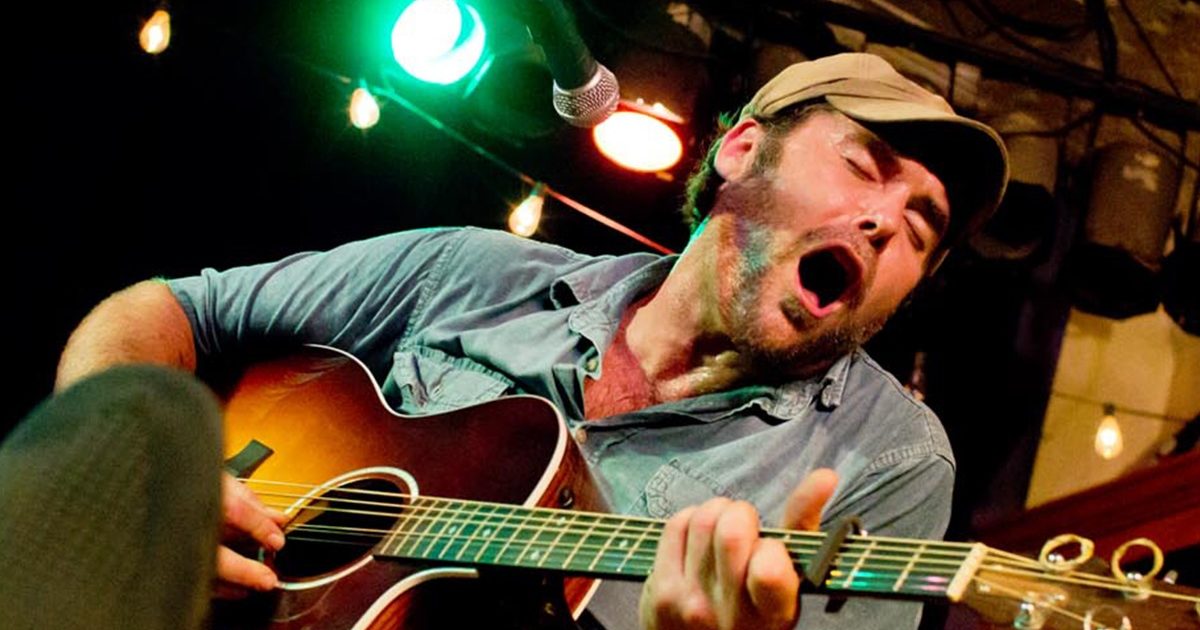
Long before Konrad Wert took the stage name Possessed by Paul James, he was a kid living in what sounds like a fable. Wert grew up amidst the marshes and palmettos of Immokalee, Florida, watchful of “gators” but delighting in a monkey that swung from a mangrove tree near his home. Alongside his sister and the children of Mexican and Haitian immigrants, he attended the small Mennonite chapel his parents founded, worshipping and harmonizing on sturdy, simple hymns at least three times a week.
As a young adult Wert left Southwest Florida and his conservative, religious past. Free to listen to whatever he pleased, he was drawn to punk and the blues. But he set his love of music aside to pursue a teaching career. And for the last 20 years he has devoted his life to teaching special education and advocating for students and teachers.
Several years ago, with two young kids and a meager teaching salary, music became a way of supplementing his teaching income. His energetic, multi-instrumental shows quickly gained popularity and soon Possessed by Paul James (a nod to Wert’s father and grandfather) was born.
It’s been six years since Wert’s last album, There Will Be Nights When I’m Lonely. In that time, he has undergone two vocal surgeries, losing “two whole steps or three half-steps in terms of range,” he says. His latest album, As We Go Wandering, took nearly five years to complete. He would hum his compositions in school hallways, scribble lyrics on scratch paper or napkins and travel two hours northeast from his home in Kerrville, Texas, to Austin to record.
Finding common ground between the instrumental traditions of old-time music and a contemporary call to social action, As We Go Wandering is the collective work of 20 musicians. While Wert stayed consistent on banjo, fiddle, guitar and clogging, he wanted his friends and “picking pals” to add texture and feel on the record by contributing harmonies, mandolin, percussion and guitar.
He explains, “The greatest contribution to the participating musicians were the harmonies and choral effect such as in ‘Be at Rest,’ ‘As We Go Wandering,’ and ‘I’m So Good at Absolutely Nothing.’ … Their contributions added to the texture and feel tremendously. At the end of the day we’re all Possessed by Paul James. I like it like that. It’s not about the ‘me,’ it’s all about the ‘we.'”
BGS: Can you talk a little about the making of As We Go Wandering?
Wert: Our albums are very reflective of where we are in life. As We Go Wandering is really reflective of where we are as a family. My boys are 11 and 9. The kids are healthy, our relationship [with my wife] is strong, but where do we keep going?
I notice you say “we” and “our” when talking about the making of your music. Are you talking about your wife? The musicians you play with?
Yes. I’m a firm believer that the pronoun “we” is far more powerful than “I.” It’s never meant as the third person or some strange pretentious way of thinking. [Laughs] Rather, I can talk about how my family impacts the writing, how our friendships impact the writing, how life impacts the writing. I like to say, “We are Possessed by Paul James,” not “I am Possessed by Paul James.”
In the song “When It Breaks” you seem to be saying that when we hit our breaking points, we need to keep plugging away. What’s the story behind this song?
When I write, I’ll put songs on the shelf, and I’ll let it collect some dust until it feels ready to record it. We originally recorded this track on the album Feed the Family, and it was [recorded] just with me. It was very raw.
The sentiment when I wrote it then, and how we have reinvented it with this composition, has so much to do with, number one, my work as a schoolteacher. I had to take a year off in 2015 just for my mental health. It was starting to beat me down, that [feeling of] we’re not able to help these young people in the way that we want to help them. For me, some of these songs are reflective of, what am I going to do when I can’t take it anymore? What are teachers going to do when we can’t take it any longer? I get emotional about it.
Your performances always appear so cathartic, like you’re really just letting it all out. It sounds like your lyrics are a way of releasing emotions and inner struggles as well?
Oh, yeah. Maybe to a fault. Being raised a Mennonite, you were raised to recognize your weaknesses and your faults. You know the phrase would always be: Remember you’re broken and then you can have healing. Some people say, “When we come to your shows it feels like church.” Well, it’s meant to have people gather around and have a good time, share our burdens and talk with one another.
Many songs on this album feel nostalgic. Is that a reflection on where you are in life?
Yes. I understand how people sort of lose their footing in their mid-40s. There’s the adventures and excitement of your roaring 20s and then you’re balancing out in your 30s and quote-unquote growing up. Then in your 40s, the waters are calm and you’re thinking: What’s next? Am I just counting the minutes before I croak? I think there’s a lot of pondering, wandering in the album. I know I also wanted to slow things down. My wife is like, “Hey, can you have an album without cussing?” We wanted a more folk-y element, along with that theme of advocacy and hopefulness.
Some artists who have to have a day job to survive might compartmentalize those two things. You blend your job and your art together quite a bit.
Absolutely. I truly feel you can’t do one without the other. When I was [teaching] in elementary school, music was always in my classroom. I teach high school now, but on my wall there’s a picture of me teaching, my second-year teaching, with these little guys in school with a guitar. And there’s a little guy with a tambourine in his hand, a kid with Down syndrome, a sweet kid. So, music has always been in the class.
The song “Be at Rest” has been described as a social justice anthem related to education in this country. Is this a song you could’ve written in any other phase of your life?
No. I think with the rise of school shootings, when those tragedies occur, as a schoolteacher or counselor or any kind of educator, you’re literally walking in the same shoes of those that were injured or killed. It takes such a toll on you. You start thinking, whoa, look at this environment we are working in and this is truly now part of our job. This is truly part of our professional development and training — how to handle if someone comes into the school with a firearm. That’s profound when it’s an educational setting and we’re trying to help people learn and grow. The song was a response that came out in a cathartic manner.
My intent is to remind myself to be at rest. To remind myself that I can persevere. Is it specifically about someone coming into my school with a firearm? Yes and no. There are a lot of conflicts right now in public education that we have to focus our energy on. And I think by singing about that — there are battles in these classrooms, there are battles in these hearts — it might just be a reminder. It’s preachy, possibly. But not too preachy. I feel like if I get too preachy I lose the listener. But you have to live your convictions without losing your audience. That’s the balance.
Photo credit: George Blosser
LISTEN: Josh Ritter, “Heaven Knows”
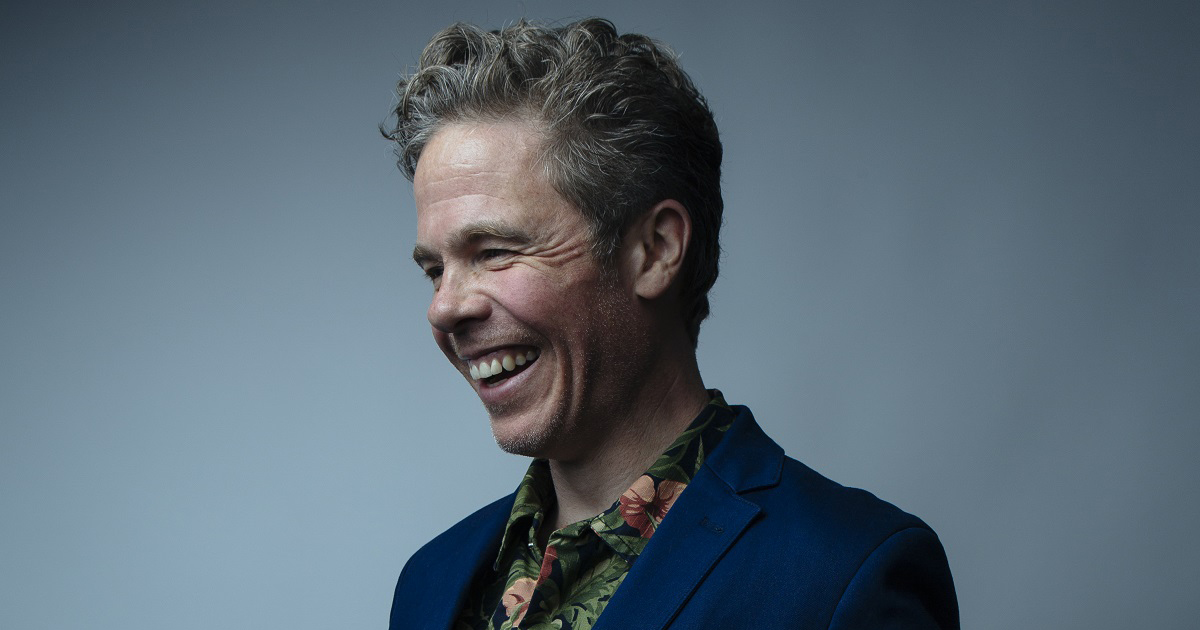
Artist: Josh Ritter
Hometown: Brooklyn, New York
Song: “Heaven Knows”
Release Date: February 18, 2020 (single)
Label: Pytheas Recordings/Thirty Tigers
In Their Words: “I was thinking back to some of my favorite concerts over the years, and I realized how many took place in spaces that were special in their own right. Cathedrals, synagogues, strange and storied theaters, each bring a special kind of glow to the performance. I was also feeling the urge to play some of my quieter, more narrative songs that I may not always get the chance to perform during larger rock shows. So I decided to put together a tour that would allow me to play these songs, and some new ones that I’ve been writing, in some of these beautiful spaces. … I wrote ‘Heaven Knows’ during the Gathering sessions and have been holding on to it since. Now, with A Book of Gold Thrown Open shows coming up, I thought it would be fun to share it. Hope you like! Thanks for listening!” — Josh Ritter