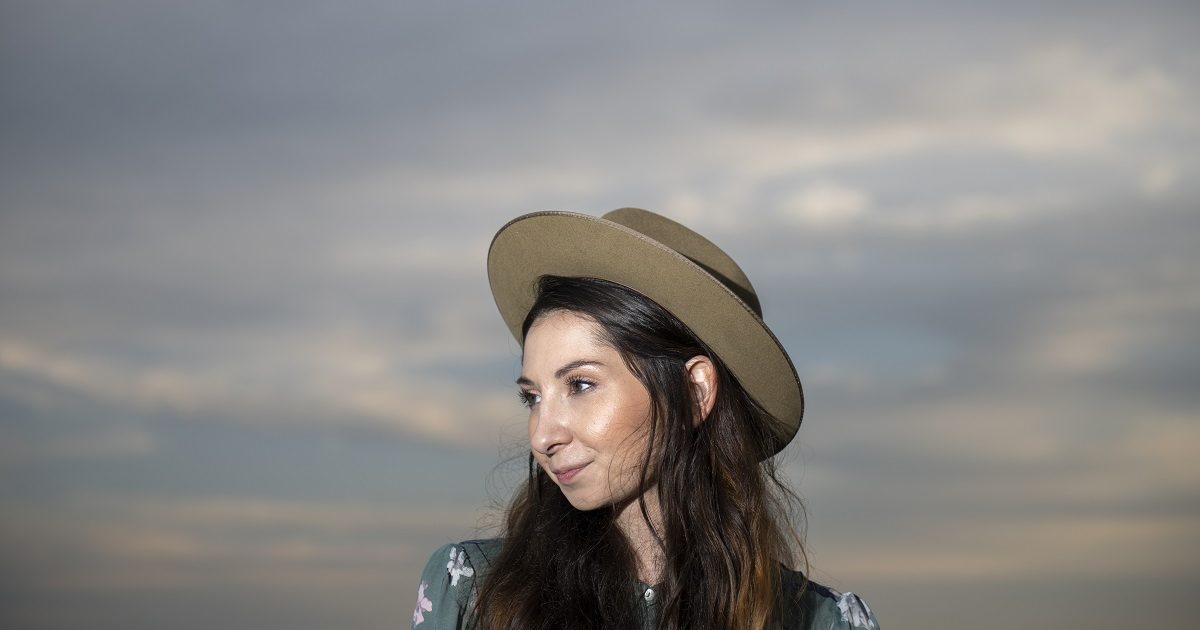
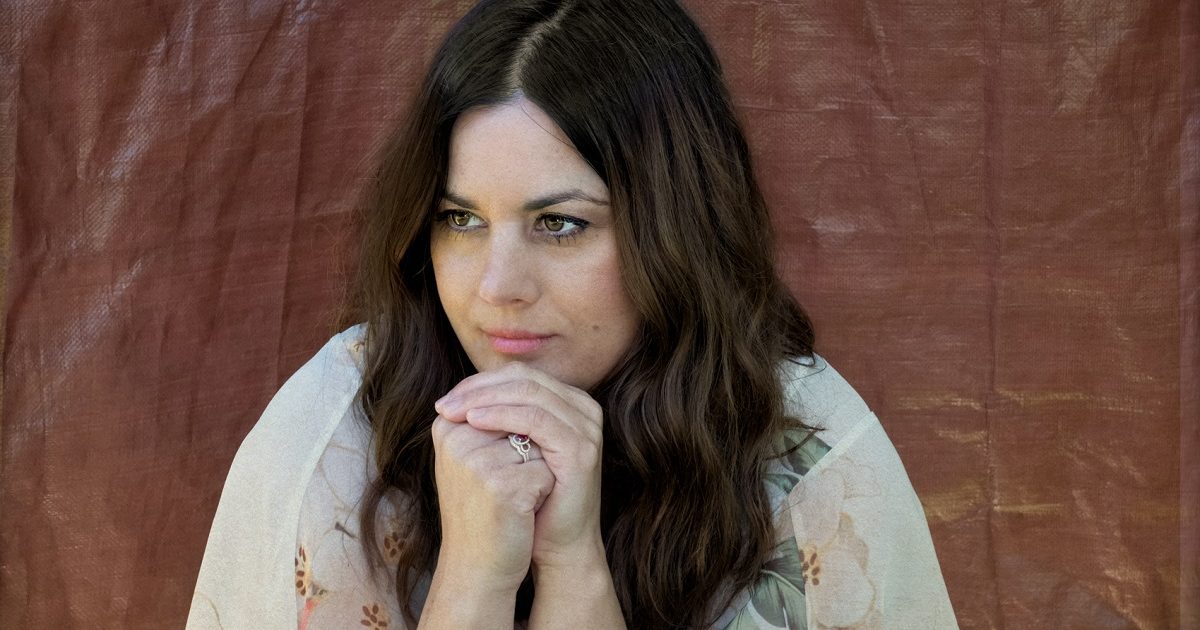
Artist:Jess Jocoy Hometown: Nashville, Tennessee Song: “Somebody Somewhere” Album:Such a Long Way Release Date: April 10, 2020
In Their Words: “This is the song of someone who thinks they need something more, so they run. In their running, we’re with them as they parallel themselves with ‘somebody somewhere.’ Aware that their relationship isn’t perfect on either side, as the end of the song reveals, they come to realize it’s a love worth fighting for. ‘Somebody Somewhere’ came together like a dream — from the writing process to recording. It was a gray day in Nashville and I needed a song with some bounce. The band really succeeded in giving it a good, fun vibe — it feels like a good driving song.” — Jess Jocoy
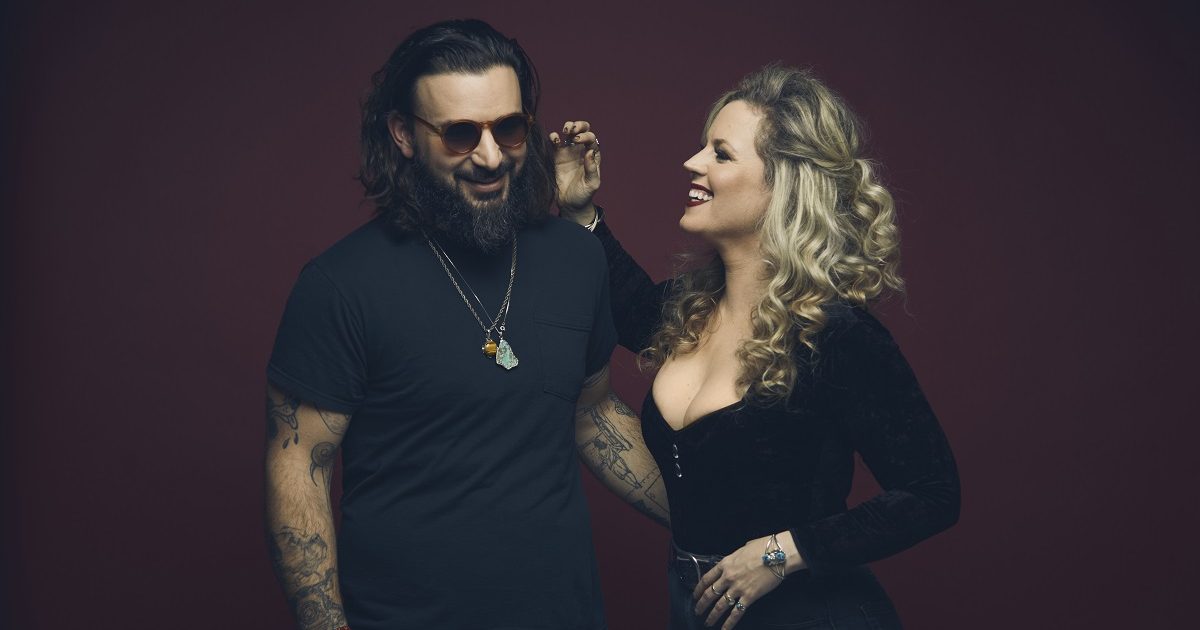
Artist:Smooth Hound Smith (feat. Connor Vance from Dustbowl Revival) Hometown: Nashville, Tennessee Song: “Crazy Over You” (Live at Ten Four)
In Their Words: “‘Crazy Over You’ is pretty guileless in its meaning, and remains one of the only true-blue love songs I’ve ever written (no cheeky humor or heartbreak in this one, folks). Over the years it’s been used many times as a first dance song at weddings, and it even got licensed for an adorable love scene in MTV’s The Real World a while back. These days, when we play it in a live setting, we usually do it stripped down, with just two voices and a guitar, so this session was really fun. We built it up a little with some great players (Danny Pratt on drums, and Rhees Williams on bass), and felt especially lucky that Connor Vance from Dustbowl Revival was around Nashville that day and willing to sit in on fiddle and play with us. We filmed and recorded it live at Ten Four Recording Co. here in East Nashville, and it was engineered by stalwart supporter of sonic excellence, Jesse Thompson.” — Zack Smith, Smooth Hound Smith
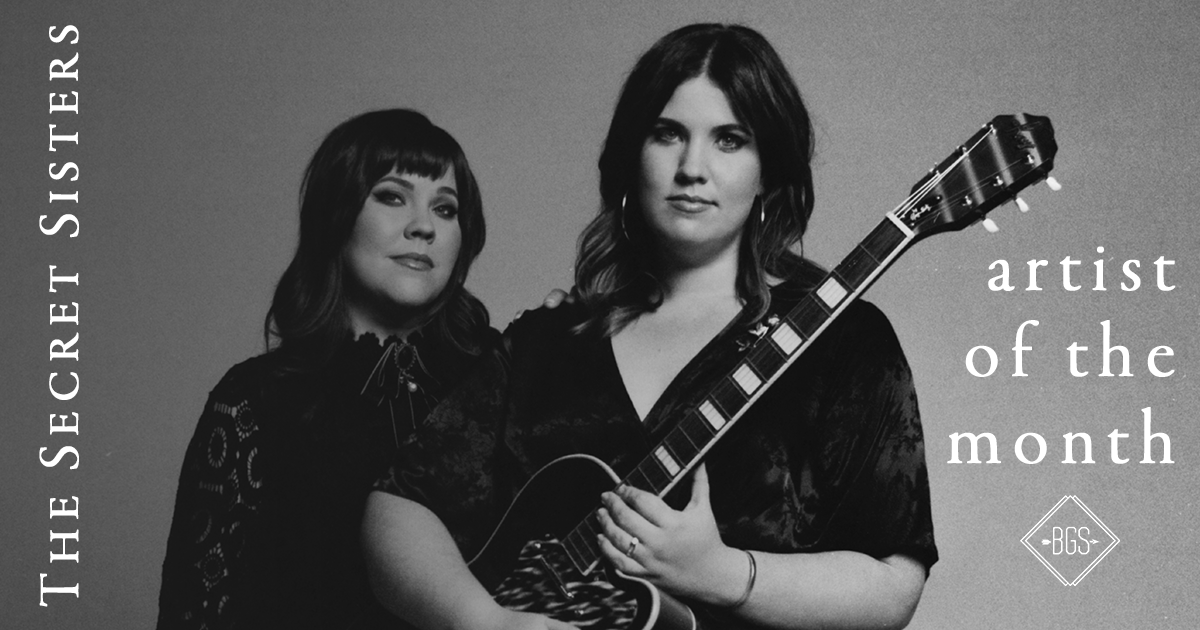
The secret is out, as the Secret Sisters have finally issued their newest album, Saturn Return. Time is a through line of the project, heard in songs like “Late Bloomer,” as well as the album title, which is an astrological reference to Saturn returning to the same location in the sky as it was when you were born. Motherhood also informs the music, as sisters Lydia and Laura Rogers were new mothers at the time, but also grieving the recent loss of their grandmothers.
Produced by Brandi Carlile and Phil and Tim Hanseroth (aka “The Twins”), Saturn Return positions the sisters as solo vocalists to some degree, as both Lydia and Laura recorded separately for the first time. And in contrast to their other albums, they wrote all of the material here themselves. A sweet celebration of the women who came before them can be found in the opening track, “Silver,” while the final track, “Healer in the Sky” is poignant, vivid, and simply beautiful.
Look for a two-part interview with the Secret Sisters — our BGS Artist of the Month for March — in the weeks ahead. (Read part one here.Read part two here.) In the meantime, enjoy our Essentials playlist, comprising choice covers (including one of Carlile’s songs), rare and interesting collaborations, and new music you’ll want to hear from Saturn Return.
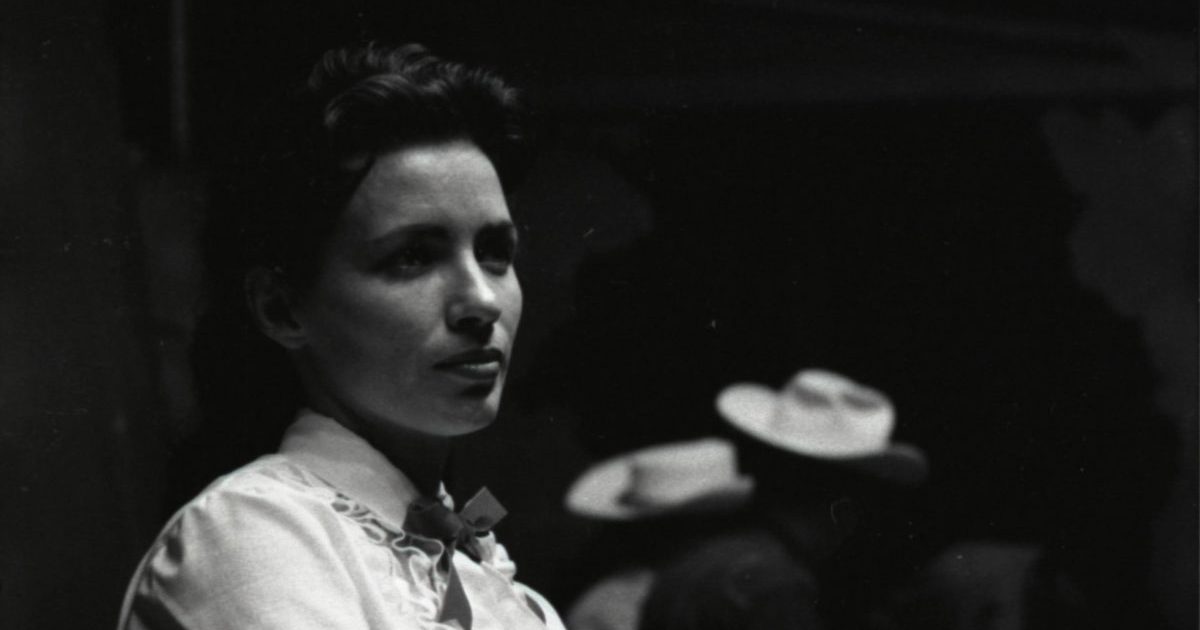
You can’t tell the story of country music without June Carter Cash.
Her mother, Maybelle Carter, helped usher in the era of commercial country music through the 1927 Bristol Sessions as a member of The Carter Family. When that group disbanded, Maybelle eventually gathered her three daughters – June, Anita, and Helen – and started performing radio shows, with June playing autoharp and cracking jokes. (They even had Chet Atkins in their band.)
In time June teamed up with comedians Homer & Jethro for a corny duet of “Baby It’s Cold Outside,” which charted for one week in 1949, and by 1950, the Carter Sisters debuted at the Opry just a month before June’s 21st birthday. The ensemble opened shows for Elvis Presley in 1956 and 1957. June also stepped out as a duet partner with her first husband, Carl Smith, on the eye-rolling (but quite hilarious) “Love Oh Crazy Love,” from 1954.
If your entry point to country music is the 1960s, June Carter is all over it. Still married to Smith, she shared the stage with Johnny Cash for the first time in 1961 as part of his touring package. Two years later Cash scored a major hit with “Ring of Fire,” which Carter co-wrote after seeing the phrase “love’s burning ring of fire” underlined in a book of Elizabethan poetry owned by her uncle, the Carter Family’s A.P. Carter.
By 1967, she and Cash landed a major hit (and soon their first Grammy) with “Jackson,” then got hitched in 1968. It’s important to remember June’s role on Cash’s landmark 1968 album, At Folsom Prison, performing a lively rendition of “Jackson” that got the captive audience hollering. They encored the performance for Cash’s 1969 album, At San Quentin.
June Carter Cash did pretty well for herself in the next decade, too, having her own 1971 country hit with a song she wrote, “A Good Man.” Johnny Cash produced her sole album of that era, 1975’s Appalachian Pride, even as they dug periodically into the folk canon for duet recordings and she won her second Grammy for the Cash/Carter duet, “If I Had a Hammer.”
She appeared regularly on the groundbreaking series The Johnny Cash Show, sang on Cash’s records, and almost always toured with him. Considered more of a comedian than a vocalist, June nonetheless charmed audiences around the world. In the rarely-seen 1979 performance of “Rabbit in the Log” below, she steals the spotlight with a banjo on her knee, cracking jokes and sharing her talent with a Century 21 real estate convention in Las Vegas.
Even listeners who came into country music in the ‘80s and ‘90s can find a tie to June. She harmonizes with her sisters, as well as Johnny Cash, on “Life’s Railway to Heaven” on Nitty Gritty Dirt Band’s seminal 1989 album, Will the Circle Be Unbroken, Volume Two. Around this same time Carlene Carter, her daughter with Smith, emerged as a force in country and rock, and later paid homage to Mother Maybelle as well as June’s stepdaughter, Rosie Nix (from June’s second marriage), on the sweet song, “Me and the Wildwood Rose.” Carlene also wrote one of that era’s most enduring compositions, “Easy From Now On,” and charted multiple singles like “I Fell in Love” and “Every Little Thing.”
Meanwhile, Rosanne Cash (June’s stepdaughter) placed 11 No. 1 singles on the country chart, including the modern classic, “Seven Year Ache,” and she’s now a cornerstone of the Americana community. John Carter Cash, the only child born to Johnny and June, continues to carry on the brilliant legacy of his parents, through books, museum presentations, and reissues. He also produced Loretta Lynn’s past three albums at the Cash Cabin recording studio in Hendersonville, Tennessee.
Johnny Cash, incidentally, was inducted into the Nashville Songwriters Hall of Fame in 1977 and the Country Music Hall of Fame in 1980. A.P. Carter joined the Nashville Songwriters Hall of Fame in 1970, “Ring of Fire” co-writer Merle Kilgore followed in 1998, and Rosanne Cash entered in 2015. However, June Carter Cash is not yet a member of the Country Music Hall of Fame or the Nashville Songwriters Hall of Fame — omissions that deserve reconsideration. A spiritual and religious woman, she shared the stories of her life in two memoirs: 1979’s Among My Klediments and 1987’s From the Heart.
Always a natural on stage, June actually trained at the Actors Studio in New York City after being spotted by Elia Kazan at the Grand Ole Opry in 1955. In the late ‘90s, she drew upon those thespian skills with roles on Dr. Quinn, Medicine Woman and the acclaimed film The Apostle. Not to be overlooked is her heartbreaking role in Johnny Cash’s 2002 video, “Hurt,” where the viewers sees the devastation of an American music legend through her shocked and tearful eyes.
Carter remained a legendary presence in the final years of her life — and beyond. Her 1999 collection, Press On, won the Grammy for Best Traditional Folk Album, while the Carter Family classic “Keep on the Sunny Side” resurfaced in a major way due to its inclusion on the O Brother, Where Are Thou? soundtrack in 2000, as sung by The Whites.
Following June’s death in 2003, she was awarded two more Grammys – one for her own performance of “Keep on the Sunny Side,” and the other for the folk album, Wildwood Flower. Nashville native Reese Witherspoon collected an Oscar for portraying her in the 2005 film, Walk the Line. A two-disc compilation released that same year surveyed her remarkable career. She is buried next to Johnny Cash in Hendersonville, Tennessee.
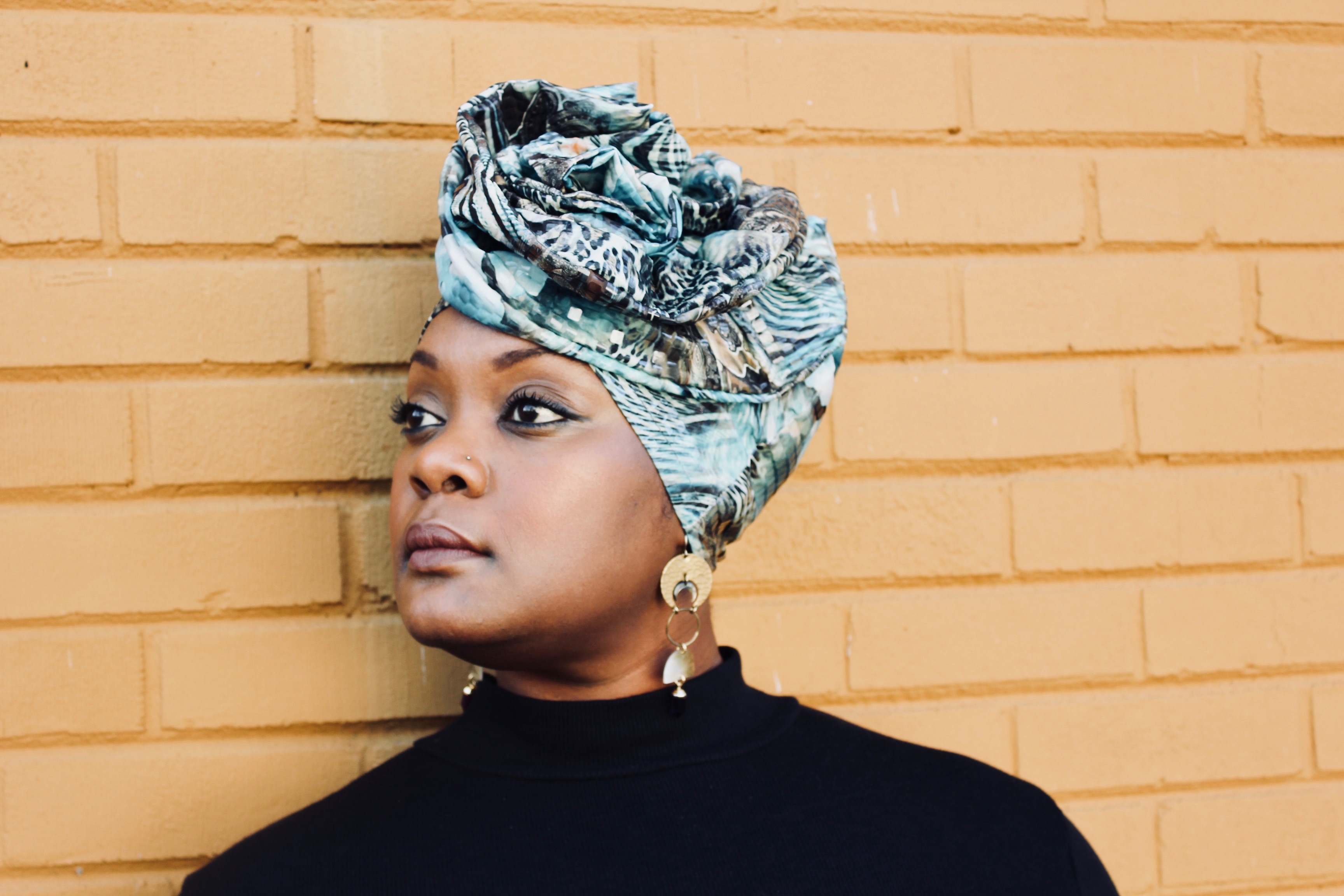
Artist:Rumer Hometown: London, England Song: “Bristlecone Pine” (written by Hugh Prestwood) Album:Nashville Tears Release Date: April 24, 2020 Label: Cooking Vinyl
In Their Words: “In the song, the tree illustrates the continuity of spirituality, mortality, and the natural world. The tree has seen the rise and fall of civilizations, overcome harsh conditions, achieved a long life, and the narrator finds peace in that: ‘Now the way I have lived, there ain’t no way to tell, when I die if I’m going to heaven or hell. So when I’m laid to rest it would suit me just fine to sleep at the feet of the Bristlecone Pine.'” — Rumer
Everyone is making political records. Everyone is making albums that speak to “this moment.” Too few of them are making music that speaks to the people who inhabit this moment.
Kyshona does. The explorations on her brand new album, Listen — which are synopsized neatly on the title track — by many other artists could have easily and offhandedly devolved into a reactionary, “woke” gasp into the void. Kyshona (surname Armstrong), though, is a deft and empathetic songwriter, a storyteller with a penchant for shameless self expression and graceful introspection. Listen is not an admonishment. It’s not an imperative, or an oracle-given ultimatum. Kyshona does not implore her audience to hear her, but each other.
Over ten original and co-written songs the album carries on this mission with empathy, connection, community, and spirituality (but not proselytizing.) It’s a remarkable feat that though society systemically attempts to render her and women like her invisible, assuming that they’ll stand aside or allow themselves to be tokenized, Kyshona compassionately defies those expectations and opts to design her selfhood — and thereby, her art — to interact with the world on her terms and not the world’s.
BGS connected with Kyshona over the phone while she created still more music and community on the road in Los Angeles in early February.
BGS: It feels like you’re trying to hold listeners to task here, but there’s also so much grace on the record and there’s so much understanding in the lyrics. How did this idea of grace permeate the album? It feels so tangible to me.
Kyshona: Maybe a year and a half ago I had to come up with a mission statement for myself, to help me focus on what my point and purpose is. We all get caught up in the glamor, the whole shiny music business. That mission statement was, “To be a voice and a vessel to those that feel lost, forgotten, silenced, and are hurting.” There is no “right” or “left” to that statement. Those that might feel incarcerated — even if it’s not behind bars, but by their fears, their worries, the rules that they have been taught to live by — everyone has that in common, somehow.
What I tried to set forth in this album is just: Listen. From every corner that you look at it, we’re all just screaming at each other. Nobody’s really listening. The thing about “Listen.” is that it’s a whole sentence. It’s the most difficult thing to do. When we’re listening to someone share their story we automatically want to relate to them, “I have a story similar to that!” Or, “I know what I can do to help them!” That takes us out the moment with another person.
Something I learned as a therapist was how to be a reflection for someone else and we’re not really doing that [enough]. A mirror doesn’t try to fix anything. I wanted this album to be like a mirror. The icky stuff, we’ve all got fears we’re walking in. We all know life can get heavy sometimes. We’re all walking around with some sort of baggage we carry with us from place to place. We all hit moments where we can’t go on.
I’m glad you brought it up, because it felt to me like the redemptive empathy — the listening — you’re trying to inspire with these songs is definitely informed by your therapy experience. How else does the music therapy filter in here?
I teach songwriting now at a women’s jail back in Nashville and when I walk into these classes with these women, they all say, “I don’t have a voice. I don’t have a story. I can’t sing.” That’s something they’ve been told since they were young and they believe it.
When I’m writing with someone who doesn’t consider themselves a songwriter, I remove myself from the situation. I try to put their words into it. It can be very uncomfortable if I try to put something the way I would say it in there. I’m always battling myself. I have to remember, this is their story, their words. I’m just there to be a reflection. As I learned in my practice, years ago, I was always there to lead people to finding their voice, to lead people to finding their story, and to lead them to finding how their story can help others. That they can take the torch and carry it on.
When people say they don’t have a story, when they don’t have a voice, I wonder if your experience as a Black woman — someone who is told by society writ large that you don’t own your own story or even have one worth telling — is that what you channel to show other people that they do? Do you feel that connection at all?
Man. Yeah…
First, I feel as though I have to walk into a room in a very specific way, because of the way I look. Especially if I’m playing intimate rooms, like house concerts. I have to come in welcoming, as if I’m not a threat: I’m kind — I promise. I’m not going to say anything to put anyone off. When I start my shows I have to find something that all of us have in common, which for me is that we all come from someone. We come from somewhere. I talk about my grandparents and what they’ve instilled in me. I feel like a lot of people — not everyone, but a lot — can relate to that. Someone in their lives has given them guidelines to live by.
Then, eventually, I get into incarceration, what it’s like being incarcerated, how do we bring light into the darkness. I bring in the heavy stuff. I tell stories of the places I’ve been, the people I’ve seen.
Also, as a black woman, I feel like it’s expected of me to be the “oracle” that’s telling everyone– I don’t want to say it’s a responsibility, but there’s an expectation.
It’s almost projection, right? That black women are always strong, or magical, or spiritual guides–
Yes, and caretakers. People don’t understand even the complexity of what I’m coming in front of them with. They don’t understand all the different levels of who I am, because I can only really present this one side, which is, “I promise I’m not a threat.” It doesn’t matter where I’m walking into, even when I’m walking behind bars I have to do the same thing. “I’m not a threat. I’m not here to judge you.”
I notice if I have a guitar on my back people do move out of the way, I get a little bit more respect. If I don’t, it’s amazing how invisible I can be and how I am perceived by others. Carrying a tool, carrying an instrument on our backs, can change or affect the way someone perceives us, off-the-bat, right away. Walking anywhere with a guitar on my back, it’s like, “Huh…” Cause that’s not common, to see a black woman with a guitar.
It’s always expected of me too, “You must have grown up singing in the church!” No, I did not. I was not leading choirs — people have an automatic story when they see me do what I do! — I was an oboe player and I played piano. That’s what I did.
This is actually another question I had! I wanted to ask you how gospel influences your music, but I don’t mean doctrine and I don’t just mean genre, either. Maybe the middle space between those two ideas, because that’s what I hear in your music. I hear the activist tinge of gospel, the civil rights aspect of gospel. So what does the gospel thread in the album feel like to you? I did wonder if people projected “gospel” onto you, like I did just now!
I grew up in a house with gospel music. My dad and my grandpa played in gospel quartets, so I was hearing it all the time. But what I loved about the gospel music that I was surrounded by was the ideas that were given by it: Joy. You’re not alone. The burden is not all yours. And I loved hearing voices blend. There’s something about voices being together, creating this one sound.
My faith doesn’t come into this. My faith is in people. My faith is in the fact that we can be better. [At] shows, people walk up to me like, “You’re a believer, aren’t you?” I’m not here to point anyone to God or guide anyone anywhere, I’m here just to be a reflection.
I have faith in a higher power. That’s what gets me through. But I also know that that’s not how everybody comes at life. Not everybody has the foundation that I do. I’m just here to let people know: I see you. You’re not alone. I know it doesn’t feel good right now, but somebody is out here. You might not even know them, but they get it. And let someone else know that you see them, too.
I’m glad you brought up being immersed in harmony, because I especially wanted to talk about your background singers on the album, Maureen Murphy and Christina Harrison. You’ve been singing with them for a while, right?
Yes! Well, Christina left us, she moved to Seattle, but yes! Christina and Maureen are who I started out with — like, if I could have a dream team that’s it.
What I hear in the vocals is almost sibling-harmonies level tight. You’re so in sync, on the same wavelength, and so much of that to me seems like it’s stemming directly from the community you have with these singers and musicians as well. These aren’t just studio musicians to you.
I consider these women my family. These are my sisters. These are women that I feel can read my looks, I can read theirs, we can say what we need to say and be done. I feel like they lift me up and support me — because I’m not a vocalist! I’m not a singer, I’m a storyteller. I don’t see myself as a singer. People say, “Surround yourself by people that are greater than you.” [Laughs]
Outside of that, these women believe in the message that the music carries. They also know the mission and they’re there for that. They’re ready to walk in it. And, both of these women wrote on the record. Maureen and I wrote “Fallen People” with our friend Jenn Bostic and Christina and I wrote “We the People.” It’s not only my voice, these are also [ideas] that they’ve been carrying around and feeling.
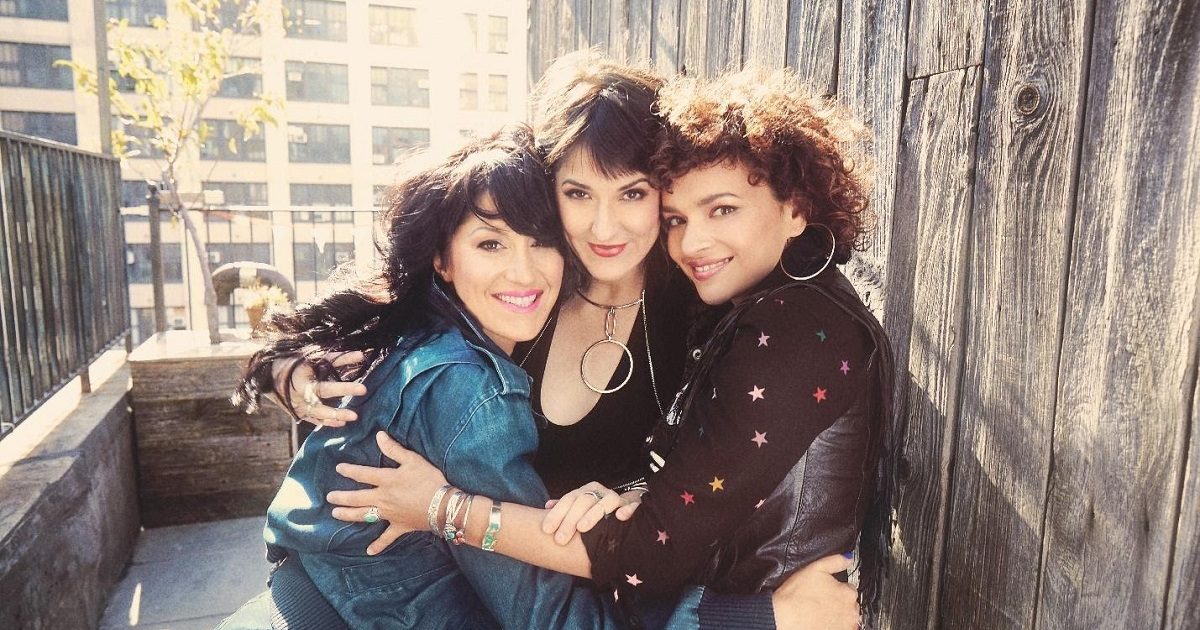
Artist:Puss N Boots (Sasha Dobson, Norah Jones, Catherine Popper) Hometown: Brooklyn, New York Song: “You Don’t Know” Album:Sister Release Date: February 14, 2020 Label: Blue Note Records
In Their Words: “Puss N Boots is a band that inspires me. When we get together to play I want to write songs with us in mind. ‘You Don’t Know’ is one of those songs I could imagine doing with Sasha and Cat while I was writing it. The way Sasha plays this kind of slow country groove on the drums is one of my favorite things and the way our harmonies slink in and out is exactly how I pictured this song working.” — Norah Jones, Puss N Boots
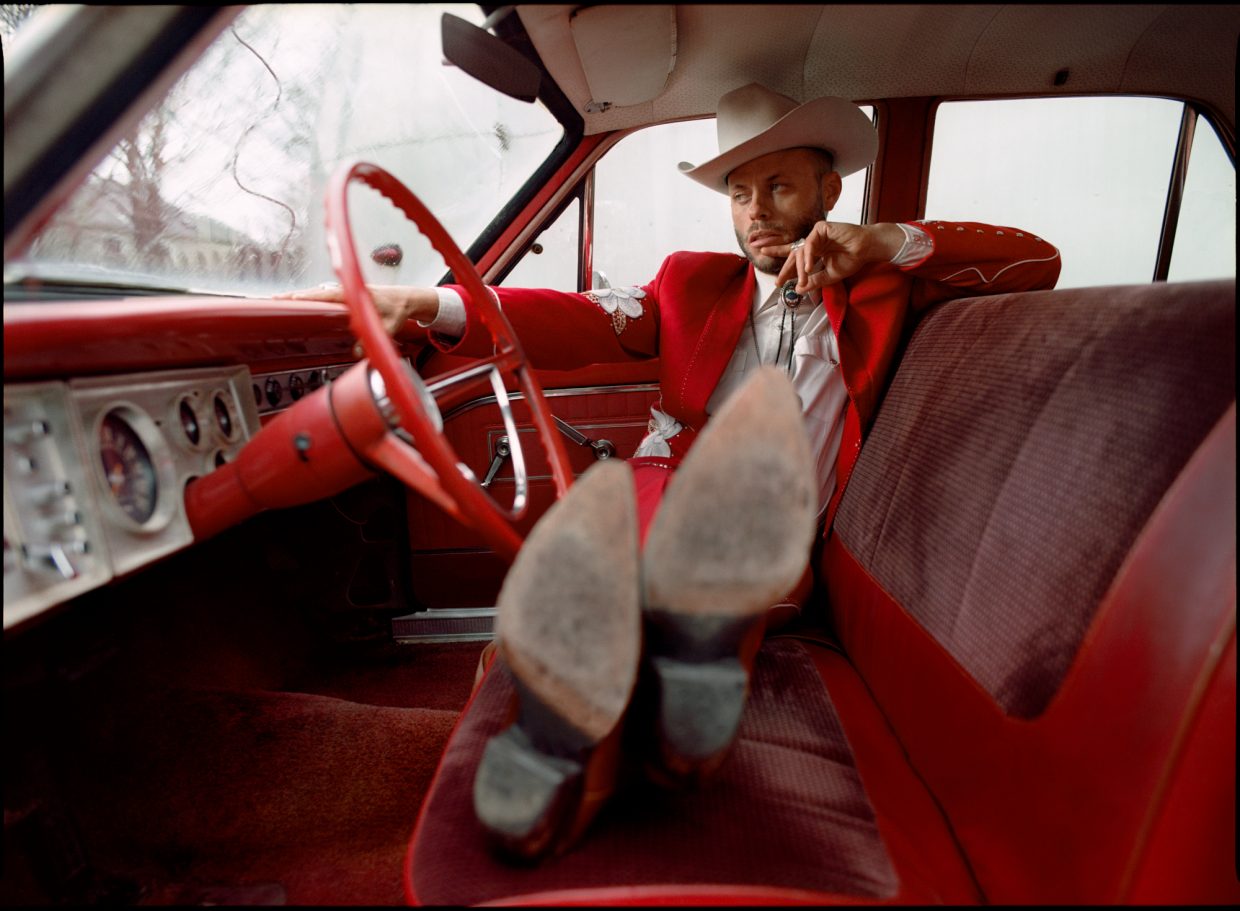
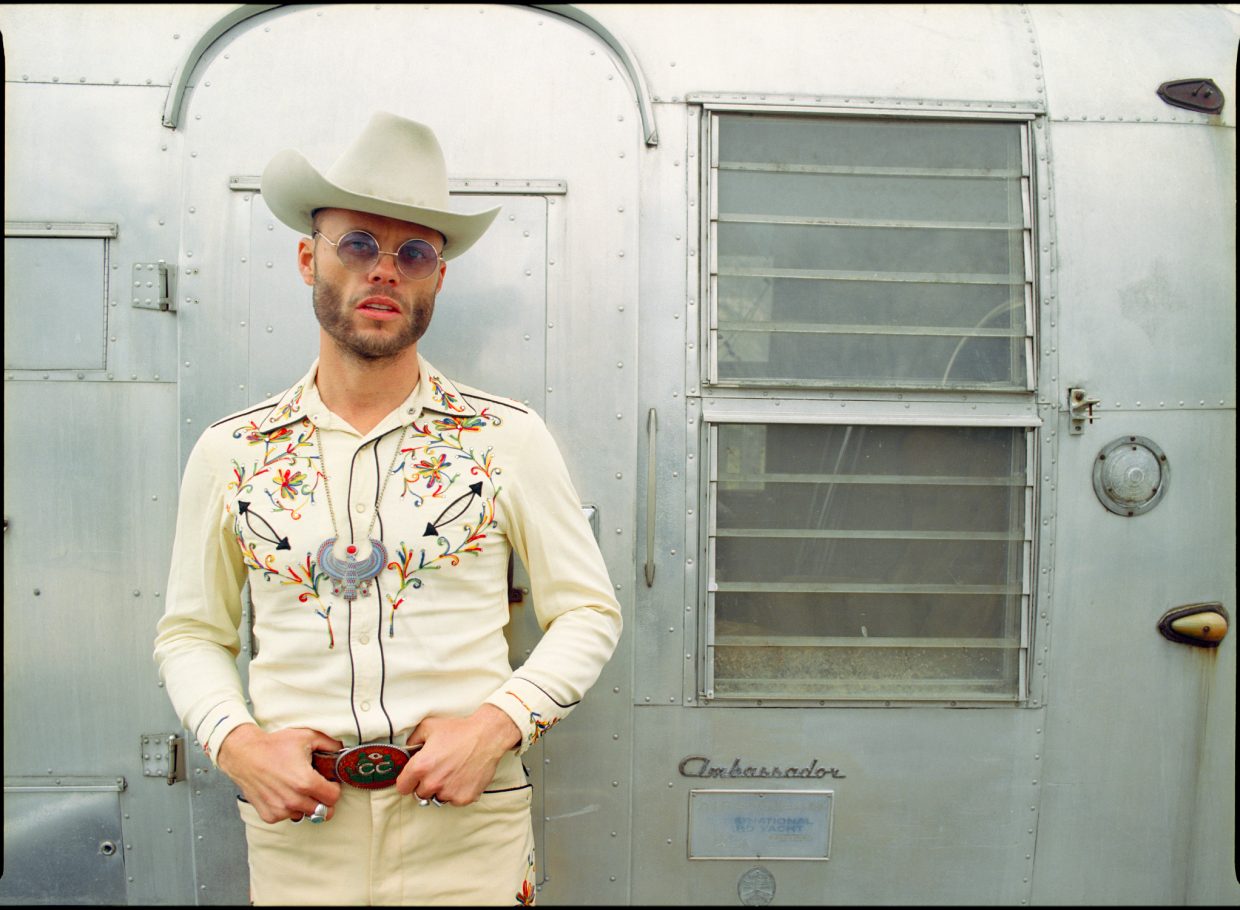
I had never met Charley Crockett before, though a list of our mutual friends would be long — and would span the country. I first heard his music on NPR a year or so back and was struck by his style and voice.
I figured I was picking up a soon-to-be new friend as I drove up to meet him at the Basement East in Nashville. Within moments we took off towards our location, knowing the rain would begin to fall at any moment. However when on tour and just passing through a town, that one day is often all you have for the photoshoot — rain or shine. Naturally, we got straight to work.
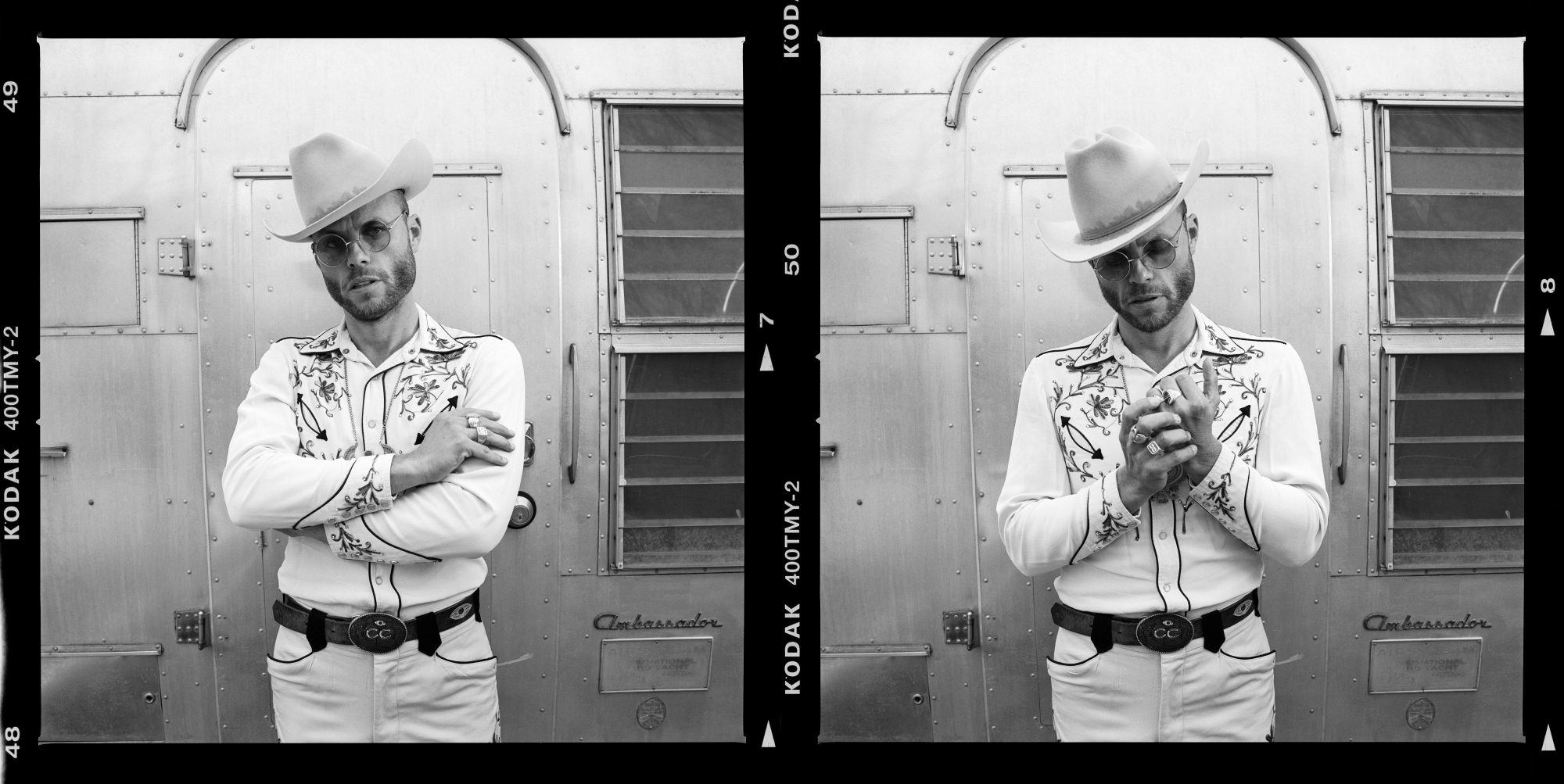
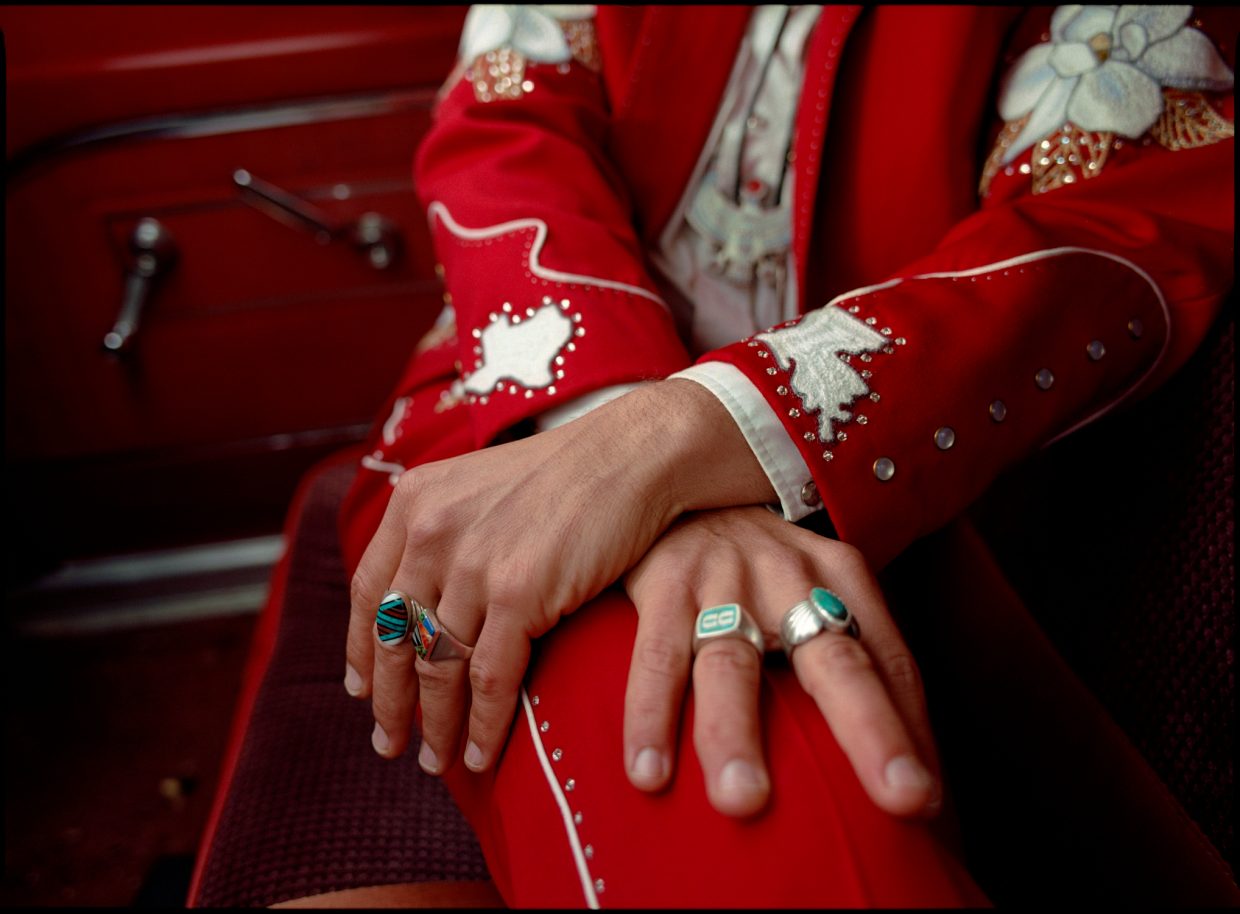
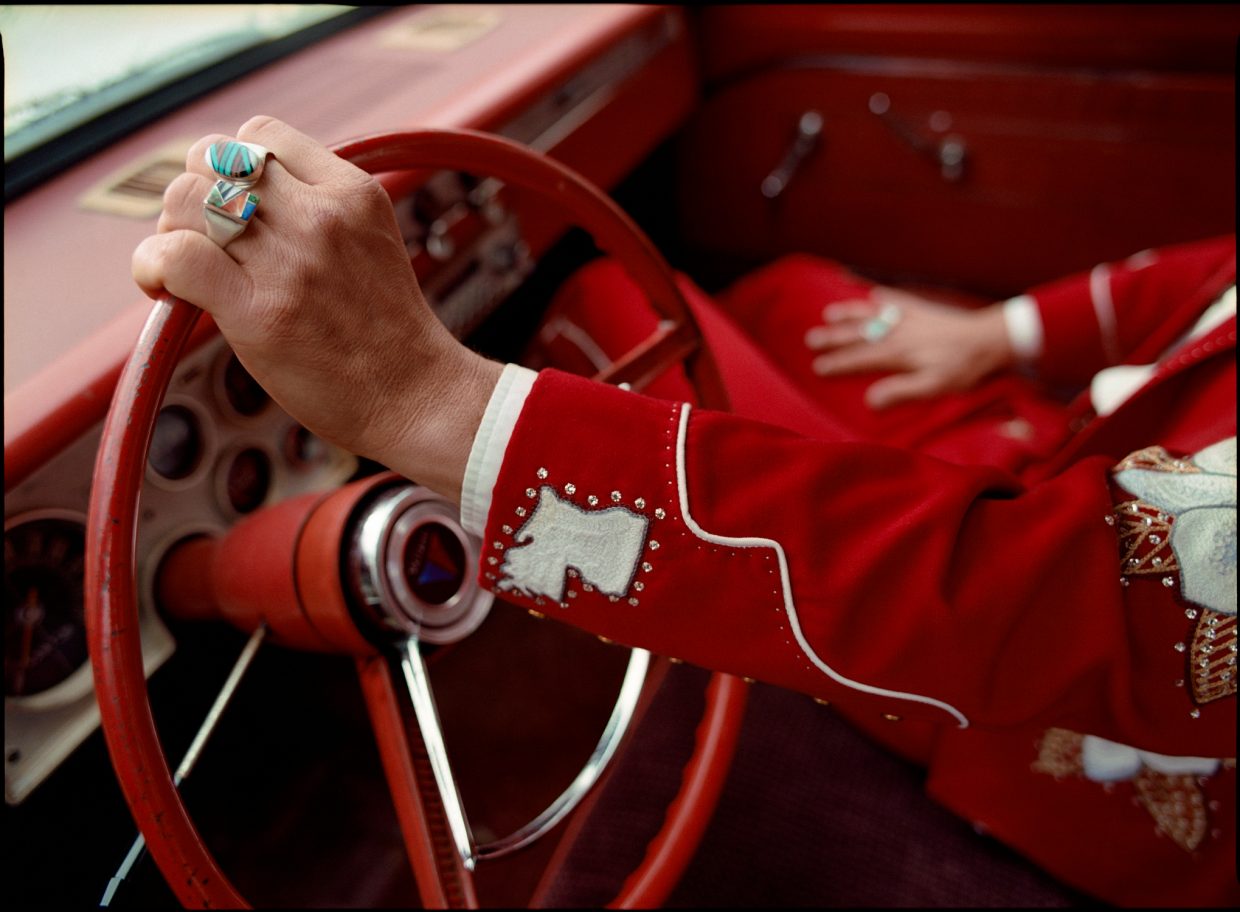
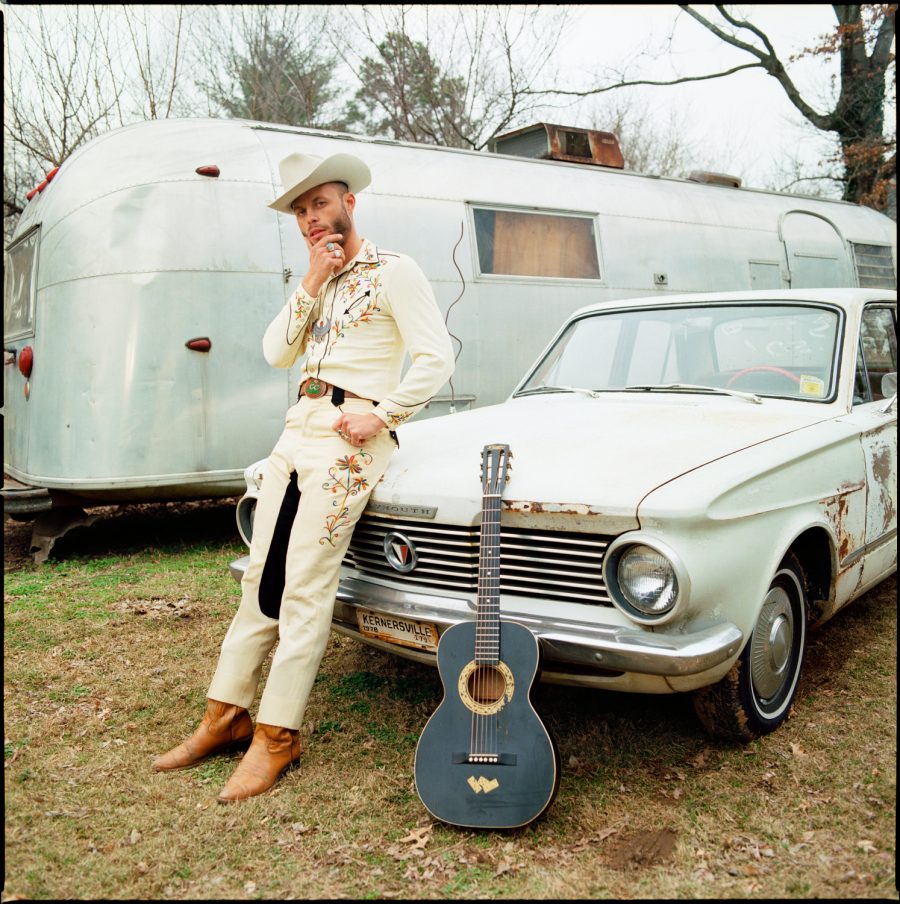
I count it a very lucky thing that Charley happened to have the perfect two suits to completely match the color palettes I was working with. We started with any shots we could outside, and then the rain fell just in time to fog the car windows for our interior shots. I most definitely had to stand in the rain and cover my gear to protect it all from the elements, but it was so worth it to make these images. We talked about photography, working hard, tour, and life. It was nothing short of a wonderful start to a new friendship. Charley is such a world-class person and artist, and it was such a pleasure to finally befriend him and photograph him for this piece. — Laura Partain
Charley pictured in a custom Fort Lonesome suit, vintage Stetson Rancher hat, vintage bolo, and ’70s era Champion boots.
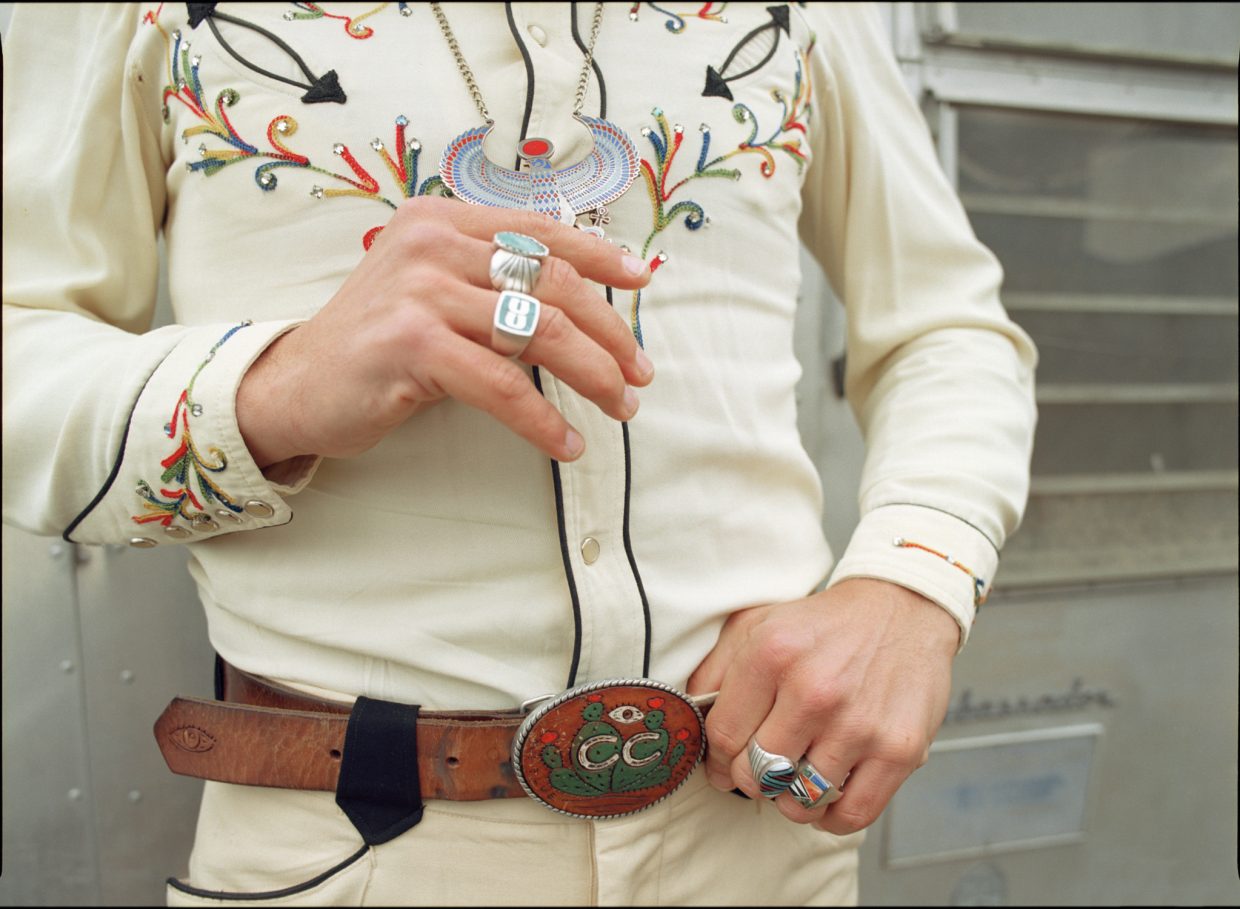
Details of custom Fort Lonesome suit and custom CC ring by Scott James Jewelry.
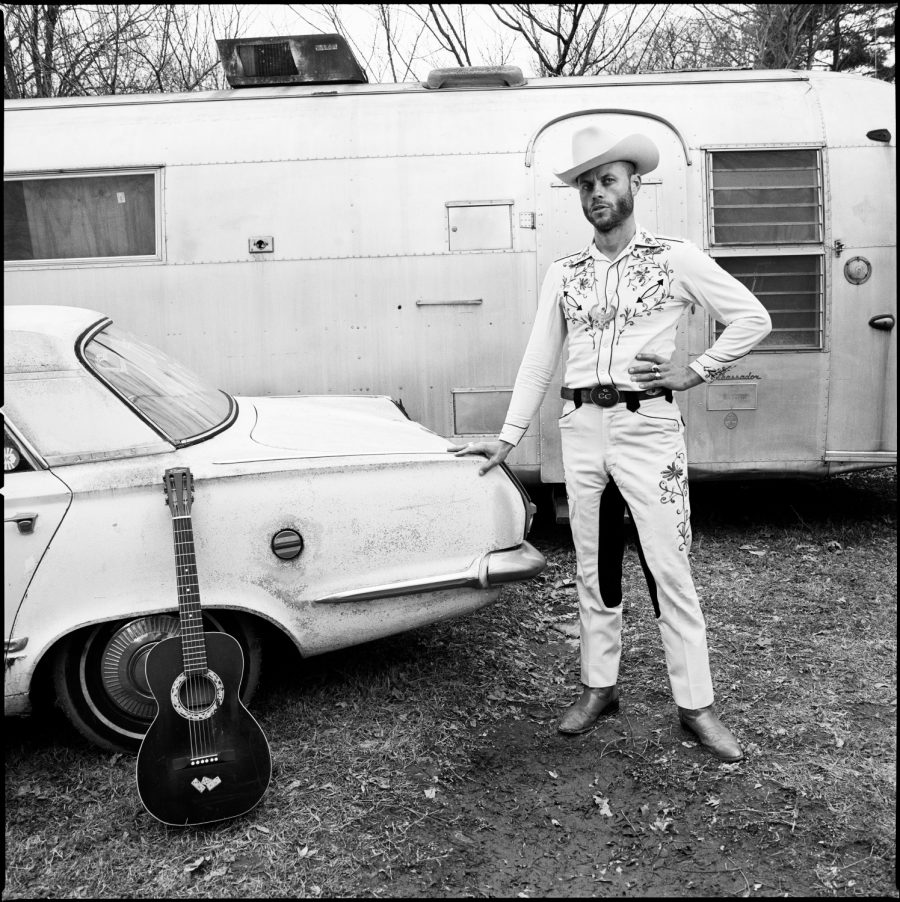
Charley pictured wearing a Rockmount custom suit from Pioneer House in Knoxville, TN, ’60s Texas Imperials cowboy boots, vintage Stetson Rancher hat, and his 1930s Le Domino parlor guitar.
Detail of the Rockmount suit, chain stitching by Union Western Clothing. A custom belt by Vincent Neil Emerson, CC ring by Scott James Jewelry, and a vintage ancient falcon necklace from Dolly Python.
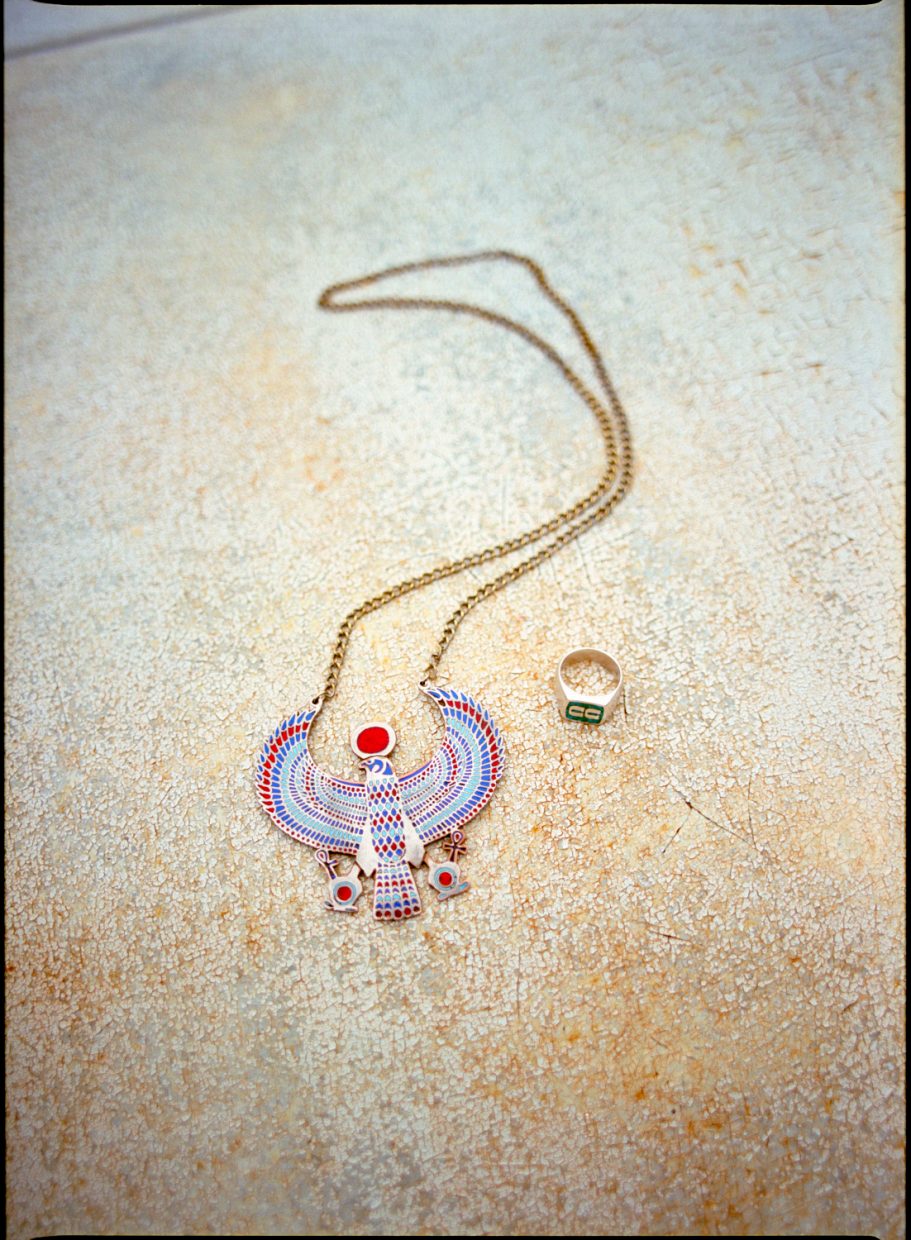
Vintage ancient falcon necklace from Dolly Python, CC ring by Scott James Jewelry.
Charley wearing the Rockmount custom suit, ’60s Texas Imperials cowboy boots, and vintage Stetson Rancher hat with his 1930s Le Domino parlor guitar.
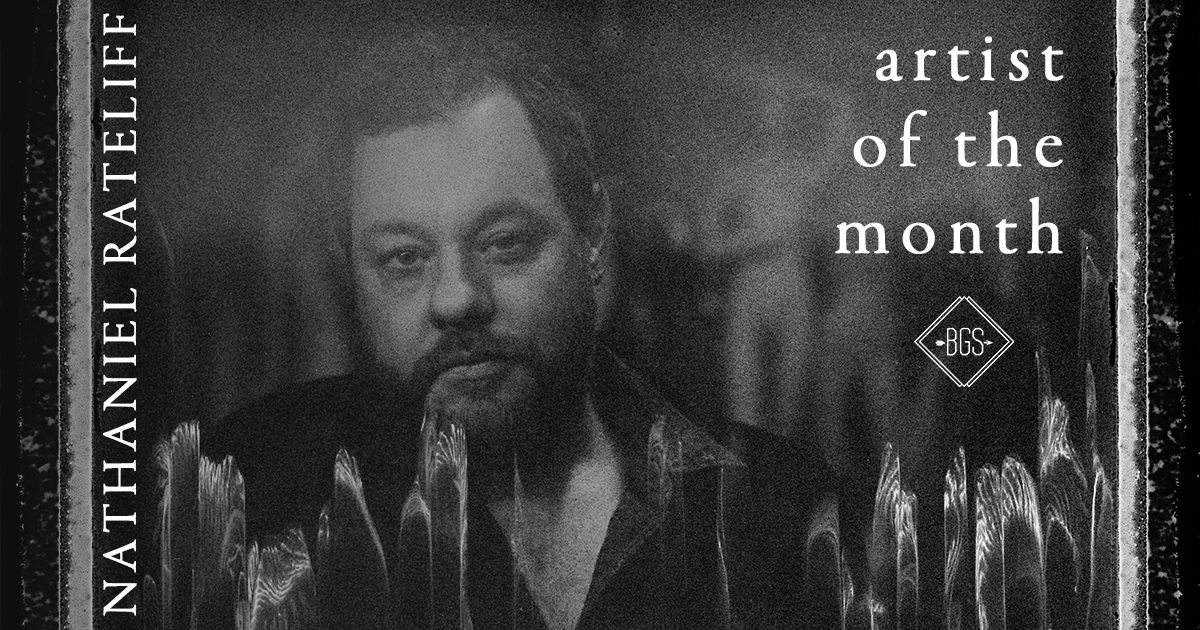
Nathaniel Rateliff’s And It’s Still Alright marks his first full-length solo release in seven years and grapples not just with the loss of a romantic relationship, but with the unexpected passing of his friend and collaborator Richard Swift, with whom he had planned to record it.
In this portion of our conversation, we discuss Rateliff’s songwriting on And It’s Still Alright — which ventures further into vulnerable, introspective territory than did his previous work with his band the Night Sweats — as well as his time in the studio and how he plans to bring these songs to life on his solo tour, which runs through the summer.
BGS: Given the way “And It’s Still Alright” came out, you mentioned earlier that “All or Nothing” began with a chord progression. Do you have a songwriting process you typically follow, or does the creation look different each time?
Rateliff: It’s really song-to-song. It always seems to change for me. “All or Nothing,” with that song in particular I really wasn’t trying to write a song. This progression had come up and I played it at a bunch of different tempos. It reminded me of the Eddy Arnold song, “Anytime.” It has this Western-swing progression to it, and I really liked it. Then I started playing these jazzier chords I had learned that I wouldn’t play with the Night Sweats and it turned into a song eventually.
I had a handful of different words to it. As I remember, at one point the chorus was like, “I got heavy shoulders but I’m not blue.” It didn’t really make sense. [Laughs] That turned into, “I got all this and nothing, too.” So it really does vary. That song was a chord progression that a vocal melody kind of came out of. And sometimes I’ll start with a vocal melody or a phrase and write music around all of that.
“And It’s Still Alright,” the original idea was me sitting in a hotel playing guitar by myself. Richard and I went and saw Tom Petty together. The way [Petty’s] song structure was, you start with a massive chorus and it goes into a verse that’s an even bigger chorus and it’s hook after hook after hook. One of my buddies was listening to “And It’s Still Alright” and he’s like, “Yeah, it’s kind of like it’s only bridges. There’s no chorus.” But there’s something interesting about it, since it doesn’t have a traditional hook.
You mentioned the time you all spent in the studio together. It sounds like you had a great group of players and collaborators who were able to join you. What do you look for in a collaborator, and what is it about a musical partnership with someone that feels right to you?
Even in the beginning, when the first Night Sweats records started, I had grown weary of being the traveling singer/songwriter troubadour kind of guy. I was really over playing acoustic guitar for a little bit. So I was making these demos in my attic, then I shared them with Richard and we decided to make a record. I brought Patrick Meese out with me, because I knew we could both play multiple instruments and that we’re pretty good at not getting our feelings hurt when advising each other about portions of the songs.
Sometimes you have something you think is a great idea and it just doesn’t work; being able to work with somebody who isn’t overly sensitive about that stuff is really helpful. You don’t want to have this unspoken tension or this idea that someone is musically picking on you when they don’t like your ideas… The biggest thing is being able to be in the studio with somebody where there is this element of seriousness in approaching it as work and respecting it as a craft, but there’s another side of it where you have to lighten up and have a good time.
Yeah, if you aren’t having fun, what’s the point of doing it at all?
Exactly. I hear stories of people who are like, “Oh, they got that on the 70th-something-odd take,” and it’s like, “Fuck that!” If we’re not getting it in the first two or three, we’re probably screwing something up.
With the Night Sweats, of course, you were releasing music via Stax, but this is your first solo release you’ve been able to do with the label. Given the label’s history, what does it mean to you to be able to work with them, and what has spending the last several years of your career with them opened up for you creatively?
With the Night Sweats stuff it was like, well, the sound I’m really trying to come up with is influenced by Sam & Dave. My original idea for the Night Sweats was, I wanted to have the feel of when the band would play R&B songs like “Don’t Do It.” Their sort of gritty, funky, but slightly Southern feel and approach to the songs — swamp rock, I guess. But then also have these harmonies, like the Sam & Dave harmonies, with these big, powerful voices. Then I wanted everyone in the band to be working for the song. I wanted it to be a sweaty revival.
Originally I was signed to Rounder and got dropped when Concord kind of took over. Then I eventually got signed by the parent company, Concord, and when I found out they worked with Stax, I was like, “Is there any way we can put this out with Stax?” We shared the record with them and that started our journey together. To me, Stax is such an important part of the community in Memphis and part of the thing I love about music is how it’s a community-builder. We really need that nowadays. We need to be more in touch with the people around us and be more understanding and more caring overall. Also, just that roster; it’s all the greats. It hits me when I look at it. It’s pretty amazing.
It sounds like the tour will really showcase several different sides of you as a musician and as a performer. What are you most looking forward to about getting on the road and getting to play these new songs live?
We’re really trying to create an experience. The other thing, too, since it’s mostly the Night Sweats guys in this band, it’s fun to be able to show people, in pulling these songs off live, that we’re really creating and playing whatever type of music that appeals to us at any given time. Hopefully that will make us look like we’re not just a one-trick pony.
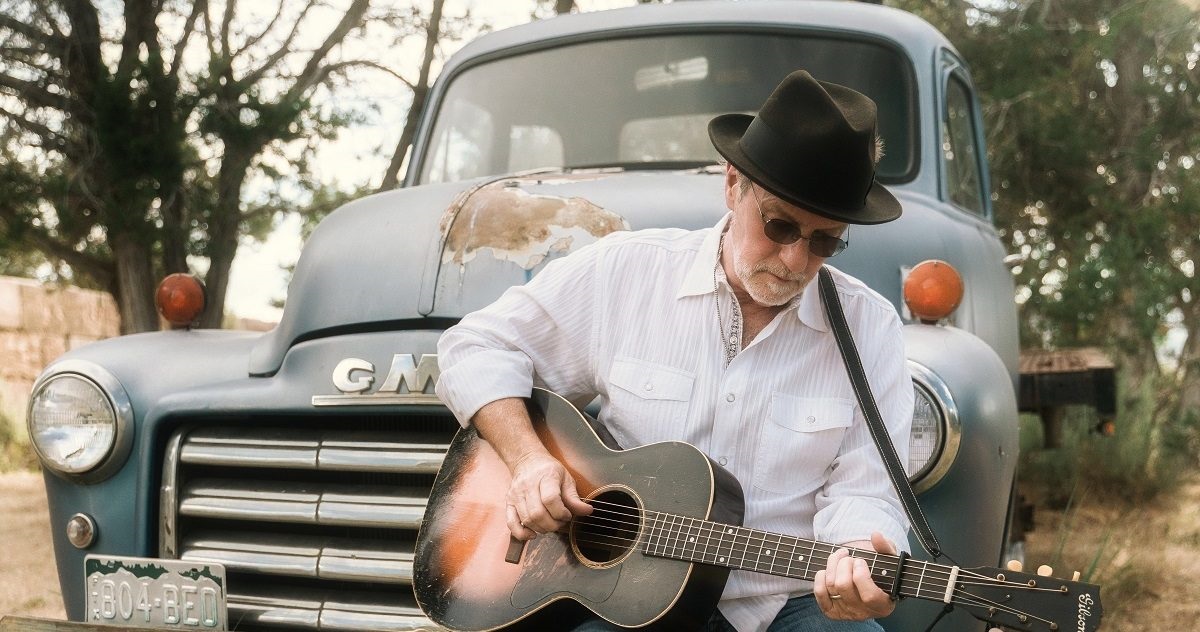
Artist:David Starr Hometown: Fayetteville, Arkansas Latest album:Beauty and Ruin Personal nicknames (or rejected band names): Folks call me Big D for some unknown reason…
What’s your favorite memory from being on stage?
One of my favorite moments on stage was pretty recent. I worked with a group in the small Colorado town where I live to build a performing and visual arts center (The Grand Mesa Arts & Events Center in Cedaredge) a couple of years ago. On opening night, I was mid-song playing to a full house when I realized that we’d “done it.” We’d made this place where there had been an empty shell before. That was an emotional moment of pride and gratitude; both for the appreciative crowd I was singing to and for the success of our hard work.
What other art forms — literature, film, dance, painting, etc — inform your music?
I’d have to say that my writing is most informed by the written and spoken words of others, for example how Beauty and Ruin is inspired by my grandfather’s 1972 novel, Of What Was, Nothing Is Left. I really enjoy taking a phrase or saying and building a song around it. That might come from a book I’ve read in the past or from a snippet I hear on the news or in the coffee shop. It can truly come from almost anywhere!
What was the first moment that you knew you wanted to be a musician?
Like so many of my generation, I recall seeing The Beatles on The Ed Sullivan Show when they first came to the States. Though I was just a kid, I already loved music. And it seemed to me that those guys had it figured out! But to be honest, it’s only been in recent years that I made myself believe in me relative to being a musician. I’ve made a more serious commitment to writing, recording, touring and collaborating. And it’s been very rewarding!
If you had to write a mission statement for your career, what would it be?
Strive for excellence when writing, performing and in all my interactions.
How often do you hide behind a character in a song or use “you” when it’s actually “me”?
For the longest time, I wrote very much in the first person. But as time goes on, I find it really fun and liberating to inhabit a character’s skin when building a song. My recent book-based project gave me lots of room to run in that respect. More often than not, it ends up being a composite character with a healthy dose of me included.
Photo credit: Jason Denton
This website uses cookies to improve your experience. We'll assume you're ok with this, but you can opt-out if you wish.AcceptRejectRead More
Privacy & Cookies Policy
Privacy Overview
This website uses cookies to improve your experience while you navigate through the website. Out of these, the cookies that are categorized as necessary are stored on your browser as they are essential for the working of basic functionalities of the website. We also use third-party cookies that help us analyze and understand how you use this website. These cookies will be stored in your browser only with your consent. You also have the option to opt-out of these cookies. But opting out of some of these cookies may affect your browsing experience.
Necessary cookies are absolutely essential for the website to function properly. This category only includes cookies that ensures basic functionalities and security features of the website. These cookies do not store any personal information.
Any cookies that may not be particularly necessary for the website to function and is used specifically to collect user personal data via analytics, ads, other embedded contents are termed as non-necessary cookies. It is mandatory to procure user consent prior to running these cookies on your website.