Rose Cousins: Just One Song Before the Relationship Ends

Editor’s Note: Rose Cousins will take part in the Bluegrass Situation Takeover at The Long Road festival, to be held September 6-8 in Stanford Hall, Leicestershire, England.

“One of the most vulnerable songs I’ve written is “Chosen.” I had the steady, rhythmic guitar feel for this for a couple years before I wrote it. I was in the Iqaluit, Nunavut, the Canadian Arctic, in November of 2013. I remember feeling exhausted and being comforted by the meditative pulse of the one string of the guitar as I stood out at the sunny, freezing tundra. I knew that it would turn into something.

“At the beginning of 2015 I was writing in LA and deep into questioning if I had what it took to follow through with a certain relationship and it was such a vulnerable place to be. I wanted so much to be brave enough and I also wanted to run. I wanted to live up to the person I was perceived to be and I didn’t know if I could. Vulnerability is painful and I find it very tough. I suppose I was afraid of failure and disappointment. I remember crying from my gut while writing the song as the truth of the matter came out through the question that kept coming up; wondering if I had what it took to be someone’s person. The steady rhythm of the guitar was the comforting backdrop to these tender thoughts.

“I find this song connects with people in different ways depending on where they are in their lives and it’s also one that I have everyone sing along with at the end. The writing of this song was sort of like a new permission to and for myself to go a bit deeper and more vulnerable in my writing. I’m thankful for it.” — Rose Cousins


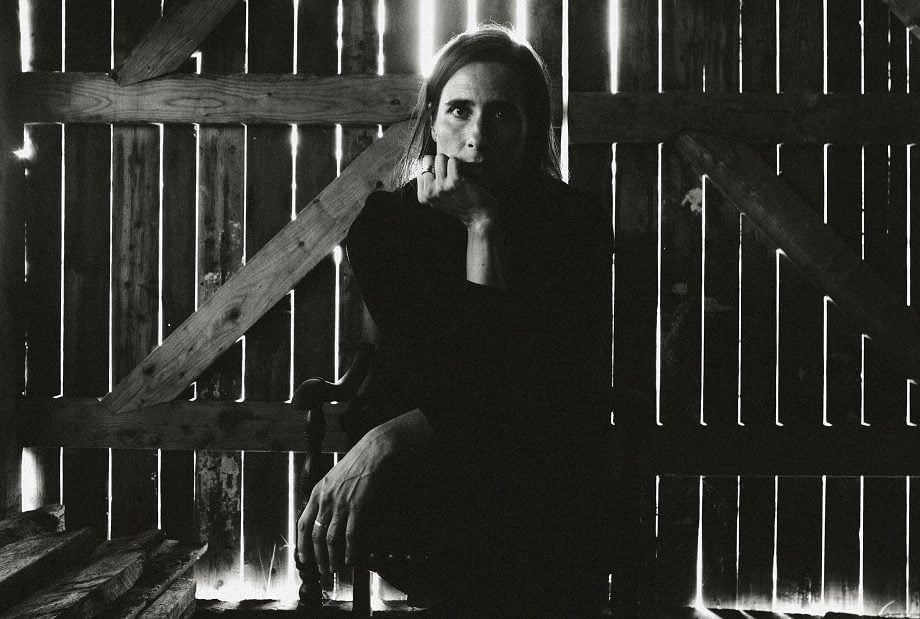
Photo credit:Shervin Lainez

The Highwomen Make Room for Lori McKenna at Their “Crowded Table”

Hungry for new music? Here’s another serving of The Highwomen, harmonizing effortlessly on “Crowded Table.” A co-write with Lori McKenna and band members Brandi Carlile and Natalie Hemby, it’s from their upcoming self-titled album, produced by Dave Cobb and set for a September 6 release. (Take a look at the track listing at the bottom of the story.)

The band, of course, is composed of Carlile, Hemby, Maren Morris, and Amanda Shires. But who else is crowded around the table? Sheryl Crow, Jason Isbell, and Yola are all confirmed to appear on the album, as well as Carlile’s longtime musical partners Phil Hanseroth (bass, background vocals) and Tim Hanseroth (guitar, background vocals), Chris Powell (drums) and Peter Levin (piano and keyboards).

Look for The Highwomen this weekend at Newport Folk Festival, their only scheduled appearance.

1. “Highwomen” (written by Brandi Carlile, Amanda Shires, Jimmy Webb)
2. “Redesigning Women” (written by Natalie Hemby, Rodney Clawson)
3. “Loose Change” (written by Maren Morris, Maggie Chapman, Daniel Layus)
4. “Crowded Table” (written by Brandi Carlile, Natalie Hemby, Lori McKenna)
5. “My Name Can’t Be Mama” (written by Brandi Carlile, Maren Morris, Amanda Shires)
6. “If She Ever Leaves Me” (written by Amanda Shires, Jason Isbell, Chris Thompkins)
7. “Old Soul” (written by Maren Morris, Luke Dick, Laura Veltz)
8. “Don’t Call Me” (written by Amanda Shires, Peter Levin)
9. “My Only Child” (written by Natalie Hemby, Amanda Shires, Miranda Lambert)
10. “Heaven Is A Honky Tonk” (written by Brandi Carlile, Natalie Hemby, Ray LaMontagne)
11. “Cocktail And A Song” (written by Amanda Shires)
12. “Wheels Of Laredo” (written by Brandi Carlile, Tim Hanseroth, Phil Hanseroth)


Photo credit: Alysse Gafkjen

Rod Picott Feared This Might Be His Final Album

Rod Picott writes from the heart, and that’s particularly true on his new album, Tell the Truth & Shame the Devil. A frightening heart condition – mercifully caught just in time – shifted his songwriting perspective inward, resulting in 12 news songs recorded with merely an acoustic guitar, a harmonica, and a storyteller’s voice.

That’s a familiar set-up to anyone who’s seen Picott perform over the last 20 years. The Nashville-based songwriter released his first album, Tiger Tom Dixon’s Blues, in 2001, and he’s toured almost constantly since then. While most of his albums are fully produced, Tell the Truth & Shame the Devil is almost whispered in places, inviting listeners to lean in.

Lately, Picott has turned his attention to writing fiction, poetry, and a screenplay, but music remains a central theme of his life and career, clearly evidenced by a conversation in a Nashville coffee shop.

BGS: I’m curious about the song “Ghost,” because it describes somebody who seems to be at the end of his rope. What was on your mind when you were writing that song?

RP: I was in the middle of [the health scare] when I wrote that one. I did feel there was a time during the making of this record where I thought it’s possible that this will be the last record that I get to make. And if that’s the case, what do I want to say? How do I want it to be? I realize that sounds dramatic, maybe overdramatic, but when you’re in the middle of it, it sure doesn’t feel like that.

Because you thought you weren’t going to live? Or you weren’t going to be able to sing?

Didn’t know. I mean, I knew something was wrong and I knew it had something to do with my heart. My blood work came in. The doctor called me at night. Of course they don’t do that. He’s the on-call guy and he basically said, “You need to stop whatever you’re doing right now. You need to drive to the pharmacy and pick up this prescription. I’ve already called it in. They’re waiting for you.” He said, “You need to do it right now or you might not make it through the night, because your potassium level is so high, it’s messing with the electrical signals to your heart.” A simple thing like that — potassium levels. Who would know? They eventually got it figured out.

Did it affect the way you sing, or your singing voice in general?

I was weaker when I was recording, to be honest with you, which might have played a role in how intimate the recording sounds. I’m singing pretty quietly on most of the songs. Not all of them, which is counterintuitive because the quieter I sang, the bigger it sounded, which is very strange. It’s like cinéma-vérité, like I’m actually living the thing that I’m singing about, and it’s playing a role in how I’m singing.

I can hear some of that, but it’s not like this album has 12 songs from the brink of doom.

No, no, there’s a range. And there’s one song from 20 years ago, “Spartan Hotel,” which never fit in any of the other records, but it felt right for this record. There’s a handful of songs I still like from back then, but they just haven’t fit on a project.

On “Mama’s Boy,” you’re singing about boxing and it reminded me of “Tiger Tom Dixon’s Blues,” from your debut album. What’s your relationship with those older songs now? Do you still like to play those songs from the early records?

I’m still proud of them, yeah. I still play those songs from that first record. I wish I could redo the performances now, because I think I’m a better, more honest singer than I was then. But when I moved to Nashville, or even before I moved, I promised myself I wasn’t going to make a record until I had 10 songs I thought were worth people hearing. So that served me well, even though it took me a long time to get there. That first record, the songs themselves still hold up. I still play them all the time.

What was it like for you to move to Nashville in that era? What was your impression of it here?

I was married at the time and obviously my wife came with me. I’d never been to Nashville. I didn’t know anybody that lived in Nashville. I didn’t even know anybody who knew anybody who lived in Nashville. So it was completely blind. We got a hotel downtown and went for a walk. And of course, in 1994, half of downtown was boarded up, old porno shops and stuff.

At one point on the walk, we were looking for a restaurant. You couldn’t even find a single restaurant. We couldn’t find any place to eat. She just stopped and started sobbing: “Why did you bring me here?” [Laughs] But over the next six months or a year, I figured out the lay of the land. Playing a lot of open mics, and meeting other writers and really working hard at trying to decode how the town worked.

How did you found your tribe? Just going out to open mics?

Yeah, for sure. That was a big part of it. And writers nights where they would have a little 20-minute spot, as opposed to just getting on the list. Those were better, kind of playing a mini set. It was a huge learning curve. I loved to go into the Bluebird Café. I used to go to the early shows at the Bluebird right after work and sit at the end of the bar. I was one of those classic guys with a notepad, which is really annoying to other songwriters, because they feel like you’re stealing the song. Which I wasn’t, I was just making notes about what worked and what didn’t. It was wonderful. Soon after that, I realized Nashville had John Prine, Lucinda Williams, Gillian Welch, and Guy Clark, and I thought, OK, this gives me a marker to shoot for.

In your work, there’s often a theme of your family and a theme of a work ethic — and a lot of times they’re in the same song. Is that something that was instilled in you?

I think it’s just you write what you know. That really defined my childhood. My father was a solid, blue collar union guy, in the pipefitters union. He was a welder and surrounded by other really hardworking men. So I’ve always been really interested in that, because I was a slightly unusual kid. I was very sensitive, which didn’t work with my father’s personality. I don’t think he really knew what to do with me. Now I can look back and see the kid that’s me, and I can think, “Well, now I understand it. I was an artist.” But I was just a kid. I wasn’t there yet, so it was a very uncomfortable relationship for a long, long time with my father.

I’ve always been interested in those themes. Also I was in the construction world for a long, long time, for almost 20 years. I was a sheetrock hanger and finisher. Having an artistic nature and working in the construction world is a very, very tricky balancing act. I had to learn how to be tougher, which wasn’t my nature, really. I learned when you had to stand up for yourself and not get run over, but it was uncomfortable. I always felt like I had one foot in the arts and one foot in this working world. I took it seriously and I was really good at it. I loved walking out of a job and seeing those clean lines and knowing I did the best I could, and that the painter was going to have a really easy time with the job.

That’s pride in your work.

Yes. And that’s part of your inner makeup. That’s either there or not. It’s not something you can fake or create.

You’ve been doing making music as you’re living for a while now. What’s your secret?

You almost have to be in a state where you can’t not do it. I do remember having a really specific moment before I put the first record out. I was 35 years old and I had been in Nashville for six years then, I guess. I did have an afternoon where I had this sort of “come to Jesus” moment where I thought, “Man, if you’re not going to do it now, you’re not going to do it. Like, today. You start today.” I remember the feeling coming over me, and it was almost like panic, realizing that I hadn’t started yet, not really. I was learning and I was working hard at it, but I wasn’t really committed to it. I was sort of testing it to see if I could do it. That afternoon, I committed to it and I never looked back.


Photo credit: Stacie Huckeba

Brit Pick: Curse of Lono

Artist: Curse of Lono
Hometown: London
Latest Album: 4am and Counting

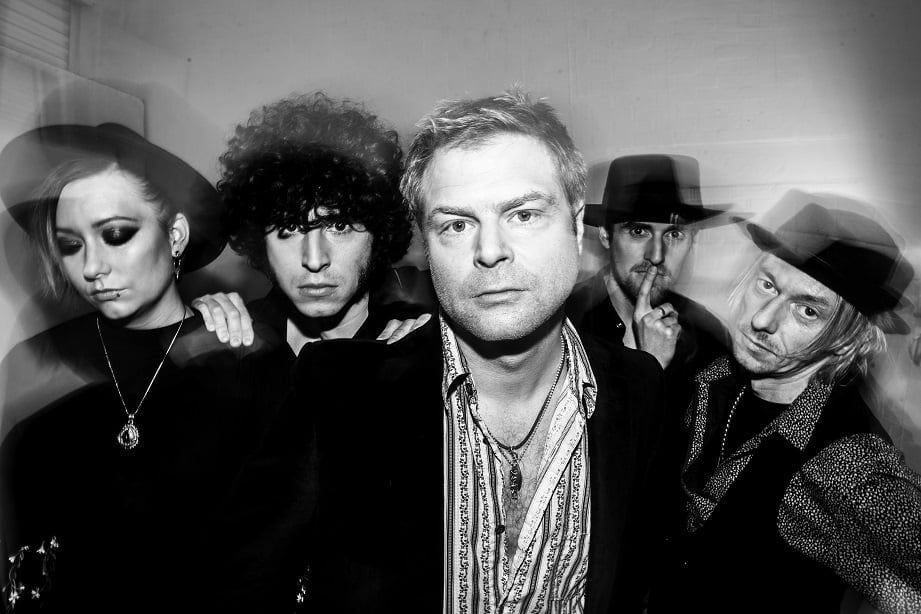
Sounds like: War On Drugs by way of Cowboy Junkies: dark Americana with vivid lyrics and a brooding, almost Lou Reed vibe.

Why You Should Listen: Genre names have been done to death but how about “Amerigothic?” Bet you haven’t heard that one before. Throw in “cinematic” and “atmospheric” and you’ll be somewhere close to the sound of Curse Of Lono, who won this year’s Bob Harris Emerging Artist Award at the UK Americana awards.

Formed in 2015, the group took their name from the title of a Hunter S. Thompson novel. So is this gonzo music? Well, there are certainly plenty of references to drugs in the band’s early oeuvre. Lead man Felix Bechtolsheimer, grandson of billionaire Karl-Heinz Kipp (and brother of Laura, Olympic gold medallist in dressage), used their first album to exorcise his heroin addiction. And even as the band have abandoned their electronic edge and recorded much of their second album in Joshua Tree, California there’s a certain haunting sound that has stayed with them.

The six-piece’s new release, 4am and Counting, is an album of previously-recorded songs that takes you into their late-night world. Picture the scene. They’ve played a gig, are chilling out afterwards, and start jamming around their set list. This time there’s no pounding sound system or fancy production, just simple, analog recording gear. A couple of friends join in and together they turn familiar tunes into something completely different.

So the big electronic sound that came out of “Way to Mars” on As I Fell has, by the time the clock strikes 4am, been turned into something rootsy; pedal steel is provided by legendary session musician BJ Cole. On “Welcome Home” from another previous project, Severed, Bechtolsheimer’s blistering slide solo takes a step back to allow the harmonica to shout Americana from the rooftops. And it all feels like Curse of Lono’s true habitat.


Photo credit: Dani Quesada

Tyler Childers Takes on a New Dimension in “All Your’n”

Tyler Childers walks by some funny-looking mushrooms in his newest video, “All Your’n.” And that fungus among us must have something to do with the visuals here, which read like a cross between Alice in Wonderland and the weirdest zoo you’ve ever been to. Look for Tyler Childers’ new album, Country Squire, on August 2.

Joe Pug: From Family Roots to ‘The Flood in Color’

Joe Pug rises to the occasion on The Flood in Color, his first new album in four years. Recorded in Nashville with lightly textured production from Kenneth Pattengale of the Milk Carton Kids, the quiet collection conveys a man willing to look back on his life. Meanwhile, Pug relocated from Austin, Texas, back to his home turf in Maryland, and started a family. The Flood in Color is not filled with songs about domesticity, however. Instead, there’s a folk flair – and occasionally a topical perspective – that Pug’s longtime fans will immediately embrace. So will listeners of his podcast, “The Working Songwriter.”

Corresponding by email, Joe Pug answered these questions for The Bluegrass Situation.

BGS: This album feels like a body of work that’s intended to be taken as a whole. Do you see it that way as well?

Pug: Yes. There’s been a decade of talk about how the album is dead, about how everyone is going to switch to putting out singles willy-nilly, about how the format for an album was just a consequence of a vinyl record’s physical limitations. And fair enough. Maybe when my kids come of age and Spotify is the only thing they’ve ever known, that will be the case.

But for the time being, you have a whole generation of artists who grew up with that format and who still conceive their creative works within its boundaries. More importantly, you have a generation of listeners who are expecting and desiring to hear songs in that format. So I did intend for these songs to be heard together, and heard in the order that they’ve been sequenced.

In the song “Exit,” there’s a reference to a highway west of Davenport and Kansas – that’s an interesting choice for a lyric. What sort of imagery does that line bring to you?

There was a period of time in my early 20s when I was living in Chicago and working 9 to 5 during the week as a carpenter. At night, I would play open mics in the city. And on the weekend, I would self-book these mini tours across the Midwest. They’d go through Sioux Falls, Des Moines, Eau Claire, and Maumee, Illinois. The imagery in this song comes from that time when I was young, on the road in America, completely alone, close to broke.

It was a completely insane idea. It was like going over the entirety of our huge country with a magnifying glass. In fact, when I’d get pulled over by cops for speeding and they’d ask why I was in their small town at 2 in the morning, they would never believe that I had left Chicago to play some hole-in-the-wall in their town. To their credit, they were right, it made no sense.

Why did The Flood in Color fit well as an album title for this particular project?

Very rarely, an idea will come to me in my sleep. Or to put it more specifically, in the very last moment before I drift off to sleep. It’s a cruel joke. I will have been working on some damned terrible song for hours one day and going to bed empty-handed. And then some completely unrelated idea — a phrase, a lyric, a melody — will suddenly appear in my head as I’m lying prone and waiting for sleep. I have to drag myself out from under the covers and write it down.

“The Flood in Color,” that phrase came to me one night like that. And I knew it was the album title. Right before we went into the studio, I took a swing at writing it as a song. It came out to our liking, so it became the title and the title track.

This record feels intimate and meaningful, especially with the spare production. When you had the final mixes back, who was the first person you played them for? What was the reaction?

I played them for my father. And he really liked them. I know that because I’ve always played him my rough mixes early on, for every album. He never gives me in-depth critiques, but if he doesn’t like something he just keeps his mouth shut. These were the first songs in quite a while where he didn’t keep his mouth shut. I could tell it really moved him.

What is that experience like for you to bring a complete, new song into the world?

My process takes a really long time. From the initial writing, to the editing, to the recording, mixing, mastering, and finally the release. So some of these songs are two years old. I’ve spent countless hours with all of these. So by the time they come out, I feel a strange distance from them. They feel like someone else’s songs to me. And I can finally appreciate them or critique them on their own merits rather than songs I have an intimate connection to.

I understand that you are living in Maryland now. Why is that?

My wife and I started a family three years ago. We’re both from Prince George’s County, Maryland, which is a very special place right outside of DC. We wanted to be around family. Plus if I had spent another two years living outside of Maryland, then I would have spent more years of my life living elsewhere. There was always an internal clock in my head that was ticking towards moving back home. I wanted to go out and see the world, I wanted to do my own small version of Campbell’s hero’s journey. But I also wanted to end up around my family and I wanted my kids to grow up around family.

To me, “The Stranger I’ve Been” feels like a lost treasure of country music. Who are some of the country artists who have shaped your work?

Oh, a ton, but not necessarily anything obscure or surprising: George Jones, Harlan Howard, Gillian Welch, Tom T. Hall, Gram Parsons, Emmylou Harris, The Louvin Brothers.

Are you a vinyl collector? If so, what kind of records do you always keep an eye out for?

I am not. Only a vinyl seller. Haha.

On another topic, what are some of the most impactful books you’ve read lately?

Oh man, I’ve got two kids under 3 years old, I’ve taken a pause from my reading regimen. I’ve been using podcasts and audiobooks to fill the gap. Because I can listen to them with what you might call “found time”… driving the car, doing the dishes, mowing the grass, exercising. My favorite podcasts to spend time with are “Hardcore History with Dan Carlin,” “Duncan Trussell Family Hour,” “Henry and Heidi” (with Henry Rollins), and “The Lowe Post” (for basketball).

You have a podcast dedicated to songwriters. What has surprised you the most about that project?

How often songwriters, especially very successful songwriters, think that they’re finished, that they’ll never work again, that they’ll never find another inspiring tune. It’s inspiring on one hand to think that these people I admire have to go through the same tribulations. It’s frightening on the other hand to learn conclusively that there is no final creative plateau that you can reach and just build your house on. You can’t ever stop moving forward because you’ll turn to stone. You have to keep moving forward creatively or time will pass you by. And that is a positively exhausting lesson to learn.

Has there been a common thread among your guests so far?

The show began as only people who were in my phonebook, people that I could get a hold of directly. Now as the show has grown and we’ve had a history of good guests, we’re starting to branch out and pitch the show to bigger artists that I don’t have a personal relationship with.

This is your first album in four years – and it’s a record to be proud of. What are you now looking forward to the most?

For people to hear this damned thing! I don’t know if people will like it or not, but this took everything I had creatively for three years. So I’m at peace with however they feel about it. I happen to really like it, so at this point I’m looking at everything else as gravy.


Photo credit: Dave Creaney

WATCH: The Highwomen, “Redesigning Women”

The day has come, The Highwomen are here! The superstar assemblage of some of this moment’s most prominent and influential voices in country and Americana includes 2019’s breakout star, Brandi Carlile, Nashville’s Americana sweetheart Amanda Shires, singer and hit songwriter Natalie Hemby, and one of mainstream country’s current powerhouses — and a one of very few women to break into the upper echelons of country’s radio charts these days — Maren Morris.

The Highwomen and their contemporaries — unapologetic, unabashed women who proudly stand on their own agency and vision, artistic and otherwise — have defined the last handful of years of American roots music with releases such as “Redesigning Women.” These songs simultaneously acknowledge the uphill climb women face today, especially in roots genres, but not without a heavy dose of the same mettle, the outstanding courage, that has allowed them to already supersede their barriers to entry.

With a moniker that directly references and re-appropriates the iconic all-male supergroup of the 80s and 90s (Johnny Cash, Willie Nelson, Waylon Jennings, and Kris Kristofferson) it might appear that these four have gargantuan shoes to fill. However, any of even the most casual country fans of the past half decade would know the Highwomen are more than up for the task.


Photo credit: Alysse Gafkjen

The Small Glories Share Canadian Stories in Song

When it’s mentioned that the word “ambassador” comes to mind when listening to the Small Glories’ new album, Cara Luft starts to cheer. Along with her singing partner JD Edwards, the Small Glories see themselves as Canadian storytellers, like troubadours going from town to town singing about the world around them.

Truly, the Manitoba-based folk duo’s latest, Assiniboine & The Red, gives special insight into their unique worldview with songs like “Alberta,” “Winnipeg,” and “Don’t Back Down.” Chatting by phone, Luft shared a few more stories with the Bluegrass Situation.

BGS: It’s been a few year since you’ve made a record. What was the vibe in the studio when you were making this one?

CL: It was interesting in that we got everybody back together again. The only thing that changed was our engineer — and he’s a friend of ours. We had the same producer (Neil Osborne) and the same rhythm section, which was great. We actually recorded it in Winnipeg, and it was nice to be in our hometown. You know what was so funny? It was April but it was freezing cold. It was one of those moments like, “Oh my God, we live in Canada.” It’s April 15 and it’s minus 15 degrees, which is ridiculous! It was freezing! So, I remember being very cold!

This is for the Bluegrass Situation, so we have to talk about the banjo.

We do! [Laughs]

Tell me what attracted you to the banjo in the first place.

I grew up in a folk-singing family. My parents were a professional folk duo and played music when they were younger, too. My dad is a wonderful clawhammer banjo player. He’s been playing for close to sixty years now. So I grew up listening to the banjo, never thinking that I’d actually want to play it, but I did love the sound of it. I think it was kind of inevitable that I would pick it up. And of course it’s not the three-finger bluegrass style, even though I love that style. I don’t really play that but I do love the sound of the banjo.

And I love writing with it. It’s such a different instrument than the guitar. I really was guitar-focused for most of my career. I picked up the banjo nine years ago and I found it really fascinating to change the way my right hand worked, because it’s a different movement than if you’re doing fingerstyle guitar. And just having that drone string, I find that it’s like no other instrument that I’ve ever attempted playing. It’s this beautiful string that just rings out. I found it a very interesting way to write. I write differently on the banjo than I do on the guitar, so it’s brought me into a wider perspective of songs to write, I would say.

How are the songs different that you’re writing on banjo?

I would say I’m writing more tune-based songs on the banjo. As a guitar play, I am a really strong rhythm player and I would do the odd lick here and there, you know, coming up with something, but I wasn’t really a lead player on guitar. I would do some fingerstyle stuff, in more of the realm of those folkie fingerstyle guys like Bert Jansch and John Renbourn, but not really tune-based. The banjo is definitely much more tune-based for me. I write melodies on the banjo, where I never really wrote melodies on guitar before. I would sing a melody but I wouldn’t necessarily play a melody, so it’s been really beautiful to explore this melodic writing on a banjo.

I read an interview about how you loved the Nitty Gritty Dirt Band’s Will the Circle Be Unbroken as a kid. I was curious how that might have impacted your music.

Yeah! For me, growing up in a folk-singing family, there was music all the time in the house, whether it was listening to vinyl or listening to my parents rehearse, or listening to people play house concerts, or musicians who were traveling through town and rehearsing in our living room. So I was steeped in acoustic music from a very, very young age, whether it was live or recorded.

I remember listening to Will the Circle Be Unbroken, with the Carter Family and all these phenomenal people. There’s a track on there, “Soldier’s Joy,” with two banjo players, and one is playing clawhammer and one is playing three-finger, and to this day it’s still one of my favorite songs to listen to. I think it’s just the beauty of acoustic music and the history of acoustic music, whether it’s bluegrass or folk – and to me, the lines are a little blurred there. But that album in particular, I remember listening to it all through high school and even into my early 20s.

When I listen to “Don’t Back Down,” I can hear a sense of strength in there. What was on your mind when you wrote that song?

I wrote that with Bruce Guthro, who’s a great singer-songwriter, but he’s also lead singer of a group called Runrig, a great Scottish band, even though he’s from Canada. We wrote that as part of a collaboration where we were given the theme of writing around “home,” or what we would consider calling “home.” Bruce is from Cape Breton Island, which is in Nova Scotia, way out in the Maritime Provinces. It’s known for its musical history, but it’s also known for communities that are dying because either mining has stopped or fishing has stopped. So these people would be moving away from their communities, trying to find homes and work in other locations.

I was talking to him about being from the Canadian prairies, where there are quite a few areas in Saskatchewan that are full of ghost towns, where people have uprooted and moved to cities like Calgary or Edmonton, or Fort McMurray where the oil sands are. We were comparing notes about these communities that are dying, and what is it like for those who decide to stay? They don’t want to give up on all the things that hit them, right? They stick around during the dust bowl or when the fires come, when work has dried up and people are trying to find a way to make a living. So we thought, “Let’s write a song to honor those people who have decided to make it work in their home communities.”

Speaking of home, your song “Winnipeg” is such a love letter to your hometown. I noticed as that song progresses, there is another voice that comes in. Can you tell me more about that?

Yes, we have two guest vocalists on that track. Winnipeg has a huge indigenous population and a huge Métis population, which is a combination of people who have come from both an indigenous and a French background, and we also have a large French population, and then the English, and then everything else under the sun is in there, too.

We felt that in order to really honor our adopted hometown of Winnipeg, we needed to involve the French and the First Nations people in the song. We have a wonderful singer and songwriter who is Métis and she ended up writing a French portion to the song and doing a call-and-response with us on the track. And we invited a First Nations chanter and drummer to come and sing at the end of the song. We felt it wrapped up this beautiful multicultural community that we have in Winnipeg.

To me, “Sing” captures the spirit of this record. It lets people know about you and what you stand for. Is that important for you to share your own experiences with an audience?

Yes, I think it is. I think we’ve been more aware of bringing stories from other places that we’ve been, too, so it’s a combination of our experiences and also other people’s experiences. And with this record being released on an American label, we feel very privileged to be able to share about Canada with our American neighbors. It’s a very Canadian-focused album, with a strong sense of location. We want to bring stories about the people in Canada, and what things are like for us, and share that with the States, and Europe, and Australia, and the markets we get to go to.

It’s so great when people hear a song like “Winnipeg,” like, the people who come up to us in England and say, “Wow, I never thought I’d want to go to Winnipeg!” It cracks us up. We’re happy that we live in Winnipeg and we’re lucky that we live in Canada. We feel very privileged to live in Canada and we want to share some of the love, and some of the stories, of who we are and where we’re from.


Photo credit: Stefanie Atkinson

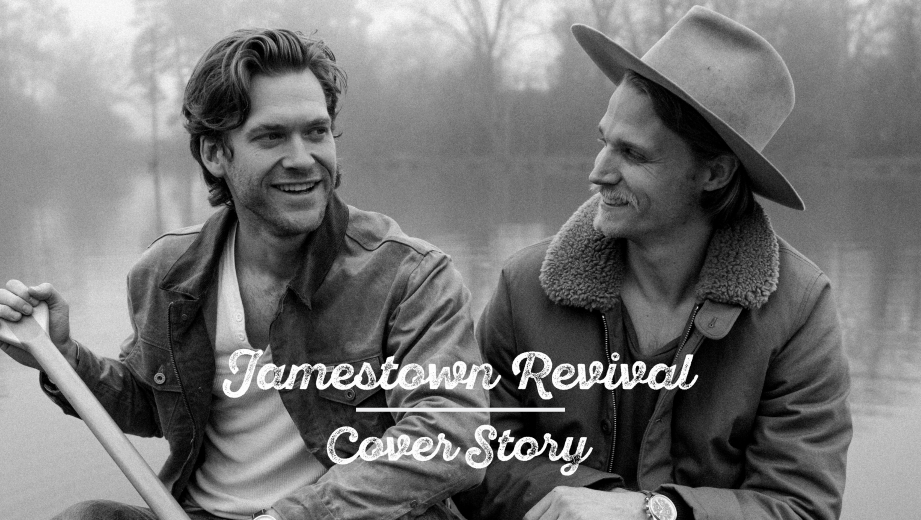
Jamestown Revival Find Their Sound on ‘San Isabel’

There are more trees than people in San Isabel, Colorado, where the Wet Mountains poke the sky and Jamestown Revival’s Zach Chance and Jonathan Clay set up a makeshift recording studio in a cabin. The Texas natives emerged with San Isabel, a gorgeous new album that marks both a return to Jamestown Revival’s acoustic roots and a bold step forward into more topical lyricism.

While addressing the unease now shaping the country’s collective mindset is a first for the pair, the record maintains Zach and Jonathan’s anchors of empathy and hope – along with their now-signature Southern folk harmonies that are woven together with that unexplainable richness usually reserved for families.

With a day off from touring, Jamestown Revival called in for a conversation with the Bluegrass Situation.

BGS: Location seems important to you guys. Take your album titles, for example. Utah was your first, and now, with San Isabel, you’ve returned to an album title that documents where you recorded. You’re not from or living in Utah or Colorado, but you sought them out. Why?

Jonathan Clay: Colorado is a place we’ve always loved. Long story short, we had access to a summer cabin in Colorado, and we thought, Gosh, we should take advantage of this.

Zach Chance: It’s kind of twofold. It was access to those places and trying to record in a guerrilla fashion. We enjoy the adventure of it — going and setting up in these settings, being removed — it just makes for a really fun process for us.

JC: For us, the city is not really conducive to creativity. It’s just not where I feel compelled to create.

ZC: The city has its own flavor of inspiration. It does inspire us at times, but it’s not really where we like to record, so…

JC: We have a habit of getting out into the woods when we’re ready to make an album.

Why did you guys decide to return to a more acoustic sound this time around, compared to The Education of a Wandering Man?

ZC: We weren’t touring as much as we had been the past couple of years. We’d been writing for some other things, and we just really wanted to go back to two voices – to write songs that could work with one guitar and two voices, back to the roots of what we were doing. I don’t know if it was all the noise of the time we live in right now, but we wanted something more centered around traditional folk storytelling. We were listening to a lot of Bob Dylan, Crosby, Stills, Nash, & Young – stuff like that. We felt compelled to live in that world.

Do you have favorite songs on the new record?

ZC: I don’t know. As soon as we start talking about them, I’ll tell you all the reasons I love them. Maybe I’m too diplomatic. I love “Harder Way” and “Who Hung the Moon.” That was a song we wrote in Colorado and recorded in a day. They’re like children. We love them all equally but differently. This might sound really dumb [Laughs], but there have been times playing “Crazy World” that I get kind of choked up. I start thinking about everything, and I get a little sad. The first few times we played it out, I got really emotional. We want to write stuff that ages like we’re aging — that matures a little bit.

JC: I think that’s a good point. We want our art to grow with us and mature with and without our listeners. I really like “Who Hung the Moon.” “Harder Way” is a pretty special song. I’m actually pulling my three-year-old boy on the scooter right now, humming melodies that I don’t know. It’s a special thing. When I sing the line about my boy, it’s coming from a real place. I have to hold back emotions sometimes because I think, I’ve got an audience to perform to. I can’t get choked up because that makes it hard to sing.

It seems like more and more artists feel obligated to address the uneasiness in the country right now. San Isabel does it – not necessarily explicitly, but it is still more topical than your previous work. Did you feel obligated to do that?

JC: I don’t think it was out of obligation more than it was just compulsion. We just felt compelled. It’s on everybody’s mind –everybody’s consciousness. As an artist, I think your consciousness manifests in your songs. That’s what happened with us.

First, you take a beat to acknowledge the despair a lot of folks are feeling in “Crazy World.”

JC: Zach and I have always been careful not to speak from some place of moral high ground. We don’t want to be just one more person preaching to somebody, as if we’ve got all the answers, because I think the problems plaguing our country are very complicated. If you oversimplify them and place blame, you’re falling victim to the very thing you’re proclaiming to rally against.

In a lot of our songs, we just point out what we see. It’s almost a lament rather than a judgment. We’re all in this together. All of our countrymen and women, we created this – we all played a hand in it. We’re trying to point out our observations and underscore the fact that we’re all on the same team, when you really get down to it. We all do care about each other. I feel like we’ve got more in common than we realize sometimes. It seems like sometimes the world is wrapped up in greed and malice and angst and vitriol rather than peace and — not to sound cheesy, but — harmonious things, the things that really give us happiness.

ZC: Yeah, it’s funny. “Crazy World (Judgment Day)” and “This Too Shall Pass” are back to back on the album. And those are like two sides of the same coin, you know? “Crazy World” is the day you wake up and think, I have zero hope for humanity. The idea was you’re sitting in a bar, and you’ve had a few to drink. Stuff is coming across the news, and you’re just discussing the state of affairs, like, “Yeah, man. It’s still a crazy world. Not much has changed.”

I love that you just brought up that it’s like those two songs are two sides of the same coin because it does feel like “This Too Shall Pass” offers some comfort.

ZC: Yeah, as dark as I can get, I recognize that I’m probably a glass is half full person. John, I think you are too.

JC: Oh, I’m a hopeless optimist.

ZC: [Laughs] So, that song speaks to that. No matter how dismal it is, we have to find a silver lining. Friendships and family are where the true joys in your life come from, more often than not.

What’s the best thing you’ve encountered or experienced back on the road this time?

ZC: Oh gosh, I have so many good ones. Eating dumplings in New York in this little shop in Chinatown. We crammed in with all our people, sat with strangers, and the beers were flowing. Those nights are fun. The camaraderie of being on tour again: You’re just living together, and you come home with a million new inside jokes and phrases.

JC: One thing that was really cool about this tour is we brought somebody out in our crew as a roadie who had never been out of Texas. We saw the world through his eyes. His parents brought him here from Mexico when he was six years old. He hasn’t had the opportunity to do much traveling. I met him and thought he seemed like a cool dude, so we gave him a job as a roadie.

ZC: We’re all a bit more advanced in age and have made a few more laps around the country, so in some ways, you can be jaded by that. But he’s 21, and experiencing all these things for the first time. It was really fun to relive some of this stuff through his eyes.

On this album, it feels like you have found your sound, at least for now. Comparisons to Simon & Garfunkel are inevitable, but ultimately, you don’t sound like anyone else out there right now.

JC: Well that’s a huge compliment. I appreciate that.

ZC: We definitely look up to Simon & Garfunkel and the Everly Brothers and would gladly take a comparison, but humbly say those guys are masters. We’re trying to figure it out.

JC: Yeah, those guys are masters, but we want to be masters. Somebody’s got to carry the torch. I’m not saying that in a cocky way, but I would love to be somebody that attempts to carry the torch. It’s what we love to do, and it’s what we love to sing. Singing without harmony — I don’t enjoy it half as much. When I sing with Zach, my voice feels complete. So it’s almost like a musical necessity for us.

If it were just the harmonies, the comparisons to Simon & Garfunkel would still come, but it’s your writing too, which is so strong.

JC: A lot of people still ask, “Are y’all brothers? The way y’all harmonize, I feel like you have to have grown up with each other.” Well, we’re not brothers, but we have been singing together since we were 15 years old, so I guess that’s about as close as you can get without being blood-related. It’s like a vocal marriage.

As far as the writing goes, we try to be thoughtful and not say things in a way that’s been said before. We knew early on that we wanted to be the kind of writers who are not overly esoteric or hard to understand. We wanted to speak in a way that’s plain and understandable but at the same time, maybe put in a way that you haven’t quite heard it put before.


Photo credit: Paul Pryor
Kauai Folk Festival Will Celebrate Music of Hawaii and Beyond

Even for knowledgeable fans of folk music, the lineup of the Kauai Folk Festival offers plenty of artists to discover from Hawaii and beyond. Along with headliners like Taj Mahal’s Hula Blues Band and Peter Rowan’s My Aloha Bluegrass Band, the two-day roster also features Hawaiian music from Puka Asing, Wally Rita y Los Kauaianos, and more representing the diversity of Hawaiian traditional music.

With five stages running continuously, the lineup also includes Jonny Fritz, Blaine Sprouse, Ed Poullard, Reeb Williams & Caleb Klauder, Mike Bub, and many others. Meanwhile, Kauai Folk Workshops will offer instruction on guitar, fiddle, banjo, ukulele and mandolin, in addition to dance instructors teaching hula, square dance, swing, and two-step, and voice instructors teaching harmony singing, ballads, and Hawaiian song.

Festival director Matt Morelock fielded a few questions by email about the festival, slated for September 28-29 at the historic Grove Farm Museum in Lihue, on the southeast coast of Kauai.

BGS: What inspired the idea to create a folk festival in Kauai?

Morelock: For decades, Hawaiian music has stood on the periphery of the ‘folk’ genre. Its undeniable and indelible influence on all forms of American music deserves to be celebrated. We created the Kauai Folk Festival for such a celebration and invited all of our favorite performers, both local and continental, to sing, pick, dance, and meet one another in this tropical paradise.

When you are selecting artists, do you have a certain audience in mind? In other words, is there a common thread that runs through your lineup and/or your ticket holders?

We’ve attempted to represent the broadest swath of ‘folk’ music and musicians that we could find. From bluegrass to blues – from Cajun to country – we chose the best performers in as many genres as possible to illustrate the diversity of American folk music. The common thread is diversity. Artists were chosen for their enthusiasm and skill.

What have you learned about the process of booking festivals that has really surprised you?

We’ve learned that a worthwhile festival is one with a purpose. Hawaiian music and musicians are fighting against the expense and logistical complication of geographical separation as well as the mass perception of their music and culture as ‘foreign,’ when in truth Hawaiian music and culture is both a product of and strong influence on what we consider ‘American’ culture and music. We’ve learned that a higher purpose can confound the typical challenges that festivals face in finding an identity and audience.

For someone who has never been to Kauai, how would you describe it to them?

In addition to being GORGEOUS BEYOND BELIEF, Kauai is rural and cosmopolitan at the same time. There are more wild pigs than human beings living on this island. The natural beauty and local hospitality are legendary. You can book a hotel and rent a car here just like you can anywhere else in the U.S. Flights aren’t as expensive as you think. Beer is cheap. Fresh food and clean air are abundant. There’s really no reason NOT to visit!

In addition to interest from the locals, you will be hoping to attract people from the mainland as well. What are some of the amenities or unique qualities that will make this festival a destination event?

We’ve opted to keep festival admission affordable rather than spending time and resources on lodging and flight packages. We trust that Kauai Folk Festival attendees from the mainland won’t have trouble booking a flight, renting a car, and finding a hotel room. Kauai itself is a uniquity. The festival and the astounding Grove Farm Museum are an amenity. There’ll be a broad selection of spectacular local cuisine (plenty of accommodations for vegan/vegetarian/gluten-free diets), and extremely creative beverage and local juice options. We’re also ‘on call’ via www.kauaifolk.com to assist with any travel questions or complications!

What do you hope that attendees will take away from the Kauai Folk Festival experience?

We hope that Kauai Folk Festival fans will leave the event with a deeper understanding of the historical interconnectedness between Hawaiian culture and ‘mainland’ culture. In the production process, we are finding similarities and cross-influences on a daily basis!