The Many Perspectives of Rissi Palmer

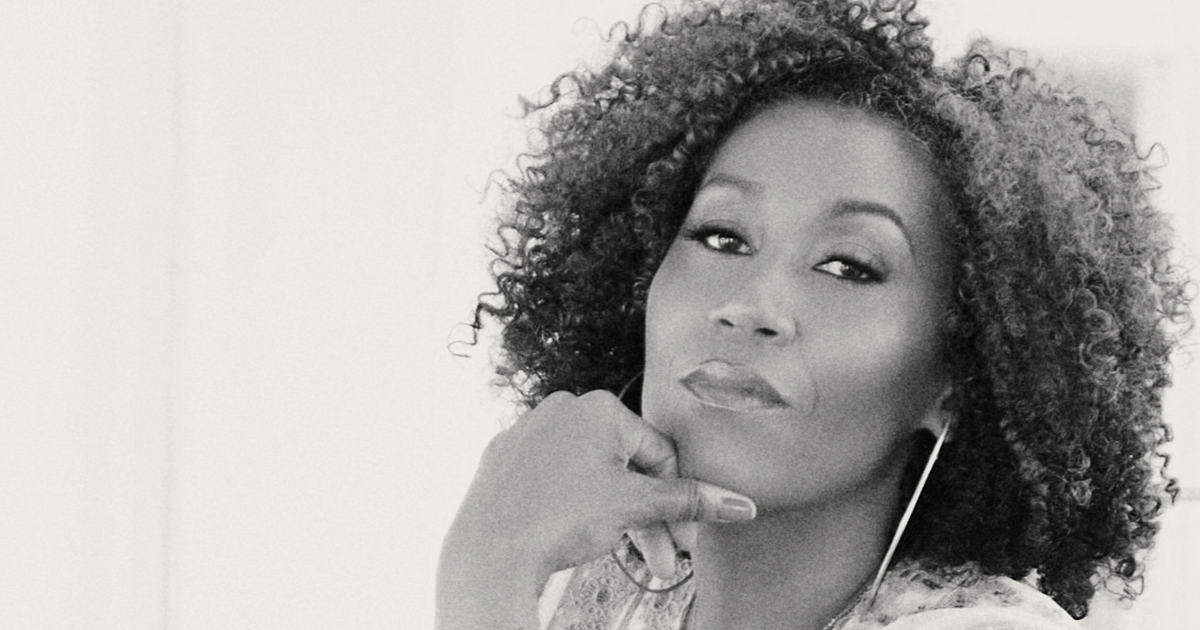
Rissi Palmer is putting her lifelong love of country music into Perspectives, her first project in six years. With three tracks produced by Shannon Sanders and a fourth by Dan Knobler, the new EP places Palmer back in the artist spotlight after a period of time focused on personal and professional evolution.

Palmer also hosts an Apple Music country radio show, Color Me Country, which spotlights original music from artists of color. But there’s even more to the story. She’s collaborated on a children’s book titled Color Me Country: A Celebration of Black Women Who Shaped Country Music and she’s also wrapped a memorable tour called The Trailblazing Women of Country, where she performed some of the best-loved songs from Patsy Cline, Loretta Lynn, and Dolly Parton. Off the stage, she’s devoted more time to her two daughters following her divorce, while still ramping up to the release of Perspectives.

Though she’s based in Durham, North Carolina, Palmer caught up with Good Country in Belfast, Northern Ireland, during the Your Roots Are Showing conference. At the event’s opening night concert, she sang “Old Black Southern Woman,” a heartfelt ballad that touches on the loss of her mother when Palmer was just seven years old. Perspectives also offers a cover of the SteelDrivers’ “Can You Run?” as well as an original song titled “Good For Me” (about diving back into the dating pool) and a rendition of a Loretta Lynn classic, “Somebody Somewhere.”

“All these things came together, and Shannon so graciously decided to be a part of this with me,” Palmer recalls. “He said, ‘Well, two of these songs sound very bluegrassy. What if we just did the whole project like that?’ I was like, ‘That’s kind of dope,’ because I hadn’t done anything like that. And again, perspectives. Two Black musicians, making this very bluegrassy, but still very soulful, project. And I decided midway through that we’re going to call it Perspectives.”

What was on your mind as “Old Black Southern Woman” was taking shape?

Rissi Palmer: I wrote that with Kyshona, and that was our first time writing together. Kyshona has a way of getting straight to the heart of whatever it is that you’re talking about. I had the idea for the chorus, the “ooh-ooooh” thing, in my head, and I hadn’t really started writing anything. So, we sat down and we started talking. When you go to her house, she’s got all these really cool plants from her mom and her grandma. We talked about that, and I wanted to write something that paid homage to my mother but also acknowledged all the other women that came in and helped raise me.

It’s a universal thing, too. Everybody thinks of getting older as really bad, and I don’t know what I thought my 40s were going to be like, when I was in my 20s. I honestly don’t know, but I don’t feel old! [Laughs] I think I thought 40 was going to feel different, but 40 actually feels just like a creakier 25! And I see the blessing in it. I feel really lucky to be here, because I outlived [my mother] and I have babies now. I just wanted to write something that says it’s OK to get old. It’s actually really cool to be able to get old and to see the fruits of your work.

I think the title kind of throws people off because they’re like, “Oh, this is a song about some Black people.” But it’s actually about getting to be old, seeing the blessing and good in that, and making the most of it.

When you sing that song now, it gives you a chance to talk about your mom and share her memory. Is that extra special for you?

Yeah. It was hard, I’ll be honest. The first few times that I sang it were really hard and I would cry. I’m starting not to cry when I sing it. Especially when we get to the lyric, “Every curse my family claimed ends with me.” That’s always where it got hard. You don’t realize how hard it is to overcome and not repeat mistakes.

Was it a dream for you as a kid to become a singer?

I’ve always known. I don’t know how, but I’ve always known that this is what I wanted to do. In that way, I’m very lucky. It was never, “Maybe I should be…” I would say that I was gonna do other stuff, just to make my parents happy, because I figured that they were probably really scared about me wanting to be a singer. So, I was like, “I’ll be a lawyer.” They’ve got a lawyer. My brother is a lawyer, so they got one. So, we’re good. [Laughs]

Now I did not always want to be a country singer. I wanted to be a singer and I wanted to write songs. I knew the kind of songs that I wanted to do, but I didn’t call it that. That didn’t become clear to me until I met my first managers, and then that was when I realized, “Yeah, I guess that is what I want to do.”

Is bluegrass an influence for you?

I like bluegrass! I’m a Rhonda Vincent fan and I’ve always been an Alison Krauss fan. And on Jon Randall’s first record he has this really cool song with Vince Gill called “My Life.” That’s one of my favorite records, by the way. It’s called Walking Among the Living.

I’ve always been a fan. I’ve always listened. I’ve always had those things on my playlist. I just never thought of myself as that, because there’s a very distinct vocal style. There’s a very distinct cadence in which they’re singing. A lot of the people on the show last night [at Your Roots Are Showing] were just brilliant bluegrass singers, and I never thought of myself that way because I can’t do that. Like, that’s not what I do. I didn’t really think of it as something that I could do. I used to write stuff like that all the time and I tried to give it to other people. But it was Shannon – Shannon was the push. Shannon was like, “Let’s do this.”

What was the Trailblazing Women of Country tour like?

It’s one of my favorite things that I’ve ever done. It was an all-female band and it was myself and Kristina Train, who’s a brilliant singer, as the two leads. We split the show in half, usually there was an intermission between Kristina and me, and we sang two songs together. You know how it is to be a fan, but you don’t necessarily know everything by a person? Patsy, I knew. For Patsy, I didn’t even have to study, because I knew all those songs. Most of my Dolly stuff I knew, but there’s a lot of words in “Coat of Many Colors”! And then Loretta, I’ll be perfectly honest, I had not gone super deep into Loretta’s catalog, so that was fun. That was the one that I needed the most work.

And I loved it! We did mostly theaters. I played in places I never went before. I went to Alaska. We did Wyoming – and you haven’t lived until you’ve driven across Wyoming! It’s just space! It’s wild! With the audiences, it was really funny how they varied. Sometimes we would make jokes, and sometimes people would say things to me. Like, someone asked me once, “Where’s your blonde wig?” when we got to the Dolly part. And I was just like, “Did you ask Kristina that?” They didn’t say anything, and I was like, “Girl, why would I cover up my fabulous hair?” and everybody started laughing.

You know, we got some weird comments. There were some people that (gasps) when I walked out. And afterwards, people would say really kind things. I never had anything rude said to me. But I did notice the [look of surprise] at first. It was good for me. It reminded me about why I love country music. I think I needed that, because you spend so much time, like with Color Me Country, talking about what’s wrong with the industry and talking about ways that we’ve been slighted or ignored. Then you lose sight of why you even started this in the first place, and that was why. It’s because of those songs. It’s because of those women. It’s because of the connection that the audience had with that music.

I can’t tell you how many people came up and told me stories. I met one woman who actually saw Patsy Cline performing on the bed of a truck when she was a kid. And I was just like, “That’s the most amazing thing I’ve ever heard before.” That’s country music.

You’ve got a lot of things coming up. Where would you like this new music to take you?

That’s a great question. I put so much into other facets of my career for the last few years. I put a lot into my children, because of our changing family situation, and just wanting to be there for them. At the same time, I was wanting to experience the career wave that I was having and trying to balance that. So, my own music took a backseat. I started feeling like, “I think people forget that I sing.” And really what I’m saying is, “I think I forgot that I sing,”

I was still doing shows, and still doing things in between, but it was like, “I don’t want everybody to forget why I’m here.” Really I’m saying, “I don’t want to forget why I’m here.” The Trailblazing Women of Country really cemented that for me, especially the “country” part. I’ve been experimenting and trying different things – and there is a project that comes later – but I wanted to do this. I felt like this was a really important statement to make, like, “This is why she talks so much shit.” [Laughs] Because this is where I started and this is what I do.


Photo Credit: Dire Image
Embrace the Past,
Move Forward

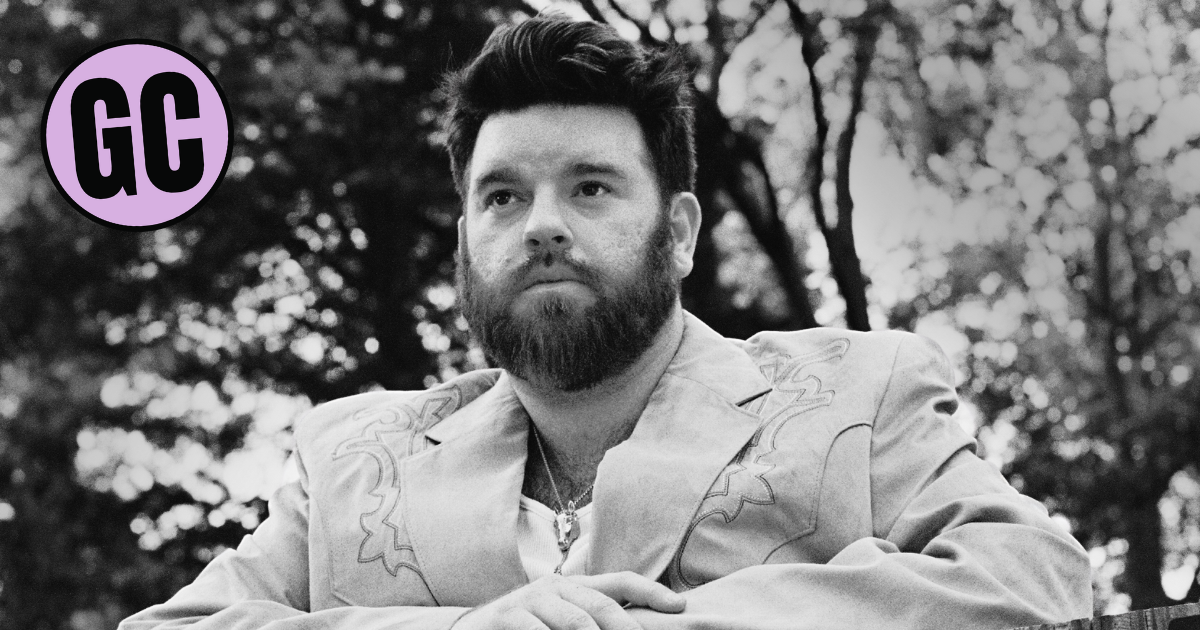
Music has and continues to be a form of healing for Fancy Hagood. The Arkansas-raised singer who takes his forename from the Drake song – not the Bobbie Gentry and Reba McEntire hit – first began writing songs as a queer junior high student struggling to fit in before dropping out of school at 17 to chase his newfound dreams in Nashville.

Despite growing up listening to everything from contemporary Christian music to The Chicks, Shania Twain, Tim McGraw, Destiny’s Child, and Missy Elliott, it was choir and theatre that brought Hagood’s own creative aspirations to life.

“I really found myself in those classes,” Hagood tells Good Country. “I was dealing with a lot of bullying at the time and writing music became one of the few ways I could truly express myself.”

But upon his arrival to Nashville, Hagood was told that a career as a queer country musician was unlikely. This was followed by a move to Los Angeles, coupled with a transition to pop, that led to him to opening for the likes of Meghan Trainor and Ariana Grande as he juggled a day job at Forever 21. Those opportunities coincided with a decrease in creative control over his own work, something he’s taken back for himself on 2021’s Southern Curiosity and his most recent project, American Spirit, which released October 25.

“I was hell-bent on this album not being a breakup record, but instead one about healing, moving forward, and finding yourself,” Hagood says of American Spirit. “I don’t want to be on the road singing songs about my ex, but I do want to sing about reclaiming your story, bouncing back, and that being the most powerful thing after experiencing something like that.”

Speaking on the phone from his Nashville home, Hagood detailed his ambitious Music City move, experiences with gatekeeping, his work with Apple Music, and more.

What was it like for you moving to Nashville so young? I imagine on one hand it’s quite empowering, but it can also be overwhelming too.

Fancy Hagood: On my song “Fly Away” I sing, “You were scared as hell to take the highway/ You barely knew how to drive…” and that’s the truth. I got my driver’s license when I was 16 and I never drove on the highway until I moved to Nashville, so it was very much a culture shock. I know a lot of people don’t view Nashville as a big city compared to New York or Los Angeles, but when you’re coming from small-town Arkansas it felt like the whole world had opened up for myself. There were parts of it that were really intimidating, but for the most part I had so much enthusiasm that you couldn’t really tell me anything. I had this idea that I was going to be a country superstar and you couldn’t tell me otherwise.

I know things haven’t always been easy for you though. You’ve dealt with some gatekeeping and other hurdles along the way. What’s that been like?

Before I moved to LA, I was getting all this attention in Nashville, selling out shows on my own. A lot was going on for not having any music out in the world yet. I quickly got a publishing deal, but instead of things taking off from there I started getting a bunch of people putting their own opinions on me and putting their own stuff into my music, thus limiting me because of their own fears. That was something I never had going into all of this – fear. It’s a complicated thing when you start mixing art and commerce. The powers that be recognize you have talent, but in figuring out how to make money from it they start thinking of Middle America and who’s going to buy it, leading to a fear game rather than just letting the artist be an artist.

When I moved to LA and got a record deal, that’s where other people’s fears began sinking into my own train of thought and my delusion began slipping away. I was accomplishing all these things, from performing on Dancing With the Stars to hitting the road with Ariana Grande, but on the inside I felt miserable. I realized I’d sacrificed so much of myself and my art to get to a place where other people found it comfortable for me to be successful, but a year and a half into it I just imploded and lost all the deals.

It wasn’t until moving back to Nashville in 2016 that I was able to shake all that off. In 2018 I signed a new publishing deal and began work on my album Southern Curiosity, a slow burn that didn’t release until 2021. It was a really difficult transition having [to go from] a Top 40 hit and everyone treating you like you’re the king of the castle to no hits, no deals, and nobody wants to touch you with a ten-foot pole. It was a humbling experience that taught me that the industry in place was not set up for someone like me to be successful. Because of that, my train of thought stopped being about how do I fit into the industry to thinking about how to create my own, which is exactly what I’ve been doing since Southern Curiosity.

One way you’ve been building that community you speak of is through your role as the host of Trailblazers Radio on Apple Music. What’s that gig meant to you?

I’ve never experienced a company that puts their money where their mouth is quite like Apple. They were supportive of me and my first record before hosting a radio show was even a thought. They first came to me after I guest-hosted on the late Leslie Jordan’s Apple Radio show, which I did three or four times with him. After that, they approached me with the Trailblazers idea and threw me into the deep end. When they offered it to me in 2021 I’d never done radio before and just recently we were picked up for our fourth season. My idea is to feature artists who don’t typically get those opportunities, allowing country music to be for everyone. If you look at our playlist you’ll see all kinds of artists on there, not just what country radio suggests Nashville is.

It’s also been meaningful getting to sit across from actual legends and people who have shattered the glass ceiling in country music. Each artist that’s come through our doors has taught me that not one artist’s journey is the same, which has done a lot for inspiring, motivating, and informing me as an artist.

Are there any particular moments or guests from the show that stand out?

I’d never met Jelly Roll before he came in for his interview and his heart just blew me away. Who he is at his core is so full of joy and his philanthropic side was really inspiring to me. He had just sold out Bridgestone Arena and donated all the money to an organization that helps incarcerated youth. Even when we weren’t recording he was wanting to know more about me, my art, and what I do. He’s just a stand-up person.

A moment ago you mentioned Leslie Jordan, whose loss you touch on (along with your grandmother’s) on the song “Good Grief.” I guess that goes back to songwriting being a method of healing?

Yeah, it came about during a writing session with my friend Jeremy Lutito on a particularly solemn day. We were both in sad moods, but in typical fashion when two guys are alone in a room the last thing they’ll do is ask, “What’s on your heart?” We got to talking about a situation with his family where their dog had passed away the night before, which led to a conversation about grief and having to walk his kids through it for the first time. As he was telling me this I just fell apart thinking of how grief is such a hard thing to come to terms with and reckon with, but sometimes it’s ultimately a good thing. We’d been struggling all day, but that song came about in only an hour or so. It was pure magic.

I’ve seen you refer to this album as a “breakup record,” and I feel like one song that really captures that essence is the title track, “American Spirit.” How’d it come about?

I wrote that with Gina Venier and Summer Overstreet. It started with this idea of cigarette season or a time in your life where you’re smoking and stressed. But with Gina, who’s also a queer artist, it evolved into a song about becoming someone else’s vice. It’s not an unheard-of story in the South, people not being able to fully speak to who they are or how they feel – there’s a lot of closet cases among us. I’ve dealt with that a lot in my time in Nashville and I know others have, too. The song is mostly a nod to those experiences and being an openly queer person dealing with others who aren’t open but are addicted to your openness and freedom and not being able to let that go.

What has music taught you about yourself?

It’s taught me that I’m resilient and can get through anything along with the power of believing in yourself. I’ve gone through a lot in this industry, but I keep coming back. This is what I love and I’m never going to stop.


Need more Good Country? Sign up on Substack to receive our monthly email newsletter full of Good Country direct to your inbox. 

Photo Credit: Natalie Osborne

Our Favorite Songs and Recordings Featuring Billy Strings

It’s hard to imagine Billy Strings as anything other than the glass-shattering guitar virtuoso he’s become. Over a decade, he’s flipped, rearranged, and altogether transformed bluegrass music. He leads with instinct, allowing the music to speak on a much deeper level than many of his contemporaries. Four albums deep into his career, in addition to a live album and several collaborative projects, Strings immerses himself in the tradition of string music while bringing a fresh, exciting perspective to the classic structures of flatpickin’.

Our November 2024 Artist of the Month, Strings continues cementing his legacy by stretching boundaries and pushing progressively forward. With a foot firmly rooted in the past, always feeling ripped from another era, the musician remains intently focused on breathing life into the genre for modern audiences. As much as he’s built upon his growing solo catalog, he’s also known to frequent other artists’ work and inject his unique charms into their shared musical performances.

Strings has remained committed to bluegrass and jamgrass through the last 10 years and more, while often stepping outside these tight genre boxes for some playful excursions. From appearing on a Dierks Bentley song to teaming up with a rap juggernaut-turned-country-star Post Malone, the Michigan native keeps an open musical mind and heart. He’s an unstoppable force, always willing to try something new.

Below, we’ve put together nine of Billy Strings’ best features, both on his own projects and on others’ releases, too.

“Things to Do” with Zach Top

Zach Top recently released a three-track collaborative EP with Billy Strings as an Apple Music exclusive. “Things to Do” sees the duo injecting the track with a healthy helping of pep. The pair swaps off verses, each bringing their strengths to the performance.

“Girl, it just ain’t right / You’re burning up my daylight,” they sing. On a wide stretch of musical canvas, Top and Strings paint with vitality and urgency. The special release also includes a cover of Ricky Skaggs’ 1983 classic “Don’t Cheat in Our Hometown” and “Bad Luck,” another Top original, which appeared on his 2024 studio album Cold Beer and Country Music.

“California Sober” featuring Willie Nelson

On the eve of Willie Nelson’s 90th birthday, the country legend hopped aboard “California Sober” with Billy Strings. The rollicking track celebrates weed in moderation, finding the pair giving up late-night parties and weekend binges for a chiller sort of high.

In classic Nelson fashion, dusty strings give an air of a traveling tune and barreling down the highway at 100 miles an hour. The one-off collab single (written by Strings, Aaron Allen, and Jon Weisberger) demonstrates someone maturing and realizing that some vices should be left in the past. But regardless, the duo still cheekily admits: “the devil on my shoulder always wins.”

“M-E-X-I-C-O” with Post Malone

Post Malone dove head first into country music with the release of 2024’s F-1 Trillion. Featuring everyone from Dolly Parton and Tim McGraw to Luke Combs and Lainey Wilson, the collaborative set made quite a splash – seeing the rapper swerve into modern country with his own special twist. “M-E-X-I-C-O” is a certified barn-burner, among the project’s standout moments. Credit should be given generously to Billy Strings, who infuses his twangy, finger-pickin’ bluegrass style into the explosive, toe-tapping experience.

“The Great Divide” with Luke Combs

“The Great Divide” arrived in 2021 as a cautionary tale during troubling sociopolitical times.

“We’re striking matches on the TV / Setting fires on our phones,” warns Combs in the opening line. The singer fuels those flames throughout the song, sending smoke signals as things methodically escalate. “We’re all so far, far apart now / It’s as deep as it is wide / We’re about to fall apart now,” the lyrics burst like dynamite.

The song isn’t all doom and gloom, though. Later on, the lyrics detail how many strangers love one another despite glaring differences. Several years later, the song rings even more eerily poignant than ever before.

“Dooley’s Farm” with Molly Tuttle

A long-time fan of The Dillards’ classic, “Dooley,” Molly Tuttle updates the story to reflect an elderly man’s penchant for growing weed. “Dooley’s Farm” is a slower ditty, unlike the giddy-up pace of the Dillards’ song, and darker in tone and feel.

Strings lends his voice for spooky backing vocals, poking through the track like a ghost in the night. Their performance is found on Tuttle’s 2022 album, Crooked Tree.

“You can hide by day, but the night will find you / They caught Dooley in the moonlight,” whispers Tuttle over the gentle cry of a fiddle.

“Too Stoned to Cry” with Margo Price

Margo Price had been wanting to record “Too Stoned to Cry” for years, ever since hearing its writer Andrew Combs perform the lonesome ballad. Working with Beau Bedford, she convinced the producer to put his magical touch on the song. When it came to enlisting a duet partner, Price turned to Billy Strings, who turns in a sinewy and evocative lead performance.

“There’s whiskey and wine and pills for the pain / Fast, easy women and a little cocaine,” they sing, their voices tangling like barbed wire. With its frayed, tired edges, the song proves to be an ample showcase for both singers’ talents. It’s as classic as you can possibly get these days.

“I Will Not Go Down” with Amythyst Kiah

On her 2024 album Still + Bright, Amythyst Kiah reaches into the depths of her songcraft for a cinematic stunner. With Billy Strings in tow, “I Will Not Go Down” pounds with alarming emotional urgency. Taking cues from such film staples as Avatar: The Last Airbender and Lord of the Rings, Kiah mounts an expedition across space and time, metaphorically speaking, as she slays dragons and seeks life’s simple truths. Strings supplies a startlingly resonant knit of guitar work that punctuates Kiah’s flame-throwing vocals.

“Muscle Car” with Andy Hall

Two musical forces collide for a bedeviling five-minute epic on “Muscle Car.” With no vocal line, the composition here sizzles and pops, as it transmits its very own story through the power of instruments.

Andy Hall’s 2023 album, Squareneck Soul, delivers a torrential downpour of raw storytelling. Hall (of the Infamous Stringdusters) expertly offers up rip-roaring string work, matched with his companions’ equally engaging performances. The track also features Sierra Hull (mandolin), Wes Corbett (banjo), and Travis Book (bass), who all band together for one of the decade’s finest bluegrass moments.

“Bells of Every Chapel” with Sierra Ferrell

Sierra Ferrell pulls Billy Strings along for a charming lovesick gallop with “Bells of Every Chapel.” Found on her 2021 album, Long Time Coming, the mid-tempo track sees Ferrell peering through rose-tinted glass, examining unrequited love that squeezes your heart.

“They were ringing so clear/ But you couldn’t hear/ And your heart could never be mine,” she sings. Old-timey in spirit, the song soars higher and higher with Strings’ choo-choo train flatpicking.

(Editor’s Note: Continue exploring our Billy Strings Artist of the Month content here.)


Photo Credit: Alysse Gafkjen

BGS 5+5: Spencer Burton

Artist: Spencer Burton
Hometown: Niagara, Ontario, Canada
Latest Album: Coyote

What’s your favorite memory from being on stage?

I was playing a solo concert at a beautiful hall in London, Ontario. The Aeolian. I was being introduced (they introduce the artists there before they perform) and following that, was called on stage. The audience held a steady round of applause. As I made my way to the front of the stage through the maze that was the other acts instruments, I heavily scratched my guitar on some sort of piano or synthesizer. One of the loudest sounds I’ve ever made on stage. The entire audience stopped clapping. I stopped moving. There was a mild chuckle then we all simply stared at each other. I loved that moment. I have a mark on my guitar to remember it forever.

What was the first moment that you knew you wanted to be a musician?

I never knew I wanted to be a musician and still don’t know if that’s what I am. I simply live and breathe. Whatever happens, happens.

What’s the toughest time you ever had writing a song?

The in-between. The time when I’m not writing. That’s the toughest. I sometimes go months upon months without writing. It feels hopeless, but then I’ll sit down and write seven songs in a day. It’s frustrating. Those times when nothing is happening, it can make one feel like nothing will ever happen again.

Which elements of nature do you spend the most time with and how do those impact your work?

I love the outdoors. I spend most of my time there. Be it in the woods, on the farm, simply hiking around. It’s inspiring. I wrote a love song once for a deer. No one will ever hear it. Most people don’t understand ungulate anyways.

Since food and music go so well together, what is your dream pairing of a meal and a musician?

I’ve had daydreams before… sitting around a campfire in a time forgotten listening to some unknown mountain man with a silky voice, singing songs of adventures past. Feasting on fresh wild game with a marrow sauce. Maybe a berry or two. That would be nice.


Photo credit: Vanessa Heins