A ‘Sunset’ Toast: A Conversation with Amanda Shires

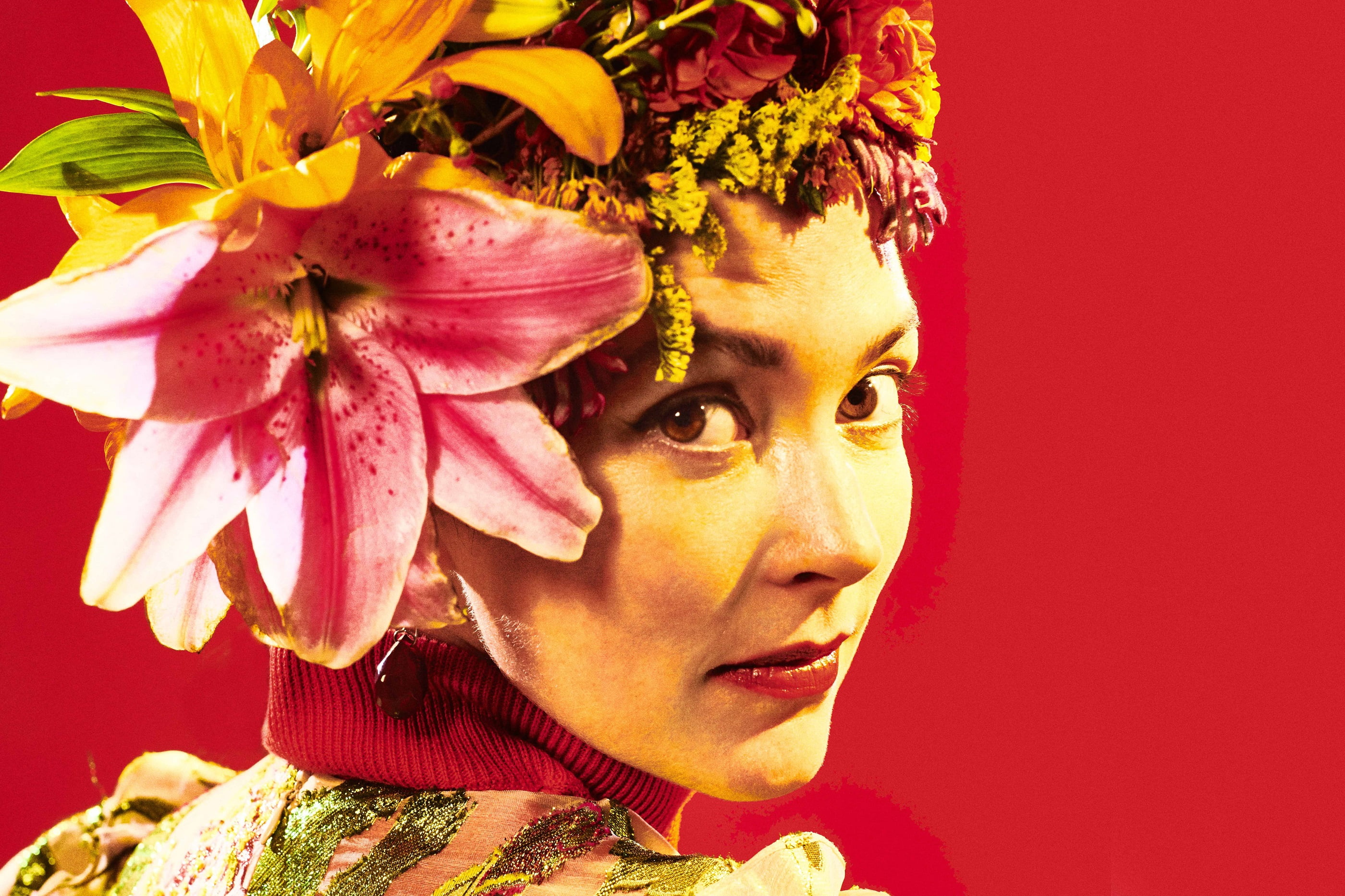
When Amanda Shires throws a party, it’s a crackling and cackling affair. The singer-songwriter has often enjoyed lacing her candor with a biting sense of humor, and her new album To the Sunset offers listeners a celebratory and sharp-tongued toast to all the bits—the good, the bad, the ugly—that have shaped her. Beyond giving birth to her daughter Mercy (with husband Jason Isbell), she completed her MFA in creative writing, but that was after someone stole her thesis and she faced the nightmare of starting over. To the Sunset presents many lessons, but central among them is learning how to accept both sides of the coin because together they pay your way.

Shires once again worked with Dave Cobb, the two aiming for a larger sound than what she’d previously accomplished. For longtime listeners, the result strikes a different chord. She and Cobb hit upon a headier pop sound, integrating slick vocal production, wild rhythms, and scorching, electrified solos. There’s a greater lightning running through To the Sunset, which comes, in part, from the use of pedals to elevate Shires’ fiddle from its folk roots. Between her new sonic direction and razor-edged lyricism—thanks to that MFA—her latest album raises a glass in raucous style. To the Sunset is a dark fête, the kind of party that only occurs when you truly let go and learn to be yourself.

Let’s talk about your MFA. How long did it take you to recover from having your thesis stolen?  

I cried and then I got mad. Jason said, “You know, whatever you write will be better than what you already wrote because you’re practicing writing,” and at the time I thought that was the most stupid thing I’d ever heard somebody say, but it’s true. The more practice you get, the better you get, and it all works out in the end. If you really want something, you’re going to find a way to make it happen.

It’s so exciting to hear what you’ve written on this album.

I think it’s pretty cool because I can tell a difference from other records, where I was working with basically instinct. Going to school, I got what I wanted, which was to learn the reasons why I should go with one choice over another, or at least have a way to argue with myself, and a way to back myself up when I’m editing. They teach you there’s no such thing as writer’s block. If that was a thing then nobody would graduate.

Who are some of your favorite poets?

I like Billy Collins, Mary Oliver, Mark Strand, and then, you know, regular favorites like Octavio Paz and all the greats.

What would you say you look for in other poets’ writing?

It’s a time to be quiet and reflect and think deeply. You are the audience of one at the time, really. I like poetry because it can go pretty deep and it’s not three minutes long. It’s as long as it takes you to understand it. Songs are such different animals. You have a lot of things that you don’t get with poems, like, you get a sonic landscape and a mood can be provided, whereas on the page it has to be presented with such precision and such intention that you can understand it without anything else helping you.

You recorded your prior album, My Piece of Land, two weeks before giving birth, and you mentioned having to hide in a closet to write this album. Mercy has, in a way, impacted your last two albums. How do you continue to carve out space—besides the closet—for your creative side to flourish?

I’m lucky because Jason’s an excellent co-parent, so if I need to write and do stuff, he’s all hands on deck, and if he needs to write, I’m right there. When I had to be in the closet, I had to make use of a small space, and it wound up leaking into my bedroom, too, so I was taping everything to the walls, so it wouldn’t accidentally get smashed or crumbled by the two-year-old. I learned how to accept things in their early stages. Before, I was real, like, “Nobody sees what I write until it’s all done.” This was a cool thing where I learned to accept my very shitty lines as they faced me every day and tried to make them better. When I was done, I shredded them and I put them in a composter and that goes into my garden.

Have you found that your plants are growing better because of it?

I don’t know. It’s toward the end of the season until that composter’s done cooking. That was a lot of shredded letters. I’m an editor over and over. Some people can write real fast, but I think everything needs tweaking all the time.

Does the editor side of your brain gets in the way of your natural instinct?

It does, it sure does. I found a thing that helps me with that. It’s called FlowState, it’s an app. You set a timer and if you don’t keep typing it erases your work, so it removes the editing process; you can leave it up there and get your free association going, and really try to put your thoughts into words. When I first got it, I started out doing five minutes at a time, now I do 30 minutes at a time. The further you go with it, it’s like a door in your mind opens and you figure which things you need and which things can wait.

Turning to space, that theme—the space between people—surfaces throughout your catalogue. Here, on “Leave It Alone” and “Charms,” it functions in compelling ways. What particularly interests you about space and relationships?

On “Charms,” my mom’s mom abandoned her at a young age, and that’s where that song came from, and just thinking about how hard that would be for both parties. A lot of times as individuals, I know we all often deal with feeling alone or that nobody understands us. You’re born alone, and you die alone. It’s a thing I think about a lot, and that’s why it presents itself in the work.

As a touring musician, as much fun as it is, things get sacrificed. All that’s to say, writing about it and dealing with it makes me a happier person, and if there’s anybody else that feels like me, then I feel I’ve done a better job because it is a way of connecting in the end.

On the My Piece of Land track “I Know What It’s Like,” the desire to run away comes up, and that theme surfaces again on “Charms.” Except running has turned into forward momentum. When did that shift occur for you? How do you push against the desire to cut and run?

[For “I Know What It’s Like”,] I had a person in my life that was telling me these things, like, “I know what you’re going through, just keep talking to me about it.” To have a comrade in that was nice, and I wanted to keep that conversation, I wanted it to be preserved. The running thing, we all want to run away, but then we’re like, “Nah, our problems aren’t really that bad.” It’s really better for you to not run way, to pick up your big girl underwear or your big boy underwear, or whatever. Put your head down and do the work.

I appreciate that you took the momentum that would cause someone to run and shifted it to a positive momentum on “Charms.”

All this stuff is all inherited—you know, how we do life. I will now cite Philip Larkin: “Your mom and dad, they fuck you up.” So in that one I was moved that even though my mom experienced abandonment, she didn’t fall into that learned thing. I think it’s wild to break habits that have happened in your family, generationally. You can’t let fear be the thing that owns you. It’s just silly. This is such a vague thing to describe, fear and doubt and all that stuff—thinking about hypotheticals for situations—it’s so useless; it’s such a waste of time and energy because you can’t control the future, and you can’t control what’s already happened. It’s about trying to accept what’s happened and move forward, and if you fuck up, you fuck up. At least you tried.

Right, you need to make mistakes in order to figure it out. It’s like editing. You never write something perfect the first time.

Yeah, you’ve gotta find a way to trust yourself.

That’s hard when you’re younger.

Totally because you don’t have much experience with it, so you gotta do all the things that give you experience and wrinkles. They’re worth it. Then you start figuring out that, even as you get older, you were this person and now you’re this person. You’re always changing. You might look back and say, “I don’t even recognize that person.”

Joan Didion had that fantastic quote about making peace with your former selves because you’ll never fully leave them behind.  

That’s a whole thing I’m trying to say with To the Sunset, that sort of a cheers or toast. It takes all the things to make you who you are and who you want to be, rather than just ignoring it, or putting it in a box under the bed.

It’s hard to fight, though, because there can be messy parts of yourself that you don’t want to admit.

If you’re not doing that, you’re probably ignoring something that you need to feel. You need to feel ashamed and humiliated sometimes by your own actions. It’s easy to rewrite the way things happened. Once you face it, you can learn yourself better.

Lastly, there are some beautiful portraits of women on this album. How has your sense of womanhood changed, if at all, since having Mercy?

I always felt like I had a responsibility, but I feel like I have that even more. Doing as much as I can and thinking more about the world for her and hopes for her and fears for her. I also feel like, for a long time, you couldn’t talk about things. Even the ugly parts of being pregnant or postpartum, you couldn’t talk about anything, and everything’s supposed to be dreamy and awesome. Now, it’s easier in that more and more women feel like it’s OK to talk about the ugly parts. I think that that might keep us going in the right direction, somehow. One of the coolest things on the record, woman-wise, is my only guest was Gillian Welch, and she sings the harmony part on “White Feather,” what I call the “God” part. Whatever your God is. That was pretty cool. That was a day I thought I was going to die.

Also, your album is coming out at a time when a lot of artists are challenging this sense of perfection.

Yeah, like we don’t need to write a lot of ballads or whatever. It is a cool moment. I’m so happy to see so many women putting out records this year. There’s always been a ton, but there’s not been as much attention or as much room. … It took all those people before us to get to this spot now; I definitely don’t think it’s just happened over the past few months. They’ve always been there, but to move together works better than to move singly.


Photo credit: Elizaveta Porodina

MIXTAPE: Brent Cobb’s Songs from the Road

Brent Cobb may have the coolest summer job ever – opening shows across the U.S. for Chris Stapleton and Marty Stuart. During some downtime in Oregon, the Georgia native gave the Bluegrass Situation the lowdown on 11 of his favorite songs.

“Lord, I Hope This Day Is Good” – Don Williams

I woke up today singing Don Williams’ “Lord I Hope This Day is Good.” Because it just felt that way, you know? It’s just a beautiful day, I kind of want to smell the smell of hickory smoke rollin’ around in the wind. That’s also what Don Williams makes me think of, you know? We got a little somethin’ on the smoker and a little Don Williams playin’ – it’s hard to beat that.

“New South” – Hank Williams Jr.

That kind of leads into the next one, it’s sort of the same path, but Hank Jr., “New South.” It’s on his album, The New South, his first record after he fell off the mountain. Waylon Jennings, Toy Caldwell, and Marshall Tucker — they helped him produce that record. The whole album is so good, you want to sit around a campfire sound, you know? That particular song, “New South,” it also makes me want to put something on the smoker on a beautiful sunny day, pick a guitar, and maybe throw some horseshoes.

“I Wonder Do You Think of Me” – Keith Whitley

After that, I got Keith Whitley, “I Wonder Do You Think of Me.” The other night, I was sittin’ up, a lot of times when I’m on the road it’s the only time that I have to go back to my regularly scheduled writing process program. My daughter’s not out here so I don’t have to wake up at 6 o’clock every morning like I do when I’m home, so a lot of times I’ll sit up and play music and I sat up the other night till about three in the morning listening to songs. This particular one – I had forgotten about this song, I rediscovered it and listened to it about 25 times in a row the other night. It’s just so damn well-written and the chords in that song are amazing. It seems like such a simple country song, but I can’t play it. I try to pick it out.

“Leaving Trunk” – Taj Mahal

Something we listen to every night before we go on stage is Taj Mahal, “Leaving Trunk.” It’s just got that dirty south, down south, funky, country feel that I love. You can tell that the Allman Brothers were borrowing a lot from Taj. And well obviously “Statesboro Blues,” that song particularly, it’s just got that … I don’t know, it feels funky. It also would be great on a day like today, just kind of walkin’ around and have that song playin’ in your mind and be-bopping to your own beat.

“Coming Home” – Delaney & Bonnie

That makes me start thinking of other songs you could listen to, to get in the zone. So I got Delaney & Bonnie’s “Coming Home.” That’s another one we listen to before we play. I know you probably know who that is, but for those who don’t, they would have Clapton and George Harrison and folks play on their records. They influenced a lot of their peers of that time, and Dave [Cobb, Brent’s cousin] actually turned me on to that track. I’d never heard it before. Yeah, just kind of that funky country, man, gets ya goin’.

“Ohoopee River Bottomland” – Larry Jon Wilson

Which leads us into Larry Jon Wilson. Larry Jon Wilson was from Swainsboro, Georgia. He did a couple of records in the ‘70s that were super funky country. “Ohoopee River Bottomland” is the song I’m thinkin’ of. It’s also just that pre-show jam, you know? It kind of gets you down the road a little bit, and the way Larry – especially that song – would use Southern-isms or just rural-isms. He’d talk about, “this low rent land has turned to sand and I’ve done stood ’bout all I can I’m leaving…I’m leaving,” and “I got a wore-out mule and a no ‘count tractor quit now…and this is it now.” I just love the way he talks. You really capture his South Georgia background, but then he’s able to put it to some funky music.

“Play Something We Know” – Adam Hood

Alright so after Delaney and Bonnie and Larry Jon Wilson, that made me think of my buddy Adam Hood, because those are two songs that a lot of people may not know. It made me think of my friend Adam, I do a lot of writing with him. We wrote a lot of songs with this newest album of mine. He has a song called “Play Something We Know.” It’s all about hearing “play something we can sing to and play us something we know.” It’s about that guy or girl in the bar that’s slightly belligerent at your show, and they’re like “play me some ‘Brown Eyed Girl.’” You should check it out, it’s hilarious. Adam is just a great all-around artist.

“Forever Lasts Forever” – Nikki Lane

After thinking of Adam, it made me think of some other peers that I’m into, that I love, that have been good to me. Nikki Lane took us out at the top of last year and I think, in my humble opinion, she’s about the most authentic of our time. She has a song called “Forever Lasts Forever.” If you haven’t heard it, you should really check it out. It’s inspiring to listen to anything she writes, but that song is so wonderfully written. Just a wonderful breakup song, you know? Everybody loves a good breakup song.

“Hole in the Sky” – The Steel Woods

That brought me also to some other peers and also pre-show jams. The Steel Woods did a cover of Sabbath’s “Hole in the Sky.” I don’t know if you’re familiar with them, but son of a gun… It’ll get ya goin’, man. Their whole record is great. They’re recording a new record right now. That “Hole in the Sky” song, I remember the first time I heard it, I had no idea it was an old Sabbath song. It blew my hair back, it’s incredible.

“Anyhow, I Love You” – Guy Clark

Now this is gonna take us to after-show jams….the slow jams. Made me think of Guy Clark, “Anyhow, I Love You.” Man, talk about a damn well-written song. It took me a long time to get into Guy, not because I wasn’t into him…it’s just some things you gotta live enough to really appreciate it. That was one of those songs, man, “Anyhow, I Love You.” I could listen to that one, same as “I Wonder Do You Think of Me,” over and over and over and over again.

“Open the Door” – Otis Redding

That made me think of Georgia because Guy Clark is so good at writing about Texas. It made me think of an old Georgia artist, Otis Redding. Everybody knows him. “Open the Door” by Otis Redding feels like church. It’s like being back at Antioch Baptist Church when the preacher’s talkin’ to you and then he lays it on you.


Photo credit: Don Van Cleave

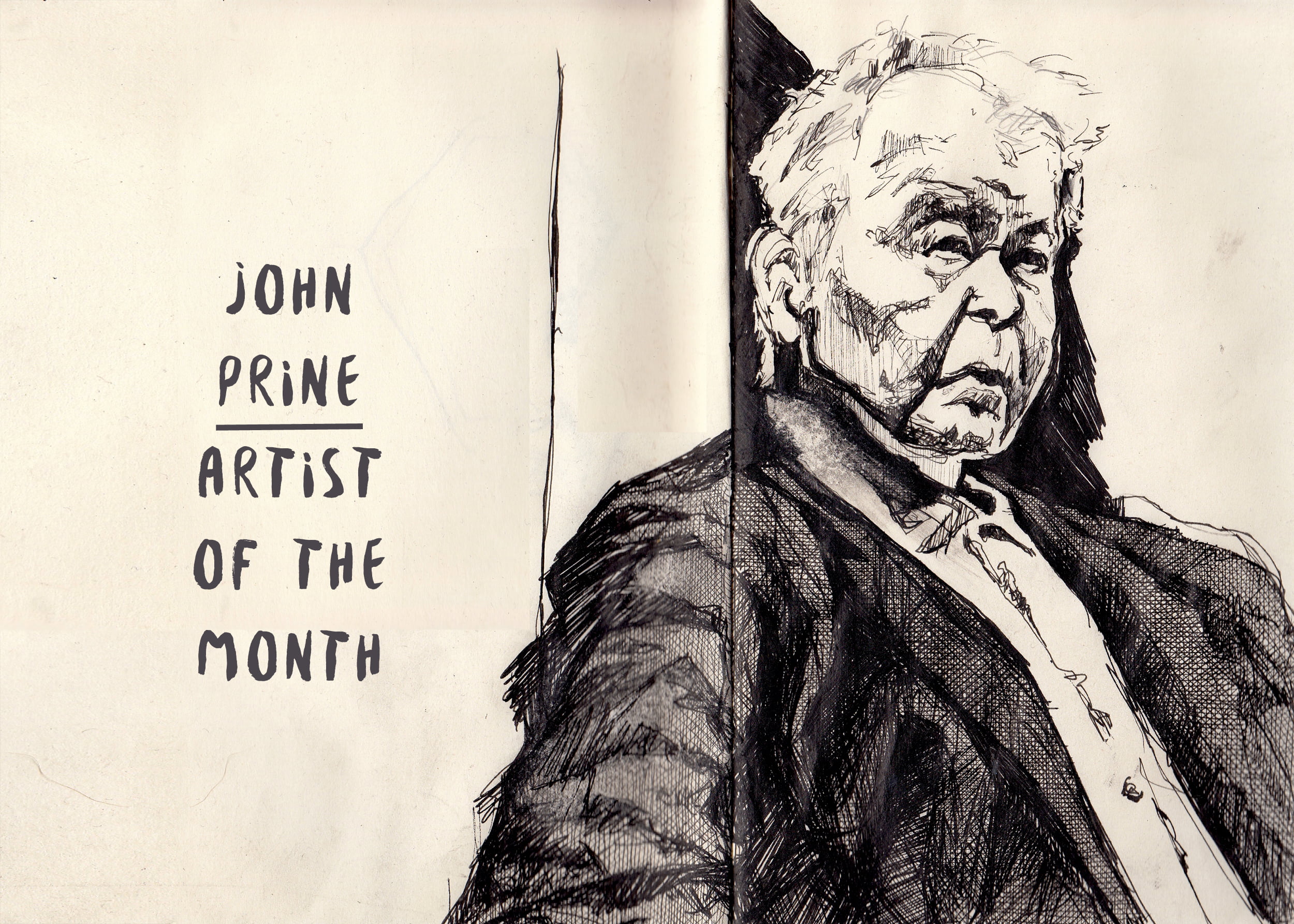
John Prine: The Difficulty of Forgiveness

In the days following the release of The Tree of Forgiveness, John Prine — the 71-year-old master song crafter, storyteller, and lover of a good meatloaf — had the best sales week of his decades-long career. His first album of originals since 2005’s Fair and Square, it’s a rare bit of triumph for the good guys — and for an artist like Prine, who has shaped our current musical climate in ways that are often beyond measure. Because, despite being one of the primary influences on Americana’s best and brightest — from Jason Isbell to Margo Price and Deer Tick — Prine’s never banked those platinum albums. Though 1991’s The Missing Years eventually sold around a half-million copies some 20 years after his self-titled debut, records, like the rest of human life, then went online: People stopped buying, and started streaming.

“Just as I started selling records, records stopped selling. I hope it wasn’t my fault,” Prine says, chuckling from his living room at home in Nashville. “I’d be spoiled, if I sold a million records. I probably wouldn’t go on the road for 10 years. But I don’t ever want to sell so many records that I have to do shows in a stadium. Stadiums are for sporting events: They’re not to watch a guy with a guitar come out and tell his story.”

He’s right, though if there’s anyone who could capture a stadium full of people with just an acoustic guitar and his heart-shaking stories, it would be Prine. The Tree of Forgiveness, an exquisite record that finds Prine looking at love, death, and the passage of time with humor, lightness, and his own quirky sort of grace, isn’t a set of arena rock barnburners (obviously). Instead, it’s touching moments of humanity that stick to the bones and linger in the mind, letting the imagination wander in exactly the direction that Prine wants it to … which is everywhere. Take “Summer’s End,” a nostalgic track if there ever was one, though it’s not explicitly clear for what — for summer, for a relationship, for life itself. “I could sell John Prine Kleenex with a song like that,” he says, laughing.

But it’s hard to be too sad about the end of life or love in Prine’s world, particularly life, if what happens next is as fun as “When I Get to Heaven,” the album’s closer. With Amanda Shires, Jason Isbell, and Brandi Carlile all chiming in on kazoo and vocals — all three appear across the Dave Cobb-produced LP — it details Prine’s perfect afterlife, where he can smoke again, post-cancer, hug his loved ones, and drink his signature cocktail, the Handsome Johnny, to his heart’s content. Like most of what Prine does, “When I Get to Heaven” is loaded with a potent combination of humor and vulnerability. Death is life’s biggest mystery, and Prine would rather solve that problem with lightness than exist in the dark, reality be damned. And Prine likes a good story as much as he likes (or doesn’t like) reality, anyway.

Prine’s own life story is a bit of rock ‘n’ roll lore: He grew up outside of Chicago in a mill town, and formed his songwriting voice after leaving the Army, writing between shifts as a mailman. But much of his signature finger-picking style and his artistic identity come from Kentucky, where his father hailed from, and which feeds the deep bluegrass presence within his songs.

Prine is equally important to Kentucky, too — and to Kentucky’s artists, like Kelsey Waldon, who will open select shows for him in the fall. “John Prine’s music is very special and significant to me,” says Waldon. “He brought together my country and bluegrass worlds, but with relevant and honest songwriting that I think would touch most any walk of life. As a Kentuckian, yes, of course his bluegrass roots make me proud. I have spent some time in Muhlenberg County, and I believe that’s where John learned to play, from his grandfather. That is the area where the great Merle Travis is from, and you can really hear a lot of Merle in John’s pickin’ style — that rhythmic thumb picking. The Everly Brothers and Bill Monroe are also from around the same area so, you know, it’s a lush environment for music. Something has always been in the water. I had heard in an interview that his daddy used to drill the kids that they were not only from Illinois, but also from Kentucky. So, I’d say the roots run deep.”

“I can never really lose those roots,” Prine says. “My family is a big part of my life. A lot of the older relatives are gone now, but I still have family in Kentucky, and I still go to my family reunions every year. Country and bluegrass have always been big influences on me and my music. I still listen to that music.”

Prine listens to a lot of Isbell and Shires, too, and Sturgill Simpson, a fellow Kentucky native with whom he shares a songwriting office — which has never actually been used for any songwriting. Prine stores a big pool table there and, besides, they can’t give it up. Producer/engineer Dave Ferguson uses the space next door, and he likes to smoke there, so Prine and Simpson hold on to it so a new tenant doesn’t put the kibosh on the stogies. “Friendship and cigarettes,” Prine says.

“I would love Sturgill if he was from New York City,” says Prine, “but he is from Kentucky, and I love that he respects and cherishes those roots as I do. He and I both come from the same long line of country-folk-bluegrass guitar-playing musicians. I learned to fingerpick by listening to Elizabeth Cotton and musicians in our tradition. We are all still playing and writing about stuff we know.”

One of the reasons that Prine’s songs are so impactful is how they balance what he knows and what he doesn’t — the mysteries of life, its frustrations, and unknowns. On The Tree of Forgiveness, recorded at RCA Studio A, he’s thinking a lot about forgiveness, itself, and what it means to be kind, something that resonates loud and clear in the Trump era. Prine didn’t write explicitly political songs on this record, but that simple act of forgiveness and kindness is political, in and of itself, in 2018 — a concept that other country and folk singers, like Kacey Musgraves and Courtney Marie Andrews, have also explored on their recent albums.

“Forgiveness, to me, it’s probably the most difficult thing to do,” Prine says. “And the most difficult person to forgive is yourself. A lot of people go through life not forgiving themselves for short-selling something, or paying enough attention to kids or parents, not looking after them when they get old. But the most difficult thing is to forgive yourself.”

Prine’s songs include so much permission to forgive ourselves for being imperfect, for acknowledging that we can love our weaknesses as much as our strengths, and for being content with our priorities, however skewed they may be. Some of Prine’s personal priorities are songs, a good meatloaf, and friends and family. His record label, Oh Boy, is a family affair, with his wife and manager Fiona running things with their son, Jody Whelan. When he’s not touring or playing with his grandkids, he’s writing with friends like Dan Auerbach, who appears on the record, and Pat McLaughlin, or seeing shows around town. He recently checked out the I’m With Her gig at the Station Inn in Nashville. “His support is incredibly meaningful,” says Sara Watkins, who could see he him bopping along from the stage.

“The longer I live in Nashville, I only co-write with friends,” says Prine. “Because, if you spend an afternoon together and you don’t write a song, at least you get to hang out.” For one of The Tree of Forgiveness‘s tracks — “Egg & Daughter Nite, Lincoln Nebraska, 1967 (Crazy Bone)” — Prine and McLaughlin were writing together on a Tuesday (“meatloaf day, that’s our carrot on a stick”) and Prine brought up a story about how he’d heard of farmers taking their daughters to town in order to pawn them off for marriage — which he’d heard jokingly referred to as “egg and daughter night.” Naturally, this gave Prine a good laugh. And an idea.

Prine didn’t think it was a real thing, though (according to Google, apparently, it is), but they wrote the song anyway. “We didn’t think it was about the truth and, when you aren’t writing about the truth,” he says, “the world is your oyster.”


Illustration by Zachary Johnson

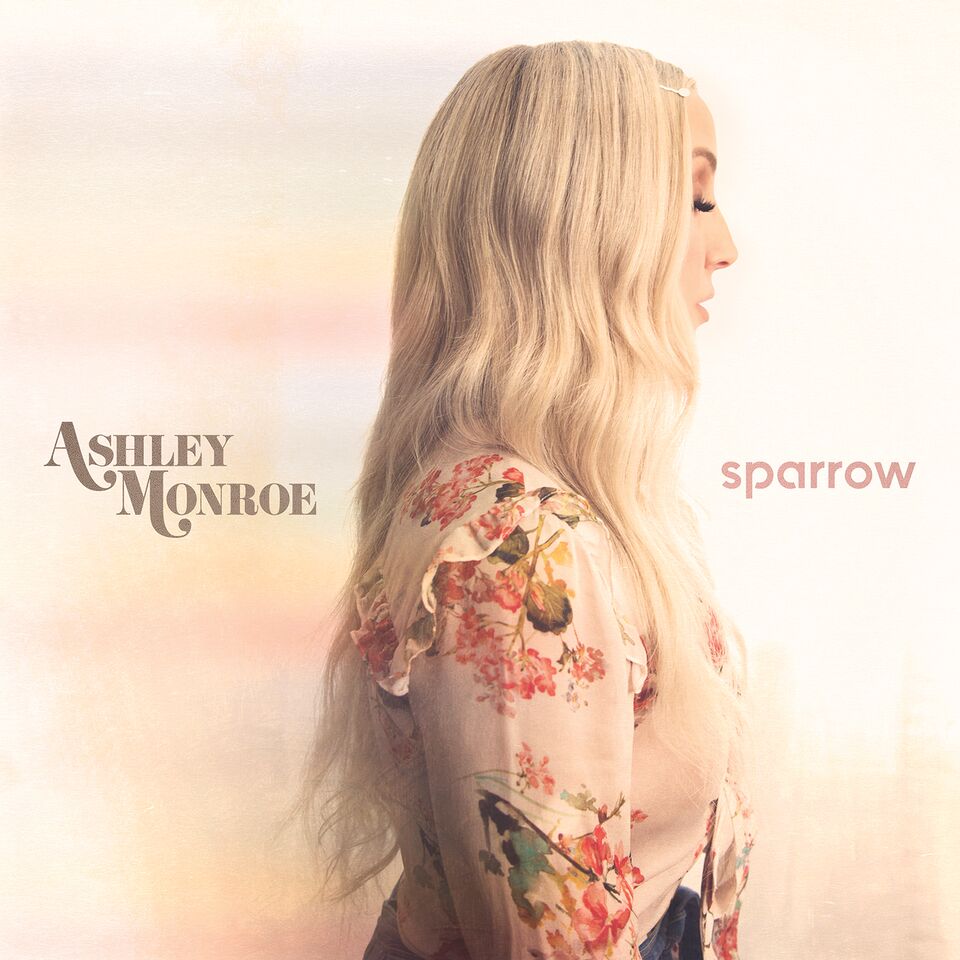
Ashley Monroe, ‘Hands on You’

There’s a prevailing thought in our culture that, once women become mothers, they lose their right to become sexual beings. The irony of how babies are created aside, we’re not particularly comfortable with the dichotomy of parenthood and personal passion living side by side. It’s easier for us to digest a mother as a mother and a woman as a woman, and they can’t often cross paths. Country music, however, is not only uncomfortable with this crossover, the genre is simply uncomfortable with women expressing their sexuality — period. Single, married, parent, or not, the second female desire is expressed on the radio it’s, well, it never really makes it there in the first place. Miranda Lambert tried it with “Vice,” but Nashville never warmed to her sensuality.

Lambert’s friend and collaborator, Ashley Monroe, is equally unafraid to show her sexual side on her new song “Hands on You.” From her forthcoming LP, Sparrow, produced by Dave Cobb, it was written when Monroe was pregnant and struck with a stomach bug, feeling left out from the festivities and mischief her friends were enjoying. It’s a song about regret set to some soulful, Chris Isaac moodiness, but not the typical kind of regret of a lover lost. Instead, it’s about wishing for some extended ecstasy. “I wish I’d have pushed you against the wall, locked the door in the bathroom stall,” she sings, her twang getting deliciously woozy through every sultry syllable. Maybe that’s not how a woman — and a mother — is supposed to behave on Music Row, but it’s the truth. That may not be Sunday-morning polite, but it’s human.

Brandi Carlile: The Work, in Progress

“A lot of times, as artists, we don’t write about what we’re good at; we write about what we struggle with,” Brandi Carlile confesses, then adds with a laugh, “I think I tend to write a lot about forgiveness because I’m quite judgmental. I’m a work in progress.” As evidenced in that thesis statement and the work’s title, forgiveness — for ourselves and others — is the tie that binds her new musical masterpiece, By the Way, I Forgive You.

Co-produced by Dave Cobb and Shooter Jennings, and filled with ’60s and ’70s folk-rock flourishes, By the Way, I Forgive You is the album many of Carlile’s fans and critics — as well as Carlile, herself — have been waiting for her to make, as it captures both the expansive power and vulnerable intimacy that make her live shows so indelible and affecting. From the glory and gravitas of “The Joke” to the heart-warming humility of “The Mother,” Carlile — along with Phil and Tim Hanseroth — turned her gaze simultaneously inward and outward, weaving the political into the personal to achieve a new level of honesty in the songwriting and performances.

Carlile and the twins know very well the potency of the musical pen, alluding to exactly that on the album’s buoyantly sentimental opener, “Every Time I Hear That Song.” Aptly, the tune circles around the idea of having memories triggered by a song on the radio. Now 15 years in, Carlile and company have crafted quite a few trigger songs of their own. “I love when I hear that because I know exactly how that feels,” she says. “There are so many activities that, when I do them, I’ll make a playlist and only listen to, like, the Indigo Girls on that camping trip because it’s nostalgia and it’s so important. Certain times in your life are marked by a soundtrack. To be that for somebody else is insanely satisfying for me.

“But ‘Every Time I Hear That Song’ is a little bit different. It’s not really about a song, is it? That’s the least important thing, the song that conjures up those feelings. It’s the fact that they’re still in there somewhere that’s so irritating,” she laughs. This particular album, though, really is about the unique power of a song — or, rather, 10 of them — to conjure up feelings, each one building and bridging toward the next.

A noted activist and humanitarian in her personal life, the closest Carlile had come to drafting a political statement before By the Way was with “Mainstream Kid” (off 2015’s The Firewatcher’s Daughter) because she didn’t feel that she had the skill required to do it well. Then came November 8, 2016 and all that has followed. And, now, not all bets are off, but a lot of them sure are, with “Hold Out Your Hand” and “The Joke” serving as two particularly political rallying cries.

“I think we all woke up, rather disturbingly, in November of 2016, just to realize that certain epidemics still exist, and we live alongside really damaging forces in the world, especially in our own country,” she says. “Becoming a parent has been a part of it, and wanting to do as much as I can to make the world a better place for my kids, while also recognizing that what got me to where I am and gave me a platform in the first place isn’t being political. And trying to honor that — that people want to listen to my music and have real feelings about interpersonal relationships and love and parenthood and loss, as well. So striking that delicate balance and just honoring the times we live in were really important motivators for me, on this record.”

The humanity required to see and strike that balance is, perhaps, Carlile’s greatest gift. It’s in the way she connects with people en masse and in private. It’s in the way she pours everything in her into every note. It’s in the way she exudes sheer joy every time she steps on stage. And it’s in the way she tackles topics almost too tender to touch.

Tales of addiction, abandonment, depression, and suicide have often cropped up on Brandi Carlile records, and By the Way is no exception. Here, “Fulton County Jane Doe” sweetly memorializes an unknown woman found dead in Georgia and “Sugartooth” sympathetically recounts a high school friend’s lost battle with drug abuse, while “Party of One” compassionately resolves to live up to personal promises made to a partner.

Carlile can tell these stories because she has lived these stories. “There’s nothing unique, really, about me,” she offers. “I’ve got all that in my family and all that in my life, too. I’m coping with it right alongside you and everybody else in the world. I think that God gave me the privilege and gift and ability to write about it, and I’m just really happy to be able to do that.”

Because of all she has dealt with in her life, one of the tools Carlile employs in a lot of different situations is the Al-Anon philosophy of love and acceptance: “I find it to be a really versatile philosophy to love someone just because they are worthy of being loved and not because they are meeting your expectations. That is easier said than done, but so important to experience growth.”

Confusing co-dependency with commitment is another addiction-related thread that has run through multiple albums. In keeping with the spirit of forgiveness and signaling a spurt of growth, Carlile takes that on in “Whatever You Do,” albeit with a newfound confidence that comes from counting yourself in the equation rather than succumbing to invisibility. “It’s all there — all of that gravity around having a savior complex and realizing how, subconsciously, we decide at a young age to love each other within the boundaries of what sustains us personally,” she says. “Realizing how necessary it is to let go of that is sort of groundbreaking.”

Across the final 45 seconds of the song, Carlile wails into the wind. What did that symbolize for her? “That it’s not easy,” she says with a laugh.

But Carlile didn’t sign up for easy. She signed up for real … in all its unfathomably beautiful and inestimably horrible glory.

“The kind of white-washing of humanity and saying that everyone’s just doing the best they can and trying to exist at any given time means that we’re not really capable of great things, either,” she explains. “Because, if we’re not really capable of awful things, we’re not capable of great things. It’s the high-highs and the low-lows that are real life. That’s why forgiveness is so necessary — and accountability is so necessary — in our little speck-of-dust lives. That’s what makes the really good shit happen.”

That philosophy of living up to our highest potential against every possible odd is what pulses so profoundly through “The Joke,” the album’s centerpiece. The stunning cut serves as an anthem of empowerment for the marginalized and vulnerable who face bullies and barricades in life. Forgiveness is found there, too. In order to rise above those who would hold us down, it has to be.

“That’s the thing about transgression and grief and fallibility: There’s going to come a time when you and I and all of us are going to be in dire need of forgiveness for some things we can’t believe that we did. And hoping that it’s there is a real shot in the dark because it’s an easy thing to talk about and a hard thing to do,” Carlile says. “At the end of the day, though, if we do it, we have longer lives and we’re happier people.”


Illustration by Zachary Johnson

The Lone Bellow, ‘Is It Ever Gonna Be Easy’

Sometimes, when the aggravation of modern life and stresses of our daily existence are all just too much, it helps to scream. To yell. To holler out loud — primal, guttural, true. It’s a release that can make us feel in control by letting go, if only for a minute, and if the neighbors don’t freak out and call the cops.

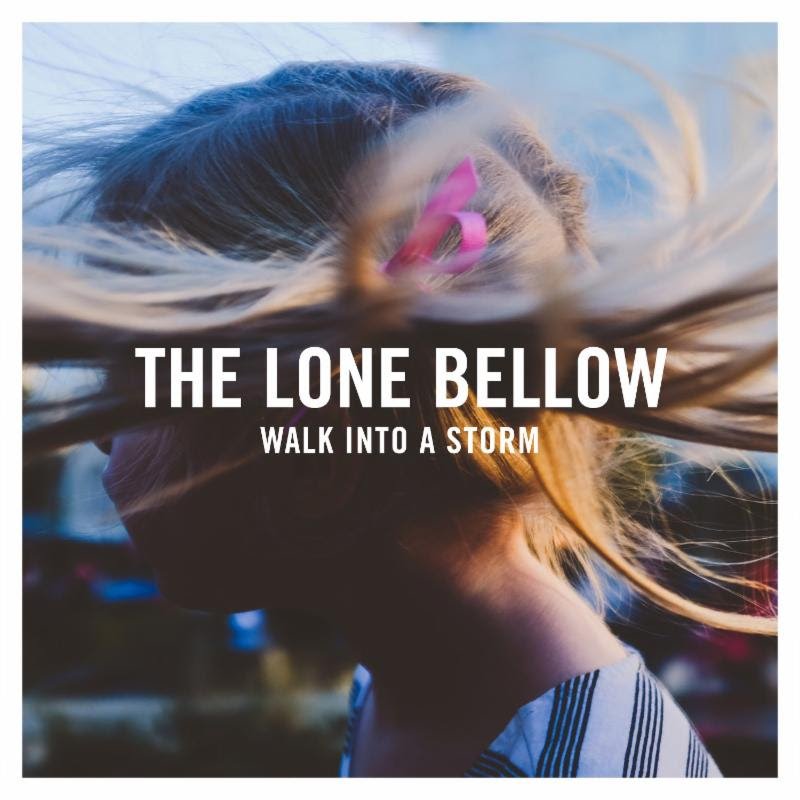
In many ways, that’s what the Lone Bellow is — a sort of musical holler in favor of catharsis. On their first offerings, it manifested itself in a collection of sing-along, gospel-folk explosions: Zach Williams, Kanene Donehey Pipkin, and Brian Elmquist all, well, bellow along, reaching the rafters with a room of sound that could be almost borderline too earnest if you didn’t have the stomach for sincerity over sarcasm or snark. With producer Dave Cobb on board, the trio has found a way to blend their penchant for soulful roots amalgams with an outlook more comfortable embracing the darker side of life through their new LP, Walk into a Storm. And now they’re even better at belting it all out in a way that looks to use those rumbling vocal chords for a little healing. This is especially true on “Is It Ever Gonna Be Easy,” a chugging, swanky admission that it likely never will. “Try to be a better man, but I don’t try all that much,” admits Williams with his band mates joining in on harmony — with Cobb’s touch, the song is sonically more adventurous than they’ve been, allowing for warm ’70s vibes and lush Lauren Canyon touches. Is it ever gonna be easy? Probably not, but that’s life, so let out a little yell, or a lone bellow, and see what happens.  

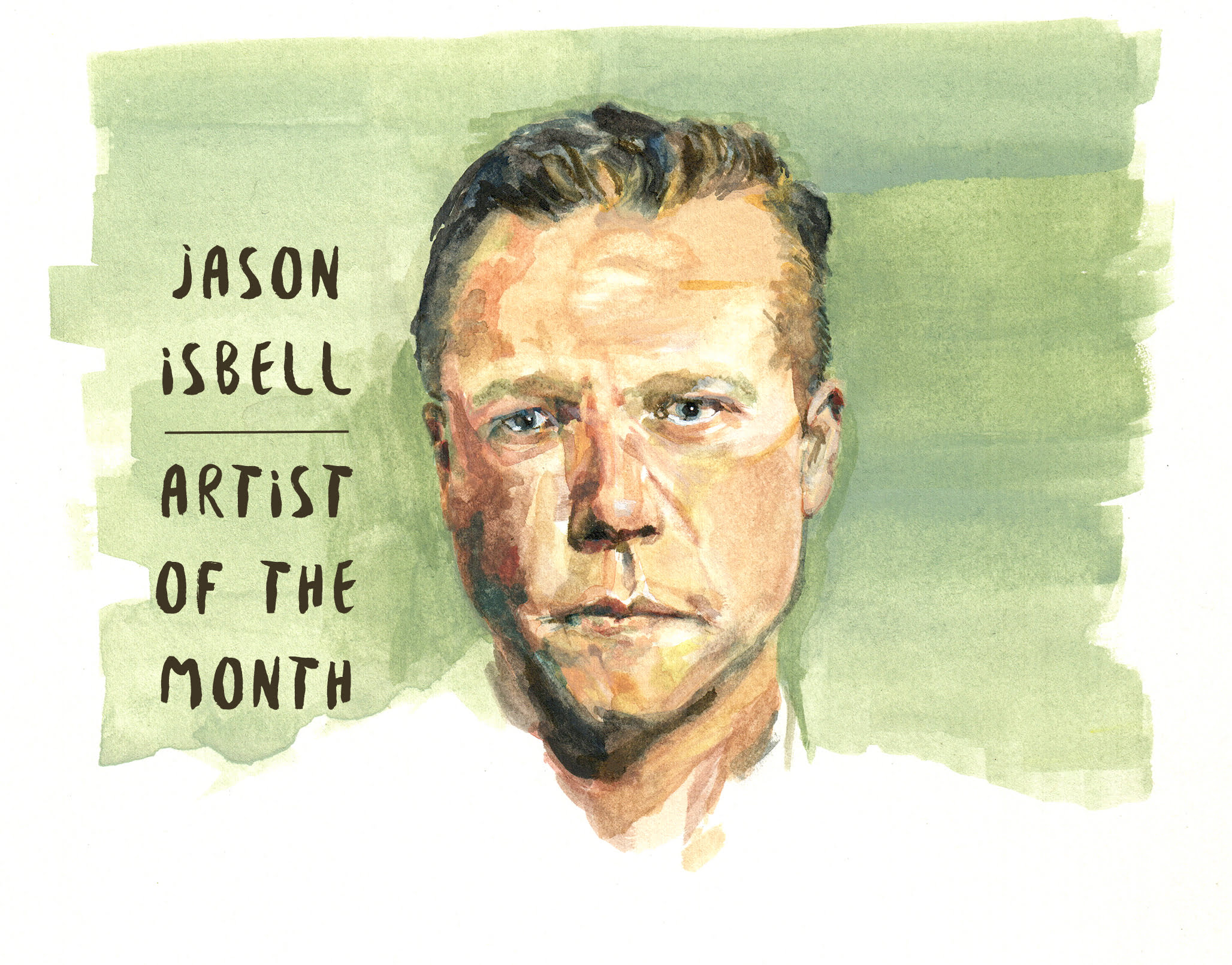
Jason Isbell: Finding the Common Ground

No one really knows who actually watches Today in Nashville, a newsmagazine show that comes on at 11 am and usually includes segments featuring local chefs making seasonal cocktails, barbeque tips, and probably a few cute and/or furry pets. It’s the kind of program that makes Nashville still feel like a small town, full of random snippets and Southern quirk — something nearly prehistoric in the post-Trump, Twitter-rage-filled America, where a quaint five minutes dedicated to, say, an ice cream truck, strikes as indulgent. Who tunes in to that sort of thing? Well, Jason Isbell, for one.

“I get a big kick out of this show,” says Isbell, calling from his home in the country right outside of Nashville, where he’s been watching: This morning, he learned about peanut-free day at the ballpark and squat techniques from Erin Oprea, Carrie Underwood’s trainer. “They just try to fill the space with local Nashville color every day, and it just cracks me up.”

It makes sense, really, that Isbell is drawn to Today in Nashville — there’s perhaps no better working student of local color, in all its permutations, than the Alabama native, who released his most recent album, The Nashville Sound, last month. It’s a collection of songs that don’t take the gifts of humanity at face value: love in the context of death, privilege amongst suffering, hope in a world on a collision course with an irreparable future. Much has been made about this being Isbell at his most “political,” but, really, it’s an LP that studies the causes and not the effects. Isbell is a listener, not a screamer, and as the Trump era has divided the country more than ever, he’s looking to understand why we got here, and not just point fingers. Isbell’s characters might be wanderers in small towns or coal miners looking for peace at the bottom of a glass, but he’s more interested in what he might have in common with them than what he doesn’t.

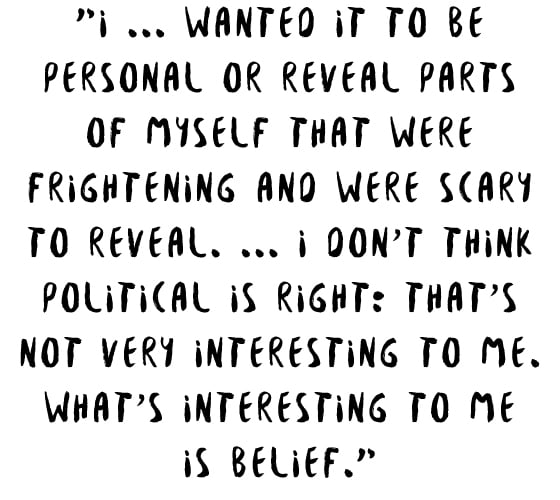
“This album, I wanted to stay away from a lot of the same type of reflection I did on Southeastern,” Isbell says about his breakthrough LP, which was followed by 2015’s Grammy-winning Something More Than Free. “But I also wanted it to be personal or reveal parts of myself that were frightening and were scary to reveal. And that came across in songs people might describe as having a political slant or agenda. I don’t think political is right: That’s not very interesting to me. What’s interesting to me is belief.”

“Belief,” after all, is a potent potion — especially since beliefs are often digested outside of a moral code. Isbell hasn’t been shy on social media about his stance on Mr. Trump’s policies (Spoiler: He is not in favor of them.), but The Nashville Sound is not the work of just an angry man; it’s the work of one who knows that human beings are complicated, confusing things who don’t always make the right choices, but not always for the reason you think. It’s a challenge to both criticize and empathize at the same time, and that’s what Isbell can do so artfully, by finding freedoms amongst flaws.

“Writing songs about race and gender, that’s a minefield,” says Isbell about tracks like “White Man’s World,” which take an honest stock of the privilege bestowed upon people simply born a certain skin color and sex. “One false move, and I am a laughing stock. One tiny little ignorance of privilege, and I am screwed. So you have to be very, very careful. And careful in a way to represent yourself correctly. You have to start out believing in the right things, and then you have to tell people that in the clearest way. That’s a great exercise, but it’s scary.”

On “White Man’s World,” Isbell doesn’t just try to offer apologies to people of color or to women — he takes it one step further. And that’s by admitting that there are layers that he doesn’t see, bias he might not even realize: “I’m a white man living in a white man’s world,” he sings. “Under our roof is a baby girl. I thought this world could be hers one day, but her mama knew better.”

That baby girl he sings about is Mercy, his daughter with wife and 400 Unit bandmate Amanda Shires. The album, produced by Dave Cobb, isn’t a “dad” record, but it is shaped by Mercy’s existence, and by the litmus test she adds to Isbell’s life. His marriage is also confronted, but, once again, in an unusual context: On “If We Were Vampires,” Isbell looks at love as something that can only exist within the sands of an hourglass. “It occurred to me that it’s a beautiful thing, death, if it happens when it’s supposed to and not a minute sooner,” Isbell says. “There is nothing else that would move us, if we didn’t know it was going to end. I wouldn’t be in a hurry to find somebody to spend my life with, to have a child, or work. I wouldn’t have any motivation to do anything — make art, get up off my ass, whatever. That’s really the point. People call it a sad song. Yeah, it’s a sad song, but sometimes people use the word sad to mean moving.”

There’s no doubt that Isbell’s a lyrical master — like the best songwriters, he blends prose and poetry in the most delicate balance — but part of what makes his work so captivating is that idea of what is “moving” over simply just sad, or any base emotion. The Nashville Sound gets this feeling across often by asking questions as much as it gives answers: Why does happiness breed so much discomfort? Is there any peace in knowing that death will come? What can we do, in this short life, to leave the world a better place than we found it? Rather than get purely political, Isbell aims to move minds, and to challenge beliefs that are held dear, through subtler storytelling and not just through enraged diatribes.

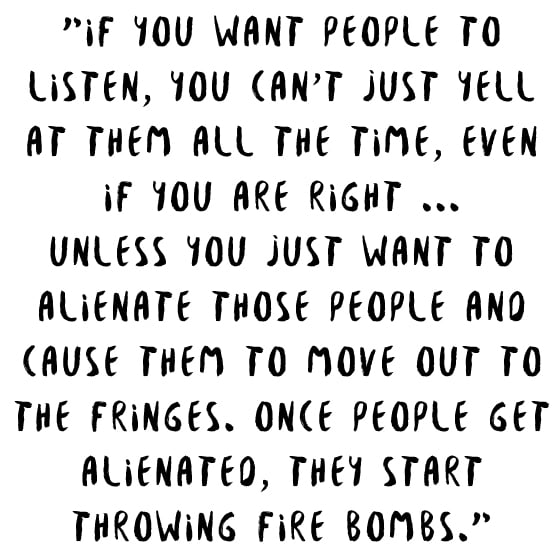
“If you want people to listen, you can’t just yell at them all the time, even if you are right,” he says. “If I am arguing with someone who is a hardcore conservative, I might think this person doesn’t realize how offensive his or her beliefs are, that they are racist or sexist, but you can’t just start screaming ‘You are a racist and you are sexist,’ unless you just want to alienate those people and cause them to move out to the fringes. Once people get alienated, they start throwing fire bombs.”

That sense of alienation is a lot of what built the Trump agenda, and, now, Isbell feels alienated, too. He’s confused by a country that could overlook “deplorable behavior” like Trump’s. “I thought I knew more about Americans that I did,” he says, talking about “White Man’s World.” “Having grown up in a small part of a Southern state and traveled for nearly 20 years, I thought I knew more than I do about American people.”

Of course, Isbell wants to know them as much as he can — it’s whyThe Nashville Sound is the number one country (and rock) record on the Billboard chart. You don’t appeal to both red and blue without reminding the audience that you’re not just preaching to them, you’re hearing them, too. And Isbell is listening to the Nashville sounds, as much as he is making them.


Lede illustration by Cat Ferraz.

Rewriting the Story, Redrawing the Lines: A Conversation with the Secret Sisters

The Secret Sisters had all the markings of instant success. Their first recording contract came attached with producer Dave Cobb and executive producer T Bone Burnett, and they toured with the likes of Brandi Carlile, Ray LaMontagne, and even Bob Dylan. But those factors, while exciting, weren’t a guarantee. Where music’s history is riddled with instances of surprising discoveries that led to shooting star fame, it’s more heavily peppered with the ones who didn’t make it to the finish line. For every Elvis Presley, there’s the Bobbettes. It seemed that the Secret Sisters, Laura and Lydia Rogers, were destined for some version of the former, but no one anticipated the turn things took after they released their second full-length album, Put Your Needle Down, in 2014. Slow sales caused their record label to drop them, and they soon found themselves underwater, financially and emotionally.

Looking back now on their story, it seems evident they would always turn things around; fate, having dealt them such lucky cards before, wouldn’t let that hand go to waste. At the time, though, that was harder to see. The sisters are back after three years, recently signed with New West Records, and raring to go with their third studio album, You Don’t Own Me Anymore. Produced by good friend Brandi Carlile, the album places its finger on the bruise their adverse experience in the music industry caused and doesn’t let up. “It’s about as personal as it gets,” Laura says.

Having learned a lesson or two over the past eight years, the pair are gritting their teeth but not biting their tongue. As with Sara Bareilles’s 2007 hit, “Love Song,” their title track flippantly states their independence from industry expectations. It’s more than being protective of their music; it’s about being protective of the Secret Sisters, themselves. If the business doesn’t take kindly to determined young women — and this trope has certainly fallen by the wayside as the years have produced firecrackers like Dolly Parton, Jessi Colter, and Miranda Lambert — the Secret Sisters now know the rules to the game. Still, that doesn’t mean their relationship with their music is idyllic. Songs like “Carry Me” and “He’s Fine” express the sacrifice that always follows creative success. For every hit single, there’s a home left empty while they worked on it; for every successful tour, there are two hearts left yearning as the road carries them farther away. These are not new burdens for musicians to carry, but Laura and Lydia wrestle with their meaning in invigorating ways, their harmonies speaking to their weighted and contemplative experiences as much as their lyrics do. Some returns are triumphant, others honest, but rare are the ones that exist in the nexus between those two signifiers: something bruised and brave and becoming..

Music, like many creative forms where people are trying to “make it,” involves its fair share of rags-to-riches stories, but yours involves many twists and turns. What have you learned or what are you learning from your own narrative?

Laura: I feel like I could write a book that probably no one would ever want to read. We’ve transformed so many different times. All of a sudden, we land with this larger-than-life situation, where we have a record deal and we’re touring like crazy with all these artists who are so inspirational and so successful compared to the two of us. Then, to go into this dark phase where literally everything has fallen apart and we aren’t really even sure that we’re going to create music again, and then to be where we are now … it’s so insane. If I had known it would be so up and down, I probably would’ve never went with it. But I’m glad. Even though it’s hard to go through the valleys and exhausting to be on the mountaintop, who it has created out of the two of us is pretty special. I think we’re so grateful to be where we are.

I would imagine there was a sense of security when that deal first came through, but nothing in life is a given, even if certain narratives suggest otherwise.

Laura: From the outside looking in, it seemed like this Cinderella story. All of those things were so great and, at the time, they were huge and important, but they don’t mean anything. They can be taken away. They don’t have the weight to carry you through the turmoil you might endure. You can’t get too comfortable and assume those things will sustain you.

Lydia: Also, at the end of the day, we had to rely on those relationships we had developed in the early days to get back on our feet away. We had to rely on our friends, like Brandi [Carlile], and John Paul White. Ultimately, that’s what got us out of it.

It would seem so easy to look back and say, “Of course, we were always going to make it again.” But in the moment, it’s harder to see. Is there a central take-away you can see yourself applying as you move forward?

Laura: With the first two records, we didn’t control any of it. We just showed up and we sang. We went through this phase of being these sweet, submissive, Southern girls, because that’s what we were raised to be. Moving forward, I think we’ve learned the power of saying “No, thank you.” I don’t want to sound like we’re all of a sudden divas, because we’re still the same people, but I think we have a better sense of our power and what we want and where we’re going, and a lot of that just comes with age. Going through the darkness helped us realize that, too.

That comes across in the album. There are moments of anger that shift into determination, or what the South likes to call “grit.” Where did you find your grit?

Lydia: We kinda had to reach down deep into ourselves. Well, I say that, but I guess we didn’t have to reach too deep. It was all there on the surface. We were hurt, and so we got a lot of that determination within ourselves, but also Brandi instilled that into us, too. She would call us every few months and ask us how we were doing, and she’d give us advice. When we were having bad days, she would remind us why we do what we do, and why we had to keep going. She has been such a good friend to us for a long time now, for seven years or so. She was one of the very first tours we ever did. We were on the road with her and Ray LaMontagne. Ever since then, she has been a big sister to us, and stayed in touch.

Especially during a time when a lot of people were turning their backs on you.

Laura: That’s so true, and I think people’s true colors really show; you start to realize what their motivation is all along. We’ve worked with some kind, amazing people, but the people who checked in on us really proved to us how much they believe in us, as humans and as musicians. Those are the relationships that — thank goodness — we had those handed to us in the early days, because they’re what brought us out of the moment that really could’ve been the end of the Secret Sisters. I think one thing that has happened with these records — and we’re not these over-the-top, outspoken feminist activists; I mean, obviously, we think women need to be revered and respected and equal — but I think one thing we really became aware of is what it means to be a female musician in a world dominated by male musicians and male businessmen who make all the decisions for you, as a woman. We really evolved into knowing our power as women. I hate to even talk about that because I feel like it’s such a hot button issue.

But it happens all the time in the industry!

Lydia: It’s so true, and we never realized it, until we had these conversations with Brandi. Just because of the climate that we all live in and exist in and work in now, it became apparent how many times our gender actually does impact how successful we are or how people talk to us. We do not have it nearly as terribly as many women do, and I’m trying to keep all of that in its proper place, but I think that it’s a tiny sentence in a very long conversation that’s happening right now about what it means to be a woman in a man’s world, and what it means to embrace your power and say what you have to say without being angry or …

Laura: Feisty. There’s an added layer because we’re also Southern. I think the main perception of Southern women is to be submissive and quiet and let the men take charge. That’s still very prevalent in the South, and it’s hard to fake that as Southern women, even being millennials. It’s definitely something we still have to overcome ourselves.

There are so many stereotypes associated with proper and improper behavior for women in the South.

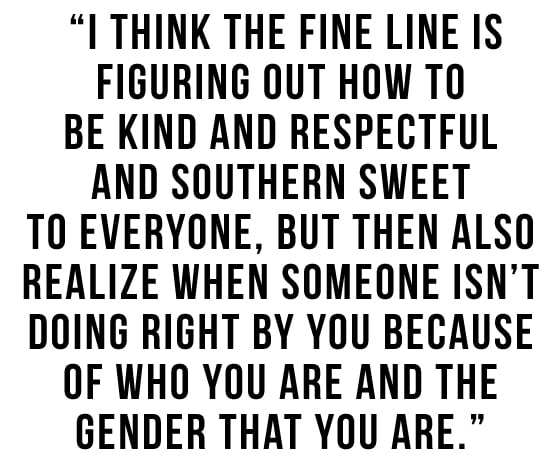
Laura: Oh yes, especially in small towns. I think, for us, it’s a delicate balance, because we come from a very Christian environment, and we come from a very family-oriented Southern environment, and we love and revere it so much, but I think the fine line is figuring out how to be kind and respectful and Southern sweet to everyone, but then also realize when someone isn’t doing right by you because of who you are and the gender that you are. Also, I think that Lydia and I have had to figure out that it’s okay to be sweet and Southern and submissive when it’s necessary, but there are moments when you don’t need to be, and you need to stand up for yourself or you’re going to get plowed over.

It reminds me of another Southern stereotype: the firecracker.

Laura: I wish I could be 50 percent firecracker and 50 percent Southern belle, and I wish I could know exactly when to pull out each.

If you ever find out, let us know.

Laura: It’s so funny that you mentioned firecracker because our grandmother is on the cover of our new record. That’s our paternal grandmother who is now 86. She’s the definition of a firecracker. Hopefully we have a little bit of balance on that record.

What were you trying to invoke after your first two album covers?

Lydia: We were kind of, honestly, tired of putting our faces on the covers. We love our first couple of album covers, but we wanted to put something — like you said — gritty and meaningful, and she’s this really incredible woman who is kind of argumentative, but also kind of sweet and, honestly, everything that we aspire to be. We love that picture because it looks like she just came from a street fight.

Laura: She had just gotten her hair permed for the first time in that picture, but she looks like she had just come from a women’s rally.

I was struck by this sense of sacrifice that keeps coming up throughout the album. You love your music, clearly, but it requires you to give up something you hold dear. So what’s your relationship with music now?

Laura: If I’m being completely honest, it’s a love/hate relationship, a lot of the time. I think I get frustrated sometimes just how incredibly hard you have to work to try and get your music out there and respected, and it seems like a continual battle. You may make a little progress, but then you realize, “Oh, but I’ve still got a really long way to go.” I’m 31 now, and, Lydia, how old are you?

Lydia: I’m 28.

Laura: We had a different trajectory for ourselves, and our timeline hasn’t gone exactly like we thought it would, and we’re in this really interesting phase right now where we’re just trying to figure out what it means to be a complete adult who has responsibilities and a marriage and family relationships and things that really matter, more than music even. My husband has a day job and he works really hard to provide for us, and sometimes — and he doesn’t project it on to me, I project it on to myself — I feel like, “Oh, here I am just chasing a dream.” It’s not the same as working an 8-to-5 job. Because I expected a different life for myself, I’m still adjusting to what it means to continually chase that dream of making great records that I’m really proud of. I’ve had to realize that there’s no end goal; it’s just keep making good records and keep playing great shows, and hopefully be able to pay your bills, and really that’s all you can ask for, and even that feels a little bit extravagant.

Lydia: I’m of the same mindset. I think Laura and I had these expectations, in the beginning, because things were handed to us, and I think we expected things to be on a different level than they are now. We’re having to adjust to the reality that it didn’t go that way, and we have to embrace being musicians wholeheartedly and enjoy the ride, as cliché as that sounds. It’s definitely a sacrifice every single day. It’s working all the time for that hour-and-a-half onstage.

It sometimes can feel like a curse — maybe that’s not the best word — but creative individuals always struggle, even when things are going well.

Lydia: You have to embrace every part of the business. You have to be able to write your songs, and handle your business, and handle your money, and you have to be an entrepreneur. It’s a lot to adjust to in a short amount of time. It was so different eight years ago, when we started.

I can’t even imagine. I know many musicians who have quit because they love the music but they hate the business.

Laura: That’s a constant temptation. Even when things are going extremely well and you have a really great timeline of a record release or a tour, it’s still hard because you think of how many hours you’ve put into it, and if I were putting this many hours into a job at McDonald’s, I would make infinitely more money than I do as a musician. Again, if the money is what you’re in it for, you’re going to be so disappointed. You’re going to have months and years where it’s unbelievable, and you’re going to have months and years where you literally have to ask your parents for help with the mortgage. I’m an example of that. Then again, if you love it, it’s part of who you are.

Lydia: Sorry, we just got really honest.

When you say “it’s part of who you are,” a creative life often means your identity is fused with your work.

Lydia: It’s like showing your diary to someone.

Laura: I think that’s why, when we went through the bad spell, it did such a number on our self-esteem and our confidence and our abilities, because we identity as Secret Sisters. It’s who I am, it’s what I do, people know that it matters to me. When all of a sudden that completely falls apart, and people are asking you, “When are you going to make another record?” and you want to tell them, “I literally can’t afford to pay my bills right now. I can’t even think about making a record.” We’ve had to learn not to place so much of our identity in what we do.

That’s smart.

Laura: You live and die by it. If it goes south, your self-esteem goes with it. So, try not to let that happen in the future.


Photo credit: Stephen Jenkins

The Producers: Colin Linden

Colin Linden is a musician’s musician, a player who pretty much does it all. At 11, he was hanging with Howlin’ Wolf. At 13, he was learning to fingerpick at the knee of David Wilcox. By the time he was in his mid-20s, he was working with members of the Band. Having recorded several albums as a solo artist and with his band — Blackie and the Rodeo Kings — played myriad sessions for T Bone Burnett, and produced albums for the likes of Lindi Ortega and Bruce Cockburn, Linden has a lot to say about making records, for himself and with others.

You came up playing the blues. You’ve been a sideman for everyone from Robert Plant to John Oates. You’ve made your own records, you’ve made records with the Rodeo Kings. Where on that spectrum did you decide it would be a good idea to become a producer?

Well, I always loved making records. From the very beginning — in addition to being somebody up there singing and playing guitar and picking up songs — I always dreamed about making records. I always found that records were fascinating, even from the labels. When I was a little kid, it was kind of a parlor trick that I would blab off all the credits from the records. You know, like, “Mother’s Little Helper” was three minutes and 49 seconds; it was on London; it was produced by Andrew Loog Oldham … all that. That was kind of a parlor trick for my brothers to parade around when I was five.

You too, huh? [Laughs]

Records were always a really big deal for me. There was a magic in it. I didn’t live in a place, as a little kid, where there were people sitting around playing guitars or sitting around the piano singing songs or any of that. Our world was records.

And, not that there’s anything wrong with the way that we listen to music today, but there was a certain aesthetic in the way that you listened to recordings in those days. You went to the stereo in the living room or your bedroom and you sat next to it. You had that piece of artwork and all that information in your hands. It was an entirely different world than it is today.

It was absolutely a glorious experience to put on a record, to listen to a song you loved, and to be able to put it on again and listen to it over and over. It was an absolutely glorious experience. It was the key to another world that you knew existed out there somewhere. It was absolutely real. In some ways, it felt like it was more real than your own life. For me, records were really a big part of it. So I always wanted to make records.

In terms of actually thinking about producing records, I kind of evolved into doing it because I loved being in the studio so much. I began to get calls from friends of mine in the blues scene, especially in Toronto. They would say, "Man, every time I go into the studio, the engineer makes me turn my amp down and turn my reverb off and it’s rotten. But when you come in with me, you always seem to have a good time when you go in." That’s how it started. There were a few people early on who were really encouraging to me and who I got to work with in some cases.

The first guy who ever recorded me in a professional environment was Daniel Lanois. He had already moved out of his mom’s basement, which was where he and his brother had started their studio. They bought a house in Hamilton called Grant Avenue and, when I was 18, I had my first experience as a session player. I loved working with Dan. I loved his whole aesthetic. There was something about it — it was not a clinical approach, even though it was before Dan had started doing a lot of the things that he later mined in terms of recording in unique environments. It was something that I could really relate to, and it made me feel very comfortable and excited about the process.

There’s a certain similarity to your producing approaches, at least to my ears. Is that accurate? Does he have some influence on the way you approach things?

Absolutely! I love his music. I love his production and I love what he does. I’m real good friends with T Bone Burnett — for over 24 years now. He’s my mentor. Every time I get to play on a record for him, it’s like I get a lesson in production. There’s so much that I learned from him. And I love him as an artist, too. I think so many of the artists who’ve had an influence on me, especially in the last 20 years, have been people who come about it from a record-making point of view — be it Willie Dixon or Allen Toussaint or Cowboy Jack Clement. And then, of course, T Bone and Dan. I think they’re real masters.

You just name dropped three of the best there are! [Laughs]

Yeah, I think so, and I think that they’re great artists, as performers, as well — all of them, all of the ones I just mentioned. You can add more — Johnny Otis, Smokey Robinson — these guys understand music from in front of it, from behind, from the sides, from above, from below. There’s an element that you get, I think, when you work with people in a production capacity, or even a collaborative capacity of any kind, that allows you to have a different viewpoint of how a song works and how a piece of music works.

Smokey’s an interesting one to bring up. Can you talk specifically about him as he relates to your music? That’s interesting to me.

For me, he always reached down and got some real truth as a songwriter from the simplest ways of saying something. I think, on the records that he produced for Motown, there was a certain kind of timeless soul. Especially in the mid-'60s period. All of those guys — Holland/Dozier/Holland, Berry Gordy — all of them. But there was something about Smokey that seemed to touch a more soulful nerve for me.

The most recent record on your resumé other than your own is Lindi Ortega’s Faded Gloryville. That’s an interesting record. Three different producers, three distinct sounds. Tell me about your part in that.

For me, I didn’t really think, "Okay, what am I doing differently than the other guys that are going to be on it?" … although I enjoyed the idea. I thought it was kind of a nice, modern template to have one guy do a few songs and another guy do a few songs. I have a great deal of respect and affection for Dave Cobb’s work. I don’t know him that well, but he seems like a fantastic guy. I really like him a lot. Same with John Paul White. I’ve only played with him a couple times, but we get along really well. So I kind of felt like we had something different to offer, but we all kind of enjoyed some of the same food groups. So I was really pleased that we all got to work on the record that way.

So much of my approach with Lindi is connected to guitar playing. I know that she likes certain types of sounds. So I get on guitar and she is encouraging and gives me free rein to come up with guitar tones and approaches, and that I can kind of just be her guitar player. That’s where some of it starts. She goes for real simple approaches. She doesn’t want to make something too quirky, or too unnecessarily complex, which is something that I can relate to. When she gets behind a microphone, she stands and delivers, too. I produced an album for her a couple years ago called Cigarettes & Truckstops, and I really enjoyed working with her. We hit it off really well personally. We did that record very quickly, like we did these tracks quickly. It was like, "Okay, let’s go make a record. Let’s go out and make a record." It wasn’t like we had meetings about other meetings, leading us to other meetings and then, in six months, try out all the ideas and maybe have a meeting about it. It was very straightforward. We were going to go in and make a record. We were going to work with three different producers and these were the songs we wanted to work on. Let’s do it!

There’s a certain thread between you guys that makes the record come off really well.

I’m glad that you feel that. It really felt like that for me, too. I actually had never intentionally done a project like that. But now I’m encouraging other artists to take that approach. These days, the nature of making albums is different than it was — just the way people are getting songs. I still think the world is a better place for thinking of a body of music that lasts for 40 minutes instead of three or four minutes. I think that listening to somebody’s music that comes from a certain period of time, and has a cumulative effect, is a really powerful thing. I believe in the medium of an album of one sort or another. But I do really like the idea that some people can help paint a bigger picture by looking at a smaller amount of work. I really enjoyed the experience of doing that.

You’ve been doing this long enough that you must have a few cool, fun, weird, unusual stories. You can change the names to protect the innocent, but have you got anything? [Laughs]

Well, it’s a little easier for me to say, "Hey, what was this record like?" And then I can remember it. The things that are unpleasant are really weird. I try to forget, and I’m actually becoming better at doing that. From somebody saying, "You better turn up the piano or I’m going to stop liking this song and I’ll make sure it doesn’t come out" … it’s like, don’t shoot yourself in the foot!

Let’s talk, then, about the process of your new record Rich in Love. What was the process from start to finish? Did you have 10 or 12 meetings with yourself about that? 

It’s such a funny thing with that record because it was grown right here in our house. Basically, it’s the result of the deep friendship and personal relationship that both my wife and I have with John Dymond and Gary Craig. Gary has been playing drums with me for 31 years and Johnny’s been playing bass with me for 25. Those guys are my closest friends. For 18 of those years, we played with the greatest musician any of us have played with: Richard Bell. The record is such a reflection of our relationship together — it’s a real co-production.

We did the majority of the recording right here in the house. We did one day at House of Blues, which was very nice. Gary Bell let us come in to do some reconnaissance recording and I didn’t even know if it was going to be on the record, until the record was 85 percent finished. There were songs that I didn’t know were going to make the final cut but they did, and really made the record better, I think.

We spent one day at Sound Emporium B here in Nashville, a place I love to work at, to do some overdubs. Charlie Musselwhite’s stuff was recorded at the studio in Clarksville and Amy Helm’s stuff was recorded at Levon’s studio. Aside from that, everything we did, we did right here at the house. I was working on the Nashville TV show and I had a shoot.

So, Johnny and Gary came to the house and we said, "Let’s do some recording." The worst that could happen was we’d see where the songs were at. The most that would happen was maybe some of what we do will end up being on the record. So, I was working on the Nashville show and I had a shoot to go to. I came back from the shoot four hours later, and my wife, Janice Powers — who wrote three of the songs on the record with me — and Johnny had put up a bunch of curtains in the studio and they had moved the couch out and Gary had set up his drums there. They had taken the couch cushions and placed them in wildly precarious and very interesting and unexpected positions. So I came back to the house, and the studio was completely changed. And it sounded great! That’s really how it started. We kept it that way and, in between the food and the wine, we ended up getting a lot of work done. We did that in a few different blocks. They would come down every couple weeks and we would just chip away at it. The record is such a reflection of our relationship with them.

I would say, then, that your relationship with them — if I were to base it on hearing that record — is a very lush, elegant, and thoughtful relationship.

Well, good! I’d be honored, if that’s the case. I think that "lush" might be thought of in more than one usage of the word.

[Laughs] Well, you did mention wine!

We did drink a lot of wine in the making of the record.

“Knob & Tube” is one of my favorites from your record. I love the lyrics, I love the turn of phrase, I love the groove.

I’m so glad. That one was really grown right at the kitchen table. I had the title for it. The song was built so much like the rest of the record was built: There was a ukulele on the kitchen table. One of the things I do is impersonate an 11-year-old girl playing the ukulele.

There are two little girls who are unbelievably talented, also from Canada: Lennon and Maisy Stella, who play ukulele on the show. On the recordings, I usually end up playing the ukulele and she will end up learning the parts. So, I had the ukulele on the kitchen table because I had to go give her a lesson or something like that. I gave Janice the title of the song. Gary, I think, was working on another session, but Johnny, Janice, and I were at the house. And I said, "We should write a song with this title" and, 45 minutes later, she came down with bunch of lyrics to the first verse or two. We all started chipping in, throwing in lines, and I had the ukulele here. Immediately, I picked it up and the motif of the music came up. So it was really written right around our kitchen table, and we recorded it within 24 hours of when we wrote it. It was grown the way the record was grown.

Gary came back to the house and we set up a mic in the kitchen. It was a little too boomy for it to be good in the kitchen, so we went back in the studio, which was about six feet away. We recorded the song and, 45 minutes later, it was exactly what you hear. We added Amy [Helm] to it and a second piece of percussion. There’s sort of a subliminal electric guitar that I added, just using the room in the back, to give it some rumble. Aside from that, what you hear is exactly how we played it.

That’s why I enjoy these interviews so much. I love hearing about how things happen and the process behind it. Tell me about the process for “Luck of a Fool.” Was there a particular artist or record that influenced the sound of that song? It has that kind of reverb-drenched cowboy thing going on.

You know, it’s funny. I didn’t really even think of it that way, so much. I guess I had a few of the lyrics ready for it. I think I wrote that one in the middle of the night when I was having insomnia in Fredericton, New Brunswick. I was stranded there in a snowstorm after Blackie had played there and I couldn’t get back to Nashville for another day. I sat down and that idea just came to me. For me, it wasn’t so much of a cowboy thing as it was a gospel music thing. I always loved it when, before the bridge or chorus of a song, you moved up an inversion. Even if the chords didn’t change that much, just if the melody moved up. That was something I really liked, and something I was thinking of regarding that song. We did the actual recording of it here in the little room. It sounded good with more of the mics open, it sounded like it was bigger. I wasn’t sure exactly how we should take it, in terms of producing it. When we had Reese Wynans on it, Reese said, "Man, I think it’s cool as shit that you don’t have anything else but guitar, bass, and drums. I can play a tiny little organ part and that will be it." I thought, "You know what? Reese is a pretty smart guy. Let’s do that."

It’s cool when you’re in that kind of setting, and there’s the respect of great musicians, beautiful ideas come out of it. It’s really quite brilliant.

I think that’s just the nature of it. When you’re working with people that you’re already friendly with, it’s easier for that to happen. But I have to say, you get more and more confidence in that being the way it is when you work with somebody like T Bone. T Bone is so incredibly supportive of people’s ideas and of letting people be who they are. He makes you feel, when you’re on a session, that even if there’s someone better than you, you’re the one who he wanted to be in the room with him on that day. That kind of confidence, that whatever your contribution is and whatever is inherent about who you are, is what you’ve got to bring to it. It’s not that he’s haphazard about it either. He’s the kind of guy who will let something get to a certain point, and he’ll be sitting in the back of the room, encouraging its development. Then he’ll move up to the desk and start playing with things. Then, 30 seconds later, everything will sound different and better. He’s absolutely brilliant that way. He lets it develop by having confidence in the strength and having faith in the character of the people that he’s chosen to be there. It always serves the spirit of the music. I think that’s what he holds in the highest regard.


Photo by Laura Godwin

The Producers: Dave Cobb

Dave Cobb is the man with the Midas touch. Since the Savannah-born guitarist/producer started working his magic in the studio more than 10 years ago, he’s produced some of the very best Americana records of the decade, including Sturgill Simpson’s High Top Mountain and Metamodern Sounds in Country Music, Chris Stapleton’s Traveller, and both of the brilliant solo recordings from America’s best songwriter, Jason Isbell. Cobb took time out from a session at his home studio in Nashville to speak with the BGS for the first in our series of interviews with producers about making records.

Dave Cobb: What’s happening?

Michael Verity: Not much. I have you down on my calendar for a chat.

Yeah, I remember, man. I’m a big fan of the Bluegrass Situation. You guys do some awesome shit.

Aw, thank you, man. We feel the same way about you!

You guys are one of the only real publications out there. It’s awesome, man.

Thank you! That’s always nice to hear. So, ever since I was a pup and I looked at the back of my first record album, which which was Bridge Over Troubled Water 

… oh, wow.

… and saw "Produced by Roy Halee" …

… one of my heroes …

… I’ve been fascinated by record producers. And then I read that Bridge Over Troubled Water was a template of sorts for Jason Isbell’s Southeastern.

Absolutely. I’m a huge fan of Roy. He’s kind of it for me. And yeah, about Southeastern: We met about two weeks before we recorded and it was hilarious because all I did was talk to him for a second then go, "Let me play you a record." And I played “The Only Living Boy in New York.”

That’s one of my favorite songs of all time. I think it’s one of the most brilliant productions ever. I pointed out that when you think of Simon and Garfunkel, you think of acoustic guitar. You never think of a band or of production. But, if you listen to that record, it’s so badass. They’re singing in cathedrals, there are loops going on. The kitchen sink’s on that record — harpsichords and bells — but it still feels like an acoustic record. And that was the template for Southeastern … to make a record that feels acoustic but not be purely acoustic. It’s awesome that you pointed that record out because it was absolutely the template. [Laughs] Even though Southeastern sounds nothing like it.

Sonically, Bridge Over Troubled Water really summarized much of what was created by the Byrds, the Beatles, and the Beach Boys, and then took it to the next logical step. And opened the door for the kind of productions Gus Dudgeon did with Elton John, for example.

Absolutely. I love those records, too. Tumbleweed Connection is one of my favorite records of all time, as well. You’re absolutely right. Man, you know your stuff.

In my opinion, “Cover Me Up” is one of the best Americana songs to have been recorded in the last 20 years.

Oh, wow.

If I were to put it under a microscope, how many of your fingerprints would I find on that song, do you think?

I had read about the recording of “Mrs. Robinson.” They said the guys recorded that song minus the band and then, after they got the track, they added the band — the Wrecking Crew guys — and that’s why the song feels so good … and moves. So I thought, "I don’t want to influence Jason at all. I don’t want anybody influencing his timing. I don’t want anybody influencing his ebbs and flows, his getting loud and getting quiet."

We were recording at this little tiny studio in the back of my house and it’s a little bit small, a little bit confined. We wanted him to be able to stretch out. So we ran lines into the house and put him in the kitchen, where’s he’s looking out over Nashville. There's nobody else around; he’s in the house completely alone and we’re down in the studio, listening.

So we had him record the song — as well as two or three other songs on that record — completely by himself, acoustic. After we got the track, we added the slide and the Mellotron and the bridge, things like that. 

It’s very simple and it’s supposed to be simple. I think, normally, when people try to record that kind of thing, they get everybody together, and they have a click track. They’re trying to get a really great take and then comp it to go. “Cover Me Up” is a pure performance, a one-take track with just a little bit of sweetening, which was my contribution.

With a Mellotron. Which was an Elton John instrument, right?

I think a lot of people used it. The Beatles used it. The Bee Gees. Back in the day, if you couldn’t afford strings, you got a Mellotron. I think it’s a wonderful instrument and a great way to create some atmosphere. We keep coming back to the same record, but on Bridge Over Troubled Water, there are strings and all kinds of stuff — like the Mellotron. It's an affordable way to get ahold of a glockenspiel or a marimba or whatever crazy instruments you can think of.

The funny thing about “Mrs. Robinson,” as you tell the story about adding the band afterward, is that Paul Simon supposedly didn’t even know they did that. He had gone off to Europe and, when he landed back in New York, he heard it on the radio and was like, "What the hell?"

He probably smiled all the way to the bank on that one.

Not to overstate the whole Bridge Over Troubled Water thing, but on the new Jason record, you can kind of draw some dotted lines between the two albums … the reverb on the drums on “Children of Children,” for example.

Oh, for sure. It’s old chambers — like the echo chamber at Sound Emporium, the studio that Cowboy Jack Clement built back in the '60s. It’s a really beautiful sound; you really can’t fake that. On “Bridge Over Troubled Water,” they were using an elevator shaft.

I know, right? Isn’t that cool? I was looking at the video about the making of [Isbell’s] “24 Frames.” Was your input as we saw it in that video indicative of how you work with musicians?

Yeah. When I go into the studio, I’m kind of the "fifth member." I like to be in the room with the artist and have an instrument on, whether I play on the record or not. It’s a tool to speak the language, to suggest melodic ideas, and push and influence the tempo and the like.

There’s a guy, Jimmy Miller, one of my favorite producers ever, who produced the best Stones stuff — from Let It Bleed to Exile [On Main Street]. The Stones really found their swagger with him. He’d get out there and play percussion or drums or whatever it took to get the groove. I think I kind of do that, as well, whether I have an acoustic guitar on or play percussion or whatever. I try to guide like that, without using clicks.

And with Jason, he’s really open and always very cool. He always has the songs; the songs are done because he’s an unbelievable writer. But with the little themes, the beginnings and ends and bridges, he’s always welcoming to ideas. We always have fun.

“The Life You Chose” and “Hudson Commodore” are my favorites on that album. The things I love about “The Life You Chose” are the idea of being “lucky” by losing three fingers — what delicious irony. And, right as he sings that line, there’s a cello that sneaks into the mix. It just floored me. I thought, “Dude, that is IT.”

Thanks, man. He always let’s me mess around and I love orchestrating. That’s the Mellotron again. That’s not even a real cello. The Mellotron lets me conduct a symphony in my own little studio.

Lindi Ortega did something cool — she recorded a little in Muscle Shoals, did a few tunes with another one of my favorite producers of all time, Colin Linden, and then tracked three of cuts with you. And it’s easy to tell which ones are yours. Just rock 'n' roll, baby. Did you have fun with that?

I love Lindi. I did her previous record, and I think she is such an amazing talent. Every time we work together, those vocals are live. Her songs are pure performance and we were just trying to capture lightning in a bottle. She’s so exuberant and alive and fun to work with … dancing while she sings, jumping around. I think you feel that on tape.

My other favorite you’ve done is Chris Stapleton’s Traveller which is a whole lot different than Lindi and Jason. To me, it has a much more glossy, rock 'n' roll sound. Should I trust my ears on that one?

Yeah. The guy who who engineered and mixed it was Vance Powell, a tremendous talent who did all the Third Man stuff, like Jack White’s records. We wanted a real simple, pure thing; that was driven by Chris. I love strings and stuff like that, but Chris was like, “Nah, no keyboards.” I think there’s like one hit of piano somewhere on the record.

But the way we did it was a really good idea. That guy's such an insane singer so we didn't want to let anything get in the way of the vocal. And he’s a phenomenal acoustic guitar player so we tracked it with him, a bass guitar, and drums, me on acoustic guitar, and his wife on harmonies. That’s pretty much what you hear, other than a few solo overdubs.

We had the privilege on working in RCA Studio A for much of that record and we had a blast. We’d show up at noon and goof around and talk and maybe order some food, talk over some drinks. We didn’t track until maybe 8 o’clock at night but, when we did, we’d get two or three masters. That’s what you hear on the record. It was such a fun session and a real lesson in recording when you’re inspired — not recording because you have a deadline. The label was great. They really let us stretch out. They were really supportive about it all, about having everybody in a good mood.

We talked a little about Jimmy Miller. Now let’s talk about Glyn Johns.

Glyn is my favorite engineer of all time. One of my favorite producers. His records were so hi-fi and beautiful. I think he made a great record with Ryan Adams with Ashes and Fire. I hear that record it makes me want to give up. I think I’m kind of a fake engineer. I work on the records, but I’m more of a songwriter kind of producer. His albums sound like music to me: guitar amps sound like guitar amps, singers sound like they're singing to you. I’m heavily influenced by him, especially by his rock 'n' roll records.

A good place to ask this question: Do you play with Europe? As in “The Final Countdown” Europe?

No, I don’t play with them. I produced their last album. I don’t play in the band Europe, no. [Laughs]

I was a little confused by that one.

Every once in awhile, I’ll jump on stage and play with them. When I was a kid, I used to play along with that stuff. Everybody did in the '80s.

The way that happened was, I produced this band called Rival Sons — they’re more of a traditional rock band. They do really well overseas, and the guys from Europe heard the record and called me about a year-and-a-half ago, asking me about working together. They called me thinking I’d be too cool to work with them, but I was really excited about it. I went over to Stockholm and we made a record that was awesome. It sounds like Black Sabbath or something. It was a lot of fun. We’re going to make another record again. They’re really good guys.

Has production always been in the back of your mind, even while you were in your own band … well before you did your first record with Shooter Jennings 10 years ago and started making a name for yourself?

I always wanted to be in a band and get a record deal and do it as a career. And my band did get signed and did a lot of heavy touring. But we signed a bad deal and got stuck, and if I recorded anything new with the band, it would go directly to the label that we hated. So that’s when I started taking production seriously. I’d met my wife by this time and I was ready to stop touring. I enjoyed playing shows and enjoyed recording records but I hated the road.

And I think when I was in bands, I used to drive everybody crazy trying to tell them what to play. Maybe I was douchier back then and production was a logical thing to do — start being a producer so people would actually start listening to you.

You've found your natural space.

Being a producer is like getting to be in a different band all the time. It’s a lot of fun. When you first join a band, it’s the most romantic thing. Then, after two or three years, you start hating each other. Being a producer, I get the first date kind of feeling all the time.