Tedeschi Trucks Band Have Done It Again

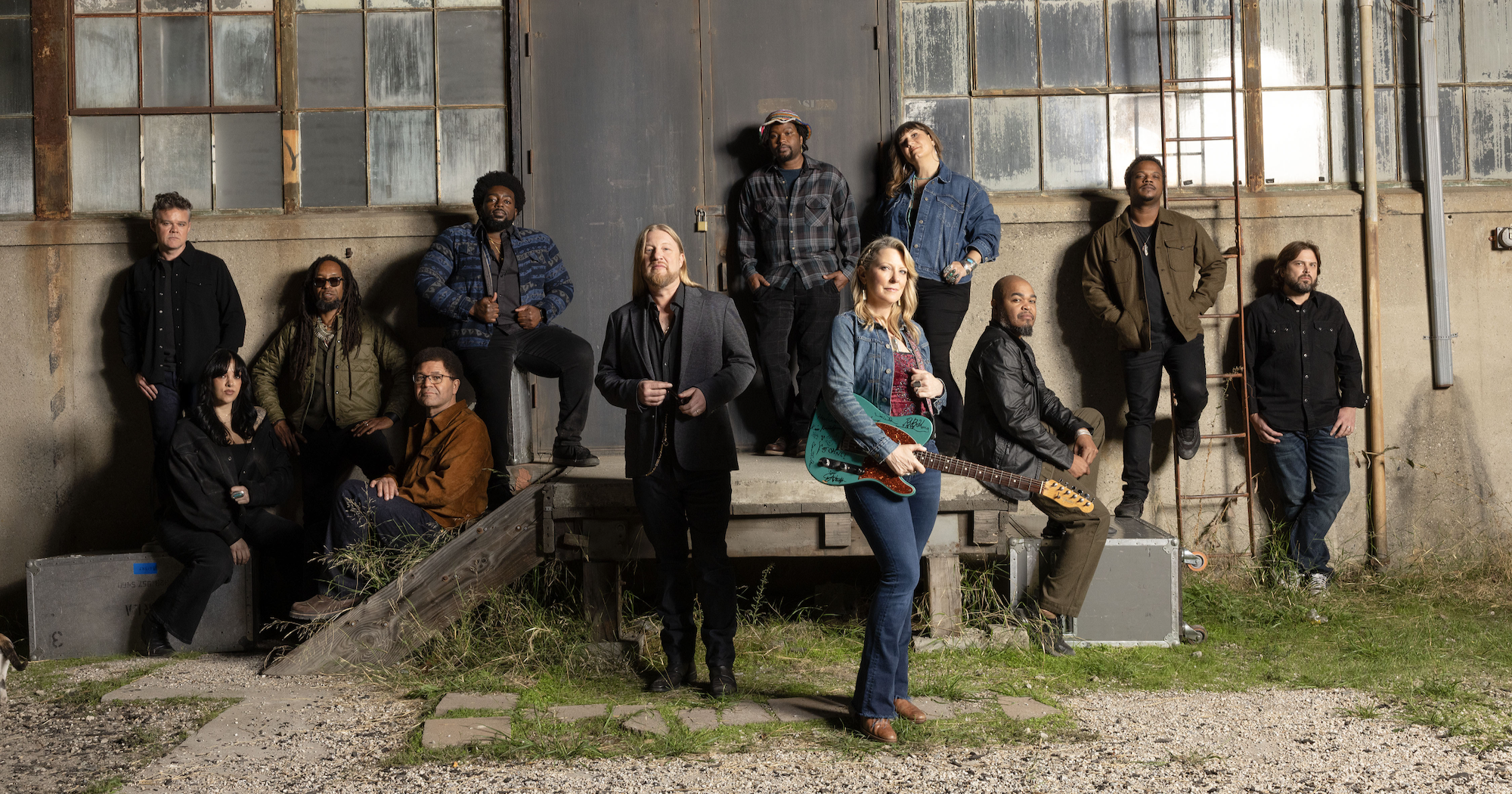
When it comes to entirely enjoyable, technically exquisite modern blues, Southern rock, and jam-band soul albums, Tedeschi Trucks Band have a statistically impossible batting average. Their new LP, Future Soul (released March 20 via Fantasy Records), is yet another “no skips” collection from the megalithic 12-person Americana group fronted by husband-and-wife guitarist Derek Trucks and guitarist-vocalist Susan Tedeschi.

On that strength of their catalog – and their ensemble – TTB have amassed hundreds of millions of streams, won eight Blues Music Awards and one GRAMMY, and a handful of their songs have become regarded as modern standards in the Americana and American roots music songbook.

Future Soul simultaneously feels like a surprising departure and familiar, essential territory for the band. With Mike Elizondo producing and songs and creative input sourced from across the group’s lineup, the set ends up sounding and feeling more acoustic than “usual,” while still reaching roaring crescendos and building it all on dank, wide open grooves. Perhaps those acoustic moments are a substantial contributing factor as well, but the cozy, plush pocket of the album is what gives it a laid-back, relaxed, and floating vibe no matter the track’s genre construction.

Screaming slide, no-holds-barred vocals, and wall-of-sound climaxes can all be found herein, as well. But the collection never thrashes or flails, it’s precise and exacting – as Tedeschi and Trucks are both known to be on their instruments, whether guitar or voice – but it’s certainly not sterile or gated or homogenized, either. It’s another remarkable feat for a group so large that you would almost have to assume, live or in studio, musical mud would be an inevitable byproduct.

But no, TTB seem to have no misses, at least not on Future Soul. It’s clear this group works together in harmony not just because of the down-to-earth and collaborative leadership of Tedeschi and Trucks, but because the artistic and musical responsibilities and ownership – of the songs themselves, of the album, of the makings of each, of “success” for the band – are decentralized and distributed throughout the group. The band has a sound, an art, that is consistently collective in the way it’s received by audiences and listeners because, forgive the obviousness, Tedeschi Trucks Band always work as a collective.

In our BGS conversation with Derek Trucks, the magic and unlikelihood of this creative dynamic and the processes by which the band continues to rack up success after success were on full display. We spoke about how they put together Future Soul as a group effort, the many inputs that went into Trucks fashioning his lyrical guitar style, and what bluegrass means to him personally, to Tedeschi, and the band as a whole. It was a joy-filled, passion-led conversation that again reinforced how this wailin’, rockin’, rollin’ band continues to flout and subvert expectations – and thereby has become so beloved.

Something that jumped out at me from the bio about the new album is that you say, “There’s just not a weak spot on this record.” I have to say, I totally agree. I think it’s remarkable that with a 12-person band and such a diverse catalog of recordings and releases, it really doesn’t seem like there’s any “fat” to trim or any duds to cull.

I have to ask, does it feel as magical on the inside of that process as it seems from the outside? It seems unlikely that y’all would work so well together towards a common goal, artistically, and be able to deliver again and again and again. And I don’t just mean commercially, awards-wise, or for audiences alone. Clearly you’re delivering artistically for yourselves and by your own standards, as well. So, does it feel as unlikely on the inside of that process as it maybe does to us on the outside looking in? [Both laugh]

Derek Trucks: That’s awesome. But it does, man! I mean, not every record you do feels the same way. They’re all their own beasts. For I Am The Moon, it was in a time of great uncertainty. We did four records and it was just kind of a heavy, heavy time – and that record feels like that.

This one felt completely different. The band felt much more confident [and] had been touring for two years straight. We had been playing so much together that when we finally got the core of the group up to our farm in Georgia to do some writing, there were a few songs right out of the gate. Like “Future Soul” and “Who Am I,” where immediately, Sue started singing, Gabe [Dixon] started singing these melodies. I got chills and I was like, “Oh, this is gonna be good.”

You’re always kind of worried about running out of ideas, or running out of runway – like a thing in the back of your head. But I feel like we’re incredibly fortunate where, when we’re together, everyone puts everything they have into it. Then, when we’re not on the road together, everyone’s all doing their own things musically. So, when we come back together, there’s a lot to talk about and a lot of music to remember together.

I think it keeps it really fresh and it keeps it moving forward. I feel like everyone’s out honing their craft when they’re away from this. When they come back, there’s a lot of new ground to cover. So far, we’ve been really, really lucky that way. And there’s a handful of just incredible songwriters in the band, so everybody comes in with two or three ideas. You’ve got a pretty strong record right out of the gate. That’s been something that I think me and Sue are just realizing – we’ve known how amazing that is but, you know, Gabe and Mike [Mattison], they show up with some serious ideas.

Then having Mike [Elizondo, the album’s producer] down, just some outside ears – I think that was really important. Sonically, he was trying some different things that I think inspired the band and made everybody play a little differently. That was exciting.

I was struck by the range of styles and the different genre infusions that y’all have put into this collection. What really stuck out to me, listening down to the project in one fell swoop, is there are still those really big energetic moments – and there are still those “wall of sound” moments that y’all are really known for. But I felt like this album is chill and laid-back in a way; it feels deep in the pocket. Can you talk about capturing those seemingly disconnected energies together?

I think one of the things is that with a band or an artist, I think if you’re maturing properly – we learn sometimes slowly – that you don’t have to force the issue all the time. You can trust things around you a little bit more, and sometimes the groove is enough. Sometimes the chord changes are enough, sometimes the melodies are enough. It doesn’t have to be these epic moments at all times. So when they do come, you’re excited about it and wrings you out. Then you lay them back down, and then you go on another little trip.

I think the band, having played together so much, we’re in a different place that way, where we realize that you don’t have to force the issue on every song. You can go to different spaces, different places. And then, again, having some outside ears – Elizondo really helps with that, too. He helps guide you to places that maybe you wouldn’t have gone naturally, so that’s a fun thing. Then you learn things about yourself musically in the band that you didn’t know before. That’s always a good place to be.

One thing that I’ve been obsessed with about your playing, specifically, ever since I discovered you as a teenager, is how lyrical of a guitar player you are. It jumped out at me from the bio, as well, when you’re talking about “I Got You” and how you’re doing a guitar-voice dialogue instead of guitar-guitar. I think of you as one of the most lyrical guitarists out there. You’re so present and so grounded. So I’ve always wanted to ask you how you’ve cultivated that style – as well as being able to have those moments of pure shreddy, lick-y wailing.

Then hearing that you really wanted to make that connection between voice and guitar on this album made so much sense to me, because I’m always thinking about how you’re a lyrical player. And Susan is, too, and you both dialogue with your instruments, and her voice, often.

Pretty early on I had a few musical epiphanies. One was Allen Woody, who played with Gov’t Mule and the Allman Brothers. When we toured with my solo band, opening for a Gov’t Mule in the early days, he would always turn me on to records. He gave me this CD by this guy named Aubrey Ghent, who was a gospel [steel] player. I put on “Amazing Grace” and I was like, “Wow, what an amazing voice.” And then I heard the pick and I realized that it was this guy playing lap steel! But it sounded like a woman singing. I got chills [over] my whole body, and I was like, “That’s it, that’s the thing.”

I had been listening to a lot of Indian classical music – a lot of vocalists and sarod players. Me and our old [Derek Trucks Band] bass player, Todd Smallie, went to Ali Akbar College of Music in San Rafael, [California] and they would let us sit in on classes. I realized he [Ali Akbar Khan] made all the instrumentalists take vocal classes, because his whole thing was that you should be singing through your instrument. So that made it just really obvious.

Those were a few of the things, and then there was a long time where I just stopped listening to any guitar player. It was only singers and horn players. That was kind of the idea [that] musical ideas can come from anywhere, but you really should be singing the thing. There’s time for all of it, but the stuff that moves me the most is, you know – even hearing Duane Allman on “Blue Sky” or something. It sounds like somebody’s singing, like somebody is walking down the road whistling. I think those are probably the touchstones for me.

Maybe I am projecting a little bit, because I’ve been a bluegrass banjo player my whole life – I started playing when I was seven. But when I think of guitarists, especially who end up reaching the pinnacle – whatever that is – or especially in flatpicking and in bluegrass, there tends to be this homogeneity of style. The people who get to the “very top” end up all sounding like each other. Then you have those folks that really stand out, and it tends to be because they’re using space and using air as much as they’re using 16th notes and 32nd notes. I think, being used to really shreddy flatpicking, that hearing steel or slide or blues guitar or jazz or acoustic jazz, anything plays with sustain and plays with space, I just drink it up.

Beautiful, man. I remember the first time I heard the Stanley Brothers, or Ralph Stanley, and I just remember it hit me in that place where those early blues guys hit me. There was just something about it. That kind of cracked that whole world open for me. I mean, I was always a Tony Rice fan. We have the same birthday, so I thought that was cool.

No way, I didn’t know that.

And I remember being at a MerleFest years ago, I think it was one of the last ones that Doc played. I remember seeing this old Oldsmobile or Cadillac – I don’t know, it seemed like an 1980s or ‘90s car – it pulled up to the stage and I see Tony Rice get out, just dressed to the nines. He pops the trunk, gets his guitar, hits the stage, and then right when that set was over, he was back in that car! I was over there thinking, “What a boss.” It was incredible, man. He went up and just annihilated everybody and got back in his car and drove his ass home. Pretty incredible.

So funny.

The last time we talked to you for the site, you were Artist of the Month in 2019 and you talked about Del McCoury and Jerry Douglas. I know you’ve played DelFest a bunch, you’ve collaborated with Billy Strings – oh, and I was super excited to see Molly Tuttle supporting on a couple dates of your TTB tour in April, too.

Yeah, we’re excited for that. That’s gonna be great.

What does bluegrass mean to you? Obviously, there’s Ralph Stanley, Tony Rice – there are pickers and makers in bluegrass that are infused into what you do, but what does the genre mean to you more broadly? And who in the space right now inspires you, or your musical vocabulary, or what you guys are doing in the band?

When I think of American music, I think of blues, I think of bluegrass, and I think of jazz. I think [those are] the things that we’ve really contributed to the world. To me, those are the cornerstones of it.

We’ve become good friends with Sturgill [Simpson] over the years, and he’s dipped into that [bluegrass] place. When I hear him sing it I’m like, “Oh yep, that’s because he’s from there.” He’s from the heart of it, and it makes me feel the way Ralph Stanley does at times. Even guys like Tyler Childers – and Sue’s a big Sierra Ferrell fan. She loves all those records.

That music, even the current guys, it’s always playing around here. I don’t know, it just feels inspiring to hear. People just get on an acoustic instrument and rip one. You’re like, “Oh yeah! There’s still people that know how to do things!” [Laughs]

That’s the big inspiration I take from it. Because [in the music industry] there’s a lot of cutting corners, and that’s a music that there’s no cutting corners. You gotta put your time in and take your licks or you’re just not gonna get on stage. I appreciate not just the dexterity, but the vocabulary and the heart that goes into it.

And there’s just something about seeing a group around one microphone just doing the dance that I think is always inspiring. We’ve done some shows recently with Sam Grisman, we did a benefit [for Camp Winnarainbow] out in San Francisco. Peter Rowan was on it, and me and Sue, and it was all acoustics. I had an old National, and just getting to play with that group – just the way that group felt. Sitting on a stool with a Dobro, and they were coming and going around the microphone. And then, getting to hang after the show with Peter Rowan and him telling these stories, man. It was just incredibly inspiring. Some of the songs that we got to play with them – that dude [David “Dawg” Grisman] has written some incredible music. That was one of the highlights of last year. It was pretty damn incredible.

There’s a lot of acoustics on this new album, too. I did find myself wondering, and maybe I’m biased, but does the world need a 12-piece bluegrass band? It might! It might! [Laughs]

Man, that sounds pretty fun to me. I mean, it would be a lot less gear to carry on the road! Which would make it more plausible.[Laughs]

If you wanted to speedrun pissing off a fan base, this might be the way to do it.

[Laughs] Yes, alright, we will be thinking about this! I’m gonna go talk to Sue.

This next one is kind of for me, so I thank you in advance for humoring me. But I wanted to talk to you about Jack Pearson. When I first moved to town, I just met this guy out jamming on mandolin at these bluegrass jams. I’d be like, “Man, this guy’s so nice.” He’s a great picker. He’s a great singer. I got a lot of practice playing swing with him at jams in town. Then folks started being like, “Hey, do you know who that is?” Oh my god, I did not know who it was. He was just my bluegrass jam pal. Then I worked at the Station Inn for a few years and I got to work a bunch of his trio shows. I’d die for the solo acoustic sets he’d do on the set break.

Incredible.

If I were to list maybe my top 5 favorite guitarists of all time, I feel like you and Jack would both be on that list. So I wanted to have a little nerdy moment to talk about Jack. [Laughs] Can you talk about his playing and your guys’ friendship? Of course, I see so many connections between your musical vocabularies and that lyrical style we were talking about.

Yeah, man I need to check up on him. It’s been a minute. I need to check in on old Jackie P.

He’s a monster, man. He’s one of the few people that can actually go play in a straight-ahead jazz band, in a bluegrass band, and then the Allman Brothers. I mean, maybe the only person that can actually do it.

I totally agree.

I mean, he played with Jimmy Smith. This dude is like, he’s an absolute monster. And a sweet fella! You can’t say enough good things. When I joined the Allman Brothers, Jack was just leaving. So all the tapes I got, like learning the new versions of the tunes, were Jack Pearson tapes. At the time, Bud Snyder was the sound man. He would mix these tapes for me with Jack really boosted in the mix. I could hear exactly what he was doing to learn these things. I got an intimate take on the way Jack was approaching these Allman tunes. It was so unique.

There’s no one [that] plays like him, and [his playing is] about as smooth as it gets. Sometimes, you watch him play – and I know he plays really light strings and he plays low action – and the way his hands move, I’ve never seen anyone play quite like that. Then he busts out a slide and you’re like, “Holy shit! This dude can do anything!” [Laughs]

I know!

He’s one of the unsung heroes. There’s no doubt about it.

He does this thing – and you do this as well – where you’re able to leverage that really gritty, aggressive, absolutely on-the-razor’s-edge style that comes with blues and Southern rock and Americana. Then at the same time, like you’re saying, with light strings and low action, still has such a deft touch. Yet he has such great attack and precision and cleanliness. He is a great lesson in taste. His taste is impeccable.

Yeah, I think that’s exactly it. I think we forget a lot of the time that most of what we love about music is the musician’s taste. I mean, you got to put in the work – and Jack has obviously done that, that dude is a master. But his taste is really as good as anybody.

I think he’s probably a bigger influence on me than I even realized. Probably because of that early Allman Brothers time for me. I was jumping in at 20 years old, 21 years old. And all of a sudden it’s, “Here’s 60 songs to learn, and rehearsal/tryout is in a few weeks. I was like, “Well, give me those dates.”

I’m stressed just hearing about that.

I mean, luckily most of that music I had listened to my whole life, but I had never bothered to learn any of them. I mean, I knew “One Way Out” and “Statesboro [Blues],” that doesn’t take long. It was all the other shit!


Photo Credit: Chapman Baehler

On ‘Smoke From the Chimney,’ Tony Joe White’s Storytelling Lives On

There’s some serious sleight of hand going on with Tony Joe White’s new album, Smoke From the Chimney. Well, sleight of sound, really.

Listening, you can easily picture the sessions: the musicians playing together with White, taking cues from him as they spin out a tableau of characters and scenes that flow as if they were chapters in a book. It’s the latest volume in a legacy of witty, gritty songs stretching back more than 50 years to “Polk Salad Annie,” “Willie and Laura Mae Jones,” and “Rainy Night in Georgia.”

And leading it all with a sly grin is the Swamp Fox himself, as he’s known, with his still-strong, speak-sing baritone voice echoing his origins in the tiny town of Goodwill, Louisiana — a barely-there dot on the map a bit east of Shreveport.

Only one thing.

These sessions were done in the summer of 2019, a year after White died of a heart attack at age 75. Producer Dan Auerbach built the record around basic vocal-and-guitar demos that White had made over a period of years before he died. The illusion, though, is by design.

“I approached it very much the same way I would have any other album we do here,” Auerbach says from his Easy Eye Sound studio in Nashville. “I hired a band and we played live. And instead of Tony being in the room, he was in the headphones with us. You are hearing performances.”

He pauses.

“I’ve had people in the room that were less ‘there’ than Tony Joe was!” he says, laughing heartily.

The results are vibrant, a lovingly made set bringing out the full richness of White’s signature storytelling, steeped in his singular brew of soul, blues, rock and backwoods boogie. It’s the kind of stuff that over the decades led to his songs being recorded by dozens, from Elvis Presley to Waylon Jennings to Dusty Springfield to Tina Turner, but which had something extra when sung by White himself.

It’s not the only bit of deception going on in the album. There’s the matter of some of the most moving, affecting songs in the set. Take “Over You,” a heartwarming-turned-heart-wrenching ballad of love and loss. White sings touchingly of a relationship that started as friends at 7 years old, later growing into romance and a wonderful life together — until the woman, his soulmate, became ill and died.

Only one thing. Again.

“That’s not true,” says Jody White, the son of Tony Joe and, if you would have it from the song, the woman who died.

“No,” he says in a separate interview from his Nashville home. “My mom is still alive.”
In fact, Tony Joe White and Leann White were married in 1964, raised three kids and were together until the day he died. “And they didn’t meet when they were 7,” Jody says. “There’s nothing true about ‘Over You.’”

It’s as big a whopper as the record-size widemouth bass that mercilessly taunts its would-be conqueror in “Bubba Jones,” another highlight of the new album. But even Jody, who at 46 has spent his whole life surrounded by his dad’s work and became his manager 20 years ago, could get sucked in to the depth of the song.

“That’s the great thing about Tony,” he says. “He’d write these songs and you’re like, ‘Oh man. Poor guy!’ Like he must have been going through it now.”

This is nothing new. There’s a lot of did-it-really-happen running though his vast, vaunted catalog. “There was a ‘Rainy Night in Georgia,’” Jody says, noting at least some truth behind the song his dad wrote, which was a big hit for soul singer Brook Benton in 1970. “But a lot of his best songs are just fictional tales. Sometimes you can’t differentiate. ‘Polk Salad Annie,’ is that a real girl or not? And ‘Over You’ is kind of the same thing.”

Smoke from the Chimney, in both the songs and sound, builds on a resurgence that started in the early 2000s when, after laying low some, White had resumed touring and recording, finding enthusiastic receptions among both older fans and new ones. Auerbach, now 41, was among the latter. “I was a little bit of a latecomer to his music,” Auerbach says. “But as soon as I heard his original version of ‘Rainy Night in Georgia,’ I was hooked.”

Having established himself both as half of the Black Keys and as an in-demand producer (his extensive credits include Yola, Valerie June, Ray LaMontagne, Lana Del Rey, the Gibson Brothers, and dozens more), Auerbach started pushing to produce a Tony Joe album years ago.

“Dan and I met probably 15 years ago,” Jody says. “And he said, ‘For the last 10 years I’ve been wanting to produce a Tony Joe White record.’ And it just didn’t happen. He only co-wrote with a few people, like Jamey Johnson. They would come out to the farm and sit by the fire with him. That sort of thing. He wasn’t going to go to a studio and collaborate with someone. It just wasn’t what he did.”

Even after Auerbach moved from Ohio to Nashville a while back, it still didn’t work out. “We did get a chance to meet, though,” Auerbach says. “We were on tour with the Black Keys and we were both on a festival in Australia. Hung out backstage. I played his Strat. We hung out and talked. Pretty awesome, actually.”

When Tony Joe White died, Jody’s job changed, he says, “from ‘What are we going to do next?’ to ‘What did he leave behind?’” What he found was daunting. “I discovered that there was probably more unreleased music than there was released music,” he says.

Sorting through the archives, Jody found hundreds of songs put down on tape over decades of time — experiments with electronic keyboards from the 1980s among them. Some will surprise even the most devoted fans. But he was drawn to several reels from a few years before his father’s death.

“There was really no rhyme or reason why he recorded all those songs in that period of time,” he says. “Some are old, some were new. It’s all over the place. But it was weird how they all lined up.”

In July 2019, he texted Auerbach the demo of the song “Smoke From the Chimney.” Auerbach loved it and asked for more. “I sent him probably 11 songs and he said, ‘They’re all perfect.’ My dad knew what he was doing when he recorded those songs together.”

The timing was perfect, too. Auerbach had an unexpected break in his normally crammed schedule, and about four weeks later he told Jody he had most of the songs finished. “I’ve never seen anything happen so fast,” Jody says.

Auerbach says it was simply a natural fit for him and his label, Easy Eye Sound, which is releasing the album. “He embodies everything I’ve tried to do, and everything Easy Eye is,” he says. “It’s steeped in what he was about — diversity and the love of music, of all kinds. He so obviously loved so much music. Diversity and soul. That’s what he had. Boy. Some people just got it, you know?”

It’s a mission for him.

“I’m figuring out the big part of the reason you find people who didn’t know about Tony Joe,” Auerbach says. “Tony Joe had no category, which made it hard for labels to market him. Calling him swamp-rock doesn’t do him justice. Country doesn’t do him justice. Calling him blues doesn’t do him justice. Which is maybe why we need to tell his story a little bit louder.”

That’s played out through the wide emotional and musical range of the nine songs he picked. From the wistful title track to the swamp-voodoo chooglin’ of “Boot Money” and the campfire-side “Scary Stories” to the border ballad “Del Rio You’re Making Me Cry.” The achingly evocative “Someone Is Crying” is arguably the album’s sentimental peak, with strings swelling over the story of a young girl walking into the sunset after seeing her village burn.

With the band he assembled, Auerbach threaded that diversity of material together, consciously connecting, or transcending, genres. There are slide guitars (some by him, some by Marcus King) and steel (Paul Franklin) — a little touch of George Harrison here (the title song), Duane Allman and Dickie Betts there (“Listen to Your Song”). There’s Ray Jacildo’s Hammond B3 organ, a foundation for a wealth of Southern traditions touched on throughout.

On that ensemble he hangs such touches as the background vocals by Mireya Ramos and Shae Fiol of the all-women mariachi ensemble Flor de Toloache and evocative fiddles by Ramos and veteran Stuart Duncan on “Del Rio You’re Making Me Cry;” the strings on “Someone Is Crying” are the work of Matt Combs. Ultimately, it’s all there to illustrate the stories White tells.

Speaking of… there’s the closing “Billy,” a farewell to a life of drifting and to a lifelong friend “just like a brother to me.”

That has to be real.

“Didn’t happen,” Jody says of the song that’s the oldest on the album, having been recorded by Waylon Jennings back in the 1970s. “My mom and I were laughing about that. She came over and listened and she is like, ‘I don’t know how he makes this stuff up.’ She and I were speculating over who Billy could possibly be. And he was never homeless, walking the streets. None of it happened. None of it ever happened.”


Photo credit: Jim Marshall (black and white); Leann White (color)

The Show on the Road – The Allman Betts Band

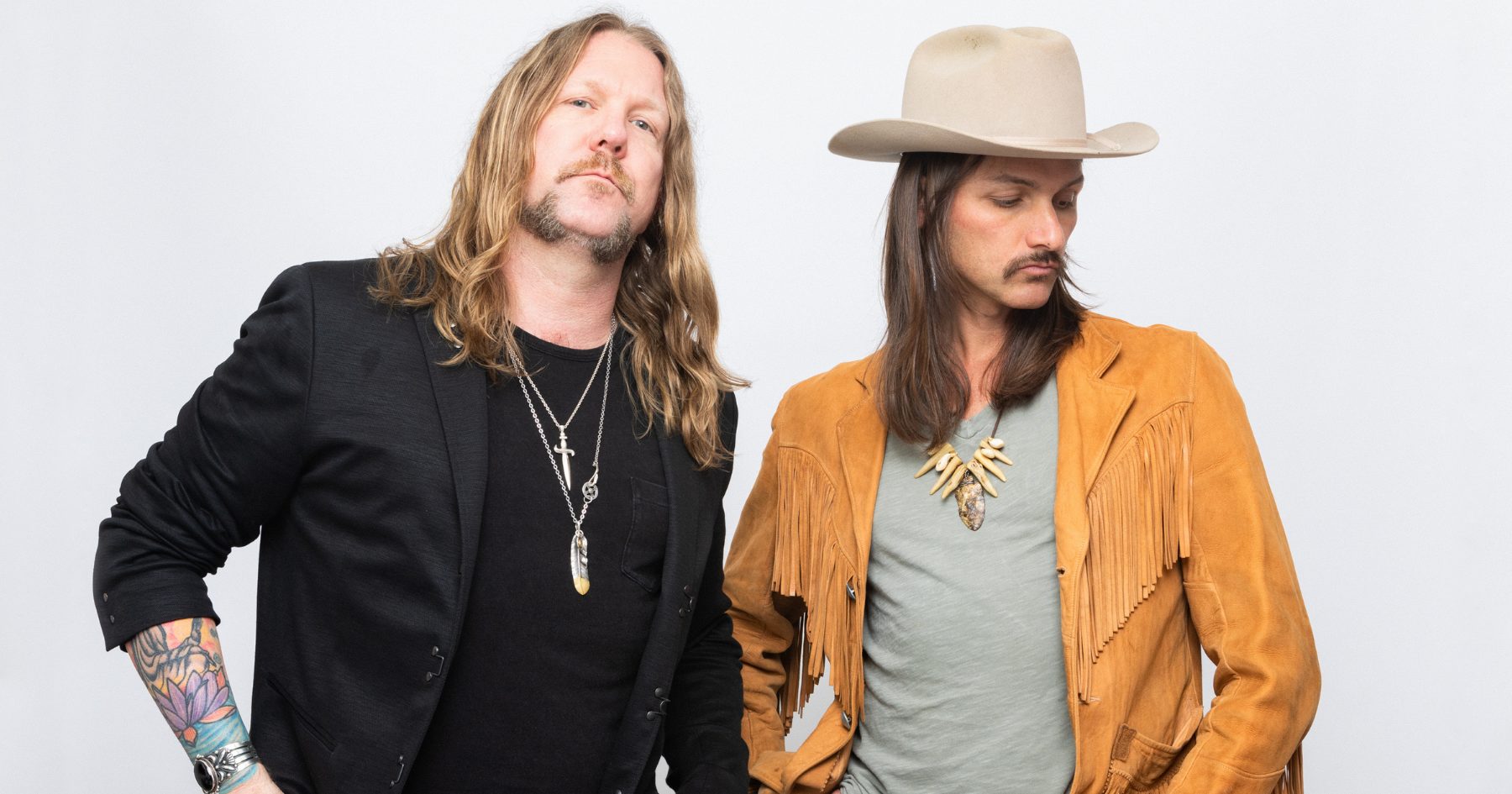
This week on The Show On The Road, it’s a rock ‘n’ roll family affair with a special conversation with Devon Allman and Duane Betts, two guitar-slinging sons of the iconic Allman Brothers Band who formed their own soulful supergroup: The Allman Betts Band.


LISTEN: APPLE PODCASTSSPOTIFYSTITCHER
With their 2019 debut record Down To The River, Allman and Betts — who took turns playing alongside their revered dads Gregg and Dickey as teenagers — finally banded together to create a new collection of the soaring slide-guitar-centered, Gulf-coast rock and brawny, road-tested blues that both pays homage to their heady upbringings and forges their own way forward. Even their touring bassist has a familiar name to Allman diehards: Berry Oakley Jr., whose dad was one of the Allman Brothers’ founding members when they formed in 1969 out of Jacksonville, FL.

While many groups were stuck at home licking their wounds as the pandemic shut down most touring options, Devon and Duane’s crew tapped into the nascent drive-in circuit, bringing their spirited 2020 release, Bless Your Heart, to a whole new set of excited fans. Always sticking to their southern roots, they laid down both records at Muscle Shoals Sound Studios with producer Matt Ross-Spang (Jason Isbell, Margo Price, Elvis Presley). While history is always dancing in the margins of the songs, it’s clear on this second offering that they wanted to create stories that didn’t only reflect their roaring live shows.

Standout songs like the soft piano ballad, “Doctor’s Daughter,” show the group roving in new, more nuanced directions — while “Autumn Breeze” is a pulsing slow-burn, but features the effortless twin guitar lines that made their dads’ work so instantly recognizable.

Of course playing in the family business wasn’t always a given for the guys — especially Devon, who only met his hard-touring father Gregg at sixteen. Devon first started hanging out with young Duane (then only twelve) in 1989 on the Allman Brothers’ 20th Anniversary tour. As he describes in the episode, Devon wasn’t sure he wanted to follow in his father’s hard-to-follow footsteps, but once he sat in on “Midnight Rider” and the crowd went crazy? It was off to the races.

This year marks the 50th anniversary of the Allman Brothers’ breakout record Live At The Fillmore East, which I grew up listening to on loop with my father. Though Duane Allman died tragically in a 1971 accident before his namesake was born, and Gregg passed away in 2017, their spirits live on in the Allman Betts Band’s epic live show, which is already gearing up for the tentative 2021 touring season.


Photo credit: Kaelan Barowsky

In Death as in Life: Remembering the Soul of Gregg Allman

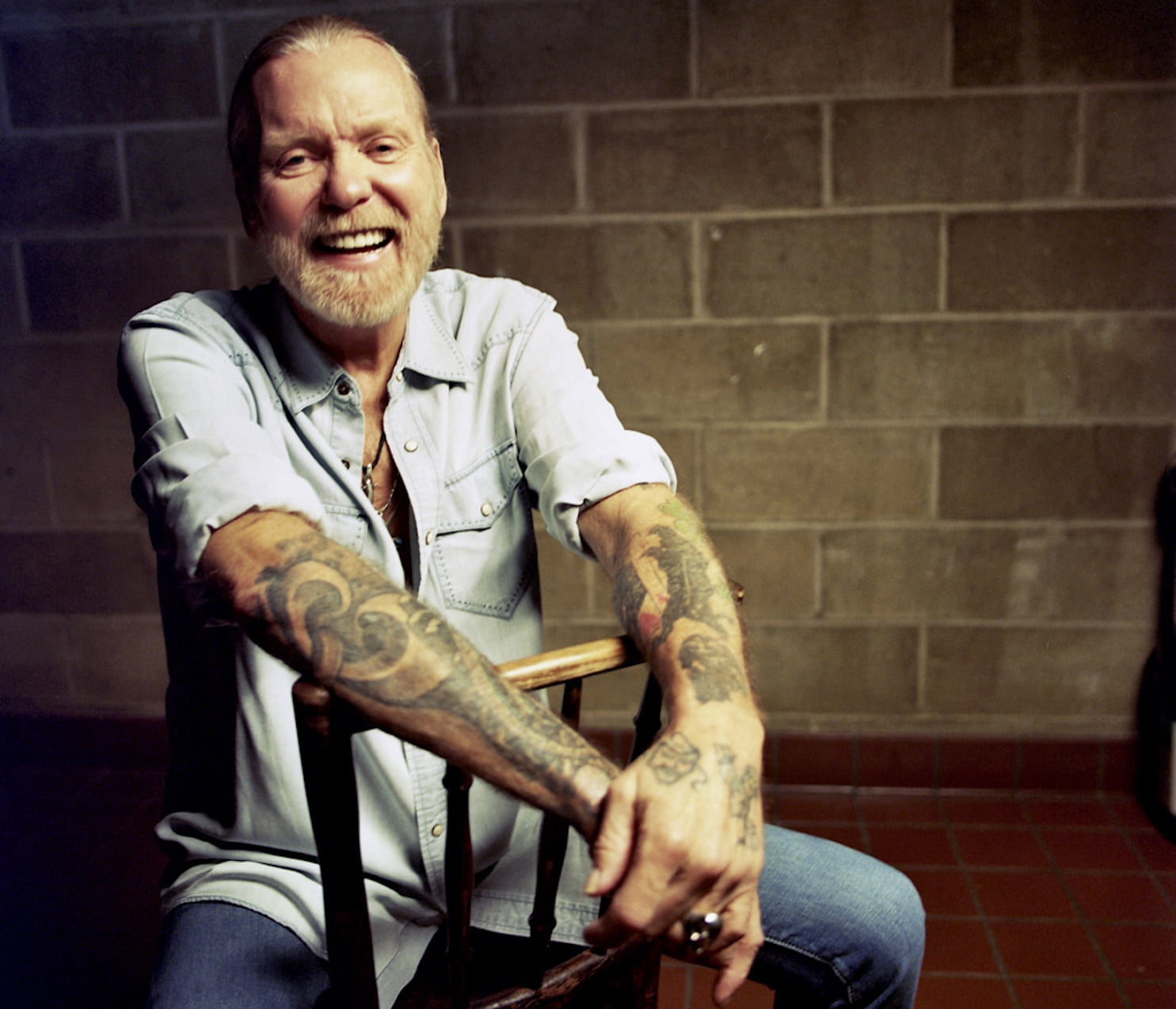
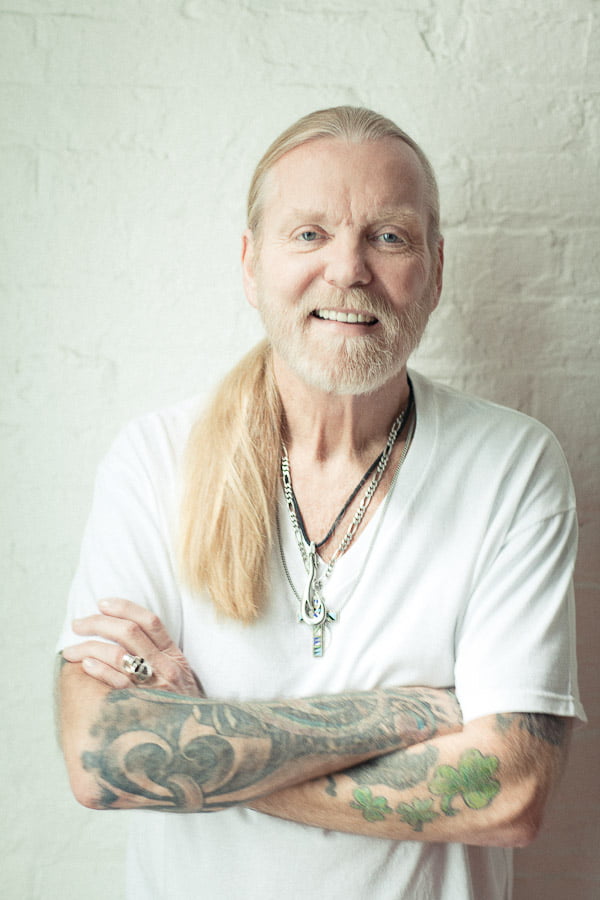
In 2012, two years after receiving a liver transplant, Gregg Allman was diagnosed with a reoccurrence of liver cancer and given a prognosis of 12 to 18 months to live. The pioneering rock legend kept the news private and moved forward doing what he did best: playing music. Choosing not to undergo treatment, he beat the odds and continued his musical journey for another five years, passing away on May 27, 2017. His parting gift — to himself, his family, his friends, and his fans — is Southern Blood, his poignant farewell album that was released posthumously last month. Produced by the legendary Don Was, Southern Blood features a selection of nine cover songs and one original tune, “My Only True Friend,” co-written with Gregg Allman Band guitarist and music director, Scott Sharrard.

“I was one of a very, very small inner circle of people who knew that he had received the terminal diagnosis with the idea that he may live longer, he may die tomorrow, and I had to make every decision as his music director, as kind of his lieutenant, and as his songwriting collaborator, based on his imminent demise, and that was extremely difficult,” Sharrard says. “We became much closer through that period. I think some of that had to do with our mutual deep, deep love for music, and it also had to do with him, I think, realizing that those of us in his inner circle who were helping to collaborate were kind of ferrying him across to the other side as best we could.”

Don Was and Allman’s longtime friend and manager, Michael Lehman, helped him choose the covers from a list of artists he admired and songs he loved, like Lowell George’s “Willin’,” Tim Buckley’s “Once I Was,” and Jackson Browne’s “Song for Adam,” which always reminded him of his brother, Duane. In a cosmic full-circle move, Allman recorded Southern Blood over a two-week period in March of 2016 at the historic FAME Studios in Muscle Shoals, Alabama, where he and his brother Duane recorded their first demo tracks as part of their early band, the Hour Glass, and where Duane later famously became the session guitarist for Aretha Franklin, Wilson Pickett, and others.

“I would go with [Gregg] to most of his milestone health appointments at the Mayo Clinic where he had his transplant and where his oncology team was, and every time we’d get there, we’d be amazed because his health was maintained for the most part,” Lehman recalls. “But as the team of doctors always said, one day the lid is gonna come off the kettle. And as we were getting into ’16, and he was starting to have more days than not where he wasn’t always feeling great, he knew. Even though we had never heard that yet from the doctors, I truly believe he knew inside of him that that day was coming sooner than later and so he was going to make the best of it with this record.”

Allman’s health began deteriorating rapidly after those sessions, and he was never able to get back into the studio to record his vocal harmonies, as was his custom. With Allman’s blessing, Lehman enlisted Buddy Miller to fill out the harmonies and Jackson Browne, who he had played with when they were both teenagers, contributed to his “Song for Adam.” Allman signed off on his preferred version of “Song for Adam” with Browne’s additions, and was able to take a final listen to some of the other songs.

“The day before he passed, I had received three final tracks and, that night, Gregg and I listened for about an hour to the tracks and I said, ‘They’re perfect, Gregg. There’s nothing to do, nothing to worry about,’” Lehman recalls. “And we talked about exactly what he wanted to be done with this record. He confirmed that I could share his journey with his health and talked about how to go out there and make this record everything that it should be. And I’ve followed his plan to the tee, right now … I think he just wanted to feel really close to home on this record, and all these songs sort of allowed him to retrace his life’s journey.”

On Gregg’s Final Years

Sharrard: It was very difficult to juggle Gregg’s desire to perform live, his need financially to perform live, because the music business sure ain’t what it used to be. I mean, you can’t just sit home and collect mailbox money anymore; you’ve gotta go tour. That’s why you see these guys touring all the way to the end. They love it, but it’s not just because of that. And then, his health battles. When you’re ill like this, it’s a game of whack-a-mole. They’d give him one drug, and it’d cause some other thing, and then this thing would make him get pneumonia and that thing would make him get COPD, and this thing would do that and then he’s out for various things that had nothing to do with the cancer, that were complications of trying to manage it and trying to manage a new liver … He was not in a writing period. He was not in that frame. I’ve always called him the Frank Sinatra of rock ‘n’ roll. He had grown into this elder statesman master interpreter of song — someone like Nina Simone or Billie Holiday or Muddy Waters. He became a voice, like that voice that could sing the phonebook, as they say. And I think he was inhabiting that.

On Recording at FAME Studios in Muscle Shoals

Lehman: As people know — and it’s well-documented — really probably not a day in his life wouldn’t pass where Gregg either wouldn’t think of Duane or talk about him. So he was always ever-present and [FAME] is the place that Duane recorded with Wilson Pickett and Aretha Franklin and other greats. It was also where Gregg and Duane recorded some demo tracks for one of their early bands, the Hour Glass. And lastly, we had reconnected with Rick and Rodney Hall, father and son, from FAME Studios of Muscle Shoals three or four years ago when the Muscle Shoals film documentary came out. And Gregg was so happy to reconnect and contribute to the doc, that he actually went out and helped promote it and I think, in doing so and reconnecting with Rick after so many years, it just brought back a flood of memories. And Gregg loved the sound that would come from an old studio and a studio like that has so much history and so many artists were there. They had all the analog equipment and boards, and so Gregg said, “You get the best of both worlds because you record in analog, you can mix digitally,” and this was just a place that meant so much to him, so he was thrilled to get back there … I would say about close to half the days he was not feeling great, but his work ethic was such that he would spend four or five hours a day in the studio and then, the other 19 or 20 hours, he’d be back in the hotel room eating, sleeping, resting, and just preparing for the next day. So he did not waste any energy and conserved his energy so that he would deliver the performance that he needed to on the tracks that we went into the studio to record.

Sharrard: Since that demo session with the Hour Glass, Gregg had never been back there. I think it was his first professional recording session, actually. So his first session and his last session were in that studio. That’s pretty amazing, right? I’m sure he thought that through … When we got there, we were all really knocked out by the vibe. Don Was had never even been in the building in his life, and Gregg hadn’t been there since he was a teenager, so the two of them were like kids in a candy store, too, which was also inspiring for us. You think these guys are totally jaded, right? Not at all. They were as freaked out as we were about working in there. So that added to the vibe and the anticipation that you need to get it right.

On the Album’s Only Original Song, “My Only True Friend”

Sharrard: Of all the stories I have about the making of Southern Blood, that song is my personal journey with Gregg. The story of the creation of that song has no shortage of drama, I’ll warn you. But it’s a 100 percent true story, like some of the best ones. I was really lucky to go through this experience with him. I was at his house — this was probably around 2015 is when that song started being written. When we were off the road, I would go for a few days, and we would do these writing sessions. We had already knocked out one song, which was a funky blues tune, and we were real happy about it. We had a good vibe going, and he had had some other ideas we were bouncing back and forth, and we were just having a good time one night. We went to bed real late, as usual, and he had been telling me a lot of road stories. We’d go out to the boat slip and come back — he had this beautiful property in Savannah — and it was just one of those really one-on-one hangs, when he was really lucid and telling a lot of detailed stories, and we always talked a lot about Duane. I was staying in his mother’s room at the house and, as I was going to bed, I was looking at all these pictures of them as kids in military uniforms together and stuff in military school, and I was just digging the whole family vibe. And I drifted off to sleep and then I shot up in bed at dawn with the sun coming up over the swamp. And as I shot out of bed, you know how it’s like you have those dreams where you remember it like it’s a movie you saw and you can’t tell if it’s a movie or a dream? Well, what I immediately remembered — and even weirder, I can still see it in my mind what it looked like, the beginning of it — it was Duane actually speaking to Gregg. And right away, it’s the first two lines of the verse and the hook to the song is what he said to Gregg in the dream. So I run downstairs and I grab an acoustic guitar off the couch, I go out on the porch, and I’m looking at the sun coming up over the boat slip and I start playing that intro that you hear on the record … I had an intro and I had a verse and I didn’t have anything else except for this line, “You and I both know the road’s my only true friend.” And, by the way, I never told Gregg that story because I was worried it would spook him out. I didn’t want him to judge the song or anything about it based on that because I know how much he respected his brother … I had been pacing all morning waiting for him to wake up because I knew how special this song was. When he woke up, I sat there and played what I had for him and he said, “This is it, man. We gotta do this. This is gonna be the tune.”

Fast forward to later that year, I go to the hotel near the Beacon Theatre when he was doing his second-to-last run with the Allman Brothers to do more writing. And when I get to his hotel room, we’re still working on this song, “My Only True Friend,” but it’s going back and forth with all these different pre-chorus and chorus ideas and bridge ideas. So I get to his room and the vibe is really messed up, and he sits me down and he tells me about his terminal diagnosis right there. And I said, “Look, obviously we don’t have to work today, we can just hang. I can leave. Whatever you need,” and he’s like, “No, we need to work.” So we started working and we’re getting into stuff and, right in the beginning of that writing section, he reached over and he crossed out the pre-chorus we had — and I still have this sheet of paper, by the way — he crossed out the pre-chorus we had and he wrote in “I hope you’re haunted by the music of my soul when I’m gone,” and that was the first time that line came in.

The first time he had ever sang the third verse was that day when we cut the song. So that song was almost not recorded. It was right down to the wire. I gotta be honest with you: I had been writing the song for almost three years with him at that point — or two years or whatever it had been — and I was at my wit’s end with getting it right. But I see why it was so important to him now, and it all makes sense now. That’s why, sometimes, you just have to follow the zeitgeist. Creativity is never a straight line. You’ve just gotta trust the process.

On the Cover of Jackson Browne’s “Song for Adam”

Sharrard: It’s about the untimely death of a friend and Gregg and Chank always relate it to their experience with Duane Allman as their brother and friend who they lost so tragically and so early. I can’t tell you how important Chank was. He was like the spirit animal of everything Gregg Allman. He personally really wanted Gregg to record this song and Gregg was fighting him. I think Gregg was very emotional about doing that song because he related it to his brother. So basically, when we got in the studio, I’m gonna tell you that this record, everything is first or second takes. We were having a ball every day, knocking out two songs a day. Fun times. We got to “Song for Adam,” they had sent the horns home and they’d sent Mark Quiñones home, so we had lost a lot of the yucks from the session. It’s like we went into the studio that day to do “Song for Adam” and we’ve got one song left to do, “Song for Adam” — the horns are gone, Mark’s gone. So the vibe in the studio was kind of like a little of the oxygen had been sucked out of the room. And I remember when we were cutting it, on the floor, we had the rhythm section — Steve Potts, Ron Johnson, Pete Levin, and me — four-piece band. Gregg was standing singing. I played all the guitars on that track. So Gregg’s standing up singing with Chank sitting next to him on a stool and Chank was like almost holding his hand through it … We played that fucking song for like seven hours … Now you listen to it and it sounds absolutely gorgeous and, of course, Gregg emotionally was never able to sing the last two lines, and I thought it was quite brilliant that Don Was decided to just let the verse end with that last line about singing his song. I mean, it’s a pretty incredible and dramatic exit to an album.


Photo credit: Danny Clinch

WATCH: Marcus King, ‘The Man You Didn’t Know’

Artist: Marcus King
Hometown: Greenville, SC
Song: "The Man You Didn't Know"
Label: Evil Teen Records

In Their Words: "Walking into the Big House, there's an energy that overcomes you. Playing Duane Allman's Hummingbird was certainly a spiritual experience for me. I felt compelled to play a tune I recently wrote, 'The Man You Didn't Know.'" — Marcus King


Photo credit: Jay Sansone