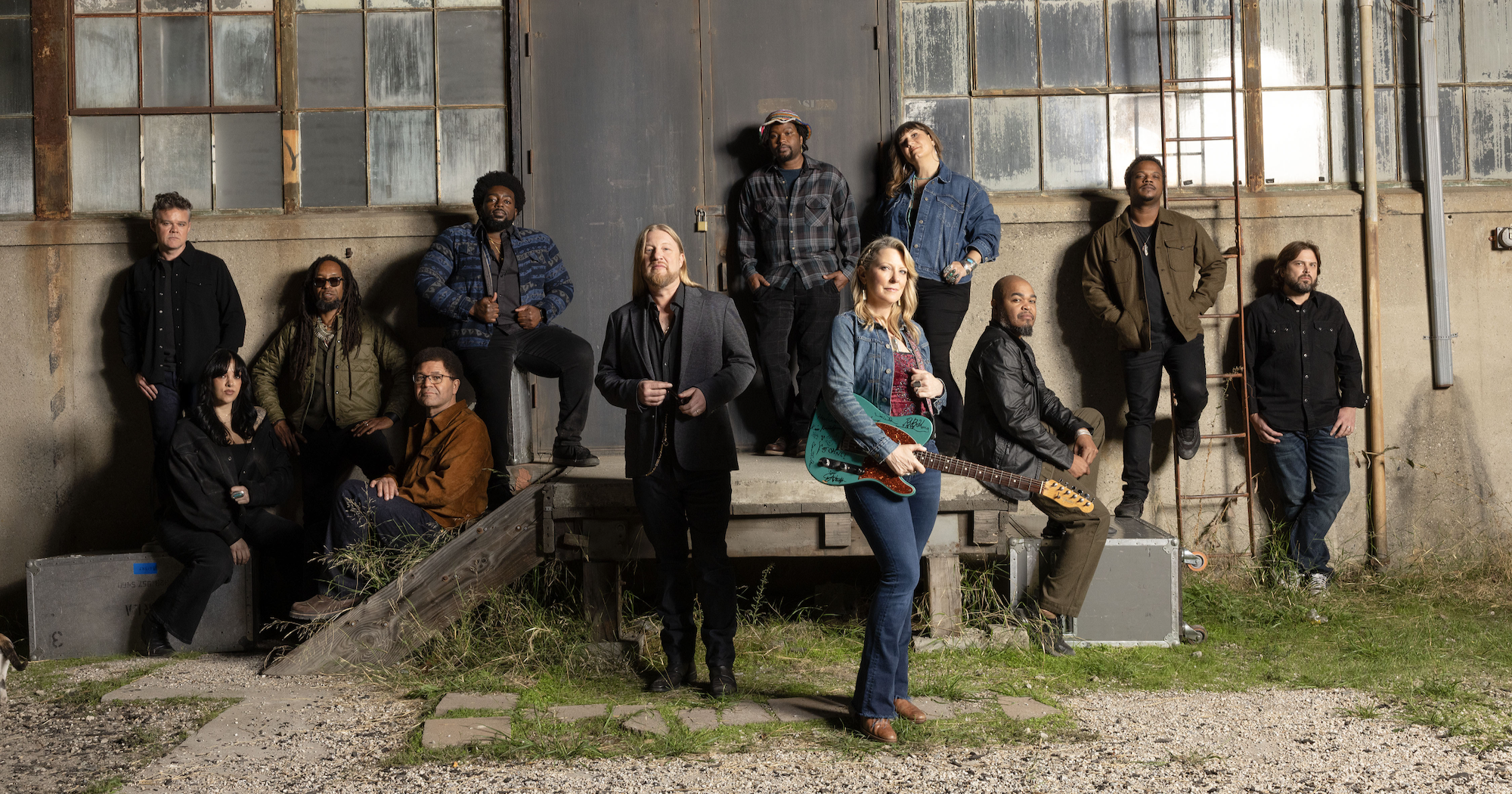
Tedeschi Trucks Band Have Done It Again

When it comes to entirely enjoyable, technically exquisite modern blues, Southern rock, and jam-band soul albums, Tedeschi Trucks Band have a statistically impossible batting average. Their new LP, Future Soul (released March 20 via Fantasy Records), is yet another “no skips” collection from the megalithic 12-person Americana group fronted by husband-and-wife guitarist Derek Trucks and guitarist-vocalist Susan Tedeschi.

On that strength of their catalog – and their ensemble – TTB have amassed hundreds of millions of streams, won eight Blues Music Awards and one GRAMMY, and a handful of their songs have become regarded as modern standards in the Americana and American roots music songbook.

Future Soul simultaneously feels like a surprising departure and familiar, essential territory for the band. With Mike Elizondo producing and songs and creative input sourced from across the group’s lineup, the set ends up sounding and feeling more acoustic than “usual,” while still reaching roaring crescendos and building it all on dank, wide open grooves. Perhaps those acoustic moments are a substantial contributing factor as well, but the cozy, plush pocket of the album is what gives it a laid-back, relaxed, and floating vibe no matter the track’s genre construction.

Screaming slide, no-holds-barred vocals, and wall-of-sound climaxes can all be found herein, as well. But the collection never thrashes or flails, it’s precise and exacting – as Tedeschi and Trucks are both known to be on their instruments, whether guitar or voice – but it’s certainly not sterile or gated or homogenized, either. It’s another remarkable feat for a group so large that you would almost have to assume, live or in studio, musical mud would be an inevitable byproduct.

But no, TTB seem to have no misses, at least not on Future Soul. It’s clear this group works together in harmony not just because of the down-to-earth and collaborative leadership of Tedeschi and Trucks, but because the artistic and musical responsibilities and ownership – of the songs themselves, of the album, of the makings of each, of “success” for the band – are decentralized and distributed throughout the group. The band has a sound, an art, that is consistently collective in the way it’s received by audiences and listeners because, forgive the obviousness, Tedeschi Trucks Band always work as a collective.

In our BGS conversation with Derek Trucks, the magic and unlikelihood of this creative dynamic and the processes by which the band continues to rack up success after success were on full display. We spoke about how they put together Future Soul as a group effort, the many inputs that went into Trucks fashioning his lyrical guitar style, and what bluegrass means to him personally, to Tedeschi, and the band as a whole. It was a joy-filled, passion-led conversation that again reinforced how this wailin’, rockin’, rollin’ band continues to flout and subvert expectations – and thereby has become so beloved.

Something that jumped out at me from the bio about the new album is that you say, “There’s just not a weak spot on this record.” I have to say, I totally agree. I think it’s remarkable that with a 12-person band and such a diverse catalog of recordings and releases, it really doesn’t seem like there’s any “fat” to trim or any duds to cull.

I have to ask, does it feel as magical on the inside of that process as it seems from the outside? It seems unlikely that y’all would work so well together towards a common goal, artistically, and be able to deliver again and again and again. And I don’t just mean commercially, awards-wise, or for audiences alone. Clearly you’re delivering artistically for yourselves and by your own standards, as well. So, does it feel as unlikely on the inside of that process as it maybe does to us on the outside looking in? [Both laugh]

Derek Trucks: That’s awesome. But it does, man! I mean, not every record you do feels the same way. They’re all their own beasts. For I Am The Moon, it was in a time of great uncertainty. We did four records and it was just kind of a heavy, heavy time – and that record feels like that.

This one felt completely different. The band felt much more confident [and] had been touring for two years straight. We had been playing so much together that when we finally got the core of the group up to our farm in Georgia to do some writing, there were a few songs right out of the gate. Like “Future Soul” and “Who Am I,” where immediately, Sue started singing, Gabe [Dixon] started singing these melodies. I got chills and I was like, “Oh, this is gonna be good.”

You’re always kind of worried about running out of ideas, or running out of runway – like a thing in the back of your head. But I feel like we’re incredibly fortunate where, when we’re together, everyone puts everything they have into it. Then, when we’re not on the road together, everyone’s all doing their own things musically. So, when we come back together, there’s a lot to talk about and a lot of music to remember together.

I think it keeps it really fresh and it keeps it moving forward. I feel like everyone’s out honing their craft when they’re away from this. When they come back, there’s a lot of new ground to cover. So far, we’ve been really, really lucky that way. And there’s a handful of just incredible songwriters in the band, so everybody comes in with two or three ideas. You’ve got a pretty strong record right out of the gate. That’s been something that I think me and Sue are just realizing – we’ve known how amazing that is but, you know, Gabe and Mike [Mattison], they show up with some serious ideas.

Then having Mike [Elizondo, the album’s producer] down, just some outside ears – I think that was really important. Sonically, he was trying some different things that I think inspired the band and made everybody play a little differently. That was exciting.

I was struck by the range of styles and the different genre infusions that y’all have put into this collection. What really stuck out to me, listening down to the project in one fell swoop, is there are still those really big energetic moments – and there are still those “wall of sound” moments that y’all are really known for. But I felt like this album is chill and laid-back in a way; it feels deep in the pocket. Can you talk about capturing those seemingly disconnected energies together?

I think one of the things is that with a band or an artist, I think if you’re maturing properly – we learn sometimes slowly – that you don’t have to force the issue all the time. You can trust things around you a little bit more, and sometimes the groove is enough. Sometimes the chord changes are enough, sometimes the melodies are enough. It doesn’t have to be these epic moments at all times. So when they do come, you’re excited about it and wrings you out. Then you lay them back down, and then you go on another little trip.

I think the band, having played together so much, we’re in a different place that way, where we realize that you don’t have to force the issue on every song. You can go to different spaces, different places. And then, again, having some outside ears – Elizondo really helps with that, too. He helps guide you to places that maybe you wouldn’t have gone naturally, so that’s a fun thing. Then you learn things about yourself musically in the band that you didn’t know before. That’s always a good place to be.

One thing that I’ve been obsessed with about your playing, specifically, ever since I discovered you as a teenager, is how lyrical of a guitar player you are. It jumped out at me from the bio, as well, when you’re talking about “I Got You” and how you’re doing a guitar-voice dialogue instead of guitar-guitar. I think of you as one of the most lyrical guitarists out there. You’re so present and so grounded. So I’ve always wanted to ask you how you’ve cultivated that style – as well as being able to have those moments of pure shreddy, lick-y wailing.

Then hearing that you really wanted to make that connection between voice and guitar on this album made so much sense to me, because I’m always thinking about how you’re a lyrical player. And Susan is, too, and you both dialogue with your instruments, and her voice, often.

Pretty early on I had a few musical epiphanies. One was Allen Woody, who played with Gov’t Mule and the Allman Brothers. When we toured with my solo band, opening for a Gov’t Mule in the early days, he would always turn me on to records. He gave me this CD by this guy named Aubrey Ghent, who was a gospel [steel] player. I put on “Amazing Grace” and I was like, “Wow, what an amazing voice.” And then I heard the pick and I realized that it was this guy playing lap steel! But it sounded like a woman singing. I got chills [over] my whole body, and I was like, “That’s it, that’s the thing.”

I had been listening to a lot of Indian classical music – a lot of vocalists and sarod players. Me and our old [Derek Trucks Band] bass player, Todd Smallie, went to Ali Akbar College of Music in San Rafael, [California] and they would let us sit in on classes. I realized he [Ali Akbar Khan] made all the instrumentalists take vocal classes, because his whole thing was that you should be singing through your instrument. So that made it just really obvious.

Those were a few of the things, and then there was a long time where I just stopped listening to any guitar player. It was only singers and horn players. That was kind of the idea [that] musical ideas can come from anywhere, but you really should be singing the thing. There’s time for all of it, but the stuff that moves me the most is, you know – even hearing Duane Allman on “Blue Sky” or something. It sounds like somebody’s singing, like somebody is walking down the road whistling. I think those are probably the touchstones for me.

Maybe I am projecting a little bit, because I’ve been a bluegrass banjo player my whole life – I started playing when I was seven. But when I think of guitarists, especially who end up reaching the pinnacle – whatever that is – or especially in flatpicking and in bluegrass, there tends to be this homogeneity of style. The people who get to the “very top” end up all sounding like each other. Then you have those folks that really stand out, and it tends to be because they’re using space and using air as much as they’re using 16th notes and 32nd notes. I think, being used to really shreddy flatpicking, that hearing steel or slide or blues guitar or jazz or acoustic jazz, anything plays with sustain and plays with space, I just drink it up.

Beautiful, man. I remember the first time I heard the Stanley Brothers, or Ralph Stanley, and I just remember it hit me in that place where those early blues guys hit me. There was just something about it. That kind of cracked that whole world open for me. I mean, I was always a Tony Rice fan. We have the same birthday, so I thought that was cool.

No way, I didn’t know that.

And I remember being at a MerleFest years ago, I think it was one of the last ones that Doc played. I remember seeing this old Oldsmobile or Cadillac – I don’t know, it seemed like an 1980s or ‘90s car – it pulled up to the stage and I see Tony Rice get out, just dressed to the nines. He pops the trunk, gets his guitar, hits the stage, and then right when that set was over, he was back in that car! I was over there thinking, “What a boss.” It was incredible, man. He went up and just annihilated everybody and got back in his car and drove his ass home. Pretty incredible.

So funny.

The last time we talked to you for the site, you were Artist of the Month in 2019 and you talked about Del McCoury and Jerry Douglas. I know you’ve played DelFest a bunch, you’ve collaborated with Billy Strings – oh, and I was super excited to see Molly Tuttle supporting on a couple dates of your TTB tour in April, too.

Yeah, we’re excited for that. That’s gonna be great.

What does bluegrass mean to you? Obviously, there’s Ralph Stanley, Tony Rice – there are pickers and makers in bluegrass that are infused into what you do, but what does the genre mean to you more broadly? And who in the space right now inspires you, or your musical vocabulary, or what you guys are doing in the band?

When I think of American music, I think of blues, I think of bluegrass, and I think of jazz. I think [those are] the things that we’ve really contributed to the world. To me, those are the cornerstones of it.

We’ve become good friends with Sturgill [Simpson] over the years, and he’s dipped into that [bluegrass] place. When I hear him sing it I’m like, “Oh yep, that’s because he’s from there.” He’s from the heart of it, and it makes me feel the way Ralph Stanley does at times. Even guys like Tyler Childers – and Sue’s a big Sierra Ferrell fan. She loves all those records.

That music, even the current guys, it’s always playing around here. I don’t know, it just feels inspiring to hear. People just get on an acoustic instrument and rip one. You’re like, “Oh yeah! There’s still people that know how to do things!” [Laughs]

That’s the big inspiration I take from it. Because [in the music industry] there’s a lot of cutting corners, and that’s a music that there’s no cutting corners. You gotta put your time in and take your licks or you’re just not gonna get on stage. I appreciate not just the dexterity, but the vocabulary and the heart that goes into it.

And there’s just something about seeing a group around one microphone just doing the dance that I think is always inspiring. We’ve done some shows recently with Sam Grisman, we did a benefit [for Camp Winnarainbow] out in San Francisco. Peter Rowan was on it, and me and Sue, and it was all acoustics. I had an old National, and just getting to play with that group – just the way that group felt. Sitting on a stool with a Dobro, and they were coming and going around the microphone. And then, getting to hang after the show with Peter Rowan and him telling these stories, man. It was just incredibly inspiring. Some of the songs that we got to play with them – that dude [David “Dawg” Grisman] has written some incredible music. That was one of the highlights of last year. It was pretty damn incredible.

There’s a lot of acoustics on this new album, too. I did find myself wondering, and maybe I’m biased, but does the world need a 12-piece bluegrass band? It might! It might! [Laughs]

Man, that sounds pretty fun to me. I mean, it would be a lot less gear to carry on the road! Which would make it more plausible.[Laughs]

If you wanted to speedrun pissing off a fan base, this might be the way to do it.

[Laughs] Yes, alright, we will be thinking about this! I’m gonna go talk to Sue.

This next one is kind of for me, so I thank you in advance for humoring me. But I wanted to talk to you about Jack Pearson. When I first moved to town, I just met this guy out jamming on mandolin at these bluegrass jams. I’d be like, “Man, this guy’s so nice.” He’s a great picker. He’s a great singer. I got a lot of practice playing swing with him at jams in town. Then folks started being like, “Hey, do you know who that is?” Oh my god, I did not know who it was. He was just my bluegrass jam pal. Then I worked at the Station Inn for a few years and I got to work a bunch of his trio shows. I’d die for the solo acoustic sets he’d do on the set break.

Incredible.

If I were to list maybe my top 5 favorite guitarists of all time, I feel like you and Jack would both be on that list. So I wanted to have a little nerdy moment to talk about Jack. [Laughs] Can you talk about his playing and your guys’ friendship? Of course, I see so many connections between your musical vocabularies and that lyrical style we were talking about.

Yeah, man I need to check up on him. It’s been a minute. I need to check in on old Jackie P.

He’s a monster, man. He’s one of the few people that can actually go play in a straight-ahead jazz band, in a bluegrass band, and then the Allman Brothers. I mean, maybe the only person that can actually do it.

I totally agree.

I mean, he played with Jimmy Smith. This dude is like, he’s an absolute monster. And a sweet fella! You can’t say enough good things. When I joined the Allman Brothers, Jack was just leaving. So all the tapes I got, like learning the new versions of the tunes, were Jack Pearson tapes. At the time, Bud Snyder was the sound man. He would mix these tapes for me with Jack really boosted in the mix. I could hear exactly what he was doing to learn these things. I got an intimate take on the way Jack was approaching these Allman tunes. It was so unique.

There’s no one [that] plays like him, and [his playing is] about as smooth as it gets. Sometimes, you watch him play – and I know he plays really light strings and he plays low action – and the way his hands move, I’ve never seen anyone play quite like that. Then he busts out a slide and you’re like, “Holy shit! This dude can do anything!” [Laughs]

I know!

He’s one of the unsung heroes. There’s no doubt about it.

He does this thing – and you do this as well – where you’re able to leverage that really gritty, aggressive, absolutely on-the-razor’s-edge style that comes with blues and Southern rock and Americana. Then at the same time, like you’re saying, with light strings and low action, still has such a deft touch. Yet he has such great attack and precision and cleanliness. He is a great lesson in taste. His taste is impeccable.

Yeah, I think that’s exactly it. I think we forget a lot of the time that most of what we love about music is the musician’s taste. I mean, you got to put in the work – and Jack has obviously done that, that dude is a master. But his taste is really as good as anybody.

I think he’s probably a bigger influence on me than I even realized. Probably because of that early Allman Brothers time for me. I was jumping in at 20 years old, 21 years old. And all of a sudden it’s, “Here’s 60 songs to learn, and rehearsal/tryout is in a few weeks. I was like, “Well, give me those dates.”

I’m stressed just hearing about that.

I mean, luckily most of that music I had listened to my whole life, but I had never bothered to learn any of them. I mean, I knew “One Way Out” and “Statesboro [Blues],” that doesn’t take long. It was all the other shit!


Photo Credit: Chapman Baehler
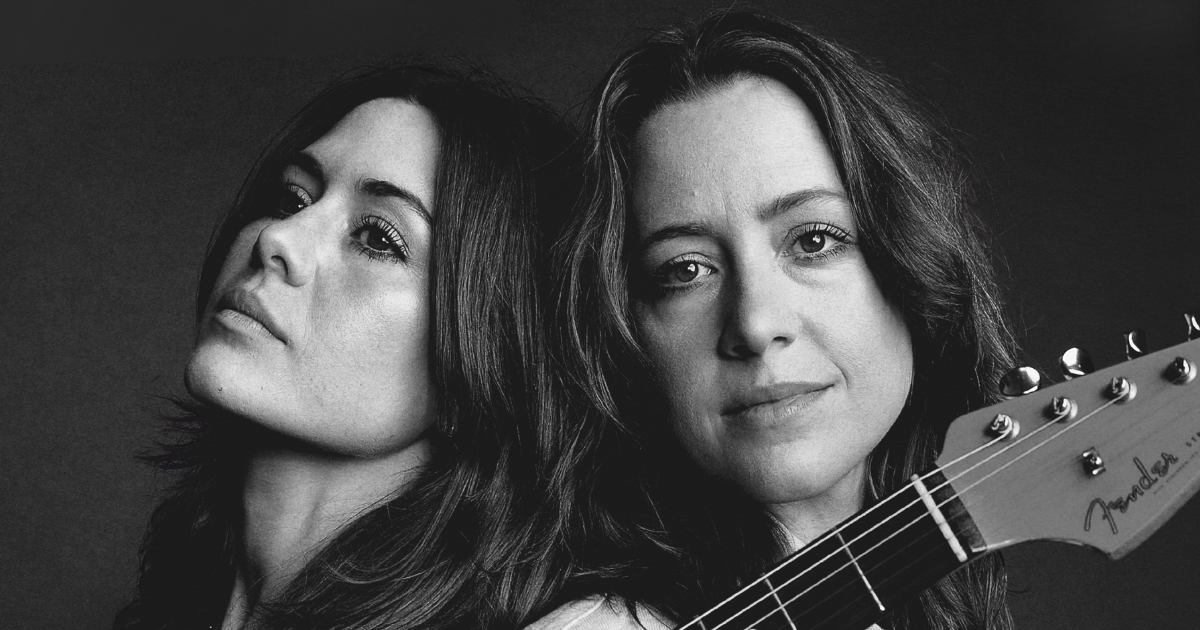
Larkin Poe Continue to Bloom

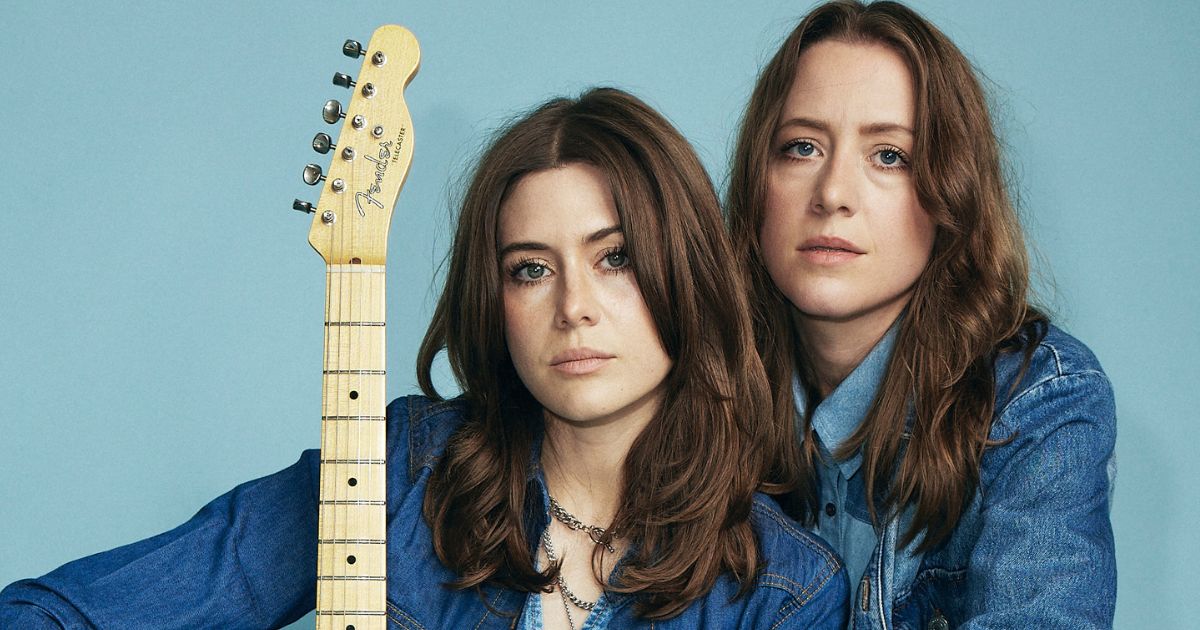
Megan and Rebecca Lovell are Larkin Poe, a band that nestles into a myriad of genres – and the sisters are good with that. Their newest full-length album effort, Bloom, out January 24, comes fresh off the heels of a GRAMMY win for Best Contemporary Blues Album with last year’s Blood Harmony. They also landed Duo of the Year at 2024’s Americana Honors & Awards, proving that by digging into their own stories, collaborating even when it isn’t easy, and filtering it all through what the music will feel like on stage, they carve a sound that knocks down doors into multiple genre territories.

Independent spirit permeates everything the sisters do, from the way they write and produce the music to how they map out the aesthetics of how they present the work. Bloom is no exception, finding the women delving deeply into personal and social themes in a way they say they have not before, the result of getting real with each other and learning how to collaborate through the writing process.

In “You Are the River,” we find them contemplating a common theme throughout the album, that sometimes the best and the worst are married inextricably and tie us to each other.

The sand in the oyster
The pressure on the coal
The sum of the parts is greater than the whole
A chain of reactions
A butterfly’s wing
My hand holding yours to form another link

For our Artist of the Month interview, BGS spoke with Megan and Rebecca via Zoom from their respective homes in Nashville. The Lovells discuss the challenges and joy of writing together, the evolution of their relationship with their fans, and the pressures of public life in the age of social media.

You all have been lauded in multiple genres, from blues to Americana. You are also identified as a rock and roll band and here we are talking on a bluegrass outlet. What do you think about genres in general, and do you consider them at all during creation of the music?

Rebecca Lovell: One of the greatest pieces of advice that we’ve ever received was from Mr. Elvis Costello. Many, many years ago, he advised us to defy the temptation to put ourselves into a genre box. He has lived up to that creed himself, having made bluegrass, gospel, country, punk, rock records, operatic records, and musical records.

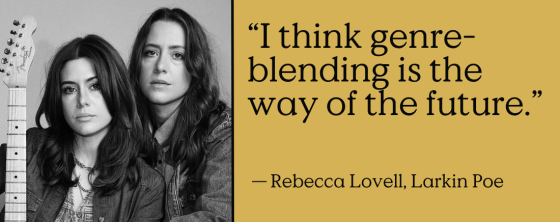
For us, having been able to sample all the different facets of who we are as people and music lovers allows us to connect with the people who are consuming our music. I think increasingly, all of us consume music from a wide range of genres. I do think that that’s one gift of streaming platforms. The very barest of silver lining is that it opens up your mind to the fact that there is great music to be found in every genre, and I think genre-blending is the way of the future.

So we call what we do roots rock and roll, which is intentionally very vague because we get great joy out of letting the many flavors of our musical heritage be represented. That allowed us this past summer to play at a bluegrass festival and then play at a world music festival, play at a pop festival, a rock festival, a country festival, and it keeps it fresh. It keeps it exciting.

You’ve won awards in multiple genres, especially in the past few years. I was curious: are awards ever a motivator for you? Do you ever think about them when you’re creating?

Megan Lovell: Winning awards is a very new thing for us. We’ve always made music with a different focus, because we’ve always felt that the real reward is people being willing to stand in line or travel and buy a ticket and wait at the venue for us to come and play. So that’s always been our focus. Not to say that winning an award isn’t a cool experience, and definitely something we’re super appreciative of, but I don’t think it’s something we consider when we’re writing or recording.

We’re definitely thinking about our live show. We’re really writing intentionally, thinking about how it will feel when we’re touring. Because that’s what we do most of the year is tour.

Tell me about your writing process, both when it’s just you two as sisters, bandmates, and business owners and then also when you bring in other folks to collaborate.

RL: I think Bloom represents a really cool point in our evolution as creative collaborators. Since the ground up, Megan and I have been projecting together since we were little kids. It’s felt like [there was] a lot of foreshadowing in our childhood that we would work together, because we’ve always been so collaborative. But songwriting was one of the last holdouts of our working relationship that there was friction in. I’m sure it has to do with the fact that there is a piece of this sibling rivalry thing. But getting older, being more comfortable with and accepting your flaws, and being able to then have the self-confidence in a writing session to throw out ideas – that inherently, because they are ideas, they’re not fully fledged. They can be misunderstood or sound stupid.

I think we’d had some writing experiences in the past where we had not had the best of times. It just felt like a lot of false starts. We typically had written separately, but something clicked in the last 6 to 8 months leading up to the writing process for Bloom. We made the commitment to and had many conversations about writing the record together, and I really think you can hear the progress that we made as a team in manifesting that true creative collaboration. I think the songs are so much better.

There was a real commitment to being very intentional with everything that we said on this record. Being a songwriter and a performer, there is always this temptation to self-aggrandize, or build a character for yourself, or be the movie theatrical version of who you are and what your life feels like. I specifically have written from that space in the past and listening back, we wanted to do something different this time. That was our consensus. We went through every song, every lyric on this record with a fine-tooth comb, to ensure that real vulnerable authenticity was represented in the lyrics. That took a lot of courage and I am really proud of us for making that commitment, and being able to actually pull it off with this album.

ML: You know, what’s funny is, when we were thinking about bringing in a third collaborator, did we go outside? No, we actually end up working with Rebecca’s husband [Tyler Bryant] a lot. So we have that sibling dynamic and the husband-and-wife dynamic. We really like to complicate things.

RL: There is a certain shorthand that exists when someone knows you really well, when you know someone really well, and especially between Megan and myself – and also Tyler. We all have very closely mirrored musical upbringings and we have a lot of kindred spirit energy in the records that we’re all referencing for the production and the songwriting.

It does create this space, when handled correctly, for being really truthful, being really genuine, and allowing yourself to actually go to those spaces. I was the big crybaby on this record. I was weeping in these co-writes, like inconsolable. But that allows you to really channel some specific, detailed stuff from your own experience. The more specific you’re able to get with yourself, the more likely it is you’re going to be able to connect with other people. And that is our biggest motivator.

That’s so wonderful. Speaking of, what is your relationship with your fans like? And do you see it evolving as you change your process and become more open that way?

ML: We have a lot of musically deep music lovers and they’re really cool, knowledgeable people. I think because we’ve kind of always been a little bit left of center, we’ve attracted a cool audience; people who appreciate the do-it-yourself attitude and people who just really want to support a grassroots effort.

We’ve had people who have been following now for decades, which is strange to be able to say, but they’ve really stuck with it. Of course, those relationships do shift over time. And certainly through the pandemic. That was a huge shift in the way that we related to people, because we were using the internet to connect. We had these pretty spiritual conversations with people that I’m not sure would have happened if we hadn’t been online and talking all of the time. We came out of the pandemic with a lot more intimate fans.

Can you talk about the recording process? Where did you cut this record? How did you decide to bring in your husband as co-producer?

RL: I do think the pandemic played a big role in the shift of Megan and myself bringing Tyler Bryant in as a co-producer because, for the last 10 years, we’ve been self-producing our records. At Megan’s behest as the big sister, she was like, “It’s time. We need to self-produce our records.” That was very scary at first, but we got our feet wet and got our bearings.

Ultimately, we’re so grateful that we made that shift, because it allowed us to hold the reins in the studio and steer the music in the direction that we wanted to go. Through the pandemic, we built a state of the art recording studio in the basement of our home, and we wanted to make records. We didn’t want to hold up our creative process. We were still distancing in our bubble. But it was the group of us, and by necessity we started recording in that home studio; we’re kind of blown away at the sounds we could get. There was an effortless nature of being in a really safe home environment.

When Megan and I tour with our band, we’re a four-piece, so we set up as a four-piece in the studio and went for it. Hopefully, that will allow our records to age gracefully because they are very true and very stripped down to who we are as a band.

ML: But honestly, when we were going to studios, we were experiencing a lot of Keurig machines and we like really nice espresso machines. So we made the decision to stay home.

Let’s talk about the song “Pearls.” It seems to be built around the idea of maintaining a sense of self while you’re navigating the world that’s constantly reflecting you in such a public way. I wanted to know, as family and as bandmates and business partners, how do you navigate the ever-changing and tumultuous world of being in the public eye, especially in the age of social media?

RL: I think it’s one of the hardest things. It is so challenging to exist in a space where you need to have just enough ego to get on stage and perform. But you can’t identify too much with that ego, because then you’re creating a very limited, narrow lane for yourself. But don’t have too big of an ego, because then you’re going to be a bitch and nobody’s gonna like you. So it’s this weird straddling of all these different elements of our identities. And then we’re having to do that together.

With so much shared experience between us, Megan knows the true me. I think that you and I have cultivated a great deal of grace, allowing that true nature to evolve. Who we were when we were 5, is simultaneously the same as who we are now, and also very, very different. Allowing that leeway for ourselves is only something that we’ve started really engaging with in the last 5 years. Right, Megan?

ML: Yeah, we’ve had a lot of conversations over the last couple of years. We are coming to more of an understanding of where the tension was coming from, from who we are as people, and then who we expect ourselves to be on stage. Then also that sort of external pressure that everybody has that we also felt from a very young age from the people around us. There are people in the industry who expect us to be something and then fans who come and meet us. There are a lot of opinions flying around, but you really don’t have to take anything on board that you don’t want to.

Whether it’s that one negative comment on a post that you for some reason have to obsess about, even though there are 99% positive comments. You just can’t get that negative comment out of your head and I don’t even know if I trust that person’s opinion. It’s a good reminder to just steer your own ship.

You mentioned different kinds of festivals, different genres of festivals. When you think about your tour, what kind of stage do you feel the most at home on? Is it a festival? Is it a club or theater? Is it a genre of festival?

ML: 2025 is going to be a big year for touring. Last year we played a lot of festivals. This year we are playing a lot of headline shows and we’re going to start in the U.S. and go through the spring. Then we’re gonna do a big fall European tour. And it’s shaping up to be really, really amazing. We have a really substantial following over in Europe. We have done a lot of work over there. There’s some bucket list venues that we’re gonna play.

I love a headline show. You know, where the place is packed, and there’s that energy in the audience, and everybody knows the lyrics. There’s nothing that beats that vibe and you can find that anywhere. You can find it in a tiny rock club to an arena or a festival. The important thing is that people are engaged from the stage to the audience, and vice versa.

Same for you, Rebecca?

RL: Yeah, I agree. I love a headline date, I think, especially because Megan and I are album people. We like a body of work. I like to sit down and listen to an artist’s album from the beginning to the end to try and get a sense of where they were at when they were writing the record. Megan and I, when we make our records, we obsess about the content, about the story arc, about the sequencing of the record, about the packaging, about the font.

And I think we get that same kind of energy in a headline show because we’re thinking about the colors of lights and which of the songs we are going to include and how much of the old material. We really want to have that space with the music and the emotional content of the music, and you feel that energy, and you feel that resonance. If everything goes right and everyone has their hearts open, you gain access to this portal where I think a lot of transformative change can happen between humans. And that’s what we seek.


Photo courtesy of the artist.

Artist of the Month: Larkin Poe

Larkin Poe are unstoppable. The incendiary sister duo – made up of Megan and Rebecca Lovell – have enjoyed near constant growth and momentum building over the past decade and a half, since they emerged from their younger family band era in the early 2010s as an endlessly gritty and gutsy Americana-meets-blues-meets-Southern rock phenomenon. Now, their sights are set on their upcoming seventh studio album, Bloom (out January 24 via Tricki-Woo Records), with a year’s worth of accolades – including their first GRAMMY win and being named the Americana Music Association’s Duo/Group of the Year – firing like afterburners on their already rocketing career.

Their perseverant climb of the music industry’s ladders is the least remarkable aspect of Larkin Poe’s trajectory, though. The sisters Lovell outwardly channel a sort of outlaw-styled disaffection for the trappings and machinations of the industry or Music Row, inhabiting self-assured personas that fit seamlessly within the genres they call home. They know they’re stellar songwriters, they’re virtuosic pickers, and they’re fluent in the aggression, anger, and release of rock and roll. Across their entire catalog there are clear demonstrations – from the winking and sly to the outright and overt (see, for instance, “She’s a Self Made Man“) – where Larkin Poe show their listeners they aren’t just living in “a man’s world,” they’re owning it, re-centering it, and doing it better than the machismo naysayers rife in these roots styles. Styles where a corrective phrase like “Um, actually…” is still wielded as a cudgel or seen as valuable social currency.

Um, actually… these women know exactly what they’re doing. And they would have to, given they came up through bluegrass, folk, and string band circles as a bluegrass(-ish) family band, the Lovell Sisters, with their sister Jessica. Winning songwriting contests and appearing on Prairie Home Companion, the Lovell Sisters were quickly beloved in bluegrass, honing their chops while also getting their first tastes of being written off or sidelined as “merely” a female-centered novelty act. When the group decided to disband, Megan and Rebecca “reskinned” as Larkin Poe, immediately transforming so many of their “I knew them when” audience members into “I wish they still played bluegrass” skeptics. Not that the Lovells cared, ultimately. A hallmark of the duo since their rebirth has been agency, autonomy, and self-possession. (Something of a prerequisite for successful women in roots music, to be sure.)

Seven studio albums into their grooving, rollicking, no-holds-barred catalog, Larkin Poe are even less concerned with external forces or outside variables influencing and impacting their music. Bloom builds on the confidence and clarity of Blood Harmony‘s GRAMMY Award-winning vision. Produced and co-written by both Lovells and their longtime collaborator (and Rebecca’s spouse) Tyler Bryant, Bloom zooms in on the individual stems, leaves, and petals of the agency and self-determination that have run through all of their music. It is, yet again, a decidedly familial project, but despite all of the ground they’ve covered together and all of the miles they’ve traveled over their lifelong careers together, rebirth and reinvention continue to blossom on each of their projects. It speaks once more to the music itself being their guiding light – rather than commercial appeal, marketability, or continuing to do it simply because it’s what they’ve always done.

Bloom is about finding oneself amidst the noise of the world,” says Rebecca via press release. “About wholeheartedly embracing the flaws and idiosyncrasies that make us real. In one way or another, pretty much all of the songs on this album are about finding yourself, knowing yourself, and separating the truth of who you are from societal expectations.”

Perhaps only a group of women could make a Southern rock album with this sort of message at its core. They may peacock and strut, on stage and in the studio, just like their male peers and contemporaries might, but they do so with a message and mission that’s decidedly antithetical to most creators in Americana, rock, and blues these days. Especially the “Um, actually…” set. By taking on these characters and personas, Larkin Poe aren’t hiding their truths from us, but putting their most authentic selves directly into the spotlight.

At the same time, when you’ve spent your entire adult lives making and performing music with your family, with siblings and in-laws and chosen family, too, it’s often a passive and subconscious process by which you slowly lose pieces of yourself, of your individuality, of your sacred selfhood. It’s no wonder, then, that Larkin Poe have crafted a stunning, engaging, and iconic catalog of music that orbits around this very dichotomy. To be a family band, to sing or pick or channel blood harmonies, is to give up yourself for the greater whole. Megan and Rebecca and their compatriots then use that same music to find and re-find that sense of self as it slips away. Each time, each album and each set of songs, it is a musical gift; and each time, including the latest effort, Bloom, Larkin Poe find and share themselves anew.

We are so very excited to name Larkin Poe our January 2025 Artist of the Month. Stay tuned for our exclusive interview with Megan and Rebecca Lovell coming later this month, dive into our Essential Larkin Poe Playlist below, and follow along on social media all month as we dive back into the BGS and Good Country archives for everything Larkin Poe and the Lovell sisters.


Photo Credit: Robby Klein

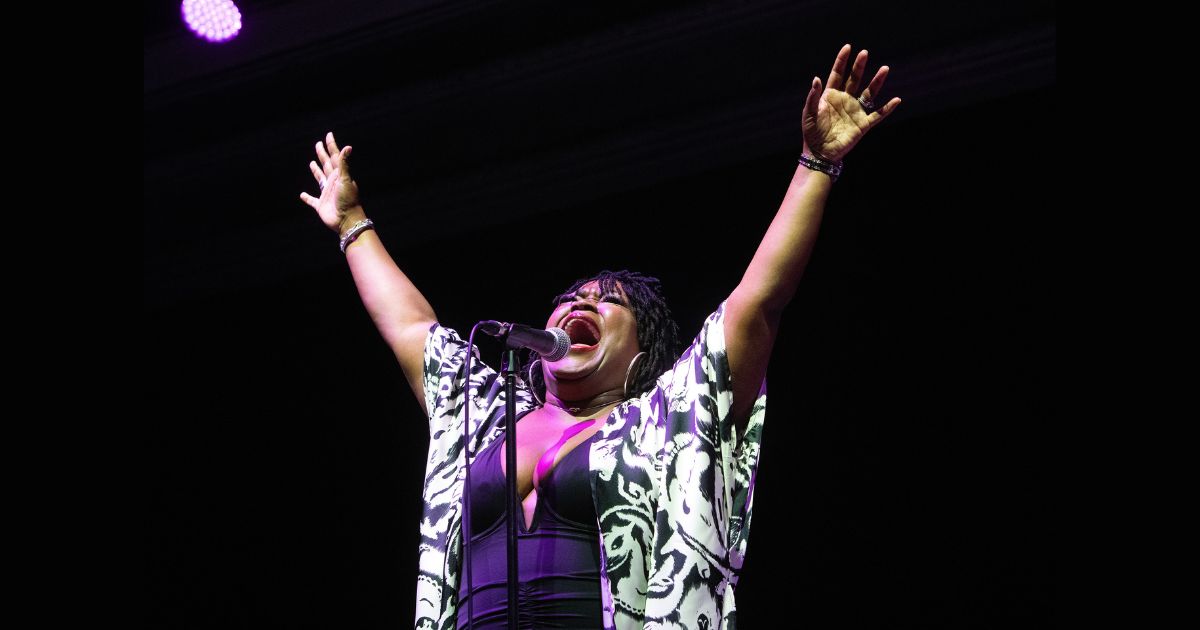
Already a Blues Star, Shemekia Copeland Is Still Aiming for Higher Places

Though she downplays notions of fame and exposure, vocalist, songwriter, and bandleader Shemekia Copeland qualifies as a genuine star.

Among 21st century blues artists, she’s right there with Christone “Kingfish” Ingram, Gary Clark Jr., Robert Cray, and Eric Gales as performers whose audience outreach and cache extend far beyond the restrictive circle of specialty radio shows and festivals, where far too many fine performers in that genre are confined. From profiles in The Washington Post, Chicago Tribune, New York Times, Philadelphia Inquirer, CNN, and NPR to coverage in such journals as Rolling Stone and No Depression, Copeland’s ascendency as a performer, her maturation, and her poignant and important vocal and compositional force are consistent and impressive.

It’s accurate, if a bit cliched, to say Copeland was born to sing the blues. The daughter of the legendary Texas shuffle blues great Johnny Copeland, she grew up in Harlem and was accompanying her father as an eight-year-old on the stage of the famed Cotton Club in New York. A decade later she signed with Alligator Records and began a career that’s done nothing but soar since the release of her first album for the label, Turn Up The Heat, in 1978.

Her two most recent LPs, 2018’s America’s Child and 2020’s Uncivil War have cemented her stature. America’s Child featured a rousing version of Ray Wylie Hubbard’s “Barefoot In Heaven,” the personalized romantic tune “Fell In Love With A Honky,” and a tough cover of “Nobody But You,” a tune immortalized decades before by her father. Uncivil War reflected a major happening in Copeland’s life – the birth of a son – and also included memorable numbers once again addressing contemporary issues. America’s Child won both the Blues Music and Living Blues Awards as Album of the Year. Uncivil War won the same honor from not only Living Blues, but DownBeat and MOJO magazines, too. Copeland’s earned multiple Blues Music honors and GRAMMY nominations to date.

Yet many, Copeland included, feel the best is yet to come. Evidence of that can be heard throughout the 12 songs on her newest Alligator LP, Blame It On Eve, which was released August 30. This latest effort again superbly combines social insight, humorous reflection, and tremendous musical numbers. The results are a dynamic presentation of the ideal combination of modern studio technology, distinctive personal commentary, plus the lyrical flair and expressiveness that’s characterized great blues since its inception.

Blame It On Eve, also recorded in Nashville, is her fourth project produced by Will Kimbrough and Copeland gives him high praises for his continuing contributions to her music.

“With Will it’s always magic and the ideal collaboration,” Copeland told BGS during a recent interview. “He really understands my music and how to get the best out of what I’m doing in the studio. No matter what I bring him, he finds a way to improve it, to make it better, and make it work. He’s really been a huge key to the success that I’ve had, and I also really love working in Nashville.”

Kimbrough utilized a host of outstanding special guests for the session. They include Alejandro Escovedo, Luther Dickinson, Jerry Douglas, DeShawn Hickman, Charlie Hunter, and Pascal Danae (of Paris-based band, Delgres).

While Copeland has never shied away from addressing social issues on her albums, she doesn’t like or embrace the notion she’s being “political.” Instead, she prefers the term “topical,” while freely acknowledging that she sees it as important to discuss a variety of subjects, topics and ideas in her music. “I don’t want to be labeled or pigeonholed in any fashion,” she says. “But at the same time, I’ve always felt that my music should speak to contemporary things, to the things that I see and experience. If you want to say that I do cover topical or current issues, that’s accurate. But I don’t see it being political so much as I see it being real, being willing to talk about things that are important to me as a woman, a blues musician and a Black artist.”

From that standpoint, the title track’s forthright dive into the issue of women’s reproductive rights is a prime example of Copeland’s willingness to express herself on thorny and controversial topics. Douglas brings his superb skills on Dobro to a song about Tee Tot Payne, the 20th century Black musician who tutored Hank Williams on the blues. “I was really glad to do that one,” Copeland adds. “There are too many people who don’t know that story or haven’t heard about Tee Tot Payne. If I can inform them about who he was and why’s he important, then I’ve done a service.”

Hickman’s stirring sacred steel contributions enrich “Tell The Devil,” while Copeland took on a special challenge with the song “Belle Sorciere,” singing the chorus in French with the tune’s melody supplied by Danae. “Hardly,” Copeland laughs when asked if she’s fluent in French. “I really tried to make sure that I had the correct words and sang them the right way. I’ve always wanted to do songs in other languages, and I really enjoyed doing that one but it wasn’t easy.”

The release also has its share of fun tunes, notably “Wine O’Clock” and rollicking strains of “Tough Mother.” Copeland also has a pair of excellent cover numbers. One is a heartfelt version of “Down on Bended Knee,” previously done by her father, and an equally compelling rendition of Stevie Wonder’s “Heaven Help Us All,” which serves as a fitting and dynamic closer to a marvelous LP.

Interestingly, when asked how much she enjoys her stature at or near the top of the blues world, Copeland discounts that contention. “In my mind, I’ve still got a long way to go in terms of how far and where I want to see my music go,” Copeland concludes. “I don’t think I’m at the stage of some of the blues rockers like Jon Bonamassa. I’m still aiming for higher places and peaks artistically. You should never be satisfied or settle for things, but keep pushing and striving for excellence. I learned that lesson early and that’s how I’ve continued my career and plan to keep on striving and pushing.”

Nashville audiences will get the chance to hear Copeland in multiple settings this September. She will be featured during AmericanaFest on September 17 at 3rd and Lindsley. The next day, her showcase at Eastside Bowl will air live on Wednesday afternoon, September 18, on WMOT-FM (89.5) Roots Radio. It will also be video streamed on NPR, filmed for NPR Live Sessions, and recorded for NPR’s World Café’s “Best Of AmericanaFest” feature to air later.


Photo Credit: Janet Mami Takayama

Jontavious Willis Is Traditional and Contemporary At The Same Time

Growing up in rural Georgia, Jontavious Willis discovered blues through a YouTube video of Muddy Waters and immediately immersed himself in the genre. At 14, he began playing acoustic guitar, he started gigging as a college student, and released his first album, Blues Metamorphosis, in 2016. Two years later, he opened on the TajMo tour with Taj Mahal and Keb’ Mo’. They co-produced his GRAMMY-nominated second album, Spectacular Class.

Offered the opportunity to record his new album, West Georgia Blues, in Nashville, Willis’s response was a resounding “No.” Tracking in his home state was non-negotiable, as that DNA was critical to his vision and sound. “Georgia was a big part of the story and I wasn’t going to fold on that,” he says. “I wasn’t going to let up.”

The singer-songwriter-guitarist and his musicians gathered for ten days at Capricorn Studios in Macon. Willis produced while engineer-guitarist John Atkinson mixed (and contributed guitar work on “A Lift Is All I Need”). They tracked some 200 songs, 80 of them usable, says Willis, and pared those down to the 15 that became his third album.

Willis’s fingerpicking style is rich in tradition and, as he’ll tell you, contemporary because it exists – now. With that, being featured alongside bluegrass and country music on a website such as this is a perfect fit, as he explained during his recent interview with BGS.

What were your goals going into this record?

Jontavious Willis: My goal was to show growth and stay away from carbon copies of other songs. I hear it all the time – you take a song and change a few words around, but it’s still B.B. King, it’s still Robert Johnson. I tried to make each song its own and if I did take from other folks, I did it my own way.

We get so wrapped up in saying, “Oh, I can play old music, so let’s stay there,” that we forget to create. I wanted to show my writing ability, my producing ability, and I wanted to show a difference. I’m glad I put space in between the albums to really show growth. Since the album’s complete, I’ve been getting great reception. But beyond that, I made an album I can listen to from beginning to end.

You didn’t feel that way with your other albums?

The first one, I knew I was green, but I had to put something out there. I’m always happy in the beginning. Then, when you listen to it long enough, you’re like, “I should have did this and this.” But I really can listen to this one. Truly, honestly, the first one, I wasn’t as good a player. The second one, I wasn’t playing at my full capacity or with blues players. I was playing with session musicians. This one, I played with people that knew the references to blues.

You’re a blues musician being interviewed by BGS, a bluegrass website, with a country music “sister” website, Good Country. That might seem like a big jump to some people, but the genres have common threads. Music historian that you are, could you address those connections?

Music was the most integrated pastime, prior to the big record labels coming in and separating them. One of the first integrated groups was actually in Georgia, called the Georgia Yellow Hammers. It featured a fiddle player named Andrew Baxter.

When some people think of country, they think of a particular sound. When I think of country, I think of rural. A lot of people say “simplistic,” because it sounds so peaceful and melodic, but it can be some of the hardest music ever. When I think of the intertwining of country music, I think about the early pioneers, like the first star of the Grand Ole Opry, DeFord Bailey, a Black fellow that played harmonica. Hank Williams learned from Tee Tot, [Rufus Payne]. Johnny Cash spent a lot of time with Gus Cannon and Furry Lewis and old blues folks like that. You can go on and on. A lot of the repertoire of blues artists isn’t just blues. Some of it could be classified as country.

Over time, with new talent, genres expand and change and self-proclaimed “purists” get ruffled. As an artist with deep roots in traditional and contemporary music, what are your thoughts?

I’m kind of with them and not with them. The reason I say this is because I feel like it is good to identify things sonically. When I listen to classical music, I think about what makes it classical. When I listen to jazz, I think about what makes it jazz. The same with blues, because what I’m seeing now is that blues have been overtaken by rock, and I don’t like that, because rock is not blues. It’s definitely a sub-genre or even a whole ’nother genre of blues, but it’s not interchangeable. A lot of the audience the rockers had kind of melted over into the blues, and a lot of people didn’t learn the blues from the front. A lot of ’em came through the back door, through these rockers and other big bands.

So I feel like it is good to identify what it is, but also understand that music changes. But call it what it is. If I’m playing blues-rock, I’m not playing natural blues. If I’m playing contemporary gospel, I’m not playing traditional gospel. The guys that made these beautiful songs that sold millions of copies — they didn’t get money for it. They didn’t get their due. It’s time for folks to stand by the genre of music they do and tell folks what it is.

Let’s talk about those sub-genres and what they mean, if anything.

It’s hard to really define the categories. With blues, they chop it in two main categories, at least for the GRAMMYs: contemporary and traditional. Contemporary means you’re keeping with the times. So by me living and writing music, that is being contemporary. Traditional means I’m a part of the tradition. So I can be traditional and contemporary at the same time. It is not one or the other. It’s a safe room for both.

Scholars made these terms up. Black folk wasn’t calling their music Delta blues or Piedmont blues until they heard so many folks saying it. Then they started saying it. But nowadays, those terms don’t mean nothing unless you’re from those places. I’m from Piedmont, so I’m a Piedmont player by default. I even went one step further to say I play West Georgia blues. What is West Georgia blues? I don’t know. I’m from West Georgia and I’m playing the blues in West Georgia. I can say that’s my style. A lot of people say Delta blues. Delta blues is a region, not necessarily a style. I can name three artists from the Delta that don’t sound alike. It varies from musician to musician.

It’s nicer for the listeners to think it’s categories, so you can navigate your way. But it also pigeonholes the artists and doesn’t really showcase the music and what it is. This is freeform music that people created. The record industry had a big hold on all of it, and that’s how they separated bluegrass from blues and country music. So I think you have to be a purist in a sense to maintain. If not, everything could spill over into everything, which is a good idea, but in essence, you want to identify the different sounds and nuances.

How does Georgia – its music, its history, and your history – inform your music?

Every state has salt-and-sugar history. I grew up in a predominantly Black town. Greenville, Georgia, is 70 or 80 percent Black. We’ve got a rich gospel history, and Georgia overall has Buddy Moss, Blind Willie McTell, on and on. So being in Georgia, always loving history, and always being around my family definitely shaped my music, the good and the bad. That’s what life is about, the good and the bad. Most of all, my hometown shaped me, more so than the famous people.

The blues people from Georgia definitely shaped my music. I was always aware of the other folks, like Little Richard, James Brown, Ray Charles, and Otis Redding, but they didn’t shape me. I listened to the old blues players and it was a great awakening for me to realize that Georgia has blues, because if you listen to a lot of folks, you’ll only think that it’s in Illinois and Mississippi. But the first studio in the South was in Atlanta in 1923. Everybody had to come to Georgia to record.

I know the United States has got twisted history, and that’s part of the blues. The blues is free Black people speaking their mind and saying how they feel, not always being political but just being true to themselves. To me, Georgia is family, struggle, prosperity, farming, food, life. It’s everything. I’ve been to a lot of places in the world, in Europe, to 46 of the 50 states, and ain’t no place like home. I’m looking at it now – the contrast of this dark green and light blue and these hills. You can’t beat that, man. Georgia’s everything to me.

What was it about blues that spoke to you as a 12-year-old? What has or hasn’t changed?

When I was a kid, I was singing gospel music about going to heaven and wasn’t I thinking about dying! A lot of those blues guys started out young. They were teenagers. Helen Humes, Buddy Moss, Josh White … Robert Johnson was 27 when he died, so he had to be singing the blues when he was young.

I’ve loved the blues since I was 12 years old, two years before I started playing guitar. I was at the age where I could appreciate it. The blues makes you think. Technically, some of those sounds aren’t supposed to be happening. Some of the stuff don’t make musical sense because lot of these folks aren’t trained musicians. But the stuff they put out – I can listen to it because it’s relatable to me. They talk in the way I understand. They sing in the way I understand, and man, it can just do something good to me. I don’t know what it is, but Jesus, it’s so good!


Photo courtesy of the Jontavious Willis Team.

“Guitar Prodigy” Doesn’t Quite Resonate with Grace Bowers

Boasting an Instrumentalist of the Year nomination at the 2024 Americana Music Association Honors & Awards (held September 18), Grace Bowers may be one of the most exciting new guitar players on the planet – with extra emphasis on “new.”

Still in her teens, the Bay Area native has made a splash with soulful-beyond-her-years playing and the enthusiasm of youth, but she’s proving to be more than just a six-string specialist. Now leading a funky blues-rock outfit called The Hodge Podge, Bowers dropped a strutting, co-written debut single – “Tell Me Why U Do That” – and has a cosmic follow up to come. Plus, she’s not afraid to speak her mind.

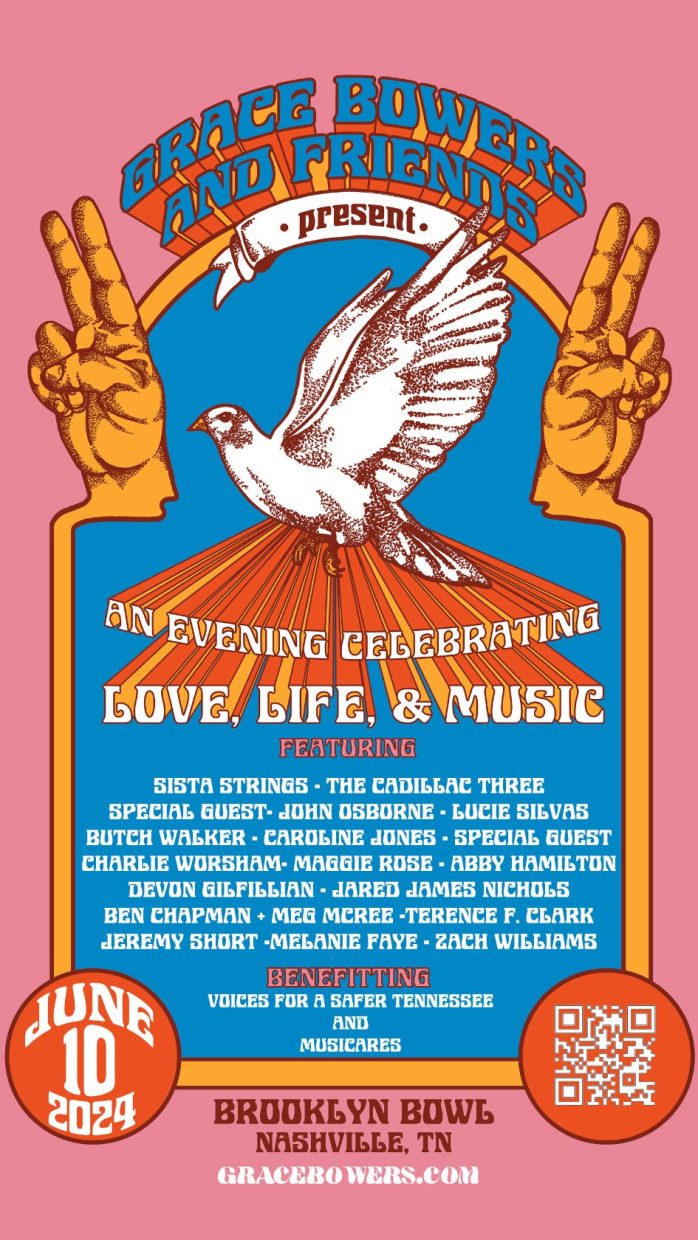
Already using her platform for positive impact, Bowers will host the 2nd annual An Evening Supporting Love, Life & Music benefit concert at Nashville’s Brooklyn Bowl June 10. Founded to support victims of the Covenant School Shooting and now benefiting Voices for a Safer Tennessee and MusiCares, the show will feature Bowers and The Cadillac Three, Devon Gilfillian, Caroline Jones, Meg McRee, Jared James Nichols, John Osborne, Lucie Silvas, SistaStrings, Brittney Spencer, and Butch Walker, as the rising star looks to leverage her “prodigy” label attention.

BGS caught up with Bowers just as the summer festival season kicked into gear, getting to know an exceptional breakout talent who seems primed for a long career to come.

After blowing up on social media during the pandemic, you’ve done a lot in the last few years – but, you still have a few months before you turn 18, right? How have you managed to balance this music career with growing up and just being a teenager?

Grace Bowers: It’s definitely a weird balance, and especially since I don’t go to school anymore. I started doing [school] online a year-and-a-half ago … and I don’t miss homework, but I definitely miss being around people my own age and just a normal experience. But at the same time, I’m getting to do this stuff that I love almost every night, and I would take that over anything. Some people look at it like I’m doing it too fast, or someone’s pulling strings for me, and it’s not true. This is what I love and I can’t imagine doing anything else.

What drew you to guitar in the first place? I know people like to compare you to the female guitar greats, like Bonnie Raitt or H.E.R., but I feel like it doesn’t have to be just women. I hear a lot of Prince’s style in you, or even Derek Trucks.

Yeah, I love all those players that you just mentioned! The first time I was drawn to a guitar or just to music in general was when I was 9 years old, and I saw Slash on YouTube. Which is kind of a basic answer, but that’s how it happened. I was watching the “Welcome to The Jungle” music video.

Really? So did you just rush right out and say, “Hey, mom and dad, I need a guitar”?

That’s pretty much how it went. I think I tried almost every other hobby there was. I got kicked out of soccer, hated Girl Scouts. I’m pretty sure I got kicked out of softball, too. I was not good at gymnastics. I tried everything and my parents tried everything. So when I came to them and said I wanted a guitar, they were like, “We’ll get you a guitar.”

Were you ripping leads within months, or how long did this take?

Oh, no, no. People call me a prodigy a lot and it’s entirely not true, because for the first three years I was so bad. I was awful, and I wasn’t even really passionate about it. It was just kind of something that I did. I never really practiced or dug into other music styles.

But when I was 13 and COVID had just started, I heard B.B. King for the first time – “Sweet Little Angel” – and that song starts off with three notes. I was so hooked on that, and it was a sound I had never heard before, because I didn’t grow up around music. I don’t have any players in my family, so it was a completely new thing to me, and that’s what really made me passionate about it. I started actually learning things on guitar, but it was not an immediate light bulb moment for me.

I think that’s actually a good message for people, because it’s easy to get burned out trying to learn an instrument.

Yeah, it takes time.

Was it a shock to get this Americana Music Association nomination? You’re up for Instrumentalist of the Year, right?

Yeah, I forgot. I didn’t even know I was nominated, to be honest with you. I had no idea. I opened Instagram one day and I was tagged in the post. I’m like, “Holy shit, this is insane.” Because the year before that, I was in the audience at the Ryman watching the Americana Awards. So now that I get to be there, that’s insane.

Tell me about getting the band going and working on songwriting. You’re known for your guitar playing, but it seems like you’ve been trying to diversify. Does that come natural?

Songwriting was a bit of a learning curve for me, but it is something I’m very, very much into these days. I feel like people just look at me as a guitar player, but I don’t really feel like I’m just a guitar player. And even at that, I’m not some bright virtuoso guitar player. I wouldn’t consider myself that at all. I lead this band, I wrote all the songs or co-wrote them. So I think that that’s something that a lot of people don’t realize when they’re leaving hate comments online.

Your band sounds amazing – I love how much funk and soul is in the mix. It’s also cool you present yourselves as an ensemble. It’s not just Grace Bowers and then some people behind her.

That was my goal, because like I said, I don’t want to be known as just a guitar player. If you think of Derek Trucks, you think of Susan [Tedeschi], too. Tedeschi Trucks Band would not be what it is without one another, and I love that. And since I don’t sing right now, I want to be known for this amazing band.

The first single, “Tell Me Why U Do That,” came out a little while back. It’s super funky and light – what did you write that about?

It wasn’t written about a single person. It sounds like it is, but I wrote it with John Osborne and his wife Lucie [Silvas], and honestly, we wrote it in an hour and we were kind of just bullshitting lines. … Normally I’m like, “Well, the lyrics have to mean something.” But I kind of let that go for this one. It’s just a fun song.

Does that speak to the other stuff you’re doing?

For the most part, the lyrics were very intentional. My second single that’s coming out is called “Wine on Venus,” and this one has a cool story behind it. It was written about my Nana who passed away a bit ago. I’m from California, so we went home for Christmas this year and it was the first year not having her at Christmas. Everyone was talking about her, and my uncle said she always told him that when she died, she’d be drinking wine on Venus. It’s the brightest star.

Oh, wow.

Yeah, and I thought that was such a cool thing to think about. So I brought it back here and I was writing with Ben Chapman and Meg McRee, and I told them this story, and this song just flowed right out of us.

Your grandma sounds like she was awesome.

Yeah, she was kind of crazy, but there were some good nuggets in there from time to time.

John Osborne is producing your work, and he’s an amazing guitarist in his own right. Does that have an impact on what you’re doing?

Absolutely. I don’t think enough people are talking about how good a guitar player John Osborne is. He’s on a whole ‘nother level, and I don’t hear his name mentioned when people are talking about great guitar players, but I can’t imagine doing it with anyone else. I think he just completely understood my vision and the sound I was going for, and I’ve worked with producers before who have a sound and they’ll try to mold you into their sound, and John wasn’t like that at all. I mean, he gave us direction and some really great ideas, but really let me and the band lead the ship on where it was going. So I really appreciated that.

Tell me about the benefit you put together for June 10 – An Evening Supporting Love, Life & Music. Why did you want to do this so early in your career?

This is my second year doing it, and the first year I put together after the Covenant School shooting. I have two little brothers in school, and I remember the day it happened, they were texting me like, “There’s a school shooting.” And at first they didn’t tell me what school, so my heart dropped thinking it was at their school. They eventually told me, but that brief moment of panic I had – I can’t imagine if you were a parent with a kid at Covenant on that day. Just to even think about that is awful. And it really upset me seeing how much of a divide there was, because coming from the Bay Area in California, we have different viewpoints.

I don’t know, it just upset me that it seemed to be such a divided issue, and really I think there’s a lot of common ground to be found. The first year I did it, the money went directly to the school and MusicCares, and it went amazing. So much so that the school is no longer accepting donations. They received so much support. So this year we’re donating [proceeds] to an organization called Voices for Safer Tennessee, and they’re non-partisan so it’s not political in any way, and they’re advocating for safer gun laws – which Tennessee needs some of that. I’m just doing all I can to support something that I’m passionate about, and I want to see some change.


Photo Credit: Cedric Jones

Buffalo Nichols Champions Blues in the 21st Century

Singer-songwriter and instrumentalist Carl “Buffalo” Nichols loves and treasures the blues, but he acknowledges that his vision of what the music can and should do differs greatly from that of many performers he’s met in the field. Indeed, Nichols, whose brilliant new LP, The Fatalist – his second for Fat Possum, which dropped September 15 – doesn’t mince words when he discusses the issues he faces and the things he wants to see change in regards to the music, as well as attitudes held by many in positions of authority in regards to its promotion and distribution. 

“I tell folks I’m a songwriter initially, because when you say you’re a blues musician, then there’s a whole bunch of stereotyped impressions that you’ve got to get beyond,” Nichols said during a lengthy recent phone interview with BGS. “There was a period there a couple of years ago, right after George Floyd, where for a time there was this sense, or at least it was being said, that the blues community needed to change, we needed to diversify, to become more relevant and reflective of things happening in America. But now that seems to have passed, and we’re back to the same old thing. There’s too much conservatism among the older crowd, who often are in control of the blues radio stations and who are responsible for why the music isn’t more widely heard and accepted. And there’s too many artists just putting the same stuff out there.”

Nichols is among a growing number of African American artists anxious to smash idiomatic barriers regarding not just blues, but American music, period. He is a master at carefully paying attention to traditional values like keen storytelling, soulful delivery and expressive lyrics, while also utilizing contemporary elements and devices. The Fatalist includes a stunning cover of Blind Willie Johnson’s majestic “You’re Gonna Need Somebody On Your Bond.” The LP’s first single, Nichols’ robust baritone soars through the message of salvation with vigor, driving home both its urgent intensity and evocative theme. However, Nichols also says the song epitomizes another part of the dilemma he faces regarding broadening the blues’ appeal.

“That one kind of gets caught in a double trap,” Nichols continued. “On the one hand, you’ve got religious lyrics, then on the other you’ve got the blues sensibility. So, while the traditionalists who know Blind Willie Johnson love it, it has a hard time getting past the gatekeepers, because it also has some contemporary production touches. That’s kind of the double struggle you face. You’ve got the white traditionalist and conservative types who are dominating the blues marketplace, then when you’re trying to reach the Black audience, you’ve got what they call the ‘urban contemporary market.’ Because it’s blues they won’t play it.”

Still, Nichols is making some headway on the scene, both critically and in terms of gaining followers. He says he’s seeing a lot more young folks in his audience, as well as more Black fans. Though his appeal and notoriety don’t yet match that of a Christone “Kingfish” Ingram or a Shemekia Copeland, Nichols is steadily gaining more attention and acclaim. He opened several dates last year for Valerie June, another marvelous Black performer whose music incorporates classic and current sounds. He stands prominently alongside other rising blues stars like Gary Clark Jr., Marquise Knox and Eric Gales. The Fatalist reflects the vision and scope of a 30-something performer whose background includes at various times being in a grindcore band (Concrete Horizon), and playing folk and Americana, while also being part of a duo in Milwaukee (Nickel & Rose) with bassist Johanna Rose. His disenchantment with an Americana scene he considered overwhelmingly white and less than encouraging to his artistic vision led him to Fat Possum.

“I really felt it was important at this stage to have a label behind me,” Nichols said in response to a question about why he chose to sign with Fat Possum. “While it’s not the type of thing where we’re sitting down and trying to pick songs for radio, it is a thing where they’ve been very supportive and encouraging. They’ve provided me a place and a forum for what I want to do, and they appreciate my vision and are doing all they can to help me.” 

The Mississippi-based label was once widely celebrated for its championing of hill country blues greats R.L. Burnside and Junior Kimbrough, but in recent years had drifted far away from that model. Buffalo Nichols, his debut release, was the company’s first blues outing in two decades. It set the stage for The Fatalist, whose eight songs reveal a strong songwriting focus Nichols says is indicative of both personal growth and his desire to use the blues form to do more than rip through scales and display great individual musicianship. “I’ve been a guitarist for 20 years, but it’s really only been the last 10 that I think I’ve really grown as a songwriter,” he continued. “Being able to express myself is a challenge, and using the blues to do it is what drives me.”

There’s no question that The Fatalist doesn’t necessarily adhere to the standard blues formula, and that’s setting aside the presence of drum machine tracks and enhanced sonic quality. Its song sequencing and overall lyrical flow are edgy and compelling.

Standout cuts like “Love Is All” or “The Difference” offer contrasting views of a relationship. The former is optimism grounded in the wisdom of admitting that even good guys can go astray, while the latter spotlights a breakup that doesn’t so much place blame as document the painful end of something that was once glorious. There’s also the hard-hitting opening number “Cold Black Stare,” and the triumphant finale, “This Moment,” that features special guest vocalist Samantha Rose. The album has a sonic clarity and power that puts it in a league with anything done at a state-of-the-art studio in Nashville, LA, or New York, yet it was recorded in Nichols’ home – and he produced it. The decision to cut it there is also part of a larger career change that Nichols made last year, when he moved back to Milwaukee after spending years in Austin.

“In some ways it’s harder for me now being back home,” Nichols said. “But in other ways it’s good, because now I have to do it myself. I don’t have the machinery or the apparatus or the surroundings that I would have in Nashville or Austin or LA. It’s like it was when I was growing up. I’m being responsible for my own music now, and that’s a good thing creatively, even if from a business aspect sometimes there’s a struggle.” 

Buffalo Nichols is now in the midst of an extensive tour, with the American portion running through mid-December, then a European leg beginning in early January and continuing through mid-February (for now). While being adamant about not setting goals, Nichols says he definitely has things he wants to accomplish career-wise.

“For me, I always want to look ahead, I want to progress as a songwriter and a guitarist,” Nichols concluded. “I don’t ever want to make the same music over and over. I don’t want to be predictable. I want to contribute something original, something that when I’m gone people will look back and say that this was something fresh and inventive that Buffalo Nichols made.”


Photo Credit: Samer Ghani

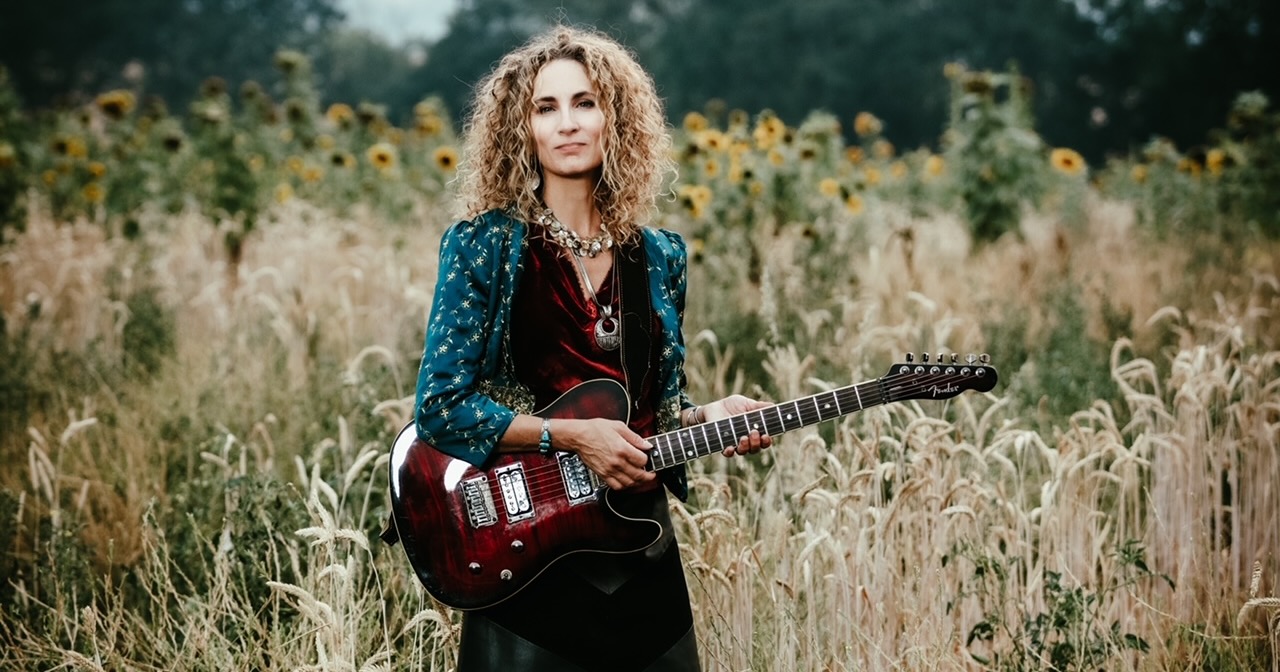
LISTEN: Jen Ambrose, “Plenty Of Nothin’ To Do”

Artist: Jen Ambrose
Hometown: Elmira, NY
Song: “Plenty Of Nothin’ To Do”
Album: Plenty Of Nothin’ To Do
Release Date: July 7, 2023 (single); October 6, 2023 (album)

In Their Words: “An evergreen blues tune and tempo, a smoking and biting band, and a voice as smooth as molasses. A winning recipe and you all are not ready to be swept away from it. ‘Plenty Of Nothing Nothing To Do’ is the second single from the homonym album, a feel good song to get over that nasty heartbreak.
“The level of catchiness is over the roof, thanks to the biting guitar riffs from the mind of Ken Orsow, co-writer on the album, and the lyrics, sung with a Shania-Twain-arrogance.” – Jen Ambrose


Photo Credit: Craig Alan

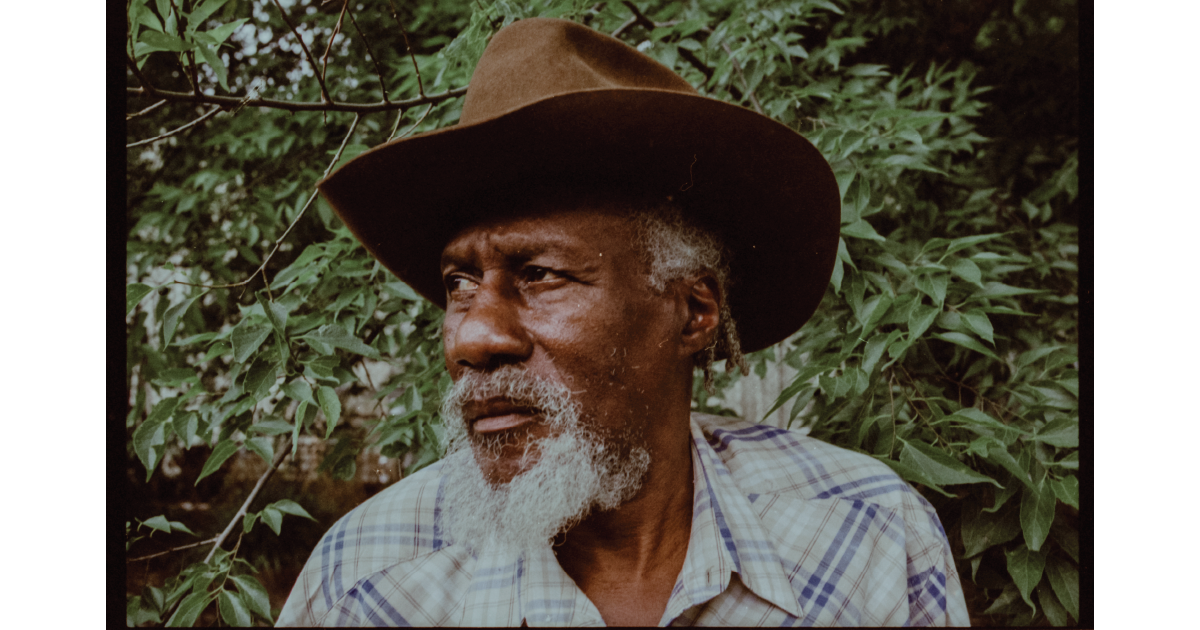
WATCH: Robert Finley, “I Can Feel Your Pain”

Artist: Robert Finley
Hometown: Bernice, Louisiana
Song: “I Can Feel Your Pain”
Album: Sharecropper’s Son
Label: Easy Eye Sound

Editor’s Note: Read our BGS interview with Robert Finley.

In Their Words: “‘I Can Feel Your Pain’ relates really to what is going on today. From people losing loved ones to the pandemic, all the marches going on, people being slaughtered by the police. Even if you don’t really know about the situation from a personal perspective you feel sympathy for that person who had to go through those things and this song is for them.” — Robert Finley


Photo credit: Alysse Gafkjen

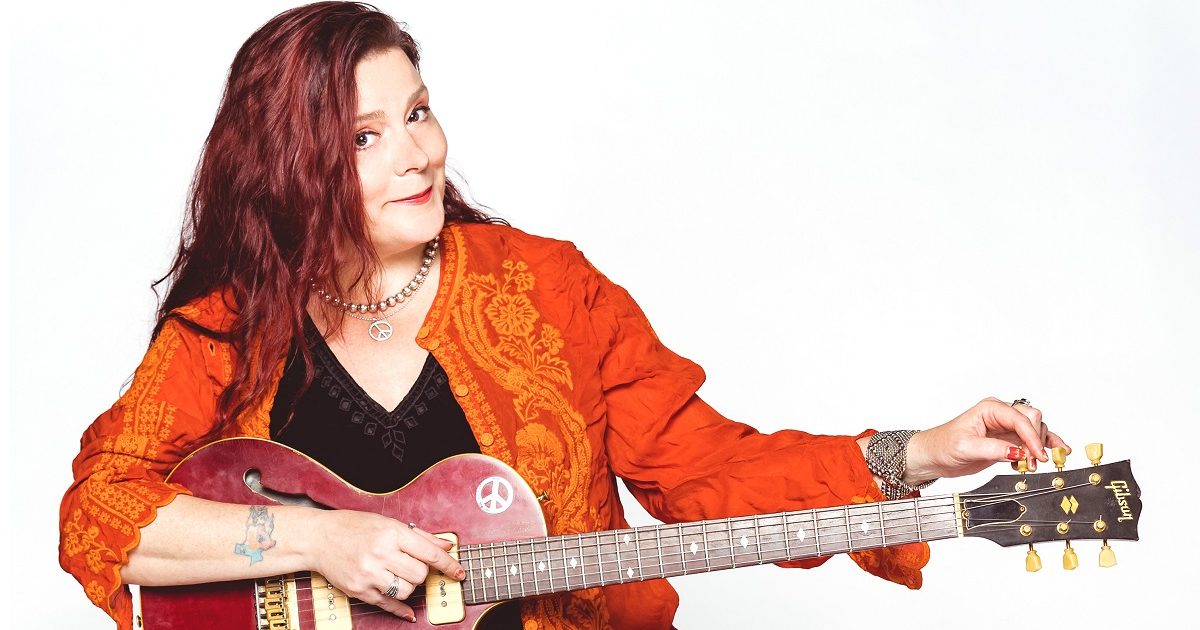
LISTEN: Carolyn Wonderland, “Fortunate Few”

Artist: Carolyn Wonderland
Hometown: Austin, Texas
Song: “Fortunate Few”
Album: Tempting Fate
Release Date: October 8, 2021
Label: Alligator Records

In Their Words: “Well, sometimes we write ourselves advice we don’t take for a while, don’t we? I started writing ‘Fortunate Few’ one hard, bleary-eyed morning on the road while holding my head in one hand and trying to count my blessings on the fingers of the other. It originally had a more John Prine feel to it (think: ‘In Spite of Ourselves’), but I thought better of trying to emulate the master in a form so closely related to that chord structure and started banging away on some acoustic blues. The title made me realize I also must have been listening to a lot of Delbert McClinton the night before. That is never a bad thing!” — Carolyn Wonderland


Photo credit: Ismael Quintanilla